Ideological Legacy of The Rock Star Scientist

The dream that Dr. APJ Abdul Kalam had for developed India is the reality in which we are living today. It wouldn’t be possible if he hadn’t devised a result-oriented action plan for the Nation. It is sad that we never celebrate such great bright minds the way we celebrate film/ TV stars or sportsmen, especially in this golden era of social media. The incorporation of e-governance, e-judiciary, Information Communication Technology (ICT), Providing Urban-amenities to Rural Areas (PURA) were some of his key agendas for developed India and same is the reality we are living in. Today’s youth must appreciate that we are just enjoying the fruits of his well-formed result-oriented action plans created on his ‘Vision 2020’. This is to remember the ideologies of Dr. Kalam from his book ‘Turning Points’.

Turning Points – Remembering Dr. APJ Abdul Kalam’s legacy on his birthday
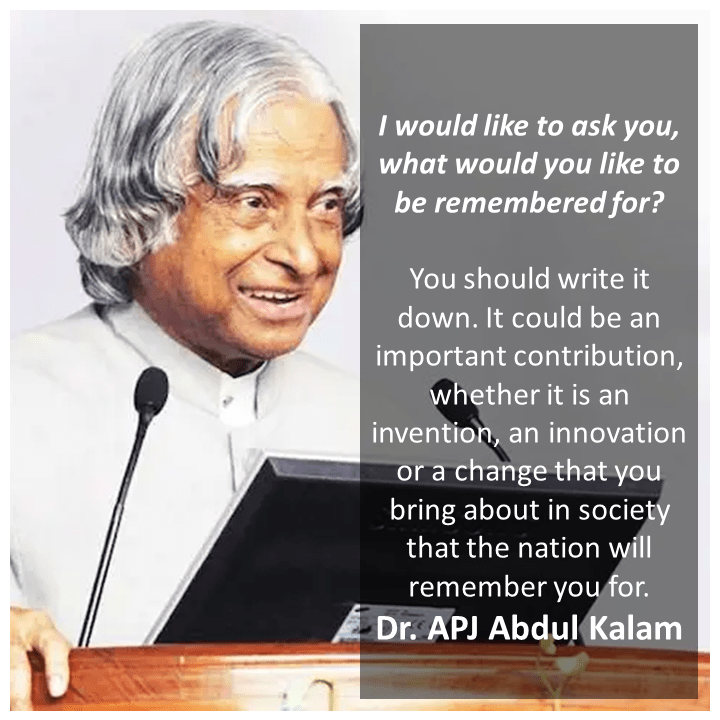
Unity in diversity lies at the heart of India as the biggest democracy in the world. This diversity also brings in various challenges from geographical, cultural, economic, governance and many more local perspectives. Bear in mind that despite having multitudes of such challenges the constitution has ensured that the machines are well oiled and keep running properly. To handle a nation with such diversity is a challenge in itself. Try convincing small group of people on an idea you have and you will realize how difficult it is to make others appreciate your vision. You will realize that people rarely resonate with completely new, unconventional ideas. The person must carry an aura to convince others for the path he is laying down. The person must carry a clear and pious vision for the masses.

Vision elevates the nation

-Dr. APJ Abdul Kalam, Turning Points

A vision must be pious because the moment people discover malice, a vision no more remains ‘the’ vision; it becomes a propaganda. Polarization is created and chaos ensues. That is one of the challenges with democratic society.

Only a self-inspired person, a person who is pure at heart, a person who can empathize with the masses, a person with emotional and intellectual intelligence and most importantly a person with humility can truly inspire people towards a common goal of the upliftment of the whole nation. Such people are blessing to the society and they appear once or maybe twice in a century. They are rare and leave an everlasting mark on society.

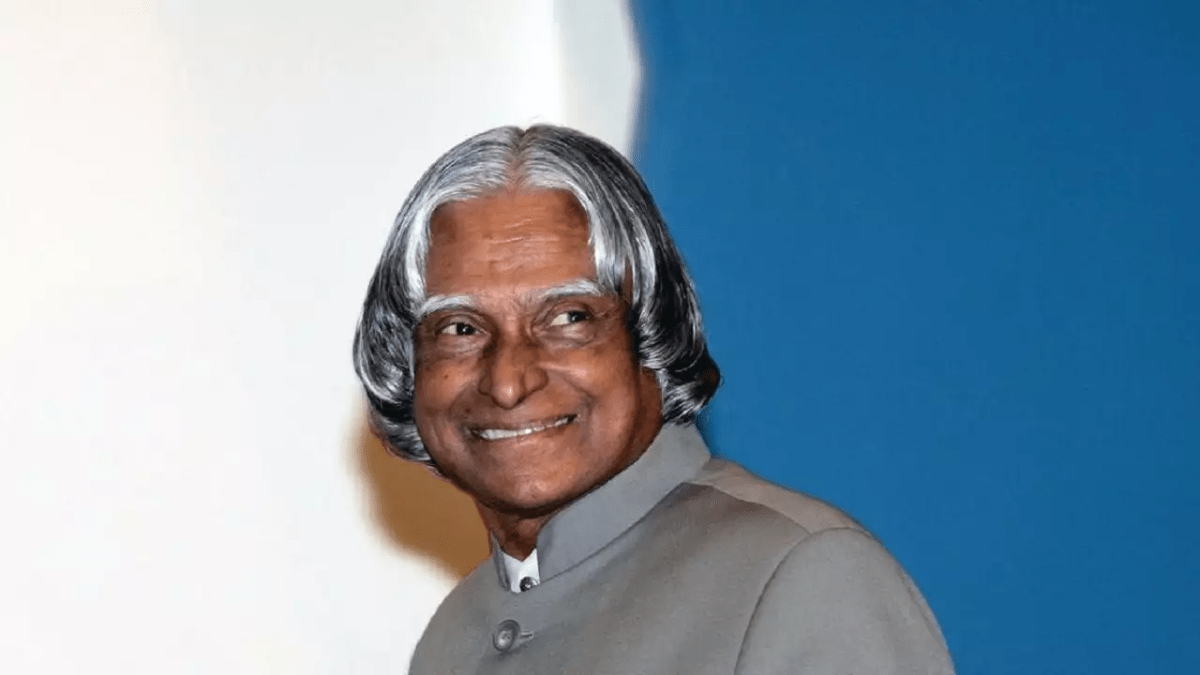
Dr. APJ Abdul Kalam, The Missile Man, The People’s President, and a teacher at heart was one such personality India had. Dr. Kalam was India’s 11th president. Even though he is not physically among us his ideas and his vision are with us and will keep on inspiring every Indian rather every human. He is my source of inspiration since my childhood; I will take this opportunity to unfold certain aspects of his personality hereon. This is me remembering Dr. APJ Abdul Kalam on his birthday 15th October.

Dr. Kalam wrote a book called ‘Turning Points – A Journey through challenges’ where he highlights the key events which shaped his tenure during the presidency and what really drove him to have a sense of accountability towards the people of India. If you look at the life achievements of Dr. Kalam, you will realize that overcoming challenges in spite of having multiple failures and worst conditions was his forte. His systematic logical thinking combined with result-oriented actions was the key reason for such achievements. You must also appreciate that he was not just a scientist with logical foolproof plan for results; he was a pure empath who understood what people of the nation actually wanted. He knew the pain of the masses and also made successful efforts to resolve many fundamental issues. Please understand that the position of The President in Indian Constitution although is the highest position, there are very few examples where the elected President created a significant impact on whole nation physically and ideologically. Most of the times, Prime Ministers are known to be the key drivers of the nation’s future in Indian Democracy.

You will appreciate what exactly caused Dr. Kalam to have a focused mindset towards making India a developed nation by 2020. Although we are still in developing phase, the rate is slow but we wouldn’t be here if Dr. Kalam had not envisioned the ‘Vision 2020’. The book Turning Points thus gives a glimpse into what made him to devise an action plan in making India a developed nation.

You will be surprised to know that we are literally living in the accomplished visions of Dr. Kalam and there are many those will be achieved in near future.

The Modern India

Dr. Kalam was the key originator and proponent of many facilities and policies we Indians are enjoying today. It is only because of his vision and action plans we are enjoying certain life changing benefits in our routine lives.

Dr. Kalam was responsible for successful inception of Indian space program led by Prof. Vikram Sarabhai. The SLV program (Satellite Launch Vehicle), the IGMDP (Integrated Guided Missile Development Program), Indigenous hovercraft development called ‘Nandi’, Project Smiling Buddha in Pokhran for nuclear weapon development are some of the professional achievements of Dr. Kalam.    

The concepts of e-governance, e-judiciary, court hearings through video conferences, pushing for the evolution of National Litigation Pendency Clearance Mission, meetings through video conferences, incorporation of Information Communication Technology, creating more policies to become energy independent, to become stronger in defense technologies, boosting the innovation funnel throughout the country, empowering the states while leveraging their specialties in cultures and traditions, making India a Nuclear superpower, developing and promoting an indigenous nuclear power program, pushing for increased plantations and facilities in biodiesel production, pushing for solar energy production and required policies, creating an annual target driven action plans for each ministry and states to have a focused development approach, creating an action plan to work on industry relevant skill development and more exposure to higher education in science and technology, creating more opportunities for the research in the fields of nanotechnology are some of the visions Dr. Kalam had for the people of the nation. This is just a short glance into what he planned and achieved in his tenure. We are just enjoying the fruits of his well-formed result-oriented action plans.

The book Turning Point will give readers a peek into the thought process and key motivations behind Dr. Kalam’s vision for making India a developed nation.

  1.   Dream Big
Appointment in ICSR – Indian Committee for Space Research (ICSR later became ISRO – Indian Space Research Organization)

The key moment which changed Dr. Kalam’s thought process was during his interview with Prof. Vikram Sarabhai. Dr. Kalam worked in the development of the hovercraft after which he had this interview. You will notice that Dr. Kalam was very impressed by the first-hand confidence that Prof. Sarabhai had in him because he explored the capabilities Dr. Kalam had without questioning his competencies. Dr. Kalam always told youth to dream bigger. That idea came from this exact moment. Dr. Kalam realized that what Prof. Sarabhai had dreamt was way bigger than the dreams of Dr. Kalam.

This moment inspired Dr. Kalam to dream even bigger which he always kept reiterating in his interactions with youth.

  1. Urge for cross implementation of technologies
Appointment in DRDO missile program

India’s first satellite Rohini RS-1 was launched by SLV. Dr. Kalam was Project Director for this program. He presented how this satellite launch vehicle put Rohini in the orbit to Dr. Ramanna who was a nuclear physicist and director of DRDO (Defense Research and Development Organization). Dr. Ramanna offered Dr. Kalam the position of DRDO. Dr. Kalam accepted this position because he wanted to implement the space technology developed from SLV program into missile development program.

You must appreciate that the missile technologies developed in-house for missiles like Agni, Akash, Prithvi, Trishul and Nag were possible because of Dr. Kalam’s approach to interdisciplinary knowledge implementation for indigenous technology development on faster speeds.

His same approach to create intersections in various unconnected fields through technology got reflected during his presidential tenure. The implementation of electronic technology for e-governance, e-judiciary are result of that. He always believed that such intersections of technologies boost the speed of growth. 

  1. Indigenous technology is the way to self-reliance and defense

Dr. Kalam wanted to return to his passion for teaching and interacting with youth while he was Scientific Adviser to the Defense secretary. P V Narsimha Rao, then Prime Minister also Defense Minister asked him to continue as the defense minister and Kalam agreed because he was handling multiple important programs. P V Narsimha Rao’s long-term vision for indigenous defense program inspired Dr. Kalam.

I think Kalam called this moment as the turning point because if he would have been associated with teaching at that time his future would have been totally different from becoming the President. This moment is also important because it created a concrete foundation in Dr. Kalam’s mind to create a long-term vision for nation which will rely on indigenous technologies.

During his Presidential International visits Dr. Kalam always pushed for the use of indigenous ICT, BPO frameworks, pharmaceutical manufacturing technologies. This moment might be the key inspiration behind Dr. Kalam’s thought process.      

  1. Nation first, politics later

Dr. Kalam was offered a Cabinet position under Vajpayee Government in 1998 when he was handling the Missile Program (Development of Agni Missile) and Project Smiling Buddha (Pokhran Nuclear Test). Any other normal person would have accepted the better and beneficial offer of Cabinet Minister but keeping Nation first Dr. Kalam decided to decline this offer and focused on the Indigenous Missile Program and Nuclear Weapon Program which further upon their success made India’s global presence stronger.

  1. Drive to Envision, Urgency to take Actions, and Having Courage to do the Impossible

Dr. Kalam stands out as one of the rarest statesmen who focused on practicality of vision and action plan for their execution; there is a reason for that attitude.

When Dr. Kalam was Principal Scientific Adviser (PSA) for Government of India when he paved the foundation of action plans and their implementation for Vision 2020. During this tenure as PSA, Dr. Kalam had a helicopter accident where for the sheer luck of the nation he was unharmed.

Even after going through such accident, he was immediately ready to connect with the locals and the youth where he asked them to recite his hymn. This shows the artistic side of Dr. Kalam. Dr. Kalam was known for inspiring poetry showing the importance of the power of youth. 

Courage to think different,

Courage to invent,

Courage to travel on an unexplored path,

Courage to discover the impossible,

Courage to combat the problems and succeed,

Are the unique qualities of youth.

As a youth of my nation,

I will work and work with courage to achieve success in all the missions

Dr. APJ Abdul Kalam, Turning Points

This near-death experience gave him a totally new perspective towards the life in front of him. It created a sense of urgency for him which pushed him to write the famous book ‘Ignited Minds’. This sense of urgency inspired him to push more for PURA (Providing Urban-amenities to Rural Areas) project. Many independent village ecosystems, governance technologies, tech policies, benefit transfers which are now available in rural areas are the fruits of this PURA program.

I have always believed that cowards never make history, history is created by people with courage and wisdom. Courage is individual, wisdom comes with experience.

Dr. APJ Abdul Kalam, Turning Points

  1. Empowerment and Independence of the Nation

Dr. Kalam believed in the power of self-reliance and improvement in the agility between different functions of government and also between individual states. You will be surprised to know that he was the statesman who brought the idea of e-governance in the Office of the President and implemented it effectively. It later spread horizontally to the e-governance and digitization of documents that we see today. It took time because of multiple reasons but you must appreciate his vision and future outlook behind it. His dream then is now our reality.

In similar sense, Dr. Kalam created action plans for individual states based on three parameters:

  1. The contribution to the vision for developed India
  2. The heritage of particular state
  3. The core competency of that state

This shows how agile and practical Dr. Kalam’s thinking was. He knew how to play with the strengths of each state and also cared for their legacy thereby preserving the cultural importance of diversity in our country.

Dr. Kalam is also one of the statesmen behind the upliftment of the judicial system. He pushed for the National Litigation Pendency Clearance Mission. This mission is the origin for the e-judiciary, court hearings through video conferencing, use of ICT in litigation, age analysis of pending cases, fast track courts which we are seeing today. 

  1. Duty Towards Nation

Dr. Kalam always created a sense of duty towards nation in the hearts of the youth and his action always reflected the same attitude. Many of his lectures were named as ‘What Can I Give To The Nation?’

Dr. Kalam’s way to guide the youth to answer this question is based on the importance of values in human life. He gave huge importance to each and every public address he would give. He revised his public addresses multiple times to ensure that the message is crisp and inspiring.

You must appreciate that human values were the core of his speeches. The ideology of ‘being a better human is the best you can offer to the nation’ is what inspired youth to follow their own dream thereby also benefiting the nation in greater sense. Dr. Kalam’s speeches always had this element of ‘call for action’ that is exactly why the question – ‘What can I give to the Nation?’ is simple yet meaningful. It made the youth to look inside them for the betterment of the nation altogether. These are the skills of a seasoned inspirational personality, they make you look inside to create a better future outside for everyone, it creates a sense of duty, accountability and also satisfaction for life well spent.

And this same sense of duty and accountability Dr. Kalam wanted to inject into the Indian Parliament and Indian Politics. He had action plans to do that too.

When politics degrades itself to political adventurism the nation would be on the calamitous road to inevitable disaster and ruination. Let us not risk it.

Dr. APJ Abdul Kalam, Turning Points

Dr. Kalam was well aware of the gaps between the lives of the common people and the events in the parliament, They were completely inconsistent and were not helping (even today they rarely help)

People are yearning for lifestyle change by preserving the cultural heritage, values, and ethos of the Indian civilization.

Dr. APJ Abdul Kalam, Turning Points

Dr. Kalam asked the parliament members to focus on key aspects of development of their own state instead of engaging into the propaganda-based politics. Dr. Kalam was one of the few proponents of the Development Politics. You might think that this word is somewhat recent concept but Dr. Kalam was the originator of the action plan and policies for development-based politics.

He gave five points to the members of parliaments to work upon:

  1. Agriculture and food processing
  2. Education and health care
  3. Infrastructure
  4. Information and communication technologies
  5. Self-reliance in critical technologies

 You must appreciate that the world we are living in is the result of action-based plans and their results based on these ideas.

Dr. Kalam pushed for the indicator of National Prosperity Index (NPI) instead of GDP (Gross domestic Product). The idea was that GDP growth indicates net domestic product but it doesn’t reflect how this growth is affecting the quality of life in rural and urban area. Thus, associating GDP with other indicators can actually help to gauge the realistic growth of the nation.

NPI (National Prosperity Index) = 
annual growth rate of GDP + 
improvement of quality of life of the people particularly those below poverty line + 
the adoption of a value system derived from our civilizational heritage in every walk of life which is unique to India

This shows that Dr. Kalam had the sense of importance of the cultural heritage in the growth of nation. The urge to push for the upliftment of quality of life is intentional to reduce the gap between the riches and the poor.  
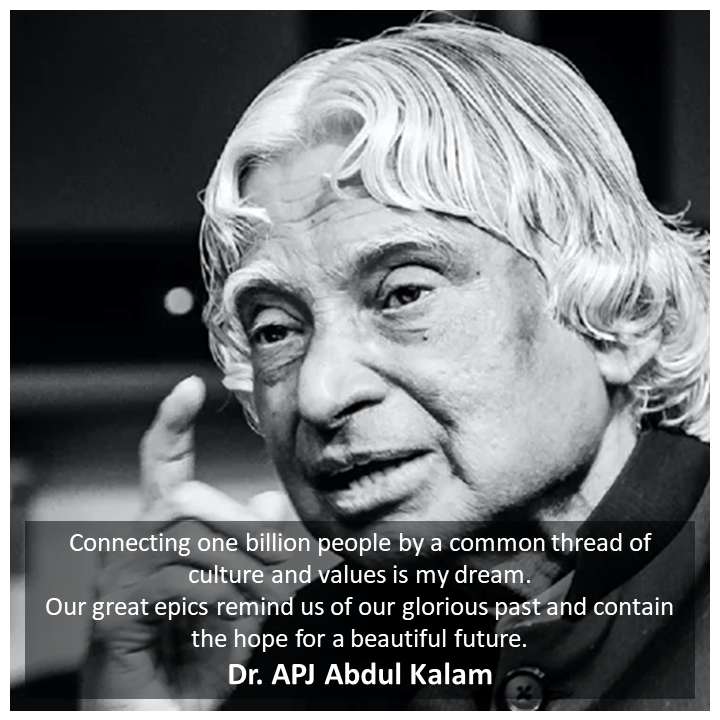
  1. Strong Inner Compass – Value-based character development

Dr. Kalam even though was an intelligent scientist and had many professional achievements, he was down to earth. Intellectual humility was his second name. His thoughts also showed how he valued the sense of service, honesty and compassion right from the childhood.

Dr. Kalam shares an event from his childhood where he received beating from his father for the very first time in spite of being the youngest and the most loved child. The reason was to accept the gift from others for being elected as the President of the Panchayat of Rameshwaram.

Dr. Kalam quotes his father’s words from Hadith-

“When the Almighty appoints a person to a position, He takes care of his provision. If a person takes anything beyond that, it is an illegal gain.”

That thing remained with Kalam forever. The last things that Dr. Kalam possessed were 2,500 books, a wrist watch, six shirts, four trousers, three suits and a pair of shoes. He donated his pension to the development programs for rural areas. He didn’t have any TV, fridge, AC.

Dr. Kalam was a spiritual person. You will see from his whole life journey he never submitted to a single side of the religion – he was always on the side of divinity. This shows his openness to find the real truth of what it means to be a human being. Humanity was at the core whenever he was discussing any religious topic.

“Kalam sees no conflict between science and religion. When I asked him if he believed in the Day of Judgement and rewards or penalties, we might have to pay in life hereafter, he replied evasively, ‘Heaven and hell are in mind’…”

“No rationalist can dispute Kalam’s vision of divinity. Some define God as truth; others as love, Kalam’s concept of godliness is compassion…”

Khushwant Singh, Author and columnist for Hindustan Times

  1. Sacrifices make any great pursuit ‘great’

Dr. Kalam was devastated after the crash of an Air Surveillance Platform which led to death of all its 8 occupants. He realized in this very incident that many people without any personal gain give away their lives to the service of the nation and their sacrifices goes unnoticed in the chaos of all the politics. This should never happen. You can sympathize with the pain of the relatives of these heroes but you would never be able to return the service they provided to the nation. Everyone must be aware of that.

This shows the sensitive side of Dr. Kalam. He was a strong proponent of dreaming big, having courage to do the impossible but this event shows that he was also aware of what sacrifices people make to achieve the impossible, these sacrifices, this service are bigger than anything and should not go unrecognized. He wanted the people of the nation to appreciate the same.

  1. Religion is a personal thing and so are the culture, faith, language and heritage

Dr. Kalam visited the places affected by the Gujarat Riots. His intent was to understand the ground reality and he knew that his mere presence will speed up the relief efforts. Bear in mind that visiting such sensitive areas for a President is a highly risky task.

Dr. Kalam was disheartened by the events, he expressed the reason behind that-

“…in our land, with its heritage of a highly evolved civilization and where great men were born and stood tall as role models for the entire world, communal riots with their attendant tragedy are an aberration that should never happen.”   

“Each individual has the fundamental right to practice his religious, cultural and language faith. We cannot do anything to disturb that.”

Dr. APJ Abdul Kalam, Turning Points

  1. Building bridges to share each other’s competencies for mutual growth

Dr. Kalam is also known globally for his speech in the European Parliament. He focused on mutual growth plan for European Union and India. His poem ‘Message From Mother Earth’ won hearts of all the members of the European Parliament. Dr. Kalam’s visiting day in 2005 – 26 May to Switzerland is celebrated as Science day there. Dr. Kalam proposed to implement the electronic network to connect African nations using the IT power of India under Pan African e-network Project.

Whenever Dr. Kalam visited any country, he made sure that both countries help each other to generate mutual benefits and deepen the relationship. Dr. Kalam was always open to understand what greatness lies in others.    

In meeting people, we are transformed too, though we stay the same.

Dr. APJ Abdul Kalam, Turning Points

  1. Real development starts from the bottom – PURA

Dr. Kalam highlighted one key observation about the developed nations. Even though their rural regions, villages in developed nations look just like our meaning not exactly, not physically meaning that the ways people carry their lives. The villages in developed countries don’t have high rising towers, big houses, big restaurants and hotels. What they exactly have are the basic amenities like power, education, transport and easy access to government to live comfortably. This inspired Dr. Kalam to work on the mission for the upliftment of rural areas of India under project PURA.

The word itself is self-explanatory.

It stands for Providing Urban-amenities to Rural Areas.

The key idea behind PURA was to solve the problems of emerging due to fast Urbanization of towns and fast migration from the villages. Towns get overwhelmed due to overpopulation and villages are empty because there is no quality of life.

If you see the other side, villages are pollution free which urban people want. Urban areas have better opportunities for earning and sustenance which rural people want.

PURA focused on addressing these exact issues on rural level.

Following were the key headers of the PURA project:

  1. Physical connectivity – roads and transport
  2. Electronic connectivity – for local knowledge preservation and transfer
  3.  Knowledge connectivity – for skills sharing and efficiency boosting of multiple rural areas thereby creating spare time to do better things and improve quality of life
  4. Earning capacity – once these three connections are improved, people can work on increasing the earning capacity.
  1. In the end we, are all humans

Dr. Kalam also made efforts to made the Mughal Gardens in the Presidential office to become a center of discussions. He tried to improve the flora and fauna there. He coordinated between DRDO scientists who had developed high-altitude agriculture before to develop several (12) gardens in Rashtrapati Bhavan. Later biodiversity park was also developed there. This showed his connect with nature.

Dr. Kalam was reluctant on approving the capital punishment believing that it is not a human’s job to decide the fate of the life of other person, but as a duty he had to do that. Dr. Kalam made sure about the total background of the convicted person and tried to understand what will be the life of the people dependent on such convicts. Wherever he found the offenses to be too inhumane he approved the capital punishments. You must appreciate that being the President he could have approved every capital punishment but his core value system, that human side was always active. He knew that in the end the convict is also a human.      

We are the creations of God. I am not sure a human system or a human being is competent to take away a life based on artificial and created evidence.

Dr. APJ Abdul Kalam, Turning Points

  1. Parliament functions are the heart of democracy

Dr. Kalam was the main proponent of the need for improvement in parliamentary Functions. 

Constant vigilance is the price of liberty. It is important that democratic processes and functioning, however satisfactory they may appear on the surface, cannot be, and should not be frozen in time.

Dr. APJ Abdul Kalam, Turning Points

He made every practical effort and created a result-oriented action plan for giving the boost in the efficiency of the parliament. Some of them are implemented, we hope others are still under consideration.

Dr. Kalam had created a development matrix between the Cabinet Ministries and the Members of Parliament which created and intersection of resources, action plans, targets and results for each state. He made sure that his presidential powers are put in effect for the betterment of Parliament and thereby the people for which it stands.    

These are few takeaways from Dr. Kalam’s 21st book – Turning Points. There are many details which show a deeper insight into the personality of Dr. Kalam. Everyone should read it. This book shows all aspects of a perfect human being. The vision that Dr. Kalam had for the developed India is the vision in which we are living today. It wouldn’t have been possible if he hadn’t devised a result-oriented action plan. Although there are many things which are yet to be achieved and speed sometimes is not that fast. Dr. Kalam was also concerned about the speed of these developments. But at least we know where to go – the right direction. It would be impossible without his vision.

In the times of the golden era of social media celebrities, film stars, TV stars, sportsmen always are at the focal point of attention. We rarely celebrate scientists on such platforms.

It is sad that we never celebrate the bright minds especially the scientists the way we celebrate film stars or sportsmen. Dr. Kalam is a rock-star if you compare with others. Not only from Science and technology point of view, Dr. Kalam was People’s President, an ideal teacher every student dream of, a kind human, a divine spiritual leader, man of values and virtues and the best of all the humans the nation, the world would ever see again.

We are just living in his dream which became the reality today. It was only because he dreamt of the Vision 2020 with a realistic action plan to execute it and make it ‘our reality’. We owe it all to Dr. Kalam. There would rarely be any leader, any human like him in future. The world will remember him forever for his contributions.

The Free Spirit – Beyond Good and Evil

The journey to the freedom demands solitude thereby making man responsible, accountable for the consequences of his every thought and action. Friedrich Nietzsche in his book Beyond Good and Evil paved a way for future philosophers to establish their own new perspectives about the truth where there are no two sides – good-bad, sad-happy, moral-immoral, beautiful-ugly, calm-disturbing but a revised and better version of the older truth. Nietzsche in this book focused on the refinement of our perspectives, our versions of truths for the real freedom because immediately surrendering to already established versions of ideologies is the worst imprisonment any man can have. Nietzsche showed how badly our ignorance creates an illusion of freedom and how to come out of it. This is to remember Friedrich Nietzsche on his death anniversary.

Remembering Friedrich Nietzsche on his death anniversary

Friedrich Nietzsche is one of the most impactful philosophers we as a humanity have ever seen. Reading Nietzsche is a task in itself. But the moment you start getting hold of the things that Nietzsche is trying point to, you will literally undergo transformation. The path that Nietzsche paved inspired many modern philosophers, thinkers, writers. To not mention Nietzsche is to do injustice with our understanding of ourselves as the human beings. This is one attempt to revisit Nietzsche’s ideas in his famous book called “Beyond Good and Evil”, especially his ideas on free Spirit.

Nietzsche in his special style clarified what it means to be really free and how we develop our perceptions, philosophies about the world around us and ourselves.

This is me remembering Nietzsche on his death anniversary. His ideas will keep on living forever.

Oversimplification kills the nuances thereby changing the big picture

Nietzsche strikes powerfully on the idea of understanding the life as simple and easy. It’s a humorous way in which he tried to convey how we consider living life as way to goodness, happiness, pleasure and freedom. The sentences that Nietzsche used to put his ideas about life are built in such a way that you will start questioning the happy nature of the life we desire. You will realize that during the process of understanding life as a pleasurable, happy experience we have submitted our thought process only to the side of pleasure, happiness, and truth. This presumption about life always deviates our search for the truth – “the happiness” that we lookout for as a biased pursuit. Here Nietzsche is not saying that if ‘this’ which you are trying to justify life with is true then it’s opposite is wrong; he is trying to point us towards the idea that as we have attributed life to a happy and pleasurable experience, this attribution has oversimplified what life actually is. Oversimplification has happened because not everyone can understand complex ideas on equal level. It’s not because people are dumb, it is because we have our own ways of interpreting the world around us and the ways through which we interpret the world are totally subjective. Thus, the truth if it exists, it will never be absolute but based on perspectives one has.

“We have contrived to retain our ignorance in order to enjoy an almost inconceivable freedom, thoughtlessness, imprudence, heartiness, and gaiety – in order to enjoy life!”

In order to make everyone appreciate given idea of life on same level we have oversimplified what life is and such oversimplified foundation has led to building even more oversimplified versions of so-called truth. In the pursuit of clarity and ease of interpretation and communication our lives have become false!

That is why Nietzsche here tried to attack the very fundamental way in which we try to break down the things we come across when we live through them. See it in this way, if life by default was supposed to be simple then it is implied that we would have grip on every aspect of life and existence. We know that’s is not the reality. So, if it is not simple then it must be complicated is our next thought. Thus, if life is complicated in reality then oversimplification eliminates certain aspects of life which we keep on missing in the search of truth.

You know what, Nietzsche further explains that when we are denying that life is not simple and happy that also should not invite it being opposite of what was earlier thought i.e., sad and complicated. Nietzsche rejects the idea of polar opposite to portray the lives we live. He calls life, knowledge as the process of “refinement”.

It’s not duality of any aspect of the philosophy, good and bad side of life but the ways and times they have refined themselves which should be the parameter of their worth.

The Death of Philosopher

Nietzsche had his way to express verbal anguish. The sentences are so dense that the prose feels literally repulsive. I think it was intentional. His writings were never meant to be read while sipping coffee or to romanticize the philosophy or the idea of life. They will make sense to those who really want to understand what he is trying to say. Nietzsche in his next idea talks about how every philosopher is trying to find the meaning of life and thereby his/her truth of life. He despises the idea of life or philosophy being explained with a single idea. That is why he sarcastically calls philosophers as the protectors of truth, the thing which itself doesn’t need protection in first place!

Nietzsche thus calls out to the philosopher to get ready accept the martyrdom, the death of their idea of philosophy. The philosopher can only carry his point forward for further refinement but he/she must not – cannot define the life in whole with that simple idea. That idea has to die in the process so that newer refined ideas can be built out of its broken pieces.

In order for philosophy to exist it has to end, it has to kill its older version – that is what is the tragedy of philosophy is as Nietzsche goes.

The Freedom Paradox

When Nietzsche is trying to initiate treatise on freedom, he starts with what it means to be free for any person. One important observation he puts in front is how we get freedom on personal level. On surface it feels if the person is free on personal level, then it is easy to be free in society as a whole. But Nietzsche shows that these ideas of freedom are paradoxical! Man goes inward for the freedom because he/she knows that there is no one else to tie, bound him/her inside his privacy. The man seeking freedom when interacts with the crowd soon realizes that his experiences of life are bound to how crowd handles him, reacts to him, treats him, shapes him. That is unsettling, the burden is difficult to carry for single person hence the man again resorts to privacy, in order to do that he has to let go of certain truths and create his own little lies so that the external crowd won’t disturb his “freedom”.     

(the man) he was not made, he was not predestined for knowledge”

The point Nietzsche is trying to make here is that the taste of freedom comes with the unsettling feeling of existence. But as a man we are not seeking that freedom for us; freedom is some citadel, a happy place where we expect to have control over course of things. The real freedom as Nietzsche explains will be gained by being in touch with crowd (which sounds paradoxical again) It’s like saying you will understand what you real singular identity is when you start mixing yourselves with the crowd!

Nietzsche further advises philosophers of the future to not turn away from the unsettling ideas about philosophy. He takes support of cynicism to make his point. Cynicism bases itself on the idea that people are selfish, self-interested (so in simple words if anything doesn’t go the way a cynic wants, they would whine and create reasons to justify it.) Nietzsche expects the future philosophers to understand the difference between ill-speaker and bad speaker. The lovers of knowledge should also be able to understand what is unsettling, maybe their lies the next opportunity for better version of their philosophy.

The Freedom of Expression

Nietzsche had already explained how things lose their essence in oversimplification. In same fashion it becomes difficult to interpret what a fast thinker is thinking and then explain it to the relatively slow thinkers and make them appreciate the same idea on same level. Even in our thinking we are not free. You can create an explanation for others to understand what you are thinking but they themselves have to climb up (or climb down sometimes) to your level to appreciate what you are thinking, you may succeed in expression but interpretation, comprehension and its appreciation gets limited by the levels on which others are thinking. (My question, if this is the case then even if you are a free thinker, are you truly a free thinker? I know Nietzsche is paradoxical most of the times)

“What is most difficult to render from one language into another is the tempo of its style, which has its basis in the character of the race, or to speak more physiologically, in the average tempo of the assimilation of its nutriment.”

Nietzsche further builds this “so called” freedom of expression using the limitations of the language. Language is the culmination and mirror of the culture it originated from. So, naturally each language has its own style, flow, breaks, rules and ways to highlight certain aspects of narration. When such languages is used to express an individual’s ideas, the speaker has to let go of the nuances of his culture, his primary way of life so that others having another culture, another way of life can appreciate and understand what he is trying to convey, but what if the nuances were the only thing which made that idea influential? Then the influence of the idea would be lost because of the translation. (This is Nietzsche’s way saying lost in translation!)

The Tragedy of Independence

Another way to become free is to become independent. The very few lines Nietzsche uses to explain independence are equivalent of an atomic bomb! (trust me it is still not an overstatement!!!)

People who become independent are few as Nietzsche says and those who are strong can easily achieve it. This independence is also one way to be free. When a man becomes independent, he is on his own, there is no one like him – he is alone. Nothing is anything alike him – he is alone. Thus the whole world becomes a puzzle for him as he is on his own. Any direction becomes new path for him. As he is the only one like himself, there is no one who would reach to his level and match his thinking. And in such case if he needs sympathy, people cannot even sympathize with him because they are not on his level. What a tragedy! The sadness he has in his heart, mind is rendered useless because others around him are not able to comprehend it – sympathizing gets ruled out automatically.

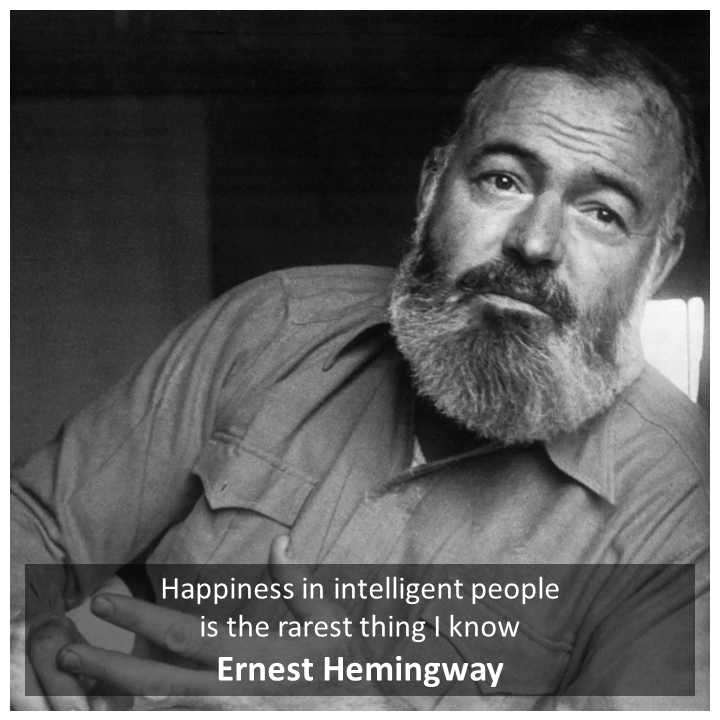
This is Nietzsche’s way of saying what Hemingway said. (I mean both meant the same although Hemingway came later, but you get the point) You must understand that happiness is not the real pursuit of life, then you won’t feel tragic about what Hemingway is trying to convey here, same is what Nietzsche trying to convey here. Freedom by independence can be a tragedy for the person who was expecting glory out of it.

Foolishness Hides Chances For New Insights

Nietzsche here is trying to remove the lines between what is good and what is bad, what is allowed and what is forbidden.

“That which serves the higher class of men for nourishment or refreshment, must be almost poison to an entirely different and lower order of human beings”

In modern crude sense, Nietzsche says “one man’s trash is another man’s treasure”!

Same idea, same act will have different perception of morality, scale of right and wrong. A rebel thinker in common poor public could be attributed to a philosopher amongst the riches. A murderer who killed an evil landlord could become a saint among the people who were victims of this landlord’s oppression.

So, Nietzsche’s attribution of foolishness is a way to point out the exceptional, outlier acts, prohibited acts, crimes to find the better truths. That will make you freer than others.

The Freedom of Youth   

 The stage of youth feels like the freest stage of all the stages of life and it is so because it has let go of the nuances. It also feels free because the youth in the stage of exploration never submits to right or wrong, yes or no to the life as Nietzsche says. But as the time passes when the youth is exposed to disillusions, broken expectations they try to modify themselves in a way that will get things done the way they wanted – the compromise starts to enter. The moment this happens the same youth tries to punish themselves as Nietzsche says. The freedom exists no more, so is the youth.

The Freedom of Actions

(Again, this a hydrogen bomb on morality!!!)

How can we say that the given action is right or wrong?

Nietzsche has very interesting thought process on this question. In the starting times the action was right or wrong based on what it led to – its consequences – the effect. The problem with this thinking is that one has to wait to let the action happen to decide its rightness or wrongness. If the stakes are high, such attribution of right or wrong can be devastating.

So, Nietzsche takes support of Chinese idea where the parents are responsible for the betterment of their child. Meaning that the origin of the thought which led to that action should be the decider of whether the action is right or wrong. Nietzsche called this pre-moral period of mankind. And sarcastically he points out that we have made a total turn around the idea of right or wrong action. Earlier it was what happened after the action i.e., consequences; now it is what led to that action, meaning what was happening before that action i.e., the origin which is the decider of right and wrong of any action!

This is where the origin of action gets named as ‘moral’ which is generated from self- knowledge. Later these morals evolved into “intentions”. As Nietzsche says, intentions serve as the origin of any action.

“people were agreed in the belief that the value of an action lay in the value of its intention. The intention as the sole origin and antecedent history of an action: under the influence of this prejudice moral praise and blame have been bestowed, and men have judged and even philosophized almost up to the present day”

Nietzsche then drops another bomb called – unintentional actions. We are clear that whether action is right or wrong can be decided by the intent. But what if there was no intent or there are no other ways to pinpoint the intent behind certain actions? There is a possibility that the intent may get mistranslated, misinterpreted during the unfolding of events, then how would you decide the attribution of given action.

In such case we would again go to the effect- the consequences of that action!!! You see what is happening here? We might have to resort to that older measuring system of action based on their consequences.

This is Nietzsche’s style to question how we think of morality in general and also on deeper level.

(I can’t resist praising Nietzsche lesser but deep down I know he would question his own worship too!)

The next attack Nietzsche does by using morality is the sentiment of sacrifice. The basis of his thought process is that you should question everything that gives you pleasure at least once. Here, he shows how fake the feeling of sacrifice for others, surrender could be if it is intended to display how moral and virtuous you are!

“There is far too much witchery and sugar in the sentiments “for others” and “not for myself””

In simple words, you are saying that I like to help others because it makes me happy. So, in order to help others you have to become selfless, but if becoming selfless to help others makes you happy, doesn’t that make you selfish? You are selfless because you are selfish!!! (Disclaimer: Nietzsche is paradoxical.) The paradox is resolved when you accept that you are just taking support of morality to display you higher value. Being selfless is just a better excuse to display your high morality. It there was any cruel way to display your high morality no wonder you would have gone for that!!!

In modern ways, it’s fox’s way to say the grapes are sour or I am a virgin because I am waiting for someone special (In reality fox cannot reach the grapes and the person is not able to appreciate other person or people rejected that person continuously – please note that I am not blaming someone’s character – it’s the limitation of language that prevents me from expressing what I am thinking for oversimplification. As Nietzsche has already shown that oversimplification kills the nuances. You get the point!)

The Immoral Philosopher – The Free Philosopher

Building upon the ideas of nuances lost in translation, right and wrong in morality Nietzsche calls the future philosophers to go beyond the dichotomy of philosophy and also distrust the morality in the development of new philosophy, new truth.

“In all seriousness the innocence of thinkers has something touching and respect-inspiring in it, which even nowadays permits them to wait upon the consciousness with the request that it will give them honest answers”

This is Nietzsche’s way to show that in order to find the new truth new philosophy, new philosophers have submitted themselves childishly and blindly to the principles of morality hoping that morality will give them new answers. But it is the same tinted glass of morality that prevents them from getting new perspectives. Hence, he calls them naïve here. They must let go of this childishness.

“The belief in “immediate certainties” is a moral naivete which does honor to us philosophers; but – we have now to cease being “merely moral” men!”

This is Nietzsche’s way of saying it’s good to be bad!

For Nietzsche, morality shows only two sides of reality- right or wrong, this works fine if reality is really dichotomized. But we know there is no such thing as right or wrong for every real-life scenario. So, in order to find the real truth, you have to let go of morality, then you will see that reality has its spectrum and people residing on different biases of such reality have their own attribution of right and wrong for the same action. Morality is the subset of newer truth, not the other way around.

‘il ne cherche le vrai que pour faire le bien

(he who searches truth to do good) – I wager he finds nothing!

 Nietzsche make his point by him being the first bad-philosopher!!! (This is why I am loving him more and more. It’s like a brainiac with full grown muscles if you want to picture him thematically!)

The Freedom From Passions and Reality – Will to Power

Nietzsche makes an attempt to show that the reality could also be made up of something totally different that we can even comprehend. What if the world is more real than what we can experience? And if such reality exists, our senses will limit us from experiencing it. So, in order to be free in such reality we have to rise above our senses. That would be the new freedom. Our senses are bound to desires and passions whose interactions – impulses are creating thoughts.  

So, building on these impulses Nietzsche says that many emotions, processes are created in “our reality”. What would make any of such impulses, process free from others? He introduces the idea of causality to show the flow and root of everything. If cause leads to an effect and further that effect becomes cause to newer effect then it is possible that the root cause of all would make us really free. Nietzsche further explains that it can also be one of the processes which would overpower others to become free and not the root one. (For example, the first unicellular organisms would be the most powerful organisms on earth today, that is not the case.)

Here Nietzsche introduces the concept of Will to Power. Whatever overpowers the other processes has the potential to remain in the big game and thus has real chance to be free. Will to power in any process allows it to gain more freedom.

This is Nietzsche’s Darwinian theory of evolution – the survival of the fittest. (I know it is a bastardized translation, but again I summon the loss of nuances during translation.)   

Then Nietzsche puts the idea that by this way of thinking the originator does not necessarily be the most powerful one, thereby questioning the existence of the God! Because if the God was the originator, then then he/she would exist only if he/she has the highest Will to Power. That also does not mean that if God does not exist then devil exists or has the highest Will to Power. It could be anything! We are not sure for now. (typical philosophical answer!)

Using causality, Nietzsche also questions the morality of French revolution. If for the locals the royalty was cruel that is why the revolution happened then why didn’t the remotely located people who considered them noble in first place considered them cruel too? In the eyes of remotely located people the French royalty had a noble past. (The question is intended to think on it not to find the right and wrong. It shows how flawed our thinking becomes when we stick to morality blindly.) Whoever came in power overthrew the less powerful. That is one way to explain Nietzsche’s Will to Power. According to Nietzsche, if Napoleon would have been continuously invested in the morality of his actions he wouldn’t have become the great emperor.

Freedom From Truth

Here Nietzsche starts with the very obvious and common fact that some truths are unsettling. Not every truth ensures happiness. Only an idealist, as Nietzsche says would submit the idea of truth that brings joy, happiness, and beauty.

Here comes Nietzsche’s biggest drop-

“the strength of a mind might be measured by the amount of “truth” it could endure – or to speak more plainly, by the extent to which it required truth attenuated, veiled, sweetened, damped, and falsified”

This is self-explanatory. It is just our unsettlement that we need to take care of while looking for the truth. We are thinking animals and thinking is a result of our impulses, desires, and passions. So, not every truth is destined to bring us peace. ‘We would die if we eat poison’ – is a truth which unsettles everyone but that is not how we react to such truths, we prepare for such bad events, that is the wisdom what Nietzsche is talking about in a crude way here.

“There is no doubt that for the discovery of certain portions of truth the wicked and unfortunate are more favorably situated and have greater likelihood of success; not to speak wicked of who are happy- a species about whom moralist are silent. Perhaps severity and craft are more favorable conditions for the development of strong, independent spirits and philosophers than gentle, refined, yielding good-nature, and habit of taking things easily, which are prized, and rightly prized in a learned man.”

Nietzsche prefers learned man more than the moralistic or the virtuous one. A learned man knows the consequences of learning new truth, or sometimes even unaware of it but he does not pivot his happiness on the discovery of new truth. What else could you make freer when you are ready to accept the truth in its crude and real form! This freedom will bring clarity, new perspective and not happiness or sadness or chaos or calmness.

Truth will not decide how and what you are. You just will have added new tinted glass in your collection of perspectives towards life and reality and the philosophy behind all of them.  If your Will to Power is good your truth may become the truth for all others.

Freedom From Identity

The profoundness demands the rejection of submission to any side of existence. If one promotes certain ideology the people around him/ her will try to comprehend that person using the tags they have in their own minds for that idea. The mask thus brings in that ambiguity where people are not associating, tagging you to one definite truth. Even your mind can start creating bias if you let it. That is why Nietzsche focuses on mask in profoundness.

“A man who has depths in his shame meets his destiny and his delicate decisions upon paths which few ever reach, and with regard to the existence of which his nearest and most intimate friends may be ignorant; his mortal danger conceals itself from their eyes, and equally so his regained security.”

The mask frees you from attribution thereby biases and even the socio-economical influences. You will never let honor or shame, right or wrong, good or bad, happy or sad justify the events in your life. You will never ever flinch to enter an unsettling adventure which guarantees your growth personally. Embarrassment, failure will just be another emotional response for you (please note that this does not mean that you will be emotionless, it means that you will be able to recognize your emotions and let them pass.)

This is exactly why I would force everyone to understand Nietzsche on their own level!!!    

“Every profound spirit needs a mask; nay, more, around every profound spirit there continually grows a mask, owing to the constantly false, that is to say, superficial interpretation of every word he utters, every step he takes, every sign of life he manifests”

This could also be one reason why some the greatest personality humanity has ever seen had a layer of controversial ambiguity around them.

From the idea of mask, Nietzsche moves to the idea of its conservation. The conservation is meant to define the philosophy of containing who you are rather that you submitting to some ideology. Whatever you have collected as an individual, whatever you are on philosophical level personally, how you have upgraded – refined your philosophy you must conserve that instead of giving to some ideology. The mask helps to conserve who you are.

“One must know how to conserve oneself – the best test of independence”

(this could be the reason why superheroes wear masks!!!  Joke aside but it is one powerful thought)   

Further Nietzsche warns new future philosophers to not be people pleaser or submitter to temptations. That will steal them of their judgement and independence.

Freedom From Your Version of Truth

The ways in which Nietzsche is trying to close his arguments are really beautiful. He knows that when the future philosophers will have discovered their new truths in their journey of blood, sweat and tears, it is natural that they will get attached to it. Such is the human tendency. He wants us to get rid of the obsession with this new truth. This truth even if it’s the newer one will create boundaries in your perception, you won’t be free anymore! Nietzsche wants to let the future philosophers let go of the dogma.

“In the end things must be as they are and have always been – the great things remain for the great, the abysses for the profound, the delicacies and thrills for the refined, and, to sum up shortly, everything rare for the rare”

Freedom From Illusion of Freedom

On closing notes Nietzsche has advised new philosophers to be careful of the “freedom” they are being offered under new socio-political ideas. Nietzsche focuses here on the ways new philosophers are embarking on the journey to new truths. He tells that having fluency in speech and effective grip on written communication will not define you as the new philosophers, even though they are one aspect of it. But the systems having higher Will to Power will use same tools to control new philosophers and change the course to their versions of truth.

New philosophers will be misled with words like “Equality of Rights”, “Sympathy with All Sufferers”, “Modern Ideas” but they should be careful about them. They should be aware that the moment they create a thought process the people on different levels with different Will to Power will interpret these same ideas for their own benefit especially the ideas which are polar opposites of your ideas. Once such separation happens nobody, not even you cannot get the real freedom.  

Nietzsche offers the rule of solitude while embarking on such journey. Only you can free yourself.  

A Story of the Fly and the Grieving Men

Katherine Mansfield’s short story called ‘The Fly’ shows how the loss of loved ones, especially young men in World War created a deep feeling of grief and loss among the surviving people. On surface the story may portray the melancholy of the loss of young generation but deep down it is the story of how ‘manly’ men always bypass the stage of crying out loud to express that grief. This grief brewing inside men is carried over to next generations in the form of cruelty and oppression.

Katherine Mansfield’s short story The Fly

Loss of the loved ones

Loss of loved ones is one emotion which is very difficult to articulate, express. It is very personal, subjective. Every person is a world in themselves and when such a person is lost a complete world is lost. Now the memories, moments associated with that person is the only real link which remains. It is this sad emotion created where most of us are clueless as to how to fill this void. People express these complex emotions of loss in many ways. Expression, communication is one important part of how we interact with each other and help, support each other during such difficult times. Even though other person’s sadness due to loss of their beloved is difficult to comprehend we know when to support them by understanding their behavior and expression, the way they communicate this grief, the way they behave.

But what about the people who very skillfully hide such sadness of loss of their beloved ones? If a person who is deeply hurt by the loss of their loved ones is not even crying or showing any signs of misery, anguish, hatred how would people console them, how would you console them? Superficially it looks completely non-human behavior as emotions and human are two inseparable words. People having such deep inexpressible grief have different way of coping mechanism which eats them from inside and may also affect the world and people around them negatively unknowingly.

Katherine Mansfield’s short story called “The Fly” focuses on an age-old father’s strong grieving emotion of loss of his beloved son in World War 1. The story is very symbolic and different readers have different takes on the central idea of the story hence the story has become highly important short story in modern times. People attribute the fly to the story of war, death, loss of young generation and the demonstration of cruelty which lead to the loss of innocent young people pushed in such wars who actually had nothing to do with it directly. What this short story delivers in the end is very poignant.

The Fly – The story

The story shows two old friends discussing general events in their life over a whisky. Mr. Woodifield is a person who has suffered a stroke and is retired – delicate health-wise. The Boss – 5 years older than Mr. Woodifield is a rich person handling a big business. The Boss is bragging about the renovation of his office to his friend Mr. Woodifield. Mr. Woodifield is happy that he got to drink the whisky as his wife and daughters would not have allowed him to do so. The Boss is showing him all new carpet, furniture, electric heating system and decoration. While showing this, the Boss has made sure that Mr. Woodifield’s attention would not linger over the photograph of a boy in the uniform. (Later readers understand that the it is the photograph of the Boss’s son who died in a war six years ago) Feels like even the Boss is purposefully ignoring his late son’s photo.

In the heat of discussions and drinks Mr. Woodifield brings the topic of his daughters’ visit to the World war soldiers’ cemetery in Belgium. He tells the Boss that his son and the Boss’s son both are buried quite closer to each other. Mr. Woodifield expresses a happiness of relief as expressed by his girls that at least the places where these sons are buried are well maintained, full of flowers and have broad path. It is way of saying that they were resting in peace.

The readers are made aware that the Boss had planned and made every effort to handover his big business to his son. He was very proud of how his son was capable to continue his legacy and his son was also appreciated among his business people. But the war snatched his son away and all his dreams shattered.

The moment the Boss hears the information about his son’s burial place he gets disturbed internally, as if he has lost the track of his surroundings. And before coming back to the reality Mr. Woodifield has already left the office. Now the Boss is alone in his cabin, he tries to express his grief which he had dumped deep below but is surprised that he couldn’t shed single tear.

In this moment the Boss sees a fly trying to escape from the pond of ink bottle kept on his table. The fly is trying hard to escape from the slippery bottle but is failing repeatedly. The Boss picked up the struggling fly with a pen and put it in the blotting paper. He sees the fly making efforts to dry itself to fly away and at this exact moment he becomes curious about the fly’s attempt to remain alive. He drops an ink-drop on the fly just to see what the fly does next. The fly doesn’t stop its efforts and tries to dry itself and fly away. As the boss goes to drop the third ink-drop while ordering the fly like a military officer to “Look sharp!” the fly gives up and dies.    

The moment boss throws away this dead fly out of window he feels a deep void in himself but soon overcomes that feeling and orders his assistant to bring more blotting paper like a military general. The old assistant is confused about this extreme change in the behavior of the Boss.

Things War Offers

Katherine Mansfield – the writer of this short story lost her brother in World War 1. This loss of her brother is supposed to be the main inspiration behind her short story ‘The Fly’. The readers will notice that Mr. Woodifield’s stroke can be attributed to the shock due to loss of his son in the war. He is not shown openly verbal about his loss but the internal grief became so dark that it took toll over his physical condition. The highly ambitious Boss looking forward to introduce his son to his business also lost his son. Katherine has incorporated the characters in story very consciously. There are no young characters who are alive in the story except Mr. Woodifield’s daughters. Even the assistant to the Boss – the office messenger – Mr. Macey is portrayed as a grey-haired old person.

Thus, it is a way to show what was left after the World War ended. The youth was lost. Only helpless mothers and daughters, sisters and age-old fathers were left grieving for the loss of their love sons, brothers.  

The war may offer the victory and pride to the nation but it snatches the youth of the nation and the hope for the better future. It also takes away the meaning from the lives of its age-old population.

Readers will notice that Mr. Woodifield describes the grave of the soldiers in Belgian war cemetery having graves lines in “miles”. It shows the scale on which World war wiped out the youth.

The Struggles of The Fly – How Wars Destroy Invaluable Lives

Many readers and analyzers of the story attribute the struggle of the fly to escape from the ink-pot and ink-drop to the struggle of the Boss’s son in the world war. The Boss’s perspective for how his son suffered is representative of all the young soldiers died in the war. War leaders lifted these soldiers from one slippery pit and threw them to another one, while the bombs were continuously bombarded on them until they eventually died on the battlefields. The struggles of the fly to dry itself and escape are the struggle of the young soldiers on the battlefield.  

Real Men Don’t Cry – How Men Cope with Melancholy and Deep Feelings of Grief

On a first reading, everyone will understand that Katherine Mansfield tried to convey the concepts of friendship, loss of loved ones, dangers of wars through the short story The Fly.

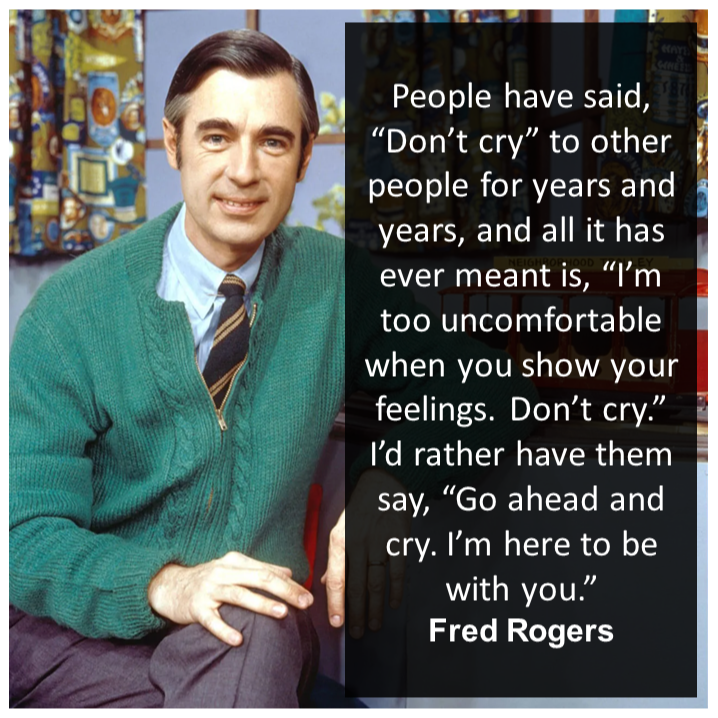
 Another most important and least noticed dimension of this story is how men handle their emotions of sadness. Trust me the Fly is not just about the dangers of the War. It is also about how men always suppress their sad emotions just to portray their masculinity to the outside world and how these suppressed emotions get transferred onto the next person, object or entity as a completely cruel and oppressive behavior.

If your read the story twice, thrice and notice the gaps in the conversations between Mr. Woodifield and the Boss and the actions, expressions they are portraying in these gaps, then you will start to perceive the inner turmoil these two people carry in themselves for their deep melancholy.

Mr. Woodifield has already suffered a stroke which is the effect of him being unable to share his grief from the loss of his son. As the only remaining man of the family now, he should demonstrate strength to the society and his family. Crying out loud is not the solution, thus his is getting eaten from inside with his old age.

To portray that he has come out the grief of the loss of his son Reggie, Mr. Woodifield explains the visit of his girls to the Belgian War Cemetery like it was just a simple visit to some normal location in foreign. As if there was nothing special about it. Furthermore, to mask his grief he describes this graveyard as full of flowers and spacious. He is trying to tell the Boss that at least in afterlife their sons are in good place and closer to each other, but he is actually trying to console himself unknowingly. It is his mind that he wants to assure that his son is resting in peace.

You will notice the depth of his grief when Mr. Woodifield immediately changes this topic of War cemetery to the topic of high costs for a pot of jam in Belgium where his girls were staying during their visit.

Many men use same technique of instantly changing topic in the fear that the grief will break out in some way which others may take as a weakness. Trust me, men are masters of such drifts in their conversation especially in a man to man or friend to friend-to-friend conversations. Very rarely male friends will share the problems or feelings of grief with each other. They will talk about the whole world but not explicitly about their sadness. I think Katherine succeeded in portraying these minuscule yet significantly impactful but unnoticed behavior of men. A tornado is always building up in such grievous men but they are masters of hiding that too. No wonder people are surprised when they hear a lively and happy man taking his own life, who is later revealed to be very depressed.

The Boss’s handles his grief in totally opposite way. We see him as more powerful and influential than Mr. Woodifield and he thinks the same about himself too. You should notice that the event when he is showing the renovation of his office to Mr. Woodifield is the moment which he had planned for his son actually. The carpet, the furniture and the electric heater were all for his son. He purposefully ignored his dead son’s photograph during conversations. He was trying to hide the reality that his son died and renovating the office was one way to get closer to this illusion that his son lives. The illusion that at any moment his son will return to this renovated office and take over his father’s business. This breaks my heart. In a corner of his heart, the Boss knew that his son will never return but he still renovated the place in a hope of return. No wonder they say that hope is a dangerous thing.

The boss is so used to hiding his feeling and vent it out through crying. You can see this in the moment just after Mr. Woodifield leaves the office, when the Boss tries to cry but is unable to shed a tear.

The use of exclusively accessible whisky for enjoyment with his friend Mr. Woodifield is also a masking mechanism, a distraction cleverly used by the Boss to portray that nothing has affected him. Men will resort to infinitely many distractions than to explicitly express their sadness just to show that they are manly men.

The Brewing of the Inner Dark Storm

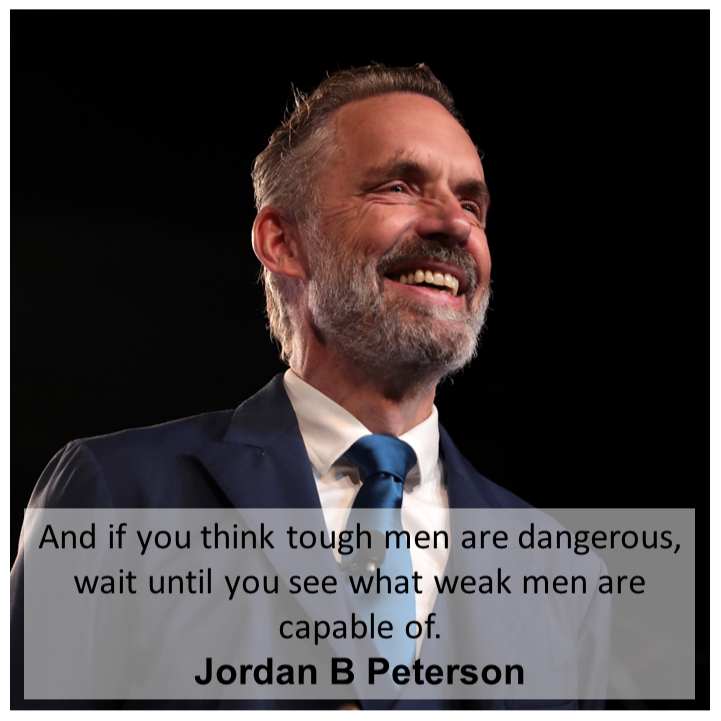
As the name of the story is ‘The Fly’ many think that the pivot of the story is how the Fly underwent death as the representation of how young people died in war and how their relatives got badly affected because of that. I have additional input on this point. The pivot of the story is the Boss. The death of the fly is just what he wants to happen with the other people around him as a helpless revenge for the loss of his son. What Katherine showed in the closing encounters between the Boss and the Fly are actually the depictions of how the suppressed and hidden grief, melancholy, depression in men actually gets projected out as a behavior of inhumane cruelty and unjustified- unending anger, anguish. They will never cry and release this grief but would choose cruelty to channel this anguish. That is how every war in history created new generation full of people hating each other. People especially men are really bad about sharing their sadness, feelings of grief and in many such cases they choose violence to channel out these feelings.

The way the Boss orders the fly like a military officer like “Look Sharp” or “Come on” is not addressed to the fly or not even as the reminiscence of how his son was ordered to fight in war while death dropping on him; actually, it is addressed to himself to remain composed while hiding his pain. The death of the fly here is not the representation of how his son died, it is actually how a part of the Boss himself has died – it is the death of the emotional and humane side of the Boss.

When men find it difficult to channel their grief into an emotional outburst, history has examples where we have seen them choosing the side of anger, cruelty and oppression.

Please understand that there are three different destinations where such grievous men end into. The first are already helpless so the grief eat them from inside, the second one and the majority choose the cruelty for expression and the third but very few succeed in expressing such emotions without guilt and receive help from the outside world.  

Melancholy in Men

Sadness is one important aspect of human emotions. In very crude way, sadness is an emotion expressed when things are not working according to one’s expectations. The word simply goes as ‘sad’ but the emotions which it represents are not that simple, crude actually. There are many reasons for a person to be sad and I see two different types of this emotion. When things are not happening up to your expectations, you become sad; you are sad that its not happening for you – I will call it “a selfish sadness”. You are sad because you didn’t win, you are sad because you lost that train and now, you’ll be late to your destination.

The second type is the sadness you have when the things don’t happen for the people you love, when the people you love are sad. You are sad because your people are sad. You want them to be happy. This sadness I would call as “a selfless sadness”.

A selfish sadness starts and ends with you so it is always in your control to get over this sadness. But, for selfless sadness the situation is tricky. It starts from you and it is always connected to the people you love, outside of you. When things are not in your control in such cases this type of sadness is deepest and the darkest one. Exposure to such selfless sadness in addition to the grief from the loss of loved one is a dangerous combination.

Katherine Mansfield, despite being a woman portrayed the details of how ‘manly’ men try to cope with the loss of their loved ones. They either succumb to the dark feeling and give up or they channel this extreme sadness into aggression and oppression of the weaklings, very few men successfully share their feelings and come out of it.

For me the condition of the fly is exactly how the world will be – oppressed and full of hatred if men won’t cry when they are grieving.  

Source for reading:

The Fly by Katherine Mansfield