

On the book – The Courage to be disliked
‘The world is simple, and life is too.’
I have a question for you,
– How is life treating you right now?
Everyone knows that the responses to this question are diverse and dynamic. The answers obviously will be subjective and so it is normal to expect huge variety.
But you know what, deep down everyone (mostly the adults) know the most frequent type of the answer to this simple question. There is innate predictability about what the answer could be.
Life is not treating me fair
Life has become too complicated for me, life is suffering, there is no hope, why can’t I have a single moment of happiness to savor for some time? why do bad things happen to only me? what have I done wrong to someone that ‘everyone’ has turned against me? what should I do – now that I have not achieved what I was supposed to achieve in spite of putting all honest efforts? why is ‘everyone’ – the society always against me when all I have for others is good will?
Deep down we have this undeclared, unexpressed notion that something wrong happened to me which I didn’t deserve. I tried so hard but couldn’t achieve that thing. Trust me every one of us is an expert of hiding these unsettling feelings, overlooking them to move ahead. But it is important to understand that unknowingly they become part of who we are. When we truly and honestly would start inspecting ourselves, we will find these feelings being the reason for the bitterness we carry inside. That is why life is suffering for most of us, being free then is out of the question. First let me be happy for now!
Psychology has always been on the quest of resolving the model of how our mind works. A bigger portion of psychology directly or indirectly works towards understanding how we see happiness and suffering. Because, end goal of how we feel, how we think, how we decide, how we interact, how our personality is created is emerged from either a happy event or sad event which affect why our psyche is in a certain way.
When it comes to psychology – people consider Sigmund Freud and Carl Jung as the de facto rock-stars of the field of psychology. One unnoticed person whose findings deserve equal attention rather more attention was Alfred Adler. He introduced the Individual Psychology (Individualpsychologie) to the world which is relevant still today and is way more sophisticated to solve the “so called” troubles of our life. Individual psychology makes a successful attempt to reach to the roots of our suffering and allows us to become truly free.
I appreciated this in deeper sense when I came across a book called “The courage to be disliked”. A single book can change your life. Although I have been changed many times before, I couldn’t help but overstate the importance of this special book.
This is my attempt to reorganize the ideas from the book to instantly simplify the core ideas. So, the next discussion may spoil the book for you. (Although it’s not a story book having a climax at the end but the ideas are written in a conversational – dialogue format so, you peel out one layer at a time to reach to the core ideas of individual psychology.)
I am actually spoiling the whole book and my writing on the same heron with these few sentences:
The whole thing boils down how you honor this current moment and not let it be influenced by the fear of past and the anxiety of the future. This complete dedication to the current moment is only possible if you honor yourself first, because only you can experience how this current moment will turn out for you. The moment you start to respect this moment here and now – you will be free.
If you have the ability to love, love yourself first
Carl Jung
Now that I have already explained what life ultimately boils down to, it will be important to understand why these sentences hold some gravitas. So, thanks for continuing with me hereon.
Deny trauma – Deny the comfort of causality
The core of individual psychology is the rejection of the causality. Our complete understanding of ourselves and the world we live in is based on the notion of cause and effect. It does immediately feel silly to reject that exact notion thereby making individual psychology illogical.
You will appreciate that not everything in whole can completely be justified or predicted with complete precision using the logic of cause and effect. There will always be some information that cannot be completely known for the given system (Heisenberg’s uncertainty principal points in the same direction). Our mind always makes decision, assumptions based on the current information, experiences we have till date and every one know that it is impossible to have all the information and all experiences that are there in the world for a person to understand his/her own existence.
So, in simple words – ‘who we are’ goes beyond the logic of cause and effect. You can be free once you break the chains of cause and effect. In the universe filled with infinite possibilities, there will always be something wrong and illogical, totally disconnected justification to the things happening to you and around you. It will be an injustice if you let that illogical justification define your whole upcoming life.
When we say that I became a person like this because something happened to me in past where I learned my lesson and changed myself into something else, we are just trying to convince ourselves to do things in certain way so that we will have less resistance to get things done in our ways. That is exactly where problems start emerging.
We crave for causality because it grants value to past; because it taught us some valuable outcomes and same causality can help us to predict what would happen in future. We always crave for certainty. But all of us know this by experience that we are rarely good at predicting our future. This furthermore unsettles the mind.
So, trauma is the pre-side-effect of causality (the post-side-effect of causality is the anxiety of the uncertainty of the future). We carry our traumas as badges to flaunt because these traumas feel very personal thus exclusive. The ways in which we carve out our personality from these traumatic experiences gives us a sense of special-ness. These bad experiences, traumas are a big part of our personality maybe due to a survival mechanism implying ‘I should be able to cope up with similar thing if they happen to me in future.’
See, the point is that if we stick to our traumas and fixate our personality on the same, we will never be able to explore the concepts that had better potential to improve our personality (and probably not be traumatic, bitter). We will be stuck in that loop of experiences related to that causality. Given that there are infinite possibilities, there is fair chance than we can be even better than what we were and what happened to us in the past. We are just better at finding reasons to justify our current position because we know we are comfortable here.
No matter what has occurred in your life up to this point, it should have no bearing at all on how you live from now on.
It might seem that when we are rejecting causality, we are choosing a non-nonsensical path. In reality, we are just avoiding the ways in which we are always fooling ourselves to remain in comfort of predictability. Using the excuse of causality, we are actually ‘inventing’ non-real reasons which hide the realest reality we can actually live.
The first principle is that you must not fool yourself and you are the easiest person to fool.
Richard P. Feynman
Once you deny this causality which you think made you who you are, you will immediately see who you really are. You will leave that burden behind. You will accept yourself for who you are. You will see that you can instantly detach yourselves from your past and your future too. The untapped possibilities open up.
This is self-acceptance in individual psychology.
Once you see how important you yourself are to live your own life, you will say –
“Before past and future let me at least appreciate my own current moment”.
That is now and here. Once you come to the terms with yourself you will realize how everyone is just like you even though we are separated by many aspects of life. Then you will appreciate how others have their own current moments to live and experience in their own ways.

All problems are interpersonal relationship problems – others have their own current moments to experience in their own ways
It is fundamentally impossible for a person to live life completely alone, and it is only in social contexts that the person becomes an ‘individual’.
Nobody can deny the fact that our surroundings make us who we are. Our baselines are our surroundings. A human being is the most basic unit of any society. Our understanding and awareness of self is impossible without a response from surrounding. How would you understand who you are if you never received any reaction, feedback from your surrounding? – It will be a delusional existence. You would have had an idea of who you are but would have been far from what is real.
Thus, when you start seeing that your surrounding will always be interacting with you, you will be able to see every reaction – feedback from surrounding especially people can never be completely cut off. This again feels senseless. If you are born alone, leave this world alone then why couldn’t me being alone throughout my existence be more justified? It is because we never had any sense of absoluteness right from our birth and this sense of absoluteness always remains un-achieved, it is just an ideal condition we are always trying to reach. Our core understandings are only possible with the relativeness, comparison of baselines.
That is exactly why even when you are trying to live your life alone, that ‘loneliness’ itself cannot be justified if there is no understanding of what being ‘together’ means. So, there will always be something connecting you to your surroundings. That is where relationship comes in picture. You cannot run away from interpersonal relationship. You will be surrounded by people (or at least what made them you even when you are sitting lonely).
So, when you are appreciating your current moment, it is natural that others will be respecting their current moments. This understanding will make you appreciate the importance of everyone’s being.
This will make the world around you seem less hostile. You will be filled with kindness for others.
So, you must first accept yourself first otherwise you will not come out of the hideous cycle of comfort of predictability, once you accept yourself to remain in now and here you start seeing here and now of others. You start valuing their here and now. That is why you start allowing people to be who they are, you stop expecting from others. You stop expecting your recognition from others, you stop pleasing people for your own good in the end.
Now that you are free from the burden and pursuit of desirable and predictable, anticipated feedback from surrounding you become tolerant of criticism and even dislike from others. That is truly when you are free. I want to focus on my now and here and nobody can stop me from experiencing that. Then you see this as the basic requirement for others too. This is exactly here the person becomes tolerant towards others. People start putting confidence in each other to create that safe space – the real safe space. People start respecting each other’s boundaries because they themselves have understood that they have their own limitations. This creates the sense of camaraderie – society.
It is precisely because we lay a foundation of unconditional confidence that it is possible for us to build a deep relationship.
This is confidence in others in individual psychology.
Discard other people’s tasks – reject the desire for recognition and accept that you being disliked is not in your hands
When you are appreciating your own now and here to its fullest, you will notice how important it is to reject all other distractions to honor this moment. You will limit these distractions to focus more on this moment. This is where you will see that even though we are molded by our society we have limitations and so do the others. So, it is better if one sets boundaries.
Setting such boundaries helps everyone to focus on their ‘now and here’ in deeper and richer ways.
If you are not living your life for yourself, then who is going to live it for you?
When one develops this understanding, they will clearly see what lies immediately in their own control and what not. If you are busy in trying to control what cannot be controlled by you, how would you have enough resources to appreciate your ‘here and now’? That why it is important to not focus on what you can’t control. Those will be someone else’s to control, that is not you task. That is exactly why you cannot pressurize people to do things in your ways. People can have their own reasons, limitations to not do things in your ways. It has to come from their side.
Forcing change while ignoring the person’s intention will only lead to an intense reaction.
Building on this understanding, you will start appreciating how doing what you love and not expecting anything in return is more than enough. You did what you love. Whether to appreciate it and recognize it, praise it is in other’s control not yours. Now that you have accepted yourself, you do it for yourself, then you won’t crave for attention from others, then you don’t crave for superiority, dominance. You come on level to level with your surroundings. You appreciate that whatever one wants to become that journey has to be completed by only them. Then you appreciate how we are trying to please others to get things done in our way when they were never in our control. You let go of the things which you cannot control and start focusing on what you can. That is why it is normal that some people (who were trying to get things done from you in their ways) will dislike you for not doing them in their own ways. This shows that you are honoring your ‘now and here’
The cost of freedom in interpersonal relationship is that one is disliked by other people
Once you understand that it’s normal to be disliked, rather that indicates that we are doing our own thing you will appreciate what it really means to be genuinely be appreciated by society. Then you will feel like transferring this feeling to others too. Now that you have experienced this feeling for yourself, you would genuinely want others to feel that to. The things then you will do for others will have no intent of return because you very well know that returning favor is other people’s task.
If one’s means for gaining a feeling of contribution turns out to be ‘being recognised by others’, in the long run, one will have no choice but to walk through life in accordance with other people’s wishes.
The feeling and act of contribution has to be selfless and this selflessness is possible only when you are valuing your ‘now and here’. If you still are not valuing your ‘now and here’, it is very easy for you to get swayed by the likes of others and then you will end up in pleasing others and whether others will be pleased by what you did for that recognition is not in your control. This means the most probable fate is misery.
So, self-acceptance builds courage to do it in your way whether others like it or not. This detachment from opinions of others pushes you to do the things which were impossible before – what else is freedom them? Then you understand the value of self-acceptance. You will then have the selfless feeling to let others experience and understand this. This selfless act for others will feed back into your sense of own being. This will support your feeling of self-acceptance. Once you close this feed-back loop, you will see what others are missing. You will help others in the real way. This will create the sense of belonging for you which further creates the real sense of meaning in life.
This is contribution to others in individual psychology.
Where the center of the world is – there is no absolute cause and effect – there is no such thing as the first start and the last end
If you are ‘the center of the world’, you will have no thoughts whatsoever regarding commitment to the community; because everyone else is ‘someone who will do something for me’, and there is no need for you to do things yourself. But you are not the center of the universe and neither am I.
Adler’s individual psychology thus focuses on a feedback loop of three key things:
One – Self-acceptance – you are who you are ‘now and here’, not what made you who you are
Once you accept yourself you give yourself better chances to live an earnest life
Two – Confidence in others – now that you have appreciated how valuable, irreplaceable and incomparable living in ‘now and here’ is, you let people do their own thing because they have their own ‘now and here’. You put confidence in others, you do it not because you want something in return because returning the favor is in their control. This builds the real sense of community, belonging, safe space.
Three – Contribution to others – Once you start believing in people just like the person you are you appreciate what it means to be felt accepted. You try to support this feeling by contributing back to your safe space. You want it to be done by yourself because you now know that contributing back is in your control – your task. This further crystallizes your sense of self-acceptance.
Now that you have appreciated what it means to become truly free, it is normal to reject the false sense of superiority, false sense of being special. Every moment becomes same to you. This does not mean that you become numb to sadness or happiness. It just means that you appreciate that this too shall pass, all I have to live and experience is ‘now’. You lose the idea of a goal to be achieved and accept the real goal, the real target is to become the process.
Life goes on
For a human being, the greatest unhappiness is not being able to like oneself.
Although our existence is bound by birth and death, cause and effect. The reality filled with infinite possibilities does not follow that logic and we fail to notice that difference. Just to make the sense of the infinite possibilities we resort to certain assumptions, prejudices, reasons, past events, future expectations. We never question them with complete honesty because questioning them will bring existential crisis. We all know that our foundations really are not pure or absolute. Once you accept this you will see that it is very easy and important to accept who you are now. This further induces kindness for others. This creates the community. This is called Holism in individual psychology.
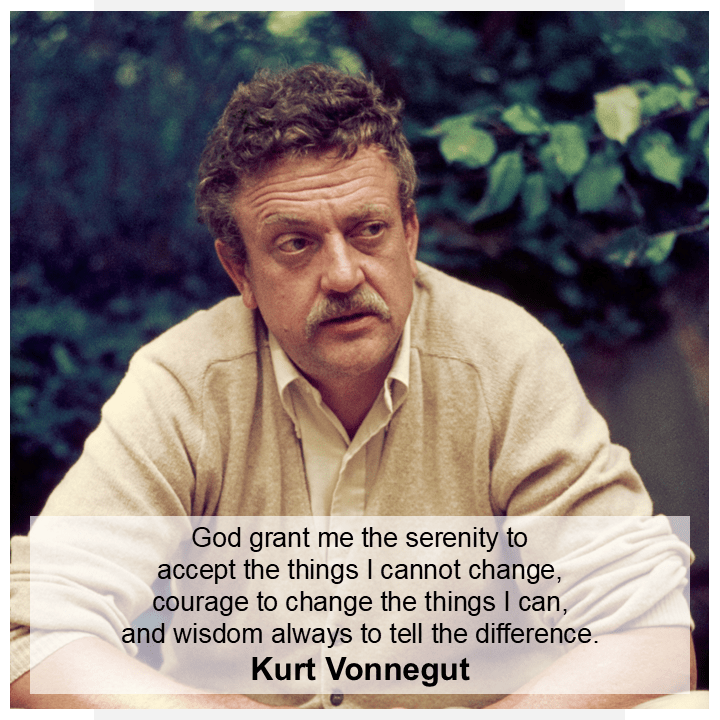
You must appreciate how causality brings in determinism in our lives. This determinism is kind of responsible for the lack of freedom in our lives. When we are suffering it is this exact determinism imparted by causality that builds helplessness. One must carry the courage to break out of this determinism. The courage is necessary because we never want to let go the comfort of predictability which determinism offers.

We resort to certain version of our life story when we are completely aware that we can totally change our life story. We are always taking the support of ‘I am like this because this happened to me’. This is how everyone’s story is. There are very few people who have dared to say – ‘I have gone through this for long but not anymore.’ This requires for you to appreciate yourselves first, when you accept who you are you move on to the path of improvement whereas when you are trying to act according to the like of people around you, you are actually proving the point that you don’t like the version that you are that is why you are ready to become the one which people would like and tragedy of this path is that the task of being liked by others is not in your control.
That is why whining about why we didn’t reach there would never help us to reach there or even embark on journey in that direction. We are hesitating to make our own move.
As long as we postpone life, we can never go anywhere, and will only pass our days one after the next in dull monotony, because we think of here and now as just a preparatory period.

Be real, not a hypocrite
People want to like themselves. They want to feel that they have worth. In order to feel that, they want a feeling of contribution that tells them ‘I am of use to someone’. And they seek recognition from others as an easy means for gaining that feeling of contribution.
The main reason Adler’s individual psychology didn’t receive enough attention is because it feels completely self-contradicting and hypocritical on surface level.
You will find these seeming contradictions everywhere in Adler’s ideas. It will say that we are social animals and are defined by society but in next moment it will say that you need to have the courage to be disliked by the people around you.
One time it says that you should not interfere in other people’s tasks and next time it says that you need to have a feeling of contribution for the same people.
One time it will say that you have to sever the relationships where others are not realizing their own tasks and making life difficult for you and on the other hand it will say that you should be unconditionally confident in others endlessly.
One time it will say that you should completely focus on yourselves and then it will say that you are part of a bigger family, bigger universe and you will be happy when you contribute to this bigger community to create a sense of belonging.
If I am being disliked then how the hell would I be happy?!?
If you inspect each of these seemingly contradicting ideas you will find one simple fact – the fact that we are walking living paradoxes and in spite of that we demand sense and logic about who we are.
The sense of self or individual cannot be appreciated well if you never know what it means to be surrounded by people. And there is always some interchange happening between individuals which makes it a society. We often see society as a group which is everything minus ‘I’. We fail to recognize that if I fix myself in certain way the others around me will fix themselves in response to that way and then most of the individuals who constitute the society will fix themselves in certain way. Means even a single person can effectively change the society.
What people actually miss when they come across the ideas put forth by Alfred Adler is the possibility that we can truly reject causality. I would call this unawareness the curse for the humanity. Our sense of ‘being’ inherently originates from some non-absolute attributes, relative references that we have to accept them as the ultimate truth right from our birth to make the sense out of all these infinite possibilities.
We are so entangled in the suffering and happiness waving between the life and death that we ignore that we are born, dead and again reborn every moment. The trick that causality plays in our life is that it tries to preserve the previous step to justify our current stage thereby freezing our present. Whereas what we should do is to just be in now and here which needs courage because there is no guaranteed layout, map to guide you. You have to walk your path all by yourself.
What people fail to notice is that the comfort of predictability is just in this moment but this sense of comfort has no control over future rather it intensifies the pain due to the randomness of the unpredictable future.
The secret to happy life is to be involved in everything and still not be attached to them.


 Parts Per Billion