The Lullaby of Eternal Rediscovery of Existence and Identity

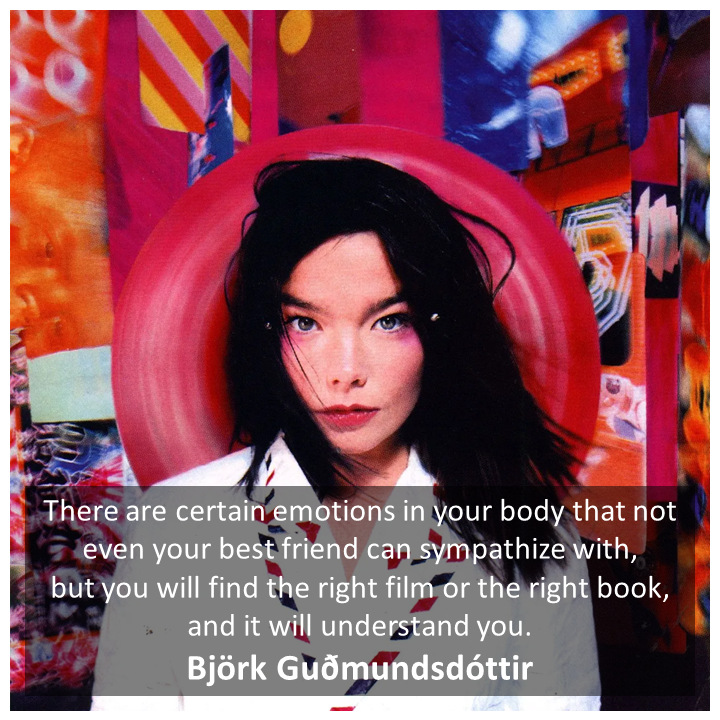
Being social animals, we compare our lives with the lives of the others, we create our baselines and set our targets based on what others have achieved and done in their lives. In our current times when the life expectancy is better than ever, when we have a better cover of social safety than ever, the primitive instinct of survival from natural predators has been replaced by the modern instinct of philosophical- ideological survival which is the ‘preservation of our identity’ – the idea of our own image. The realisation of the philosophical death of our being should come with the awareness that your idea of self, your consciousness was just created by your desires and after this philosophical death you are returning to the fundamental forces of what made them. The endless possibilities for your becoming are opened in this point. This is the true eternal existence – to get broken down into the fundamental blocks of being and be recreated again. Juliet Ivy in her song ‘We’re all eating each other’ beautifully brings the sense of life that is made up of eternal creations and destructions.

Juliet Ivy’s song “We’re all eating each other”

Genuine poetry can communicate before it is understood

T S Elliot

There exists a special category of songs which sound very jolly, full of life, giving the impression of the light hearted joy, calmness, relaxation everyone desires; on close inspection you end up realizing that the lyrics of that same song is so dark that one would question the mindset in which the song was written and composed. These songs are the songs to which people would dance happily due to its music but the moment lyrics of this songs is opened for discussion you will end up questioning your existence. It feels ironic.

There are many songs to name which fall in this category, I stumbled upon one such song by Juliet Ivy called “We’re all eating each other” from her album playpen.

The song is written by Lucas Sim and Juliet Ivy Ortiz.

playpen album by Juliet Ivy

The great thing about this song is the way its melodies try to befriend you. It’s so simple yet effective and the song’s rhythm is not continuously varying which creates an impression of safe and calm space of familiarity. 

What's the point of living without dying for an ego?
So we validate our fantasies to feel like we are special inside
You know we love to lie

I was literally shocked when I started digging into the lyrics. How could one simply state a brutal fact of life as if someone is asked to simply pass salt and pepper on dining table?

For me it creates an impression of life being so simple at its core yet we always choosing the complicated version to justify “our” way of life and “our” ways of truth. Juliet beautifully and very clearly puts this observation in few words of wisdom.

The life we are living, the identity we carry is all we have when everything is taken away from us. This identity is created and molded into a specific shape and size from the life experiences we have. They are mostly subjective and are created from inside. That is exactly why we are completely attached to our identity. This identity has two facets – the identity we truly know ourselves and the identity we project on people around us to show them who we are. Trust me both could be totally different. We are always trying to preserve our identity. This is what Juliet is calling the ego here.

In order to preserve our identity – our ego, we let go of the objective truths and accept certain illusions, fantasies. This is done to create a sense of security otherwise our mind would keep running everywhere in panic. We create some lies, ignore some painful truths to calm our mind down; no wonder they say ignorance is bliss.    

The biggest lie is the lie we tell ourselves in the distorted visions we have of ourselves, blocking out some sections, enhancing others. What remains are not the cold facts of life, but how we perceive them. That’s really who we are.

Kirk Douglas

We like grabbing onto anything to feel like we're important
Not a moment that is shorter than a hiccup or a blink of an eye
You know we're scared of time

Here Juliet shows how the limited span of life brings in the urgency to justify our existence so that we will be satisfied with the feeling that we are special. But we chose to ignore the fact that the ideologies, things that we are clinging to justify our special-ness also have limited lifespan just like the lives we are living. Even though we want to live for hundreds of years, on the grand scale of creation we are not even a blink – not even blink of the blink!

This is more than enough to leave all those false things which we are trying to justify our life, our special-ness with. The moment we let go of the feeling that we are something superior than anything in the world is the moment we lose the fear of not existing. The loss of this fear of not existing would make one eternal. We don’t want to lose the identity we created when we became conscious of our existence. That is why dying without getting any recognition, remembrance is a painful idea for all of us. But that remembrance, those memories will fade away. This should humble everyone.    
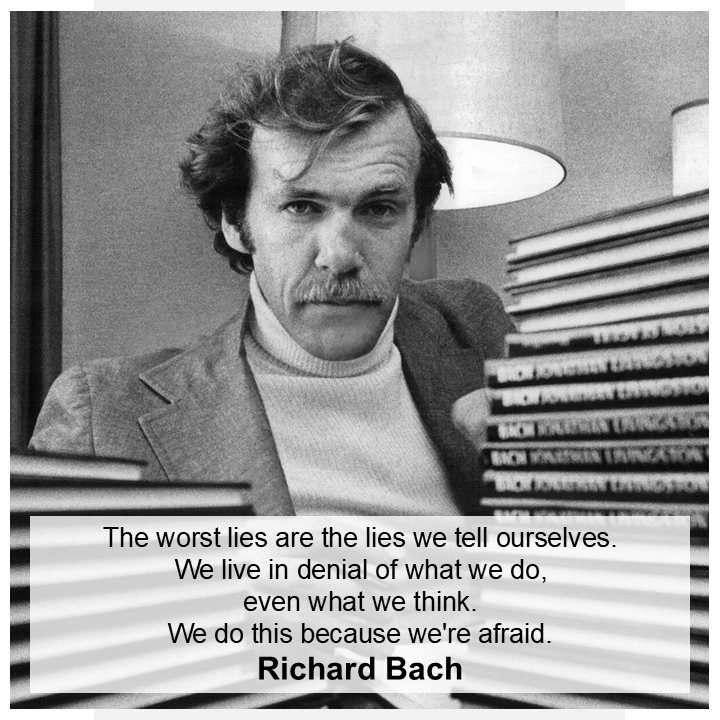
The worst lies are the lies we tell ourselves. We live in denial of what we do, even what we think. We do this because we’re afraid.

We fear we will not find love, and when we find it we fear we’ll lose it. We fear that if we don’t have love, we will be unhappy.

Richard Bach

But we're all gonna die
Decompose into daffodils and dandelions
The bees will use our flowers for whatever they like
Make the honey that our grand-kids will put inside their morning tea
It's the thing of life
We're all eating each other
The thing of life
Nobody lives forever
The thing of life

The urge to ‘consciously’ exist forever is the only lie we need to let go to become truly eternal, free. We are so attached to our so called “self-created identity” that we consider everything going against is as a potential threat to our existence – the existence which eventually will fade away into nothingness. It is way better to accept the finite-ness of life and be useful to each other rather than carrying that false sense of superiority, higher ego to justify our lies of life.

Juliet puts higher perspective to sooth our confusion of “conscious existence”. We are justifying our egos because we don’t want to die, we don’t want our identity to die, we don’t want our memories to die, we want to be remembered by people even when we are not existing in the world. The urge to preserve our conscious identity thereby our personality becomes the ultimate goal of life.

I am using ‘conscious’ word here to show that we are scared of losing the “I”, “Me” from our life because that is how we experience the life. We create the sense of existence from inside that is why sense of “I” is very important for our existence but if you closely observe the way things exist in the nature it is really difficult to pinpoint what makes that “I” – the “I”. Is it my brain? Or is it my body? is it my property? is it my super-car? is it my villa? is it my designation/ salary? is it my family? What exactly defines us?

You will get the answer once you accept that this thing that you have assigned your identity to – your existence to will not remain forever. When we say it will not remain forever it means that the combinations which created that existence. The existence would crumble down into nothingness.

Now here is an interesting part. We call the crumbles of nothingness “nothing” because they do not immediately affect, improve or help the existence we were trying to hold on to – our identity. We forget that it was the same set of some “nothings” which came together in a specific way to create “something” – this something became our existence.

Juliet beautifully brings in this perspective by saying that we will end up into flowers then into the honey that our future generation will put in their morning tea.

While we are trying to hold onto our special identity which is short lived, which would disappear in a blink we are forgetting the fact that the nothingness from which we were created is more eternal than the identity we are trying to maintain. This nothingness is the truth, its that something which is getting recycled all the time. On the other hand, we are in this constant battle to justify our falsely created, mortal identity.

We should understand that we are actually eternal but this false sense of ‘being’, this false sense of ‘conscious’ steals the real eternal existence. 

We don't know how to accept we're just a product of a chance
And less like gods but more like plants
Who can't stop making up reasons we're alive
(We're alive, we're alive, we're alive)
You know we love to deny
(To deny, to deny, to deny)

Juliet is again waging war with our falsely created sense of “special”. We intentionally highlight the facts that justify our superiority and ignore the facts which actually show that we might be the result of few overlapped coincidences. Even if we have not come out of chances and coincidences our existence is not that grand in the whole scheme of existence. On the level of creation, we are as close to plants than the powers which created all of us.

So we paint our face with intellect
Pretending we're not curious
Too busy, super serious
Don't have the time to do what we like
(What we like, what we like, what we like)
Baby look at the sky

In spite of knowing that we are insignificant, knowing that the creation is way bigger than what we are trying to justify ourselves, we are always in the race to prove our superiority. Why does that happen? Why are we always trying to justify our superiority with some lies while we call ourselves the smartest species? Why ‘we’ the smartest ones fail to recognize the objective truths of the world when we know that there is not meaning to chase everything all at once? Why we are always trying to win the race and justify our worth with something?

The reason is that we think our existence is limited, our time of remaining conscious of our being is limited.
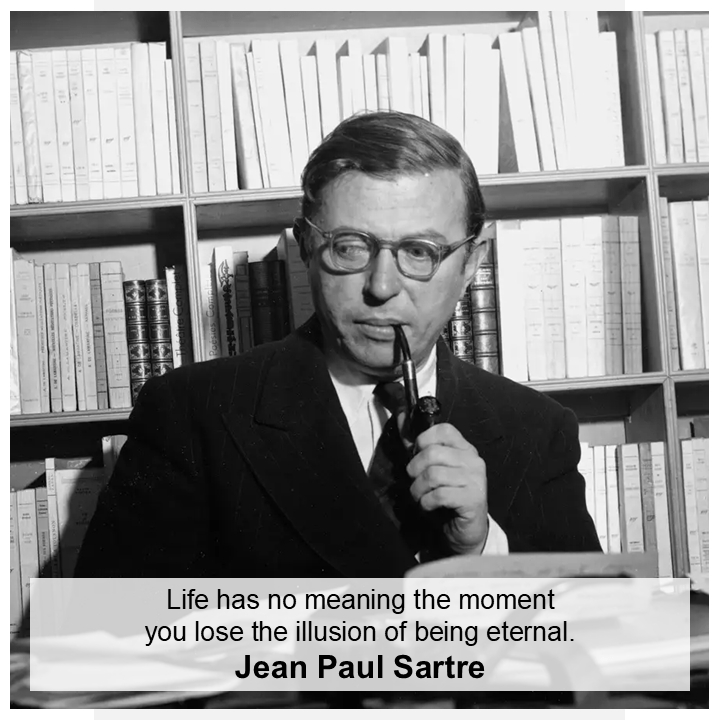
We very well know that we will die someday, that is exactly why we try to justify every moment of our conscious existence to something, some idea, some object which we call our job, duty, faith, passion. We don’t want to die with the regret that we have nothing that will remain forever after we die. We are so wound up in justifying the life, memories after our death that we have invested our present into the pursuit of lies which are creating the illusion of our specialty.

Our heads are so engrossed down into the pursuit to create that false identity of worth-ness that we are unable to look up and appreciate the beauty around us, the reality around us.

The urge to lookout for the meaning of life and then assigning that meaning to something so superficial will eventually end into the pain and regret of not enjoying the time we had to its fullest, the moments we had to fullest. We are always trading the real awareness of “present” to gain the illusive comfort of safe “future”. That is how we justify meaning.

The real meaning of life should come with the understanding that whatever it may come next, one will never attach the sense of being to something which amplifies ego. Ego too will perish in the flow of time. The rejection of ego comes when one lets go of their sense of identity being special.       

'Cause we're all gonna die
Decompose into daffodils and dandelions
The bees will use our flowers for whatever they like
Make the honey that our grand-kids will put inside their morning tea
It's the thing of life
We're all just eating each other
The thing of life
Nobody lives forever
The thing of life
We're all just eating each other
The thing of life
Nobody lives forever
The thing of life

The rejection of ego will make you free, will show you what your real worth is. Even though you are not special – in the end, you are something of value when you synergize with others. Even though your conscious being is not eternal, the things which made your conscious being are eternal and that awareness should free you from all the urges to justify your identity, your specialty.

You are given a chance to experience the universe in the most sophisticated manner possible which many of the other species might not even have. What more could sooth your existential confusion! Once you realize that you are already made up of eternity, you will let go this mortal identity which you are always trying to preserve with some subjective perspective and lies. This is the real freedom and it requires innocence. Innocence is one of the basic indicators that the person has no ulterior motive to achieve something, it brings in the sense of acting on things without expecting anything in return. Please understand that innocence does not mean that the person should become a fool. Remaining innocent in spite of knowing everything is really hard, that is how you will know that you are not fooling yourselves. This song shows us that innocence. 

Conclusion

Juliet Ivy very beautifully brings the sense of life that is made up of eternal creations and destructions. We attach the meaning of our lives, the purpose of our lives to certain things while realizing that they too will perish in the flow of time – this is what would unsettle even the dumbest person. This feeling is also experienced by the highest specimen of humans. In order to come out of this unsettling fear of unjustified – worthless living, we take support from our surrounding. We selectively choose certain aspects that will create an illusion of safety and comfort. Being social animals, we compare our lives with the lives of the others, we create our baselines and set our targets based on what others have achieved and done in their lives.

You know what? Even after achieving such goals which we defined based on our surrounding we are not happy. Even after those material victories, we see that the happiness is short lived. So, we shift our goals to something which is immaterial, something which is spiritual. Something which we think is more eternal than the material things. We make certain ideologies the meaning of our lives. Religion is one of such examples.

René Girard – a French philosopher coined the concept of Mimetic theory where he tries to answer how we decide what to do and why to do. Mimesis roughly means imitation, trying to resemble. When we are stuck with no information or loads of information in either cases, we will be overwhelmed. The best way to come out of such conditions would be to see what others are doing around you. We set our standards based on the baselines of our surroundings. We create lies to justify these baselines and goals we want to achieve. Our ego is thus created to ensure that we maintain the sanity in the times of clueless-ness. It will prioritize survival of body in materialistic races and survival of its own sense of existence its identity in the spiritual races. In the end, both victories will fade away. (That also should not mean that one should not engage in the pursuit of certain victories. It should imply that the non-eternal nature of everything should humble the person.)

The most important point to understand is the ways in which everything great (also everything worse) will be broken down to their most fundamental building blocks. The idea is to not get attached with what you created which got destroyed.

In our current times when the life expectancy is better than ever, when we have a better cover of social safety than ever, the primitive instinct of survival from natural predators has been replaced by the recently created – modern instinct of philosophical – ideological survival which is the ‘preservation of our identity’ – the idea of our own image. (Social media is the booster for such way of life. It is also how the mimesis is happening strongly.) Philosophical death seems more painful than actual death. That is why in certain cases people gather courage to do self-harm. The best way to come out of such mentality is to question the very thing which brought this philosophical death; I know it is difficult to pick on the injury which already is painful to bear. The idea to work in such confusions is to notice one important behavior every one of us maintains when we define our life. We always strive to amplify things which bring happiness and ignore things which bring sadness. We define our life selectively on such choices in spite of knowing that both hold same potential to realize in actual life. This desire to selectively attach to certain aspect brings pain in life.

The moment we accept that there is no end to the cycles of creation and destruction (of both good and bad) we will see that we are nothing but a recycled versions of everything that is there in the existence.

The realization of the actual death of our body should come with the awareness that you are returning to materials which made you.

The realization of the philosophical death of our being should come with the awareness that your idea of self, your consciousness was just created by your desires and after this philosophical death you are returning to the fundamental forces of what made them and thereby what made you. The endless possibilities for your becoming are opened in this point. This is the true eternal existence – to get broken down into the fundamental blocks of being and be recreated again.

Juliet Ivy said all this in one simple sentence “We’re all eating each other.”  

The cosmos is within us. We are made of star-stuff. We are a way for the universe to know itself.

― Carl Sagan

A Hindsight For Better Future

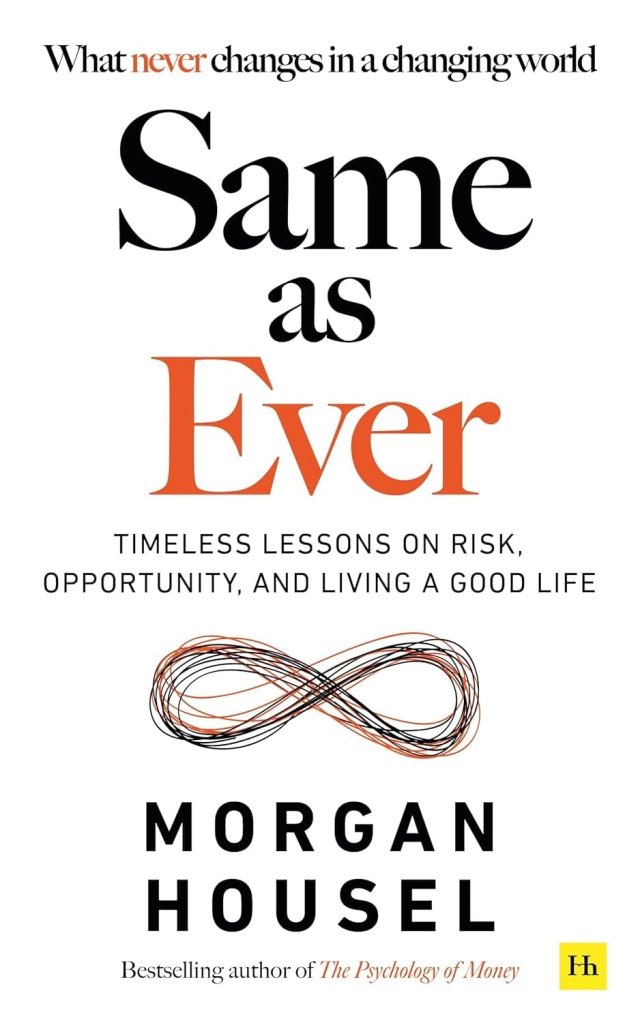
Morgan Housel – the famous author of ‘The Psychology of Money’ has another important book called “Same as Ever” which gives insight into things which have never changed over the course of time. Same as Ever drives the motto of objective flexibility and subjective awareness of every event happening around us and with us. It also highlights that our mind is the first and the easiest one to fool, which leads to false sense of superiority over others and creates biases. Once we accept that nothing is perfect, no one is perfect – it injects humility and forgiveness. It also makes us to be grateful for what we possess today. The ability to see every event at the same level is a superpower any one of us can have.

An important book from Morgan Housel called “Same as Ever”

Somebody, make me a time machine

Life would be easy if we had a way to accurately predict the consequences of the events/ actions.

Scenario 1 – what would be your reaction if some random person hands you a $1,000,000 lottery ticket and, in few moments, you realize that you just won that lottery?

Scenario 2 – what would happen if an ambitious project that you worked on tirelessly for many years while sacrificing your other priorities – ends into a big failure because of a seemingly impossible and insignificant event/ error?

For most of us these two scenarios are practically impossible but the odds are still non-zero. They can happen in reality.

How can we be sure that they selectively happen to certain person? Scenario 1 for ourselves and Scenario 2 for our enemies especially… (Just kidding)

If you closely observe the lives we are living right now, you will see that we are always oscillating between such events which demand certainty of outcomes even before the are realized. We have this innate urge to remain ready for such events; it is what we are always striving for.

Now, one question – are we living in a matrix? Is universe a simulation?

If the answer is ‘YES’, then it means that every outcome should be predetermined. If everything is predetermined then why things don’t happen the way we ‘want’? Does that mean that we lack the computational capabilities to precisely calculate the outcome? OR is what is destined to happen different from what we ‘want’?

If the answer is ‘NO’, then everything explodes into meaninglessness. The answers are nihilistic.

Looking at the both outcomes of this question we see that we need a baseline to make our decision making effective. Is there a formula to systematically put all the things happening around? What are somethings in nature whose knowledge will ensure our satisfactory existence. (I am being very optimistic while writing ‘satisfactory’ word here.)

In simple words, what is the formula to live a good life? whether it is predictable or not.

 Morgan Housel the famous author of the Psychology of Money wrote one important book called Same as Ever which tries to answer this same question. Same as Ever drives the motto of objective flexibility and subjective awareness of every event happening around us and with us.

This is a deep dive into Morgan Housel’s book “Same as Ever”.

I will try to keep this short. Here are some instructions:

Those who have read this book – each idea in this book is numbered in the sequence Morgan explains in the flow of the book. So, #1 is Hanging by a Thread as mentioned in book and #23 is Wounds heal, Scars last

Those who haven’t read the book – I have given short summary of what Morgan discusses in each of the 23 ideas. That should help you to wrap you head around my distilled down version of this book.

(I apologize for putting that part in the end and spoiling the conclusion/ discussion on this book.)

I would say this book has been one of the most important books I have come across. (I am an average book reader by the way. So, not sure if same would be the case for other people.) While going through each idea, you will realize that something keeps on repeating; and even though it repeats, it brings new perspective into that specific discussion. My attempt to summarize this book focuses on picking what is common but connected to all the facts mentioned in the book and also their connection to the reality we live in.

Discussions

The discussion is in 3 steps, so adjusting our understanding to previous step is key to understand the next step. The illustrative images in each step of the discussion connects the ideas from the book to a common central idea. It will be handy if you read this with the book in your hand or you can jump to the point-to-point summary (the part after conclusion) in a neighboring tab of your web browser.

Step 1 discussion:
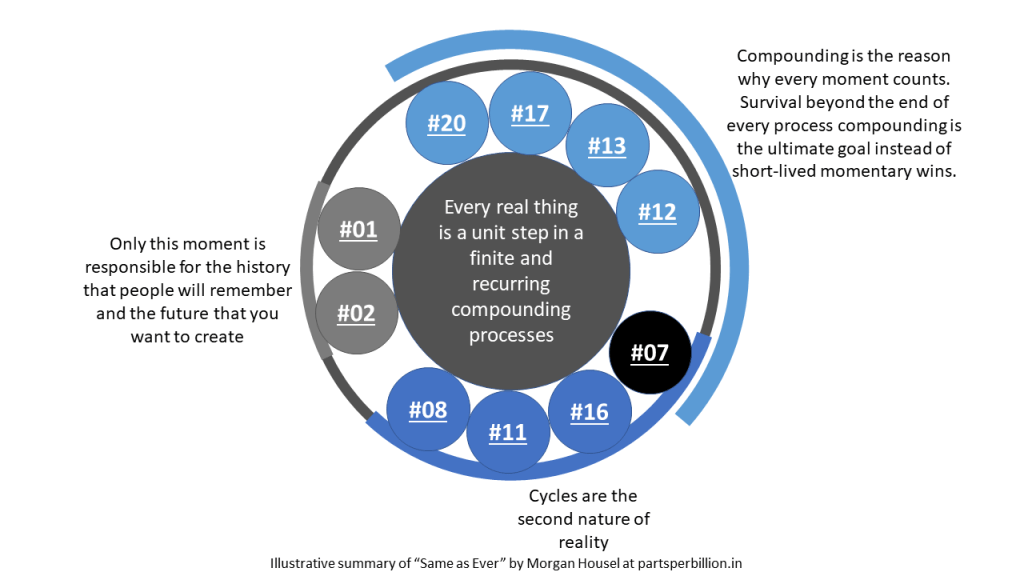
Figure 1. Finite and recurring cycle of compounding processes

You will see in the figure 1 that reality is ever changing process of infinite real events. The key to understand what is happening is to see every event containing same potential at first. Keep in mind – same potential – neither good nor bad. Once you assign every event with equal potential you will see that compounding accounts for that single event to build on and create the next event. Sometimes two big events will compound together to create an enormous event.

Now comes the fun part – the enormity of every compounded event will always be in favor of someone and against the favor of the complementary population. This makes that event good or bad for people. Some will suffer some will rejoice.

A person who knows how the world, nature or universe works will not have preferences, favor-ability towards such events. The answer lies in the cyclical nature of such events. Keeping a single event sustained for long duration demands to go many things to work in supporting ways and as every event has same potency in the infinite possibilities, it surely will lead to the downfall of that process. It’s just matter of time.

Talking about matter of time – the game of life is not about winning, rather it is about remaining in the game longer as the compounding pays off and decomposes into new start.

Our limited life span intuitively doesn’t allow us to wait till the compounding pays off. That is exactly where we make mistake. That is exactly why we are devastated by a single seeming insignificant event causing destruction of our favorite things.

Step 2 discussion:
Figure 2. Reality is far from perfect

Our urge to predict everything to ensure survival demands perfection in every entity considered for precision and accuracy of prediction. As reality is made up of many real possibilities, this count of possibilities and the errors associated with their measurements require huge resources which render the prediction process impractical for the possible outcomes.

(Keep in mind right now that we are only talking about those variables, events which we can understand; we haven’t even entered into those variables, events we don’t even understand or know in first place.)

The moment we introduce poorly known, immeasurable but significant variable – the whole game of predictability crumbles down.

That is exactly why instead of striving for better predictability, it is a smart choice to be prepared for everything. Knowing that this too shall end soon should comfort us to prepare for such things/ events. The rejection of the urge for perfection, absoluteness and full efficiency will immediately prepare us for everything that reality unfolds.     

Step 3 discussion:
Figure 3. In the end, we are only human.

Now that we know how every event is potent and can immediately contribute to a cyclical process of compounding, it is important to understand how we comprehend that compounding. As everything that we do is directly linked to our survival we are by default born with preferences. These preferences get eliminated or amplified based on the life experiences we have. Even though our urge for predictability demands objectivity we often forge the subjective parts of every narrative. The subjectivity is important, because the reasons to survive are different for different people.

Conclusion – Human behavior and laws of nature

Our mind rarely understands anything as a flow of entities. Almost all of the fundamental entities existing in nature are flow – continuum entities. But in order to understand them study them we break them into pieces which makes is practical to quantify and predict. For time as an example – we have past – present – future; we need this separation to comprehend the flow of time. This slight arrangement of separation of events just for the convenience of communication and comprehension for our minds has now become such a second nature of our realities that we could hardly come out of the idea of past and future. Past keeps on haunting and future creates anxiety due to the uncertainty. Nostalgia from past brings us joy and what advancements future will present inspires us to work harder today. We rarely notice that this works both ways.

It is really difficult and impractical for our mind to let go of this past-present-future mentality. This convenience of separation for the sake of improving our decision making and survival has imparted a sense of time being a set of discrete isolated events, independent events. This steals the feature of hyper-connectivity in our understanding of reality.

Once we come out of the discretization of time as past-present-future we will see that every event is equally important and highly interconnected and multidimensional (in the sense that it creates multiple real effects on multiple entities) Our mind being biased for survival and in energy optimization mode, it always focuses on what is required to remain alive. This sense of remaining alive now has evolved into intellectual survival – as in what things we define as our life. So, even though from objective point of view all events remain exactly the same, on our personal level certain events are highly important because they change the things we are attached to in a drastic way – in most cases our life. We are now scared to die intellectually – a mental death – the death of our truths – our identity. And trust me, this happens frequently.

Morgan in this book very beautifully noted down the factual version of the reality we live in; it is beautiful because it shows how our human nature is always affecting the seemingly objective reality of the most of the things.

This is my ultimate distilled down version of the book “Same as Ever” by Morgan Housel.  

One point summary of ‘Same as Ever’ by Morgan Housel

 It also highlights that our mind is the first and the easiest one to fool, which leads to false sense of superiority over others and creates biases. Once we accept that nothing is perfect, no one is perfect – it injects humility and forgiveness. It also makes us grateful for what we possess today. What else could be more important than this to be justified as a human being?

These points ask for detachment from predictions and end results. A sense of responsibility for the actions could be the best version of any person – this exactly is invoked when we are trying to prepare for the future instead of striving to predict it.

I think we need more ideas like this when we are fighting for survival for such unimportant things where we already know the real, practical answers but have decided to ignore them.

The ability to see every event at the same level is a superpower any one of us can have.

For those who haven’t read the book here is the point-to-point summary of the book “Same as Ever”:  

#1. If you know where we’ve been you realize, we have no idea where we’re going.

Here, Morgan gives many real-life events where a single decision led to catastrophic events causing loss of many lives and valuable resources.

When we study history even when we know what exactly happened, it is tricky to pinpoint the trigger for that event. There will be why and how behind every small-small event and when we will reach to its origin it becomes really difficult to wrap your mind around that petty thing which had led to such a big and historic event.

The absurdity of past connections should humble your confidence in predicting future ones.

#2. We are very good at predicting the future, except for the surprises – which tend to be all that matter

In very simple words, Morgan highlights the extents of our imagination and thinking. Even though they are infinite, the nature in which we are existing is equally or rather infinite in bigger and greater sense. That is exactly why even when we think we are prepared for everything, nature will always have something new in its pocket to reveal and not being ready for that exact new thing makes that event overwhelming for us because we were not ready for that exact new reveal.

It’s impossible to plan for what you can’t imagine, and the more you think you’ve imagined everything the more shocked you’ll be when something happens that you hadn’t considered.

This itself should humble us. That is why preparation is more important than forecasting.

Invest in preparedness, not in prediction

#3. The first rule of happiness is low expectations.

The most important observation Morgan puts here is in the ways we gauge our resourcefulness – it is always relative – material or immaterial – objects or emotions. We always have a baseline which is created by comparing ourselves with those around us. That is exactly why we rarely appreciate what we have at our hands.

We always crave for what ‘they’ seem to have instead of appreciating what we already and really have in our hands. Even when we are unsure about whether others actually have those things, still we crave those things for us, which is tragic!

Morgan expresses that almost all of the truly precious things in our life don’t come with a price tag that is why we never care to evaluate their importance – like good health, freedom. Same is the case with expectations.

When Morgan is asking for low expectations, it is not omission of the motivation to improve ourselves. Low expectations ask for realistic expectations. One must always be observant of the gap between what we wanted and what happened in reality.

#4. People who think about the world in unique ways you like also think about the world in unique ways you won’t like.

Here, Morgan talks about the role models, heroes, leaders we consider the best of us all. It is very important to understand that they are the best among us all because they did something in very exceptional manner which made them stand out of the well-defined ‘boring’ and ‘average’ structure of the society. If they would have followed the same paths that other followed, they would have been just like others.

In order to stand out of the masses they did something different.

Now be cautious! This different could be seen as good or bad as per the average crowd level. And keep in mind this specialty in that person is because others don’t have it in them. So, in order to create and develop something special out of the same average crowd one has to overcome a resistance of the masses where a trade-off is done with other aspects of their personality. Sometimes the exceptional conditions create exceptional personalities which many people fail to recognize.

Of course they [successful people] have abnormal characteristics. That’s why they’re successful! And there is no world in which we should assume that all those abnormal characteristics are positive, polite, endearing, or appealing.

Simple words, there is always some trade off to achieve something truly exceptional.

You gotta challenge all the assumptions. If you don’t, what is doctrine on day one becomes dogma forever after

#5. People don’t want accuracy. They want certainty.

A common trait of human behavior is the burning desire for certainty despite living in an uncertain and probabilistic world.

Morgan discusses how we are always trying to alleviate the bad results, pain in all life scenarios. The urge to survive supersedes everything. Our brain always wants a confirmed trigger on whether to fight or flight for given problem. It is always in energy optimization mode and in the uncertain world filled of infinite possibilities it wants something to act on immediately. Otherwise, brain knows that it won’t survive. The urge for certainty – that clarity of whether to fight or flight is the most important information than how precisely we are assessing the reality. It’s like brain takes a shortcut to ensure survival. That is exactly why huge load of information especially numbers overwhelm us.

The core is that people think they want an accurate view of the future but what they really crave is certainty.

#6. Stories are always more powerful than statistics.

If we continue the train of thoughts from previous point, soon we will appreciate how dearly we appreciate stories instead of boring numbers. Even when stories would tell a lie and numbers would tell the real, pure truth we would always choose a fake story over realistic numbers. Our brain doesn’t want to overwork itself to ensure survival.

Good stories tend to do that [evoking emotions and connecting the dots in millions of people’s heads]. They have extraordinary ability to inspire and evoke positive emotions, bringing insights and attention to topics that people tend to ignore when they’ve previously been presented with nothing but facts.

Stories create an emotional, empathic bridge between people which our brain already knows since the childhood. The very first think a baby does to start breathing is crying not counting. (I know the analogy is lame but it works here) we are implicitly trained to actively process emotions first and then numbers. Stories enhance this ability on next level.

That is exactly why emotional-ity will always be preferred over rationality.

We live in a world where people are bored, impatient, emotional, and need complicated things distilled into easy-to grasp scenes.

#7. The world is driven by forces that cannot be measured.

Morgan brings here more clarity on the objective nature of the numbers even when they are showing the truth, the reality. The point that our reality is made up of the infinite possibility itself shows that the sheer limitation of our computation capability will create a partial picture of the bigger reality. This happens because many of the factors which influence our reality are beyond quantification.  That is exactly why whenever we are making any decision based on objective and true data (like truest of true numbers) we should bear in mind that these numbers are not accounting for those unmeasured factors which also affect the reality we are trying to understand.

Some things are immeasurably important. They’re either impossible, or too elusive, to quantify. But they can make all the difference in the world, often because their lack of quantification causes people to discount their relevance or even their existence.

In simple words, our story loving brain is driven by intuition and safe/ familiar information which is unquantifiable most of the times.

#8 Crazy doesn’t mean broken. Crazy is normal; beyond the point of crazy is normal.

Morgan is trying to point out how we understand what is means to be at the top. He established that most of the tops we experience in life are to because we have experienced falling down from them and we would have never understood that we were at top unless we have had fall down from them.

The only way to discover the limits of what’s possible is to venture a little way past those limits.

We never appreciate summit of something unless we start climbing from down or fall down from that summit. That is exactly why what made you feel at the top will make you safe and that attachment to safety will lead to your fall, the pain of fall will motivate you to climb new heights and again the cycle will go on.

#9. A good idea on steroids quickly becomes a terrible idea.

Morgan here explains how evolution created the species around us. There was always some trade-off while evolving because of the forces of nature. In nature nothing has absolute competitive advantage otherwise a single species will take over everything that single species alone will lead to its downfall and destruction due to the lack of diversity.

Most things have a natural size and speed and backfire quickly when you push them beyond that.

In simple words, anything that is burns bright, goes out fast. Resources behind every process are limited and even if they would be available in surplus, extent of their utilization affects the outcome and overall integrity of that process.    

#10. Stress focuses your attention in ways that good times can’t.

The urge to survive makes our brain to push to its untested limits. These limits are there just for the optimum behavior so that our brain could actually use the reserve energy when it is the question of life and death. When it come down to do or die – people have always delivered in surprising and shocking ways.

The circumstances that tend to produce the biggest innovations are those that cause people to be worried, scared, and eager to move quickly because their future depends on it.

Morgan points out here that this stress should be healthy because there is always a natural size of everything as explained in point #9.

There is a delicate balance between helpful stress and crippling disaster.

#11. Good news comes from compounding, which always takes time, but bad news comes from a loss in confidence or a catastrophic error that can occur in a blink of an eye.

Growth always fights against competition that slows its rise.

Morgan here shows how things that exist today as our reality have gone through multiple iterations. They have already failed many times and started again long ago; its just that the compounding imparted grandeur and power to fight against the adversities of the life which made their realisation possible here in front of us. There will again be some simple, seemingly insignificant event which will destroy this creation and things will start again.

To enjoy peace, we need almost everyone to make good choices. By contrast, a poor choice by just one side can lead to war.

#12. When little things compound into extraordinary things.

Here Morgan points out from the examples of history how in order to avoid a big calamity people ignored some small incidents which led to even bigger calamities. It is ingrained in our mind to overlook big events because the smaller events which lead to their realization are “small and insignificant”.

Small risks weren’t the alternative to big risks; they were the trigger.

#13. Progress requires optimism and pessimism to coexist.

Morgan here talks about how our preferences for each and everything have stolen away the realism in our lives. Instead of favoring one side, life is more about appreciation of the spectrum. It was never about who wins or who loses because both are short lived. It is always about who survived and stayed in the game longer. (Simon Sinek calls it the infinite game as explained in Game theory.)

The trick in any field – from finance to careers to relationships – is being able to survive the short-run problems so you can stick around long enough to enjoy the long-term growth.

Whoever lives to see the end wins but that victory is just over those who couldn’t survive. There will always be some room at the top because conditions never remain the same.

#14. There is a huge advantage to being a little imperfect.

The more perfect you try to become, the more vulnerable you generally are

The idea of perfection immediately steals the flexibility from any given system. Because of the perfection the system is bound to certain thriving conditions and exactly when you expose this system to the reality of infinite possibilities there will always be some ‘seemingly’ trivial event which will take down that whole system.

A little imperfection makes the system to bend thereby giving place to perform in unimagined conditions and as we have already learnt that the reality is full of unimaginable but real events.

Morgan beautifully explains the ways in which natural evolution has worked out.

A species that evolves to become very good at one thing tends to become vulnerable at another.

…species rarely evolve to become perfect at anything, because perfecting one skill comes at the expense of another skill that will eventually be critical to survival.

Nature’s answer is a lot of good enough, below-potential traits across all species.

#15. Everything worth pursuing comes with a little pain. The trick is not minding that it hurts.

The really important and actually valuable things in life don’t come with a price tag and that is exactly why we are not ready to pay any price. This makes our minds to wish for such things because of the false sense of entitlement. This same entitlement blinds us from the real actions which can lead us to this achievement and we keep on whining about not achieving these things. A wishful thinking!

A unique skill, an underrated skill, is identifying the optimal amount of hassle and nonsense you should put up with to get ahead while getting along.

#16. Most competitive advantages eventually die.

A we have now already understood that even a small event can lead to collapse of any grand creation and how easy it is to undermine any event we must now accept that nothing big will stay as it is now. Same goes for any competitive advantage. As things keep changing the advantages which made their impact big will become irrelevant with the changing things. One has to keep on reinventing in order to remain relevant and effective with the changing times.

Evolution is ruthless and unforgiving – it doesn’t teach by showing you what works but by destroying what doesn’t.

#17. It always feels like we’re falling behind, and it’s easy to discount the potential of new technology.

Morgan highlights how the innovations which we consider ground-breaking, world-changing were result of multiple small-small events creating synergy to coexist.

It’s so easy to underestimate how two small things can compound into an enormous thing.

#18. The grass is greener on the side that’s fertilized with bullshit.

You never know what struggles people are hiding.

As we have already seen our urge to compare our conditions with the conditions of others and always consider ours to be the worst most of the times, it is evident that we are experts in judging everything in its entirety based on very little information. Our biases and basic mentality feed this tendency furthermore. But reality is always like the iceberg.

Most of the things are harder than they look and not as fun as they seem.

#19. When the incentives are crazy, the behavior is crazy. People can be led to justify and defend nearly anything.

Morgan here shows that beyond envy people are driven by incentives. You can make people do almost anything, make them believe them in almost any thing if their interests are aligned in that. This is strong when people are helpless and when it is about their survival.

One of the strongest pulls of incentives is the desire for the people to hear only what they want to hear and see only what they want to see.

The beauty that Morgan points out is that this can also be used to bring good out of people.

It’s easy to underestimate how much good people can do, how talented they can become, and what they can accomplish when they operate in a world where their incentives are aligned towards progress.

#20. Nothing is more persuasive than what you’ve experienced first-hand.

As we have emotional beings and we have already seen that we will always prefer emotional clarity of falsehood over the numerical, arithmetic truth it shows that every part of our understanding of life is tied to our own individual experiences. We rarely appreciate the foretold truth. But we will appreciate all those things which we experience on our own.

That is also why there are certain truths which very few people have experienced but are not generally accepted by the masses because there is no part to connect personally. We can only connect personally only when we have passed through those experiences.

That is exactly why it is difficult to convince people of something really exceptional and extraordinary personal experience, that also why it is also easy to fool people.

The next generation never learns anything from the previous one until it’s brought home with a hammer… I’ve wondered why the nest generation can’t profit from the generation before, but they never do until they get knocked in the head by experience.

#21. Saying “I’m in it for the long run” is a bit like standing at the base of Mount Everest, pointing to the top, and saying, “That’s where I’m heading.” Well, that’s nice. Now comes the test.

In simple words, Morgan shows us that we rarely will ever know what we have signed up for. Most of the times our simulative experiences and thoughts will be broken down by the unimaginable possibilities of the reality. Instead of craving for that summit one must try to stand strong while they have started this journey and remain faithful to this step they are taking ahead. This attitude has to be kept with every step which very few people maintain.

Long term is less about time horizon and more about flexibility.

#22. There are no points awarded for difficulty.

Almost all of the times people appreciate certain things, certain people because they couldn’t not have or become like them. This crates a mysticism. We are always attracted to mystical things because the urge to know better (to improve chances of survival against unknown) is our hidden trait.

Complexity creates this mysticism instantly. That is why we most of the time reject truths which are so obvious and in front of our eyes and accept that intellectually stimulating complicated lie. The complexity makes our brain to actively engage in that thing which creates an attachment just because our brain was invested in it.

Complexity gives a comforting impression of control while simplicity is hard to distinguish from cluelessness.

#23. What have you experienced that I haven’t that makes you believe what you do? And would I think about the world like you do if I experienced what you have?

Morgan points out that our lives even though we have common experiences, we associate ourselves to certain groups, certain ideologies on deeper levels and at core we are totally different and individual.

Many debates are not actual disagreements; they’re people with different experiences talking over each other.

References:

  1. Morgan Housel’s book “Same a s Ever”.
  2. Morgan Housel

A Modern Prayer to Perceive ‘The Silver Linings’

The acceptance of our dark side is the only way to start a new journey to the real happiness, fulfillment. Achieving real fulfillment becomes way easier and manageable once we start acknowledging our dark emotions, feelings of sadness and sorrow. Running away from such “low” lying emotions actually intensifies them in the abyss. Actually, such emotions have great contribution in the refinement of our character. Empire of the Sun’s new song called ‘Happy Like You’ talks about the acceptance of our dark side to make our personality whole for creating a newer and better version of ourselves.

Empire of the Sun’s song “Happy Like You”

The best piece of art can be attributed to the multiple perceptions, interpretations it creates in the mind of its subjects despite keeping its physical structure constant.

The beauty of a masterpiece is that people have their own opinion about that piece and nobody is wrong. The mere subjectivity and the possibility to invoke personal feeling in the mind of the observer or the enjoy-er of the art is the power every one of us has naturally. Most of the time very few of us unlock that power in a better sense. Music is one such power.

Recently, I came across newly released album named “Ask that God” by an Australian electronic duo called Empire of the Sun. All the songs on this album are banger and are complete redefinition of what the Empire of the Sun stands for. In my personal opinion, it is a crime to compare all the songs to choose the best one, (but you already know why I am writing this). One song that is looping in my head continuously and has occupied a larger portion of my brain for many days is “Happy like you” (this only shows that the song has conjured me thereby maintaining my previous point of not comparing good songs with each other).

Luke Steele and Nicholas Littlemore of Empire of the Sun

Actually, bringing the poetry into the bastardized territory of prose should be a crime, for it de-beautifies the very reason for it being so wonderful. But, in order for everyone to appreciate the multiple subjective point of views and its connections with the multiple facets of life it is trying to explain, a poetry must undergo its ‘deconstruction’ into prose.

That is the crime I am committing here. If there is any songwriting, poetry, lyrics meaning police anywhere, tell them that I am here waiting for them to tolerate all this prose I have written hereon.  

Jokes aside, I am deep diving into the song and its music video.

The song

The song is written by Luke Steele and Nick Littlemore of Empire of the Sun.

Happy Like You lyrics © Universal Music Publishing Group

You’re revolutionary
You’re like a phantom taking a leap
You’re heart is legendary
Bet you are feeling so high
You have a higher power
Telepathic talk to me
Make me whole again
Whole again whole like I used to be

Happy like you
Happy

The poet is asking the higher power for something that would make him feel complete like he was before. He is praising the power of this higher power so that it can bless him.

The words used by poet like revolutionary, taking leap, legendary heart are used to describe this higher power reflects what he exactly wants from the higher power. He wants to regain a lost part of his personality he was before going through this hardship. He wants the higher power to take the leap to come out of the sorrow, transcend the current state and bring about an “internal” revolution in a way.

Telepathic ability indicates the poet’s trust in the higher power. Poet knows that this higher power is his final resort to all that exists. That is why this power knows everything already and there is nothing required to be expressed formally to get things done.

Ultimately, it is a request to regain that precious part of the poet’s personality, that happiness which defined his whole personality.

Won’t you humanize me
Use all your wisdom
Show me joy in everything
I’ve been clouded by machines
Lost my way deep inside another screen

The rhetorical question posed by the poet is a slight indication of what he lost during his difficult times. He lost the things which made him human. He lost the ability to see the silver linings.

This is the exact spot we must understand that the person lost his personality in depression and mental battles. But why? and how?

Immediate forthcoming lines show what happened. The screens and “machines” indicate the influences of the mechanical world on our daily lives and the added powerful effect of social media which led to a dreadful state of depression.

It’s an irony that when we are ‘liking’ certain things on social media from other people’s lives, a deep-rooted sadness, envy, hatred is getting born out of the one-to-one comparison of lives. Everyone is conscious of these emotions due to social media but the penetration of social media, screens everywhere is so regular and normal that we are subconsciously (now mechanically) ignoring these emotions which take a toll on our minds when we are shocked with something really sorrowful.   

All I wanna be is happy happy happy like you 
All I wanna be is happy happy happy like you

 Once you pass through such horrible emotions of sadness and depression you start appreciating the person you were, how happiness made you the better version of yourself. This happiness made you feel like the greater, higher power itself. That happiness actually made you feel closer to the higher power. The poet urges the higher power to make him who he was before and just in the ways the higher power carries itself.  

You’re revolutionary 
Telepathic talk to me
You are imaginary
Bet you are feeling so high

Wish is a dream that comes true

The most difficult part of coming out of the depression is that it starts in mind of a person with such an intangible, non-physical thought/ idea and then it starts to affect the real events, objects, people around him/ her. So, even though fixing the reality around such person can help to come out of the depression; uprooting the deeply settled feelings of sadness, grief, sorrow has immense impact in the person’s fight against depression.

That is exactly why the wish to become happy shows that the poet whole-heartedly wants feel happy. The ‘wish’ indicates is readiness from inside to be realize happiness from intangibility to reality thereby highlighting the use of the expression “dreams that come true” here.

Time is a song that forms you 
Oh I hope you

The expression of ‘time’ which formed this higher power implies the time which need to given to person to heal when he/ she is in hardships. Give it some time, it will pass too. The poet has understood that over the time even though it will seem difficult but over the time every sadness will fade away. It’s just an ask from poet to the higher power to get the patience, courage for passing through this hard time.    

Won’t you humanize me
Use all your wisdom
Show me joy in everything
I’ve been clouded by machines
Lost my way deep inside another screen

All I wanna be is happy happy happy like you

Ultimately the influence of social media on our lives and the mere algorithmic, mechanical nature of our lifestyle is leading lives of many really happy people to a depressed, sorrowful life. The poet asks the higher power to make such people complete again and happy again just like the supreme power is. It also means that once we become happy and complete, we will become that supreme higher power again.   

From a simple explanatory point of view on any poetry/ songwriting, the song gives an impression of the man’s urge to regain his happiness, his identity when he is in the conundrum of depressive emotions and thoughts. The impact of depression is great because the factors causing it are within our hands (or I may say fingers’) reach – the social media and the screens.

I think the songwriters have taken this excuse of the depression from social media to show what an urge to overcome any depression means for any human being; what it means to redefine the personality and also complete the human being in a bigger picture.  

The video and its symbolism

The phone call –

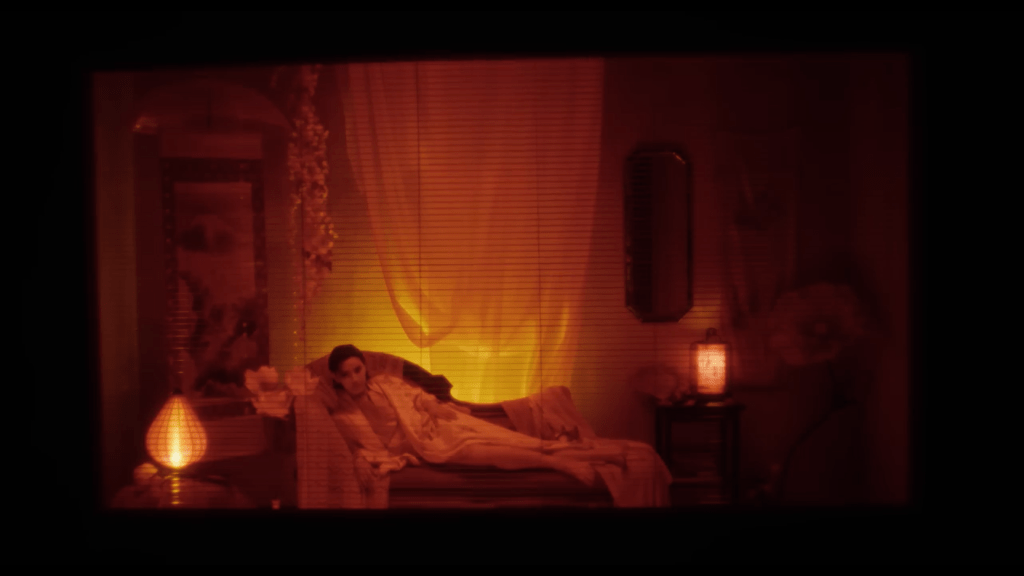
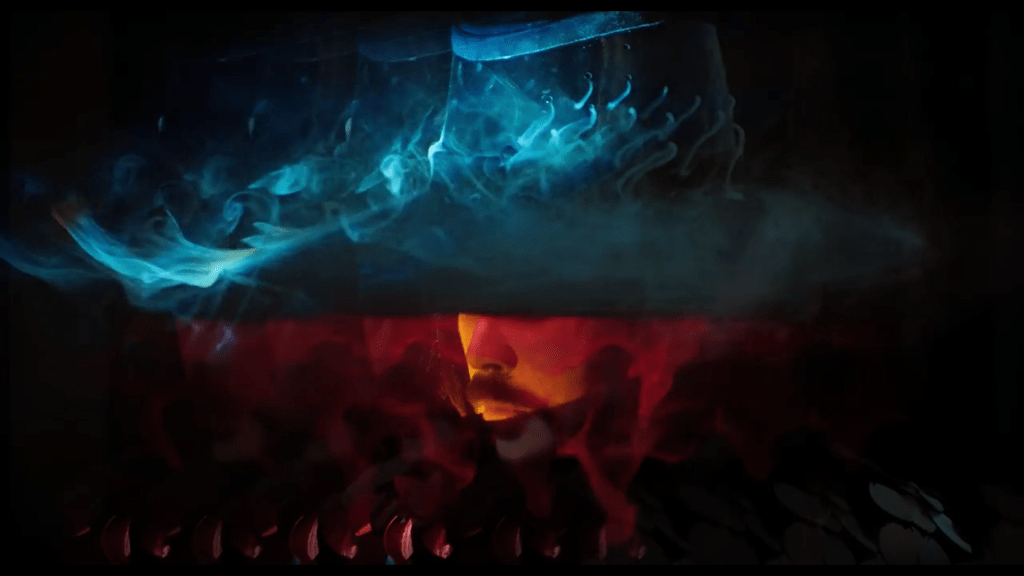
The video starts with a phone call. The girl receives a call on her landline and then the frame shifts to a guy (Luke Steele – Emperor Steele) in a dark with a red hue and dark hat. This is indication of her having a call with her inner self. The low-lit room shown throughout the video is the metaphor of she having discussion with herself and her inner thoughts and emotions. The phone call is proof of she handling her emotions by herself, it is her own conscience calling her.

Frame from Empire of the Sun’s Happy Like You MV
A low-lit room –

Watching reflection in mirror and hand movements on her own body shows she is interacting with herself. It is like a self-talk one has with themselves while figuring out what needs to be done. The low-lit room shows that dark part of our personality which also need acknowledgement. Even though the song calls for the person to be happy, this low-lit room has bigger significance. It is an indication that the real happiness comes with our acknowledgement of our darker side. Darker not in the sense of negativity but more in the sense of left out emotions which also need proper attention.

Frame from Empire of the Sun’s Happy Like You MV
The colors –  

Even though the music video looks colorful with some dark theme, the choice of colors used in this video are specific; there are characters, colors to the people shown in the video. Hot, cold, and warm / Red, blue, yellow, greens sometimes – indicate respective emotions and the interaction of the girl with those emotions. It is like she is trying to understand them and accept their presence to find the answers.

Frame from Empire of the Sun’s Happy Like You MV
The window –

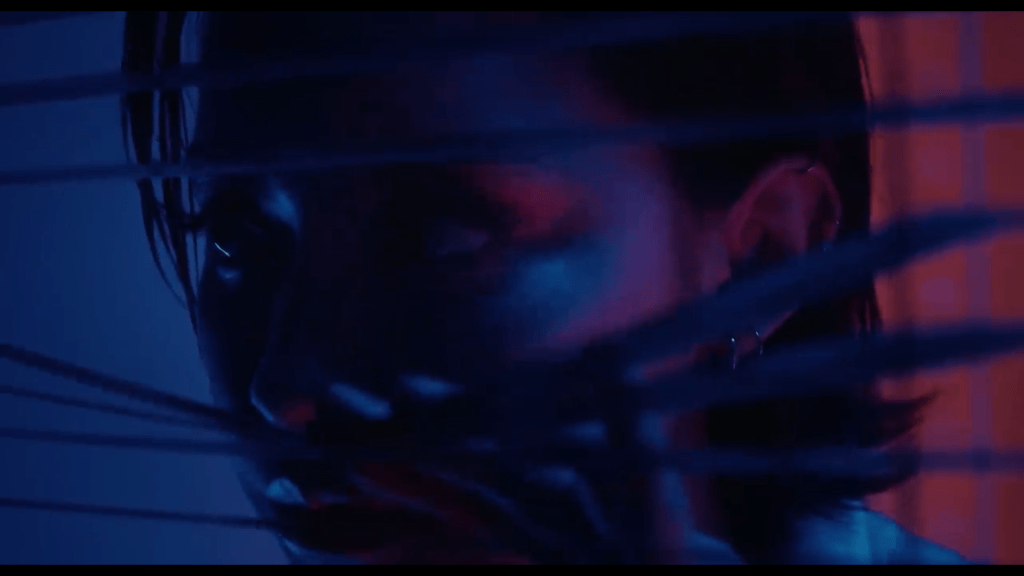
In the early part of the song, you will see the girl peeking through the blinds to see what’s behind the glass. It’s literally her peeking into her dark side of the mind.

There is a glass window with blinds between a person and the girl. The person can see her doing all her activities. What girl sees is only her reflection, this absolutely support the symbolism of her having an internal conversation about the overall depressive state of her mind.

Frame from Empire of the Sun’s Happy Like You MV
The sadness, grief –

You will see one person (Nick Littlemore – Lord Littlemore) with the black tears seemingly away from the window in certain snippets of the video, who appears and goes withing few moments. This is that deep rooted feeling of sadness which the girl is trying to acknowledge. One person closer to the glass window observing the girl’s activity is her conscience and the grief is away from the glass lying in the deep abyss of her mind. I say the guy closer to the window is her conscience because it has symbolically shown with multiple colors and hues showing the variety of emotions one carries in themselves.  

Frame from Empire of the Sun’s Happy Like You MV

The rain in the end symbolizes new beginning, renewal.

Frame from Empire of the Sun’s Happy Like You MV

The creators of Music video deserve special applause

A deep dive into this ‘prayer’

For me this is not a simple song, it’s a prayer and I have a very strong reason to justify my point. A prayer from a literal, grammatical point of view is a request to higher powers which have better control of the reality than us. We surrender to such higher powers to show that we are humbled and are in a need for help through such prayers.

This song may not have that feel of “conventional” prayers, hymns due to its electronic and not so ‘religious-feeling’ notes, melodies but there is no written rule on the ways to compose a prayer anyways.

On first thought it’s weird, how can a prayer in electronic music make sense spiritually?

I say why not! I would say the composition itself dares the modern listener to appreciate the feeling of awareness of our higher self – hidden inside our own selves. It is like tapping into that unconventional, unexplored hidden, darker part of our own conscience.

The song mainly focuses on visiting and acknowledging the darker parts of our mind, especially when we are in deep sorrow. Abandoning such dark emotions thinking that they are not part of your personality actually intensifies them and when you are feeling weak and defeated – these emotions will easily cover your whole personality.

My point to call this song a pious prayer is that it makes the listener, the singer acknowledge their emotions. Good or bad whatever they are, they together make the personality whole. It also makes them to accept their urge to improve themselves in life. Even though we are asking the higher powers to grant us the powers to become our better version it is actually we – ourselves acknowledging our darker side to improve and build upon them for the better and evolved version of our selves.

The most important act to come out of any negative, depressed feeling is the acceptance of the fact that they are an inseparable part of our personality and only this time they have charge over our personality and we can take control from them anytime we want. You can only cure a person who really want to be cured and live ahead. The feeling to come out of such sorrows has to come from inside and it becomes easy once we accept our darker side of emotions, feelings.

So, the best way to handle any challenging emotional state, any darker emotional state is to first acknowledge them. Acceptance of something wrong or abnormal is the first step to effectively work on handling them. It becomes very difficult to accept that we ourselves are the originator of our emotional responses and its totally normal. We just feel that it is difficult to control our emotions because mostly they are triggered by the external stimuli and that is where the real trick happens. You see, the illusion that our emotions are uncontrollable is created by the assumptions that one need to control his/her surroundings to achieve what they want to become happy. That is why when such person fails, they are immediately drowned into the feelings of sadness. This also does not mean that you should always control your emotions and avoid expressing yourselves.

What I am trying to make point about is that the moment we start segregating our emotions as good and bad we end up in an illusion of happiness instead of the real happiness. Instead of avoiding and dumping, controlling your sad, dark emotions deep down, their acceptance as one more normal part of our personality helps us in a better way to achieve the real happiness.

Being sad justifies the moments of happiness and that also does not mean that you must remain sad – suffer more to be happy in bigger ways. You see, all happinesses in the world are same. Actually, they are not even same, they are subjective – to be precise, there is nothing to compare between any type of happiness. But due to the social media and the screens, we are always trying to compare our happiness with other people’s happiness. That is where the origin of the problem lies.

Looking on the other side of the shore same goes with the sadness; no two sadness must be compared. Acknowledgement itself is more than enough.

Working on sadness is like hugging an annoying crying kid; just a tight hug without any intent. The kid will stop crying.

Once we have accepted all our emotions as a natural part of our personality then only can we have the chance to recreate our personality. This requires humbleness and in most cases when people are thrashed with the reality and the sadness, when they are helpless the final resort is the spirituality where the help from almighty is requested. The moment you attribute this power to any object especially human-like object the religion starts taking shape (that would be topic or another discussion!) But without diverting the topic, only when we are humbled then we seek help from others. Prayer allows you to do that without any feeling of shame. That is exactly why I feel this song is a prayer. It allows you to accept your darkness, understand it and asks you to use it to create new happiness.  

I will stick to Kierkegaard on this, we have to understand that when we are praying to the higher powers to handle our lives in a better way, we are actually asking the forces lying inside our own selves which hold the capacity to create the better version of ourselves.

We are capable of creating better times for ourselves on a condition that we acknowledge every part of who we are. It is just our mechanical nature to categorize certain things as good or bad sad and happy which takes charge of our whole personality.  You will appreciate this more once you closely observe the stories behind the creation of all types of the masterpiece humanity has ever seen. All those great things had that unconventional, hidden dark side which triggered the creation of something totally new and radical.

So, in order to become truly happy, one must accept their dark sides that is where the potential to have completely new beginnings lies.

Mr. Toot by Ylvis – What makes an art and its creator successful?

Even though “the best” art creations in the world are better than the average creations as in they stand out of the rest creations thereby making them highlighted, it is also very difficult to point out or to predict what makes these things stand out. It is some sort of paradox. But that is what also reveals what an art really is. This paradox actually restores the uniqueness of every creation. That is why you can never know whether your creation is going to be popular or crash like hell before revealing it to the society.

What makes a certain piece of art – “the art”?

One simple activity; think of your favorite song. The song that gives satisfaction to your ears. Now think why is this song your favorite song? It is very normal that some people (and most of the people) will get confused when asked for a particular song – they will generally have a set of songs in their favorites list, some people are really particular about the genre, some people prefer the singers, some people prefer certain musical instruments, some people love the song because they loved the movie, the game that song was in, some people like that song because they love the fashion sense of the artist. In nutshell, there is no hard and fast formula to a popular, successful song or any art that we love.

Now ask this to yourself – what would happen if you found out the artist that created your favorite song, your favorite painting, your favorite movie, your favorite series, your favorite book is accused of certain misconduct, misbehavior or some unconventional, antisocial, inhuman behavior? Would you still like that song, that piece of an art, that creation?

The answer to this question is somewhat complicated but you know what they say – “it is the poetry and music which have the power to communicate complicated feeling in simple words and melodies.” I have a song to recommend which was exactly created (maybe) for answering this question on our preferences with any creative ventures and their symbols.         

The song is called Mr. Toot by the famous creator duo called Ylvis (“What does the Fox Say?” fame duo). The song is so underrated and hidden in the abyss of at least 8 years from its creation. One would think that people have forgotten this song and make question why a song of such timelessness has not received the recognition it deserves. The vibe this song gives at first is like a silly ballad one sings to make children happy but it has some of the best and simple lyrics, musical hooks and also an impeccable visual story.

Let’s begin and dissect. It’s a simple story told through a song – 

The song and the lyrics

An musical feast from Ylvis called “Mr. Toot”

Come with me to Istanbul, 
Land of turbans, spice and carpets
This is the tale of Mr. Toot,
Legendary music man
Up on the roof he played the Toot,
No one could resist his rhythm
Slave and Sultan side by side,
Dancing dance of Mr. Toot
What’s that sound? Is it him?
Did you see a shadow moving?
Everybody - Quiet, quiet,
can you hear him? - Mr. Toot!
Play it, Mr. Toot!

So the out storyteller takes us to Istanbul where a Toot player is very famous for his instrument. People adore him for his command on this musical instrument “Toot”. This Mr. toot is such a  skillful and creative person that his music tempts everyone in the area to dance on his music. It is the equalizer in the city because Slaves and Master dance shoulder to shoulder on his music. People encourage him to play his toot.

Ladies kissed him on the belly, 
Children dressed like him in school
He ate caviar and jelly,
Bought a modern swimming pool

Soon Mr. Toot became popular, ladies always appreciated him. He became idol in the area, children admired him. He started enjoying exotic foods and did some “pool parties”.

Yes, Mr. Toot got greedy, 
Wanted even better Toot
Threw the Toot from highest tower,
Bought a fancy MIDI Toot
Then a poster in the city,
Mr. Ibanez tonight Modern show with modern music,
Smoke machine and laser light
Play it, Mr. Toot!

With this popularity, Mr. Toot became more ambitious. He wished for more advanced instrument where he could create new music and please his audience. He made all the publicity in the city with new name, new branding, new visuals of smoke and lasers. People came to listen to this new version of Mr. Toot as Mr. Ibanez but when he started playing with his “Fancy” MIDI Toot, people disliked him. Nobody liked what he evolved into. Turns out people actually loved the old version of Mr. Toot!

That was the end of Mr. Toot, 
He was never to return
Though you can kill the man,
You can never kill the Toot
Play it, Mr. Toot!

This is how the story of Mr. Toot (now greedy Mr. Toot) ends. From visuals of the song, you will see that someone from his admirers – a children in the city again picks the Toot and starts playing, people appreciate him. That is when we realize that it was the toot and not the toot player that people loved. So, play it Mr. Toot (the brand new Mr. Toot) People have assigned new king on the throne of their hearts now – that kid with Toot – the new Mr. Toot!

The background of the song

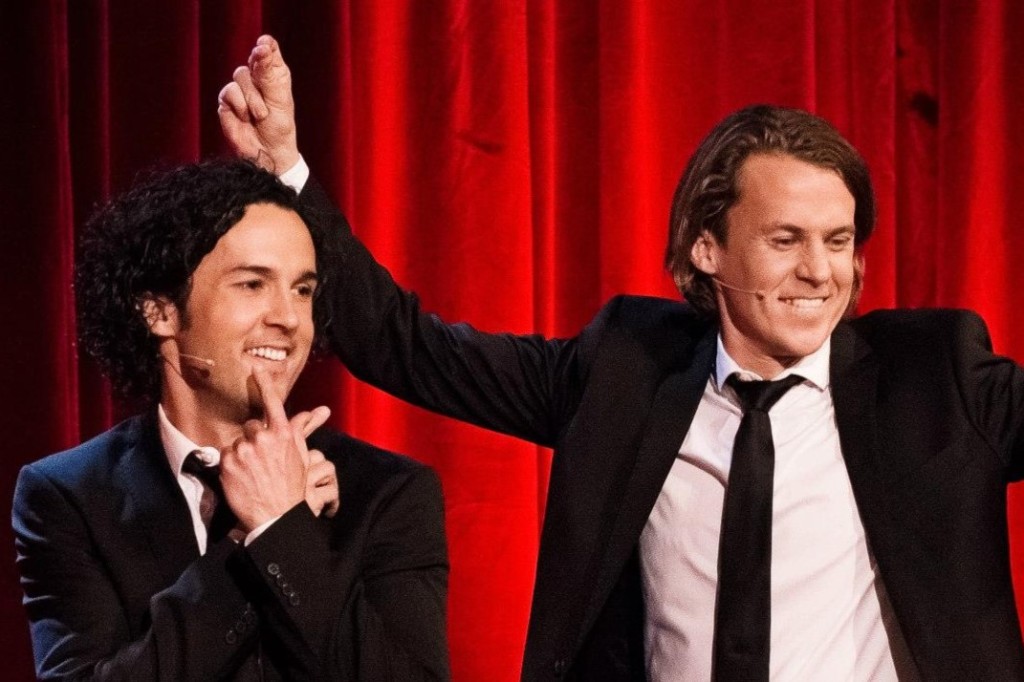
The sensational Ylvis bros

Ylvis is a duo of Norwegian brothers – Vegard and Bård Ylvisåker. They have very comedic presence in popular culture and are known for one of the weirdest but catchy song called “The Fox (What does the fox say?)” This “The Fox” song has such nonsensical lyrics and equally nonsensical music composition that one would really question their choices for a while but the same person will appreciate the “vibes” it creates. One cannot resist grooving to that song. Mr. Toot song’s musical composition is largely based on a song called Adir Adirim by Israeli music group Balkan Beat Box (BBB) with Victoria Hanna. Adir Adirim in simple words is the praise of the Lord Almighty (Link in references).

The song Mr. Toot adopts only the music from Adir Adirim and builds a story through its independent lyrics. When there is this moment of Mr. Toot experimenting with MIDI toot, the music gives some fantastic melody with improvisation which sounds good but, in the video, you will find that people disliked that improvised melody.

Toot world is derived from an actual musical instrument called Oud – one can call it the Arabic or Persian version of Lute.

the Oud

The hidden meanings

The song Mr. Toot may seem very simple while listening and an “ear candy” due to its catchy music but it is some sort of dark humor.

There could be multiple interpretations to this song and there is a reason to it.

  • First –

It is a story about how an artist suddenly becomes overconfident about his skills and under calculates the role of his/her followers in his overall success. The artist clearly forgets importance of the auxiliary supporters (in this case “the musical instrument toot”) in his journey to become a legend. You will find many real life examples in music industry or any art industry on this.

  • Second –

The other interpretation is about the labors of creating a piece of art. How risky is it? An artist has to always reinvent himself otherwise he/ she will become irrelevant in the time of change. This is extremely sensitive with the artist who are insanely famous. It is always unknown, ambiguous about the response of the public and their “die hard” followers to such reinvention. The artist misjudges what his target audience is expecting from him/her.

  • Third –

The artist clearly forgets his/her creative pursuit which was what his audience liked about him/her and indulges him/herself in distracting pleasures which actually do not contribute to his art in a constructive way

  • Fourth –

People don’t like the things they love to change drastically. The comfort that certain artist provides for certain art is what people actually love about it in totality. When an artist makes sudden creative change, people consider it no different that a betrayal or a personal attack

  • Fifth –

This one is actually the most distant interpretation but it deserves a mention here. When people realize that the artist whose creation they adore is actually a hollow person from inside or some commoner similar to a normal person among them (a person with no real talents) – do they reject that piece of art that he/ she created? That is where “boycott culture” or “cancel culture” comes in picture. We have many examples where artists, actors, creative people, production houses have behaved in a certain way to redefine the morality in the society. So, does that reduce the love we had for their creations? The answer is unsurprisingly unclear!

There is a reason why there are many interpretations to this song and why people will always have mixed opinions about their close to heart but immorally sourced/ created pieces of art. As if these are moral guilty pleasure for many of us.   

Experimental evidences from Sociology

One experiment was done by a Professor of Sociology from Princeton University – Prof. Matthew J. Salganik and his team on what make a popular creation “popular”? what makes a creative piece – “the creative masterpiece”? In this experiment, they created a website for downloading songs (exactly 48 songs from 18 bands) for some set of people (exactly 14,341 people). These songs were unknown to them, nobody had listened to them before. What they did next is that they created independent eight “worlds” in these groups where only specific information was provided to certain world while downloading the song.

The researchers point out in this study that the information from the “independent world” where no information regarding the songs and the bands where given would create a baseline reading about the quality of the song (Also songs are ordered randomly in this independent world). As nobody in this independent world knows – “what the band is?” or “what the song is?” They will have to actually listen to the songs and then rate it as good or bad. As the listeners of this specific independent world have rated the songs without any influence, this creates a good judgement about the quality of the song which is the baseline of the experiment.

Now researchers provided some preconception about the bands and the song for the other worlds. They included top chart lists, most downloaded lists, most popular bands list to other worlds, songs were ordered by downloads count. Then researchers asked the people to choose their favorite song. In some sense they influenced these people with some social opinions already established.

Upon comparing these top-charts from socially influenced worlds with the uninfluenced independent worlds researchers found out that social influence always plays important role in deciding the success of certain song, certain piece of art. In terms of popular arts, cultural markets –  our choices, preferences are always influenced by social influences. We are always driven by such choices of others while deciding the popularity of a creative piece.

Important thing to understand from this study is the randomness and unpredictability in determining the success of the song. When such social influences interfere, it becomes very difficult to find what made that certain song top in the charts. The opinion of every person is influenced by the last one which keeps on building. Researchers also comment here that it is not the inability or incompetence of judges that makes it difficult to find that “WOW!” factor in the popular song, it is the influence of surrounding society which randomizes their preferences.       

From this study one must also understand how important it becomes to create the story, the brand, the image for making anything popular and successful. How word of mouth can create an overnight success. No wonder the business of social media influencing and profession of influencers (aka Social Influenzas !!!) has became pivotal to built popularity.

It is also important to note that how the popular arts of certain era are actually the reflection of the social constructs of those times, which is fascinating on so many levels. Retro era’s, the 70s, the 80s, disco era are some best examples to prove this. Even in the history of art Renaissance Period – one notable revolutionary period reflects how society at that time was.

It also highlights the importance of popular arts as the cultural footprints in the history of humanity.

Philosophical implications of art and its creator

It is also important to understand that there were some popular pieces of art whose artists were famous for some really bad reasons. So, the moral question posed becomes important here – should society reject the popular art of a notorious artist? Can a great art be separated from its bad creator?

Plato in his famous book “the Republic” threw some light on the morality of the art. He argued that art is always influential; that is why it invokes certain feeling in people, it creates an imitation of reality which can be totally different from the reality sometimes. This makes the creation of art misleading to people and can inspire them in negative ways too.

Seneca – a philosopher known for stoicism clearly establishes that it is the out-coming influence this art creates which will decide whether it is good or bad independent of its creator. It is always the end effect, last influence of art (which is unpredictable due to the randomness generated from social influences)

Conclusion

Important thing here is that there are many factors, many ways in which an art can influence people. As it is really difficult to pinpoint the “WOW” factor of the popular art; it is equally difficult to predict what part of an art would trigger the social construct.

In other words, there is no correlation between the person who created the art and the art itself even though it was created from him/her. (I know it is paradoxical.)

It becomes very difficult to predict whether people will accept a song, a painting, a book, a creative piece made by a hardcore criminal with really dark history which could shake humanity to its core. Sometimes the art itself becomes so self-reliant, self-supportive after its creation that people detach its creator from it, sometimes the art is truly worthy of recognition but people “cancel” it due to the character of its creator. (Again, I know it sounds counterintuitive.)   

This is one of the very hard nuts to crack which can be supported by the sociological experiment done by Prof. Salganik.

Even though “the best” art creations in the world are better than the average creations as in they stand out of the rest creations thereby making them highlighted, it is also very difficult to point out or to predict what makes these things stand out. It is some sort of paradox. But that is what also reveals what an art really is. This paradox actually restores the uniqueness of every creation. That is why you can never know whether your creation is going to be popular or crash like hell before revealing it to the society.

These ideas also highlight how unique, recurring and non repetitive it is to create a true and remarkable piece of art. How difficult it is to create a true piece of art due to the inherent ambiguity of perception after its reveal! You can never know what good is going to get presented through your art in front of the world. That is also why a true artist needs to believe in his intents, his delivery and his style. This rediscovery, redefining of a person as an artist on personal level with society as a unit of human history to a new definition, new perception through such “special/ popular/ famous art” maybe is the purpose of the art.

References and further reading –

  1. Mr. Toot by Ylvis – Fandom
  2. Adir Adirim by Balkan Beat Box (feat. Victoria Hanna)
  3. Salganik, M.J., Dodds, P.S. and Watts, D.J., 2006. Experimental study of inequality and unpredictability in an artificial cultural market. science, 311(5762), pp.854-856.
  4. Epstein, Z., Groh, M., Dubey, A. and Pentland, A., 2021. Social influence leads to the formation of diverse local trends. Proceedings of the ACM on Human-Computer Interaction, 5(CSCW2), pp.1-18. Massachusetts Institute of Technology, Media Lab USA
  5. Plato’s The Republic

Nostalgia- The romantics of past

Remember the video game that you used to play in your childhood? The game cassette claimed 999999 in 1 but it was few games just repeated may times and you still enjoyed playing with them. The times were simple, we used to trade the Pokémon cards, WWF trump cards. Speaking of WWF- every boy in the school knew the story of rivalry between the Kane and the Undertaker still being brothers, how many times the Undertaker had reborn. We had that red-blue eraser which could supposedly erase both the pen and pencil writings. Everyone had played that pocket brick game bought from the local fair at least once. Tom and Jerry, Popeye, Looney Tuns, Beyblade- these were some of the favorite cartoons and who could forget the Power Rangers- they were the Avengers of our times. Spiderman was present on every possible school stationary that you could have- starting from the school bags, water bottles to the pencil boxes and textbook stickers. Those were the days! These days bring back all those fun we had, reminding us that even though they cannot be brought back, which is sad but still we are happy that we were able to experience them.

Nostalgia- The ride down the memory lane…

The concept of nostalgia has traces 3000 years back when it was related to a mental disease closer to depression or melancholy. Nostalgia is made up of Greek word νόστος (nóstos), meaning “homecoming”, and ἄλγος (álgos), meaning “pain”. The later stages when the psychology became more experimental the Nostalgia was less of a disease and more of a complex emotion.

The feeling of nostalgia is closely related the reminiscence of memories evoked by the stimulation of our senses. You smelled- tasted something good, listened to that catchy tune and suddenly remembered the days you used to enjoy the same feelings in the past. The memories we remember are the main media-vehicles for the nostalgia. You have this flood of emotion when you suddenly remember ‘the good old days’, ‘the fun you had’, ‘the pranks you pulled on each other’ on the last day of the college graduation.

The pop culture- Memes (90% of the meme empire is built on the nostalgia), Movie reboots (Star Wars, Spider-verse), Spin-offs (Again Star Wars!), Music industry (that catchy song present in every Instagram reel), Social Media, Advertisements are the best example of high intensity of engagement created using the Nostalgia.

Nostalgia is all about the memories you reminisce and recalling the good experiences you had. But it is proven by research that when we are remembering something from the past, we are not actually recalling the exact events which ‘happened then’ rather we are remembering how we felt, the emotions we went through, our reactions to the events. Meaning, one common event may create different feelings of nostalgia in different people because these experiences/ reactions are very personal. Hence, we can say that Nostalgia is relative. Roughly Nostalgia has been classified as Personal and Historical. Personal nostalgia we are all clearly aware of- these are highly connected to your own experiences. Historical nostalgia is one beautiful thing. It is the yearning for the past, times in history that you haven’t actually lived through. These are the times in history you are exposed to through reading, by listening to the stories from the people who lived through it- like your stories from the times of your grandparents, the media you consumed (the 80’s songs, Classic movies, Classic novels). There is a word for this called ‘Anemoia’ meaning nostalgia for a time you’ve never known. This clearly shows that nostalgia is not about the moments happened in your life it is about how you felt through them.

Nostalgia most of the time is observed to be a positive emotion but it can sometimes make you sad too (which was the backstory behind naming the emotion as ‘nostalgia’) Being a highly social emotion nostalgia is a double-edged sword, a boon and a curse. When you are with the group of people who shared common experiences- the nostalgia becomes the glue which will hold the group the together, strengthen the bond between your group. But if you do not share the experiences in a group then the nostalgia brings in the hostility and feeling of alienation. If you sat down with the group of seniors who went to this great adventure tour and you were not with them. When they will discuss the fun they had, you will instantly feel out of the zone and alienated. Because you hadn’t shared the experience with them. Here nostalgia creates a negative influence. These type of negative influence of nostalgia can be easily erased by involving the other- new person into the similar type of experiences, by asking her/him about same emotions they have experienced thereby creating a bridge between their experiences and your experiences, their nostalgia and your nostalgia.

Some nostalgia may wake the feelings of distaste, hatred within you. This is how most of the political campaigns are carried out. Remember the times the inflation, fuel prices were ‘this’ much high, remember the times ‘these’ inhumane acts happened. Most of the nostalgia brings back the feeling of good times this is how popular culture creates revenue. Those movie call backs, the ‘Easter eggs’ which can keep your conversations on and on are here to be mentioned.

Researchers indicate that the current times of social media have intensified the effects of nostalgia. Though the social media, internet has brought the world closer, we are always lacking the physical interactions between the world and the emotions generated by them. These very personal responses/emotions are the foundation, the seed of nostalgia. Hence the reason you can say why people are so much engrossed in the alternate realities, virtual experiences, virtual worlds. That is the reason people want to run away from the real world. Millennials are the best examples of this. So much that we have Thursdays (TBTs) assigned especially for the thing!   

Does that mean we as a human enjoy dwelling in the past? Is Nostalgia a positive feeling or a negative feeling? The answer is both Yes and No.  

We humans love patterns, repetitions. Patterns indicate familiarity, safety, predictability. The predictability gives us the feeling that we have control over things thereby comforting us, giving us the feeling of safety, which was an important aspect of our primitive brain considering the survival aspect. The change invites unpredictability, loss of control over things thereby invoking the restlessness, indecisiveness which consistently eats us. Here the role of Nostalgia becomes important. Because we are constantly changing, the feeling of nostalgia takes us back to our past and makes us realize who we were yesterday, who we are today and who we will become tomorrow. Nostalgia is that calibration our brain performs to somewhat adapt to the change happened and make us ready for the upcoming change. Remember the moment you achieved something and you go through all those hardships and fun you had- you are happy remembering them and you now know what they have made you and the things that will follow after this moment. 

Nostalgia is that bittersweet emotion as researchers call it. It is the amalgamation of our past, present and future. It makes us aware of how far we have traveled and what the future will bring, which in some sense is the part of life where change is the only thing which is constant. Nostalgia is the emotion which easily creates a common ground for bringing people together, strengthening the feeling of trust.

Further reading: