Suffering – The North Star of Existence

People have tried to justify their existence with happiness, fulfillment, satisfaction, service, love, hope, devotion and what not. But those who have existed in full spirit, lived it to the fullest have realized the effect of sufferings on our lives and even after overcoming them are ready to endure them again in the hope that they will become better than what they were before. These are the people who might have solved the query to justify the life. Overcoming the sufferings in life and continuing the journey ahead could be the answer.

On Charles Dickens’s short story –  A Child’s Dream of A Star

The Impact of Suffering in the Pursuit of Happiness

Question- what would you choose of the following?

A short life filled with happiness and satisfaction? or A long life filled with pain and suffering?

I will assume that you have selected one.

Charles Dickens’s short story – A Child’s Dream of A Star

I came across a short story “A Child’s Dream of A Star” by Charles Dickens which shows what it means to pass through the suffering of the lost loved ones.

This is a story of a boy who loses many loved ones throughout his whole life. Whenever he is losing someone, he dreams of a star where he sees the souls of his loved ones meeting and coming together. First, he loses his little sister in childhood, then his baby brother. When he grows young, he loses his mother, while being adult he loses his own daughter. Every time, when the boy loses his people, he dreams of the same star and wishes that he too could join them. But, when grown adult and losing his daughter he is somewhat soothed that his daughter is not alone, she has the angels of his sister, mother and brother to accompany her.

When he realizes the arrival of his last moment, he accepts the death for the joy that he will join the souls of his loved ones now.

The Suffering of Watching People Leave

Charles Dickens in a very impactful way shows what it means to live life. On surface analysis, one can say that this short story of a boy dreaming about the people he lost and asking for his own death in the hope to join them is about the pain of losing the loved ones and dissatisfaction of not getting enough time to spend time with them and love them. Deep down it is about how one endures pain and I think the only way to endure such pain is to pass through it. Any attempt to alleviate or even control it, leads to more pain.  

Enduring the Suffering

The great thing about this story is that it delicately captures what a beauty that life we live in is and how we connect same attributes of life to the afterlife (even when we are unsure whether it truly exists, even when it exists in our minds and dreams) also how fragile our existence is.

Charles Dickens used the innocence of the child’s mind to show how we carry that innocence throughout our life to use every chance to stay closer to the people we love. The opening of the story also talks about the sorrow that is felt by everyone when someone dies.

“They used to say to one another, sometimes, supposing all the children upon the earth were to die, would the flowers and the water and the sky be sorry? They believed they would be sorry. For, said they, the buds are the children of the flowers, and the little playful streams that gambol down the hillsides are the children of the water; and the smallest bright specks playing at hide-and-seek in the sky all night must surely be the children of the stars and they would all be grieved to see their playmates, the children of men no more.”

It shows that even for children the suffering had a bigger meaning not even when they had faced any such suffering from loss in their tender age.  It shows how by default we are hardwired for the sensitivity towards suffering. Maybe we are more sensitive to suffering than love.

Then we see that the boy is exposed to multiple losses and you will see over the time his dreams are evolving gradually. In early childhood loss of his sister, he is totally devastated that he could not join his sister, then he is again agitated with the thought that his younger brother has to join her in the starry heaven. Then when he is young, he is somewhat settled that his mother could join his sister and the brother.

Now when being adult and losing the beloved daughter, the same boy has made peace with her death in the thought that she has enough people to take care of her and maybe love her more. Now he has made amends with the death.

“My daughter’s head is on my sister’s bosom, and her arm is round my mother’s neck, and at her feet is the baby of old time, and I can bear the parting from her, God be praised!”

You must understand how the boy from childhood till his old-age sees the death in different ways. At first, he has intense sorrow for his sister but over the time he sees that even after death the people he loves have each other’s company.

He cannot do anything to join them in the afterlife and death is the only way to join them. Please note that there is not even single mention or any indirect indication that boy wishes to end his existence just to meet his loved ones in afterlife.

So, it’s a story of how a person builds himself towards the suffering. You will see that the boy never gets numbed because of the series of losses, he is hopeful that at least someone is there in afterlife for them to love each other. Death along with love is the only constant in this story.

We are well aware of the love from the very beginning of our existence but it takes time to appreciate that just like love, death too is eternal. It’s just that our minds find it difficult to bring together the idea of eternal nature of love and never-ending series of death in single thought. Maybe that is why not everything exists at exactly the same time and ends at exactly the same time, otherwise there would be no one to witness and appreciate what one existed in and carry that forward.

The Eternal Curiosity, Innocence and Love

I am adding the concept of eternity, endlessness in this story of involving series of deaths, ends and sadness with it, because that is how the life is. The symbolism of star used in this short story by Charles Dickens also points to that idea.

You should notice that in the opening it is about how everything that is there in existence will feel sad for loss of the children of men. The boy feels that sorrow in his childhood; later on, we realise that he holds these unfulfilled emotions, feelings of not getting enough time to spend with the people he has lost. These emotions are continuously getting reflected in his dreams. In the end, we see that he is dying happily while feeling that he can love them again in the afterlife.

But you should now notice that the dream is limited to the boy only. What is real is the star in this story; the star shining on little sister’s grave and was still shining on her brother’s grave who died at old-age.

Just like the children’s curiosity about whether the nature grieved for the losses in the beginning of the story, we can say that the star (being the child of nature) would also grieve for the people he saw dying. But that is not where the story is going. The boy had learned to handle the grief over time and that is why is mature emotionally with the death of his daughter and even his own death. This became possible because his love for his sister increased multiple folds, got intense over the time.

The maturity that comes to such sorrow is worth noticing, the boy now an old-age man is not sad because he will be leaving his children behind. He is neither happy that he will join his loved ones in the afterlife (although what he says while dying means that he is eager to join afterlife).

The star was a construct of his mind to move over the grief and be assured that no one – not even him will never be left unloved. He had a strong belief that at least love is eternal in some or other forms. The star still shining upon his grave in the last sentence of the story is thus the symbol of the child’s innocence and love.      

The last words of the boy/ man are these:

“…My age is falling from me like a garment, and I move towards the star as a child. And O my Father, now I thank thee that it has so often opened to receive those dear ones who await me!”

We all can appreciate that the afterlife’s notion is only in the boy/ man’s dreams but that does not invalidate his feelings. He is grateful that he had someone to love (although he couldn’t love them to the fullest while living). The childhood innocence and curiosity he carried throughout his life helped him to endure the suffering. Curiosity because of the urge to understand what would happen to the people who die gets materialized in the dreams of the boy and thus he builds his understanding around it. This curiosity emerged because he cared for them so strongly that he was concerned about what would happen to people after they die. Innocence because from childhood till old-age he deeply believes that just like the children of nature, everyone and not only him cared for people, loved them in some or other ways.   

Conclusion

Most of the existential queries on human life point to one single question of meaning or purpose or at least worth of the life. Once started, if it is destined to end then why is this everything existing? And this question is not just about life. It is about everything attached to the life itself. If everything in existence is attached to something and everything at any time will be lost forever, disconnected forever then why does everything exist in first place? Once you appreciate this question, you will see that existence is majorly a series of detachments, losses – literally and figuratively. It is just that some things detach faster than others, some things stay for longer time but are lost in the end; we are just existing in these gaps of losses and detachments. Maybe how we felt about those things especially the innocent emotions we had for everything that is there (which are neither good/ bad, pure/ impure) are eternal. If not eternal, I would say that they evolve in better ways, get refined, gain maturity and get transferred to our next generations through our legacy. Maybe they too would have an ending but what can we say about the human spirit! The spirit to exist in spite of the sufferings! The ability to exist in full spirit and endure multiple sufferings over the time while maintaining that innocent child alive inside you is what justifies our existence in the end. And even that is to end in the end, I have no complaints.

So, when I asked to select one of options at the start, if you felt that selecting only one of these is foolish (or difficult/ meaningless) then welcome to the club!

People have tried to justify their existence with happiness, fulfillment, satisfaction, service, love, hope, devotion and what not. But those who have existed in full spirit, lived it to the fullest have realized the effect of sufferings on our lives and even after overcoming them are ready to endure them again in the hope that they will become better than what they were before. These are the people who might have solved the query to justify the life. Overcoming the sufferings in life and continuing the journey ahead could be the answer.

The Lullaby of Eternal Rediscovery of Existence and Identity

Being social animals, we compare our lives with the lives of the others, we create our baselines and set our targets based on what others have achieved and done in their lives. In our current times when the life expectancy is better than ever, when we have a better cover of social safety than ever, the primitive instinct of survival from natural predators has been replaced by the modern instinct of philosophical- ideological survival which is the ‘preservation of our identity’ – the idea of our own image. The realisation of the philosophical death of our being should come with the awareness that your idea of self, your consciousness was just created by your desires and after this philosophical death you are returning to the fundamental forces of what made them. The endless possibilities for your becoming are opened in this point. This is the true eternal existence – to get broken down into the fundamental blocks of being and be recreated again. Juliet Ivy in her song ‘We’re all eating each other’ beautifully brings the sense of life that is made up of eternal creations and destructions.

Juliet Ivy’s song “We’re all eating each other”

Genuine poetry can communicate before it is understood

T S Elliot

There exists a special category of songs which sound very jolly, full of life, giving the impression of the light hearted joy, calmness, relaxation everyone desires; on close inspection you end up realizing that the lyrics of that same song is so dark that one would question the mindset in which the song was written and composed. These songs are the songs to which people would dance happily due to its music but the moment lyrics of this songs is opened for discussion you will end up questioning your existence. It feels ironic.

There are many songs to name which fall in this category, I stumbled upon one such song by Juliet Ivy called “We’re all eating each other” from her album playpen.

The song is written by Lucas Sim and Juliet Ivy Ortiz.

playpen album by Juliet Ivy

The great thing about this song is the way its melodies try to befriend you. It’s so simple yet effective and the song’s rhythm is not continuously varying which creates an impression of safe and calm space of familiarity. 

What's the point of living without dying for an ego?
So we validate our fantasies to feel like we are special inside
You know we love to lie

I was literally shocked when I started digging into the lyrics. How could one simply state a brutal fact of life as if someone is asked to simply pass salt and pepper on dining table?

For me it creates an impression of life being so simple at its core yet we always choosing the complicated version to justify “our” way of life and “our” ways of truth. Juliet beautifully and very clearly puts this observation in few words of wisdom.

The life we are living, the identity we carry is all we have when everything is taken away from us. This identity is created and molded into a specific shape and size from the life experiences we have. They are mostly subjective and are created from inside. That is exactly why we are completely attached to our identity. This identity has two facets – the identity we truly know ourselves and the identity we project on people around us to show them who we are. Trust me both could be totally different. We are always trying to preserve our identity. This is what Juliet is calling the ego here.

In order to preserve our identity – our ego, we let go of the objective truths and accept certain illusions, fantasies. This is done to create a sense of security otherwise our mind would keep running everywhere in panic. We create some lies, ignore some painful truths to calm our mind down; no wonder they say ignorance is bliss.    

The biggest lie is the lie we tell ourselves in the distorted visions we have of ourselves, blocking out some sections, enhancing others. What remains are not the cold facts of life, but how we perceive them. That’s really who we are.

Kirk Douglas

We like grabbing onto anything to feel like we're important
Not a moment that is shorter than a hiccup or a blink of an eye
You know we're scared of time

Here Juliet shows how the limited span of life brings in the urgency to justify our existence so that we will be satisfied with the feeling that we are special. But we chose to ignore the fact that the ideologies, things that we are clinging to justify our special-ness also have limited lifespan just like the lives we are living. Even though we want to live for hundreds of years, on the grand scale of creation we are not even a blink – not even blink of the blink!

This is more than enough to leave all those false things which we are trying to justify our life, our special-ness with. The moment we let go of the feeling that we are something superior than anything in the world is the moment we lose the fear of not existing. The loss of this fear of not existing would make one eternal. We don’t want to lose the identity we created when we became conscious of our existence. That is why dying without getting any recognition, remembrance is a painful idea for all of us. But that remembrance, those memories will fade away. This should humble everyone.    

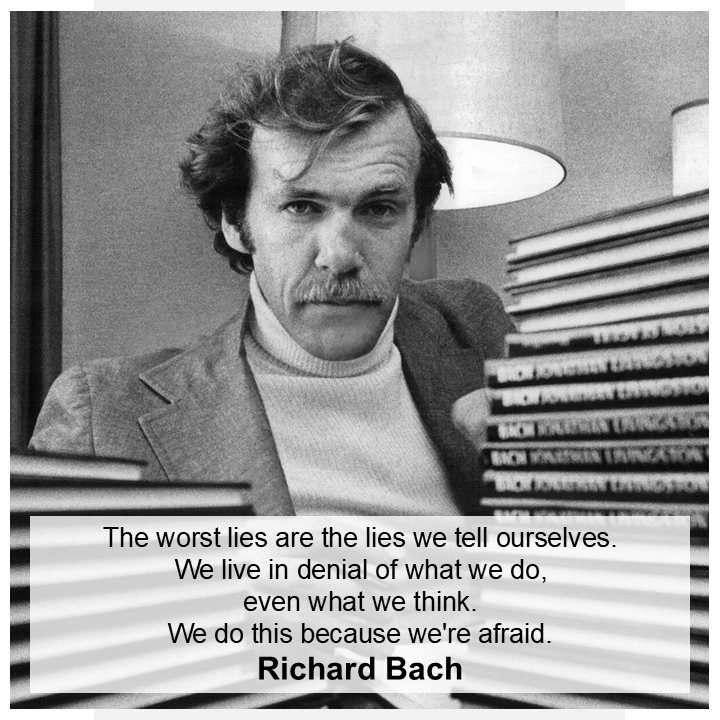
The worst lies are the lies we tell ourselves. We live in denial of what we do, even what we think. We do this because we’re afraid.

We fear we will not find love, and when we find it we fear we’ll lose it. We fear that if we don’t have love, we will be unhappy.

Richard Bach

But we're all gonna die
Decompose into daffodils and dandelions
The bees will use our flowers for whatever they like
Make the honey that our grand-kids will put inside their morning tea
It's the thing of life
We're all eating each other
The thing of life
Nobody lives forever
The thing of life

The urge to ‘consciously’ exist forever is the only lie we need to let go to become truly eternal, free. We are so attached to our so called “self-created identity” that we consider everything going against is as a potential threat to our existence – the existence which eventually will fade away into nothingness. It is way better to accept the finite-ness of life and be useful to each other rather than carrying that false sense of superiority, higher ego to justify our lies of life.

Juliet puts higher perspective to sooth our confusion of “conscious existence”. We are justifying our egos because we don’t want to die, we don’t want our identity to die, we don’t want our memories to die, we want to be remembered by people even when we are not existing in the world. The urge to preserve our conscious identity thereby our personality becomes the ultimate goal of life.

I am using ‘conscious’ word here to show that we are scared of losing the “I”, “Me” from our life because that is how we experience the life. We create the sense of existence from inside that is why sense of “I” is very important for our existence but if you closely observe the way things exist in the nature it is really difficult to pinpoint what makes that “I” – the “I”. Is it my brain? Or is it my body? is it my property? is it my super-car? is it my villa? is it my designation/ salary? is it my family? What exactly defines us?

You will get the answer once you accept that this thing that you have assigned your identity to – your existence to will not remain forever. When we say it will not remain forever it means that the combinations which created that existence. The existence would crumble down into nothingness.

Now here is an interesting part. We call the crumbles of nothingness “nothing” because they do not immediately affect, improve or help the existence we were trying to hold on to – our identity. We forget that it was the same set of some “nothings” which came together in a specific way to create “something” – this something became our existence.

Juliet beautifully brings in this perspective by saying that we will end up into flowers then into the honey that our future generation will put in their morning tea.

While we are trying to hold onto our special identity which is short lived, which would disappear in a blink we are forgetting the fact that the nothingness from which we were created is more eternal than the identity we are trying to maintain. This nothingness is the truth, its that something which is getting recycled all the time. On the other hand, we are in this constant battle to justify our falsely created, mortal identity.

We should understand that we are actually eternal but this false sense of ‘being’, this false sense of ‘conscious’ steals the real eternal existence. 

We don't know how to accept we're just a product of a chance
And less like gods but more like plants
Who can't stop making up reasons we're alive
(We're alive, we're alive, we're alive)
You know we love to deny
(To deny, to deny, to deny)

Juliet is again waging war with our falsely created sense of “special”. We intentionally highlight the facts that justify our superiority and ignore the facts which actually show that we might be the result of few overlapped coincidences. Even if we have not come out of chances and coincidences our existence is not that grand in the whole scheme of existence. On the level of creation, we are as close to plants than the powers which created all of us.

So we paint our face with intellect
Pretending we're not curious
Too busy, super serious
Don't have the time to do what we like
(What we like, what we like, what we like)
Baby look at the sky

In spite of knowing that we are insignificant, knowing that the creation is way bigger than what we are trying to justify ourselves, we are always in the race to prove our superiority. Why does that happen? Why are we always trying to justify our superiority with some lies while we call ourselves the smartest species? Why ‘we’ the smartest ones fail to recognize the objective truths of the world when we know that there is not meaning to chase everything all at once? Why we are always trying to win the race and justify our worth with something?

The reason is that we think our existence is limited, our time of remaining conscious of our being is limited.

We very well know that we will die someday, that is exactly why we try to justify every moment of our conscious existence to something, some idea, some object which we call our job, duty, faith, passion. We don’t want to die with the regret that we have nothing that will remain forever after we die. We are so wound up in justifying the life, memories after our death that we have invested our present into the pursuit of lies which are creating the illusion of our specialty.

Our heads are so engrossed down into the pursuit to create that false identity of worth-ness that we are unable to look up and appreciate the beauty around us, the reality around us.

The urge to lookout for the meaning of life and then assigning that meaning to something so superficial will eventually end into the pain and regret of not enjoying the time we had to its fullest, the moments we had to fullest. We are always trading the real awareness of “present” to gain the illusive comfort of safe “future”. That is how we justify meaning.

The real meaning of life should come with the understanding that whatever it may come next, one will never attach the sense of being to something which amplifies ego. Ego too will perish in the flow of time. The rejection of ego comes when one lets go of their sense of identity being special.       

'Cause we're all gonna die
Decompose into daffodils and dandelions
The bees will use our flowers for whatever they like
Make the honey that our grand-kids will put inside their morning tea
It's the thing of life
We're all just eating each other
The thing of life
Nobody lives forever
The thing of life
We're all just eating each other
The thing of life
Nobody lives forever
The thing of life

The rejection of ego will make you free, will show you what your real worth is. Even though you are not special – in the end, you are something of value when you synergize with others. Even though your conscious being is not eternal, the things which made your conscious being are eternal and that awareness should free you from all the urges to justify your identity, your specialty.

You are given a chance to experience the universe in the most sophisticated manner possible which many of the other species might not even have. What more could sooth your existential confusion! Once you realize that you are already made up of eternity, you will let go this mortal identity which you are always trying to preserve with some subjective perspective and lies. This is the real freedom and it requires innocence. Innocence is one of the basic indicators that the person has no ulterior motive to achieve something, it brings in the sense of acting on things without expecting anything in return. Please understand that innocence does not mean that the person should become a fool. Remaining innocent in spite of knowing everything is really hard, that is how you will know that you are not fooling yourselves. This song shows us that innocence. 

Conclusion

Juliet Ivy very beautifully brings the sense of life that is made up of eternal creations and destructions. We attach the meaning of our lives, the purpose of our lives to certain things while realizing that they too will perish in the flow of time – this is what would unsettle even the dumbest person. This feeling is also experienced by the highest specimen of humans. In order to come out of this unsettling fear of unjustified – worthless living, we take support from our surrounding. We selectively choose certain aspects that will create an illusion of safety and comfort. Being social animals, we compare our lives with the lives of the others, we create our baselines and set our targets based on what others have achieved and done in their lives.

You know what? Even after achieving such goals which we defined based on our surrounding we are not happy. Even after those material victories, we see that the happiness is short lived. So, we shift our goals to something which is immaterial, something which is spiritual. Something which we think is more eternal than the material things. We make certain ideologies the meaning of our lives. Religion is one of such examples.

René Girard – a French philosopher coined the concept of Mimetic theory where he tries to answer how we decide what to do and why to do. Mimesis roughly means imitation, trying to resemble. When we are stuck with no information or loads of information in either cases, we will be overwhelmed. The best way to come out of such conditions would be to see what others are doing around you. We set our standards based on the baselines of our surroundings. We create lies to justify these baselines and goals we want to achieve. Our ego is thus created to ensure that we maintain the sanity in the times of clueless-ness. It will prioritize survival of body in materialistic races and survival of its own sense of existence its identity in the spiritual races. In the end, both victories will fade away. (That also should not mean that one should not engage in the pursuit of certain victories. It should imply that the non-eternal nature of everything should humble the person.)

The most important point to understand is the ways in which everything great (also everything worse) will be broken down to their most fundamental building blocks. The idea is to not get attached with what you created which got destroyed.

In our current times when the life expectancy is better than ever, when we have a better cover of social safety than ever, the primitive instinct of survival from natural predators has been replaced by the recently created – modern instinct of philosophical – ideological survival which is the ‘preservation of our identity’ – the idea of our own image. (Social media is the booster for such way of life. It is also how the mimesis is happening strongly.) Philosophical death seems more painful than actual death. That is why in certain cases people gather courage to do self-harm. The best way to come out of such mentality is to question the very thing which brought this philosophical death; I know it is difficult to pick on the injury which already is painful to bear. The idea to work in such confusions is to notice one important behavior every one of us maintains when we define our life. We always strive to amplify things which bring happiness and ignore things which bring sadness. We define our life selectively on such choices in spite of knowing that both hold same potential to realize in actual life. This desire to selectively attach to certain aspect brings pain in life.

The moment we accept that there is no end to the cycles of creation and destruction (of both good and bad) we will see that we are nothing but a recycled versions of everything that is there in the existence.

The realization of the actual death of our body should come with the awareness that you are returning to materials which made you.

The realization of the philosophical death of our being should come with the awareness that your idea of self, your consciousness was just created by your desires and after this philosophical death you are returning to the fundamental forces of what made them and thereby what made you. The endless possibilities for your becoming are opened in this point. This is the true eternal existence – to get broken down into the fundamental blocks of being and be recreated again.

Juliet Ivy said all this in one simple sentence “We’re all eating each other.”  

The cosmos is within us. We are made of star-stuff. We are a way for the universe to know itself.

― Carl Sagan

The Roadmap For A Creative & Fulfilled Life

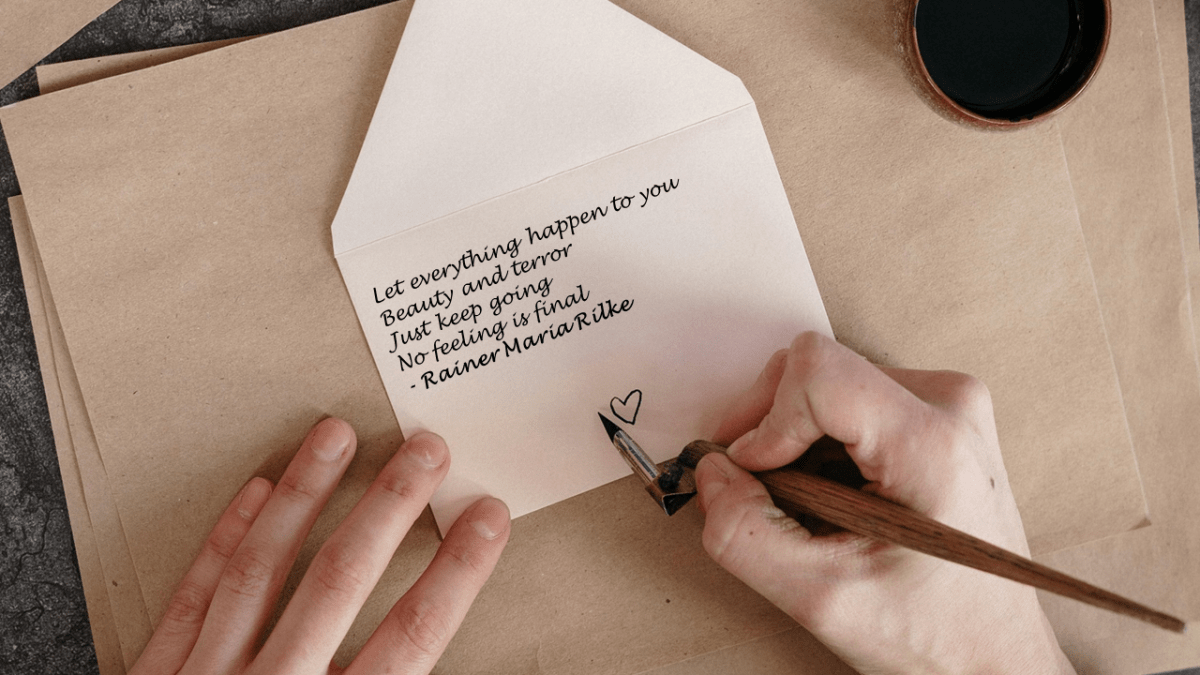
The ten letters from an Austrian poet, novelist – Rainer Maria Rilke to a young poet undergoing the fear of mediocrity and criticism laid down a roadmap for a successful artistic and creative life. The beauty of Rilke’s letters is that they are not limited to those strictly in the creative professions; rather it is a roadmap for every person who want to live a fulfilled life involving continuous transformation of inner and outer riches. That is also why art is important in our lives. Rilke through his ten letters, implores the reader to cultivate authenticity, empathy, and patience to pass through all events of their lives.

In today’s times the written communication has become so handy and easy that you can send millions of sentences from one end of the globe to the another within few milliseconds. This convenience of communication has stolen away the sanctity, sanity and strength of the words and emotions they invoke which were actually supposed to transform our worlds in better constructive ways. After reading these letters from Rilke you will appreciate how effectively he distilled down the divine wisdom of life in few pages. A book costing less than one time meal can transform your whole life. This is the power of a true artist.

Rainer Maria Rilke’s Letters to a Young Poet

One of the biggest fears any budding artist carries inside them is the fear of mediocrity and the fear of the criticism. Creative pursuits can be followed by anyone and everyone but very of few them are able to rise-up as the real artists. At the same time, it is also true that a great master was once a starting novice. This is where lies an ambiguity; how could an artist develop his art to the greatness when today he/she is unsure about its end fate? This may feel a complicated question but the answer is simple or at least someone has already simplified the answer for us. Rainer Maria Rilke, the poet is the one of the artists who truly understood what it means to create an art or become a true artist.  

The reason to mention Rilke out of the other artists is the way he provided that answer. Very few artists carry so much artistic power that even when they would sneeze or yawn, it feels artistic. Rilke was one of those effortless artists. Pardon my example of artistic yawn, for Rilke deserves far superior analogy for his works. A true artist’s life itself is an expression of art. This is only possible due to the authenticity. Authenticity is the core of great and true art.

The reason to choose Rilke to solve the riddle of the true artistry is the letters he wrote to a budding poet for giving feedback on his poetry. You will see the inner workings of Rilke’s genius artistic mind through these ten letters. You can call these ten letters as ten advises, ten rules to become a great artist rather a great human being. You would wish that someone would have given you exactly similar advises in your journey when you will read these letters. What strikes me the most in these letters it the relevance they still have today, that is what is an attribute of true art – it stands the test of time. I will throw some light on the key moments from these ten letters and would encourage you to read them for yourself. You will understand that very few pages of paper are enough to change the way you live your whole life.    

Letter 1 – Art should fill the gap between what is felt and what is expressed

Criticism of art

Franz Kappus – a recruit in military academy felt the need to have an opinion on his poetry which is why he wrote letters to Rilke asking for his feedback. Rilke once studied in the same academy. Rilke writes following in response to Kappus.

“Things are not all as graspable and sayable as on the whole we are led to believe; most events are unsayable, occur in a space that no word has ever penetrated, and most unsayable of all are works of art, mysterious existences whose life endured alongside ours, which passes away.”

– Rainer Maria Rilke, Letters to a Young Poet

It is very interesting to see how Rilke found out the gap between the expression of any art and the interpretation of its observer, admirer. And that is exactly why art should exist and function. That is also why it is very easy to criticize given art but difficult to replicate it. Most of the pure creations of art, however fictional they may be have somehow emerged from some real-life events and are very personal. This fuels the pure artistic creation but it may also steal the perspective from the observers who haven’t gone through that real life experience in their own lives. That is exactly why criticism is the easiest task in any artistic journey. Rilke thus encourages the new poet to not worry about the criticism of others in this journey. Actually, bringing the intangibility into tangibility, unsayable and unseeable into comprehensible reality is the exact job of the artist. He would anyways face the criticism as he is the first one to bring them into the reality; others are yet to pass through the same experiences on their own level. Fear of criticism should not stop the process of artistic expression. 

Artistic style is effect of the art not the cause behind it

“Nobody can advise you and help you, nobody. There is only one way. Go into yourself. Examine the reason that bids you to write; check whether it reaches its roots into the deep regions of your heart, admit to yourself whether you would die if it should be denied you to write.”

– Rainer Maria Rilke, Letters to a Young Poet

Many artists try to copy the style of other famous artists to create their own art because it is already proven technique that others are appreciating. It is the safest way. Some try to force things so that art would be created. Art should not force you to do certain things. The style created by these routes becomes pretentious and ‘cringy’. People will like it; it will become viral but it will be short lived.

Rilke thus advises the young poet to look for the reason he has chosen to walk this path. He wants the poet to make sure that the reason to go on this journey is to express the deep sayings of the heart. The art created from this deep urge of the heart will have its own style.

Rilke was very well aware that the emergence of style is directly linked to its uniqueness of expression which is very personal thing. Hence, he suggests to go inwards. Every one of us lives their life in unique ways and if the art reflects that uniqueness, then it can easily create its own style. This is possible only when one has the urge to honestly put his own life in his art instead of copying or imitating the lives of others. This is also why one cannot separate the biography of a true artist from his art. So, study of an art is in a way the study of that human who created it, his philosophy of life.

“A work of art is good if it has risen out of necessity.”

– Rainer Maria Rilke, Letters to a Young Poet

Letter 2 – Art is more about depth than its aesthetics

“For under the influence of serious things irony will either fall away (if it is something incidental) or on the contrary (if it really belongs to you in a native way) it will gain strength and so become a serious tool and take its place among the means with which you will be bound to create your art.”

– Rainer Maria Rilke, Letters to a Young Poet

Art most of the times is meant for pleasure or to stir up the emotions. That is why aesthetics are one important part of any art. So, it is natural for any artist to work on improving the materialistic attributes of his art, the way it looks, the way it sounds, the way it smells or the way it feels to the skin – the way it triggers the senses. Rilke wants the young poet to care less for such aesthetic attributes and focus more on what needs to be said which was not said by others before. This is possible only when the artist shows his personal depth, his honest intent while expressing his emotions, thoughts, ideas through his art. If there is depth in the expression, the aesthetics would be automatically be built around it to fulfill that honest expression.

This shows why Rilke’s simple writings feel so artistic and pure to the core. Even his normal letter communication has an intent and depth.   

Letter 3 – Solitude engenders the art

The solo journey of authenticity for the creation of true art has its shortcomings (I won’t use the word ‘disadvantage’ because Rilke explains the power of such solo journey many times in his future letters). The shortcoming is that as you are on your own, you may cross the paths which others have already passed, you may commit the same mistakes which others already committed. This wastes valuable time and resources. So, anyone would obviously think that at least if they start with some preconceptions of what others have already done, it would prevent them from potential failures in their own artistic journey. Rilke prohibits the young poet from embarking on such journey. There is a reason.

“Trust yourself and your instincts; even if you go wrong in your judgement, the natural growth of your inner life will gradually, over time lead you to other insights.”

– Rainer Maria Rilke, Letters to a Young Poet

The single most common attribute of any great artform which is the authenticity is possible when the artist successfully pours his/ her unique perspective into their art. This is only possible when they go on their own journey in their own ways even if others have already done that. Rilke focuses more on how you grew out of your failures, the failure which other have gone before but never learnt from them. For an artist, failures are less important than the personal journey of gathering personal unique perspectives and insights which world has never experienced before.  

Solitude is important in such journeys because it demands the artist to go in his own ways without getting influenced by others. This isolation from the surrounding ensures the true expression of what was suppressed by the very surrounding itself. Being a social animal, we try to suppress certain aspects of our identity to melt and fit into the corners and molds of the society. Rilke implores the importance of solitude so that those hidden, personal and unique aspect will bring out the authentic perspective out of the artist.   

“It is a lesson I learn every day amid hardships I am thankful for: patience is all!”

– Rainer Maria Rilke, Letters to a Young Poet

Rilke knew that failures shatter anyone completely and that is exactly why asks for patience in this journey.

Letter 4 – Artist must be careful about the limitations in the expression of art due to the tangibility of its materialistic media

Rilke cautioned the young poet about the media of the art. The media are purely materialistic which are expressing the immaterial, intangible ideas and emotions. So the chances are high that the limitations of the media will not successfully communicate the intangible expression of the artist. The art could immediately feel mediocre because the media failed even though the artist had an impeccable picture of that piece in his mind.

“…for even the best of us get the words wrong when we want them to express such intangible and almost unsayable things.”

– Rainer Maria Rilke, Letters to a Young Poet

Many of us are pursuing certain arts because it gives us certain type of pleasure, enjoyment, and entertainment. This is also one of the aspects of the materialistic limitation of the media of expression in art. The materialistic media excite our physical senses and also the intangible parts of our personality. Most of the times the goal is to excite the physical, materialistic aspects of our personality. Rilke advices to not focus on such materialistic pleasures during the creation of the art. Such art would excite physically but as physical things have materialistic limitations these limitations will restrict the expression of intangible and truly pure, authentic attributes of given artform.

“Physical desire is a sensual experience, no different from pure contemplation or the pure sensation with which a fine fruit sates the tongue; it is a great and endless feeling which is granted to us, a way of knowing the world, the fullness and the splendor of all knowledge. And that we receive this pleasure cannot be a bad thing; what is bad is the way almost all of us misuse the experience and waste it and apply it as a stimulus to the tired parts of our lives, as a distraction instead of as a concentration of ourselves into climactic points”

– Rainer Maria Rilke, Letters to a Young Poet

(It’s like even though loud music excites you that does not mean that you will keep on listening to it forever; it will surely feel boring after some time. This ‘boring’ feeling is due the material aspects like your eardrums getting tired after repeated exposure.)

That is why Rilke asks to ignore the materialistic pleasure while creating and expressing the art. The pleasure is the byproduct of authentic art, it should first invoke that which was not realized by the person who is consuming that art. Even though the person might have gone through that experience before but it was the artist who showed this person what the observer didn’t felt before.

Letter 5 – Art is one of the very few things which could last forever

“…and you slowly learn to recognize the very few things in which something everlasting can be felt, something you can love, something solitary in which you can take part in silence.”

– Rainer Maria Rilke, Letters to a Young Poet

Rilke here was writing about his time in Rome, Italy. You will see that he describes Rome with hot weather, empty, difficult to settle in, lifeless and museum-like dead and still feeling. But Rilke then pointed out the creations of Michaelangelo which are still beautiful in this dead stillness. In a smart way Rilke shows that the art which is created in pure solitude, silence and love could still remain relevant and still express that authentic expression of the artist. Even though Rome was boring for him that day, Michaelangelo’s art inspired Rilke to redefine the artistic venture to inspire his young poet. That artistic creation in Rome was alive and inspiring people around it like Rilke. It is true still today.    

Letter 6 – The ‘final’ destination is solitude and only solitude

“What is needed is this and this alone: solitude, the great inner loneliness. Going into oneself and not meeting anyone for hours – that is what one must arrive at.”

– Rainer Maria Rilke, Letters to a Young Poet

You will find Rilke reiterating the great importance of solitude in his every letter to the young poet. And there are important reasons behind it.

Solitude makes the artist to look inwards which prevents him from copying other styles, it prevents him from mediocrity.

If the artist would depend on other external techniques for artistic creations; once these techniques fail for any reason unknown to the artist the whole journey is futile and great failure.

Failing inwardly is way important to recover because artist would know each and every reason for its end fate into failure. This creates new opportunities for improvements and learnings which lead to unique style of artistic expressions.

Solitude makes the art more personal. Even though we are all same inside and outside on human level what separates us are our unique life experiences and the unique personal perspectives created from those experiences.

Solitude prevents the artist from the hesitation of expression thereby making his art more potent. Any artist who can shake the people to their core rarely hesitates, this is possible only when he has detached himself from the influence and opinions of others. This strength comes when one submits himself to solitude.     

Letter 7 – Only solitude can create ‘real’ love.

“I believe that love remains so strong and powerful in your memory because it was your first deep experience of solitariness and the first inner work that you undertook on your life.”

– Rainer Maria Rilke, Letters to a Young Poet

Most of the art is revolving around love. There is a reason why it is so. Love allows the person to appreciate the very reason of being himself. Many would say that love makes the person complete because his other half part in his lover empowers him but that is not the case in reality. You should appreciate how Rilke points out this fantastic observation about our human nature and its definition of love.

The love which we feel for others and consider it as a fulfilling in the form of the other person who loves us back is solely a result of – we carefully and intentionally working on ourselves inwardly. We consider love as a completing emotion not because others make us feel special through it; rather it is because love inspires us to willingly work on ourselves so that our lover would appreciate our love for them and love us back.

True love inspires a person to love themselves, to work on themselves, improve themselves so that their loved ones would love them back. This is only possible when one has completely appreciated solitude. Solitude is the ultimate and authentic form of love. When you would start loving yourself honestly you would appreciate what your loved ones are looking for when they are looking for love.

So, however paradoxical it may seem, our love for others starts with our love for ourselves and only ourselves. (bear in mind that we are not talking about selfishness) Rilke pointed out this observation.

Letter 8 – Sadness is the blessing in disguise

Letter 8 is my most favorite letter. Not because it glorifies sadness or pain which is a common tool for any great art. (Some newcomers, wannabes are ready to harm themselves mentally, physically to invoke such feelings for creating true expression of their art – I feel its too pretentious and inauthentic.)

I like this letter because it asks the artist to observe his sadness in greater depth instead of running away from it. The mere nature of life as a pursuit of happiness prevents us from appreciating its other lesser known but glorious aspects which are hiding in plain sight behind sadness and pain. Rilke knew this hence he implores the young poet to study and appreciate sad experiences constructively.

“If it were possible for us to see further than our knowledge reaches, and a little beyond the outworks of our intuitions, perhaps we should then bear our sadness with greater assurance than our joys. For they are the moments when something new enters into us, something unknown to us; our feelings shy and inhibited, fall silent, everything in us withdraws, a stillness settles on us, and at the center of it is the new presence that nobody knows, making no sound.”

– Rainer Maria Rilke, Letters to a Young Poet

What a pure and real thought!

Rilke beautifully convinced us that we learn more, develop better, create better if we let new and unknown things inside ourselves. Sadness is highly associated with unfamiliarity, uncertainty which is also why it is invoked in such conditions but that is the exact reason for an artist to explore the unexplored territories of humanity. These new, unknown experiences actually develop and amplify the artistic attributes in better ways than any happiness, joy or pleasure would.

“The quieter, the more patient and open we are in our sadness, the deeper and more unerringly the new will penetrate into us, the better we shall acquire it, the more it will be our fate, and when one day in the future it ‘takes place’ (that is, steps out of us towards others) we shall feel related and close to it in our inmost hearts”

– Rainer Maria Rilke, Letters to a Young Poet

Rilke strongly proposes the creative person to not be swayed by the sadness and get carried away with it. Rilke demands patience. For patience will make the person to study this feeling of sadness and what it is actually pointing to. As we are the creatures craving for happiness and running away from sadness it is natural to consider sadness as a hostile feeling. But this less acquainted sadness is actually carrying the gifts of our better futures for when we pass through them, we are transformed. A true artist is always looking for a new perspective towards the world we are living in. And transformation is a coal mine which holds the diamonds of creative, new, and radical artistic perspectives with immense depth. Rilke wants the young artist to capitalize the sadness with the tool of patience to learn a totally different perspective towards the world.

“Perhaps everything terrifying is deep down a helpless thing that needs our help.”

– Rainer Maria Rilke, Letters to a Young Poet

Rilke also showed that the very thing we are scared of is also scared of us for it too is clueless about the unknown. The way Rilke said this shows how important empathy is for any artist. Empathy will help any creative person rather any human being to make amends with the uncomfortable, sad feelings. So, patience and empathy are the most important tools to live a life full of transformations. These transformations, especially the inner transformations will fuel your art.

“Do not think that the person who is trying to console you lives effortlessly among the simple, quiet words that sometimes make you feel better. His life is full of troubles and sadness and falls short of them. But if it were any different, he could never have found the words that he did.”

– Rainer Maria Rilke, Letters to a Young Poet

Rilke then turns the face of inner patience and empathy outwards. If you are this much careful about your inner world in a creative pursuit, think how others are feeling when they pass through similar emotions, feelings. People in your surrounding world are also transformed by such events. Especially, people who are always nice to others, extend hand to others in need, create a safe space for others to get comfortable. They are not doing it because it is nice, it makes them look good or because they want that greatness of good deeds. They do it because they know what it means to be helpless, sad, being thrashed by the events out of their control. Only because they kept their inner world alive, they underwent this constructive transformation which made them a better human they are today.

Rilke wants the artist to appreciate such people living around him. I might be overstating here but only an empath with a strong inner compass can see these qualities in all people. He can look through the people for who they are. This is important aspect of any creative journey.

Letter 9 – Life is right, whatever happens

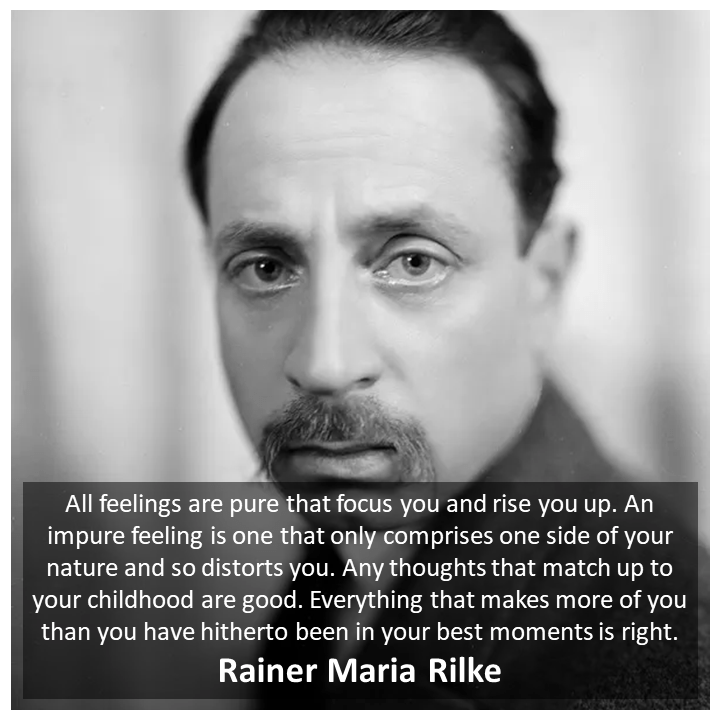
“All feelings are pure that focus you and rise you up. An impure feeling is one that only comprises one side of your nature and so distorts you. Any thoughts that match up to your childhood are good. Everything that makes more of you than you have hitherto been in your best moments is right.”

– Rainer Maria Rilke, Letters to a Young Poet

Rilke beautifully explains what is right and what is wrong. You have to appreciate that this idea of right and wrong is not based on some religious ideas or some scientific evidences. Although most of the times people resort to either of these given ideologies. What Rilke explains is the way of inner judgement born out of pure solitude. When you isolate your inner world from the external influences, you will realize that the inner child filled with all the curiosity, intrigue and innocence is still there waiting to explore the world. You will find that this is what you are actually but the outer influences made you to twist and morph your core. You will understand that you feel things differently when you are looking inwards. The feelings will remain the same but how you respond changes drastically.

In order to appreciate this I will pose an example: look out for the authors who wrote murder mysteries, psychopathic thrillers or some melodrama with tragedy. The thing to observe is how they are in real life; some actor who played a deadly sinister villain and then look how he/she is in real life. You will see that most of the times the gap between how they live and what they portray is totally different rather polar opposites. This way of artistic performance is only possible when one is aware of what emotions they are going through. They know why they are feeling this and are masters of artificially creating them too. This awareness is possible only if the person has cultivated his inner world deeply.  

Feelings are one inseparable part of this inner world. They could be of sadness, happiness, pleasure, anger, anxiety, or jealousy. On surface, it may seem that feelings emerge from external factors but what people always forget, is that one can consciously recognize those feelings and select a constructive response towards them; especially when the feelings are negative. Feelings if mishandled could be devastating and if recognized properly can bring about a revolution in the inner world and the external world thereafter. The very volatility of feelings is their strength and weakness simultaneously. What Rilke wanted is to acknowledge every such emotions for they are not there to remain forever. And that is exactly why he defines the right-ness and wrongness of feelings in completely radical ways. That is also why the childlike innocence is very important for there is no prejudice when one is passing through given emotions. Feelings are the response to reality and not a way to become sad or happy. Rilke wants every artist to use this in their creative pursuit. This is the secret of authenticity – to feel everything that you are feeling instead of getting flown away with it, let it pass but don’t get overwhelmed by them.

That is exactly why life filled with so many multitudes of emotions, feelings would make sense even when they are not on helping term with you. You will see that even such ‘bad’ feelings will open new portal to new creative journeys. For any artist cultivation of emotions especially the negative ones thus become highly important.

Letter 10 – Art is a part of life, life is bigger than art but at the same time, life is futile without art

“Art too is only a way of living, and it is possible, however one live, to prepare oneself for it without knowing; in every real situation we are nearer to it;…”

– Rainer Maria Rilke, Letters to a Young Poet

It is not compulsory to end your artistic journey into the creation of your magnum opus or the masterpiece of your life. What art should do is to make you appreciate the life around you on deeper and richer levels. Once one learns this, they will find art in every aspect of life, which by the way is also an artistic take on living life. The life you are living itself is a masterful creation. Rilke wants the creative person to honor that beautiful creation by remaining worthy of it. 

So, this is it. I would recommend every person to read through these 10 letters written by Rainer Maria Rilke to Mr. Kappus. They are not some letters intended to communicate with each other. These 10 letters are guidelines for the people on their creative journey whatever it may be.

In today’s times the written communication has become so handy and easy that you can send millions of sentences from one end of the globe to the another within few milliseconds. This convenience of communication has stolen away the sanctity, sanity and strength of the words and emotions they invoke which were actually supposed to transform our worlds in better constructive ways. After reading these letters from Rilke you will appreciate how effectively he distilled down the divine wisdom of life in few pages. A book costing less than one time meal can transform your whole life. This is the power of a true artist.

That is exactly how a simple scribble by true artist becomes a sermon to whole world. People worship it forever. Authenticity, empathy, and patience make it happen.      
A Modern Prayer to Perceive ‘The Silver Linings’

The acceptance of our dark side is the only way to start a new journey to the real happiness, fulfillment. Achieving real fulfillment becomes way easier and manageable once we start acknowledging our dark emotions, feelings of sadness and sorrow. Running away from such “low” lying emotions actually intensifies them in the abyss. Actually, such emotions have great contribution in the refinement of our character. Empire of the Sun’s new song called ‘Happy Like You’ talks about the acceptance of our dark side to make our personality whole for creating a newer and better version of ourselves.

Empire of the Sun’s song “Happy Like You”

The best piece of art can be attributed to the multiple perceptions, interpretations it creates in the mind of its subjects despite keeping its physical structure constant.

The beauty of a masterpiece is that people have their own opinion about that piece and nobody is wrong. The mere subjectivity and the possibility to invoke personal feeling in the mind of the observer or the enjoy-er of the art is the power every one of us has naturally. Most of the time very few of us unlock that power in a better sense. Music is one such power.

Recently, I came across newly released album named “Ask that God” by an Australian electronic duo called Empire of the Sun. All the songs on this album are banger and are complete redefinition of what the Empire of the Sun stands for. In my personal opinion, it is a crime to compare all the songs to choose the best one, (but you already know why I am writing this). One song that is looping in my head continuously and has occupied a larger portion of my brain for many days is “Happy like you” (this only shows that the song has conjured me thereby maintaining my previous point of not comparing good songs with each other).

Luke Steele and Nicholas Littlemore of Empire of the Sun

Actually, bringing the poetry into the bastardized territory of prose should be a crime, for it de-beautifies the very reason for it being so wonderful. But, in order for everyone to appreciate the multiple subjective point of views and its connections with the multiple facets of life it is trying to explain, a poetry must undergo its ‘deconstruction’ into prose.

That is the crime I am committing here. If there is any songwriting, poetry, lyrics meaning police anywhere, tell them that I am here waiting for them to tolerate all this prose I have written hereon.  

Jokes aside, I am deep diving into the song and its music video.

The song

The song is written by Luke Steele and Nick Littlemore of Empire of the Sun.

Happy Like You lyrics © Universal Music Publishing Group

You’re revolutionary
You’re like a phantom taking a leap
You’re heart is legendary
Bet you are feeling so high
You have a higher power
Telepathic talk to me
Make me whole again
Whole again whole like I used to be

Happy like you
Happy

The poet is asking the higher power for something that would make him feel complete like he was before. He is praising the power of this higher power so that it can bless him.

The words used by poet like revolutionary, taking leap, legendary heart are used to describe this higher power reflects what he exactly wants from the higher power. He wants to regain a lost part of his personality he was before going through this hardship. He wants the higher power to take the leap to come out of the sorrow, transcend the current state and bring about an “internal” revolution in a way.

Telepathic ability indicates the poet’s trust in the higher power. Poet knows that this higher power is his final resort to all that exists. That is why this power knows everything already and there is nothing required to be expressed formally to get things done.

Ultimately, it is a request to regain that precious part of the poet’s personality, that happiness which defined his whole personality.

Won’t you humanize me
Use all your wisdom
Show me joy in everything
I’ve been clouded by machines
Lost my way deep inside another screen

The rhetorical question posed by the poet is a slight indication of what he lost during his difficult times. He lost the things which made him human. He lost the ability to see the silver linings.

This is the exact spot we must understand that the person lost his personality in depression and mental battles. But why? and how?

Immediate forthcoming lines show what happened. The screens and “machines” indicate the influences of the mechanical world on our daily lives and the added powerful effect of social media which led to a dreadful state of depression.

It’s an irony that when we are ‘liking’ certain things on social media from other people’s lives, a deep-rooted sadness, envy, hatred is getting born out of the one-to-one comparison of lives. Everyone is conscious of these emotions due to social media but the penetration of social media, screens everywhere is so regular and normal that we are subconsciously (now mechanically) ignoring these emotions which take a toll on our minds when we are shocked with something really sorrowful.   

All I wanna be is happy happy happy like you 
All I wanna be is happy happy happy like you

 Once you pass through such horrible emotions of sadness and depression you start appreciating the person you were, how happiness made you the better version of yourself. This happiness made you feel like the greater, higher power itself. That happiness actually made you feel closer to the higher power. The poet urges the higher power to make him who he was before and just in the ways the higher power carries itself.  

You’re revolutionary 
Telepathic talk to me
You are imaginary
Bet you are feeling so high

Wish is a dream that comes true

The most difficult part of coming out of the depression is that it starts in mind of a person with such an intangible, non-physical thought/ idea and then it starts to affect the real events, objects, people around him/ her. So, even though fixing the reality around such person can help to come out of the depression; uprooting the deeply settled feelings of sadness, grief, sorrow has immense impact in the person’s fight against depression.

That is exactly why the wish to become happy shows that the poet whole-heartedly wants feel happy. The ‘wish’ indicates is readiness from inside to be realize happiness from intangibility to reality thereby highlighting the use of the expression “dreams that come true” here.

Time is a song that forms you 
Oh I hope you

The expression of ‘time’ which formed this higher power implies the time which need to given to person to heal when he/ she is in hardships. Give it some time, it will pass too. The poet has understood that over the time even though it will seem difficult but over the time every sadness will fade away. It’s just an ask from poet to the higher power to get the patience, courage for passing through this hard time.    

Won’t you humanize me
Use all your wisdom
Show me joy in everything
I’ve been clouded by machines
Lost my way deep inside another screen

All I wanna be is happy happy happy like you

Ultimately the influence of social media on our lives and the mere algorithmic, mechanical nature of our lifestyle is leading lives of many really happy people to a depressed, sorrowful life. The poet asks the higher power to make such people complete again and happy again just like the supreme power is. It also means that once we become happy and complete, we will become that supreme higher power again.   

From a simple explanatory point of view on any poetry/ songwriting, the song gives an impression of the man’s urge to regain his happiness, his identity when he is in the conundrum of depressive emotions and thoughts. The impact of depression is great because the factors causing it are within our hands (or I may say fingers’) reach – the social media and the screens.

I think the songwriters have taken this excuse of the depression from social media to show what an urge to overcome any depression means for any human being; what it means to redefine the personality and also complete the human being in a bigger picture.  

The video and its symbolism

The phone call –

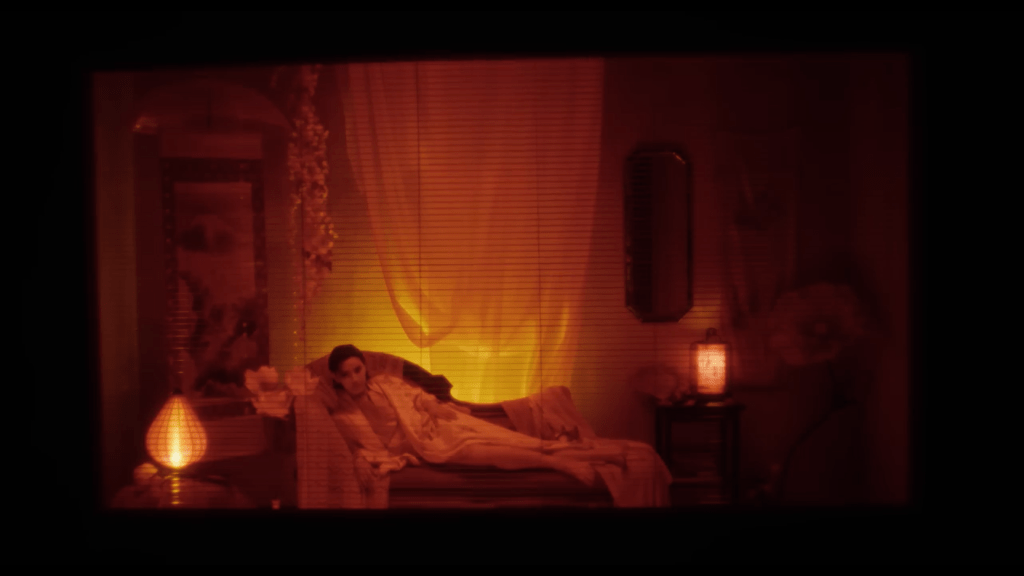
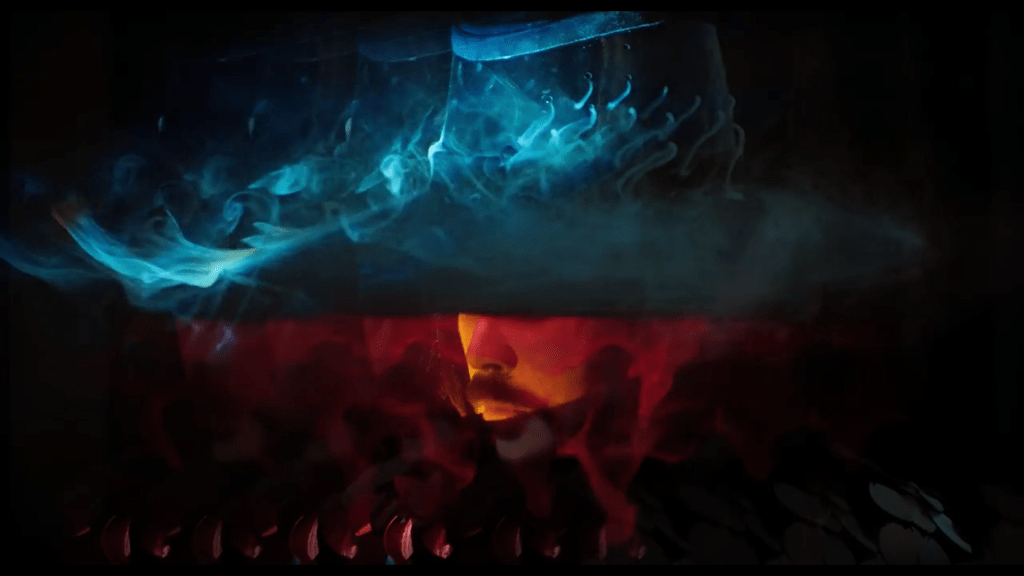
The video starts with a phone call. The girl receives a call on her landline and then the frame shifts to a guy (Luke Steele – Emperor Steele) in a dark with a red hue and dark hat. This is indication of her having a call with her inner self. The low-lit room shown throughout the video is the metaphor of she having discussion with herself and her inner thoughts and emotions. The phone call is proof of she handling her emotions by herself, it is her own conscience calling her.

Frame from Empire of the Sun’s Happy Like You MV
A low-lit room –

Watching reflection in mirror and hand movements on her own body shows she is interacting with herself. It is like a self-talk one has with themselves while figuring out what needs to be done. The low-lit room shows that dark part of our personality which also need acknowledgement. Even though the song calls for the person to be happy, this low-lit room has bigger significance. It is an indication that the real happiness comes with our acknowledgement of our darker side. Darker not in the sense of negativity but more in the sense of left out emotions which also need proper attention.

Frame from Empire of the Sun’s Happy Like You MV
The colors –  

Even though the music video looks colorful with some dark theme, the choice of colors used in this video are specific; there are characters, colors to the people shown in the video. Hot, cold, and warm / Red, blue, yellow, greens sometimes – indicate respective emotions and the interaction of the girl with those emotions. It is like she is trying to understand them and accept their presence to find the answers.

Frame from Empire of the Sun’s Happy Like You MV
The window –

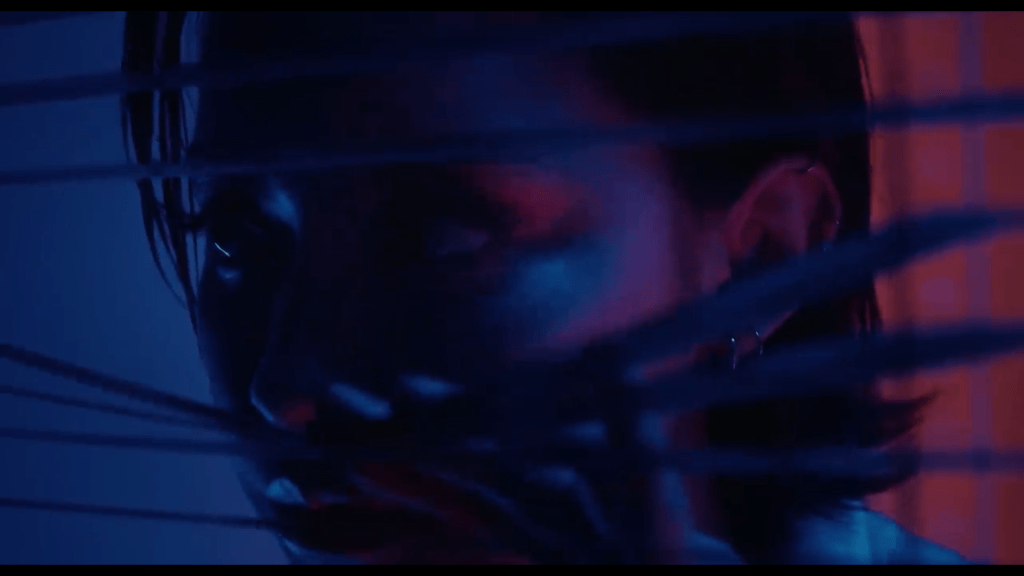
In the early part of the song, you will see the girl peeking through the blinds to see what’s behind the glass. It’s literally her peeking into her dark side of the mind.

There is a glass window with blinds between a person and the girl. The person can see her doing all her activities. What girl sees is only her reflection, this absolutely support the symbolism of her having an internal conversation about the overall depressive state of her mind.

Frame from Empire of the Sun’s Happy Like You MV
The sadness, grief –

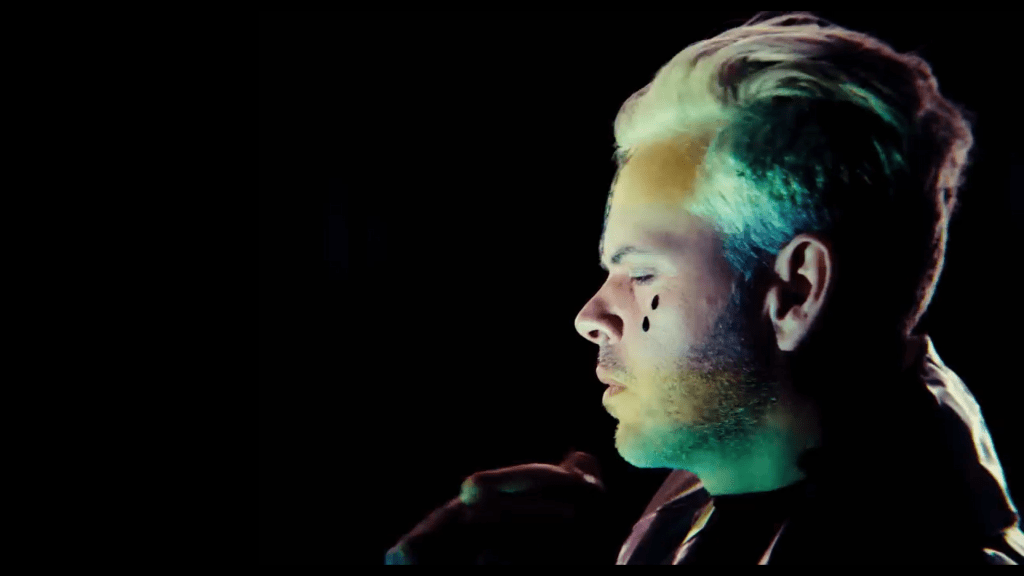
You will see one person (Nick Littlemore – Lord Littlemore) with the black tears seemingly away from the window in certain snippets of the video, who appears and goes withing few moments. This is that deep rooted feeling of sadness which the girl is trying to acknowledge. One person closer to the glass window observing the girl’s activity is her conscience and the grief is away from the glass lying in the deep abyss of her mind. I say the guy closer to the window is her conscience because it has symbolically shown with multiple colors and hues showing the variety of emotions one carries in themselves.  

Frame from Empire of the Sun’s Happy Like You MV

The rain in the end symbolizes new beginning, renewal.

Frame from Empire of the Sun’s Happy Like You MV

The creators of Music video deserve special applause

A deep dive into this ‘prayer’

For me this is not a simple song, it’s a prayer and I have a very strong reason to justify my point. A prayer from a literal, grammatical point of view is a request to higher powers which have better control of the reality than us. We surrender to such higher powers to show that we are humbled and are in a need for help through such prayers.

This song may not have that feel of “conventional” prayers, hymns due to its electronic and not so ‘religious-feeling’ notes, melodies but there is no written rule on the ways to compose a prayer anyways.

On first thought it’s weird, how can a prayer in electronic music make sense spiritually?

I say why not! I would say the composition itself dares the modern listener to appreciate the feeling of awareness of our higher self – hidden inside our own selves. It is like tapping into that unconventional, unexplored hidden, darker part of our own conscience.

The song mainly focuses on visiting and acknowledging the darker parts of our mind, especially when we are in deep sorrow. Abandoning such dark emotions thinking that they are not part of your personality actually intensifies them and when you are feeling weak and defeated – these emotions will easily cover your whole personality.

My point to call this song a pious prayer is that it makes the listener, the singer acknowledge their emotions. Good or bad whatever they are, they together make the personality whole. It also makes them to accept their urge to improve themselves in life. Even though we are asking the higher powers to grant us the powers to become our better version it is actually we – ourselves acknowledging our darker side to improve and build upon them for the better and evolved version of our selves.

The most important act to come out of any negative, depressed feeling is the acceptance of the fact that they are an inseparable part of our personality and only this time they have charge over our personality and we can take control from them anytime we want. You can only cure a person who really want to be cured and live ahead. The feeling to come out of such sorrows has to come from inside and it becomes easy once we accept our darker side of emotions, feelings.

So, the best way to handle any challenging emotional state, any darker emotional state is to first acknowledge them. Acceptance of something wrong or abnormal is the first step to effectively work on handling them. It becomes very difficult to accept that we ourselves are the originator of our emotional responses and its totally normal. We just feel that it is difficult to control our emotions because mostly they are triggered by the external stimuli and that is where the real trick happens. You see, the illusion that our emotions are uncontrollable is created by the assumptions that one need to control his/her surroundings to achieve what they want to become happy. That is why when such person fails, they are immediately drowned into the feelings of sadness. This also does not mean that you should always control your emotions and avoid expressing yourselves.

What I am trying to make point about is that the moment we start segregating our emotions as good and bad we end up in an illusion of happiness instead of the real happiness. Instead of avoiding and dumping, controlling your sad, dark emotions deep down, their acceptance as one more normal part of our personality helps us in a better way to achieve the real happiness.

Being sad justifies the moments of happiness and that also does not mean that you must remain sad – suffer more to be happy in bigger ways. You see, all happinesses in the world are same. Actually, they are not even same, they are subjective – to be precise, there is nothing to compare between any type of happiness. But due to the social media and the screens, we are always trying to compare our happiness with other people’s happiness. That is where the origin of the problem lies.

Looking on the other side of the shore same goes with the sadness; no two sadness must be compared. Acknowledgement itself is more than enough.

Working on sadness is like hugging an annoying crying kid; just a tight hug without any intent. The kid will stop crying.

Once we have accepted all our emotions as a natural part of our personality then only can we have the chance to recreate our personality. This requires humbleness and in most cases when people are thrashed with the reality and the sadness, when they are helpless the final resort is the spirituality where the help from almighty is requested. The moment you attribute this power to any object especially human-like object the religion starts taking shape (that would be topic or another discussion!) But without diverting the topic, only when we are humbled then we seek help from others. Prayer allows you to do that without any feeling of shame. That is exactly why I feel this song is a prayer. It allows you to accept your darkness, understand it and asks you to use it to create new happiness.  

I will stick to Kierkegaard on this, we have to understand that when we are praying to the higher powers to handle our lives in a better way, we are actually asking the forces lying inside our own selves which hold the capacity to create the better version of ourselves.

We are capable of creating better times for ourselves on a condition that we acknowledge every part of who we are. It is just our mechanical nature to categorize certain things as good or bad sad and happy which takes charge of our whole personality.  You will appreciate this more once you closely observe the stories behind the creation of all types of the masterpiece humanity has ever seen. All those great things had that unconventional, hidden dark side which triggered the creation of something totally new and radical.

So, in order to become truly happy, one must accept their dark sides that is where the potential to have completely new beginnings lies.

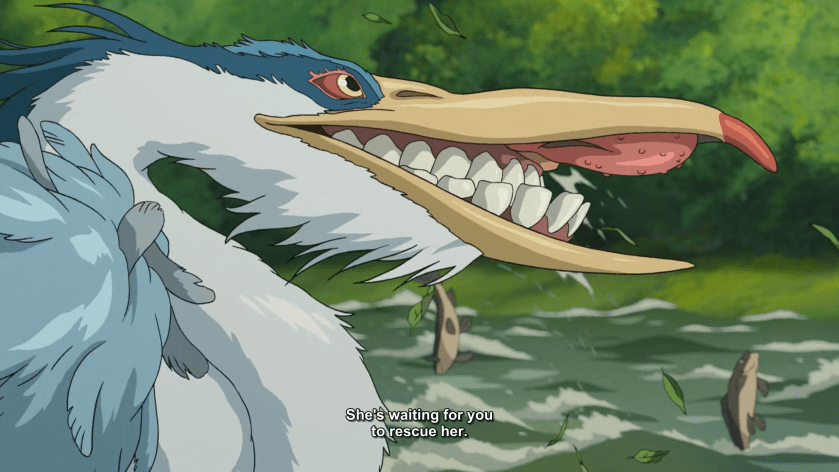
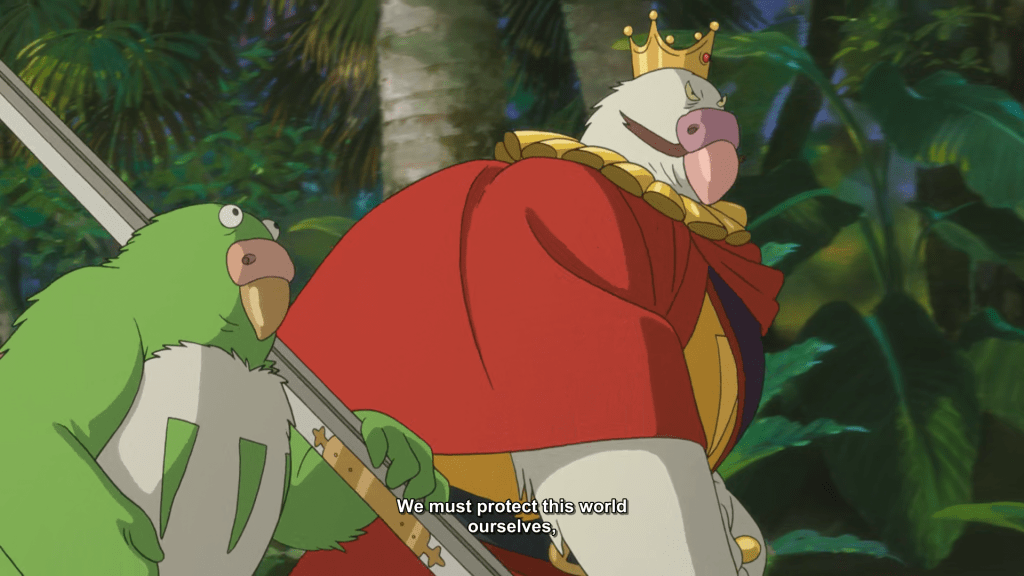
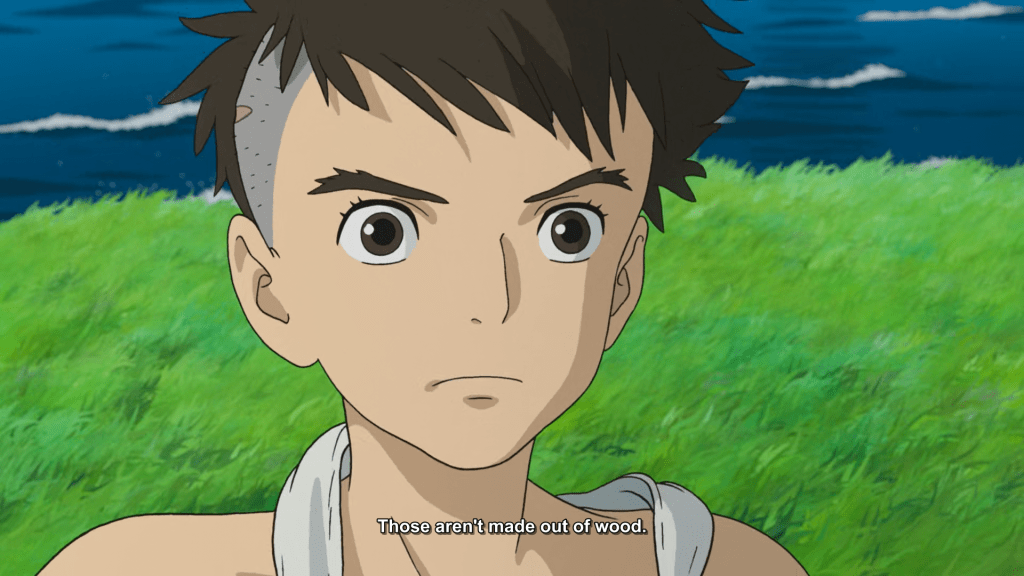
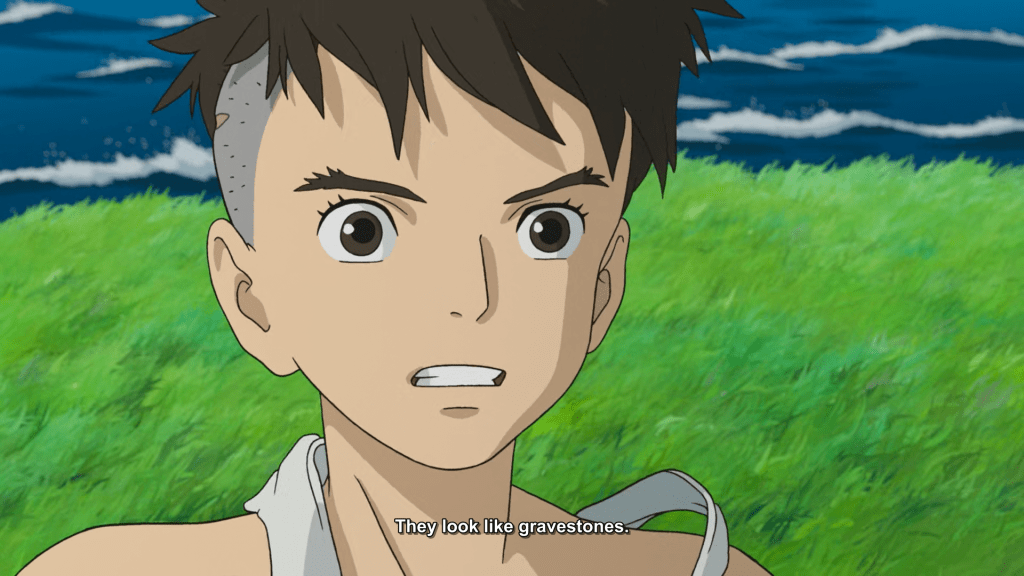
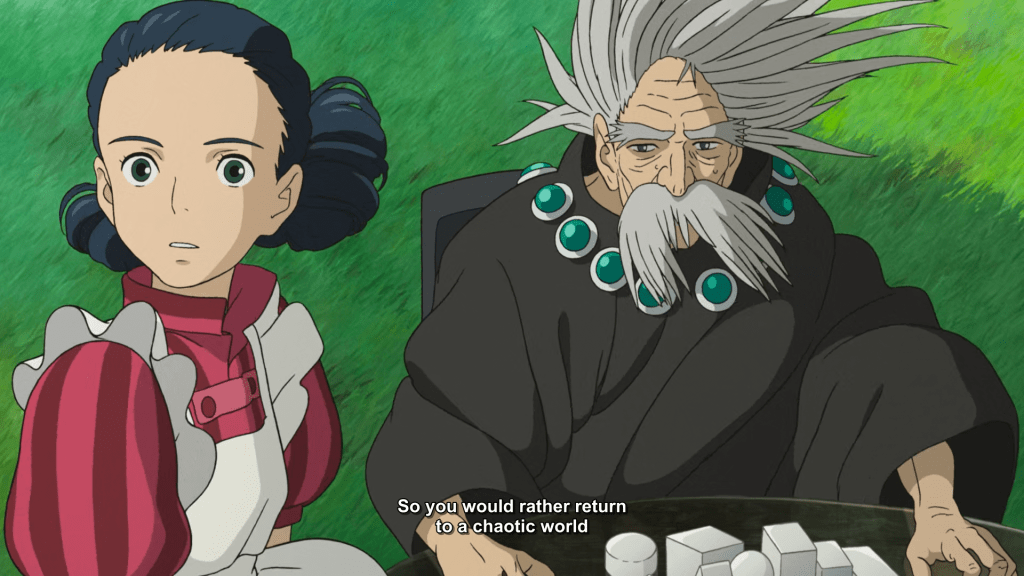
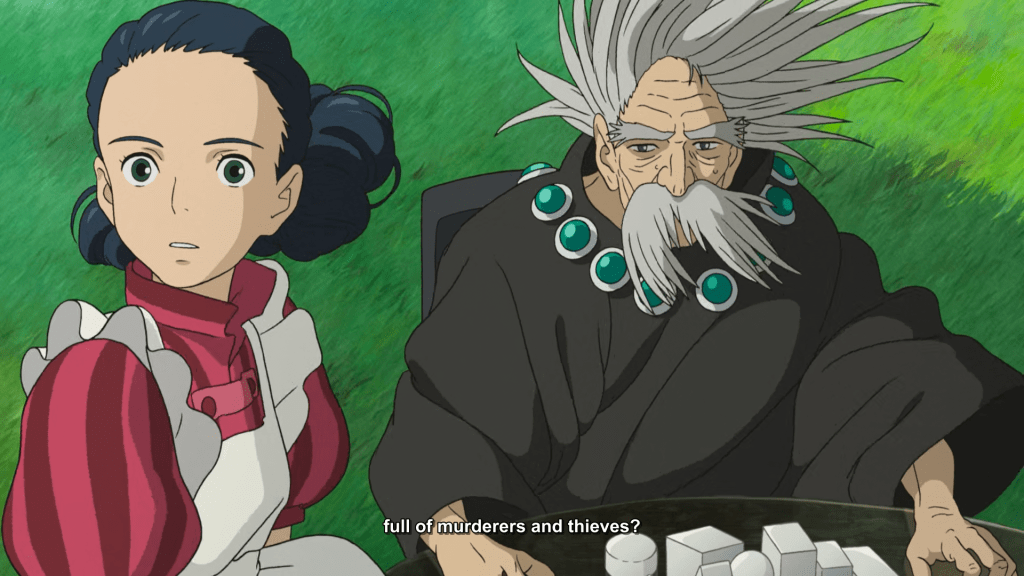
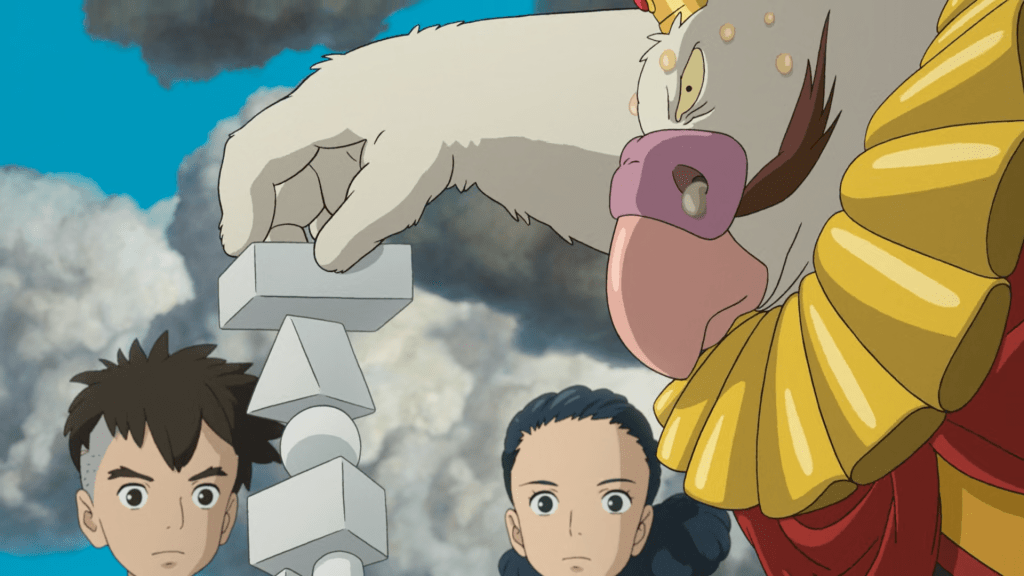
The Boy and the Heron (君たちはどう生きるか) – Bittersweet Reality of the Artistic Legacy

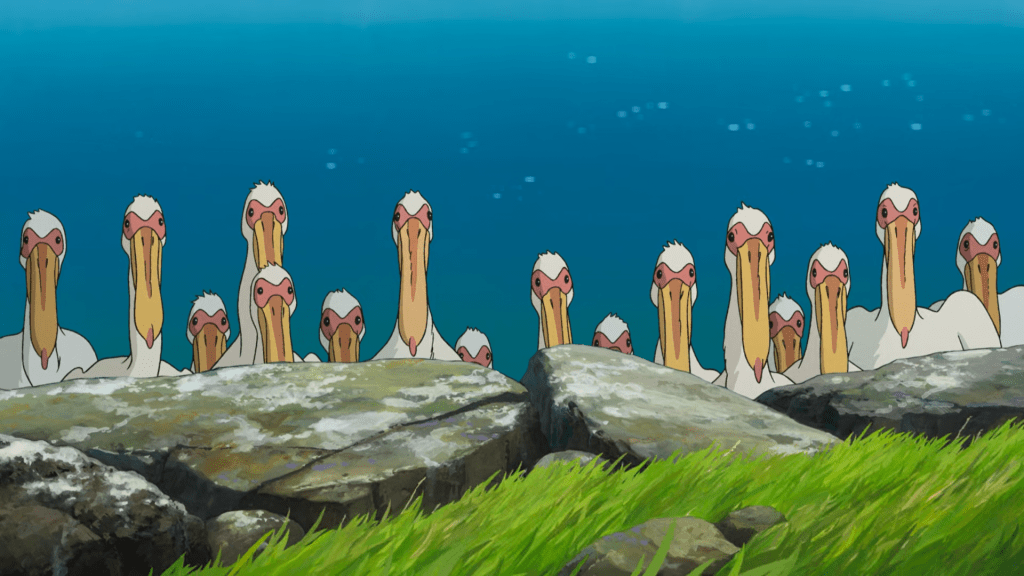
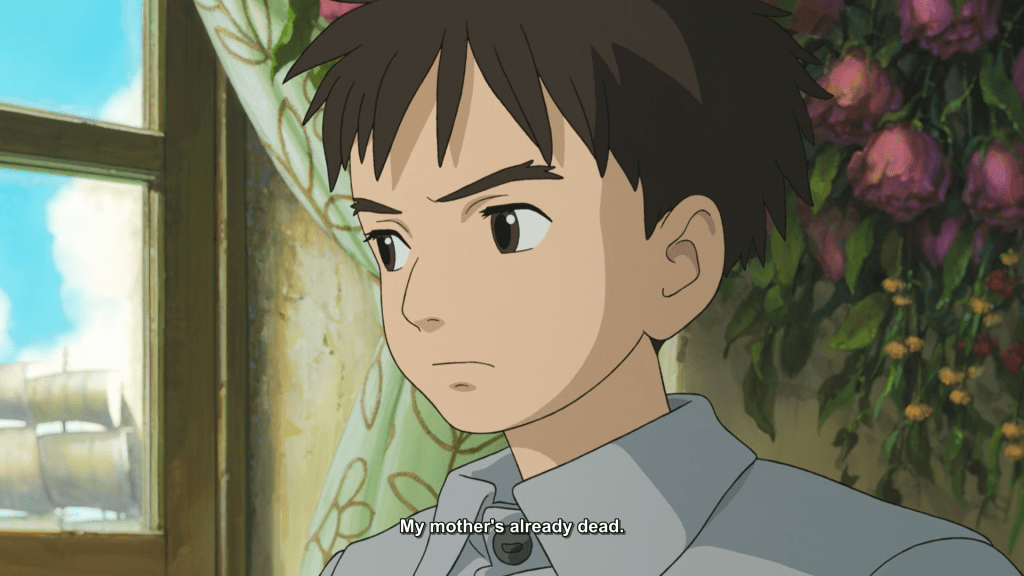
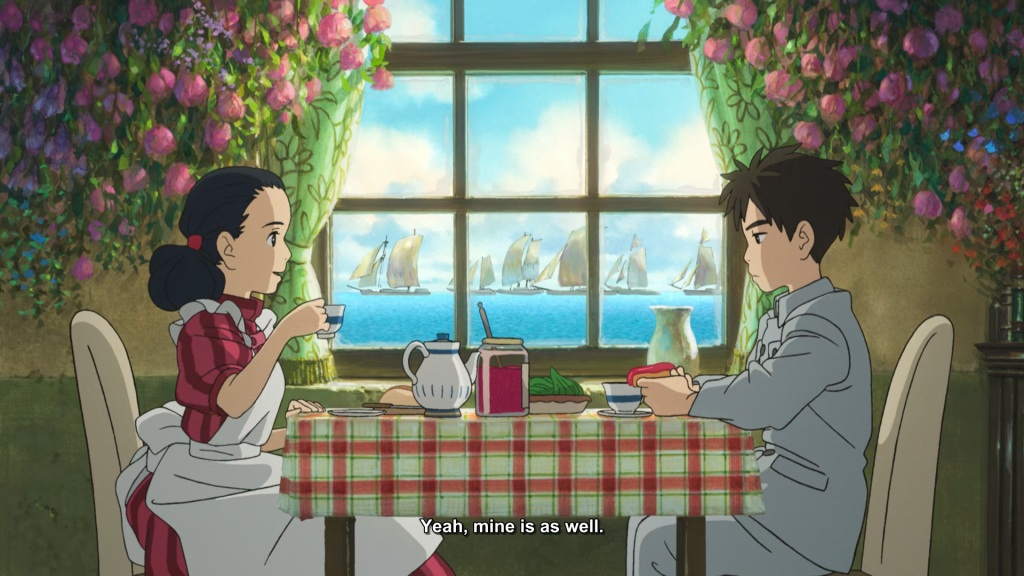
Studio Ghibli’s masterpiece The Boy and the Heron (君たちはどう生きるか, How do you live?) tries to answer one complicated question on artistic legacy. On surface, it is a story of boy coming out of the melancholy of his mother’s death and his new beginnings. Deep down it is a love letter from a creative father on his creative legacy to his son who wants to go on his own journey. It shows how difficult it is to make others appreciate a personal piece of creation, emotion and how to leave a truly influential legacy behind.

A creative father’s love-letter on his legacy to his beloved son

We are always in a pursuit of creation of something to ensure better coming days. Survival is one aspect of it but as the time moved on, we have comfortably brought ourselves to ensure our sustenance. Most of us can live a basic life and rarely worry about what to eat tomorrow. Once such stage is achieved, you will see that our efforts to create and accumulate still have never stopped. Now we are creating and accumulating for even better days than other, once this is achieved, we continue creating and accumulating so that our new generation will see better days. This act of creating a legacy is not just a matter of survival, it is also matter of preserving some part of ourselves even when we won’t physically exist in this world.

It is easy to see what happens to the materialistic legacy like wealth, but it becomes very tricky to handover the moralistic, value based, character-based legacy to the next generation because of the differences in the ways to live and understand the life. The passage of time alters some truths to the new generations thereby changing their mindsets and moral compasses. Even though our animal drives, emotions are exactly the same the motivations behind them change over time.

Now, imagine that you created such precious legacy which is close to you, which defines you, people appreciate it adore it but your next generation is unable to carry it forward. How do you handle such rejections? what is the resolution? Is it good? Is it bad? Is there any way around? As you love your legacy, should you force them to see the value in your legacy? And if you truly love them, should you force them in the first place to carry that legacy?

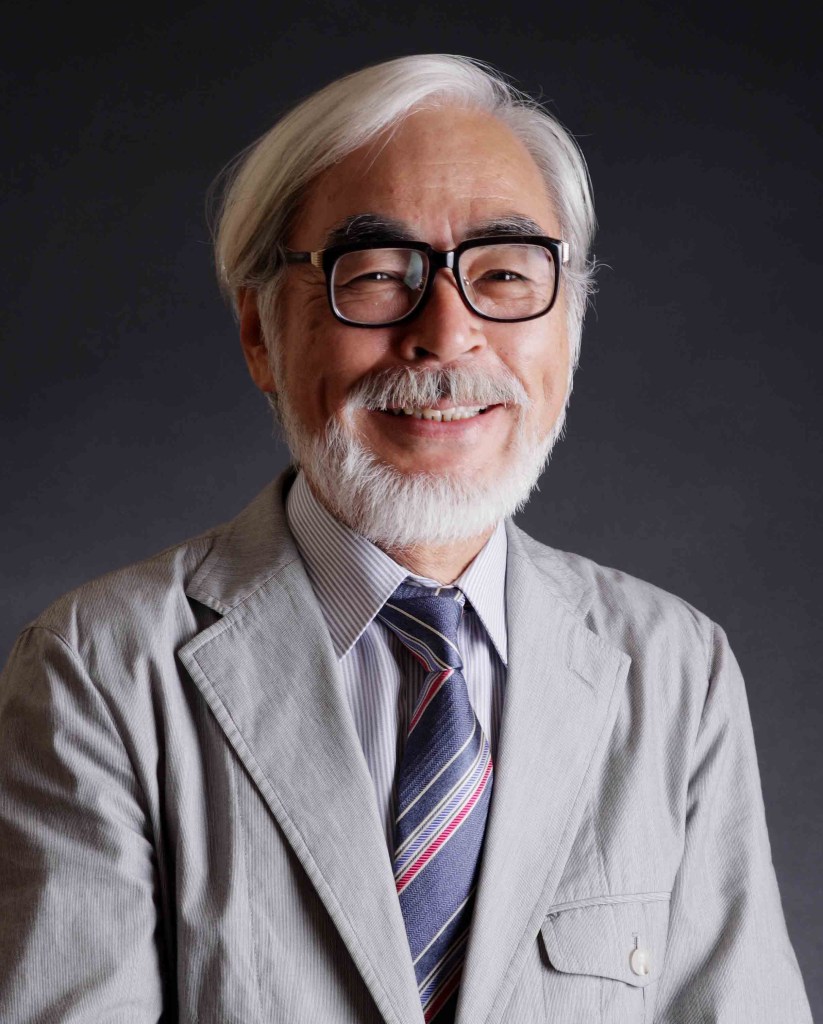
Studio Ghibli’s recent movie The Boy and the Heron (君たちはどう生きるか, How do you live?) is an attempt to answer one such complicated question on artistic legacy. Hayao Miyazaki-san has again given a masterstroke by creating a very personal yet relatable artistic narrative.

I have tried to explain the overall purpose of the narrative in this movie and will try to uncover what was the real core of movie based on the events in the life of Hayao Miyazaki-san.

The story and the meanings behind it

You will find megatons of explanations on the symbolism, personal connection of Hayao Miyazaki-san, his life, his childhood, his parents, and his colleagues from Studio Ghibli in this movie. There are many theories and cross references between the previous Ghibli movies too. I will not go into those details. I will focus on what the narrative stands as a whole.

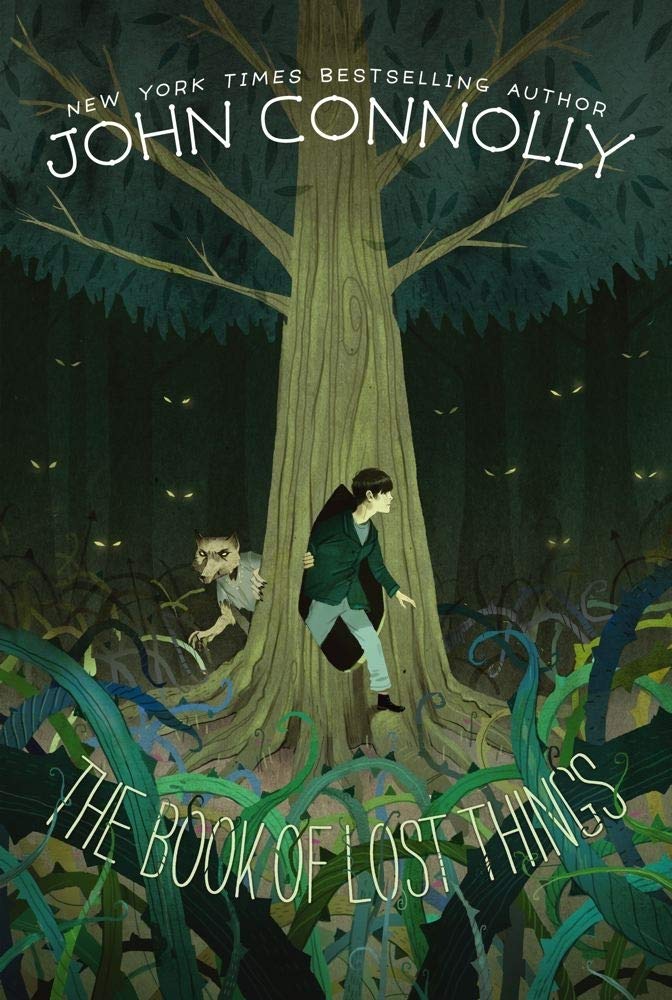
It is obvious that it is a story of a boy who lost his mother and his journey of getting over that melancholia of her loss and acceptance of his new mother. You will also notice in the end credits that the creators have thanked a book called “The book of lost things” by John Conolly. Once you check out what this book is all about, I think you will get new perspective beyond the symbolism and references in the movie. Miyasaki leveraged the narrative of this book to create the structure of his narrative. The book also draws inspiration from Genzaburo Yoshino’s book “How Do You Live?” (君たちはどう生きるか, Kimi-tachi wa Dō Ikiru ka)

Two books which inspired ‘The Boy and The Heron’

This is the story of the all emotions that are invoked when a person loses their loved ones. The first question that comes in mind when such loss happens is “How Do You Live?”

This is how the story is built –

The tower created around the rock is a portal where you can physically access your emotions. Just like in Interstellar how Astronaut Cooper was able to physically access the dimension of time.

Birds are representation of the free flying feelings, emotions we have.

The book that the great granduncle left unread is the same book Mahito’s mother read and then it got handed over to Mahito, which is the book called “How do you live?” The book is about the conversations of a boy who lost his father and the boy’s uncle.

The great granduncle already knew that the rock from space can allow him to create the world of his dreams. That is exactly why he built a tower around it for protection. Upon going through the loss of loved person in his life, he saw himself in the role of the person who will lead and help his descendants to handle their own pain of loss. But as the great grand uncle was always into books and had his own internal dreamy world, he used the powers of the rock from space to create his own world.

The act of leaving the book unread to disappearing into something is pointing towards that intense moment when you have to act on things because the author said exactly what you believe in. You feel this urge to act and create that thing because the author, the person who you don’t even know feels exactly the same. You feel an unexplained deep connection.

So, the rock from space and tower built around it is a portal where things can enter and exit in space, time. The moment when Himi lost her mother, she accessed the portal, confronted her emotions but also met her future son Mahito.

She realized that even though she lost her beloved mother, she will have an opportunity to have her own son who will love her deeply. Even when she will not be there with Mahito, her sister will love him equally. This gives her peace. That is exactly why when grannies are telling the story from Himiko’s childhood to Shoichi (Himiko’s husband and Mahito’s father) they say that she was grinning to ears – happy like anything when she came out of the mysterious tower.

The great grand uncle can call anyone to enter the tower. That is why grannies are scared if Mahito gets taken by the tower in the start of the story.

Kiriko has also accessed the portal in the search for young Himi before, that is why her younger version is available in this dreamy world and knows the ways of this world. Her older version entering into the portal along with Mahito closes the loop of time paradox if you think it through.

Natsuko is called into the portal to make young Himi aware that her future son will have a caretaker and lover when she will not be there for him. This helps young Himi to get over her own loss of mother. It’s that feeling of love you create for your people when you realize how deeply you loved the person you lost. You realize that your people also deserve to get the love that you received from your lost loved ones. That brings the person out of the melancholy of the loss of loved ones.

Natsuko is called into the portal to make up her mind that Mahito is also her son. She is also called into the portal to make Mahito accept that his step mother also deserves the same love that he has for his own mother. The great grand uncle is the orchestrater of all these events.

The grey heron is Mahito’s mind personified, his conscience. Heron is always guiding, helping Mahito. Mahito has this feeling that his mother is alive somewhere because he never saw her dead body. Heron attracts, teases Mahito using same understanding. Somewhere in a hidden corner of Mahito’s mind he thinks that there is still a chance to save his mother and bring her back. He is just looking out for an opportunity. Heron teases this opportunity to Mahito.

Heron like every person’s mind is paradoxical in nature. Heron is equivalent of Jiminy Cricket from the story of Pinocchio.

Most of the events between Mahito and the grey heron are Mahito’s dreams until he personally enters the tower where all his emotions can be accessed physically. That is where he is able to get the hold of the Heron, that is where the power of the seventh feather is functional, because Mahito has heightened awareness and access to his emotions.

The illusion of his mother in bed is a reminder to Mahito that she only exists in his dreams not in reality.

The starving Pelicans are the feeling one gets when they realize that they won’t be loved in the ways and to levels they used to before because of the loss of loved ones. These feeling to be loved, the huger to be loved by that person pushes the person to meet his loved one in afterlife. You will see the pelicans pushing Mahito in graveyard so that he can meet his mother. Pelicans are his feelings from the void of love which are pushing him to die to meet his mother in afterlife.  

Kiriko saves Mahito from his urge to die, maybe she has done same to Himi in past too. The mark left on Kiriko’s head by swamp thrasher is intentional creation to make Mahito comfortable. The fact that they both share some common pain brings comfort to Mahito. The thrasher bird is a symbol of self-reflection, it is like upon getting settled and being calm Mahito realizes that dying is not the solution to meet his mother – Himi.

Warawara and the phantoms are the attempts of great grand uncle to show everyone entering this world that life and death are part of existence. The person must accept and will have to support both, feed both to ensure that the reality remains ‘real’.

The event of giving proper burial to the dead severely injured pelican is Mahito’s acceptance to detach himself from the urge to be loved by his dead mother. This is him making amends with death and urge of being loved.

The moment Mahito accepts the weird and paradoxical nature of heron is the moment when he gets a clear direction to meet Natsuko. He literally repairs his conscience to get the clarity.

The Parakeets are the defense system of mind. They are the logical emotions, feelings that we use to defend from the sad feelings, they make sure that the system of our mind remains intact. Parakeets are the indicators of love and colors in life, when we are deeply saddened these emotions of love and colors become intense, defensive to save our mind. Here in the extreme case, they have become so strong, disciplined, and militarized that they are ready to consume their own host – Mahito. Parakeets show life, colors, happiness, anti-sad emotions, and the defense mechanism to create good for everything. That is why they have rules, moral values – the indication of what is allowed and what is not for the betterment of the host. They make sure that the person remains sane by choosing what is best for him instead of getting overwhelmed by all other emotions.

Parakeet king is the ultimate personification of such defense mechanism, he just wants to make sure that the world inside the host’s mind remains intact otherwise the host will go mad, this world will collapse.

The important conflict Mahito must resolve is to find his mother. Where the great grand uncle gives him the test. You should appreciate the role of great grand uncle in this whole narrative. The very first time when Mahito is inside the tower with Kiriko, the great grand uncle could have immediately met him and resolved everything in his mind.

But he makes Mahito to go through whole journey because you cannot force any emotion on the person just by telling the truth. His/ her defense mechanism will strongly and willfully reject that truth. Only when that person will go through personal experience, then only he/ she can appreciate the value of truth. Uncle thus gives Mahito this final test of truth once he overcomes the obstacles in his mind.

Mahito is given the taste of truth by showing him that even though he could not save his mother Himi he can now save another mother Natsuko. This is the Natsuko who enters the portal with a feeling if she would ever truly be able to love Mahito while having her own baby. This is conflict resolution for Natsuko too. She develops true love for Mahito when Mahito lets go of his attachment to mother Himi to save Natsuko because he doesn’t want that to happen again. And Natsuko also realizes that it’s her loving sister’s son in the end who deserves the same love like her coming baby deserves.

Only upon the resolution of this conflict when Mahito gets the access to the portal to meet the great grand uncle. 13 grave stones are the 13 movies created by Hayao Miyazaki-san. Which arranged in many styles create different world. They create an escape to different reality where people can manifest and physically live their dreams. For uncle these 13 gravestones are the purpose of his life, they define who he is and are his legacy. Great grand uncle asking Mahito to arrange these 13 gravestones is Miyazaki-san’s way to order his son Goro-san to carry his legacy in the exact ways Miyazaki-san intended. Mahito noticing the difference between wooden blocks and the gravestones is an indication that his life interests do not lie there, wood here as a part of tree – the life against the gravestones show that this is not how Mahito would live his life.

As a punishment uncle sends Mahito to parakeets. Parakeets are the structured constructs, rule, laws which ensure that the world has order even though the person may hate them. Goro Miyazaki-san chose the career of an architect because he wanted to do something different from his father. Hayao Miyazaki-san asked Goro-san to create artistic movies exactly in his “Ghibli” style but Goro-san’s artistic creations never matched the Hayao Miyazaki-san’s Ghibli vibes. It’s like his creative powers were restricted due to the parakeet like strict construct, high expectations and extreme criticism of Hayao Miyazaki-san. The great grand uncle had some hope that Mahito will accept what he wants him to appreciate.   

Mahito’s own conscience – the Heron comes to rescue him in the end. Grand uncle asks Himi to leave this world and also tells that Mahito should also leave with her. He is hoping that there is one more chance to convince Mahito to take care of what he had created. When Mahito and Himi meet the great grand uncle to bid goodbye the uncle presents Mahito some stone without malice. It is uncle’s attempt to show Mahito that even though his creations have their challenges, rules, restrictions Mahito still has freedom to do anything with these new stones free from Malice. It’s uncle’s attempt to convince Mahito to not lose the grip on the legacy. It is Hayao Miyazaki-san’s desperate way to reconvince his son Goro-san that he just needs to create for the studio Ghibli by using some new things – new experiments but just keep studio Ghibli alive. He wants Goro-san to create so that the world of Ghibli will bring bounty, peace and beauty into people’s lives. It’s not just a selfish request for continuing the legacy. It is a request to maintain the core of his legacy – Miyazaki-san’s legacy.

Mahito responds to great grand uncle by saying that he has his own challenges, his own malice, his own limitations which make it difficult to carry this legacy. Mahito wants to return to his own real world even when it has some darkness, bad things. When uncle asks him that Mahito’s reality is a chaotic world full of murderers and thieves Mahito responds by showing that he has good, caring, and loving people along with the heron – his conscience to support him there.

This is also important moment for Himi where she is relieved that even when her son will lose her, Mahito will have enough support system to take care of him. This is one more reason for young Himi to return happy to her reality.

Uncle then ordering Mahito to just stack the stones for last time would be equivalent of the discussion happened between Hayao Miyazaki-san and Goro-san on the creation of one last project for Miyazaki-san’s peace of mind. Maybe Miyazaki-san just like the great grand uncle wanted to play a trick on Mahito – Goro-san to convince him to continue the legacy.

Finally, the Parakeet king trying to arrange the blocks by himself is the futile attempts of the admirer of great grand uncle’s creation to ensure their own survival. But as there is no personal connect between them, the Parakeet king doesn’t know the ‘art’ of arranging the stones. When the attempt fails and the world collapses as the great grand uncle had already expected, he instructs everyone to leave the tower and return to their respective reality.   

You must appreciate that there would have been a proper intimate discussion between Hayao Miyazaki-san and Goro-san on how to take over this legacy and continue the future of studio Ghibli. Rearrangement of 13 blocks shows advice to use the styles and ideas of Hayao Miyazaki-san’s movies to create further new stories.

The resolution of Mahito returning to reality is Hayao Miyazaki-san’s way to show that the path has already been chosen and good thing is that it is more real than anything possible. It could be ugly, full of malice, murderers, death, grief and detachment but is far better than dreamy and perfect world. Looks like Goro-san successfully convinced his father Hayao Miyazaki-san that his father’s reality of Studio Ghibli is not the only reality, only legacy which deserves to exist. Hayao Miyazaki-san also realized that if he truly loves his son, he would let him go on his own path, to create his own art. Just because he is too attached to his creation does not entitle his son to carry it forward, especially as a burden.

It’s poignant to come to this fact but it is what it is. That also doesn’t stop either Hayao or Goro-san to create the world they want. (there is a rumor that Miyazaki-san is working on his next film.)  

The Curse of the Intangible Value of an Artistic Creation

For any true artist, it is the expression through creation which matters him/ her the most. The art they create is exactly who they are, it is a part of who they are. For such artist who has realized that they will have to leave all this creation behind in the end, search for the true successor who can appreciate their creation is crucial.

And the problem with artistic creation is that they are very intimately connected to the person who created them – the artist. It’s like the bond of a mother and child – she has carried that child for 9 months in her belly, it’s a piece of her body and soul. In similar sense, that art held its root in the artist’s mind and the artist kindled it in his mind to finally bring it into the reality. The fundamental problem with emotions is that you have to pass through those feelings to appreciate them in true sense. You can intellectualize other person’s emotions, write about them, create narratives/ stories out of them. You can make philosophies about how and why people have certain emotions, why they feel sad, happy, melancholic. You can also simulate pain to induce the feelings of emotions in a person, you can simulate happiness by triggering certain chemicals and suppressing others. But, you must accept that unless and until you yourself don’t pass through that real-life emotional experience, you will never be able to appreciate and understand how others felt when they had similar feelings. You can be highly empathetic, sympathetic but they too are bound by the limitations of you own mind. You can be a highly intellectual person who has already figured out what action would lead to what emotion, what is good for your mind, what is bad for you, you may create a whole internal defense system to handle the anticipated emotional responses but the experience you will have when you pass through that emotion will be very personal and the art created after the passage through such emotions cannot be attributed to any tangible value.

Now think of handing over such a creative legacy to you descendants. You are confident about this handover to your children because they are your immediate physical extension and if you are lucky then maybe your immediate mental extension too. But, as I already clarified in previous paragraph about the curse of intangibility, the intangible subjectivity of any artistic creation, there is no guaranty that you descendants will resonate with what you believed that art to represent.

It feels cruel to realize this fact but believe me it is the reality. Others, especially the people you call yours are not entitled to appreciate the things exactly to the levels you appreciate. I agree that they should at least not disrespect it but you can never force other people to appreciate ‘your’ valuable things at your exact same level. This journey has to be made solely by themselves which will never be in your control. You may force them, influence them, punish them- abuse them mentally, physically but you cannot force others to generate the same respect, same value for the things you love. It’s purely an internal and voluntary journey.

That is why having people who resonate with how you appreciate certain common objects and common emotions is a blessing. This also does not mean that people who perceive something different for the same objects are bad. There can be cases where they perceive something even better than what you perceive and where they do not even care but that’s not your fault. In order to find clarity in these cases you have to accept that emotions are double edged sword. It will cut both ways. Even when you have anticipated, planned, intellectualized them, you cannot escape your emotional responses. What you can do is to observe them sincerely and let them pass. You are not your selective emotions; you are above them. Emotions are not your creator rather you are the creator of your emotions. The moment you accept this you will see the truth that not everyone, not even your own blood is bound to experience the life around you in the exact ways you want them to. The moment you will appreciate what I am trying to put down in words, I think you will feel liberated. Please understand that this is not just about any artistic creation, it is about everything you call your life – mental, physical, tangible, intangible. To live a life with this intensity could be a blessing (on personal level if this intensity is not anticipated well in advance or not controlled then it is one cruel curse to carry.)

I think this is exactly what Hayao Miyazaki-san was struggling with. But as the movie resolves I think there is still hope for him, for the studio and in the end for all of us rooting for his next movies. It definitely is not a sad ending and even if it is a sad one we know what great things they made us feel about ourselves, how they gave us better perspectives towards life. I think that his true legacy is all his admirer, we people altogether whose lives he changed through his creation. Even though his movies won’t be there, what they have made us feel – that legacy of having a perspective towards life will keep on affecting new generation through us.   

To be honest, for me it’s a love letter of a father to his son who doesn’t want to follow his father’s legacy and wishes to go on his own journey.       

The Father Son – Hayao Miyazaki and Goro Miyazaki

  • All movie scenes from Studio Ghibli – Hayao Miyazaki’s movie The Boy and the Heron

Anxiety – Ugly (But Precious) Gift From Evolution

Anxiety serves to prepare a person for threats. Anxiety just like pain is one uncomfortable but effective way to cope up with the adversities in life, that’s how we build strength, resistance and deeper understanding of the surrounding for better and more precisely predictable future.
The remarkable concepts like smoke detector principal and optimal threshold in signal detection theory developed by modern psychologists/ psychiatrists help us to draw a line between a healthy anxiety (adaptive function) and unhealthy anxiety (pathology) and show ways to handle/treat them effectively.

Anxiety’s like a rocking chair. It gives you something to do, but it doesn’t get you very far

Jodi Picoult

Survival, Fear, and Anxiety

Every living thing if not have any goal in their lifetime would at least have sole goal of existing, surviving. Nobody wants to die and all of us always yearn to live forever but we know our limitations and hence are always on the quest of justifying the finite existence granted to us. Even if we are certain of the end closing in, our instincts are evolved in such way that many of the times, we bear the ability to cheat death. Humans have further extended cheating the death using science and technology.  Technology augmented our lives, reduced the risks of death, created a safe environment to grow, increased our chances of survival.

The fear of death and uncertainty of future is the key driver in our improved survival instincts and excessive use of technology to achieve it. We plan for things in advance, create backup plans if something would go wrong, have risk assessments before the execution, understand and decide according to the cost benefit analysis. That is what makes us humans and also separates from other species (although rest of the surviving species are also smart in their own ways to increase their chances of survival like viruses – but hopefully humans have other ways to overcome them)      

So, fear in a way triggers the actions to ensure survival. Anxiety – a sophisticated form of fear which prepares us in advance even before the fear causing scenario is supposed to happen. Simply put anxiety is an anticipatory type of fear to increase the chances of survival.

I am talking about fear and anxiety because they are bugging my mind for many days. Recently I watched Inside Out 2 movie and the it really delivers. The narrative has successfully presented how all emotions play a vital role in creating our personality in whole. Anxiety was new and important emotion presented in this movie. Every moment where anxiety came in focus it was fully relatable to me. Once I was done crying in the end the anxiety never left me (figuratively!), I felt a strong urge to understand the anxiety on deeper levels and what the domain experts have to say about anxiety.

The discussion heron is not a movie review rather I have made some attempt to summarize what the real-world scientists have to say about anxiety. I won’t be giving you the tricks, counseling and recommending any medicines to cure anxiety disorders. (Trained professional, experts are the best people to do that – “I AM NO EXPERT”)

My focus of the discussion is to question why anxiety exists in first place when we have an emotion called fear, another question is how to interpret the anxious emotions and what leads to anxiety disorder, where does the root of anxiety lie and is anxiety a bad or negative emotion? If it is so then why? and if not – then why?

While posing such questions and researching articles I came across some beautiful ideas, experiments and theories established by professionals in the field. I will throw light on these ideas in the coming discussion.    

The fear is real! – is it? – Defining anxiety

As I already mentioned that fear of death, the unknown and urge to live long are always fighting with each other. Humans rather every species existing today in nature mastered this battle to some extent and have ridden on chariots of evolution to augment – change themselves to adapt with the surroundings and improve the chances of survival.

A deer completely aware of its surrounding, grazing in the open grass fields can distinguish the rusting of leaves due to winds and rustling due to sudden movements of an apex predator like tiger. When the exams are on top of tomorrow, we are ready to sacrifice the night sleep to crack them (engineers would resonate more with this!) We know that the pain of failing, fear of failing is worse than painfully covering syllabus overnight! The fear is there and the anticipatory response is also there, only the level of sophistication is different.

Why I say sophistication? It is because due to the advancements in our lifestyles humans are rarely exposed to the real life-threatening scenarios like animal do (still today). Our fears are now more anticipatory. I would say most of our fears are now classified as anxiety.

Wikipedia goes like this for anxiety –

“Anxiety is an emotion which is characterized by an unpleasant state of inner turmoil and includes feelings of dread over anticipated events.”

So, the key differentiating aspect between fear and anxiety is the anticipation. Anxiety is a prospective emotion and a forward-looking emotion. Whereas fear is the emotional response to current threat. Fear makes us act immediately; anxiety keeps us ready for future threats. Fear will immediately decide fight or flight whereas anxiety will create plans, strategies for both and also calculate which one is more probable. (now you can appreciate why anxiety is more intense in over-thinkers, the analysis paralysis is one mild example of this.)

Anxiety is also an emotion important from evolutionary perspective as it has helped the current existing species to remain existent. The ability to anticipate future and preparing for it in advance gives competitive edge in survival.  

Why Is Anxiety Good?

While reading about anxiety I came across a very good paper by Dr. Randolph M. Nesse.

Dr. Randolph M. Nesse, UoM

Randolph M. Nesse is a Professor Emeritus of Psychiatry and Psychology in University of Michigan. The ideas and theory he created to understand and identify anxiety and its intensity are very important and interesting.  

Dr. Ness developed the smoke detector principle to control and quantify the medication used to fight with anxiety disorder. (He poses very simple but important question the opening of the paper that “Is he medicating his patients too much? is he harming them?”) The fundamental doubt Dr. Ness had was if the anxiety is evolved during evolution to improve our chances of survival, then why are we forced to reduce its symptoms and effects? Why are we using medications, therapies to reduce these symptoms, effects of anxiety. What if the patient is too anxious for given thing and that thing is too real to happen but the doctor dumbed that emotion down? (Dr. Ness calls it down-regulating the mechanisms causing anxiety)

The core of his thinking is that if we keep on “down-regulating” our anxiety which is an evolutionary gift to us, we might never be able to gauge the future in better way and prepare for it in advance to improve our chances of survival. (this is an exaggeration of the scenario but it proves a point)  

This calls for the quantification of anxiety. Which Dr. Ness did through the smoke detector principle.

The Smoke Detector Principle – How Much Anxiety Is Too Much?

Dr. Ness in another paper talks about the mechanism which is a feed-back system between the animal and its surroundings, which selects the emotional response to improve the chances of survival. The emotions we have today are the result of such evolution to maintain “homeostasis” – the balance among our bodily system to survive and function properly.

According to his ideas, anxiety works like a smoke detector.

The anxiety response is always trying to maximize the chances of survival and escape from a life-threatening situation. When we set a smoke detector it will go off even when the fire is not that extreme or if there is just some smoke which can be a controllable one. The smoke detector is designed to never miss a single fire causing situation. This ensures complete confidence in smoke detector that it will save people from every life taking fire scenario. But, it’s the same mechanism of smoke detector which forces people to evacuate frequently even when the fire or smoke where controllable or life threatening.

The frequent emergency evacuation even when it is not required is the same problem with the extreme intensity cases of anxiety. Always having armor ready for combat may sometimes make the soldier to lose the agility.

The patients with anxiety disorder have lowered sense of real threat. Their system triggers too many false alarms.

Dr. Ness established various techniques to quantify the levels of anxiety. The responses from anxiety include increased heart rate, rise in certain bodily chemicals – stress hormone secretion which can be easily measured as signals using instruments. Thus, the smoke detector principal paved a way to quantify the anxiety and understand what triggers the anxiety disorders in patients. It helps to understand how and why a level of anxiety is healthy in normal person and what level of anxiety is unhealthy and needs drug administration, therapy, how it can be administered by altering the setting within and around the person.

The core reasons why we need not to be intensely anxious about common life threats are as follows as Dr. Ness explains in his papers:

  1. Regulatory mechanisms have tendency to make errors and be extra defensive about situations
  2. We do not need to always be extra defensive to avoid given threat. (A machine gun in a bulletproof enclosure is not required to kill a mosquito.)
  3. Our body and surroundings have multiple layers of defense for almost all common threats. We are evolved and have survived in that way.
  4. Our environment is much safer than it was at the time we evolved

Types of Anxiety Disorders

Now that we have understood what is the nature of anxiety and what is its mechanism. Here are some important anxiety disorders to outline. Huge amount of information is available in literature, internet websites on these:  

  1. Generalized anxiety disorder (GAD) – too much worrying about ordinary things, problems like money, work, health, relations, family, and anything possible or imaginable, it may not exist in reality.
  2. Hypochondriasis – People suffering from this often worry about the health condition when nothing is wrong with their body. The word comes from feeling of stomach pain the person experiences even when everything is alright.
  3. Specific phobia – fear of anything but specific without any reason. It’s the fear for certain thing even when it does not pose threat.
  4. Social anxiety disorder (SAD) – In this scenario people intensely fear the public situations, humiliations, embarrassments, criticisms.
  5. Separation anxiety disorder (SepAD) – People in this case intensely fear the loss of person or a place
  6. Agoraphobia – it is fear of being in situation where there is no exit door, or escape strategy. Fear of using public transportation, being in large crowds are some examples.
  7. Panic disorder – these are outburst of all the collective or intensive fears, they come quickly and last for short time.
  8. Selective mutism (SM) – in this case the person is extremely fearful of initiating a conversation, does not speak to specific people or in specific situations or conditions even when they are forced to talk by humiliation or mocking.  

Post traumatic syndrome disorder (PTSD) and Obsessive-compulsive disorder (OCD) were once classified under anxiety disorders (now not under anxiety disorder in DSM – Diagnostic and Statistical Manual of mental disorders)

Signal Detection Theory For Interpreting ‘Anxiety Like Responses’

One good paper in the Canadian Journal of Psychiatry by Bateson et al. shows how the smoke detector principal can be used to decide the boundaries of different levels of “anxiety like-responses”. This paper talks about signal detection theory and optimal threshold. The beauty of this paper for me is the mathematical model it establishes to explain psychological events. A single formula will help you understand the difference between normal anxiety and anxiety disorder.  

With the smoke detector principal, we can now appreciate that not every common threat needs full armored protection. The signal detection theory in this paper shows where a person draws line when they overestimate or underestimate anxiety.

It talks about “optimal threshold” to show a threat response in given situation. Optimal threshold is a mathematical parameter which is function of probability of the occurrence real event and vulnerability of the individual.

The signal detection theory says that the superposition of response signals for given background noise and response signal from real threat give us the quantified judgement of how intensely the anxiety is triggered compared to the practicality of the threat – this quantified judgement is called optimal threshold (λ). Lower the threshold more intensely the anxiety will be triggered for given disturbance – background noise.

Figure 1 : Signal detection problem, how the optimal threshold can be calculated. (Credit: Anxiety: An Evolutionary Approach, 2011, Bateson et al., Canadian Journal of Psychiatry)

Equation 1: optimum threshold (Credit: Anxiety: An Evolutionary Approach, 2011, Bateson et al.,Canadian Journal of Psychiatry)

Here,

 λ = optimal threshold

 pnt= probability that there is no threat

 pt= probability that there is real threat

wfa= cost of false alarm

wmiss = cost of a miss

Once this equation comes in focus the discussion becomes interesting. The ratio of pnt to pt mathematically quantifies how practical the threat is. The ratio of wfa to wmiss mathematically quantifies what will be the cost if the anxiety trigger is accepted or rejected – will the subject live or die. This ratio shows how we trigger anxiety response. If the cost of responding is nothing for even a simple threat scenario, we will choose to trigger that response, same would happen if the cost of losing is ultimately the loss of life, we would trigger any possible anxiety response to avoid it. The authors call this ratio as individual’s vulnerability.

The ratio (pnt/pt) can be seen like this. If the surrounding really is hostile and consists of events which cause many life altering events than the safety ensuring events then the pt (probability of threat) will be way higher than pnt (probability of no threat and safer environment). In war situation where multiple bombings, gun firings are happening around you the probability of threat happening (pt) is way high than it not happening (pnt). The optimal threshold will drop immediately and anxiety triggered will be very high.

The ratio (wfa / wmiss) can be seen like this. If the person is way stronger to handle given threat, then the person will need no effort, investment or cost to trigger any reaction alarm to even a false threat. Consider the example where you are about to be bit by mosquito, you know the efforts to slap many times until the mosquito dies are not worthless, you will try many times to kill it even when you know it will swiftly escape, you are less vulnerable in this scenario. But now when you are about to be killed by John Wick (!?) you know for sure that even a pencil will do the job for him, any environment is hostile for you, you are vulnerable here, the value of losing life (wmiss)is way high than the cost of attempts to save it (wfa). Your optimal threshold will immediately drop down thus triggering intense anxiety.

Once you generate enough data for such optimal frequencies you can easily distinguish the healthy anxiety responses and anxiety disorders. I loved how these two factors (probability of threat and vulnerability of an individual) can predict the levels of anxiety in a person. This equation explains and can also quantify why pregnant women have heightened awareness of their surroundings, why people get insomniac after constant mental stress, why restless people are always in the mode of action and fight, why reclusive people hesitate to visit foreign, unknown places.    

Your Surroundings and Mindset Matter!

Figure 2 : Three levels of vulnerability, here optimal threshold and probability of event can be correlated for difference in the anxiety responses (Credit: Anxiety: An Evolutionary Approach, 2011, Bateson et al., Canadian Journal of Psychiatry)

It is really interesting what the authors have achieved and established in this research. They compared three different levels of vulnerability and explained them using given plot.  The thing to highlight here for anxiety disorders is that they emerge from the environments which always keep on presenting high probabilistic practically threatening scenarios. The anxiety disorders also emerge when the individual feels more vulnerable.

Higher the vulnerability lower will be the optimal threshold and intense will be the anxiety response.

As shown in research, in the uncertain times of Covid-19 people who were locked in their home had no disorders, were not exposed to the virus also felt anxious and faced some anxiety disorders because of the environment they were in.

If the person feels less vulnerable and stronger then even for given strong life-threatening events the optimal threshold will be higher thus the anxiety triggered will be lower.

Are you noticing where this is going?

This is a mathematical model which shows how a healthy, supportive, and safe environment and also a strong mindset and better judgment of reality is important for handling challenging situations.

For a person suffering from anxiety disorder, it becomes very important to make sure that they know that they are in a safer environment and are cared for. It is very important to make them feel safe and understood. Creating a system of critical thinking and reasoning can also help the person to have a sense of strength and high resistance to vulnerability, this also goes for physical strength. The vulnerability is not only mental it is also physical when it comes to reality.

You will now appreciate why teenagers and trauma patients are more exposed to anxiety disorders. Mostly and generally in teenagers it is due to the uncertainty of many new things happening with them simultaneously and in trauma patients it’s the constant bombardment of life-threatening events in hostile environments.

Conclusion

Anxiety serves to prepare a person for threats. The emotion called anxiety is an evolutionary gift to ensure long survival of our species but as it is also related to our primitive instincts, we mostly let anxiety overpower other emotions in seemingly safer scenarios. Strategy and anticipation are the gifts of anxiety but if overused they will end up in imparting unnecessary caution and overprotective attitude which inhibits adaptation to changes there by slowing evolution of our species. Anxiety just like pain is one uncomfortable but effective way to cope up with the adversities in life, that’s how we build strength, resistance and deeper understanding of the surrounding for better and more precisely predictable future.   

The remarkable concepts like smoke detector principal and optimal threshold in signal detection theory developed by modern psychologists/ psychiatrists help us to draw a line between a healthy anxiety (adaptive function) and unhealthy anxiety (pathology) and ways to handle/ treat them effectively.      

These theories show how we can quantify seemingly intangible emotions like anxiety and way to handle them. If you can measure something effectively you can control and predict it effectively. All credit goes to such brilliant minds!

References, Image sources and further reading:

  1. Fear of the unknown: One fear to rule them all?, 2016, R. Nicholas Carleton, Journal of Anxiety Disorders
  2. Natural selection and the regulation of defenses: A signal detection analysis of the smoke detector principle, 2005, Randolph M. Nesse,Evolution and Human Behavior
  3. Natural Selection and the Regulation of Defensive Responses, ANNALS NEW YORK ACADEMY OF SCIENCES, Randolph M. Nesse
  4. Anxiety: An Evolutionary Approach, 2011, Bateson et al., Canadian Journal of Psychiatry
  5. The relationship between perceived stress and emotional distress during the COVID-19 outbreak: Effects of boredom proneness and coping style, 2021, Yan et al., Journal of Anxiety Disorders
  6. Long-term effectiveness of cognitive behavioral therapy for youth with anxiety disorders, 2018, Kodal et al., Journal of Anxiety Disorders
  7. Anxiety, National Library of Medicine, www.medlineplus.gov
  8. Anxiety Disorders, National Institute of Mental Health
  9. What are Anxiety Disorders?, American Psychiatric Association
  10. Anxiety – Wikipedia
  11. Randolph M. Nesse, M.D., Professor Emeritus of Psychiatry, Professor Emeritus of Psychology, Department of Psychiatry, University of Michigan
  12. Everything You Need to Know About Anxiety – www.healthline.com

A Story of the Fly and the Grieving Men

Katherine Mansfield’s short story called ‘The Fly’ shows how the loss of loved ones, especially young men in World War created a deep feeling of grief and loss among the surviving people. On surface the story may portray the melancholy of the loss of young generation but deep down it is the story of how ‘manly’ men always bypass the stage of crying out loud to express that grief. This grief brewing inside men is carried over to next generations in the form of cruelty and oppression.

Katherine Mansfield’s short story The Fly

Loss of the loved ones

Loss of loved ones is one emotion which is very difficult to articulate, express. It is very personal, subjective. Every person is a world in themselves and when such a person is lost a complete world is lost. Now the memories, moments associated with that person is the only real link which remains. It is this sad emotion created where most of us are clueless as to how to fill this void. People express these complex emotions of loss in many ways. Expression, communication is one important part of how we interact with each other and help, support each other during such difficult times. Even though other person’s sadness due to loss of their beloved is difficult to comprehend we know when to support them by understanding their behavior and expression, the way they communicate this grief, the way they behave.

But what about the people who very skillfully hide such sadness of loss of their beloved ones? If a person who is deeply hurt by the loss of their loved ones is not even crying or showing any signs of misery, anguish, hatred how would people console them, how would you console them? Superficially it looks completely non-human behavior as emotions and human are two inseparable words. People having such deep inexpressible grief have different way of coping mechanism which eats them from inside and may also affect the world and people around them negatively unknowingly.

Katherine Mansfield’s short story called “The Fly” focuses on an age-old father’s strong grieving emotion of loss of his beloved son in World War 1. The story is very symbolic and different readers have different takes on the central idea of the story hence the story has become highly important short story in modern times. People attribute the fly to the story of war, death, loss of young generation and the demonstration of cruelty which lead to the loss of innocent young people pushed in such wars who actually had nothing to do with it directly. What this short story delivers in the end is very poignant.

The Fly – The story

The story shows two old friends discussing general events in their life over a whisky. Mr. Woodifield is a person who has suffered a stroke and is retired – delicate health-wise. The Boss – 5 years older than Mr. Woodifield is a rich person handling a big business. The Boss is bragging about the renovation of his office to his friend Mr. Woodifield. Mr. Woodifield is happy that he got to drink the whisky as his wife and daughters would not have allowed him to do so. The Boss is showing him all new carpet, furniture, electric heating system and decoration. While showing this, the Boss has made sure that Mr. Woodifield’s attention would not linger over the photograph of a boy in the uniform. (Later readers understand that the it is the photograph of the Boss’s son who died in a war six years ago) Feels like even the Boss is purposefully ignoring his late son’s photo.

In the heat of discussions and drinks Mr. Woodifield brings the topic of his daughters’ visit to the World war soldiers’ cemetery in Belgium. He tells the Boss that his son and the Boss’s son both are buried quite closer to each other. Mr. Woodifield expresses a happiness of relief as expressed by his girls that at least the places where these sons are buried are well maintained, full of flowers and have broad path. It is way of saying that they were resting in peace.

The readers are made aware that the Boss had planned and made every effort to handover his big business to his son. He was very proud of how his son was capable to continue his legacy and his son was also appreciated among his business people. But the war snatched his son away and all his dreams shattered.

The moment the Boss hears the information about his son’s burial place he gets disturbed internally, as if he has lost the track of his surroundings. And before coming back to the reality Mr. Woodifield has already left the office. Now the Boss is alone in his cabin, he tries to express his grief which he had dumped deep below but is surprised that he couldn’t shed single tear.

In this moment the Boss sees a fly trying to escape from the pond of ink bottle kept on his table. The fly is trying hard to escape from the slippery bottle but is failing repeatedly. The Boss picked up the struggling fly with a pen and put it in the blotting paper. He sees the fly making efforts to dry itself to fly away and at this exact moment he becomes curious about the fly’s attempt to remain alive. He drops an ink-drop on the fly just to see what the fly does next. The fly doesn’t stop its efforts and tries to dry itself and fly away. As the boss goes to drop the third ink-drop while ordering the fly like a military officer to “Look sharp!” the fly gives up and dies.    

The moment boss throws away this dead fly out of window he feels a deep void in himself but soon overcomes that feeling and orders his assistant to bring more blotting paper like a military general. The old assistant is confused about this extreme change in the behavior of the Boss.

Things War Offers

Katherine Mansfield – the writer of this short story lost her brother in World War 1. This loss of her brother is supposed to be the main inspiration behind her short story ‘The Fly’. The readers will notice that Mr. Woodifield’s stroke can be attributed to the shock due to loss of his son in the war. He is not shown openly verbal about his loss but the internal grief became so dark that it took toll over his physical condition. The highly ambitious Boss looking forward to introduce his son to his business also lost his son. Katherine has incorporated the characters in story very consciously. There are no young characters who are alive in the story except Mr. Woodifield’s daughters. Even the assistant to the Boss – the office messenger – Mr. Macey is portrayed as a grey-haired old person.

Thus, it is a way to show what was left after the World War ended. The youth was lost. Only helpless mothers and daughters, sisters and age-old fathers were left grieving for the loss of their love sons, brothers.  

The war may offer the victory and pride to the nation but it snatches the youth of the nation and the hope for the better future. It also takes away the meaning from the lives of its age-old population.

Readers will notice that Mr. Woodifield describes the grave of the soldiers in Belgian war cemetery having graves lines in “miles”. It shows the scale on which World war wiped out the youth.

The Struggles of The Fly – How Wars Destroy Invaluable Lives

Many readers and analyzers of the story attribute the struggle of the fly to escape from the ink-pot and ink-drop to the struggle of the Boss’s son in the world war. The Boss’s perspective for how his son suffered is representative of all the young soldiers died in the war. War leaders lifted these soldiers from one slippery pit and threw them to another one, while the bombs were continuously bombarded on them until they eventually died on the battlefields. The struggles of the fly to dry itself and escape are the struggle of the young soldiers on the battlefield.  

Real Men Don’t Cry – How Men Cope with Melancholy and Deep Feelings of Grief

On a first reading, everyone will understand that Katherine Mansfield tried to convey the concepts of friendship, loss of loved ones, dangers of wars through the short story The Fly.

 Another most important and least noticed dimension of this story is how men handle their emotions of sadness. Trust me the Fly is not just about the dangers of the War. It is also about how men always suppress their sad emotions just to portray their masculinity to the outside world and how these suppressed emotions get transferred onto the next person, object or entity as a completely cruel and oppressive behavior.

If your read the story twice, thrice and notice the gaps in the conversations between Mr. Woodifield and the Boss and the actions, expressions they are portraying in these gaps, then you will start to perceive the inner turmoil these two people carry in themselves for their deep melancholy.

Mr. Woodifield has already suffered a stroke which is the effect of him being unable to share his grief from the loss of his son. As the only remaining man of the family now, he should demonstrate strength to the society and his family. Crying out loud is not the solution, thus his is getting eaten from inside with his old age.

To portray that he has come out the grief of the loss of his son Reggie, Mr. Woodifield explains the visit of his girls to the Belgian War Cemetery like it was just a simple visit to some normal location in foreign. As if there was nothing special about it. Furthermore, to mask his grief he describes this graveyard as full of flowers and spacious. He is trying to tell the Boss that at least in afterlife their sons are in good place and closer to each other, but he is actually trying to console himself unknowingly. It is his mind that he wants to assure that his son is resting in peace.

You will notice the depth of his grief when Mr. Woodifield immediately changes this topic of War cemetery to the topic of high costs for a pot of jam in Belgium where his girls were staying during their visit.

Many men use same technique of instantly changing topic in the fear that the grief will break out in some way which others may take as a weakness. Trust me, men are masters of such drifts in their conversation especially in a man to man or friend to friend-to-friend conversations. Very rarely male friends will share the problems or feelings of grief with each other. They will talk about the whole world but not explicitly about their sadness. I think Katherine succeeded in portraying these minuscule yet significantly impactful but unnoticed behavior of men. A tornado is always building up in such grievous men but they are masters of hiding that too. No wonder people are surprised when they hear a lively and happy man taking his own life, who is later revealed to be very depressed.

The Boss’s handles his grief in totally opposite way. We see him as more powerful and influential than Mr. Woodifield and he thinks the same about himself too. You should notice that the event when he is showing the renovation of his office to Mr. Woodifield is the moment which he had planned for his son actually. The carpet, the furniture and the electric heater were all for his son. He purposefully ignored his dead son’s photograph during conversations. He was trying to hide the reality that his son died and renovating the office was one way to get closer to this illusion that his son lives. The illusion that at any moment his son will return to this renovated office and take over his father’s business. This breaks my heart. In a corner of his heart, the Boss knew that his son will never return but he still renovated the place in a hope of return. No wonder they say that hope is a dangerous thing.
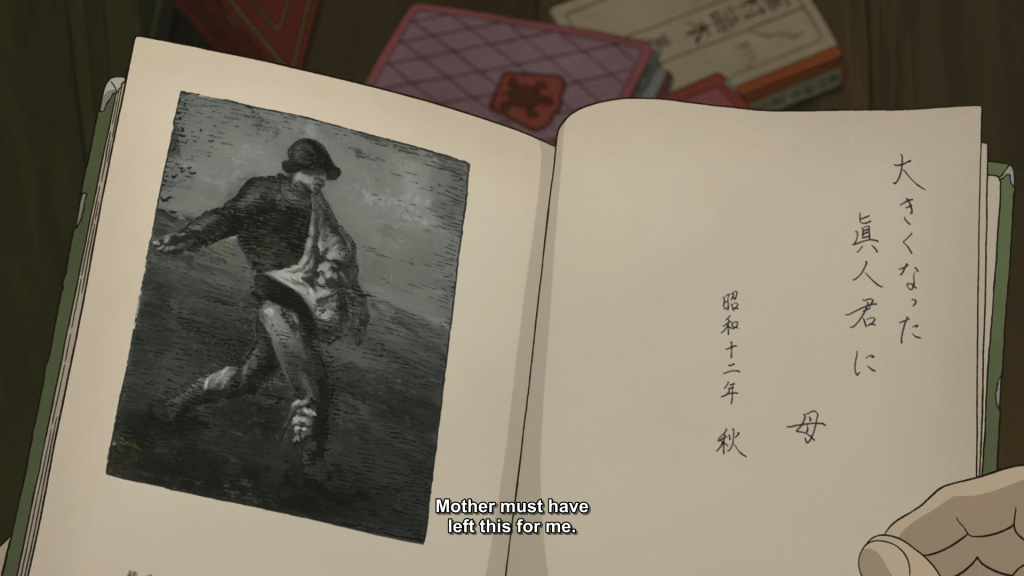
The boss is so used to hiding his feeling and vent it out through crying. You can see this in the moment just after Mr. Woodifield leaves the office, when the Boss tries to cry but is unable to shed a tear.

The use of exclusively accessible whisky for enjoyment with his friend Mr. Woodifield is also a masking mechanism, a distraction cleverly used by the Boss to portray that nothing has affected him. Men will resort to infinitely many distractions than to explicitly express their sadness just to show that they are manly men.
The Brewing of the Inner Dark Storm

As the name of the story is ‘The Fly’ many think that the pivot of the story is how the Fly underwent death as the representation of how young people died in war and how their relatives got badly affected because of that. I have additional input on this point. The pivot of the story is the Boss. The death of the fly is just what he wants to happen with the other people around him as a helpless revenge for the loss of his son. What Katherine showed in the closing encounters between the Boss and the Fly are actually the depictions of how the suppressed and hidden grief, melancholy, depression in men actually gets projected out as a behavior of inhumane cruelty and unjustified- unending anger, anguish. They will never cry and release this grief but would choose cruelty to channel this anguish. That is how every war in history created new generation full of people hating each other. People especially men are really bad about sharing their sadness, feelings of grief and in many such cases they choose violence to channel out these feelings.

The way the Boss orders the fly like a military officer like “Look Sharp” or “Come on” is not addressed to the fly or not even as the reminiscence of how his son was ordered to fight in war while death dropping on him; actually, it is addressed to himself to remain composed while hiding his pain. The death of the fly here is not the representation of how his son died, it is actually how a part of the Boss himself has died – it is the death of the emotional and humane side of the Boss.

When men find it difficult to channel their grief into an emotional outburst, history has examples where we have seen them choosing the side of anger, cruelty and oppression.

Please understand that there are three different destinations where such grievous men end into. The first are already helpless so the grief eat them from inside, the second one and the majority choose the cruelty for expression and the third but very few succeed in expressing such emotions without guilt and receive help from the outside world.  

Melancholy in Men

Sadness is one important aspect of human emotions. In very crude way, sadness is an emotion expressed when things are not working according to one’s expectations. The word simply goes as ‘sad’ but the emotions which it represents are not that simple, crude actually. There are many reasons for a person to be sad and I see two different types of this emotion. When things are not happening up to your expectations, you become sad; you are sad that its not happening for you – I will call it “a selfish sadness”. You are sad because you didn’t win, you are sad because you lost that train and now, you’ll be late to your destination.

The second type is the sadness you have when the things don’t happen for the people you love, when the people you love are sad. You are sad because your people are sad. You want them to be happy. This sadness I would call as “a selfless sadness”.

A selfish sadness starts and ends with you so it is always in your control to get over this sadness. But, for selfless sadness the situation is tricky. It starts from you and it is always connected to the people you love, outside of you. When things are not in your control in such cases this type of sadness is deepest and the darkest one. Exposure to such selfless sadness in addition to the grief from the loss of loved one is a dangerous combination.

Katherine Mansfield, despite being a woman portrayed the details of how ‘manly’ men try to cope with the loss of their loved ones. They either succumb to the dark feeling and give up or they channel this extreme sadness into aggression and oppression of the weaklings, very few men successfully share their feelings and come out of it.

For me the condition of the fly is exactly how the world will be – oppressed and full of hatred if men won’t cry when they are grieving.  

Source for reading:

The Fly by Katherine Mansfield