
The Existence – Why? How? And What?

Logotherapy is not intended only to search for the purpose of life. It justifies and dignifies the human life for its capabilities to remain in the ebb and flow of existence which is the only real thing amongst the infinite yet unrealized possibilities in the universe.

Part 2 – Viktor Frankl’s Logotherapy for Humanity
“Was du erlebst, kann dir kein Gott mehr rauben.”

(No god can rob you of what you experience.)

Robert Hamerling

Answers from Logotherapy

In the Part 1 of the post, we tried to touch some ideas like – “three schools of psychology”, Freudian “will to pleasure”, Adlerian “will to power”, Viktor Frankl’s “will to meaning” as in Logotherapy, “existential vacuum”, “Noö-dynamics”, “determinism according to Logotherapy”, “Freedom according to Logotherapy” and “the responsibility that comes with the freedom”

In summary, Viktor Frankl a holocaust survivor, psychiatrist by profession witnessed and experienced the extremes of the human psyche leading to the creation of the concrete foundations of Logotherapy. According to logotherapy, it is the meaning, the purpose – which makes a man to survive through any situations in life, especially the worst ones. When there were not chances to become powerful, when there were no means to gain pleasure even then people chose to go through the hardships/ sufferings – they chose life. Not only to survival but even upon the realization of death, people accepted that death in same way one would have accepted the life. They had something inside them which made sense out of the sufferings, pain, life and even death. This “sense” was the purpose they had identified for themselves to serve. This purpose, this meaning to their own life justified the sufferings they endured which created the hope for their survival and justification to the death for the people who accepted it with dignity.  

Noö-genic neurosis is that existential blockage rather vacuum where a person’s mind itself is unsettled because it has no justification, no sense, no meaning behind the activities, decisions to live through the life. Upon realization of the real freedom, a person (and not the conditions, the objects around him) can determine his fate even in worst conditions; the person can still have that “optimal behavior”. This realization of freedom is possible because human psyche seeks for the sense of the things, the meaning, the purpose.  This freedom also calls for the sense of responsibility because human life practically has limited span, is perishable which brings that urgency to achieve the best possible outcome, the optimal outcome out of the only life one has. Responsibility brings the best out of the freedom one has; without the sense of responsibility, freedom degenerates into arbitrariness, a diffused state where the outcomes of the event have no significant impact. In simple words, freedom with responsibility gives focused and optimal outcomes whereas freedom without responsibility (still) gives results but are diffused as there is no intent to achieve anything.  
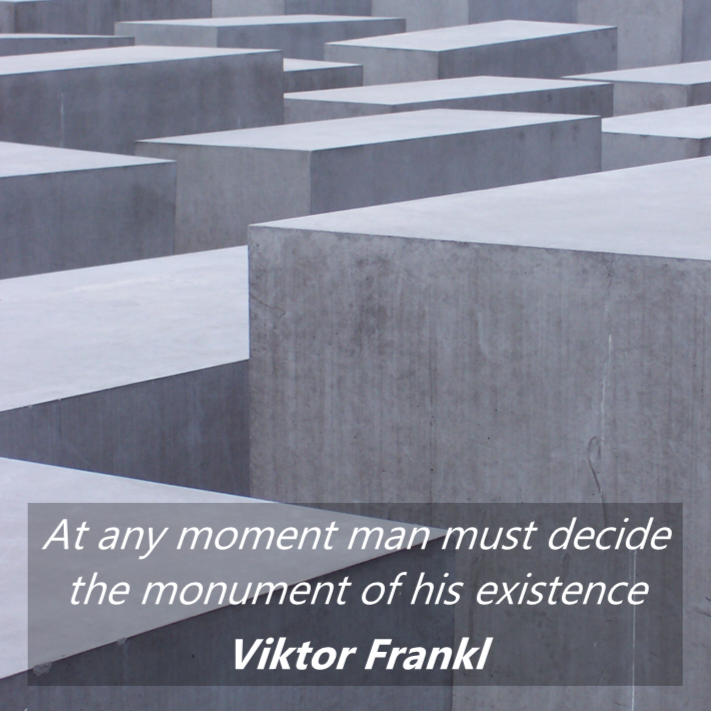
Why? Why does the life bear “a meaning”, “a purpose”?

Upon understanding what actually lies under the human psyche and the human life (i.e., the purpose, the meaning), it becomes apparent to ask the same existential question – Why does life seek for meaning only as there can be other uncountable possibilities, uncountable factors which drive the psyche, the life, the existence? Why nothing in the world – the universe but meaning only?

Viktor Frankl has excellently given the theoretical and practical proofs for the importance of meaning in a person’s life. Theoretically proof – if a person is always driven by pleasures and power then why there are examples where people chose sacrifice, where people died for their honor, where people stood fearlessly for their morals, where people rose against something really powerful, where people accepted the hardships even when there was no guarantee for them to end? These are not the exceptional cases in a human behavior. Rather when human beings are stretched to their extremes these behaviors are more common. So, unlike the pleasure and power the awareness, the urge to find the meaning is not just a secondary drive of the human life. The urge to the meaning, the purpose will always be present even in the absence of pleasure and power.

Practically Viktor Frankl presents a study to prove his point here. 89% people from a French public opinion poll and 78% of the people in an American students’ statistical survey indicated that people want “something to live for”, “finding a purpose and meaning to the life”.

I think, it is the omnipotent nature of the infinite possibilities which the real freedom grants to every person. Out of those infinite possibilities very few become realized to reality from where the freedom loses its ideal nature. Then the superposition of realized possibilities create the “real” reality which has been brought from chaos, an inconceivable, an un-understandable situation to a familiar, slightly better predictable state. This better predictable, the one “out of which some sense can be made” state is the fundamental state required for the human life to thrive upon. This urgency for predictability, for sense, for meaning, for purpose is solely because of the limited nature of the realization of life we have.

(The word predictability is not used here to imply that man wishes for everything to happen according to his wishes, rather the predictability is used in the sense for how a person will always know how he will react to the events presented to him even when they are not predictable.)

Does that mean that if a person becomes immortal, will the urge for purpose – the will to meaning ceases to exist? That is where responsibility comes into picture which Viktor Frankl has posed while defining freedom’s role in human life. Only with responsibility can the freedom be brought to the realization to possibilities out of the infinite unrealized possibilities.

In single sentence I think, a single realized possibility is more powerful than the infinite unrealized possibilities. The extraction of this power is only possible if the there is freedom with a responsibility. That is why the life exists; it exists to create the realized possibilities out of the infinite unrealized possibilities (which the universe holds or whatever ultimate there is can generate).   

How? How one discovers the purpose

The profoundness of Frankl’s logotherapy is not just about the depth of the ideas and the practicality of the experimental results. He also explained how one gains this meaning, which are as follows:

Ways to discover Meaning of Life-

  1. Creating a work or doing a deed
  2. By experiencing something or encountering someone
  3. By the attitude we take toward unavoidable suffering

1. Creating a work or doing a deed

It is very similar to figuring out what you actually love doing and how you can also benefit others (obviously including you) in the process. (Some call it following your passion, answering your inner calling to create something that you and others value)

2. By experiencing something or encountering someone – Power of love

“The second way of finding a meaning in life is by experiencing something – such as goodness, truth and beauty- by experiencing nature and culture or, last but not least, by experiencing another human being in his very uniqueness- by loving him.”

Viktor Frankl

The meaning of Love itself became very “meaningful” to me when I understood what the logotherapy stands for. Before stumbling upon the ideas of Viktor Frankl on “the meaning”- for me love was a selfish idea to gain pleasure, to have that comfort for ourselves. Something which goes like this:

“We never love anyone. What we love is the idea we have of someone. It’s our own concept – our own selves – that we love.”

Fernando Pessoa

Love is very selfish idea if we go by this statement. For me here, Pessoa meant that love emerges from inside, hence it is very “egoic” It gives us pleasure to love someone, to do everything to make them happy which ultimately will make us happy, thereby becoming selfish in the end. But then my perspectives changed. (I haven’t studied and understood the premise and the intentions behind the Pessoa’s comment on love here, which can be reserved for discussion somewhere else.)

Upon going through the ideas on Logotherapy, we become aware that there are examples where lovers (not the romantic ones only) have crossed the limits of life for other people or other things, where (again) pleasure and power were not guaranteed.

Love thus becomes a medium to realize the possibilities of the life experiences. If we are so obsessed to find the meaning of our life, then it equally becomes very meaningful to have someone who understands the same urge for meaning in you too. This love is not just a person-to-person possibility, it can also be for things and experiences.

“Friendship is unnecessary, like philosophy, like art… It has no survival value: rather it is one of those things which give value to survival.” 

C S Lewis

This is the reason you will always see why almost all the events, experiences, art forms, philosophies, cultures, religions and whatnot are immediately linked to the concept of love. It’s on a whim where things not making sense are illogically explained by love, it is innate fact in everyone which logotherapy makes apparent.

3. By the attitude we take toward unavoidable suffering

The third way one can realize the worth of life is by going through sufferings. Sufferings stretch a person to his extremes where there are clear boundaries between the existences of life and death. The urgency to make the existence of some worth becomes eminent here. The meaning discovered in such situations pushes the person to bring even the hopeless situations to his benefit by developing an attitude of optimism. The inability to change the situations makes the person change himself to bring the best out of the situation. It the way in which the person finds the meaning to his suffering.

“Suffering ceases to be suffering at the moment it finds a meaning.” 

Viktor Frankl

It is also important to understand that if suffering gives the person meaning for the life that also does not mean that everyone has to suffer to find the meaning in his own life. Viktor Frankl was very clear in these terms. Hence, he clarified the earlier two ways to find the meaning in life. The ideas communicated by Viktor Frankl are very similar to the ideas in stoicism which also discusses about focusing on things which you can control.

What? What is life according to the logotherapy?

The logotherapy explains that life is all about the tragedies, in Viktor’s words the tragic triad of three things namely pain, Guilt and Death. Why tragedies are considered to represent life is important here.  It is very easy for life to exist when these three things (pain, guilt, death) are not there, but the life still remains existent rather becomes more meaningful in the presence of the same hostile aspects. Logotherapy thus discusses that even in such hostile conditions, one can find the meaning, one can have the “optimal behavior” by following ways in the words of Viktor himself as follows:   

  1. Pain – Turning suffering into a human achievement and accomplishment.
  2. Guilt – Deriving from guilt the opportunity to change oneself for better.
  3. Death – deriving from life’s transitoriness an incentive to take responsible action.

1. Pain

Logotherapy made a successful attempt to justify what is the real nature of pleasure and pain. It established a fact that life is not just a set of tragic events of sadness for someone and a series full of happiness for others. Life is about how we as a person create meaning out of our sufferings, even when they are not in control. This is the real victory over those sufferings. Logotherapy actually balanced the concepts of happiness and sadness which both are the inseparable aspects of every life. One of them is always favored (happiness) but the realization of meaning makes the least favorable yet existent (sadness) a reality. This is very effective when people are sad even in their pursuits of happiness. They expect that doing one specific thing will bring them happiness, make them feel accomplished. After doing that thing, achieving that thing they again become clueless and sad that it was not what they expected.  

“Happiness cannot be pursued; it must ensue. A human being is not in the pursuit of happiness but rather in search of a reason to become happy, last but not least, through actualizing the potential meaning inherent and dormant in a given situation.”

Viktor Frankl

When people get overwhelmed upon the realization that happiness is not consistent for their whole life the existential vacuum peaks in and again this meaninglessness becomes dominant. Frankl effectively established that this forced urge to become happy is one of the major reasons for the depression, aggression and addiction in the newer generations.

2. Guilt

Frankl here gives one of his professional experiences with the convicted criminals- the guilty people of the society.  According to his ideas from personal experiences which are really powerful- every crime cannot be traced back to single point event, single person, single cause, single behavior. If it is impossible to pinpoint and press conviction on such singular aspects, then how can a person be considered completely guilty for the crime. For such human beings rather every person feeling guilty about something life is about rising above it. Even though Viktor’s examples are based on criminal and convicted human beings, it will be an understatement that they are not applicable to everyone of us. Every one of us considers themselves guilty for at least one thing, one mistake in their life. Finding the purpose, the meaning can help us to rise above this guilt with the feeling of responsibility. What a powerful thought!

Humanness in everyone is one important aspect of logotherapy. Rising above guilt through realization of meaning reflects that. It made the psychology more humanitarian rather that a mechanistic interaction between humans and their drives.

3. Death

We have already discussed that the perishable nature of life creates the urgency to meaning. The sense of death brings in the responsibility to optimally live the only life one has is an important aspect of every human life rather every life. 

“The opportunities to act properly, the potentialities to fulfill a meaning, are affected by the irreversibility of our lives.”

Viktor Frankl

This is where I think we can understand what actually lies under the existence of life. Our existence as a conscious life is destined to create the realities from the infinite possibilities that universe has. We are the means to bring the intangible possibilities into the reality through our lives which makes every life meaningful. Every life is meaningful and hence deserves dignity. It is dignified because by its mere existence it has successfully created the realities out of the unrealized and intangible possibilities. Our existence itself makes us dignified of the life we have even if it may not be useful for others.    

“An incurably psychotic individual may lose his usefulness but yet retain the dignity of a human being.”

Viktor Frankl

This is also the moment where Viktor has highlighted on creating real possibilities in present rather than dwindling on to past and future. Past is more important because it is where the reality existed, it is where the meaning of actions from the present are justified.

The Super-meaning – why does the meaning exist?

“What is demanded of man in not, as some existential philosophers teach, to endure the meaninglessness of life, but rather to bear his incapacity to grasp its unconditional meaningfulness in rational terms. Logos is deeper than logic.”

Viktor Frankl

It is also very important to understand that Viktor Frankl’s Logotherapy is not just about finding the sense to the life, the meaning the purpose of the life. It also makes one important argument about the limitations of human understandings. When we will go on asking “why?” to the answers of every “why?”, we will end up into some abstract idea of meaning which won’t even make sense to our existence. (And again, the same spiral of existential vacuum will start thereby rendering the question useless itself) even though there are some things which are beyond your understandings that also does not mean that your meaning should always justify unknowns, rather it is paradoxical. If the purpose of life is to create the realities from the intangible, unrealized infinite possibilities then it is very important to understand that the meaning need not to be some abstract meaning in order to justify every possibility in the universe. Logotherapy thus becomes very powerful to create a practical, real picture and purpose of human life. Logotherapy thus justifies and dignifies the human life for its capabilities to be there even in the ebb and flow of existence which is the only real thing amongst the infinite yet unrealized possibilities.
For more, read Part 1 of this blog post- Answering the questions on existence of “the existence” – Viktor Frankl’s Logotherapy for Humanity – Part 1

  • Featured Image – Jewish Museum Berlin
Biases and Delusions – Steering on the borders of rationalism and insanity

Humans and the longing for eternal existence

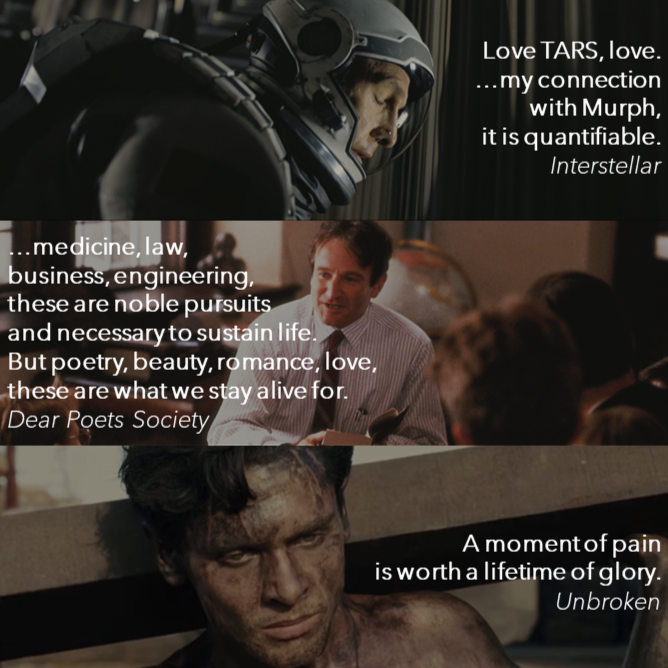
There are these moments in many popular stories where our protagonist – the hero is feeling hopeless – depressed, is fed up by the cruelty, hardships, failures and some age-old character, a well-seasoned teacher or ‘that life altering event’ which give him the hope to continue against the antagonist – the villain of the story; obviously our hero wins. There are very common examples not only in pop culture, cinema but also in real human history and literature. It is very important to understanding that the qualities demonstrated in such exceptional times by our characters seems very illogical. (Remember the explanation of “The power of true love” or “the power of Hope” at the climax of your favorite movies, stories) In simple words, the reasons for such events are justified by the realization of something beyond the reality we experience, something supernatural – something which cannot be justified by a rational, logical thought. The explanation in these cases seems more spiritual and less practical or rational. Today we will see how one can differentiate between practical irrationalism (i.e., hope) and impractical irrationalism (i.e., delusion)   

They say that “the death is the ultimate equalizer” which highlights how everyone of us considers their own existence as the most important part of our being. It is the most real and rational part which enables us to experience our life in reality. We are aware that all real and rational things are perishable, end-able and yet we are always making some attempts or at least thinking of prolonging our existence for eternity. This seems very irrational, impractical and still our mind always tries to falsify the thought that our life has an end somewhere. (We plan what we are going to eat/ wear/ do tomorrow, plan that trip, make new year resolutions even after the uncertain nature of our life and with the optimism/ hope that we will live to do those things as planned.)   

Christopher Nolan’s Interstellar
The human urge to improvise, do something unconventional at the last moment of life is often epitome of all extreme survival stories. (Not only in movies but also in reality)  

Our basic survival instincts are always aware of the chances and ways in which we can die. A healthy person’s subconscious mind is aware of the death and its consequences. Our immediate involuntary responses to life threatening events are examples of that. (You immediately remove your hand from a very hot thing because you know that it is going to hurt you.)

Interesting is when these such feeling for the longing of survival gets highlighted in some extreme and abnormal conditions. The conditions which are not generally faced by normal human beings.

Victor Frankl and The Delusion of Reprieve

Victor Frankl an Austrian neurologist and psychiatrist in his days in Auschwitz observed a very extreme and irrational behavior amongst the victims including himself. When the newly admitted Jewish prisoners were torn off of their own identities, the only thing they were left with was their hope for surviving through the tortures wishing that they have some things to finish, some purpose of life to fulfill after living through that real-life hell. Frankl in his book “Man’s Search for Meaning” creates a lively and horrifying picture of what a living hell looks like. Not even the greatest empath in the humanity can relate with the pain that these prisoners went through.

Frankl in this book explained the whole process when the Jewish prisoners were admitted to the concentration camp. At first, the prisoners went through the shock that they were being taken to Auschwitz – a place infamous for ruthless deaths of Jewish people. Then the hostility of a deserted, dry, barren land maintained by people with similar dried emotions amplifies that shock.

In this exact moment, Frankl noticed a group of people who looked much healthier and with some wit/ humor which highlighted the sanity of their minds even in such hostile environments; maintaining that snobby “attitude” even in this deserted, unfriendly environment was one relief for him.

With this observation, Frankl concluded that he too will be able to match with these people in order to survive through this hell with relatively lesser pain. One has to understand that this urge to have a lesser painful life in Auschwitz was not even closer to the reality, even the word “exception” would fall short for this. And still, even after knowing the fact that there is no escape from this hell, even after knowing that almost all of the people in Auschwitz die from inhumane mental and physical tortures, hard labor, starvation, diseases, internal disputes, favor-ism, unfairness, Frankl thought that there is a chance that he can climb up this ladder and become part of this “snob party”. One has to understand that the thoughts Frankl is having here are totally irrational. Frankl was already aware of the consequences of being sent to Auschwitz but even after that his mind chooses an irrational idea of facing less pain in Auschwitz. Frankl justifies this irrationalism by the “inborn optimism in him” and calls this condition in psychiatry as “delusion of reprieve”. He explains this in following words:

“The condemned man, immediately before his execution, gets the illusion that he might be reprieved at the very last minute. We, too, clung to shreds of hope and believed to the last moment that it would not be so bad.”

This “delusion” of being “pardoned” at the very last moment becomes the very first stage in the psychosis (a mental disorder of getting detached from the reality) of the people exposed to extreme ruthless environments of Auschwitz. This is totally different from the stories of conventional heroes and villains. Here, the person has completely lost the sense of what is a real possibility and what is an unrealistic demand. The conscience – ‘mere rational’ of the person gets broken in the hope that there is still something good and some chance of survival through this.  

Biases, Delusions and Apathy

In psychology the biases and delusions are closely connected and highlight the tipping point from where the psychosis starts. First of all, it is very important to know that we all have biases. Biases are our favored, prejudiced opinions for someone or something. Biases are some sort of mental shortcuts to avoid the energy loss for processing huge amount of information. Here are some examples of cognitive biases (a systematic pattern of deviation from norm or rationality in judgment):  

Availability Heuristic Bias – People do not make decisions based on the data and statistics but on the stories and the stuff they hear from other people. You would want to easily trust what news show than to actually check and cross check fact with real data.

Choice Supportive Bias – People defend themselves because it was their choice. Because, if they made the choice, it must be right. You could be never wrong because you feel so is common scenario. Remember the time when you don’t even care to google what you just assume to be right because you think so.

Confirmation Bias – We tend to listen to information that confirms what we already know. Even after knowing that you were wrong you support and believe only that information that proves your thinking. Remember the flat earth conspiracy?

Ostrich Bias – Subconscious decision to ignore the negative information. Remember (again) the flat earth controversy?

Placebo Bias – Belief will help you recover. Loosely speaking, it can be explained by the idea of fake it until you make it. Your mind will make decisions based on the illusion that you are rich thereby ultimately making you rich. Placebo drug therapy is also the best example (but repeated words won’t explain the meaning)

There are many types of cognitive biases which actually throw light on our belief systems. (This could be a good discussion for some other times). The point is that when such biases start having a strong hold on a person’s mind, the person becomes delusional, leading to delusional disorders. This is triggered by some abnormal and unexpected situations. Victor Frankl actually observed and even went through such experiences where he establishes the “emotional death” of a person.

Due to constant shocks and bombardment of unconventional cruel treatments, the mind of person becomes numb to the extremities of the experiences and their response to such cruel, extreme and abnormal things no longer remains reactive as if these are normal situations for them. This is the “emotional death” Frankl is referring to. They became detached from the reality and thereby the humane emotions and responses to the cruelty around them – they became apathetic. Neither positive nor negative emotions.

Fine line between biases and delusions

Carrying the hope of having some moments of escape is also one example of the biased thinking the prisoners carried. Even after knowing, seeing and experiencing the cruelty in Auschwitz, their minds were not ready to accept the reality that it is close to impossible to escape this hell. Frankl’s well explained ‘delusional behavior among prisoners’ is one important part of Humanistic Psychology and Cognitive Behavioral Therapy.

Delusion disorder are classified as Bizarre (realistically impossible) and non-bizarre (possible but wrong in nature). Jumping to conclusion bias is one of the most researched bias connecting to delusional disorders.

Jumping to Conclusion Bias (JTC Bias) – A bias where something is assumed to be true without collecting all the information/ data. It is also known as inference-observation confusion.

You can find in Frankl’s description of their admission in Auschwitz where he explained “those” healthier group of people. The optimistic urge of Frankl to be in level with them is an example of jumping to conclusion bias. With very little information and an unrealistic urge to survive Frankl unknowingly became victim to the delusion. (Although his profession helped him to distinguish such behaviors and work over them leading to strengthening and establishment of Logotherapy) There are some studies which have also highlighted that jumping to conclusion is one of the biases closely related to delusions and psychosis but it not the only reason, rather it is very unclear that how delusions form. Studies show that there are two possible reasons to why JTC Bias and delusions are closely related. One is “the intolerance of uncertainty” and second is the “impaired working memory”. In simple words, firstly – the fear of unknown, ambiguity in the outcomes of the things makes the mind to take shortcut and create a simple conclusion to settle the chaos of the data (which already is limited) thereby making an unrealistic expectation from the event and secondly the incapability of one’s memory to handle the routine tasks makes it impossible to derive conclusions from complete data thereby restricting the flow of information as minimum as possible to make the conclusion which then become unrealistic. These two reasons possibly indicate the connection between JTC and delusions. Please note that JTC is not the only bias which can cause delusions.

Although delusions are very extreme part of human psyche, it is very interesting to understand their link with the biases almost every human being has. Given that such types of biases are always there within us representing some short-lived illusions from truth or I would say “quasi-delusions”, it becomes very important to notice such patterns and immediately work over them. Being mindful, being aware of the thoughts we are having and the coherence of the conclusion we are drawing from them is one of the most important way to remain free from the biases and delusions.

The Metacognition therapy, the logotherapy thus are the important branches in humanistic psychology which contributed in this field. The psychology of hope is also one important aspect of delusions related to survival; especially in the cases resembling to Viktor Frankl’s experiences.

References and Further Reading:

  1. Man’s Search for Meaning by Viktor Frankl
  2. Delusion formation and reasoning biases in those at clinical high risk for psychosis, The British Journal of Psychiatry
  3. Thinking biases and their role in persecutory delusions: A systematic review, Early Intervention in Psychiatry
  4. Delusional disorder – Khan Academy
  5. The tendency to stop collecting information is linked to illusions of causality, Scientific Reports by nature.com

Noticing Our Ignorance

Coming out of the Dunning-Kruger Effect

Many a times google searches are the final resort to end debates or any conflicts. Such common debates among our friends/ relatives/ acquaintances mainly require third party confirmation because both sides are adamant on their opinions. You will notice that even when a practical and reasonable argument is placed in front of the person, he/she will not accept that argument and stick to their opinions. Have you wondered why does that happen? The internet, media, “Whats App / Facebook universities” have developed enough “facts” on everything by consistent bombarding of the information and curated, person specific, behavior specific content that everybody has opinion about everything. Most of the times, peoples consider themselves expert of the field while presenting such opinions.

One more question, is their certain group of people who are susceptible to such level of stupidity due to ignorance? The answer is No.

Turns out that everyone – literally everyone of us is prone to such stupidity, lack of knowledge and ignorance.

We are what make up of our decisions. Such confident ignorance creates more chaos in the information and knowledge we have thereby may affect our decision-making process. And this ill-information, ignorance and our confidence for it reveals its devilish nature when the decisions are very crucial, life altering. No wonder someone has already said that “Half-knowledge is dangerous!”    

Dunning-Kruger Effect explained in Psychology has some interesting findings on the relation between our competence and confidence about our knowledge. We will see how it may help us in understanding the nature of how we understand what we know and what we don’t know.

The Dunning-Kruger Effect

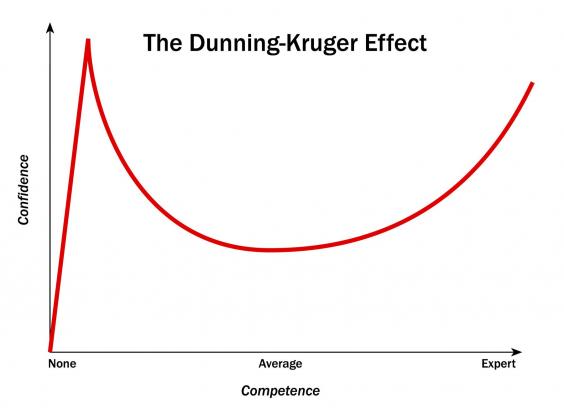
Psychologists David Dunning and Justin Kruger identified a cognitive bias in people across various fields. They asked people to evaluate their expertise in certain fields and asked them to rate themselves accordingly. One of the highlighted and most famous result can be shown as below:

There are two immediate things that we can understand from this graph:

  1. Those belonging to low competency group perceive their knowledge greater that their actual knowledge. They consider that they know more even but in actual they know less of it. Seems like they are overconfident about what they know.
  2. The area where the graphs cross each other is even more interesting. Those belonging to high competency group under-calculate their competency. Even though they have more competency, more knowledge than others in reality, they still think that they don’t know enough. They are not confident about what they know.     

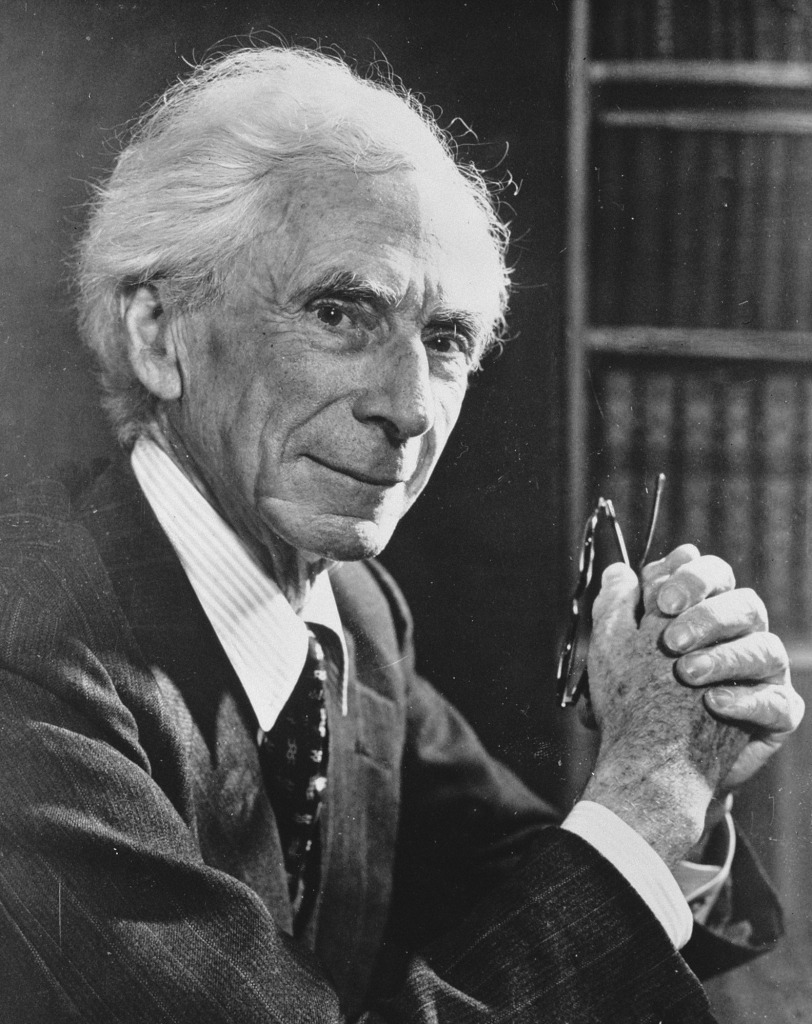
This result reminds me of the quote by Bertrand Russel.

The whole problem with the world is that fools and fanatics are always so certain of themselves, and wiser people so full of doubts.

– Bertrand Russel

The Double Burden of Ignorance

Dunning-Kruger Effect is more associated with the overconfidence that less competent people carry. The effect associated with the lack of confidence in more confident/ expert people is associated with the effect called “The Imposter Syndrome”. People with imposter syndrome consider that they are this fake person acting like they are genius/ expert and the “fake”-ness may get exposed sometimes even though they are genius in reality. They think that what they have achieved, known is not enough.

So, one can say that the Dunning-Kruger Effect is the opposite of the imposter Syndrome.

In single sentence the Dunning-Kruger Effect can be summarized as below:

“The ignorant people are ignorant of their ignorance.”

This is also known as “the double burden of ignorance”. Dunning and Kruger explained their interesting idea about our awareness about our own knowledge in this way- The less competent people – the ignorant people carry double curse. The first one is that they actually don’t know enough about something. The second one is that this lack of knowledge makes them think that they have known everything that there is to know. The lack of knowledge blinds them from knowing beyond what they know, thereby shunting their search for knowledge.

“Ignorance often refuses rather can’t recognize itself”

David Dunning

This is sometimes known as “The Illusion of Superiority”. Such, confident but incompetent people are always susceptible to two immediate regrets while making decisions.

  1. They make mistakes based on the less information/ less knowledge they have and reach poor decisions.
  2. This lack of information further prevents them from acknowledging and further correcting these mistakes. And the cycle further feeds itself.

The Roots of Dunning- Kruger Effect

The first cause is apparent in the double burden of ignorance indicating that lack of knowledge/ expertise bounds the definition of what the real knowledge/ expertise is.

The second one is hidden in our confidence about anything. While living in the social construct, it is mostly true that the confidence has huge impact on our decision making. People believe more in confident opinions rather that their truth value. Confidence brings certainty thereby predictability which calms our minds from the chaos of the decisions and their consequences. People always like certainty and confidence gives you that.

No wonder people say that:

“Bad confidence and Good Confidence both are same- The Confidence”  

Thus, incompetent people are always confident about what they know about things and also believe that there is nothing more to know which brings the comfort to their mind.

One more reason is hidden in our upbringing and the environment around us. Student reading same books for the exam perform differently. It is because of the ways in which they construct the ideas provided by the book in their mind and this is dependent on how we think, what are our basic ideas about everything. Our thinking, our basic ideas are directly affected by our environment, upbringing, culture, parenting, companions which are totally random in every sense.

In addition to this, we tend to take mental shortcuts while knowing, understanding anything, thereby cementing the ideas of knowing everything immediately. Simple example is the digital display. Even though the display has minute pixels of three colors only- we collectively perceive it as a whole object, whole picture of something totally different. Our brain always tries to fill the gaps in what we see and what we know. This is not just for incompetent people rather this is true for every single human being.

If we do not question what we know about something and carelessly build our understanding around it then, such knowledge can be easily defeated. Which is highly possible in people with dunning-Kruger effect.

Metacognition and acknowledging our ignorance

So, if our ignorance blinds our awareness of the ignorance itself, then how can we overcome this?

One part of the answer is hidden in “Metacognition”. Metacognition is the awareness of one’s ‘ways thinking’ and ‘knowledge building’ by finding the patterns during such thinking.

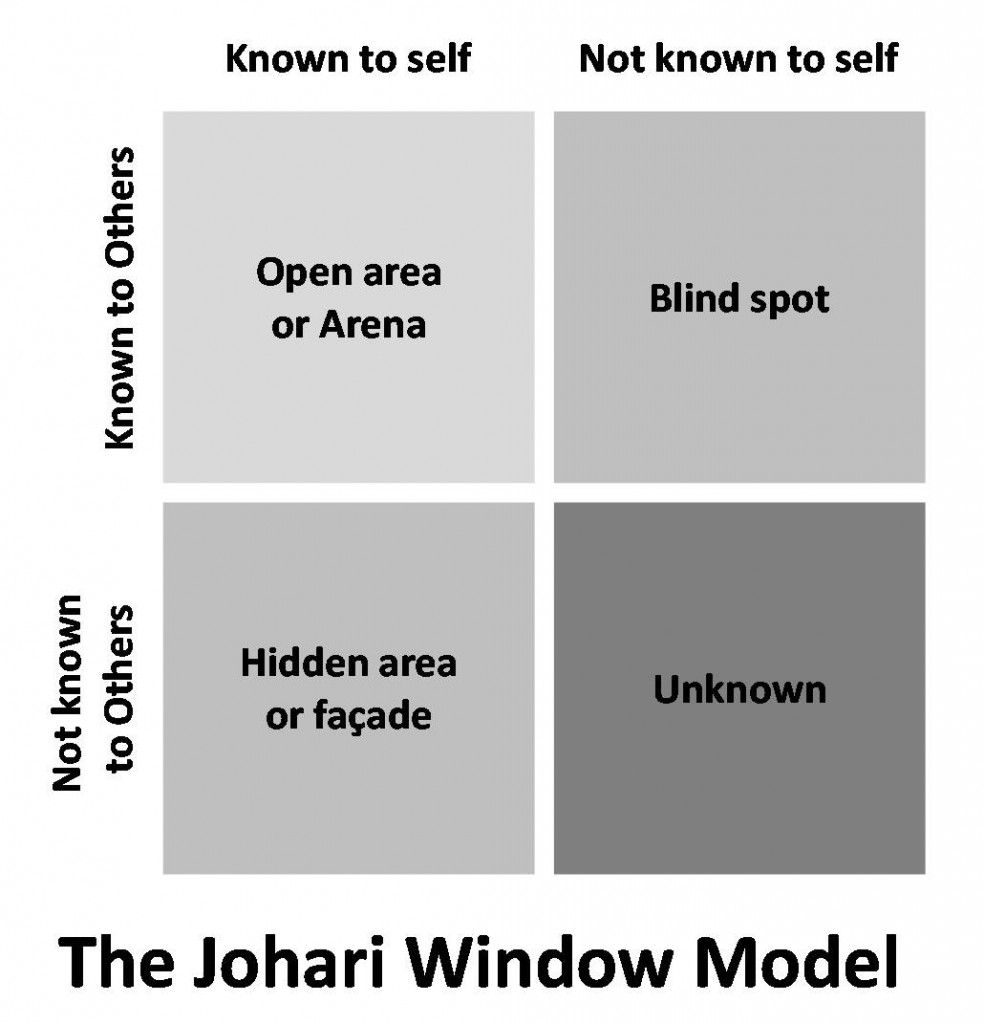
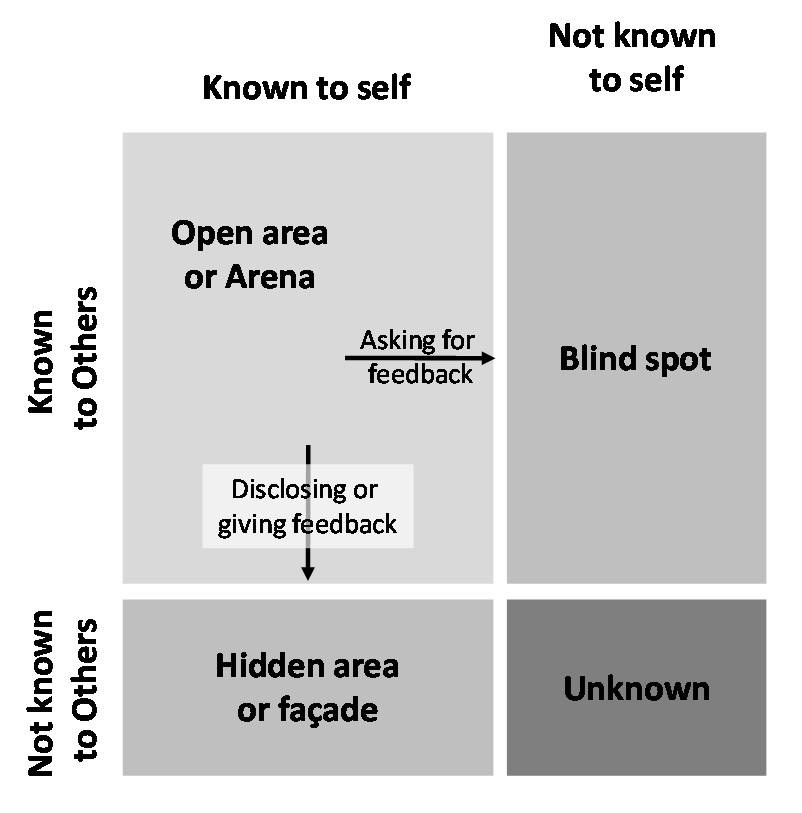
There is one interesting concept called Johari Window which can be simply put in the following picture:

There are four parts of yourself:

  1. One that is known to yourself and others – everyone including you are aware of it
  2. One that is only known to you and not others – only you know about it
  3. One that is known to others but not to you – others can see that in you but not you
  4. One that is neither known by you nor by the others – the real unknown

This concept was developed by psychologists Joseph Luft and Harrington Ingham (Jo from Joseph and Hari from Harrington) in 1955. The Johari Window is used to explain how we interact with each other and have relationship with each other.

The Johari Window focuses on improving the relationships by expanding the “Open Area” or “Arena” using feedback from surrounding. Johari Window is mostly referred to explain our social interactions and relationship building but it can show some directions for escaping out of the Dunning-Kruger Effect.

In similarity to our personality or its awareness, there are four types of knowledge:

  1. Known knowns: knowledge that you can know
  2. Known unknowns: Knowledge that you know exists and is beyond your reach/ understanding
  3. Unknown knowns: Knowledge that you have already but you are not aware of it
  4. Unknown unknowns: That which is not known and cannot be known

The Intellectual Humility

The second part lies in “Intellectual Humility”.

  1. The “Known knowns” type of knowledge is already established and uniform throughout the people.
  2. The “Known unknowns” type of knowledge cannot be known completely which needs one to accept the bounds of his/her own understandings and the uncertainty of the knowledge that comes with it. It’s like making peace with what you cannot know and keep on improving it. The known unknowns can be understood by feedback and remaining open to ideas. Understanding what the experts of that field know. The “real intellectual humility”.
  3. The “Unknown knowns” type of knowledge is revealed when you interact with others and thereby understand what others understand. It’s just you have it already but when you see others doing it you realize that you can do it too.
  4. The “Unknown unknowns” type of knowledge is more susceptible to Dunning-Kruger Effect. Where the double burden of ignorance is highlighted. The intellectual humility is the only way to get out of it.

In short, there can be four important ways to overcome Dunning-Kruger Effect thereby our ignorance. Humility, Feedback, Criticism and Curiosity are these four ways. Humility will help to know more there is to know and understand limits of your knowledge. It will also give the perspective for others’ opinion and the reason behind it. Feedback thereby positive comparison from/with others will help to know what you lack and focus on to build upon it. Criticism will help you to catch up with experts (given that they are free from Dunning-Kruger Effect!) and Curiosity for everything will help you to develop new perspectives while keeping your feet on the grounds.

“The more I know, the more I realize I know nothing.”

Socrates

(Note-The famous graph used to explain the Dunning-Kruger Effect are not even present in the original publications by D Dunning and J Kruger!)

References and Further Reading:

  1. Kruger, Jacques and David Dunning. “Unskilled and unaware of it: how difficulties in recognizing one’s own incompetence lead to inflated self-assessments.” Journal of personality and social psychology 77 6 (1999): 1121-34 .
  2. Chapter five – The Dunning–Kruger Effect: On Being Ignorant of One’s Own Ignorance, David Dunning, Advances in Experimental Social Psychology
  3. The Johari Window Model – by http://www.communicationtheory.org
  4. The Dunning-Kruger Effect: The Paradox of Our Own Ignorance by Mark Manson
  5. What Is the Dunning-Kruger Effect? by Kendra Cherry on http://www.verywellmind.com
  6. “Why ignorance fails to recognize itself” Featuring David Dunning by Macmillan Learning

The Practicality of Philosophy

What is the purpose of Philosophy?
one of my favorite memes (Source: starecat.com)

We live in a competitive and fast-moving world where everything’s success depends on the outcomes and their value delivery. Take any example, if any movie release fails to entertain the major audiences, consider it flopped; if any project is not delivering the expected profits to the company consider it stopped; if any equipment is not working properly for the performance it promised, consider it a market failure; if any start-up is not built upon the actual market requirements, consider it a flop business; an employee fails to reach his targets, consider no promotion or even a pink slip. Whenever you are working on achieving anything and if your actions and thought process behind them are not directing you to the Goal, people will suggest you to change your strategy. In nutshell, everything you do, every thought you have is expected to have a fruitful outcome, value creation, profit, gain, benefit thereby there must be some utility. We now call these things, these thoughts “practical”. General thought process always suggests to have the practical way of life in order to succeed in a way.

I am of the same opinion, that doing certain things, acts, thinking (actually overthinking) about everything you stumble upon is expected to deliver some “practical” benefit in my life. If you studied enough and can’t get the job of specific salary then what good is your education? There must always be some definite value delivery from our actions otherwise we are just wasting time and getting nothing.

The situation worsens when you implement the same logic to the ways you think about anything and everything you stumble upon. It is like day dreaming as you are only thinking about some random things, are engrossed completely in the world of your own and there is no real-life benefit from it. Then, it becomes imperative to “Get Real” in life, sort your things and be practical and use your common sense.          

Now, here comes a short story-

In a fight, the flight attendant finds an elder person going through severe chest pain, she immediately asks for the expert help.
Flight Attendant- Attention all, we have an emergency. Is there any Doctor onboard?
(One person raises his hands)
The person- Yes, I am a doctor.
Flight Attendant- We need medical help.
The person- But, I am a doctor of Philosophy.
Flight Attendant- He is going to die
The person- Aren’t we all anyways?

One can only imagine the awkwardness and impractical response of philosopher to the situation in the flight.

I used to think that the philosophy and it’s ideas yet interesting and intriguing cannot handle the reality of life and solve practical problems.

And, (as usual) I was wrong.

Here it goes…

The question is-

Will thinking about every possible thing you are exposed to (and even about the things you may never get exposed to) and asking “unnecessary questions” about it add value to our life? Will thinking about things irrelevant to your job is going to increase your performance at your workplace? Is thinking about any random thing is going to put food on your table?

In short, what is the worth of the philosophical ideas, questions if they are not going to solve our practical problems? What is the practicality of philosophy?

This was the question I was stuck at; even though philosophical ideas have always intrigued me.

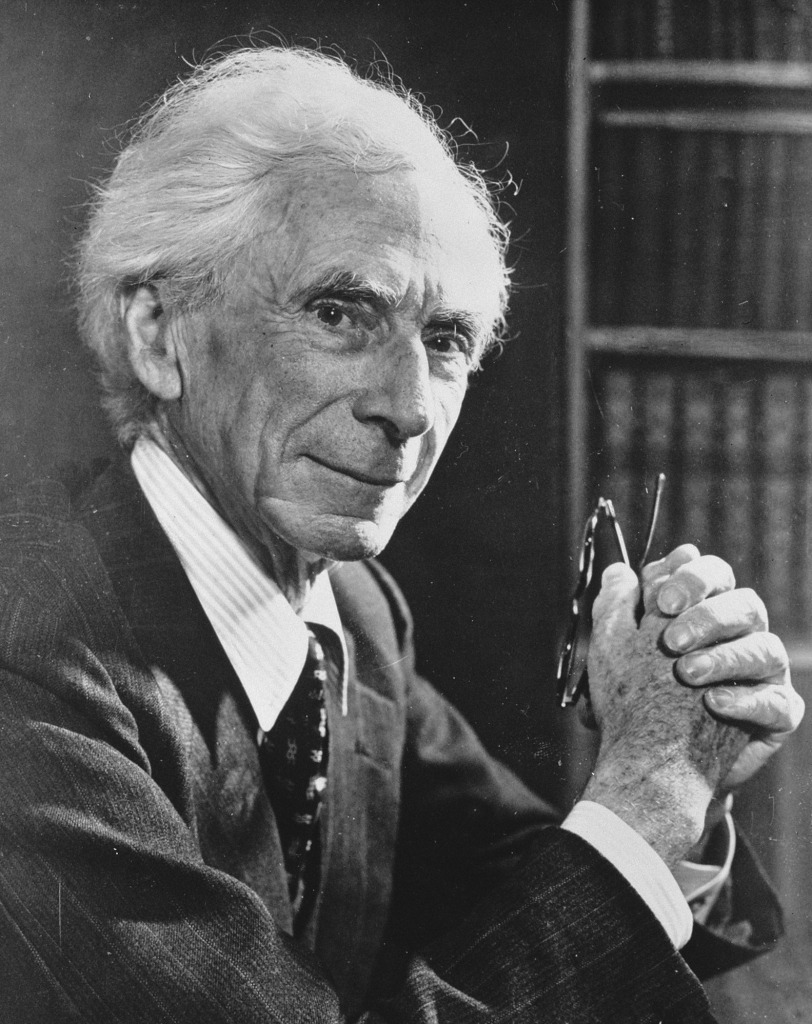
Then I found my answer in Bertrand Russel’s book called “The Problems of Philosophy” with the last essay called “the Value of Philosophy”. The ideas explained by Bertrand Russel in this writings answer the very basic question about the utility of philosophy.

Ends of life

Russel explains the idea of ends of life by distinguishing between the nature of Physical Sciences and the philosophy. The idea is that all the physical sciences that we as a human have established have contributed to the society in some ways. The developments in physics led to inventions of uncountable things like lasers, semiconductors, telescopes, machines and what not hence landing mankind into the modern world. The developments in virology, bio-technology, modern medicines helped us to come out of the global pandemic. The developments in geography helped us to explore the globe, share our trades, cultures, profits, save us from natural calamities. The psychology helped in maintaining the mental well-being, the social well being of the society there by controlling the sanity in the people. The economics helped to efficiently utilize and manage our resources in order strive as a species on a space floating rock. These physical sciences have mastered various ends of life and are continuously contributing ahead

What about philosophy? If we are going to discuss how certain philosophy has solved the world hunger or how a philosophy has cured the incurable diseases in history or how a philosophy has saved people from famine or how a philosophy landed us on another celestial body, then the answer is surely no. There are no practical ends of life which philosophy helps us to achieve.

Uncertainty of philosophy

Bertrand Russel has very beautifully established the difference between the nature of Physical Sciences and philosophy. The Physical Sciences have postulates, theories, formulae, a definite structure which builds the all knowledge they represent. There is a systematic path to be followed in order to answer the posed question. If you ask a physicist why the sky is blue? he will approach the problem from the branch of optics then thereby refraction and scattering and the spectrum of light. If you ask how the eclipses occur? to an astronomer, he will take you through solar system, to planets, their satellites and their rotations, orbits. It can go on and on.

In short, in all the physical sciences the truths established are definitive. There are definite answers to the questions posed. Such is not the case with philosophy. If you pose a philosophical question as in “What is the purpose of life?” every philosopher will have his own versions and there is no surety of definite answer. If you ask questions like, why was the world created?  Why was the universe created? Are we really body with a soul or a soul with a body?

See the pattern we can observe from the philosophical questions is that the truths they are giving are not certain. On contrary, the truths revealed in physical sciences are definite, their truth value is certain based on the truths they are derived from due to structured-ness. Bertrand Russel establishes that all the physical sciences are originated from philosophy. When the definitive-ness, certainties of truth extraction system, knowledge building system of these philosophies became strong, they separated from the philosophy and get independence.

Thus, the only thing certain in philosophy is that there are no certain answers to the questions posed. If the answers are getting definitive, certain then a new physical science gets established thereby separating from philosophy. Philosophy of mind became psychology; philosophy of heavenly bodies became astronomy.

What I found interesting in this idea of “genesis of physical sciences from philosophy” is that though upon certainty of truth/ knowledge physical sciences become free from philosophy, the next unanswered questions in physical sciences immediately start to redirect themselves to philosophy again until the certainty of answers are obtained thereby proving the presence of philosophical inheritance.  Our quest for understanding “the nature of reality” in the world of modern physics is one such strong example.

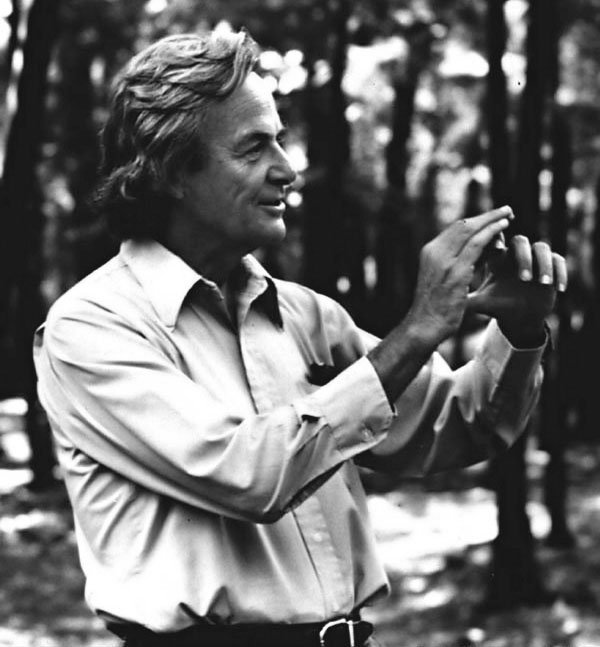
Richard Feynman in one of his famous lectures discussed about questioning the nature of reality as we understand:

“it’s a very strong tendency of people to say against some idea, if someone comes up with an idea, and says let’s suppose the world is this way.

And you say to him, well, what would you get for the answer for such and such a problem? And he says, I haven’t developed it far enough. And you say, well, we have already developed it much further. We can get the answers very accurately. So, it is a problem, as to whether or not to worry about philosophies behind ideas.”

Richard Feynman

Meaning is it not always compulsory to have structured-ness and definitive nature to any idea. There may be always some indefinitve-ness to the answers in philosophy.

Truth of the answers to the questions of philosophy

Now that it is clear that the answers to the questions in the philosophy are not definite, not certain; it is also important to understand that the answers don’t lose their value due to their indefinite or uncertain nature. Rather they bring us closer to the unrealizable, un-experienceable truth.

According to Russel, the confinement of knowledge is the major point which poses the question on “the practicality” of philosophy in our life.

I think what Russel is trying to say here is that as soon as the nature of the truth of knowledge starts following a pattern/ a trend, it gets confined in the structured-ness of certainty thereby getting its independence, self-reliance. The philosophy hence will always remain as a field (even the word “field” is so confined) rather expanse of uncertainty where there will always be some room for speculation.

In order to ask for value of philosophy, one has to confine it to some ideas and then compare these ideas to other ideas. But the game philosophy plays here is that the you lose the identity of philosophy once you confine it to some set of ideas in knowledge/ physical sciences. Thus, remains incomparable.

Funny thing is that the solution of such problem will start with – What is comparison? How to measure the worth of anything? (Which themselves are good philosophical questions!)

Philosophic Contemplation: the idea of Self and not-Self

Russel suggests that the value of philosophy will be only realized when the ends of the life are not limited to ‘Self’. I think what Russel is trying to convey is that the realization of something greater above ourselves itself is humbling. Understanding that the knowledge will still exist irrespective of our existence is one important part of we becoming free from our own identity.

When there will be search for knowledge for Self, the answers gained will be confined, they will always reflect the nature of the self or the seeker.

But, once one understands that the knowledge, philosophy is above himself i.e., once a person starts seeking questions to the answers not for the betterment of himself only but for the knowledge itself then the knowledge reveals itself. This knowledge will not be definitive, certain. This knowledge will not have concepts of good or bad, pure or impure, left or right, profit or loss, worthy or unworthy. It will be only the knowledge itself where truth is still uncertain, indefinite an innocent. Russel calls the philosophy as the union of Self with not-Self. That is in order to understand something greater than ourselves, we have to lose the idea of ourselves, our being.

The curse on humanity

The question of finding the worth of philosophy itself has its own limitations. The concept of being worthy brings in the ideas of comparison, tradable value, what one gets in return, replacement value, a sense of transaction, gap due to absence, appreciation due to presence. This transactional, tradable, replacement value itself is a very small part of materialistic ideology of our human life.

See, our existence, thereby we being alive is dependent on so many materialistic things/ resources which are inherently important for our existence. You will not find a beggar asking for the explanation of the ideas in stoicism or nihilism. Most of the times he will only think about the ways to get the next meal. (Although, a beggar can also question about nature of him being a beggar

instead of a king if he wants)

In short, what I am trying to establish here is that for us as a human being, we need materialistic objects and our interactions with them through our senses to become aware of our consciousness. To become sure that the materialistic world and the sensations from them are not the only bounds of the life that we live in. The curse to human life here, I would say is that the first step in awareness of “knowledge greater than Self” starts with the awareness of our materialistic nature. Our first dose of true knowledge is only possible from the establishment of truths from the material world and our interactions with them. The material worlds being born from higher level of “uncertain things” reveal these uncertainties, thereby making us question their fundamental nature. This leads us to understand that there are things greater that what we are experiencing but there is no surety of completely true, certain answer.

Lifting the curse

I have a thought that, there is also benediction for this curse, rather anti-curse which is “the Curiosity”. Curiosity itself is the definition of philosophy. The whole purpose of philosophy is not to find the definitive answers, truths to the questions rather it is asking the questions and keep asking the questions.

Satisfaction of the curiosity is I think the boundary of the truths. The extent of satisfaction of the curiosity will be dependent upon how real or practical you want to get (What is the extent of real and practical also needs definition thereby). Here, there is no place for value, worthiness rather it is about satisfying the purpose and truly implementing philosophy to solve some real problems.

Bruce Lee has one famous quote on the same front:

“…here is the natural instincts and here is control. You are to combine the two in harmony. If you have one to the extreme, you will be very unscientific. If you are another to the extreme, you become, all of a sudden ‘a mechanical man’- no longer a human being. So, it is a successful combination of both, so therefore it’s not pure naturalness, or unnaturalness. The ideal is unnatural naturalness or natural unnaturalness.”

Bruce Lee

It is about the union of Self and not-Self to find the knowledge as Russel explains. You need not to infuse your boundaries, your prejudices to the questions of philosophy while on the quest of knowledge. You have to again lose your identity to find the real knowledge.

Again, Bruce Lee’s philosophy about being water reflects similar ideas about the nature of true knowledge from philosophy.

“Empty your mind, be formless, shapeless, like water. Now you put water in cup, it becomes the cup. You put water in bottle, it becomes the bottle. You put it in a teapot, it becomes the teapot. Now water can flow, or it can crash. Be water my friend”

Bruce Lee

Be water my friend!

Bruce Lee

This also explains the innocent nature of knowledge. It takes shape of anything that it is in.

(That is the exact reason why we were forced to write the essay in our school on “Science: Curse or Boon”! OK, Jokes apart)

Having answers to the questions ends the quest thereby giving the boundary to the idea; asking the questions creates the possibilities. And creation of possibilities however uncertain they may be is the purpose thereby the worth of philosophy.

So, philosophy is not about finding definitive answers, it is about keeping on asking questions.

“I would rather have questions that can’t be answered than answers that can’t be questioned.”

Richard Feynman


“Through the greatness of the universe which philosophy contemplates, the mind is also rendered great, and becomes capable of the union with the universe which constitutes its highest good”

Bertrand Russel, The value of Philosophy from “The Problems of Philosophy”  


Further readings and references:

  1. The Problems of Philosophy by Bertrand Russel
  2. Richard Feynman– image from Wikimedia
  3. Bertrand Russel– image from Wikimedia
  4. Bruce Lee– image from Wikimedia
  5. Philosophers meme- Form starecat.com
  6. Clip from the lectures by Richard Feynman from youtube.com
  7. Clip on Bruce Lee’s Philosophy from Bruce Lee “The Lost Interview” from youtube.com

Exposing the imposter within

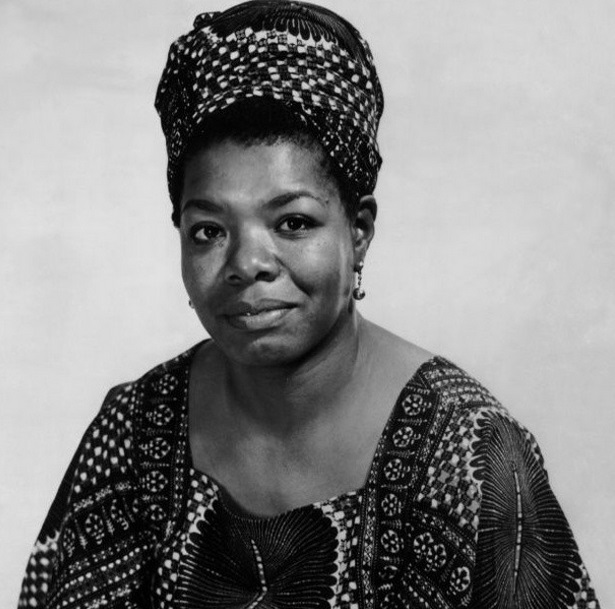
“Each time I write a book, every time I face that yellow pad, the challenge is so great. I have written eleven books, but each time I think, ‘Uh oh, they’re going to find out now. I’ve run a game on everybody and they’re going to find me out.”

– Maya Angelou

I remember our school time fun moment which used to happen during the declaration of test results. The response to the results declaration was hilariously different and characteristic for the party of boys and party of girls.

You will find that person (mostly in girls but boys are not exception to this too) who has got 90% (well above average but not as good as topper of the class) would be in a serious pressure and sad about his/her marks, on the other hand there is one person (definitely a boy here) who has secured just passing marks and is in cloud nine, seventh heaven and has already planned how he is going to celebrate this; To further add to this joy, he now knows that his best friend has passed ( by teacher’s and God’s grace!!!) with the grace marks. Now there is no space to contain such victorious joy. (One more funny thing which spices up this event is that the boy is confident and aware that his selectively written answers were sufficient enough for him to pass and girl/boy were shocked for not getting enough marks for such thorough answers!!) Man, those days were fun!

The sad thing was that those who had performed well enough were not considering themselves successful enough.

There are some moments in our lives as we grow up where people know that we are master of the art but we still think that this is only because of sheer luck, chance an anybody can easily replace you. It is just a matter of time.

Although you know that you are master of your art but still you think that there are somethings which can go wrong. These are the exact moments when you also think that if this is done right, it will be only because of the other external factors but not your competences or your hold on the art. You feel like at any moment someone will easily replace you and expose you as a fraudulent person who just pretended to have mastery over that art.

Albert Einstein, one of the smartest peoples the world has ever seen had following opinion about himself:

“The exaggerated esteem in which my lifework is held makes me very ill at ease. I feel compelled to think of myself as an involuntary swindler”

– Albert Einstein

The reality is that the lifework of Albert Einstein is so valuable and beyond the general comprehension of normal human brain. Even today, many years after his absence we are learning new things from his already established ideas.

Will you call this the humility of a scholar because of the achievement the ultimate knowledge?

Maybe Yes or maybe No.

There similar examples of great people who just consider themselves lucky to excel in their careers and consider themselves fraud. They are sure that sometimes this whole game will be exposed to the public and people will see that these people were just pretending to be successful. And master of their art. There is also one ideology called “Fake it, until you make it!” (Although further discussion on this will deviate from this topic)     

Agatha Christie- the best-selling author of detective novels, the novels which outsold even the bible and Shakespearean writings had following opinion about her penmanship:

“I don’t know whether other authors feel it, but I think quite a lot do- that I’m pretending to be something that I’m not, because even nowadays, I do not quite feel as though I am an author.”

– Agatha Christie

Will you still call this the humility of true knowledge, wisdom?

There is one interesting concept in psychology called the Imposter Syndrome which deals with such feelings. Imposter Syndrome loosely refers to a person’s feeling of not being worthy, undeserving of the accolades from the people.

Imposter Syndrome can be defined as a collection of feelings of inadequacy that persists despite evident success. Meaning even if there are many objective proofs, indicators for the success. Mastery of the person the person still thinks that it is not because of him/her ad discredits himself/herself.  This person thinks that he/she she is just an impersonator, actor or some fraud acting of having the success or the skills. People with Imposter syndrome finds it difficult to accept their achievements, digesting people’s praise is difficult for them and always in a fear that maybe they will be exposed in a really bad way.

The Imposter syndrome was first identified by Dr. Pauline Rose Clance and Dr. Suzanne Imes in their study on successful women. Maybe that is why in many believe that Imposter syndrome is observed more in successful women which is wrong. Later on, after exhaustive studies on different groups, it is found that Imposter syndrome can be found everywhere and is somewhat strong in underrepresented groups.

There are two important things to understand about imposter syndrome:

1) Highly skilled, highly knowledgeable people think that the others already know what they know so there is nothing special about what they know hence anyone can replace them easily. They are “that special” in the way others perceive them.  

2)  It is not just observed in high achieving and successful people only; Every one of us doubts themselves in their minds.

Everyone of us thinks that we are always on people’s radar or some spotlight where we are the focal point of everyone’s attention.

It is actually due to the difference between what we know about ourselves by our thoughts, our ideas, our fantasies, our fetishes, our guilty pleasures and what people know about ourselves by looking at us, seeing us doing things.

There is Japanese Proverb saying that:

“You have three faces. The first face, you show to the world. The second face, you show to your close friends, and your family. The third face, you never show anyone.”

Nobody wants to portray themselves as failures, nobody wants to expose those awkward failures in front of everyone and hence they try to safeguard their “Dark Secrets”. Hence, consider themselves fraud. We are the only one who know how exactly dark and gory our character is, hence we under-calculate ourselves.

But, to put in simple words- “Nobody cares what you are doing”. The funny thing is that everyone else is also thinking themselves at the focal point of people around themselves. Everyone is in spotlight, under radar of their own worlds. The moment you realize that how deeply everyone is sunk in their own life that they don’t even care about or have time to look into other people’s lives is the moment when you understand that it happens with everyone.

Types of Imposter Syndrome

There are five different types of Imposter Syndrome

  1. The Perfectionists – These are the people who are always aiming for perfection, setting excessively high goals thereby not achieving them and under-calculating themselves. They think that they could have done it better. This can be eliminated by accepting that it is not about perfection but about the process. Mistakes, imperfections are part of life and cannot be eliminated at once by “perfect” way, “perfect” technique, “perfect” timing.
  2. The Expert– The expert type think that they will never know everything there is to know hence underestimate what they already know. This can be eliminated by realizing that there is always something new to learn, new perspective to develop in the learning, mastering.
  3. The Natural Genius– This type of peoples feel exposed/ fraud if they think that they are taking longer time than normal to achieve something. They think that it in innate in them do easily complete this task, hence are ashamed of their incompetence. This can be eliminated by being the part of the ongoing process, understanding that not everything can be mastered in a day, realizing the importance of the journey, the process.
  4. The Super wo/man– This type of super persons think that if you have not worked hard to achieve something then you don’t deserve it. (These are the people who will work extra office hours for that validation of promotion! Anyways jokes apart)
  5. The Soloist– These are the ones who feel ashamed to ask for help while achieving something. They feel like, requirement of that external assistance has reduced their worthiness of that achievement.

The causes for the development of imposter syndrome can be found in the type of family upbringing, exposure or shift to completely new work, performance environments, personalities showing low self-esteems, perfectionism, neuroticism, social anxiety.   

Eliminating the Imposter in you

The best way to deal with the imposter syndrome is knowing the fact that you are not the center of attention. When one understands that there is no such “spotlight” or radar over us to calculate our fraudulence, then one can become free from the judgements and metering of the achievement thereby accepting the process, the journey.

The other important part is to objectively check your abilities and their contribution to your achievements. The objective comparison will really give you the amount of your influence, your competence in that achievement.

Talk to others, open up, share what you feel. This will surprisingly show that the things you considered as awkward are happened with others too and realizing this will show you how common such things, such beliefs, such feelings are around us. Mistakes, imperfections are part of the process and happen all the time and are more common among people, everyone.

Last but not the least, know that everyone has their unique perspective about the same things which makes them to believe that the thing is special. What perspective helped you to easily understand the thing might be difficult for the other person because of lack of that perspective and its opposite is also true. Understand the perspectives of your peers, people around you and constructively have a feed-back in the process which will give you the awareness that you not the only one who thinks the way you think.

After all we are all the same but unique in a way.

(Also in later stages of life, nobody (including you) cares about how many marks you secured in tests, :D)

“It’s not what you are that holds you back, it’s what you think you are not.”

– Denis Waitley

The Batman- The superhero who ‘unlearned’

Journey of a person through cognitive dissonance

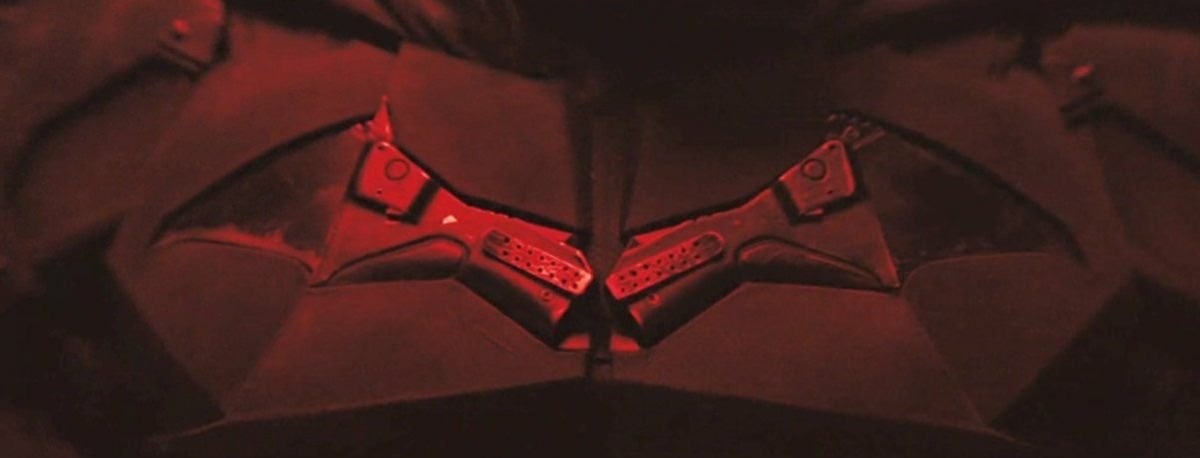
The Batman by Matt Reeves is one of the most important and influential movies. It is important not because some profit expecting comic book franchise is trying to reboot their most valuable asset in order to establish the character so as to drive the future narratives of the stories which will be getting introduced in the near future but it stands important because of the fact that it shows mirror to us as a human dealing with the nature of truths we are taught. The Batman by Matt Reeves is not a superhero movie, rather it tells the story of a person who discovers that all of his life decisions which made him who he is today were based on the lies and his journey out of these lies. It is the story of the batman ‘unlearning’ the facts he accepted throughout his life about his parents.

There will be some spoilers hereon in the discussion, WARNING! Watch the movie and get back again or never mind.

We all know the origin story of the Batman, the murder of his parents by a goon for few amount of money influenced his life decisions creating a strong hatred for the injustice and idea of punishing criminals with violence for their deeds. That is why he considers punishing the criminals and goons in the Gotham as a way to avenge the murder of his parents. Hence the reason the Batman of Matt Reeves always introduces himself as ‘Vengeance’ in the movie. Vengeance is the foundation of the Batman in this movie based on the fact that his parents were the innocents who fell victim to the disorder and crimes of the city. This is the truth of the Batman as a character. You will see the Batman and others (mostly Cat woman) calling him as vengeance throughout the movie.

The movie builds upon a series of murders done by the Riddler and sending one by one love letters to the Batman in each investigation to reveal various political, personal lies which were told to the people of Gotham city to maintain the power concentrated in the hands of bunch of people. These people used the power for personal gains only, thereby creating chaos and distress in the Gotham city. One-by-one murder of high-profile persons from the Gotham city administration and judiciary system finally reveal that the parents of Bruce Wayne- the Batman and especially his father was also one of the persons who was responsible for the downfall of the Gotham city.

The moment when the Bruce Wayne knows the truth that his father – Thomas Wayne was also one of the high-profile people who created the foundations of scams, frauds, unreliable charities, unreliable city renewal projects and fake drug raids in order to win the people of Gotham, the whole idea of him avenging the death of his parents, being ‘Batman’ seems useless to him. The truth reveal becomes an attack on his identity when he knows that his father- whom he used to consider the noblest of all- his role model was also trying to hide the truth about mental illness of his mother to maintain his political image during elections and his attempt to prefer illegal acts to control that ‘information’ completely shatters the idea of what made him the Batman.

There are two types of truths that the movie really focuses on- the white lies and the black lies. The white lies are meant to be harmless to the listeners like the parents telling a child not to misbehave otherwise the boogieman will come and get them. The black lies are the lies which are meant for the benefit of the person telling them. The company leaders telling investors misleading profit and false business models to get people invested more in their companies and thereby bubbling the company portfolio are the examples of black lies (read more about the Fyre Festival, the Theranos case).

The lies like the greatest drug raid GCPD carried out in Gotham city to eradicate the drug abuse in order to publicize the mayor-elect, the Gotham renewal fund which was meant to uplift the social infrastructure was actually a money laundering scheme- were the black lies for the story. Thomas Wayne having a clean family background was the black lie for the people of Gotham city.  

But there comes a moment in the movie when Alfred confronts the Batman- Bruce Wayne for the reality of his parents that some lies are essential for the well-being of the person and the society. It was a sincere and innocent attempt of Thomas Wayne to hide the truth of Martha for the well-being of families and his love for her which created this ‘white lie’. The white lies with which Bruce Wayne grew up with, brought the best out of him – making him to fight for the ‘Justice of the people’.  

As a human being we are what we believe in. Our personalities are built by the facts that our surroundings impose on us. It becomes really difficult to accept the that whatever was told to us our whole life was a lie. Humans do not accept these truths and try to find the ways to move away from such truths. People also try to find the groups of other people who support the similar ideas so as to run away from the truth. Our brains cannot handle such type of clashes because these lies (truths of us) are the foundations of our being. Psychologists call this as a ‘cognitive dissonance’. It refers to the mental conflict that occurs when a person’s behaviors and beliefs do not align. It may also happen when a person holds two beliefs that contradict each other. This is what suffering is. Our mind tries to avoid such sufferings and existential crises. Colin Stokes- a famous TED Speaker and writer in ‘the New Yorker Magazine’ discusses this in a very effective way in a TED talk.  

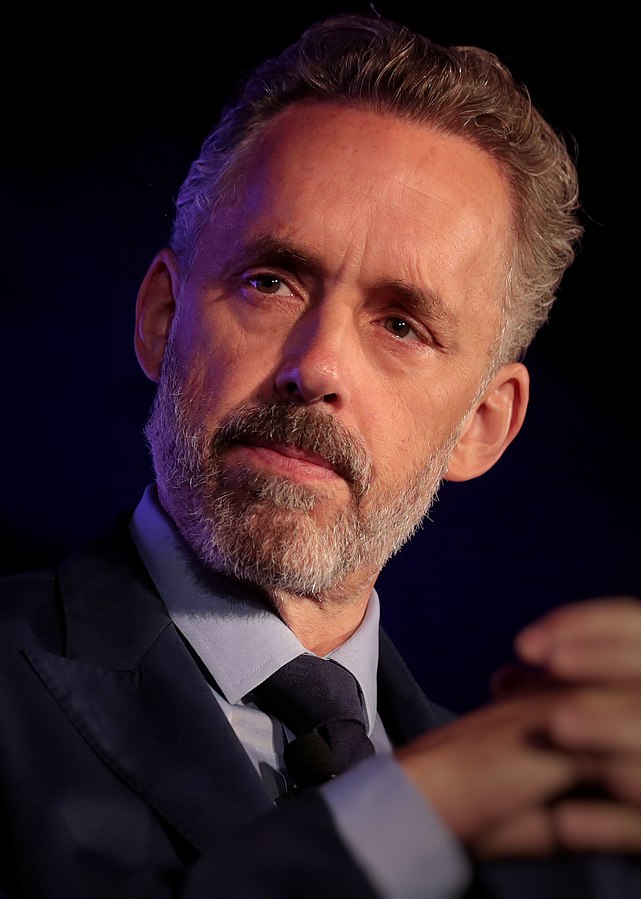
But you know what, one cannot run away from the truth. The truth always finds its way. Jordan Peterson in his lecture has said the following about the nature of a lie-

“Problem with lying is (it’s) like hydra, it has one of the consequences that you expect you can get away with it but it has 3 or 4 others that you don’t expect so it grows some complexity then you have tackle lie on each of those ‘complexity-o-crops’ and then they grow three more complexities and soon this little lie turns into a great Ball of lies, and at some point, it becomes painfully evident to everyone.” -Jordan Peterson

Peterson also quotes Mark Twain about the advantages of telling the truth-

If you tell the truth, you don’t have to remember anything.

This is what roughly lies between the truth and the lie.

Now, let us have one reality check.

According to the scientific studies, a person lies twice a day on an average. The lies are innate part of our personal and social interactions. If a man doesn’t tell lies to his wife about that dress being beautiful on her or her hairdo looking stunning, how could he stay alive otherwise! – Jokes apart. There is one scientific study available in ‘arXiv’ maintained by Cornell Tech which implies that white lies can truly build the society, ‘glue’ it together while the black lies fragment- break the society. Same thing is seen in the Batman movie. The black lie actually leads to the chaos in the Gotham and increases the people’s following to the Riddler.

We humans have actually mastered the art of lying for the mere being of survival. If such small harmless lies are such inseparable part of our life, then how could one handle the real lies which have made him/her the way they are! How could they change the course of this ‘fundamental’ and ‘learned/ believed throughout my entire life’ thought process?

One lie leading to other one to ‘cover up’ creates a series of misinformation and chaos which has different impact on different people causing them to make different choices. This is the reason we can see that the same lies affect the decisions made by Batman and the Riddler. As Riddler tries to convince Batman that they both can enjoy ‘the reveal’ of truths as one group and purge the whole Gotham city off of all the criminals, he is also willing to accept the harm being done to the innocents as revealing the truth is more important for Riddler but Batman has different ideology.

This is the moment which sets differences between Riddler and Batman. Though having almost same backgrounds and same intentions, same fight to eradicate injustice- Batman doesn’t accept Riddler’s offer knowing that he is also part-victim of these lies.

There is this moment in the third act of the movie when one of the Riddler’s followers when asked about his identity calls himself as ‘Vengeance’. It is in the same fashion the Batman introduces himself. This is the moment when the Batman realizes the consequences of the white lie and how you cannot convince everyone for the white lie (it is a lie after all). He understands in this very moment that act of avenging his parents by punishing the criminals of Gotham is not only spreading the fear for him thereby the fear for ‘Justice being served or their moment of reckoning’ but it is also creating some bad examples for the people who are aware of only the black lies. They are not made aware of all the white lies and in some sense, even when someone tries to tell them the intentions of white lies, they won’t be in a position to understand it. This is the nature of lies. Black or white- a lie is a lie.

Then, what makes the Batman and Riddler or his followers differ?

I think that it is the process of unlearning and thereby accepting the truth.

Unlearning can simply mean discarding the false information which was till date responsible for the foundation of who you were and rediscovering the same things with new perspective, rediscovering what that lie was hiding. The batman unlearns ‘the truth about his parents’ told to him from his childhood. He understands that however bad/ugly it may seem, it cannot change what he is today. That is why our Batman in the third act accepts that the ‘Vengeance cannot change the past’, it will not change the fact about his parents, it won’t even bring them back. Hence the reason our Batman in the end of this movie expects himself to become a ray of hope for people (and not vengeance)

Batman clears off his mind of what is right and what is wrong. He makes the notion to save the people of Gotham as a primary goal rather than displaying himself as vengeance and punishing the criminals. He brings himself out of the shadows, it is greatly and symbolically highlighted in the moment when he sacrifices himself to save people from live electric cables and when he lights up the torch to bring the people out of the floods.  

This process of unlearning of the Batman, the journey of Batman accepting the ugly truth of his past, his journey inwards in ‘this’ Matt Reeves adaptation makes the story so special. It is the reason why even though many villains share similar intentions, pasts, personal acts with the batman they cannot become the Batman.     

We all have similar type of moments in our life – when the truths we were built upon, when the people we follow, the people we admire, the ideologies we accept as the ultimate truths prove out to be false, wrong. I think these are the perfect moments, perfect opportunities to redefine ourselves, to again question the nature of who we are and the purpose of our being and the influence, the example we are creating in the world. This is the chance to unlearn the same things around us. It is this suffering, the inner battle which we have to endure to learn the real truth. David Brooks, a famous Columnist says these sentences in his TED talk to highlight our dealings with the suffering of realization of the lies that made us- “Suffering’s great power is that it is the great interruption of life. It reminds you that you’re not the person you thought you were.”

This, I think is the power of storytelling for the Batman Movie. Even though he is a superhero, there is that connect between the Batman and we as a human beings which creates an emotional common ground for everyone to connect with each other.

References:

  1. Jordan Peterson – Side Effects of Telling Lies
  2. What to do when you learn that everything is a lie: Colin Stokes at TEDxBeaconStreet
  3. The lies our culture tells us about what matters – and a better way to live: David Brooks
  4. Simulations Reveal How White Lies Glue Society Together and Black Lies Create Diversity – MIT Tech Review
  5. Cognitive Dissonance – Dune : Psychology in Science Fiction

Connecting money with sentiments – Behavioral Economics

Behavioral economics established that humans are humans, they have emotions. They make mistakes and misbehave.

Human beings are the epitome of what evolution has done with the earth. Starting from the stone age to the age of AI, we had a long journey of continuous adaptation. The development of various tools like weapons for hunting to the machinery for industrial development to the ginormous simulation engines to simulate space missions are to name the few. The common thing between all these tools is that these tools are made from the resources available around us. From developing the hunting spear from the stone and a stick of a tree to making the computer chips from the silicon from sand and stones, we have mastered the use of resources around us. This became possible only because of the development in our abilities to manage our resources, our techniques of handling the available materials which we can closely connect to economics. Barter system used for trading things, development of metal currency, then paper currency and now the cryptocurrency – the journey is phenomenal. Economics deals with how we manage the resources and we all are clear that these resources have one agreed medium of transaction called currency, money.

Most of the people perceive economics as a boring subject, where you develop some theories and mathematical models to predict money trends. The models may agree with some datasets, may break down at some points implying that the field is full of biases and assumptions which are far away from reality and understanding of common public. There is this joke about economists:

– Why did God create economists?
– In order to make weather forecasters look good.

Though the joke is really good, many great economists have really shaped our perception of money thereby resources and prediction of the interactions on personal, social and global levels. Today we will be discussing one such stream of idea which revolutionized the perception of new economics though the idea was already present deep down in the older and starting ideas of economics and psychology. Before that we will need some foundation to start with.

Classical Economics

Adam Smith also known as father of Economics has this book called “the wealth of nations” responsible for the development of Classical economics. Classical economics has following ideas:

Competitive advantage – success of any industry depends on how efficiently it uses its resources

Free market – defining the prices of goods by negotiation between buyers and sellers in an open platform without any intervention of government and without any monopolies leading to equilibrium between supply and demand thereby establishing fair price

Division of labor– Defining and separation of tasks will lead to specialization thereby leading to the efficient use of resources to optimize people to enhance their skills and economic interdependence.    

Then came the Neoclassical economics in 1900s which brought new school of thought which aligns with “the rational behavior theory” stating that people think rationally while making economic decisions. Hence, they are ready to pay the price of a thing/ resource based on the value it brings to them.

In simple words, the classical economics believes that the price of any product is dependent its cost of production. Whereas, neoclassical economics believes that the price of product is dependent upon the utility to the customers not its cost of production.   

The conventional nature of economics – the problem

For many years the main idea behind the theories in the economics is that the people are rational while making any decision related to money. Every person exposed to a product/service has well defined preferences and unbiased ideas and expectations. These unbiased ideas make people to choose whatever is the best for them.

These ideas in the conventional economics lead the economists to formulate and study economics mathematically as inspired from the physicists. Physicists theorized an idea and based on the mathematical principles developed models which can predict the nature and behavior of objects- from a ball to the motion of planets around the sun. Hence, in economics you will find many complicated mathematical equations and wild correlations (a correlation is degree of dependence of two datasets). One funny representation is as follows, somebody found out that the there is strong positive correlation between the pool drowning deaths and movie releases of Nicolas cage. So does that mean that people were so fed up with nick’s movies so that they preferred drowning over his films. Definitely No! I am a fan here.

Here is one more:

There was this funny correlation that the skirt length was related to the stock market movement called ‘the Hemline theory’. A theory saying that stocks prices move in the same direction as the hemlines of women’s dresses. For example, short skirts (1920s and 1960s) indicating bullish and long skirts (1930s and 1940s) indicating bearish markets.(!)

These are some of the reasons why the economists and their models remained part of funny discussions. This was one of the reasons why many economical models were applicable to limited datasets. The problem is not about the flaws in these ideas, the problem is that many big financial, political, life altering decisions were made based on such theories and models.

I mean these models were not completely wrong; nothing is perfect, there is always room for improvement.

Quest for establishing the correlation between human behavior and economic theories-

When economists were in the establishment of mathematical foundations of the subject causing their economics to reflect the equations and theorems, the psychologist directed their studies more towards experimental approach for the development of psychology. Their theories were more of verbal and theme based, that is also the reason why you can find psychology as a set of vocabulary itself.

Psychologists in some sense developed the ideas about how we interact with others and materials, resources around us. What affects out decision making when we interact with each other and things in our surroundings.

Some of the famous Psychologist had already tried to establish the connection between the ‘machine-like’ economic theories which strictly followed some equations and the real emotions, sentiments that make these economic models unfit with the reality. Their ideas helped us to find the reason why money does not strictly follow the strict optimized and high output giving trends. The reason does not lie in the money, it lies in the nature/ sentiments of the people who drive the money, the people who sometimes choose other things over money.

Richard Thaler, Daniel Kahneman, Amos Tversky, George Katona, Herbert A. Simon these are some of the notable names which have strongly influenced the ideas of behavioral economics.

The dawn (rather awakening) of the behavioral economics  

The basic idea of behavioral economics establishes that we humans make mistakes and most of our decisions are emotion and influence driven. People are not always rational. After are we are humans. Humans are flawed (!) hence don’t follow machine-like strategies. People love to mis-behave; they love breaking the rules.

Expected utility and Prospect theory-

According to expected utility theory in conventional economics, people will choose gambles which give highest outputs whatever may be at stakes. It says that, people take money related decisions based on the maximum future value it will bring to them, whatever will be the conditions. It’s like a person buying a lottery ticket.

If a person buys a $1,000 lottery ticket with $10 and the probability of winning is 10% then he thinks that the utility or value it will bring to him will be $1000 x 10/100=$100.

But you know how lotteries work. If the same ticket has winning probability of 0.5% the expected value becomes $1,000 x 0.5/100=$1,000 x 5/1000= $5, which is already less than the money it takes to buy that ticket. Here the expected utility is far less so the person won’t buy the ticket.     

The value of the lottery ticket became high due to the higher winning probabilities as the expected utility of that ticket is $200 over ticket price of $10.

In simple words, expected utility theory says that people take the chances and decide the value based on the its probability. More the probability of winning more it will be favored.

Kahneman and Tversky created ‘Prospect theory‘ which challenges the Expected utility theory. According to prospect theory it is not just about more probability and less probability of winning, it is also about the situation in which decision maker is; this called as a reference point. Other than winning or losing, a new condition is created which we can call as a reference condition. If the same lottery buying person is given the choice of

A. Getting $100 immediately

OR

B. Having 10% chance of winning the same $1000 thereby 90% chance of gaining nothing      

The same person will choose to get $100 immediately and walk off. Here the person did not choose the expected value of $100 rather, the person chose the instant benefit that he got, the person saw less risk in option A although the person may have won $1000 from the lottery, but chose to avoid the risk.

This is also famously known as ‘Loss Aversion’.

In simple words, losing $100 hurts more than winning $100. We as a human always try to avoid higher risks options and make ourselves safer. We always try to make the decisions closer to the reference points created by out experiences, assumptions. We try to “break even”.

Exponential discounting and hyperbolic discounting

According to exponential discounting (in classical economics), the value of any gain declines equally with time period it is delayed.

Here are two cases:

P. Getting $100 today over getting $110 after a week

Q. Getting $100 in 10 weeks or getting $110 in 11 weeks

A rational person will behave like an adult and will chose to wait for 7 days to get $10 more- just like a sincere (!) person. Whatever is the case- either P or Q the wait is same (waiting for 7 days) and gain is same (gain of extra $10) both the Case P and Case Q have same discounting rates, same rate of losing the value. This is exponential discounting

But what would you have done when provided with case P and case Q?

Behavioral studies show that people always go for instant benefit and chose $100 today in case Q whereas they are also ready to wait for one extra week if they are provided with only second case (Q) where the time-frame of gain is expanded. Means, people are selfish! They want this and that too. We always seek immediate rewards, instant gratification. No doubt social media is the living proof of this.  

Social Preferences

The behavioral economics says that people not only just care about what they are getting, they also care about what they are getting compared to others. (That might be the reason, your HR department instructs you not to ask for the salary details of your subordinates, colleagues, seniors!)

Consider a game where one person out of two people is said to divide $100 between them and they both will get those $100 if and only if the second person agrees to whatever share she/he receives otherwise, they both won’t receive anything. The rational choice for the second person is to accept whatever she/he would receive. Whether she/he gets $1 that too is acceptable because she/he had nothing ($0) before. Having something should be better than having nothing.

But in reality, and discovered from real life observations- people always try to reason with overall situations. People compare their gains with the gains of others, thus the above said second person in reality will only agree only if they both break even otherwise, she/he won’t accept the offer knowing that they both won’t get the money. This is really observed in studies and is funny.

Conventional economics considers people as a rational choice making machine. They always know what they are doing. It’s like for every human being is an economic optimization machine what economists call ‘Homo economicus’. Here people always make rational decisions, thus follow specific mathematical models based on a set of variables. Also, there is one idea called Becker conjecture which says that the people in the top management (politicians, leaders, chief directors, executives) always know what they are doing, they are always accurate on the probabilities of the outcomes. They always behave optimally.

In contrast, Behavioral economics established that humans are humans, they have emotions. They make mistakes and misbehave. They are not ‘Homo economicus’ implied as always thriving for optimizations. They are humans – ‘Homo sapiens’ implied as imperfect and prone to mistakes. There is no such human behavior where everything will cause to balance leading to establish equilibrium. There is always evolution when it comes to being human. They learn from their mistakes change themselves, adapt and evolve instead of being stagnant as in equilibrium.

(There are many interesting concepts in Behavioral economics like impact of Game theory, Supposedly Irrelevant Factors (SIFs), Difference between Equilibrium and Evolution, Roots of Behavioral economics in Classical economics, the endowment effect, social utility and those will be the topics for another day!)

References and further reading:

  1. Misbehaving: the making of behavioral economics by John F Chaves (Psychiatry)    
  2. Behavioral Economics: Past, Present and Future by Richard Thaler (American Economic Reveiw)
  3. Behavioral economics: Reunifying psychology and economics by Colin Camerer (Proceedings of the National Academy of Sciences (PNAS))
  4. Behavioral Economics Comes of Age: A Review Essay on “Advances in Behavioral Economics” by Wolfgang Pesendorfer (Journal of Economic Literature)
  5. Adam Smith– Wikipedia
  6. Richard Thaler– Wikipedia
  7. Daniel Kahneman– Wikipedia
  8. Amos Tversky– Wikipedia
  9. George Katona– Wikipedia
  10. Herbert A. Simon– Wikipedia
PS: One should really try to compare the concepts discussed here with the characters Walter White (As Classical economics) and Jesse Pinkman (As Behavioral economics) from Breaking Bad. You will get the idea, plus it will be fun!
Walter and Jesse from Breaking Bad

Nostalgia- The romantics of past

Remember the video game that you used to play in your childhood? The game cassette claimed 999999 in 1 but it was few games just repeated may times and you still enjoyed playing with them. The times were simple, we used to trade the Pokémon cards, WWF trump cards. Speaking of WWF- every boy in the school knew the story of rivalry between the Kane and the Undertaker still being brothers, how many times the Undertaker had reborn. We had that red-blue eraser which could supposedly erase both the pen and pencil writings. Everyone had played that pocket brick game bought from the local fair at least once. Tom and Jerry, Popeye, Looney Tuns, Beyblade- these were some of the favorite cartoons and who could forget the Power Rangers- they were the Avengers of our times. Spiderman was present on every possible school stationary that you could have- starting from the school bags, water bottles to the pencil boxes and textbook stickers. Those were the days! These days bring back all those fun we had, reminding us that even though they cannot be brought back, which is sad but still we are happy that we were able to experience them.

Nostalgia- The ride down the memory lane…

The concept of nostalgia has traces 3000 years back when it was related to a mental disease closer to depression or melancholy. Nostalgia is made up of Greek word νόστος (nóstos), meaning “homecoming”, and ἄλγος (álgos), meaning “pain”. The later stages when the psychology became more experimental the Nostalgia was less of a disease and more of a complex emotion.

The feeling of nostalgia is closely related the reminiscence of memories evoked by the stimulation of our senses. You smelled- tasted something good, listened to that catchy tune and suddenly remembered the days you used to enjoy the same feelings in the past. The memories we remember are the main media-vehicles for the nostalgia. You have this flood of emotion when you suddenly remember ‘the good old days’, ‘the fun you had’, ‘the pranks you pulled on each other’ on the last day of the college graduation.

The pop culture- Memes (90% of the meme empire is built on the nostalgia), Movie reboots (Star Wars, Spider-verse), Spin-offs (Again Star Wars!), Music industry (that catchy song present in every Instagram reel), Social Media, Advertisements are the best example of high intensity of engagement created using the Nostalgia.

Nostalgia is all about the memories you reminisce and recalling the good experiences you had. But it is proven by research that when we are remembering something from the past, we are not actually recalling the exact events which ‘happened then’ rather we are remembering how we felt, the emotions we went through, our reactions to the events. Meaning, one common event may create different feelings of nostalgia in different people because these experiences/ reactions are very personal. Hence, we can say that Nostalgia is relative. Roughly Nostalgia has been classified as Personal and Historical. Personal nostalgia we are all clearly aware of- these are highly connected to your own experiences. Historical nostalgia is one beautiful thing. It is the yearning for the past, times in history that you haven’t actually lived through. These are the times in history you are exposed to through reading, by listening to the stories from the people who lived through it- like your stories from the times of your grandparents, the media you consumed (the 80’s songs, Classic movies, Classic novels). There is a word for this called ‘Anemoia’ meaning nostalgia for a time you’ve never known. This clearly shows that nostalgia is not about the moments happened in your life it is about how you felt through them.

Nostalgia most of the time is observed to be a positive emotion but it can sometimes make you sad too (which was the backstory behind naming the emotion as ‘nostalgia’) Being a highly social emotion nostalgia is a double-edged sword, a boon and a curse. When you are with the group of people who shared common experiences- the nostalgia becomes the glue which will hold the group the together, strengthen the bond between your group. But if you do not share the experiences in a group then the nostalgia brings in the hostility and feeling of alienation. If you sat down with the group of seniors who went to this great adventure tour and you were not with them. When they will discuss the fun they had, you will instantly feel out of the zone and alienated. Because you hadn’t shared the experience with them. Here nostalgia creates a negative influence. These type of negative influence of nostalgia can be easily erased by involving the other- new person into the similar type of experiences, by asking her/him about same emotions they have experienced thereby creating a bridge between their experiences and your experiences, their nostalgia and your nostalgia.

Some nostalgia may wake the feelings of distaste, hatred within you. This is how most of the political campaigns are carried out. Remember the times the inflation, fuel prices were ‘this’ much high, remember the times ‘these’ inhumane acts happened. Most of the nostalgia brings back the feeling of good times this is how popular culture creates revenue. Those movie call backs, the ‘Easter eggs’ which can keep your conversations on and on are here to be mentioned.

Researchers indicate that the current times of social media have intensified the effects of nostalgia. Though the social media, internet has brought the world closer, we are always lacking the physical interactions between the world and the emotions generated by them. These very personal responses/emotions are the foundation, the seed of nostalgia. Hence the reason you can say why people are so much engrossed in the alternate realities, virtual experiences, virtual worlds. That is the reason people want to run away from the real world. Millennials are the best examples of this. So much that we have Thursdays (TBTs) assigned especially for the thing!   

Does that mean we as a human enjoy dwelling in the past? Is Nostalgia a positive feeling or a negative feeling? The answer is both Yes and No.  

We humans love patterns, repetitions. Patterns indicate familiarity, safety, predictability. The predictability gives us the feeling that we have control over things thereby comforting us, giving us the feeling of safety, which was an important aspect of our primitive brain considering the survival aspect. The change invites unpredictability, loss of control over things thereby invoking the restlessness, indecisiveness which consistently eats us. Here the role of Nostalgia becomes important. Because we are constantly changing, the feeling of nostalgia takes us back to our past and makes us realize who we were yesterday, who we are today and who we will become tomorrow. Nostalgia is that calibration our brain performs to somewhat adapt to the change happened and make us ready for the upcoming change. Remember the moment you achieved something and you go through all those hardships and fun you had- you are happy remembering them and you now know what they have made you and the things that will follow after this moment. 

Nostalgia is that bittersweet emotion as researchers call it. It is the amalgamation of our past, present and future. It makes us aware of how far we have traveled and what the future will bring, which in some sense is the part of life where change is the only thing which is constant. Nostalgia is the emotion which easily creates a common ground for bringing people together, strengthening the feeling of trust.

Further reading: