The Essence of Nominalism

Is happiness, love – sadness, hatred just the names we have given certain things? Is that why after achieving something great we fill empty and become clueless about what’s next? Is there something common, universal, essential characteristic shared across things that create reality? Or are we just putting labels on things so we can put them in our brains effectively?
Nominalism says that there is nothing common shared between all the objects existing in reality. Love could be anything for anyone, you cannot pinpoint an object absolute, consistent and repetitive nature across reality and put it in a box and call it love. Same for hatred. Nominalism thus sheds light on how things are more than just their labels and why it is dangerous to chase things if their labels/ tags are the sole motivation for you. There is more to reality of things we are chasing than meets the eye.

Are we just chasing labels, tags in life until we die?
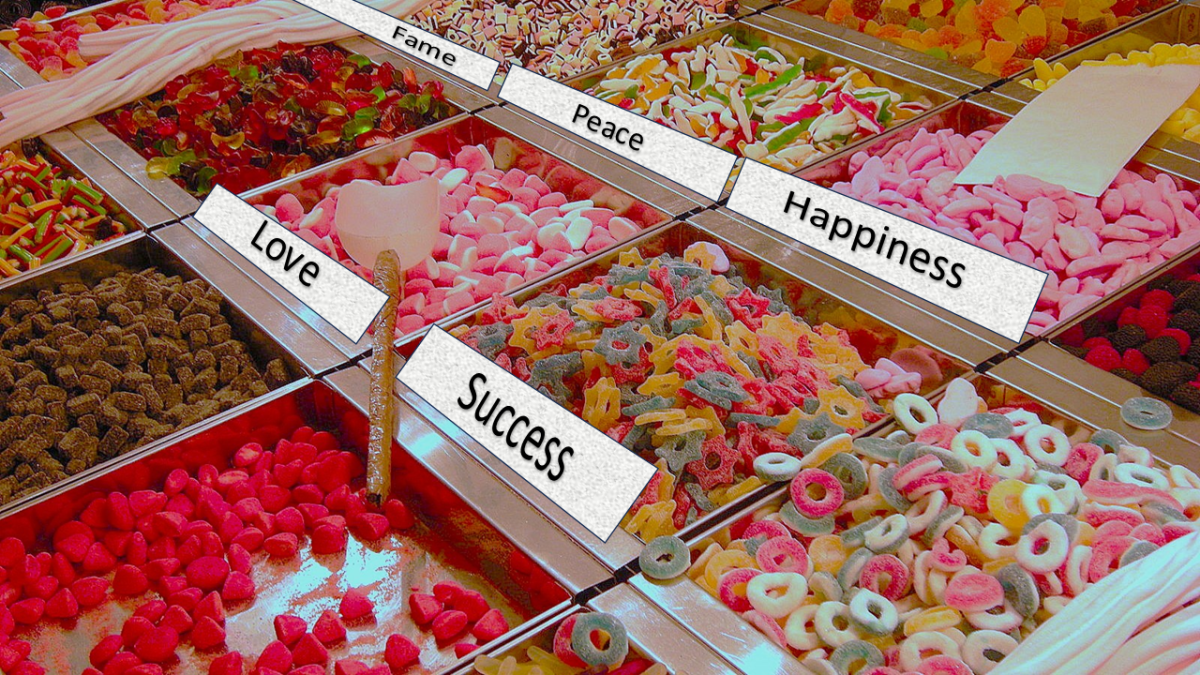
Question- What does Success, Love, Happiness and God mean to you?

Is Reality Same for Everyone?

Do We Share a Common Reality?

Human intelligence is one interesting thing. We can perceive things in better ways, classify them, observe them and use all those understandings to predict the outcome of events in satisfactorily good way, we can create non-existent things out of current given resources which elevate the ways we carry out our living – our lifestyle. The ability to develop various fields of knowledge and understand the reality is the basis of human civilization.

So, we can say that anything which gets distilled down to a specific understanding – an understanding which is consistent throughout our existence can be called as knowledge – knowledge with experience further gets distilled down to wisdom. Even though the knowledge of certain things is not consistent we at least know why it isn’t consistent or we have a well-rounded explanation that ‘this’ is an exception with fair justifications. Knowledge helps us to perceive how the things, ideas around us can be used to build things, the life we want.

The ability to see commonalities and differences between things, objects, ideologies is one important part of how we build our understanding about reality in which we exist. We have notions of right and wrong, black and white, past, present and future, tall and short, thick and thin, good and evil, strong and weak. These attributions help us to identify certain common aspects in things and certain uncommon aspects in the same things.

So, when I am saying Rose – you will understand that I am talking about a flower which looks red, has a particular fragrance. Words thereby names are at the core of how we build knowledge of the surrounding and the reality.

There is one more interesting thing happening here –

When I would say Rose – it is a possibility that someone would understand it as a girl he/she knows, someone would imagine it as a color which somewhat is red but richer in shades, someone would imagine the prickly thorns instead of the gentle nature of the flower.

What’s happening here? The moment I am trying to specify something – some object with a word – a name which shows some common attribute that object shares with others, in that same moment I am failing to describe that object, that idea in its complete capacity.

In our example, the word Rose on surface seems to indicate just a flower, but Rose could mean almost anything to anyone. Rose is just a simple object we are talking about; now imagine how would we define the reality we live in? The reality is multifaceted. People have different experiences, meanings, understandings of reality based on their personal experiences. Does that mean that there is nothing common between the reality we live in? Do we live in our own realities?

Does that mean that words assigned to the things are not what the things are? That the name of objects are just names? Everything that is there is one and only individual rendition of its own? If nothing is same then how do we agree on something common and set our lives to that way? How come we agree to certain religion and follow that? How come we agree that certain things are bad and we should avoid those? How come we appreciate what is happiness and try to achieve that in our existence?

I mean what if happiness is just of name something and goodness is name of the other which does not exist in reality and we are just blindly chasing it? (and we don’t even make out of it alive in the end!) What if we are just chasing names and “there exists nothing like it” – is our realization when we actually achieve that?

Is “the reality” really made of something very fundamental and shared qualities? Or are we just carrying our lives in the chaos of dissimilar (but seemingly similar on surface) things? Even though we call ourselves as humans how come some humans create examples out of their lives that they don’t deserve to be called as humans? How come some humans are so great that calling them humans is disrespecting their life?

Is there something really common among everything or are we just labeling things on whim (or intentionally) to solve the confusions of our minds? Are we living in a matrix and reality is totally different place than where we exist? Are hell and heaven more real that the earth we are living in?

Have we been robbed of the real understanding of reality and cursed to live in an illusion called life?

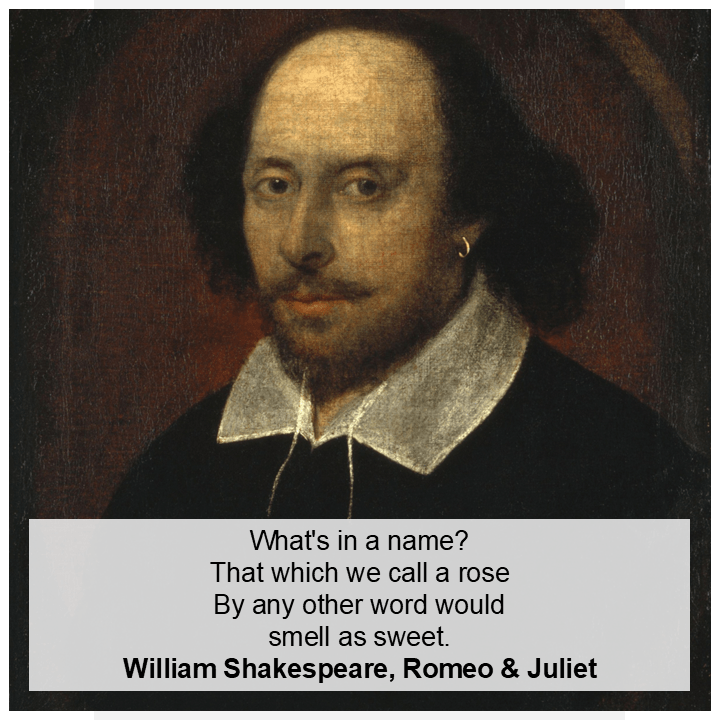
I mean I could have called the Rose an egg right from the beginning and everybody would have been fine with it. It’s just that now the egg is a flower, has red petals, has thorns and has fragrance. (Shakespeare would have also used egg for Juliet’s dialogue and everybody would have been fine with it. As everyone now knows and agrees what an egg is!)

Now you should appreciate how strongly we are conditioned right from the beginning. Calling an egg a Rose feels unnatural but if someone right from the beginning of the beginning would have called it an egg, we would be comfortable with egg in Shakespeare’s dialogue.  

Is there really anything like “Red” color, “Grey” color?

A simple experiment

Look at the picture below:

It’s easy to tell that the cube has one white and one grey colored side.

Now see what happens when I put a blind along the edge of the sides:

There is no manipulation in this image, I have just put a colored box to hide the edges. You can blind the main image with finger and see the same result.

This is popularly called as “Cornsweet Illusion” or “Craik-O’Brien-Cornsweet effect”. This illusion works because our brains try to fill the unavailable information to make sense of the things observed. In this case of the cube example our visual interpretation system tries to determine the edges/ sides of the object by the sudden changes in the illumination of the surfaces.

From this example, you can appreciate how our brain tries to fill in the gaps between the information we are collecting.

Does that mean that there is nothing like what I call grey or white? that there is something totally different for which I am yet to assign a name just to make its identification easy. If that is the case, then are we just naming things in the name of knowledge and don’t have actual hold of the reality? Are we just pretending to be smart just because we can name the things?

Keep in mind we are not simply talking about naming things. If my brain tries to fill the gaps by itself to create a sense of understanding, some part of truth or reality which I carry in my beliefs – are they real or were they some gaps filled by my brain itself?

Following the same train of thought, here is an important question –

Obviously, no one by birth knows what is the “real” nature of reality is? (Otherwise, we would not be discussing all this). You will see that people know reality for how their life experiences turned out to be. They know what reality is, but not all have one singular, absolute concurrence, alignment and unanimous opinion about the nature of reality.
An important idea in philosophy called nominalism tried to question reality in this way (there is a part when the opposite of Nominalism is Realism! I will cover realism in next post). For that we will try to understand what Nominalism tries to solve.

Is there something common characteristic shared across things that create reality? Or are we just putting labels on things so we can differentiate?

Nominalism – There Are Just Names No Essences

William of Ockham is the guy responsible to popularize Nominalism in philosophy although he is not the originator of it. Ockham’s Razor is one very mainstream idea still useful in our pursuits of knowledge. I have covered Ockham’s Razor in separate post.

I think, it is a high possibility that Nominalism and Ockham’s Razor have strong connection not just because they were popularized by the same person but how they align themselves with each other to create a consistent argument.

Ockham’s Razor goes like this –

“Plurality should not be posited without necessity”

In simple words, do not interpret, do not deduce unnecessary things unless they are presented or experienced. (I have somewhat twisted the meaning to align the Ockham’s Razor to align with the train of thoughts and there is hardly anything mistaken here.)

My purpose to rephrase Ockham’s Razor is to connect our brain’s habit to fill unknown gaps with our pursuit of the real nature of reality we live in.

Nominalism thus calls out for the reality which individuals experience for themselves. There is nothing common between the life that we are sharing. Every object existing is an individual, special object in itself. Objects never share something common between them, it may be just our brains filling in the unknown gaps to make sense out of reality and have peace of mind. The labels like Red, Love, Justice, Truth, Loyalty, Happiness are not physical entities, absolute entities which exist in reality. We have created these labels so that we can sort certain thing in certain groups to create a model of reality in our energy optimizing brains.

This is really important point – that things we call real are just labels given by us. A Rose could have been an egg from its creation and nobody would have objected it.

Consequences of Nominalism

Nominalism – in simple words says that there is nothing common shared between all the objects existing in reality. Love could be anything for anyone, you cannot pinpoint an object absolute, consistent and repetitive across reality and put it in a box and call it love. Same for hatred. Same goes for the notion of beauty, fear, justice, truth and what not. Justice is not some type of molecule or an element which can be physically hunted, mined, rigged in reality. It is a label we have created for certain way of things. But, upon full magnification we will see that that certain way of things grouped together are highly individualistic – seeming that they are not same in any way.

Nominalism pointed one interesting observation – the things exist in their individual ways; we are just labeling certain aspects of them so that they can be grouped together or compared against one another.

Do you understand what this leads to? For me it is chaos.

It means that there is no such thing like love, justice, joy, happiness, affection, truth, utopia, passion, enthusiasm, redness, whiteness.

It also means that there is nothing like hatred, unfairness, fear, sadness, fakeness, lie.

These are only labels we are chasing in some scenes and in some scenes running away from or avoiding.

This leads to the conclusion that there is no pivot to the life we are living and the reality in which we exist. This is unsettling – this unsettling feeling leads to existential crisis.

One can here say that Nominalism bridges Phenomenology and Existentialism in better ways in philosophy.

Phenomenology talks about objectively understanding and interpreting reality through subjective experiences. (The one where objective and subjective appear in the same sentence!) It calls for the truth to be one which is realized through personal experiences – phenomenon happening with the individual.

Existentialism talks about the idea that there is no center or pivot to the reality we live in. This is a freedom in such an intense dosage that if we are not creating our own pivot for our own life the sheer possibilities emerging from freedom will overwhelm us concluding that there really isn’t such meaning or sense to life.

Nominalism says that there is no real common thing which can be distilled down between seemingly same things, things were never the same – there is no “essence” which exists across certain seemingly same things. There is no such thing like “universal” which is consistent across the objects in reality. Everything exists individually on its own. One has to experience things for themselves to see their real nature.

It is just your urge to rationalize things so that your brains will save energy. Rationalization is all about making sense of the things, and if everything has its own way of being our minds cannot store each and every aspect of those individual things all the time, thus we have resorted to the pursuit of “essence”, “universality” and hence “labels”.

Conclusion

William of Ockham’s Nominalism from medieval philosophy is reiterated in modern philosophy through Existentialism, Absurdism.

Jean-Paul Sartre – the French Existential philosopher thus talks about how labels are always fooling us. We think our life made to be defined by the achievements of certain labels where upon deeper inspection we see that the labels are mere a creation of our minds, they are how we interpret reality. They are not reality in themselves. Reality was already there even when labels were not there.

This is how Sartre call out Existential philosophy – “Existence precedes essence” and not the reverse “Essence precedes existence”. The later one is just a construct of our mind to create meaning in this meaningless world.

The very freedom granted to us becomes our enemy because we are clueless when we realise that we can do anything. This is where Absurdism peeks in.

Boundaries of Nominalism

There will be different reactions to the explanation of nominalism and that itself will show you how varying types of people exist and their individual renditions of the reality. But interestingly you will find “type” of reactions in people.

One will not immediately agree but everyone on deep inspection will accept this that we always crave for justification for everything that happens with us, it could be in our favor or against us. We crave for justification which will bring peace to our mind, in happiness this peace will amplify happiness and in challenging situations it will give us something to blame.

Once you start appreciating our habit to justify every damn thing you will suddenly see that Nominalism is pretty much good concept in philosophy. Nominalism when says that essences, shared attributes are just labels and nothing real, it warns us that the justification you are trying to give for your situation might just be your construct of mind and not real. Nominalism feels attractive because it feeds attitude of skepticism, which is the first tool of the person in the quest for the absolute truth.

On the other side, nominalism has its innate limitations too. If nominalism is true then it is not there as nominalism itself is our “labeling” to the concept of “not labeling everything together”.

This is where paradoxes begin. If there really was nothing common “essence” among certain grouped things, then it was impossible to group them in first place. So, essence must exist already (this feels even more paradoxical.)

We will search for resolution of these paradoxes in next post on Realism.

Related reading:

A Trade-off Between Simplicity & The Reality

Lifelong freedom for an hour

The societal construct, the men and even the women in society have created certain conditions where other women receive false freedom. This false freedom facilitates women to deliver benefits to society but somehow the society is not liable to return the favor back to these women. That is exactly where feminism becomes important. Kate Chopin’s short story called “The Story of an Hour” gives us a glimpse into what sacrifice and freedom means for a woman. This short story is summoned to be one of the important and earliest pieces of the feminist literature.

The ideas of feminism from Kate Chopin’s short story “The Story of an Hour”

Inception of feminism

Kate Chopin’s short story called “The Story of an Hour” gives us a glimpse into what sacrifice and freedom means for a woman. This short story is called as one of the most influential and early parts of feminist literature. It shows how women in those times sacrificed their freedom under the influence of the society just to maintain and continue the system as it was. People (still today) say that ‘it is very difficult to gauge what is going on in a woman’s head’ or ‘it is very difficult to know what a woman is thinking’. Kate Chopin’s ‘The Story of an Hour’ gives us a peek into a woman’s mind when she is allowed to think what she wants to think. Physical freedom is one part of freedom but mental freedom is the truest form of the freedom, I would say.  

The story of an hour was first published titled ‘the Dream of an Hour’ in Vogue magazine on 1894 later it was republished as ‘the Story of an Hour’ in 1895. We will see why and how this short story represents feminism in its truest form and possibly in the most misunderstood (compared to the modern interpretations of feminism) ways.

Summary

We come to know that Mrs. Mallard is a heart patient who is about to be informed about the news of the death of her husband in a railroad accident. Her sister Josephine and Mr. Mallard’s close friend share this news with her. Mrs. Mallard is obviously sad hearing the news of the demise of her beloved husband. She then teams with some moments of solitude to handle this sorrow. Where she suddenly realizes that she could be free now as she won’t be under any obligations from society and her husband. She feels her rebirth and onset of new life with absolute freedom approaching towards her. She wants to cherish this realization of freedom in her room alone for some moments but suddenly she notices that some person has arrived on door. Upon the request of her sister, Mrs. Mallard goes to see the person at the door and founds that the person is Mr. Mallard – unharmed and alive. She dies in the shock. Doctors diagnose her death due to the heart attack from extreme joy.

Life of the author – Kate Chopin

Kate Chopin was born on 8 February 1850. When she was just five years old, her father died in a rail accident. Her mother was the second wife of her father. In 1870, she got married and had six children in the period of 1871 to 1879. Her husband died in 1882 from malaria and left a huge debt on her head equivalent to $1.27 million in today’s valuation. She worked her ways out to bring the business back to life which she sold after two years. Her mother died in 1885.

Kate became depressed with sudden loss of her husband followed by her mother. Her friend Dr. Kolbenheyer suggested her to use writing as a therapy, a way to vent out and express her emotions and as a way to sustain income.

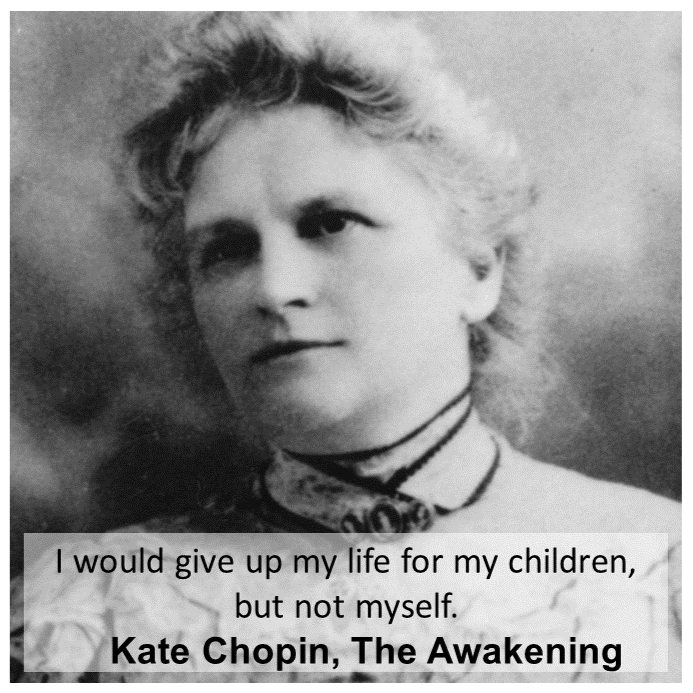
The most important novel published in 1899 by Kate called “the Awakening” was very controversial and scandalous to those times due to unacceptable feminine point of views.

As her writings were considered controversial, Kate much more resorted to short story writing. She died on 22nd August 1904 due to stroke.

Realistic fiction

The genre of Kate’s writing is a realistic fiction. Where the setting of the story is intended to feel realistic. The characters have all human limitations, practical interactions and nothing is stretched out of imagination to feel unreal, inorganic or magical. You will see Kate’s own life is reflected in her writings. People say that one can trace out her whole biography through her writings.

Now let us understand the Story of an Hour.

A woman’s whole world – her husband (?…)

Mr. Mallard’s death in railroad accident is drawn from the death of Kate’s father who exactly died in rail accident. She starts the events in this story from the point of view of her mother in a way. Kate was one of five children her father had and she too had six children. In a way, she resonated with her mother who was responsible for taking care of children. That is why she starts the story with the death of the husband in a rail accident to establish the connect between how her mother would have felt when she heard the death about her husband – Kate’s father.

She thus considers her mother as one powerful woman. Please note that after her father’s death Kate spent her days with her widowed mother, widowed grand mother and also widowed great grandmother who never remarried. Her use of the father’s death in rail accident is actually a setup used to link the emotions of her mother in this story.

“She did not hear the story as many women have heard the same, with a paralyzed inability to accept its significance.”

One will only appreciate the depth of this sentence when they are told about the situation of three generational widows Kate grew up with. The ability of Mrs. Mallard to accept the consequences of the death of her husband is thus the reflection of how her maternal side handled the consequences of the death of the man of their house.

A woman feeling helpless after the death of her husband is the most acceptable reaction even today but Kate’s protagonist not reacting in that way was the first shock to the society of those times. It’s not like she went paranoid and numb due to shock from the news of her husband’s death. Kate’s choice of words in this sentence hence is very deliberate.

Please understand that there is no way to indicate that she hated her husband throughout the story.

So, the initial setup and reactions of the protagonist are Kate’s ways to show that a woman’s life was never only limited to her husband. You should also understand that after her own husband’s death, Kate was burdened with huge death incurred from him. Getting out of such death surely might have made her more practical and objective. That is also an important reason which shows how her protagonist reacts to such news in a practical way.  She understands that it’s huge loss but she also knows that her remaining life is standing in front of her.

Painting the scenery of freedom

The elements used in the early setting of the story ensure the successful impact Kate leaves on the minds of the readers. She gives just enough information about the weak heart condition of Mrs. Mallard and surety of sources for Mr. Mallard’s death in the rail accident.

Then the story solely focuses on the protagonist of the story – Mrs. Mallard.

Mrs. Mallard now submits to solitude in her room. Each and every description of events and objects used hereon by Kate are very deliberate to reflect how the mind of Mrs. Mallard is reacting to the realization of the loss of her husband. She is yet to understand the freedom she is about to enjoy but how she come to that realization of freedom is one such “brain-candy” for the readers. They are not given direct explanation on how the protagonist is feeling rather they are made to feel the exact emotions of the protagonist. That is the beauty of Kate’s writing. She creates a portrait of a scene which readers enjoy interpreting.

So, here goes the scene, every sentence in this story hereon is one hidden urge of every normal human being but especially a woman here:

“She would have no one to follow her”

– indicates a person’s longing to leave life on their terms and without the judgments and prejudices of the society.

“- trees (in the open square) that were all aquiver with the new spring life” 

– indicates a new beginning full of hope, a restart to living life without restrictions

“- the delicious breath of rain was in the air”

– indicates that even air was seeming tasty and ready to sow new beginnings. It is that extreme joy which was buried deep down which got the chance to come out which is making even the air “delicious”.

Please understand that this joy is not the effect of the death of her husband and many readers always connect wrongly. It is innocent joy of the upcoming realization of freedom – just realization -the real freedom has not achieved yet. Just its realization is joyous, imagine what would real freedom would do to our protagonist!

“a peddler was crying his wares”

– indicates high importance given to general and normal phenomenon.

What does a street seller do? He screams, calls out the items he sells. There nothing exciting in it.

But when you are full of joy and excitement, even a mundane, normal thing feels like a happy, jolly event.

Mrs. Mallard noticing such normal activity out of all the beautiful things is the indication of what it really means for her to realize freedom. Kate would have dropped the moment of Mrs. Mallard noticing the peddler but she injects the realism in the fantastical, fanciful feeling of freedom for a woman. (Kate would have made unicorns dance on the streets for Mrs. Mallard but that totally destroys the realism and sincerity and thereby seriousness of the emotions of the woman. That is Kate Chopin for you! It is cinematic – feeling-wise but completely real from observational POV)

Mrs. Mallard noticing a distant, faint son with twitter of sparrow shows how she is now receptive to even a small joyous event. You should understand that when a person is sad especially depressed even the happiest thing in the world can’t make them happy easily and reverse is also true. When you are truly happy your brain will notice even the minuscule events of joy around you.

“The clouds piling up in the sky” is used to show the readers that the emotions Mrs. Mallard had seemed like her life itself had become a beautiful scene nature has painted itself.  

The objects and emotions used to express emotions of the protagonist in this scene by Kate Chopin actually show the innocent nature of freedom the woman was longing for. The happiness is not due to the death of her husband. Only a fool will assign this happiness of Mrs. Mallard to a devilish attribute as the protagonist had no hatred towards her husband. Just for a moment the woman has detached herself from the definitions of the society, she got to experience this moment only when the news of Mr. Mallard actually detached her from the obligations of the society.

The readers will clearly appreciate this in the next moments of the story.

Repression and Sacrifice

Kate Chopin very carefully presents the emotions of her protagonist. She has made every attempt to clarify the feelings of freedom Mrs. Mallard are not devilish. She justifies feelings of happiness for the freedom and the feelings of regaining the control over the course her life for a woman in a pretty convincing and real way. The efforts made are sincere and pious.

 “-as a child who has cried itself to sleep continues to sob in its dreams”

It shows that the sorrow has impacted Mrs. Mallard very deeply. She is surrounded by various types of feelings. It is this turmoil of different emotions and you are confused about how to label certain type of emotion you are trying to feel out of it.

What happens next is – I would say – the core of every woman’s multifaceted feeling. The beauty of Kate’s writing here is the ways in which she tries to portray the innocent longing of a woman for her freedom. The readers should think with clear intent with no prejudices to judge the feelings of Mrs. Mallard here.   

“There was something coming to her and she was waiting for it, fearfully. What was it? She did not know; it was too subtle and elusive to name. But she felt it, creeping out of the sky, reaching toward her through the sounds, the scents, the color that filled the air.”

The cautious use of words here is phenomenal! She describes the feeling approaching the protagonist. Its like it was not born from inside, its like the protagonists didn’t intend to “feel” that feeling. The sounds, scents and the colors portrayed in the painting of happiness that Mrs. Mallard was experiencing were just the surface. Something different was hidden behind, buried deep down in that happiness. The sounds, scents and colors were just the mediators of these emotions she intentionally didn’t want to feel. The sentences presented here by Kate to the readers are meant to show the feelings intentionally buried deep by her protagonist.

The protagonist had killed her ambitions wishes so deep that now these feelings were completely strange for her. She had denied these feelings initially just for the sake of the betterment of her family and society. What society considered as wrong, she silently accepted it as wrong even though it may compromise her ambitions and wishes. This is a subtle reference to how a woman suppresses her emotions for the betterment of her loved ones.     

“She was beginning to recognize this thing that was approaching to possess her and she was striving to beat it back with her will – as powerless as her two white slender hands would have been.”

The feeling approaching Mrs. Mallard is explained in a way as if some devil is trying to conjure her. It is very important decision taken by Kate Chopin to indicate that how even the fundamental feeling of freedom for a woman of that time was considered as a sin. She tries to reject the freedom for the betterment of the society, she sacrifices, kills her growth, aspirations and toils for the success of the others on such an extreme devotion so that it becomes her second nature. That is why when she thinks for her well-being, society labels it as a crime. Then she also accepts that reality and remaining powerless she succumbs to this monstrous way of the society.

The third person characterization of the feeling of freedom in the form of devil is intentionally used to show how the society has devalued even the fundamental emotion of freedom for a normal woman to rock bottom.

Today this will not seem like a big deal, but the time when this story was published Kate Chopin made an attempt for women to feel free from the deep rooted traditional patriarchal setup. It makes others understand how women were forced to suppress their wills and wishes, how the societal structures undervalued them and at the same times it makes the women realize that what feeling they are having are in no way bad, there is no way to suppress such feelings of freedom.

“free, free, free!”

Kate points directly to what a woman actually misses when she has lost her true identity. She misses her freedom. Freedom to decide the course of their own lives is the fundamental right of every person. Its not just about women, but Kate’s attempt here is to make others understand how women were more exploited due to the societal setup of that times. As she herself had gone through such experiences she was successful to pen down these feelings to her readers.

“She knew that she would weep again when she saw the kind, tender hands folded in death; the face that had never looked save with love upon her, fixed and grey and dead. But she saw beyond that bitter moment a long procession of years to come that would belong to her absolutely. And she opened and spread her arms out to them in welcome.”

Kate wants readers to understand the purity and innocence of the emotions her protagonist has. It’s not like she longed for freedom because her husband treated her badly or tortured her. Rather Mr. Mallard is shown as a kind and loving husband here. His own wife thinks so; what other proof do you need?

Mrs. Mallard was sad for the loss of her loved husband. But at the same time, it was the societal construct which restricted her from deciding the course of her own life. Death of her husband exposed this flaw in front of everyone. That is exactly why she misses her husband but also understand that this is the how she can be truly free – the pressure from society is released through the death of her husband. It’s not like she despised her husband but his death definitely exposed the cruel construct of the society created to limit the feminine potential.      

It is human nature, we always need a pivot to judge something, understand something. When we are shown a picture as a good, we love to interpret exactly opposite of this picture as the bad one. It is basic flaw in our general thinking to attribute opposites two separate parts, good and bad. In alignment of same thought, if a woman desires to become free general thought goes like this: if she wants freedom then she would not need support of others, she can do things on her own, it is just the society that is suppressing her, she can do all things just like men do. This is the moment where the modern feminism starts losing its core – the tender yet powerful feminine emotions. There are countless examples in modern feminism where women are trying to prove the point by doing exactly what men do. This is the part from where the feminism starts losing its real meaning.

Kate made a successful attempt to define what is the meaning of freedom for a woman. Giving woman her freedom will surely not make her not care for her loved ones – especially the male loved ones. In the end, women are more capable to nurture love and affection. Freedom to do anything in their ways will not steal the femininity from women – that is where their real advantage lies. That is the core of feminism lies I would say. It is not about doing what exactly men do to prove the point. It is about equal exposure of both men and women to everything the nature, the life has to offer. Feminism was never about competition to catch up with the privileged masculine gender. It is about the freedom to decide and preserve one’s identity especially women.       

“There would be no one to live for during those coming years; she would live for herself. There would be no powerful will bending hers in that blind persistence with which men and women believe they have a right to impose a private will upon a fellow-creature.”

“She would love for herself” is not just a simple set of word to describe the value of freedom for a woman. It also shows how many sacrifices women make to let others around them grow. Please note that it’s not only the men who keep on impose their own will to suppress women, there are other women too who try to force their wishes on such women. That is exactly why Kate has both men and women for the down fall of such women. So, it’s not fully about patriarchy only, it is about whole societal construct. There are many good examples where women themselves were responsible for the suppression another woman. Kate consciously, deliberately wrote these sentences along with the concept of “a private will” to show that only men are not to blame. Many people especially highly celebrated feminists miss this point. But there is still hope given that this clarity was already there when the concept of feminism was in its inception which is somewhat comforting for humanity. Kate is not pointing towards certain gender for the downfall of a woman, she is suggesting a reform in the mentality of both men and women thereby whole society.

“And yet she had loved him – sometimes. Often she had not. What did it matter! What could love, the unsolved mystery count for in the face of the possession of self-assertion which she suddenly recognized as the strongest impulse of her being!”

“Free! Body and soul free!” she kept whispering.

This is the most important part of the Kate Chopin’s story. It is the moment when her protagonist understands what she gave up when she loved her husband. She gave up her true identity, her freedom. It’s not like she received something in return for such sacrifice of her identity. That is why the gain of fundamental right to freedom becomes more important to a woman rather every human being. Kate thus also establishes that the real love will not demand the challenge the fundamental nature/ identity of a person, rather it should elevate such aspects. That is why the freedom after her husband’s death becomes heavier than the love she had for him, because she lost her identity in that process. Please understand that it’s not limited to women, men may also go through similar emotions. It is just that women are more exploited in such emotions.

The tragedy

After going through all these feelings of freedom, Kate decided that she will trick her readers into a tragic end for her protagonist Mrs. Louise Mallard. The confidence she built in reader of this story in the early part of the story is revealed to be a misinformation. Mr. Mallard knocks on the door unhurt, showing no sign of going through a deadly accident. In that shock Mrs. Mallard dies from the heart attack (a heart attack due to an uncontrollable joy as the doctors in the story diagnose)

It is the magic of Kate’s story telling which shows what she actually thinks for the women in society especially women of her generation. She has very less hope for the empowerment of women, women like her to be very specific. That is why she has inserted this tragedy in her story. This tragedy is a metaphor for her low hopes for society to change to grant women their fundamental right to freedom. (Luckily that is not the reality today)

The death of Louise is in a way the indication that if society denies the freedom for a woman, then the only way she can have her freedom is by embracing death. Death is better that such societal imprisonment and repression. This is very serious but goes unnoticed many times in this story because there is no way everyone will understand and appreciate the seriousness of this tragedy. One has to either go through or closely observe such instances. For the times of Kate death was the true freedom for women.

Whether Louise died from happiness or not is also the most misinterpreted part of this short story. There is no medical evidence to prove whether a person’s heart attack was a result of extreme joy or sadness. At least there wasn’t any at that time. The doctors in the story might have guessed joy as the reason for heart attack due to the happiness Louise was experiencing when she realized her freedom. The joy was so certain and long lasting for her that she had no time to react to the shock of the news of Mr. Mallard being alive. It shows how feminine emotions, ambitions will always remain misunderstood to the mainstream society. That is the real tragedy of the story.

Feminism – Freedom and respect for everyone in the end     

Man is born free. Freedom and human being are two inseparable concepts. Many great people in history have sacrificed their lives, spent their precious lives to make others free. Freedom both physical and mental is one important aspect of every person’s identity. Freedom enables a person to have their own way of living the life, nobody can force others to live their life in certain way.

So, when we define freedom as the ability of people to do anything they want in the ways they want, we end up in a peculiar dilemma – a paradox. If a person is ‘influenced’ by his surroundings to make a choice in certain ways, will it be called as the true freedom? On surface you will see that the person him/herself is the one making decisions and taking actions in their own ways; So, it seems to represent the freedom. But when you understand that so called ‘free’ person was influenced by his/her surrounding to take certain course of action in a certain way the word ‘freedom’ feels like a misnomer. Even though the person was free to take any action, the action he/she took was under an influence rendering the meaning behind “to take any action” useless.

When such freedom to take actions is unknowingly influencing the subject, it can be called as a false-freedom but when the person knowingly takes the same action even when they know that they are taken due to the influence of the society then it becomes a sacrifice, the person undergoes repression. This is a conscious sacrifice made by the person to maintain the order in the system. A sacrifice made by this person of his/her own freedom. When this sacrifice is fully voluntary decision, it is rarely accounted to be valuable because very few people truly understand what it means to be free. The more indirect the influence the more people feel free.

That is exactly where feminism becomes important. The societal construct, the men and even the women in society created certain conditions where other women receive false freedom. This false freedom facilitates women to deliver benefits to society but somehow the society is not liable to return the favor back to these women. This exactly what is wrong with the conventional societal construct. This renders the sacrifices made by women useless. No wonder why modern feminism sometimes focuses on doing exactly what men do to prove the point. That is why the ideas, emotions presented by Kate Chopin through her short story ‘The Story of an Hour’ are very important.