The Essence of Nominalism

Is happiness, love – sadness, hatred just the names we have given certain things? Is that why after achieving something great we fill empty and become clueless about what’s next? Is there something common, universal, essential characteristic shared across things that create reality? Or are we just putting labels on things so we can put them in our brains effectively?
Nominalism says that there is nothing common shared between all the objects existing in reality. Love could be anything for anyone, you cannot pinpoint an object absolute, consistent and repetitive nature across reality and put it in a box and call it love. Same for hatred. Nominalism thus sheds light on how things are more than just their labels and why it is dangerous to chase things if their labels/ tags are the sole motivation for you. There is more to reality of things we are chasing than meets the eye.

Are we just chasing labels, tags in life until we die?
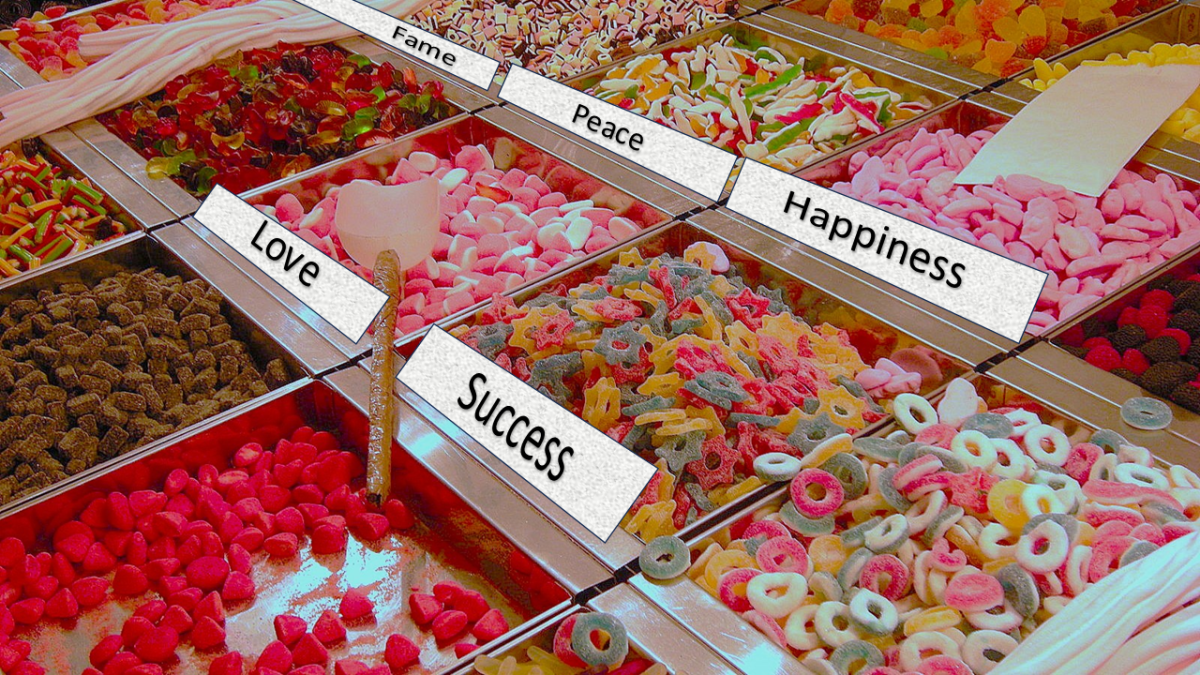
Question- What does Success, Love, Happiness and God mean to you?

Is Reality Same for Everyone?

Do We Share a Common Reality?

Human intelligence is one interesting thing. We can perceive things in better ways, classify them, observe them and use all those understandings to predict the outcome of events in satisfactorily good way, we can create non-existent things out of current given resources which elevate the ways we carry out our living – our lifestyle. The ability to develop various fields of knowledge and understand the reality is the basis of human civilization.

So, we can say that anything which gets distilled down to a specific understanding – an understanding which is consistent throughout our existence can be called as knowledge – knowledge with experience further gets distilled down to wisdom. Even though the knowledge of certain things is not consistent we at least know why it isn’t consistent or we have a well-rounded explanation that ‘this’ is an exception with fair justifications. Knowledge helps us to perceive how the things, ideas around us can be used to build things, the life we want.

The ability to see commonalities and differences between things, objects, ideologies is one important part of how we build our understanding about reality in which we exist. We have notions of right and wrong, black and white, past, present and future, tall and short, thick and thin, good and evil, strong and weak. These attributions help us to identify certain common aspects in things and certain uncommon aspects in the same things.

So, when I am saying Rose – you will understand that I am talking about a flower which looks red, has a particular fragrance. Words thereby names are at the core of how we build knowledge of the surrounding and the reality.

There is one more interesting thing happening here –

When I would say Rose – it is a possibility that someone would understand it as a girl he/she knows, someone would imagine it as a color which somewhat is red but richer in shades, someone would imagine the prickly thorns instead of the gentle nature of the flower.

What’s happening here? The moment I am trying to specify something – some object with a word – a name which shows some common attribute that object shares with others, in that same moment I am failing to describe that object, that idea in its complete capacity.

In our example, the word Rose on surface seems to indicate just a flower, but Rose could mean almost anything to anyone. Rose is just a simple object we are talking about; now imagine how would we define the reality we live in? The reality is multifaceted. People have different experiences, meanings, understandings of reality based on their personal experiences. Does that mean that there is nothing common between the reality we live in? Do we live in our own realities?

Does that mean that words assigned to the things are not what the things are? That the name of objects are just names? Everything that is there is one and only individual rendition of its own? If nothing is same then how do we agree on something common and set our lives to that way? How come we agree to certain religion and follow that? How come we agree that certain things are bad and we should avoid those? How come we appreciate what is happiness and try to achieve that in our existence?

I mean what if happiness is just of name something and goodness is name of the other which does not exist in reality and we are just blindly chasing it? (and we don’t even make out of it alive in the end!) What if we are just chasing names and “there exists nothing like it” – is our realization when we actually achieve that?

Is “the reality” really made of something very fundamental and shared qualities? Or are we just carrying our lives in the chaos of dissimilar (but seemingly similar on surface) things? Even though we call ourselves as humans how come some humans create examples out of their lives that they don’t deserve to be called as humans? How come some humans are so great that calling them humans is disrespecting their life?

Is there something really common among everything or are we just labeling things on whim (or intentionally) to solve the confusions of our minds? Are we living in a matrix and reality is totally different place than where we exist? Are hell and heaven more real that the earth we are living in?

Have we been robbed of the real understanding of reality and cursed to live in an illusion called life?

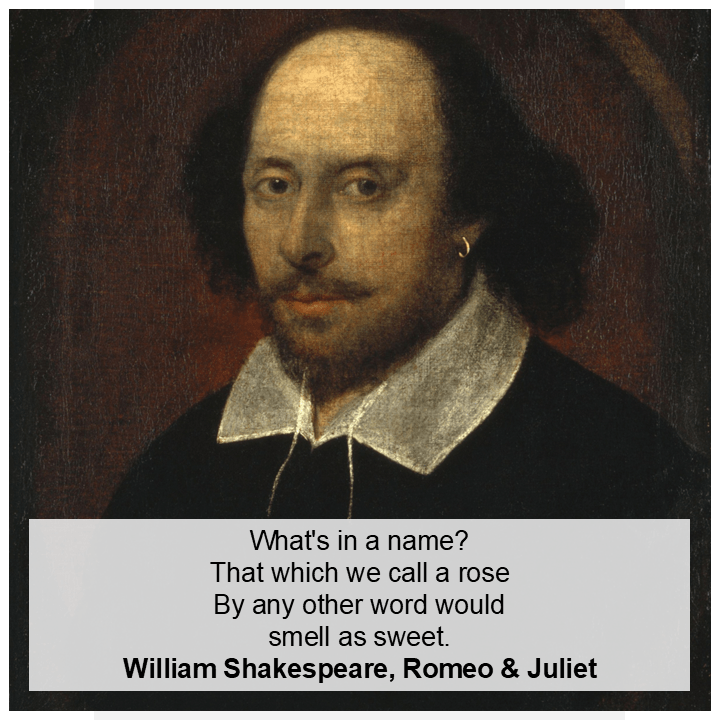
I mean I could have called the Rose an egg right from the beginning and everybody would have been fine with it. It’s just that now the egg is a flower, has red petals, has thorns and has fragrance. (Shakespeare would have also used egg for Juliet’s dialogue and everybody would have been fine with it. As everyone now knows and agrees what an egg is!)

Now you should appreciate how strongly we are conditioned right from the beginning. Calling an egg a Rose feels unnatural but if someone right from the beginning of the beginning would have called it an egg, we would be comfortable with egg in Shakespeare’s dialogue.  

Is there really anything like “Red” color, “Grey” color?

A simple experiment

Look at the picture below:

It’s easy to tell that the cube has one white and one grey colored side.

Now see what happens when I put a blind along the edge of the sides:

There is no manipulation in this image, I have just put a colored box to hide the edges. You can blind the main image with finger and see the same result.

This is popularly called as “Cornsweet Illusion” or “Craik-O’Brien-Cornsweet effect”. This illusion works because our brains try to fill the unavailable information to make sense of the things observed. In this case of the cube example our visual interpretation system tries to determine the edges/ sides of the object by the sudden changes in the illumination of the surfaces.

From this example, you can appreciate how our brain tries to fill in the gaps between the information we are collecting.

Does that mean that there is nothing like what I call grey or white? that there is something totally different for which I am yet to assign a name just to make its identification easy. If that is the case, then are we just naming things in the name of knowledge and don’t have actual hold of the reality? Are we just pretending to be smart just because we can name the things?

Keep in mind we are not simply talking about naming things. If my brain tries to fill the gaps by itself to create a sense of understanding, some part of truth or reality which I carry in my beliefs – are they real or were they some gaps filled by my brain itself?

Following the same train of thought, here is an important question –

Obviously, no one by birth knows what is the “real” nature of reality is? (Otherwise, we would not be discussing all this). You will see that people know reality for how their life experiences turned out to be. They know what reality is, but not all have one singular, absolute concurrence, alignment and unanimous opinion about the nature of reality.

An important idea in philosophy called nominalism tried to question reality in this way (there is a part when the opposite of Nominalism is Realism! I will cover realism in next post). For that we will try to understand what Nominalism tries to solve.

Is there something common characteristic shared across things that create reality? Or are we just putting labels on things so we can differentiate?

Nominalism – There Are Just Names No Essences

William of Ockham is the guy responsible to popularize Nominalism in philosophy although he is not the originator of it. Ockham’s Razor is one very mainstream idea still useful in our pursuits of knowledge. I have covered Ockham’s Razor in separate post.

I think, it is a high possibility that Nominalism and Ockham’s Razor have strong connection not just because they were popularized by the same person but how they align themselves with each other to create a consistent argument.

Ockham’s Razor goes like this –

“Plurality should not be posited without necessity”

In simple words, do not interpret, do not deduce unnecessary things unless they are presented or experienced. (I have somewhat twisted the meaning to align the Ockham’s Razor to align with the train of thoughts and there is hardly anything mistaken here.)

My purpose to rephrase Ockham’s Razor is to connect our brain’s habit to fill unknown gaps with our pursuit of the real nature of reality we live in.

Nominalism thus calls out for the reality which individuals experience for themselves. There is nothing common between the life that we are sharing. Every object existing is an individual, special object in itself. Objects never share something common between them, it may be just our brains filling in the unknown gaps to make sense out of reality and have peace of mind. The labels like Red, Love, Justice, Truth, Loyalty, Happiness are not physical entities, absolute entities which exist in reality. We have created these labels so that we can sort certain thing in certain groups to create a model of reality in our energy optimizing brains.

This is really important point – that things we call real are just labels given by us. A Rose could have been an egg from its creation and nobody would have objected it.

Consequences of Nominalism

Nominalism – in simple words says that there is nothing common shared between all the objects existing in reality. Love could be anything for anyone, you cannot pinpoint an object absolute, consistent and repetitive across reality and put it in a box and call it love. Same for hatred. Same goes for the notion of beauty, fear, justice, truth and what not. Justice is not some type of molecule or an element which can be physically hunted, mined, rigged in reality. It is a label we have created for certain way of things. But, upon full magnification we will see that that certain way of things grouped together are highly individualistic – seeming that they are not same in any way.

Nominalism pointed one interesting observation – the things exist in their individual ways; we are just labeling certain aspects of them so that they can be grouped together or compared against one another.

Do you understand what this leads to? For me it is chaos.

It means that there is no such thing like love, justice, joy, happiness, affection, truth, utopia, passion, enthusiasm, redness, whiteness.

It also means that there is nothing like hatred, unfairness, fear, sadness, fakeness, lie.

These are only labels we are chasing in some scenes and in some scenes running away from or avoiding.

This leads to the conclusion that there is no pivot to the life we are living and the reality in which we exist. This is unsettling – this unsettling feeling leads to existential crisis.

One can here say that Nominalism bridges Phenomenology and Existentialism in better ways in philosophy.

Phenomenology talks about objectively understanding and interpreting reality through subjective experiences. (The one where objective and subjective appear in the same sentence!) It calls for the truth to be one which is realized through personal experiences – phenomenon happening with the individual.

Existentialism talks about the idea that there is no center or pivot to the reality we live in. This is a freedom in such an intense dosage that if we are not creating our own pivot for our own life the sheer possibilities emerging from freedom will overwhelm us concluding that there really isn’t such meaning or sense to life.

Nominalism says that there is no real common thing which can be distilled down between seemingly same things, things were never the same – there is no “essence” which exists across certain seemingly same things. There is no such thing like “universal” which is consistent across the objects in reality. Everything exists individually on its own. One has to experience things for themselves to see their real nature.

It is just your urge to rationalize things so that your brains will save energy. Rationalization is all about making sense of the things, and if everything has its own way of being our minds cannot store each and every aspect of those individual things all the time, thus we have resorted to the pursuit of “essence”, “universality” and hence “labels”.

Conclusion

William of Ockham’s Nominalism from medieval philosophy is reiterated in modern philosophy through Existentialism, Absurdism.

Jean-Paul Sartre – the French Existential philosopher thus talks about how labels are always fooling us. We think our life made to be defined by the achievements of certain labels where upon deeper inspection we see that the labels are mere a creation of our minds, they are how we interpret reality. They are not reality in themselves. Reality was already there even when labels were not there.

This is how Sartre call out Existential philosophy – “Existence precedes essence” and not the reverse “Essence precedes existence”. The later one is just a construct of our mind to create meaning in this meaningless world.

The very freedom granted to us becomes our enemy because we are clueless when we realise that we can do anything. This is where Absurdism peeks in.

Boundaries of Nominalism

There will be different reactions to the explanation of nominalism and that itself will show you how varying types of people exist and their individual renditions of the reality. But interestingly you will find “type” of reactions in people.

One will not immediately agree but everyone on deep inspection will accept this that we always crave for justification for everything that happens with us, it could be in our favor or against us. We crave for justification which will bring peace to our mind, in happiness this peace will amplify happiness and in challenging situations it will give us something to blame.

Once you start appreciating our habit to justify every damn thing you will suddenly see that Nominalism is pretty much good concept in philosophy. Nominalism when says that essences, shared attributes are just labels and nothing real, it warns us that the justification you are trying to give for your situation might just be your construct of mind and not real. Nominalism feels attractive because it feeds attitude of skepticism, which is the first tool of the person in the quest for the absolute truth.

On the other side, nominalism has its innate limitations too. If nominalism is true then it is not there as nominalism itself is our “labeling” to the concept of “not labeling everything together”.

This is where paradoxes begin. If there really was nothing common “essence” among certain grouped things, then it was impossible to group them in first place. So, essence must exist already (this feels even more paradoxical.)

We will search for resolution of these paradoxes in next post on Realism.

Related reading:

A Trade-off Between Simplicity & The Reality

A Trade-off Between Simplicity & The Reality

In spite of being originated from medieval philosophy, the law of parsimony which famously goes as Ockham’s Razor still remains practical in the modern times of AI and the pursuit of artificial general intelligence. Ockham’s Razor asks to cut all the unnecessary things while understanding any system to reduce complexity. This idea is a part of creating efficient ML algorithms. The tool of parsimony has its limitations too and these limitations can create an objective fake picture of the reality, and can be used to twist the facts.
People most of the times miss the point of parsimony which is to make a realistic attempt to check how and why our understanding of things which we have and the real nature of things differ, how can we fill the gap between what we theorize, what we can test and what real there exists.
Context thus plays very important role in every pursuit of knowledge, even in the knowledge of the self. It is important to understand the boundary conditions of our knowledge. One should know where their beliefs (even if they are true) can be limited, can be challenged, can be difficult to prove. That is why parsimony in any pursuit of knowledge needs to be handled with utmost care while studying the real nature of things.

Medieval Idea of Ockham’s Razor For The Modern World

Craving for Simplicity

One of the key driving factors for humans is to have complete understanding of how things work. The reason behind this is to maximize the chances of survival. Now in modern times those odds have become better. The urge to understand the working of things has been evolved into improving the quality of the survival or the existence.

The key events in the quest to understand everything that is there could be summarized as follows:

  1. There is some unexpected event which causes pain, suffering, loss (it can be opposite too, like extreme favorable growth, happiness, high gains. But the human tendency is to be more concerned about uncertain losses.)

Curiosity actually emerges from the urge to control everything that can be controlled and identifying what cannot be controlled and then working towards how to control uncontrollable things by understanding them in depth.

This is how we try to assign meaning to life, our very existence.  

  1. Then we try to observe similar events associated with such experiences, record them. We try to recreate them until we have clarity on the factors which are responsible for such events. We experiment the events repeatedly so that we can have a proper theoretical understanding or a concrete reasoning behind such events.
  2. The key factor for the reasoning to be accepted as the practical one is its consistency with another unconnected or remotely connected events. There is some “universality” in that reason or that theory.

This is roughly how we try to understand the existence. If one asks why we are always on the quest of understanding the existence the answers are diverse.

The simple answer I think is that our brain prefers simplicity so that it can spend the saved energy to maximize its chances of survival. Our brain hates complexity because once the complexity is accepted the uncertainty has to be accepted and then the brain would start to invest its energy into those things which won’t even get materialized but could get materialized because of the non-zero probability.       

Our brain craves certainty of survival.

This trait of brain to prefer simplicity might not be the nature of the reality in which it exists and tries to survive but if doing so maximizes the chances of its existence then it is a pretty much the best way.

In epistemology, the philosophy – the theory of knowledge this trait is investigated in depth. We will try to see one dimension of this thought which goes popularly as the law of parsimony and even more famously as Ockham’s Razor   

William of Ockham and Ockham’s Razor

William of Ockham was an important medieval philosopher, theologian who brought the law of parsimony into the focus. Although the idea was already in existence from Aristotle.

Aristotle believed that nature always works in efficient ways possible and thus the explanation for the events in nature ought to be the efficient ones.

Although Medieval, Ockham’s razor is one crucial idea in the age of Artificial Intelligence and Machine Learning.

Ockham’s Razor emerges from his writing called “Summa Totius Logicae” exactly as:

“Pluralitas non est ponenda sine necessitate” meaning “Plurality should not be posited without necessity”.

In modern Science, philosophy, the idea “simply” goes like this:

“Do not mix unnecessary things”

OR

“All things being equal the simplest solution is the best.”

Consequences of Ockham’s Razor

The principle of parsimony (lex parsimoniae in Latin) thereby Ockham’s Razor helps us to not complicate things when we are investigating them. It is used as a thumb rule or heuristic to generate theories having better predictability. The moment we are saying that the preferences should be to ‘the simpler theory with better predictability’ is the moment when people most of the times misinterpret the Ockham’s razor. Razor implying that chopping off everything unnecessary, if not chopped would contribute to the increase in the complexity thereby compromising the predictability. We will see how Ockham’s Razor affects positively and negatively when we are trying to understand the things around us.

Good consequences:

Search for the theory of everything

Aristotle’s belief that nature always chooses the efficient route to decide the fate of anything reinforced the idea that the theories which would explain the nature are the best if they involve the least possible variables.

Einstein’s theory of relativity and the equation of energy connecting to the mass is the best example to explain this. An elegant equation with mere 1 inch length encompasses all the big secrets of the universe.

The theory of relativity is elegant in a way that it covers Newton’s understanding of motion and gravity and furthermore extends it to the understanding of the black holes where Newton’s same theory would become limited.

Quantum mechanics explains everything that atom can create. It justifies why the earlier models of atoms were perceived in those particular ways (like atom being a solid sphere, a plum pudding, a thing with nucleus at center and electrons in their orbits).

Quantum mechanics thus is the most efficient way to explain what we observed and why we interpreted those observations in a particular way. Please note that the goal is not to falsify something, prove something wrong; the goal of knowledge or science is to understand why we theorized something in wrong way and why it doesn’t align with the reality we are trying to observe and understand.

Efficient Machine Learning Models – Generalization Error

In the age of AI, the efficiency of Machine Learning Algorithms is one crucial decision maker of the investments to be made to evolve it further. The key goal of any Machine Learning algorithm is to create a mathematical equation (or layers of mathematical equations) which would understand the data provided, make sense of it and now predict the outcomes after understanding the data.

This sounds simple while establishing theoretically but the real-life data one provides ML algorithms is filled with variety of noises – unwanted, unconnected, irrelevant data points.

If the ML algorithm would try to fit the noise too, it would add too many variables in its mathematical equations. Now the model would fit each and every data point but at the same point it loses confidence to predict the outcomes because the noise is not really connected to the system one is trying to define.

That is why a complex ML algorithm fitting all the data points (R2=1) is an ideal situation – ideal meaning practically impossible because it is exposed to a very limited dataset. An ideal ML algorithm has a “generalized” idea of the data points on which it was not trained. Meaning that this ML algorithm has such an effective understanding of what is happening in the dataset with least number of equations that it is now able to understand what could happen if something is to be predicted outside of its training dataset (Q2 – algorithm’s ability to predict the unseen data – should be maximum). L1, L2 regularization techniques used in ML are example of that. Now the ML algorithm is not just interpolating proportionally the points in between, it has its own mathematical justifications to decide whether and how to interpolate aggressively or not – in order to predict the realistic outcome.

Ockham’s Razor thus proves to be important in the age of AI to select efficient algorithms, efficient algorithms ensure efficient use of power, resources thereby the investments.

Parsimony in Psychology – Morgan’s Canon

In very simple words, I would say three words to explain what this means – “Life of Pie”.

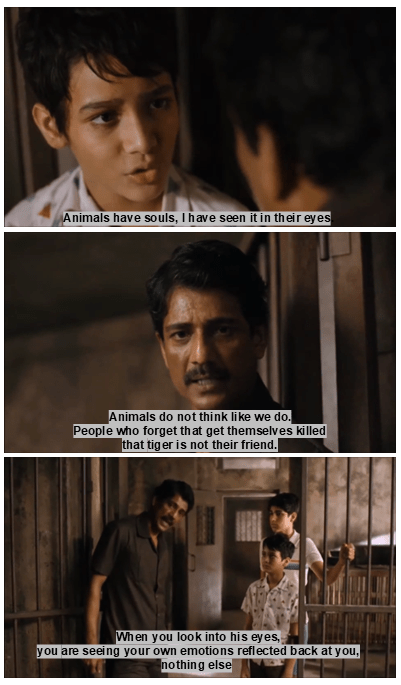
The movie Life of Pie has a moment when Pie’s father tells him that the emotions which Pie is seeing in the Tiger Richard Parker’s eyes are mere the reflection of how Pie feels the tiger would be feeling i.e., hungry in that specific case.

In animal psychology (Comparative Psychology) researches, Morgan’s Canon asks scientist to not over-attribute any human quality that humans possess to animals without any concrete basis.

“In no case is an animal activity to be interpreted in terms of higher psychological processes if it can be fairly interpreted in terms of processes which stand lower in the scale of psychological evolution and development.”

The scene from Life of Pie strongly resonates with Morgan’s canon.

There is a reason why Morgan established this idea. We humans have a tendency to see human form in everything that is not even human – this is anthropomorphism. While studying animals, these anthropomorphic tendencies would mislead each and every study because other animals and human share many common things. Unless there is no strong evidence to justify the human like intelligent behavior the simplest explanation should be selected to justify the behavior of the animal in their psychological studies.

These are some of the examples where Ockham’s razor proves to be very valuable.

Bad Consequences (limitations of Ockham’s Razor)

There is other side to simplification of things, we will now see how people misinterpret the principle of parsimony thereby Ockham’s Razor.

Universe might prefer complexity to exist

In the pursuit of the theory of everything, Einstein himself was confused that “how could God play the dices?” How can one bridge the gap that exists between the theory of relativity and the quantum mechanics. One explains the heavenly objects and the other explains what lies at the bottom of the bottom of particles which make the universe existent.

One will realize that there is more than what we are using in current theory which needs to be considered to explain the reality in a better way.

One reason why Einstein was genius of all times is because he knew that something was missing in his theory. He was not ashamed of the complexity the theory of everything may carry. Even while speaking about his elegant theory of relativity Einstein had this opinion:

Artificial General Intelligence (AGI)

Those who are actually working in the field of AI would explain this to you that how difficult it is to create an Artificial General Intelligence (AGI). Even though we have some of the greatest chat-bots, AI assistants, AI agents, they are experts in executing specific tasks only. They can immediately get biased, they can be fooled easily, bypassed easily.

The key reasons behind these shortcomings are many. The AI tools perform the best when they are designed to perform specific tasks, they lack common sense like the humans do, they lack the emotional dimension in the decision making (one of the important aspects of how humans generalize the understanding of their surrounding), they cannot directly build the bridges between their algorithms unless enough data is provided. AI doesn’t have intuition which humans have developed over the thousands of years of natural evolution.

It is also important to understand how greatly we underestimate the computation and decision-making capability of our brains and how much power it takes to replicate the same in machines. 

So, maybe complexity is prerequisite for AGI and thus the enormous number of resources that will be required to achieve it.

Human like intelligence in Animals

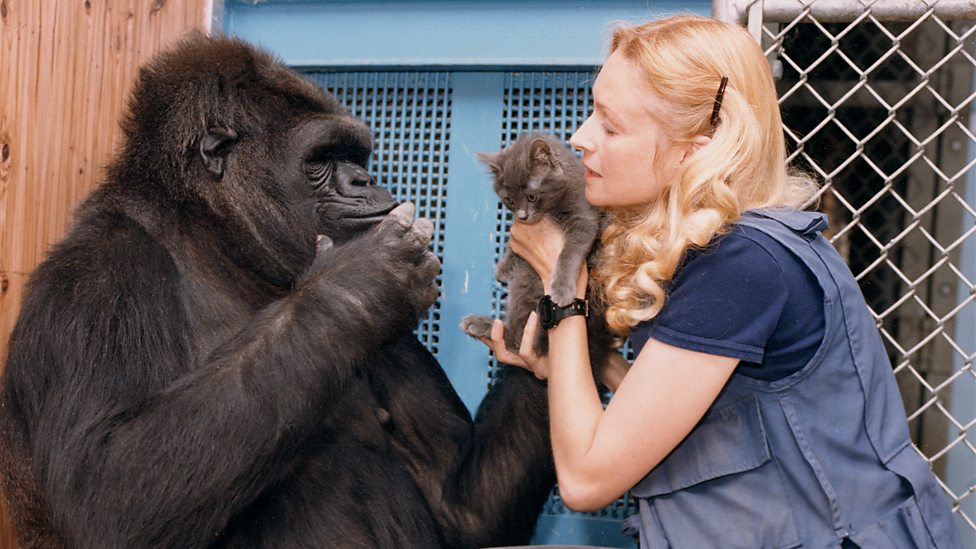
The story of Koko and Robin Williams could be good example to explain this. Koko – a female gorilla was trained in American Sign Language (ASL) by Francine “Penny” Patterson. Penny called this language as Gorilla Sign Language (GSL).

Penny with Koko

There is a very famous video of the meeting between the movie actor Robin Williams and Koko. Soon after the death of her gorilla friend Michael, Koko met Robin Williams and she laughed after a long time along with Robin, she played with him, she even recognized Robin from his movie cassette cover.

Robin Williams having fun with Koko

When the instructors of Koko told her about the death of Robin Williams, she expressed her grief by signaling the instructors if she could cry, her lips were trembling in grief. See the emotional depth she had just like normal humans do.

Dolphins are also one good example to demonstrate human like intelligence in animals.

This means that Ockham’s Razor, Principle of parsimony or Morgan’s canon are of no use. What is happening here? What goes missing during the oversimplification? What are we misunderstanding?    

What goes missing in simplification?

The main problem with Ockham’s razor or its any other equivalent philosophies is the convenience they bring. Just like by collecting a biased data you can actually prove anything wrong which in reality is right, in the same way people misinterpreted the principle of parsimony.

The key reason for William of Ockham to support the principle of parsimony was because he was a nominalist. “Nominalism” says that there is nothing common between anything and everything that is there in reality. Everything has its own individual nature and what we see common in many things collectively are just the ‘names’ given to them. The red which we see in blood and in rose is just the name of the color and there is nothing like red which actually exists on its own.

This means that the color which we see in things, there is no such thing as color in its absoluteness, it is just some signal our eyes generate to tell brain the difference between the light absorbed and light reflected or the temperature of the surface of the object.

So, William of Ockham posed that as everything has its own attributes individually, when you are trying to create a philosophy for a group of things, you should consider only those individual attributes which are necessary to create a theory.

(William of Ockham himself drifted away in his ideas of Parsimony and Nominalism; I will discuss that specifically in the Philosophy of Nominalism next time.)

What people still misinterpret today when they talk about Ockham’s razor is “to select the simplest explanation to things”. This is not what he meant actually.

Same is the story with Morgan’s Canon. Morgan’s main intent was to have a concrete justification when someone is explaining human-like behavior in animals. His idea was that the conclusions should be reasoning-based and not based on the observation that animals in the study had that specific type of intelligence. The idea was to observe without any preconditioning, prejudice or any impression or expectation.

I have already explained how Einstein was a genius; he was very well aware that during creating the very elegant understanding of the universe he might have missed something on the expense of simplification.

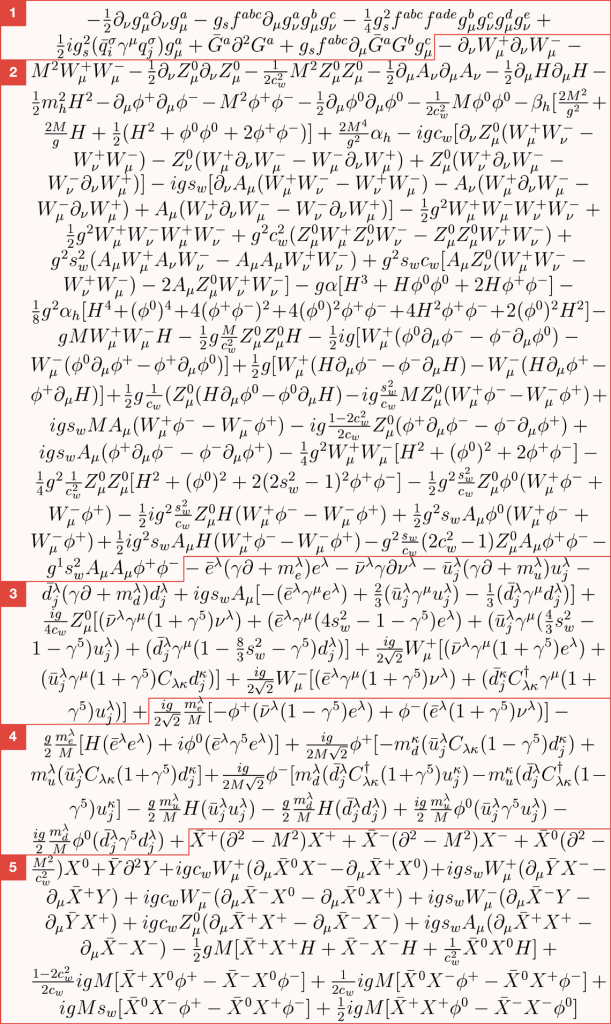
The standard mathematical model in particle physics looks like this (maybe sometime in future I will be able to appreciate and explain it to its core):

Context is everything

Now you will be able to appreciate why Ockham’s razor is a tool and not the final truth. People exploit Ockham’s Razor to demonstrate their philosophical grandeur and simplify the meaning to their favors consciously (sometimes unconsciously).

What people ignore is the purpose of the chopping unnecessary parts in any process to develop understanding, philosophy or theory. The goal was never to simplify things, the goal was to remove things which would interfere in the process of testing our hypotheses.

People most of the times miss the point of parsimony which is to make a realistic attempt to check how and why our understanding of things which we have and the real nature of things differ, how can we fill the gap between what we theorize, what we can test and what real there exists.

Context thus plays very important role in every pursuit of knowledge, even in the knowledge of the self. It is important to understand the boundary conditions of our knowledge. One should know where their beliefs (even if they are true) can be limited, can be challenged, can be difficult to prove because what we know is just a drop, what we cannot know is ocean.    

I think what people miss in simplification or parsimony is the context and context varies from situation to situation.

Scientifically, Newton’s laws of gravitation have no problem when we are talking about our solar system. In fact, they are so accurate that modern space missions still rely on these laws. There rarely is any need to use the science of black holes in most of such missions.

The context is the precision of deciding the trajectory of objects in solar system.

But, when it comes to Global Positioning System (GPS), the theory of relativity becomes important. The bending of space time due to earth’s mass and the slowing down of time for navigation satellites from it and the time adjustments for atomic clocks at these two points matters a lot. Newton’s laws cannot explain that.  

The context is how precise can the time be measured and how the difference in time can be connected to the understanding of the position of the object around the globe.

It is very easy to demonstrate how Ockham’s razor still remains important in scientific community and how scientists are aware of its limitations.

It becomes problematic when we try to understand and justify life with it.

The problem is that we get to decide the context (most of the times)

Call it a blessing because scientific community is always in the state of its own renewal because it relies on objective evidences, but it is still not immune to missing context or wishful context. (The falsified biased scientific studies published to create confusions are best example of that.)

The best example of losing context while still being scientific or unbiased is the Debates on News channels or any debate (sadly) that exists on popularity. Soon you will realize that the context of most of such debates is to entertain people, create controversies and not find the ultimate truth or facts.

In the very opening of this discussion, I had explained how our brains try to optimize processing to save energy for better tasks to guarantee better survival. The death of our own beliefs, our identity is also failure to survive. Psychological, ideological death is as equal as the actual death, maybe it is more painful than real death for almost all of us. Religion is one stream of such ideologies where people are ready to die physically just because the religious beliefs, they live for should remain alive. Most of the people are scared of mathematics not because it is too complicated, they fear math because it shows them the vulnerabilities in their process of step-wise thinking, same people can be expert dancers, master artists, master instrument players which involve rather more complicated mathematical manipulations – music in a simple way is manipulation of certain sound wave-forms. The music theory, harmony, color theory, physiological manipulation of body with the rhythm, and sound are all purely mathematical concepts. It’s just that we don’t want ourselves to remain in the states of vulnerabilities for longer times. It’s equivalent of exposing cover to our enemy thereby reducing our chances of survival.

The thing is that the tendency of nature to choose the path of least resistance gets reflected in our own nature too. Which is why simplification and Ockham’s Razor seems attractive. But at the same time, we forget that it is the same nature whose deliberate and continuous actions against the adversities made us who we are, made impossible things possible for us.

Daniel Kahneman has explained the two cognitive systems our brain uses in his book Thinking Fast and Slow.

System 1 is fast and intuitive good for repetitive tasks but bad at finding biases, errors, hostile to new and complicated scenarios.

System 2 is slow and deliberate for analytical and reasoning-based tasks but is not effective for routine tasks.

The people who exploit Ockham’s Razor (even William of Ockham himself! –  this story will show up in post on nominalism!) are oversimplifying things because the belief they have is justified through it. It will stand some limited tests but the moment it is exposed to universal tests they fail. And that is how religions, sects, faiths operate when they are blinding people from the real truths. I am not saying religion is bad, I am saying how objectivity in religion can be used to show its scientific nature and still fool the people. Same can happen in scientific communities, all of the pseudo-scientific concepts are one great examples of that.

Now you can see the problem. People want to create understanding of the surrounding not because they really want to understand it. They want to do it because it will feed the beliefs they already have and Ockham’s Razor or the principle of Parsimony is a great tool to facilitate that. In the end, it is just a tool. How it impacts the creation is solely based on the intent of the one who is using it.

That is exactly why when you are questioning something or are standing against something or supporting something ask yourself this one question:

Are you doing this for understanding the reality or to feed your own wishful picture of reality?

So, whenever you are trying to understand something make sure that your context is to really understand the thing and not expect it to be in certain thing you wish. Remember, you are the controller of the context and it is very easy to fool ourselves.

Further reading:

The Essence of Nominalism