Minding The Gap Between Ego & Reality

We are so tied to our minds, our self, our ego that we can only see what our mind is conditioned to see; and the expanse of mind is so vast, that we consider the inability to gauge its limit to its infinite-ness. But, in self-observation we will see that reality is far bigger than our mind. Mind cannot be bigger than reality although it can create a perfect illusion of it being bigger than reality. When we realise how reactive our mind is, how conditioned our mind is we see that it’s the reality in which we are existing and not the mind. Mind is just a facilitator to create a sense of security. The real creativity thus begins when one lets go of their minds, thoughts and observe reality for what it is.
The real intelligence is to be able to see how you are fooling yourselves and how it is twisting your world view. This is possible only when we let go of the self. Love is the fastest and the most direct way to let go of self. Love is the way to get rid of the ego. Loving something, loving someone is the first step towards rejecting the very ego which is responsible for self-deception.
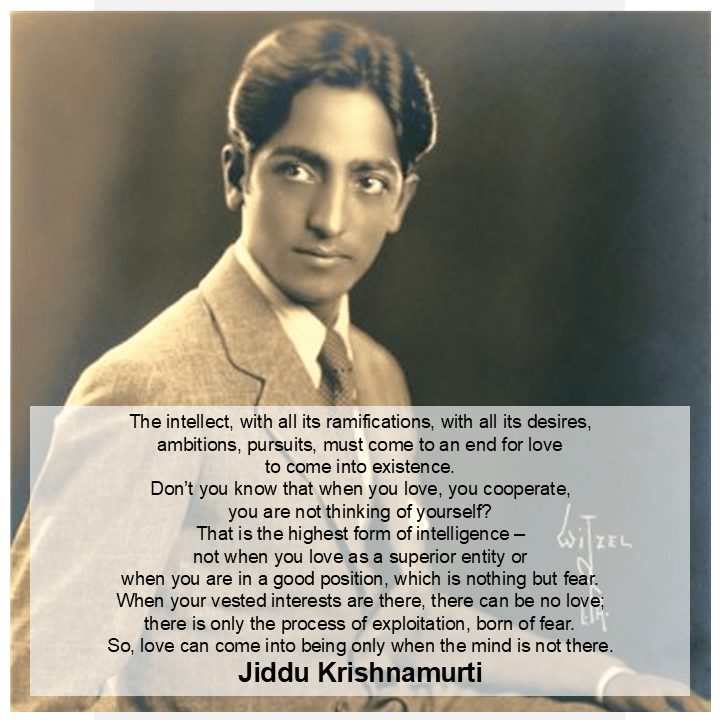
Jiddu Krishnamurti thus encouraged everyone to let go of their egos through self-less love; this itself is enough to solve all the existential conflicts inside us and out there in the world.

Part 3 – Jiddu Krishnamurti’s legacy of self-knowledge

What do you do when you realize fundamentally or deeply that thought cannot end itself? What happens? Watch yourself. When you are fully aware if ‘this fact’, what happens?

(‘this fact’ here refers to an observation that ‘discipline’ doesn’t destroy the self, rather it strengthens it because ‘the self’ created that discipline in the first place)

You understand that any reaction is conditioned and that, through conditioning, there can be no freedom either at the beginning or at the end – and freedom is always at the beginning and not at the end.”

– J Krishnamurti, The function of the Mind

We, the humans are driven by curiosity. The curiosity to survive – to put in few words. One might say that people are driven by fear, greed, envy, anxiety, power, love, money, fame, glory, sacrifice, humility, honesty, trust, legacy, mania, chaos, terror, and what not. The list is never ending. If you start questioning the origin all such attributes, you will see that humans can be driven by anything, I mean any anything. There is no connecting link per say; the only common thing between all the things which drive people is the people themselves. So, in the last question (possibly the last one) we end up questioning ourselves. We see that along with physical survival we are highly conscious of our non-physical survival. Some may call it the mental survival, some may call it ideological survival, some may even call it spiritual survival. In the end, what we are trying to preserve is the eternal existence of our consciousness. How to preserve this? becomes the question then. That is why in final question we see that we are curious to preserve our own being. That is the ultimate survival. Whatever can facilitate that preservation is the driving force for our existence. If you are scared of something, the fear of that thing will create a curiosity to look out for the ways in which you can avoid it.

Now you will realise that the attributes which are many and driving people in different ways are highly related to the ways people think about themselves and about their surroundings. The identities, the consciousness which we are trying to preserve forever is highly the function of the society we grew up in, the religion we followed, the ideals we admired, the enemies we despised, the culture we cultivated and carried over to the newer generations.

I might be making an overstatement here-

Only those who have undergone unlearning, un-conditioning or at least appreciated the process of unlearning can clearly see how badly we are tied to our thoughts and ultimately our minds.

Death of thinking is death of mind. When they say that ideas live forever – it is also an attempt to ensure eternal survival of a certain type of mind, for mind is not a physical entity to us. Realizing the perishable nature of our body, the mind becomes the most potent entity to ensure the survival of our being.

Then, what’s wrong in ensuring the eternal survival our consciousness?

We will see how Jiddu Krishnamurti showed the reality of our existence. As I have already said, he is the perfect person at perfect time to ask the perfect question.

Short answer is – we are so tied to our minds that we can only see what our mind is conditioned to see; and the expanse of mind is so vast, that we consider the inability to gauge its limit to its infinite-ness. But, in self-observation we will see that reality is far bigger than our mind. Mind cannot be bigger than reality although it can create a perfect illusion of it being bigger than reality. When we realise how reactive our mind is, how conditioned our mind is we see that it’s the reality in which we are existing and not the mind. Mind is just a facilitator to create a sense of security. The real creativity thus begins when one lets go of their minds, thoughts and observe reality for what it is.     

In Part 1, I have explained J Krishnamurti’s views on our urge for safety thereby happiness, how we use our thoughts to conveniently justify anything and everything to create that sense of safety, the ways in which our thoughts are stealing the actual reality holding multitudes of possibilities.

In Part 2, I have explained how thoughts originate, how curiosity drives them. It contains Krishnamurti’s observations on how we try to separate thinking to glorify ‘our version’ of wishful reality. Krishnamurti shows us that the moment we reject the separation of our thoughts from ourselves, that is the moment we see that we were just reactive to everything around us. We become observer of the reality for what it is, once we let go the glorification of ‘our thoughts’ – the self.

Now, we will question the very originator of the self – our Mind. Krishnamurti’s observations were revolutionary about the mind. This Part 3 will focus on that and also tie up the previous 2 parts together with it.

Existence Of The Mind – What Is The Mind?

“When you observe your own thinking, you will see it is an isolated, fragmentary process. You are thinking according to your reactions, the reactions of your memory, of your experiences, of your knowledge, of your belief.”

J Krishnamurti, The function of the Mind

When we are truly in the territory of observation without any preconception, prejudice, we see what thoughts actually do. Thoughts just try to hook on to something that we are familiar with – it could be good or bad. Thoughts literally create a chain. One link creates sense – logic – connection to another, one train of thought after another. Then we create the whole understanding. Thinking is always reactive. Keep this in mind – thinking is always reactive. If you let thoughts build on themselves, it is amazing to observe what world we create just by our thoughts. The moment you inject certain intent, desire to this world, it immediately deviates from the reality. But, as this world of thoughts has your intent, your desire, it creates that world of safety; we don’t want to lose that familiarity, that comfort. Now as this world contains our desires it becomes our second identity. As the thoughts keep building on, you start associating these set of your thoughts as who you are. This is your non-physical identity now. You now strive to make sure that this non-physical identity lives till eternity.

After seeing this you will see that the mind is the custodian of thoughts, desires, wishes. A wish to be safe to prolong survival, desire to make that prolonged existence happier one, thoughts to support those wishes – desires. Mind is thus picking desirable ideologies, disciplines which will keep feeding the train of thoughts, the chain of thoughts. Thoughts want to ensure their own survival because we have assumed survival of our thoughts as our survival. (Keep in mind we haven’t even started the discussion about reality.)

So, mind is a sieve which keeps on separating the desirable and undesirable parts of reality. There is nothing wrong in that. What happens here which is problematic is our tendency to lean towards the desirable reality only. When mind would see desirable reality, it will start using the power of compounding of thoughts to create a wishful reality which we call as our identity – our self. We want to preserve self to ensure that things that we desire survive. Whatever is not the self, it is the others – the undesirable. The moment mind makes this separation – ego intensifies.

“Our whole tendency is to be separated. Can the mind do anything else but that? Is it possible for the mind not to think separately in a self-enclosed manner, fragmentarily? That is impossible. So, we worship the mind; the mind is extraordinarily important.”   

J Krishnamurti, The function of the Mind

Without separation, our mind fails to recognize itself. If it is not able to separate itself from rest of the things, it cannot feed the desires. If desires are not fed, we will be constantly looking cluelessly for a sense of belonging, a place of security.

Here, I see one tragedy of being human rather an animal. I will explain it:

See there is a possibility that we are free from all the desires. One can be free from all the desires of the world. So, it is a real possibility that man is free from the cage of thoughts, mind and desires and fully observant of the reality around him without any imposition or prejudice right from the birth.

What is the tragedy of every animal is that they are born with the tendency to live (otherwise how would they get in the world in first place, maybe the baby doesn’t even know what is required to survive, so possibly the sense of survival naturally gets transferred from parents to the baby). Have you seen a baby who wants to die the moment he is born? Rather the baby starts crying the moment it senses absence of parental presence or absence of security. By birth we have a survival urge. Evolution has pushed this urge in us from physical to non-physical one. As we have better chances to ensure physical survival we now care more about the survival of our non-physical version. Mind thus becomes very important, thereby consciousness becomes important. That is why if physical survival is not guaranteed, we wish that at least our consciousness lives forever. That is exactly why we praise the minds we have.

Over the time, our desires take over this mind and we then keep on conditioning it with culture, religion, society, community in a certain way. The familiarity of physical body gets further amplified in familiarity of certain way of thinking, certain religion, certain philosophy, certain profession, certain degree, certain community, certain country. The more we find ideas, thoughts familiar to ours the more we want to cling to them. The more we want to reinforce that version of self. We are always separating what reality shows in terms of whether it is favorable to us or not. That is why even if mind and consciousness seem infinite, you will observe that our thoughts have compounded in such an extreme way that we are unable to measure their limits. We have attributed this inability of those compounded thoughts to the infinite-ness of our mind.

If our mind truly is infinite then we should be able to predict the reality or at least handle the undesirability that reality may present in better ways. We all know how disappointed we are with the reality. This shows how strongly we have conditioned our minds towards certain way – that certain way we call our identity, our self, our ego.

“Until we understand how to transcend this separative thinking, this process of giving emphasis to the ‘me’ and the ‘mine’, whether in the collective form or in individual form, we shall not have peace; we shall have constant conflict and wars. Our problem is how to bring an end to the separative process of thought. Can the thought ever destroy the self, thought being the process of verbalization and of reaction? Thought is nothing else but reaction; thought is not creative.”

-J Krishnamurti, The function of the Mind

Now you will appreciate what un-learning can do to our life. It opens a completely different and real world in front of us. Un-learning is the rejection of what we assumed to be true to support our identity. Although it feels uncomfortable, sometimes completely hostile but there is no bigger freedom than the acceptance and implementation of unlearning. It is renewal, evolution of our very being.

The key point is to understand that we are not our mind, we can be bigger than our mind. That needs the rejection of the idea of self. Once we are observant of how dangerously conditioned, prejudices, favored our minds are we will see how we through the agency of our mind are twisting the reality to create the sense of security. The more we twist it, more deviated we are from reality.

And as I already explained that somehow this sense of separation and thereby self-preservation is in our genes by birth, we have to train ourselves to get rid of that sense. Keep in mind that this does not mean self-jeopardization. This plainly means that not imposing our ways on reality to create the sense of security thereby higher chances of preservation of self. That is why unlearning is extremely important.

Reactive Mind Vs Objective Reality

“Do not superimpose what it should do, how it should think or act and so on: that would amount to making mere statements.”

-J Krishnamurti, The function of the Mind

Once you think that you have full control of your mind, the mind will use this sense of its separation from you to build chains of thoughts to support itself. In the end, it all started from you. The moment you see that you and your mind are the same, you accept its conditioning. Now you have a baseline to see the reality. Now you know how your mind is bending the reality. This is the freedom, to see things as they are. 

Now that we are understanding that sense of safety was the goal of everything that we are doing all along, we see that our conditioning thereby our thinking and thus our mind in the end are the reason behind all the suffering we go through. Once we see that our mind was the main culprit, we realise that it will be difficult rather impossible to punish my mind, discipline my mind because the more I try to control my mind – more I try to discipline it, the more it reacts, the more it creates thoughts and evades away from the reality. It tries to preserve its identity.

Only when you observe that you are your mind conditioned in certain way to preserve the non-physical existence then you understand the reality you live in. You still have those conditioned thoughts but now you neither want to promote them or suppress them. You are now an observer of the reality. This is an interesting observation.  

“When I want to understand, look at something. I don’t’ have to think about it – I look at it. The moment I begin to think, to have ideas, opinions about it, I am already in a state of distraction, looking away from the thing which I must understand.”

J Krishnamurti, Can thinking solve our problems?

There is one important confusion we must address here:

If I am rejecting the thoughts that I have, the mind that I have, the consciousness that I have – what remains of me? Wouldn’t I end up in an existential crisis? Won’t that shatter my compass? If I am not associated with certain things, how would I make sense of my actions? If I am not able to make sense of my actions or at least the things happening around me, how would I prepare myself to survive in this world? This will completely jeopardize my existence.

The answer is pretty simple if you have read till this sentence:

Rejection of mind as a separate entity is the answer. Unlearning the process of isolation to understand the reality is the answer. Wishful observation is the key problem in the ways we are trying to live the life. Thinking is the second name for wishful observation. You are expecting reality to become something in your ways so you attach certain justification to extract that desirable meaning from the reality you are observing. You are doing this to generate sense of safety, which further ensures eternal survival.

So, it’s not about rejecting mind or the thoughts. It’s observing how our mind, thoughts are already conditioned before we are trying to understand the reality. It’s like we are seeing the reality with certain tint of prejudices and expectations. We have to let go of that filter. We are so attached to this filter because world looks the way we want in this filter, that this tinted illusion has become our reality. The moment someone shatters that filter we end in existential crisis.

You must appreciate that it’s not about hating the prejudices, conditioning or sacrificing yourselves completely to a selfless act. It’s being aware that you have those prejudices when you are observing reality. This self-awareness is what Krishnamurti focused on.

The moment you will try to reject certain thing and accept the another i.e., your mind – you will create certain framework of justifications and you will deceive yourself.

The idea is to know how you are fooling yourselves which is preventing you from understanding the reality.

Delulu is not the solulu. Rather delulu is the best way to reject the very life you are living.

“To have blank mind is to be in a state of stupor, idiocy or what you will, and your instinctive reaction is to reject it. But surely a mind that is very quiet, a mind that is not distracted by its own thought, a mind that is open, can look a t the problem very directly and very simply. And it is this capacity to look without any distraction at our problems that Is the only solution. For that there must be a quiet, tranquil mind.”

J Krishnamurti, Can thinking solve our problems?

Love – Cure To Self-Deception And Surrender To Reality

You know that moment in any pop culture media where the final answer is love? Let me spoil everything for you. The answer to everything is love.

(Be cautious while reading next part, it’s not just that type of love and I am definitely not conditioned to prefer love as the answer. Even for a skeptic, love being the final answer has worthy support. It also guarantees that we can understand the reality for what it is.)

I always had this cringe feeling when everything grand in the narrative ended up with a justification of love. Even the great authors, logical authors, great scientists, great atheists never feel shame to express the power of love and it being the answer to everything. Trust me, I have made every attempt to find the evidences where love might not be the final answer to everything. But turns out that I would never find any evidence against love being the final answer.

The core reason is that we ourselves are the final problem. Let us see how Krishnamurti came to the conclusion of love being the ultimate answer:

“When you realize that any reaction is a form of conditioning and therefore gives continuity to the self in different ways, what actually takes place? You must be very clear in this matter. Belief, knowledge, discipline, experience, the whole process of achieving a result, or an end ambition, becoming something in this life or in future life – all these area process of isolation, a process which brings destruction, misery, wars from which there is no escape through collective action, however much you may be threatened with concentration camp and all the rest of it.”

J Krishnamurti, The Function of Mind

Now that you have come to the last part of the discussion, it is not a new understanding when I say that our sense of self is reinforced by the desire to support certain way of our conditioning. This steals from us the ability to perceive reality in the way it presents itself. We are always seeing the reality with certain conditioning and trying to change it so that it favors our ways. But as we have illusioned, conditioned understanding of reality, the reality rarely presents itself in the ways we desire it to be. Then we end up in sadness and sorrow and start questioning the futility of our existence. That is why ‘what is the purpose of my existence?’ is the common format of the existential questions for all of us.

What Krishnamurti tried to focus on is different question –

Why am I not experiencing life the way it is?

What is preventing me to live the life the way it is, living the life to its fullest?

The answer is pretty simple now. It’s our conditioning which urges us to prefer certain ways and reject the others. This brings the happiness and sadness. In the efforts to maximize happiness and minimize sadness we have created a system of mind and thoughts to alleviate the pains of suffering – thoughts justify everything. We deceive ourselves with justifications.   

“So long as we deceive ourselves in any form, there can be no love. So long as the mind is capable of creating and imposing upon itself a delusion, it obviously separates itself from collective or integrated understanding.”

-J Krishnamurti, The function of the Mind

What does the love do in all this confusion?

Love is the direct way to let go of self. Love is the way to get rid off the ego. Loving something, loving someone is the first steps towards rejecting the very ego which is responsible for self-deception. Even if you are delusional, your actions influenced by those delusions towards the things you love, the people you love will yield unwanted outcomes; and if you truly love them, you will be compelled to let go of the delusion for the benefit of your loved ones.  Thus, being selfless through love in true sense ensures real freedom.

Conclusion – Why Is Love Answer To Everything?

“We see the ways of the intellect but we do not see the way of love. The way of love is not to be found through the intellect.”

-J Krishnamurti, The function of the Mind

We saw in Part 1 how and why we crave for safety, familiarity. It ensures our physical and non-physical survival with better odds and most importantly with better satisfaction.

We saw in Part 2 how we dissociate ourselves from our mind and thoughts to create a false sense of safety if the reality does not turn out the way we want. We may delude ourselves if the reality is hurting us. We use thoughts to justify unfairness the reality presents. Our religions, politics, our ideals, everything that we have created now has an innate purpose of creating a safety net. We want to remain in this net because we don’t want the happiness to end. We have intellectualized our minds in such a way that we have justification for every ridiculous illusion and tragedy is that we call it the limitlessness of the mind, infinite nature of the mind.

I am not erasing the idea that the mind is limitless. If our minds – we – ourselves are truly limitless then we should immediately be able to see beyond the seemingly adverse revelations of the reality. Which is the holy gist of all these detailed inquiries of the self.

Then what was the problem with the mind?

The very limitless nature of reality would enable us to become limitless. But is it our delusional clinging to certain way of life for safety which is stealing the real understanding and appreciation of limitless reality. We are clinging to highly complicated and highly compounded thoughts, the way of thinking just because it reinforces the ego.

The real intelligence is to be able to see how you are fooling yourselves and how it is twisting your world view.   

After going through what Krishnamurti made us observe, you will realise that whatever must be said has been said already. We have just accepted our delusions because we are fully clung to the way have been living our lives, the way we have been conditioned.

When you are loving someone, there is very slim chance that they will be exactly the way you want them to be. There is plausible reason to say this because the infinite possibilities of reality mold people in different ways. There may be many things in common but the more you know the sooner you will realise that people are filled with different types of conditioning. This will first push you to reject their point of view naturally, then you will try to impose your way on them, your ideologies on them, your conditioning on them. In the final analysis, you will see your ways of worldview failing on them. This is the moment when you will reject your own world view, thereby your ego. Now you will neither reject or accept other people’s worldviews nor will you cling to your ego. Now for the sake of love, you will objectively observe the reality for what it is.

This is how love compels you to let go of your ego. That is why love is the answer to everything because you are the last question of all the investigations of the existence. You will let go of the concept of the self once you start to appreciate things other than you and accept the reality the way it is. What a beautiful way to live!    

“Only when you discard completely, through understanding, the whole structure of the self, can that which is eternal, timeless, immeasurable, come into being. You cannot go to it; it comes to you.”   

-J Krishnamurti, The function of the Mind

References and further reading:

  1. Truth is a pathless land – J Krishnamurti
  2. The First and Last Freedom – J Krishnamurti
  3. Jiddu Krishnamurti’s Legacy Of Self-Knowledge : Part 1 – The Liberation From Thinking and Thoughts
  4. Jiddu Krishnamurti’s Legacy Of Self-Knowledge: Part 2 – Being Watchful Of The Ebb And Flow Of Life
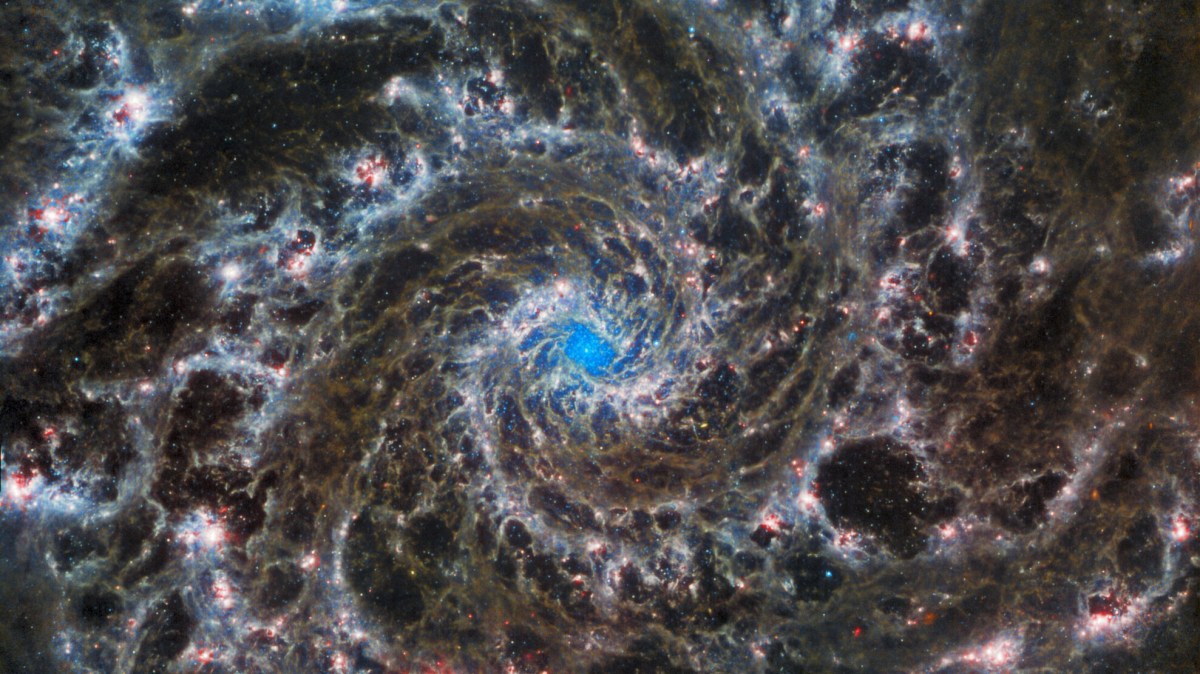
  5. Featured Image of Phantom Galaxy M74 by James Web Space Telescope

Philosophical fate of AI and Humans

Alan Turing was the very first person in the world to formally ask- “Can machines think?” The ideas he presented in his famous paper has laid the pathways leading to the creation of modern computer science and today and tomorrow of artificial intelligence. There is no doubt that there will be a time when machines would be able to think just like humans do, but that should not be a negative aspect. There will be practical limitations to a human-like thinking machine too. So, the game would never be single sided. This should push humanity on a completely new path of evolution. That is also how we have become the humans we are today from the primitive apes.

Alan Turing’s world famous paper on future of human-like thinking ability in machines

The holy doubt – “Can machines think?”

We all know how modern machines/ computers have great abilities to make systematic thinking and take decisions accordingly; this is obviously attributed to the very programming embedded into them by us human beings. Many breakthroughs in storage capacities of computers, size of computers, efficiency of these machines, computation capabilities, evolution of programing languages, intersection of neuroscience and computer science, accessibility of these highly powerful machines to masses have shown world that such machines can do amazing marvels.

You know where I am going with this. Not mentioning Artificial Intelligence in these breakthroughs would be a straight crime. AI has unlocked a totally different capability in computing for which some are optimistic and some are fearful. In a crude sense, how AI stands out from other concepts of computing is its ability to change it programming to achieve given goal. This concept is very normal even for today’s child.

But, would you be open to such self-programming machine 75 years ago? A time when there were only mechanical calculators, electronic computers were in their infancy and were created only for certain restricted problem solving and number crunching. Even the experts of those times found this idea foolish because of the practical limitations of those times. How could a machine think like a human being when for doing some mechanical number crunching it takes such many resources, doesn’t have its own consciousness, its own soul, has no emotions to react to given stimuli? In simple words “thinking” is somehow associated as a special ability humans got because of the soul they have, the conscience they have (granted by nature, the Creator, the Almighty, the God or whatever but some higher power)

It is our tendency as human beings to have this notion of being superior species amongst all which brings in the confidence that machines cannot think. That is why this idea seemed foolish, but now we are comfortable (to some extent but not completely) with the idea of thinking machines.     

Alan Turing – a British mathematician, the code breaker of Enigma, the man who made Britain remain strategically resilient in World War 2, the Father of theoretical computer science wrote a paper which laid down the blueprint of what the future with AI would look like. For the times when this paper was published all the ideas were seemingly imaginary, impractical, and totally impossible to bring into the reality. But as the times changed, Alan’s ideas have become more and more important for the times in which we are living in and the coming future of Artificial Intelligence.

Weirdly enough, this paper which laid the foundations of artificial intelligence – thinking machines was published in journal of psychology and philosophy called “Mind”.

The world-famous concept of ‘Turing Test’ is explained by Alan in this very paper. He called this test as a game – an “Imitation Game”.

The paper reflects the genius of Alan Turing and how he had the foresight of the future – the future with thinking machine. After reading this paper you will appreciate why and how Alan was able to exactly point out every problem that would rise in future and their solutions. He was only limited by the advancements not happened in his time.

The Imitation Game   

Alan posed a simple question in this paper –

Can machines think?

The answer today (even after 75 years) is of course a straight “NO”. (Deep down we are realizing that even though machines can’t think they are way closer to copying the actions involved in thinking or “imitating” a thinking living thing)

The genius of Alan Turing was to pose practicality to find the answers to this question. He created very logical arguments in this paper where he used the technique of proof by contradiction to prove the feasibility of creating such ‘thinking machine’. The AI which has evolved today is the very result of following Alan’s blueprint for making thinking machines.

The famous Turing Test – the Imitation game is a game where an interrogator has to tell the difference between a machine and a human being by the responses they give to his/her questions.

The machine is not expected to think like humans but at least imitate them. The responses may feel completely human but it is not a condition or compulsion that machine should exactly think like a person. This practicality introduced by Alan and his arguments built upon this idea shows what are our limitations when we are actually thinking or making any decisions. This paper will change and also challenge the way we think or do anything. This paper might humble you if you think that we are superior beings because we can think and have/ express emotions. (Trust me you would also question ‘What is love?’ if love was your next answer to justify our superiority after reading this paper but that is not what Alan was focusing when he wrote this paper.)

The idea is not about creating an artificial replica of human, it is to create a machine which would respond just like humans do, the goal is to make their responses indistinguishable from ‘real’ human beings.

There are hundreds of simplified explanations on Turing test (ask Chat GPT if you want) which Alan has discussed in this paper but that is not my interest of discussion hereon.

I will be focusing only on the arguments made by Alan to prove why it is completely practical to create human-like thinking machines. My intent in doing so is that to show how we as humans can also be challenged by our practical limitations. These arguments also show a way to humans where they will get overpowered/ surpassed by AI. This does not mean that AI will eradicate humanity, rather it shows new pathways in which humanity would evolve. So, for me the arguments end on an optimistic note. Surely AI will take over the things which make us who we are but it will also push us into some completely unconventional pathways of rediscovery as the smart species.

The way in which Alan intended the Imitation game was the mode of question-answers – an interview. You would question why didn’t he think of a challenge where exact human like machine need to be created – that would be more challenging for the machines. I think, the idea behind rejecting the necessity for a machine to be in human form is like this-

The creation of human body is very similar to cloning a human body or augmenting the human parts to a mechanical skeleton. What is more difficult is to impart the consciousness and the awareness which is (supposedly) responsible to impart thinking in humans. So, even if a fully developed machine exactly looking like human being is in front of you and you are unable to tell that it is a machine, the moment that human-like machine would start expressing its thoughts everything would be easily given away.

In simple words, Alan was confident that the biological marvels, genetic engineering, cell engineering would easily take us to the physical replication of human form. What would be difficult is to create a set of logics (or self-thinking mechanism) which would demonstrate human like (thinking) capabilities. And such abilities can easily be checked by mere one on one conversation. Such was the genius of Alan Turing to bring such complexities using this simple experiment of Imitation Game.

We as human beings have certain insights, intuitions (I don’t want to use this word but don’t have any alternative word) which gives away if it is a machine or a human.

What Alan did masterfully and why he deserves full credit is that he pointed out the factors which can make machines respond and ‘think’ more like humans. While creating the confusions about the nature of human mind, consciousness, awareness, thoughts and their limitations and ambiguity, Alan also gave the possible arguments to solve these confusions.

Alan proves that human-like thinking machines can be created and he proves this by contradiction of the objections raised against this idea. I am diving deep into these objections hereon:

  1. The theological objection

The rigor that Alan used to prove his point deserves appreciation. Despite being a logical thinker and mathematician, he cared to answer the religious point of view, he wanted no stone left unturned while making an argument.

Alan aggressively (verbally) hammered the idea of God’s exclusivity to grant the immortal soul to only humans, the soul responsible to make humans think. Alan says that if soul is the reason, then animals have souls too. The true comparison then should be between living and nonliving things to support the point that machines cannot think. It is because they are nonliving things they have no soul so they cannot think.

But if the great almighty can give soul to an animal, then why this omnipotent God decided to not give same souls to the machines? Alan knew that any blind theologian would find a contrived argument to prove this idea but he clarifies his point by presenting the historical mistakes religious institutes committed because the truth was hard to swallow. Alan gives the examples of Galileo who presented that earth was not the center of the universe, against the ideas of Church. Later church was proved wrong.

So, even if the religious arguments may seem easy to understand, easy to ‘swallow’ but if they are not fitting in the logic, it makes no sense to take them forward. The theological inconsistency ‘As machines have no soul granted by the God, they cannot think like humans’ which Alan pointed out  was totally false. He justifies this point using the logic of God remaining the ultimate creator.

Alan explained that if we are stealing the powers of God to create a human-like thinking ‘thing’ its not a crime or a blasphemy. Does procreating and making children “to whom also God grants the soul for thinking” mean crime? In similar spirit ‘machines’ – thinking machines are our children whom to God should bless with his powers.    

“In attempting to construct such machines we should not be irreverently usurping His power of creating souls, any more than we are in the procreation of children: rather we are, in either case, instruments of His will providing mansions for the souls that He creates.”

No doubt he would also have been a great priest if he had thought of changing his career to theology.

  1. The ‘Heads in the Sand’ objection

Alan gives worst case scenarios on the superiority of human species out of all species. What if we are “the superior” species? If that is true then there is no reason to worry about thinking machines, they won’t surpass us.

But what if what we know is wrong? We have been proven wrong many times in history. What if we are not the superior species? Then there is no sense in blindly believing that we are superior. Rather this illusion of superiority steels us from the chances to fight the battle of superiority.

So, in either case, we cannot run out of the fate of thinking machines Vs humans. We may fake it, run from it, hide it from rest of the population but it is not in our favor if we do so.

“We like to believe that Man is in some subtle way superior to the rest of creation. It is best if he can be shown to be necessarily superior, for then there is no danger of him losing his commanding position.”
  1. The Mathematical Objection

Very beautifully Alan brought the Gödel’s incompleteness theorem to prove his mathematical argument. According to Gödel’s incompleteness theorem, if we start to prove every mathematical argument there exists in the universe, we end up into some arguments for which there exists no proof. In order to ensure that the whole mathematical system remains stable, consistent on logic one has to accept those arguments true. So, once such logically unprovable but true in existent reality statements are found in nature they create a new system of mathematical understanding.

In simple words, every mathematically logical system is inconsistent in the end, in order to remove that inconsistency a new rule must be accepted which create a new system of mathematics. (Which again would be inconsistent)

Further oversimplification goes like this,

A farmer wouldn’t know how to make a shoe. So, he would need knowledge of a cobbler. A cobbler wouldn’t know how to make metal tools, so he would need help of blacksmiths. Even if they have each other’s knowledge, skills they must accept certain thumb rules passed down from their ancestors (which are always true but unprovable) to master each other’s skills.  

So, even if you are creating a thinking machine based on purely mathematical system the mere limitation of mathematics will stop it from overpowering, surpassing humans.

This also does not mean that thinking machines are defeat-able. A machine with one mathematical system in totally different domain could support this logically inconsistent system just like the villagers with different professions.

Alan Turing’s doctoral thesis contains the ideas of Gödel’s Incompleteness theorem so it is a joy to read these arguments in this paper. They are well formed and super-intelligent.

(If you are really interested what this argument means, you can research the efforts that went into proving Fermat’s last theorem. A new field of mathematics had to be created to prove this simple to explain but difficult to prove mathematical theorem.)

There will always be something cleverer than the existing one – for humans and for thinking machines too.

“There would be no question of triumphing simultaneously over all machines. In, short, then, there might be men cleverer than any given machine, but then again there might be other machines cleverer again, and so on.”
  1. The argument from Consciousness

Even if the machine is feeling and thinking exactly like a human being, how could the “real humans” know that it does so? – Alan’s new argument.

“The only way to know that a man thinks, is to be that particular man. It is in fact the solipsistic point of view. It may be the most logical view to hold but it makes communication of ideas difficult.”

Communication between machines and the humans and its quality would be key proof to understand whether the machine thinks like human beings or not. Even if the machine is really thinking exactly like humans, it is futile if it cannot communicate so to humans.

(That is exactly why The Turing test with mere typed communication is more than enough to check the thinking ability of machines.)

It is the great philosophical mind of Alan to use the limitations of Solipsism to justify his point. According to solipsism all the world exists in the mind of the person because if the person dies then it doesn’t matter if world is there or not.

The key limitation of solipsism is that your survival is not directly connected to your mere thinking. If I think ‘I am dead’ that does not immediately kill me. If I think that I have eaten a lot without actually eating anything, that doesn’t end my hunger in ‘reality’. So, reality is not only your mind.

Also, solipsism fails to answer the common experiences we have in a group. If my mind is my world, I can create any rules for my world and things would always go as I desire. But that doesn’t happen in reality. There are certain ways, truths which are common to all of us that is why our world is not just our mind, rather it may be a shared world. You alone are not the representation of whole reality.

So, even if we accept that the machine ‘inwardly’ thinks like human being, it has to share some common truths to the interrogator to prove its humanly ways of thinking.

“I do not wish to give the impression that I think there is no mystery about consciousness. There is for instance, something of a paradox connected with any attempt to localize it. But I do not think these mysteries necessarily need to be solved before we can answer the question…. (the question – can machines think? Can they at least imitate humans? – the Imitation Game)”
  1. Argument from various disabilities

Alan is challenging the idea that even if machines are successful in thinking exactly like humans, they won’t be able to do certain things which humans can do better.

It’s like a human saying to a thinking machine –

“You machines can think like us but can you enjoy literature and poetry like we humans do, can you have sex just like humans do, enjoy it and procreate just like we (human) do? This is exactly why your thinking is not a human thinking.”

The key point Alan is trying to prove is that people always need a justification of given machine’s ability (through its ways of working, maybe its architecture, its technology, its components, its sensors) to prove that certain capability of the machine. When we are showing these justifications, we are also telling people indirectly what it cannot do thereby its disabilities. One ability would point to other disability.

People do not accept black box models in order to justify ability of the machine.

“Possibly a machine might be made to enjoy this delicious dish, but any attempt to make one do so would be idiotic. What is important about this disability is that it contributes to some of the other disabilities.”

In same fashion one argument is that even if machine could think like humans, it is difficult to have its own opinion. Alan strikes that too.

“The claim that a machine cannot be the subject if its own thought can of course only be answered if it can be shown that the machine has some thought with some subject matter.”

The key disability which was preventing Alan from creating a working thinking machine was the enormous storage space. You will appreciate this point today because you know how drastically storage capabilities have improved over the time. These improvements in storage created the AI we see today, although processing power is also on factor and there are other factors too but it boils down to the ability to simultaneously handle lot and lots of data.

Alan had this mathematical insight that once the storage ability is expanded enough the thinking machines is a practical reality. (Now researchers are not only working on to further improve storage capability but special efforts are also taken to effectively compress data. Ask Chat GPT about the Hutter Prize)

So, Alan makes a point that having variety of opinions in order to ‘think for itself’ machines don’t need logic, they need enough storage space just to process them simultaneously to create a new thought. In terms of humans, the more information and logic you can handle the crisper your understanding are. Same would be the case for thinking machines.

“The criticism that a machine cannot have much diversity of behavior is just a way of saying that it cannot have much storage capacity. “
  1. Lady Lovelace’s Objection

Charles Babbage was the first person to technically create calculator with memory – a programmable computer which they called Analytical Engine. Even though he knew how the Analytical Engine works Ada Lovelace created programs and published them to the masses to prove the effectiveness of the Analytical Engine. She was the first programmer of computer.   

Lady Lovelace’s key argument is based on the idea that the computer thereby a thinking machine cannot think for itself because it can only use what we have provided it. As we have provided whatever we know and have it cannot think outside of that information and generate new understandings, The machines cannot think “originally”.

Alan strikes down this argument easily using the idea of enough storage space. If the machine can store large enough data and instructions then it can create new inferences, original inference.

“Who can be certain that ‘original work’ that he has done was not simply growth of the seed planted in him by teaching, or the effect of following well-known general principles.”

Alan questioned the very nature of originality. Only a genius can do this in my opinion. Alan showed the world that the things which we call original are inspired, copied from something already existent. It is just matter of how unknown we are to this new thing.

He builds further upon that saying that if machines can think originally then they should surprise us. That is reality. Machines do surprise us by using unconventional approaches to our daily tasks. 

Alan links new argument for further justification, if machines can think originally then they can surprise us. In order for us to not get surprised we must get immediate understanding of what machine presents which never happens when such events happen. So, machines can think originally and can surprise us.

“The view that machines cannot give rise to surprises is due, I believe, to a fallacy to which philosophers and mathematicians are particularly subject, This is the assumption that as soon as a fact is presented to a mind all consequences of that fact spring into the mind simultaneously with it.”

What a brilliant argument!

  1. Argument from Continuity

“The nervous system is certainly not a discrete-state machine. A small error in the information about the size of a nervous impulse impinging on a neuron, may make a large difference to the size of the outgoing impulse. It may be argued that, this being so, one cannot expect to be able to mimic the behavior of the nervous system with a discrete-state system.”

Alan talks about an attempt to create thinking machines by mimicking nervous system which is a continuous system. A system which works in wave, signals (analog) and not in ones and zeros (discrete).

Alan says that even if we use such analog system in Turing test, the outputs it would give would be probabilistic instead of definite. This will actually make the interrogator difficult to distinguish human response from the machine one. Humans would be more frequently unsure and will give such probabilistic answers more frequently.  

  1. The argument from Informality of Behavior
“If each man had a definite set of rules of conduct by which be regulated his life, he would be no better than a machine. But there are not such rules, so men cannot be machines.”

The idea that machines work on certain defined rule even if they can alter their own program by themselves in order to think like humans, it feels obvious that they will be more formal and stuck to their rules while responding. This formality would give away their non-human nature.

Alan questions the very nature of what is means to have laws in a logical setup. Taking support from the Gödel’s Incompleteness theorem, not even single system – single logical system can confidently remain purely on its laws. It would assume some arbitrary point to make some sense out of given data even if it is using some mathematical frameworks. (Remember the simulations where you put garbage in and the simulations runs perfectly giving garbage out. But you know its garbage because you have certain test to judge the output with reality which are objective.)

There is no such objectivity to judge informality of a system – the word and logic itself says it all. Our search for formal laws would never end and this will always keep on creating new laws and new inconsistencies and informalities. There is no end.    

“We cannot so easily convince ourselves of the absence of complete laws of behavior as of complete rules of conduct. The only way we know of for finding such laws is scientific observation, and we certainly know of no circumstances under which we could say, ‘We have searched enough. There are no such laws.’”
  1. The Argument from Extra-sensory Perception
“The idea that our bodies move simply according to the known laws of physics, together with some others not yet discovered but somewhat similar, would be one of the first to go. This argument is to my mind quite a strong one. One can say in reply that many scientific theories seem to remain in practice, in spite of clashing with ESP; that in fact once can get along very nicely if one forgets about it.”

Again, Alan left no stone unturned. He made sure that even the pseudo-science fails to support the idea that machines cannot think like humans.

He explains that even if the human competing against the machine mimicking humans has telepathic abilities to know states of the machine or even the interrogator, it would actually confuse the interrogator. The only thing such telepathic person can do differently is to under-perform intentionally which again would confuse the interrogator.

The idea is that even when we are not sure of how such supernatural things works our current understanding of things and their workings are just fine. The supernatural things are not interfering in our formal understanding of nature and reality.

The implications of Alan Turing’s Paper on Computing Machinery and Intelligence

All the ideas explained by Alan in this paper are responsible for the modern technologies like efficient data storage, data compression, artificial neural networks, self-programming machines, black box models, machine learning algorithms, iterative learning, data storage, manipulation thereby data science, analog computing, self-learning, supervised learning algorithms, Generative Pre-Trained Transformers (GPTs) and what not.

This paper is holy grail for not only modern computer science but also for the literature and popular culture. Once you appreciate the ideas in this paper you will be able to see the traces of these ideas across all the modern science fiction we are consuming all the time.

Alan created practical ideas which were possible to implement in future based on the coming technological revolutions he foresaw. He logically knew that it is possible but the genius of him was to lay the practical foundation of what and how it needs to be done which is guiding our and will guide future generations.

Conclusion

What is there for humans if machines start thinking like humans?

For this, I will address each argument posed by Alan

  1.  The theological objection

God will actually bless us because we extended his (or her I don’t know) powers to create something like his own creation through thinking machines.

  1. The ‘Heads in the Sand’ objection

Even if thinking machines surpass us, we have to live with it and create our new ecosystem to ensure our survival. Even though for given times we are superior species, other species are existing with us in the same time with their special abilities. There is no running away from any possible outcome of this scenario.

  1. The Mathematical Objection

The mathematics itself restricts a single machine from knowing everything. So even if multiple machines come together to create superior understandings same would happen for humans. There will always be this race of superiority, sometimes machines will lead sometimes humans will lead. There is no conclusion to this race as far as the inherent flaw of mathematics goes.

  1. The argument from Consciousness

A machine has to be the communicator of its human thinking, it cannot remain in the dark abyss of self-cognizance and remain away from humans. If a machine starts thinking like humans, we all would definitely know about it. A machine has to communicate its ability of awareness to, it will a surprise but a very short lived one.

  1. Argument from various disabilities

If we don’t know how machines think like human that would not prevent them from thinking like humans. We have to accept the black boxes through which machines would think like humans. That is the only sane way out. We humans too are filled with disabilities but they are not directly linked to the ways we are able to think.

  1.  Lady Lovelace’s Objection

Machines will surprise us, they can also create original ideas, because what we call original is something that lies out of the limits of our current thinking. Rather it is an optimistic idea that if machines could think like humans do then they may give us totally new ideas for new discoveries, breakthroughs.

  1. Argument from Continuity

Continuous thinking machine or discrete thinking machine both can confuse humans if they achieve their thinking potentials. So, there is no point in creating an analogue thinker to beat digital thinker. We ourselves are an analogue thinker.

  1. The argument from Informality of Behavior

No system will have all laws already established, the system has to keep on creating new laws to justify new events, outliers. The process is never-ending. So even if machines surpass in human thinking we too have the advantage of informality to make the next move.

  1. The Argument from Extra-sensory Perception

Even if the supernatural abilities are proven be existent, they will have less to no contribution in the thinking abilities of machines. So, if you are a telepathic reader a human like thinking machine can fool you without exposing its real machine identity.

Going through all this you will appreciate how limited our human thinking is. There is no doubt that there will be a time when machines would be able to think just like humans do but that should not be a negative aspect. There will be practical limitations to a human-like thinking machine too. So, the game would never be single sided. This should push humanity on a completely new path of evolution. That is also how we have become the humans we are today.

Further references for reading:

  1. A. M. TURING, I.—COMPUTING MACHINERY AND INTELLIGENCE, Mind, Volume LIX, Issue 236, October 1950, Pages 433–460, https://doi.org/10.1093/mind/LIX.236.433
  2. Understanding the true nature of Mathematics- Gödel’s Incompleteness Theorem
  3. Questioning Our Consciousness – Solipsism

A Modern Prayer to Perceive ‘The Silver Linings’

The acceptance of our dark side is the only way to start a new journey to the real happiness, fulfillment. Achieving real fulfillment becomes way easier and manageable once we start acknowledging our dark emotions, feelings of sadness and sorrow. Running away from such “low” lying emotions actually intensifies them in the abyss. Actually, such emotions have great contribution in the refinement of our character. Empire of the Sun’s new song called ‘Happy Like You’ talks about the acceptance of our dark side to make our personality whole for creating a newer and better version of ourselves.

Empire of the Sun’s song “Happy Like You”

The best piece of art can be attributed to the multiple perceptions, interpretations it creates in the mind of its subjects despite keeping its physical structure constant.

The beauty of a masterpiece is that people have their own opinion about that piece and nobody is wrong. The mere subjectivity and the possibility to invoke personal feeling in the mind of the observer or the enjoy-er of the art is the power every one of us has naturally. Most of the time very few of us unlock that power in a better sense. Music is one such power.

Recently, I came across newly released album named “Ask that God” by an Australian electronic duo called Empire of the Sun. All the songs on this album are banger and are complete redefinition of what the Empire of the Sun stands for. In my personal opinion, it is a crime to compare all the songs to choose the best one, (but you already know why I am writing this). One song that is looping in my head continuously and has occupied a larger portion of my brain for many days is “Happy like you” (this only shows that the song has conjured me thereby maintaining my previous point of not comparing good songs with each other).

Luke Steele and Nicholas Littlemore of Empire of the Sun

Actually, bringing the poetry into the bastardized territory of prose should be a crime, for it de-beautifies the very reason for it being so wonderful. But, in order for everyone to appreciate the multiple subjective point of views and its connections with the multiple facets of life it is trying to explain, a poetry must undergo its ‘deconstruction’ into prose.

That is the crime I am committing here. If there is any songwriting, poetry, lyrics meaning police anywhere, tell them that I am here waiting for them to tolerate all this prose I have written hereon.  

Jokes aside, I am deep diving into the song and its music video.

The song

The song is written by Luke Steele and Nick Littlemore of Empire of the Sun.

Happy Like You lyrics © Universal Music Publishing Group

You’re revolutionary
You’re like a phantom taking a leap
You’re heart is legendary
Bet you are feeling so high
You have a higher power
Telepathic talk to me
Make me whole again
Whole again whole like I used to be

Happy like you
Happy

The poet is asking the higher power for something that would make him feel complete like he was before. He is praising the power of this higher power so that it can bless him.

The words used by poet like revolutionary, taking leap, legendary heart are used to describe this higher power reflects what he exactly wants from the higher power. He wants to regain a lost part of his personality he was before going through this hardship. He wants the higher power to take the leap to come out of the sorrow, transcend the current state and bring about an “internal” revolution in a way.

Telepathic ability indicates the poet’s trust in the higher power. Poet knows that this higher power is his final resort to all that exists. That is why this power knows everything already and there is nothing required to be expressed formally to get things done.

Ultimately, it is a request to regain that precious part of the poet’s personality, that happiness which defined his whole personality.

Won’t you humanize me
Use all your wisdom
Show me joy in everything
I’ve been clouded by machines
Lost my way deep inside another screen

The rhetorical question posed by the poet is a slight indication of what he lost during his difficult times. He lost the things which made him human. He lost the ability to see the silver linings.

This is the exact spot we must understand that the person lost his personality in depression and mental battles. But why? and how?

Immediate forthcoming lines show what happened. The screens and “machines” indicate the influences of the mechanical world on our daily lives and the added powerful effect of social media which led to a dreadful state of depression.

It’s an irony that when we are ‘liking’ certain things on social media from other people’s lives, a deep-rooted sadness, envy, hatred is getting born out of the one-to-one comparison of lives. Everyone is conscious of these emotions due to social media but the penetration of social media, screens everywhere is so regular and normal that we are subconsciously (now mechanically) ignoring these emotions which take a toll on our minds when we are shocked with something really sorrowful.   

All I wanna be is happy happy happy like you 
All I wanna be is happy happy happy like you

 Once you pass through such horrible emotions of sadness and depression you start appreciating the person you were, how happiness made you the better version of yourself. This happiness made you feel like the greater, higher power itself. That happiness actually made you feel closer to the higher power. The poet urges the higher power to make him who he was before and just in the ways the higher power carries itself.  

You’re revolutionary 
Telepathic talk to me
You are imaginary
Bet you are feeling so high

Wish is a dream that comes true

The most difficult part of coming out of the depression is that it starts in mind of a person with such an intangible, non-physical thought/ idea and then it starts to affect the real events, objects, people around him/ her. So, even though fixing the reality around such person can help to come out of the depression; uprooting the deeply settled feelings of sadness, grief, sorrow has immense impact in the person’s fight against depression.

That is exactly why the wish to become happy shows that the poet whole-heartedly wants feel happy. The ‘wish’ indicates is readiness from inside to be realize happiness from intangibility to reality thereby highlighting the use of the expression “dreams that come true” here.

Time is a song that forms you 
Oh I hope you

The expression of ‘time’ which formed this higher power implies the time which need to given to person to heal when he/ she is in hardships. Give it some time, it will pass too. The poet has understood that over the time even though it will seem difficult but over the time every sadness will fade away. It’s just an ask from poet to the higher power to get the patience, courage for passing through this hard time.    

Won’t you humanize me
Use all your wisdom
Show me joy in everything
I’ve been clouded by machines
Lost my way deep inside another screen

All I wanna be is happy happy happy like you

Ultimately the influence of social media on our lives and the mere algorithmic, mechanical nature of our lifestyle is leading lives of many really happy people to a depressed, sorrowful life. The poet asks the higher power to make such people complete again and happy again just like the supreme power is. It also means that once we become happy and complete, we will become that supreme higher power again.   

From a simple explanatory point of view on any poetry/ songwriting, the song gives an impression of the man’s urge to regain his happiness, his identity when he is in the conundrum of depressive emotions and thoughts. The impact of depression is great because the factors causing it are within our hands (or I may say fingers’) reach – the social media and the screens.

I think the songwriters have taken this excuse of the depression from social media to show what an urge to overcome any depression means for any human being; what it means to redefine the personality and also complete the human being in a bigger picture.  

The video and its symbolism

The phone call –

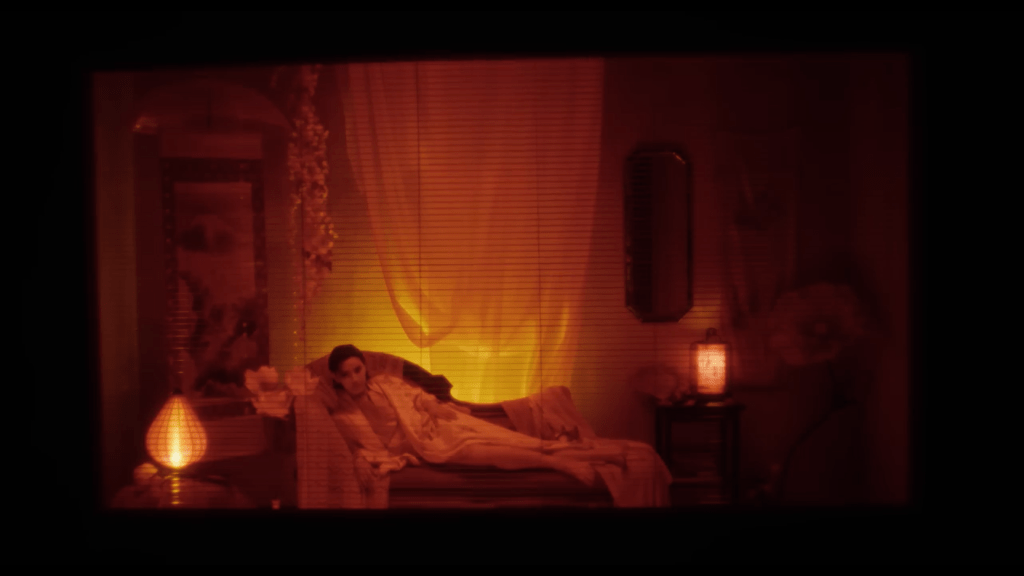
The video starts with a phone call. The girl receives a call on her landline and then the frame shifts to a guy (Luke Steele – Emperor Steele) in a dark with a red hue and dark hat. This is indication of her having a call with her inner self. The low-lit room shown throughout the video is the metaphor of she having discussion with herself and her inner thoughts and emotions. The phone call is proof of she handling her emotions by herself, it is her own conscience calling her.

Frame from Empire of the Sun’s Happy Like You MV
A low-lit room –

Watching reflection in mirror and hand movements on her own body shows she is interacting with herself. It is like a self-talk one has with themselves while figuring out what needs to be done. The low-lit room shows that dark part of our personality which also need acknowledgement. Even though the song calls for the person to be happy, this low-lit room has bigger significance. It is an indication that the real happiness comes with our acknowledgement of our darker side. Darker not in the sense of negativity but more in the sense of left out emotions which also need proper attention.

Frame from Empire of the Sun’s Happy Like You MV
The colors –  

Even though the music video looks colorful with some dark theme, the choice of colors used in this video are specific; there are characters, colors to the people shown in the video. Hot, cold, and warm / Red, blue, yellow, greens sometimes – indicate respective emotions and the interaction of the girl with those emotions. It is like she is trying to understand them and accept their presence to find the answers.

Frame from Empire of the Sun’s Happy Like You MV
The window –

In the early part of the song, you will see the girl peeking through the blinds to see what’s behind the glass. It’s literally her peeking into her dark side of the mind.

There is a glass window with blinds between a person and the girl. The person can see her doing all her activities. What girl sees is only her reflection, this absolutely support the symbolism of her having an internal conversation about the overall depressive state of her mind.

Frame from Empire of the Sun’s Happy Like You MV
The sadness, grief –

You will see one person (Nick Littlemore – Lord Littlemore) with the black tears seemingly away from the window in certain snippets of the video, who appears and goes withing few moments. This is that deep rooted feeling of sadness which the girl is trying to acknowledge. One person closer to the glass window observing the girl’s activity is her conscience and the grief is away from the glass lying in the deep abyss of her mind. I say the guy closer to the window is her conscience because it has symbolically shown with multiple colors and hues showing the variety of emotions one carries in themselves.  

Frame from Empire of the Sun’s Happy Like You MV

The rain in the end symbolizes new beginning, renewal.

Frame from Empire of the Sun’s Happy Like You MV

The creators of Music video deserve special applause

A deep dive into this ‘prayer’

For me this is not a simple song, it’s a prayer and I have a very strong reason to justify my point. A prayer from a literal, grammatical point of view is a request to higher powers which have better control of the reality than us. We surrender to such higher powers to show that we are humbled and are in a need for help through such prayers.

This song may not have that feel of “conventional” prayers, hymns due to its electronic and not so ‘religious-feeling’ notes, melodies but there is no written rule on the ways to compose a prayer anyways.

On first thought it’s weird, how can a prayer in electronic music make sense spiritually?

I say why not! I would say the composition itself dares the modern listener to appreciate the feeling of awareness of our higher self – hidden inside our own selves. It is like tapping into that unconventional, unexplored hidden, darker part of our own conscience.

The song mainly focuses on visiting and acknowledging the darker parts of our mind, especially when we are in deep sorrow. Abandoning such dark emotions thinking that they are not part of your personality actually intensifies them and when you are feeling weak and defeated – these emotions will easily cover your whole personality.

My point to call this song a pious prayer is that it makes the listener, the singer acknowledge their emotions. Good or bad whatever they are, they together make the personality whole. It also makes them to accept their urge to improve themselves in life. Even though we are asking the higher powers to grant us the powers to become our better version it is actually we – ourselves acknowledging our darker side to improve and build upon them for the better and evolved version of our selves.

The most important act to come out of any negative, depressed feeling is the acceptance of the fact that they are an inseparable part of our personality and only this time they have charge over our personality and we can take control from them anytime we want. You can only cure a person who really want to be cured and live ahead. The feeling to come out of such sorrows has to come from inside and it becomes easy once we accept our darker side of emotions, feelings.

So, the best way to handle any challenging emotional state, any darker emotional state is to first acknowledge them. Acceptance of something wrong or abnormal is the first step to effectively work on handling them. It becomes very difficult to accept that we ourselves are the originator of our emotional responses and its totally normal. We just feel that it is difficult to control our emotions because mostly they are triggered by the external stimuli and that is where the real trick happens. You see, the illusion that our emotions are uncontrollable is created by the assumptions that one need to control his/her surroundings to achieve what they want to become happy. That is why when such person fails, they are immediately drowned into the feelings of sadness. This also does not mean that you should always control your emotions and avoid expressing yourselves.

What I am trying to make point about is that the moment we start segregating our emotions as good and bad we end up in an illusion of happiness instead of the real happiness. Instead of avoiding and dumping, controlling your sad, dark emotions deep down, their acceptance as one more normal part of our personality helps us in a better way to achieve the real happiness.

Being sad justifies the moments of happiness and that also does not mean that you must remain sad – suffer more to be happy in bigger ways. You see, all happinesses in the world are same. Actually, they are not even same, they are subjective – to be precise, there is nothing to compare between any type of happiness. But due to the social media and the screens, we are always trying to compare our happiness with other people’s happiness. That is where the origin of the problem lies.

Looking on the other side of the shore same goes with the sadness; no two sadness must be compared. Acknowledgement itself is more than enough.

Working on sadness is like hugging an annoying crying kid; just a tight hug without any intent. The kid will stop crying.

Once we have accepted all our emotions as a natural part of our personality then only can we have the chance to recreate our personality. This requires humbleness and in most cases when people are thrashed with the reality and the sadness, when they are helpless the final resort is the spirituality where the help from almighty is requested. The moment you attribute this power to any object especially human-like object the religion starts taking shape (that would be topic or another discussion!) But without diverting the topic, only when we are humbled then we seek help from others. Prayer allows you to do that without any feeling of shame. That is exactly why I feel this song is a prayer. It allows you to accept your darkness, understand it and asks you to use it to create new happiness.  

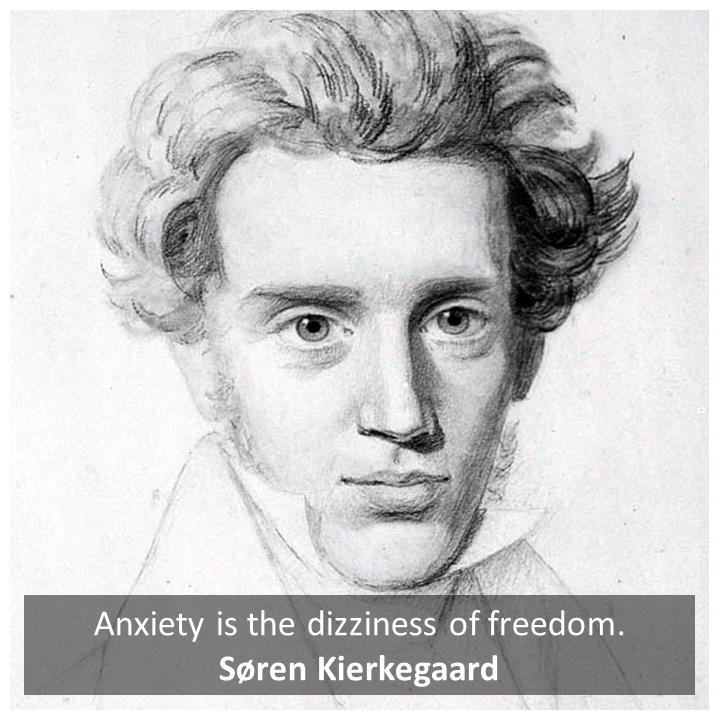
I will stick to Kierkegaard on this, we have to understand that when we are praying to the higher powers to handle our lives in a better way, we are actually asking the forces lying inside our own selves which hold the capacity to create the better version of ourselves.

We are capable of creating better times for ourselves on a condition that we acknowledge every part of who we are. It is just our mechanical nature to categorize certain things as good or bad sad and happy which takes charge of our whole personality.  You will appreciate this more once you closely observe the stories behind the creation of all types of the masterpiece humanity has ever seen. All those great things had that unconventional, hidden dark side which triggered the creation of something totally new and radical.

So, in order to become truly happy, one must accept their dark sides that is where the potential to have completely new beginnings lies.

Anxiety – Ugly (But Precious) Gift From Evolution

Anxiety serves to prepare a person for threats. Anxiety just like pain is one uncomfortable but effective way to cope up with the adversities in life, that’s how we build strength, resistance and deeper understanding of the surrounding for better and more precisely predictable future.
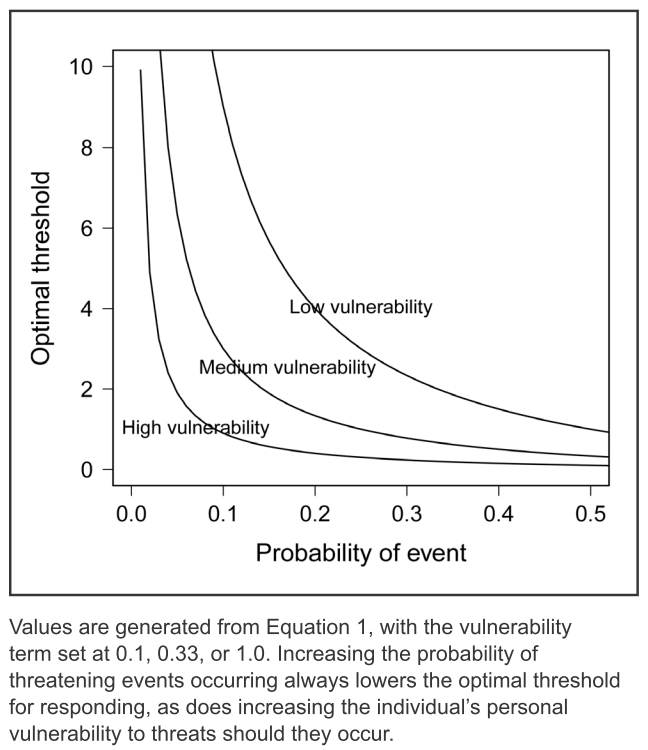
The remarkable concepts like smoke detector principal and optimal threshold in signal detection theory developed by modern psychologists/ psychiatrists help us to draw a line between a healthy anxiety (adaptive function) and unhealthy anxiety (pathology) and show ways to handle/treat them effectively.

Anxiety’s like a rocking chair. It gives you something to do, but it doesn’t get you very far

Jodi Picoult

Survival, Fear, and Anxiety

Every living thing if not have any goal in their lifetime would at least have sole goal of existing, surviving. Nobody wants to die and all of us always yearn to live forever but we know our limitations and hence are always on the quest of justifying the finite existence granted to us. Even if we are certain of the end closing in, our instincts are evolved in such way that many of the times, we bear the ability to cheat death. Humans have further extended cheating the death using science and technology.  Technology augmented our lives, reduced the risks of death, created a safe environment to grow, increased our chances of survival.

The fear of death and uncertainty of future is the key driver in our improved survival instincts and excessive use of technology to achieve it. We plan for things in advance, create backup plans if something would go wrong, have risk assessments before the execution, understand and decide according to the cost benefit analysis. That is what makes us humans and also separates from other species (although rest of the surviving species are also smart in their own ways to increase their chances of survival like viruses – but hopefully humans have other ways to overcome them)      

So, fear in a way triggers the actions to ensure survival. Anxiety – a sophisticated form of fear which prepares us in advance even before the fear causing scenario is supposed to happen. Simply put anxiety is an anticipatory type of fear to increase the chances of survival.

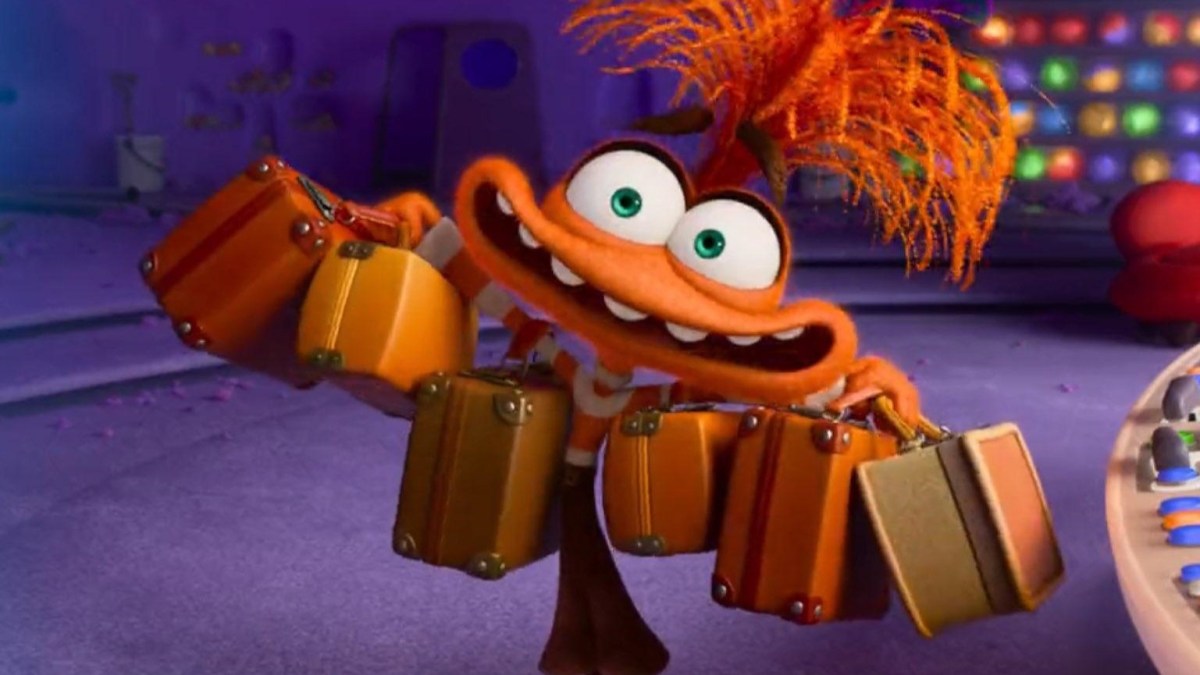
I am talking about fear and anxiety because they are bugging my mind for many days. Recently I watched Inside Out 2 movie and the it really delivers. The narrative has successfully presented how all emotions play a vital role in creating our personality in whole. Anxiety was new and important emotion presented in this movie. Every moment where anxiety came in focus it was fully relatable to me. Once I was done crying in the end the anxiety never left me (figuratively!), I felt a strong urge to understand the anxiety on deeper levels and what the domain experts have to say about anxiety.

The discussion heron is not a movie review rather I have made some attempt to summarize what the real-world scientists have to say about anxiety. I won’t be giving you the tricks, counseling and recommending any medicines to cure anxiety disorders. (Trained professional, experts are the best people to do that – “I AM NO EXPERT”)

My focus of the discussion is to question why anxiety exists in first place when we have an emotion called fear, another question is how to interpret the anxious emotions and what leads to anxiety disorder, where does the root of anxiety lie and is anxiety a bad or negative emotion? If it is so then why? and if not – then why?

While posing such questions and researching articles I came across some beautiful ideas, experiments and theories established by professionals in the field. I will throw light on these ideas in the coming discussion.    

The fear is real! – is it? – Defining anxiety

As I already mentioned that fear of death, the unknown and urge to live long are always fighting with each other. Humans rather every species existing today in nature mastered this battle to some extent and have ridden on chariots of evolution to augment – change themselves to adapt with the surroundings and improve the chances of survival.

A deer completely aware of its surrounding, grazing in the open grass fields can distinguish the rusting of leaves due to winds and rustling due to sudden movements of an apex predator like tiger. When the exams are on top of tomorrow, we are ready to sacrifice the night sleep to crack them (engineers would resonate more with this!) We know that the pain of failing, fear of failing is worse than painfully covering syllabus overnight! The fear is there and the anticipatory response is also there, only the level of sophistication is different.

Why I say sophistication? It is because due to the advancements in our lifestyles humans are rarely exposed to the real life-threatening scenarios like animal do (still today). Our fears are now more anticipatory. I would say most of our fears are now classified as anxiety.

Wikipedia goes like this for anxiety –

“Anxiety is an emotion which is characterized by an unpleasant state of inner turmoil and includes feelings of dread over anticipated events.”

So, the key differentiating aspect between fear and anxiety is the anticipation. Anxiety is a prospective emotion and a forward-looking emotion. Whereas fear is the emotional response to current threat. Fear makes us act immediately; anxiety keeps us ready for future threats. Fear will immediately decide fight or flight whereas anxiety will create plans, strategies for both and also calculate which one is more probable. (now you can appreciate why anxiety is more intense in over-thinkers, the analysis paralysis is one mild example of this.)

Anxiety is also an emotion important from evolutionary perspective as it has helped the current existing species to remain existent. The ability to anticipate future and preparing for it in advance gives competitive edge in survival.  

Why Is Anxiety Good?

While reading about anxiety I came across a very good paper by Dr. Randolph M. Nesse.

Dr. Randolph M. Nesse, UoM

Randolph M. Nesse is a Professor Emeritus of Psychiatry and Psychology in University of Michigan. The ideas and theory he created to understand and identify anxiety and its intensity are very important and interesting.  

Dr. Ness developed the smoke detector principle to control and quantify the medication used to fight with anxiety disorder. (He poses very simple but important question the opening of the paper that “Is he medicating his patients too much? is he harming them?”) The fundamental doubt Dr. Ness had was if the anxiety is evolved during evolution to improve our chances of survival, then why are we forced to reduce its symptoms and effects? Why are we using medications, therapies to reduce these symptoms, effects of anxiety. What if the patient is too anxious for given thing and that thing is too real to happen but the doctor dumbed that emotion down? (Dr. Ness calls it down-regulating the mechanisms causing anxiety)

The core of his thinking is that if we keep on “down-regulating” our anxiety which is an evolutionary gift to us, we might never be able to gauge the future in better way and prepare for it in advance to improve our chances of survival. (this is an exaggeration of the scenario but it proves a point)  

This calls for the quantification of anxiety. Which Dr. Ness did through the smoke detector principle.

The Smoke Detector Principle – How Much Anxiety Is Too Much?

Dr. Ness in another paper talks about the mechanism which is a feed-back system between the animal and its surroundings, which selects the emotional response to improve the chances of survival. The emotions we have today are the result of such evolution to maintain “homeostasis” – the balance among our bodily system to survive and function properly.

According to his ideas, anxiety works like a smoke detector.

The anxiety response is always trying to maximize the chances of survival and escape from a life-threatening situation. When we set a smoke detector it will go off even when the fire is not that extreme or if there is just some smoke which can be a controllable one. The smoke detector is designed to never miss a single fire causing situation. This ensures complete confidence in smoke detector that it will save people from every life taking fire scenario. But, it’s the same mechanism of smoke detector which forces people to evacuate frequently even when the fire or smoke where controllable or life threatening.

The frequent emergency evacuation even when it is not required is the same problem with the extreme intensity cases of anxiety. Always having armor ready for combat may sometimes make the soldier to lose the agility.

The patients with anxiety disorder have lowered sense of real threat. Their system triggers too many false alarms.

Dr. Ness established various techniques to quantify the levels of anxiety. The responses from anxiety include increased heart rate, rise in certain bodily chemicals – stress hormone secretion which can be easily measured as signals using instruments. Thus, the smoke detector principal paved a way to quantify the anxiety and understand what triggers the anxiety disorders in patients. It helps to understand how and why a level of anxiety is healthy in normal person and what level of anxiety is unhealthy and needs drug administration, therapy, how it can be administered by altering the setting within and around the person.

The core reasons why we need not to be intensely anxious about common life threats are as follows as Dr. Ness explains in his papers:

  1. Regulatory mechanisms have tendency to make errors and be extra defensive about situations
  2. We do not need to always be extra defensive to avoid given threat. (A machine gun in a bulletproof enclosure is not required to kill a mosquito.)
  3. Our body and surroundings have multiple layers of defense for almost all common threats. We are evolved and have survived in that way.
  4. Our environment is much safer than it was at the time we evolved

Types of Anxiety Disorders

Now that we have understood what is the nature of anxiety and what is its mechanism. Here are some important anxiety disorders to outline. Huge amount of information is available in literature, internet websites on these:  

  1. Generalized anxiety disorder (GAD) – too much worrying about ordinary things, problems like money, work, health, relations, family, and anything possible or imaginable, it may not exist in reality.
  2. Hypochondriasis – People suffering from this often worry about the health condition when nothing is wrong with their body. The word comes from feeling of stomach pain the person experiences even when everything is alright.
  3. Specific phobia – fear of anything but specific without any reason. It’s the fear for certain thing even when it does not pose threat.
  4. Social anxiety disorder (SAD) – In this scenario people intensely fear the public situations, humiliations, embarrassments, criticisms.
  5. Separation anxiety disorder (SepAD) – People in this case intensely fear the loss of person or a place
  6. Agoraphobia – it is fear of being in situation where there is no exit door, or escape strategy. Fear of using public transportation, being in large crowds are some examples.
  7. Panic disorder – these are outburst of all the collective or intensive fears, they come quickly and last for short time.
  8. Selective mutism (SM) – in this case the person is extremely fearful of initiating a conversation, does not speak to specific people or in specific situations or conditions even when they are forced to talk by humiliation or mocking.  

Post traumatic syndrome disorder (PTSD) and Obsessive-compulsive disorder (OCD) were once classified under anxiety disorders (now not under anxiety disorder in DSM – Diagnostic and Statistical Manual of mental disorders)

Signal Detection Theory For Interpreting ‘Anxiety Like Responses’

One good paper in the Canadian Journal of Psychiatry by Bateson et al. shows how the smoke detector principal can be used to decide the boundaries of different levels of “anxiety like-responses”. This paper talks about signal detection theory and optimal threshold. The beauty of this paper for me is the mathematical model it establishes to explain psychological events. A single formula will help you understand the difference between normal anxiety and anxiety disorder.  

With the smoke detector principal, we can now appreciate that not every common threat needs full armored protection. The signal detection theory in this paper shows where a person draws line when they overestimate or underestimate anxiety.

It talks about “optimal threshold” to show a threat response in given situation. Optimal threshold is a mathematical parameter which is function of probability of the occurrence real event and vulnerability of the individual.

The signal detection theory says that the superposition of response signals for given background noise and response signal from real threat give us the quantified judgement of how intensely the anxiety is triggered compared to the practicality of the threat – this quantified judgement is called optimal threshold (λ). Lower the threshold more intensely the anxiety will be triggered for given disturbance – background noise.

Figure 1 : Signal detection problem, how the optimal threshold can be calculated. (Credit: Anxiety: An Evolutionary Approach, 2011, Bateson et al., Canadian Journal of Psychiatry)

Equation 1: optimum threshold (Credit: Anxiety: An Evolutionary Approach, 2011, Bateson et al.,Canadian Journal of Psychiatry)

Here,

 λ = optimal threshold

 pnt= probability that there is no threat

 pt= probability that there is real threat

wfa= cost of false alarm

wmiss = cost of a miss

Once this equation comes in focus the discussion becomes interesting. The ratio of pnt to pt mathematically quantifies how practical the threat is. The ratio of wfa to wmiss mathematically quantifies what will be the cost if the anxiety trigger is accepted or rejected – will the subject live or die. This ratio shows how we trigger anxiety response. If the cost of responding is nothing for even a simple threat scenario, we will choose to trigger that response, same would happen if the cost of losing is ultimately the loss of life, we would trigger any possible anxiety response to avoid it. The authors call this ratio as individual’s vulnerability.

The ratio (pnt/pt) can be seen like this. If the surrounding really is hostile and consists of events which cause many life altering events than the safety ensuring events then the pt (probability of threat) will be way higher than pnt (probability of no threat and safer environment). In war situation where multiple bombings, gun firings are happening around you the probability of threat happening (pt) is way high than it not happening (pnt). The optimal threshold will drop immediately and anxiety triggered will be very high.

The ratio (wfa / wmiss) can be seen like this. If the person is way stronger to handle given threat, then the person will need no effort, investment or cost to trigger any reaction alarm to even a false threat. Consider the example where you are about to be bit by mosquito, you know the efforts to slap many times until the mosquito dies are not worthless, you will try many times to kill it even when you know it will swiftly escape, you are less vulnerable in this scenario. But now when you are about to be killed by John Wick (!?) you know for sure that even a pencil will do the job for him, any environment is hostile for you, you are vulnerable here, the value of losing life (wmiss)is way high than the cost of attempts to save it (wfa). Your optimal threshold will immediately drop down thus triggering intense anxiety.

Once you generate enough data for such optimal frequencies you can easily distinguish the healthy anxiety responses and anxiety disorders. I loved how these two factors (probability of threat and vulnerability of an individual) can predict the levels of anxiety in a person. This equation explains and can also quantify why pregnant women have heightened awareness of their surroundings, why people get insomniac after constant mental stress, why restless people are always in the mode of action and fight, why reclusive people hesitate to visit foreign, unknown places.    

Your Surroundings and Mindset Matter!

Figure 2 : Three levels of vulnerability, here optimal threshold and probability of event can be correlated for difference in the anxiety responses (Credit: Anxiety: An Evolutionary Approach, 2011, Bateson et al., Canadian Journal of Psychiatry)

It is really interesting what the authors have achieved and established in this research. They compared three different levels of vulnerability and explained them using given plot.  The thing to highlight here for anxiety disorders is that they emerge from the environments which always keep on presenting high probabilistic practically threatening scenarios. The anxiety disorders also emerge when the individual feels more vulnerable.

Higher the vulnerability lower will be the optimal threshold and intense will be the anxiety response.

As shown in research, in the uncertain times of Covid-19 people who were locked in their home had no disorders, were not exposed to the virus also felt anxious and faced some anxiety disorders because of the environment they were in.

If the person feels less vulnerable and stronger then even for given strong life-threatening events the optimal threshold will be higher thus the anxiety triggered will be lower.

Are you noticing where this is going?

This is a mathematical model which shows how a healthy, supportive, and safe environment and also a strong mindset and better judgment of reality is important for handling challenging situations.

For a person suffering from anxiety disorder, it becomes very important to make sure that they know that they are in a safer environment and are cared for. It is very important to make them feel safe and understood. Creating a system of critical thinking and reasoning can also help the person to have a sense of strength and high resistance to vulnerability, this also goes for physical strength. The vulnerability is not only mental it is also physical when it comes to reality.

You will now appreciate why teenagers and trauma patients are more exposed to anxiety disorders. Mostly and generally in teenagers it is due to the uncertainty of many new things happening with them simultaneously and in trauma patients it’s the constant bombardment of life-threatening events in hostile environments.

Conclusion

Anxiety serves to prepare a person for threats. The emotion called anxiety is an evolutionary gift to ensure long survival of our species but as it is also related to our primitive instincts, we mostly let anxiety overpower other emotions in seemingly safer scenarios. Strategy and anticipation are the gifts of anxiety but if overused they will end up in imparting unnecessary caution and overprotective attitude which inhibits adaptation to changes there by slowing evolution of our species. Anxiety just like pain is one uncomfortable but effective way to cope up with the adversities in life, that’s how we build strength, resistance and deeper understanding of the surrounding for better and more precisely predictable future.   

The remarkable concepts like smoke detector principal and optimal threshold in signal detection theory developed by modern psychologists/ psychiatrists help us to draw a line between a healthy anxiety (adaptive function) and unhealthy anxiety (pathology) and ways to handle/ treat them effectively.      

These theories show how we can quantify seemingly intangible emotions like anxiety and way to handle them. If you can measure something effectively you can control and predict it effectively. All credit goes to such brilliant minds!

References, Image sources and further reading:

  1. Fear of the unknown: One fear to rule them all?, 2016, R. Nicholas Carleton, Journal of Anxiety Disorders
  2. Natural selection and the regulation of defenses: A signal detection analysis of the smoke detector principle, 2005, Randolph M. Nesse,Evolution and Human Behavior
  3. Natural Selection and the Regulation of Defensive Responses, ANNALS NEW YORK ACADEMY OF SCIENCES, Randolph M. Nesse
  4. Anxiety: An Evolutionary Approach, 2011, Bateson et al., Canadian Journal of Psychiatry
  5. The relationship between perceived stress and emotional distress during the COVID-19 outbreak: Effects of boredom proneness and coping style, 2021, Yan et al., Journal of Anxiety Disorders
  6. Long-term effectiveness of cognitive behavioral therapy for youth with anxiety disorders, 2018, Kodal et al., Journal of Anxiety Disorders
  7. Anxiety, National Library of Medicine, www.medlineplus.gov
  8. Anxiety Disorders, National Institute of Mental Health
  9. What are Anxiety Disorders?, American Psychiatric Association
  10. Anxiety – Wikipedia
  11. Randolph M. Nesse, M.D., Professor Emeritus of Psychiatry, Professor Emeritus of Psychology, Department of Psychiatry, University of Michigan
  12. Everything You Need to Know About Anxiety – www.healthline.com

Questioning Our Consciousness – Solipsism

Solipsism warns about the impossibility to know everything in absolute manner but if appreciated in a proper way it guides us to seek for continuous up-gradation from existing lesser absolute truths to newer and better absolute truths. A pure solipsist would be delusional, neurotic but a practical solipsist would bring about a revolution in his own world thereby in the worlds of the others and even in the whole world altogether!

The problem of other minds – do they exist in reality or the reality just exists in my mind?

Have you ever felt that words are failing to express the joy you have? Do you feel uncomfortable when you are unable to understand the vibe of your environment? Is it just you or is it the surrounding? Do you sometimes feel that everyone is treating you in a certain way and then you realize that actually it was you who was behaving differently? Do you get the feeling that someone is behaving in a way but thinking in a completely different way? Am I unable to get early in the bed because I don’t wish so or the weather is cozy?  As if they are hiding something and you would never know what and how they feel? Could you make others feel your exact experiences in the exactly the same way? If yes, then how? If not, then why is impossible? How come our senses have practical limitations? Are those the limitations of our mind? Is empathy a real thing or is it just the construct of my mind to mirror the people in front of me? Why my experiences are so private?

The questions posed through Solipsism may clarify the origin of these ideas.      

Where solus means “alone” and ipse means “self” in Latin

A philosophical idea that only one’s mind is sure to exist

Origin of Philosophy – Knowledge is power

Everyone of us is born with a tendency to have control over the surrounding. This is closely connected to our survival instincts. Though our survival instincts are mainly primitive what differentiates us from rest of the animals is our reasoning ability. Almost every animal is proven to have emotions, many of them can think logically at least from survival perspective, some of these animals have shown signs of intelligence closer to humans when trained properly. Our reasoning ability is some sort of highly evolved survival instinct. Reasoning introduces understanding, awareness of the surrounding in which we live, this understanding increases the predictability of the future thereby increasing the chances of the survival of the species. So, we can say that the better we understand the system which w are part of the better will be our chances of anticipating the risks of the environment; the better we anticipate the upcoming risks the better we can be prepared for to handle them to procreate further thereby ensuring the survival.

That is why we have many fields of knowledge to understand the establish different aspects of the reality we live in. When there were no boundaries between different fields of knowledge everything would start from simple question (even today single important and specific question can establish a completely independent field of knowledge) We are always one question away from a completely new perspective towards reality. (See Gödel’s Incompleteness theorem if you are interested in this idea)

Philosophy could be attributed to the most primitive, original, and the crudest field of knowledge. Although most part of philosophy is properly structured, it is crude due to the plethora of unanswered questions it has. Once the fundamental questions in any domain of understanding are answered, once the paradoxes lying at the end of an established field of knowledge are solved then a new field gets created and separates from the fundamental philosophy.

(The primitive man survived on whatever nature provided then the humans realized that one can sow the seeds to get certain crop from certain soil in certain season in this much quantity thus came farming – Botany, Geography, Mathematics and many more. When we were unable to understand the Newton’s theory of gravitation to some heavenly bodies (the perihelion of Mercury) then Einstein’s theory of relativity disrupted our existing understanding of the universe. It has literally affected every field of modern knowledge.)

Skepticism – Keep on questioning until you get consistency in understanding

So, in nutshell, the job of philosophy is to ask those questions which would challenge the complete domain of a certain field of knowledge, once you get the proof of this question then it becomes the part of that field of knowledge or a completely independent field of knowledge. They detach from the Philosophy. Philosophy was never meant to provide answers, if certain philosophy is providing proper answers, proper predictability then it is a field of knowledge.  

What happens to the questions which remain unanswered?

What if there are unresolved paradoxes at the end of the a fully established field of knowledge?

I would say the philosophy carries the unanswerable, paradoxical nature – the imperfections in our understanding until they are formally, satisfactorily, and most importantly – coherently answered. That is exactly why philosophy always seems crude, as if it is carrying all the imperfections in our understanding of the reality.       

Skepticism lies at the base of the philosophy. Once you get consistent answers to the questions posed, you keep on questioning that consistency. Everything (and I mean it) will end at a point of paradox or inconsistency. (If one finds exceptions then it is better to upgrade that theory otherwise soon it will get replaced with better theory.) There are ways to deal with such paradoxes/ inconsistencies (See Agrippa’s Trilemma if it interests you.)

Solipsism – Extreme skepticism – Questioning the existence of the question and the questioner!

So now we that we are familiar with the nature of questioning everything to establish consistent answers thereby to create knowledge, it is important to know how we do so. What make us answer these questions in a consistent manner. Our experiences, observations of the surrounding, our interaction with one another and the results of these interactions give us the fundamental model of reality. This model is developed by our minds – bunch of neuron connections physically per say – the collection of the sensorial feedback from the body.

Now the question is, as we go on questioning the reality, the final question is come like this –

If there are still some gaps in my absolute understanding of the reality which are creating this uncertainty somewhere, which is creating paradoxes, inconsistencies; what exactly is absolute? What exactly is the most certain thing in the world? What is the most real thing, real measuring scale with which I could measure and understand my surrounding?

Solipsism says that only the existence of your mind is certain, the existence of other minds will always be uncertain. As the presence of other minds is uncertain, you can be sure of only what you experience as “the reality”. As only you absolutely and fully realize the reality through your mind, the reality is just mere figment of your mind and imagination (when stretched too far!) When you try to transfer your minds realization of the reality to others you will always see that something got lost in translation. If reality is just the construct of my mind, then what exactly is existence?

Why Solipsism stands strong? – Why idea of living in the Matrix fascinates us?

Is the creator playing with my mind to show me a false reality for something different which is beyond my access?

The earliest evidence to ask such question is found in the writing of a Roman skeptic Sextus Empiricus quoting Gorgias (c. 483–375 BC) as follows:

  1. Nothing exists
  2. Even if something exists, nothing can be known about it
  3. Even if something could be known about it, knowledge about it cannot be communicated to others.

Then René Descartes (the one who established Cartesian coordinates) came up with one of the famous quotes/ ideas about the absoluteness of the reality.

Cogito, ergo sum.  

I think, therefore I am.

René Descartes

Simply put, Descartes argued that, the most certain knowledge one can have is through personal experiences because knowledge transferred from others are never perfect also there is no way to measure where the translation was perfect. The existence and experience will always be discrete – separate; it will vary mind to mind, so what is reality for you is the only absolute reality; that is why absolute knowledge is private property. As you can be only certain of your experiences only your mind is the reality, everyone else’s minds don’t exist. (OR should I say others are mindless! Jokes apart!)

George Berkeley – Bishop Berkeley is also one famous philosopher who developed the ideas of immaterial-ism. He is known for the famous analogy of “a falling tree” although his writings never explicitly mentioned such analogy but let us say in a crude way, he pointed towards it. (See, even here we can see the gap that is created during the communication of an idea, a simple analogy someone established before us!)

So, the idea is, if a tree falls in a forest and nobody saw it falling, nobody heard it falling, nobody felt the vibrations of fall how come we be sure that a tree fell down somewhere? Unless and until someone observes the fall through their senses one can never be sure that the really fell. So, if no one noticed it and in the end even you didn’t notice the fall, then the tree never fell down!

Your mind, you consciousness and you had to exist absolutely to observe, experience the fall of the tree. If you weren’t there to see and experience the fall, how could you be so absolutely sure that the tree fell?

Solipsism – Trust no one but yourself!

Now, you would have understood what may be going wrong with Solipsism!

Modern day answers would be like “I would have been presented with a video to prove the fall.” OR “I would have been presented with the person who cut down the tree”

But the counterargument would go like this “What if the video was faked? (by using deepfake!!!)” OR the witness found to be forged – I wouldn’t know if the person is lying with confidence (even polygraphs tests can be fooled, false alibis can be created!!!)

Jokes aside, these are mere representative examples to demonstrate the point. When you start formally questioning the nature of reality by using the most consistent tools that we have in modern science, then this question again peeks out in a bizarre way!!!

According to quantum mechanics, the moment we measure the state of a quantum object, its state changes. So, the measurement of that instance will never refer to the actual state of the quantum object. Meaning that you could never be sure of what actually happened before or at the instance of measurement. You can have a probability but you will never be sure.

Your observation had to exist to define the state of the quantum object, if you weren’t there were infinite state of the quantum object to exist. Your observation assigned it a definite, objective, absolute state. Your observation made it a real “reality” otherwise it was always possibility rather probability of many events. Please note that these are not just the flights of minds by the most compelling specimens of humanity, these are actually mathematically, experimentally proven ideas.

The one liner to understand solipsism is –

Your personal experience is more dependable than common sense!

I understand that how is it even possible to question common sense, common experiences. Solipsism is such a foolish idea rather the most foolish idea one can have! But, bare with me when we try to answer the paradoxes which lie in solipsism. Any person who is having existential crisis has been warned hereon!

Different ideologies in Solipsism

Metaphysical solipsism – the most extreme solipsism – the external world doesn’t exist. My mind creates the reality for me. (A rude adamant philosopher made it clear!)

Quick Joke – Unless I didn’t observe the tree falling, it is still there (and maybe giving fruits if it is a Mango tree!)

Epistemological solipsism – The reality around me is absolute and objective, but we cannot know it directly as it is through our sense and experiences. It is the limitation of my senses which inhibit my understanding of the reality. (This is a humble approach I would say!)

Sensory organs are not the experiences from the reality rather they are just the interpreters of the reality with practical limitations. There is no direct agency to experience what others are experiencing, to know other minds.

Quick Joke – A person drinking tea finds a fly in his tea asks the waiter to replace the tea. Waiter helplessly trying to convince his of not having any fly in that tea gives up and replaces the tea. After few same complaints from same person and replacing many cups, it is discovered that the fly was in the guest’s spectacles!

It’s like I cannot hear certain sound frequencies but certain animals can hear those frequencies. I can see only the light in visible spectrum, but other animals can see in another spectrum. It’s the limitation of my senses which dulls down the objectivity of the reality. You have to be ‘the God’ to understand all the spectrum of the reality! (excuse my introduction of some spiritual power here but we will come back to this again!)

This is the most practical, plausible and calming version of solipsism.

Methodological solipsism – Every logic is fallible, that is why you could never know what the absolute looks like. There is nothing like ‘the God’, if there is something supreme you won’t even understand how supreme it is and why it is so! (I know we are getting spiritual to go away from early religious epistemological solipsism but that is how it works)

It says that even our brain, our mind is the part of external reality. (I am feeling uncomfortable here.)

Quick Joke – A criminal was convicted for murder. He went scot-free because he didn’t do that murder, his had hand – rather the knife did the murder.

Jokes apart, but consider cognitive dissonance. Many things which we learned in our childhood as the absolute concept, as the ultimate truth gets replaced by something life changing and even more true and absolute. So, what is real truth is beyond our understanding.

Paradoxes at the end – Where Solipsism would break down!

The paradoxes of the solipsism are the most fun part which explain why solipsism deserves any explanation.

Here are some doubts,

1

If my mind is the absolute reality I live in, then why can’t I convince myself to survive by just imagining that I have eaten a lot today (while not eating even single crumb!)

I could just survive by thinking of eating the best food I could “think” of.

Everyone knows that this is not the real case. A person with that much will power and fasting will barely survive.

Now, the counterargument for this (and I love this part due to pop-culture reference!) –

What if your brain is kept in a container giving some electrical impulses exactly like in movie The Matrix. The matrix is programmed in such way that not eating will kill you definitely.

Solipsism ends in a matrix, a simulated reality beyond our experiences!

2

If there no such thing like matrix then how come all of us would die if we face the same degree of starvation? How come the experiences (even though not purely translatable to others but still the same based on the objective, consistent observations) we have in such cases match?

Many of the knowledge established as the most absolute, consistent and closer to the reality is developed because all of us had same experience (at least objective experience, ideally fully efficient translatable experience) in every one of our lives.

The answer is that we all share a common consciousness which enable us to experience the same scenario. We all are living a common and shared dream.

Our reality is a shared dream! Our consciousness is a shared dream! We all are connected by something so common and absolute thing. A spiritual person would call it the soul, a scientist would call it the energy.

This is technically known as the Solipsistic idealism – the best answer we have which will not blow our brains and will not give us the existential crisis!

3

The bizarre one comes here –

Even if the matrix is real, you would never be able to get the absolute understanding of it. Existence of external absolute reality is uncertain. You won’t even know if it is called matrix or a chewing gum or something else!   

Pro tip – don’t over-love solipsism

You must understand that the arguments in solipsism are quite good. (It is just my failure of communicating those to you if you are not convinced till this point. I apologize for that.)

If the reality is just created by my mind/ in my mind then there is no way to verify that from external agency.

But, our experiences, emotions (at least some of them) always feel common. René Descartes Descartes posed that the experiences, sensory feed-backs are purely created by our mind but modern science proves that babies are not born with absolute ideas of reality (it is possible that they are exposed to certain sensorial experiences from their mother right from the conception) The absolute experiences they get are from their interaction with the surrounding objects and people. Our personalities, identities are created from mutual interactions. We cannot be ourselves without the people around us and the environments we are exposed to.

Only a completely isolated person would have the polarized inclination towards solipsism.

But again, what if it is just a construct beyond our understanding? There is no way for us to know that.     

Even if there lies a construct beyond our understanding, there are some practical ways to purposefully ignore extreme ideas of solipsism rather leverage the ideas of solipsism.

If you are bound to the existing construct of reality which is practically within the reach of your experiences, your mind then you must abide by the laws of that reality. If you only stick to only the reality of your mind, then your so called “absolute truths” will immediately be challenged by the truth of others. It will be a blood bath but let your older absolute truths die to let the newer ones be born. They won’t be ideally absolute but at least they will be better than the previous one.

Even if the illusion of reality is shared among all of us as a common dream, we would never be able to escape that. Meaning, again play by the laws of the land. Ignore the existential crisis on the absoluteness of reality. At least try to get closer to the reality.

I think this is exactly why even though the pursuit of solipsism may feel worthless in the end but it’s understanding and appreciation gives us a hope to continuously keep on improving our version of the reality – private or shared whatever they may be.

Solipsism warns about the impossibility to know everything in absolute manner but if appreciated in a proper way it guides us to seek for continuous up-gradation from existing lesser absolute truths to newer and better absolute truths.

Learn the rules to break them in a better and glorious way!  

The acceptance of Solipsism (in a positive way) can also create an urge in person to seek for the real freedom. Solipsism in positive way urges the person to take that inner route in order to create the world of their desires through disciplined thinking (in a healthy way and not in a delusional way!) A pure solipsist would be delusional, neurotic but a practical solipsist would bring about a revolution in his own world thereby in the worlds of the others and even in the whole world altogether!

Lifelong freedom for an hour

The societal construct, the men and even the women in society have created certain conditions where other women receive false freedom. This false freedom facilitates women to deliver benefits to society but somehow the society is not liable to return the favor back to these women. That is exactly where feminism becomes important. Kate Chopin’s short story called “The Story of an Hour” gives us a glimpse into what sacrifice and freedom means for a woman. This short story is summoned to be one of the important and earliest pieces of the feminist literature.

The ideas of feminism from Kate Chopin’s short story “The Story of an Hour”

Inception of feminism

Kate Chopin’s short story called “The Story of an Hour” gives us a glimpse into what sacrifice and freedom means for a woman. This short story is called as one of the most influential and early parts of feminist literature. It shows how women in those times sacrificed their freedom under the influence of the society just to maintain and continue the system as it was. People (still today) say that ‘it is very difficult to gauge what is going on in a woman’s head’ or ‘it is very difficult to know what a woman is thinking’. Kate Chopin’s ‘The Story of an Hour’ gives us a peek into a woman’s mind when she is allowed to think what she wants to think. Physical freedom is one part of freedom but mental freedom is the truest form of the freedom, I would say.  

The story of an hour was first published titled ‘the Dream of an Hour’ in Vogue magazine on 1894 later it was republished as ‘the Story of an Hour’ in 1895. We will see why and how this short story represents feminism in its truest form and possibly in the most misunderstood (compared to the modern interpretations of feminism) ways.

Summary

We come to know that Mrs. Mallard is a heart patient who is about to be informed about the news of the death of her husband in a railroad accident. Her sister Josephine and Mr. Mallard’s close friend share this news with her. Mrs. Mallard is obviously sad hearing the news of the demise of her beloved husband. She then teams with some moments of solitude to handle this sorrow. Where she suddenly realizes that she could be free now as she won’t be under any obligations from society and her husband. She feels her rebirth and onset of new life with absolute freedom approaching towards her. She wants to cherish this realization of freedom in her room alone for some moments but suddenly she notices that some person has arrived on door. Upon the request of her sister, Mrs. Mallard goes to see the person at the door and founds that the person is Mr. Mallard – unharmed and alive. She dies in the shock. Doctors diagnose her death due to the heart attack from extreme joy.

Life of the author – Kate Chopin

Kate Chopin was born on 8 February 1850. When she was just five years old, her father died in a rail accident. Her mother was the second wife of her father. In 1870, she got married and had six children in the period of 1871 to 1879. Her husband died in 1882 from malaria and left a huge debt on her head equivalent to $1.27 million in today’s valuation. She worked her ways out to bring the business back to life which she sold after two years. Her mother died in 1885.

Kate became depressed with sudden loss of her husband followed by her mother. Her friend Dr. Kolbenheyer suggested her to use writing as a therapy, a way to vent out and express her emotions and as a way to sustain income.

The most important novel published in 1899 by Kate called “the Awakening” was very controversial and scandalous to those times due to unacceptable feminine point of views.

As her writings were considered controversial, Kate much more resorted to short story writing. She died on 22nd August 1904 due to stroke.

Realistic fiction

The genre of Kate’s writing is a realistic fiction. Where the setting of the story is intended to feel realistic. The characters have all human limitations, practical interactions and nothing is stretched out of imagination to feel unreal, inorganic or magical. You will see Kate’s own life is reflected in her writings. People say that one can trace out her whole biography through her writings.

Now let us understand the Story of an Hour.

A woman’s whole world – her husband (?…)

Mr. Mallard’s death in railroad accident is drawn from the death of Kate’s father who exactly died in rail accident. She starts the events in this story from the point of view of her mother in a way. Kate was one of five children her father had and she too had six children. In a way, she resonated with her mother who was responsible for taking care of children. That is why she starts the story with the death of the husband in a rail accident to establish the connect between how her mother would have felt when she heard the death about her husband – Kate’s father.

She thus considers her mother as one powerful woman. Please note that after her father’s death Kate spent her days with her widowed mother, widowed grand mother and also widowed great grandmother who never remarried. Her use of the father’s death in rail accident is actually a setup used to link the emotions of her mother in this story.

“She did not hear the story as many women have heard the same, with a paralyzed inability to accept its significance.”

One will only appreciate the depth of this sentence when they are told about the situation of three generational widows Kate grew up with. The ability of Mrs. Mallard to accept the consequences of the death of her husband is thus the reflection of how her maternal side handled the consequences of the death of the man of their house.

A woman feeling helpless after the death of her husband is the most acceptable reaction even today but Kate’s protagonist not reacting in that way was the first shock to the society of those times. It’s not like she went paranoid and numb due to shock from the news of her husband’s death. Kate’s choice of words in this sentence hence is very deliberate.

Please understand that there is no way to indicate that she hated her husband throughout the story.

So, the initial setup and reactions of the protagonist are Kate’s ways to show that a woman’s life was never only limited to her husband. You should also understand that after her own husband’s death, Kate was burdened with huge death incurred from him. Getting out of such death surely might have made her more practical and objective. That is also an important reason which shows how her protagonist reacts to such news in a practical way.  She understands that it’s huge loss but she also knows that her remaining life is standing in front of her.

Painting the scenery of freedom

The elements used in the early setting of the story ensure the successful impact Kate leaves on the minds of the readers. She gives just enough information about the weak heart condition of Mrs. Mallard and surety of sources for Mr. Mallard’s death in the rail accident.

Then the story solely focuses on the protagonist of the story – Mrs. Mallard.

Mrs. Mallard now submits to solitude in her room. Each and every description of events and objects used hereon by Kate are very deliberate to reflect how the mind of Mrs. Mallard is reacting to the realization of the loss of her husband. She is yet to understand the freedom she is about to enjoy but how she come to that realization of freedom is one such “brain-candy” for the readers. They are not given direct explanation on how the protagonist is feeling rather they are made to feel the exact emotions of the protagonist. That is the beauty of Kate’s writing. She creates a portrait of a scene which readers enjoy interpreting.

So, here goes the scene, every sentence in this story hereon is one hidden urge of every normal human being but especially a woman here:

“She would have no one to follow her”

– indicates a person’s longing to leave life on their terms and without the judgments and prejudices of the society.

“- trees (in the open square) that were all aquiver with the new spring life” 

– indicates a new beginning full of hope, a restart to living life without restrictions

“- the delicious breath of rain was in the air”

– indicates that even air was seeming tasty and ready to sow new beginnings. It is that extreme joy which was buried deep down which got the chance to come out which is making even the air “delicious”.

Please understand that this joy is not the effect of the death of her husband and many readers always connect wrongly. It is innocent joy of the upcoming realization of freedom – just realization -the real freedom has not achieved yet. Just its realization is joyous, imagine what would real freedom would do to our protagonist!

“a peddler was crying his wares”

– indicates high importance given to general and normal phenomenon.

What does a street seller do? He screams, calls out the items he sells. There nothing exciting in it.

But when you are full of joy and excitement, even a mundane, normal thing feels like a happy, jolly event.

Mrs. Mallard noticing such normal activity out of all the beautiful things is the indication of what it really means for her to realize freedom. Kate would have dropped the moment of Mrs. Mallard noticing the peddler but she injects the realism in the fantastical, fanciful feeling of freedom for a woman. (Kate would have made unicorns dance on the streets for Mrs. Mallard but that totally destroys the realism and sincerity and thereby seriousness of the emotions of the woman. That is Kate Chopin for you! It is cinematic – feeling-wise but completely real from observational POV)

Mrs. Mallard noticing a distant, faint son with twitter of sparrow shows how she is now receptive to even a small joyous event. You should understand that when a person is sad especially depressed even the happiest thing in the world can’t make them happy easily and reverse is also true. When you are truly happy your brain will notice even the minuscule events of joy around you.

“The clouds piling up in the sky” is used to show the readers that the emotions Mrs. Mallard had seemed like her life itself had become a beautiful scene nature has painted itself.  

The objects and emotions used to express emotions of the protagonist in this scene by Kate Chopin actually show the innocent nature of freedom the woman was longing for. The happiness is not due to the death of her husband. Only a fool will assign this happiness of Mrs. Mallard to a devilish attribute as the protagonist had no hatred towards her husband. Just for a moment the woman has detached herself from the definitions of the society, she got to experience this moment only when the news of Mr. Mallard actually detached her from the obligations of the society.

The readers will clearly appreciate this in the next moments of the story.

Repression and Sacrifice

Kate Chopin very carefully presents the emotions of her protagonist. She has made every attempt to clarify the feelings of freedom Mrs. Mallard are not devilish. She justifies feelings of happiness for the freedom and the feelings of regaining the control over the course her life for a woman in a pretty convincing and real way. The efforts made are sincere and pious.

 “-as a child who has cried itself to sleep continues to sob in its dreams”

It shows that the sorrow has impacted Mrs. Mallard very deeply. She is surrounded by various types of feelings. It is this turmoil of different emotions and you are confused about how to label certain type of emotion you are trying to feel out of it.

What happens next is – I would say – the core of every woman’s multifaceted feeling. The beauty of Kate’s writing here is the ways in which she tries to portray the innocent longing of a woman for her freedom. The readers should think with clear intent with no prejudices to judge the feelings of Mrs. Mallard here.   

“There was something coming to her and she was waiting for it, fearfully. What was it? She did not know; it was too subtle and elusive to name. But she felt it, creeping out of the sky, reaching toward her through the sounds, the scents, the color that filled the air.”

The cautious use of words here is phenomenal! She describes the feeling approaching the protagonist. Its like it was not born from inside, its like the protagonists didn’t intend to “feel” that feeling. The sounds, scents and the colors portrayed in the painting of happiness that Mrs. Mallard was experiencing were just the surface. Something different was hidden behind, buried deep down in that happiness. The sounds, scents and colors were just the mediators of these emotions she intentionally didn’t want to feel. The sentences presented here by Kate to the readers are meant to show the feelings intentionally buried deep by her protagonist.

The protagonist had killed her ambitions wishes so deep that now these feelings were completely strange for her. She had denied these feelings initially just for the sake of the betterment of her family and society. What society considered as wrong, she silently accepted it as wrong even though it may compromise her ambitions and wishes. This is a subtle reference to how a woman suppresses her emotions for the betterment of her loved ones.     

“She was beginning to recognize this thing that was approaching to possess her and she was striving to beat it back with her will – as powerless as her two white slender hands would have been.”

The feeling approaching Mrs. Mallard is explained in a way as if some devil is trying to conjure her. It is very important decision taken by Kate Chopin to indicate that how even the fundamental feeling of freedom for a woman of that time was considered as a sin. She tries to reject the freedom for the betterment of the society, she sacrifices, kills her growth, aspirations and toils for the success of the others on such an extreme devotion so that it becomes her second nature. That is why when she thinks for her well-being, society labels it as a crime. Then she also accepts that reality and remaining powerless she succumbs to this monstrous way of the society.

The third person characterization of the feeling of freedom in the form of devil is intentionally used to show how the society has devalued even the fundamental emotion of freedom for a normal woman to rock bottom.

Today this will not seem like a big deal, but the time when this story was published Kate Chopin made an attempt for women to feel free from the deep rooted traditional patriarchal setup. It makes others understand how women were forced to suppress their wills and wishes, how the societal structures undervalued them and at the same times it makes the women realize that what feeling they are having are in no way bad, there is no way to suppress such feelings of freedom.

“free, free, free!”

Kate points directly to what a woman actually misses when she has lost her true identity. She misses her freedom. Freedom to decide the course of their own lives is the fundamental right of every person. Its not just about women, but Kate’s attempt here is to make others understand how women were more exploited due to the societal setup of that times. As she herself had gone through such experiences she was successful to pen down these feelings to her readers.

“She knew that she would weep again when she saw the kind, tender hands folded in death; the face that had never looked save with love upon her, fixed and grey and dead. But she saw beyond that bitter moment a long procession of years to come that would belong to her absolutely. And she opened and spread her arms out to them in welcome.”

Kate wants readers to understand the purity and innocence of the emotions her protagonist has. It’s not like she longed for freedom because her husband treated her badly or tortured her. Rather Mr. Mallard is shown as a kind and loving husband here. His own wife thinks so; what other proof do you need?

Mrs. Mallard was sad for the loss of her loved husband. But at the same time, it was the societal construct which restricted her from deciding the course of her own life. Death of her husband exposed this flaw in front of everyone. That is exactly why she misses her husband but also understand that this is the how she can be truly free – the pressure from society is released through the death of her husband. It’s not like she despised her husband but his death definitely exposed the cruel construct of the society created to limit the feminine potential.      

It is human nature, we always need a pivot to judge something, understand something. When we are shown a picture as a good, we love to interpret exactly opposite of this picture as the bad one. It is basic flaw in our general thinking to attribute opposites two separate parts, good and bad. In alignment of same thought, if a woman desires to become free general thought goes like this: if she wants freedom then she would not need support of others, she can do things on her own, it is just the society that is suppressing her, she can do all things just like men do. This is the moment where the modern feminism starts losing its core – the tender yet powerful feminine emotions. There are countless examples in modern feminism where women are trying to prove the point by doing exactly what men do. This is the part from where the feminism starts losing its real meaning.

Kate made a successful attempt to define what is the meaning of freedom for a woman. Giving woman her freedom will surely not make her not care for her loved ones – especially the male loved ones. In the end, women are more capable to nurture love and affection. Freedom to do anything in their ways will not steal the femininity from women – that is where their real advantage lies. That is the core of feminism lies I would say. It is not about doing what exactly men do to prove the point. It is about equal exposure of both men and women to everything the nature, the life has to offer. Feminism was never about competition to catch up with the privileged masculine gender. It is about the freedom to decide and preserve one’s identity especially women.       

“There would be no one to live for during those coming years; she would live for herself. There would be no powerful will bending hers in that blind persistence with which men and women believe they have a right to impose a private will upon a fellow-creature.”

“She would love for herself” is not just a simple set of word to describe the value of freedom for a woman. It also shows how many sacrifices women make to let others around them grow. Please note that it’s not only the men who keep on impose their own will to suppress women, there are other women too who try to force their wishes on such women. That is exactly why Kate has both men and women for the down fall of such women. So, it’s not fully about patriarchy only, it is about whole societal construct. There are many good examples where women themselves were responsible for the suppression another woman. Kate consciously, deliberately wrote these sentences along with the concept of “a private will” to show that only men are not to blame. Many people especially highly celebrated feminists miss this point. But there is still hope given that this clarity was already there when the concept of feminism was in its inception which is somewhat comforting for humanity. Kate is not pointing towards certain gender for the downfall of a woman, she is suggesting a reform in the mentality of both men and women thereby whole society.

“And yet she had loved him – sometimes. Often she had not. What did it matter! What could love, the unsolved mystery count for in the face of the possession of self-assertion which she suddenly recognized as the strongest impulse of her being!”

“Free! Body and soul free!” she kept whispering.

This is the most important part of the Kate Chopin’s story. It is the moment when her protagonist understands what she gave up when she loved her husband. She gave up her true identity, her freedom. It’s not like she received something in return for such sacrifice of her identity. That is why the gain of fundamental right to freedom becomes more important to a woman rather every human being. Kate thus also establishes that the real love will not demand the challenge the fundamental nature/ identity of a person, rather it should elevate such aspects. That is why the freedom after her husband’s death becomes heavier than the love she had for him, because she lost her identity in that process. Please understand that it’s not limited to women, men may also go through similar emotions. It is just that women are more exploited in such emotions.

The tragedy

After going through all these feelings of freedom, Kate decided that she will trick her readers into a tragic end for her protagonist Mrs. Louise Mallard. The confidence she built in reader of this story in the early part of the story is revealed to be a misinformation. Mr. Mallard knocks on the door unhurt, showing no sign of going through a deadly accident. In that shock Mrs. Mallard dies from the heart attack (a heart attack due to an uncontrollable joy as the doctors in the story diagnose)

It is the magic of Kate’s story telling which shows what she actually thinks for the women in society especially women of her generation. She has very less hope for the empowerment of women, women like her to be very specific. That is why she has inserted this tragedy in her story. This tragedy is a metaphor for her low hopes for society to change to grant women their fundamental right to freedom. (Luckily that is not the reality today)

The death of Louise is in a way the indication that if society denies the freedom for a woman, then the only way she can have her freedom is by embracing death. Death is better that such societal imprisonment and repression. This is very serious but goes unnoticed many times in this story because there is no way everyone will understand and appreciate the seriousness of this tragedy. One has to either go through or closely observe such instances. For the times of Kate death was the true freedom for women.

Whether Louise died from happiness or not is also the most misinterpreted part of this short story. There is no medical evidence to prove whether a person’s heart attack was a result of extreme joy or sadness. At least there wasn’t any at that time. The doctors in the story might have guessed joy as the reason for heart attack due to the happiness Louise was experiencing when she realized her freedom. The joy was so certain and long lasting for her that she had no time to react to the shock of the news of Mr. Mallard being alive. It shows how feminine emotions, ambitions will always remain misunderstood to the mainstream society. That is the real tragedy of the story.

Feminism – Freedom and respect for everyone in the end     

Man is born free. Freedom and human being are two inseparable concepts. Many great people in history have sacrificed their lives, spent their precious lives to make others free. Freedom both physical and mental is one important aspect of every person’s identity. Freedom enables a person to have their own way of living the life, nobody can force others to live their life in certain way.

So, when we define freedom as the ability of people to do anything they want in the ways they want, we end up in a peculiar dilemma – a paradox. If a person is ‘influenced’ by his surroundings to make a choice in certain ways, will it be called as the true freedom? On surface you will see that the person him/herself is the one making decisions and taking actions in their own ways; So, it seems to represent the freedom. But when you understand that so called ‘free’ person was influenced by his/her surrounding to take certain course of action in a certain way the word ‘freedom’ feels like a misnomer. Even though the person was free to take any action, the action he/she took was under an influence rendering the meaning behind “to take any action” useless.

When such freedom to take actions is unknowingly influencing the subject, it can be called as a false-freedom but when the person knowingly takes the same action even when they know that they are taken due to the influence of the society then it becomes a sacrifice, the person undergoes repression. This is a conscious sacrifice made by the person to maintain the order in the system. A sacrifice made by this person of his/her own freedom. When this sacrifice is fully voluntary decision, it is rarely accounted to be valuable because very few people truly understand what it means to be free. The more indirect the influence the more people feel free.

That is exactly where feminism becomes important. The societal construct, the men and even the women in society created certain conditions where other women receive false freedom. This false freedom facilitates women to deliver benefits to society but somehow the society is not liable to return the favor back to these women. This exactly what is wrong with the conventional societal construct. This renders the sacrifices made by women useless. No wonder why modern feminism sometimes focuses on doing exactly what men do to prove the point. That is why the ideas, emotions presented by Kate Chopin through her short story ‘The Story of an Hour’ are very important.