
Anxiety – Ugly (But Precious) Gift From Evolution

Anxiety serves to prepare a person for threats. Anxiety just like pain is one uncomfortable but effective way to cope up with the adversities in life, that’s how we build strength, resistance and deeper understanding of the surrounding for better and more precisely predictable future.
The remarkable concepts like smoke detector principal and optimal threshold in signal detection theory developed by modern psychologists/ psychiatrists help us to draw a line between a healthy anxiety (adaptive function) and unhealthy anxiety (pathology) and show ways to handle/treat them effectively.

Anxiety’s like a rocking chair. It gives you something to do, but it doesn’t get you very far

Jodi Picoult

Survival, Fear, and Anxiety

Every living thing if not have any goal in their lifetime would at least have sole goal of existing, surviving. Nobody wants to die and all of us always yearn to live forever but we know our limitations and hence are always on the quest of justifying the finite existence granted to us. Even if we are certain of the end closing in, our instincts are evolved in such way that many of the times, we bear the ability to cheat death. Humans have further extended cheating the death using science and technology.  Technology augmented our lives, reduced the risks of death, created a safe environment to grow, increased our chances of survival.

The fear of death and uncertainty of future is the key driver in our improved survival instincts and excessive use of technology to achieve it. We plan for things in advance, create backup plans if something would go wrong, have risk assessments before the execution, understand and decide according to the cost benefit analysis. That is what makes us humans and also separates from other species (although rest of the surviving species are also smart in their own ways to increase their chances of survival like viruses – but hopefully humans have other ways to overcome them)      

So, fear in a way triggers the actions to ensure survival. Anxiety – a sophisticated form of fear which prepares us in advance even before the fear causing scenario is supposed to happen. Simply put anxiety is an anticipatory type of fear to increase the chances of survival.

I am talking about fear and anxiety because they are bugging my mind for many days. Recently I watched Inside Out 2 movie and the it really delivers. The narrative has successfully presented how all emotions play a vital role in creating our personality in whole. Anxiety was new and important emotion presented in this movie. Every moment where anxiety came in focus it was fully relatable to me. Once I was done crying in the end the anxiety never left me (figuratively!), I felt a strong urge to understand the anxiety on deeper levels and what the domain experts have to say about anxiety.

The discussion heron is not a movie review rather I have made some attempt to summarize what the real-world scientists have to say about anxiety. I won’t be giving you the tricks, counseling and recommending any medicines to cure anxiety disorders. (Trained professional, experts are the best people to do that – “I AM NO EXPERT”)

My focus of the discussion is to question why anxiety exists in first place when we have an emotion called fear, another question is how to interpret the anxious emotions and what leads to anxiety disorder, where does the root of anxiety lie and is anxiety a bad or negative emotion? If it is so then why? and if not – then why?

While posing such questions and researching articles I came across some beautiful ideas, experiments and theories established by professionals in the field. I will throw light on these ideas in the coming discussion.    

The fear is real! – is it? – Defining anxiety

As I already mentioned that fear of death, the unknown and urge to live long are always fighting with each other. Humans rather every species existing today in nature mastered this battle to some extent and have ridden on chariots of evolution to augment – change themselves to adapt with the surroundings and improve the chances of survival.

A deer completely aware of its surrounding, grazing in the open grass fields can distinguish the rusting of leaves due to winds and rustling due to sudden movements of an apex predator like tiger. When the exams are on top of tomorrow, we are ready to sacrifice the night sleep to crack them (engineers would resonate more with this!) We know that the pain of failing, fear of failing is worse than painfully covering syllabus overnight! The fear is there and the anticipatory response is also there, only the level of sophistication is different.

Why I say sophistication? It is because due to the advancements in our lifestyles humans are rarely exposed to the real life-threatening scenarios like animal do (still today). Our fears are now more anticipatory. I would say most of our fears are now classified as anxiety.

Wikipedia goes like this for anxiety –

“Anxiety is an emotion which is characterized by an unpleasant state of inner turmoil and includes feelings of dread over anticipated events.”

So, the key differentiating aspect between fear and anxiety is the anticipation. Anxiety is a prospective emotion and a forward-looking emotion. Whereas fear is the emotional response to current threat. Fear makes us act immediately; anxiety keeps us ready for future threats. Fear will immediately decide fight or flight whereas anxiety will create plans, strategies for both and also calculate which one is more probable. (now you can appreciate why anxiety is more intense in over-thinkers, the analysis paralysis is one mild example of this.)

Anxiety is also an emotion important from evolutionary perspective as it has helped the current existing species to remain existent. The ability to anticipate future and preparing for it in advance gives competitive edge in survival.  

Why Is Anxiety Good?

While reading about anxiety I came across a very good paper by Dr. Randolph M. Nesse.
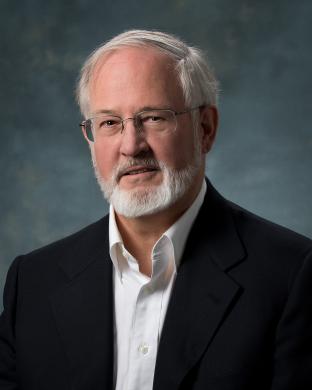
Dr. Randolph M. Nesse, UoM

Randolph M. Nesse is a Professor Emeritus of Psychiatry and Psychology in University of Michigan. The ideas and theory he created to understand and identify anxiety and its intensity are very important and interesting.  

Dr. Ness developed the smoke detector principle to control and quantify the medication used to fight with anxiety disorder. (He poses very simple but important question the opening of the paper that “Is he medicating his patients too much? is he harming them?”) The fundamental doubt Dr. Ness had was if the anxiety is evolved during evolution to improve our chances of survival, then why are we forced to reduce its symptoms and effects? Why are we using medications, therapies to reduce these symptoms, effects of anxiety. What if the patient is too anxious for given thing and that thing is too real to happen but the doctor dumbed that emotion down? (Dr. Ness calls it down-regulating the mechanisms causing anxiety)

The core of his thinking is that if we keep on “down-regulating” our anxiety which is an evolutionary gift to us, we might never be able to gauge the future in better way and prepare for it in advance to improve our chances of survival. (this is an exaggeration of the scenario but it proves a point)  

This calls for the quantification of anxiety. Which Dr. Ness did through the smoke detector principle.

The Smoke Detector Principle – How Much Anxiety Is Too Much?

Dr. Ness in another paper talks about the mechanism which is a feed-back system between the animal and its surroundings, which selects the emotional response to improve the chances of survival. The emotions we have today are the result of such evolution to maintain “homeostasis” – the balance among our bodily system to survive and function properly.

According to his ideas, anxiety works like a smoke detector.

The anxiety response is always trying to maximize the chances of survival and escape from a life-threatening situation. When we set a smoke detector it will go off even when the fire is not that extreme or if there is just some smoke which can be a controllable one. The smoke detector is designed to never miss a single fire causing situation. This ensures complete confidence in smoke detector that it will save people from every life taking fire scenario. But, it’s the same mechanism of smoke detector which forces people to evacuate frequently even when the fire or smoke where controllable or life threatening.

The frequent emergency evacuation even when it is not required is the same problem with the extreme intensity cases of anxiety. Always having armor ready for combat may sometimes make the soldier to lose the agility.

The patients with anxiety disorder have lowered sense of real threat. Their system triggers too many false alarms.

Dr. Ness established various techniques to quantify the levels of anxiety. The responses from anxiety include increased heart rate, rise in certain bodily chemicals – stress hormone secretion which can be easily measured as signals using instruments. Thus, the smoke detector principal paved a way to quantify the anxiety and understand what triggers the anxiety disorders in patients. It helps to understand how and why a level of anxiety is healthy in normal person and what level of anxiety is unhealthy and needs drug administration, therapy, how it can be administered by altering the setting within and around the person.

The core reasons why we need not to be intensely anxious about common life threats are as follows as Dr. Ness explains in his papers:

  1. Regulatory mechanisms have tendency to make errors and be extra defensive about situations
  2. We do not need to always be extra defensive to avoid given threat. (A machine gun in a bulletproof enclosure is not required to kill a mosquito.)
  3. Our body and surroundings have multiple layers of defense for almost all common threats. We are evolved and have survived in that way.
  4. Our environment is much safer than it was at the time we evolved

Types of Anxiety Disorders

Now that we have understood what is the nature of anxiety and what is its mechanism. Here are some important anxiety disorders to outline. Huge amount of information is available in literature, internet websites on these:  

  1. Generalized anxiety disorder (GAD) – too much worrying about ordinary things, problems like money, work, health, relations, family, and anything possible or imaginable, it may not exist in reality.
  2. Hypochondriasis – People suffering from this often worry about the health condition when nothing is wrong with their body. The word comes from feeling of stomach pain the person experiences even when everything is alright.
  3. Specific phobia – fear of anything but specific without any reason. It’s the fear for certain thing even when it does not pose threat.
  4. Social anxiety disorder (SAD) – In this scenario people intensely fear the public situations, humiliations, embarrassments, criticisms.
  5. Separation anxiety disorder (SepAD) – People in this case intensely fear the loss of person or a place
  6. Agoraphobia – it is fear of being in situation where there is no exit door, or escape strategy. Fear of using public transportation, being in large crowds are some examples.
  7. Panic disorder – these are outburst of all the collective or intensive fears, they come quickly and last for short time.
  8. Selective mutism (SM) – in this case the person is extremely fearful of initiating a conversation, does not speak to specific people or in specific situations or conditions even when they are forced to talk by humiliation or mocking.  

Post traumatic syndrome disorder (PTSD) and Obsessive-compulsive disorder (OCD) were once classified under anxiety disorders (now not under anxiety disorder in DSM – Diagnostic and Statistical Manual of mental disorders)

Signal Detection Theory For Interpreting ‘Anxiety Like Responses’

One good paper in the Canadian Journal of Psychiatry by Bateson et al. shows how the smoke detector principal can be used to decide the boundaries of different levels of “anxiety like-responses”. This paper talks about signal detection theory and optimal threshold. The beauty of this paper for me is the mathematical model it establishes to explain psychological events. A single formula will help you understand the difference between normal anxiety and anxiety disorder.  

With the smoke detector principal, we can now appreciate that not every common threat needs full armored protection. The signal detection theory in this paper shows where a person draws line when they overestimate or underestimate anxiety.

It talks about “optimal threshold” to show a threat response in given situation. Optimal threshold is a mathematical parameter which is function of probability of the occurrence real event and vulnerability of the individual.

The signal detection theory says that the superposition of response signals for given background noise and response signal from real threat give us the quantified judgement of how intensely the anxiety is triggered compared to the practicality of the threat – this quantified judgement is called optimal threshold (λ). Lower the threshold more intensely the anxiety will be triggered for given disturbance – background noise.

Figure 1 : Signal detection problem, how the optimal threshold can be calculated. (Credit: Anxiety: An Evolutionary Approach, 2011, Bateson et al., Canadian Journal of Psychiatry)

Equation 1: optimum threshold (Credit: Anxiety: An Evolutionary Approach, 2011, Bateson et al.,Canadian Journal of Psychiatry)

Here,

 λ = optimal threshold

 pnt= probability that there is no threat

 pt= probability that there is real threat

wfa= cost of false alarm

wmiss = cost of a miss

Once this equation comes in focus the discussion becomes interesting. The ratio of pnt to pt mathematically quantifies how practical the threat is. The ratio of wfa to wmiss mathematically quantifies what will be the cost if the anxiety trigger is accepted or rejected – will the subject live or die. This ratio shows how we trigger anxiety response. If the cost of responding is nothing for even a simple threat scenario, we will choose to trigger that response, same would happen if the cost of losing is ultimately the loss of life, we would trigger any possible anxiety response to avoid it. The authors call this ratio as individual’s vulnerability.

The ratio (pnt/pt) can be seen like this. If the surrounding really is hostile and consists of events which cause many life altering events than the safety ensuring events then the pt (probability of threat) will be way higher than pnt (probability of no threat and safer environment). In war situation where multiple bombings, gun firings are happening around you the probability of threat happening (pt) is way high than it not happening (pnt). The optimal threshold will drop immediately and anxiety triggered will be very high.

The ratio (wfa / wmiss) can be seen like this. If the person is way stronger to handle given threat, then the person will need no effort, investment or cost to trigger any reaction alarm to even a false threat. Consider the example where you are about to be bit by mosquito, you know the efforts to slap many times until the mosquito dies are not worthless, you will try many times to kill it even when you know it will swiftly escape, you are less vulnerable in this scenario. But now when you are about to be killed by John Wick (!?) you know for sure that even a pencil will do the job for him, any environment is hostile for you, you are vulnerable here, the value of losing life (wmiss)is way high than the cost of attempts to save it (wfa). Your optimal threshold will immediately drop down thus triggering intense anxiety.

Once you generate enough data for such optimal frequencies you can easily distinguish the healthy anxiety responses and anxiety disorders. I loved how these two factors (probability of threat and vulnerability of an individual) can predict the levels of anxiety in a person. This equation explains and can also quantify why pregnant women have heightened awareness of their surroundings, why people get insomniac after constant mental stress, why restless people are always in the mode of action and fight, why reclusive people hesitate to visit foreign, unknown places.    

Your Surroundings and Mindset Matter!
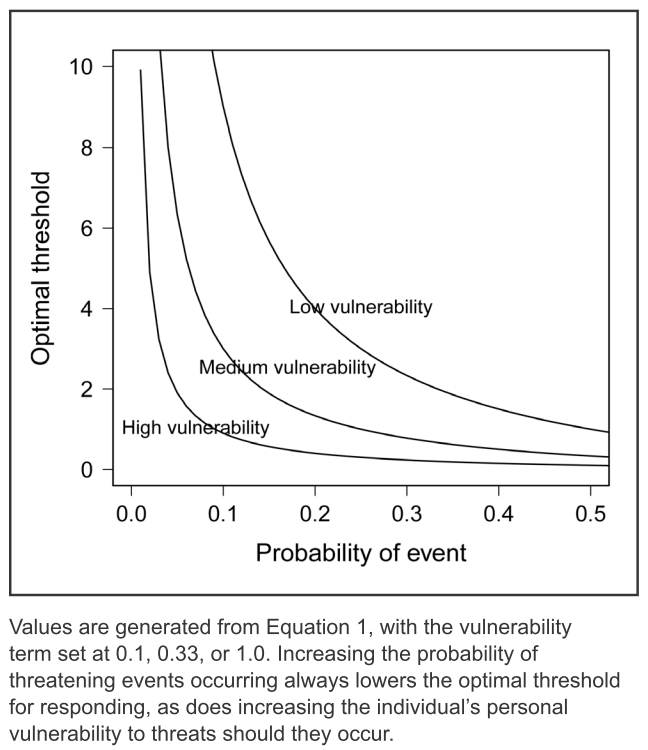
Figure 2 : Three levels of vulnerability, here optimal threshold and probability of event can be correlated for difference in the anxiety responses (Credit: Anxiety: An Evolutionary Approach, 2011, Bateson et al., Canadian Journal of Psychiatry)

It is really interesting what the authors have achieved and established in this research. They compared three different levels of vulnerability and explained them using given plot.  The thing to highlight here for anxiety disorders is that they emerge from the environments which always keep on presenting high probabilistic practically threatening scenarios. The anxiety disorders also emerge when the individual feels more vulnerable.

Higher the vulnerability lower will be the optimal threshold and intense will be the anxiety response.

As shown in research, in the uncertain times of Covid-19 people who were locked in their home had no disorders, were not exposed to the virus also felt anxious and faced some anxiety disorders because of the environment they were in.

If the person feels less vulnerable and stronger then even for given strong life-threatening events the optimal threshold will be higher thus the anxiety triggered will be lower.
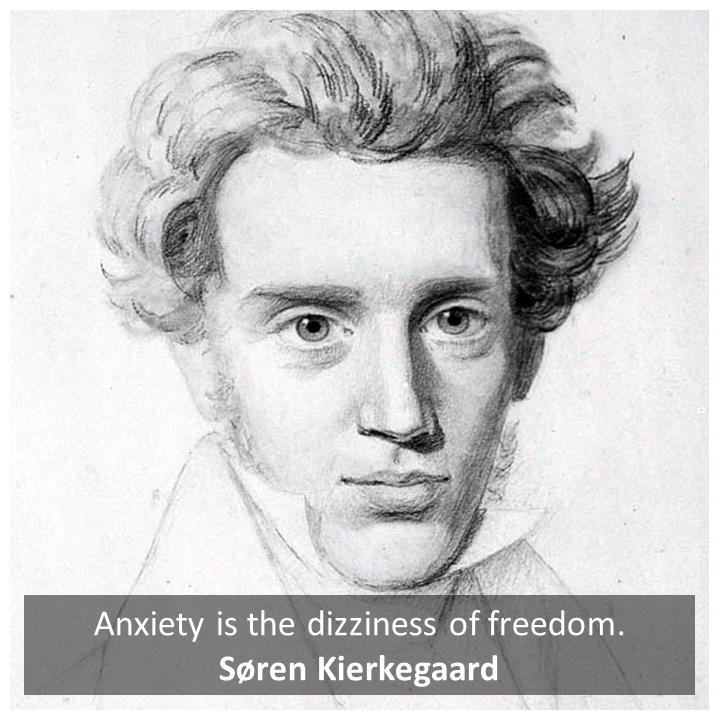
Are you noticing where this is going?

This is a mathematical model which shows how a healthy, supportive, and safe environment and also a strong mindset and better judgment of reality is important for handling challenging situations.

For a person suffering from anxiety disorder, it becomes very important to make sure that they know that they are in a safer environment and are cared for. It is very important to make them feel safe and understood. Creating a system of critical thinking and reasoning can also help the person to have a sense of strength and high resistance to vulnerability, this also goes for physical strength. The vulnerability is not only mental it is also physical when it comes to reality.

You will now appreciate why teenagers and trauma patients are more exposed to anxiety disorders. Mostly and generally in teenagers it is due to the uncertainty of many new things happening with them simultaneously and in trauma patients it’s the constant bombardment of life-threatening events in hostile environments.

Conclusion

Anxiety serves to prepare a person for threats. The emotion called anxiety is an evolutionary gift to ensure long survival of our species but as it is also related to our primitive instincts, we mostly let anxiety overpower other emotions in seemingly safer scenarios. Strategy and anticipation are the gifts of anxiety but if overused they will end up in imparting unnecessary caution and overprotective attitude which inhibits adaptation to changes there by slowing evolution of our species. Anxiety just like pain is one uncomfortable but effective way to cope up with the adversities in life, that’s how we build strength, resistance and deeper understanding of the surrounding for better and more precisely predictable future.   

The remarkable concepts like smoke detector principal and optimal threshold in signal detection theory developed by modern psychologists/ psychiatrists help us to draw a line between a healthy anxiety (adaptive function) and unhealthy anxiety (pathology) and ways to handle/ treat them effectively.      

These theories show how we can quantify seemingly intangible emotions like anxiety and way to handle them. If you can measure something effectively you can control and predict it effectively. All credit goes to such brilliant minds!
References, Image sources and further reading:

  1. Fear of the unknown: One fear to rule them all?, 2016, R. Nicholas Carleton, Journal of Anxiety Disorders
  2. Natural selection and the regulation of defenses: A signal detection analysis of the smoke detector principle, 2005, Randolph M. Nesse,Evolution and Human Behavior
  3. Natural Selection and the Regulation of Defensive Responses, ANNALS NEW YORK ACADEMY OF SCIENCES, Randolph M. Nesse
  4. Anxiety: An Evolutionary Approach, 2011, Bateson et al., Canadian Journal of Psychiatry
  5. The relationship between perceived stress and emotional distress during the COVID-19 outbreak: Effects of boredom proneness and coping style, 2021, Yan et al., Journal of Anxiety Disorders
  6. Long-term effectiveness of cognitive behavioral therapy for youth with anxiety disorders, 2018, Kodal et al., Journal of Anxiety Disorders
  7. Anxiety, National Library of Medicine, www.medlineplus.gov
  8. Anxiety Disorders, National Institute of Mental Health
  9. What are Anxiety Disorders?, American Psychiatric Association
  10. Anxiety – Wikipedia
  11. Randolph M. Nesse, M.D., Professor Emeritus of Psychiatry, Professor Emeritus of Psychology, Department of Psychiatry, University of Michigan
  12. Everything You Need to Know About Anxiety – www.healthline.com

Lifelong freedom for an hour

The societal construct, the men and even the women in society have created certain conditions where other women receive false freedom. This false freedom facilitates women to deliver benefits to society but somehow the society is not liable to return the favor back to these women. That is exactly where feminism becomes important. Kate Chopin’s short story called “The Story of an Hour” gives us a glimpse into what sacrifice and freedom means for a woman. This short story is summoned to be one of the important and earliest pieces of the feminist literature.

The ideas of feminism from Kate Chopin’s short story “The Story of an Hour”

Inception of feminism

Kate Chopin’s short story called “The Story of an Hour” gives us a glimpse into what sacrifice and freedom means for a woman. This short story is called as one of the most influential and early parts of feminist literature. It shows how women in those times sacrificed their freedom under the influence of the society just to maintain and continue the system as it was. People (still today) say that ‘it is very difficult to gauge what is going on in a woman’s head’ or ‘it is very difficult to know what a woman is thinking’. Kate Chopin’s ‘The Story of an Hour’ gives us a peek into a woman’s mind when she is allowed to think what she wants to think. Physical freedom is one part of freedom but mental freedom is the truest form of the freedom, I would say.  

The story of an hour was first published titled ‘the Dream of an Hour’ in Vogue magazine on 1894 later it was republished as ‘the Story of an Hour’ in 1895. We will see why and how this short story represents feminism in its truest form and possibly in the most misunderstood (compared to the modern interpretations of feminism) ways.

Summary

We come to know that Mrs. Mallard is a heart patient who is about to be informed about the news of the death of her husband in a railroad accident. Her sister Josephine and Mr. Mallard’s close friend share this news with her. Mrs. Mallard is obviously sad hearing the news of the demise of her beloved husband. She then teams with some moments of solitude to handle this sorrow. Where she suddenly realizes that she could be free now as she won’t be under any obligations from society and her husband. She feels her rebirth and onset of new life with absolute freedom approaching towards her. She wants to cherish this realization of freedom in her room alone for some moments but suddenly she notices that some person has arrived on door. Upon the request of her sister, Mrs. Mallard goes to see the person at the door and founds that the person is Mr. Mallard – unharmed and alive. She dies in the shock. Doctors diagnose her death due to the heart attack from extreme joy.

Life of the author – Kate Chopin

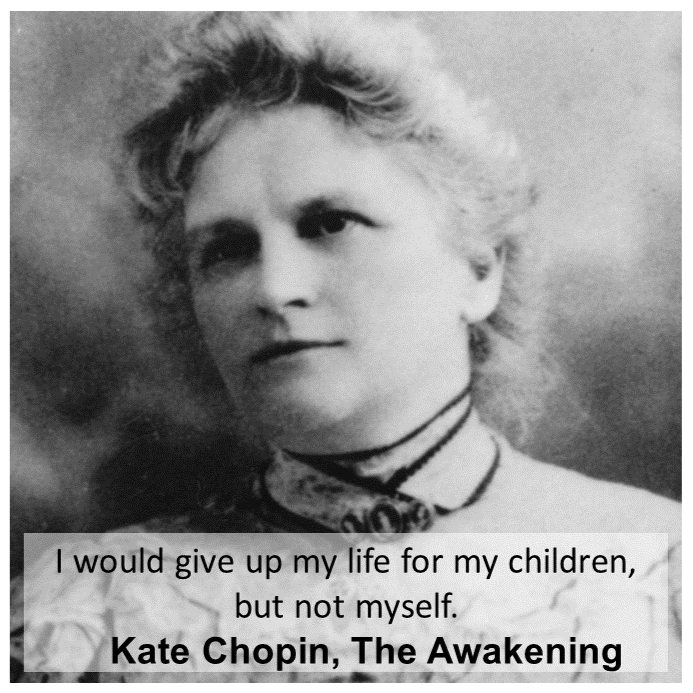
Kate Chopin was born on 8 February 1850. When she was just five years old, her father died in a rail accident. Her mother was the second wife of her father. In 1870, she got married and had six children in the period of 1871 to 1879. Her husband died in 1882 from malaria and left a huge debt on her head equivalent to $1.27 million in today’s valuation. She worked her ways out to bring the business back to life which she sold after two years. Her mother died in 1885.

Kate became depressed with sudden loss of her husband followed by her mother. Her friend Dr. Kolbenheyer suggested her to use writing as a therapy, a way to vent out and express her emotions and as a way to sustain income.

The most important novel published in 1899 by Kate called “the Awakening” was very controversial and scandalous to those times due to unacceptable feminine point of views.

As her writings were considered controversial, Kate much more resorted to short story writing. She died on 22nd August 1904 due to stroke.

Realistic fiction

The genre of Kate’s writing is a realistic fiction. Where the setting of the story is intended to feel realistic. The characters have all human limitations, practical interactions and nothing is stretched out of imagination to feel unreal, inorganic or magical. You will see Kate’s own life is reflected in her writings. People say that one can trace out her whole biography through her writings.

Now let us understand the Story of an Hour.

A woman’s whole world – her husband (?…)

Mr. Mallard’s death in railroad accident is drawn from the death of Kate’s father who exactly died in rail accident. She starts the events in this story from the point of view of her mother in a way. Kate was one of five children her father had and she too had six children. In a way, she resonated with her mother who was responsible for taking care of children. That is why she starts the story with the death of the husband in a rail accident to establish the connect between how her mother would have felt when she heard the death about her husband – Kate’s father.

She thus considers her mother as one powerful woman. Please note that after her father’s death Kate spent her days with her widowed mother, widowed grand mother and also widowed great grandmother who never remarried. Her use of the father’s death in rail accident is actually a setup used to link the emotions of her mother in this story.

“She did not hear the story as many women have heard the same, with a paralyzed inability to accept its significance.”

One will only appreciate the depth of this sentence when they are told about the situation of three generational widows Kate grew up with. The ability of Mrs. Mallard to accept the consequences of the death of her husband is thus the reflection of how her maternal side handled the consequences of the death of the man of their house.

A woman feeling helpless after the death of her husband is the most acceptable reaction even today but Kate’s protagonist not reacting in that way was the first shock to the society of those times. It’s not like she went paranoid and numb due to shock from the news of her husband’s death. Kate’s choice of words in this sentence hence is very deliberate.

Please understand that there is no way to indicate that she hated her husband throughout the story.

So, the initial setup and reactions of the protagonist are Kate’s ways to show that a woman’s life was never only limited to her husband. You should also understand that after her own husband’s death, Kate was burdened with huge death incurred from him. Getting out of such death surely might have made her more practical and objective. That is also an important reason which shows how her protagonist reacts to such news in a practical way.  She understands that it’s huge loss but she also knows that her remaining life is standing in front of her.

Painting the scenery of freedom

The elements used in the early setting of the story ensure the successful impact Kate leaves on the minds of the readers. She gives just enough information about the weak heart condition of Mrs. Mallard and surety of sources for Mr. Mallard’s death in the rail accident.

Then the story solely focuses on the protagonist of the story – Mrs. Mallard.

Mrs. Mallard now submits to solitude in her room. Each and every description of events and objects used hereon by Kate are very deliberate to reflect how the mind of Mrs. Mallard is reacting to the realization of the loss of her husband. She is yet to understand the freedom she is about to enjoy but how she come to that realization of freedom is one such “brain-candy” for the readers. They are not given direct explanation on how the protagonist is feeling rather they are made to feel the exact emotions of the protagonist. That is the beauty of Kate’s writing. She creates a portrait of a scene which readers enjoy interpreting.

So, here goes the scene, every sentence in this story hereon is one hidden urge of every normal human being but especially a woman here:

“She would have no one to follow her”

– indicates a person’s longing to leave life on their terms and without the judgments and prejudices of the society.

“- trees (in the open square) that were all aquiver with the new spring life” 

– indicates a new beginning full of hope, a restart to living life without restrictions

“- the delicious breath of rain was in the air”

– indicates that even air was seeming tasty and ready to sow new beginnings. It is that extreme joy which was buried deep down which got the chance to come out which is making even the air “delicious”.

Please understand that this joy is not the effect of the death of her husband and many readers always connect wrongly. It is innocent joy of the upcoming realization of freedom – just realization -the real freedom has not achieved yet. Just its realization is joyous, imagine what would real freedom would do to our protagonist!

“a peddler was crying his wares”

– indicates high importance given to general and normal phenomenon.

What does a street seller do? He screams, calls out the items he sells. There nothing exciting in it.

But when you are full of joy and excitement, even a mundane, normal thing feels like a happy, jolly event.

Mrs. Mallard noticing such normal activity out of all the beautiful things is the indication of what it really means for her to realize freedom. Kate would have dropped the moment of Mrs. Mallard noticing the peddler but she injects the realism in the fantastical, fanciful feeling of freedom for a woman. (Kate would have made unicorns dance on the streets for Mrs. Mallard but that totally destroys the realism and sincerity and thereby seriousness of the emotions of the woman. That is Kate Chopin for you! It is cinematic – feeling-wise but completely real from observational POV)

Mrs. Mallard noticing a distant, faint son with twitter of sparrow shows how she is now receptive to even a small joyous event. You should understand that when a person is sad especially depressed even the happiest thing in the world can’t make them happy easily and reverse is also true. When you are truly happy your brain will notice even the minuscule events of joy around you.

“The clouds piling up in the sky” is used to show the readers that the emotions Mrs. Mallard had seemed like her life itself had become a beautiful scene nature has painted itself.  

The objects and emotions used to express emotions of the protagonist in this scene by Kate Chopin actually show the innocent nature of freedom the woman was longing for. The happiness is not due to the death of her husband. Only a fool will assign this happiness of Mrs. Mallard to a devilish attribute as the protagonist had no hatred towards her husband. Just for a moment the woman has detached herself from the definitions of the society, she got to experience this moment only when the news of Mr. Mallard actually detached her from the obligations of the society.

The readers will clearly appreciate this in the next moments of the story.

Repression and Sacrifice

Kate Chopin very carefully presents the emotions of her protagonist. She has made every attempt to clarify the feelings of freedom Mrs. Mallard are not devilish. She justifies feelings of happiness for the freedom and the feelings of regaining the control over the course her life for a woman in a pretty convincing and real way. The efforts made are sincere and pious.

 “-as a child who has cried itself to sleep continues to sob in its dreams”

It shows that the sorrow has impacted Mrs. Mallard very deeply. She is surrounded by various types of feelings. It is this turmoil of different emotions and you are confused about how to label certain type of emotion you are trying to feel out of it.

What happens next is – I would say – the core of every woman’s multifaceted feeling. The beauty of Kate’s writing here is the ways in which she tries to portray the innocent longing of a woman for her freedom. The readers should think with clear intent with no prejudices to judge the feelings of Mrs. Mallard here.   

“There was something coming to her and she was waiting for it, fearfully. What was it? She did not know; it was too subtle and elusive to name. But she felt it, creeping out of the sky, reaching toward her through the sounds, the scents, the color that filled the air.”

The cautious use of words here is phenomenal! She describes the feeling approaching the protagonist. Its like it was not born from inside, its like the protagonists didn’t intend to “feel” that feeling. The sounds, scents and the colors portrayed in the painting of happiness that Mrs. Mallard was experiencing were just the surface. Something different was hidden behind, buried deep down in that happiness. The sounds, scents and colors were just the mediators of these emotions she intentionally didn’t want to feel. The sentences presented here by Kate to the readers are meant to show the feelings intentionally buried deep by her protagonist.

The protagonist had killed her ambitions wishes so deep that now these feelings were completely strange for her. She had denied these feelings initially just for the sake of the betterment of her family and society. What society considered as wrong, she silently accepted it as wrong even though it may compromise her ambitions and wishes. This is a subtle reference to how a woman suppresses her emotions for the betterment of her loved ones.     

“She was beginning to recognize this thing that was approaching to possess her and she was striving to beat it back with her will – as powerless as her two white slender hands would have been.”

The feeling approaching Mrs. Mallard is explained in a way as if some devil is trying to conjure her. It is very important decision taken by Kate Chopin to indicate that how even the fundamental feeling of freedom for a woman of that time was considered as a sin. She tries to reject the freedom for the betterment of the society, she sacrifices, kills her growth, aspirations and toils for the success of the others on such an extreme devotion so that it becomes her second nature. That is why when she thinks for her well-being, society labels it as a crime. Then she also accepts that reality and remaining powerless she succumbs to this monstrous way of the society.

The third person characterization of the feeling of freedom in the form of devil is intentionally used to show how the society has devalued even the fundamental emotion of freedom for a normal woman to rock bottom.

Today this will not seem like a big deal, but the time when this story was published Kate Chopin made an attempt for women to feel free from the deep rooted traditional patriarchal setup. It makes others understand how women were forced to suppress their wills and wishes, how the societal structures undervalued them and at the same times it makes the women realize that what feeling they are having are in no way bad, there is no way to suppress such feelings of freedom.

“free, free, free!”

Kate points directly to what a woman actually misses when she has lost her true identity. She misses her freedom. Freedom to decide the course of their own lives is the fundamental right of every person. Its not just about women, but Kate’s attempt here is to make others understand how women were more exploited due to the societal setup of that times. As she herself had gone through such experiences she was successful to pen down these feelings to her readers.

“She knew that she would weep again when she saw the kind, tender hands folded in death; the face that had never looked save with love upon her, fixed and grey and dead. But she saw beyond that bitter moment a long procession of years to come that would belong to her absolutely. And she opened and spread her arms out to them in welcome.”

Kate wants readers to understand the purity and innocence of the emotions her protagonist has. It’s not like she longed for freedom because her husband treated her badly or tortured her. Rather Mr. Mallard is shown as a kind and loving husband here. His own wife thinks so; what other proof do you need?

Mrs. Mallard was sad for the loss of her loved husband. But at the same time, it was the societal construct which restricted her from deciding the course of her own life. Death of her husband exposed this flaw in front of everyone. That is exactly why she misses her husband but also understand that this is the how she can be truly free – the pressure from society is released through the death of her husband. It’s not like she despised her husband but his death definitely exposed the cruel construct of the society created to limit the feminine potential.      

It is human nature, we always need a pivot to judge something, understand something. When we are shown a picture as a good, we love to interpret exactly opposite of this picture as the bad one. It is basic flaw in our general thinking to attribute opposites two separate parts, good and bad. In alignment of same thought, if a woman desires to become free general thought goes like this: if she wants freedom then she would not need support of others, she can do things on her own, it is just the society that is suppressing her, she can do all things just like men do. This is the moment where the modern feminism starts losing its core – the tender yet powerful feminine emotions. There are countless examples in modern feminism where women are trying to prove the point by doing exactly what men do. This is the part from where the feminism starts losing its real meaning.

Kate made a successful attempt to define what is the meaning of freedom for a woman. Giving woman her freedom will surely not make her not care for her loved ones – especially the male loved ones. In the end, women are more capable to nurture love and affection. Freedom to do anything in their ways will not steal the femininity from women – that is where their real advantage lies. That is the core of feminism lies I would say. It is not about doing what exactly men do to prove the point. It is about equal exposure of both men and women to everything the nature, the life has to offer. Feminism was never about competition to catch up with the privileged masculine gender. It is about the freedom to decide and preserve one’s identity especially women.       

“There would be no one to live for during those coming years; she would live for herself. There would be no powerful will bending hers in that blind persistence with which men and women believe they have a right to impose a private will upon a fellow-creature.”

“She would love for herself” is not just a simple set of word to describe the value of freedom for a woman. It also shows how many sacrifices women make to let others around them grow. Please note that it’s not only the men who keep on impose their own will to suppress women, there are other women too who try to force their wishes on such women. That is exactly why Kate has both men and women for the down fall of such women. So, it’s not fully about patriarchy only, it is about whole societal construct. There are many good examples where women themselves were responsible for the suppression another woman. Kate consciously, deliberately wrote these sentences along with the concept of “a private will” to show that only men are not to blame. Many people especially highly celebrated feminists miss this point. But there is still hope given that this clarity was already there when the concept of feminism was in its inception which is somewhat comforting for humanity. Kate is not pointing towards certain gender for the downfall of a woman, she is suggesting a reform in the mentality of both men and women thereby whole society.

“And yet she had loved him – sometimes. Often she had not. What did it matter! What could love, the unsolved mystery count for in the face of the possession of self-assertion which she suddenly recognized as the strongest impulse of her being!”

“Free! Body and soul free!” she kept whispering.

This is the most important part of the Kate Chopin’s story. It is the moment when her protagonist understands what she gave up when she loved her husband. She gave up her true identity, her freedom. It’s not like she received something in return for such sacrifice of her identity. That is why the gain of fundamental right to freedom becomes more important to a woman rather every human being. Kate thus also establishes that the real love will not demand the challenge the fundamental nature/ identity of a person, rather it should elevate such aspects. That is why the freedom after her husband’s death becomes heavier than the love she had for him, because she lost her identity in that process. Please understand that it’s not limited to women, men may also go through similar emotions. It is just that women are more exploited in such emotions.

The tragedy

After going through all these feelings of freedom, Kate decided that she will trick her readers into a tragic end for her protagonist Mrs. Louise Mallard. The confidence she built in reader of this story in the early part of the story is revealed to be a misinformation. Mr. Mallard knocks on the door unhurt, showing no sign of going through a deadly accident. In that shock Mrs. Mallard dies from the heart attack (a heart attack due to an uncontrollable joy as the doctors in the story diagnose)

It is the magic of Kate’s story telling which shows what she actually thinks for the women in society especially women of her generation. She has very less hope for the empowerment of women, women like her to be very specific. That is why she has inserted this tragedy in her story. This tragedy is a metaphor for her low hopes for society to change to grant women their fundamental right to freedom. (Luckily that is not the reality today)

The death of Louise is in a way the indication that if society denies the freedom for a woman, then the only way she can have her freedom is by embracing death. Death is better that such societal imprisonment and repression. This is very serious but goes unnoticed many times in this story because there is no way everyone will understand and appreciate the seriousness of this tragedy. One has to either go through or closely observe such instances. For the times of Kate death was the true freedom for women.

Whether Louise died from happiness or not is also the most misinterpreted part of this short story. There is no medical evidence to prove whether a person’s heart attack was a result of extreme joy or sadness. At least there wasn’t any at that time. The doctors in the story might have guessed joy as the reason for heart attack due to the happiness Louise was experiencing when she realized her freedom. The joy was so certain and long lasting for her that she had no time to react to the shock of the news of Mr. Mallard being alive. It shows how feminine emotions, ambitions will always remain misunderstood to the mainstream society. That is the real tragedy of the story.

Feminism – Freedom and respect for everyone in the end     

Man is born free. Freedom and human being are two inseparable concepts. Many great people in history have sacrificed their lives, spent their precious lives to make others free. Freedom both physical and mental is one important aspect of every person’s identity. Freedom enables a person to have their own way of living the life, nobody can force others to live their life in certain way.

So, when we define freedom as the ability of people to do anything they want in the ways they want, we end up in a peculiar dilemma – a paradox. If a person is ‘influenced’ by his surroundings to make a choice in certain ways, will it be called as the true freedom? On surface you will see that the person him/herself is the one making decisions and taking actions in their own ways; So, it seems to represent the freedom. But when you understand that so called ‘free’ person was influenced by his/her surrounding to take certain course of action in a certain way the word ‘freedom’ feels like a misnomer. Even though the person was free to take any action, the action he/she took was under an influence rendering the meaning behind “to take any action” useless.

When such freedom to take actions is unknowingly influencing the subject, it can be called as a false-freedom but when the person knowingly takes the same action even when they know that they are taken due to the influence of the society then it becomes a sacrifice, the person undergoes repression. This is a conscious sacrifice made by the person to maintain the order in the system. A sacrifice made by this person of his/her own freedom. When this sacrifice is fully voluntary decision, it is rarely accounted to be valuable because very few people truly understand what it means to be free. The more indirect the influence the more people feel free.

That is exactly where feminism becomes important. The societal construct, the men and even the women in society created certain conditions where other women receive false freedom. This false freedom facilitates women to deliver benefits to society but somehow the society is not liable to return the favor back to these women. This exactly what is wrong with the conventional societal construct. This renders the sacrifices made by women useless. No wonder why modern feminism sometimes focuses on doing exactly what men do to prove the point. That is why the ideas, emotions presented by Kate Chopin through her short story ‘The Story of an Hour’ are very important.