The Essence of Nominalism

Is happiness, love – sadness, hatred just the names we have given certain things? Is that why after achieving something great we fill empty and become clueless about what’s next? Is there something common, universal, essential characteristic shared across things that create reality? Or are we just putting labels on things so we can put them in our brains effectively?
Nominalism says that there is nothing common shared between all the objects existing in reality. Love could be anything for anyone, you cannot pinpoint an object absolute, consistent and repetitive nature across reality and put it in a box and call it love. Same for hatred. Nominalism thus sheds light on how things are more than just their labels and why it is dangerous to chase things if their labels/ tags are the sole motivation for you. There is more to reality of things we are chasing than meets the eye.

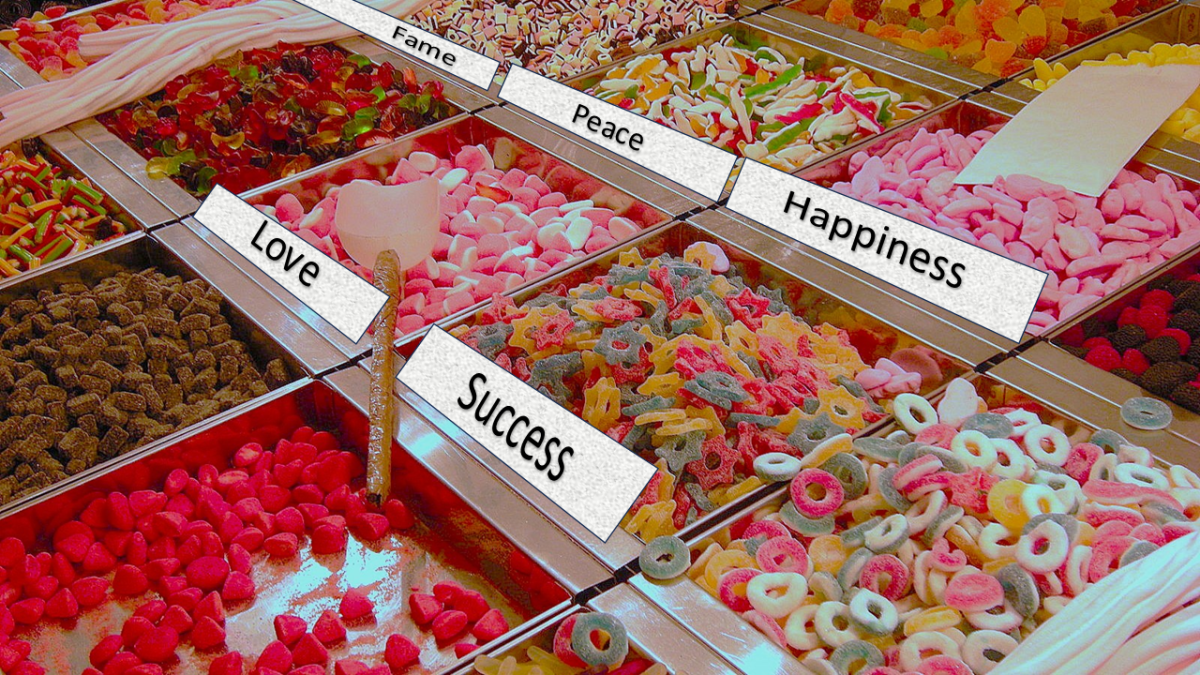
Are we just chasing labels, tags in life until we die?
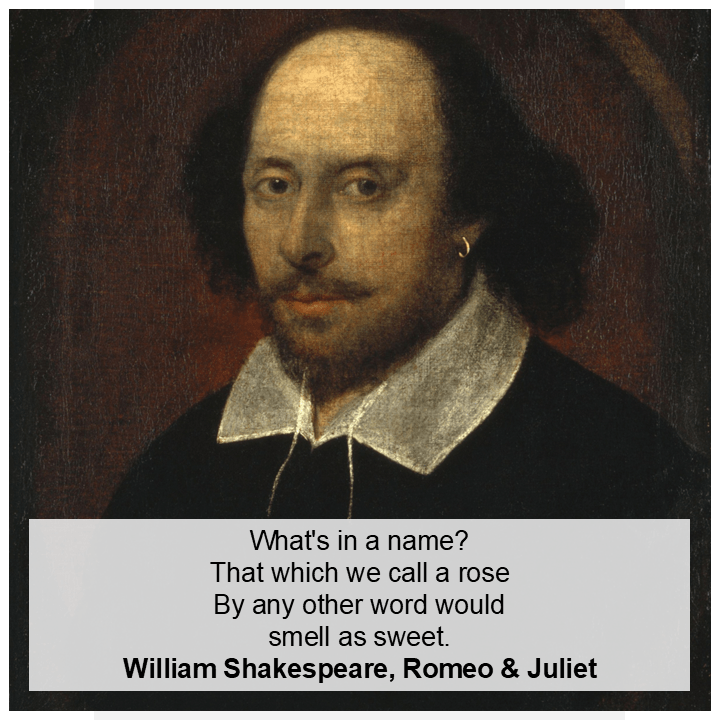
Question- What does Success, Love, Happiness and God mean to you?

Is Reality Same for Everyone?

Do We Share a Common Reality?

Human intelligence is one interesting thing. We can perceive things in better ways, classify them, observe them and use all those understandings to predict the outcome of events in satisfactorily good way, we can create non-existent things out of current given resources which elevate the ways we carry out our living – our lifestyle. The ability to develop various fields of knowledge and understand the reality is the basis of human civilization.

So, we can say that anything which gets distilled down to a specific understanding – an understanding which is consistent throughout our existence can be called as knowledge – knowledge with experience further gets distilled down to wisdom. Even though the knowledge of certain things is not consistent we at least know why it isn’t consistent or we have a well-rounded explanation that ‘this’ is an exception with fair justifications. Knowledge helps us to perceive how the things, ideas around us can be used to build things, the life we want.

The ability to see commonalities and differences between things, objects, ideologies is one important part of how we build our understanding about reality in which we exist. We have notions of right and wrong, black and white, past, present and future, tall and short, thick and thin, good and evil, strong and weak. These attributions help us to identify certain common aspects in things and certain uncommon aspects in the same things.

So, when I am saying Rose – you will understand that I am talking about a flower which looks red, has a particular fragrance. Words thereby names are at the core of how we build knowledge of the surrounding and the reality.

There is one more interesting thing happening here –

When I would say Rose – it is a possibility that someone would understand it as a girl he/she knows, someone would imagine it as a color which somewhat is red but richer in shades, someone would imagine the prickly thorns instead of the gentle nature of the flower.

What’s happening here? The moment I am trying to specify something – some object with a word – a name which shows some common attribute that object shares with others, in that same moment I am failing to describe that object, that idea in its complete capacity.

In our example, the word Rose on surface seems to indicate just a flower, but Rose could mean almost anything to anyone. Rose is just a simple object we are talking about; now imagine how would we define the reality we live in? The reality is multifaceted. People have different experiences, meanings, understandings of reality based on their personal experiences. Does that mean that there is nothing common between the reality we live in? Do we live in our own realities?

Does that mean that words assigned to the things are not what the things are? That the name of objects are just names? Everything that is there is one and only individual rendition of its own? If nothing is same then how do we agree on something common and set our lives to that way? How come we agree to certain religion and follow that? How come we agree that certain things are bad and we should avoid those? How come we appreciate what is happiness and try to achieve that in our existence?

I mean what if happiness is just of name something and goodness is name of the other which does not exist in reality and we are just blindly chasing it? (and we don’t even make out of it alive in the end!) What if we are just chasing names and “there exists nothing like it” – is our realization when we actually achieve that?

Is “the reality” really made of something very fundamental and shared qualities? Or are we just carrying our lives in the chaos of dissimilar (but seemingly similar on surface) things? Even though we call ourselves as humans how come some humans create examples out of their lives that they don’t deserve to be called as humans? How come some humans are so great that calling them humans is disrespecting their life?

Is there something really common among everything or are we just labeling things on whim (or intentionally) to solve the confusions of our minds? Are we living in a matrix and reality is totally different place than where we exist? Are hell and heaven more real that the earth we are living in?

Have we been robbed of the real understanding of reality and cursed to live in an illusion called life?

I mean I could have called the Rose an egg right from the beginning and everybody would have been fine with it. It’s just that now the egg is a flower, has red petals, has thorns and has fragrance. (Shakespeare would have also used egg for Juliet’s dialogue and everybody would have been fine with it. As everyone now knows and agrees what an egg is!)

Now you should appreciate how strongly we are conditioned right from the beginning. Calling an egg a Rose feels unnatural but if someone right from the beginning of the beginning would have called it an egg, we would be comfortable with egg in Shakespeare’s dialogue.  

Is there really anything like “Red” color, “Grey” color?

A simple experiment

Look at the picture below:

It’s easy to tell that the cube has one white and one grey colored side.

Now see what happens when I put a blind along the edge of the sides:

There is no manipulation in this image, I have just put a colored box to hide the edges. You can blind the main image with finger and see the same result.

This is popularly called as “Cornsweet Illusion” or “Craik-O’Brien-Cornsweet effect”. This illusion works because our brains try to fill the unavailable information to make sense of the things observed. In this case of the cube example our visual interpretation system tries to determine the edges/ sides of the object by the sudden changes in the illumination of the surfaces.

From this example, you can appreciate how our brain tries to fill in the gaps between the information we are collecting.

Does that mean that there is nothing like what I call grey or white? that there is something totally different for which I am yet to assign a name just to make its identification easy. If that is the case, then are we just naming things in the name of knowledge and don’t have actual hold of the reality? Are we just pretending to be smart just because we can name the things?

Keep in mind we are not simply talking about naming things. If my brain tries to fill the gaps by itself to create a sense of understanding, some part of truth or reality which I carry in my beliefs – are they real or were they some gaps filled by my brain itself?

Following the same train of thought, here is an important question –

Obviously, no one by birth knows what is the “real” nature of reality is? (Otherwise, we would not be discussing all this). You will see that people know reality for how their life experiences turned out to be. They know what reality is, but not all have one singular, absolute concurrence, alignment and unanimous opinion about the nature of reality.
An important idea in philosophy called nominalism tried to question reality in this way (there is a part when the opposite of Nominalism is Realism! I will cover realism in next post). For that we will try to understand what Nominalism tries to solve.

Is there something common characteristic shared across things that create reality? Or are we just putting labels on things so we can differentiate?

Nominalism – There Are Just Names No Essences

William of Ockham is the guy responsible to popularize Nominalism in philosophy although he is not the originator of it. Ockham’s Razor is one very mainstream idea still useful in our pursuits of knowledge. I have covered Ockham’s Razor in separate post.

I think, it is a high possibility that Nominalism and Ockham’s Razor have strong connection not just because they were popularized by the same person but how they align themselves with each other to create a consistent argument.

Ockham’s Razor goes like this –

“Plurality should not be posited without necessity”

In simple words, do not interpret, do not deduce unnecessary things unless they are presented or experienced. (I have somewhat twisted the meaning to align the Ockham’s Razor to align with the train of thoughts and there is hardly anything mistaken here.)

My purpose to rephrase Ockham’s Razor is to connect our brain’s habit to fill unknown gaps with our pursuit of the real nature of reality we live in.

Nominalism thus calls out for the reality which individuals experience for themselves. There is nothing common between the life that we are sharing. Every object existing is an individual, special object in itself. Objects never share something common between them, it may be just our brains filling in the unknown gaps to make sense out of reality and have peace of mind. The labels like Red, Love, Justice, Truth, Loyalty, Happiness are not physical entities, absolute entities which exist in reality. We have created these labels so that we can sort certain thing in certain groups to create a model of reality in our energy optimizing brains.

This is really important point – that things we call real are just labels given by us. A Rose could have been an egg from its creation and nobody would have objected it.

Consequences of Nominalism

Nominalism – in simple words says that there is nothing common shared between all the objects existing in reality. Love could be anything for anyone, you cannot pinpoint an object absolute, consistent and repetitive across reality and put it in a box and call it love. Same for hatred. Same goes for the notion of beauty, fear, justice, truth and what not. Justice is not some type of molecule or an element which can be physically hunted, mined, rigged in reality. It is a label we have created for certain way of things. But, upon full magnification we will see that that certain way of things grouped together are highly individualistic – seeming that they are not same in any way.

Nominalism pointed one interesting observation – the things exist in their individual ways; we are just labeling certain aspects of them so that they can be grouped together or compared against one another.

Do you understand what this leads to? For me it is chaos.

It means that there is no such thing like love, justice, joy, happiness, affection, truth, utopia, passion, enthusiasm, redness, whiteness.

It also means that there is nothing like hatred, unfairness, fear, sadness, fakeness, lie.

These are only labels we are chasing in some scenes and in some scenes running away from or avoiding.

This leads to the conclusion that there is no pivot to the life we are living and the reality in which we exist. This is unsettling – this unsettling feeling leads to existential crisis.

One can here say that Nominalism bridges Phenomenology and Existentialism in better ways in philosophy.

Phenomenology talks about objectively understanding and interpreting reality through subjective experiences. (The one where objective and subjective appear in the same sentence!) It calls for the truth to be one which is realized through personal experiences – phenomenon happening with the individual.

Existentialism talks about the idea that there is no center or pivot to the reality we live in. This is a freedom in such an intense dosage that if we are not creating our own pivot for our own life the sheer possibilities emerging from freedom will overwhelm us concluding that there really isn’t such meaning or sense to life.

Nominalism says that there is no real common thing which can be distilled down between seemingly same things, things were never the same – there is no “essence” which exists across certain seemingly same things. There is no such thing like “universal” which is consistent across the objects in reality. Everything exists individually on its own. One has to experience things for themselves to see their real nature.

It is just your urge to rationalize things so that your brains will save energy. Rationalization is all about making sense of the things, and if everything has its own way of being our minds cannot store each and every aspect of those individual things all the time, thus we have resorted to the pursuit of “essence”, “universality” and hence “labels”.

Conclusion

William of Ockham’s Nominalism from medieval philosophy is reiterated in modern philosophy through Existentialism, Absurdism.

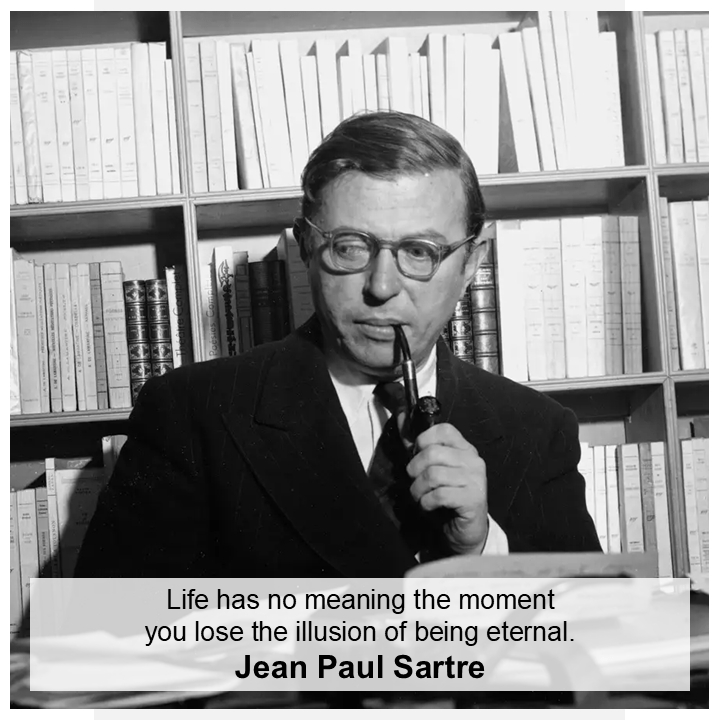
Jean-Paul Sartre – the French Existential philosopher thus talks about how labels are always fooling us. We think our life made to be defined by the achievements of certain labels where upon deeper inspection we see that the labels are mere a creation of our minds, they are how we interpret reality. They are not reality in themselves. Reality was already there even when labels were not there.

This is how Sartre call out Existential philosophy – “Existence precedes essence” and not the reverse “Essence precedes existence”. The later one is just a construct of our mind to create meaning in this meaningless world.

The very freedom granted to us becomes our enemy because we are clueless when we realise that we can do anything. This is where Absurdism peeks in.

Boundaries of Nominalism

There will be different reactions to the explanation of nominalism and that itself will show you how varying types of people exist and their individual renditions of the reality. But interestingly you will find “type” of reactions in people.

One will not immediately agree but everyone on deep inspection will accept this that we always crave for justification for everything that happens with us, it could be in our favor or against us. We crave for justification which will bring peace to our mind, in happiness this peace will amplify happiness and in challenging situations it will give us something to blame.

Once you start appreciating our habit to justify every damn thing you will suddenly see that Nominalism is pretty much good concept in philosophy. Nominalism when says that essences, shared attributes are just labels and nothing real, it warns us that the justification you are trying to give for your situation might just be your construct of mind and not real. Nominalism feels attractive because it feeds attitude of skepticism, which is the first tool of the person in the quest for the absolute truth.

On the other side, nominalism has its innate limitations too. If nominalism is true then it is not there as nominalism itself is our “labeling” to the concept of “not labeling everything together”.

This is where paradoxes begin. If there really was nothing common “essence” among certain grouped things, then it was impossible to group them in first place. So, essence must exist already (this feels even more paradoxical.)

We will search for resolution of these paradoxes in next post on Realism.

Related reading:

A Trade-off Between Simplicity & The Reality

The Lullaby of Eternal Rediscovery of Existence and Identity

Being social animals, we compare our lives with the lives of the others, we create our baselines and set our targets based on what others have achieved and done in their lives. In our current times when the life expectancy is better than ever, when we have a better cover of social safety than ever, the primitive instinct of survival from natural predators has been replaced by the modern instinct of philosophical- ideological survival which is the ‘preservation of our identity’ – the idea of our own image. The realisation of the philosophical death of our being should come with the awareness that your idea of self, your consciousness was just created by your desires and after this philosophical death you are returning to the fundamental forces of what made them. The endless possibilities for your becoming are opened in this point. This is the true eternal existence – to get broken down into the fundamental blocks of being and be recreated again. Juliet Ivy in her song ‘We’re all eating each other’ beautifully brings the sense of life that is made up of eternal creations and destructions.

Juliet Ivy’s song “We’re all eating each other”

Genuine poetry can communicate before it is understood

T S Elliot

There exists a special category of songs which sound very jolly, full of life, giving the impression of the light hearted joy, calmness, relaxation everyone desires; on close inspection you end up realizing that the lyrics of that same song is so dark that one would question the mindset in which the song was written and composed. These songs are the songs to which people would dance happily due to its music but the moment lyrics of this songs is opened for discussion you will end up questioning your existence. It feels ironic.

There are many songs to name which fall in this category, I stumbled upon one such song by Juliet Ivy called “We’re all eating each other” from her album playpen.

The song is written by Lucas Sim and Juliet Ivy Ortiz.

playpen album by Juliet Ivy

The great thing about this song is the way its melodies try to befriend you. It’s so simple yet effective and the song’s rhythm is not continuously varying which creates an impression of safe and calm space of familiarity. 

What's the point of living without dying for an ego?
So we validate our fantasies to feel like we are special inside
You know we love to lie

I was literally shocked when I started digging into the lyrics. How could one simply state a brutal fact of life as if someone is asked to simply pass salt and pepper on dining table?

For me it creates an impression of life being so simple at its core yet we always choosing the complicated version to justify “our” way of life and “our” ways of truth. Juliet beautifully and very clearly puts this observation in few words of wisdom.

The life we are living, the identity we carry is all we have when everything is taken away from us. This identity is created and molded into a specific shape and size from the life experiences we have. They are mostly subjective and are created from inside. That is exactly why we are completely attached to our identity. This identity has two facets – the identity we truly know ourselves and the identity we project on people around us to show them who we are. Trust me both could be totally different. We are always trying to preserve our identity. This is what Juliet is calling the ego here.

In order to preserve our identity – our ego, we let go of the objective truths and accept certain illusions, fantasies. This is done to create a sense of security otherwise our mind would keep running everywhere in panic. We create some lies, ignore some painful truths to calm our mind down; no wonder they say ignorance is bliss.    

The biggest lie is the lie we tell ourselves in the distorted visions we have of ourselves, blocking out some sections, enhancing others. What remains are not the cold facts of life, but how we perceive them. That’s really who we are.

Kirk Douglas

We like grabbing onto anything to feel like we're important
Not a moment that is shorter than a hiccup or a blink of an eye
You know we're scared of time

Here Juliet shows how the limited span of life brings in the urgency to justify our existence so that we will be satisfied with the feeling that we are special. But we chose to ignore the fact that the ideologies, things that we are clinging to justify our special-ness also have limited lifespan just like the lives we are living. Even though we want to live for hundreds of years, on the grand scale of creation we are not even a blink – not even blink of the blink!

This is more than enough to leave all those false things which we are trying to justify our life, our special-ness with. The moment we let go of the feeling that we are something superior than anything in the world is the moment we lose the fear of not existing. The loss of this fear of not existing would make one eternal. We don’t want to lose the identity we created when we became conscious of our existence. That is why dying without getting any recognition, remembrance is a painful idea for all of us. But that remembrance, those memories will fade away. This should humble everyone.    

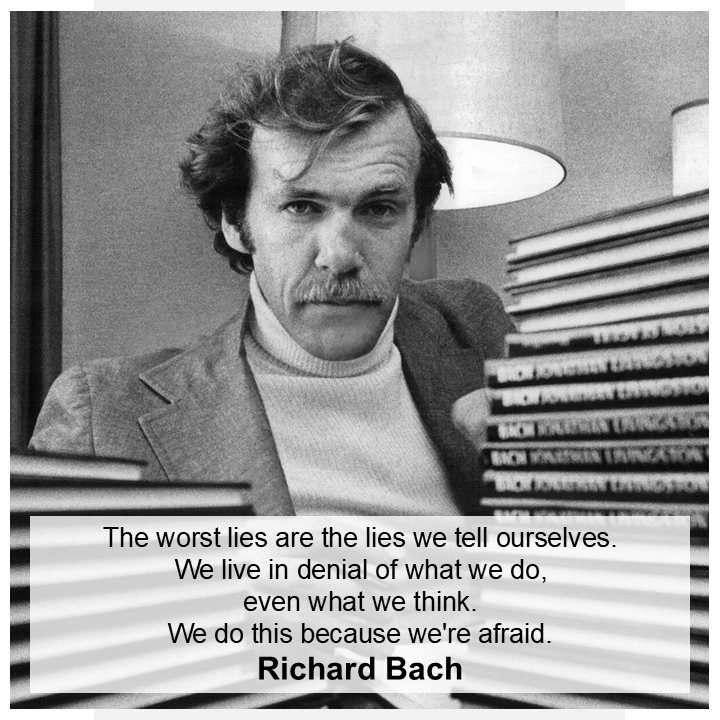
The worst lies are the lies we tell ourselves. We live in denial of what we do, even what we think. We do this because we’re afraid.

We fear we will not find love, and when we find it we fear we’ll lose it. We fear that if we don’t have love, we will be unhappy.

Richard Bach

But we're all gonna die
Decompose into daffodils and dandelions
The bees will use our flowers for whatever they like
Make the honey that our grand-kids will put inside their morning tea
It's the thing of life
We're all eating each other
The thing of life
Nobody lives forever
The thing of life

The urge to ‘consciously’ exist forever is the only lie we need to let go to become truly eternal, free. We are so attached to our so called “self-created identity” that we consider everything going against is as a potential threat to our existence – the existence which eventually will fade away into nothingness. It is way better to accept the finite-ness of life and be useful to each other rather than carrying that false sense of superiority, higher ego to justify our lies of life.

Juliet puts higher perspective to sooth our confusion of “conscious existence”. We are justifying our egos because we don’t want to die, we don’t want our identity to die, we don’t want our memories to die, we want to be remembered by people even when we are not existing in the world. The urge to preserve our conscious identity thereby our personality becomes the ultimate goal of life.

I am using ‘conscious’ word here to show that we are scared of losing the “I”, “Me” from our life because that is how we experience the life. We create the sense of existence from inside that is why sense of “I” is very important for our existence but if you closely observe the way things exist in the nature it is really difficult to pinpoint what makes that “I” – the “I”. Is it my brain? Or is it my body? is it my property? is it my super-car? is it my villa? is it my designation/ salary? is it my family? What exactly defines us?

You will get the answer once you accept that this thing that you have assigned your identity to – your existence to will not remain forever. When we say it will not remain forever it means that the combinations which created that existence. The existence would crumble down into nothingness.

Now here is an interesting part. We call the crumbles of nothingness “nothing” because they do not immediately affect, improve or help the existence we were trying to hold on to – our identity. We forget that it was the same set of some “nothings” which came together in a specific way to create “something” – this something became our existence.

Juliet beautifully brings in this perspective by saying that we will end up into flowers then into the honey that our future generation will put in their morning tea.

While we are trying to hold onto our special identity which is short lived, which would disappear in a blink we are forgetting the fact that the nothingness from which we were created is more eternal than the identity we are trying to maintain. This nothingness is the truth, its that something which is getting recycled all the time. On the other hand, we are in this constant battle to justify our falsely created, mortal identity.

We should understand that we are actually eternal but this false sense of ‘being’, this false sense of ‘conscious’ steals the real eternal existence. 

We don't know how to accept we're just a product of a chance
And less like gods but more like plants
Who can't stop making up reasons we're alive
(We're alive, we're alive, we're alive)
You know we love to deny
(To deny, to deny, to deny)

Juliet is again waging war with our falsely created sense of “special”. We intentionally highlight the facts that justify our superiority and ignore the facts which actually show that we might be the result of few overlapped coincidences. Even if we have not come out of chances and coincidences our existence is not that grand in the whole scheme of existence. On the level of creation, we are as close to plants than the powers which created all of us.

So we paint our face with intellect
Pretending we're not curious
Too busy, super serious
Don't have the time to do what we like
(What we like, what we like, what we like)
Baby look at the sky

In spite of knowing that we are insignificant, knowing that the creation is way bigger than what we are trying to justify ourselves, we are always in the race to prove our superiority. Why does that happen? Why are we always trying to justify our superiority with some lies while we call ourselves the smartest species? Why ‘we’ the smartest ones fail to recognize the objective truths of the world when we know that there is not meaning to chase everything all at once? Why we are always trying to win the race and justify our worth with something?

The reason is that we think our existence is limited, our time of remaining conscious of our being is limited.

We very well know that we will die someday, that is exactly why we try to justify every moment of our conscious existence to something, some idea, some object which we call our job, duty, faith, passion. We don’t want to die with the regret that we have nothing that will remain forever after we die. We are so wound up in justifying the life, memories after our death that we have invested our present into the pursuit of lies which are creating the illusion of our specialty.

Our heads are so engrossed down into the pursuit to create that false identity of worth-ness that we are unable to look up and appreciate the beauty around us, the reality around us.

The urge to lookout for the meaning of life and then assigning that meaning to something so superficial will eventually end into the pain and regret of not enjoying the time we had to its fullest, the moments we had to fullest. We are always trading the real awareness of “present” to gain the illusive comfort of safe “future”. That is how we justify meaning.

The real meaning of life should come with the understanding that whatever it may come next, one will never attach the sense of being to something which amplifies ego. Ego too will perish in the flow of time. The rejection of ego comes when one lets go of their sense of identity being special.       

'Cause we're all gonna die
Decompose into daffodils and dandelions
The bees will use our flowers for whatever they like
Make the honey that our grand-kids will put inside their morning tea
It's the thing of life
We're all just eating each other
The thing of life
Nobody lives forever
The thing of life
We're all just eating each other
The thing of life
Nobody lives forever
The thing of life

The rejection of ego will make you free, will show you what your real worth is. Even though you are not special – in the end, you are something of value when you synergize with others. Even though your conscious being is not eternal, the things which made your conscious being are eternal and that awareness should free you from all the urges to justify your identity, your specialty.

You are given a chance to experience the universe in the most sophisticated manner possible which many of the other species might not even have. What more could sooth your existential confusion! Once you realize that you are already made up of eternity, you will let go this mortal identity which you are always trying to preserve with some subjective perspective and lies. This is the real freedom and it requires innocence. Innocence is one of the basic indicators that the person has no ulterior motive to achieve something, it brings in the sense of acting on things without expecting anything in return. Please understand that innocence does not mean that the person should become a fool. Remaining innocent in spite of knowing everything is really hard, that is how you will know that you are not fooling yourselves. This song shows us that innocence. 

Conclusion

Juliet Ivy very beautifully brings the sense of life that is made up of eternal creations and destructions. We attach the meaning of our lives, the purpose of our lives to certain things while realizing that they too will perish in the flow of time – this is what would unsettle even the dumbest person. This feeling is also experienced by the highest specimen of humans. In order to come out of this unsettling fear of unjustified – worthless living, we take support from our surrounding. We selectively choose certain aspects that will create an illusion of safety and comfort. Being social animals, we compare our lives with the lives of the others, we create our baselines and set our targets based on what others have achieved and done in their lives.

You know what? Even after achieving such goals which we defined based on our surrounding we are not happy. Even after those material victories, we see that the happiness is short lived. So, we shift our goals to something which is immaterial, something which is spiritual. Something which we think is more eternal than the material things. We make certain ideologies the meaning of our lives. Religion is one of such examples.

René Girard – a French philosopher coined the concept of Mimetic theory where he tries to answer how we decide what to do and why to do. Mimesis roughly means imitation, trying to resemble. When we are stuck with no information or loads of information in either cases, we will be overwhelmed. The best way to come out of such conditions would be to see what others are doing around you. We set our standards based on the baselines of our surroundings. We create lies to justify these baselines and goals we want to achieve. Our ego is thus created to ensure that we maintain the sanity in the times of clueless-ness. It will prioritize survival of body in materialistic races and survival of its own sense of existence its identity in the spiritual races. In the end, both victories will fade away. (That also should not mean that one should not engage in the pursuit of certain victories. It should imply that the non-eternal nature of everything should humble the person.)

The most important point to understand is the ways in which everything great (also everything worse) will be broken down to their most fundamental building blocks. The idea is to not get attached with what you created which got destroyed.

In our current times when the life expectancy is better than ever, when we have a better cover of social safety than ever, the primitive instinct of survival from natural predators has been replaced by the recently created – modern instinct of philosophical – ideological survival which is the ‘preservation of our identity’ – the idea of our own image. (Social media is the booster for such way of life. It is also how the mimesis is happening strongly.) Philosophical death seems more painful than actual death. That is why in certain cases people gather courage to do self-harm. The best way to come out of such mentality is to question the very thing which brought this philosophical death; I know it is difficult to pick on the injury which already is painful to bear. The idea to work in such confusions is to notice one important behavior every one of us maintains when we define our life. We always strive to amplify things which bring happiness and ignore things which bring sadness. We define our life selectively on such choices in spite of knowing that both hold same potential to realize in actual life. This desire to selectively attach to certain aspect brings pain in life.

The moment we accept that there is no end to the cycles of creation and destruction (of both good and bad) we will see that we are nothing but a recycled versions of everything that is there in the existence.

The realization of the actual death of our body should come with the awareness that you are returning to materials which made you.

The realization of the philosophical death of our being should come with the awareness that your idea of self, your consciousness was just created by your desires and after this philosophical death you are returning to the fundamental forces of what made them and thereby what made you. The endless possibilities for your becoming are opened in this point. This is the true eternal existence – to get broken down into the fundamental blocks of being and be recreated again.

Juliet Ivy said all this in one simple sentence “We’re all eating each other.”  

The cosmos is within us. We are made of star-stuff. We are a way for the universe to know itself.

― Carl Sagan