
Joker: Folie à deux – The Dark, Twisted Fate of Internal Conflict

The polarizing reception of Joker: Folie à deux shows how deeply we are attached to certain fictional characters. Whatever might be the reception of this film, the character design and writing of Arthur Fleck in Folie à deux will go down as one of the best representations of the psychotic villain in the history of cinema. Even though the film doesn’t cater to the fan service, it will definitely become one of the best depictions of the inner conflicts of a mentally challenged person swinging between reality and delusion. There is an interesting mental dilemma of identity common to both the Batman and the Joker. How they chose to deal with it made them who they are. The movie also points to the importance of inner compass for a healthy mental state altogether with surroundings nurturing empathy, kindness, appreciation, and love.

Character study of Todd Philips’s Arthur Fleck in Joker: Folie à deux

Recently Joker 2 or should I say Joker: Folie à deux released in theaters and people almost lost it. Most of the movie goers especially the comic book fandom was highly disappointed. There is another side of this same movie experience where people are really appreciating what the film presents in its narrative even though it is not completely loyal to the source material. Some are praising the liberties the film makers took to show the world what it means to become the truest of the villain of them all and why villains are praised more (maybe they deserve to be praised more) than the hero, even though hero wins in the end (this emotion is strongest in terms of the batman villains to be honest).

I am taking the side of what the Joker duo-logy presents itself to the audience rather than its correctness to the source material or the fan service. It is really a daring move from the creators of this second film to use all their creative power to show the world how dangerous character of Joker could be in real life. When I am saying this, I know fans can say that its just a movie and we only watch it for the sake of the entertainment; we do not want every movie to be a lesson on good or bad, right or wrong, truth or lie. But trust me when you are completely in the mood of bliss and entertainment, engrossed in the world created, even a lie would seem true and a wrong would feel right. It leaves an impression on our mind. A great entertainer can convince you to twist the ideas of certain truths in a person’s mind. Advertisements are a crude example to prove this point. Movies, cinema, stories are a potent media to change the minds, perspectives of the masses in an impactful way.       

Mark my words, after few years of “marination” this movie will go as one of the best materials to study the writing and the design of a psychotic person. The movie will definitely regain its value as the ‘cult classic’ in coming decades. I am not saying that people are fool to not appreciate this film; I am saying that some of the things which disappointed people are actually way ahead of their time, people will take time to get comfortable around them and appreciate them.

The ability of movies like this to create a polarization of opinions amongst audience shows how potent the medium of cinema and storytelling is! We are humans – we love stories (especially those which unsettle us)

I am taking this opportunity to show appreciation for how the character of Arthur Fleck is written in this Joker Duo-logy. This is not the critic of what the comic book says and what could have been done in a right way to make movie goers happy. As the makers of these movies had already said, it was pretty clear that we are not in for what is generally expected from the mainstream, fan-worshiped representation of Joker from comics. 

This is a story of a failed Joker to be very clear. The ways in which music and singing is injected in the narrative is highly effective. Most of the people found the musical aspect of the movie unnecessary and stretching but it had a proper intent. It is not draggy in any sense. You must understand how a psychotic person’s mind works in order to appreciate the whole movie.

(The fact that people despised this way of representing the Joker of Arthur Fleck, shows that most of us are sane and good-hearted people.)

I will be deep diving into the psyche of Arthur Fleck’s Joker and there will be heavy spoilers (if you care) I will try to touch the nuances in the character design of this Joker and why it all should make sense. For that you must accept that this is not the Joker which ‘our’ Batman had.

This is the Joker who found his way back to sanity but the society rejected him. (I will discuss this in detail further.)

Last warning – SPOILERS AHEAD!!!

Me and My Shadow

The cartoon poses a question – if a person has multiple dissociated personalities inside him and one of the hibernating personalities made him commit the crime which is not who he is generally; then how should the person be punished?

The answer has many aspects.

If we are pardoning the person because he is psychologically challenged then the masses who are watching this proceeding would consider that even a heinous crime can go pardoned if the person is not sane. This creates a gray area for the real perpetrators to commit more heinous crimes. Judicial system is well aware of such consequences that is why an example needs to be put in front of the masses.

To show men that crimes can be pardoned, and that punishment is not their inevitable consequence, encourages the illusion of impunity and induces the belief that, since there are pardons, those sentences which are not pardoned are violent acts of force rather than the products of justice.

Cesare Beccaria

Next question-

The mentally challenged person who committed this crime is also a human being in the end. If we go on giving capital punishments to every human being fitting in similar situations, then what human part are we supposed to preserve of the humanity through law and order?

The answer lies in the psyche of this psychotic perpetrator.

The answer is what this psychotic criminal considers himself. Trust me this is not an easy choice. Bear in mind that this in not a normal sane person we are talking about. It is more difficult when such person is carrying multiple personalities inside him. It is difficult for such person to submit to only one identity out of the many he carries inside. One of the reasons for a person to undergo personality dissociation and have multiple personalities is to have a coping mechanism to outside events. Same was the case with Arthur Fleck, the personality of Joker was his coping mechanism against the society. They are polar opposites. His problematic childhood is the key reason.

Who is the real Arthur?  – The interview with Dr. Beatty

This interview with Dr. Beatty should justify why the movie ultimately becomes a musical in overall. You will understand from this interview that the real opportunity for the personality of Joker to shine out was in the Murray Franklin show. Arthur was actually intending to commit suicide on national television but knowing this would eradicate the existence of the other personality – the Joker takes the charge of Arthur’s ‘body’. There he kills Murray and makes statement and vents out all those emotions he had suppressed. That is exactly why Arthur is not concerned and doesn’t remember that he murdered some people in that show; he associates to the music of the show on that day. Because in that musical moment he felt free.

Also, keep in mind that Arthur has other personalities other than Joker. His mother’s mirror personality is also inside his head. The changed accent of attorney in which Arthur talks with Mr. Puddles in not just a performance to mock the court, it is a personality Arthur created so that he can defend the adverse external conditions which Arthur is incapable of handling.

It’s not just about Arthur and Joker.

Joker’s (Not Arthur’s) Smoking Addiction

From Warner Bros. Joker: Folie à deux

Psychotic person resort to a habit which helps them to relieve the suppressed emotions or identities. It could be any small habit and mostly would seem harmless. In this case it is smoking. In the first Joker movie smoking is just a way to release the tension in his mind but as the Joker’s personality gets the hold of his ‘body’ the smoking intensifies. In the interview with Dr. Beatty when she asks Arthur if she can talk to the Joker inside him, the gaze that Arthur throws at the recording camera is more than enough to let us know that the smoking personality was the Joker himself. (Joaquin Pheonix is just perfect here!)

There is also a moment in Arkham Asylum when Arthur is watching Harvey Dent’s statement implying that only a fool would consider Arthur a martyr, this further reinforces Joker to consider himself more powerful and influential. He is smoking there too.

Before going live in interview with Paddy, Arthur’s attorney Maryanne tells him to stop smoking in front of the camera during the interview because it makes him look like a ‘cavalier’ – reckless. This is exactly where we should get a clear idea. The Joker is reckless, carefree – ‘cavalier’. Smoking becomes an extension of this very idea of recklessness that Joker has in his personality.

But for the good of Arthur, he controls Joker inside during interview. The moment he realizes that it’s just to create sensation, the Joker takes control and again smoking starts.

When Arthur’s private diary is being read out loud in court and when Ms. Dumond is testifying, saying that Arthur’s whole identity that his mother created was fake; you will see that Joker is just there absorbing everything because all these things are very uncomfortable for Arthur to handle. Arthur cannot handle such public humiliation and identity crisis. Joker is truly his coping mechanism.  

There is also a scene where the Joker breathes out the smoke into the Harley ‘Lee’. It is very dramatic and feels like they are exchanging their very souls, their identities. Now they are inseparable.

From Warner Bros. Joker: Folie à deux

(Todd Philips deserves appreciation for creating such characteristic moments throughout the movie. There is one moment in the start of movie where Arthur gets a lip cut during shaving and the blood drop flows down his chin creating a sad face. It is impressively symbolic of the state of the mind Arthur is in. Applauds to Todd again!)

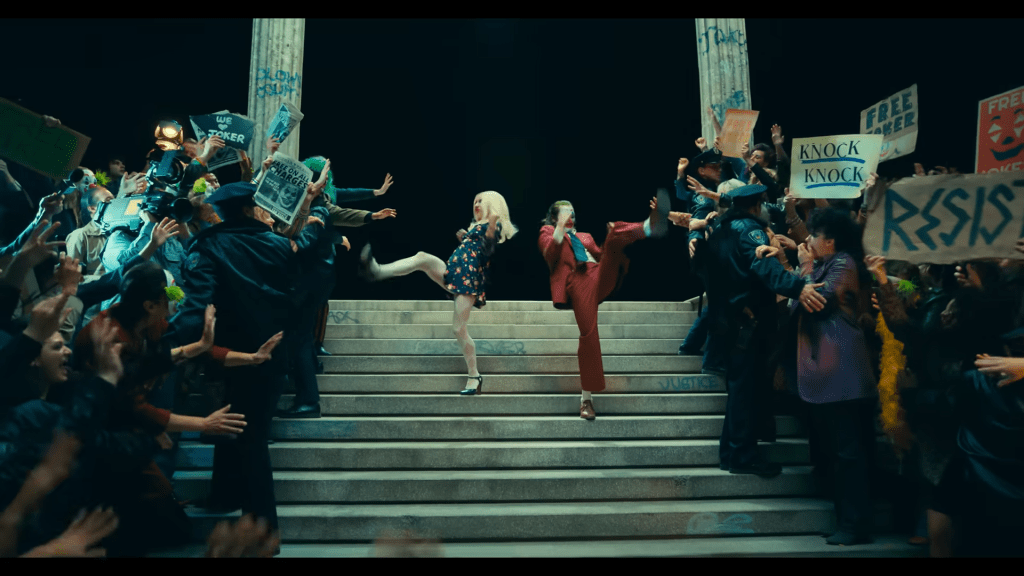
The ‘Kick’ Dance
From Warner Bros. Joker: Folie à deux

The most characteristic attribute of Joker being present and active in Arthur is his dance. The specific step of kicking fiercely in the air is very poetic. This kick shows how reckless Joker is. The Joker is literally kicking the society which led to the downfall of an innocent person like Arthur, the society which created Joker himself. It is a tight slap to the degraded social system which led to the formation of such psychotic character.

Very subtle but the ‘kick dance’ has its purpose in the whole narrative and character of the Joker. Later ‘Lee’ mirrors the same dance showing that Joker and Lee are now in sync.

The Musical

I have never ever seen the medium of musical to demonstrate the state of the mind of the character especially a completely negative character. (I am not a big musical fan) Whenever I have tried to appreciate the musical it feels to break the continuity of the realism of the narrative and dreaminess of the character or given scene. Although there are many good examples where musical just fits in perfectly.

But, this musical in completely negative and dark setup is very impactful. I know most of the moviegoers absolutely thrashed the musical approach and underwhelming utilization of Lady Gaga but trust me it was all intentional. It was supposed to make you uncomfortable.

The unsettling musical is actually a peek into the psyche of Joker and how uncomfortable his character is. It’s a warning to those who glorify Joker as villain or consider him an anti-hero.

Every musical had clear purpose and it also landed perfectly. You have to be slightly ‘mad’ and must fool yourself for the given moment to appreciate importance of musical in the whole narrative of the Joker. I will reiterate that people not appreciating the Joker musical is a subtle proof that the real society we are living in is still in a healthy mental condition in overall. If you didn’t like the musical, it is totally fine, and that was the intent of the creators.

Joker strongly associates himself with music, that is the pivot of his identity. Music allowed him to express freely and also supported his recklessness. The moment he discovered ‘Lee’ in music session that bond with music got further reinforced. That is exactly why his delusions, their delusions are fully filled with music.

Now, it’s lyrics appreciation time:

The opening cartoon song
Everyone needs love
There are already enough mountains

What Arthur helplessly wanted was appreciation and love from his people around. “Mountains” used here and used extensively in further narrative of the movie indicate the hardships, difficulties in everyone’s life. Even after these difficulties, if you are loved you can come over these mountains. Sadly, exactly opposite happens with Arthur.

In later parts of the movie, where Lee says that we will build a mountain from hill. She is actually saying that we will raise chaos everywhere and make other people’s lives difficult because they deserve it.

The Arkham Asylum musical  
From Warner Bros. Joker: Folie à deux
For once in my life, I have someone who needs me
For once in my life
I won’t let sorrow hurt me
Not like it has hurt me before
For once I have someone
I know won’t desert me
And I am not alone anymore
For once I can say this is mine and you can’t take it

This is Joker singing in Arkham realizing that people may consider him a martyr and he has also got the company of ‘Lee’. The sense of belonging to something for a person like Arthur through accepting the identity of Joker made him feel invincible. This is exactly what is sung in this asylum scene. Arthur wanted somewhere to belong and someone to care for him in the end.

The ‘B-Ward’ movie scene –

When the patients are watching the movie where Arthur and Lee are sitting together there is musical which goes like this:

We are all entertainers
Everything that happens in life
Can happen in a show
You can make’em laugh
You can make’em cry
Anything can go
Anything

We must understand that there are lots of creative choices while making a sincere film. Even though it feels useless, this movie musical scene has a purpose. It is exact reflection of how Joker thinks. For him it is all a performance, it makes him free, same goes for Lee. But sadly, society questions Arthur if he is doing a performance and not Joker. The very lyrics here show why Joker is reckless. This delusion of performance enables him to remain carefree, reckless in the ‘real’ reality. 

The Hotel Arkham Dance –
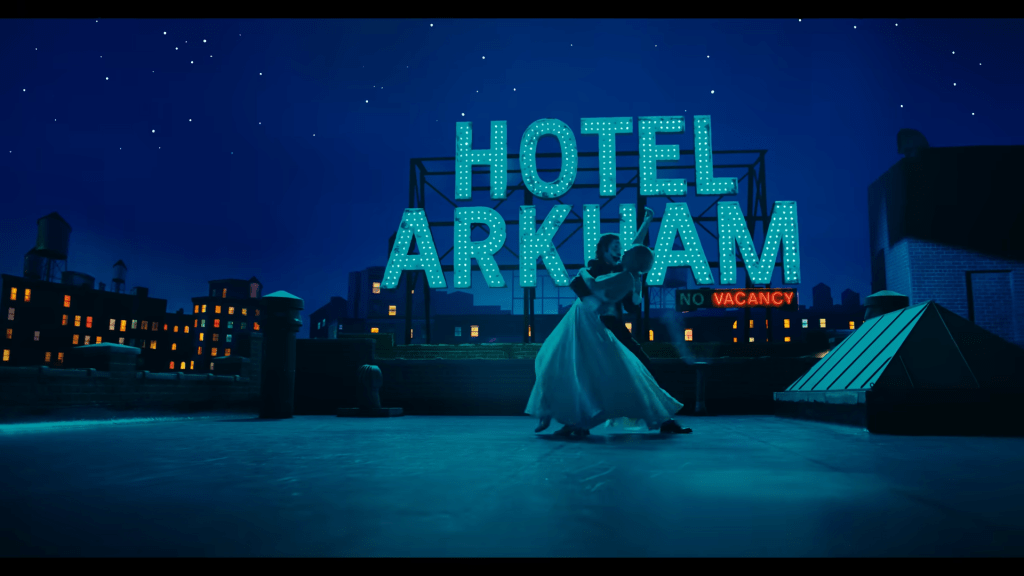
From Warner Bros. Joker: Folie à deux
In our minds, we’d be just fine
If it were only us two
They might say that we’re crazy
But I’m just in love with you

This shows how pivotal ‘Lee’ is for Joker. She fuels him. As Arthur is meek, loveless and innocent nobody appreciates him, loves him or cares for him. Being bold, carefree, dashing through Joker, at least he gets ‘Lee’ to love him, appreciate him. The identity of Arthur needs something to lean on, to fulfill his humanly needs – mental and physical. These needs would only get fulfilled if Joker comes out as dominant one. If not Arthur then at least Joker would make this personality free. This song is just about that. Even though delusional but Joker gets all the mental support to justify his personality in reality through ‘Lee’.

The interview with Patty

Before this interview Arthur has full control over the Joker, he has suppressed him to demonstrate his innocence. But the moment Arthur realizes that this interview is just happening for the sensational content, he loses it all and allows Joker to take control. (while starting to smoke characteristically in front of the camera!)

I’m wild again
Beguiled again
A simpering whimpering child again
Bewitched
Bothered and bewildered
Am I
Lost my heart but what of it
She can laugh and I can love it
Although the laugh’s on me
I’ll sing to her
Bring spring to her
And long for the day
When I cling to her
Bewitched
Bothered and bewildered
Am I

Here, Joker is making statement that he is the in-charge of Arthur’s body thereby his complete identity. When he realizes that Arthur will not get any help and it is just a sensationalism in the society, Joker shows the society that he is not alone anymore for the society to take care of him, He has someone who care for him now. This is his way of telling the society that it can go ‘freak’ itself now. The society pretending to help him to create one more drama is a conniving move for Joker. So this song is the final warning to the society that he doesn’t need this pity help from the people. He has his ‘Lee’ to love and appreciate him.
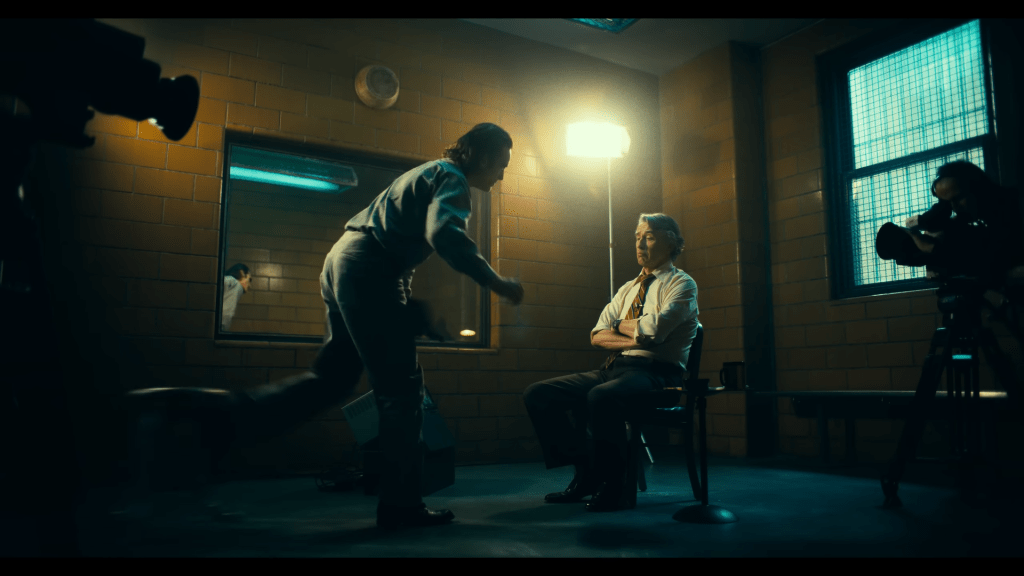
From Warner Bros. Joker: Folie à deux
Lee’s makeup song

Most of the scenes when Joker and Lee are sharing the screen while singing are the delusions running in the mind of Arthur. In the third act of the movie when Lee is singing alone while applying all make-up, she is alone. This is where the reality of what Lee is becomes clear.

What a world, what a life 
I’m in love
I’ve got a song that I sing
I can make the rain go
Anytime I move my finger
Lucky me can’t you see, I’m in love
Life is a beautiful thing
As long as I hold that string
I’d be silly so and so
If I should ever let it go

 This clarifies that Lee is manipulating Arthur to reinforce the Joker in him and using him to justify her own delusions. She knows she has all the strings in her hands to create the delusions she wants with Joker.

The Guard’s humming in Arkham asylum in the last part of the movie

When Arthur truly accepts the reality and rejects the persona of Joker he is actually on the path to new and healthy life.

When Arthur is sitting in front of the TV in asylum after this event, the asylum guard Sullivan sings this near him and another guard asks him not to sing this again.

We are not crowd 
My echo, my shadow and me

The guard is hinting Arthur that reality is the only thing where we truly exist. Whatever Arthur thought of himself having a different personality to take charge of his body while committing a crime is just a lie. It’s Sulivan’s way to mock Arthur to show that he will get the punishment in the end by court.

Another guard fears that this might trigger Joker to defend the joke on Arthur that is exactly why he tells Sullivan not to sing it in front of Arthur again. This also shows that Arthur is really trying to bring himself back to reality as this doesn’t trigger him. There was some hope for his recovery.

The Cognitive Dissonance – inner conflict for real identity
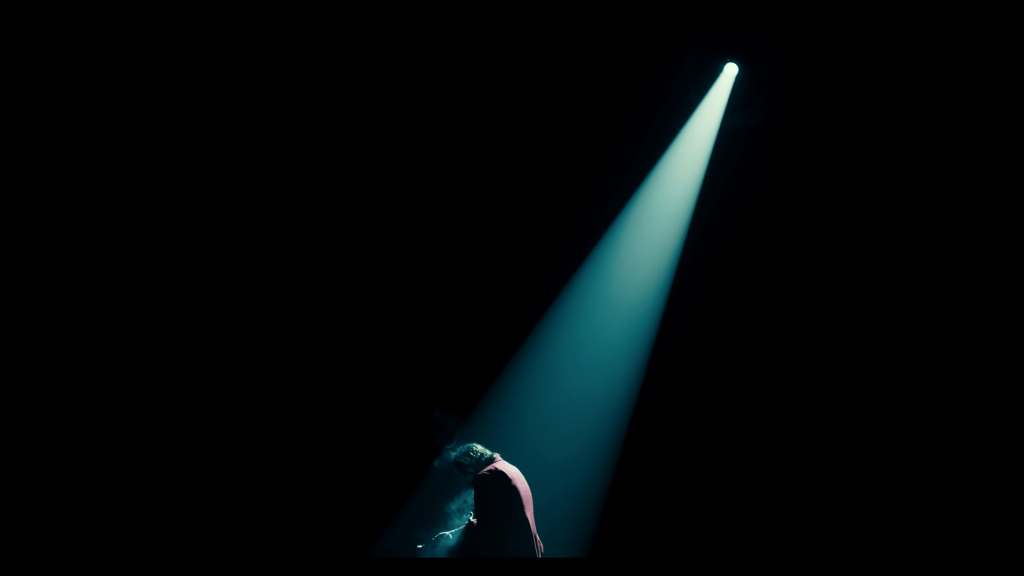
From Warner Bros. Joker: Folie à deux

During the proceedings of the court when the events of Arthur’s childhood are brought in light again to prove that the Joker is a defensive identity that Arthur has created to cope with the trauma and adversities in his life, you will understand that what Arthur lacked was clear identity.

The identity crisis actually led to the creation of intense defense mechanism through the creation of his shadow as Joker. There are specific reasons behind this:

  1. Arthur learns that what his mother told him about his parenthood was a lie
  2. He learns that even though his mother told him that his purpose was to make people happy, she was not a big fan of his jokes. Ms. Dumond in her testimony clarifies this, which shakes Arthur to core
  3. Arthur had created his whole personality around making people happy. The career choice to become a standup comedian was all driven by this sole thing. This is what defined his life

But the moment when Arthur realized that all the truths on which he created his life and his character were lie, he undergoes cognitive dissonance. Cognitive dissonance is a state when a person enters in paradox about the truths that made him who he is today.

Same cognitive dissonance happened for Batman when he learnt that his parents also took help of the very criminals he is fighting against today to hide their family’s dark truths in the past.

My point here is that both Batman and Joker underwent the state of the cognitive dissonance, the identity crisis, what they stand for. How they came out of this cognitive dissonance made them hero and the villain.

Batman chose to move away from the only motto of vengeance quoting that ‘Vengeance cannot change the past’. Batman then decided to stand as a symbol of hope for the degrading society.

Arthur – Joker in this case blamed society for the very state of mind he is in now. And there is nothing wrong in it. The very situations, events, people that Arthur got exposed to, made him chose that side. If he would have got proper support from the society and people, there really was a hope for him.

That is exactly why you must appreciate the act of Arthur to not become Joker in the end of this movie. Although the guards of Arkham had beat him to show that he is really weak in reality and Joke is not the reality. Arthur arguably had less privilege than Bruce Wayne to chose the right side and even after these hardships Arthur in this movie choosing reality of Arthur instead of delusion of Joker is a bold move. This makes Arthur’s character transformation far bigger, better and glorious than the transformation of Batman. (I am not saying that Joker is superior than Batman morally. I am saying the mental efforts that Arthur took to reject his Joker personality are way bigger, humongous than the mental efforts that Batman took to redefine his identity.)

There is very symbolic moment of Arthur running away from the Joker persona in the end of the movie to show how badly he wanted to escape that delusion.

From Warner Bros. Joker: Folie à deux

You know what? This is exactly where the city of Gotham went wrong. People wanted an agent of chaos. Not the guardian of hope. Chaos is more sensational and attractive.       

The Society and The Sensationalism

You should closely observe how Arthur behaves in the interview with Patty. He has dialed down Joker perfectly. But the moment Arthur understands that these people are not here to help him or work with him, they just want something sensational to show to the people watching TV, he loses the hope for the society. This is where Joker truly gets reinforced.

The way in which the character of Arthur Fleck is designed by the writers, it is a result of the overall failure of the social systems. The rising unrest in common people led to the reinforcement of Joker in Arthur Fleck even though he knew that he committed crimes.   
Common people of Gotham somehow, anyhow wanted the rich and powerful people to be held accountable for the problems they were going through. Even though it was a group motive it was a very selfish motive. Joker doing certain murders was just a sensational direction people wanted so that they would get this feeling of redemption against the corrupt system.

From Warner Bros. Joker: Folie à deux

Arthur was just a person in need of fame and appreciation for who he was. Only sad thing was that people only loved his Joker persona. That is exactly why Arthur chose the delusion of Joker to satisfy the delusion of redemption from riches for the society.

The real Folie à deux is not just about the shared delusion between Joker and Lee. It is between Joker and the society. It is between Todd Phillips’s Joker and the fandom. Deep down we too wanted this Joker to do some scandalous acts, exceptional crimes, and sensational interviews. We paid for the movie tickets to see the chaos that Joker creates in society thereby glorifying him as one of the best villains.

But, in reality we cannot handle such sensationalism. On surface it feels great while reading some spicy news, conflicts in our day to day lives but the moment they start affecting our very lives we know how horrible these things can turn out.

This movie actually made an effort to show how twisted a psychotic criminal is inside even though his life may seem sensational and happening outside.  

The Loneliness and Kindness

There are many moments where Arthur clearly says that all he wanted was someone to understand him and love him for who he is. The only reason Arthur submits to Joker’s persona was the fact that this is what the surrounding around him wanted from him. The DA wants him to be the Joker so that they can punish him. This would also make him a martyr among the common people of Gotham. People of Gotham wanted him to be the Joker because it was their way to vent out their anger for the riches and powerful of the city. Harley wanted him to be the Joker because he symbiotically supported her delusions, he was ready to do whatever she wanted.

You will realize that there were also some moments where this was possible, it was possible to tell Arthur that he is not alone. Some events actually do happen but not everyone is thinking the same about him. That is what creates conflict in Arthur’s mind. There is a scene where Arthur is singing a book with good intent but the moment the guard mocks him, Joker takes over and signs maliciously.

You see this is intense when the person is challenged mentally, such people are ready to resort to any part of their persona provided that they get what they long for. That is successfully depicted in the psyche of Arthur Fleck.

Conclusion

A society on moral, social, political decline – a degenerate society – a society on the brink of collapse – will always reject Arthur and welcome Joker.
It is very evident from this duo-logy that the surroundings, society plays a crucial role in the character development of every person. We chose certain attributes of who we are based on what we actually want. This is decided by how society responds to our actions. Based on the such selected attributes, then our behavior, action on such attributes and the reaction from society on such action mold our personality. This is roughly how our personality, our identity is created. If we are fully dependent of society to define who we are, then our personality would exactly reflect what the society. That is what happened with Joker. Arthur was completely empty inside. You will see this when he accepts all his crimes honestly while ending with a Joke.

- Knock, Knock
- Who’s there?
- Arthur Fleck
- Arthur Fleck who?

It shows that Arthur accepted that he was nobody. Society just poured inside his empty jar of personality, made him the agent of chaos.
That is why having an inner compass is very important in personal development. Our internal beliefs may sometimes get challenged and it is completely fine to change them, upgrade them. But the moment one starts to pivot his/her identity purely on outside factors it may create internal conflicts, mental conflicts. That is where Arthur lost his battle for personal identity. Even though the ideas are fictional they prepare us for the adversities occurring in reality, that is for me is the real power of storytelling. May everyone in reality find their true identity in a healthy and sustainable way.

We are full of biases and we are always in search for the things which reinforce our internal belief system. It is a normal human tendency to justify one’s identity. Those who are ready to change and modify their understandings about the surrounding are closer to the reality and those who are stubborn to change their belief system will get hit by the reality until they have learnt their lesson.

This Joker movie indirectly keeps on highlighting how difficult it is to gauge what goes in the mind of a mentally challenged person. Most of the time our instincts repel us from such people but what such people need is a sense of being loved and sense of belonging. If they are felt loved in reality, maybe there is some hope that they will let go of their delusions. Being kind is the only way.  

For me the movie actually presents a choice in front of the audience for the fate of the Joker. As a human being Arthur coming out of his Joker persona was a very healthy and hopeful character development. But that is not what we wanted from him. We, just like the people of Gotham city wanted him to create chaos. This movie shows that hidden dark part in our minds. I am not saying that all of us are sadistic. I am saying we all have a dark part in our psyche and its normal. Everyone should be aware of their own darkness to remain mentally healthy. It improves decision making.   

My favorite moment from Warner Bros. Joker: Folie à deux

Further reading:

The Batman- The superhero who ‘unlearned’

The Utility of Human Life and Morality

Why doesn’t Batman kill all his villains once for all? Why the sentence passed by judicial systems in certain heinous and extraordinary crimes feel unjust for the pain victim went through? How one can tell that given person was right or wrong when he/she had no intent of doing it? Can you just look at the end consequences of the actions and decide right or wrong for such scenes? Jeremy Bentham’s philosophy of Utilitarianism tried to answer some of these questions but it revealed certain flaws in our ways of judgement. Even though hedonism and utilitarian philosophy create an objective model of morality, they fail to address the subjective and human aspect of any moral discussion. It reveals that the purpose of living is not mere happiness but self-improvement thereby mutual and overall improvement.

How to judge morality and its impact on human life?

The Moral Dilemma

A healthy sense of good and bad makes a society livable. There are some special, rare events that happen in the society we live which challenge our idea of what is good and what is bad. There are uncountable offenses and also in varying types which create problem of who should actually be punished and what should be the punishment.

An eye for an eye will make the whole world blind.

Mahatma Gandhi

If this is really the case, the law and order should punish the victim in such a way that it prohibits the future perpetrators to not do such crimes again. But again, as this above mentioned quote goes if the punishment given for the crime is equally dangerous then what exactly are we trying to establish through such punishment?

It’s like that scenario where murdering a murderer creates a new murderer so the net number of murderers in the society remain the same. An Italian philosopher called Cesare Bonesana di Beccaria had given a thought on this. In his book ‘Of Crimes and Punishments’ he discusses that if the punishments grow on crueler and crueler the net mindset of people also grows crueler. It’s like how water levels itself irrespective of the depths. The baseline of what is right and wrong furthermore what is more wrong and what is more right shifts up. Crueler and crueler crimes reduce the sensibility of people of that society. This could be one reason why people always argue that the judicial system does not provide equivalent punishment as a justice to the victims of certain heinous, exceptional cases of crimes. (Although there are many other factors to make such decisions.)

“In proportion as punishments become crueler, the minds of men, as a fluid rises to the same height with that which surrounds it, grow hardened and insensible; and the force of the passions still continuing, in the space of a hundred years the wheel terrifies no more than formerly the prison. That a punishment may produce the effect required, it is sufficient that the evil it occasions should exceed the good expected from the crime, including in the calculation the certainty of the punishment, and the privation of the expected advantage. All severity beyond this is superfluous, and therefore tyrannical.”

Cesare Beccaria, Of the Mildness of Punishments from ‘Of Crimes and Punishments’

In similar spirit, the relationship between Batman and Joker can be understood. Joker never cares about killing people he will try to stretch the limits of batman in every possible sense where innocent lives are at stake. Batman has one solution to stop all this – to kill the Joker. But with a high moral ground Batman would never kill Joker. What is the motivation behind such character design of Batman. Batman knows that killing Joker would solve the problem once for all. Believe me, this is not just a fictional comic book scenario. The reality that we live in has uncountable such scenarios where exactly same decision dilemmas occur.  

The famous trolley problem also points to somewhat similar moral dilemma. Where should the trolley be directed if one track has single person and another has 5 people tied to the track? Nobody wants blood on their hands.

But the same trolley problem becomes interesting if you start adding additional attributes to the people who are on track.

What if the single person tied to the track is a scientist with the cure for cancer and the track with five people are criminals? Then definitely you would kill the five criminals instead of the single scientist.

Did you notice what change made us to decide faster? The moment we understood the consequences of our actions we had the clarity of what is right and what is wrong. Our moral compass pointed to North the moment we foresaw the consequences of our actions.

The foundation of some of the principles of morality are based on similar ideas. Utilitarianism and Jeremy Bentham’s an English Philosophers ideas have contributed to the ideas of morality for humanity, especially when we are talking about the human society as a whole. The ideas put by Jeremy Bentham also faced severe criticism, we will see those in detail too. But the key intention of my exploration is to understand how we create the meaning of Morality and how subjectivity, objectivity totally change the way we perceive morality. In the end we may reach to rock bottom questioning the morality itself to be nonexistent – and if morality is non-existent then what separates human beings from animals? (I hope to enter in this territory with some optimism, I don’t know where will it end.)

Utilitarianism

As I already explained in the trolley problem that by adding one simple, short part of information shifted our moral compass in (supposedly) proper direction. What did this information add in the dilemma to make it solvable?

The answer is the foresight of consequence. Once you saw the consequence it leads to you got the hold of what is right and what is wrong. You decided one side to be right and other one to be wrong. This foresight of consequence helped you to weigh the ‘right’-ness of your decision.

Utilitarianism is based on the measurement of morals based on the consequences of the actions you take. What is the other side of taking actions? It is ‘the intent’. This is where the fun game begins.

Many philosophers are always fighting over morals based on the intent of the person and the consequences of the actions they take. For example, thinking of murder (pardon my thinking) makes me less of convict than really murdering someone. My thinking has not led to the loss of the person I hate. Utilitarianism thus calls out for the construct of morality based on the actual actions and their consequences; it’s like saying ‘what a man is more about what he does instead of what he thinks’.

Hedonism, Utilitarianism and Jeremy Bentham

Happiness is a very pretty thing to feel, but very dry to talk about.

Jeremy Bentham

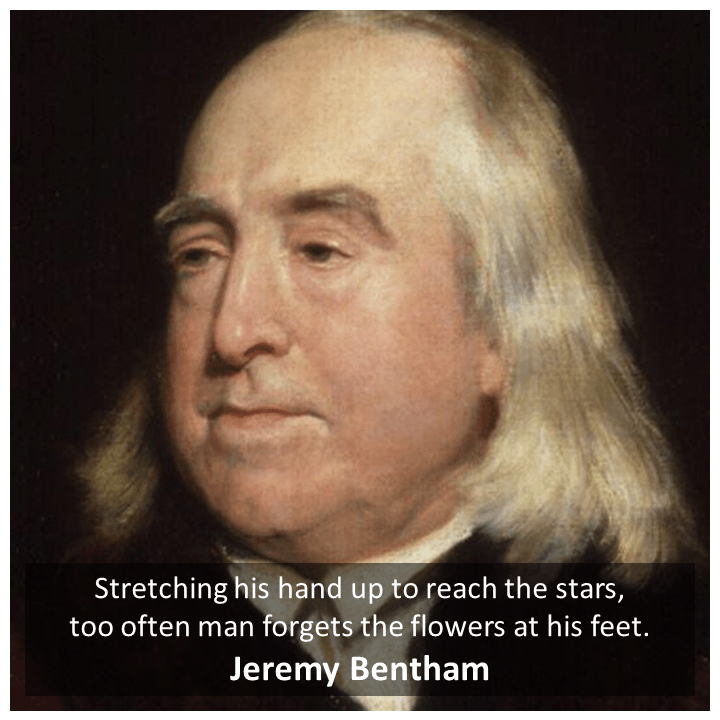
Jeremy Bentham an English philosopher contributed to the utilitarian ideas of morality. He was not well appreciated in his home country due to the misalignment of his ideas of socio-political reforms with the British sovereignty of those times. The French translation of his works on law, governance gave him popularity in Frenchmen. Bentham was one of the people who pushed the political reforms during French revolution.

While reading Joseph Priestly’s Essay on the First Principles of Government, Bentham came across the idea of “greatest happiness for the greatest number” which motivated him to expand the ideas of utilitarianism.

Priestly brought the idea of “Laissez-faire” (‘allow to do’ in French)- a policy of minimum governmental interference in the economic affairs of individuals and society. Joseph Priestly developed his ideas of politics, economics and government based on the ideas created by Adam Smith (Author of the Wealth of Nations – the holy grail of classical Economics).

The Greek philosopher called Epicurus was the supporter, creator of hedonism. Hedonism defines ethics to pleasure or pain. According to hedonism that which gives pleasure is morally good and that which give pain is morally wrong. The idea behind hedonism is the aversion of pain to live an undisturbed life because anyways this all won’t make sense once you are dead. According to Epicurus – fear of death, retribution is pushing people to collect more wealth, more power thereby causing more painful life. The collection of wealth, power is done thinking that they can avert the death but that is not the reality. So, worrying about the death sucks out the pleasure of living the life which itself is equivalent of death.

Non fui, fui, non-sum, non-curo
(“I was not; I was; I am not; I do not care”)

Epicurus

So, epicurean hedonistic morality tries to maximize the pleasure. The other end of this idea is that if everyone tries to maximize their own pleasure (egoistic hedonism) wouldn’t it disturb others?

If I want to listen to a song on loud speaker while bothering my neighbors, what is the moral standpoint here?

The answer is the overall good of the system. So, if you neighbor also wants to listen music loud and overall loud music is good for the group then we are morally right to play loud music. (Just pray that the group has same music interests!)

So, Jeremy Bentham is known to rejuvenate this ancient philosophy of egoistic hedonism through his philosophy of utilitarianism.

The basic idea behind Utilitarianism is to maximize the utility of anything, value of anything. The utility can be increased by doing what is right which can be done by doing what gives more pleasure or by avoiding those things which increase or give pain.

Utility is a property which tends

  1. To produce benefit, advantage, pleasure, good or happiness
  2. To prevent happening of mischief, pain, evil or happiness

So, the right action is the one that produces and/ or maximizes overall happiness. Please understand that the word “overall” is important for Jeremy Bentham’s philosophy of Utilitarianism. Because from selfish point of views, what is pleasurable for one may not be pleasurable for others. (This is also where the certain philosophical problems of Utilitarianism are hiding, save this point for later.)

To solve this bottleneck of clarity, there are two types of pleasure in human life – one is happiness from senses, physical experiences and one is from intellect. The intellectual happiness is higher than the pleasure from senses. So, on personal moral dilemmas these two attributes can solve the problem.

All good on personal level but what about the moral decisions for the group, for society? Here, Bentham solved the moral dilemma by using the idea of “greater good for all”. When we don’t agree on what makes us happy together, making sacrifices in your happiness to make others happy is the solution. (Keep this idea parked in your mind.)

“Nature has placed mankind under the governance of two sovereign masters – pain and pleasure. They govern us in all we do, all we say and all we think.”  

Jeremy Bentham

Felicific Calculus – Measuring happiness

Jeremy Bentham is known as the Issac Newton of the Morality for developing the felicific calculus/ hedonistic calculus. Bentham pointed out the key factors which affect the net happiness and using this factors’ effect as a whole, one can quantify the happiness.

Following are the factors which affect the happiness:

  1. Intensity – how strong is the pleasure from the given action?
  2. Duration – how long does the happiness remain from given action?
  3. Certainty – what is the likelihood of given pleasure to occur?
  4. Propinquity – how soon/ immediate is the occurrence of the pleasure?
  5. Fecundity – what is the possibility that this pleasure will also lead to the newer pleasure(s)?
  6. Purity – what is the change that this pleasure will not bring some opposite sensation?
  7. Extent – how many people are affected?

If one considers these factors and the principle to maximize the communal happiness, most of the social moral dilemmas can be effectively solved.

So, according to this felicific calculus,

  1. Batman should kill the Joker for the greater good of the Gotham
  2. The trolley should go over the group/ person which creates more pain for the society
  3. Baby Hitler should be killed once we get the chance to travel back in time

You must appreciate the clarity which the felicific calculus brings. This clarity is very important for the policymakers, politicians while deciding the fate of the group, state, nation as a whole.

Now a simple question –

If batman keeps on killing the villains, won’t he become the greatest killer of them all? What would differentiate Batman from other villains?

What would happen if you were given false information about the nature of the people tied on track while riding that trolley? Could your wrong decision be undone? If it was the wrong decision then now ‘you’ are morally wrong, with the blood of the innocents.

You would kill baby Hitler only because you have vision that this baby will grow up to be the mass murderer tyrant. The mass murder hasn’t happened yet. So, now you are the killer of a ‘now’ innocent baby.

Maintaining same emotion, now you would appreciate why even for a strong judicial system giving capital punishment for rapists, terrorists is difficult morally. You would solve the problem for now because the act has been already done, the consequences have already happened (which is why moral judgement is effective as it relies on the consequences). Killing the perpetrators or punishing them with equal pain would definitely bring peace of mind using the principles of morality but that also degrades the morality of innocents who fell down from that morality. It is not matter of what one deserves because what bad happened to them, it is about how less human you will become once you perform that act of punishment.

Recall the quote of Beccaria in the early part of my discussion.

Killing joker will create fear among other villains but it also creates chance for the creation of even dangerous villain in future.

Killing baby Hitler doesn’t guarantee prevention of World War and mass murders, as our personalities are the result of our surroundings – another Hitler-like person would have emerged in such given circumstances. (I honestly don’t know if he/she would be worse or less harsh than the original one but you get the point – conditions anyways would have created another cruel person.)

Jumping out of the trolley seems the best way to run away from the pain of murder of other unknown people (joking). The trolley dilemma remains dilemma.

Also, the felicific calculus allows pain for small groups for the betterment/ pleasure of the bigger society. For example, according to this utilitarian idea killing few healthy convicted prisoners to save lives of many innocent people by harvesting the prisoners’ organ is justified. It is for the good in the end.

You see where this goes?

See the level to which any human or a group could go if they start justifying their moral rightness using these ideas. Using these principles any big group can overpower the minorities in morally right way. It is just a matter of time that the felicific calculus principles would get exploited for other “immoral” gains.

That is exactly why many people criticized the felicific calculus saying that a pig laying in the mud for his whole life would be happiest than a human being (Socrates to be specific) if Bentham’s calculus is used to decide morality.

In a crude way, there are two type of Utilitarianism which help to solve the problem to certain extent, but it is not a complete solution:

  1. Act Utilitarianism – to act for the greater good of all
  2. Rule Utilitarianism – to set rules in such way that no one inherently gets the pain or everyone is happy because actions and their consequences are bound by certain set rules in first place now

Happiness is not the ‘only’ and the ultimate goal – the limitations of Jeremy Bentham’s Utilitarian Philosophy

What people were not ‘happy’ with Jeremy Bentham’s felicific calculus was that it made humans more like machines and very objective. People don’t always want happiness for their or the group’s greater good. Exercising daily, reducing fat-sugar maybe painful but that guarantees healthy, illness free long life. Doing drugs isolates the person from pain but it impacts the long-term physical and mental health of the person. Hardships and pain make people to reach their difficult goals which is what is the real and ultimate happiness for them.       

Happiness is not always the goal of life, if one is completely tangled in the pleasures of life and if everyone is having same mentality then in the end no one will be happy, because as a group we all would never agree on what makes us happy; different environments in which we grew, our personal experiences, our upbringing, our motivations prevent us from creating a common definition of happiness.

The subjective factor of pleasure or pain is not present in Bentham’s philosophy of Utilitarianism. Building further upon that, the victim who has suffered from the morally wrong action will only be satisfied when he/she gets justice, not when they are made happier than their perpetrators. (This justice must again not be mechanical and objective like the felicific calculus.)

One more flaw of the Bentham’s utilitarianism is the imbalance between personal scenarios and the communal scenarios. In most cases, it demands personal sacrifice irrespective of their subjective morality for the betterment of the group. (that is exactly how many past cruel dictators have justified their moral correctness on their acts against the minorities.)

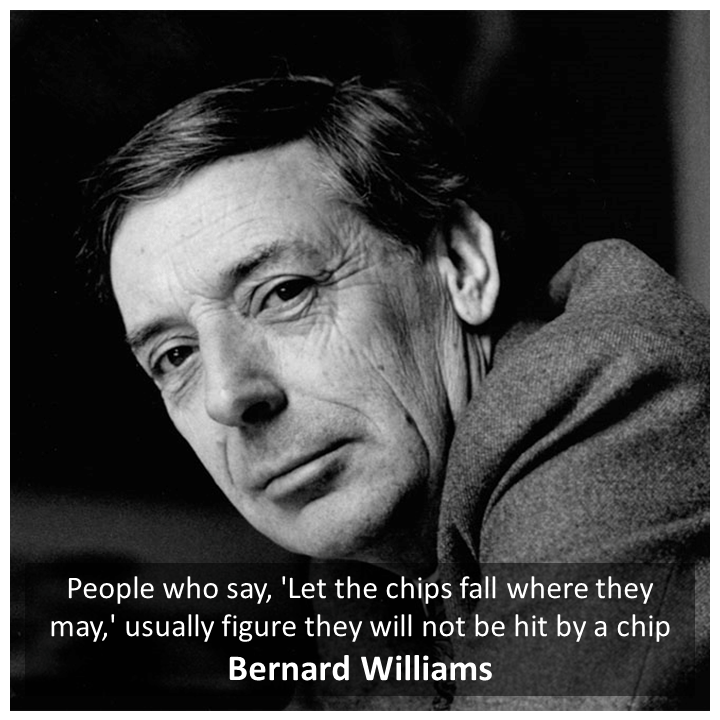
A British philosopher, Bernard Williams presented a thought experiment to highlight such flaw of the Utilitarianism.

In this thought experiment:

A botanist on his South American expedition is ordered by the cruel regime soldiers to kill one of the Indian tribe people. If the botanist fails to kill one Indian the soldiers would execute all of the tribe members.

So, if we implement utilitarian principles, then the botanist should kill one Indian to save the remaining all. That is morally right.

But on the other hand, one must also understand that the botanist has nothing to do with the cruel regime and even with the indigenous tribe members. He is under no moral obligation to do anything. The consequences are in such a way that whatever he will do he will be called morally wrong. Which in the end is wrong.

The utilitarian philosophy neglects this subjectivity and consequentialism while we are deciding morality of anything.

Maybe that is also why even when we have all the rules in place, penal code in place for all types of offenses, similar crimes – we have a judge – a subjective, consequential observer to grant the final justice.

You must understand that the discussion does not want to pose Utilitarianism as completely wrong idea. The intent of this discussion is to understand how to de-clutter a complex moral scenario and how to inject subjectivity in it so that the correct person will get the justice in the end. As we are human beings and not machines, every day brings new subjective scenarios with new subjective moral dilemmas. Direct implementation of utilitarianism may bring in the transparency in the moral puzzle but it is at the expense of oversimplification and loss of personal subjectivity, consequential personal point of view and also freedom of person to exist.

The ways in which Utilitarianism brings immediate clarity by elimination of some important subjective aspects is dangerous and limits the judgement of real morality. Friedrich Nietzsche had warned new philosophers in his book beyond good and evil about the philosophies which create such “immediate certainties” like Utilitarian philosophy creates-

“The belief in “immediate certainties” is a moral naivete which does honor to us philosophers; but – we have now to cease being “merely moral” men!”

Friedrich Nietzsche

Conclusion – If not happiness then what is the goal of being human?

Jeremy Bentham’s philosophy of Utilitarianism and the felicific calculus can help to decide the morality of what is good for all but it ignores the presence and worth of personal integrity, the well being of the minorities, subjectivity of the person in given consequences. It by default eliminates the possibility of humans remaining human beings instead it attributes them as the machine maximizing a targeted outcome (which is pleasure here).

So, the question remains – If we are not meant to maximize pleasure during our tenure in life because in the end after death there will not be anything to experience or gain happiness – if our existence and final purpose does not align with being happy then what exactly is the purpose of being a human being?

Based on my understanding on what many great people have commented about the purpose of life, I found that most of them point to remaining the human being you always were. I am not saying that the personality should remain the same, rather it should change and keep on upgrading itself till the end but the core should remain same or it should not degrade at least.

Some wrong events, injustice, oppression, cruelty will make you suffer, but that should also not vilify your human spirit. Once we let go the pursuit of happiness and chase the goal of being a better human being (or at least remain the human being you are) we can fulfill the purpose of our lives and also make other people’s lives better.

Once you will let go of such utilitarian, mechanistic setups of morality you will realize that people don’t need gods, religions, governments, judicial systems to keep in the check of right and wrong. Our inner compass is more than enough to take care of what makes us human beings, this inner compass is not about what is right and wrong, for me it is about what better version of yourself you would become if you act in that certain way. It takes care of what you are thinking and what would be the consequences of actions thereby resolving the dilemma of morality which got separated on the basis of either intent or the consequences.

I am highlighting the importance of inner personal human compass because the rules designed to keep morality in check would always need revision and the utilitarian philosophy would wait for the consequences to happen to decide the morality. The goal of human struggle to improve their current version to a better one does not need either of the metrics to decide the morality.

Imagine what the world would become if everyone started appreciating this inner human compass!

(For now, we can only imagine, but I am optimistic on this.)        

P.S. –

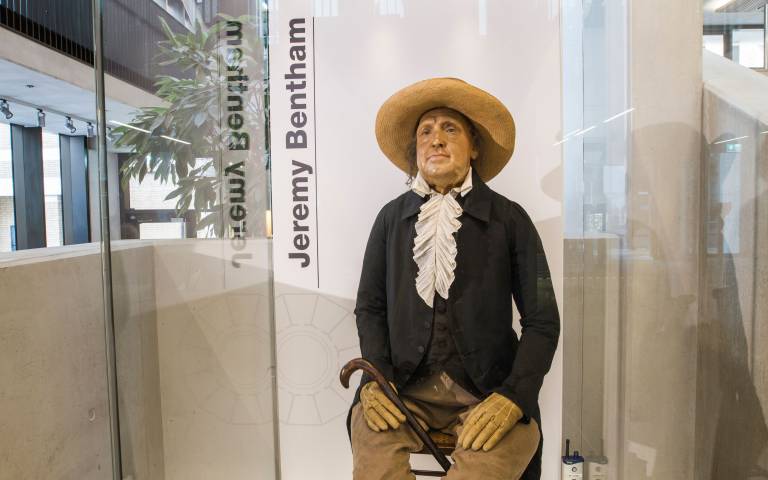
Even though the Utilitarian philosophy had many flaws, Jeremy Bentham contributed largely to bring in new political reforms, improve governance, establish penal codes in judicial systems, define sovereignty, reduce the influence of religious institutions on the lives of people and governments. His works were strategically maligned by some lobbies to lessen the impact of his other notable works. He was the proponent of liberty and freedom from religious influences on lives of people. The pushed for the establishment of a secular educational institute in London – now famously known as University College London. Jeremy Betham’s fully clothed wax statue containing his original skeleton remains in the entrance hall of the University main building upon his request.

The Free Spirit – Beyond Good and Evil

The journey to the freedom demands solitude thereby making man responsible, accountable for the consequences of his every thought and action. Friedrich Nietzsche in his book Beyond Good and Evil paved a way for future philosophers to establish their own new perspectives about the truth where there are no two sides – good-bad, sad-happy, moral-immoral, beautiful-ugly, calm-disturbing but a revised and better version of the older truth. Nietzsche in this book focused on the refinement of our perspectives, our versions of truths for the real freedom because immediately surrendering to already established versions of ideologies is the worst imprisonment any man can have. Nietzsche showed how badly our ignorance creates an illusion of freedom and how to come out of it. This is to remember Friedrich Nietzsche on his death anniversary.

Remembering Friedrich Nietzsche on his death anniversary

Friedrich Nietzsche is one of the most impactful philosophers we as a humanity have ever seen. Reading Nietzsche is a task in itself. But the moment you start getting hold of the things that Nietzsche is trying point to, you will literally undergo transformation. The path that Nietzsche paved inspired many modern philosophers, thinkers, writers. To not mention Nietzsche is to do injustice with our understanding of ourselves as the human beings. This is one attempt to revisit Nietzsche’s ideas in his famous book called “Beyond Good and Evil”, especially his ideas on free Spirit.

Nietzsche in his special style clarified what it means to be really free and how we develop our perceptions, philosophies about the world around us and ourselves.

This is me remembering Nietzsche on his death anniversary. His ideas will keep on living forever.

Oversimplification kills the nuances thereby changing the big picture

Nietzsche strikes powerfully on the idea of understanding the life as simple and easy. It’s a humorous way in which he tried to convey how we consider living life as way to goodness, happiness, pleasure and freedom. The sentences that Nietzsche used to put his ideas about life are built in such a way that you will start questioning the happy nature of the life we desire. You will realize that during the process of understanding life as a pleasurable, happy experience we have submitted our thought process only to the side of pleasure, happiness, and truth. This presumption about life always deviates our search for the truth – “the happiness” that we lookout for as a biased pursuit. Here Nietzsche is not saying that if ‘this’ which you are trying to justify life with is true then it’s opposite is wrong; he is trying to point us towards the idea that as we have attributed life to a happy and pleasurable experience, this attribution has oversimplified what life actually is. Oversimplification has happened because not everyone can understand complex ideas on equal level. It’s not because people are dumb, it is because we have our own ways of interpreting the world around us and the ways through which we interpret the world are totally subjective. Thus, the truth if it exists, it will never be absolute but based on perspectives one has.

“We have contrived to retain our ignorance in order to enjoy an almost inconceivable freedom, thoughtlessness, imprudence, heartiness, and gaiety – in order to enjoy life!”

In order to make everyone appreciate given idea of life on same level we have oversimplified what life is and such oversimplified foundation has led to building even more oversimplified versions of so-called truth. In the pursuit of clarity and ease of interpretation and communication our lives have become false!

That is why Nietzsche here tried to attack the very fundamental way in which we try to break down the things we come across when we live through them. See it in this way, if life by default was supposed to be simple then it is implied that we would have grip on every aspect of life and existence. We know that’s is not the reality. So, if it is not simple then it must be complicated is our next thought. Thus, if life is complicated in reality then oversimplification eliminates certain aspects of life which we keep on missing in the search of truth.

You know what, Nietzsche further explains that when we are denying that life is not simple and happy that also should not invite it being opposite of what was earlier thought i.e., sad and complicated. Nietzsche rejects the idea of polar opposite to portray the lives we live. He calls life, knowledge as the process of “refinement”.

It’s not duality of any aspect of the philosophy, good and bad side of life but the ways and times they have refined themselves which should be the parameter of their worth.

The Death of Philosopher

Nietzsche had his way to express verbal anguish. The sentences are so dense that the prose feels literally repulsive. I think it was intentional. His writings were never meant to be read while sipping coffee or to romanticize the philosophy or the idea of life. They will make sense to those who really want to understand what he is trying to say. Nietzsche in his next idea talks about how every philosopher is trying to find the meaning of life and thereby his/her truth of life. He despises the idea of life or philosophy being explained with a single idea. That is why he sarcastically calls philosophers as the protectors of truth, the thing which itself doesn’t need protection in first place!

Nietzsche thus calls out to the philosopher to get ready accept the martyrdom, the death of their idea of philosophy. The philosopher can only carry his point forward for further refinement but he/she must not – cannot define the life in whole with that simple idea. That idea has to die in the process so that newer refined ideas can be built out of its broken pieces.

In order for philosophy to exist it has to end, it has to kill its older version – that is what is the tragedy of philosophy is as Nietzsche goes.

The Freedom Paradox

When Nietzsche is trying to initiate treatise on freedom, he starts with what it means to be free for any person. One important observation he puts in front is how we get freedom on personal level. On surface it feels if the person is free on personal level, then it is easy to be free in society as a whole. But Nietzsche shows that these ideas of freedom are paradoxical! Man goes inward for the freedom because he/she knows that there is no one else to tie, bound him/her inside his privacy. The man seeking freedom when interacts with the crowd soon realizes that his experiences of life are bound to how crowd handles him, reacts to him, treats him, shapes him. That is unsettling, the burden is difficult to carry for single person hence the man again resorts to privacy, in order to do that he has to let go of certain truths and create his own little lies so that the external crowd won’t disturb his “freedom”.     

(the man) he was not made, he was not predestined for knowledge”

The point Nietzsche is trying to make here is that the taste of freedom comes with the unsettling feeling of existence. But as a man we are not seeking that freedom for us; freedom is some citadel, a happy place where we expect to have control over course of things. The real freedom as Nietzsche explains will be gained by being in touch with crowd (which sounds paradoxical again) It’s like saying you will understand what you real singular identity is when you start mixing yourselves with the crowd!

Nietzsche further advises philosophers of the future to not turn away from the unsettling ideas about philosophy. He takes support of cynicism to make his point. Cynicism bases itself on the idea that people are selfish, self-interested (so in simple words if anything doesn’t go the way a cynic wants, they would whine and create reasons to justify it.) Nietzsche expects the future philosophers to understand the difference between ill-speaker and bad speaker. The lovers of knowledge should also be able to understand what is unsettling, maybe their lies the next opportunity for better version of their philosophy.

The Freedom of Expression

Nietzsche had already explained how things lose their essence in oversimplification. In same fashion it becomes difficult to interpret what a fast thinker is thinking and then explain it to the relatively slow thinkers and make them appreciate the same idea on same level. Even in our thinking we are not free. You can create an explanation for others to understand what you are thinking but they themselves have to climb up (or climb down sometimes) to your level to appreciate what you are thinking, you may succeed in expression but interpretation, comprehension and its appreciation gets limited by the levels on which others are thinking. (My question, if this is the case then even if you are a free thinker, are you truly a free thinker? I know Nietzsche is paradoxical most of the times)

“What is most difficult to render from one language into another is the tempo of its style, which has its basis in the character of the race, or to speak more physiologically, in the average tempo of the assimilation of its nutriment.”

Nietzsche further builds this “so called” freedom of expression using the limitations of the language. Language is the culmination and mirror of the culture it originated from. So, naturally each language has its own style, flow, breaks, rules and ways to highlight certain aspects of narration. When such languages is used to express an individual’s ideas, the speaker has to let go of the nuances of his culture, his primary way of life so that others having another culture, another way of life can appreciate and understand what he is trying to convey, but what if the nuances were the only thing which made that idea influential? Then the influence of the idea would be lost because of the translation. (This is Nietzsche’s way saying lost in translation!)

The Tragedy of Independence

Another way to become free is to become independent. The very few lines Nietzsche uses to explain independence are equivalent of an atomic bomb! (trust me it is still not an overstatement!!!)

People who become independent are few as Nietzsche says and those who are strong can easily achieve it. This independence is also one way to be free. When a man becomes independent, he is on his own, there is no one like him – he is alone. Nothing is anything alike him – he is alone. Thus the whole world becomes a puzzle for him as he is on his own. Any direction becomes new path for him. As he is the only one like himself, there is no one who would reach to his level and match his thinking. And in such case if he needs sympathy, people cannot even sympathize with him because they are not on his level. What a tragedy! The sadness he has in his heart, mind is rendered useless because others around him are not able to comprehend it – sympathizing gets ruled out automatically.

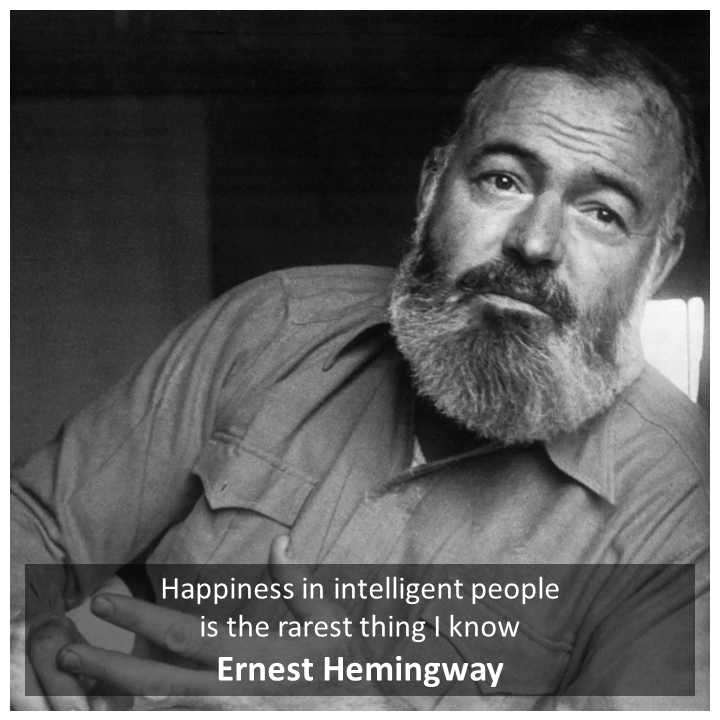
This is Nietzsche’s way of saying what Hemingway said. (I mean both meant the same although Hemingway came later, but you get the point) You must understand that happiness is not the real pursuit of life, then you won’t feel tragic about what Hemingway is trying to convey here, same is what Nietzsche trying to convey here. Freedom by independence can be a tragedy for the person who was expecting glory out of it.

Foolishness Hides Chances For New Insights

Nietzsche here is trying to remove the lines between what is good and what is bad, what is allowed and what is forbidden.

“That which serves the higher class of men for nourishment or refreshment, must be almost poison to an entirely different and lower order of human beings”

In modern crude sense, Nietzsche says “one man’s trash is another man’s treasure”!

Same idea, same act will have different perception of morality, scale of right and wrong. A rebel thinker in common poor public could be attributed to a philosopher amongst the riches. A murderer who killed an evil landlord could become a saint among the people who were victims of this landlord’s oppression.

So, Nietzsche’s attribution of foolishness is a way to point out the exceptional, outlier acts, prohibited acts, crimes to find the better truths. That will make you freer than others.

The Freedom of Youth   

 The stage of youth feels like the freest stage of all the stages of life and it is so because it has let go of the nuances. It also feels free because the youth in the stage of exploration never submits to right or wrong, yes or no to the life as Nietzsche says. But as the time passes when the youth is exposed to disillusions, broken expectations they try to modify themselves in a way that will get things done the way they wanted – the compromise starts to enter. The moment this happens the same youth tries to punish themselves as Nietzsche says. The freedom exists no more, so is the youth.

The Freedom of Actions

(Again, this a hydrogen bomb on morality!!!)

How can we say that the given action is right or wrong?

Nietzsche has very interesting thought process on this question. In the starting times the action was right or wrong based on what it led to – its consequences – the effect. The problem with this thinking is that one has to wait to let the action happen to decide its rightness or wrongness. If the stakes are high, such attribution of right or wrong can be devastating.

So, Nietzsche takes support of Chinese idea where the parents are responsible for the betterment of their child. Meaning that the origin of the thought which led to that action should be the decider of whether the action is right or wrong. Nietzsche called this pre-moral period of mankind. And sarcastically he points out that we have made a total turn around the idea of right or wrong action. Earlier it was what happened after the action i.e., consequences; now it is what led to that action, meaning what was happening before that action i.e., the origin which is the decider of right and wrong of any action!

This is where the origin of action gets named as ‘moral’ which is generated from self- knowledge. Later these morals evolved into “intentions”. As Nietzsche says, intentions serve as the origin of any action.

“people were agreed in the belief that the value of an action lay in the value of its intention. The intention as the sole origin and antecedent history of an action: under the influence of this prejudice moral praise and blame have been bestowed, and men have judged and even philosophized almost up to the present day”

Nietzsche then drops another bomb called – unintentional actions. We are clear that whether action is right or wrong can be decided by the intent. But what if there was no intent or there are no other ways to pinpoint the intent behind certain actions? There is a possibility that the intent may get mistranslated, misinterpreted during the unfolding of events, then how would you decide the attribution of given action.

In such case we would again go to the effect- the consequences of that action!!! You see what is happening here? We might have to resort to that older measuring system of action based on their consequences.

This is Nietzsche’s style to question how we think of morality in general and also on deeper level.

(I can’t resist praising Nietzsche lesser but deep down I know he would question his own worship too!)

The next attack Nietzsche does by using morality is the sentiment of sacrifice. The basis of his thought process is that you should question everything that gives you pleasure at least once. Here, he shows how fake the feeling of sacrifice for others, surrender could be if it is intended to display how moral and virtuous you are!

“There is far too much witchery and sugar in the sentiments “for others” and “not for myself””

In simple words, you are saying that I like to help others because it makes me happy. So, in order to help others you have to become selfless, but if becoming selfless to help others makes you happy, doesn’t that make you selfish? You are selfless because you are selfish!!! (Disclaimer: Nietzsche is paradoxical.) The paradox is resolved when you accept that you are just taking support of morality to display you higher value. Being selfless is just a better excuse to display your high morality. It there was any cruel way to display your high morality no wonder you would have gone for that!!!

In modern ways, it’s fox’s way to say the grapes are sour or I am a virgin because I am waiting for someone special (In reality fox cannot reach the grapes and the person is not able to appreciate other person or people rejected that person continuously – please note that I am not blaming someone’s character – it’s the limitation of language that prevents me from expressing what I am thinking for oversimplification. As Nietzsche has already shown that oversimplification kills the nuances. You get the point!)

The Immoral Philosopher – The Free Philosopher

Building upon the ideas of nuances lost in translation, right and wrong in morality Nietzsche calls the future philosophers to go beyond the dichotomy of philosophy and also distrust the morality in the development of new philosophy, new truth.

“In all seriousness the innocence of thinkers has something touching and respect-inspiring in it, which even nowadays permits them to wait upon the consciousness with the request that it will give them honest answers”

This is Nietzsche’s way to show that in order to find the new truth new philosophy, new philosophers have submitted themselves childishly and blindly to the principles of morality hoping that morality will give them new answers. But it is the same tinted glass of morality that prevents them from getting new perspectives. Hence, he calls them naïve here. They must let go of this childishness.

“The belief in “immediate certainties” is a moral naivete which does honor to us philosophers; but – we have now to cease being “merely moral” men!”

This is Nietzsche’s way of saying it’s good to be bad!

For Nietzsche, morality shows only two sides of reality- right or wrong, this works fine if reality is really dichotomized. But we know there is no such thing as right or wrong for every real-life scenario. So, in order to find the real truth, you have to let go of morality, then you will see that reality has its spectrum and people residing on different biases of such reality have their own attribution of right and wrong for the same action. Morality is the subset of newer truth, not the other way around.

‘il ne cherche le vrai que pour faire le bien

(he who searches truth to do good) – I wager he finds nothing!

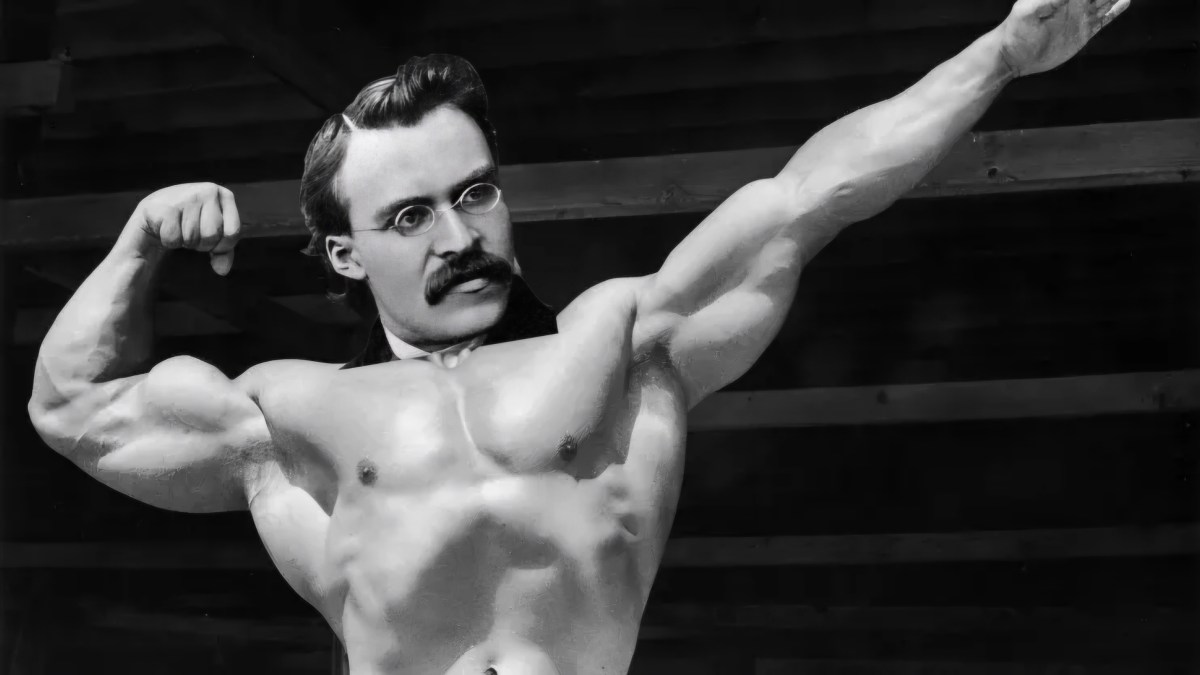
 Nietzsche make his point by him being the first bad-philosopher!!! (This is why I am loving him more and more. It’s like a brainiac with full grown muscles if you want to picture him thematically!)

The Freedom From Passions and Reality – Will to Power

Nietzsche makes an attempt to show that the reality could also be made up of something totally different that we can even comprehend. What if the world is more real than what we can experience? And if such reality exists, our senses will limit us from experiencing it. So, in order to be free in such reality we have to rise above our senses. That would be the new freedom. Our senses are bound to desires and passions whose interactions – impulses are creating thoughts.  

So, building on these impulses Nietzsche says that many emotions, processes are created in “our reality”. What would make any of such impulses, process free from others? He introduces the idea of causality to show the flow and root of everything. If cause leads to an effect and further that effect becomes cause to newer effect then it is possible that the root cause of all would make us really free. Nietzsche further explains that it can also be one of the processes which would overpower others to become free and not the root one. (For example, the first unicellular organisms would be the most powerful organisms on earth today, that is not the case.)

Here Nietzsche introduces the concept of Will to Power. Whatever overpowers the other processes has the potential to remain in the big game and thus has real chance to be free. Will to power in any process allows it to gain more freedom.

This is Nietzsche’s Darwinian theory of evolution – the survival of the fittest. (I know it is a bastardized translation, but again I summon the loss of nuances during translation.)   

Then Nietzsche puts the idea that by this way of thinking the originator does not necessarily be the most powerful one, thereby questioning the existence of the God! Because if the God was the originator, then then he/she would exist only if he/she has the highest Will to Power. That also does not mean that if God does not exist then devil exists or has the highest Will to Power. It could be anything! We are not sure for now. (typical philosophical answer!)

Using causality, Nietzsche also questions the morality of French revolution. If for the locals the royalty was cruel that is why the revolution happened then why didn’t the remotely located people who considered them noble in first place considered them cruel too? In the eyes of remotely located people the French royalty had a noble past. (The question is intended to think on it not to find the right and wrong. It shows how flawed our thinking becomes when we stick to morality blindly.) Whoever came in power overthrew the less powerful. That is one way to explain Nietzsche’s Will to Power. According to Nietzsche, if Napoleon would have been continuously invested in the morality of his actions he wouldn’t have become the great emperor.

Freedom From Truth

Here Nietzsche starts with the very obvious and common fact that some truths are unsettling. Not every truth ensures happiness. Only an idealist, as Nietzsche says would submit the idea of truth that brings joy, happiness, and beauty.

Here comes Nietzsche’s biggest drop-

“the strength of a mind might be measured by the amount of “truth” it could endure – or to speak more plainly, by the extent to which it required truth attenuated, veiled, sweetened, damped, and falsified”

This is self-explanatory. It is just our unsettlement that we need to take care of while looking for the truth. We are thinking animals and thinking is a result of our impulses, desires, and passions. So, not every truth is destined to bring us peace. ‘We would die if we eat poison’ – is a truth which unsettles everyone but that is not how we react to such truths, we prepare for such bad events, that is the wisdom what Nietzsche is talking about in a crude way here.

“There is no doubt that for the discovery of certain portions of truth the wicked and unfortunate are more favorably situated and have greater likelihood of success; not to speak wicked of who are happy- a species about whom moralist are silent. Perhaps severity and craft are more favorable conditions for the development of strong, independent spirits and philosophers than gentle, refined, yielding good-nature, and habit of taking things easily, which are prized, and rightly prized in a learned man.”

Nietzsche prefers learned man more than the moralistic or the virtuous one. A learned man knows the consequences of learning new truth, or sometimes even unaware of it but he does not pivot his happiness on the discovery of new truth. What else could you make freer when you are ready to accept the truth in its crude and real form! This freedom will bring clarity, new perspective and not happiness or sadness or chaos or calmness.

Truth will not decide how and what you are. You just will have added new tinted glass in your collection of perspectives towards life and reality and the philosophy behind all of them.  If your Will to Power is good your truth may become the truth for all others.

Freedom From Identity

The profoundness demands the rejection of submission to any side of existence. If one promotes certain ideology the people around him/ her will try to comprehend that person using the tags they have in their own minds for that idea. The mask thus brings in that ambiguity where people are not associating, tagging you to one definite truth. Even your mind can start creating bias if you let it. That is why Nietzsche focuses on mask in profoundness.

“A man who has depths in his shame meets his destiny and his delicate decisions upon paths which few ever reach, and with regard to the existence of which his nearest and most intimate friends may be ignorant; his mortal danger conceals itself from their eyes, and equally so his regained security.”

The mask frees you from attribution thereby biases and even the socio-economical influences. You will never let honor or shame, right or wrong, good or bad, happy or sad justify the events in your life. You will never ever flinch to enter an unsettling adventure which guarantees your growth personally. Embarrassment, failure will just be another emotional response for you (please note that this does not mean that you will be emotionless, it means that you will be able to recognize your emotions and let them pass.)

This is exactly why I would force everyone to understand Nietzsche on their own level!!!    

“Every profound spirit needs a mask; nay, more, around every profound spirit there continually grows a mask, owing to the constantly false, that is to say, superficial interpretation of every word he utters, every step he takes, every sign of life he manifests”

This could also be one reason why some the greatest personality humanity has ever seen had a layer of controversial ambiguity around them.

From the idea of mask, Nietzsche moves to the idea of its conservation. The conservation is meant to define the philosophy of containing who you are rather that you submitting to some ideology. Whatever you have collected as an individual, whatever you are on philosophical level personally, how you have upgraded – refined your philosophy you must conserve that instead of giving to some ideology. The mask helps to conserve who you are.

“One must know how to conserve oneself – the best test of independence”

(this could be the reason why superheroes wear masks!!!  Joke aside but it is one powerful thought)   

Further Nietzsche warns new future philosophers to not be people pleaser or submitter to temptations. That will steal them of their judgement and independence.

Freedom From Your Version of Truth

The ways in which Nietzsche is trying to close his arguments are really beautiful. He knows that when the future philosophers will have discovered their new truths in their journey of blood, sweat and tears, it is natural that they will get attached to it. Such is the human tendency. He wants us to get rid of the obsession with this new truth. This truth even if it’s the newer one will create boundaries in your perception, you won’t be free anymore! Nietzsche wants to let the future philosophers let go of the dogma.

“In the end things must be as they are and have always been – the great things remain for the great, the abysses for the profound, the delicacies and thrills for the refined, and, to sum up shortly, everything rare for the rare”

Freedom From Illusion of Freedom

On closing notes Nietzsche has advised new philosophers to be careful of the “freedom” they are being offered under new socio-political ideas. Nietzsche focuses here on the ways new philosophers are embarking on the journey to new truths. He tells that having fluency in speech and effective grip on written communication will not define you as the new philosophers, even though they are one aspect of it. But the systems having higher Will to Power will use same tools to control new philosophers and change the course to their versions of truth.

New philosophers will be misled with words like “Equality of Rights”, “Sympathy with All Sufferers”, “Modern Ideas” but they should be careful about them. They should be aware that the moment they create a thought process the people on different levels with different Will to Power will interpret these same ideas for their own benefit especially the ideas which are polar opposites of your ideas. Once such separation happens nobody, not even you cannot get the real freedom.  

Nietzsche offers the rule of solitude while embarking on such journey. Only you can free yourself.  

Losing the ‘Grip’ on Escapism

Escapism creates a void in our perception of reality so that new ideas, creative ideas would populate this void for living life with a new perspective, new approach. The healthy escapism is the most important tool, a therapy for many successful creative people our world has ever seen. Once this escapism takes extreme side it may lead to addiction, procrastination and delusion. Freud’s ‘desire to destruction’ and René Girard’s theory of mimetic desire help us to understand escapism in better ways to face the reality head on.

Reality is merely an illusion, albeit a very persistent one

Albert Einstein

It is very interesting when we start questioning how we understand, feel and interpret the reality. The reality in which we live in has infinitely many facets which we experience through equally diverse emotions. We as human beings are hardwired for seeking happiness, happiness creates the environment to nurture, grow and multiply. Bear in mind that only growing and multiplying is not enough to guaranty the survival of our species. Adaptation is one aspect to ensure the sustenance over the course of time. Adaptation means getting exposed to adversities, sadness, imperfections of reality to create the strong enough coping mechanisms. What would happen if are continuously in the phase of seeking pleasure and turning our faces away from the challenges of the reality? How we justify our own death (figurative) by our own hands when we submit ourselves to such dark pleasures, addictions, dark temptations in spite of knowing that they are harming us? There is just one perfect song to point us towards such emotions.  The song is called “Grip” by Seeb and Bastille.

The song was written by Espen Berg, Dan Smith, Thomas Eriksen, Mark Crew, Simen Eriksrud and Joakim Haukaas.

Album art for Grip by Seeb, Bastille

Grip – The Lyrics

As the night time leads into the day
And tomorrow spills across the sky
While the sun's a harsh reminder why
We are feeling barely human

The overall emotions this person is experiencing are the emotions of distaste and hatred towards the things which are inevitable. He knows already that it is going to be day after this night, the sun will rise up and he will have to face the day helplessly. The “harsh reminder” here highlights that the person doesn’t want to face the day, the reality, the responsibility and wants to escape to the night where he was someone better than human – someone invincible.

 ‘Tomorrow spills’ shows that the thing/s which this person was trying to postpone, avoid has finally come. The spilling action shows the unwanted eventuality. The things which the person is trying to avoid are the sufferings and problems which for this person are mocking him for his humanistic limitations.  

This rise of the day is a reminder of his humanly limitations and the sufferings which never end. The person is well aware of the sufferings and hence is cursing the Sun for reminding him about his limitations as a human being. The transition of night into a sunny day is also a metaphor for the veil falling down. The veil of enjoyment which was masking the suffering, imperfections, sorrows, problems of the reality.

I really loved the word play to show how the person hates the day which never comes – ‘tomorrow’. It kind of points towards the ‘procrastination’ to avoid the pain of imperfections and the pain, the suffering accompanying with the life itself.

We don't know what's good for us
'Cause if we did, we might not do it
Who knows where our limits lie?
We won't discover 'til we push it

These lines explain the expression “Ignorance is a bliss” in the most perfect way. The person wants to ignore the things which are good because deep down he knows that they come with hardships. That is exactly why he says that even if he knew what is really good for him, he won’t do it; he knows doing the right is always the most difficult path. It’s like running away from the reality and reject it because it is full of pain, problems, unsettling consequences and imperfect.

The next lines show that the person is not completely delusional and detached from the reality. He knows that being a human being with unlimited capacity in the world of infinite possibilities, he can do anything and succeed at it. He is aware of the fact that he just has to expand his boundary to make impossible things possible. This is the moment when you will appreciate that the person expressing his feelings here is aware of everything that is right and wrong. It’s just that he just wants to be happy and maintain that state by rejecting the painful reality.    

I should just walk away, walk away
But it grips me, it grips me
But I should call it a day
And make my way
Oh, it grips me
'Cause the devil's got my arms
And it pulls me back into the dark
But I should just walk away
Walk away, oh it grips me
Cause the devil's got my arms

The person knows that he should completely let go of the things which are deviating his life from reality but now he has found one pity excuse. The person thinks that it is difficult to lose the hold of joyous, illusive but pleasurable darkness. He is ready to ‘call it a day’ get over with this pleasurable but illusive, dreamy life but somehow his mind has found an excuse of the devil which holds him back. It shows how addictive the dreamy, pleasurable alternate reality which is far from the ‘real’ reality, the life his mind has created which is full of pleasure, happiness and he is whatever he wants to be in this dreamy world. Grip of the Devil is just an excuse for him to tell others that he is not solely responsible to stay in this ‘unreal’ illusive life, this shows his lack of accountability. He is blaming the devil for him not facing the reality and taking charge of the course of his life.   

We got drunk on this unholy wine
To deliver us from our old minds
A promise of a better time
'Til we're feeling barely human

Wine in Christianity is a symbol of abundance, enlightenment, celebration, and blessings of the God. The ‘unholiness’ of the wine shows the overuse of this abundance which points to the addiction. Addiction is the worst use of the means preferred to gain pleasure. That is why the holy wine once intended for enlightenment becomes unholy when exploited and overused unnecessarily. The promise of better time is the reflection of what a person suffering from addiction feels, he tries to repeat the act to extract the pleasure – a short lived one. This short-lived pleasure makes him feel something better than human. Once the effect starts to fade out and the person regain the consciousness of weakness of human nature, he again resorts to this short-lived pleasure to regain the better humanly experience.

These are the exact emotions an addictive person goes through – this could be any addiction.

I would rather forget
And wash my memory clean
Oh, I would rather forget
And wash my memory clean

The person knows what mess he is in and the escape is also difficult. He just wants to remove all the traces of what he really is and surrender to the world of the devil.  (‘Cause the devil’s got his arms). He is helpless and just want to reject the painful reality while remaining into dark but pleasurable devil’s night. It an intentional submission the “dark side” to avert the pain of reality brightened with the Sun.

Escapism – Sadness, pain, procrastination and addiction

Escapism lies as the core theme of this song. We humans are pleasure-seeking animals. Remaining in joyful conditions promotes safety, continuation of the species from the evolutionary point of view. That is why we are hardwired to escape from adverse, life threatening, sadness inducing, fear inducing events. Fortunately, we are rarely exposed to wild animals and life-threatening situations as our primal ancestors did. But this instinct has not left us completely. Any event which simulates sadness, fear, great challenge – our response is somewhat still primitive. But as the technology as progressed so much, our ways to escape the hardships of the real, imperfect life have evolved drastically.

Please understand that escapism is not a bad word. But once it shifts to extreme use, abuse then addiction takes over and the person starts hating reality and submits to dreamy, delusional world created by him or someone else.

Reading, writing, painting, doing some happiness inducing activities/ tasks are simple examples of a “healthy escapism”. Such escapism creates a void in our perception of reality so that new ideas, creative ideas would populate this void for living life with a new perspective, new approach. The healthy escapism is the most important tool, a therapy for many successful creative people our world has ever seen.

Now coming to the other (dark) side of escapism – it’s a highway to addiction and constant search for dopamine hits. Deep down we know how we are all addicted to something. It’s just matter of who is affected by them in worse ways. Social media, their algorithms, the culture of overconsumption, the capitalistic urge to prioritize wants for getting social approval, submission to addiction to escape the problems are the real-life challenges that we are facing today due to the technology.  Technology is meant to provide an exoskeleton, an augmentation to improve our lifestyle but this same exoskeleton is weakening our muscles thereby crippling us. (The crippling of our minds.)

Escapism is not a new phenomenon, rather is has an age-old history only the ways in which we try to escape the reality have changed over the course of the time. Creating an alternate reality was always one way to alleviate the painful effects of reality. But, the tools that we have today are more potent and can immediately lead to the state of addiction.

You will see in the lyrics of the song the that the person is well aware of what wrong choices he is making, that it is not good to submit to the devil and the night but now he is so addicted to this alternate reality that he has started hating the reality and don’t want to experience it.

Such is also the way of procrastination. We try to delay the activities knowing that the had to be done anyways but won’t yield the perfect, beautiful results that you want. Procrastination thus creates an illusion of safety until the threat becomes imminent. Procrastination is also healthy unto certain limits to create a space of new approaches but if your fear of creation, action is preventing yourself to postpone their impact on reality thereby residing yourself into your dreamy world then such alternate reality is useless.

Reality is painful – but that is not the only thing it is!

We escape from reality so that we can come back to fight the reality with better tools and ideas not to completely run away from it because in the end reality will catch up with us with far gruesome, dreadful face and consequences.

We are highly prone to our conscious submission to the alternate reality because it creates a potent illusion of safety and comfort. This is because we think that living a fulfilled life means living a life of happiness, whereas upon close inspection you will appreciate that life has never given itself to either sides of the existence – neither good nor bad. Life keeps oscillating between these two and creation, destruction, growth, adaptation happens in between those waves. Buddhism talks about the roots of suffering in attachment. We humans are highly susceptible to immediate attachment to any living or non-living things (which are the parts of reality). Our attachment to such things then leads to the fear of their loss and thereby loss of familiarity and comfort which projects the ultimate fate of the reality as imperfect, painful and hostile one. Once we let of such attachments, we can have a full control on the escapism in our lives.

Once we start to see happiness as a process instead of a stage, we will truly appreciate the beauty in the prima facie unsettling imperfection of reality – this is the same real life, the reality where we actually exist and can truly contribute to affect our and other lives in better ways. It is not that painful as we have thought in our minds.

Also, even when you have achieved that only goal in your life, that full happiness, in the end you will again be miserable because you are going to be clueless about what comes next, what to do next!

I think confrontation is the opposite of the escapism because of the same reasons. Instead of the escaping from unsettling reality for short time again and again, and it catching up with us in the end, why not face it in first place and be done with it! This requires the attitude of rejecting the ultimate purpose of life attributed to the search for happiness. The reality is neither happy nor sad.   

Sigmund Freud – Beyond Pleasure and Desire to Destruction

Sigmund Freud in his early developments of psychanalysis was the strong proponent of the ideas of human beings as the pleasure-seeking animals. Freud actively promoted his ideas of psychology based on the thought that our actions are always intended to maximize pleasure, procreation, and preservation and avoiding pain. He called this force as “Eros”

Freud’s early ideas hence are always pointing towards that continuous search for pleasure (Lustprinzip). But once the world war started Freud went under immense emotional pressure as his two sons were soldiers in war, he also saw soldiers residing to traumatic war experiences. In coming years, Freud lost his beloved daughter to Spanish flue. Here he felt really miserable, guilty and painful that he is able to survive while his daughter died.   

This is where Freud brought in the idea that humans also have a death drive, destruction (Thanatos) where doing nothing helps to cope up with the intense sadness of the reality. This idea was introduced by Sabina Nikolayevna Spielrein – one of the first female psychoanalysts. Under extreme pressure humans may chose to do nothing as doing anything will end in pain.

So, Freud evolved his idea of human psyche as an interplay between the urge to live and urge to die.

The person in the song submitting to the dark, harrowing addictive pleasures shows this same urge to destruction even though he knows that they are not good. We are ready to submit ourselves to darker illusions because of this same desire to die, to destruct ourselves because sometimes reality feels more brutal than death.

When one is exposed to unknown events in life, the urge to pleasure will seek excitement, adventure and adrenaline, dopamine, knowledge from it while for same life event the urge to destruction will resort to confusion, danger, fear and submission to familiar, warm and comfortable environments.

Freud received huge criticism for these ideas too. Freud also mentioned that this death could also be figurative – as the complete distaste towards everything in life and becoming inanimate – a living dead body.

The idea of clearing memory in the end of the song shows this side of desire to destruction to me.

Important thing to come out of these ideas is to appreciate that life never favored any side – good or bad. Life is always multifaceted. There is always something good in bad and bad in something good. Good and bad always coexist.       

Mimetic Desire – Responsibility and accountability

René Girard a French philosopher of social science pointed towards a very innate pattern in human thinking which is called as “Mimetic Desire” in philosophy of social science. He pointed out that even though we may think that our drives are totally created from inside and we are the sole, absolute creator of such desires (like calling ourselves God, the Creator) these are mere effect of our surrounding, they are not created from something absolute. We are always sorting people, things around us to create a place where we say that “we belong”. This helps us to create and justify our identity. The moment someone creates and points towards something as problematic, unsettling then rest of the people also use it as a “scapegoat” to put the blame of anything bad, wrong happening with them.   

We as human beings and social animals are always looking for something to blame which creates an object to blame for difficulties in our life. This grows faster when it happens in group.

According to the ideas of Mimetic Desire given by René Girard, people make scapegoats when the truth, the reality makes them uncomfortable – the reality they don’t want to acknowledge. They desperately lookout for things, groups, people to put blame and make this illusion their reality where they find comfort. People do this because they somehow want to release their anger, tension.

The creation of devil is the same thought. The person in this song is well aware of the truth of reality but as his desires are to always seek pleasure in any possible ways, he finds a scapegoat of “the grip of the devil” to justify his addiction and bad actions. Religious, political beliefs have many examples of such scapegoats.

Responsibility and accountability are very important aspects when we are talking of such ideas. That is why it is very important to rethink our ideas when we are trying to justify them with something delusional.

Conclusion

The key idea to tackle extreme escapism is to accept the imperfect nature of reality. The reality may be fearsome, difficult and unsettling but it is also hopeful, happy and comfortable. Your actions in reality will bring you closer to good experiences rather than submitting to unreal, delusional short acts of pleasure. It’s not the grip of the devil that is holding you in the night, it is you yourself who contain this devil inside who is holding you back. Let your angel overpower your devil to bring you back into the reality. May you grow with every pain inflicted upon you to make you even stronger than you were before. May the creation provide you the physical and especially mental adaptability to handle and appreciate the reality – the only real place where you truly exist.     

Official video shows the transitory phase of a teenage boy who is trying multiple ways to gain pleasure thereby moving away from the awkwardness of reality to become “cool”. But once the balance of pleasurable acts tips to the wrong side, he submits to the pleasurable but dark and devilish side of his personality. This is where he submits himself to the devil.

The video intricately shows the fragile nature of adolescence and the high impact of the choices made in this phase which could have lifelong effect of the personality.   

There a also one lyrical video for this song where you will see fruit butchering (I don’t know why but the producers have made it look very tempting!)

Also, the credit goes to SeeB for adding their iconic style of falsettos to make the listeners feel the grip of the devil in a fantastic way.

The creators of “Grip” Seeb and Dan Smith from Bastille

The song video

Lyrical “fruity and juicy” video

Listen on spotify