Feminine Side of Masculinity

Most of the times, we are forgetting that when we are promoting and asking for individual freedom, individual expression, individual identity we have ignored what it means to reserve the same rights for others. Ernest Hemingway’s short story called “In Another country” from his collection called ‘Men Without Women’ shows what men lose when they have no one of their own to open up, express, share. Hemingway’s writings although were heavily influenced by his personal experiences of war, the ways in which his men handled emotions is exactly same as how modern men are still handling their own emotions. They are not handling them at all, they are suppressing them, running away from them.
Men are so strongly conditioned with the trait of showing themselves unaffected by whatever life throws at them that now they have accepted it as their second nature. There is a specific psychological term called Alexithymia which literally means “a lack of words for emotions.” You can see alexithymia in Hemingway’s “so-called” masculine characters.
The remedy to all these complications is creation of more open spaces for men. We need men to open up at least among themselves, at least a man needs to treat other man’s emotional, expressive side, others will eventually follow.

Ernest Hemingway’s Men Without Women
The Paradox of Individualism

It is always interesting to question what would happen if we were not exposed to certain things, experiences especially the people. What we would be of us if those events, those people had not crossed our life path? We definitely would have been someone else. In a sense we are what is happened to us and where we lived and with whom we lived. One can say that man himself is enough to justify his own existence, he doesn’t need anything else or anyone else to live through his life, to pass through it and there is no denying in that.

One must understand that people can spend their whole existence as an isolated being, a person unaffected by the surrounding and molded completely by his/ her own being, not by others and without the influence of the surrounding. You will see that what I explained in the last sentence seems illogical. How could a person be completely be detached throughout his whole time on earth filled with many things, events, people? The answer to this confusion is that the person assumes that he/she was alone all along the time thereby mentally erasing every instance where they had a company, such people have mastered the art of removing every influence their surrounding had on them. Human children are anyways some of the weakest off-springs among the many species on earth. A new born baby continuously needs support from parents/ surroundings to finally become self-dependent. Now, one cannot deny the fact that even if you can live on your own, what you call as “your own” which substitutes for the void of the external influences is ultimately created from that very surrounding you are trying to deny to prove your individualism. This “your own” internal support could be anything – your identity, your habits, your religion, your mind, your way of thinking, your way of seeing things. Now you must appreciate that even though we can control what we are, once we are matured/ independent we cannot completely erase what brought us here.

The concept of individualism itself needs supporting justification, there is nothing like an isolated being. In order to define isolated or individual, you have to define what it is not and that invites everything that exists out there.

The whole point of starting the discussion with the idea of futility of individualism is one short story I came across, rather the book’s whole point is the denial of individualism. It shows that even if one justifies their individualism, it immediately rips them from their real version. The person creates a defense mechanism to avoid certain unsettling feelings just to satisfy their version of self. Men need safe space of women or at least a feminine side of humanity to express, to vent out or at least to acknowledge what they are feeling in front of other human being. If men are not given such space, they are no longer men, not even human.

The book I am talking about is Ernest Hemingway’s collection of short stories called Men Without Women. These stories show how men are flawed when they try to erase or are forced from external factors the influence of women from their lives, how it steals their true masculinity, true humanity. I will deep dive into these aspects as discussion evolves.

The short story from Men Without Women which intrigued me is “In Another Country”. I like this story because is direct reflection of who Ernest Hemingway was. It is written in first person point of view and the factual details of Hemingway’s biography overlap with the locations, events mentioned in the story, so the Hemingway’s fiction brings a realism.

In Another Country – Summary

I won’t go into every nook and cranny of the story, because I want to invite you into reading that 15 min short story all for your own interest.

Even if I spoil the story here, reading the details of the story and building your own interpretations are one personal and exquisite experience. This is because of the iceberg theory attributed to Hemingway’s characteristic writing style. He will not explain everything or show everything that is there in the story. The limited narrative and limited details make the reader to evaluate multiple attributes and possibilities and thereby interpretations so Hemingway’s writing create a very subjective and personal experience in readers. I think only a piece of great art, only a masterpiece can create subjective experiences in people. And that is exactly why art is important, it makes people see what they already had but always denied because they were busy in creating something totally irrelevant – the irrelevant which they didn’t even want in first place.

So, here goes the summary –

The narrator talks about his routine to a hospital for a therapy session for those injured in the war in Milan. He is American but fighting for Italy and is decorated for his sacrifice. He is accompanied by three decorated Italian officers and one more boy who was disfigured on the very first day at the front of the war. They go to this therapy session to somehow restore their original physical functions. The narrator is always made aware through the surroundings and people around him that even though he sacrificed himself for the people he still is an outsider. It is just because he was dutiful that he deserves respect from the localites. In his therapy he is accompanied by a Major who treats the narrator good and is also helping him to improve his Italian. One day while casually discussing what their future would be, the Major gets triggered by the mention that the narrator wishes to get married. He aggressively suggests the narrator to not get married because it will bring the pain and suffering in the end. He suggests that if one knows that he is going to lose something then one must turn away from attaching to it in first place.

The Major then immediately leaves the discussion and goes to make a phone call where he receives the sad news of the demise of his wife. The major apologizes to the narrator and remains absent for few days and rejoins the therapy session although he has no expectation to fully recover from this therapy session.

Deep Analysis of In Another Country

As I have already mentioned that Hemingway’s stories are like icebergs, they reveal very little than what they carry below. I would invite you to explore Ernest Hemingway’s biography to understand why it might be so. He faced multiple injuries, illnesses, traumas throughout his whole life. If you see the list of the illnesses Hemingway went through you will definitely say that the life loved him. Tragically he ended his life by himself. On surface reading you will see that Hemingway is a strong proponent of strong masculinity but deep down just like an iceberg he was not what he showed. I have reasons to prove that just through this single short story. Just keep in mind that there is more to what Hemingway said and showed to his readers and it was truly an imagery of what was going in his own mind.

Lack Of Warmth

The ways story opens, the narrator talks about the cold season of fall in Milan. The meat of hunted animals is hanging and the foxes were just there in the snow. There are three canal crossing bridges along the path to the hospital. The narrator would prefer the bridge where woman who roasted the chestnut used to sit. The narrator mentions that her charcoal fire and the roasted chestnuts ensured enough warmth before reaching the hospital.

This is Hemingway’s way to tell that the surroundings were completely hostile for the narrator, the short-lived warmth of the charcoal fire and the hot chestnuts in pocket thereafter thus highlight how much the narrator valued warmth. Even though narrator is not ordered to go on war and perform his duty now it was not a better situation too. There was no one to provide ‘that’ warmth of familiarity, relationship, love to the narrator. If it wasn’t for the duty, he would not have got into this.

Duty murders the true identity and the ambition of men to become their true version

We are told that the narrator is accompanied by four Italian soldiers for a therapy session in the hospital. They are practiced with some machines to improve their physical movements which were the result of war injuries. A major with hand injury is also undergoing physical therapy to recover from war injury.

Three of the Italians who accompanied the narrator wished to become something different before the war started. One of them wanted to be a lawyer, one wanted to become the painter and third one wanted to become a soldier. The Major suffered from hand injury was the greatest fencer in Italy – a technique where the dexterity of hand is crucial.

There was one more boy whose face was disfigured the very first day he was sent on the war front. He had lost his nose.

You must now understand it’s not just a character introduction or description in Hemingway’s short story. Hemingway very subtly shows how men sacrifice their own ambitions to carry out their duties. Two of the three Italian soldiers wished to become something totally different than what they are now just because war demanded the sacrifice of their own ambitions, dreams. The Major sacrificed his precious, skillful hand while carrying out the same duty of war.

The boy with disfigured lost his identity even before understanding what he was entering into. The disfigured face is not mere description of the grave injuries. Hemingway shows readers that men lost their identities in the war. 

Men sacrificed their wishes to carry out the duties given to them, they did it because that is what every man should do.

Men are loved just because they are dutiful and not for who they truly are

I really appreciate how Hemingway maintained subtlety in his writing while making us feel like he is just describing the characters of his story.

The readers are now well aware that this is about a group of well decorated, brave, dutiful soldiers who were undergoing rehabilitation in the hospital. They are not some losers who just suffered because of negligence or disinterest towards going to war. Rather even though against their will and wish, they went all in with the sense of duty. Then Hemingway tells us about how the localites treated them.   

People from communist quarters of Milan actively hated them. After the therapy sessions, the group has routine to visit the café, where the narrator comes across the locals. When the narrator is asked about his medals by the locals, he is somewhat happy that people care for what he had done for them. This happiness is short lived for him and not really a happiness. The moment localites see that he is an American, they immediately changed their behavior towards him. He is immediately made to feel like an outsider.

You must understand how painful this feeling is. The moment people see treat like you are not one of them even after you sacrificed yourself for the same people is a betrayal for such man, a man of honor and duty. It’s equivalent of death for such men.

This is also one way of Hemingway to show that generally society appreciates men, loves men for what they can do for the society. Society in deeper sense never appreciated men for what they are. The moment men stop the duty towards others they are worthless. The moment men will try to show what they are very few will be appreciated for what they are, very few men are loved and liked for what they are. Hemingway also shows how the war crushed the human-ness among the people.

Together But Lonely – Alienation Among Men

Hemingway effectively shows how the military instincts or trainings have conditioned men of different personalities to come together and work toward a common duty.

“We were all a little detached, and there was nothing that held us together except that we met every afternoon at the hospital”

At first narrator shows us that there is some sense of collective-ness in this group of soldiers. Even people from the communist quarters hate them collectively.

But soon you will see that they are not quite there for each other, it’s just that the circumstances are in that way.

This is evident when the narrator calls three of the decorated officers as “hunting -hawks” and denies to be one of them.

You will also see that the narrator craves for meaningful company when he mentions how his group has to “jostle” through the crowd of men and women from the wine-shops.

For now, the only meaningful connect he has with his group is the trauma of war shared amongst these soldiers. You will see that the narrator finds it difficult to relate to the mainstream crowd – the crowd from wine-shops and the streets of the Milan.

“We felt held by there being something that had happened that they, the people who disliked us, did not understand.”

The narrator has this subconscious feeling of being unliked by the people around him. This is some sort self-rejection, self-loathing because even after sacrifice he is made to feel like an outsider.

Self-pity And Surrogate Sympathy

You will see that the narrator feels some authentic connection with the boy with disfigured face and the fencing master Major who is undergoing therapy for his hands. The reasons to feel this connection are actually not that authentic, it’s just the narrator’s psyche which is trying to find a pivot of relatability to create a sense of belonging.

You will see this when the narrator mentions that while he sees the three Italian soldiers like “hunting hawks” not counting himself like them, he feels a connect with the one who has his face disfigured. The justification is purely intellectual. It’s because the ill fate that boy faced at the war front and he wasn’t even decorated for anything. The narrator sees this as an ill-fate for the boy because he didn’t get anything in return for what he sacrificed. The narrator at least got some recognition so he sees himself in better condition than the boy. It’s that feeling where the person himself sees him in a poor condition but when he sees others in even worse condition, he creates a sense of satisfaction just because others are living way worse than they deserve. There is nothing wrong in this feeling. It’s just how a person going through trauma tries to find a sense of belonging through pity and sympathy.

Men’s Inability To Communicate And Express Emotions Clearly   

Hemingway’s iceberg style writing peaks here.

The narrator is seen to make an attempt to speak in Italian with Major. He feels that he is able to speak Italian fluently but the moment Major asks him to speak with the awareness of Italian grammar, the narrator feels that speaking Italian is difficult.

It is an indirect indication how men always fail to express their emotions as they are. The “mainstream definition” and “perception” of what masculinity prevents men to sacrifice their real version just to demonstrate superiority in the dominance hierarchy. If you cannot dominate others, how would you establish control? How would you prove your manliness?

So, men subconsciously develop a tendency to distance themselves away from what they are feeling, because they know there is no way they will get any sympathy towards such emotions. Instead, the moment they express their true emotions, it’s like blowing up their cover, exposing themselves. Society is ready to devour them, forget about dominance.

Narrator’s struggle to speak in Italian is thus a metaphor to show how men are continuously challenged when they want to express something freely. You must understand that even if they do it, every man has some bad experience of how they were betrayed when they tried to open up. Now you can only imagine how this feeling gets amplified in men with trauma. Over the time, men have trained their minds to intentionally cordon off such feelings because they know and they have experienced this before that nobody care about how they feel.

Emotional Numbness – Alexithymia – Hemingway For Today’s World

In the last part of the story you will see that the Major gets triggered the moment narrator expresses his wish to get married once this is all over. He is unsettled not out of jealousy or the pain due to the war. He is restless due to even worse pain – the pain of the loss of the loved one.

“If he is to lose everything, he should not place himself in a position to lose that. He should not place himself in a position to lose. He should find things he cannot lose.”

And in the end, we come to know that the Major always feared that he is about to lose his beloved wife. He was always scared that he will lose his beloved wife anytime and he cannot do anything about it. (Understand that this man is a disciplined and War-seasoned major who has tricked death now is feared of something).

He stood there biting his lower lip. “It is very difficult,” he said. “I cannot resign myself.”

Who says that men are rigid, tough, insensitive to emotions!

This is a tight slap to those who say that Hemingway was a strong supporter of the masculinity. People twisted Hemingway’s character to convey what they wanted for themselves.

There is a specific psychological term called Alexithymia which literally means “a lack of words for emotions.”

You can see alexithymia in Hemingway’s “so-called” masculine characters. The narrator himself is unable to express his emotions to his group in Italy, even though he is with his acquaintances he feels alienated. You will see he craves for warmth from his observations on the roasted chestnuts. The warmth is not just a matter of temperature.

The three decorated soldiers have murdered their personal ambitions for the duty to serve the nation in the war. Each of them had their own plans about their future. Hemingway gives us one detail about one of these guys. One of those three soldiers who wished to become lawyer had three medals for his valor in war, was a lieutenant. Hemingway through narrator shows us that he had seen so many deaths in war that he was isolated from his surroundings. Note that this guy had a company of at least two native faces who had gone through somewhat similar hardships. The trauma of war and in addition to inability to express what he was going through detached him. He had familiar faces to do so because of the relatability, but the trauma prevented him from openly expressing what he felt.

The narrator also shows us that these three Italian soldiers were like hunting hawks. It is a way to show how they showed off their valor and medals to prove their worth to the society. You must understand that before going to war, their ambitions were completely different than earning medals. But as the conditions forced them to show up for duty, they helplessly gave up on their dreams and accepted the life for what it was. This hawk like attitude is the reinforcement of the masculinity assigned by the society through the medals, decoration which society gave them. As they have no one intimate to open up to they assumed this display of manhood as the means to show strength.

The boy with disfigured face, who didn’t even get recognized for his sacrifice is another story in itself. You will see that there is very limited mention of his presence in this story. He is just their as an additional character. For me, upon a very meticulous style of Hemingway’s writing style – I see it as an intentional limitation. Hemingway shows us that how some of the greatest sacrificing men will always go unnoticed, how society won’t even care for them for the reason that they cannot provide back to the society. The great sacrifice of identity by this soldier feels worthless.

This is Hemingway’s way to show that a man who cannot provide is a worthless man in society, societal structure will make sure that he is perceived as worthless. There is no single person to blame why it happens in this way. People especially men are nurtured to subconsciously assume it in this way. Society will only accept men for what they provide and not what they are.

The Major has no hope to recover from his therapy session for his hand. The narrator gives us surety of that through the discussion between the Major and Doctor. The Major has suppressed his nihilistic attitude by submitting to the routine of physical therapy. This is an active indication of Alexithymia. Him trying to help the narrator to learn the Italian in proper grammatical way is his conscious choice to cast away the real emotions of his worthlessness after the injury. Narrator mentions that even though Major has no hope from the therapy machines he showed up regularly. This is definitely indicative that major rejected his real feelings with the distraction of the therapy routine.

The moment Major gets triggered by the awareness narrator’s plan to settle with marriage he realizes that he too had this suppressed wish to settle with the woman of his life. He senses that he too had same wish as the narrator but now is scared to lose someone he loved with his life. He immediately rejects that feeling by speaking “angrily and bitterly” with the narrator to not get married.

It’s not the Major despising women – some people may call it toxic masculinity. It is actually rejection of reality of the sad emotion of the loss of the loved ones to avoid the trauma and pain that follows after that. But Hemingway lets out some sadness through him to show how helpless men are.

“He looked straight past me and out through the window. Then he began to cry. “I am utterly unable to resign myself,” he said and choked. And then crying, his head up looking at nothing, carrying himself straight and soldierly, with tears on both his cheeks and biting his lips, he walked past the machines and out the door.”     

His Woman Is Everything For Any Man True To Himself

As the title of the book suggests, this is Hemingway’s attempt to show what a man loses when he has no one of his own to open up. Why women are important instead of men here? Because men are so strongly conditioned with the trait of showing themselves as unaffected by whatever life throws at them that now they have accepted it as their second nature. If you are swayed easily by hardships, you are not ‘man’ enough. If you are not able to provide, you are not ‘man’ enough. If you whine at every adversity, you are not ‘man’ enough. If you express your vulnerability, you are not ‘man’ enough, in addition to that the society will make sure that you are made joker out of your vulnerability because it is the survival of fittest.

So, the best shortcut men’s minds have started taking is to become completely numb to the sensitive emotions, expressions of those emotions and have resorted to divert to something which looks ‘manly/ masculine’ or rejecting the emotions they are having.

Now imagine how would a man would open up to another man who he knows would already be numb to what he is expressing. For that you should see how group of women discuss their personal problems Vs how men discuss their personal problem in a group of men.

That is exactly why a comfort of woman’s emotional sensitivity is important for a man to get rid of their numbness to emotions. Otherwise, men without women are not truly men, rather they cannot even become human in first place. As the times are evolving, a man may not solely need exclusively a woman to open up but the fact that men are always forced to numb their emotional sensitivity to demonstrate their masculinity still remains the fact.  

For any human being’s personality – identity, absence or withdrawal of certain aspect of life is always traumatic, insecure and unsettling. If this aspect is immediately linked to a person, then the effect is very strong. To cope with that insecurity the person undergoes rejection of the very version his/ her self which once was associated with the person they lost or the person they wished they could have been with.

For me the tragedy is the ways in which men are exposed to the world experiences. Almost all of the men have subconsciously trained their minds to ignore such exact unsettling losses, emotions under the label of masculinity.  

Conclusion – The Feminine Side Of The Real Masculinity

I would take this part to connect the Hemingway’s writing to the modern times in which we live. It is a curse to us humans that we cannot understand things unless we differentiate between them, the very process of differentiation in order to understand nature steals certain characteristic attributes of those things which made them really special.

Same happened with what society first called as masculinity, modified it to something totally different then calling it toxic masculinity – that is why men (true men) now became just the providers – not even humans in modern times.

Hemingway’s men are not that different from the modern men. The older ones suffered from the trauma of war the modern ones are suffering from the responsibility to carry forward the skewed definitions of masculinity. Nobody sees that changing times disfigured the definition of what it really means to be a man. Then there is a group who calls out that new definition as a toxic one. No wonder some people see Hemingway as a proponent of toxic masculinity.

The key thing to understand here is that it’s not about whether feminism is lesser or masculinity is getting redefined in toxic ways. It is about how fast we are losing the touch of humanity to support and justify one of these sides.

Now you will see that this is Hemingway’s lament, a call for help in a way that if there were women for such helpless men, their lives would have been completely different. You must understand that this was his silent call for help or an unexpressed, suppressed feeling when you look at Hemingway’s biography.   

That is exactly why when I am connecting the link between Hemingway’s short story “In another country” with Alexithymia, I am neither promoting masculinity and denying feminism. I fear that if this continues the world will see even worse versions of toxic masculinity. Imagine a human which has rejected what he feels, it’s not a human anymore.

Most of the times, we are forgetting that when we are promoting and asking for individual freedom, individual expression, individual identity we have ignored what it means to reserve the same rights for others. Hemingway’s writings although were heavily influenced by his personal experiences of war, the ways in which his men handled emotions is exactly same as how modern men are still handling their own emotions. They are not handling them at all, they are suppressing them, running away from them.

The remedy to all these complications is creation of more open spaces for men. We need men to open up at least among themselves, at least a man needs to treat other man’s emotional, expressive side. Women will eventually fall into it as they are naturally and also societally more open to it (e.g. see the group of ladies and their discussions). There is nothing wrong for a man to cry like a sissy.

(I know it’s hard to do than to say it in few words. Men are more comfortable in rejection of sensitivity that to be made fun for the same. But once one sees that there is nothing like only feminine or only masculine in real nature of how we pass through this life we would see that it’s better to let it flow than to accumulate it like a stagnating trash. And someone has to start somewhere even though the journey seems impossible.)

Ernest Hemingway – the greatest manly man world would ever see again. (At least he let his own emotions, expressions – whatever they may be flow through his writings. Trust me, it takes courage. You will appreciate this when you notice how unaware you are about the very man sitting next to you is going through and is successfully masking it. I hope that we will start crossing that barrier for the good of all.)    

Further reading:
  1. Alexithymia

Losing the ‘Grip’ on Escapism

Escapism creates a void in our perception of reality so that new ideas, creative ideas would populate this void for living life with a new perspective, new approach. The healthy escapism is the most important tool, a therapy for many successful creative people our world has ever seen. Once this escapism takes extreme side it may lead to addiction, procrastination and delusion. Freud’s ‘desire to destruction’ and René Girard’s theory of mimetic desire help us to understand escapism in better ways to face the reality head on.

Reality is merely an illusion, albeit a very persistent one

Albert Einstein

It is very interesting when we start questioning how we understand, feel and interpret the reality. The reality in which we live in has infinitely many facets which we experience through equally diverse emotions. We as human beings are hardwired for seeking happiness, happiness creates the environment to nurture, grow and multiply. Bear in mind that only growing and multiplying is not enough to guaranty the survival of our species. Adaptation is one aspect to ensure the sustenance over the course of time. Adaptation means getting exposed to adversities, sadness, imperfections of reality to create the strong enough coping mechanisms. What would happen if are continuously in the phase of seeking pleasure and turning our faces away from the challenges of the reality? How we justify our own death (figurative) by our own hands when we submit ourselves to such dark pleasures, addictions, dark temptations in spite of knowing that they are harming us? There is just one perfect song to point us towards such emotions.  The song is called “Grip” by Seeb and Bastille.

The song was written by Espen Berg, Dan Smith, Thomas Eriksen, Mark Crew, Simen Eriksrud and Joakim Haukaas.

Album art for Grip by Seeb, Bastille

Grip – The Lyrics

As the night time leads into the day
And tomorrow spills across the sky
While the sun's a harsh reminder why
We are feeling barely human

The overall emotions this person is experiencing are the emotions of distaste and hatred towards the things which are inevitable. He knows already that it is going to be day after this night, the sun will rise up and he will have to face the day helplessly. The “harsh reminder” here highlights that the person doesn’t want to face the day, the reality, the responsibility and wants to escape to the night where he was someone better than human – someone invincible.

 ‘Tomorrow spills’ shows that the thing/s which this person was trying to postpone, avoid has finally come. The spilling action shows the unwanted eventuality. The things which the person is trying to avoid are the sufferings and problems which for this person are mocking him for his humanistic limitations.  

This rise of the day is a reminder of his humanly limitations and the sufferings which never end. The person is well aware of the sufferings and hence is cursing the Sun for reminding him about his limitations as a human being. The transition of night into a sunny day is also a metaphor for the veil falling down. The veil of enjoyment which was masking the suffering, imperfections, sorrows, problems of the reality.

I really loved the word play to show how the person hates the day which never comes – ‘tomorrow’. It kind of points towards the ‘procrastination’ to avoid the pain of imperfections and the pain, the suffering accompanying with the life itself.

We don't know what's good for us
'Cause if we did, we might not do it
Who knows where our limits lie?
We won't discover 'til we push it

These lines explain the expression “Ignorance is a bliss” in the most perfect way. The person wants to ignore the things which are good because deep down he knows that they come with hardships. That is exactly why he says that even if he knew what is really good for him, he won’t do it; he knows doing the right is always the most difficult path. It’s like running away from the reality and reject it because it is full of pain, problems, unsettling consequences and imperfect.

The next lines show that the person is not completely delusional and detached from the reality. He knows that being a human being with unlimited capacity in the world of infinite possibilities, he can do anything and succeed at it. He is aware of the fact that he just has to expand his boundary to make impossible things possible. This is the moment when you will appreciate that the person expressing his feelings here is aware of everything that is right and wrong. It’s just that he just wants to be happy and maintain that state by rejecting the painful reality.    

I should just walk away, walk away
But it grips me, it grips me
But I should call it a day
And make my way
Oh, it grips me
'Cause the devil's got my arms
And it pulls me back into the dark
But I should just walk away
Walk away, oh it grips me
Cause the devil's got my arms

The person knows that he should completely let go of the things which are deviating his life from reality but now he has found one pity excuse. The person thinks that it is difficult to lose the hold of joyous, illusive but pleasurable darkness. He is ready to ‘call it a day’ get over with this pleasurable but illusive, dreamy life but somehow his mind has found an excuse of the devil which holds him back. It shows how addictive the dreamy, pleasurable alternate reality which is far from the ‘real’ reality, the life his mind has created which is full of pleasure, happiness and he is whatever he wants to be in this dreamy world. Grip of the Devil is just an excuse for him to tell others that he is not solely responsible to stay in this ‘unreal’ illusive life, this shows his lack of accountability. He is blaming the devil for him not facing the reality and taking charge of the course of his life.   

We got drunk on this unholy wine
To deliver us from our old minds
A promise of a better time
'Til we're feeling barely human

Wine in Christianity is a symbol of abundance, enlightenment, celebration, and blessings of the God. The ‘unholiness’ of the wine shows the overuse of this abundance which points to the addiction. Addiction is the worst use of the means preferred to gain pleasure. That is why the holy wine once intended for enlightenment becomes unholy when exploited and overused unnecessarily. The promise of better time is the reflection of what a person suffering from addiction feels, he tries to repeat the act to extract the pleasure – a short lived one. This short-lived pleasure makes him feel something better than human. Once the effect starts to fade out and the person regain the consciousness of weakness of human nature, he again resorts to this short-lived pleasure to regain the better humanly experience.

These are the exact emotions an addictive person goes through – this could be any addiction.

I would rather forget
And wash my memory clean
Oh, I would rather forget
And wash my memory clean

The person knows what mess he is in and the escape is also difficult. He just wants to remove all the traces of what he really is and surrender to the world of the devil.  (‘Cause the devil’s got his arms). He is helpless and just want to reject the painful reality while remaining into dark but pleasurable devil’s night. It an intentional submission the “dark side” to avert the pain of reality brightened with the Sun.

Escapism – Sadness, pain, procrastination and addiction

Escapism lies as the core theme of this song. We humans are pleasure-seeking animals. Remaining in joyful conditions promotes safety, continuation of the species from the evolutionary point of view. That is why we are hardwired to escape from adverse, life threatening, sadness inducing, fear inducing events. Fortunately, we are rarely exposed to wild animals and life-threatening situations as our primal ancestors did. But this instinct has not left us completely. Any event which simulates sadness, fear, great challenge – our response is somewhat still primitive. But as the technology as progressed so much, our ways to escape the hardships of the real, imperfect life have evolved drastically.

Please understand that escapism is not a bad word. But once it shifts to extreme use, abuse then addiction takes over and the person starts hating reality and submits to dreamy, delusional world created by him or someone else.

Reading, writing, painting, doing some happiness inducing activities/ tasks are simple examples of a “healthy escapism”. Such escapism creates a void in our perception of reality so that new ideas, creative ideas would populate this void for living life with a new perspective, new approach. The healthy escapism is the most important tool, a therapy for many successful creative people our world has ever seen.

Now coming to the other (dark) side of escapism – it’s a highway to addiction and constant search for dopamine hits. Deep down we know how we are all addicted to something. It’s just matter of who is affected by them in worse ways. Social media, their algorithms, the culture of overconsumption, the capitalistic urge to prioritize wants for getting social approval, submission to addiction to escape the problems are the real-life challenges that we are facing today due to the technology.  Technology is meant to provide an exoskeleton, an augmentation to improve our lifestyle but this same exoskeleton is weakening our muscles thereby crippling us. (The crippling of our minds.)

Escapism is not a new phenomenon, rather is has an age-old history only the ways in which we try to escape the reality have changed over the course of the time. Creating an alternate reality was always one way to alleviate the painful effects of reality. But, the tools that we have today are more potent and can immediately lead to the state of addiction.

You will see in the lyrics of the song the that the person is well aware of what wrong choices he is making, that it is not good to submit to the devil and the night but now he is so addicted to this alternate reality that he has started hating the reality and don’t want to experience it.

Such is also the way of procrastination. We try to delay the activities knowing that the had to be done anyways but won’t yield the perfect, beautiful results that you want. Procrastination thus creates an illusion of safety until the threat becomes imminent. Procrastination is also healthy unto certain limits to create a space of new approaches but if your fear of creation, action is preventing yourself to postpone their impact on reality thereby residing yourself into your dreamy world then such alternate reality is useless.

Reality is painful – but that is not the only thing it is!

We escape from reality so that we can come back to fight the reality with better tools and ideas not to completely run away from it because in the end reality will catch up with us with far gruesome, dreadful face and consequences.

We are highly prone to our conscious submission to the alternate reality because it creates a potent illusion of safety and comfort. This is because we think that living a fulfilled life means living a life of happiness, whereas upon close inspection you will appreciate that life has never given itself to either sides of the existence – neither good nor bad. Life keeps oscillating between these two and creation, destruction, growth, adaptation happens in between those waves. Buddhism talks about the roots of suffering in attachment. We humans are highly susceptible to immediate attachment to any living or non-living things (which are the parts of reality). Our attachment to such things then leads to the fear of their loss and thereby loss of familiarity and comfort which projects the ultimate fate of the reality as imperfect, painful and hostile one. Once we let of such attachments, we can have a full control on the escapism in our lives.

Once we start to see happiness as a process instead of a stage, we will truly appreciate the beauty in the prima facie unsettling imperfection of reality – this is the same real life, the reality where we actually exist and can truly contribute to affect our and other lives in better ways. It is not that painful as we have thought in our minds.

Also, even when you have achieved that only goal in your life, that full happiness, in the end you will again be miserable because you are going to be clueless about what comes next, what to do next!

I think confrontation is the opposite of the escapism because of the same reasons. Instead of the escaping from unsettling reality for short time again and again, and it catching up with us in the end, why not face it in first place and be done with it! This requires the attitude of rejecting the ultimate purpose of life attributed to the search for happiness. The reality is neither happy nor sad.   

Sigmund Freud – Beyond Pleasure and Desire to Destruction

Sigmund Freud in his early developments of psychanalysis was the strong proponent of the ideas of human beings as the pleasure-seeking animals. Freud actively promoted his ideas of psychology based on the thought that our actions are always intended to maximize pleasure, procreation, and preservation and avoiding pain. He called this force as “Eros”

Freud’s early ideas hence are always pointing towards that continuous search for pleasure (Lustprinzip). But once the world war started Freud went under immense emotional pressure as his two sons were soldiers in war, he also saw soldiers residing to traumatic war experiences. In coming years, Freud lost his beloved daughter to Spanish flue. Here he felt really miserable, guilty and painful that he is able to survive while his daughter died.   

This is where Freud brought in the idea that humans also have a death drive, destruction (Thanatos) where doing nothing helps to cope up with the intense sadness of the reality. This idea was introduced by Sabina Nikolayevna Spielrein – one of the first female psychoanalysts. Under extreme pressure humans may chose to do nothing as doing anything will end in pain.

So, Freud evolved his idea of human psyche as an interplay between the urge to live and urge to die.

The person in the song submitting to the dark, harrowing addictive pleasures shows this same urge to destruction even though he knows that they are not good. We are ready to submit ourselves to darker illusions because of this same desire to die, to destruct ourselves because sometimes reality feels more brutal than death.

When one is exposed to unknown events in life, the urge to pleasure will seek excitement, adventure and adrenaline, dopamine, knowledge from it while for same life event the urge to destruction will resort to confusion, danger, fear and submission to familiar, warm and comfortable environments.

Freud received huge criticism for these ideas too. Freud also mentioned that this death could also be figurative – as the complete distaste towards everything in life and becoming inanimate – a living dead body.

The idea of clearing memory in the end of the song shows this side of desire to destruction to me.

Important thing to come out of these ideas is to appreciate that life never favored any side – good or bad. Life is always multifaceted. There is always something good in bad and bad in something good. Good and bad always coexist.       

Mimetic Desire – Responsibility and accountability

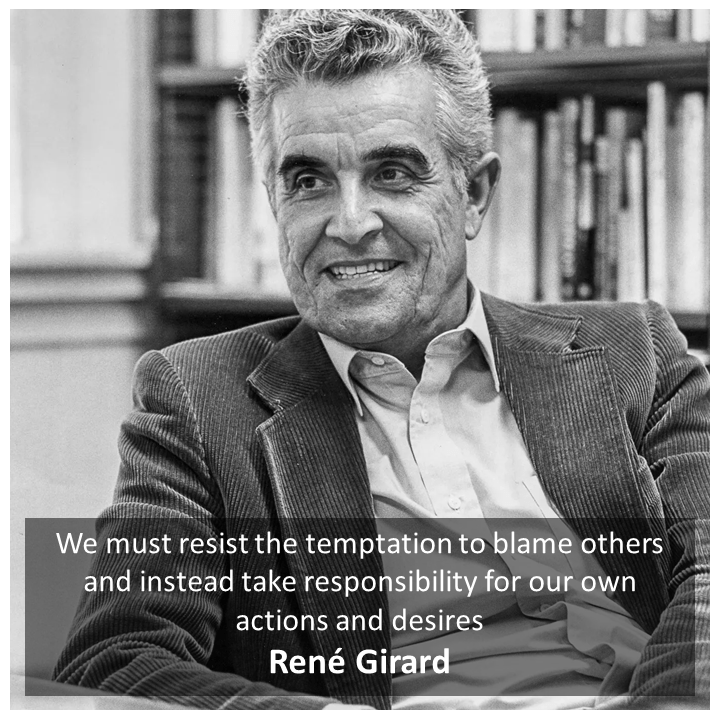
René Girard a French philosopher of social science pointed towards a very innate pattern in human thinking which is called as “Mimetic Desire” in philosophy of social science. He pointed out that even though we may think that our drives are totally created from inside and we are the sole, absolute creator of such desires (like calling ourselves God, the Creator) these are mere effect of our surrounding, they are not created from something absolute. We are always sorting people, things around us to create a place where we say that “we belong”. This helps us to create and justify our identity. The moment someone creates and points towards something as problematic, unsettling then rest of the people also use it as a “scapegoat” to put the blame of anything bad, wrong happening with them.   

We as human beings and social animals are always looking for something to blame which creates an object to blame for difficulties in our life. This grows faster when it happens in group.

According to the ideas of Mimetic Desire given by René Girard, people make scapegoats when the truth, the reality makes them uncomfortable – the reality they don’t want to acknowledge. They desperately lookout for things, groups, people to put blame and make this illusion their reality where they find comfort. People do this because they somehow want to release their anger, tension.

The creation of devil is the same thought. The person in this song is well aware of the truth of reality but as his desires are to always seek pleasure in any possible ways, he finds a scapegoat of “the grip of the devil” to justify his addiction and bad actions. Religious, political beliefs have many examples of such scapegoats.

Responsibility and accountability are very important aspects when we are talking of such ideas. That is why it is very important to rethink our ideas when we are trying to justify them with something delusional.

Conclusion

The key idea to tackle extreme escapism is to accept the imperfect nature of reality. The reality may be fearsome, difficult and unsettling but it is also hopeful, happy and comfortable. Your actions in reality will bring you closer to good experiences rather than submitting to unreal, delusional short acts of pleasure. It’s not the grip of the devil that is holding you in the night, it is you yourself who contain this devil inside who is holding you back. Let your angel overpower your devil to bring you back into the reality. May you grow with every pain inflicted upon you to make you even stronger than you were before. May the creation provide you the physical and especially mental adaptability to handle and appreciate the reality – the only real place where you truly exist.     

Official video shows the transitory phase of a teenage boy who is trying multiple ways to gain pleasure thereby moving away from the awkwardness of reality to become “cool”. But once the balance of pleasurable acts tips to the wrong side, he submits to the pleasurable but dark and devilish side of his personality. This is where he submits himself to the devil.

The video intricately shows the fragile nature of adolescence and the high impact of the choices made in this phase which could have lifelong effect of the personality.   

There a also one lyrical video for this song where you will see fruit butchering (I don’t know why but the producers have made it look very tempting!)

Also, the credit goes to SeeB for adding their iconic style of falsettos to make the listeners feel the grip of the devil in a fantastic way.

The creators of “Grip” Seeb and Dan Smith from Bastille

The song video

Lyrical “fruity and juicy” video

Listen on spotify

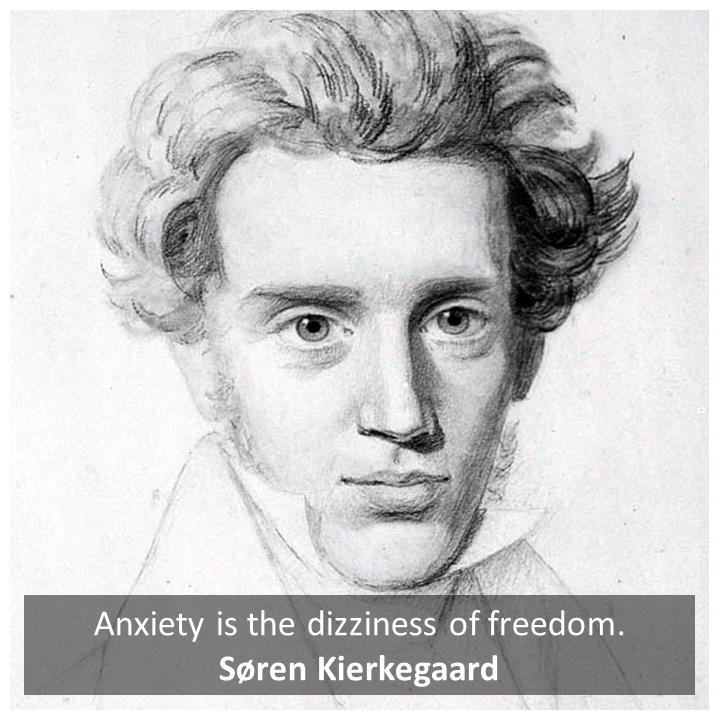
Anxiety – Ugly (But Precious) Gift From Evolution

Anxiety serves to prepare a person for threats. Anxiety just like pain is one uncomfortable but effective way to cope up with the adversities in life, that’s how we build strength, resistance and deeper understanding of the surrounding for better and more precisely predictable future.
The remarkable concepts like smoke detector principal and optimal threshold in signal detection theory developed by modern psychologists/ psychiatrists help us to draw a line between a healthy anxiety (adaptive function) and unhealthy anxiety (pathology) and show ways to handle/treat them effectively.

Anxiety’s like a rocking chair. It gives you something to do, but it doesn’t get you very far

Jodi Picoult

Survival, Fear, and Anxiety

Every living thing if not have any goal in their lifetime would at least have sole goal of existing, surviving. Nobody wants to die and all of us always yearn to live forever but we know our limitations and hence are always on the quest of justifying the finite existence granted to us. Even if we are certain of the end closing in, our instincts are evolved in such way that many of the times, we bear the ability to cheat death. Humans have further extended cheating the death using science and technology.  Technology augmented our lives, reduced the risks of death, created a safe environment to grow, increased our chances of survival.

The fear of death and uncertainty of future is the key driver in our improved survival instincts and excessive use of technology to achieve it. We plan for things in advance, create backup plans if something would go wrong, have risk assessments before the execution, understand and decide according to the cost benefit analysis. That is what makes us humans and also separates from other species (although rest of the surviving species are also smart in their own ways to increase their chances of survival like viruses – but hopefully humans have other ways to overcome them)      

So, fear in a way triggers the actions to ensure survival. Anxiety – a sophisticated form of fear which prepares us in advance even before the fear causing scenario is supposed to happen. Simply put anxiety is an anticipatory type of fear to increase the chances of survival.

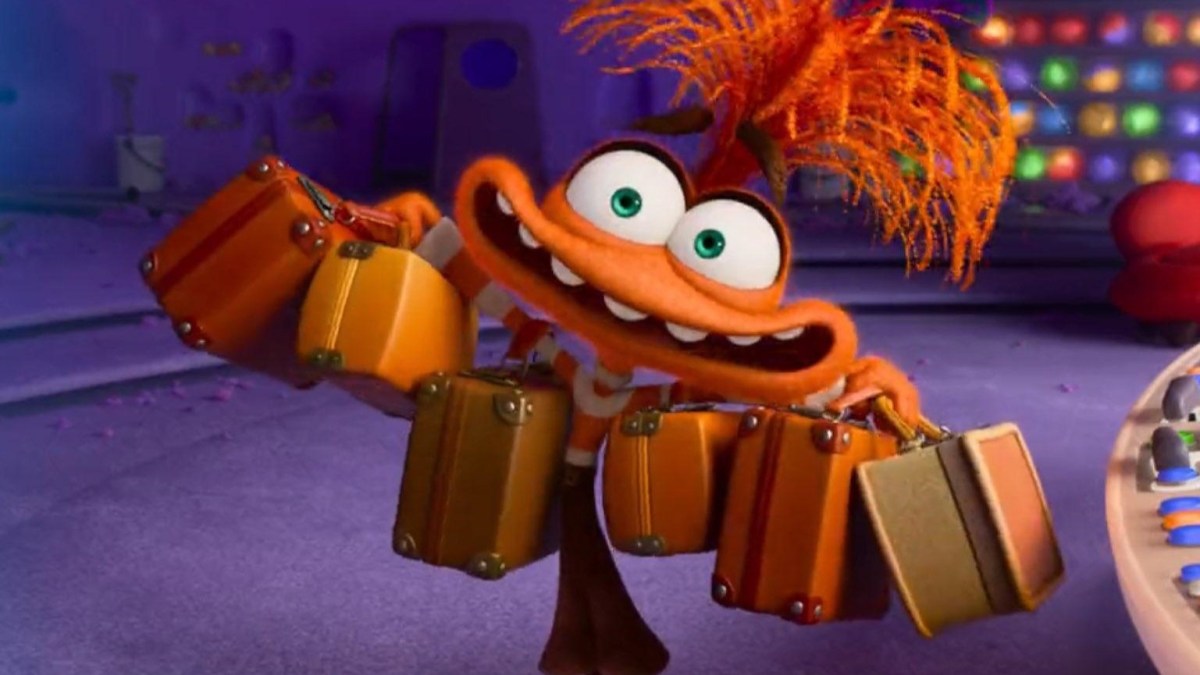
I am talking about fear and anxiety because they are bugging my mind for many days. Recently I watched Inside Out 2 movie and the it really delivers. The narrative has successfully presented how all emotions play a vital role in creating our personality in whole. Anxiety was new and important emotion presented in this movie. Every moment where anxiety came in focus it was fully relatable to me. Once I was done crying in the end the anxiety never left me (figuratively!), I felt a strong urge to understand the anxiety on deeper levels and what the domain experts have to say about anxiety.

The discussion heron is not a movie review rather I have made some attempt to summarize what the real-world scientists have to say about anxiety. I won’t be giving you the tricks, counseling and recommending any medicines to cure anxiety disorders. (Trained professional, experts are the best people to do that – “I AM NO EXPERT”)

My focus of the discussion is to question why anxiety exists in first place when we have an emotion called fear, another question is how to interpret the anxious emotions and what leads to anxiety disorder, where does the root of anxiety lie and is anxiety a bad or negative emotion? If it is so then why? and if not – then why?

While posing such questions and researching articles I came across some beautiful ideas, experiments and theories established by professionals in the field. I will throw light on these ideas in the coming discussion.    

The fear is real! – is it? – Defining anxiety

As I already mentioned that fear of death, the unknown and urge to live long are always fighting with each other. Humans rather every species existing today in nature mastered this battle to some extent and have ridden on chariots of evolution to augment – change themselves to adapt with the surroundings and improve the chances of survival.

A deer completely aware of its surrounding, grazing in the open grass fields can distinguish the rusting of leaves due to winds and rustling due to sudden movements of an apex predator like tiger. When the exams are on top of tomorrow, we are ready to sacrifice the night sleep to crack them (engineers would resonate more with this!) We know that the pain of failing, fear of failing is worse than painfully covering syllabus overnight! The fear is there and the anticipatory response is also there, only the level of sophistication is different.

Why I say sophistication? It is because due to the advancements in our lifestyles humans are rarely exposed to the real life-threatening scenarios like animal do (still today). Our fears are now more anticipatory. I would say most of our fears are now classified as anxiety.

Wikipedia goes like this for anxiety –

“Anxiety is an emotion which is characterized by an unpleasant state of inner turmoil and includes feelings of dread over anticipated events.”

So, the key differentiating aspect between fear and anxiety is the anticipation. Anxiety is a prospective emotion and a forward-looking emotion. Whereas fear is the emotional response to current threat. Fear makes us act immediately; anxiety keeps us ready for future threats. Fear will immediately decide fight or flight whereas anxiety will create plans, strategies for both and also calculate which one is more probable. (now you can appreciate why anxiety is more intense in over-thinkers, the analysis paralysis is one mild example of this.)

Anxiety is also an emotion important from evolutionary perspective as it has helped the current existing species to remain existent. The ability to anticipate future and preparing for it in advance gives competitive edge in survival.  

Why Is Anxiety Good?

While reading about anxiety I came across a very good paper by Dr. Randolph M. Nesse.

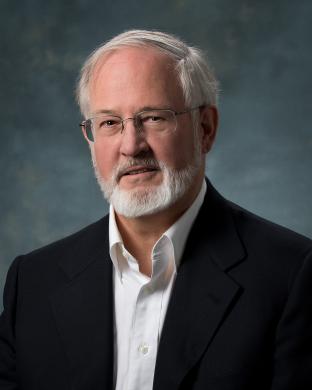
Dr. Randolph M. Nesse, UoM

Randolph M. Nesse is a Professor Emeritus of Psychiatry and Psychology in University of Michigan. The ideas and theory he created to understand and identify anxiety and its intensity are very important and interesting.  

Dr. Ness developed the smoke detector principle to control and quantify the medication used to fight with anxiety disorder. (He poses very simple but important question the opening of the paper that “Is he medicating his patients too much? is he harming them?”) The fundamental doubt Dr. Ness had was if the anxiety is evolved during evolution to improve our chances of survival, then why are we forced to reduce its symptoms and effects? Why are we using medications, therapies to reduce these symptoms, effects of anxiety. What if the patient is too anxious for given thing and that thing is too real to happen but the doctor dumbed that emotion down? (Dr. Ness calls it down-regulating the mechanisms causing anxiety)

The core of his thinking is that if we keep on “down-regulating” our anxiety which is an evolutionary gift to us, we might never be able to gauge the future in better way and prepare for it in advance to improve our chances of survival. (this is an exaggeration of the scenario but it proves a point)  

This calls for the quantification of anxiety. Which Dr. Ness did through the smoke detector principle.

The Smoke Detector Principle – How Much Anxiety Is Too Much?

Dr. Ness in another paper talks about the mechanism which is a feed-back system between the animal and its surroundings, which selects the emotional response to improve the chances of survival. The emotions we have today are the result of such evolution to maintain “homeostasis” – the balance among our bodily system to survive and function properly.

According to his ideas, anxiety works like a smoke detector.

The anxiety response is always trying to maximize the chances of survival and escape from a life-threatening situation. When we set a smoke detector it will go off even when the fire is not that extreme or if there is just some smoke which can be a controllable one. The smoke detector is designed to never miss a single fire causing situation. This ensures complete confidence in smoke detector that it will save people from every life taking fire scenario. But, it’s the same mechanism of smoke detector which forces people to evacuate frequently even when the fire or smoke where controllable or life threatening.

The frequent emergency evacuation even when it is not required is the same problem with the extreme intensity cases of anxiety. Always having armor ready for combat may sometimes make the soldier to lose the agility.

The patients with anxiety disorder have lowered sense of real threat. Their system triggers too many false alarms.

Dr. Ness established various techniques to quantify the levels of anxiety. The responses from anxiety include increased heart rate, rise in certain bodily chemicals – stress hormone secretion which can be easily measured as signals using instruments. Thus, the smoke detector principal paved a way to quantify the anxiety and understand what triggers the anxiety disorders in patients. It helps to understand how and why a level of anxiety is healthy in normal person and what level of anxiety is unhealthy and needs drug administration, therapy, how it can be administered by altering the setting within and around the person.

The core reasons why we need not to be intensely anxious about common life threats are as follows as Dr. Ness explains in his papers:

  1. Regulatory mechanisms have tendency to make errors and be extra defensive about situations
  2. We do not need to always be extra defensive to avoid given threat. (A machine gun in a bulletproof enclosure is not required to kill a mosquito.)
  3. Our body and surroundings have multiple layers of defense for almost all common threats. We are evolved and have survived in that way.
  4. Our environment is much safer than it was at the time we evolved

Types of Anxiety Disorders

Now that we have understood what is the nature of anxiety and what is its mechanism. Here are some important anxiety disorders to outline. Huge amount of information is available in literature, internet websites on these:  

  1. Generalized anxiety disorder (GAD) – too much worrying about ordinary things, problems like money, work, health, relations, family, and anything possible or imaginable, it may not exist in reality.
  2. Hypochondriasis – People suffering from this often worry about the health condition when nothing is wrong with their body. The word comes from feeling of stomach pain the person experiences even when everything is alright.
  3. Specific phobia – fear of anything but specific without any reason. It’s the fear for certain thing even when it does not pose threat.
  4. Social anxiety disorder (SAD) – In this scenario people intensely fear the public situations, humiliations, embarrassments, criticisms.
  5. Separation anxiety disorder (SepAD) – People in this case intensely fear the loss of person or a place
  6. Agoraphobia – it is fear of being in situation where there is no exit door, or escape strategy. Fear of using public transportation, being in large crowds are some examples.
  7. Panic disorder – these are outburst of all the collective or intensive fears, they come quickly and last for short time.
  8. Selective mutism (SM) – in this case the person is extremely fearful of initiating a conversation, does not speak to specific people or in specific situations or conditions even when they are forced to talk by humiliation or mocking.  

Post traumatic syndrome disorder (PTSD) and Obsessive-compulsive disorder (OCD) were once classified under anxiety disorders (now not under anxiety disorder in DSM – Diagnostic and Statistical Manual of mental disorders)

Signal Detection Theory For Interpreting ‘Anxiety Like Responses’

One good paper in the Canadian Journal of Psychiatry by Bateson et al. shows how the smoke detector principal can be used to decide the boundaries of different levels of “anxiety like-responses”. This paper talks about signal detection theory and optimal threshold. The beauty of this paper for me is the mathematical model it establishes to explain psychological events. A single formula will help you understand the difference between normal anxiety and anxiety disorder.  

With the smoke detector principal, we can now appreciate that not every common threat needs full armored protection. The signal detection theory in this paper shows where a person draws line when they overestimate or underestimate anxiety.

It talks about “optimal threshold” to show a threat response in given situation. Optimal threshold is a mathematical parameter which is function of probability of the occurrence real event and vulnerability of the individual.

The signal detection theory says that the superposition of response signals for given background noise and response signal from real threat give us the quantified judgement of how intensely the anxiety is triggered compared to the practicality of the threat – this quantified judgement is called optimal threshold (λ). Lower the threshold more intensely the anxiety will be triggered for given disturbance – background noise.

Figure 1 : Signal detection problem, how the optimal threshold can be calculated. (Credit: Anxiety: An Evolutionary Approach, 2011, Bateson et al., Canadian Journal of Psychiatry)

Equation 1: optimum threshold (Credit: Anxiety: An Evolutionary Approach, 2011, Bateson et al.,Canadian Journal of Psychiatry)

Here,

 λ = optimal threshold

 pnt= probability that there is no threat

 pt= probability that there is real threat

wfa= cost of false alarm

wmiss = cost of a miss

Once this equation comes in focus the discussion becomes interesting. The ratio of pnt to pt mathematically quantifies how practical the threat is. The ratio of wfa to wmiss mathematically quantifies what will be the cost if the anxiety trigger is accepted or rejected – will the subject live or die. This ratio shows how we trigger anxiety response. If the cost of responding is nothing for even a simple threat scenario, we will choose to trigger that response, same would happen if the cost of losing is ultimately the loss of life, we would trigger any possible anxiety response to avoid it. The authors call this ratio as individual’s vulnerability.

The ratio (pnt/pt) can be seen like this. If the surrounding really is hostile and consists of events which cause many life altering events than the safety ensuring events then the pt (probability of threat) will be way higher than pnt (probability of no threat and safer environment). In war situation where multiple bombings, gun firings are happening around you the probability of threat happening (pt) is way high than it not happening (pnt). The optimal threshold will drop immediately and anxiety triggered will be very high.

The ratio (wfa / wmiss) can be seen like this. If the person is way stronger to handle given threat, then the person will need no effort, investment or cost to trigger any reaction alarm to even a false threat. Consider the example where you are about to be bit by mosquito, you know the efforts to slap many times until the mosquito dies are not worthless, you will try many times to kill it even when you know it will swiftly escape, you are less vulnerable in this scenario. But now when you are about to be killed by John Wick (!?) you know for sure that even a pencil will do the job for him, any environment is hostile for you, you are vulnerable here, the value of losing life (wmiss)is way high than the cost of attempts to save it (wfa). Your optimal threshold will immediately drop down thus triggering intense anxiety.

Once you generate enough data for such optimal frequencies you can easily distinguish the healthy anxiety responses and anxiety disorders. I loved how these two factors (probability of threat and vulnerability of an individual) can predict the levels of anxiety in a person. This equation explains and can also quantify why pregnant women have heightened awareness of their surroundings, why people get insomniac after constant mental stress, why restless people are always in the mode of action and fight, why reclusive people hesitate to visit foreign, unknown places.    

Your Surroundings and Mindset Matter!

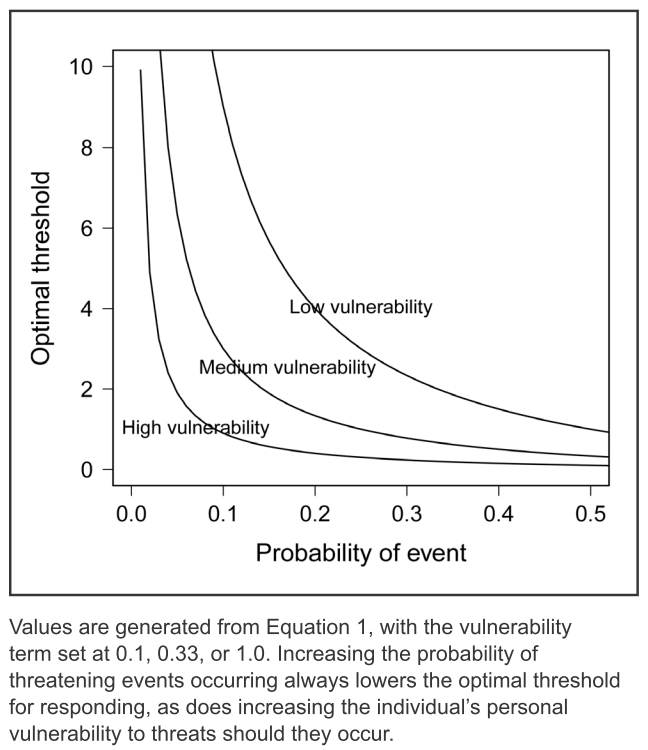
Figure 2 : Three levels of vulnerability, here optimal threshold and probability of event can be correlated for difference in the anxiety responses (Credit: Anxiety: An Evolutionary Approach, 2011, Bateson et al., Canadian Journal of Psychiatry)

It is really interesting what the authors have achieved and established in this research. They compared three different levels of vulnerability and explained them using given plot.  The thing to highlight here for anxiety disorders is that they emerge from the environments which always keep on presenting high probabilistic practically threatening scenarios. The anxiety disorders also emerge when the individual feels more vulnerable.

Higher the vulnerability lower will be the optimal threshold and intense will be the anxiety response.

As shown in research, in the uncertain times of Covid-19 people who were locked in their home had no disorders, were not exposed to the virus also felt anxious and faced some anxiety disorders because of the environment they were in.

If the person feels less vulnerable and stronger then even for given strong life-threatening events the optimal threshold will be higher thus the anxiety triggered will be lower.

Are you noticing where this is going?

This is a mathematical model which shows how a healthy, supportive, and safe environment and also a strong mindset and better judgment of reality is important for handling challenging situations.

For a person suffering from anxiety disorder, it becomes very important to make sure that they know that they are in a safer environment and are cared for. It is very important to make them feel safe and understood. Creating a system of critical thinking and reasoning can also help the person to have a sense of strength and high resistance to vulnerability, this also goes for physical strength. The vulnerability is not only mental it is also physical when it comes to reality.

You will now appreciate why teenagers and trauma patients are more exposed to anxiety disorders. Mostly and generally in teenagers it is due to the uncertainty of many new things happening with them simultaneously and in trauma patients it’s the constant bombardment of life-threatening events in hostile environments.

Conclusion

Anxiety serves to prepare a person for threats. The emotion called anxiety is an evolutionary gift to ensure long survival of our species but as it is also related to our primitive instincts, we mostly let anxiety overpower other emotions in seemingly safer scenarios. Strategy and anticipation are the gifts of anxiety but if overused they will end up in imparting unnecessary caution and overprotective attitude which inhibits adaptation to changes there by slowing evolution of our species. Anxiety just like pain is one uncomfortable but effective way to cope up with the adversities in life, that’s how we build strength, resistance and deeper understanding of the surrounding for better and more precisely predictable future.   

The remarkable concepts like smoke detector principal and optimal threshold in signal detection theory developed by modern psychologists/ psychiatrists help us to draw a line between a healthy anxiety (adaptive function) and unhealthy anxiety (pathology) and ways to handle/ treat them effectively.      

These theories show how we can quantify seemingly intangible emotions like anxiety and way to handle them. If you can measure something effectively you can control and predict it effectively. All credit goes to such brilliant minds!

References, Image sources and further reading:

  1. Fear of the unknown: One fear to rule them all?, 2016, R. Nicholas Carleton, Journal of Anxiety Disorders
  2. Natural selection and the regulation of defenses: A signal detection analysis of the smoke detector principle, 2005, Randolph M. Nesse,Evolution and Human Behavior
  3. Natural Selection and the Regulation of Defensive Responses, ANNALS NEW YORK ACADEMY OF SCIENCES, Randolph M. Nesse
  4. Anxiety: An Evolutionary Approach, 2011, Bateson et al., Canadian Journal of Psychiatry
  5. The relationship between perceived stress and emotional distress during the COVID-19 outbreak: Effects of boredom proneness and coping style, 2021, Yan et al., Journal of Anxiety Disorders
  6. Long-term effectiveness of cognitive behavioral therapy for youth with anxiety disorders, 2018, Kodal et al., Journal of Anxiety Disorders
  7. Anxiety, National Library of Medicine, www.medlineplus.gov
  8. Anxiety Disorders, National Institute of Mental Health
  9. What are Anxiety Disorders?, American Psychiatric Association
  10. Anxiety – Wikipedia
  11. Randolph M. Nesse, M.D., Professor Emeritus of Psychiatry, Professor Emeritus of Psychology, Department of Psychiatry, University of Michigan
  12. Everything You Need to Know About Anxiety – www.healthline.com