People have tried to justify their existence with happiness, fulfillment, satisfaction, service, love, hope, devotion and what not. But those who have existed in full spirit, lived it to the fullest have realized the effect of sufferings on our lives and even after overcoming them are ready to endure them again in the hope that they will become better than what they were before. These are the people who might have solved the query to justify the life. Overcoming the sufferings in life and continuing the journey ahead could be the answer.
On Charles Dickens’s short story – A Child’s Dream of A Star
The Impact of Suffering in the Pursuit of Happiness
Question- what would you choose of the following?
A short life filled with happiness and satisfaction? or A long life filled with pain and suffering?
I will assume that you have selected one.
Charles Dickens’s short story – A Child’s Dream of A Star
I came across a short story “A Child’s Dream of A Star” by Charles Dickens which shows what it means to pass through the suffering of the lost loved ones.
This is a story of a boy who loses many loved ones throughout his whole life. Whenever he is losing someone, he dreams of a star where he sees the souls of his loved ones meeting and coming together. First, he loses his little sister in childhood, then his baby brother. When he grows young, he loses his mother, while being adult he loses his own daughter. Every time, when the boy loses his people, he dreams of the same star and wishes that he too could join them. But, when grown adult and losing his daughter he is somewhat soothed that his daughter is not alone, she has the angels of his sister, mother and brother to accompany her.
When he realizes the arrival of his last moment, he accepts the death for the joy that he will join the souls of his loved ones now.
The Suffering of Watching People Leave
Charles Dickens in a very impactful way shows what it means to live life. On surface analysis, one can say that this short story of a boy dreaming about the people he lost and asking for his own death in the hope to join them is about the pain of losing the loved ones and dissatisfaction of not getting enough time to spend time with them and love them. Deep down it is about how one endures pain and I think the only way to endure such pain is to pass through it. Any attempt to alleviate or even control it, leads to more pain.
Enduring the Suffering
The great thing about this story is that it delicately captures what a beauty that life we live in is and how we connect same attributes of life to the afterlife (even when we are unsure whether it truly exists, even when it exists in our minds and dreams) also how fragile our existence is.
Charles Dickens used the innocence of the child’s mind to show how we carry that innocence throughout our life to use every chance to stay closer to the people we love. The opening of the story also talks about the sorrow that is felt by everyone when someone dies.
“They used to say to one another, sometimes, supposing all the children upon the earth were to die, would the flowers and the water and the sky be sorry? They believed they would be sorry. For, said they, the buds are the children of the flowers, and the little playful streams that gambol down the hillsides are the children of the water; and the smallest bright specks playing at hide-and-seek in the sky all night must surely be the children of the stars and they would all be grieved to see their playmates, the children of men no more.”
It shows that even for children the suffering had a bigger meaning not even when they had faced any such suffering from loss in their tender age. It shows how by default we are hardwired for the sensitivity towards suffering. Maybe we are more sensitive to suffering than love.
Then we see that the boy is exposed to multiple losses and you will see over the time his dreams are evolving gradually. In early childhood loss of his sister, he is totally devastated that he could not join his sister, then he is again agitated with the thought that his younger brother has to join her in the starry heaven. Then when he is young, he is somewhat settled that his mother could join his sister and the brother.
Now when being adult and losing the beloved daughter, the same boy has made peace with her death in the thought that she has enough people to take care of her and maybe love her more. Now he has made amends with the death.
“My daughter’s head is on my sister’s bosom, and her arm is round my mother’s neck, and at her feet is the baby of old time, and I can bear the parting from her, God be praised!”
You must understand how the boy from childhood till his old-age sees the death in different ways. At first, he has intense sorrow for his sister but over the time he sees that even after death the people he loves have each other’s company.
He cannot do anything to join them in the afterlife and death is the only way to join them. Please note that there is not even single mention or any indirect indication that boy wishes to end his existence just to meet his loved ones in afterlife.
So, it’s a story of how a person builds himself towards the suffering. You will see that the boy never gets numbed because of the series of losses, he is hopeful that at least someone is there in afterlife for them to love each other. Death along with love is the only constant in this story.
We are well aware of the love from the very beginning of our existence but it takes time to appreciate that just like love, death too is eternal. It’s just that our minds find it difficult to bring together the idea of eternal nature of love and never-ending series of death in single thought. Maybe that is why not everything exists at exactly the same time and ends at exactly the same time, otherwise there would be no one to witness and appreciate what one existed in and carry that forward.
The Eternal Curiosity, Innocence and Love
I am adding the concept of eternity, endlessness in this story of involving series of deaths, ends and sadness with it, because that is how the life is. The symbolism of star used in this short story by Charles Dickens also points to that idea.
You should notice that in the opening it is about how everything that is there in existence will feel sad for loss of the children of men. The boy feels that sorrow in his childhood; later on, we realise that he holds these unfulfilled emotions, feelings of not getting enough time to spend with the people he has lost. These emotions are continuously getting reflected in his dreams. In the end, we see that he is dying happily while feeling that he can love them again in the afterlife.
But you should now notice that the dream is limited to the boy only. What is real is the star in this story; the star shining on little sister’s grave and was still shining on her brother’s grave who died at old-age.
Just like the children’s curiosity about whether the nature grieved for the losses in the beginning of the story, we can say that the star (being the child of nature) would also grieve for the people he saw dying. But that is not where the story is going. The boy had learned to handle the grief over time and that is why is mature emotionally with the death of his daughter and even his own death. This became possible because his love for his sister increased multiple folds, got intense over the time.
The maturity that comes to such sorrow is worth noticing, the boy now an old-age man is not sad because he will be leaving his children behind. He is neither happy that he will join his loved ones in the afterlife (although what he says while dying means that he is eager to join afterlife).
The star was a construct of his mind to move over the grief and be assured that no one – not even him will never be left unloved. He had a strong belief that at least love is eternal in some or other forms. The star still shining upon his grave in the last sentence of the story is thus the symbol of the child’s innocence and love.
The last words of the boy/ man are these:
“…My age is falling from me like a garment, and I move towards the star as a child. And O my Father, now I thank thee that it has so often opened to receive those dear ones who await me!”
We all can appreciate that the afterlife’s notion is only in the boy/ man’s dreams but that does not invalidate his feelings. He is grateful that he had someone to love (although he couldn’t love them to the fullest while living). The childhood innocence and curiosity he carried throughout his life helped him to endure the suffering. Curiosity because of the urge to understand what would happen to the people who die gets materialized in the dreams of the boy and thus he builds his understanding around it. This curiosity emerged because he cared for them so strongly that he was concerned about what would happen to people after they die. Innocence because from childhood till old-age he deeply believes that just like the children of nature, everyone and not only him cared for people, loved them in some or other ways.
Conclusion
Most of the existential queries on human life point to one single question of meaning or purpose or at least worth of the life. Once started, if it is destined to end then why is this everything existing? And this question is not just about life. It is about everything attached to the life itself. If everything in existence is attached to something and everything at any time will be lost forever, disconnected forever then why does everything exist in first place? Once you appreciate this question, you will see that existence is majorly a series of detachments, losses – literally and figuratively. It is just that some things detach faster than others, some things stay for longer time but are lost in the end; we are just existing in these gaps of losses and detachments. Maybe how we felt about those things especially the innocent emotions we had for everything that is there (which are neither good/ bad, pure/ impure) are eternal. If not eternal, I would say that they evolve in better ways, get refined, gain maturity and get transferred to our next generations through our legacy. Maybe they too would have an ending but what can we say about the human spirit! The spirit to exist in spite of the sufferings! The ability to exist in full spirit and endure multiple sufferings over the time while maintaining that innocent child alive inside you is what justifies our existence in the end. And even that is to end in the end, I have no complaints.
So, when I asked to select one of options at the start, if you felt that selecting only one of these is foolish (or difficult/ meaningless) then welcome to the club!
People have tried to justify their existence with happiness, fulfillment, satisfaction, service, love, hope, devotion and what not. But those who have existed in full spirit, lived it to the fullest have realized the effect of sufferings on our lives and even after overcoming them are ready to endure them again in the hope that they will become better than what they were before. These are the people who might have solved the query to justify the life. Overcoming the sufferings in life and continuing the journey ahead could be the answer.
Most of the men are poor in openly expressing their emotions, love for the men they love. Fathers are an important entity in this group.
In the vast ocean of unexpressed masculine love and the unexpressed emotions between father and son, James Blunt’s “Monsters” stands like a lighthouse. “Monsters” is not just about acceptance of father by his son or a love letter of a son to his beloved father; it is more than that. It shows how a good upbringing can create better sons for tomorrow. No doubt mothers are more than enough to create better children and better people for tomorrow but we need good fathers – sensitive fathers to create better sons for today and better fathers for tomorrow. Responsibility thus lies at the core of manliness which gets glorified through this fatherhood. It also shows the sensitive side of masculinity. This song is all about that.
On the song called “Monsters” by James Blunt
By the time a man realizes that maybe his father was right, he usually has a son who thinks he is wrong
– Charles Wadsworth
They say when you can’t tell someone what you are feeling or when words are falling short to express those unsaid emotions music is the best medium. Everyone of us has this group of songs which snugly fits with certain emotions we hold inside especially the emotions which we hesitate to express openly. Believe me that these songs are not just love songs or romantic songs, if you ask people when they are comfortable around you, you will realize that there exists a wide spectrum of emotions people never expressed or couldn’t express just because they couldn’t find proper words.
Talking about emotional people and the hesitation to express them openly, there exists a group of relationships where people rarely express their emotions even though their counterparts know that what those feelings are.
I am talking about boy-boy relation, man-man relationship, boy-man relationship – please note that its not just about romantic relationship in men. It is beyond that, and given that men hesitate to express those many times, I too am finding it difficult to write this down in a convincing way – about how men feel for other men.
In this ongoing but intentionally ignored realization, I came across a song which helped me to express the feeling that I had but never was able to connect to the reality of words. Boys, men rarely do that. That is exactly why music is so powerful, it is an enabler for those who are failing, hesitating to express what they are feeling.
I came across a song called Monsters by James Blunt where the son expresses how strongly he appreciates what his father did for him and also guarantees that his father’s legacy will live through his son by being the next responsible father figure for the family.
The lyrics is credited to Jimmy Hogarth, James Blunt, Amy Victoria Wadge.
This is about that song. You will find many references/ interviews on internet to explain why James made this song.
This is about what I saw through this song.
Oh, before they turn off all the lights
I won't read you your wrongs or your rights
The time has gone
I'll tell you goodnight, close the door
Tell you I love you once more
The time has gone
So here it is
As far as the song goes it is about a boy telling his father how he is opening his heart out in front of him. The metaphor of turning off the lights and saying good night shows that it’s the father who is going to sleep and the son is turning off the lights for him, closing the door for him and saying good night.
The use of the metaphor of the night time routine between parents (especially father in this case) and the children (the son in this case) is really beautiful here. The son turning off the lights and saying good night to his father shows how the roles have switched. It shows how the son has accepted the responsibility of fatherhood. It’s not just a normal night for his father it’s the long night and final slumber for his father. The son is very well aware of this and thus considers it as the responsibility to respect what his father trained and nurtured him for.
The realization of final moments of his father made the son express his feelings for him. The feelings which were never expressed openly before. Knowing that there is very short time left for father, the son wants to share the emotion that he really loves his father.
One important thing which is woven in the flow of emotions by the songwriters that I liked very much is the idea of completely rejecting the notion of rights and wrongs done by father (as much as the son thinks) throughout his life.
This notion of person not being right or wrong but just a human being gets expanded more in the next verse.
I'm not your son, you're not my father
We're just two grown men saying goodbye
No need to forgive, no need to forget
I know your mistakes and you know mine
And while you're sleeping, I'll try to make you proud
So, daddy, won't you just close your eyes?
Don't be afraid, it's my turn
To chase the monsters away
It is only when the son accepts fatherhood, becomes father or at least assumes the role of father figure then he realizes that his father was just a human being who did everything that was possible in his capacity.
This is very important aspect of a son becoming father. As long as father was there especially when the son is a young adult, father was just a person who was a lost cause. This is one of the most common behaviors among young boys. Everything their father did feels wrong in this way or the other way for boys.
But it is only when the boys themselves become men (literally and/or figuratively) they understand and appreciate how their fathers raised them. This is exactly why when the son is telling his father that ‘he won’t mention rights and wrongs that his father did’ – he is actually respecting the efforts of his father – the lengths to which his father went to ensure better life for his son. He has understood that in the end we are all human beings – we are not perfect – neither right nor wrong.
When the son is telling his father to not judge each other, it is him accepting his father as a human being. It’s the evolution of that teenage boy’s mentality into a man – the father figure. The songwriters have beautifully captured this change from boy to man. A boy always sees his father’s actions decisions as foolish, unreliable and wrong but the moment he puts his feet in the shoes that his father wore he realizes that all his father did was to give the best to his son, to his family. He also realizes how wrong he was when he was judging his father from a single point of view. That is exactly why the boy is telling his father that we both know how flawed we are – how flawed we humans are but in spite of that we are living together, we are accepting each other. This is the spirit of humanity shown through the mature relationship of the son and his father. I loved how songwriters put the act of recognition of mistakes more important than the act of either forgiving them or forgetting them. It removes any type of attribution or the notion of right-ness and wrong-ness for any mistake. I feel that the moment someone starts noticing that there is always some aspect beyond right and wrong for everything is the moment when that person truly understands the reality – the nature of things, such person is able to see right through the things. Most often this is sign of maturity.
There is difference between growing old and getting matured. Songwriters have very well created that feeling here. Son even though being younger than his father has started appreciating what his father handled for him and the family. This is exactly where the song comes alive – especially lyrics for me. It truly catches the essence of fatherhood. The son tells father that now its his turn to chase the monsters away.
The monsters could be any adversity that the family would have been exposed to. For me the notion of “chasing the monsters away” is very powerful way to show essence of fatherhood and father’s love. It also shows how the nature of father’s love completely differs from mother’s love; this difference itself sometimes creates the sense of superiority of motherly love over fatherly love. No doubt mothers are supreme caregiver to their children but that also should not reduce what fathers do and feel for their children. Fathers are the doorkeepers for the adversities before they could harm their families and most of the time the family rarely notices what harm was prevented. I mean if they are not even noticing what harm could have done to them this means that the job of protection was performed in perfect manner. That is the actual job for a fatherly figure – to not even let anyone get uncomfortable because something bad will hit them.
The son appreciates this and consoles his father that now he will take the tougher responsibilities which his father carried for the family, now he will become the man of the family and make him proud. One more beautiful thing happens here is the childhood callback between father and son. When the son is scared of the monsters under his bed and father telling him the story so that he could sleep well and telling him that he will chase those monsters away for him. Now that the son has grown up the attribution of monsters is changed, now these are the monsters that exist in the world in reality.
One beautiful thing to notice here is the moment when father confides his young son that he will chase away the monsters under his bed – he is completely aware that what real monsters he is chasing away for his son and the family. Only that the son’s young age would be scared and afraid to handle those real monsters father makes sure that he is protected from these adversities or at least the awareness of those adversities.
The bridge that the idea of “chasing away monsters” and the role reversal between son and his father shows what it means to be a man in this world.
Oh, well, I'll read a story to you
Only difference is this one is true
The time has gone
I folded your clothes on the chair
I hope you sleep well, don't be scared
The time has gone
So here it is
Sleep a lifetime
Yes, and breathe a last word
You can feel my hand on your own
I will be the last one
So I'll leave a light on
Let there be no darkness, in your heart
One important thing that men are taught right from their childhood is to become tough and strong. That tenderness, vulnerability and emotional inclination is a sign of weakness. Men have never followed this advice completely to their heart. They have just mastered the art of masking their tenderness – hiding it in a way to create an illusion of its nonexistence.
The way son is telling his father that he will read a story to him, fold his clothes shows that son’s masculinity holds that tenderness of love for his father – he has learnt that from his father.
One emotional part of this song for me is the next part. The part where the light and darkness are used as a bridge between the earlier fatherhood of the father and then the fatherhood of his son. It shows how a boy matures into father and thereby the real man. Light here signifies the hope for better times the son will keep on bringing when his father won’t be there. When the son asks father to have no darkness – it’s the darkness of the bitterness created over time between father and son due to some disagreements. It could be my overthinking playing here but the songwriters have also pointed out this common phenomenon between fathers and their sons. Right from the adolescence sons get many chances to notice and count the mistakes their father committed and consider them the most incapable, imperfect person in the world. It is only when the same sons take the responsibility of the fatherhood that they realize how hard it is and what actually their fathers sacrificed for them and the family. Men have this unrealized habit of not coming to terms with things with other men especially the men they love because of the unconscious habit of suppressing the emotions and vulnerability. Men rarely accept the mistake to other men – they will generally get along with the act of apologizing without it happening formally. The bitterness between the relationships is hidden in these deep cracks. So, when the son is telling his father to have no darkness in his heart n his last moments, he is actually apologizing to his father for always judging him for his flaws and imperfections. The father is feeling sad because he could not live up to the standards, expectations that his son had for him. This is some part of the said “darkness”. Son is finally telling his father that now that he has assumed the fatherhood, he appreciates all that his father did for the family and for him even though mistakes were made, bad decisions were taken and he couldn’t be “the perfect father” but in the end, we are all humans. The son is consoling his father that there is nothing to worry because he will be following his father’s legacy.
But I'm not your son, you're not my father
We're just two grown men saying goodbye
No need to forgive, no need to forget
I know your mistakes and you know mine
And while you're sleeping, I'll try to make you proud
So, daddy, won't you just close your eyes?
Don't be afraid, it's my turn
To chase the monsters away
It’s the final goodbye of a son to his father when he is telling that he will try to be a better son by accepting the responsibility of fatherhood through the legacy his father gave him. His father will now through him.
Men And Their Fathers
I have no opinion against the greatness of motherhood and the feminine capacity to express and demonstrate love for their children. What itches me is the ignorance towards the capacity of men to love their children as equal as the mothers. Maybe the reason lies in the incapability of men to actually and openly express love for their loved ones. It could have happened because men are trained to demonstrate masculinity through the attributes of strength and showing emotional neutrality. This has now been an unconscious habit among most of the men. A daughter with strong emotional sensitivity imparted due to her femininity can deeply understand what a fatherly love is but she can rarely understand and appreciate what the masculine side of that fatherly love is. A son very well knows what his father had in his mind all along this time the moment he assumes the fatherhood. It’s not necessary that the boy should bear a child or become father in reality. Mere acceptance of the responsibility triggers this mindset in boys. Most of the men are very poor in openly expressing the emotions, love for others especially other men they love. Fathers are the most difficult men in this group of loved ones (trust me on the basis of me being a man). Most often a boy could openly express his love for that girl in public in spite of being an introvert – he would cross that valley of insecurity for her. But same is not the case for men he loves – specifically a fatherly love. Boys show love for fatherly figures mostly through respect and assumption as the next responsible person in the line. “Monsters” by James Blunt is one such love letter from a son to his father. In the vast ocean of unexpressed masculine love and the unexpressed emotions between father and son, I think this song stands like a lighthouse. The most expected response for a man’s confession of love to other fatherly, manly figure (like a simple sentence “I love you father for all that you did for us, for me”) is a big laughter followed by comment similar to – “Are you OK?! What happened to you?” Men hesitate to accept the comment of being loved too. A father by default considers his execution of his responsibilities without the expectations of returned favor or appreciation or recognition. Men are rarely hardwired to accept recognition for being responsible and that is also may be why for some men in some cases it is easy to run away from the responsibilities. Fatherhood or feeling of fatherhood rarely allows that escape. It’s a commitment of a man to himself which makes him the real man.
The Monsters is not just about acceptance of father by his son or a love letter of a son to his beloved father. It is more than that. It shows how a good upbringing can create better sons for tomorrow. No doubt mothers are more than enough to create better children and better people for tomorrow but we need fathers – sensitive fathers to create better sons today and better fathers tomorrow. Responsibility thus lies at the core of manliness which gets glorified through this fatherhood. Assumption of fatherhood (sometimes physical and mental/ emotional fatherhood in each and every time) is the highest level any man can secure in this human world. So, Monsters is that handover of that legacy of true manliness from a father to his son. What could calm a father more than the awareness that his son has assumed the fatherhood, his son has grown up to be a real man! That his son has learnt to stand strong in adversities. That his son has become responsible. That his son has learnt to stand down against the short-term pleasures for the betterment of his family. That his son has mastered to chase away the monsters of his life. Fatherhood can give purpose to any directionless man. That is also why unstable society needs better fathers.
For me this is the song which answers the question – “Why the world needs good fathers along with good mothers?” It also shows why father’s role is also important in the upbringing of children especially boys.
Studio Ghibli’s masterpiece The Boy and the Heron (君たちはどう生きるか, How do you live?) tries to answer one complicated question on artistic legacy. On surface, it is a story of boy coming out of the melancholy of his mother’s death and his new beginnings. Deep down it is a love letter from a creative father on his creative legacy to his son who wants to go on his own journey. It shows how difficult it is to make others appreciate a personal piece of creation, emotion and how to leave a truly influential legacy behind.
A creative father’s love-letter on his legacy to his beloved son
We are always in a pursuit of creation of something to ensure better coming days. Survival is one aspect of it but as the time moved on, we have comfortably brought ourselves to ensure our sustenance. Most of us can live a basic life and rarely worry about what to eat tomorrow. Once such stage is achieved, you will see that our efforts to create and accumulate still have never stopped. Now we are creating and accumulating for even better days than other, once this is achieved, we continue creating and accumulating so that our new generation will see better days. This act of creating a legacy is not just a matter of survival, it is also matter of preserving some part of ourselves even when we won’t physically exist in this world.
It is easy to see what happens to the materialistic legacy like wealth, but it becomes very tricky to handover the moralistic, value based, character-based legacy to the next generation because of the differences in the ways to live and understand the life. The passage of time alters some truths to the new generations thereby changing their mindsets and moral compasses. Even though our animal drives, emotions are exactly the same the motivations behind them change over time.
Now, imagine that you created such precious legacy which is close to you, which defines you, people appreciate it adore it but your next generation is unable to carry it forward. How do you handle such rejections? what is the resolution? Is it good? Is it bad? Is there any way around? As you love your legacy, should you force them to see the value in your legacy? And if you truly love them, should you force them in the first place to carry that legacy?
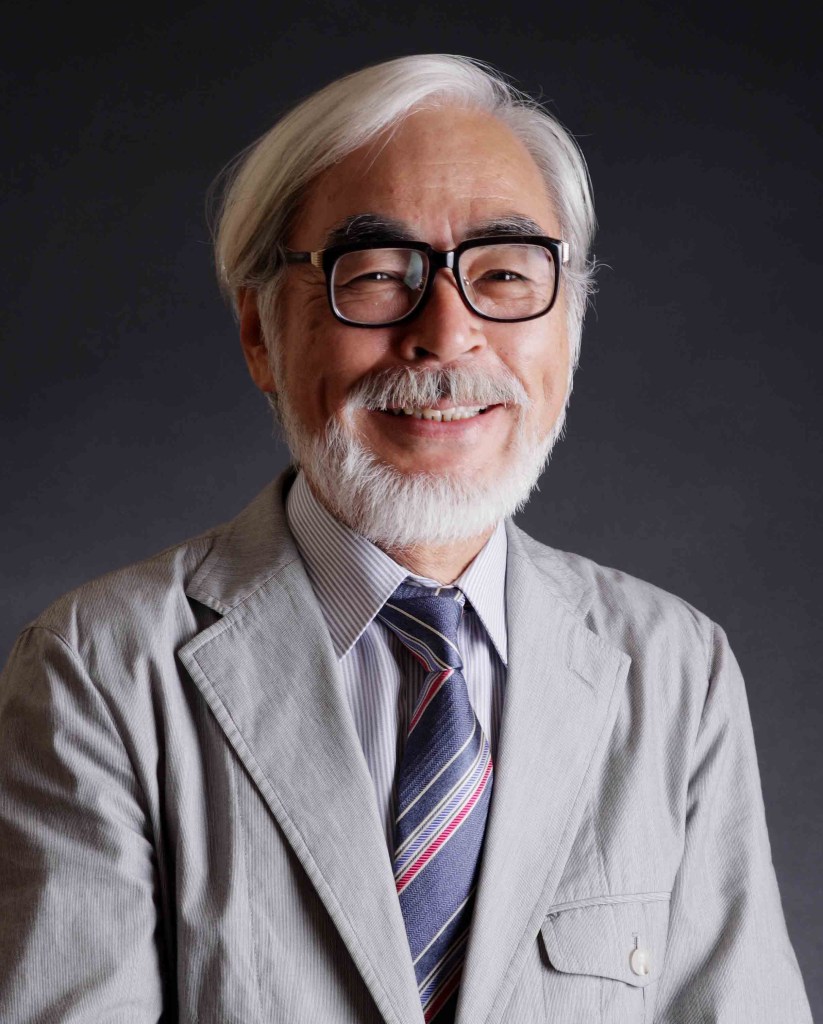
Studio Ghibli’s recent movie The Boy and the Heron (君たちはどう生きるか, How do you live?) is an attempt to answer one such complicated question on artistic legacy. Hayao Miyazaki-san has again given a masterstroke by creating a very personal yet relatable artistic narrative.
I have tried to explain the overall purpose of the narrative in this movie and will try to uncover what was the real core of movie based on the events in the life of Hayao Miyazaki-san.
The story and the meanings behind it
You will find megatons of explanations on the symbolism, personal connection of Hayao Miyazaki-san, his life, his childhood, his parents, and his colleagues from Studio Ghibli in this movie. There are many theories and cross references between the previous Ghibli movies too. I will not go into those details. I will focus on what the narrative stands as a whole.
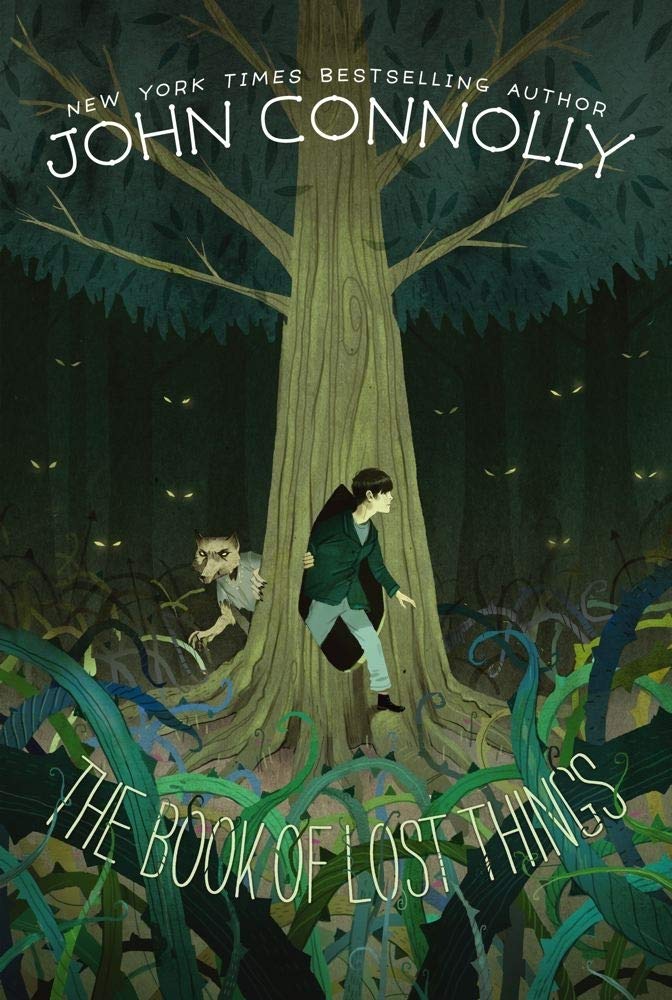
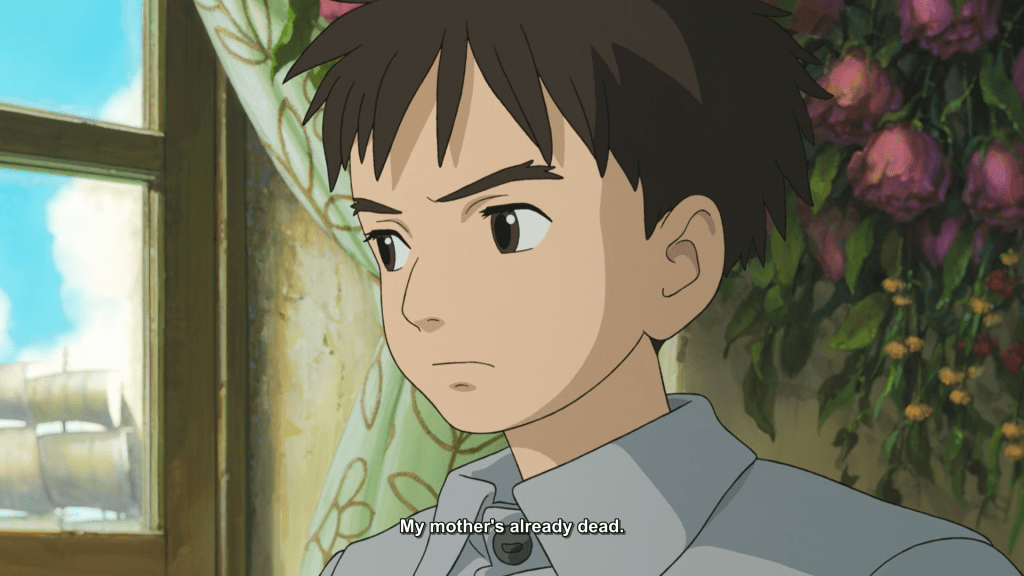
It is obvious that it is a story of a boy who lost his mother and his journey of getting over that melancholia of her loss and acceptance of his new mother. You will also notice in the end credits that the creators have thanked a book called “The book of lost things” by John Conolly. Once you check out what this book is all about, I think you will get new perspective beyond the symbolism and references in the movie. Miyasaki leveraged the narrative of this book to create the structure of his narrative. The book also draws inspiration from Genzaburo Yoshino’s book “How Do You Live?” (君たちはどう生きるか, Kimi-tachi wa Dō Ikiru ka)
Two books which inspired ‘The Boy and The Heron’
This is the story of the all emotions that are invoked when a person loses their loved ones. The first question that comes in mind when such loss happens is “How Do You Live?”
This is how the story is built –
The tower created around the rock is a portal where you can physically access your emotions. Just like in Interstellar how Astronaut Cooper was able to physically access the dimension of time.
Birds are representation of the free flying feelings, emotions we have.
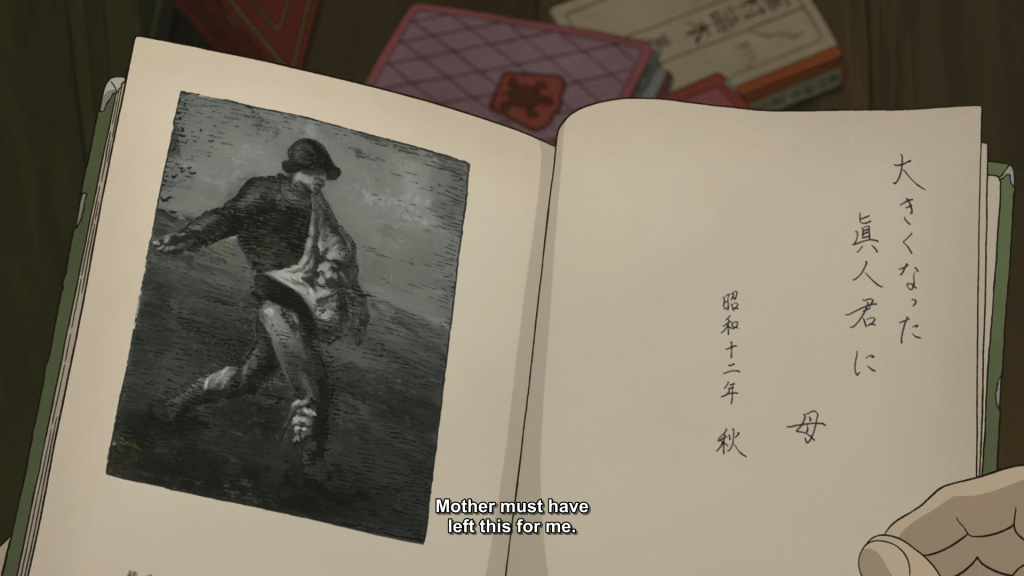
The book that the great granduncle left unread is the same book Mahito’s mother read and then it got handed over to Mahito, which is the book called “How do you live?” The book is about the conversations of a boy who lost his father and the boy’s uncle.
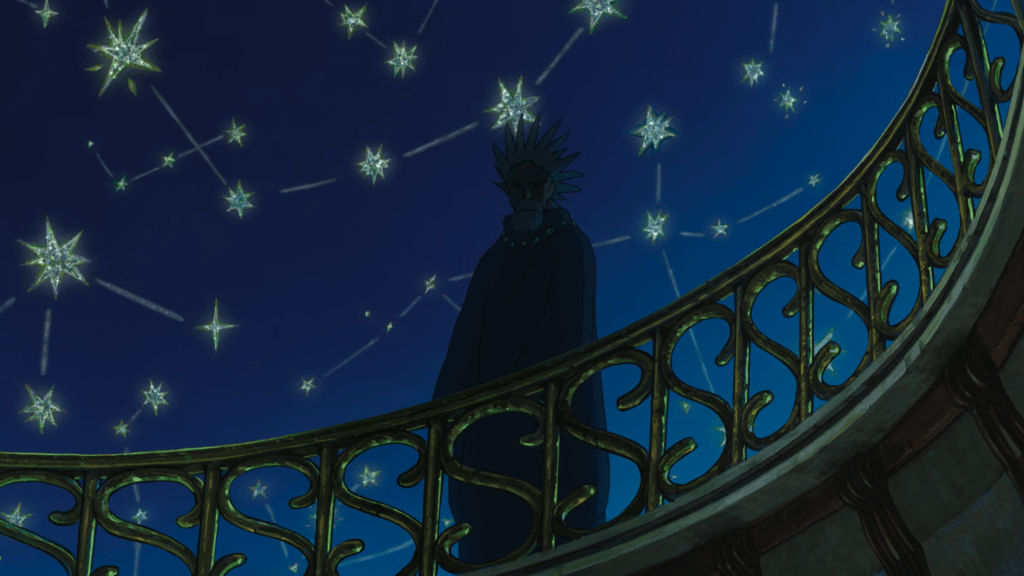
The great granduncle already knew that the rock from space can allow him to create the world of his dreams. That is exactly why he built a tower around it for protection. Upon going through the loss of loved person in his life, he saw himself in the role of the person who will lead and help his descendants to handle their own pain of loss. But as the great grand uncle was always into books and had his own internal dreamy world, he used the powers of the rock from space to create his own world.
The act of leaving the book unread to disappearing into something is pointing towards that intense moment when you have to act on things because the author said exactly what you believe in. You feel this urge to act and create that thing because the author, the person who you don’t even know feels exactly the same. You feel an unexplained deep connection.
So, the rock from space and tower built around it is a portal where things can enter and exit in space, time. The moment when Himi lost her mother, she accessed the portal, confronted her emotions but also met her future son Mahito.
She realized that even though she lost her beloved mother, she will have an opportunity to have her own son who will love her deeply. Even when she will not be there with Mahito, her sister will love him equally. This gives her peace. That is exactly why when grannies are telling the story from Himiko’s childhood to Shoichi (Himiko’s husband and Mahito’s father) they say that she was grinning to ears – happy like anything when she came out of the mysterious tower.
The great grand uncle can call anyone to enter the tower. That is why grannies are scared if Mahito gets taken by the tower in the start of the story.
Kiriko has also accessed the portal in the search for young Himi before, that is why her younger version is available in this dreamy world and knows the ways of this world. Her older version entering into the portal along with Mahito closes the loop of time paradox if you think it through.
Natsuko is called into the portal to make young Himi aware that her future son will have a caretaker and lover when she will not be there for him. This helps young Himi to get over her own loss of mother. It’s that feeling of love you create for your people when you realize how deeply you loved the person you lost. You realize that your people also deserve to get the love that you received from your lost loved ones. That brings the person out of the melancholy of the loss of loved ones.
Natsuko is called into the portal to make up her mind that Mahito is also her son. She is also called into the portal to make Mahito accept that his step mother also deserves the same love that he has for his own mother. The great grand uncle is the orchestrater of all these events.
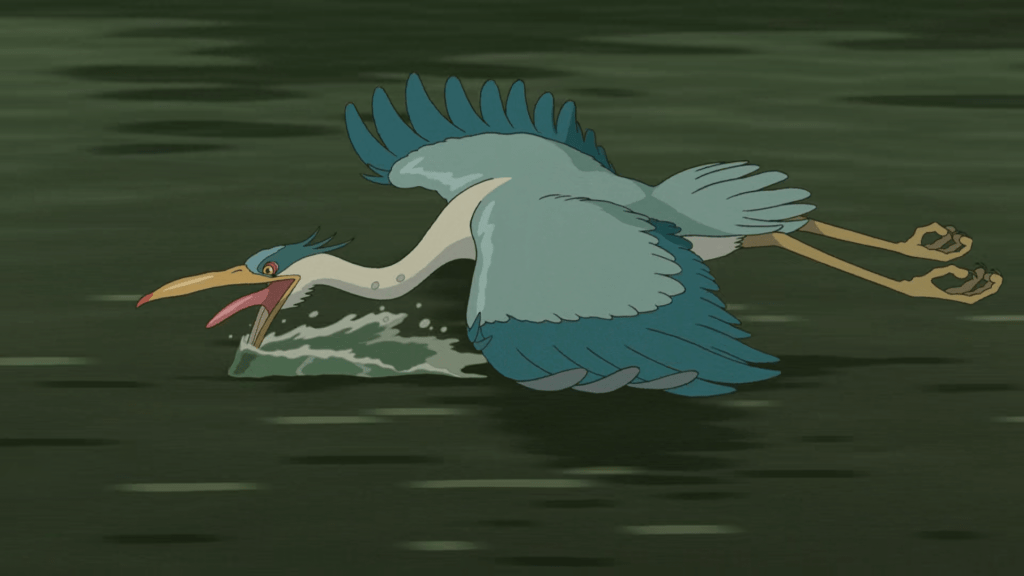
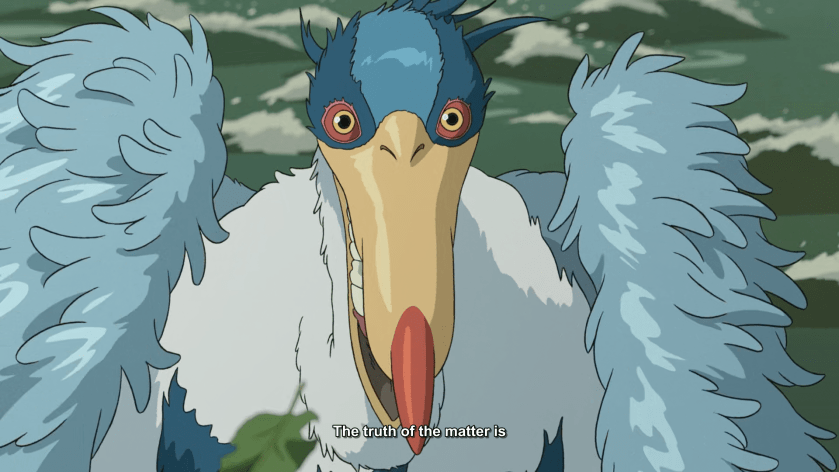
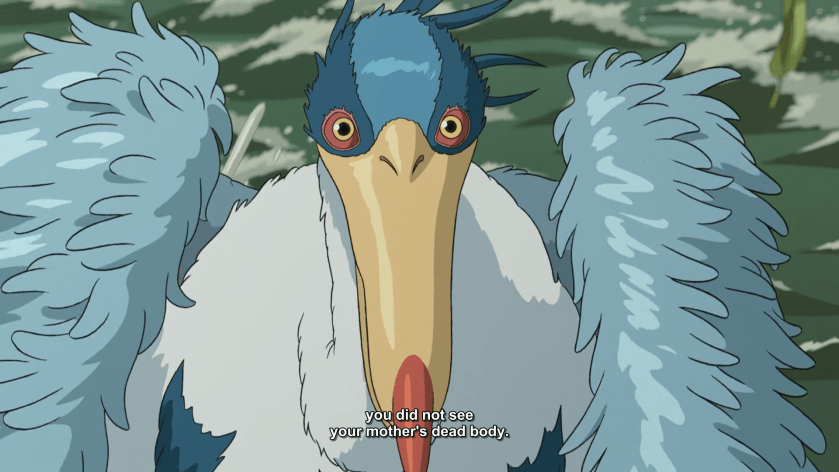
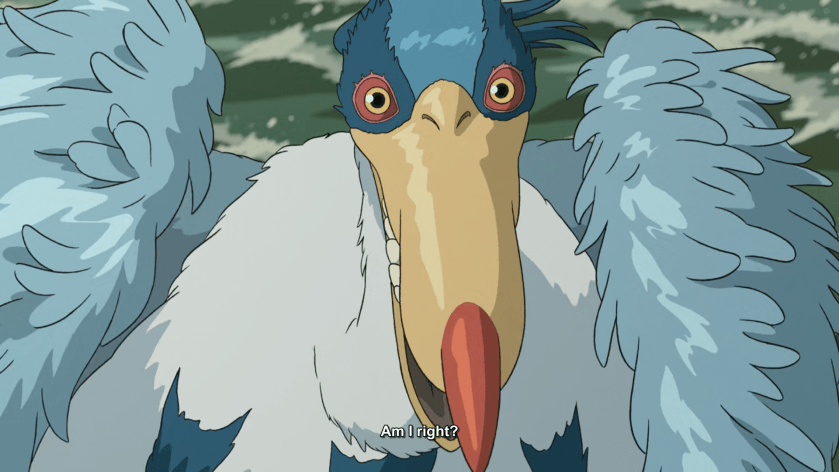
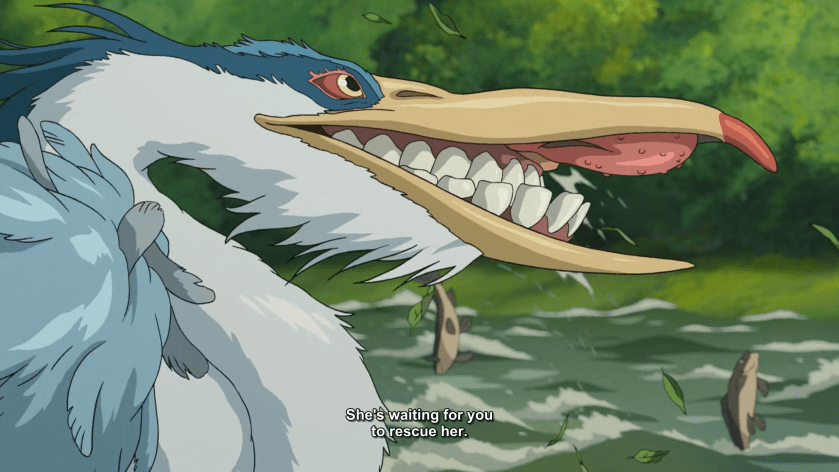
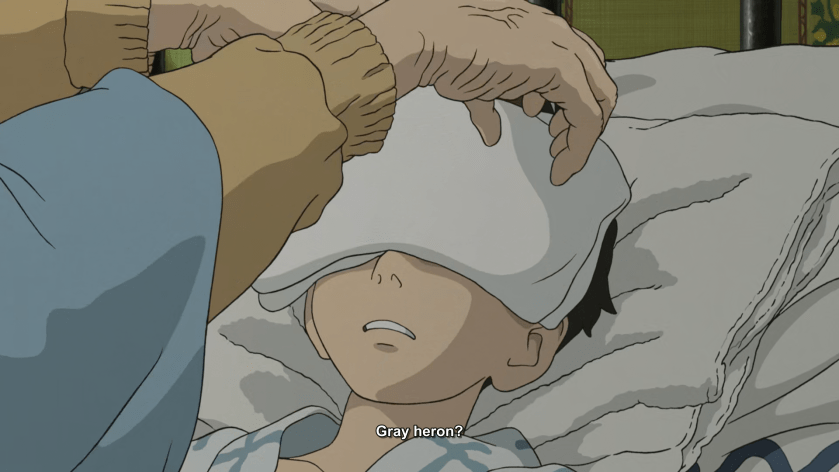
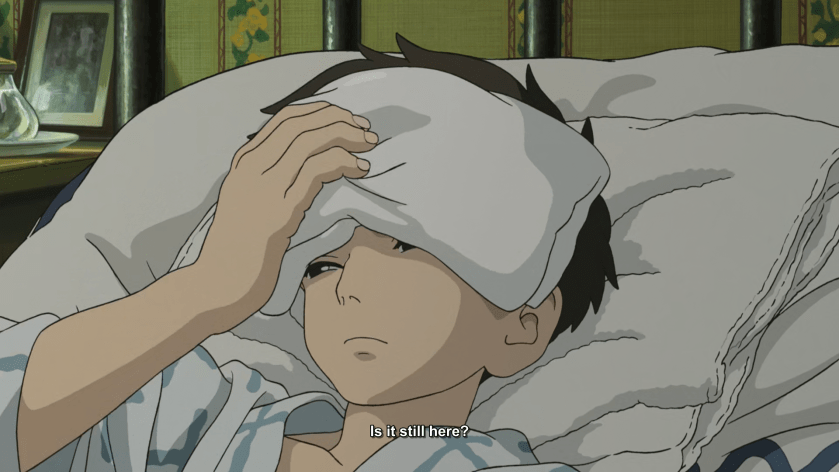
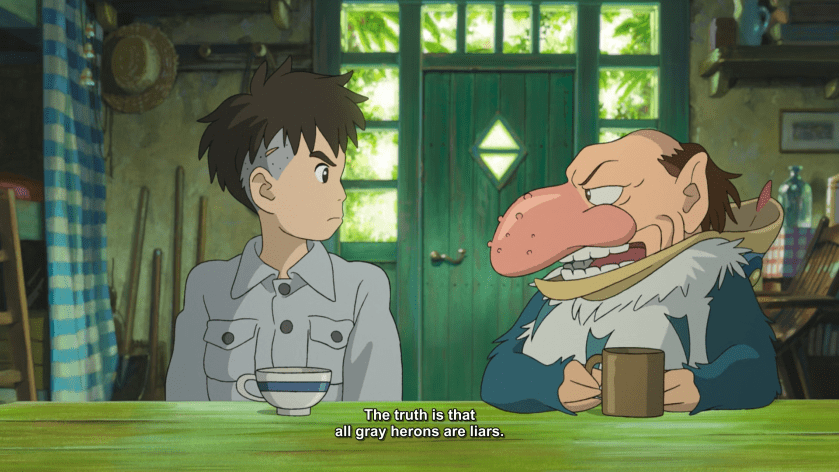
The grey heron is Mahito’s mind personified, his conscience. Heron is always guiding, helping Mahito. Mahito has this feeling that his mother is alive somewhere because he never saw her dead body. Heron attracts, teases Mahito using same understanding. Somewhere in a hidden corner of Mahito’s mind he thinks that there is still a chance to save his mother and bring her back. He is just looking out for an opportunity. Heron teases this opportunity to Mahito.
Heron like every person’s mind is paradoxical in nature. Heron is equivalent of Jiminy Cricket from the story of Pinocchio.
Most of the events between Mahito and the grey heron are Mahito’s dreams until he personally enters the tower where all his emotions can be accessed physically. That is where he is able to get the hold of the Heron, that is where the power of the seventh feather is functional, because Mahito has heightened awareness and access to his emotions.
The illusion of his mother in bed is a reminder to Mahito that she only exists in his dreams not in reality.
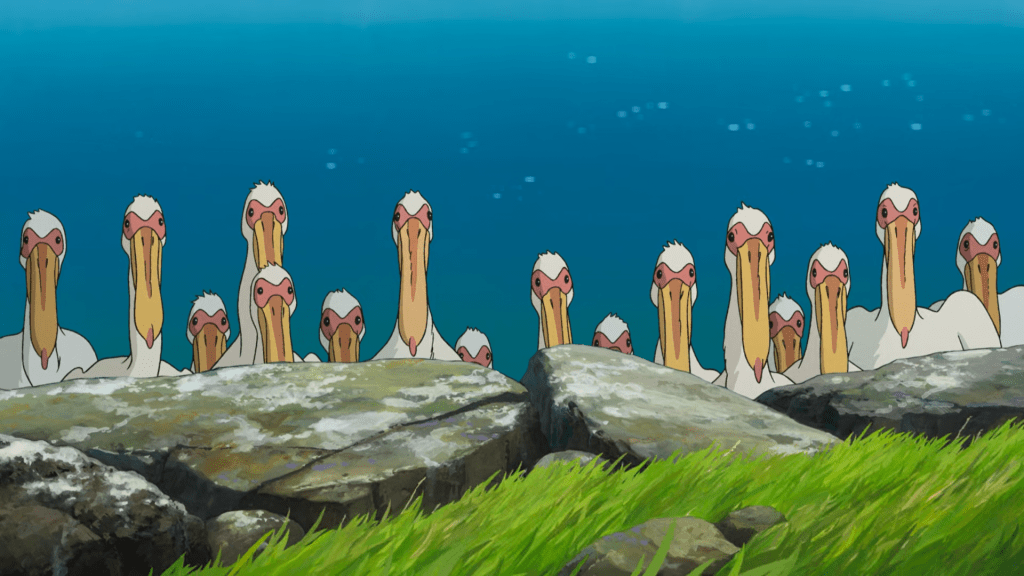
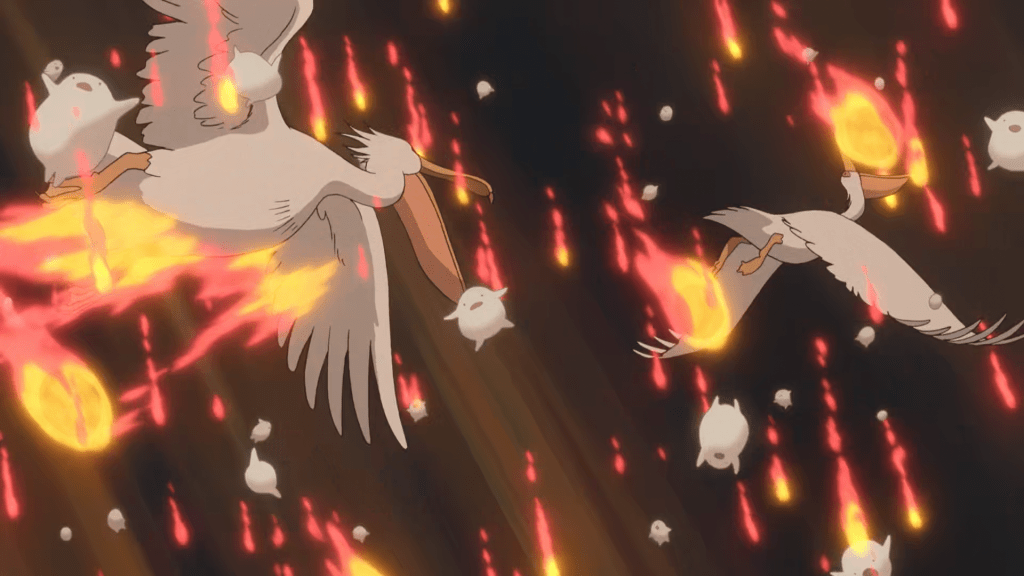
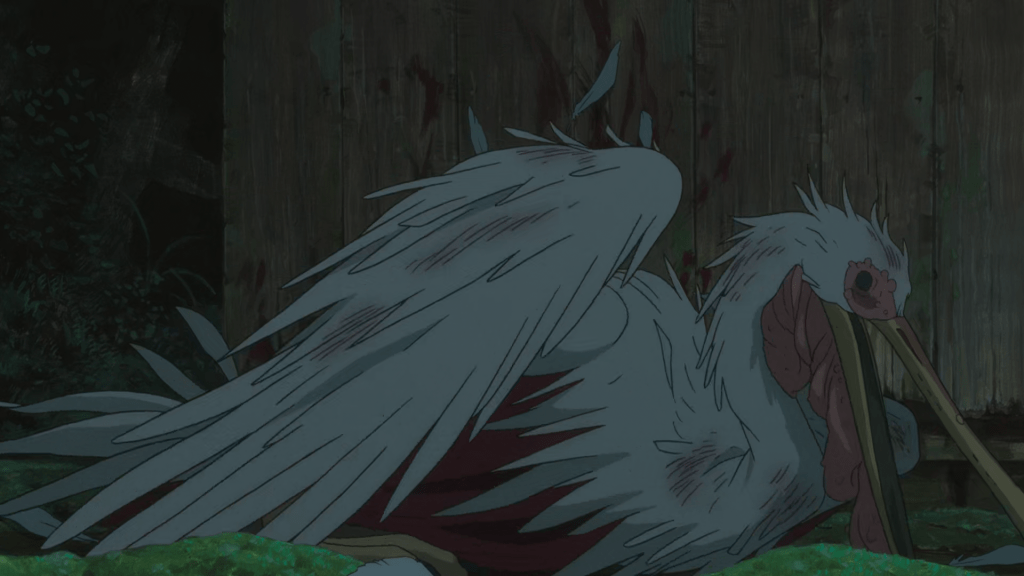
The starving Pelicans are the feeling one gets when they realize that they won’t be loved in the ways and to levels they used to before because of the loss of loved ones. These feeling to be loved, the huger to be loved by that person pushes the person to meet his loved one in afterlife. You will see the pelicans pushing Mahito in graveyard so that he can meet his mother. Pelicans are his feelings from the void of love which are pushing him to die to meet his mother in afterlife.
Kiriko saves Mahito from his urge to die, maybe she has done same to Himi in past too. The mark left on Kiriko’s head by swamp thrasher is intentional creation to make Mahito comfortable. The fact that they both share some common pain brings comfort to Mahito. The thrasher bird is a symbol of self-reflection, it is like upon getting settled and being calm Mahito realizes that dying is not the solution to meet his mother – Himi.
Warawara and the phantoms are the attempts of great grand uncle to show everyone entering this world that life and death are part of existence. The person must accept and will have to support both, feed both to ensure that the reality remains ‘real’.
The event of giving proper burial to the dead severely injured pelican is Mahito’s acceptance to detach himself from the urge to be loved by his dead mother. This is him making amends with death and urge of being loved.
The moment Mahito accepts the weird and paradoxical nature of heron is the moment when he gets a clear direction to meet Natsuko. He literally repairs his conscience to get the clarity.
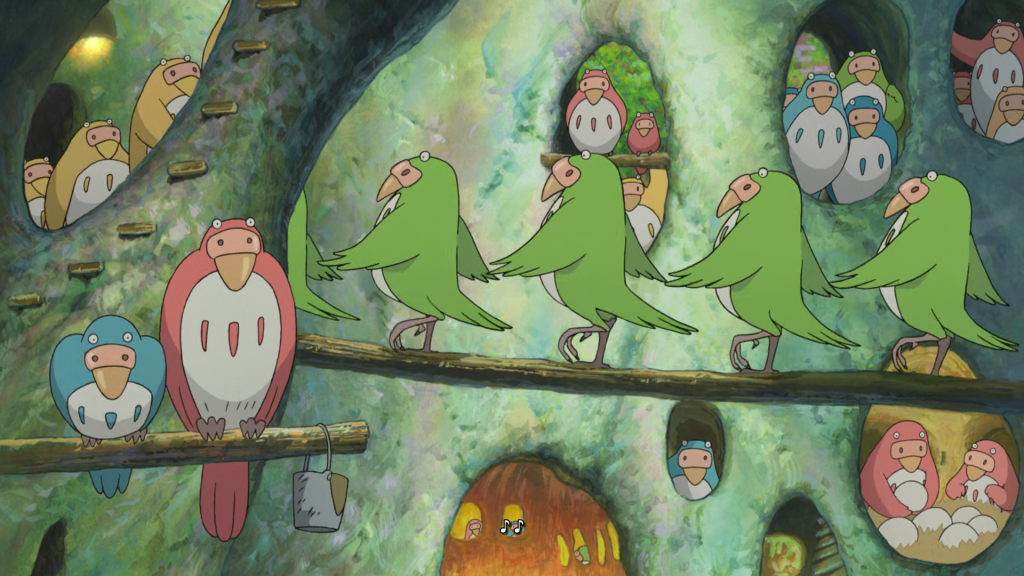
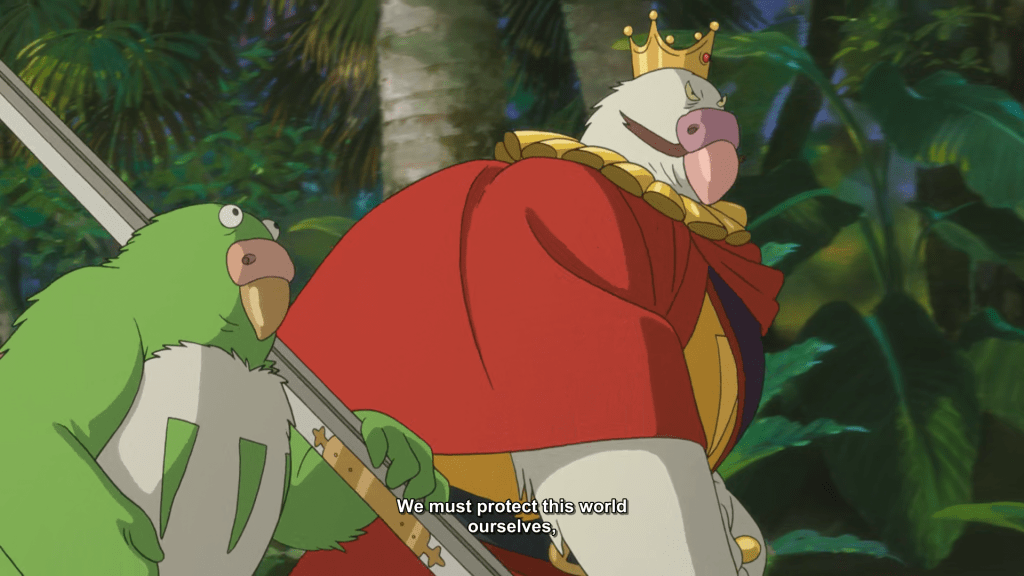
The Parakeets are the defense system of mind. They are the logical emotions, feelings that we use to defend from the sad feelings, they make sure that the system of our mind remains intact. Parakeets are the indicators of love and colors in life, when we are deeply saddened these emotions of love and colors become intense, defensive to save our mind. Here in the extreme case, they have become so strong, disciplined, and militarized that they are ready to consume their own host – Mahito. Parakeets show life, colors, happiness, anti-sad emotions, and the defense mechanism to create good for everything. That is why they have rules, moral values – the indication of what is allowed and what is not for the betterment of the host. They make sure that the person remains sane by choosing what is best for him instead of getting overwhelmed by all other emotions.
Parakeet king is the ultimate personification of such defense mechanism, he just wants to make sure that the world inside the host’s mind remains intact otherwise the host will go mad, this world will collapse.
The important conflict Mahito must resolve is to find his mother. Where the great grand uncle gives him the test. You should appreciate the role of great grand uncle in this whole narrative. The very first time when Mahito is inside the tower with Kiriko, the great grand uncle could have immediately met him and resolved everything in his mind.
But he makes Mahito to go through whole journey because you cannot force any emotion on the person just by telling the truth. His/ her defense mechanism will strongly and willfully reject that truth. Only when that person will go through personal experience, then only he/ she can appreciate the value of truth. Uncle thus gives Mahito this final test of truth once he overcomes the obstacles in his mind.
Mahito is given the taste of truth by showing him that even though he could not save his mother Himi he can now save another mother Natsuko. This is the Natsuko who enters the portal with a feeling if she would ever truly be able to love Mahito while having her own baby. This is conflict resolution for Natsuko too. She develops true love for Mahito when Mahito lets go of his attachment to mother Himi to save Natsuko because he doesn’t want that to happen again. And Natsuko also realizes that it’s her loving sister’s son in the end who deserves the same love like her coming baby deserves.
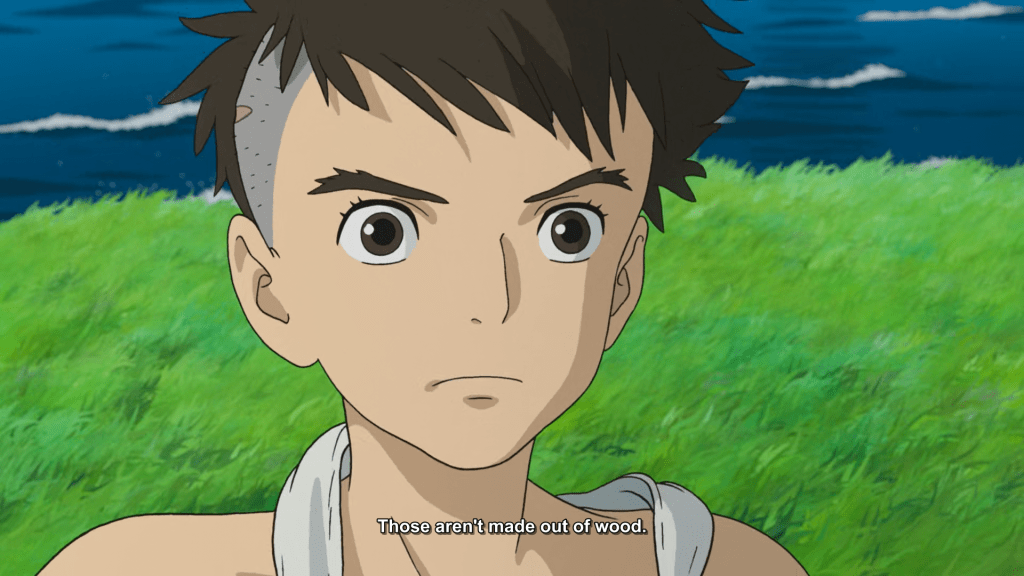
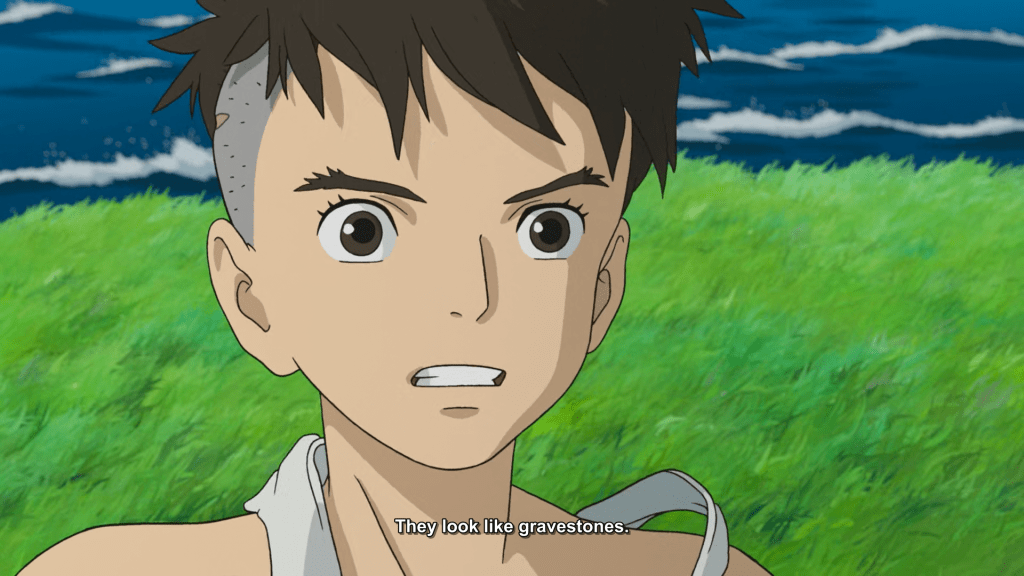
Only upon the resolution of this conflict when Mahito gets the access to the portal to meet the great grand uncle. 13 grave stones are the 13 movies created by Hayao Miyazaki-san. Which arranged in many styles create different world. They create an escape to different reality where people can manifest and physically live their dreams. For uncle these 13 gravestones are the purpose of his life, they define who he is and are his legacy. Great grand uncle asking Mahito to arrange these 13 gravestones is Miyazaki-san’s way to order his son Goro-san to carry his legacy in the exact ways Miyazaki-san intended. Mahito noticing the difference between wooden blocks and the gravestones is an indication that his life interests do not lie there, wood here as a part of tree – the life against the gravestones show that this is not how Mahito would live his life.
As a punishment uncle sends Mahito to parakeets. Parakeets are the structured constructs, rule, laws which ensure that the world has order even though the person may hate them. Goro Miyazaki-san chose the career of an architect because he wanted to do something different from his father. Hayao Miyazaki-san asked Goro-san to create artistic movies exactly in his “Ghibli” style but Goro-san’s artistic creations never matched the Hayao Miyazaki-san’s Ghibli vibes. It’s like his creative powers were restricted due to the parakeet like strict construct, high expectations and extreme criticism of Hayao Miyazaki-san. The great grand uncle had some hope that Mahito will accept what he wants him to appreciate.
Mahito’s own conscience – the Heron comes to rescue him in the end. Grand uncle asks Himi to leave this world and also tells that Mahito should also leave with her. He is hoping that there is one more chance to convince Mahito to take care of what he had created. When Mahito and Himi meet the great grand uncle to bid goodbye the uncle presents Mahito some stone without malice. It is uncle’s attempt to show Mahito that even though his creations have their challenges, rules, restrictions Mahito still has freedom to do anything with these new stones free from Malice. It’s uncle’s attempt to convince Mahito to not lose the grip on the legacy. It is Hayao Miyazaki-san’s desperate way to reconvince his son Goro-san that he just needs to create for the studio Ghibli by using some new things – new experiments but just keep studio Ghibli alive. He wants Goro-san to create so that the world of Ghibli will bring bounty, peace and beauty into people’s lives. It’s not just a selfish request for continuing the legacy. It is a request to maintain the core of his legacy – Miyazaki-san’s legacy.
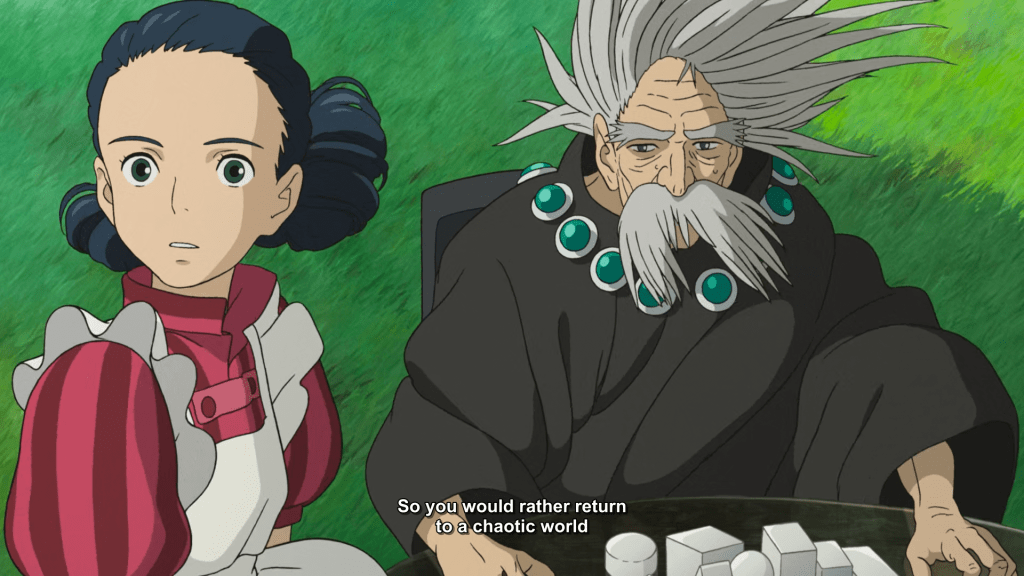
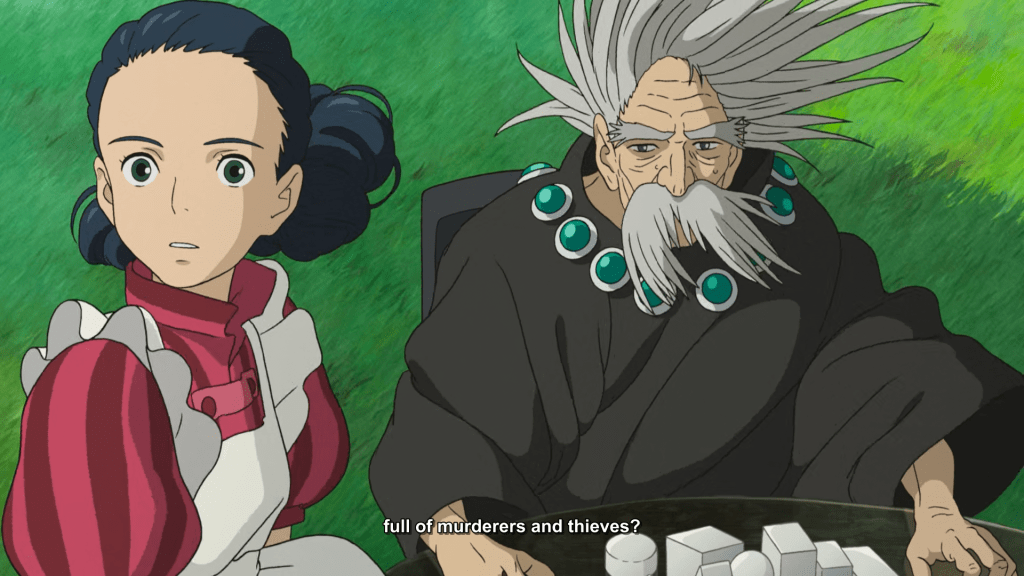
Mahito responds to great grand uncle by saying that he has his own challenges, his own malice, his own limitations which make it difficult to carry this legacy. Mahito wants to return to his own real world even when it has some darkness, bad things. When uncle asks him that Mahito’s reality is a chaotic world full of murderers and thieves Mahito responds by showing that he has good, caring, and loving people along with the heron – his conscience to support him there.
This is also important moment for Himi where she is relieved that even when her son will lose her, Mahito will have enough support system to take care of him. This is one more reason for young Himi to return happy to her reality.
Uncle then ordering Mahito to just stack the stones for last time would be equivalent of the discussion happened between Hayao Miyazaki-san and Goro-san on the creation of one last project for Miyazaki-san’s peace of mind. Maybe Miyazaki-san just like the great grand uncle wanted to play a trick on Mahito – Goro-san to convince him to continue the legacy.
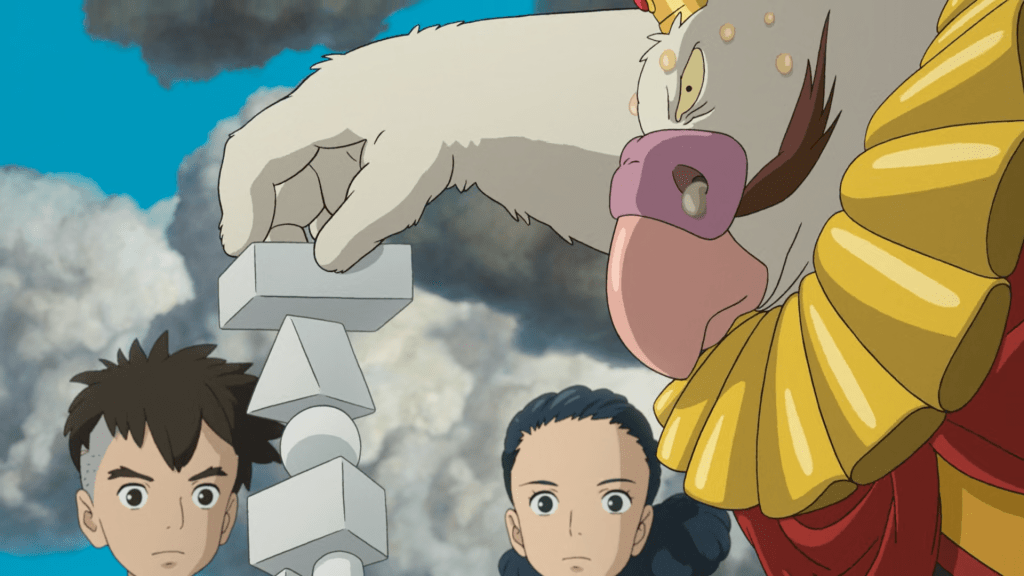
Finally, the Parakeet king trying to arrange the blocks by himself is the futile attempts of the admirer of great grand uncle’s creation to ensure their own survival. But as there is no personal connect between them, the Parakeet king doesn’t know the ‘art’ of arranging the stones. When the attempt fails and the world collapses as the great grand uncle had already expected, he instructs everyone to leave the tower and return to their respective reality.
You must appreciate that there would have been a proper intimate discussion between Hayao Miyazaki-san and Goro-san on how to take over this legacy and continue the future of studio Ghibli. Rearrangement of 13 blocks shows advice to use the styles and ideas of Hayao Miyazaki-san’s movies to create further new stories.
The resolution of Mahito returning to reality is Hayao Miyazaki-san’s way to show that the path has already been chosen and good thing is that it is more real than anything possible. It could be ugly, full of malice, murderers, death, grief and detachment but is far better than dreamy and perfect world. Looks like Goro-san successfully convinced his father Hayao Miyazaki-san that his father’s reality of Studio Ghibli is not the only reality, only legacy which deserves to exist. Hayao Miyazaki-san also realized that if he truly loves his son, he would let him go on his own path, to create his own art. Just because he is too attached to his creation does not entitle his son to carry it forward, especially as a burden.
It’s poignant to come to this fact but it is what it is. That also doesn’t stop either Hayao or Goro-san to create the world they want. (there is a rumor that Miyazaki-san is working on his next film.)
The Curse of the Intangible Value of an Artistic Creation
For any true artist, it is the expression through creation which matters him/ her the most. The art they create is exactly who they are, it is a part of who they are. For such artist who has realized that they will have to leave all this creation behind in the end, search for the true successor who can appreciate their creation is crucial.
And the problem with artistic creation is that they are very intimately connected to the person who created them – the artist. It’s like the bond of a mother and child – she has carried that child for 9 months in her belly, it’s a piece of her body and soul. In similar sense, that art held its root in the artist’s mind and the artist kindled it in his mind to finally bring it into the reality. The fundamental problem with emotions is that you have to pass through those feelings to appreciate them in true sense. You can intellectualize other person’s emotions, write about them, create narratives/ stories out of them. You can make philosophies about how and why people have certain emotions, why they feel sad, happy, melancholic. You can also simulate pain to induce the feelings of emotions in a person, you can simulate happiness by triggering certain chemicals and suppressing others. But, you must accept that unless and until you yourself don’t pass through that real-life emotional experience, you will never be able to appreciate and understand how others felt when they had similar feelings. You can be highly empathetic, sympathetic but they too are bound by the limitations of you own mind. You can be a highly intellectual person who has already figured out what action would lead to what emotion, what is good for your mind, what is bad for you, you may create a whole internal defense system to handle the anticipated emotional responses but the experience you will have when you pass through that emotion will be very personal and the art created after the passage through such emotions cannot be attributed to any tangible value.
Now think of handing over such a creative legacy to you descendants. You are confident about this handover to your children because they are your immediate physical extension and if you are lucky then maybe your immediate mental extension too. But, as I already clarified in previous paragraph about the curse of intangibility, the intangible subjectivity of any artistic creation, there is no guaranty that you descendants will resonate with what you believed that art to represent.
It feels cruel to realize this fact but believe me it is the reality. Others, especially the people you call yours are not entitled to appreciate the things exactly to the levels you appreciate. I agree that they should at least not disrespect it but you can never force other people to appreciate ‘your’ valuable things at your exact same level. This journey has to be made solely by themselves which will never be in your control. You may force them, influence them, punish them- abuse them mentally, physically but you cannot force others to generate the same respect, same value for the things you love. It’s purely an internal and voluntary journey.
That is why having people who resonate with how you appreciate certain common objects and common emotions is a blessing. This also does not mean that people who perceive something different for the same objects are bad. There can be cases where they perceive something even better than what you perceive and where they do not even care but that’s not your fault. In order to find clarity in these cases you have to accept that emotions are double edged sword. It will cut both ways. Even when you have anticipated, planned, intellectualized them, you cannot escape your emotional responses. What you can do is to observe them sincerely and let them pass. You are not your selective emotions; you are above them. Emotions are not your creator rather you are the creator of your emotions. The moment you accept this you will see the truth that not everyone, not even your own blood is bound to experience the life around you in the exact ways you want them to. The moment you will appreciate what I am trying to put down in words, I think you will feel liberated. Please understand that this is not just about any artistic creation, it is about everything you call your life – mental, physical, tangible, intangible. To live a life with this intensity could be a blessing (on personal level if this intensity is not anticipated well in advance or not controlled then it is one cruel curse to carry.)
I think this is exactly what Hayao Miyazaki-san was struggling with. But as the movie resolves I think there is still hope for him, for the studio and in the end for all of us rooting for his next movies. It definitely is not a sad ending and even if it is a sad one we know what great things they made us feel about ourselves, how they gave us better perspectives towards life. I think that his true legacy is all his admirer, we people altogether whose lives he changed through his creation. Even though his movies won’t be there, what they have made us feel – that legacy of having a perspective towards life will keep on affecting new generation through us.
To be honest, for me it’s a love letter of a father to his son who doesn’t want to follow his father’s legacy and wishes to go on his own journey.
The Father Son – Hayao Miyazaki and Goro Miyazaki
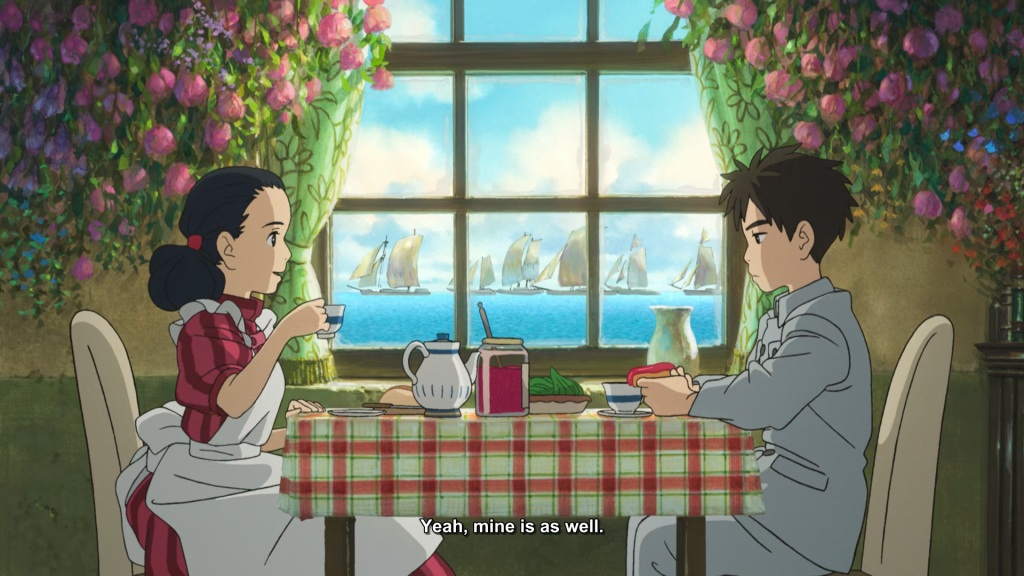
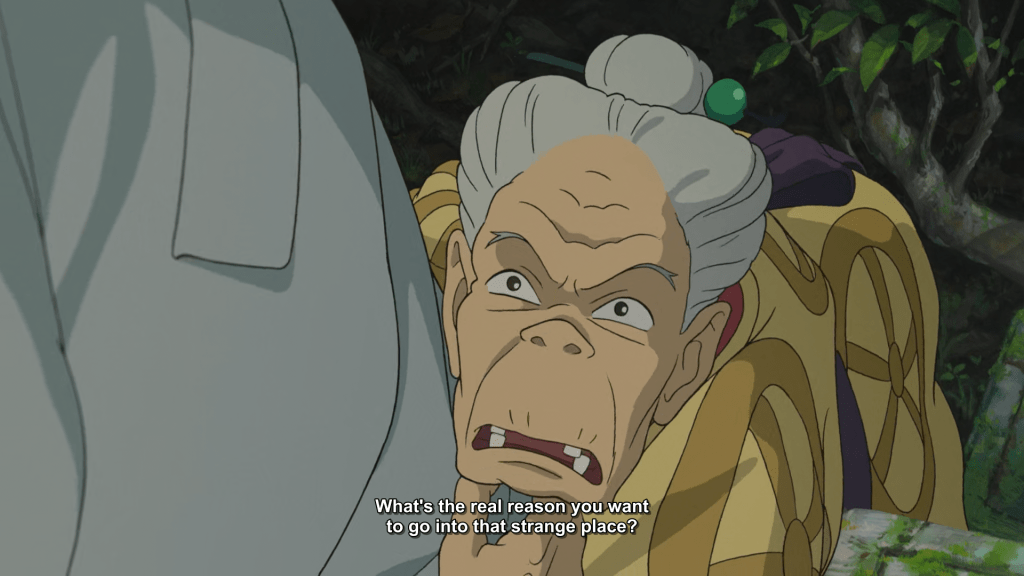
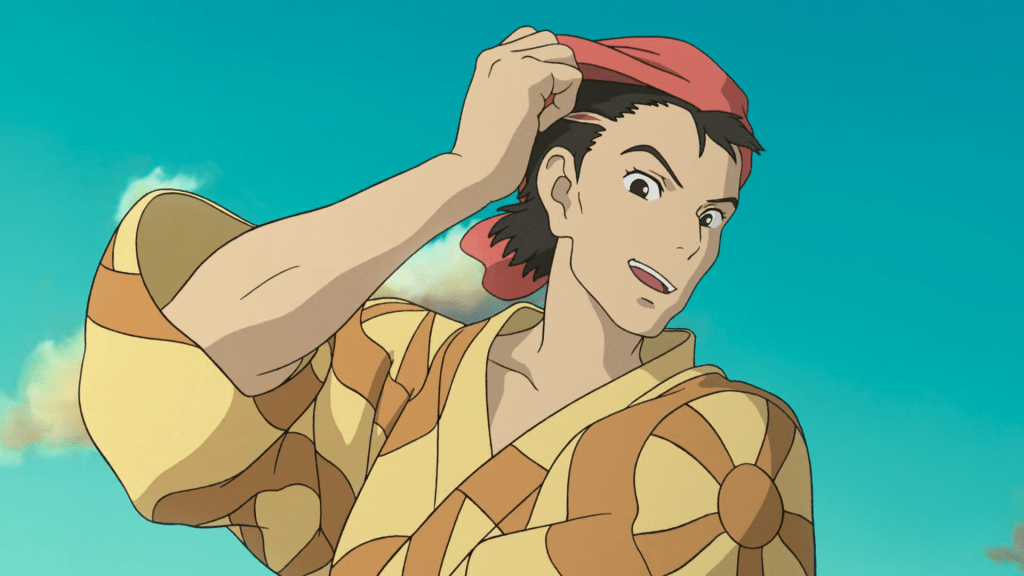
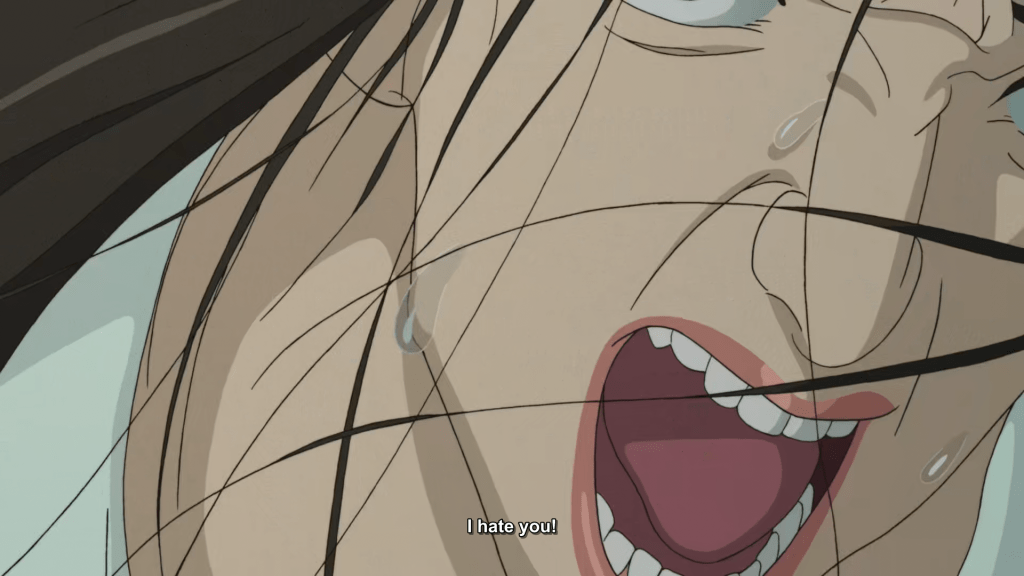
All movie scenes from Studio Ghibli – Hayao Miyazaki’s movie The Boy and the Heron

























 Parts Per Billion