

Part 1 – Viktor Frankl’s Logotherapy for Humanity
The existential question and unsatisfactory answers to it
Almost every one of us have stumbled upon the question about their existence in this big world full of people and things – at least once. “Why am I doing this?”, “What am I doing with my life?” – while listening to that boring lecture/ meeting. “Why does life not make any sense?”, “What should I do now that I have no options left?”, “Why should I help others, when nobody’s helping me?”, “If we are nothing but a speck of dust in this whole universe, then what is the purpose of our creation?”, “Why in first place universe was created and why we exist in this chaotic universe?”, “What is the purpose of creation?”, “Why does bad things always happen with good people only?”, “Why couldn’t I achieve something great even when I am putting more efforts than others?”
Questions like these and their many more extreme versions are one significant part of our life where we are always questioning our existence in this universe. The answers to such questions are also very poetic rather philosophical in a way. “You exist in this world to love”, “You exist in this world to suffer”, “You exist in this universe because someone (especially the God) wants you to experience the beauty of his creation!”, “You exist to establish the Truth and Justice in the society”. Some answers are really practical (but believe me more true) like “You exist because your parents had sex that night”, “You exist because who else would bring drinks from the fridge for me!”, “You exist because someone has to pay the bills”. Some are technical answers like – “You exist because of the consequences of the existence where some ape evolved in order to survive the extremities of changes in nature”, “You are just an accident in this never-ending path of an entropy increasing universe which started from nothing and will end into nothing.”

But, out of all such versions of questions and their answers we never get one satisfactory argument as to understand the real justification behind our existence. One thing is pretty sure about the answers to such existential questions that is –
“There is no absolute version-ed answer to the existential question”.
The human existence is more than just the body. The entity creating the awareness of this physical body, the entity which enables this existence through awareness – “the psyche” is one important part of our existence. Also, understanding who we are can make a successful attempt to signify our existence in the universe. That is where and why psychology provides some answers to existential questions.
What makes any human being “the human being”?
In psychology, there are two very famous schools of thought. The first one was established by Sigmund Freud who posed the important concept of “id, ego and super-ego”. In very simple words, human beings are “driven by pleasure”. As they are a part of evolution, their primitive part of the brain – “id” always seeks for something pleasurable in order to continue, remain and sustain in this evolution. The super-ego is the later cultivated part of the brain where human beings are made more cultural by the conditioning from their parents, guardians. And the ego is the current version of the mind which acts under the influences of id and super-ego.
Alfred Adler later introduced the second school of psychology where he considers man as a social being. Again, in single line what Adlerian psychology says is that, all the actions, decisions, behaviors of a human are driven by the society around him where the biggest motivation is to be strong and powerful in the hierarchy of the society. Adlerian ideas indicate that the humans are “driven by power/superiority”.
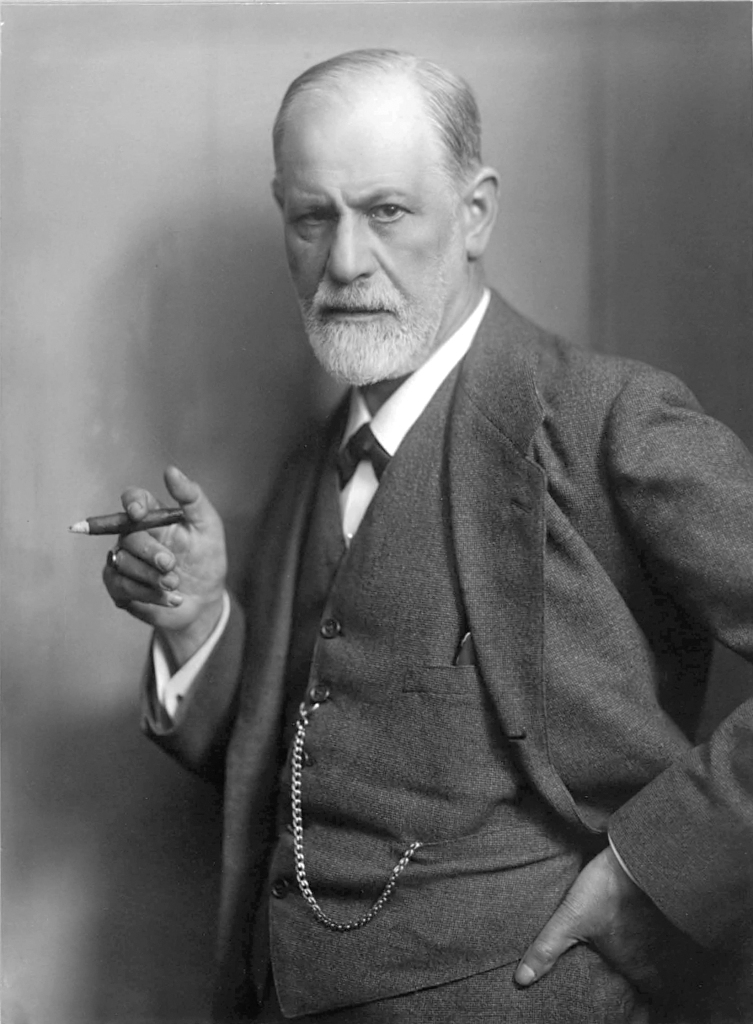
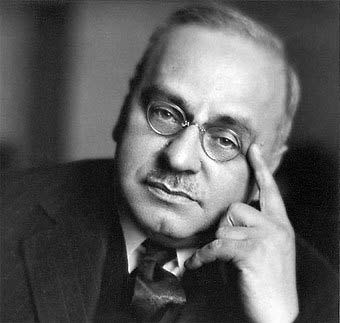
Now that we have some rough understanding of the two schools of psychology, when we ask the existential question to Freud or Adler the expected answer will be-
“We exist to experience pleasure; we exist to become superior”.
Then the next question is “So what is the difference between animals and humans?” where these two schools fail to justify their answer.
Logotherapy – the satisfactory answer
Viktor Frankl – a holocaust survivor and an Austrian psychiatrist/neurologist experienced the extreme ends of human sufferings and human behavior in Nazi concentration camps like Auschwitz, where he observed and personally experienced the limitations of traditional schools of psychology. His experienced presented in his world-famous book “Man’s Search for Meaning” creates an unimaginable picture of suffering, cruelty, hope, survival which is an epitome of what it means to be a human.
Viktor, in the concentrations camps realized that some people lost that “emotional aspect” of their personality after undergoing so much cruelty and suffering – literally becoming animals; some held on to their core emotions and hoped for survival and survived successfully after all the sufferings – both mental and physical. Some people – even after becoming aware of their death, embraced it with dignity (that too under very inhumane environment).
The important thing to understand is that there was no “drive for pleasure” or “drive for superiority” which made the survivors survive through the concentration camp. (You will find moments in Frankl’s life in concentration camp where only getting a small piece of bread was a luxury. Becoming the leader – “capo” of the prisoner group was the only possible superior position in such camps, one should read the experiences of Frankl to understand what it meant to be a “Capo”. Leader – but finally a prisoner in the end.)
The gist of the whole is that there was no chance for achieving pleasure or power in any ways and still people survived through this camp; many people embraced death without any regret, fear. The main thing that made them endure all these sufferings and mental/ physical hostility was the hope. After surviving through the concentration camp Viktor Frankl made all the efforts to establish the third most important school of psychology called “Logotherapy” which is one important part of Humanitarian Psychology. “Humanitarian” in the sense that human psyche is not just a result of some actions and reactions or influences. It is an independent entity in itself rather than a mere result of interactions, influence of things. Human psyche is not a machine where pressing a key will generate some result/ reaction, it is more than just a machine.
Viktor Frankl coined the word Logotherapy from the Greek word Logos which indicates “meaning”. Logotherapy says that human beings have will for meaning. This meaning drives their course of psyche and ultimately their life.
We will try to touch the fundamental ideas explained by Viktor Frankl in his book “Man’s Search for Meaning” to understand what lies behind the existence of humanity. Interesting thing is that Logotherapy has some plausible explanations to those grand philosophical problems and even those tiny yet peculiar real-life problems.
Nihilism and Noö-dynamics
One of the biggest things that Logotherapy has achieved is to explain the nihilism. When a person doesn’t find a satisfactory answer for the existential questions (the questions in the earlier part of the discussion) he assumes the world around him as a chaotic one, meaningless one. Nihilism exactly means that life is meaningless. Viktor Frankl solved the problem of nihilism by establishing how one becomes nihilistic. It is the “existential frustration” originated from the mind of the person which sometimes is unable to grasp the big picture thereby rendering the life and the existence itself as an entity making zero sense – meaningless. This frustration later on takes the shape of an illness. Remember that no external entity has created this illness; it is the result of the inability of our own mind to solve the “meaning”, the “purpose” of its being. Frankl calls this as Noögenic illness.
Many people yet loyal to their professions, jobs still are not satisfied with what they are doing. Many people doing the bare minimum to survive their weekdays only to crash into their weekends and getting further sad that it passed in a blink of a moment (the famous “Sunday neurosis”) are the people who are frustrated with what they are doing without actually realizing its purpose. They are just passing through the things, events, interactions due to this frustration of not understanding their existence – thus becoming a nihilist. Some will argue that there are other limitations like social, financial, physical which bind the person to this existential frustration; but there are examples where people came out of some really extraordinary situations and made something great out of those limitations too. What they had was the awareness of their existence, they had found the meaning, purpose of their being, their existence.
Frankl takes support of Frederich Nietzsche’s statement here –
“He who has a ‘why’ to live for can bear almost any ‘how’”
Frederich Nietzsche
One interesting and genius note Frankl made here is the nature of one’s life. An ideal life especially ideal mental health is not a state of an equilibrium rather it is state of constant tension between what one has already achieved and what one has to achieve yet. That is how we evolve and that is also what gives sense to existence as it itself is an epitome of evolution.
“If architects want to strengthen a decrepit arch, they increase the load which is laid upon it, for thereby the parts are joined more firmly together. ”
Viktor Frankl
Significance of determinism and freedom in human life
Now take one completely opposite case of a human being where he is not limited by anything. He is free to do anything and everything – the omnipotent. Will that make him really happy? Will that solve the existential problem? The answer is obviously “No”. When presented with all the possibilities the first thing that will happen to that person is that he will get completely overwhelmed with the expanse and counts of the possibilities and will end up in doing nothing. Some will try to do everything and still will be confused for what they are actually doing with everything as the possibilities are endless. After some time, there will be two categories. The first one will be bored and overwhelmed because they are confused with what to do with everything and anything presented to them and second one will be bored and confused because they are doing everything and anything presented to them.
Thus, Viktor Frankl through his Logotherapy argued that even though freedom is important aspect of human life – it is not the complete truth. The earlier schools of psychology (Freudian and Adlerian) were based on the “mechanisms” present in our lives. When pleasure will be presented the person will react to achieve that, when strength and survival will be presented the person will kill to achieve that superiority. But that is not what always happen; history has examples where people starved themselves for something which would seem meaningless, worthless for another people. People gave their lives for someone who was not even worthy replacement for their sacrifices. The logotherapy actually highlights that humans always have the power to choose their next step, the next best step even in the worse possible case. This breaks the deterministic model of human psyche. Frankl explains that you can predict the behavior of a group as it has its limitations, but it will be always difficult to predict the behavior of single person based on any psychological analysis of theory. (It’s like quantum mechanical theory of psychology!)
Frankl further argued that even when the freedom to choose the actions is realized it eventually will lead to “existential vacuum” thereby posing freedom as rather negative part of human psyche. Freedom to do everything will eventually end in meaninglessness and existential crisis unless it is not supported by responsibility.
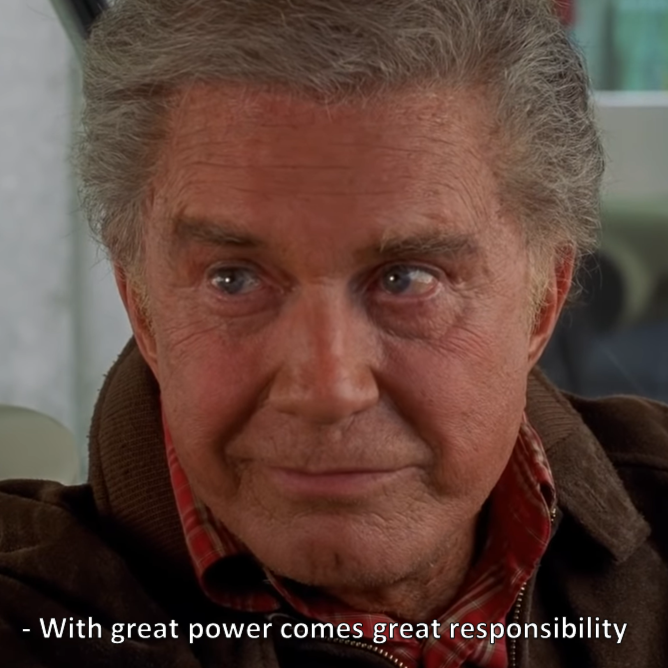
With great power…
To explain why it is almost impossible to predict behavior of single human being/ a single human psyche Frankl gave an example of a doctor called Dr. J who was exactly the definition of “the Satan” – “The Mass murderer of Steinhof” (the large mental hospital in Vienna). Frankl explains that when the Nazis initiated their euthanasia program, Dr. J with all power granted to him made sure that every psychotic individual goes to the gas chamber. When the war ended and when he was caught by Russians Frankl assumed that he might have escaped cunningly from Russians prison. Later on Frankl found out that Dr. J was diagnosed with cancer of urinary bladder and died in the Russian prison. In his last days people remembered him as the best comrade, the best person. The person with highest moral standards even the best friend.”
What made Dr. J to completely change his behavior his ideals?
Only upon the realization of the finiteness – the limitedness of his life, Dr. J understood what he could have actually created out of the power and authority he had. And hence Viktor Frankl highlights the importance of responsibility with freedom in human psyche. Dr. J realized the purpose of his life only when he realized the finiteness of his life that made him the real free person.
In Viktor Frankl’s own words-
“Freedom is in danger of degenerating into mere arbitrariness unless it is lived in terms of responsibleness. That is why I recommend that the Statue of Liberty on the east coast be supplemented by a Statue of responsibility on the West coast ”
Viktor Frankl
We already have the legacy of Stan Lee in similar words:
Logotherapy is not just an answer to the question of “why we as a human beings exist?”, “what actually drives us?”, “What is the essence of freedom in human psyche?”. Logotherapy in itself makes successful attempts to make sense of the all the chaos happening around us. The best and most important aspect of Logotherapy is that it considers human beings as a “self-driven entity” instead of the “external-driven” entity. Man is more than the things around him. Human psyche may get influenced by the “dynamics” around him but that not what completely defines what being human is. A human can always choose the best even in his worst condition.
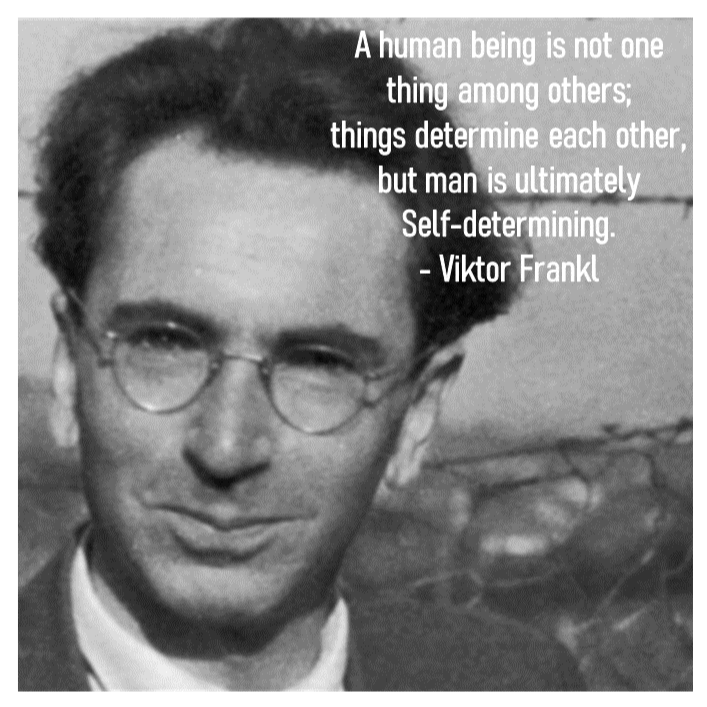
Viktor Frankl also made successful attempts to answer the question “Why Logos – the meaning/ the purpose is needed?”, “What it means to be a human being?”, “How one can realize his own being?”.
Logotherapy itself is a vast subject of which I am not an expert, but it definitely solved some unsolved existential doubts I had. We will see how and why Logotherapy might actually lead us to more fulfilled life in the next part. We will also see how Logotherapy can provide answers to modern problems in the Part 2 of this blog post.
Reference:
- Man’s Search for Meaning by Viktor Frankl
Read Part 2 of this blog post – The Existence – Why? How? And What? – Viktor Frankl’s Logotherapy for Humanity – Part 2




 Parts Per Billion