
Suffering – The North Star of Existence

People have tried to justify their existence with happiness, fulfillment, satisfaction, service, love, hope, devotion and what not. But those who have existed in full spirit, lived it to the fullest have realized the effect of sufferings on our lives and even after overcoming them are ready to endure them again in the hope that they will become better than what they were before. These are the people who might have solved the query to justify the life. Overcoming the sufferings in life and continuing the journey ahead could be the answer.

On Charles Dickens’s short story –  A Child’s Dream of A Star
The Impact of Suffering in the Pursuit of Happiness

Question- what would you choose of the following?

A short life filled with happiness and satisfaction? or A long life filled with pain and suffering?

I will assume that you have selected one.

Charles Dickens’s short story – A Child’s Dream of A Star

I came across a short story “A Child’s Dream of A Star” by Charles Dickens which shows what it means to pass through the suffering of the lost loved ones.

This is a story of a boy who loses many loved ones throughout his whole life. Whenever he is losing someone, he dreams of a star where he sees the souls of his loved ones meeting and coming together. First, he loses his little sister in childhood, then his baby brother. When he grows young, he loses his mother, while being adult he loses his own daughter. Every time, when the boy loses his people, he dreams of the same star and wishes that he too could join them. But, when grown adult and losing his daughter he is somewhat soothed that his daughter is not alone, she has the angels of his sister, mother and brother to accompany her.

When he realizes the arrival of his last moment, he accepts the death for the joy that he will join the souls of his loved ones now.

The Suffering of Watching People Leave

Charles Dickens in a very impactful way shows what it means to live life. On surface analysis, one can say that this short story of a boy dreaming about the people he lost and asking for his own death in the hope to join them is about the pain of losing the loved ones and dissatisfaction of not getting enough time to spend time with them and love them. Deep down it is about how one endures pain and I think the only way to endure such pain is to pass through it. Any attempt to alleviate or even control it, leads to more pain.  

Enduring the Suffering

The great thing about this story is that it delicately captures what a beauty that life we live in is and how we connect same attributes of life to the afterlife (even when we are unsure whether it truly exists, even when it exists in our minds and dreams) also how fragile our existence is.

Charles Dickens used the innocence of the child’s mind to show how we carry that innocence throughout our life to use every chance to stay closer to the people we love. The opening of the story also talks about the sorrow that is felt by everyone when someone dies.

“They used to say to one another, sometimes, supposing all the children upon the earth were to die, would the flowers and the water and the sky be sorry? They believed they would be sorry. For, said they, the buds are the children of the flowers, and the little playful streams that gambol down the hillsides are the children of the water; and the smallest bright specks playing at hide-and-seek in the sky all night must surely be the children of the stars and they would all be grieved to see their playmates, the children of men no more.”

It shows that even for children the suffering had a bigger meaning not even when they had faced any such suffering from loss in their tender age.  It shows how by default we are hardwired for the sensitivity towards suffering. Maybe we are more sensitive to suffering than love.

Then we see that the boy is exposed to multiple losses and you will see over the time his dreams are evolving gradually. In early childhood loss of his sister, he is totally devastated that he could not join his sister, then he is again agitated with the thought that his younger brother has to join her in the starry heaven. Then when he is young, he is somewhat settled that his mother could join his sister and the brother.

Now when being adult and losing the beloved daughter, the same boy has made peace with her death in the thought that she has enough people to take care of her and maybe love her more. Now he has made amends with the death.

“My daughter’s head is on my sister’s bosom, and her arm is round my mother’s neck, and at her feet is the baby of old time, and I can bear the parting from her, God be praised!”

You must understand how the boy from childhood till his old-age sees the death in different ways. At first, he has intense sorrow for his sister but over the time he sees that even after death the people he loves have each other’s company.

He cannot do anything to join them in the afterlife and death is the only way to join them. Please note that there is not even single mention or any indirect indication that boy wishes to end his existence just to meet his loved ones in afterlife.

So, it’s a story of how a person builds himself towards the suffering. You will see that the boy never gets numbed because of the series of losses, he is hopeful that at least someone is there in afterlife for them to love each other. Death along with love is the only constant in this story.

We are well aware of the love from the very beginning of our existence but it takes time to appreciate that just like love, death too is eternal. It’s just that our minds find it difficult to bring together the idea of eternal nature of love and never-ending series of death in single thought. Maybe that is why not everything exists at exactly the same time and ends at exactly the same time, otherwise there would be no one to witness and appreciate what one existed in and carry that forward.

The Eternal Curiosity, Innocence and Love

I am adding the concept of eternity, endlessness in this story of involving series of deaths, ends and sadness with it, because that is how the life is. The symbolism of star used in this short story by Charles Dickens also points to that idea.

You should notice that in the opening it is about how everything that is there in existence will feel sad for loss of the children of men. The boy feels that sorrow in his childhood; later on, we realise that he holds these unfulfilled emotions, feelings of not getting enough time to spend with the people he has lost. These emotions are continuously getting reflected in his dreams. In the end, we see that he is dying happily while feeling that he can love them again in the afterlife.

But you should now notice that the dream is limited to the boy only. What is real is the star in this story; the star shining on little sister’s grave and was still shining on her brother’s grave who died at old-age.

Just like the children’s curiosity about whether the nature grieved for the losses in the beginning of the story, we can say that the star (being the child of nature) would also grieve for the people he saw dying. But that is not where the story is going. The boy had learned to handle the grief over time and that is why is mature emotionally with the death of his daughter and even his own death. This became possible because his love for his sister increased multiple folds, got intense over the time.

The maturity that comes to such sorrow is worth noticing, the boy now an old-age man is not sad because he will be leaving his children behind. He is neither happy that he will join his loved ones in the afterlife (although what he says while dying means that he is eager to join afterlife).

The star was a construct of his mind to move over the grief and be assured that no one – not even him will never be left unloved. He had a strong belief that at least love is eternal in some or other forms. The star still shining upon his grave in the last sentence of the story is thus the symbol of the child’s innocence and love.      

The last words of the boy/ man are these:

“…My age is falling from me like a garment, and I move towards the star as a child. And O my Father, now I thank thee that it has so often opened to receive those dear ones who await me!”

We all can appreciate that the afterlife’s notion is only in the boy/ man’s dreams but that does not invalidate his feelings. He is grateful that he had someone to love (although he couldn’t love them to the fullest while living). The childhood innocence and curiosity he carried throughout his life helped him to endure the suffering. Curiosity because of the urge to understand what would happen to the people who die gets materialized in the dreams of the boy and thus he builds his understanding around it. This curiosity emerged because he cared for them so strongly that he was concerned about what would happen to people after they die. Innocence because from childhood till old-age he deeply believes that just like the children of nature, everyone and not only him cared for people, loved them in some or other ways.   

Conclusion

Most of the existential queries on human life point to one single question of meaning or purpose or at least worth of the life. Once started, if it is destined to end then why is this everything existing? And this question is not just about life. It is about everything attached to the life itself. If everything in existence is attached to something and everything at any time will be lost forever, disconnected forever then why does everything exist in first place? Once you appreciate this question, you will see that existence is majorly a series of detachments, losses – literally and figuratively. It is just that some things detach faster than others, some things stay for longer time but are lost in the end; we are just existing in these gaps of losses and detachments. Maybe how we felt about those things especially the innocent emotions we had for everything that is there (which are neither good/ bad, pure/ impure) are eternal. If not eternal, I would say that they evolve in better ways, get refined, gain maturity and get transferred to our next generations through our legacy. Maybe they too would have an ending but what can we say about the human spirit! The spirit to exist in spite of the sufferings! The ability to exist in full spirit and endure multiple sufferings over the time while maintaining that innocent child alive inside you is what justifies our existence in the end. And even that is to end in the end, I have no complaints.

So, when I asked to select one of options at the start, if you felt that selecting only one of these is foolish (or difficult/ meaningless) then welcome to the club!
People have tried to justify their existence with happiness, fulfillment, satisfaction, service, love, hope, devotion and what not. But those who have existed in full spirit, lived it to the fullest have realized the effect of sufferings on our lives and even after overcoming them are ready to endure them again in the hope that they will become better than what they were before. These are the people who might have solved the query to justify the life. Overcoming the sufferings in life and continuing the journey ahead could be the answer.

The Lullaby of Eternal Rediscovery of Existence and Identity

Being social animals, we compare our lives with the lives of the others, we create our baselines and set our targets based on what others have achieved and done in their lives. In our current times when the life expectancy is better than ever, when we have a better cover of social safety than ever, the primitive instinct of survival from natural predators has been replaced by the modern instinct of philosophical- ideological survival which is the ‘preservation of our identity’ – the idea of our own image. The realisation of the philosophical death of our being should come with the awareness that your idea of self, your consciousness was just created by your desires and after this philosophical death you are returning to the fundamental forces of what made them. The endless possibilities for your becoming are opened in this point. This is the true eternal existence – to get broken down into the fundamental blocks of being and be recreated again. Juliet Ivy in her song ‘We’re all eating each other’ beautifully brings the sense of life that is made up of eternal creations and destructions.

Juliet Ivy’s song “We’re all eating each other”

Genuine poetry can communicate before it is understood

T S Elliot

There exists a special category of songs which sound very jolly, full of life, giving the impression of the light hearted joy, calmness, relaxation everyone desires; on close inspection you end up realizing that the lyrics of that same song is so dark that one would question the mindset in which the song was written and composed. These songs are the songs to which people would dance happily due to its music but the moment lyrics of this songs is opened for discussion you will end up questioning your existence. It feels ironic.

There are many songs to name which fall in this category, I stumbled upon one such song by Juliet Ivy called “We’re all eating each other” from her album playpen.

The song is written by Lucas Sim and Juliet Ivy Ortiz.

playpen album by Juliet Ivy

The great thing about this song is the way its melodies try to befriend you. It’s so simple yet effective and the song’s rhythm is not continuously varying which creates an impression of safe and calm space of familiarity. 

What's the point of living without dying for an ego?
So we validate our fantasies to feel like we are special inside
You know we love to lie

I was literally shocked when I started digging into the lyrics. How could one simply state a brutal fact of life as if someone is asked to simply pass salt and pepper on dining table?

For me it creates an impression of life being so simple at its core yet we always choosing the complicated version to justify “our” way of life and “our” ways of truth. Juliet beautifully and very clearly puts this observation in few words of wisdom.

The life we are living, the identity we carry is all we have when everything is taken away from us. This identity is created and molded into a specific shape and size from the life experiences we have. They are mostly subjective and are created from inside. That is exactly why we are completely attached to our identity. This identity has two facets – the identity we truly know ourselves and the identity we project on people around us to show them who we are. Trust me both could be totally different. We are always trying to preserve our identity. This is what Juliet is calling the ego here.

In order to preserve our identity – our ego, we let go of the objective truths and accept certain illusions, fantasies. This is done to create a sense of security otherwise our mind would keep running everywhere in panic. We create some lies, ignore some painful truths to calm our mind down; no wonder they say ignorance is bliss.    

The biggest lie is the lie we tell ourselves in the distorted visions we have of ourselves, blocking out some sections, enhancing others. What remains are not the cold facts of life, but how we perceive them. That’s really who we are.

Kirk Douglas

We like grabbing onto anything to feel like we're important
Not a moment that is shorter than a hiccup or a blink of an eye
You know we're scared of time

Here Juliet shows how the limited span of life brings in the urgency to justify our existence so that we will be satisfied with the feeling that we are special. But we chose to ignore the fact that the ideologies, things that we are clinging to justify our special-ness also have limited lifespan just like the lives we are living. Even though we want to live for hundreds of years, on the grand scale of creation we are not even a blink – not even blink of the blink!

This is more than enough to leave all those false things which we are trying to justify our life, our special-ness with. The moment we let go of the feeling that we are something superior than anything in the world is the moment we lose the fear of not existing. The loss of this fear of not existing would make one eternal. We don’t want to lose the identity we created when we became conscious of our existence. That is why dying without getting any recognition, remembrance is a painful idea for all of us. But that remembrance, those memories will fade away. This should humble everyone.    

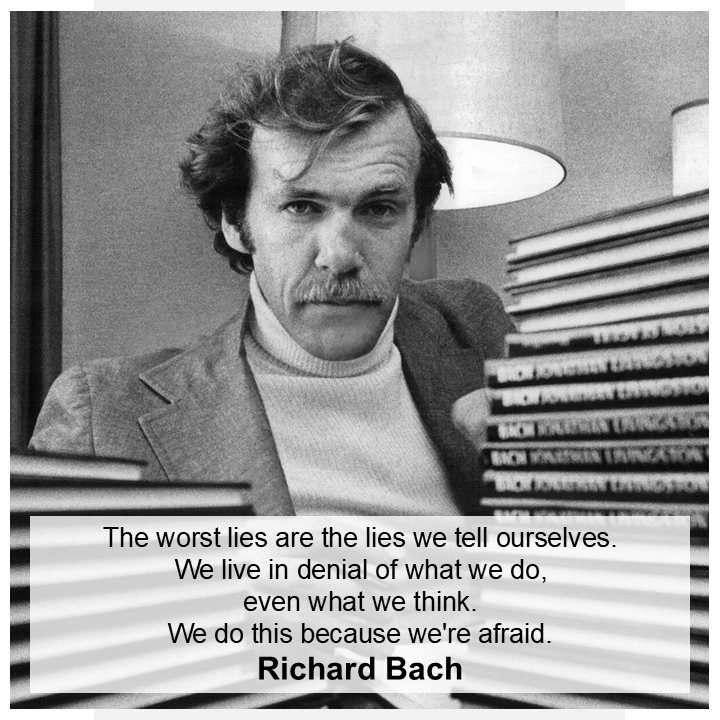
The worst lies are the lies we tell ourselves. We live in denial of what we do, even what we think. We do this because we’re afraid.

We fear we will not find love, and when we find it we fear we’ll lose it. We fear that if we don’t have love, we will be unhappy.

Richard Bach

But we're all gonna die
Decompose into daffodils and dandelions
The bees will use our flowers for whatever they like
Make the honey that our grand-kids will put inside their morning tea
It's the thing of life
We're all eating each other
The thing of life
Nobody lives forever
The thing of life

The urge to ‘consciously’ exist forever is the only lie we need to let go to become truly eternal, free. We are so attached to our so called “self-created identity” that we consider everything going against is as a potential threat to our existence – the existence which eventually will fade away into nothingness. It is way better to accept the finite-ness of life and be useful to each other rather than carrying that false sense of superiority, higher ego to justify our lies of life.

Juliet puts higher perspective to sooth our confusion of “conscious existence”. We are justifying our egos because we don’t want to die, we don’t want our identity to die, we don’t want our memories to die, we want to be remembered by people even when we are not existing in the world. The urge to preserve our conscious identity thereby our personality becomes the ultimate goal of life.

I am using ‘conscious’ word here to show that we are scared of losing the “I”, “Me” from our life because that is how we experience the life. We create the sense of existence from inside that is why sense of “I” is very important for our existence but if you closely observe the way things exist in the nature it is really difficult to pinpoint what makes that “I” – the “I”. Is it my brain? Or is it my body? is it my property? is it my super-car? is it my villa? is it my designation/ salary? is it my family? What exactly defines us?

You will get the answer once you accept that this thing that you have assigned your identity to – your existence to will not remain forever. When we say it will not remain forever it means that the combinations which created that existence. The existence would crumble down into nothingness.

Now here is an interesting part. We call the crumbles of nothingness “nothing” because they do not immediately affect, improve or help the existence we were trying to hold on to – our identity. We forget that it was the same set of some “nothings” which came together in a specific way to create “something” – this something became our existence.

Juliet beautifully brings in this perspective by saying that we will end up into flowers then into the honey that our future generation will put in their morning tea.

While we are trying to hold onto our special identity which is short lived, which would disappear in a blink we are forgetting the fact that the nothingness from which we were created is more eternal than the identity we are trying to maintain. This nothingness is the truth, its that something which is getting recycled all the time. On the other hand, we are in this constant battle to justify our falsely created, mortal identity.

We should understand that we are actually eternal but this false sense of ‘being’, this false sense of ‘conscious’ steals the real eternal existence. 

We don't know how to accept we're just a product of a chance
And less like gods but more like plants
Who can't stop making up reasons we're alive
(We're alive, we're alive, we're alive)
You know we love to deny
(To deny, to deny, to deny)

Juliet is again waging war with our falsely created sense of “special”. We intentionally highlight the facts that justify our superiority and ignore the facts which actually show that we might be the result of few overlapped coincidences. Even if we have not come out of chances and coincidences our existence is not that grand in the whole scheme of existence. On the level of creation, we are as close to plants than the powers which created all of us.

So we paint our face with intellect
Pretending we're not curious
Too busy, super serious
Don't have the time to do what we like
(What we like, what we like, what we like)
Baby look at the sky

In spite of knowing that we are insignificant, knowing that the creation is way bigger than what we are trying to justify ourselves, we are always in the race to prove our superiority. Why does that happen? Why are we always trying to justify our superiority with some lies while we call ourselves the smartest species? Why ‘we’ the smartest ones fail to recognize the objective truths of the world when we know that there is not meaning to chase everything all at once? Why we are always trying to win the race and justify our worth with something?

The reason is that we think our existence is limited, our time of remaining conscious of our being is limited.

We very well know that we will die someday, that is exactly why we try to justify every moment of our conscious existence to something, some idea, some object which we call our job, duty, faith, passion. We don’t want to die with the regret that we have nothing that will remain forever after we die. We are so wound up in justifying the life, memories after our death that we have invested our present into the pursuit of lies which are creating the illusion of our specialty.

Our heads are so engrossed down into the pursuit to create that false identity of worth-ness that we are unable to look up and appreciate the beauty around us, the reality around us.

The urge to lookout for the meaning of life and then assigning that meaning to something so superficial will eventually end into the pain and regret of not enjoying the time we had to its fullest, the moments we had to fullest. We are always trading the real awareness of “present” to gain the illusive comfort of safe “future”. That is how we justify meaning.

The real meaning of life should come with the understanding that whatever it may come next, one will never attach the sense of being to something which amplifies ego. Ego too will perish in the flow of time. The rejection of ego comes when one lets go of their sense of identity being special.       

'Cause we're all gonna die
Decompose into daffodils and dandelions
The bees will use our flowers for whatever they like
Make the honey that our grand-kids will put inside their morning tea
It's the thing of life
We're all just eating each other
The thing of life
Nobody lives forever
The thing of life
We're all just eating each other
The thing of life
Nobody lives forever
The thing of life

The rejection of ego will make you free, will show you what your real worth is. Even though you are not special – in the end, you are something of value when you synergize with others. Even though your conscious being is not eternal, the things which made your conscious being are eternal and that awareness should free you from all the urges to justify your identity, your specialty.

You are given a chance to experience the universe in the most sophisticated manner possible which many of the other species might not even have. What more could sooth your existential confusion! Once you realize that you are already made up of eternity, you will let go this mortal identity which you are always trying to preserve with some subjective perspective and lies. This is the real freedom and it requires innocence. Innocence is one of the basic indicators that the person has no ulterior motive to achieve something, it brings in the sense of acting on things without expecting anything in return. Please understand that innocence does not mean that the person should become a fool. Remaining innocent in spite of knowing everything is really hard, that is how you will know that you are not fooling yourselves. This song shows us that innocence. 

Conclusion

Juliet Ivy very beautifully brings the sense of life that is made up of eternal creations and destructions. We attach the meaning of our lives, the purpose of our lives to certain things while realizing that they too will perish in the flow of time – this is what would unsettle even the dumbest person. This feeling is also experienced by the highest specimen of humans. In order to come out of this unsettling fear of unjustified – worthless living, we take support from our surrounding. We selectively choose certain aspects that will create an illusion of safety and comfort. Being social animals, we compare our lives with the lives of the others, we create our baselines and set our targets based on what others have achieved and done in their lives.

You know what? Even after achieving such goals which we defined based on our surrounding we are not happy. Even after those material victories, we see that the happiness is short lived. So, we shift our goals to something which is immaterial, something which is spiritual. Something which we think is more eternal than the material things. We make certain ideologies the meaning of our lives. Religion is one of such examples.

René Girard – a French philosopher coined the concept of Mimetic theory where he tries to answer how we decide what to do and why to do. Mimesis roughly means imitation, trying to resemble. When we are stuck with no information or loads of information in either cases, we will be overwhelmed. The best way to come out of such conditions would be to see what others are doing around you. We set our standards based on the baselines of our surroundings. We create lies to justify these baselines and goals we want to achieve. Our ego is thus created to ensure that we maintain the sanity in the times of clueless-ness. It will prioritize survival of body in materialistic races and survival of its own sense of existence its identity in the spiritual races. In the end, both victories will fade away. (That also should not mean that one should not engage in the pursuit of certain victories. It should imply that the non-eternal nature of everything should humble the person.)

The most important point to understand is the ways in which everything great (also everything worse) will be broken down to their most fundamental building blocks. The idea is to not get attached with what you created which got destroyed.

In our current times when the life expectancy is better than ever, when we have a better cover of social safety than ever, the primitive instinct of survival from natural predators has been replaced by the recently created – modern instinct of philosophical – ideological survival which is the ‘preservation of our identity’ – the idea of our own image. (Social media is the booster for such way of life. It is also how the mimesis is happening strongly.) Philosophical death seems more painful than actual death. That is why in certain cases people gather courage to do self-harm. The best way to come out of such mentality is to question the very thing which brought this philosophical death; I know it is difficult to pick on the injury which already is painful to bear. The idea to work in such confusions is to notice one important behavior every one of us maintains when we define our life. We always strive to amplify things which bring happiness and ignore things which bring sadness. We define our life selectively on such choices in spite of knowing that both hold same potential to realize in actual life. This desire to selectively attach to certain aspect brings pain in life.

The moment we accept that there is no end to the cycles of creation and destruction (of both good and bad) we will see that we are nothing but a recycled versions of everything that is there in the existence.

The realization of the actual death of our body should come with the awareness that you are returning to materials which made you.

The realization of the philosophical death of our being should come with the awareness that your idea of self, your consciousness was just created by your desires and after this philosophical death you are returning to the fundamental forces of what made them and thereby what made you. The endless possibilities for your becoming are opened in this point. This is the true eternal existence – to get broken down into the fundamental blocks of being and be recreated again.

Juliet Ivy said all this in one simple sentence “We’re all eating each other.”  

The cosmos is within us. We are made of star-stuff. We are a way for the universe to know itself.

― Carl Sagan

Time in a Bottle – Making The Finite Life Last Forever

The moment we realize that we are in a possession of something truly valuable is the moment when we start fearing for its loss, even the idea of losing it haunts us. The urgency created by the finiteness of our lives is the reason why we could and should truly appreciate the people and things around us, it is the same urgency which pushes us to dare to live the life we want. Jim Croce’s Time in a Bottle exposes this vulnerability as well as the strength of human beings in his song “Time in a Bottle”.

Remembering one the soulful artists – Jim Croce

Sometimes what poets, writers wish for is weird, quirky. Through this weirdness they are trying to overcome the realistic limitations we have as the human beings. Poets, songwriters are very well known to express their flights of imagination through their writings. They can make a man walk barefoot on the surface of the sun or make an elephant fly in the air making it light as feather or make a wild beast fall in love or make donkey sing like a tenor and list goes on. What makes these imaginations or these wishes special is that the imperfection these wishes’ originator wants to remove from the reality. When the poet makes a person walk barefoot on the sun, he/she wants that person to be able to tolerate and experience that hotness of the sun, when the poet makes the elephants fly, he/she wants them to have the bird’s perspective towards the world and there can be many interpretations depending on the core idea to be conveyed.

Wishes are one integral part of every person’s existence. Facts represent what the reality actually is and the wishes represent how we expect the reality to be. That is why every fact can be a wish but every wish cannot be a reality – a fact. That is where ideas like wishful thinking, false hope originate from. Even though wishes might not be the exact representation of reality – sometimes really far or exactly opposite it, they represent a hidden dimension of how we think and manage our expectations in day-to-day life. In simple words, we always wish everything to happen according to our ways but at the same time, we are also aware that “That’s not how things work in reality!”. And funny enough or given that our stubbornness to have control over the course of our lives, we still keep on wishing things to happen in certain way – our way.  Wishes represent the bridge between how we understand the world and how the world really is (and trust me very few or almost none of us have real understanding of how the world is!) You wish a thing to be like this and exactly that happens, now that reality originated from your wish is your understanding of how the world is. When this wish does not come to fruition, the exact opposite of that wish is how the world is for you.

In simple words, a wish is the most powerful tool of how we want our world to be; practical or impractical, it still exists for us through our wishes. Even when it does not come to fruition, it the only existent and personal thing that brings us calmness, peace in the world full of uncertainties. Having too many unrealistic wishes makes one delusional and having too much realism makes one emotionless, mechanical; so there exists a spectrum of how we manage our expectations.

Now that we have established what wishes mean and what should be their dosage in our daily life. Let us move on to a special wish a man had for his loved ones – especially for his baby and his wife. This guy was Jim Croce, an American folk and rock singer-songwriter. The date 20 September 2023 marks 50 years since we lost one of the most original and soulful artists and human beings. Jim’s “Time in a Bottle” song is the embodiment of the tragedy of his life which also point towards the tragedy of being a human; furthermore, it also shows an optimistic and truly important perspective towards living a limited, fragile but fulfilled life. Jim’s words – Jim’s wishes in this song are simple, just in exactly enough quantity but the ideas and thoughts expressed transcend the borders of the infinity.

If I could save time in a bottle 

The first thing that I'd like to do

Is to save every day 'til eternity passes away

Just to spend them with you

Jim wants to have total control over the time he can have. The moment he will have hold over time of his life he wishes all that time to be with his loved ones. Using as simple object as a bottle to contain such an intangible, uncapturable and extremely powerful object like the time shows how desperately he wishes to have control over the time just to have the company of his loved ones – his wife and his son.

It is only the daring of the songwriter’s imagination to make the concept of time as the ‘one with ends of start and finish’ thereby making it finite and “contain”-able in a bottle even after knowing that it is impossible.

The wish to save every day, to have hold over the time to spend shows how time is the most valuable currency we have as the mortal beings. Jim’s wish to transcend even the eternity furthermore intensifies his wish ‘to spend the life with loved ones’.

They say time is an illusion, but we know how treating time as an illusion or as an expendable item can make our mortal lives suffer even more. Even though we have a grasp on the theory of time travel, we have barely scratched on the surface of how to perceive time and control it. This inseparable and highly influential impact of time on our lives make them fragile and irreplaceable too. Jim knew this; that is exactly why when he says that he wants to contain time and eternity to spend them with his loved ones. He is realistically implying that he does not want to waste even a single moment of his life. It’s a good advice for every one of us too. 

If I could make days last forever

If words could make wishes come true

I'd save every day like a treasure, and then

Again, I would spend them with you

When Jim will get complete hold on eternity, he would still use that time fully with his family. The repetition of the idea expresses the urgency to not even waste the immediate next moment.

There is innate purpose in Jim’s wish to get hold on the things like eternity and time; things which do not have any boundaries or limits, things which cannot be contained into finiteness. The intent is to signify the incomparable value of the finite time we have in everyone’s life. Spending these moments in doing things we love, have passion for, and with our loved ones is the highest value one can extract from such an incomparable asset. This also a simple way to express how intensely and passionately Jim loves and cares for his family.

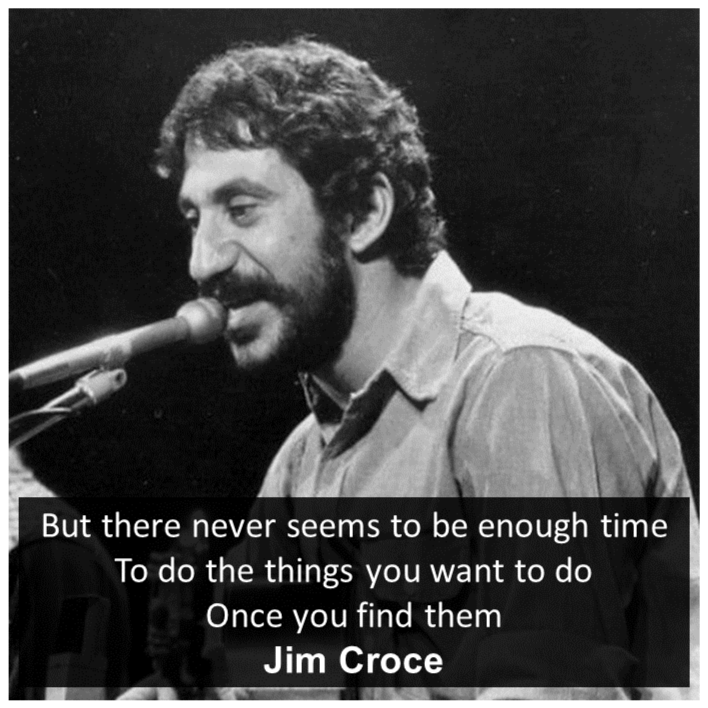
But there never seems to be enough time

To do the things you want to do once you find them

The wishes and imagination expressed by Jim show how immediately he wants to live his life lying ahead. The moment he introduces the word “but” here brings all of us from his imaginary world into the harsh reality of life that we live in. He expresses a common yet unexpressed feeling all of us carry inside every one of us.

We are always trying to find the perfect timing, perfect moment until we realize that the time we have here, is finite. There is no option but to make every moment count. If you look at the words of people who have realized that the time they have on this earth is really limited, you will understand how the value of time for them shoots up exponentially.

The moment we realize that we are in a possession of something truly valuable – the moment when we appreciate what an important thing we own, is the moment when we start fearing for its loss, even the idea of losing it haunts us. The moment we find the true happiness is the exact moment when we start doubting that this happiness will instantly perish and something bad will start happening. This is human nature, there is nothing wrong in it. It also highlights how loss of certain thing actually makes us appreciate the true value of that lost thing.

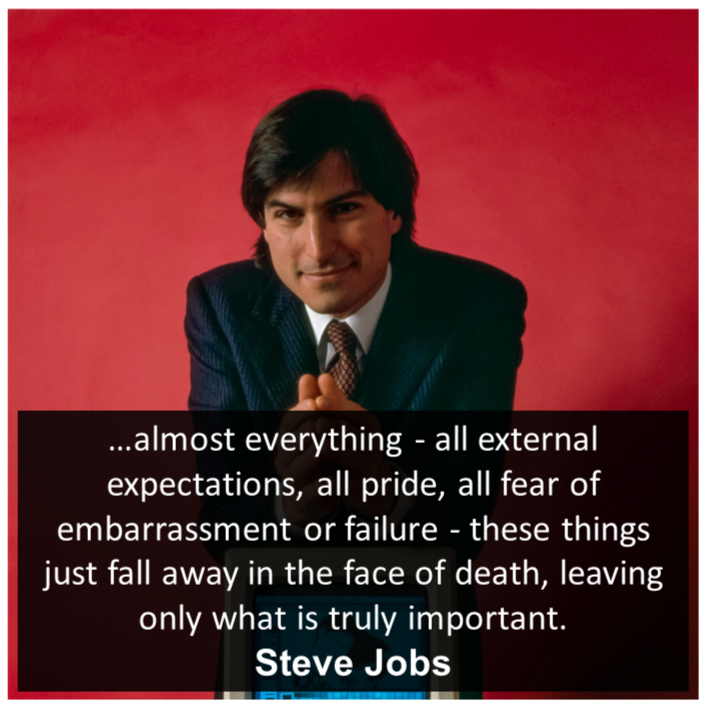
“Remembering that I’ll be dead soon is the most important tool I’ve ever encountered to help me make the big choices in life. Because almost everything — all external expectations, all pride, all fear of embarrassment or failure — these things just fall away in the face of death, leaving only what is truly important. Remembering that you are going to die is the best way I know to avoid the trap of thinking you have something to lose. You are already naked. There is no reason not to follow your heart.”

Steve jobs, Stanford Commencement Address, 2005

A true artist is an expert of bringing out such very common yet unexpressed emotions out to the masses through his /her creations. It creates this common ground where people from different walks of life – different levels of life share their common personal, intimate experiences. Jim beautifully puts down the tragedy of the finiteness of life and the urgency to live it, experience it thoroughly, inside -out. It is really heartbreaking to know that you won’t be there around your loved ones forever. And most importantly, the feeling of loss is more intense, dreadful than actual loss itself but that is what the reality is.

I've looked around enough to know

That you're the one I want to go through time with

Now what Jim says here is about how you can express your intense love, passion with practicality. He assures his loved ones that even though the time he has, the time all of us have is finite, we can still make it worth of our life by being with the people we love, by valuing them. This finiteness of our existence pushes us to appreciate everything, every person we have close to us.

You can see in the early part of the song, Jim expresses naïve, highly romanticized and somewhat foolish thoughts of being eternal forever to express the passionate love, affection towards his love. This early part of the song also indirectly reveals how carelessly we handle some important aspects and important people in our life, in our youth where we literally feel like immortals with infinite energy.

There comes a moment when we have to actually make decisions solely by ourselves which would alter the upcoming course of our very own life and there is no escape from these choices, at that same moment we understand what we hold dear to us, what actually matters, what is noise and what illusions we were following till that moment. Some would say that we become mature and more realistic. The perfect veil of illusions drops down showing the imperfect, crude reality. This is the moment we understand that even though the illusion was pleasing, the reality is where we actually exist and what could be more worthwhile than being with those who are special to us in this good and real time even though it is finite.

If I had a box just for wishes

And dreams that had never come true

The box would be empty

Except for the memory of how they were answered by you

The realization of the value of people, things, and moments in which we interacted with them makes us appreciate their real beauty. The time we must live may not be infinite but even in this limited time the memories we create with our loved ones make us truly immortal. These memories are the linkages which get carried on from one person to another sometimes from one generation to the next one.

When a person is granted with immortality but if he/she has no one to love, to care for or nobody cares for or loves him/her, then what realistic purpose does this eternal life serve? It is exactly equivalent to death.

Our existence is valid and real only when other people recognize it. It is a tough pill to swallow. Many would argue that the life comes from within, you are a whole universe existing inside you, you don’t need others to validate your life – your existence but please understand that these statements are valid only for the people whose value of life lies with the opinions of others. When I am expressing about the validity of our own life upon the recognition of others, it is the value creation and upliftment of the humanity inside of us due to the interactions we get involved into. You are a universe into yourselves but if you are not making other people’s lives better, affecting the objects, people in a constructive way you are an isolated universe which is exactly equivalent to living in your own imaginary world. It will still exist as a sole but that is one selfish way to live. Many undiscovered wonders are revealed when things interact with each other.

It might seem overly philosophical but when faced with the “existential crisis”, “existential angst”, “chaos of the reality and its imperfections” everyone needs an identity, a pivot to stick to make this life worthwhile. This feeling of making our life worthwhile is created only because of the urgency to live. And this urgency to live to its fullest is created due to the finiteness of the life.

Jim expressed this philosophy in his very simple yet powerful song. He appreciates that every purpose of his life found a direction towards completion, every wish he had was fulfilled at the exact moment when he decided to create memories with his loved ones. You must appreciate that most of the times our wishes create an illusive, deceptive reality in our head where everything is perfect, it is only upon exposure of these wishes to reality when the facts are revealed. These facts may not be perfect but they are the only real thing. That why memories are really very important.

Memories have similar nature to the imagination and wishes we have but they are the outcomes of we passing through the time. So, our memories are the next best things we have to the reality in which we live and not our imagination or wishes. Memories are the embodiment of the realistic imagination and wished realized. That is why we can make these memories eternal by creating them with our loved ones and engaging in the doing thing we love.     

But there never seems to be enough time

To do the things you want to do once you find them

I've looked around enough to know

That you're the one I want to go through time with

The needs and wants are less important than the moments we have with our loved ones. It is this irreplaceability of any other materialistic thing with the memories and moments in the company of the loved ones which Jim wants to highlight through his song.

There is one important story attached with the song “Time in a bottle”.  Jim wrote this song when he came to know that he was going to be a father. He was a struggling artist enjoying the artwork he created with the support of his wife. You can say that he was in the bliss of his artistic creations which he loved creating. When he understood the start of his fatherhood, he came to truly know and appreciate the reality of life and the finiteness it has. This made him serious about his art which inspired him to create his world-famous album “You don’t mess around with Jim”. Next time when you will listen to this song with the knowledge of what actually inspired him to write this song, then you will appreciate how deeply he loved his son and his wife. He wanted every moment from thereon to be filled with their memories and that was enough to justify his finite life, finite yet truly invaluable. One can call it poetic, sad, tragic or poignant- Jim died in a plane crash aged 30. It feels like Jim had some foresight about his upcoming life when he wrote “Time in a bottle”. Even with the lifespan of mere 30 years, you will appreciate his life through this song “Time in a Bottle”. His life, thus becomes an example of creating a long-lasting life – finite yet long lasting, eternal and irreplaceable life.   

The urgency created by the finiteness of our lives is the reason why we could and should truly appreciate the people and things around us.    

Who knows, in coming eon or maybe in coming millennium we might actually be able to contain time in a bottle, then Jim’s all wishes might become a reality. Until then let us appreciate what we have as this incomparable precious life.