Losing the ‘Grip’ on Escapism

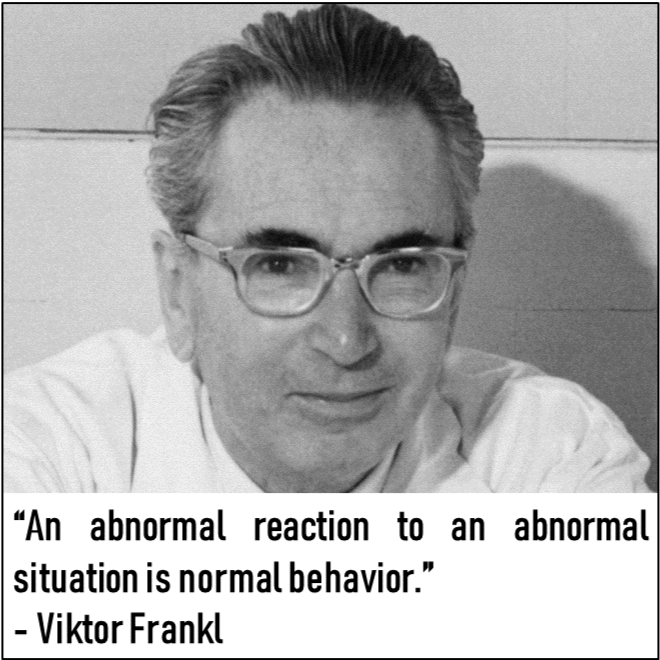
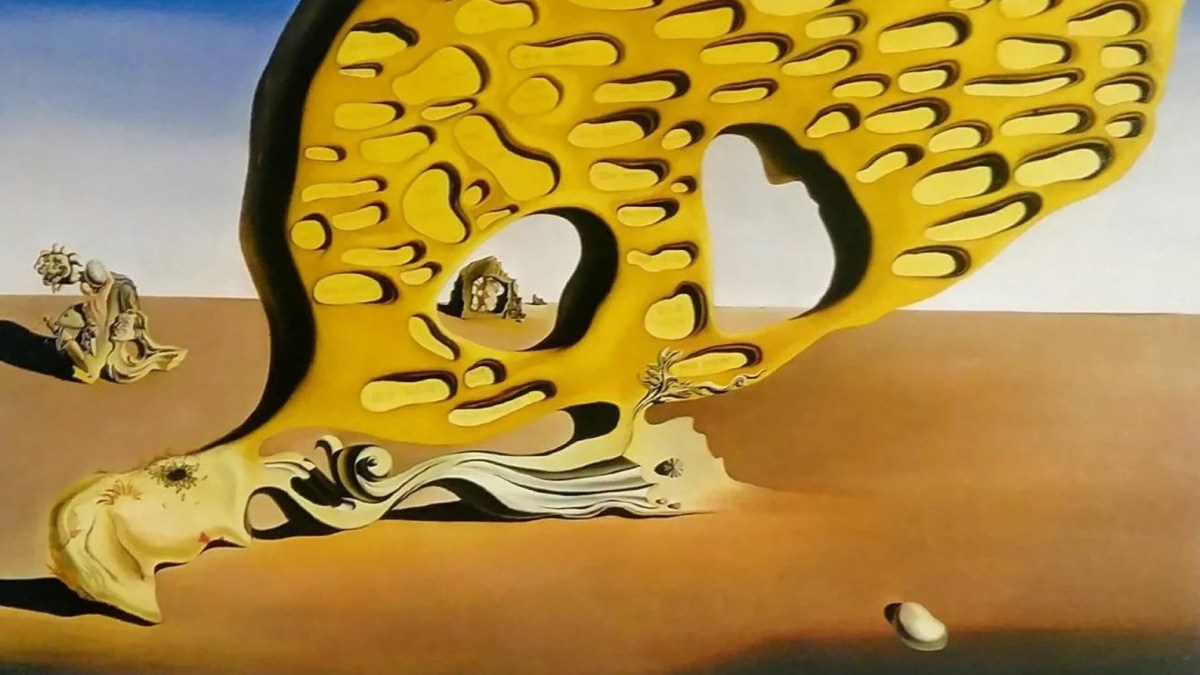
Escapism creates a void in our perception of reality so that new ideas, creative ideas would populate this void for living life with a new perspective, new approach. The healthy escapism is the most important tool, a therapy for many successful creative people our world has ever seen. Once this escapism takes extreme side it may lead to addiction, procrastination and delusion. Freud’s ‘desire to destruction’ and René Girard’s theory of mimetic desire help us to understand escapism in better ways to face the reality head on.

Reality is merely an illusion, albeit a very persistent one

Albert Einstein

It is very interesting when we start questioning how we understand, feel and interpret the reality. The reality in which we live in has infinitely many facets which we experience through equally diverse emotions. We as human beings are hardwired for seeking happiness, happiness creates the environment to nurture, grow and multiply. Bear in mind that only growing and multiplying is not enough to guaranty the survival of our species. Adaptation is one aspect to ensure the sustenance over the course of time. Adaptation means getting exposed to adversities, sadness, imperfections of reality to create the strong enough coping mechanisms. What would happen if are continuously in the phase of seeking pleasure and turning our faces away from the challenges of the reality? How we justify our own death (figurative) by our own hands when we submit ourselves to such dark pleasures, addictions, dark temptations in spite of knowing that they are harming us? There is just one perfect song to point us towards such emotions.  The song is called “Grip” by Seeb and Bastille.

The song was written by Espen Berg, Dan Smith, Thomas Eriksen, Mark Crew, Simen Eriksrud and Joakim Haukaas.
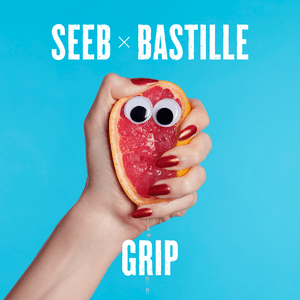
Album art for Grip by Seeb, Bastille

Grip – The Lyrics

As the night time leads into the day
And tomorrow spills across the sky
While the sun's a harsh reminder why
We are feeling barely human

The overall emotions this person is experiencing are the emotions of distaste and hatred towards the things which are inevitable. He knows already that it is going to be day after this night, the sun will rise up and he will have to face the day helplessly. The “harsh reminder” here highlights that the person doesn’t want to face the day, the reality, the responsibility and wants to escape to the night where he was someone better than human – someone invincible.

 ‘Tomorrow spills’ shows that the thing/s which this person was trying to postpone, avoid has finally come. The spilling action shows the unwanted eventuality. The things which the person is trying to avoid are the sufferings and problems which for this person are mocking him for his humanistic limitations.  

This rise of the day is a reminder of his humanly limitations and the sufferings which never end. The person is well aware of the sufferings and hence is cursing the Sun for reminding him about his limitations as a human being. The transition of night into a sunny day is also a metaphor for the veil falling down. The veil of enjoyment which was masking the suffering, imperfections, sorrows, problems of the reality.

I really loved the word play to show how the person hates the day which never comes – ‘tomorrow’. It kind of points towards the ‘procrastination’ to avoid the pain of imperfections and the pain, the suffering accompanying with the life itself.

We don't know what's good for us
'Cause if we did, we might not do it
Who knows where our limits lie?
We won't discover 'til we push it

These lines explain the expression “Ignorance is a bliss” in the most perfect way. The person wants to ignore the things which are good because deep down he knows that they come with hardships. That is exactly why he says that even if he knew what is really good for him, he won’t do it; he knows doing the right is always the most difficult path. It’s like running away from the reality and reject it because it is full of pain, problems, unsettling consequences and imperfect.

The next lines show that the person is not completely delusional and detached from the reality. He knows that being a human being with unlimited capacity in the world of infinite possibilities, he can do anything and succeed at it. He is aware of the fact that he just has to expand his boundary to make impossible things possible. This is the moment when you will appreciate that the person expressing his feelings here is aware of everything that is right and wrong. It’s just that he just wants to be happy and maintain that state by rejecting the painful reality.    

I should just walk away, walk away
But it grips me, it grips me
But I should call it a day
And make my way
Oh, it grips me
'Cause the devil's got my arms
And it pulls me back into the dark
But I should just walk away
Walk away, oh it grips me
Cause the devil's got my arms

The person knows that he should completely let go of the things which are deviating his life from reality but now he has found one pity excuse. The person thinks that it is difficult to lose the hold of joyous, illusive but pleasurable darkness. He is ready to ‘call it a day’ get over with this pleasurable but illusive, dreamy life but somehow his mind has found an excuse of the devil which holds him back. It shows how addictive the dreamy, pleasurable alternate reality which is far from the ‘real’ reality, the life his mind has created which is full of pleasure, happiness and he is whatever he wants to be in this dreamy world. Grip of the Devil is just an excuse for him to tell others that he is not solely responsible to stay in this ‘unreal’ illusive life, this shows his lack of accountability. He is blaming the devil for him not facing the reality and taking charge of the course of his life.   

We got drunk on this unholy wine
To deliver us from our old minds
A promise of a better time
'Til we're feeling barely human

Wine in Christianity is a symbol of abundance, enlightenment, celebration, and blessings of the God. The ‘unholiness’ of the wine shows the overuse of this abundance which points to the addiction. Addiction is the worst use of the means preferred to gain pleasure. That is why the holy wine once intended for enlightenment becomes unholy when exploited and overused unnecessarily. The promise of better time is the reflection of what a person suffering from addiction feels, he tries to repeat the act to extract the pleasure – a short lived one. This short-lived pleasure makes him feel something better than human. Once the effect starts to fade out and the person regain the consciousness of weakness of human nature, he again resorts to this short-lived pleasure to regain the better humanly experience.

These are the exact emotions an addictive person goes through – this could be any addiction.

I would rather forget
And wash my memory clean
Oh, I would rather forget
And wash my memory clean

The person knows what mess he is in and the escape is also difficult. He just wants to remove all the traces of what he really is and surrender to the world of the devil.  (‘Cause the devil’s got his arms). He is helpless and just want to reject the painful reality while remaining into dark but pleasurable devil’s night. It an intentional submission the “dark side” to avert the pain of reality brightened with the Sun.

Escapism – Sadness, pain, procrastination and addiction

Escapism lies as the core theme of this song. We humans are pleasure-seeking animals. Remaining in joyful conditions promotes safety, continuation of the species from the evolutionary point of view. That is why we are hardwired to escape from adverse, life threatening, sadness inducing, fear inducing events. Fortunately, we are rarely exposed to wild animals and life-threatening situations as our primal ancestors did. But this instinct has not left us completely. Any event which simulates sadness, fear, great challenge – our response is somewhat still primitive. But as the technology as progressed so much, our ways to escape the hardships of the real, imperfect life have evolved drastically.

Please understand that escapism is not a bad word. But once it shifts to extreme use, abuse then addiction takes over and the person starts hating reality and submits to dreamy, delusional world created by him or someone else.

Reading, writing, painting, doing some happiness inducing activities/ tasks are simple examples of a “healthy escapism”. Such escapism creates a void in our perception of reality so that new ideas, creative ideas would populate this void for living life with a new perspective, new approach. The healthy escapism is the most important tool, a therapy for many successful creative people our world has ever seen.
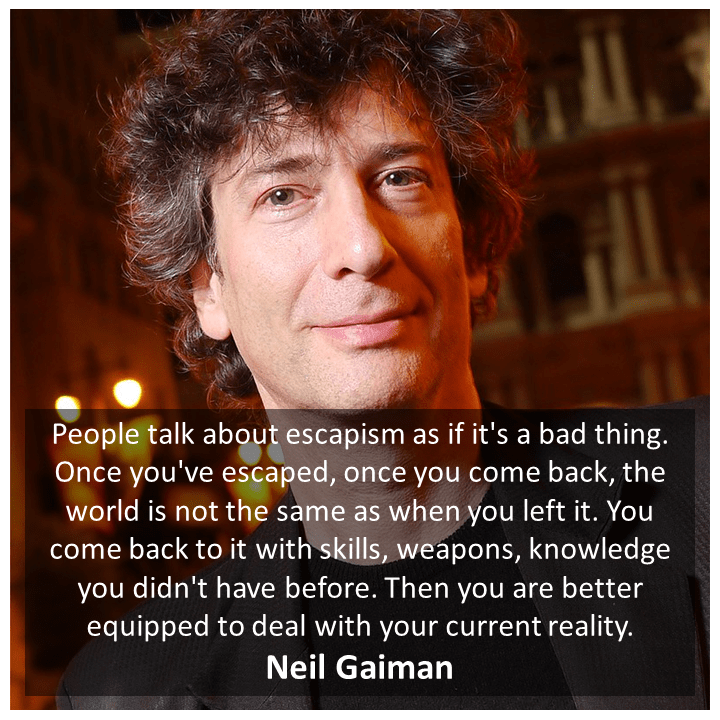
Now coming to the other (dark) side of escapism – it’s a highway to addiction and constant search for dopamine hits. Deep down we know how we are all addicted to something. It’s just matter of who is affected by them in worse ways. Social media, their algorithms, the culture of overconsumption, the capitalistic urge to prioritize wants for getting social approval, submission to addiction to escape the problems are the real-life challenges that we are facing today due to the technology.  Technology is meant to provide an exoskeleton, an augmentation to improve our lifestyle but this same exoskeleton is weakening our muscles thereby crippling us. (The crippling of our minds.)

Escapism is not a new phenomenon, rather is has an age-old history only the ways in which we try to escape the reality have changed over the course of the time. Creating an alternate reality was always one way to alleviate the painful effects of reality. But, the tools that we have today are more potent and can immediately lead to the state of addiction.

You will see in the lyrics of the song the that the person is well aware of what wrong choices he is making, that it is not good to submit to the devil and the night but now he is so addicted to this alternate reality that he has started hating the reality and don’t want to experience it.

Such is also the way of procrastination. We try to delay the activities knowing that the had to be done anyways but won’t yield the perfect, beautiful results that you want. Procrastination thus creates an illusion of safety until the threat becomes imminent. Procrastination is also healthy unto certain limits to create a space of new approaches but if your fear of creation, action is preventing yourself to postpone their impact on reality thereby residing yourself into your dreamy world then such alternate reality is useless.

Reality is painful – but that is not the only thing it is!
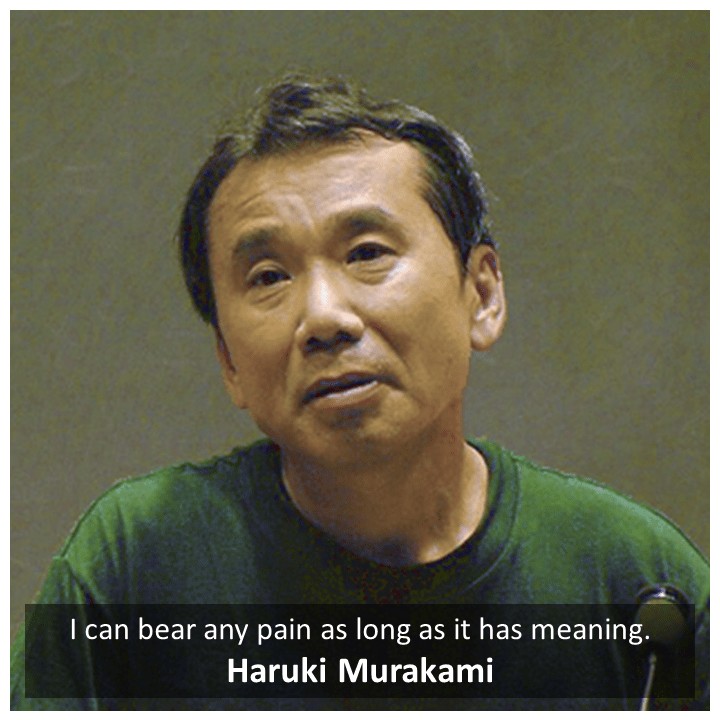
We escape from reality so that we can come back to fight the reality with better tools and ideas not to completely run away from it because in the end reality will catch up with us with far gruesome, dreadful face and consequences.

We are highly prone to our conscious submission to the alternate reality because it creates a potent illusion of safety and comfort. This is because we think that living a fulfilled life means living a life of happiness, whereas upon close inspection you will appreciate that life has never given itself to either sides of the existence – neither good nor bad. Life keeps oscillating between these two and creation, destruction, growth, adaptation happens in between those waves. Buddhism talks about the roots of suffering in attachment. We humans are highly susceptible to immediate attachment to any living or non-living things (which are the parts of reality). Our attachment to such things then leads to the fear of their loss and thereby loss of familiarity and comfort which projects the ultimate fate of the reality as imperfect, painful and hostile one. Once we let of such attachments, we can have a full control on the escapism in our lives.

Once we start to see happiness as a process instead of a stage, we will truly appreciate the beauty in the prima facie unsettling imperfection of reality – this is the same real life, the reality where we actually exist and can truly contribute to affect our and other lives in better ways. It is not that painful as we have thought in our minds.

Also, even when you have achieved that only goal in your life, that full happiness, in the end you will again be miserable because you are going to be clueless about what comes next, what to do next!

I think confrontation is the opposite of the escapism because of the same reasons. Instead of the escaping from unsettling reality for short time again and again, and it catching up with us in the end, why not face it in first place and be done with it! This requires the attitude of rejecting the ultimate purpose of life attributed to the search for happiness. The reality is neither happy nor sad.   

Sigmund Freud – Beyond Pleasure and Desire to Destruction

Sigmund Freud in his early developments of psychanalysis was the strong proponent of the ideas of human beings as the pleasure-seeking animals. Freud actively promoted his ideas of psychology based on the thought that our actions are always intended to maximize pleasure, procreation, and preservation and avoiding pain. He called this force as “Eros”

Freud’s early ideas hence are always pointing towards that continuous search for pleasure (Lustprinzip). But once the world war started Freud went under immense emotional pressure as his two sons were soldiers in war, he also saw soldiers residing to traumatic war experiences. In coming years, Freud lost his beloved daughter to Spanish flue. Here he felt really miserable, guilty and painful that he is able to survive while his daughter died.   

This is where Freud brought in the idea that humans also have a death drive, destruction (Thanatos) where doing nothing helps to cope up with the intense sadness of the reality. This idea was introduced by Sabina Nikolayevna Spielrein – one of the first female psychoanalysts. Under extreme pressure humans may chose to do nothing as doing anything will end in pain.

So, Freud evolved his idea of human psyche as an interplay between the urge to live and urge to die.

The person in the song submitting to the dark, harrowing addictive pleasures shows this same urge to destruction even though he knows that they are not good. We are ready to submit ourselves to darker illusions because of this same desire to die, to destruct ourselves because sometimes reality feels more brutal than death.

When one is exposed to unknown events in life, the urge to pleasure will seek excitement, adventure and adrenaline, dopamine, knowledge from it while for same life event the urge to destruction will resort to confusion, danger, fear and submission to familiar, warm and comfortable environments.

Freud received huge criticism for these ideas too. Freud also mentioned that this death could also be figurative – as the complete distaste towards everything in life and becoming inanimate – a living dead body.

The idea of clearing memory in the end of the song shows this side of desire to destruction to me.

Important thing to come out of these ideas is to appreciate that life never favored any side – good or bad. Life is always multifaceted. There is always something good in bad and bad in something good. Good and bad always coexist.       

Mimetic Desire – Responsibility and accountability

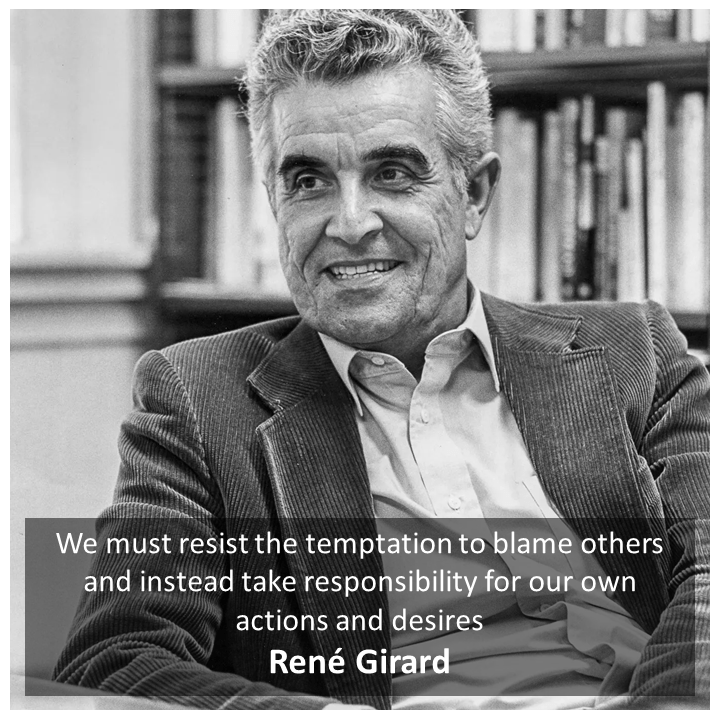
René Girard a French philosopher of social science pointed towards a very innate pattern in human thinking which is called as “Mimetic Desire” in philosophy of social science. He pointed out that even though we may think that our drives are totally created from inside and we are the sole, absolute creator of such desires (like calling ourselves God, the Creator) these are mere effect of our surrounding, they are not created from something absolute. We are always sorting people, things around us to create a place where we say that “we belong”. This helps us to create and justify our identity. The moment someone creates and points towards something as problematic, unsettling then rest of the people also use it as a “scapegoat” to put the blame of anything bad, wrong happening with them.   

We as human beings and social animals are always looking for something to blame which creates an object to blame for difficulties in our life. This grows faster when it happens in group.
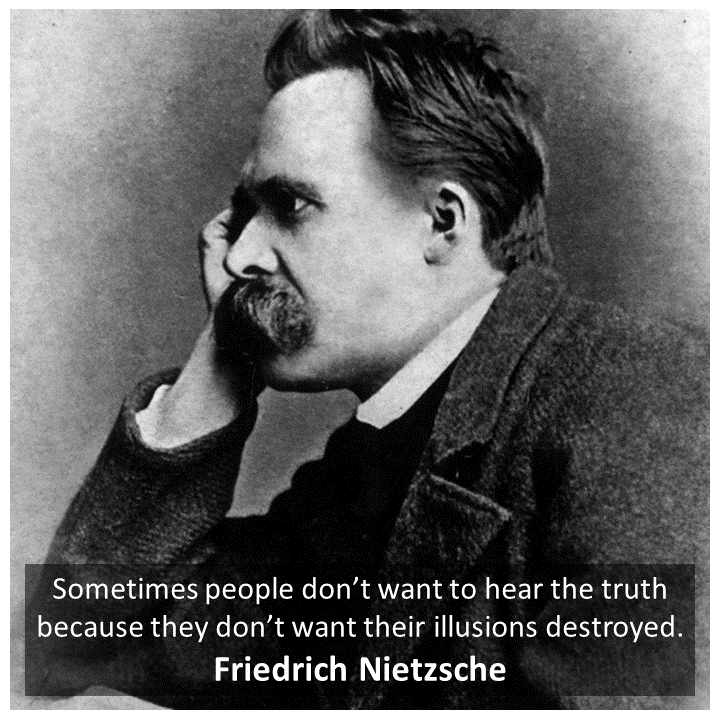
According to the ideas of Mimetic Desire given by René Girard, people make scapegoats when the truth, the reality makes them uncomfortable – the reality they don’t want to acknowledge. They desperately lookout for things, groups, people to put blame and make this illusion their reality where they find comfort. People do this because they somehow want to release their anger, tension.

The creation of devil is the same thought. The person in this song is well aware of the truth of reality but as his desires are to always seek pleasure in any possible ways, he finds a scapegoat of “the grip of the devil” to justify his addiction and bad actions. Religious, political beliefs have many examples of such scapegoats.

Responsibility and accountability are very important aspects when we are talking of such ideas. That is why it is very important to rethink our ideas when we are trying to justify them with something delusional.
Conclusion

The key idea to tackle extreme escapism is to accept the imperfect nature of reality. The reality may be fearsome, difficult and unsettling but it is also hopeful, happy and comfortable. Your actions in reality will bring you closer to good experiences rather than submitting to unreal, delusional short acts of pleasure. It’s not the grip of the devil that is holding you in the night, it is you yourself who contain this devil inside who is holding you back. Let your angel overpower your devil to bring you back into the reality. May you grow with every pain inflicted upon you to make you even stronger than you were before. May the creation provide you the physical and especially mental adaptability to handle and appreciate the reality – the only real place where you truly exist.     

Official video shows the transitory phase of a teenage boy who is trying multiple ways to gain pleasure thereby moving away from the awkwardness of reality to become “cool”. But once the balance of pleasurable acts tips to the wrong side, he submits to the pleasurable but dark and devilish side of his personality. This is where he submits himself to the devil.

The video intricately shows the fragile nature of adolescence and the high impact of the choices made in this phase which could have lifelong effect of the personality.   

There a also one lyrical video for this song where you will see fruit butchering (I don’t know why but the producers have made it look very tempting!)

Also, the credit goes to SeeB for adding their iconic style of falsettos to make the listeners feel the grip of the devil in a fantastic way.
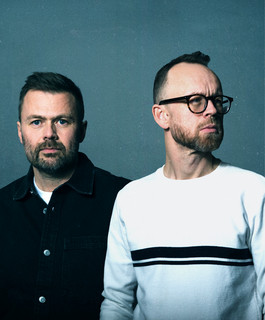

The creators of “Grip” Seeb and Dan Smith from Bastille
The song video

Lyrical “fruity and juicy” video

Listen on spotify

Time in a Bottle – Making The Finite Life Last Forever

The moment we realize that we are in a possession of something truly valuable is the moment when we start fearing for its loss, even the idea of losing it haunts us. The urgency created by the finiteness of our lives is the reason why we could and should truly appreciate the people and things around us, it is the same urgency which pushes us to dare to live the life we want. Jim Croce’s Time in a Bottle exposes this vulnerability as well as the strength of human beings in his song “Time in a Bottle”.

Remembering one the soulful artists – Jim Croce

Sometimes what poets, writers wish for is weird, quirky. Through this weirdness they are trying to overcome the realistic limitations we have as the human beings. Poets, songwriters are very well known to express their flights of imagination through their writings. They can make a man walk barefoot on the surface of the sun or make an elephant fly in the air making it light as feather or make a wild beast fall in love or make donkey sing like a tenor and list goes on. What makes these imaginations or these wishes special is that the imperfection these wishes’ originator wants to remove from the reality. When the poet makes a person walk barefoot on the sun, he/she wants that person to be able to tolerate and experience that hotness of the sun, when the poet makes the elephants fly, he/she wants them to have the bird’s perspective towards the world and there can be many interpretations depending on the core idea to be conveyed.

Wishes are one integral part of every person’s existence. Facts represent what the reality actually is and the wishes represent how we expect the reality to be. That is why every fact can be a wish but every wish cannot be a reality – a fact. That is where ideas like wishful thinking, false hope originate from. Even though wishes might not be the exact representation of reality – sometimes really far or exactly opposite it, they represent a hidden dimension of how we think and manage our expectations in day-to-day life. In simple words, we always wish everything to happen according to our ways but at the same time, we are also aware that “That’s not how things work in reality!”. And funny enough or given that our stubbornness to have control over the course of our lives, we still keep on wishing things to happen in certain way – our way.  Wishes represent the bridge between how we understand the world and how the world really is (and trust me very few or almost none of us have real understanding of how the world is!) You wish a thing to be like this and exactly that happens, now that reality originated from your wish is your understanding of how the world is. When this wish does not come to fruition, the exact opposite of that wish is how the world is for you.

In simple words, a wish is the most powerful tool of how we want our world to be; practical or impractical, it still exists for us through our wishes. Even when it does not come to fruition, it the only existent and personal thing that brings us calmness, peace in the world full of uncertainties. Having too many unrealistic wishes makes one delusional and having too much realism makes one emotionless, mechanical; so there exists a spectrum of how we manage our expectations.

Now that we have established what wishes mean and what should be their dosage in our daily life. Let us move on to a special wish a man had for his loved ones – especially for his baby and his wife. This guy was Jim Croce, an American folk and rock singer-songwriter. The date 20 September 2023 marks 50 years since we lost one of the most original and soulful artists and human beings. Jim’s “Time in a Bottle” song is the embodiment of the tragedy of his life which also point towards the tragedy of being a human; furthermore, it also shows an optimistic and truly important perspective towards living a limited, fragile but fulfilled life. Jim’s words – Jim’s wishes in this song are simple, just in exactly enough quantity but the ideas and thoughts expressed transcend the borders of the infinity.

If I could save time in a bottle 

The first thing that I'd like to do

Is to save every day 'til eternity passes away

Just to spend them with you

Jim wants to have total control over the time he can have. The moment he will have hold over time of his life he wishes all that time to be with his loved ones. Using as simple object as a bottle to contain such an intangible, uncapturable and extremely powerful object like the time shows how desperately he wishes to have control over the time just to have the company of his loved ones – his wife and his son.

It is only the daring of the songwriter’s imagination to make the concept of time as the ‘one with ends of start and finish’ thereby making it finite and “contain”-able in a bottle even after knowing that it is impossible.

The wish to save every day, to have hold over the time to spend shows how time is the most valuable currency we have as the mortal beings. Jim’s wish to transcend even the eternity furthermore intensifies his wish ‘to spend the life with loved ones’.

They say time is an illusion, but we know how treating time as an illusion or as an expendable item can make our mortal lives suffer even more. Even though we have a grasp on the theory of time travel, we have barely scratched on the surface of how to perceive time and control it. This inseparable and highly influential impact of time on our lives make them fragile and irreplaceable too. Jim knew this; that is exactly why when he says that he wants to contain time and eternity to spend them with his loved ones. He is realistically implying that he does not want to waste even a single moment of his life. It’s a good advice for every one of us too. 

If I could make days last forever

If words could make wishes come true

I'd save every day like a treasure, and then

Again, I would spend them with you

When Jim will get complete hold on eternity, he would still use that time fully with his family. The repetition of the idea expresses the urgency to not even waste the immediate next moment.

There is innate purpose in Jim’s wish to get hold on the things like eternity and time; things which do not have any boundaries or limits, things which cannot be contained into finiteness. The intent is to signify the incomparable value of the finite time we have in everyone’s life. Spending these moments in doing things we love, have passion for, and with our loved ones is the highest value one can extract from such an incomparable asset. This also a simple way to express how intensely and passionately Jim loves and cares for his family.

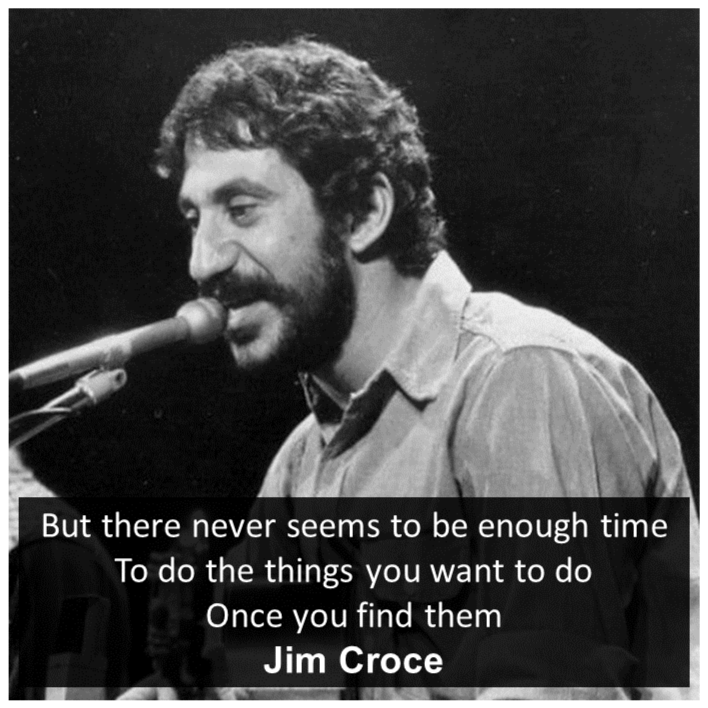
But there never seems to be enough time

To do the things you want to do once you find them

The wishes and imagination expressed by Jim show how immediately he wants to live his life lying ahead. The moment he introduces the word “but” here brings all of us from his imaginary world into the harsh reality of life that we live in. He expresses a common yet unexpressed feeling all of us carry inside every one of us.

We are always trying to find the perfect timing, perfect moment until we realize that the time we have here, is finite. There is no option but to make every moment count. If you look at the words of people who have realized that the time they have on this earth is really limited, you will understand how the value of time for them shoots up exponentially.

The moment we realize that we are in a possession of something truly valuable – the moment when we appreciate what an important thing we own, is the moment when we start fearing for its loss, even the idea of losing it haunts us. The moment we find the true happiness is the exact moment when we start doubting that this happiness will instantly perish and something bad will start happening. This is human nature, there is nothing wrong in it. It also highlights how loss of certain thing actually makes us appreciate the true value of that lost thing.

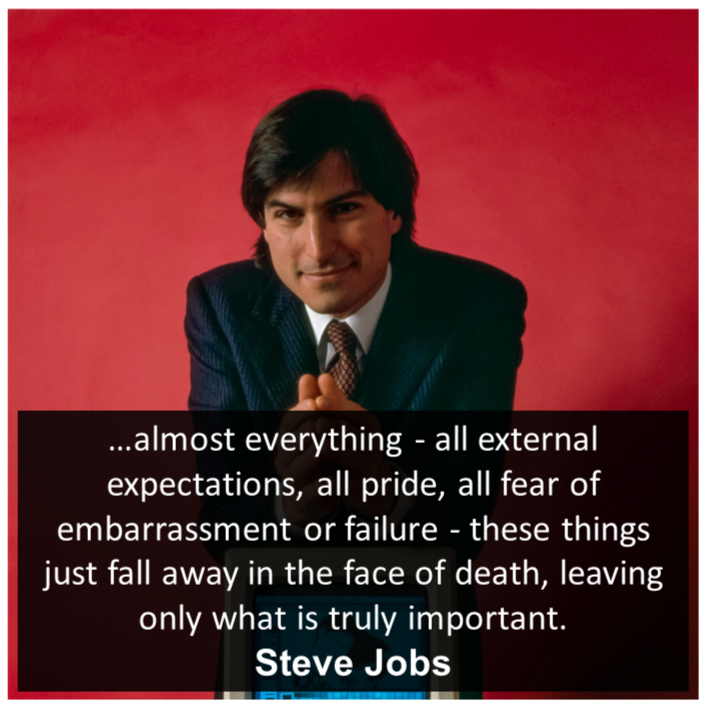
“Remembering that I’ll be dead soon is the most important tool I’ve ever encountered to help me make the big choices in life. Because almost everything — all external expectations, all pride, all fear of embarrassment or failure — these things just fall away in the face of death, leaving only what is truly important. Remembering that you are going to die is the best way I know to avoid the trap of thinking you have something to lose. You are already naked. There is no reason not to follow your heart.”

Steve jobs, Stanford Commencement Address, 2005

A true artist is an expert of bringing out such very common yet unexpressed emotions out to the masses through his /her creations. It creates this common ground where people from different walks of life – different levels of life share their common personal, intimate experiences. Jim beautifully puts down the tragedy of the finiteness of life and the urgency to live it, experience it thoroughly, inside -out. It is really heartbreaking to know that you won’t be there around your loved ones forever. And most importantly, the feeling of loss is more intense, dreadful than actual loss itself but that is what the reality is.

I've looked around enough to know

That you're the one I want to go through time with

Now what Jim says here is about how you can express your intense love, passion with practicality. He assures his loved ones that even though the time he has, the time all of us have is finite, we can still make it worth of our life by being with the people we love, by valuing them. This finiteness of our existence pushes us to appreciate everything, every person we have close to us.

You can see in the early part of the song, Jim expresses naïve, highly romanticized and somewhat foolish thoughts of being eternal forever to express the passionate love, affection towards his love. This early part of the song also indirectly reveals how carelessly we handle some important aspects and important people in our life, in our youth where we literally feel like immortals with infinite energy.

There comes a moment when we have to actually make decisions solely by ourselves which would alter the upcoming course of our very own life and there is no escape from these choices, at that same moment we understand what we hold dear to us, what actually matters, what is noise and what illusions we were following till that moment. Some would say that we become mature and more realistic. The perfect veil of illusions drops down showing the imperfect, crude reality. This is the moment we understand that even though the illusion was pleasing, the reality is where we actually exist and what could be more worthwhile than being with those who are special to us in this good and real time even though it is finite.

If I had a box just for wishes

And dreams that had never come true

The box would be empty

Except for the memory of how they were answered by you

The realization of the value of people, things, and moments in which we interacted with them makes us appreciate their real beauty. The time we must live may not be infinite but even in this limited time the memories we create with our loved ones make us truly immortal. These memories are the linkages which get carried on from one person to another sometimes from one generation to the next one.

When a person is granted with immortality but if he/she has no one to love, to care for or nobody cares for or loves him/her, then what realistic purpose does this eternal life serve? It is exactly equivalent to death.

Our existence is valid and real only when other people recognize it. It is a tough pill to swallow. Many would argue that the life comes from within, you are a whole universe existing inside you, you don’t need others to validate your life – your existence but please understand that these statements are valid only for the people whose value of life lies with the opinions of others. When I am expressing about the validity of our own life upon the recognition of others, it is the value creation and upliftment of the humanity inside of us due to the interactions we get involved into. You are a universe into yourselves but if you are not making other people’s lives better, affecting the objects, people in a constructive way you are an isolated universe which is exactly equivalent to living in your own imaginary world. It will still exist as a sole but that is one selfish way to live. Many undiscovered wonders are revealed when things interact with each other.

It might seem overly philosophical but when faced with the “existential crisis”, “existential angst”, “chaos of the reality and its imperfections” everyone needs an identity, a pivot to stick to make this life worthwhile. This feeling of making our life worthwhile is created only because of the urgency to live. And this urgency to live to its fullest is created due to the finiteness of the life.

Jim expressed this philosophy in his very simple yet powerful song. He appreciates that every purpose of his life found a direction towards completion, every wish he had was fulfilled at the exact moment when he decided to create memories with his loved ones. You must appreciate that most of the times our wishes create an illusive, deceptive reality in our head where everything is perfect, it is only upon exposure of these wishes to reality when the facts are revealed. These facts may not be perfect but they are the only real thing. That why memories are really very important.

Memories have similar nature to the imagination and wishes we have but they are the outcomes of we passing through the time. So, our memories are the next best things we have to the reality in which we live and not our imagination or wishes. Memories are the embodiment of the realistic imagination and wished realized. That is why we can make these memories eternal by creating them with our loved ones and engaging in the doing thing we love.     

But there never seems to be enough time

To do the things you want to do once you find them

I've looked around enough to know

That you're the one I want to go through time with

The needs and wants are less important than the moments we have with our loved ones. It is this irreplaceability of any other materialistic thing with the memories and moments in the company of the loved ones which Jim wants to highlight through his song.

There is one important story attached with the song “Time in a bottle”.  Jim wrote this song when he came to know that he was going to be a father. He was a struggling artist enjoying the artwork he created with the support of his wife. You can say that he was in the bliss of his artistic creations which he loved creating. When he understood the start of his fatherhood, he came to truly know and appreciate the reality of life and the finiteness it has. This made him serious about his art which inspired him to create his world-famous album “You don’t mess around with Jim”. Next time when you will listen to this song with the knowledge of what actually inspired him to write this song, then you will appreciate how deeply he loved his son and his wife. He wanted every moment from thereon to be filled with their memories and that was enough to justify his finite life, finite yet truly invaluable. One can call it poetic, sad, tragic or poignant- Jim died in a plane crash aged 30. It feels like Jim had some foresight about his upcoming life when he wrote “Time in a bottle”. Even with the lifespan of mere 30 years, you will appreciate his life through this song “Time in a Bottle”. His life, thus becomes an example of creating a long-lasting life – finite yet long lasting, eternal and irreplaceable life.   

The urgency created by the finiteness of our lives is the reason why we could and should truly appreciate the people and things around us.    

Who knows, in coming eon or maybe in coming millennium we might actually be able to contain time in a bottle, then Jim’s all wishes might become a reality. Until then let us appreciate what we have as this incomparable precious life.

Biases and Delusions – Steering on the borders of rationalism and insanity

Humans and the longing for eternal existence

There are these moments in many popular stories where our protagonist – the hero is feeling hopeless – depressed, is fed up by the cruelty, hardships, failures and some age-old character, a well-seasoned teacher or ‘that life altering event’ which give him the hope to continue against the antagonist – the villain of the story; obviously our hero wins. There are very common examples not only in pop culture, cinema but also in real human history and literature. It is very important to understanding that the qualities demonstrated in such exceptional times by our characters seems very illogical. (Remember the explanation of “The power of true love” or “the power of Hope” at the climax of your favorite movies, stories) In simple words, the reasons for such events are justified by the realization of something beyond the reality we experience, something supernatural – something which cannot be justified by a rational, logical thought. The explanation in these cases seems more spiritual and less practical or rational. Today we will see how one can differentiate between practical irrationalism (i.e., hope) and impractical irrationalism (i.e., delusion)   

They say that “the death is the ultimate equalizer” which highlights how everyone of us considers their own existence as the most important part of our being. It is the most real and rational part which enables us to experience our life in reality. We are aware that all real and rational things are perishable, end-able and yet we are always making some attempts or at least thinking of prolonging our existence for eternity. This seems very irrational, impractical and still our mind always tries to falsify the thought that our life has an end somewhere. (We plan what we are going to eat/ wear/ do tomorrow, plan that trip, make new year resolutions even after the uncertain nature of our life and with the optimism/ hope that we will live to do those things as planned.)   

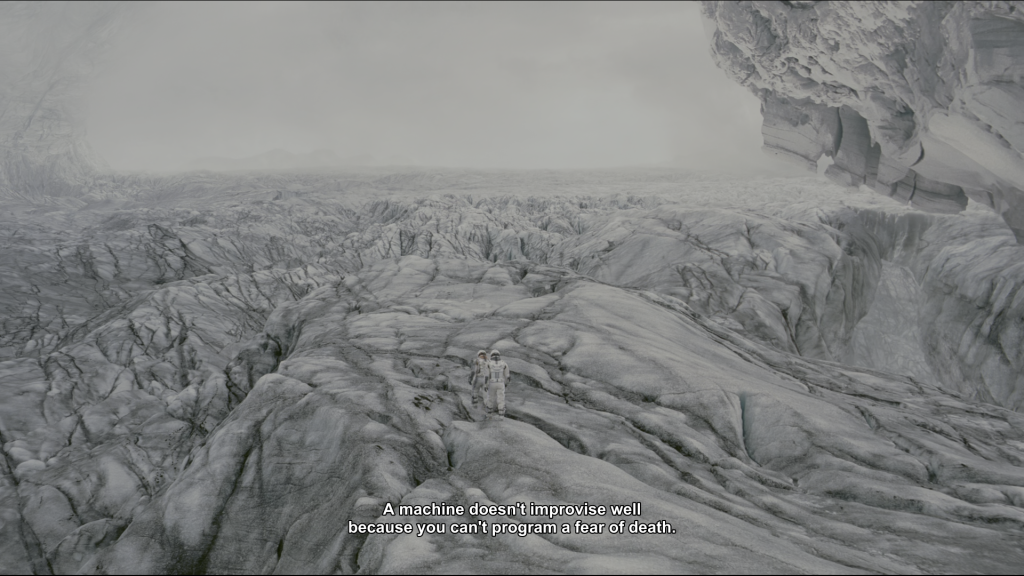
Christopher Nolan’s Interstellar
The human urge to improvise, do something unconventional at the last moment of life is often epitome of all extreme survival stories. (Not only in movies but also in reality)  

Our basic survival instincts are always aware of the chances and ways in which we can die. A healthy person’s subconscious mind is aware of the death and its consequences. Our immediate involuntary responses to life threatening events are examples of that. (You immediately remove your hand from a very hot thing because you know that it is going to hurt you.)

Interesting is when these such feeling for the longing of survival gets highlighted in some extreme and abnormal conditions. The conditions which are not generally faced by normal human beings.

Victor Frankl and The Delusion of Reprieve

Victor Frankl an Austrian neurologist and psychiatrist in his days in Auschwitz observed a very extreme and irrational behavior amongst the victims including himself. When the newly admitted Jewish prisoners were torn off of their own identities, the only thing they were left with was their hope for surviving through the tortures wishing that they have some things to finish, some purpose of life to fulfill after living through that real-life hell. Frankl in his book “Man’s Search for Meaning” creates a lively and horrifying picture of what a living hell looks like. Not even the greatest empath in the humanity can relate with the pain that these prisoners went through.

Frankl in this book explained the whole process when the Jewish prisoners were admitted to the concentration camp. At first, the prisoners went through the shock that they were being taken to Auschwitz – a place infamous for ruthless deaths of Jewish people. Then the hostility of a deserted, dry, barren land maintained by people with similar dried emotions amplifies that shock.

In this exact moment, Frankl noticed a group of people who looked much healthier and with some wit/ humor which highlighted the sanity of their minds even in such hostile environments; maintaining that snobby “attitude” even in this deserted, unfriendly environment was one relief for him.

With this observation, Frankl concluded that he too will be able to match with these people in order to survive through this hell with relatively lesser pain. One has to understand that this urge to have a lesser painful life in Auschwitz was not even closer to the reality, even the word “exception” would fall short for this. And still, even after knowing the fact that there is no escape from this hell, even after knowing that almost all of the people in Auschwitz die from inhumane mental and physical tortures, hard labor, starvation, diseases, internal disputes, favor-ism, unfairness, Frankl thought that there is a chance that he can climb up this ladder and become part of this “snob party”. One has to understand that the thoughts Frankl is having here are totally irrational. Frankl was already aware of the consequences of being sent to Auschwitz but even after that his mind chooses an irrational idea of facing less pain in Auschwitz. Frankl justifies this irrationalism by the “inborn optimism in him” and calls this condition in psychiatry as “delusion of reprieve”. He explains this in following words:

“The condemned man, immediately before his execution, gets the illusion that he might be reprieved at the very last minute. We, too, clung to shreds of hope and believed to the last moment that it would not be so bad.”

This “delusion” of being “pardoned” at the very last moment becomes the very first stage in the psychosis (a mental disorder of getting detached from the reality) of the people exposed to extreme ruthless environments of Auschwitz. This is totally different from the stories of conventional heroes and villains. Here, the person has completely lost the sense of what is a real possibility and what is an unrealistic demand. The conscience – ‘mere rational’ of the person gets broken in the hope that there is still something good and some chance of survival through this.  

Biases, Delusions and Apathy

In psychology the biases and delusions are closely connected and highlight the tipping point from where the psychosis starts. First of all, it is very important to know that we all have biases. Biases are our favored, prejudiced opinions for someone or something. Biases are some sort of mental shortcuts to avoid the energy loss for processing huge amount of information. Here are some examples of cognitive biases (a systematic pattern of deviation from norm or rationality in judgment):  

Availability Heuristic Bias – People do not make decisions based on the data and statistics but on the stories and the stuff they hear from other people. You would want to easily trust what news show than to actually check and cross check fact with real data.

Choice Supportive Bias – People defend themselves because it was their choice. Because, if they made the choice, it must be right. You could be never wrong because you feel so is common scenario. Remember the time when you don’t even care to google what you just assume to be right because you think so.

Confirmation Bias – We tend to listen to information that confirms what we already know. Even after knowing that you were wrong you support and believe only that information that proves your thinking. Remember the flat earth conspiracy?

Ostrich Bias – Subconscious decision to ignore the negative information. Remember (again) the flat earth controversy?

Placebo Bias – Belief will help you recover. Loosely speaking, it can be explained by the idea of fake it until you make it. Your mind will make decisions based on the illusion that you are rich thereby ultimately making you rich. Placebo drug therapy is also the best example (but repeated words won’t explain the meaning)

There are many types of cognitive biases which actually throw light on our belief systems. (This could be a good discussion for some other times). The point is that when such biases start having a strong hold on a person’s mind, the person becomes delusional, leading to delusional disorders. This is triggered by some abnormal and unexpected situations. Victor Frankl actually observed and even went through such experiences where he establishes the “emotional death” of a person.

Due to constant shocks and bombardment of unconventional cruel treatments, the mind of person becomes numb to the extremities of the experiences and their response to such cruel, extreme and abnormal things no longer remains reactive as if these are normal situations for them. This is the “emotional death” Frankl is referring to. They became detached from the reality and thereby the humane emotions and responses to the cruelty around them – they became apathetic. Neither positive nor negative emotions.

Fine line between biases and delusions

Carrying the hope of having some moments of escape is also one example of the biased thinking the prisoners carried. Even after knowing, seeing and experiencing the cruelty in Auschwitz, their minds were not ready to accept the reality that it is close to impossible to escape this hell. Frankl’s well explained ‘delusional behavior among prisoners’ is one important part of Humanistic Psychology and Cognitive Behavioral Therapy.

Delusion disorder are classified as Bizarre (realistically impossible) and non-bizarre (possible but wrong in nature). Jumping to conclusion bias is one of the most researched bias connecting to delusional disorders.

Jumping to Conclusion Bias (JTC Bias) – A bias where something is assumed to be true without collecting all the information/ data. It is also known as inference-observation confusion.

You can find in Frankl’s description of their admission in Auschwitz where he explained “those” healthier group of people. The optimistic urge of Frankl to be in level with them is an example of jumping to conclusion bias. With very little information and an unrealistic urge to survive Frankl unknowingly became victim to the delusion. (Although his profession helped him to distinguish such behaviors and work over them leading to strengthening and establishment of Logotherapy) There are some studies which have also highlighted that jumping to conclusion is one of the biases closely related to delusions and psychosis but it not the only reason, rather it is very unclear that how delusions form. Studies show that there are two possible reasons to why JTC Bias and delusions are closely related. One is “the intolerance of uncertainty” and second is the “impaired working memory”. In simple words, firstly – the fear of unknown, ambiguity in the outcomes of the things makes the mind to take shortcut and create a simple conclusion to settle the chaos of the data (which already is limited) thereby making an unrealistic expectation from the event and secondly the incapability of one’s memory to handle the routine tasks makes it impossible to derive conclusions from complete data thereby restricting the flow of information as minimum as possible to make the conclusion which then become unrealistic. These two reasons possibly indicate the connection between JTC and delusions. Please note that JTC is not the only bias which can cause delusions.

Although delusions are very extreme part of human psyche, it is very interesting to understand their link with the biases almost every human being has. Given that such types of biases are always there within us representing some short-lived illusions from truth or I would say “quasi-delusions”, it becomes very important to notice such patterns and immediately work over them. Being mindful, being aware of the thoughts we are having and the coherence of the conclusion we are drawing from them is one of the most important way to remain free from the biases and delusions.

The Metacognition therapy, the logotherapy thus are the important branches in humanistic psychology which contributed in this field. The psychology of hope is also one important aspect of delusions related to survival; especially in the cases resembling to Viktor Frankl’s experiences.

References and Further Reading:

  1. Man’s Search for Meaning by Viktor Frankl
  2. Delusion formation and reasoning biases in those at clinical high risk for psychosis, The British Journal of Psychiatry
  3. Thinking biases and their role in persecutory delusions: A systematic review, Early Intervention in Psychiatry
  4. Delusional disorder – Khan Academy
  5. The tendency to stop collecting information is linked to illusions of causality, Scientific Reports by nature.com