
Suffering – The North Star of Existence

People have tried to justify their existence with happiness, fulfillment, satisfaction, service, love, hope, devotion and what not. But those who have existed in full spirit, lived it to the fullest have realized the effect of sufferings on our lives and even after overcoming them are ready to endure them again in the hope that they will become better than what they were before. These are the people who might have solved the query to justify the life. Overcoming the sufferings in life and continuing the journey ahead could be the answer.

On Charles Dickens’s short story –  A Child’s Dream of A Star
The Impact of Suffering in the Pursuit of Happiness

Question- what would you choose of the following?

A short life filled with happiness and satisfaction? or A long life filled with pain and suffering?

I will assume that you have selected one.

Charles Dickens’s short story – A Child’s Dream of A Star

I came across a short story “A Child’s Dream of A Star” by Charles Dickens which shows what it means to pass through the suffering of the lost loved ones.

This is a story of a boy who loses many loved ones throughout his whole life. Whenever he is losing someone, he dreams of a star where he sees the souls of his loved ones meeting and coming together. First, he loses his little sister in childhood, then his baby brother. When he grows young, he loses his mother, while being adult he loses his own daughter. Every time, when the boy loses his people, he dreams of the same star and wishes that he too could join them. But, when grown adult and losing his daughter he is somewhat soothed that his daughter is not alone, she has the angels of his sister, mother and brother to accompany her.

When he realizes the arrival of his last moment, he accepts the death for the joy that he will join the souls of his loved ones now.

The Suffering of Watching People Leave

Charles Dickens in a very impactful way shows what it means to live life. On surface analysis, one can say that this short story of a boy dreaming about the people he lost and asking for his own death in the hope to join them is about the pain of losing the loved ones and dissatisfaction of not getting enough time to spend time with them and love them. Deep down it is about how one endures pain and I think the only way to endure such pain is to pass through it. Any attempt to alleviate or even control it, leads to more pain.  

Enduring the Suffering

The great thing about this story is that it delicately captures what a beauty that life we live in is and how we connect same attributes of life to the afterlife (even when we are unsure whether it truly exists, even when it exists in our minds and dreams) also how fragile our existence is.

Charles Dickens used the innocence of the child’s mind to show how we carry that innocence throughout our life to use every chance to stay closer to the people we love. The opening of the story also talks about the sorrow that is felt by everyone when someone dies.

“They used to say to one another, sometimes, supposing all the children upon the earth were to die, would the flowers and the water and the sky be sorry? They believed they would be sorry. For, said they, the buds are the children of the flowers, and the little playful streams that gambol down the hillsides are the children of the water; and the smallest bright specks playing at hide-and-seek in the sky all night must surely be the children of the stars and they would all be grieved to see their playmates, the children of men no more.”

It shows that even for children the suffering had a bigger meaning not even when they had faced any such suffering from loss in their tender age.  It shows how by default we are hardwired for the sensitivity towards suffering. Maybe we are more sensitive to suffering than love.

Then we see that the boy is exposed to multiple losses and you will see over the time his dreams are evolving gradually. In early childhood loss of his sister, he is totally devastated that he could not join his sister, then he is again agitated with the thought that his younger brother has to join her in the starry heaven. Then when he is young, he is somewhat settled that his mother could join his sister and the brother.

Now when being adult and losing the beloved daughter, the same boy has made peace with her death in the thought that she has enough people to take care of her and maybe love her more. Now he has made amends with the death.

“My daughter’s head is on my sister’s bosom, and her arm is round my mother’s neck, and at her feet is the baby of old time, and I can bear the parting from her, God be praised!”

You must understand how the boy from childhood till his old-age sees the death in different ways. At first, he has intense sorrow for his sister but over the time he sees that even after death the people he loves have each other’s company.

He cannot do anything to join them in the afterlife and death is the only way to join them. Please note that there is not even single mention or any indirect indication that boy wishes to end his existence just to meet his loved ones in afterlife.

So, it’s a story of how a person builds himself towards the suffering. You will see that the boy never gets numbed because of the series of losses, he is hopeful that at least someone is there in afterlife for them to love each other. Death along with love is the only constant in this story.

We are well aware of the love from the very beginning of our existence but it takes time to appreciate that just like love, death too is eternal. It’s just that our minds find it difficult to bring together the idea of eternal nature of love and never-ending series of death in single thought. Maybe that is why not everything exists at exactly the same time and ends at exactly the same time, otherwise there would be no one to witness and appreciate what one existed in and carry that forward.

The Eternal Curiosity, Innocence and Love

I am adding the concept of eternity, endlessness in this story of involving series of deaths, ends and sadness with it, because that is how the life is. The symbolism of star used in this short story by Charles Dickens also points to that idea.

You should notice that in the opening it is about how everything that is there in existence will feel sad for loss of the children of men. The boy feels that sorrow in his childhood; later on, we realise that he holds these unfulfilled emotions, feelings of not getting enough time to spend with the people he has lost. These emotions are continuously getting reflected in his dreams. In the end, we see that he is dying happily while feeling that he can love them again in the afterlife.

But you should now notice that the dream is limited to the boy only. What is real is the star in this story; the star shining on little sister’s grave and was still shining on her brother’s grave who died at old-age.

Just like the children’s curiosity about whether the nature grieved for the losses in the beginning of the story, we can say that the star (being the child of nature) would also grieve for the people he saw dying. But that is not where the story is going. The boy had learned to handle the grief over time and that is why is mature emotionally with the death of his daughter and even his own death. This became possible because his love for his sister increased multiple folds, got intense over the time.

The maturity that comes to such sorrow is worth noticing, the boy now an old-age man is not sad because he will be leaving his children behind. He is neither happy that he will join his loved ones in the afterlife (although what he says while dying means that he is eager to join afterlife).

The star was a construct of his mind to move over the grief and be assured that no one – not even him will never be left unloved. He had a strong belief that at least love is eternal in some or other forms. The star still shining upon his grave in the last sentence of the story is thus the symbol of the child’s innocence and love.      

The last words of the boy/ man are these:

“…My age is falling from me like a garment, and I move towards the star as a child. And O my Father, now I thank thee that it has so often opened to receive those dear ones who await me!”

We all can appreciate that the afterlife’s notion is only in the boy/ man’s dreams but that does not invalidate his feelings. He is grateful that he had someone to love (although he couldn’t love them to the fullest while living). The childhood innocence and curiosity he carried throughout his life helped him to endure the suffering. Curiosity because of the urge to understand what would happen to the people who die gets materialized in the dreams of the boy and thus he builds his understanding around it. This curiosity emerged because he cared for them so strongly that he was concerned about what would happen to people after they die. Innocence because from childhood till old-age he deeply believes that just like the children of nature, everyone and not only him cared for people, loved them in some or other ways.   

Conclusion

Most of the existential queries on human life point to one single question of meaning or purpose or at least worth of the life. Once started, if it is destined to end then why is this everything existing? And this question is not just about life. It is about everything attached to the life itself. If everything in existence is attached to something and everything at any time will be lost forever, disconnected forever then why does everything exist in first place? Once you appreciate this question, you will see that existence is majorly a series of detachments, losses – literally and figuratively. It is just that some things detach faster than others, some things stay for longer time but are lost in the end; we are just existing in these gaps of losses and detachments. Maybe how we felt about those things especially the innocent emotions we had for everything that is there (which are neither good/ bad, pure/ impure) are eternal. If not eternal, I would say that they evolve in better ways, get refined, gain maturity and get transferred to our next generations through our legacy. Maybe they too would have an ending but what can we say about the human spirit! The spirit to exist in spite of the sufferings! The ability to exist in full spirit and endure multiple sufferings over the time while maintaining that innocent child alive inside you is what justifies our existence in the end. And even that is to end in the end, I have no complaints.

So, when I asked to select one of options at the start, if you felt that selecting only one of these is foolish (or difficult/ meaningless) then welcome to the club!
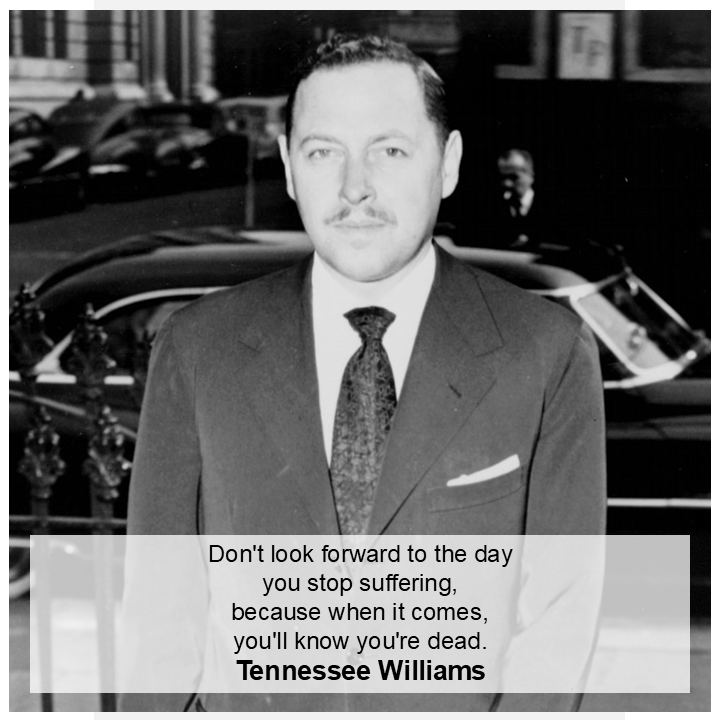
People have tried to justify their existence with happiness, fulfillment, satisfaction, service, love, hope, devotion and what not. But those who have existed in full spirit, lived it to the fullest have realized the effect of sufferings on our lives and even after overcoming them are ready to endure them again in the hope that they will become better than what they were before. These are the people who might have solved the query to justify the life. Overcoming the sufferings in life and continuing the journey ahead could be the answer.


The Practicality of Philosophy

What is the purpose of Philosophy?
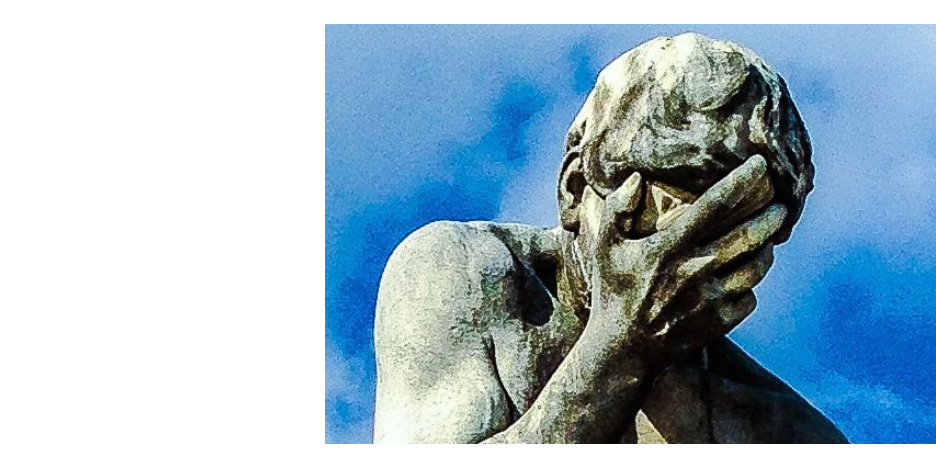
one of my favorite memes (Source: starecat.com)

We live in a competitive and fast-moving world where everything’s success depends on the outcomes and their value delivery. Take any example, if any movie release fails to entertain the major audiences, consider it flopped; if any project is not delivering the expected profits to the company consider it stopped; if any equipment is not working properly for the performance it promised, consider it a market failure; if any start-up is not built upon the actual market requirements, consider it a flop business; an employee fails to reach his targets, consider no promotion or even a pink slip. Whenever you are working on achieving anything and if your actions and thought process behind them are not directing you to the Goal, people will suggest you to change your strategy. In nutshell, everything you do, every thought you have is expected to have a fruitful outcome, value creation, profit, gain, benefit thereby there must be some utility. We now call these things, these thoughts “practical”. General thought process always suggests to have the practical way of life in order to succeed in a way.

I am of the same opinion, that doing certain things, acts, thinking (actually overthinking) about everything you stumble upon is expected to deliver some “practical” benefit in my life. If you studied enough and can’t get the job of specific salary then what good is your education? There must always be some definite value delivery from our actions otherwise we are just wasting time and getting nothing.

The situation worsens when you implement the same logic to the ways you think about anything and everything you stumble upon. It is like day dreaming as you are only thinking about some random things, are engrossed completely in the world of your own and there is no real-life benefit from it. Then, it becomes imperative to “Get Real” in life, sort your things and be practical and use your common sense.          

Now, here comes a short story-

In a fight, the flight attendant finds an elder person going through severe chest pain, she immediately asks for the expert help.
Flight Attendant- Attention all, we have an emergency. Is there any Doctor onboard?
(One person raises his hands)
The person- Yes, I am a doctor.
Flight Attendant- We need medical help.
The person- But, I am a doctor of Philosophy.
Flight Attendant- He is going to die
The person- Aren’t we all anyways?

One can only imagine the awkwardness and impractical response of philosopher to the situation in the flight.

I used to think that the philosophy and it’s ideas yet interesting and intriguing cannot handle the reality of life and solve practical problems.

And, (as usual) I was wrong.

Here it goes…

The question is-

Will thinking about every possible thing you are exposed to (and even about the things you may never get exposed to) and asking “unnecessary questions” about it add value to our life? Will thinking about things irrelevant to your job is going to increase your performance at your workplace? Is thinking about any random thing is going to put food on your table?

In short, what is the worth of the philosophical ideas, questions if they are not going to solve our practical problems? What is the practicality of philosophy?

This was the question I was stuck at; even though philosophical ideas have always intrigued me.

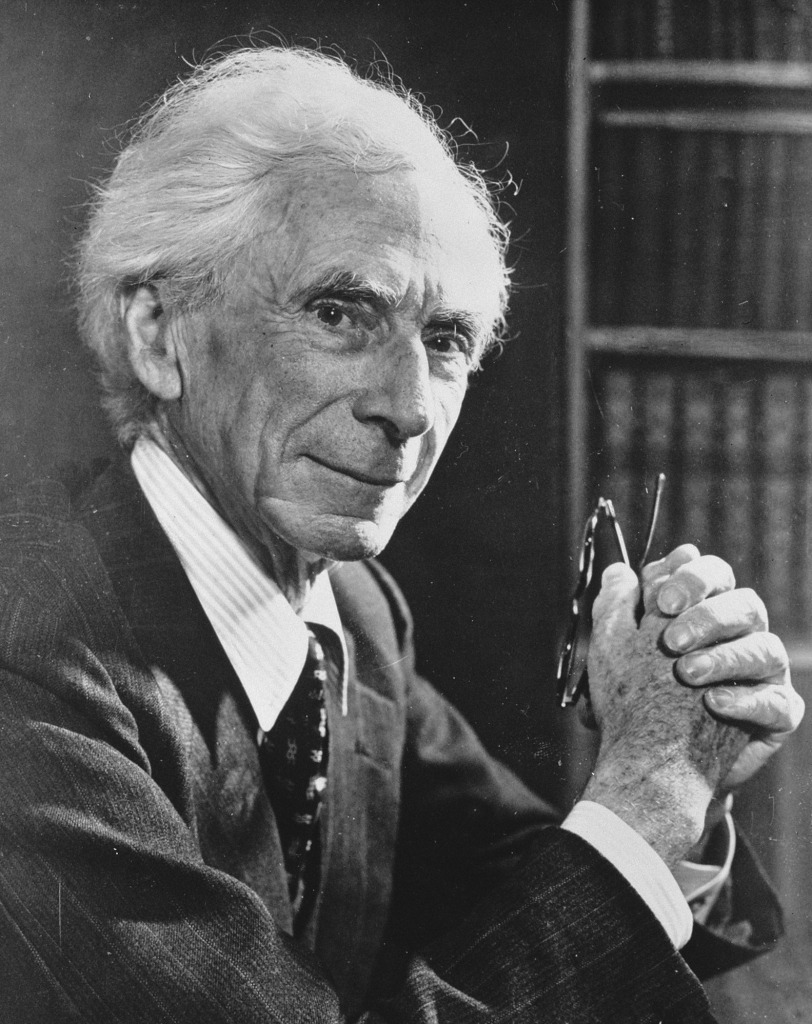
Then I found my answer in Bertrand Russel’s book called “The Problems of Philosophy” with the last essay called “the Value of Philosophy”. The ideas explained by Bertrand Russel in this writings answer the very basic question about the utility of philosophy.

Ends of life

Russel explains the idea of ends of life by distinguishing between the nature of Physical Sciences and the philosophy. The idea is that all the physical sciences that we as a human have established have contributed to the society in some ways. The developments in physics led to inventions of uncountable things like lasers, semiconductors, telescopes, machines and what not hence landing mankind into the modern world. The developments in virology, bio-technology, modern medicines helped us to come out of the global pandemic. The developments in geography helped us to explore the globe, share our trades, cultures, profits, save us from natural calamities. The psychology helped in maintaining the mental well-being, the social well being of the society there by controlling the sanity in the people. The economics helped to efficiently utilize and manage our resources in order strive as a species on a space floating rock. These physical sciences have mastered various ends of life and are continuously contributing ahead

What about philosophy? If we are going to discuss how certain philosophy has solved the world hunger or how a philosophy has cured the incurable diseases in history or how a philosophy has saved people from famine or how a philosophy landed us on another celestial body, then the answer is surely no. There are no practical ends of life which philosophy helps us to achieve.

Uncertainty of philosophy

Bertrand Russel has very beautifully established the difference between the nature of Physical Sciences and philosophy. The Physical Sciences have postulates, theories, formulae, a definite structure which builds the all knowledge they represent. There is a systematic path to be followed in order to answer the posed question. If you ask a physicist why the sky is blue? he will approach the problem from the branch of optics then thereby refraction and scattering and the spectrum of light. If you ask how the eclipses occur? to an astronomer, he will take you through solar system, to planets, their satellites and their rotations, orbits. It can go on and on.

In short, in all the physical sciences the truths established are definitive. There are definite answers to the questions posed. Such is not the case with philosophy. If you pose a philosophical question as in “What is the purpose of life?” every philosopher will have his own versions and there is no surety of definite answer. If you ask questions like, why was the world created?  Why was the universe created? Are we really body with a soul or a soul with a body?

See the pattern we can observe from the philosophical questions is that the truths they are giving are not certain. On contrary, the truths revealed in physical sciences are definite, their truth value is certain based on the truths they are derived from due to structured-ness. Bertrand Russel establishes that all the physical sciences are originated from philosophy. When the definitive-ness, certainties of truth extraction system, knowledge building system of these philosophies became strong, they separated from the philosophy and get independence.

Thus, the only thing certain in philosophy is that there are no certain answers to the questions posed. If the answers are getting definitive, certain then a new physical science gets established thereby separating from philosophy. Philosophy of mind became psychology; philosophy of heavenly bodies became astronomy.

What I found interesting in this idea of “genesis of physical sciences from philosophy” is that though upon certainty of truth/ knowledge physical sciences become free from philosophy, the next unanswered questions in physical sciences immediately start to redirect themselves to philosophy again until the certainty of answers are obtained thereby proving the presence of philosophical inheritance.  Our quest for understanding “the nature of reality” in the world of modern physics is one such strong example.

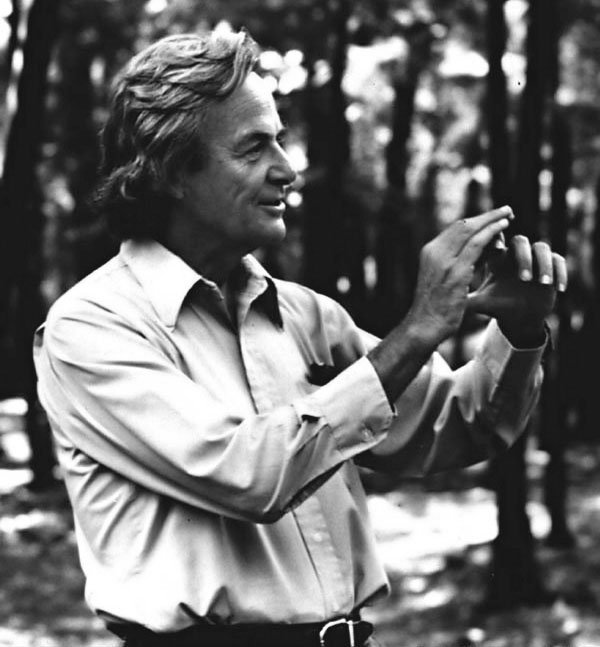
Richard Feynman in one of his famous lectures discussed about questioning the nature of reality as we understand:

“it’s a very strong tendency of people to say against some idea, if someone comes up with an idea, and says let’s suppose the world is this way.

And you say to him, well, what would you get for the answer for such and such a problem? And he says, I haven’t developed it far enough. And you say, well, we have already developed it much further. We can get the answers very accurately. So, it is a problem, as to whether or not to worry about philosophies behind ideas.”

Richard Feynman

Meaning is it not always compulsory to have structured-ness and definitive nature to any idea. There may be always some indefinitve-ness to the answers in philosophy.

Truth of the answers to the questions of philosophy

Now that it is clear that the answers to the questions in the philosophy are not definite, not certain; it is also important to understand that the answers don’t lose their value due to their indefinite or uncertain nature. Rather they bring us closer to the unrealizable, un-experienceable truth.

According to Russel, the confinement of knowledge is the major point which poses the question on “the practicality” of philosophy in our life.

I think what Russel is trying to say here is that as soon as the nature of the truth of knowledge starts following a pattern/ a trend, it gets confined in the structured-ness of certainty thereby getting its independence, self-reliance. The philosophy hence will always remain as a field (even the word “field” is so confined) rather expanse of uncertainty where there will always be some room for speculation.

In order to ask for value of philosophy, one has to confine it to some ideas and then compare these ideas to other ideas. But the game philosophy plays here is that the you lose the identity of philosophy once you confine it to some set of ideas in knowledge/ physical sciences. Thus, remains incomparable.

Funny thing is that the solution of such problem will start with – What is comparison? How to measure the worth of anything? (Which themselves are good philosophical questions!)

Philosophic Contemplation: the idea of Self and not-Self

Russel suggests that the value of philosophy will be only realized when the ends of the life are not limited to ‘Self’. I think what Russel is trying to convey is that the realization of something greater above ourselves itself is humbling. Understanding that the knowledge will still exist irrespective of our existence is one important part of we becoming free from our own identity.

When there will be search for knowledge for Self, the answers gained will be confined, they will always reflect the nature of the self or the seeker.

But, once one understands that the knowledge, philosophy is above himself i.e., once a person starts seeking questions to the answers not for the betterment of himself only but for the knowledge itself then the knowledge reveals itself. This knowledge will not be definitive, certain. This knowledge will not have concepts of good or bad, pure or impure, left or right, profit or loss, worthy or unworthy. It will be only the knowledge itself where truth is still uncertain, indefinite an innocent. Russel calls the philosophy as the union of Self with not-Self. That is in order to understand something greater than ourselves, we have to lose the idea of ourselves, our being.

The curse on humanity

The question of finding the worth of philosophy itself has its own limitations. The concept of being worthy brings in the ideas of comparison, tradable value, what one gets in return, replacement value, a sense of transaction, gap due to absence, appreciation due to presence. This transactional, tradable, replacement value itself is a very small part of materialistic ideology of our human life.

See, our existence, thereby we being alive is dependent on so many materialistic things/ resources which are inherently important for our existence. You will not find a beggar asking for the explanation of the ideas in stoicism or nihilism. Most of the times he will only think about the ways to get the next meal. (Although, a beggar can also question about nature of him being a beggar

instead of a king if he wants)

In short, what I am trying to establish here is that for us as a human being, we need materialistic objects and our interactions with them through our senses to become aware of our consciousness. To become sure that the materialistic world and the sensations from them are not the only bounds of the life that we live in. The curse to human life here, I would say is that the first step in awareness of “knowledge greater than Self” starts with the awareness of our materialistic nature. Our first dose of true knowledge is only possible from the establishment of truths from the material world and our interactions with them. The material worlds being born from higher level of “uncertain things” reveal these uncertainties, thereby making us question their fundamental nature. This leads us to understand that there are things greater that what we are experiencing but there is no surety of completely true, certain answer.

Lifting the curse

I have a thought that, there is also benediction for this curse, rather anti-curse which is “the Curiosity”. Curiosity itself is the definition of philosophy. The whole purpose of philosophy is not to find the definitive answers, truths to the questions rather it is asking the questions and keep asking the questions.

Satisfaction of the curiosity is I think the boundary of the truths. The extent of satisfaction of the curiosity will be dependent upon how real or practical you want to get (What is the extent of real and practical also needs definition thereby). Here, there is no place for value, worthiness rather it is about satisfying the purpose and truly implementing philosophy to solve some real problems.

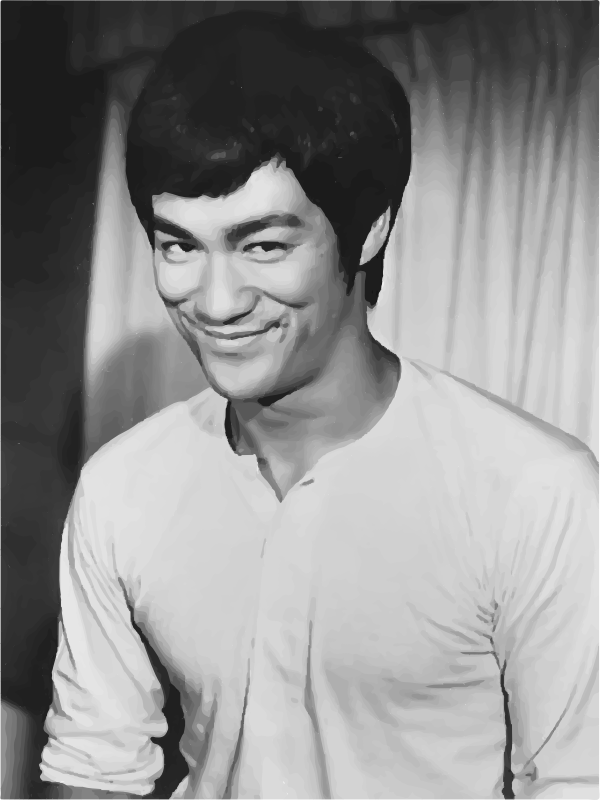
Bruce Lee has one famous quote on the same front:

“…here is the natural instincts and here is control. You are to combine the two in harmony. If you have one to the extreme, you will be very unscientific. If you are another to the extreme, you become, all of a sudden ‘a mechanical man’- no longer a human being. So, it is a successful combination of both, so therefore it’s not pure naturalness, or unnaturalness. The ideal is unnatural naturalness or natural unnaturalness.”

Bruce Lee

It is about the union of Self and not-Self to find the knowledge as Russel explains. You need not to infuse your boundaries, your prejudices to the questions of philosophy while on the quest of knowledge. You have to again lose your identity to find the real knowledge.

Again, Bruce Lee’s philosophy about being water reflects similar ideas about the nature of true knowledge from philosophy.

“Empty your mind, be formless, shapeless, like water. Now you put water in cup, it becomes the cup. You put water in bottle, it becomes the bottle. You put it in a teapot, it becomes the teapot. Now water can flow, or it can crash. Be water my friend”

Bruce Lee

Be water my friend!

Bruce Lee

This also explains the innocent nature of knowledge. It takes shape of anything that it is in.

(That is the exact reason why we were forced to write the essay in our school on “Science: Curse or Boon”! OK, Jokes apart)

Having answers to the questions ends the quest thereby giving the boundary to the idea; asking the questions creates the possibilities. And creation of possibilities however uncertain they may be is the purpose thereby the worth of philosophy.

So, philosophy is not about finding definitive answers, it is about keeping on asking questions.

“I would rather have questions that can’t be answered than answers that can’t be questioned.”

Richard Feynman


“Through the greatness of the universe which philosophy contemplates, the mind is also rendered great, and becomes capable of the union with the universe which constitutes its highest good”

Bertrand Russel, The value of Philosophy from “The Problems of Philosophy”  


Further readings and references:

  1. The Problems of Philosophy by Bertrand Russel
  2. Richard Feynman– image from Wikimedia
  3. Bertrand Russel– image from Wikimedia
  4. Bruce Lee– image from Wikimedia
  5. Philosophers meme- Form starecat.com
  6. Clip from the lectures by Richard Feynman from youtube.com
  7. Clip on Bruce Lee’s Philosophy from Bruce Lee “The Lost Interview” from youtube.com