The Roadmap For A Creative & Fulfilled Life

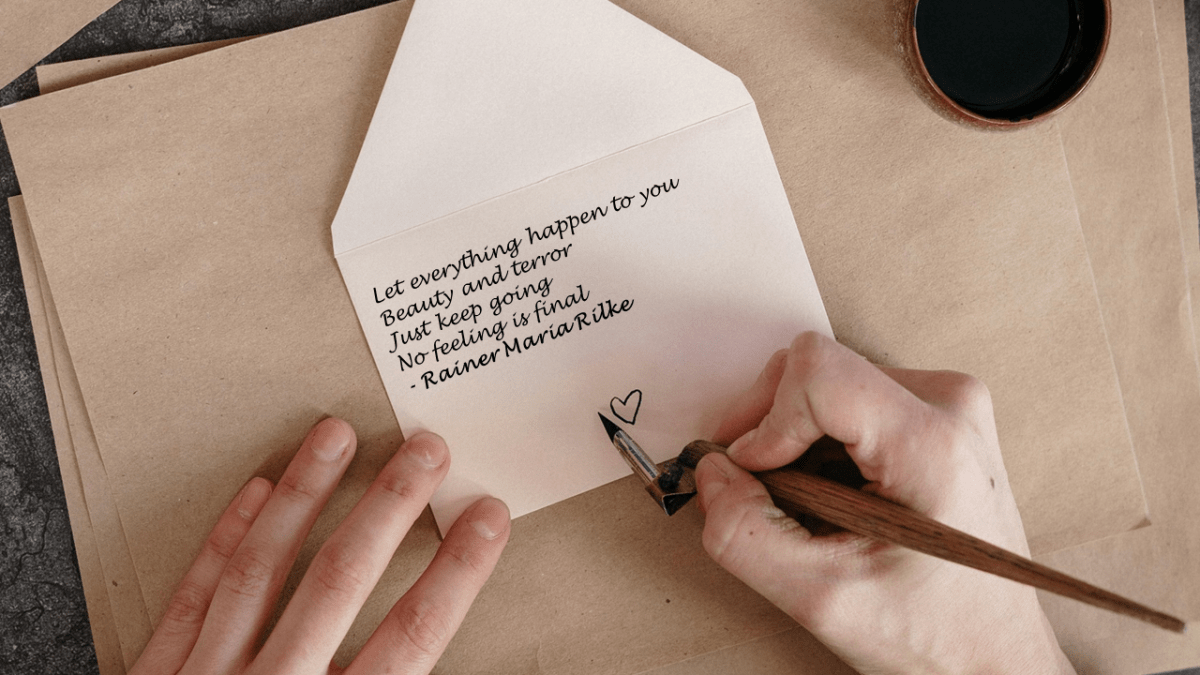
The ten letters from an Austrian poet, novelist – Rainer Maria Rilke to a young poet undergoing the fear of mediocrity and criticism laid down a roadmap for a successful artistic and creative life. The beauty of Rilke’s letters is that they are not limited to those strictly in the creative professions; rather it is a roadmap for every person who want to live a fulfilled life involving continuous transformation of inner and outer riches. That is also why art is important in our lives. Rilke through his ten letters, implores the reader to cultivate authenticity, empathy, and patience to pass through all events of their lives.

In today’s times the written communication has become so handy and easy that you can send millions of sentences from one end of the globe to the another within few milliseconds. This convenience of communication has stolen away the sanctity, sanity and strength of the words and emotions they invoke which were actually supposed to transform our worlds in better constructive ways. After reading these letters from Rilke you will appreciate how effectively he distilled down the divine wisdom of life in few pages. A book costing less than one time meal can transform your whole life. This is the power of a true artist.

Rainer Maria Rilke’s Letters to a Young Poet

One of the biggest fears any budding artist carries inside them is the fear of mediocrity and the fear of the criticism. Creative pursuits can be followed by anyone and everyone but very of few them are able to rise-up as the real artists. At the same time, it is also true that a great master was once a starting novice. This is where lies an ambiguity; how could an artist develop his art to the greatness when today he/she is unsure about its end fate? This may feel a complicated question but the answer is simple or at least someone has already simplified the answer for us. Rainer Maria Rilke, the poet is the one of the artists who truly understood what it means to create an art or become a true artist.  

The reason to mention Rilke out of the other artists is the way he provided that answer. Very few artists carry so much artistic power that even when they would sneeze or yawn, it feels artistic. Rilke was one of those effortless artists. Pardon my example of artistic yawn, for Rilke deserves far superior analogy for his works. A true artist’s life itself is an expression of art. This is only possible due to the authenticity. Authenticity is the core of great and true art.

The reason to choose Rilke to solve the riddle of the true artistry is the letters he wrote to a budding poet for giving feedback on his poetry. You will see the inner workings of Rilke’s genius artistic mind through these ten letters. You can call these ten letters as ten advises, ten rules to become a great artist rather a great human being. You would wish that someone would have given you exactly similar advises in your journey when you will read these letters. What strikes me the most in these letters it the relevance they still have today, that is what is an attribute of true art – it stands the test of time. I will throw some light on the key moments from these ten letters and would encourage you to read them for yourself. You will understand that very few pages of paper are enough to change the way you live your whole life.    

Letter 1 – Art should fill the gap between what is felt and what is expressed

Criticism of art

Franz Kappus – a recruit in military academy felt the need to have an opinion on his poetry which is why he wrote letters to Rilke asking for his feedback. Rilke once studied in the same academy. Rilke writes following in response to Kappus.

“Things are not all as graspable and sayable as on the whole we are led to believe; most events are unsayable, occur in a space that no word has ever penetrated, and most unsayable of all are works of art, mysterious existences whose life endured alongside ours, which passes away.”

– Rainer Maria Rilke, Letters to a Young Poet

It is very interesting to see how Rilke found out the gap between the expression of any art and the interpretation of its observer, admirer. And that is exactly why art should exist and function. That is also why it is very easy to criticize given art but difficult to replicate it. Most of the pure creations of art, however fictional they may be have somehow emerged from some real-life events and are very personal. This fuels the pure artistic creation but it may also steal the perspective from the observers who haven’t gone through that real life experience in their own lives. That is exactly why criticism is the easiest task in any artistic journey. Rilke thus encourages the new poet to not worry about the criticism of others in this journey. Actually, bringing the intangibility into tangibility, unsayable and unseeable into comprehensible reality is the exact job of the artist. He would anyways face the criticism as he is the first one to bring them into the reality; others are yet to pass through the same experiences on their own level. Fear of criticism should not stop the process of artistic expression. 

Artistic style is effect of the art not the cause behind it

“Nobody can advise you and help you, nobody. There is only one way. Go into yourself. Examine the reason that bids you to write; check whether it reaches its roots into the deep regions of your heart, admit to yourself whether you would die if it should be denied you to write.”

– Rainer Maria Rilke, Letters to a Young Poet

Many artists try to copy the style of other famous artists to create their own art because it is already proven technique that others are appreciating. It is the safest way. Some try to force things so that art would be created. Art should not force you to do certain things. The style created by these routes becomes pretentious and ‘cringy’. People will like it; it will become viral but it will be short lived.

Rilke thus advises the young poet to look for the reason he has chosen to walk this path. He wants the poet to make sure that the reason to go on this journey is to express the deep sayings of the heart. The art created from this deep urge of the heart will have its own style.

Rilke was very well aware that the emergence of style is directly linked to its uniqueness of expression which is very personal thing. Hence, he suggests to go inwards. Every one of us lives their life in unique ways and if the art reflects that uniqueness, then it can easily create its own style. This is possible only when one has the urge to honestly put his own life in his art instead of copying or imitating the lives of others. This is also why one cannot separate the biography of a true artist from his art. So, study of an art is in a way the study of that human who created it, his philosophy of life.

“A work of art is good if it has risen out of necessity.”

– Rainer Maria Rilke, Letters to a Young Poet

Letter 2 – Art is more about depth than its aesthetics

“For under the influence of serious things irony will either fall away (if it is something incidental) or on the contrary (if it really belongs to you in a native way) it will gain strength and so become a serious tool and take its place among the means with which you will be bound to create your art.”

– Rainer Maria Rilke, Letters to a Young Poet

Art most of the times is meant for pleasure or to stir up the emotions. That is why aesthetics are one important part of any art. So, it is natural for any artist to work on improving the materialistic attributes of his art, the way it looks, the way it sounds, the way it smells or the way it feels to the skin – the way it triggers the senses. Rilke wants the young poet to care less for such aesthetic attributes and focus more on what needs to be said which was not said by others before. This is possible only when the artist shows his personal depth, his honest intent while expressing his emotions, thoughts, ideas through his art. If there is depth in the expression, the aesthetics would be automatically be built around it to fulfill that honest expression.

This shows why Rilke’s simple writings feel so artistic and pure to the core. Even his normal letter communication has an intent and depth.   

Letter 3 – Solitude engenders the art

The solo journey of authenticity for the creation of true art has its shortcomings (I won’t use the word ‘disadvantage’ because Rilke explains the power of such solo journey many times in his future letters). The shortcoming is that as you are on your own, you may cross the paths which others have already passed, you may commit the same mistakes which others already committed. This wastes valuable time and resources. So, anyone would obviously think that at least if they start with some preconceptions of what others have already done, it would prevent them from potential failures in their own artistic journey. Rilke prohibits the young poet from embarking on such journey. There is a reason.

“Trust yourself and your instincts; even if you go wrong in your judgement, the natural growth of your inner life will gradually, over time lead you to other insights.”

– Rainer Maria Rilke, Letters to a Young Poet

The single most common attribute of any great artform which is the authenticity is possible when the artist successfully pours his/ her unique perspective into their art. This is only possible when they go on their own journey in their own ways even if others have already done that. Rilke focuses more on how you grew out of your failures, the failure which other have gone before but never learnt from them. For an artist, failures are less important than the personal journey of gathering personal unique perspectives and insights which world has never experienced before.  

Solitude is important in such journeys because it demands the artist to go in his own ways without getting influenced by others. This isolation from the surrounding ensures the true expression of what was suppressed by the very surrounding itself. Being a social animal, we try to suppress certain aspects of our identity to melt and fit into the corners and molds of the society. Rilke implores the importance of solitude so that those hidden, personal and unique aspect will bring out the authentic perspective out of the artist.   

“It is a lesson I learn every day amid hardships I am thankful for: patience is all!”

– Rainer Maria Rilke, Letters to a Young Poet

Rilke knew that failures shatter anyone completely and that is exactly why asks for patience in this journey.

Letter 4 – Artist must be careful about the limitations in the expression of art due to the tangibility of its materialistic media

Rilke cautioned the young poet about the media of the art. The media are purely materialistic which are expressing the immaterial, intangible ideas and emotions. So the chances are high that the limitations of the media will not successfully communicate the intangible expression of the artist. The art could immediately feel mediocre because the media failed even though the artist had an impeccable picture of that piece in his mind.

“…for even the best of us get the words wrong when we want them to express such intangible and almost unsayable things.”

– Rainer Maria Rilke, Letters to a Young Poet

Many of us are pursuing certain arts because it gives us certain type of pleasure, enjoyment, and entertainment. This is also one of the aspects of the materialistic limitation of the media of expression in art. The materialistic media excite our physical senses and also the intangible parts of our personality. Most of the times the goal is to excite the physical, materialistic aspects of our personality. Rilke advices to not focus on such materialistic pleasures during the creation of the art. Such art would excite physically but as physical things have materialistic limitations these limitations will restrict the expression of intangible and truly pure, authentic attributes of given artform.

“Physical desire is a sensual experience, no different from pure contemplation or the pure sensation with which a fine fruit sates the tongue; it is a great and endless feeling which is granted to us, a way of knowing the world, the fullness and the splendor of all knowledge. And that we receive this pleasure cannot be a bad thing; what is bad is the way almost all of us misuse the experience and waste it and apply it as a stimulus to the tired parts of our lives, as a distraction instead of as a concentration of ourselves into climactic points”

– Rainer Maria Rilke, Letters to a Young Poet

(It’s like even though loud music excites you that does not mean that you will keep on listening to it forever; it will surely feel boring after some time. This ‘boring’ feeling is due the material aspects like your eardrums getting tired after repeated exposure.)

That is why Rilke asks to ignore the materialistic pleasure while creating and expressing the art. The pleasure is the byproduct of authentic art, it should first invoke that which was not realized by the person who is consuming that art. Even though the person might have gone through that experience before but it was the artist who showed this person what the observer didn’t felt before.

Letter 5 – Art is one of the very few things which could last forever

“…and you slowly learn to recognize the very few things in which something everlasting can be felt, something you can love, something solitary in which you can take part in silence.”

– Rainer Maria Rilke, Letters to a Young Poet

Rilke here was writing about his time in Rome, Italy. You will see that he describes Rome with hot weather, empty, difficult to settle in, lifeless and museum-like dead and still feeling. But Rilke then pointed out the creations of Michaelangelo which are still beautiful in this dead stillness. In a smart way Rilke shows that the art which is created in pure solitude, silence and love could still remain relevant and still express that authentic expression of the artist. Even though Rome was boring for him that day, Michaelangelo’s art inspired Rilke to redefine the artistic venture to inspire his young poet. That artistic creation in Rome was alive and inspiring people around it like Rilke. It is true still today.    

Letter 6 – The ‘final’ destination is solitude and only solitude

“What is needed is this and this alone: solitude, the great inner loneliness. Going into oneself and not meeting anyone for hours – that is what one must arrive at.”

– Rainer Maria Rilke, Letters to a Young Poet

You will find Rilke reiterating the great importance of solitude in his every letter to the young poet. And there are important reasons behind it.

Solitude makes the artist to look inwards which prevents him from copying other styles, it prevents him from mediocrity.

If the artist would depend on other external techniques for artistic creations; once these techniques fail for any reason unknown to the artist the whole journey is futile and great failure.

Failing inwardly is way important to recover because artist would know each and every reason for its end fate into failure. This creates new opportunities for improvements and learnings which lead to unique style of artistic expressions.

Solitude makes the art more personal. Even though we are all same inside and outside on human level what separates us are our unique life experiences and the unique personal perspectives created from those experiences.

Solitude prevents the artist from the hesitation of expression thereby making his art more potent. Any artist who can shake the people to their core rarely hesitates, this is possible only when he has detached himself from the influence and opinions of others. This strength comes when one submits himself to solitude.     

Letter 7 – Only solitude can create ‘real’ love.

“I believe that love remains so strong and powerful in your memory because it was your first deep experience of solitariness and the first inner work that you undertook on your life.”

– Rainer Maria Rilke, Letters to a Young Poet

Most of the art is revolving around love. There is a reason why it is so. Love allows the person to appreciate the very reason of being himself. Many would say that love makes the person complete because his other half part in his lover empowers him but that is not the case in reality. You should appreciate how Rilke points out this fantastic observation about our human nature and its definition of love.

The love which we feel for others and consider it as a fulfilling in the form of the other person who loves us back is solely a result of – we carefully and intentionally working on ourselves inwardly. We consider love as a completing emotion not because others make us feel special through it; rather it is because love inspires us to willingly work on ourselves so that our lover would appreciate our love for them and love us back.

True love inspires a person to love themselves, to work on themselves, improve themselves so that their loved ones would love them back. This is only possible when one has completely appreciated solitude. Solitude is the ultimate and authentic form of love. When you would start loving yourself honestly you would appreciate what your loved ones are looking for when they are looking for love.

So, however paradoxical it may seem, our love for others starts with our love for ourselves and only ourselves. (bear in mind that we are not talking about selfishness) Rilke pointed out this observation.

Letter 8 – Sadness is the blessing in disguise

Letter 8 is my most favorite letter. Not because it glorifies sadness or pain which is a common tool for any great art. (Some newcomers, wannabes are ready to harm themselves mentally, physically to invoke such feelings for creating true expression of their art – I feel its too pretentious and inauthentic.)

I like this letter because it asks the artist to observe his sadness in greater depth instead of running away from it. The mere nature of life as a pursuit of happiness prevents us from appreciating its other lesser known but glorious aspects which are hiding in plain sight behind sadness and pain. Rilke knew this hence he implores the young poet to study and appreciate sad experiences constructively.

“If it were possible for us to see further than our knowledge reaches, and a little beyond the outworks of our intuitions, perhaps we should then bear our sadness with greater assurance than our joys. For they are the moments when something new enters into us, something unknown to us; our feelings shy and inhibited, fall silent, everything in us withdraws, a stillness settles on us, and at the center of it is the new presence that nobody knows, making no sound.”

– Rainer Maria Rilke, Letters to a Young Poet

What a pure and real thought!

Rilke beautifully convinced us that we learn more, develop better, create better if we let new and unknown things inside ourselves. Sadness is highly associated with unfamiliarity, uncertainty which is also why it is invoked in such conditions but that is the exact reason for an artist to explore the unexplored territories of humanity. These new, unknown experiences actually develop and amplify the artistic attributes in better ways than any happiness, joy or pleasure would.

“The quieter, the more patient and open we are in our sadness, the deeper and more unerringly the new will penetrate into us, the better we shall acquire it, the more it will be our fate, and when one day in the future it ‘takes place’ (that is, steps out of us towards others) we shall feel related and close to it in our inmost hearts”

– Rainer Maria Rilke, Letters to a Young Poet

Rilke strongly proposes the creative person to not be swayed by the sadness and get carried away with it. Rilke demands patience. For patience will make the person to study this feeling of sadness and what it is actually pointing to. As we are the creatures craving for happiness and running away from sadness it is natural to consider sadness as a hostile feeling. But this less acquainted sadness is actually carrying the gifts of our better futures for when we pass through them, we are transformed. A true artist is always looking for a new perspective towards the world we are living in. And transformation is a coal mine which holds the diamonds of creative, new, and radical artistic perspectives with immense depth. Rilke wants the young artist to capitalize the sadness with the tool of patience to learn a totally different perspective towards the world.

“Perhaps everything terrifying is deep down a helpless thing that needs our help.”

– Rainer Maria Rilke, Letters to a Young Poet

Rilke also showed that the very thing we are scared of is also scared of us for it too is clueless about the unknown. The way Rilke said this shows how important empathy is for any artist. Empathy will help any creative person rather any human being to make amends with the uncomfortable, sad feelings. So, patience and empathy are the most important tools to live a life full of transformations. These transformations, especially the inner transformations will fuel your art.

“Do not think that the person who is trying to console you lives effortlessly among the simple, quiet words that sometimes make you feel better. His life is full of troubles and sadness and falls short of them. But if it were any different, he could never have found the words that he did.”

– Rainer Maria Rilke, Letters to a Young Poet

Rilke then turns the face of inner patience and empathy outwards. If you are this much careful about your inner world in a creative pursuit, think how others are feeling when they pass through similar emotions, feelings. People in your surrounding world are also transformed by such events. Especially, people who are always nice to others, extend hand to others in need, create a safe space for others to get comfortable. They are not doing it because it is nice, it makes them look good or because they want that greatness of good deeds. They do it because they know what it means to be helpless, sad, being thrashed by the events out of their control. Only because they kept their inner world alive, they underwent this constructive transformation which made them a better human they are today.

Rilke wants the artist to appreciate such people living around him. I might be overstating here but only an empath with a strong inner compass can see these qualities in all people. He can look through the people for who they are. This is important aspect of any creative journey.

Letter 9 – Life is right, whatever happens

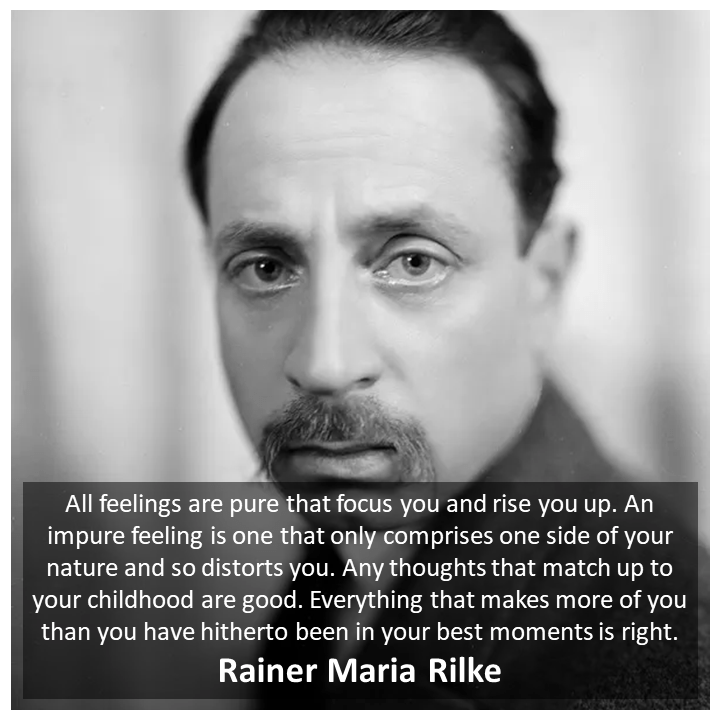
“All feelings are pure that focus you and rise you up. An impure feeling is one that only comprises one side of your nature and so distorts you. Any thoughts that match up to your childhood are good. Everything that makes more of you than you have hitherto been in your best moments is right.”

– Rainer Maria Rilke, Letters to a Young Poet

Rilke beautifully explains what is right and what is wrong. You have to appreciate that this idea of right and wrong is not based on some religious ideas or some scientific evidences. Although most of the times people resort to either of these given ideologies. What Rilke explains is the way of inner judgement born out of pure solitude. When you isolate your inner world from the external influences, you will realize that the inner child filled with all the curiosity, intrigue and innocence is still there waiting to explore the world. You will find that this is what you are actually but the outer influences made you to twist and morph your core. You will understand that you feel things differently when you are looking inwards. The feelings will remain the same but how you respond changes drastically.

In order to appreciate this I will pose an example: look out for the authors who wrote murder mysteries, psychopathic thrillers or some melodrama with tragedy. The thing to observe is how they are in real life; some actor who played a deadly sinister villain and then look how he/she is in real life. You will see that most of the times the gap between how they live and what they portray is totally different rather polar opposites. This way of artistic performance is only possible when one is aware of what emotions they are going through. They know why they are feeling this and are masters of artificially creating them too. This awareness is possible only if the person has cultivated his inner world deeply.  

Feelings are one inseparable part of this inner world. They could be of sadness, happiness, pleasure, anger, anxiety, or jealousy. On surface, it may seem that feelings emerge from external factors but what people always forget, is that one can consciously recognize those feelings and select a constructive response towards them; especially when the feelings are negative. Feelings if mishandled could be devastating and if recognized properly can bring about a revolution in the inner world and the external world thereafter. The very volatility of feelings is their strength and weakness simultaneously. What Rilke wanted is to acknowledge every such emotions for they are not there to remain forever. And that is exactly why he defines the right-ness and wrongness of feelings in completely radical ways. That is also why the childlike innocence is very important for there is no prejudice when one is passing through given emotions. Feelings are the response to reality and not a way to become sad or happy. Rilke wants every artist to use this in their creative pursuit. This is the secret of authenticity – to feel everything that you are feeling instead of getting flown away with it, let it pass but don’t get overwhelmed by them.

That is exactly why life filled with so many multitudes of emotions, feelings would make sense even when they are not on helping term with you. You will see that even such ‘bad’ feelings will open new portal to new creative journeys. For any artist cultivation of emotions especially the negative ones thus become highly important.
Letter 10 – Art is a part of life, life is bigger than art but at the same time, life is futile without art

“Art too is only a way of living, and it is possible, however one live, to prepare oneself for it without knowing; in every real situation we are nearer to it;…”

– Rainer Maria Rilke, Letters to a Young Poet

It is not compulsory to end your artistic journey into the creation of your magnum opus or the masterpiece of your life. What art should do is to make you appreciate the life around you on deeper and richer levels. Once one learns this, they will find art in every aspect of life, which by the way is also an artistic take on living life. The life you are living itself is a masterful creation. Rilke wants the creative person to honor that beautiful creation by remaining worthy of it. 

So, this is it. I would recommend every person to read through these 10 letters written by Rainer Maria Rilke to Mr. Kappus. They are not some letters intended to communicate with each other. These 10 letters are guidelines for the people on their creative journey whatever it may be.

In today’s times the written communication has become so handy and easy that you can send millions of sentences from one end of the globe to the another within few milliseconds. This convenience of communication has stolen away the sanctity, sanity and strength of the words and emotions they invoke which were actually supposed to transform our worlds in better constructive ways. After reading these letters from Rilke you will appreciate how effectively he distilled down the divine wisdom of life in few pages. A book costing less than one time meal can transform your whole life. This is the power of a true artist.

That is exactly how a simple scribble by true artist becomes a sermon to whole world. People worship it forever. Authenticity, empathy, and patience make it happen.      

The Boy and the Heron (君たちはどう生きるか) – Bittersweet Reality of the Artistic Legacy

Studio Ghibli’s masterpiece The Boy and the Heron (君たちはどう生きるか, How do you live?) tries to answer one complicated question on artistic legacy. On surface, it is a story of boy coming out of the melancholy of his mother’s death and his new beginnings. Deep down it is a love letter from a creative father on his creative legacy to his son who wants to go on his own journey. It shows how difficult it is to make others appreciate a personal piece of creation, emotion and how to leave a truly influential legacy behind.

A creative father’s love-letter on his legacy to his beloved son

We are always in a pursuit of creation of something to ensure better coming days. Survival is one aspect of it but as the time moved on, we have comfortably brought ourselves to ensure our sustenance. Most of us can live a basic life and rarely worry about what to eat tomorrow. Once such stage is achieved, you will see that our efforts to create and accumulate still have never stopped. Now we are creating and accumulating for even better days than other, once this is achieved, we continue creating and accumulating so that our new generation will see better days. This act of creating a legacy is not just a matter of survival, it is also matter of preserving some part of ourselves even when we won’t physically exist in this world.

It is easy to see what happens to the materialistic legacy like wealth, but it becomes very tricky to handover the moralistic, value based, character-based legacy to the next generation because of the differences in the ways to live and understand the life. The passage of time alters some truths to the new generations thereby changing their mindsets and moral compasses. Even though our animal drives, emotions are exactly the same the motivations behind them change over time.

Now, imagine that you created such precious legacy which is close to you, which defines you, people appreciate it adore it but your next generation is unable to carry it forward. How do you handle such rejections? what is the resolution? Is it good? Is it bad? Is there any way around? As you love your legacy, should you force them to see the value in your legacy? And if you truly love them, should you force them in the first place to carry that legacy?

Studio Ghibli’s recent movie The Boy and the Heron (君たちはどう生きるか, How do you live?) is an attempt to answer one such complicated question on artistic legacy. Hayao Miyazaki-san has again given a masterstroke by creating a very personal yet relatable artistic narrative.

I have tried to explain the overall purpose of the narrative in this movie and will try to uncover what was the real core of movie based on the events in the life of Hayao Miyazaki-san.

The story and the meanings behind it

You will find megatons of explanations on the symbolism, personal connection of Hayao Miyazaki-san, his life, his childhood, his parents, and his colleagues from Studio Ghibli in this movie. There are many theories and cross references between the previous Ghibli movies too. I will not go into those details. I will focus on what the narrative stands as a whole.

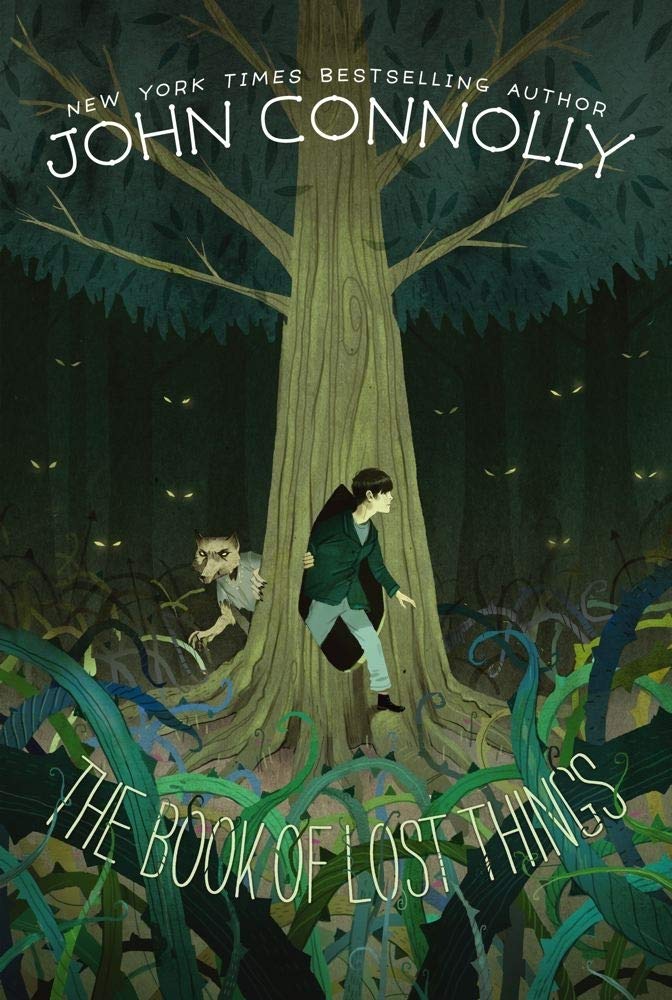
It is obvious that it is a story of a boy who lost his mother and his journey of getting over that melancholia of her loss and acceptance of his new mother. You will also notice in the end credits that the creators have thanked a book called “The book of lost things” by John Conolly. Once you check out what this book is all about, I think you will get new perspective beyond the symbolism and references in the movie. Miyasaki leveraged the narrative of this book to create the structure of his narrative. The book also draws inspiration from Genzaburo Yoshino’s book “How Do You Live?” (君たちはどう生きるか, Kimi-tachi wa Dō Ikiru ka)

Two books which inspired ‘The Boy and The Heron’

This is the story of the all emotions that are invoked when a person loses their loved ones. The first question that comes in mind when such loss happens is “How Do You Live?”

This is how the story is built –

The tower created around the rock is a portal where you can physically access your emotions. Just like in Interstellar how Astronaut Cooper was able to physically access the dimension of time.

Birds are representation of the free flying feelings, emotions we have.

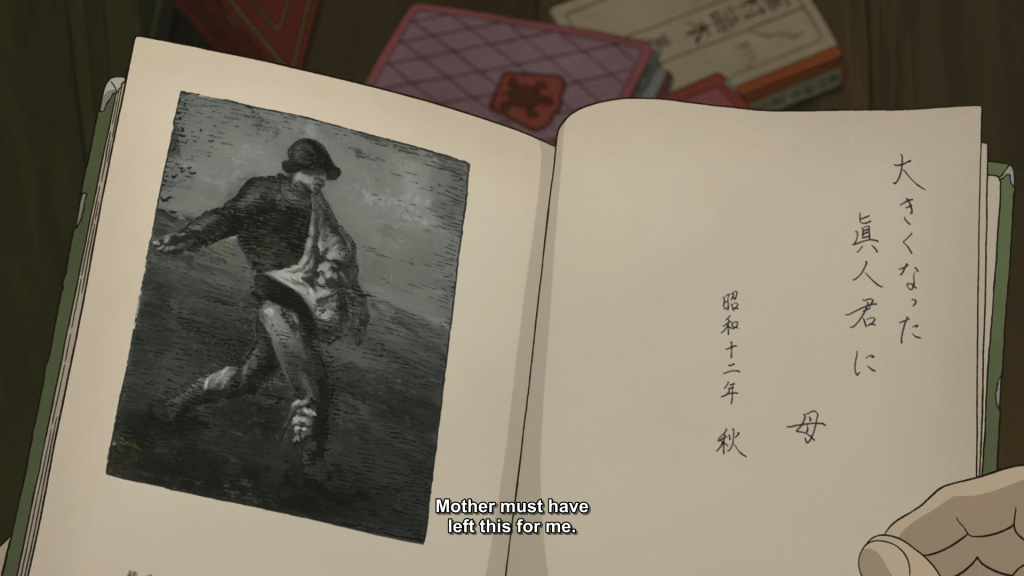
The book that the great granduncle left unread is the same book Mahito’s mother read and then it got handed over to Mahito, which is the book called “How do you live?” The book is about the conversations of a boy who lost his father and the boy’s uncle.

The great granduncle already knew that the rock from space can allow him to create the world of his dreams. That is exactly why he built a tower around it for protection. Upon going through the loss of loved person in his life, he saw himself in the role of the person who will lead and help his descendants to handle their own pain of loss. But as the great grand uncle was always into books and had his own internal dreamy world, he used the powers of the rock from space to create his own world.

The act of leaving the book unread to disappearing into something is pointing towards that intense moment when you have to act on things because the author said exactly what you believe in. You feel this urge to act and create that thing because the author, the person who you don’t even know feels exactly the same. You feel an unexplained deep connection.

So, the rock from space and tower built around it is a portal where things can enter and exit in space, time. The moment when Himi lost her mother, she accessed the portal, confronted her emotions but also met her future son Mahito.

She realized that even though she lost her beloved mother, she will have an opportunity to have her own son who will love her deeply. Even when she will not be there with Mahito, her sister will love him equally. This gives her peace. That is exactly why when grannies are telling the story from Himiko’s childhood to Shoichi (Himiko’s husband and Mahito’s father) they say that she was grinning to ears – happy like anything when she came out of the mysterious tower.

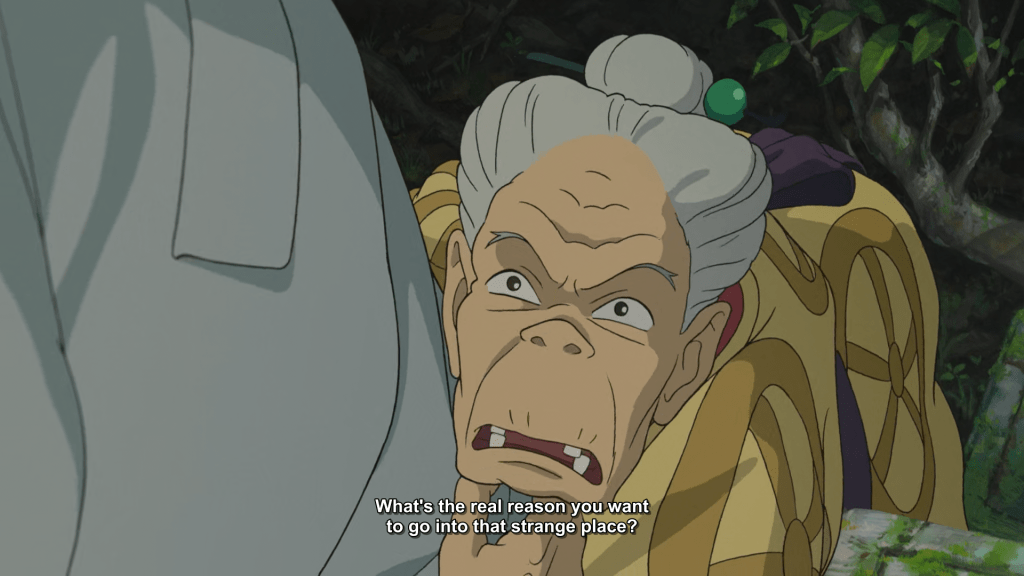
The great grand uncle can call anyone to enter the tower. That is why grannies are scared if Mahito gets taken by the tower in the start of the story.

Kiriko has also accessed the portal in the search for young Himi before, that is why her younger version is available in this dreamy world and knows the ways of this world. Her older version entering into the portal along with Mahito closes the loop of time paradox if you think it through.

Natsuko is called into the portal to make young Himi aware that her future son will have a caretaker and lover when she will not be there for him. This helps young Himi to get over her own loss of mother. It’s that feeling of love you create for your people when you realize how deeply you loved the person you lost. You realize that your people also deserve to get the love that you received from your lost loved ones. That brings the person out of the melancholy of the loss of loved ones.

Natsuko is called into the portal to make up her mind that Mahito is also her son. She is also called into the portal to make Mahito accept that his step mother also deserves the same love that he has for his own mother. The great grand uncle is the orchestrater of all these events.

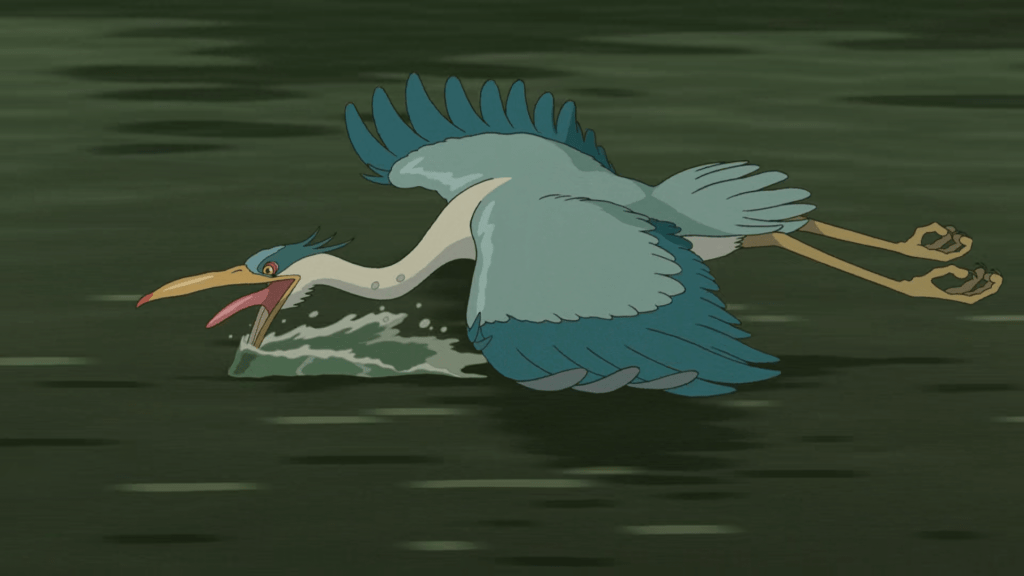
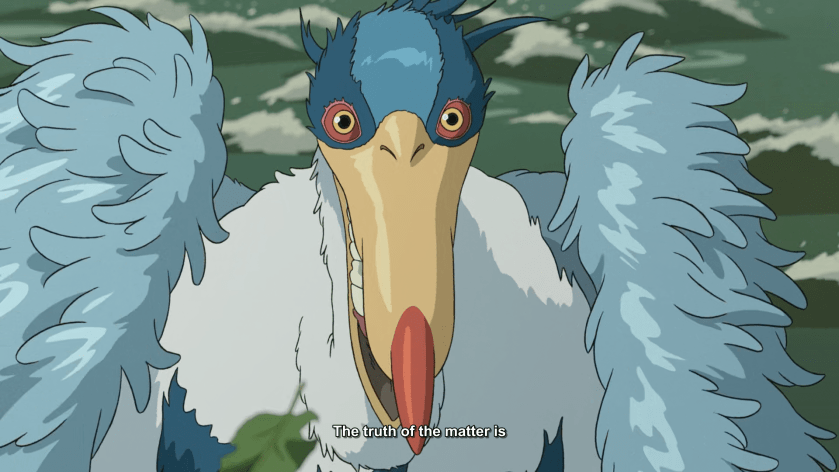
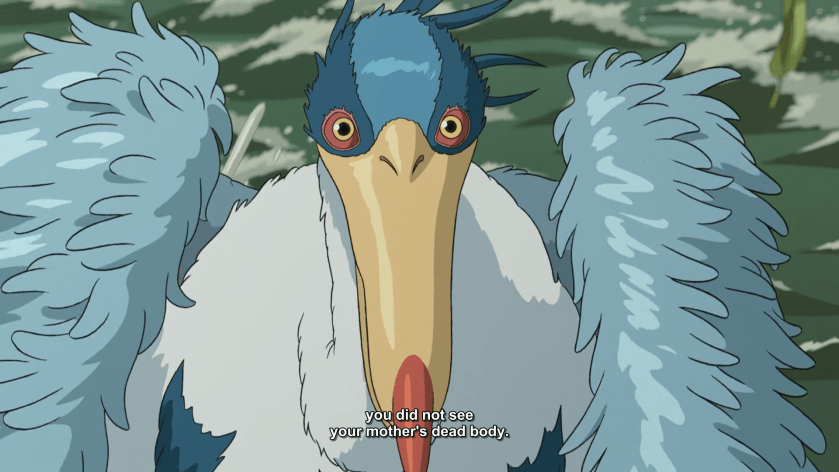
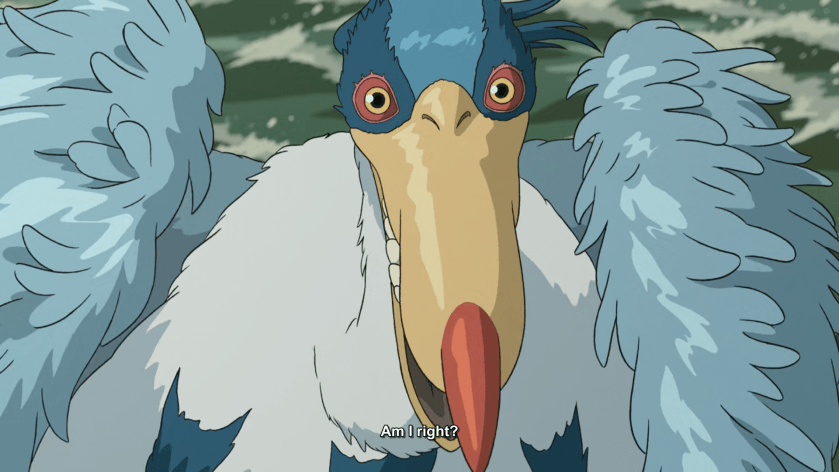
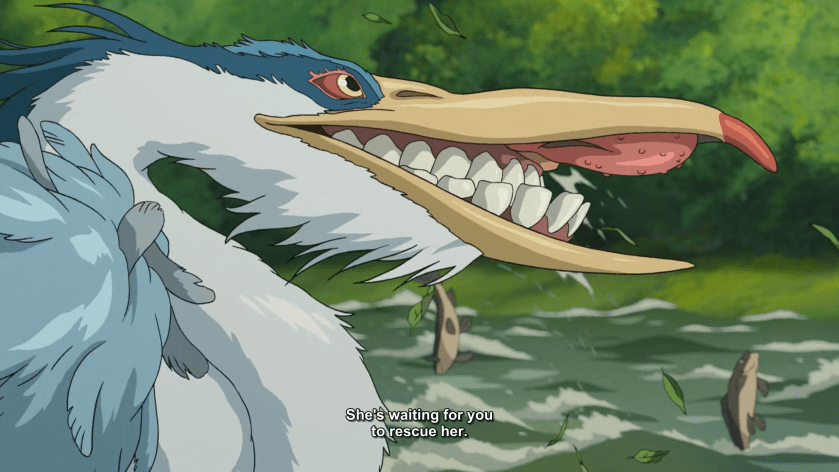
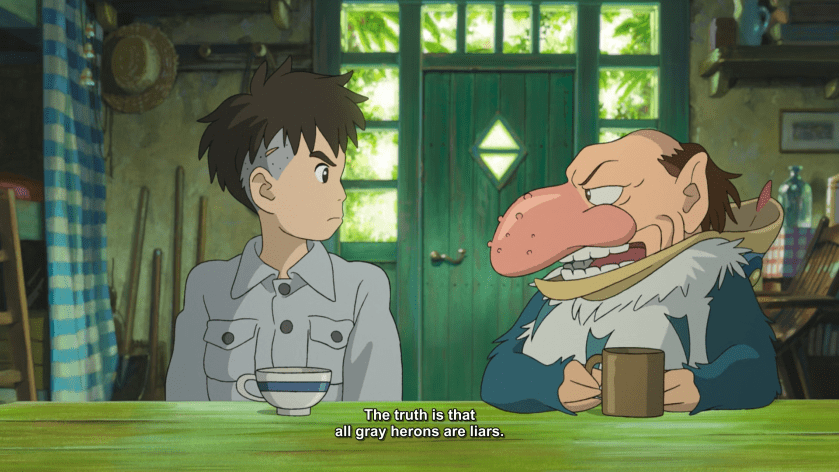
The grey heron is Mahito’s mind personified, his conscience. Heron is always guiding, helping Mahito. Mahito has this feeling that his mother is alive somewhere because he never saw her dead body. Heron attracts, teases Mahito using same understanding. Somewhere in a hidden corner of Mahito’s mind he thinks that there is still a chance to save his mother and bring her back. He is just looking out for an opportunity. Heron teases this opportunity to Mahito.

Heron like every person’s mind is paradoxical in nature. Heron is equivalent of Jiminy Cricket from the story of Pinocchio.

Most of the events between Mahito and the grey heron are Mahito’s dreams until he personally enters the tower where all his emotions can be accessed physically. That is where he is able to get the hold of the Heron, that is where the power of the seventh feather is functional, because Mahito has heightened awareness and access to his emotions.

The illusion of his mother in bed is a reminder to Mahito that she only exists in his dreams not in reality.

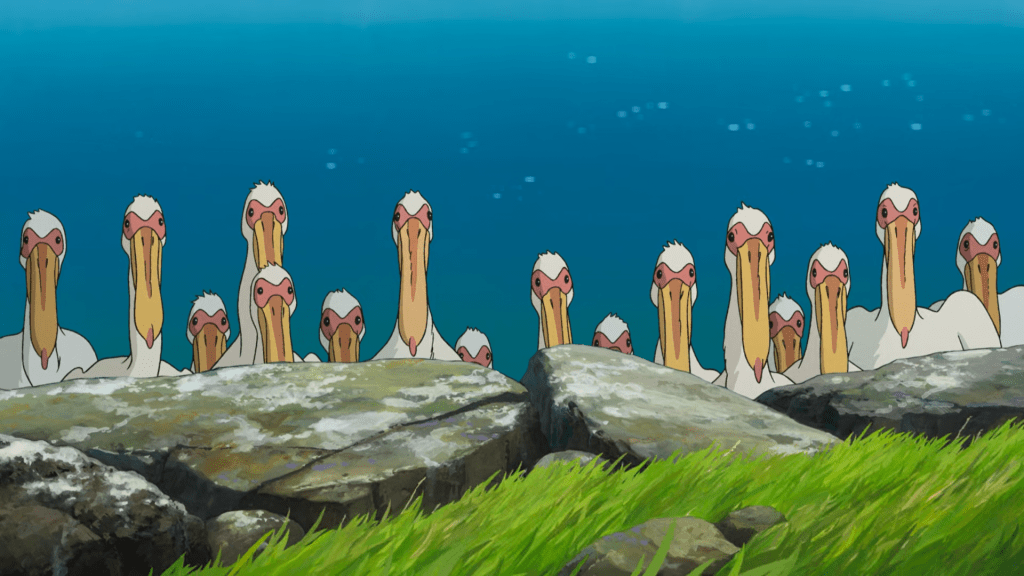
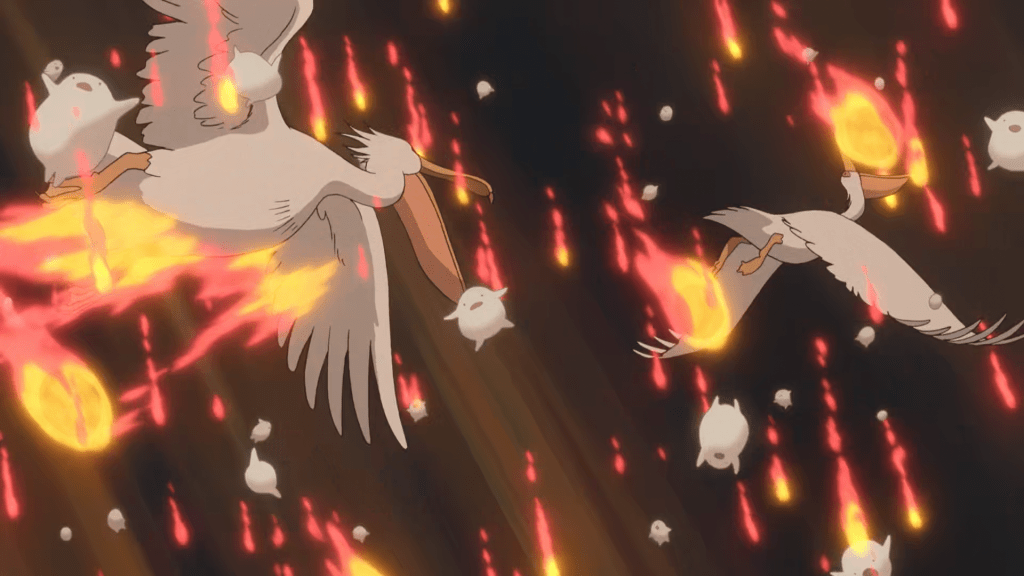
The starving Pelicans are the feeling one gets when they realize that they won’t be loved in the ways and to levels they used to before because of the loss of loved ones. These feeling to be loved, the huger to be loved by that person pushes the person to meet his loved one in afterlife. You will see the pelicans pushing Mahito in graveyard so that he can meet his mother. Pelicans are his feelings from the void of love which are pushing him to die to meet his mother in afterlife.  

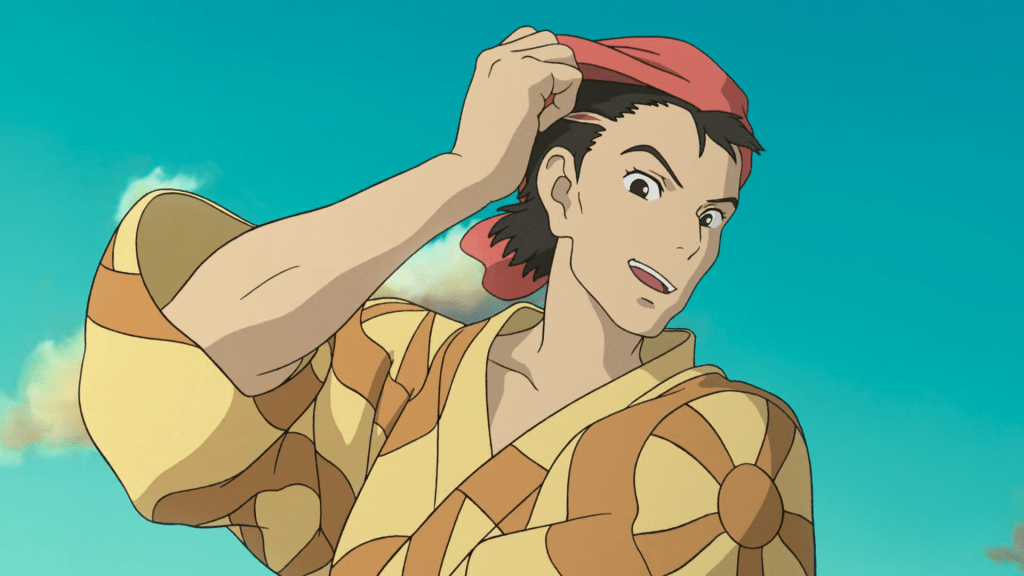
Kiriko saves Mahito from his urge to die, maybe she has done same to Himi in past too. The mark left on Kiriko’s head by swamp thrasher is intentional creation to make Mahito comfortable. The fact that they both share some common pain brings comfort to Mahito. The thrasher bird is a symbol of self-reflection, it is like upon getting settled and being calm Mahito realizes that dying is not the solution to meet his mother – Himi.

Warawara and the phantoms are the attempts of great grand uncle to show everyone entering this world that life and death are part of existence. The person must accept and will have to support both, feed both to ensure that the reality remains ‘real’.

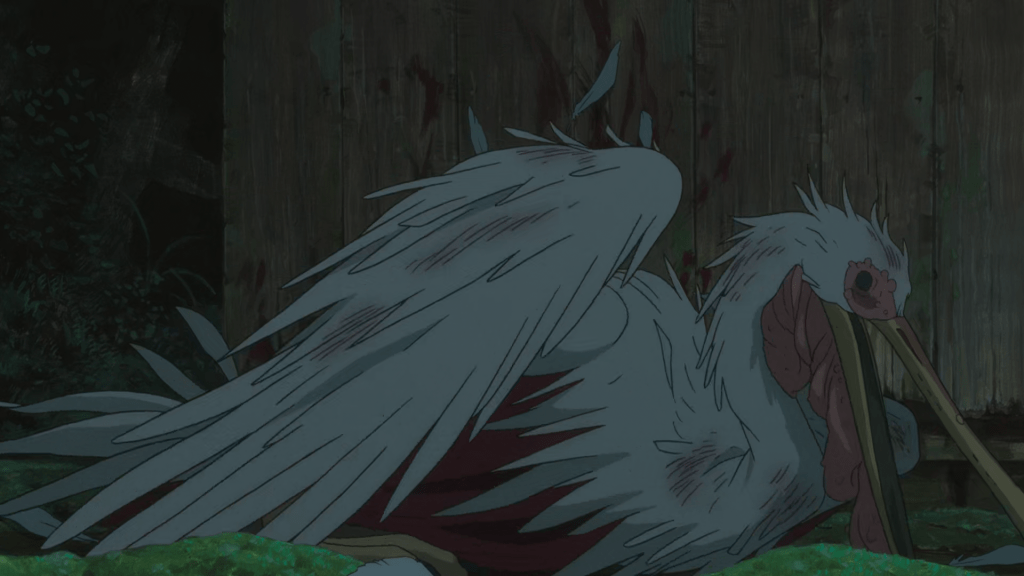
The event of giving proper burial to the dead severely injured pelican is Mahito’s acceptance to detach himself from the urge to be loved by his dead mother. This is him making amends with death and urge of being loved.

The moment Mahito accepts the weird and paradoxical nature of heron is the moment when he gets a clear direction to meet Natsuko. He literally repairs his conscience to get the clarity.

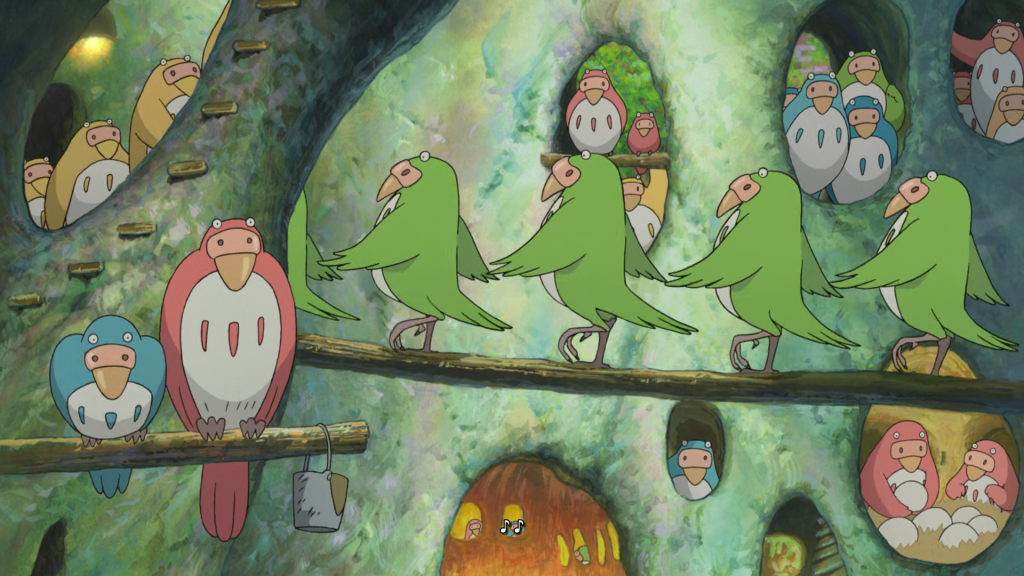
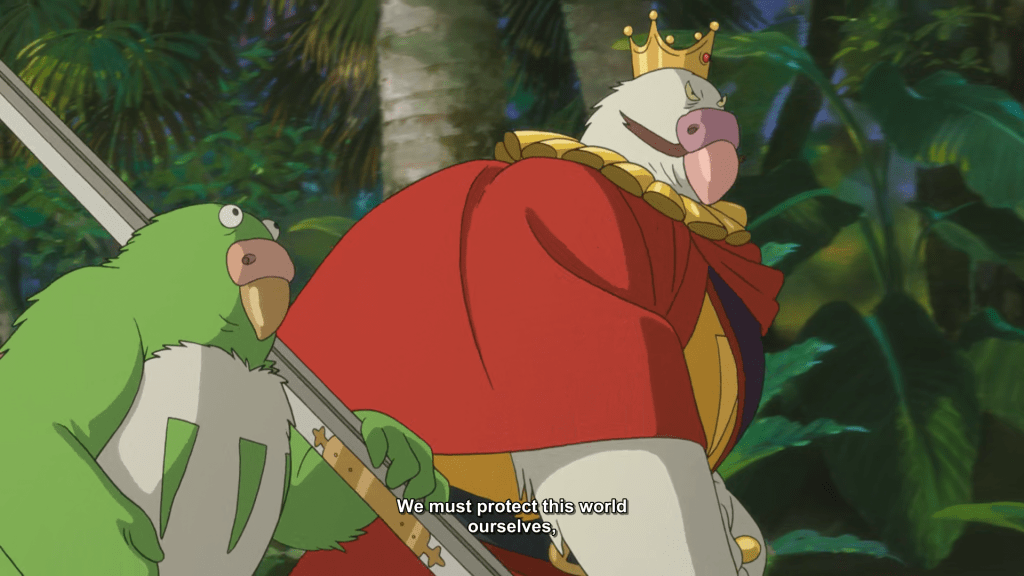
The Parakeets are the defense system of mind. They are the logical emotions, feelings that we use to defend from the sad feelings, they make sure that the system of our mind remains intact. Parakeets are the indicators of love and colors in life, when we are deeply saddened these emotions of love and colors become intense, defensive to save our mind. Here in the extreme case, they have become so strong, disciplined, and militarized that they are ready to consume their own host – Mahito. Parakeets show life, colors, happiness, anti-sad emotions, and the defense mechanism to create good for everything. That is why they have rules, moral values – the indication of what is allowed and what is not for the betterment of the host. They make sure that the person remains sane by choosing what is best for him instead of getting overwhelmed by all other emotions.

Parakeet king is the ultimate personification of such defense mechanism, he just wants to make sure that the world inside the host’s mind remains intact otherwise the host will go mad, this world will collapse.

The important conflict Mahito must resolve is to find his mother. Where the great grand uncle gives him the test. You should appreciate the role of great grand uncle in this whole narrative. The very first time when Mahito is inside the tower with Kiriko, the great grand uncle could have immediately met him and resolved everything in his mind.

But he makes Mahito to go through whole journey because you cannot force any emotion on the person just by telling the truth. His/ her defense mechanism will strongly and willfully reject that truth. Only when that person will go through personal experience, then only he/ she can appreciate the value of truth. Uncle thus gives Mahito this final test of truth once he overcomes the obstacles in his mind.

Mahito is given the taste of truth by showing him that even though he could not save his mother Himi he can now save another mother Natsuko. This is the Natsuko who enters the portal with a feeling if she would ever truly be able to love Mahito while having her own baby. This is conflict resolution for Natsuko too. She develops true love for Mahito when Mahito lets go of his attachment to mother Himi to save Natsuko because he doesn’t want that to happen again. And Natsuko also realizes that it’s her loving sister’s son in the end who deserves the same love like her coming baby deserves.

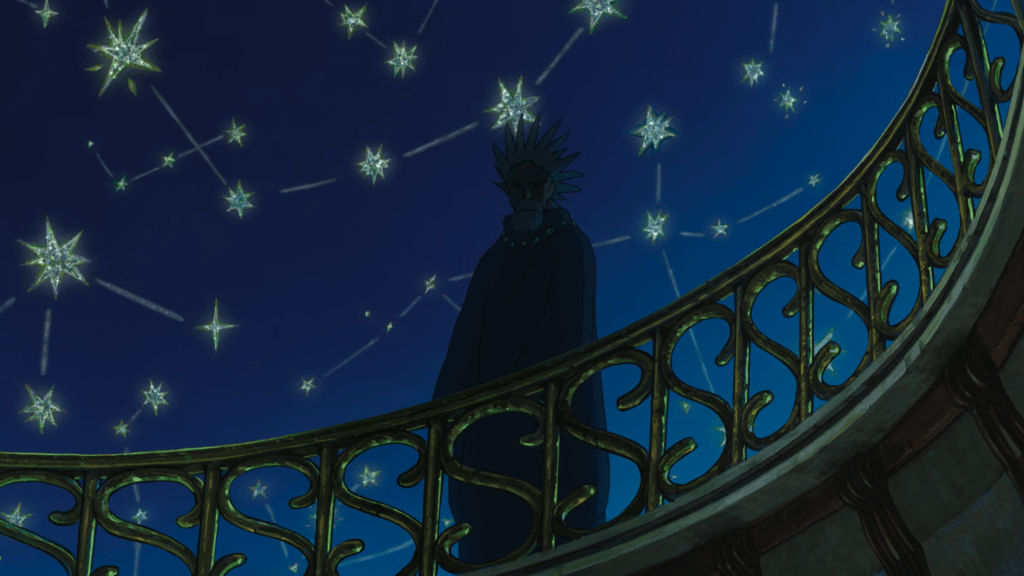
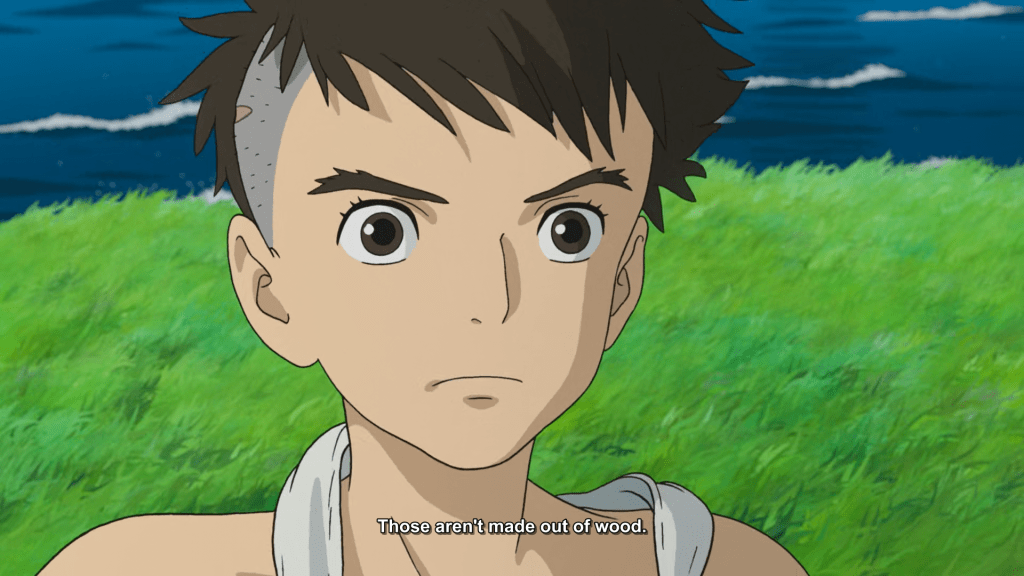
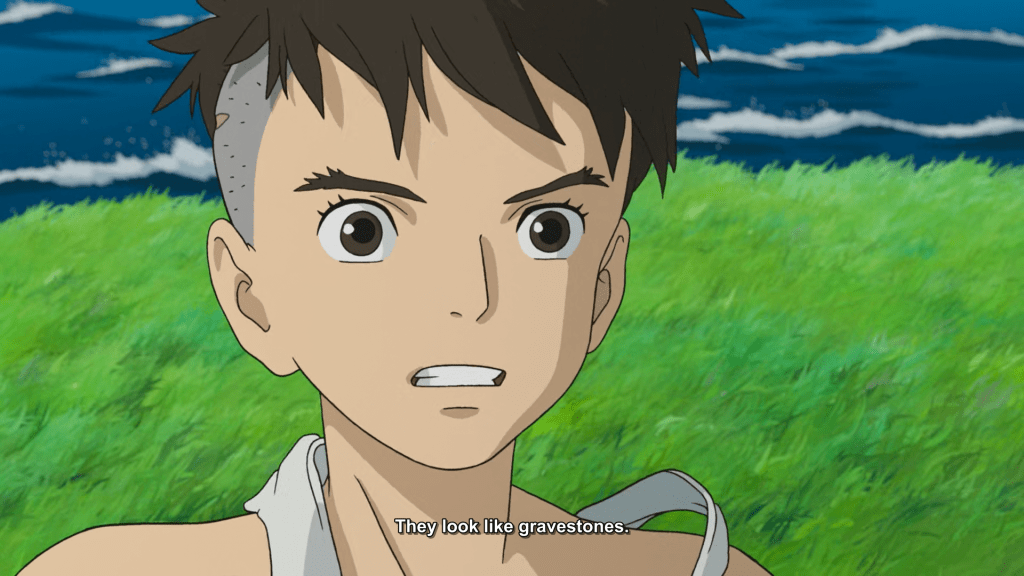
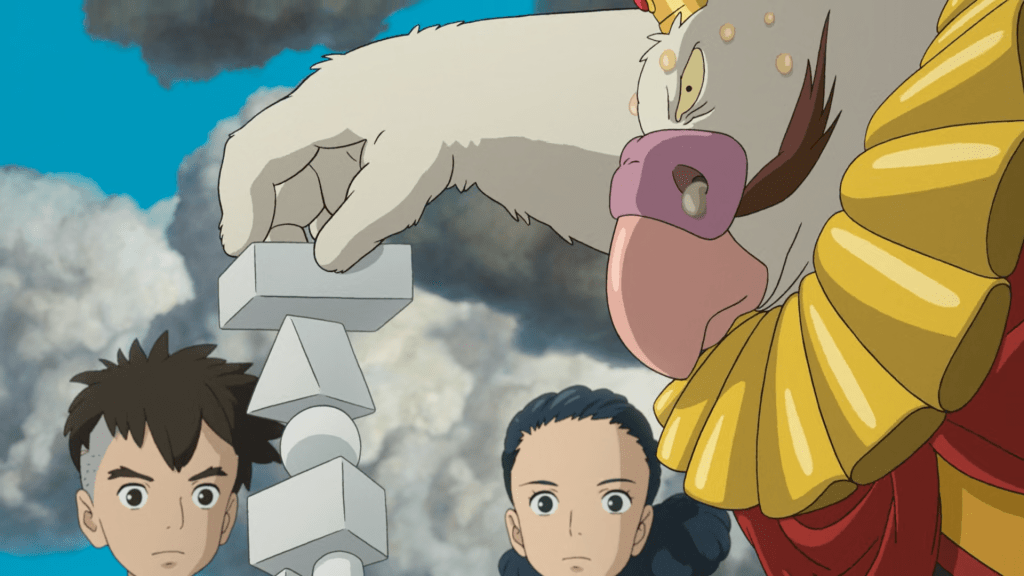
Only upon the resolution of this conflict when Mahito gets the access to the portal to meet the great grand uncle. 13 grave stones are the 13 movies created by Hayao Miyazaki-san. Which arranged in many styles create different world. They create an escape to different reality where people can manifest and physically live their dreams. For uncle these 13 gravestones are the purpose of his life, they define who he is and are his legacy. Great grand uncle asking Mahito to arrange these 13 gravestones is Miyazaki-san’s way to order his son Goro-san to carry his legacy in the exact ways Miyazaki-san intended. Mahito noticing the difference between wooden blocks and the gravestones is an indication that his life interests do not lie there, wood here as a part of tree – the life against the gravestones show that this is not how Mahito would live his life.

As a punishment uncle sends Mahito to parakeets. Parakeets are the structured constructs, rule, laws which ensure that the world has order even though the person may hate them. Goro Miyazaki-san chose the career of an architect because he wanted to do something different from his father. Hayao Miyazaki-san asked Goro-san to create artistic movies exactly in his “Ghibli” style but Goro-san’s artistic creations never matched the Hayao Miyazaki-san’s Ghibli vibes. It’s like his creative powers were restricted due to the parakeet like strict construct, high expectations and extreme criticism of Hayao Miyazaki-san. The great grand uncle had some hope that Mahito will accept what he wants him to appreciate.   

Mahito’s own conscience – the Heron comes to rescue him in the end. Grand uncle asks Himi to leave this world and also tells that Mahito should also leave with her. He is hoping that there is one more chance to convince Mahito to take care of what he had created. When Mahito and Himi meet the great grand uncle to bid goodbye the uncle presents Mahito some stone without malice. It is uncle’s attempt to show Mahito that even though his creations have their challenges, rules, restrictions Mahito still has freedom to do anything with these new stones free from Malice. It’s uncle’s attempt to convince Mahito to not lose the grip on the legacy. It is Hayao Miyazaki-san’s desperate way to reconvince his son Goro-san that he just needs to create for the studio Ghibli by using some new things – new experiments but just keep studio Ghibli alive. He wants Goro-san to create so that the world of Ghibli will bring bounty, peace and beauty into people’s lives. It’s not just a selfish request for continuing the legacy. It is a request to maintain the core of his legacy – Miyazaki-san’s legacy.

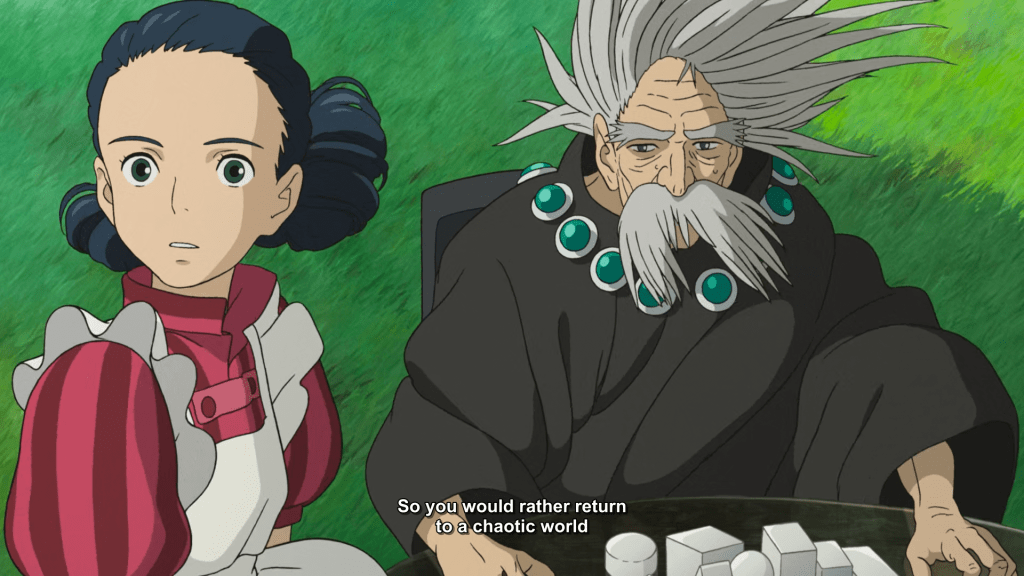
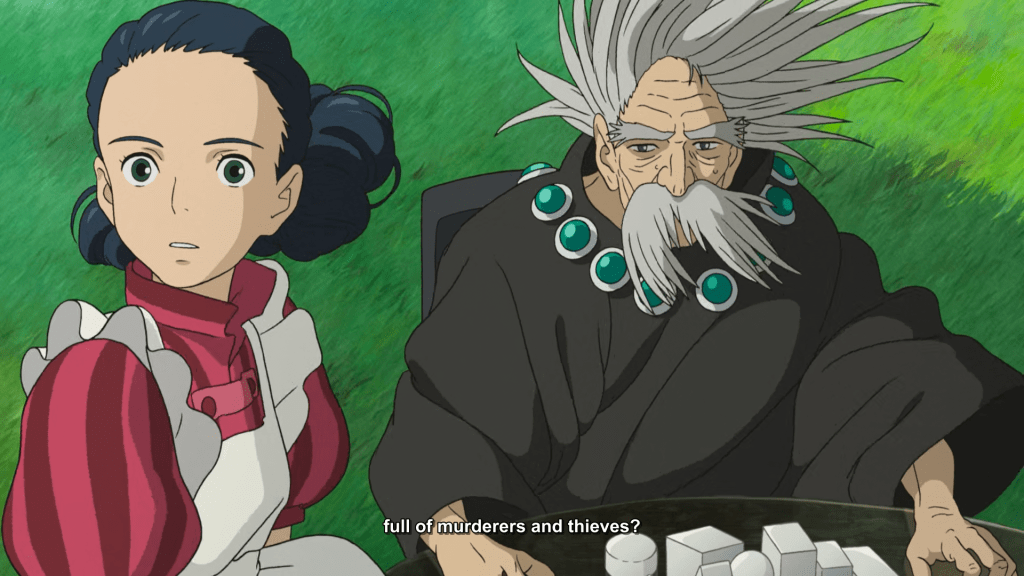
Mahito responds to great grand uncle by saying that he has his own challenges, his own malice, his own limitations which make it difficult to carry this legacy. Mahito wants to return to his own real world even when it has some darkness, bad things. When uncle asks him that Mahito’s reality is a chaotic world full of murderers and thieves Mahito responds by showing that he has good, caring, and loving people along with the heron – his conscience to support him there.

This is also important moment for Himi where she is relieved that even when her son will lose her, Mahito will have enough support system to take care of him. This is one more reason for young Himi to return happy to her reality.

Uncle then ordering Mahito to just stack the stones for last time would be equivalent of the discussion happened between Hayao Miyazaki-san and Goro-san on the creation of one last project for Miyazaki-san’s peace of mind. Maybe Miyazaki-san just like the great grand uncle wanted to play a trick on Mahito – Goro-san to convince him to continue the legacy.

Finally, the Parakeet king trying to arrange the blocks by himself is the futile attempts of the admirer of great grand uncle’s creation to ensure their own survival. But as there is no personal connect between them, the Parakeet king doesn’t know the ‘art’ of arranging the stones. When the attempt fails and the world collapses as the great grand uncle had already expected, he instructs everyone to leave the tower and return to their respective reality.   

You must appreciate that there would have been a proper intimate discussion between Hayao Miyazaki-san and Goro-san on how to take over this legacy and continue the future of studio Ghibli. Rearrangement of 13 blocks shows advice to use the styles and ideas of Hayao Miyazaki-san’s movies to create further new stories.

The resolution of Mahito returning to reality is Hayao Miyazaki-san’s way to show that the path has already been chosen and good thing is that it is more real than anything possible. It could be ugly, full of malice, murderers, death, grief and detachment but is far better than dreamy and perfect world. Looks like Goro-san successfully convinced his father Hayao Miyazaki-san that his father’s reality of Studio Ghibli is not the only reality, only legacy which deserves to exist. Hayao Miyazaki-san also realized that if he truly loves his son, he would let him go on his own path, to create his own art. Just because he is too attached to his creation does not entitle his son to carry it forward, especially as a burden.

It’s poignant to come to this fact but it is what it is. That also doesn’t stop either Hayao or Goro-san to create the world they want. (there is a rumor that Miyazaki-san is working on his next film.)  

The Curse of the Intangible Value of an Artistic Creation

For any true artist, it is the expression through creation which matters him/ her the most. The art they create is exactly who they are, it is a part of who they are. For such artist who has realized that they will have to leave all this creation behind in the end, search for the true successor who can appreciate their creation is crucial.

And the problem with artistic creation is that they are very intimately connected to the person who created them – the artist. It’s like the bond of a mother and child – she has carried that child for 9 months in her belly, it’s a piece of her body and soul. In similar sense, that art held its root in the artist’s mind and the artist kindled it in his mind to finally bring it into the reality. The fundamental problem with emotions is that you have to pass through those feelings to appreciate them in true sense. You can intellectualize other person’s emotions, write about them, create narratives/ stories out of them. You can make philosophies about how and why people have certain emotions, why they feel sad, happy, melancholic. You can also simulate pain to induce the feelings of emotions in a person, you can simulate happiness by triggering certain chemicals and suppressing others. But, you must accept that unless and until you yourself don’t pass through that real-life emotional experience, you will never be able to appreciate and understand how others felt when they had similar feelings. You can be highly empathetic, sympathetic but they too are bound by the limitations of you own mind. You can be a highly intellectual person who has already figured out what action would lead to what emotion, what is good for your mind, what is bad for you, you may create a whole internal defense system to handle the anticipated emotional responses but the experience you will have when you pass through that emotion will be very personal and the art created after the passage through such emotions cannot be attributed to any tangible value.

Now think of handing over such a creative legacy to you descendants. You are confident about this handover to your children because they are your immediate physical extension and if you are lucky then maybe your immediate mental extension too. But, as I already clarified in previous paragraph about the curse of intangibility, the intangible subjectivity of any artistic creation, there is no guaranty that you descendants will resonate with what you believed that art to represent.

It feels cruel to realize this fact but believe me it is the reality. Others, especially the people you call yours are not entitled to appreciate the things exactly to the levels you appreciate. I agree that they should at least not disrespect it but you can never force other people to appreciate ‘your’ valuable things at your exact same level. This journey has to be made solely by themselves which will never be in your control. You may force them, influence them, punish them- abuse them mentally, physically but you cannot force others to generate the same respect, same value for the things you love. It’s purely an internal and voluntary journey.

That is why having people who resonate with how you appreciate certain common objects and common emotions is a blessing. This also does not mean that people who perceive something different for the same objects are bad. There can be cases where they perceive something even better than what you perceive and where they do not even care but that’s not your fault. In order to find clarity in these cases you have to accept that emotions are double edged sword. It will cut both ways. Even when you have anticipated, planned, intellectualized them, you cannot escape your emotional responses. What you can do is to observe them sincerely and let them pass. You are not your selective emotions; you are above them. Emotions are not your creator rather you are the creator of your emotions. The moment you accept this you will see the truth that not everyone, not even your own blood is bound to experience the life around you in the exact ways you want them to. The moment you will appreciate what I am trying to put down in words, I think you will feel liberated. Please understand that this is not just about any artistic creation, it is about everything you call your life – mental, physical, tangible, intangible. To live a life with this intensity could be a blessing (on personal level if this intensity is not anticipated well in advance or not controlled then it is one cruel curse to carry.)

I think this is exactly what Hayao Miyazaki-san was struggling with. But as the movie resolves I think there is still hope for him, for the studio and in the end for all of us rooting for his next movies. It definitely is not a sad ending and even if it is a sad one we know what great things they made us feel about ourselves, how they gave us better perspectives towards life. I think that his true legacy is all his admirer, we people altogether whose lives he changed through his creation. Even though his movies won’t be there, what they have made us feel – that legacy of having a perspective towards life will keep on affecting new generation through us.   
To be honest, for me it’s a love letter of a father to his son who doesn’t want to follow his father’s legacy and wishes to go on his own journey.       

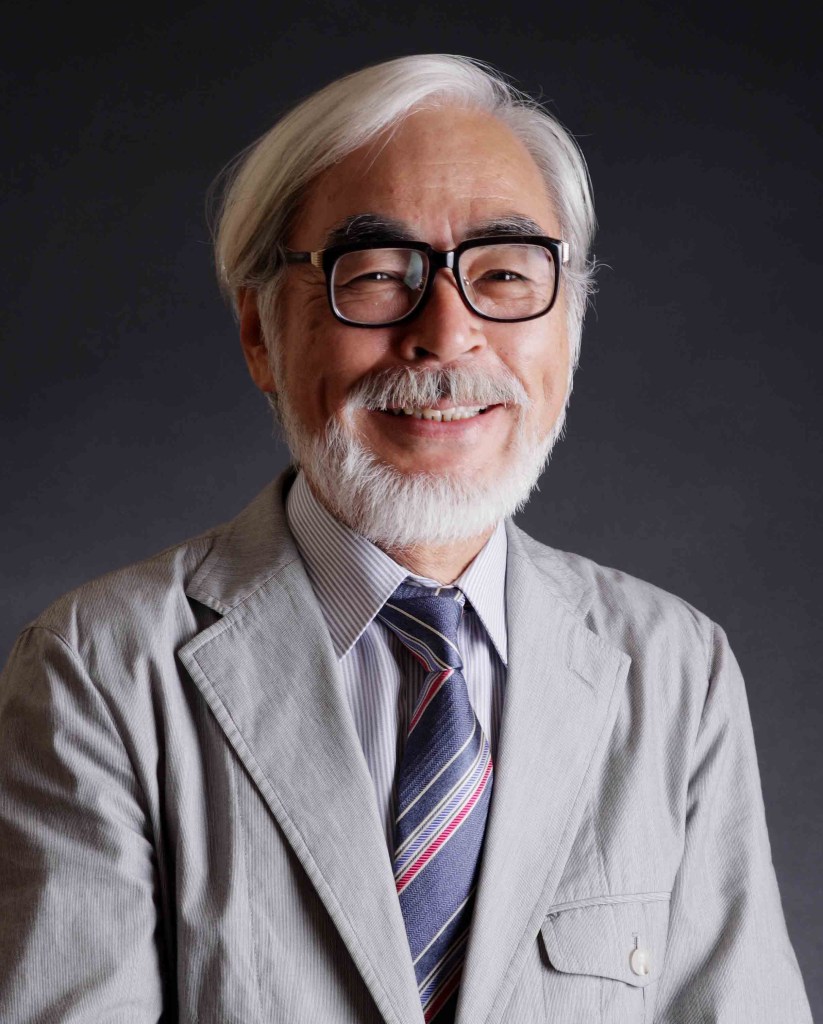
The Father Son – Hayao Miyazaki and Goro Miyazaki

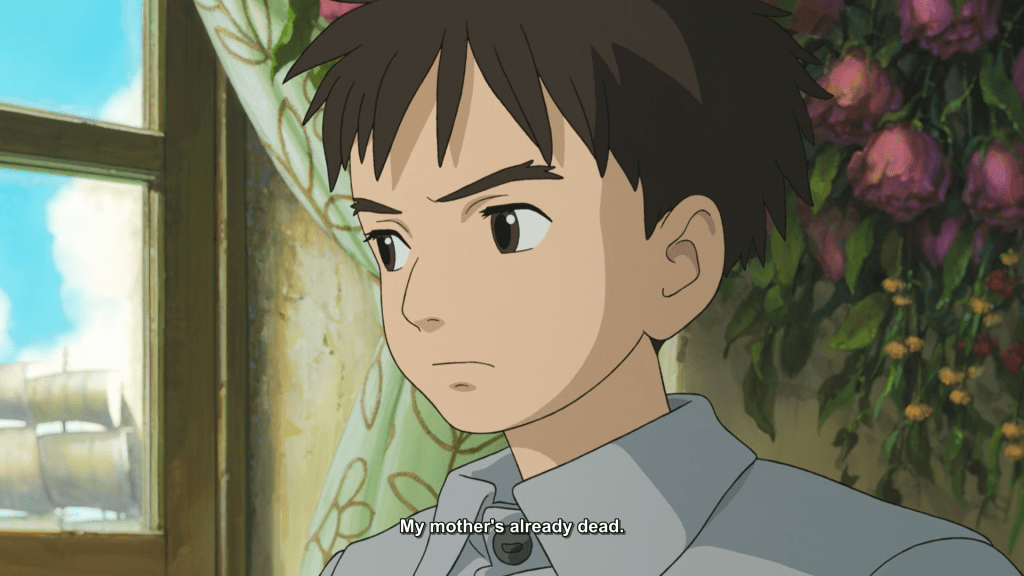
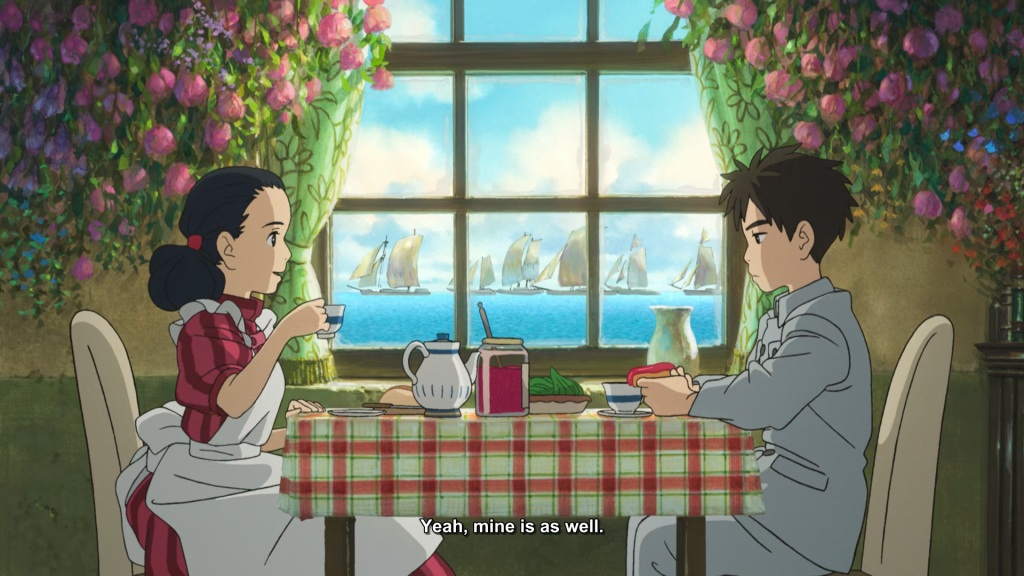
  • All movie scenes from Studio Ghibli – Hayao Miyazaki’s movie The Boy and the Heron

Losing the ‘Grip’ on Escapism

Escapism creates a void in our perception of reality so that new ideas, creative ideas would populate this void for living life with a new perspective, new approach. The healthy escapism is the most important tool, a therapy for many successful creative people our world has ever seen. Once this escapism takes extreme side it may lead to addiction, procrastination and delusion. Freud’s ‘desire to destruction’ and René Girard’s theory of mimetic desire help us to understand escapism in better ways to face the reality head on.

Reality is merely an illusion, albeit a very persistent one

Albert Einstein

It is very interesting when we start questioning how we understand, feel and interpret the reality. The reality in which we live in has infinitely many facets which we experience through equally diverse emotions. We as human beings are hardwired for seeking happiness, happiness creates the environment to nurture, grow and multiply. Bear in mind that only growing and multiplying is not enough to guaranty the survival of our species. Adaptation is one aspect to ensure the sustenance over the course of time. Adaptation means getting exposed to adversities, sadness, imperfections of reality to create the strong enough coping mechanisms. What would happen if are continuously in the phase of seeking pleasure and turning our faces away from the challenges of the reality? How we justify our own death (figurative) by our own hands when we submit ourselves to such dark pleasures, addictions, dark temptations in spite of knowing that they are harming us? There is just one perfect song to point us towards such emotions.  The song is called “Grip” by Seeb and Bastille.

The song was written by Espen Berg, Dan Smith, Thomas Eriksen, Mark Crew, Simen Eriksrud and Joakim Haukaas.

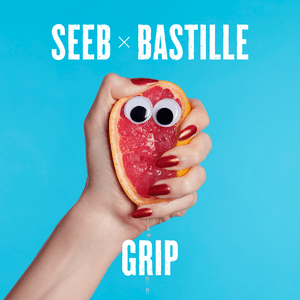
Album art for Grip by Seeb, Bastille

Grip – The Lyrics

As the night time leads into the day
And tomorrow spills across the sky
While the sun's a harsh reminder why
We are feeling barely human

The overall emotions this person is experiencing are the emotions of distaste and hatred towards the things which are inevitable. He knows already that it is going to be day after this night, the sun will rise up and he will have to face the day helplessly. The “harsh reminder” here highlights that the person doesn’t want to face the day, the reality, the responsibility and wants to escape to the night where he was someone better than human – someone invincible.

 ‘Tomorrow spills’ shows that the thing/s which this person was trying to postpone, avoid has finally come. The spilling action shows the unwanted eventuality. The things which the person is trying to avoid are the sufferings and problems which for this person are mocking him for his humanistic limitations.  

This rise of the day is a reminder of his humanly limitations and the sufferings which never end. The person is well aware of the sufferings and hence is cursing the Sun for reminding him about his limitations as a human being. The transition of night into a sunny day is also a metaphor for the veil falling down. The veil of enjoyment which was masking the suffering, imperfections, sorrows, problems of the reality.

I really loved the word play to show how the person hates the day which never comes – ‘tomorrow’. It kind of points towards the ‘procrastination’ to avoid the pain of imperfections and the pain, the suffering accompanying with the life itself.

We don't know what's good for us
'Cause if we did, we might not do it
Who knows where our limits lie?
We won't discover 'til we push it

These lines explain the expression “Ignorance is a bliss” in the most perfect way. The person wants to ignore the things which are good because deep down he knows that they come with hardships. That is exactly why he says that even if he knew what is really good for him, he won’t do it; he knows doing the right is always the most difficult path. It’s like running away from the reality and reject it because it is full of pain, problems, unsettling consequences and imperfect.

The next lines show that the person is not completely delusional and detached from the reality. He knows that being a human being with unlimited capacity in the world of infinite possibilities, he can do anything and succeed at it. He is aware of the fact that he just has to expand his boundary to make impossible things possible. This is the moment when you will appreciate that the person expressing his feelings here is aware of everything that is right and wrong. It’s just that he just wants to be happy and maintain that state by rejecting the painful reality.    

I should just walk away, walk away
But it grips me, it grips me
But I should call it a day
And make my way
Oh, it grips me
'Cause the devil's got my arms
And it pulls me back into the dark
But I should just walk away
Walk away, oh it grips me
Cause the devil's got my arms

The person knows that he should completely let go of the things which are deviating his life from reality but now he has found one pity excuse. The person thinks that it is difficult to lose the hold of joyous, illusive but pleasurable darkness. He is ready to ‘call it a day’ get over with this pleasurable but illusive, dreamy life but somehow his mind has found an excuse of the devil which holds him back. It shows how addictive the dreamy, pleasurable alternate reality which is far from the ‘real’ reality, the life his mind has created which is full of pleasure, happiness and he is whatever he wants to be in this dreamy world. Grip of the Devil is just an excuse for him to tell others that he is not solely responsible to stay in this ‘unreal’ illusive life, this shows his lack of accountability. He is blaming the devil for him not facing the reality and taking charge of the course of his life.   

We got drunk on this unholy wine
To deliver us from our old minds
A promise of a better time
'Til we're feeling barely human

Wine in Christianity is a symbol of abundance, enlightenment, celebration, and blessings of the God. The ‘unholiness’ of the wine shows the overuse of this abundance which points to the addiction. Addiction is the worst use of the means preferred to gain pleasure. That is why the holy wine once intended for enlightenment becomes unholy when exploited and overused unnecessarily. The promise of better time is the reflection of what a person suffering from addiction feels, he tries to repeat the act to extract the pleasure – a short lived one. This short-lived pleasure makes him feel something better than human. Once the effect starts to fade out and the person regain the consciousness of weakness of human nature, he again resorts to this short-lived pleasure to regain the better humanly experience.

These are the exact emotions an addictive person goes through – this could be any addiction.

I would rather forget
And wash my memory clean
Oh, I would rather forget
And wash my memory clean

The person knows what mess he is in and the escape is also difficult. He just wants to remove all the traces of what he really is and surrender to the world of the devil.  (‘Cause the devil’s got his arms). He is helpless and just want to reject the painful reality while remaining into dark but pleasurable devil’s night. It an intentional submission the “dark side” to avert the pain of reality brightened with the Sun.

Escapism – Sadness, pain, procrastination and addiction

Escapism lies as the core theme of this song. We humans are pleasure-seeking animals. Remaining in joyful conditions promotes safety, continuation of the species from the evolutionary point of view. That is why we are hardwired to escape from adverse, life threatening, sadness inducing, fear inducing events. Fortunately, we are rarely exposed to wild animals and life-threatening situations as our primal ancestors did. But this instinct has not left us completely. Any event which simulates sadness, fear, great challenge – our response is somewhat still primitive. But as the technology as progressed so much, our ways to escape the hardships of the real, imperfect life have evolved drastically.

Please understand that escapism is not a bad word. But once it shifts to extreme use, abuse then addiction takes over and the person starts hating reality and submits to dreamy, delusional world created by him or someone else.

Reading, writing, painting, doing some happiness inducing activities/ tasks are simple examples of a “healthy escapism”. Such escapism creates a void in our perception of reality so that new ideas, creative ideas would populate this void for living life with a new perspective, new approach. The healthy escapism is the most important tool, a therapy for many successful creative people our world has ever seen.

Now coming to the other (dark) side of escapism – it’s a highway to addiction and constant search for dopamine hits. Deep down we know how we are all addicted to something. It’s just matter of who is affected by them in worse ways. Social media, their algorithms, the culture of overconsumption, the capitalistic urge to prioritize wants for getting social approval, submission to addiction to escape the problems are the real-life challenges that we are facing today due to the technology.  Technology is meant to provide an exoskeleton, an augmentation to improve our lifestyle but this same exoskeleton is weakening our muscles thereby crippling us. (The crippling of our minds.)

Escapism is not a new phenomenon, rather is has an age-old history only the ways in which we try to escape the reality have changed over the course of the time. Creating an alternate reality was always one way to alleviate the painful effects of reality. But, the tools that we have today are more potent and can immediately lead to the state of addiction.

You will see in the lyrics of the song the that the person is well aware of what wrong choices he is making, that it is not good to submit to the devil and the night but now he is so addicted to this alternate reality that he has started hating the reality and don’t want to experience it.

Such is also the way of procrastination. We try to delay the activities knowing that the had to be done anyways but won’t yield the perfect, beautiful results that you want. Procrastination thus creates an illusion of safety until the threat becomes imminent. Procrastination is also healthy unto certain limits to create a space of new approaches but if your fear of creation, action is preventing yourself to postpone their impact on reality thereby residing yourself into your dreamy world then such alternate reality is useless.

Reality is painful – but that is not the only thing it is!

We escape from reality so that we can come back to fight the reality with better tools and ideas not to completely run away from it because in the end reality will catch up with us with far gruesome, dreadful face and consequences.

We are highly prone to our conscious submission to the alternate reality because it creates a potent illusion of safety and comfort. This is because we think that living a fulfilled life means living a life of happiness, whereas upon close inspection you will appreciate that life has never given itself to either sides of the existence – neither good nor bad. Life keeps oscillating between these two and creation, destruction, growth, adaptation happens in between those waves. Buddhism talks about the roots of suffering in attachment. We humans are highly susceptible to immediate attachment to any living or non-living things (which are the parts of reality). Our attachment to such things then leads to the fear of their loss and thereby loss of familiarity and comfort which projects the ultimate fate of the reality as imperfect, painful and hostile one. Once we let of such attachments, we can have a full control on the escapism in our lives.

Once we start to see happiness as a process instead of a stage, we will truly appreciate the beauty in the prima facie unsettling imperfection of reality – this is the same real life, the reality where we actually exist and can truly contribute to affect our and other lives in better ways. It is not that painful as we have thought in our minds.

Also, even when you have achieved that only goal in your life, that full happiness, in the end you will again be miserable because you are going to be clueless about what comes next, what to do next!

I think confrontation is the opposite of the escapism because of the same reasons. Instead of the escaping from unsettling reality for short time again and again, and it catching up with us in the end, why not face it in first place and be done with it! This requires the attitude of rejecting the ultimate purpose of life attributed to the search for happiness. The reality is neither happy nor sad.   

Sigmund Freud – Beyond Pleasure and Desire to Destruction

Sigmund Freud in his early developments of psychanalysis was the strong proponent of the ideas of human beings as the pleasure-seeking animals. Freud actively promoted his ideas of psychology based on the thought that our actions are always intended to maximize pleasure, procreation, and preservation and avoiding pain. He called this force as “Eros”

Freud’s early ideas hence are always pointing towards that continuous search for pleasure (Lustprinzip). But once the world war started Freud went under immense emotional pressure as his two sons were soldiers in war, he also saw soldiers residing to traumatic war experiences. In coming years, Freud lost his beloved daughter to Spanish flue. Here he felt really miserable, guilty and painful that he is able to survive while his daughter died.   

This is where Freud brought in the idea that humans also have a death drive, destruction (Thanatos) where doing nothing helps to cope up with the intense sadness of the reality. This idea was introduced by Sabina Nikolayevna Spielrein – one of the first female psychoanalysts. Under extreme pressure humans may chose to do nothing as doing anything will end in pain.

So, Freud evolved his idea of human psyche as an interplay between the urge to live and urge to die.

The person in the song submitting to the dark, harrowing addictive pleasures shows this same urge to destruction even though he knows that they are not good. We are ready to submit ourselves to darker illusions because of this same desire to die, to destruct ourselves because sometimes reality feels more brutal than death.

When one is exposed to unknown events in life, the urge to pleasure will seek excitement, adventure and adrenaline, dopamine, knowledge from it while for same life event the urge to destruction will resort to confusion, danger, fear and submission to familiar, warm and comfortable environments.

Freud received huge criticism for these ideas too. Freud also mentioned that this death could also be figurative – as the complete distaste towards everything in life and becoming inanimate – a living dead body.

The idea of clearing memory in the end of the song shows this side of desire to destruction to me.

Important thing to come out of these ideas is to appreciate that life never favored any side – good or bad. Life is always multifaceted. There is always something good in bad and bad in something good. Good and bad always coexist.       

Mimetic Desire – Responsibility and accountability

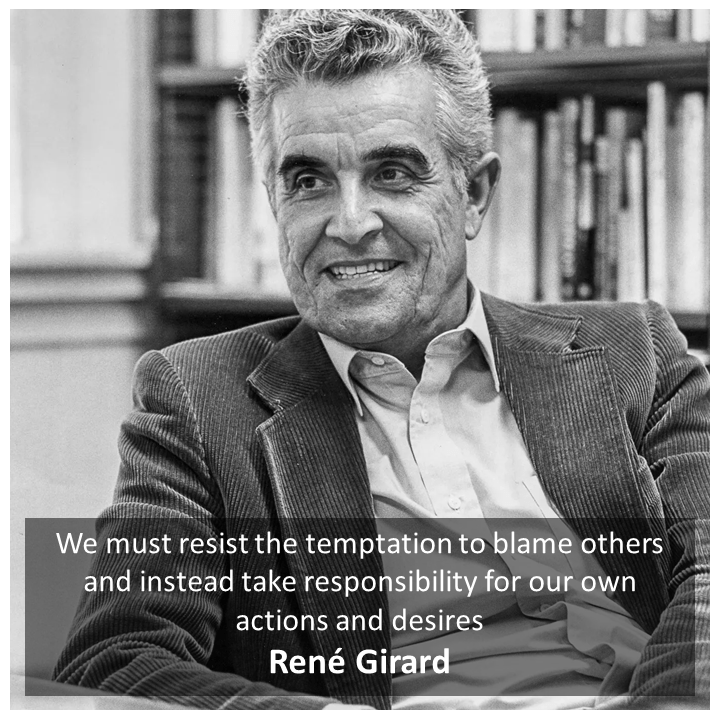
René Girard a French philosopher of social science pointed towards a very innate pattern in human thinking which is called as “Mimetic Desire” in philosophy of social science. He pointed out that even though we may think that our drives are totally created from inside and we are the sole, absolute creator of such desires (like calling ourselves God, the Creator) these are mere effect of our surrounding, they are not created from something absolute. We are always sorting people, things around us to create a place where we say that “we belong”. This helps us to create and justify our identity. The moment someone creates and points towards something as problematic, unsettling then rest of the people also use it as a “scapegoat” to put the blame of anything bad, wrong happening with them.   

We as human beings and social animals are always looking for something to blame which creates an object to blame for difficulties in our life. This grows faster when it happens in group.

According to the ideas of Mimetic Desire given by René Girard, people make scapegoats when the truth, the reality makes them uncomfortable – the reality they don’t want to acknowledge. They desperately lookout for things, groups, people to put blame and make this illusion their reality where they find comfort. People do this because they somehow want to release their anger, tension.

The creation of devil is the same thought. The person in this song is well aware of the truth of reality but as his desires are to always seek pleasure in any possible ways, he finds a scapegoat of “the grip of the devil” to justify his addiction and bad actions. Religious, political beliefs have many examples of such scapegoats.

Responsibility and accountability are very important aspects when we are talking of such ideas. That is why it is very important to rethink our ideas when we are trying to justify them with something delusional.

Conclusion

The key idea to tackle extreme escapism is to accept the imperfect nature of reality. The reality may be fearsome, difficult and unsettling but it is also hopeful, happy and comfortable. Your actions in reality will bring you closer to good experiences rather than submitting to unreal, delusional short acts of pleasure. It’s not the grip of the devil that is holding you in the night, it is you yourself who contain this devil inside who is holding you back. Let your angel overpower your devil to bring you back into the reality. May you grow with every pain inflicted upon you to make you even stronger than you were before. May the creation provide you the physical and especially mental adaptability to handle and appreciate the reality – the only real place where you truly exist.     

Official video shows the transitory phase of a teenage boy who is trying multiple ways to gain pleasure thereby moving away from the awkwardness of reality to become “cool”. But once the balance of pleasurable acts tips to the wrong side, he submits to the pleasurable but dark and devilish side of his personality. This is where he submits himself to the devil.

The video intricately shows the fragile nature of adolescence and the high impact of the choices made in this phase which could have lifelong effect of the personality.   

There a also one lyrical video for this song where you will see fruit butchering (I don’t know why but the producers have made it look very tempting!)

Also, the credit goes to SeeB for adding their iconic style of falsettos to make the listeners feel the grip of the devil in a fantastic way.

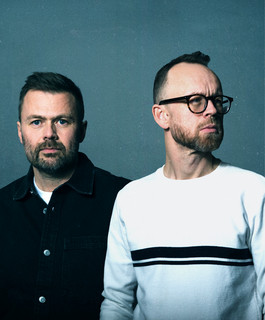
The creators of “Grip” Seeb and Dan Smith from Bastille

The song video

Lyrical “fruity and juicy” video

Listen on spotify

Alienation and Creativity

Creation for capitalism, consumerism and pleasure maligns its true purpose which actually is to create joy and a sense of belonging, comfort and safety. Alienation is the end effect of such capitalist processes where people have isolated their humans side for the rat races and FOMOs. Pure creativity, empathy, connect with nature and self can help use to preserve that human core and come out of the alienation.

How true forms of creativity can help us to reconnect with our human core

“On The Train Ride Home” by The Paper Kites

I long, as does every human being, to be at home wherever I found –

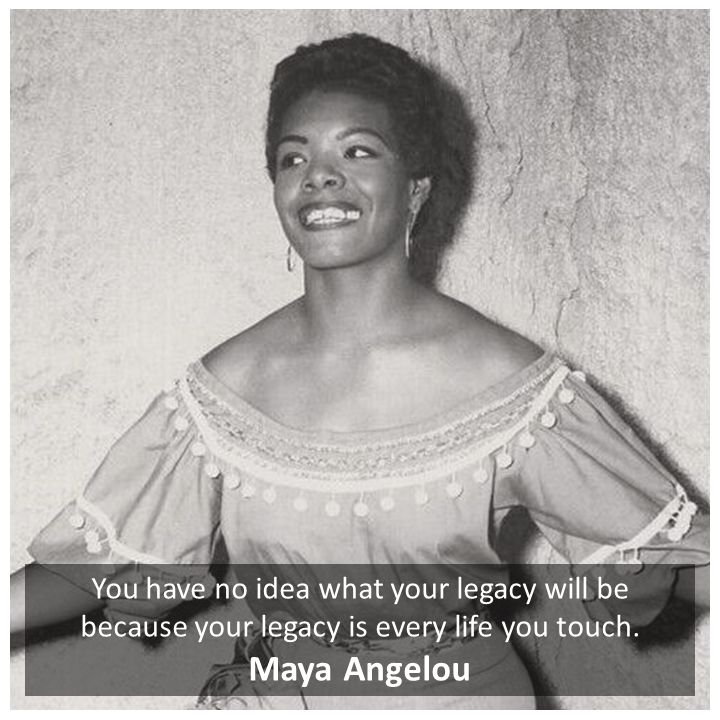
Maya Angelou

Humans – the creative animals

I think creativity is the most important quality granted to human beings. Nature in itself is the ultimate and the best creation which at the same time is also the creator of many things. Animals, non-human beings too have the gift of creativity to certain extent but human beings have outperformed in using this gift of creativity. We are always creating something, we have tools, we have automated processes to create anything we can understand. This creation of things has led us to becoming the most developed species on the planet. Creation can be in any sense – creation of music/ art/ cultures, families/ society, factories/ industries/ conglomerates, institutions/ organizations, cities/ metropolitan, governments, policies, supply chain, and what not! All these creations are intertwined to prove how advanced the human species is. You must also remember that once a process of creations starts generating fruitful outcomes it gets automated to optimize, to improve the efficiency. Most of the times we forget that some creative processes are not meant to be optimized because value of their outcomes is not materialistic. The concept of efficiency and/or optimization is purely materialistic concept. But as we are progressing ahead as the species, most of our creation processes are getting robotized, where materialistic outcomes are more important than the process of creation itself.  

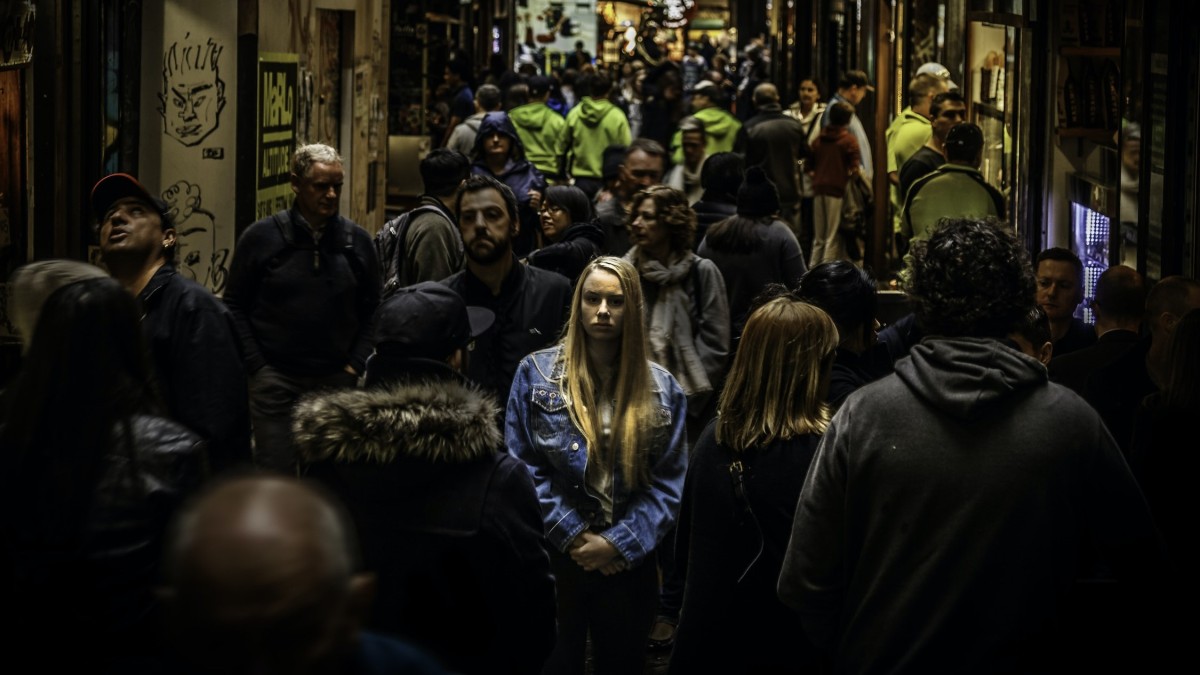
Young generation has crucial role in deciding the future course of our species, especially when we have this great tool of creation – our creativity itself. People of my generation (millennials and Gen-Z to some extent) are the key creators of this time who will decide where our future will lead us. This generation is completely busy in various ventures of creation to justify their own life. But, as I have mentioned before, our creation processes have become so mechanistic, so robotic to gain more, extract more materialistic outcomes that this young generation is getting more and more detached from the real purpose of creation in its true spirit. The consumerism and (crony) capitalism has thrown today’s youth into a forced state of alienation in spite of being living in crowd, densely populated resourceful, glamorous cities. We are lonely in spite of being surrounded by the crowd.

This loss of attachment from the spirit of creation has led to the alienation of the today’s young generation – who many times go through the feelings of isolation, meaninglessness, directionless, confusion – it’s not just a normal existential crisis through which every young generation of their times goes through rather it’s the blurring of the true spirit of living in today’s young generation. Please keep in mind that it is not mistake of this same young generation. The system, society, institutions have evolved in such way that the creative processes are getting designed more for materialistic optimization instead of getting created for the real upliftment of the human civilization. Feels like we are losing touch of the real purpose of our being.

An Australian indie rock band called The Paper Kites released a song called “On the Train Ride Home” which in my opinion tries to touch those feeling of “alienation” which our today’s young generation is going through. Deep down we all know what we really want, we know what our core is but the systems in which we are living today have made our lives more and more mechanical, even though we are in the process of creation that creation no more belongs to us, that detachment, that alienation, that freedom from the vicious capitalistic cycle is what we are yearning for in the end. This is what this song for me is.

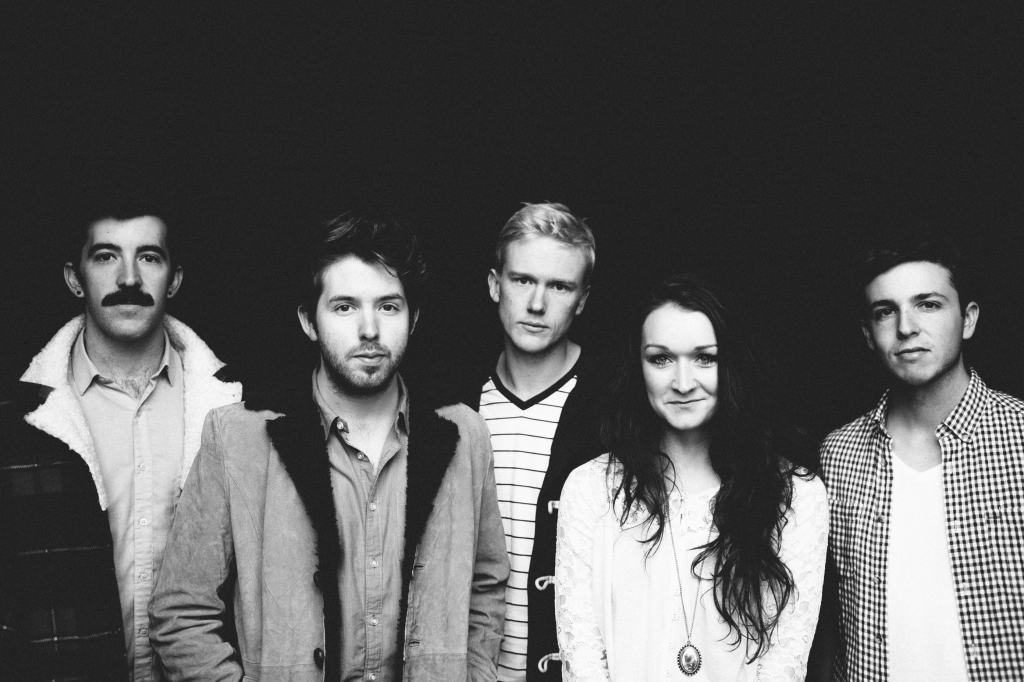
The Paper Kites
L–R: David Powys, Sam Bentley, Sam Rasmussen, Christina Lacy, Josh Bentley

I will dissect this song from the point of alienation; for me that is what it is all about.

The lyrics of the song is credited to Samuel Bentley, On the Train Ride Home lyrics copyright: Wonderlick Pty Limited

(It’s a song which needs to be treasured, hidden from others so that no one spoils it and I know I am committing a personal crime by exposing it. But such creations need more exposure and deserve proper appreciation too.)  

Waiting down at the station
I don't remember, think it was late then
Standing, always so quiet
We're like elevators filled up with strangers
No sound, no hallelujah's
Still I was praying on the train ride home

The starting of the lyrics creates an imagery of the person waiting for a train home. The complete separation from the surrounding has made this person to forget vivid details, it shows the mundane-ness, the separation from surrounding to just reach a safe, calming place which is home. The feeling of loneliness in spite of being in the crowd shows how there is no emotional connect between people. Elevator filled with strangers shows that people are closer and more connected, more accessible but they are not closer emotionally. This is exactly today’s situation, social networking and internet brought us so close that we can ‘poke’ our friend living in another hemisphere within few seconds and still we will see people craving for true connections more than ever. No hallelujah’s shows the loss of spirit, loss of soul in people who are part of this – physically close but emotionally isolated crowd.

If I can't get the things I want
Just give me what I need

Here, the person is aware of the difference between wants and needs which shows that his/ her separation from home to go to the crowded place to create a better resourceful life was not the ultimate goal. This is the only way through which this person can live a life. The system based on the cycles of consumption has narrowed down the meaning of living a life to mere survival. One can get as many things by obeying this cycle of consumption but it will not satisfy the hunger – the emotional hunger, that intimate craving of humanity. The distinction and use of wants and needs is a very smart way to show how the person is trapped in the system to survive but deep down they know what actually makes a fulfilled life. That is why person asks for basic fulfilment if not all what they desired.       

Our words fill up the pages
Fill up the days with psalms for the ages
Still those vows that we all speak
We break them like concrete
And just make our words cheap

This part of song shows how words have lost their worth. Words in the sense the sense of commitment, sense of loyalty to keep the promises. The piousness of the daily prayers, the vows are less cared for. This expression shows how insensitive we have become to just gain the materialistic means, to survive.

This is exactly where it struck me that this song is not just about average existential angst every young generation goes through; this song is more about the alienation of a person where system does not value real creativity – which gives our lives meaning. The system now has been maligned with the materialistic efficiency. Consumption has become more important than the end effect it creates. Mention of “wants” and “needs” thus highlight the culture of consumption here.    

I want someone to grow with
Songs I can sing to, and I family to cling to

The song tries to conclude with the ultimate pursuit for living a better life. Why are we all doing the things which we do? Why do we go on job? Why do we work all week, live paycheck to paycheck without any greater purpose – in spite of knowing that we hate this work at its core? Why knowingly, intentionally are we craving for more and more materialistic pleasures?

I think it is because of the recent vile cycle of consumption. I have a reason to justify this. Somewhere we know that the process of creation in which we are involved is not doing justice with our pure humanistic core.

As a human being all we crave for is the mutual growth, sense of fulfillment, love and intimacy for each other in this limited time on the earth. We know that ultimate goal of creation should be this humanistic goal, but the moment the creation loses this human touch we suffer from alienation, a sense of directionless, sense of being confused, a sense of trapped inside an infinite maze. This is the exact moment when the person craves for home, family and intimacy.

The train ride home is that craving for being the real human being who values emotions, commitment, love and happiness of the loved ones.

But If I can't get the things I want
If I can't get the things I want
Just give me what I need

The person understands that in this seemingly flashy, attractive, glamorous but mechanistic, mundane, lonely and unemotional life there is some hope that they at least will be able to preserve their human core. The request for the “need” over “wants” is the cry for that preservation of the human core.

Alienation

What urged me to completely (and maybe blindly) associate the lyrics of this song to alienation is how Socialism defines the concept of alienation. Karl Marx identified how a process of creation thereby value creation could isolate its creator from its creation. This isolation of creation and creator once intensified removes all the human, emotional attributes from the process of creation and here the brutal capitalism starts. The creation is now mere a mechanical, boring routine of materialistic revenue creation where humanity has no value.

Karl Marx on alienation

Karl Marx presented very beautifully the purpose of creation in human life. It is what separates human beings from other animals, non-humans. We are always involved in creative process which have a personal purpose, a meaning. That is why our creations and it’s end results are so intense and are way different than how other non-human creative processes. The moment such processes start demonstrating the separation of creator, the process of creation and the end-product of creation, capitalism/ consumerism start peeking their head out thereby slowly eliminating what made such things processes humanistic. This exactly is alienation, there is no sense of home, comfort or belonging.     

Marx defined four types of alienation in his discussions:

Alienation of an object –

A factory labor stitching the designer clothing does not bear the capacity to own it and enjoy it. Even though the labor holds the skill and knowledge to create that fancy clothing the system is rigged in such way that the emotional connect between creator and creation is lost forever.

Alienation of process –

The process of creation has become so mechanical, so repetitive to improve the efficiency and to increase the output that humans involved in them have also became mechanical, unemotional. Today’s young generation working in mundane jobs, the jobs they hate only for the paycheck and the job without any personal purpose is the example of that alienation. The separation of creator from objects makes the object accessible to anyone but this accessibility is not equally distributed because the input to output ratio is highly skewed. The value that is created in the creation of the object does not reward the creator in any good way thus creator – the labor remains poor. This also make the creator to lose the faith in the process thereby leading to the alienation of the process.

Alienation of species-being –  

The moment this mundane, highly optimized process does not bear any real humanistic purpose, the creator no longer follows the process to reach a better position in life spiritually, intellectually through the process of creation. It’s like the human creator has become a machine giving throughput. A sense of being a better species is lost forever – this is another form of alienation.

Alienation between humans –

Once the creator no longer has a direct connect to its creation, has no faith in the process for better pivot of meaning, has no sense of humanity, the value for another human life is lost. It is not because the creator or this person demeans or belittles others, it is because the creator himself/ herself does not consider their efforts their value of better worth, hence same treatment is given to people in their surroundings.

There is one famous snippet of a speech from Gabor Maté, a Canadian-Hungarian physician who has done work in ADHD, trauma, childhood development.

Gabor talks about broader scope of alienation which somewhat is based on the Marx’s idea of alienation.

Alienated from nature –

We as the human species no longer have that connect with nature which has resulted in its deterioration. You might have seen that there are still some tribes living in the remotest, inaccessible areas round the globe which are completely in tune with the nature and have preserved it. Today’s consumerism has detached our objects of consumption from their consequences on nature thereby destroying it.

We have to somehow re-establish that connect with nature otherwise nature has its way of adjusting things (we are seeing its effects all around the globe). And remember that this re-connection is also linked to we being the human beings. I mean, who doesn’t like lush greenery, pristine rivers and remarkable biodiversity!

One of the first condition of happiness is that the link between man and nature shall not be broken.

Leo Tolstoy
Alienated from work –

The works we are engaged in are rarely driven by a meaning or a higher purpose. Even if it has some meaning it is immediately inked to some materialistic thing, there is nothing wrong in it as far as survival is concerned but at least this awareness should push us to work for the things with higher humanistic, spiritual purpose, that is our real core as the creative beings. The alienation from work has led to depression, anxiety, emotionless feeling, numbness among every one of us. We are replacing this meaninglessness by other material means which involve how we look, what we possess. Such means of damage control are creating more damage to who we are and what we work for which defines us. You will see, the economy we live in highly focuses on associating meaningful experiences to materialistic products.

Alienated from other people –

The moment we lose the hope and connection between our surrounding we are losing some human part in ourselves which dims down our perception of humanity for others. We trust very few people or almost no one, the relationships rarely have that depth, that intimacy. Social structures based on the depth of relationship are dwindling. The mental illnesses are emerging due to the lack of social emotional support system, growing intolerance, apathy on global level are also effects of that.

The start of the song where it mentions people filled in the elevator, disinterested and having been lost their spirit is the same alienation.

We have to start forgiving people again, create safer environments where we can express ourselves without any prejudice. It is scientifically backed that putting trust in people and treating them with high worth makes them trustworthy and high performer (see Pygmalion effect) In the end, everyone of is craving for someone to rely on and also someone who will make our sacrifices worth of the hardships. Associating positivity of self-worth to being appreciated and being respected for who we are is hardwired in our human circuitry. Our existence gets redefined to higher standards the moment other people (even single person) recognize it. (History has examples where people did impossible for far lesser people who believed in them without expecting anything in return)  

The urge to cling to a family, sing a song to someone, grow with someone mentioned in the song is asking to escape from such form of alienation.

One of the oldest human needs is having someone to wonder where you are when you don’t come home at night

Margaret Mead
Alienated from ourselves-

We have lost the connect our inner self, our curiosities, our inner child in the pursuit of the consumerist ends. The disconnect with the surrounding and numbness to the processes in which we are involved is furthermore deteriorating our inner human core. We rarely listen to our gut feelings, instincts because presence of lots of data, information around us creates a false sense of understanding of the things around us. This is alienation from ourselves, we don’t even trust ourselves – a simple advertisement or targeted influence is enough to make us buy that next thing that we don’t even want.

The part in the song where it talks about making our words cheap is the alienation from self. There is no concept of morality and inner compass in such alienation.

We know deep down what exactly is happening with us and around us but the system rarely creates conditions to come out of that.

How to de-alienate?

The desire to know your soul will end all other desires

Rumi

The core reasons of alienation lie in the loss of empathy, loss of higher meaning/ purpose and loss of responsibility/ commitment (committing to something to change the course of life requires higher sense of responsibility). We are empaths by default as a human being, so it is imperative to preserve this attribute even if the surroundings force the opposite. I know this is difficult when we are responsible for multiple things and people, but you are also responsible for yourselves. It is worthless if you win, achieve something great while losing yourself in the end.

The creative processes whose outcomes are not attached to any material means are thus the purest paths to avoid such alienation in the times of high consumerism and negative effects of capitalism. High consumption is an addictive form of alienation which can be nullified by pure creation. Consumption will give pleasure but creation will give joy.

The prayer to ride home in the song is the hope that we will again meet ourselves in spite of such extreme disconnect. Pure creativity is the answer to such prayers as far as the process elimination of alienation from our life goes.

What separates human beings from rest of the animals is their creative ventures otherwise we are exactly like all other living things. We are the beings who engage in multiple activities of creation which are driven by conscious intent, a reason. This ability to create something has led us to become the technically advanced species on the planet. If we establish the connect with our inner core through meaningful creation, the victory over all forms of alienation is possible.

True creation is all about connecting to every possibility there is.

Such deep concept of alienation expressed in a wholesome and soulful song by The Paper Kites truly deserves more and more appreciation and recognition. Words failed me to express how it made me feel (that is exactly why I didn’t control my words count, where few verses of this song did the same job. No wonder poetry is highly potent than prose!)

The song-