People have tried to justify their existence with happiness, fulfillment, satisfaction, service, love, hope, devotion and what not. But those who have existed in full spirit, lived it to the fullest have realized the effect of sufferings on our lives and even after overcoming them are ready to endure them again in the hope that they will become better than what they were before. These are the people who might have solved the query to justify the life. Overcoming the sufferings in life and continuing the journey ahead could be the answer.
On Charles Dickens’s short story – A Child’s Dream of A Star
The Impact of Suffering in the Pursuit of Happiness
Question- what would you choose of the following?
A short life filled with happiness and satisfaction? or A long life filled with pain and suffering?
I will assume that you have selected one.
Charles Dickens’s short story – A Child’s Dream of A Star
I came across a short story “A Child’s Dream of A Star” by Charles Dickens which shows what it means to pass through the suffering of the lost loved ones.
This is a story of a boy who loses many loved ones throughout his whole life. Whenever he is losing someone, he dreams of a star where he sees the souls of his loved ones meeting and coming together. First, he loses his little sister in childhood, then his baby brother. When he grows young, he loses his mother, while being adult he loses his own daughter. Every time, when the boy loses his people, he dreams of the same star and wishes that he too could join them. But, when grown adult and losing his daughter he is somewhat soothed that his daughter is not alone, she has the angels of his sister, mother and brother to accompany her.
When he realizes the arrival of his last moment, he accepts the death for the joy that he will join the souls of his loved ones now.
The Suffering of Watching People Leave
Charles Dickens in a very impactful way shows what it means to live life. On surface analysis, one can say that this short story of a boy dreaming about the people he lost and asking for his own death in the hope to join them is about the pain of losing the loved ones and dissatisfaction of not getting enough time to spend time with them and love them. Deep down it is about how one endures pain and I think the only way to endure such pain is to pass through it. Any attempt to alleviate or even control it, leads to more pain.
Enduring the Suffering
The great thing about this story is that it delicately captures what a beauty that life we live in is and how we connect same attributes of life to the afterlife (even when we are unsure whether it truly exists, even when it exists in our minds and dreams) also how fragile our existence is.
Charles Dickens used the innocence of the child’s mind to show how we carry that innocence throughout our life to use every chance to stay closer to the people we love. The opening of the story also talks about the sorrow that is felt by everyone when someone dies.
“They used to say to one another, sometimes, supposing all the children upon the earth were to die, would the flowers and the water and the sky be sorry? They believed they would be sorry. For, said they, the buds are the children of the flowers, and the little playful streams that gambol down the hillsides are the children of the water; and the smallest bright specks playing at hide-and-seek in the sky all night must surely be the children of the stars and they would all be grieved to see their playmates, the children of men no more.”
It shows that even for children the suffering had a bigger meaning not even when they had faced any such suffering from loss in their tender age. It shows how by default we are hardwired for the sensitivity towards suffering. Maybe we are more sensitive to suffering than love.
Then we see that the boy is exposed to multiple losses and you will see over the time his dreams are evolving gradually. In early childhood loss of his sister, he is totally devastated that he could not join his sister, then he is again agitated with the thought that his younger brother has to join her in the starry heaven. Then when he is young, he is somewhat settled that his mother could join his sister and the brother.
Now when being adult and losing the beloved daughter, the same boy has made peace with her death in the thought that she has enough people to take care of her and maybe love her more. Now he has made amends with the death.
“My daughter’s head is on my sister’s bosom, and her arm is round my mother’s neck, and at her feet is the baby of old time, and I can bear the parting from her, God be praised!”
You must understand how the boy from childhood till his old-age sees the death in different ways. At first, he has intense sorrow for his sister but over the time he sees that even after death the people he loves have each other’s company.
He cannot do anything to join them in the afterlife and death is the only way to join them. Please note that there is not even single mention or any indirect indication that boy wishes to end his existence just to meet his loved ones in afterlife.
So, it’s a story of how a person builds himself towards the suffering. You will see that the boy never gets numbed because of the series of losses, he is hopeful that at least someone is there in afterlife for them to love each other. Death along with love is the only constant in this story.
We are well aware of the love from the very beginning of our existence but it takes time to appreciate that just like love, death too is eternal. It’s just that our minds find it difficult to bring together the idea of eternal nature of love and never-ending series of death in single thought. Maybe that is why not everything exists at exactly the same time and ends at exactly the same time, otherwise there would be no one to witness and appreciate what one existed in and carry that forward.
The Eternal Curiosity, Innocence and Love
I am adding the concept of eternity, endlessness in this story of involving series of deaths, ends and sadness with it, because that is how the life is. The symbolism of star used in this short story by Charles Dickens also points to that idea.
You should notice that in the opening it is about how everything that is there in existence will feel sad for loss of the children of men. The boy feels that sorrow in his childhood; later on, we realise that he holds these unfulfilled emotions, feelings of not getting enough time to spend with the people he has lost. These emotions are continuously getting reflected in his dreams. In the end, we see that he is dying happily while feeling that he can love them again in the afterlife.
But you should now notice that the dream is limited to the boy only. What is real is the star in this story; the star shining on little sister’s grave and was still shining on her brother’s grave who died at old-age.
Just like the children’s curiosity about whether the nature grieved for the losses in the beginning of the story, we can say that the star (being the child of nature) would also grieve for the people he saw dying. But that is not where the story is going. The boy had learned to handle the grief over time and that is why is mature emotionally with the death of his daughter and even his own death. This became possible because his love for his sister increased multiple folds, got intense over the time.
The maturity that comes to such sorrow is worth noticing, the boy now an old-age man is not sad because he will be leaving his children behind. He is neither happy that he will join his loved ones in the afterlife (although what he says while dying means that he is eager to join afterlife).
The star was a construct of his mind to move over the grief and be assured that no one – not even him will never be left unloved. He had a strong belief that at least love is eternal in some or other forms. The star still shining upon his grave in the last sentence of the story is thus the symbol of the child’s innocence and love.
The last words of the boy/ man are these:
“…My age is falling from me like a garment, and I move towards the star as a child. And O my Father, now I thank thee that it has so often opened to receive those dear ones who await me!”
We all can appreciate that the afterlife’s notion is only in the boy/ man’s dreams but that does not invalidate his feelings. He is grateful that he had someone to love (although he couldn’t love them to the fullest while living). The childhood innocence and curiosity he carried throughout his life helped him to endure the suffering. Curiosity because of the urge to understand what would happen to the people who die gets materialized in the dreams of the boy and thus he builds his understanding around it. This curiosity emerged because he cared for them so strongly that he was concerned about what would happen to people after they die. Innocence because from childhood till old-age he deeply believes that just like the children of nature, everyone and not only him cared for people, loved them in some or other ways.
Conclusion
Most of the existential queries on human life point to one single question of meaning or purpose or at least worth of the life. Once started, if it is destined to end then why is this everything existing? And this question is not just about life. It is about everything attached to the life itself. If everything in existence is attached to something and everything at any time will be lost forever, disconnected forever then why does everything exist in first place? Once you appreciate this question, you will see that existence is majorly a series of detachments, losses – literally and figuratively. It is just that some things detach faster than others, some things stay for longer time but are lost in the end; we are just existing in these gaps of losses and detachments. Maybe how we felt about those things especially the innocent emotions we had for everything that is there (which are neither good/ bad, pure/ impure) are eternal. If not eternal, I would say that they evolve in better ways, get refined, gain maturity and get transferred to our next generations through our legacy. Maybe they too would have an ending but what can we say about the human spirit! The spirit to exist in spite of the sufferings! The ability to exist in full spirit and endure multiple sufferings over the time while maintaining that innocent child alive inside you is what justifies our existence in the end. And even that is to end in the end, I have no complaints.
So, when I asked to select one of options at the start, if you felt that selecting only one of these is foolish (or difficult/ meaningless) then welcome to the club!
People have tried to justify their existence with happiness, fulfillment, satisfaction, service, love, hope, devotion and what not. But those who have existed in full spirit, lived it to the fullest have realized the effect of sufferings on our lives and even after overcoming them are ready to endure them again in the hope that they will become better than what they were before. These are the people who might have solved the query to justify the life. Overcoming the sufferings in life and continuing the journey ahead could be the answer.
Escapism creates a void in our perception of reality so that new ideas, creative ideas would populate this void for living life with a new perspective, new approach. The healthy escapism is the most important tool, a therapy for many successful creative people our world has ever seen. Once this escapism takes extreme side it may lead to addiction, procrastination and delusion. Freud’s ‘desire to destruction’ and René Girard’s theory of mimetic desire help us to understand escapism in better ways to face the reality head on.
Reality is merely an illusion, albeit a very persistent one
Albert Einstein
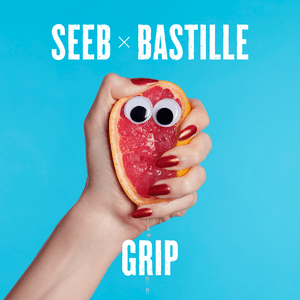
It is very interesting when we start questioning how we understand, feel and interpret the reality. The reality in which we live in has infinitely many facets which we experience through equally diverse emotions. We as human beings are hardwired for seeking happiness, happiness creates the environment to nurture, grow and multiply. Bear in mind that only growing and multiplying is not enough to guaranty the survival of our species. Adaptation is one aspect to ensure the sustenance over the course of time. Adaptation means getting exposed to adversities, sadness, imperfections of reality to create the strong enough coping mechanisms. What would happen if are continuously in the phase of seeking pleasure and turning our faces away from the challenges of the reality? How we justify our own death (figurative) by our own hands when we submit ourselves to such dark pleasures, addictions, dark temptations in spite of knowing that they are harming us? There is just one perfect song to point us towards such emotions. The song is called “Grip” by Seeb and Bastille.
The song was written by Espen Berg, Dan Smith, Thomas Eriksen, Mark Crew, Simen Eriksrud and Joakim Haukaas.
Album art for Grip by Seeb, Bastille
Grip – The Lyrics
As the night time leads into the day
And tomorrow spills across the sky
While the sun's a harsh reminder why
We are feeling barely human
The overall emotions this person is experiencing are the emotions of distaste and hatred towards the things which are inevitable. He knows already that it is going to be day after this night, the sun will rise up and he will have to face the day helplessly. The “harsh reminder” here highlights that the person doesn’t want to face the day, the reality, the responsibility and wants to escape to the night where he was someone better than human – someone invincible.
‘Tomorrow spills’ shows that the thing/s which this person was trying to postpone, avoid has finally come. The spilling action shows the unwanted eventuality. The things which the person is trying to avoid are the sufferings and problems which for this person are mocking him for his humanistic limitations.
This rise of the day is a reminder of his humanly limitations and the sufferings which never end. The person is well aware of the sufferings and hence is cursing the Sun for reminding him about his limitations as a human being. The transition of night into a sunny day is also a metaphor for the veil falling down. The veil of enjoyment which was masking the suffering, imperfections, sorrows, problems of the reality.
I really loved the word play to show how the person hates the day which never comes – ‘tomorrow’. It kind of points towards the ‘procrastination’ to avoid the pain of imperfections and the pain, the suffering accompanying with the life itself.
We don't know what's good for us
'Cause if we did, we might not do it
Who knows where our limits lie?
We won't discover 'til we push it
These lines explain the expression “Ignorance is a bliss” in the most perfect way. The person wants to ignore the things which are good because deep down he knows that they come with hardships. That is exactly why he says that even if he knew what is really good for him, he won’t do it; he knows doing the right is always the most difficult path. It’s like running away from the reality and reject it because it is full of pain, problems, unsettling consequences and imperfect.
The next lines show that the person is not completely delusional and detached from the reality. He knows that being a human being with unlimited capacity in the world of infinite possibilities, he can do anything and succeed at it. He is aware of the fact that he just has to expand his boundary to make impossible things possible. This is the moment when you will appreciate that the person expressing his feelings here is aware of everything that is right and wrong. It’s just that he just wants to be happy and maintain that state by rejecting the painful reality.
I should just walk away, walk away
But it grips me, it grips me
But I should call it a day
And make my way
Oh, it grips me
'Cause the devil's got my arms
And it pulls me back into the dark
But I should just walk away
Walk away, oh it grips me
Cause the devil's got my arms
The person knows that he should completely let go of the things which are deviating his life from reality but now he has found one pity excuse. The person thinks that it is difficult to lose the hold of joyous, illusive but pleasurable darkness. He is ready to ‘call it a day’ get over with this pleasurable but illusive, dreamy life but somehow his mind has found an excuse of the devil which holds him back. It shows how addictive the dreamy, pleasurable alternate reality which is far from the ‘real’ reality, the life his mind has created which is full of pleasure, happiness and he is whatever he wants to be in this dreamy world. Grip of the Devil is just an excuse for him to tell others that he is not solely responsible to stay in this ‘unreal’ illusive life, this shows his lack of accountability. He is blaming the devil for him not facing the reality and taking charge of the course of his life.
We got drunk on this unholy wine
To deliver us from our old minds
A promise of a better time
'Til we're feeling barely human
Wine in Christianity is a symbol of abundance, enlightenment, celebration, and blessings of the God. The ‘unholiness’ of the wine shows the overuse of this abundance which points to the addiction. Addiction is the worst use of the means preferred to gain pleasure. That is why the holy wine once intended for enlightenment becomes unholy when exploited and overused unnecessarily. The promise of better time is the reflection of what a person suffering from addiction feels, he tries to repeat the act to extract the pleasure – a short lived one. This short-lived pleasure makes him feel something better than human. Once the effect starts to fade out and the person regain the consciousness of weakness of human nature, he again resorts to this short-lived pleasure to regain the better humanly experience.
These are the exact emotions an addictive person goes through – this could be any addiction.
I would rather forget
And wash my memory clean
Oh, I would rather forget
And wash my memory clean
The person knows what mess he is in and the escape is also difficult. He just wants to remove all the traces of what he really is and surrender to the world of the devil. (‘Cause the devil’s got his arms). He is helpless and just want to reject the painful reality while remaining into dark but pleasurable devil’s night. It an intentional submission the “dark side” to avert the pain of reality brightened with the Sun.
Escapism – Sadness, pain, procrastination and addiction
Escapism lies as the core theme of this song. We humans are pleasure-seeking animals. Remaining in joyful conditions promotes safety, continuation of the species from the evolutionary point of view. That is why we are hardwired to escape from adverse, life threatening, sadness inducing, fear inducing events. Fortunately, we are rarely exposed to wild animals and life-threatening situations as our primal ancestors did. But this instinct has not left us completely. Any event which simulates sadness, fear, great challenge – our response is somewhat still primitive. But as the technology as progressed so much, our ways to escape the hardships of the real, imperfect life have evolved drastically.
Please understand that escapism is not a bad word. But once it shifts to extreme use, abuse then addiction takes over and the person starts hating reality and submits to dreamy, delusional world created by him or someone else.
Reading, writing, painting, doing some happiness inducing activities/ tasks are simple examples of a “healthy escapism”. Such escapism creates a void in our perception of reality so that new ideas, creative ideas would populate this void for living life with a new perspective, new approach. The healthy escapism is the most important tool, a therapy for many successful creative people our world has ever seen.
Now coming to the other (dark) side of escapism – it’s a highway to addiction and constant search for dopamine hits. Deep down we know how we are all addicted to something. It’s just matter of who is affected by them in worse ways. Social media, their algorithms, the culture of overconsumption, the capitalistic urge to prioritize wants for getting social approval, submission to addiction to escape the problems are the real-life challenges that we are facing today due to the technology. Technology is meant to provide an exoskeleton, an augmentation to improve our lifestyle but this same exoskeleton is weakening our muscles thereby crippling us. (The crippling of our minds.)
Escapism is not a new phenomenon, rather is has an age-old history only the ways in which we try to escape the reality have changed over the course of the time. Creating an alternate reality was always one way to alleviate the painful effects of reality. But, the tools that we have today are more potent and can immediately lead to the state of addiction.
You will see in the lyrics of the song the that the person is well aware of what wrong choices he is making, that it is not good to submit to the devil and the night but now he is so addicted to this alternate reality that he has started hating the reality and don’t want to experience it.
Such is also the way of procrastination. We try to delay the activities knowing that the had to be done anyways but won’t yield the perfect, beautiful results that you want. Procrastination thus creates an illusion of safety until the threat becomes imminent. Procrastination is also healthy unto certain limits to create a space of new approaches but if your fear of creation, action is preventing yourself to postpone their impact on reality thereby residing yourself into your dreamy world then such alternate reality is useless.
Reality is painful – but that is not the only thing it is!
We escape from reality so that we can come back to fight the reality with better tools and ideas not to completely run away from it because in the end reality will catch up with us with far gruesome, dreadful face and consequences.
We are highly prone to our conscious submission to the alternate reality because it creates a potent illusion of safety and comfort. This is because we think that living a fulfilled life means living a life of happiness, whereas upon close inspection you will appreciate that life has never given itself to either sides of the existence – neither good nor bad. Life keeps oscillating between these two and creation, destruction, growth, adaptation happens in between those waves. Buddhism talks about the roots of suffering in attachment. We humans are highly susceptible to immediate attachment to any living or non-living things (which are the parts of reality). Our attachment to such things then leads to the fear of their loss and thereby loss of familiarity and comfort which projects the ultimate fate of the reality as imperfect, painful and hostile one. Once we let of such attachments, we can have a full control on the escapism in our lives.
Once we start to see happiness as a process instead of a stage, we will truly appreciate the beauty in the prima facie unsettling imperfection of reality – this is the same real life, the reality where we actually exist and can truly contribute to affect our and other lives in better ways. It is not that painful as we have thought in our minds.
Also, even when you have achieved that only goal in your life, that full happiness, in the end you will again be miserable because you are going to be clueless about what comes next, what to do next!
I think confrontation is the opposite of the escapism because of the same reasons. Instead of the escaping from unsettling reality for short time again and again, and it catching up with us in the end, why not face it in first place and be done with it! This requires the attitude of rejecting the ultimate purpose of life attributed to the search for happiness. The reality is neither happy nor sad.
Sigmund Freud – Beyond Pleasure and Desire to Destruction
Sigmund Freud in his early developments of psychanalysis was the strong proponent of the ideas of human beings as the pleasure-seeking animals. Freud actively promoted his ideas of psychology based on the thought that our actions are always intended to maximize pleasure, procreation, and preservation and avoiding pain. He called this force as “Eros”
Freud’s early ideas hence are always pointing towards that continuous search for pleasure (Lustprinzip). But once the world war started Freud went under immense emotional pressure as his two sons were soldiers in war, he also saw soldiers residing to traumatic war experiences. In coming years, Freud lost his beloved daughter to Spanish flue. Here he felt really miserable, guilty and painful that he is able to survive while his daughter died.
This is where Freud brought in the idea that humans also have a death drive, destruction (Thanatos) where doing nothing helps to cope up with the intense sadness of the reality. This idea was introduced by Sabina Nikolayevna Spielrein – one of the first female psychoanalysts. Under extreme pressure humans may chose to do nothing as doing anything will end in pain.
So, Freud evolved his idea of human psyche as an interplay between the urge to live and urge to die.
The person in the song submitting to the dark, harrowing addictive pleasures shows this same urge to destruction even though he knows that they are not good. We are ready to submit ourselves to darker illusions because of this same desire to die, to destruct ourselves because sometimes reality feels more brutal than death.
When one is exposed to unknown events in life, the urge to pleasure will seek excitement, adventure and adrenaline, dopamine, knowledge from it while for same life event the urge to destruction will resort to confusion, danger, fear and submission to familiar, warm and comfortable environments.
Freud received huge criticism for these ideas too. Freud also mentioned that this death could also be figurative – as the complete distaste towards everything in life and becoming inanimate – a living dead body.
The idea of clearing memory in the end of the song shows this side of desire to destruction to me.
Important thing to come out of these ideas is to appreciate that life never favored any side – good or bad. Life is always multifaceted. There is always something good in bad and bad in something good. Good and bad always coexist.
Mimetic Desire – Responsibility and accountability
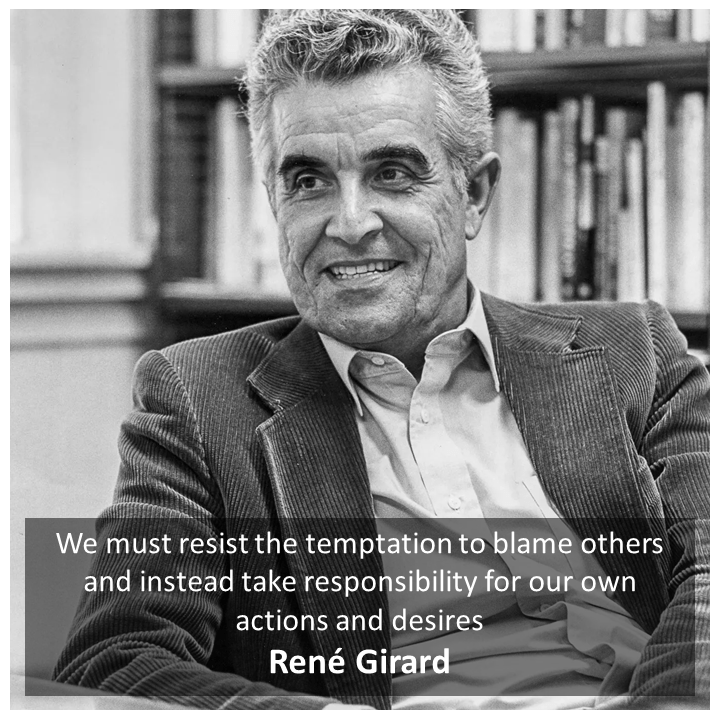
René Girard a French philosopher of social science pointed towards a very innate pattern in human thinking which is called as “Mimetic Desire” in philosophy of social science. He pointed out that even though we may think that our drives are totally created from inside and we are the sole, absolute creator of such desires (like calling ourselves God, the Creator) these are mere effect of our surrounding, they are not created from something absolute. We are always sorting people, things around us to create a place where we say that “we belong”. This helps us to create and justify our identity. The moment someone creates and points towards something as problematic, unsettling then rest of the people also use it as a “scapegoat” to put the blame of anything bad, wrong happening with them.
We as human beings and social animals are always looking for something to blame which creates an object to blame for difficulties in our life. This grows faster when it happens in group.
According to the ideas of Mimetic Desire given by René Girard, people make scapegoats when the truth, the reality makes them uncomfortable – the reality they don’t want to acknowledge. They desperately lookout for things, groups, people to put blame and make this illusion their reality where they find comfort. People do this because they somehow want to release their anger, tension.
The creation of devil is the same thought. The person in this song is well aware of the truth of reality but as his desires are to always seek pleasure in any possible ways, he finds a scapegoat of “the grip of the devil” to justify his addiction and bad actions. Religious, political beliefs have many examples of such scapegoats.
Responsibility and accountability are very important aspects when we are talking of such ideas. That is why it is very important to rethink our ideas when we are trying to justify them with something delusional.
Conclusion
The key idea to tackle extreme escapism is to accept the imperfect nature of reality. The reality may be fearsome, difficult and unsettling but it is also hopeful, happy and comfortable. Your actions in reality will bring you closer to good experiences rather than submitting to unreal, delusional short acts of pleasure. It’s not the grip of the devil that is holding you in the night, it is you yourself who contain this devil inside who is holding you back. Let your angel overpower your devil to bring you back into the reality. May you grow with every pain inflicted upon you to make you even stronger than you were before. May the creation provide you the physical and especially mental adaptability to handle and appreciate the reality – the only real place where you truly exist.
Official video shows the transitory phase of a teenage boy who is trying multiple ways to gain pleasure thereby moving away from the awkwardness of reality to become “cool”. But once the balance of pleasurable acts tips to the wrong side, he submits to the pleasurable but dark and devilish side of his personality. This is where he submits himself to the devil.
The video intricately shows the fragile nature of adolescence and the high impact of the choices made in this phase which could have lifelong effect of the personality.
There a also one lyrical video for this song where you will see fruit butchering (I don’t know why but the producers have made it look very tempting!)
Also, the credit goes to SeeB for adding their iconic style of falsettos to make the listeners feel the grip of the devil in a fantastic way.
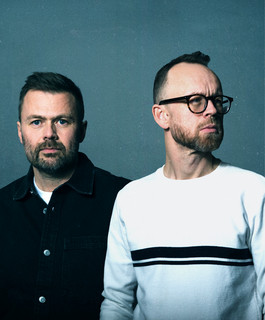
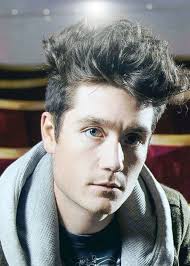
The creators of “Grip” Seeb and Dan Smith from Bastille
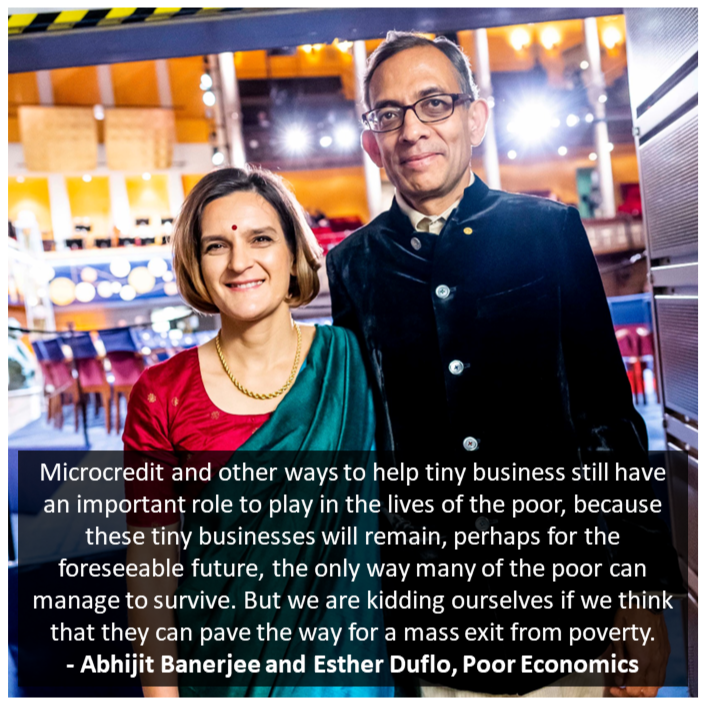
We are surrounded by many entrepreneurs which go unnoticed and have nothing to do with the keywords like technology, unicorn, angel investors. A high chunk of these unnoticed entrepreneurs are poor entrepreneurs, almost a billion around the world. Nobel laureate economists Abhijit Banerjee and Esther Duflo studied such poor entrepreneurs which has created deep insights and answered many questions. Providing supporting capital – microcredit to such poor entrepreneurs is not the final answer to this riddle.
Paying close attention to the larger fraction of the poor entrepreneurs
Monthly Revenue of a ‘Chai-wala’
It is very common discussion among group of youngsters to roughly estimate revenue of their “Snacks n’ Tea” seller while enjoying that short break. The discussion ends when the earnings estimate from that seller’s business reaches to a figure which is far bigger than what these “highly qualified” youngsters actually earn thereby inspiring them to think about pursuing their own business, start-up. What actually happens after such short surge of inspiration is also a common knowledge. Very few of such people actually work on entrepreneurship, their business idea and again very few of these truly taste the success. Social media, mainstream media have also positively affected and boosted the startup mentality, entrepreneur mentality among the youngsters through TV-series, reality shows, success stories, popular talk shows, podcasts and nonetheless video platforms like YouTube. The “F.I.R.E. culture” (Financially independent, Retire early) is also one wave of thought which inspires such entrepreneurs to create something of value, turn it into a business and sell it at higher valuation to gain financial independence early in life. (Although, FIRE is not limited to financial freedom through entrepreneurship only). Following their passion and working over it to create a start-up and then becoming a wealthy person is also one famous new career route for today’s youngsters.
In short, for our generation, entrepreneurship holds the key to financial independence thereby key to the freedom (materialistic freedom to be more specific) – life living on their own terms, without any terms and conditions.
When looked through “the pop-cultural” lens towards entrepreneurship one will see all the glamour, money, popularity, angel investors, “unicorn startup” funds and success stories. In reality there are very few practical examples in these enterprises which successfully fit to all such criterion, which really have created value in the society; most of them are actually just publicized bubbles rather black holes sucking in the attention, time and money of the investors.
The Reality of Entrepreneurship Around the World
Start-ups represent only the early developmental part of an entrepreneurship. Even though they represent such an early and small part of the concept of entrepreneurship, start-up stands as the biggest lamp, biggest fire attracting the youth like moths.
Here are some interesting facts:
9 out of 10 startups fail
7.5 out of 10 venture-backed startups fail
2 out of 10 new businesses fail in the first year of operations
Only 1% of startups become unicorn firms like Uber, Airbnb, Slack, Stripe, and Docker
The success percentage for first-time founders is 18%
20% start-ups fail before the end of their 1st year, and almost 70% start-ups end by their 10th year.
These facts are not presented to demean the value of stat-ups or to negatively criticize start-ups thereby idea of entrepreneurship (although there are some people who also try to capitalize their failure in both the good and bad ways). When you will look at the complementary positive data on start-ups you will realize that the successful start-ups even being low in numbers created value to the society in totally different ways, they changed the ways of working and doing things through the exploitation of technology.
The glamour while portraying the concept of entrepreneurship is actually overshadowing the key idea behind it which is “ingenuity”.
Poor Entrepreneurs
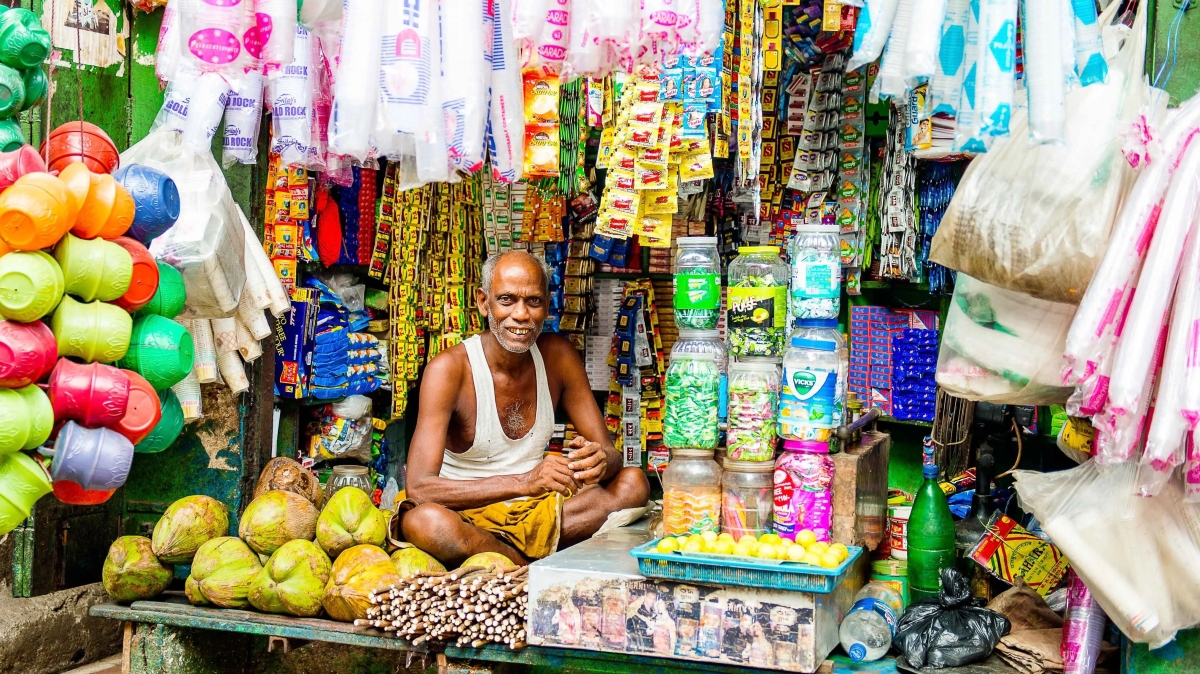
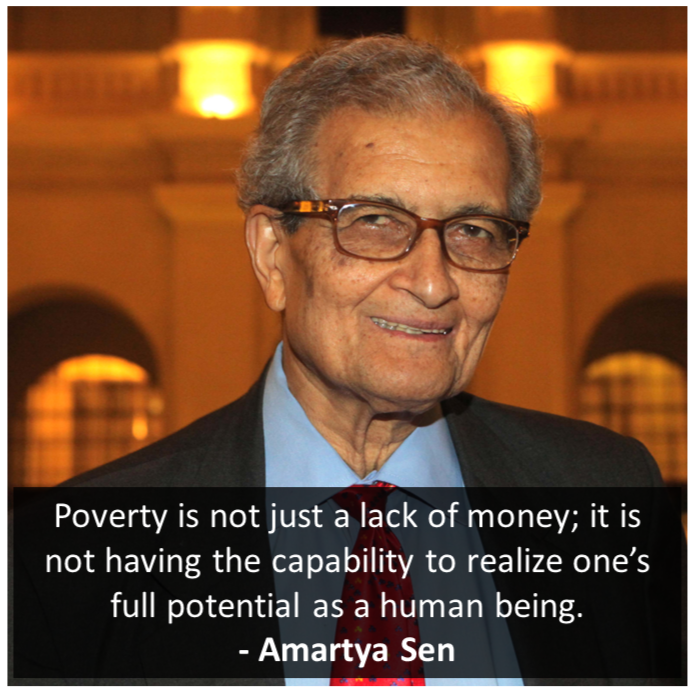
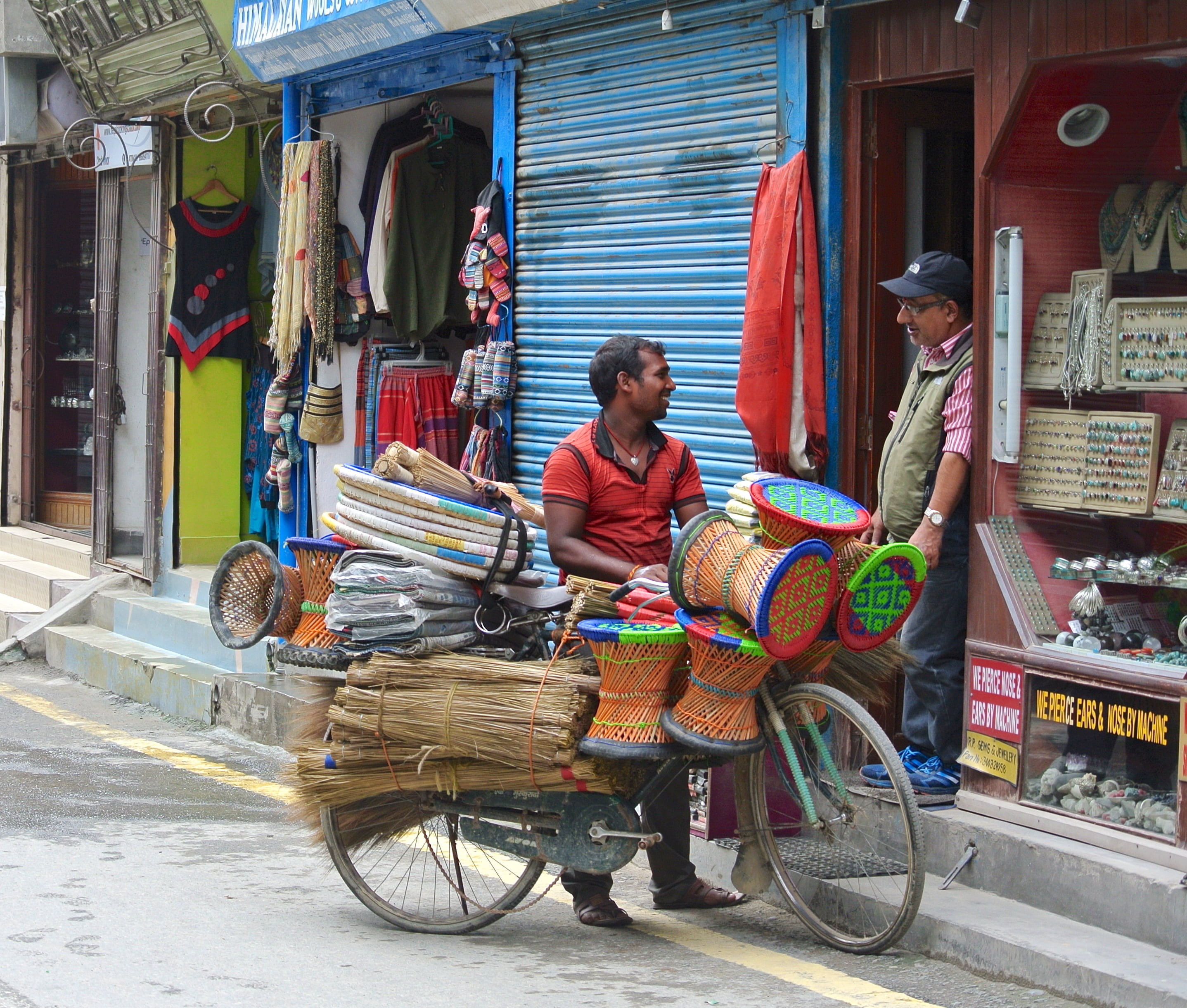
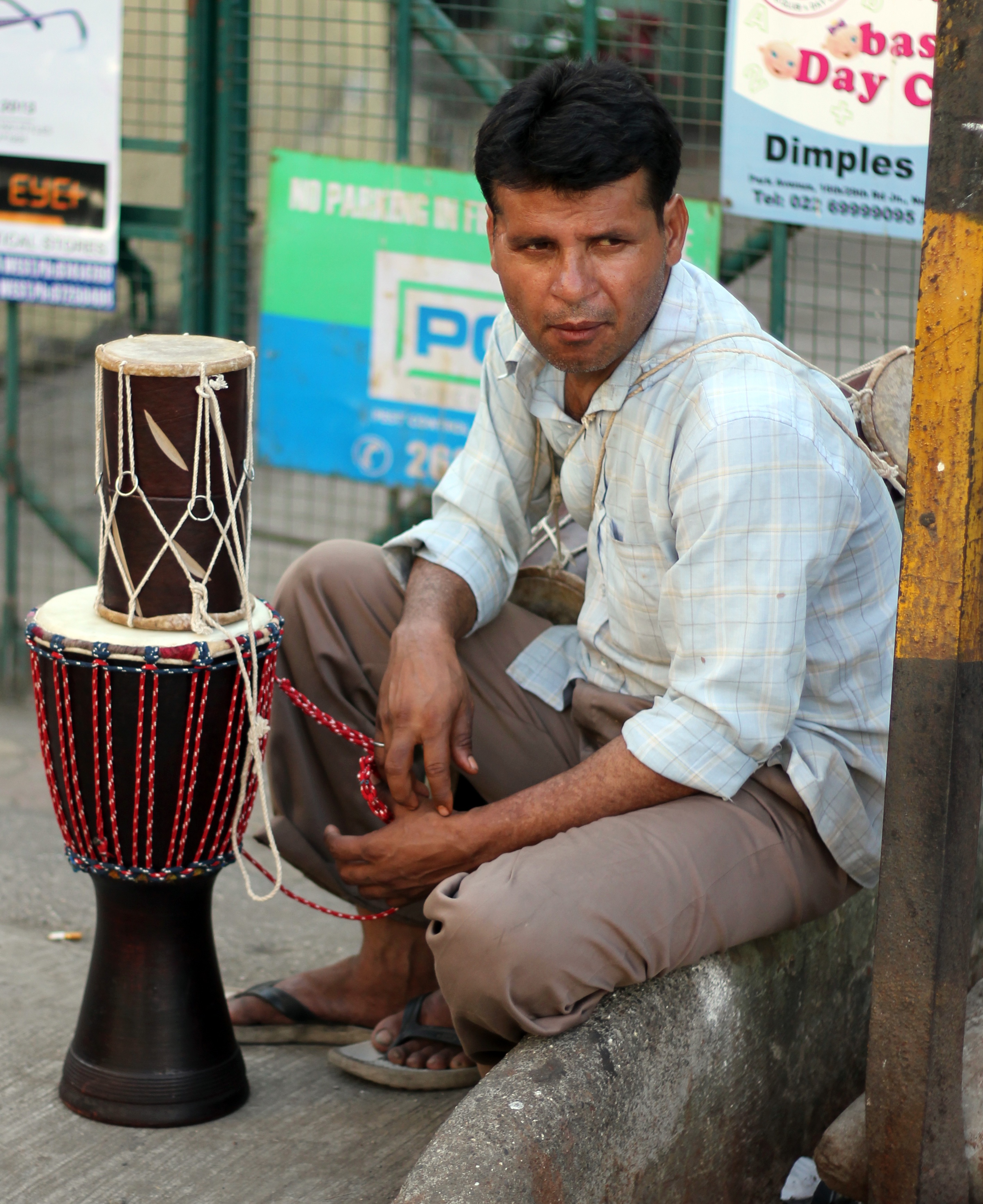
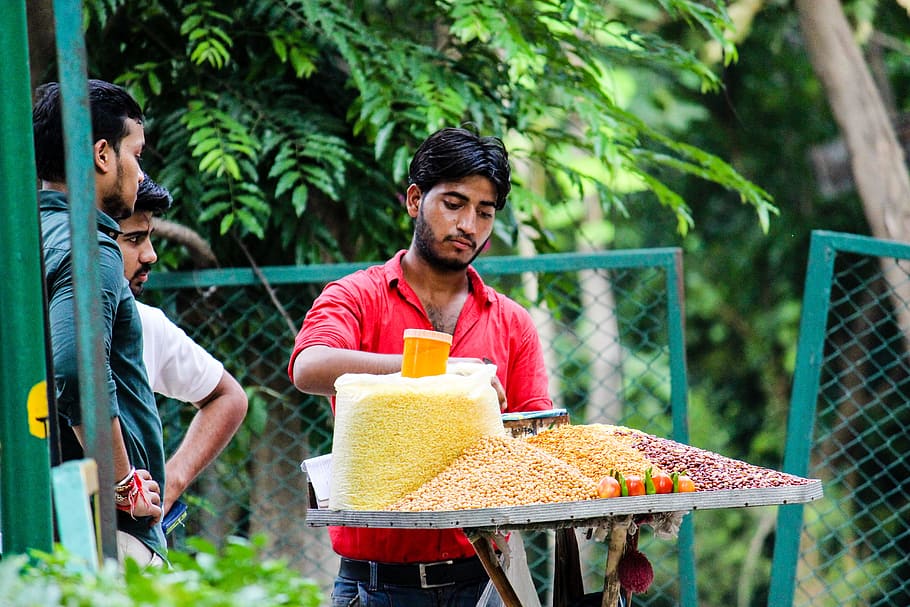
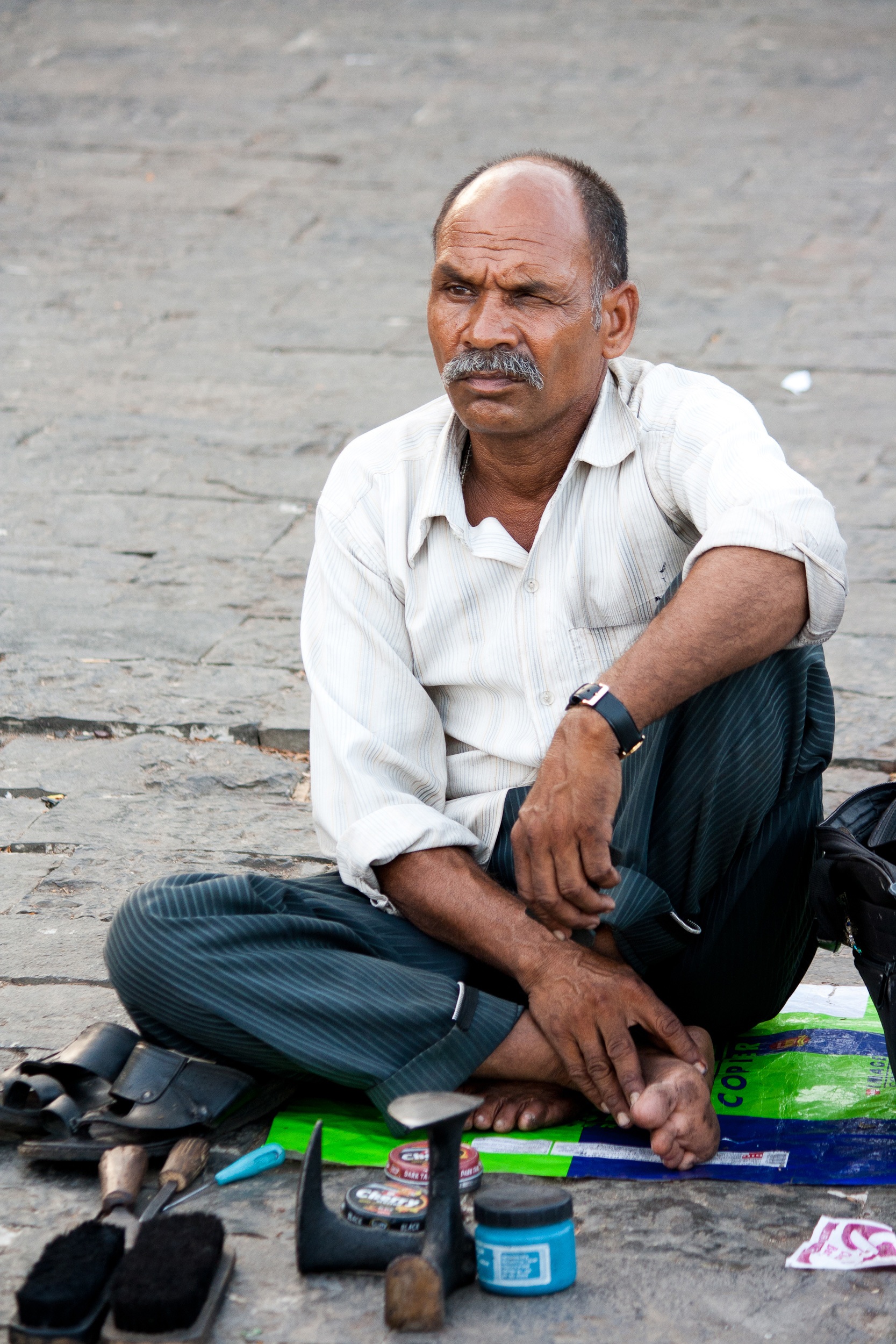
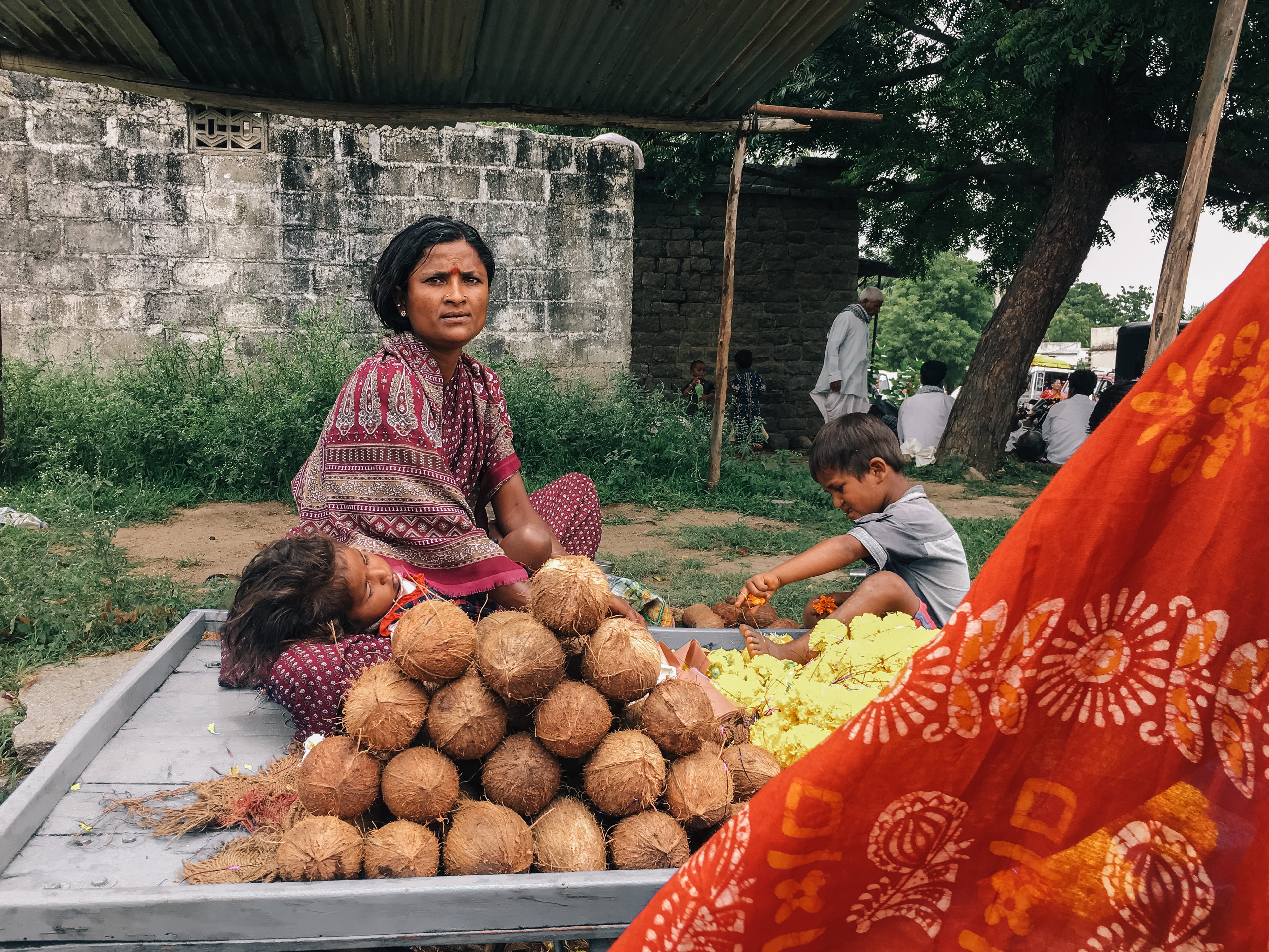
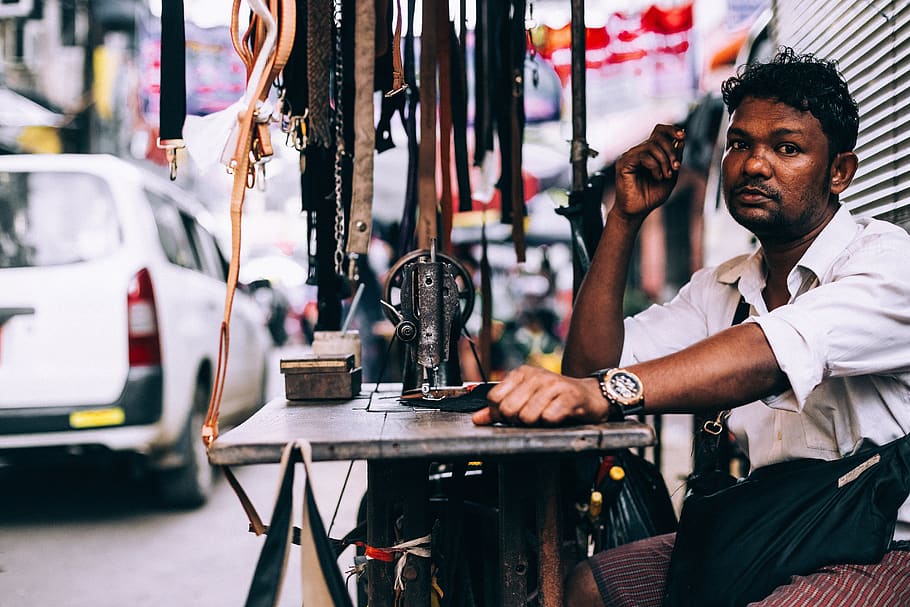
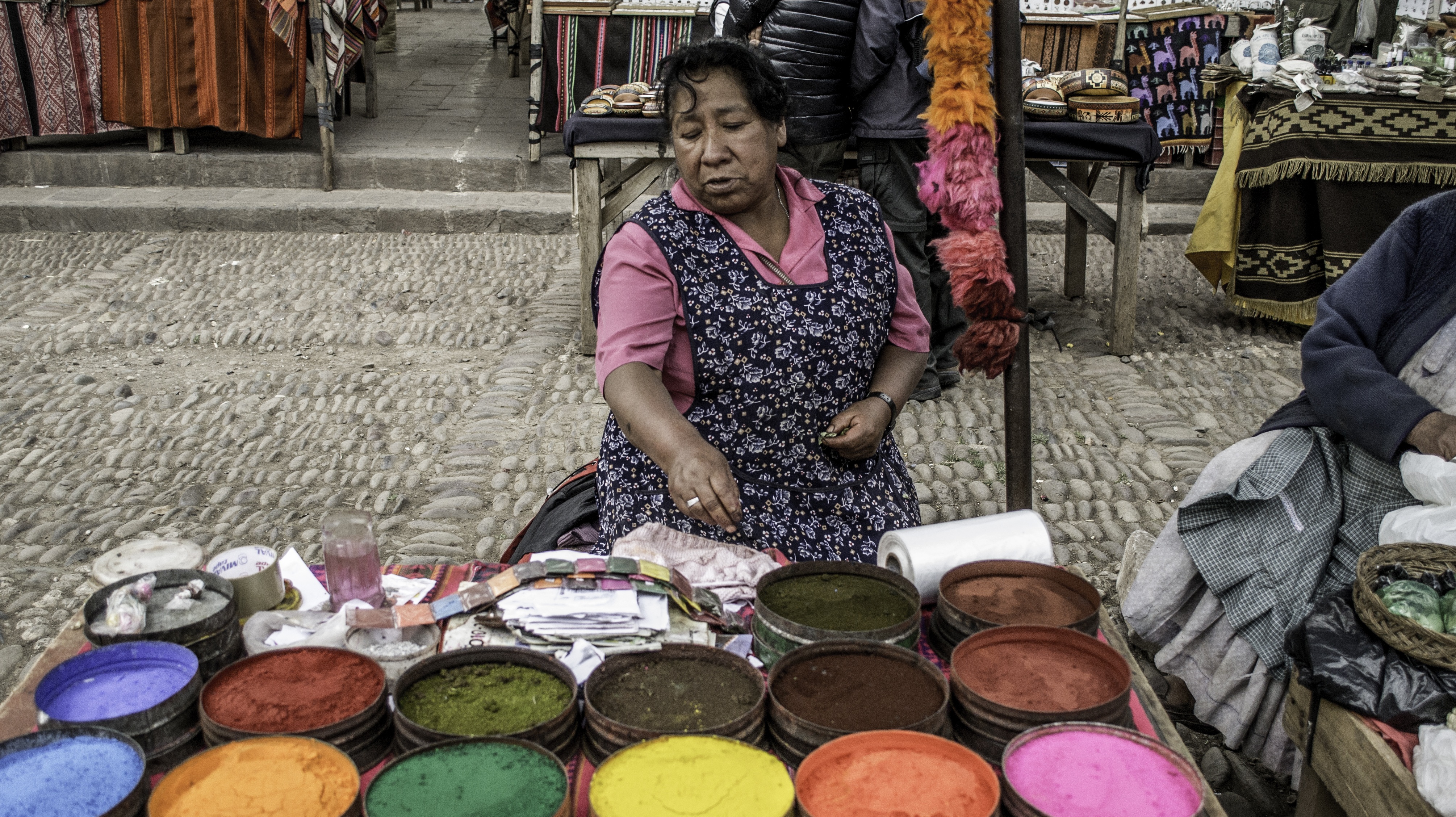
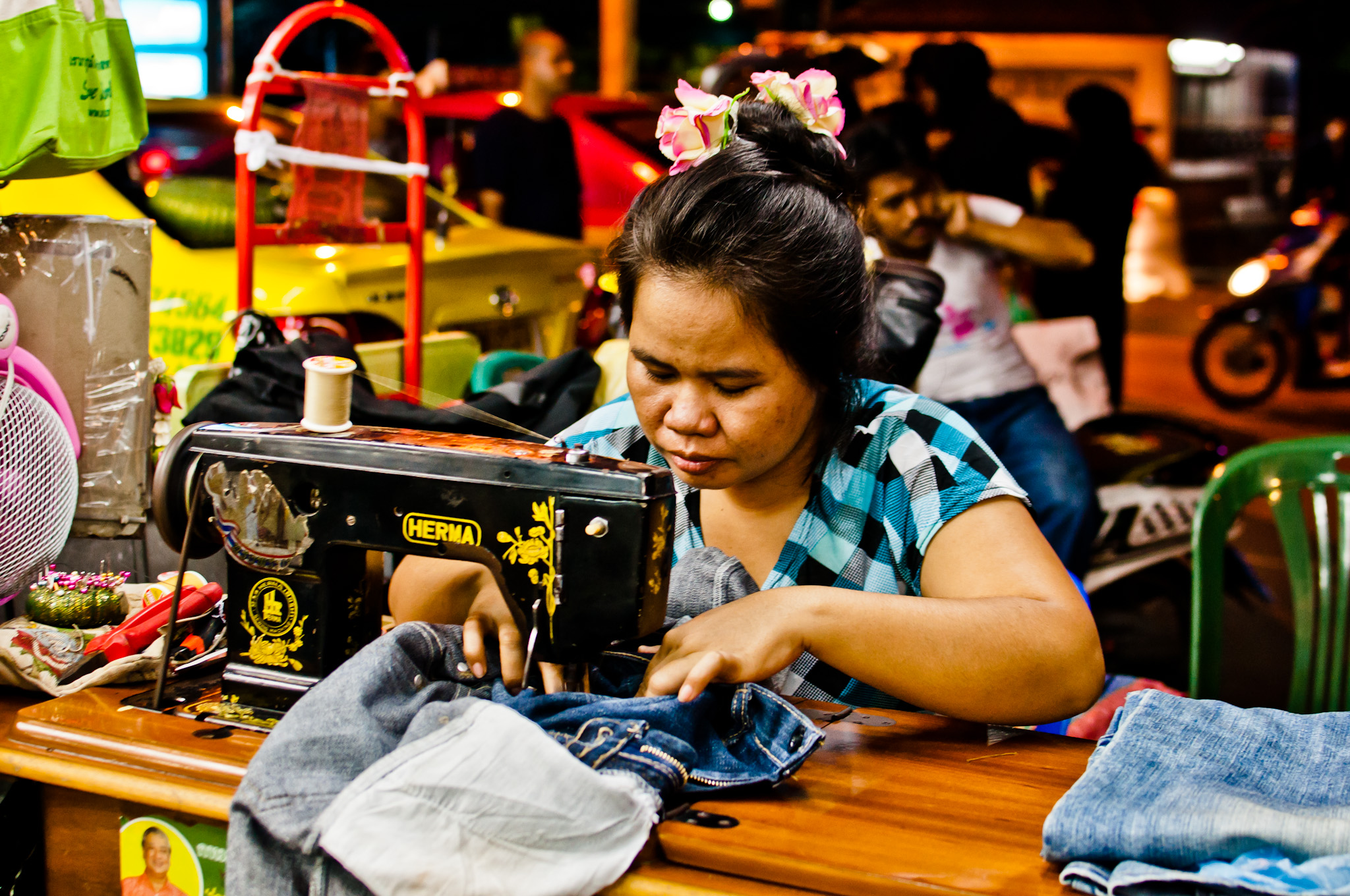
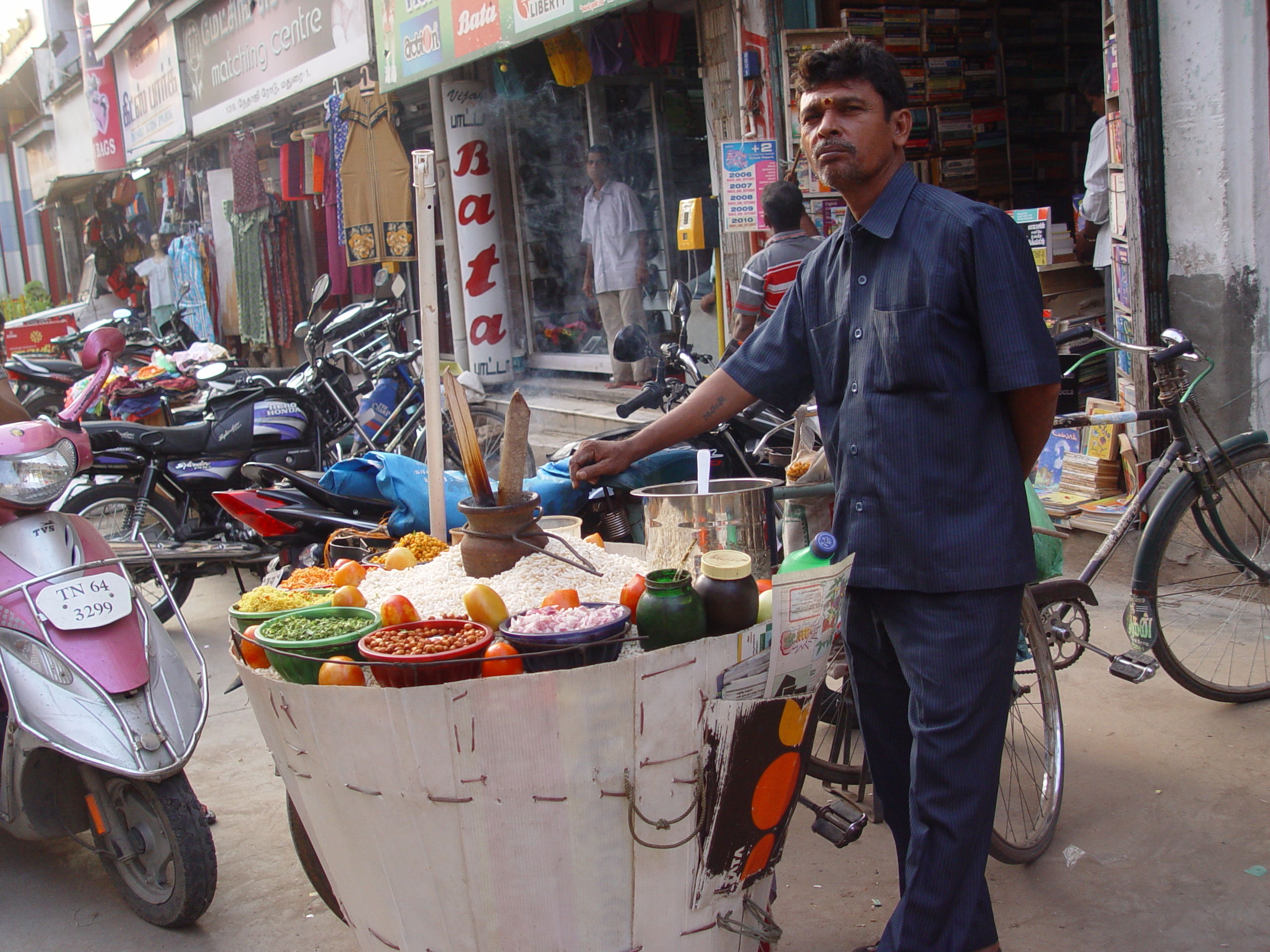
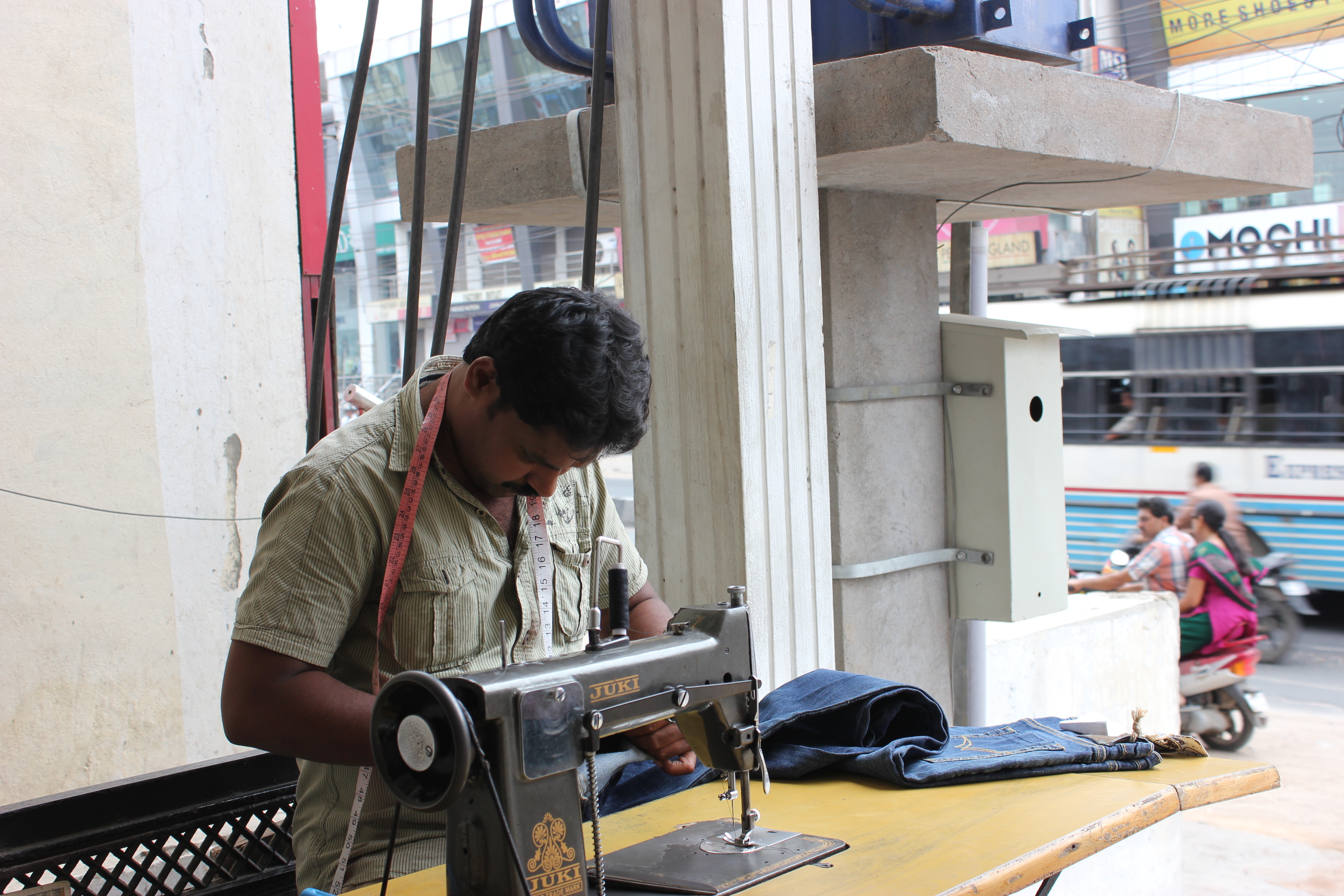
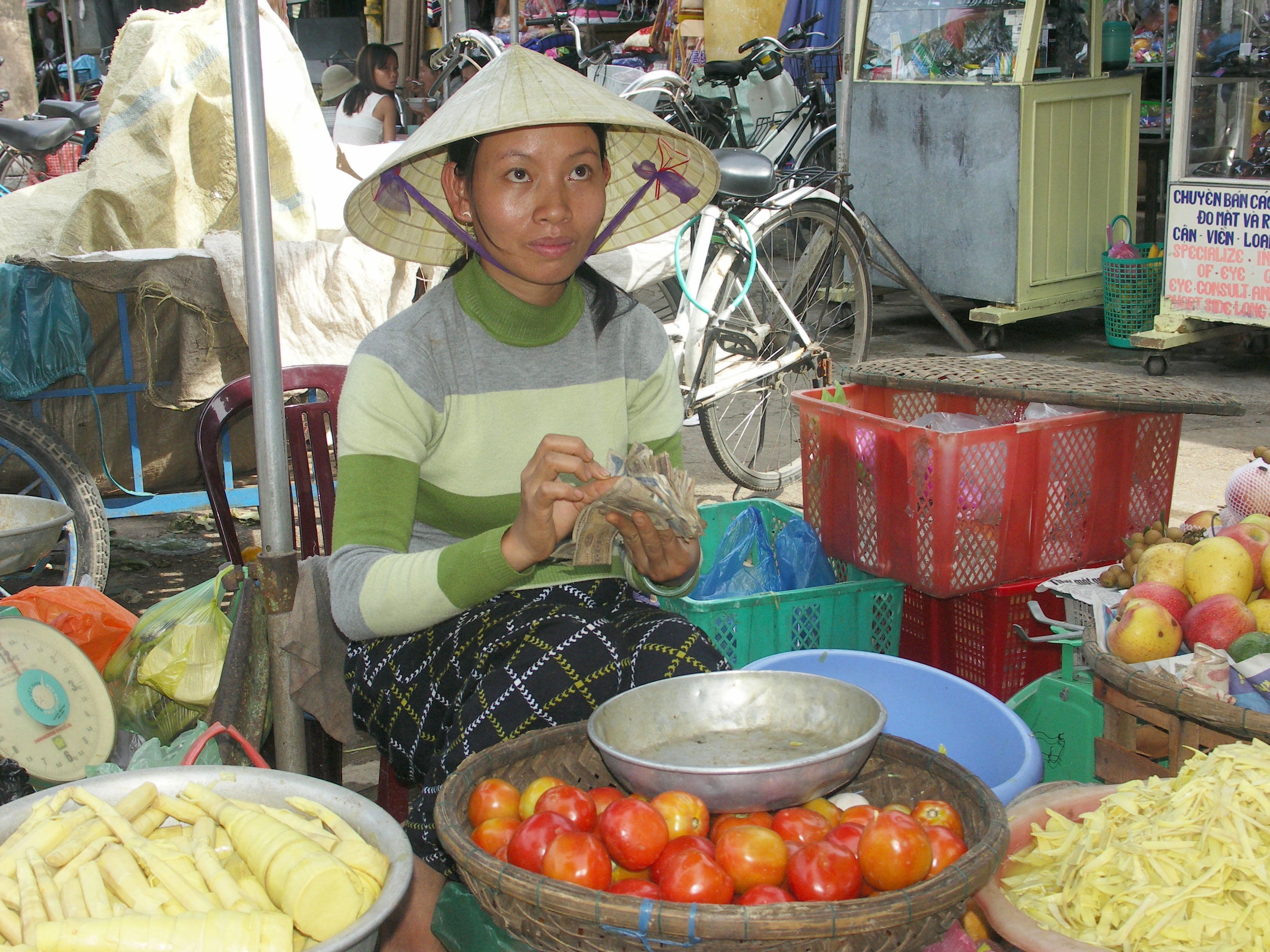
What is the definition of an entrepreneur? The dictionary definition goes like this- “a person who sets up a business or businesses, taking on financial risks in the hope of profit.” Literally, a person who runs an enterprise. Now look at the pictures above, can you tell which one of these is an entrepreneur?
This will make us realize that how the glamour built around the word entrepreneur is actually a mirage. The basic idea in entrepreneurship is the risk taking for the gaining profit. We are surrounded by such small entrepreneurs in our day-to-day life, most of these are poor entrepreneurs. World renowned Nobel laureate economists Abhijit Banerjee and Esther Duflo have contributed to uncover the reality of such poor entrepreneurs and many questions associated with such poverty.
Why should one be interested in poor entrepreneurs?
According to the data collected by Abhijit Banerjee and his team roughly 12% of the population in rich countries calls themselves as self-employed i.e., entrepreneurs. The interesting thing is that the poor countries have far higher percentage of self-employed people. Nearly 70% people call themselves entrepreneurs – self-employed in poor countries. These are the people who are mostly single person entrepreneurs like tailors, bricklayers, auto-drivers, street-vendors, shopkeepers.
“…most income groups in poor countries seem to be more entrepreneurial than their counterparts in the developed world-the poor no less so than others… ”
Abhijit Banerjee and Esther Duflo, Poor Economics – rethinking poverty and the ways to end it
Looks like bigger chunk of the entrepreneurial population of the world is not really glamorous and full of revenues, capital and resources. The intention to focus on this information is not to degrade entrepreneurship, rather it is to understand why the percentage of entrepreneurship is huge in poor countries where availability of resources and capital is already hitting rock bottom low? How do they manage such ventures in low margins? Do these entrepreneurial ventures bring them out of the poverty? If yes then, how? If not then why?
If entrepreneurship is supposed to give people freedom to operate on their own conditions, freedom to be their own boss, freedom to take control over their own lives, bring their ideas into the society then why poor countries where the entrepreneurial fraction is huge are not coming out of poverty? Why most of such poor entrepreneurs remain poor even after embarking on the journey of self-employment?
Trust me the answer is not related to ‘lower rates of returns’ only!
Ingenuity of the Poor Entrepreneurs
Let us understand the challenges faced by the poor entrepreneurs listed as below:
Being poor, they are inherently low on capital (obviously)
They have low or no access to formal financing institutions like banks, insurance companies
As they have no access to formal finance, they approach local moneylenders and borrow with high rates of interest
They have very low risk-taking capacity because any investment other than that for sustenance is a survival challenge
They have very crude social support in terms of materialistic and emotional levels. They are surrounded by people having same difficult lives. They rarely have good connections with people who will trust them, people who will have access to better conditions capital-wise or relation-wise
Even after having these challenges, the fraction of entrepreneurs in poor countries is surprisingly high. How is this possible?
As Abhijit Banerjee explains, the poor entrepreneurs have clever ideas to run their businesses even at low capital. The unavailability of resources, material/ capital means forces them to find out new creative ways to make living. You will see many such innovative entrepreneurs around who try to make living by using some really interesting ideas e.g., the human hair collectors roaming around town to exchange with utensils/toys, the scrap collectors who collect specific types of waste only and sell them to bigger scrap dealers in bulk, there are some dust collectors in the gold markets of many cities in India where poor people collect road dust around the gold shops and try to extract tiny amount of gold from such collected dust to sell it.
But how many of these innovative, creative and ventures with true ingenuity actually turn into a unicorn or a big company? In simple words, one knows how costly are the hair extensions/ wigs are then why the hair collectors are not getting rich with their business? If gold is that precious then why these dust collectors are not getting rich with this gold dust collection ventures?
This is where the insights created by Abhijit Banerjee play a very vital role. In his book “Poor Economics – rethinking poverty and ways to end it” co-authored by Esther Duflo, he has given very important insights into the world of poor people, the challenges they face and ways to uplift them.
Let us deep dive into the key concepts to understand the economics of such entrepreneurs.
Representation of the Poverty
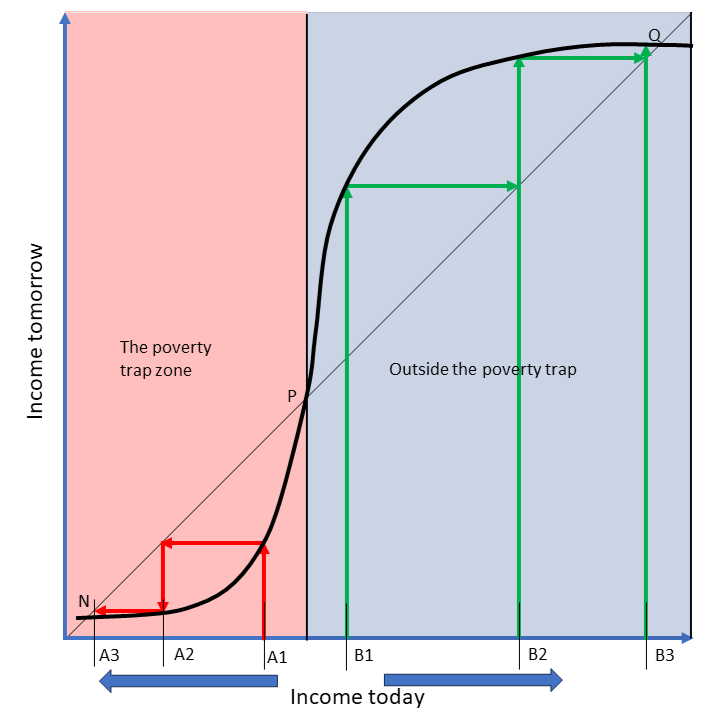
Figure 1 The S-shaped curve and the poverty trap Source: Poor Economics – rethinking poverty and the ways to end it by Abhijit Banerjee and Esther Duflo
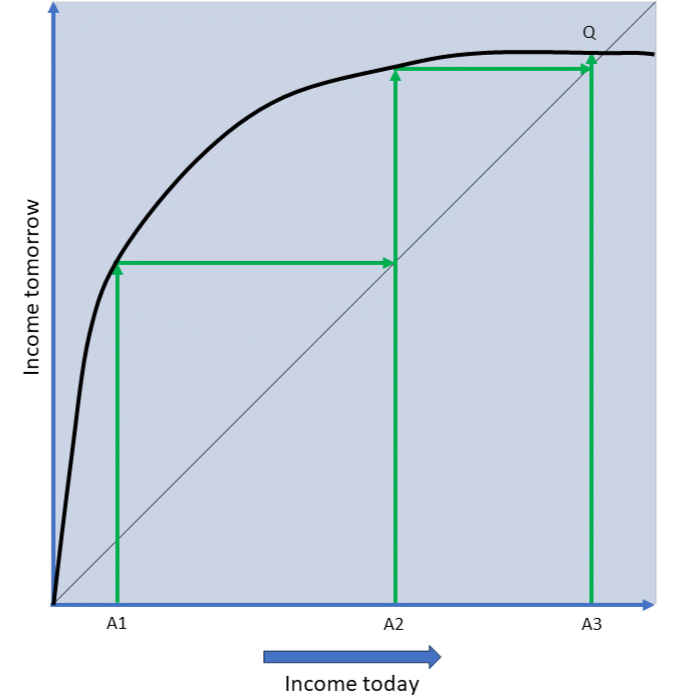
Economists use the diagram shown above to indicate the relation between income of today and the income a person will earn in the future. You will see an S -shaped curve forming. The red zone indicates the poverty trap zone where a poor person starts from A1 earns a meager amount which is not enough to sustain making the net income negative thereby proceeding to A2 which is backward directed/ decline in income. This reduced income restricts his/her freedom to choose (as the words go “beggars cannot be choosers”), risk-taking ability, reduction in available capital thereby scarcity of capital disposable to meet the daily basic requirements. So, the ventures in which poor people are engaged are down-valuing ventures according to this representation – which is used to represent “The Poverty Trap”. For those who think that the ventures of poor people always end up in losses thereby degrading their existing states, this curve in red zone represents that vicious cycle.
Most of the economists think that poverty is not a vicious cycle. By providing minimum enough capital/ resources to the lowermost group, their lives can be kick-started where the ventures will give net positive incomes, thereby gradually increasing their income over the time. That is why the world around us is explained by blue shaded part of the diagram, known as inverted L-shaped curve.
Figure 2 The inverted L-shaped curve Source: Poor Economics – rethinking poverty and the ways to end it by Abhijit Banerjee and Esther Duflo
Please note one interesting detail in this diagram which we will bring further in our discussion. The initial slope of the curve is steep indicating substantial valuation increase in income but as the curve proceeds slope of the curve ends into flat thereby indicating less or no increase in valuation of the income over the longer period.
In very simple words, a venture can only sustain over the time if there is some net gain over the time (always remaining net positive, even if it becomes smaller and stagnant over time). Very few people and actually no one would engage in a venture where they see their future valuation, future earnings dropping over the long-time horizon. That why most of the economist accept Figure 2 to represent the incomes of today and tomorrow for anyone.
Asking the Right Questions
Now that we have realized that it will take very small amount of effort and capital to uplift the poor entrepreneurs why doesn’t that help them immediately? Abhijit Banerjee in his studies asked some important questions which reveal why just giving poor enough money won’t solve the complete problem. Abhijit Banerjee clarifies that it is the inherent nature of the enterprises/ businesses, societal conditions and even the mindset of the poor entrepreneurs that makes them stagnant in their ventures. Even if they are running their small businesses successfully, they will always make just enough to sustain in long time horizon, very few will be the outliers which come out of this stagnancy.
Abhijit Banerjee pointed out that most of the poor entrepreneurs repay their loans on high interest rates. The high returns rates are attributed to the lending from informal financiers like local money lenders, relatives. If poor entrepreneurs are successfully repaying such high interest loans while sustaining through the business, then that means that their overall rate/ fraction of earning for the capital invested is also very high.
So, why don’t they become relatively wealthy even after running business with high rate of overall returns?
Here we can take support of the inverted L-shaped curve for poor entrepreneurs and build on that further.
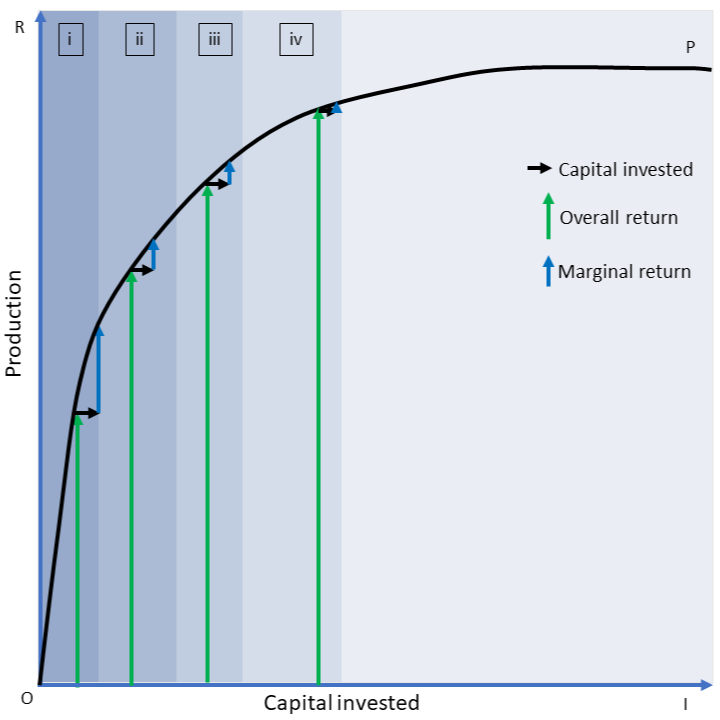
Figure 3 Diminishing marginal returns in poor enterprises Figure created from the explanation in the book Poor Economics – rethinking poverty and the ways to end it by Abhijit Banerjee and Esther Duflo
Abhijit Banerjee explained the reasons for the stagnancy in poor enterprises in practical ways based on his field research. He explains the important behavior of marginal returns in terms of the poor enterprises. Marginal returns are the what left after an entrepreneur pays off everything – like payment on tools, payment of the wages to the workers, payment of the things bought to sell. Marginal return is take-home money after the business is done.
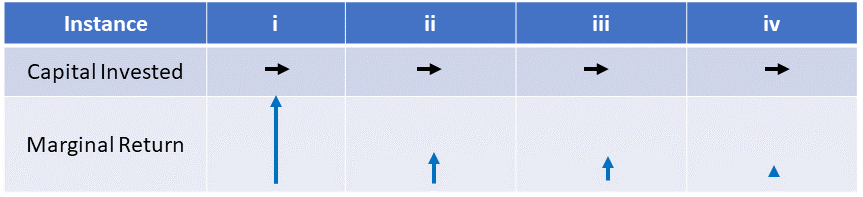
Now let us see the inverted L-shaped curve in figure 3 for poor enterprises. At the start of the business the marginal returns (shown as the height of the vertical blue arrow) are very high for the extra capital invested (shown as the length of the black horizontal arrow). The early investments in the business yields higher returns – higher marginal returns.
But, as the curve proceeds, due to the inherent nature of the businesses poor entrepreneurs are involved in as the capital investment goes on increasing, for every unit increase in such investment the marginal returns go on reducing and diminish further.
You can see in the figure 3, there are four different instances of extra capital investment in the poor enterprises. The L-shaped curve increases rapidly at early investment stage but as the capital investment goes on increasing the curve quickly flattens out, indicating the stagnancy.
In poor enterprises any new unit capital investment will give diminished marginal returns over the time
This behavior can be explained by the example of local fruits and vegetable vendors. First a person starts out with very few 2 or 3 vegetables (potato, tomato, onions for example). Being the commodity vegetables, they are sold very easily, fast and margins are also pretty good for the amount invested to buy them in wholesale. So, with those good returns he/she now buys different vegetables and now provide more options to his/ her customers. Now you will realize that not everyone buys every vegetable he/she has to offer, the sell of potato, tomato, onions may still remain good. But in order to expand he/she cannot depend on selling those only, and as he/ she expands into new varieties there comes the uncertainty of not everyone buying it. Perishable nature of these products is also one problem over which he/she has no control. The overall return may increase by incorporating more variety of items or by buying a cart to access many customers but for every new investment further done to grow this business, the guarantee of higher returns is very low.
So, the vegetable/ fruit vendor realizes this at a stage in his/her business that buying only those items which would sell, items which will not perish immediately with limited customer accessibility through cart is the only option to survive. You have to understand the limitations created by the nature of the businesses poor entrepreneurs are invested in.
That is exactly why only giving money to poor entrepreneurs won’t bring them out of the poverty. The businesses they can perform stagnate very rapidly.
Now, someone should ask the question for the case of the vegetable/ fruit vendor.
The questions could be asked as follows,
The vendor should buy a vehicle so that he will contact more customers, why doesn’t he / she do so?
The vendor should go to the wholesale market to buy the vegetables and fruits even at low rates to increase his margins, what stops him/ her?
The vendor should rent a place in cold storage to maintain his items fresh till they are sold to the end customer, what is the hurdle?
Now, let us assume ourselves as this vendor and try to answer these questions.
If the sell is stagnant even with a cart, why should one put exceedingly high amount in a vehicle purchase. This will be a big capital step. As the accessibility to formal lending is difficult, it brings capital in but the returns will be very low due to the borrowing at higher rates of interest.
In order to buy at wholesale low rates connections with the wholesale tycoons are vital. Such connections are based on mutual benefits which the poor entrepreneurs hardly have access to.
Cold storage rentals are significantly high for the amounts they earn so that goes there.
You must understand that these are not some contrived examples created to prove certain points. These are real life challenges and questions faced by poor entrepreneurs. It is only because of such challenges the poor entrepreneurs have that creative mindset, low cost, less capital-intensive problem-solving mindset. This also the reason economists found that poor entrepreneurs have very low number of people involved per business, they cannot afford to employ others due to the stagnancy.
As the study done by Abhijit Banerjee indicates, even if you provide some extra marginal income to the poor entrepreneurs so that they can access such options where extra capital is required, they will still choose to not invest that extra amount in the business because they know that for that extra investment the returns will not be that high over the longer period. (Abhijit Banerjee experimented with such extra capital provisions to poor entrepreneurs in Sri Lanka through lottery system, these entrepreneurs chose to invest that extra money in their livelihoods instead of businesses)
The Big Gap to Fill
Now you should understand that even when extra capital is provided, that extra capital definitely won’t go into the growth of the poor enterprises. The question now comes that why poor entrepreneurs don’t have wide mindset? Why can’t they think big? Looks like the horizons and the mindset of poor entrepreneurs are so narrow that they are scared of risk taking. For the exact reasons the micro-financing institutions have tried to disseminate finance education, entrepreneurial education to the poor entrepreneur they lent money. But economists found that it is the inherent nature of the enterprises that poor can and are involved in, which makes them to think so.
Abhijit Banerjee here clarifies what exactly is the difference between the poor entrepreneurs and the rich entrepreneurs. For that let us look at the figure 4
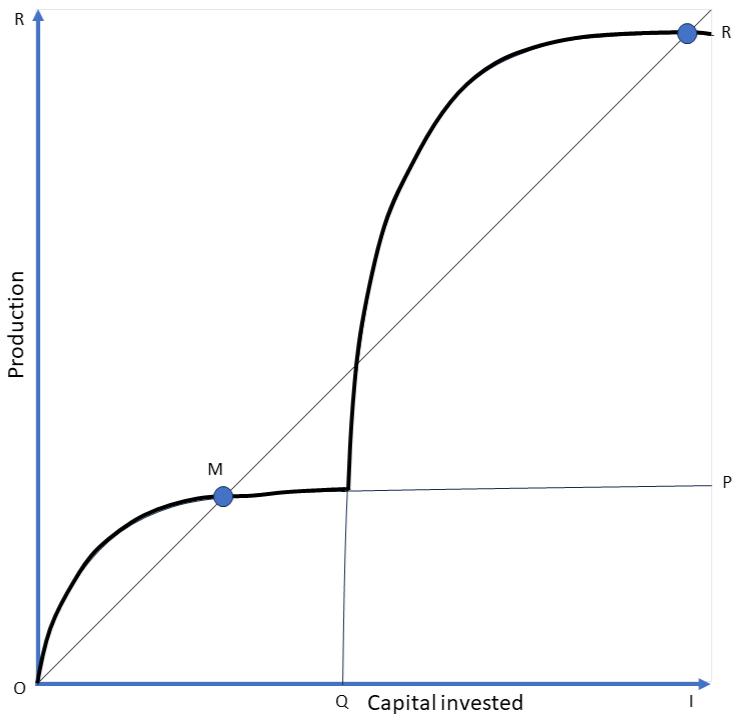
Figure 4 Combining technologies and S-shaped curve of entrepreneurship Source: Poor Economics – rethinking poverty and the ways to end it by Abhijit Banerjee and Esther Duflo
You must appreciate the beauty with which Abhijit Banerjee has explained the difference between poor and rich entrepreneurs. Any incorporation of production technology in an enterprise will improve the productivity. Buying machinery, tools, infrastructures can largely boost the business performance. This boost due to production technology is shown as curve QR.
What does the curve OP represent?
As you have already seen, curve OP starts with no to less capital investment and flatten out immediately. It is the curve of poor entrepreneurship.
Now you must understand that in order to gain marginally/ exceptionally high returns one needs to start with high up-front capital in hand (Indicated as capital OQ). The big tech startups, the big supermarket chains start exactly from here where there are high chances of success (This is also why rich start-ups or any non-poor start-ups demand high funding).
In the case of high marginal returns in poor enterprises in their early stages of development we can easily think that high marginal returns should create the foundation of a successful long-term business. These high margins will allow the person to invest more in the same business, to employ more people to expand the workforce, to purchase new machinery, new tools. But these high marginal returns could never fill that capital gap for poor. This is what majorly differentiates between poor and rich entrepreneurs.
So, one has to really appreciate the gap lying between poor and rich entrepreneurs. This gap of capital to create production technology is too large for poor entrepreneurs and for the business they run. It is not just their narrow mindset, rather they are so close to the harsh reality that they prefer not to follow such seemingly “imaginary” paths.
Conclusion
Entrepreneurship for our young generation seems like a glamorous venture with big money, new technologies, new ideas, new technologies, “angel” investors and “unicorn” start-ups but we always forget that we are surrounded by many entrepreneurs which go unnoticed and have less to nothing to do with the keywords explained here.
A high chunk of these unnoticed entrepreneurs are poor entrepreneurs. They are part of our lives in a big way – you can think of the vendors of every small thing you use in your whole day.
Most of the people in poor countries are self-employed or entrepreneurs. This proportion is far less in developed nations.
Poor entrepreneurs seem to make high returns in their business but most of those high returns go to the repayment of the loans at high interest rates due to the inaccessibility to formal financial institutes which can lend at relatively lesser rates of interest. These businesses are very small and unprofitable over the time even though the rates of returns are exceptionally high.
Providing capital and opportunities to poor to start their business is not the solution to their improvement. Even after such provisions they will engage in the enterprises which rapidly stagnate over the time.
In order to come out of such stagnation they will need to fill that huge gap capital to incorporate production technologies which is impossible without the involvement of anti-poverty policies which will create opportunities and involvement of big formal institutes to provide no risk capital.
“The idea of the entrepreneurial poor is helping to secure a place within the overall anti-poverty policy disclosure where big business and high finance feel comfortable getting involved.”
C. K Prahlad, taken from the book Poor Economics by Abhijit Banerjee and Esther Dulfo
Poor entrepreneurs have less risk-taking ability, no to less business connections, no credit/ loan capability when compared to their rich entrepreneur counterparts. They have to fill that huge gap of up-front capital which could have brought new production technology, employed more skilled labor. Filling this high capital gap is impossible for poor entrepreneurs. That is exactly why a smart, ingenuous street vendor even while having the best and the original ideas cannot expand his/ her business into big industries, companies and malls.
When we are understanding that poor enterprises rarely promote multiple employment/ connected employments, we should understand that supporting the poor entrepreneurship won’t drastically improve the employment rates of the nation, especially the poor nations. This is also why creation of good jobs is very important.
References:
Poor Economics – rethinking poverty and the ways to end it by Abhijit Banerjee and Esther Duflo






 Parts Per Billion