The Body Snatcher – Weighing Intent Against Action

Robert Louis Stevenson is known for his world-famous novels ‘Treasure Island’ and ‘Strange case of Dr Jekyll and Mr Hyde’ . His short story called “The Body Snatcher” throws light on the mentality and evolution of the dangerous psychopaths. The false sense of greater good, the ability to ‘suppress destructive thoughts’, ‘destructive actions’ to justify superiority keeps driving certain types of criminals to cross the limits of humanity, ethics, morality. It shows that even though the consequences of wrong actions may not get punished due to the limitations of the laws of the respective times, the punishment of wrong thought is almost instant which is the degradation of the person’s psyche through ‘guilt’ and ‘fear’ – and most of the time it goes unnoticed and builds over time resulting in even more grave dangerous acts. It shows how thought and action are equally important in the overall personality. The wrong act may not get punished but the wrong thought has already punished the mind.

Robert Louis Stevenson’s famous short story “The Body Snatcher”

The difficulty of literature is not to write, but to write what you mean; not to affect your reader, but to affect him precisely as you wish.

Robert Louis Stevenson

In storytelling, especially in visual storytelling media, there is an expression – “Show! Don’t tell.” It is very impactful because it makes the viewers to put their minds consciously in the narrative thereby it increases their engagement in the story; this makes them to consider the narrative as their own story. The emotional impact is very high. It is furthermore potent if the story is horror or thriller. More the viewers feel engaged, more scared they will be.

But there are some stories especially, some unconventional crime stories where there is no point of relatability because not every one of us is a criminal, not every mind thinks the way given psychopath, criminal is thinking in the story. 

Now the impact of such stories is solely dependent on how they are written, expressed. The mastermind depicting, writing such stories knows that being a human we have all the tendencies of whatever good there is in the world and whatever bad there is in the world. It is just matter of which of those we give chance to flourish and which of those we suppress to make our ultimate personality. The master author uses that fine thread of slight ‘unnatural’ tendencies we have suppressed to make us simulate the real horrors the villains of his story would commit. These stories create impact and relatability through our urge to simulate the events to understand the end truth of the narrative. Inspiration from real events adds further more spice in such stories. (That is exactly why “Based on real incidents’ has remained an impactful (but still a cliché) opening for any horror story. We know that it’s a cliché but it creates a space in our minds that there could be a possibility of this happening in real life)  

R L Stevenson wrote one such short story which feels like a normal depiction of a crime but in the very last sentences the horror of the story unfolds thereby leaving the readers shocked and scared. We will deep dive into this famous story written by Robert Louis Stevenson.

The Body Snatcher – Synopsis

This is a story of two young men who studied in the school of medicine in Edinburgh in early 1800s.

Macfarlane is now a Doctor and Fettes – old drunken but literate man was his companion in the past academic times. The main story starts unfolding as Dr. Macfarlane and Fettes see each other after long time unexpectedly which revives the memories of their wrongdoings in their shared past at the school of medicine.

Being a good and sincere lad, Mr. Fettes gets the job of maintaining the dissecting room held by Mr. K_, the teacher of anatomy. Macfarlane was assistant to Mr. K_. So, Fettes and Macfarlane were responsible for ensuring the smooth demonstrations of anatomy to the class by Mr. K_. In order to ensure the duty and credibility, Fettes and Macfarlane had crossed the limits in the ways they would source such dead bodies. There comes a day when Fettes is shocked to find out that the dead body he received is of Jane Galbraith – a lady he met in a good health just a day before. He tries to bring sanity in this matter by asking Macfarlane but Macfarlane rejects that idea of identifying and informing Police about the possible murder because that suspicion opens the possibility that all the dead-bodies they receive for dissection in the class of anatomy are results of crimes thereby making them immediate criminals.

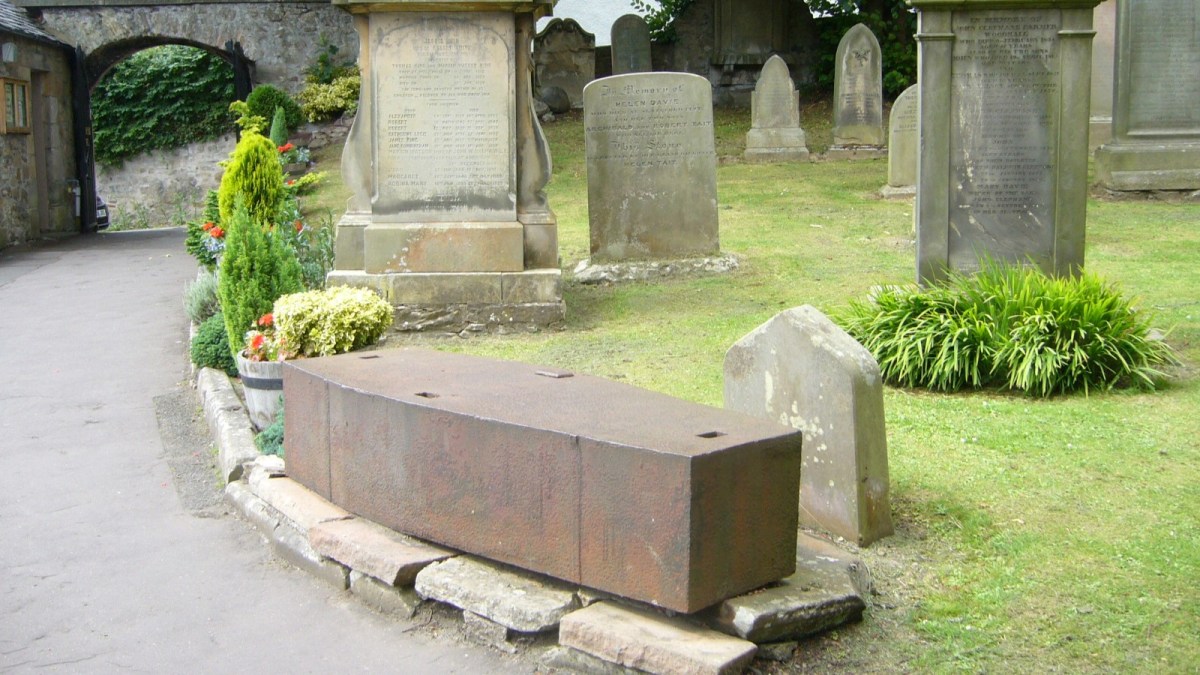
Here we come to know that whenever there is shortage of dead bodies, Fettes and Macfarlane went to dig out the graves in the graveyards around Edinburgh.

One day Fettes discovers that Macfarlane has one acquaintance called Gray who has some sort of control over the behaviour of Macfarlane as if Gray knew something really dark about Macfarlane and revealing it would jeopardize Macfarlane’s reputation. Gray uses this trick of black-mailing to have a feast on Macfarlane’s money even though Macfarlane was not into it.

Upon the passing of night, Fettes understands that Macfarlane took care of the Gray Problem when he sees the dead body of Gray as a new subject for the dissection class. Macfarlane himself delivers that body to Fettes and it is now clear that he himself murdered him. But there is no chance to inform authorities and bring more trouble for Fettes. Macfarlane is not bothered by all this and rather feels free as the axe of Gray no more exists on his neck. He ensures Fettes that its just a matter of time that these dreadful memories will fade away and they both will be on their way as if nothing happened.

Fettes feels the same but both Macfarlane and Fettes have the event of Gray etched on the back of their minds as they now consciously avoid any direct or indirect conversations leading to Gray.

One day due to the shortage of subjects for dissection they go on the ‘resurrection’ hunt to a graveyard to dig out a dead body of an old farmer lady. They take a halt before going on to the main task of ‘resurrection’. They are caught in rain and darkness when they start to remove the dead body of the lady from the grave. They load that body in their small, congested cart in darkness. The body lies partly on their shoulders, is bothering them and is shifting continuously due to the uneven roads.

The uneasy dark and rainy environment, the dogs following the cart makes Macfarlane uneasy as if someone, something unnatural is watching them. So, Macfarlane asks Fettes to light the lamp so that they can at least check the dead body and keep it, adjust it properly in the cart so that they would continue the journey. Upon lighting the lamp both Macfarlane and Fettes are shocked to discover that the dead body they retrieved from the grave of the old lady is a dead body of Gray – a dissected dead body of Gray.

Inspiration From Real Incident

William Hare (left) and William Burke (right)

Robert Louis Stevenson’s short story “The Body Snatcher” was published in December 1884 and was based on infamous and real “Burke and Hare Murders” in 1828. Burke and Hare were owners of a lodging facility. Burke and Hare committed 16 murders to supply dead bodies in exchange of money to Dr. Knox who used them for dissections. This event led Dr. Knox to lose his credibility and fame. Dr. Robert Knox was a famous anatomist of his time. He was not convicted because he was not directly involved in the dealings of the dead bodies from Burke and Hare. Burke was hanged in public and Hare got immunity because he supported the state’s evidences and testified against Burke.   

The way in which R L Stevenson knitted the story is what made the story interesting. He calls the anatomist doctor Mr. K_ when the readers had an informed notion of Burke and Hare Murders and Dr. Knox in those times. So, it makes the readers to find out themselves that mystery around “Mr. K_”. Mr. K_ of the story is no other than Dr. Knox of Edinburgh.  

Psychopathic Tendencies – How Criminals Justify Their Crimes

For any average person, committing single murder is a huge, seemingly unnatural, inhumane and in the end an illegal act to fully commit. The consequences are dangerous. Then how come Burke and Hare committed 16 repetitions of this crime? They were just some small business owners.

In similar sense, Mr. Fettes and Mr. Macfarlane were just students of medicine and were doing their duties to ensure the supply of subjects for dissections. What made them to go on the streak of multiple illegal activities in the story? They were just doing their due diligence to Mr. K_.

Upon looking at the depths of the investigation of Burke and Hare Murder Case we will find that the first time they sold a dead body was for totally different reason. One of their lodgers died of old age while leaving a debt of 4 Sterling Pounds. Burke and Hare decided to sell the dead body to settle the debt. Note that dead bodies in those times were scarce for dissection and demonstration. They sold the body to Dr. Knox’s Private Anatomy School. Professor Doctor was not directly involved in the dealing. Burke and Hare received 7 Sterling Pounds for the body.

From hereon they decided to take the control of people’s lives for such beneficial business of dead bodies and started murdering the people who lodged in their facility. They killed 16 people in this way to deal for money in exchange of dead bodies. The careless murder they committed was to kill a beggar with clubfoot and his dead body was easily identified by a student due to this disability which made him to limp. Knox is said to make that body unidentifiable by removing the head and feet.

They had differences in their partnership which made them to split these acts for themselves. During an attempt to forcefully shift the lodgers to Hare’s establishment, Burke killed a lady and the lodgers who were shifting found the body while they returned to retrieve their belongings from Bare’s establishment. This was reported to Police but the dead body was already sold.

Looking at these events you will see that it is the rejection of morality and false sense of greater good and self-betterment which drives the criminal to commit the crime again and again. Burke and Hare got involved in these acts for the monetary benefits where it was easy to bypass the system and provisions like Dr. Knox’s anatomy demonstrations. Dr. Knox was driven to improve his credibility by flaunting his skills and demonstrations of dissections in the medical community.

R L Stevenson took this fine thread of reality to create Mr. Fettes and Mr. Macfarlane in his story. We will see that Mr. Fettes is shocked when he identifies a dead body of the lady he just met, that too in good health. Mr. Fettes had raised concern to Macfarlane but as Macfarlane was experienced and conditioned knowing that dead bodies once dissected were beyond any identification and legal jurisdiction. Actually, being a student of medicine, Macfarlane was expected to have a sense of the importance of life for any human being. The false sense that this will not get discovered by anyone practically and all of this was being done to maintain the reputation of his teacher thereby improving his credibility created a false sense of greater good in Macfarlane.

There is a section in this story where Macfarlane expresses how he feels about all these matters of dead bodies and Gray’s murder. He expresses following to Fettes in the story –  

“The great thing is not to be afraid. Now, between you and me, I don’t want to hang-that’s practical; but for all cant, Macfarlane, I was born with a contempt. Hell, God, Devil, right, wrong, sin, crime, and all the old gallery of curiosities- they may frighten boys, but men of the world, like you and me, despise them. Here’s to the memory of Gray!”    

The way he says all this shows that his mind has developed a false sense of greatness to justify his wrong-doings. Now he wants to prove his manliness. It’s like a defense mechanism to cover all the guilt which comes from committing such crimes. The criminal considers the motivations behind his criminal acts are way superior than the moral weight of what is right and what is wrong. (The word ‘CANT’ use in expression “for all cant” means a criminal act, deceitful act, falsehood. Macfarlane very well knew that what he was doing was a crime.)

In case of Burke and Hare it started with settling the debt for ensuring proper monetary gains for stable business of lodging. Then it snowballed into series of murders because they were never caught in action and had a way to come out of the murders. They created that ‘ecosystem’.

Same ecosystem can be seen in this story.

What could have actually made difference is the sense of reality and integrity. Integrity is the behavior which we carry when no one is watching. Fettes had chance to expose all this system when he discovered the young Lady’s dead body. But only because he felt that this action came with lot of difficult consequences and impossible to favor him in the end, he keeps mum.

Fettes found that exposing Macfarlane and Mr. K_ and getting them punishment is the most impractical and impossible event – the inevitable and that is where he made his first mistake. He went with the flow, the wrong one.  

The same would be the case for Burke and Hare. They could have asked authorities for the settlement of the debt from the old dead lodger. But, considering it a tedious route they considered the ill- route to sell it.

However difficult it may seem; impractical it may seem there is always a right way to do right things. The environment in which you are deciding your action is also playing a huge role in your choices. First helplessness shows you the path, then guilt follows and in order to mask that guilt the person creates a sense of greatness which demands sacrifices. This is real and constant in every generation of humanity. Most of the times right things are the toughest one to act on and accept.   

Stevenson beautifully brought these human tendencies in his story which go hand in hand with the reality we live even today.
The Ending Of The Story – Real Or Supernatural?

What hangs people…is the unfortunate circumstance of guilt.

Robert Louis Stevenson

Many readers argue that the ending is supernatural and spooky.  Robert Louis Stevenson in a masterful way maintains the realism of the story till the end. And in the last few closing sentences he mentions dead and dissected body of Gray which was completely destroyed many days ago in the reality of Fettes and Macfarlane. It is practically impossible for a body completely dissected to show itself in deep grave at completely different location. So that body definitely was not of dead Gray.

There are evidences to support this. Before going to the ‘resurrection’ job, Fettes and Macfarlane had stay in Fisher’s Tryst where they had drinks. So, it’s pretty much possible that whatever happened was under the influence of alcohol.

There is one more doubt that if it was real then at least one of them would have noticed the reality of the dead body. How can two men would have a shared delusion? A shared delusion can only be explained by a supernatural intervention.

The justification to opt out shared delusion is the shared guilt Fettes and Macfarlane had. It is a human tendency to make sense out of bunch of things which don’t make sense collectively when conditions are hostile. This sense is heightened when one is in hyperalert state, when one is in full fight or flight mode. Deep down Macfarlane knew the acts he is performing. The surrounding events just fuelled this sense of guilt and Stevenson beautifully created this environment in the minds of the readers.

You will notice that Macfarlane is completely unsettled and repulsive of minor things happening to him once they load the dead body. He hates the jumps that the body makes while going on an uneven track, he hates that ice-cold sackcloth flapping on his face, dogs following the cart on the road is unsettling to him (in reality we all know dogs would follow every vehicle going through their territory, especially in night), he also feels that the body has grown in shape (how would he know this if there was not enough light, as the lamp was not working?).

In this exact moment Stevenson injects this sentence for us readers which is a money shot –

“…and it grew and grew upon his mind that some unnatural miracle had been accomplished, that some nameless change had befallen the dead body, and that it was in fear of their unholy burden that the dogs were howling”

“The unholy burden” they both were carrying was the guilt they had suppressed long ago and not acted on it in rightful manner.    

This guilt and intoxication are the main reasons behind the spooky conclusion of the story.

What Should Be Punished – The Action Or The Intent?

The Body Snatcher as a story and even the reality of Burke and Hare crime to which it is associated poses a very interesting question. What are the limits of judicial system, law and order?  

As this statement from Kant goes, in order to be called a criminal in the eyes of the public, one must be seen to perform the crime or the evidences should support so. Thus ‘Law’ becomes more of a sociological term – ‘to arrest the degradation of human as a society’. On the other hand, Kant beautifully highlighted the unitary role of a person in the society. Simple logic says how a society is made of many ‘individuals’ coming together to interact for mutual benefit. Kant consciously asks for preservation of rights of others while achieving benefit otherwise society collapses (what is beneficial for one will not necessarily always be beneficial to others.) Which is why ethics prevent the degradation of the person on individual level. That is exactly where morality and integrity become more influential.    

So, even though our generalized and biased, conditioned thinking makes us to weigh the wrong acts heavier than just their thinking about doing them, in the end they both weigh the same. Sometimes, even though these thoughts don’t get in the fruition of realised actions, they keep on affecting minor, seemingly insignificant decisions we make which ultimately create our personality and our psyche. Act of crime and thought of committing the same crime are same.

Friedrich Nietzsche posed this same dilemma of “what weighs heavy – action or intent?” in his book “Beyond Good and Evil”. I have discussed that in depth in the section “The Freedom of Actions” in my other blog post “The Free Spirit – Beyond Good and Evil “.

The gist of the things is that we will be able to appreciate the crime of ill-thinking when the stakes are really high as in any decision would have grave dangerous scale of destruction. If we will wait for the actions to be presented as wrong while we already know that it leads to wrong then even the thought of doing that action was wrong in the first place, even before the action’s ends were realized.

The Real Punishment – Where And How Does It Happen?

So, now that I have established that even the thought of doing wrong action is a crime then, one would definitely say that I must be a fool.  Every one of us is always thinking of such ideas all the time – consciously and unconsciously. (Not of murdering someone obviously. Just recall the last time you cursed someone because they made your life miserable, or the thought that why bad things always happen with good people – especially ME!)

The answer is “It is really easy to fool our mind”. This is also where the core of the fiction in Robert Louis Stevenson’s short story The Body Snatcher and the reality of ‘Burke and hare Crime’ is overlapping.

Burke and Hare thought that their crimes were justified because of the profits of their business. Fettes and Macfarlane thought that their acts were justified for their survival and reputation.

Deep down they were completely engulfed in the guilt of their wrongdoings. So, if we follow the before-explained thought of Immanuel Kant, we will see that real actions from law will ensure realistic punishment but the punishment of the mind is instant, the guilt is injected immediately. This guilt if is “real”, it will immediately start eroding your personality and psyche. Which will eventually lead to unnatural events and acts of crime in real world.

I am saying the feeling of guilt to be “real”, because (again) it is really easy to fool our mind. One has to train mind to distinguish the difference between impulses, responses and their encouragement or suppression. One will realize that whenever there is suppression of wrong thought like guilt in this case, it leads to the defense mechanism – creating a cover up with false sense of greater good or the false security of not getting caught in action, on not having enough evidences. Even though they are not caught in society, the guilt has already passed its sentence on their personality, their self-image and psyche. Now such persons have just accepted what they have become. (This is how a psychopath would start their journey to justify all their crimes).  

I am posing this also from the other perspective of ‘false-guilt’. Sometimes we consider ourselves guilty when in reality we were not responsible for those events. This false guilt will start taking even the good things you have.

The only way I see to handle any wrong thought is to not let it grow out of its own boundary of creation, not to feed it further. Not to mask it or suppress it but just let it remain there. The overgrowth and flourishing of good thoughts will eventually diminish its influence. It’s natural to have right or wrong thoughts for given stimulus. Response, reaction lies in our territory. You must understand that even the act of suppression demands extra efforts which requires extra involvement, this extra involvement is unconsciously feeding that wrong thought, thus suppression on mental level is not suppression rather it’s a feed. Which exactly what we keep on missing when judging between an action and its mere thought.    

Egg Or Chicken? – Action Or Thought?

You will appreciate the dilemma created due the practical limitations of the world we live in. As it is really difficult to enter immediately into the mentality, psyche of the others – we have to always go by the external attributes of everyone around us to measure the rightness or wrongness. That is why act imposing guilt must also be supported by the thought of guilt. This is very important when the psyche, the mind of person is not normal or completely evolved. So, one may think that the importance of ill-intent is less important, it also plays equally important role in judiciary decisions.

In court, the thing we punish is the criminal intention. -the mens rea, the guilty mind. There is an ancient rule: actus non facit reum nisi mens sit rea – “the act does not create guilt unless the mind is also guilty.” That is why we do not convict children, drunks, and schizophrenics: they are incapable of deciding to commit their crimes with a true understanding of the significance of their actions. Free will is as important to the law as it is to religion or any other code of morality.

William Landay, Defending Jacob

Conclusion

Robert Louis Stevenson is known for his world-famous novels Treasure Island and Strange case of Dr Jekyll and Mr Hyde. The short story called “The Body Snatcher” throws light on the mentality and evolution of the dangerous psychopaths. The false sense of greater good, the ability to ‘suppress destructive thoughts’, ‘destructive actions’ to justify superiority keeps driving certain types of criminals to cross the limits of humanity, ethics, morality. It shows that even though the consequences of wrong actions may not get punished due to the limitations of the laws of the respective times, the punishment of wrong thought is almost instant which is the degradation of the psyche through ‘guilt’ and ‘fear’ – and most of the time it goes unnoticed and build over time resulting in even more grave dangerous acts. It shows how thought and action are equally important in the overall personality of a person. The wrong act may not get punished but the wrong thought has already punished the mind.    

References-
The American Scholar – The Books, The Actions, Intellectual Humility and The Dictionary of Life

Part-2 Ralph Waldo Emerson’s Ideas of a True Scholar for the Modern World

Ralph Waldo Emerson’s essay called “The American Scholar” made an attempt to move people out of their immediate achievements of separation from the English Government and inspired them to create something new, create and value the processes for building strong future generations and deep knowledge of nature. Even though this essay was more relevant for the American generation which was largely dependent on their English legacy, it still remains relevant because of the crispness of truth it holds for every new generation of humanity. The speech/ essay will always transcend the understandings of every generation. See Part 1 to understand how Emerson sets up the ideas of the nature, the knowledge, the purpose of education system and the true scholar in the starting part of his world famous essay.

Now, moving on to Emerson’s advise for a true scholar.

Books – The Mind of the Past and its Blind Worshipers

Emerson wants to establish the ways in which the past wisdom was transferred to the next generation. He refers to it as a distillation process. Over the period of humanity, the crude things in experiences, events lost their unwanted parts and went on to become concise, crisp through books. This process created the truths, the facts. The cruder the event, the experiences the less crisper the truth. Emerson explains the imperfections in this process of truth generation by giving analogy of Vacuum Pump. As no vacuum pump can generate the perfect vacuum, no machine can give out exact amount of work to the exact amount of energy input, the process of creating the truth is also not completely efficient. Thus, it is absolutely impossible to establish the ultimate truth in a single attempt, in single past. The best version of the truth we have today is the truth that has stood the test of time, the truth which has been upgraded over the time. It is very interesting to understand how Emerson thought over the ideas of the books and the evolution of truth through them. He connected a very technical idea of efficiency of any mechanical system to a more abstract idea of the extent of the truth value of knowledge.

Emerson also highlights that the age-old books will not stand the test of today’s truths as there will be may stages of evolution in between which will lose their footprint over time. For example, the idea of the earth being carried on the back of the turtles, the elephants, the snake’s head the earth being flat is lost to the ideas of eclipses, the seasons and the actual images of the earth (even though there are still some admirers to these ideas! And it is also important to understand how people interpreted them)

Thus, Emerson in a sense warns every scholar, every person to not become just an admirer, a follower, a worshiper of the book. Because, the understanding and the experience with which the book was written, the truth was conveyed will not exactly be the same experience, the same understanding for the reader. The inefficiency of the system is the boundary of the reader which can only show him the limited understanding of the truth.

“Hence, instead of Man Thinking, we have the bookworm. Hence the book-learned class, who value books, as such; not as related to nature and the human constitution, but as making a sort of Third Estate with the world and soul. Hence the restorers of readings, the emendators, the bibliomaniacs of all degrees. This is bad; this is worse than it seems.”       

The American Scholar, Ralph Waldo Emerson

Emerson expresses his sorrow for the fate of the books. He calls the people who blind worship the books “the Bibliomaniacs” and “the Emendators” as in the editors of the truths who create their versions of the truth. Emerson expects a true scholar to not become a book worshiper or a past worshiper. Worshiping the past is the death of the evolutionary thinking thereby restricting the flow of generational distillation of true knowledge. Emerson wants a true scholar to lose the idea of a book lover, book worshiper and become a genius. In some way Emerson tries to define a genius. For that he uses the idea of “an active soul”. An active soul is free from the blind influences of the past and thereby the books. It is not following a defined orbit around the truths from the books, rather an active soul itself is capable of creating a system around which others will orbit. The teachings of the schools/colleges, the subjective truths of past from books are questioned by this active soul further called as the genius by Emerson. This Genius is responsible for the creation of the next version of the absolute truth; there is a sense of progression this genius brings. For that he should break out of the past, come out of merely following the books, look forward to the future. Emerson mentions how mere worshiping of Shakespearean pieces killed the future creative progression of English literature. Many creators became over influenced by Shakespeare thereby nothing original happened for 200 years in literature.

Someone might think here that Emerson is undermining the importance of the books, rather he further explains the impact of books in the hard times of any true Genius, any true Scholar. Books serve as the best companion anyone can have in their idle time, they are the kick starters of every genius mind, they are there to initiate the spark in every creative mind but not to drive it.      

“When he can read God directly, the hour is too precious to be wasted in other men’s transcripts of their readings. But when the intervals of darkness come, as come they must,—when the soul seeth not, when the sun is hid and the stars withdraw their shining,—we repair to the lamps which were kindled by their ray, to guide our steps to the East again, where the dawn is.”

The American Scholar, Ralph Waldo Emerson

Emerson gives the examples of some great English poets like Chaucer, Marvell, Dryden. He says that even after passage of many long years the ability of these poets to connect with our minds is really fascinating which is possible only because of the books. This also means that these ideas of poets wee futuristic, visionary enough that they are relevant after hundreds of years. Books are the best option to carry this vision.

Innocence of Knowledge and Awareness of Media

Emerson warns every person of the books they are consuming. He explains this with the analogy of survival of human body. The very innocent nature of human mind and the knowledge both can be conditioned with any thought from the book leading to the fact from the book to become the ultimate truth for the person. Emerson wants everyone to not accept the truth of the books for the truth of life. He wants every true scholar to become a selective reader and follower of the books. Emerson explains that the books display only that part which its creator wanted to show to the readers, this also means that whatever we are reading is just a small part of the authors life not the whole. Thus, when a powerful person, scholar (mentally and physically) encounters books, he holds the power to materialize, personify any and every thought from the books. It is the skill of a true scholar to selectively find the ideas and the versions of the truth, instead of going full on literal and thereby accepting them as truth. In simple words, Emerson expects every reader to get the hold of the ideas and inspirations from the books and not blindly follow them word to word. A genius, a true scholar thus knows what to pick from every book.

In our daily lives today, books are not the only source of information. Emerson’s warnings have become more real in today’s times. We must understand that every information we get from media is not a knowledge hence we must be selective and aware about the content we are consuming. Emerson was not highlighting only the academic noise of knowledge in schools and colleges; he was also highlighting the overall noise of information around us in our daily routine. This noise has become more effective in our generation through social media, portable/digital media, user selective media. Beware of the media you are consuming, try to find the pattern in your content and break out of it. Otherwise, your “curated content” will keep on narrowing your perspective.  

Building on this Emerson shifts his focus to the educational institutes. He clarifies that though books and learnings from the past are inseparable and important part of learning and educational institute have done a great work in executing this part, they have completely exploited this part to worse extents. Educational institutions have also established a business on these tools of knowledge to grow rich in materialistic forms. Hence, Emerson also reminds the policymakers to realize the truth that even single part of the absolute truth, the knowledge is powerful enough break this whole commercialized system of education.

Emerson also predicted the future that if the educational systems keep on commercializing the book following, past following, mugging/ cramming up the books culture, create an assembly line of scholars and professionals, even though these colleges will have fat bank balances, funds, even though they will grow richer and richer, their importance/ quality of the education they provide will go on degrading; these institute will lose their public importance.

And look what is happening with most of the education systems of our generation.        

Action Speaks Louder Than Words (and that is not the end of the story)

“There goes in the world a notion that the scholar should be a recluse, a valetudinarian, —as unfit for any handiwork or public labor as a penknife for an axe. The so-called “practical men” sneer at speculative men, as if, because they speculate or see, they could do nothing.”

The American Scholar, Ralph Waldo Emerson

Emerson never fell short while explaining the importance and power of new ideas, knowledge they create and the legacy they leave behind for future generations. But he made sure that people wont’s god worship the ideas they have. He wants every thinker to execute their ideas, convert them into actions.

“(The action) It is the raw material out of which the intellect molds her splendid products. A strange process too, this by which experience is converted into thought, as a mulberry-leaf is converted into satin. The manufacture goes forward at all hours.”

The American Scholar, Ralph Waldo Emerson

Emerson has identified one common trait that scholars of all generations hold. All scholars, intellectuals are known to be recluse, always in their own mind and there is nothing wrong about it. The ideas sometimes can carry them far away from the reality. Sometimes new and original ideas are so rare and powerful that one has to embark on a solo journey to discover them completely. One has to understand when this pursuit over-influences their mind, it takes a toll over their minds. The separation of our intangible mind from reality eventually has a bad ending. The neuroticism, the inability to communicate such feelings to others, conversion of such thoughts to some extreme explosive actions and consequences thereafter are one part of intellectual society. The mad geniuses, super smart but cunning villains in our pop culture and real-life stories of smart criminals, smugglers, murderers, sociopaths are the exact reflection of such people in today’s society.

Emerson wants every scholar to come out of their overthinking and the comforts of the world of their own ideas. Emerson knew and made others aware that anything is possible in your own world and as it is created by your own ideas, you get attached to it. You will never want it to disappear and will avoid to test them with the reality. This goes on and on and your mind will be full of many new ideas. They will keep on expanding but they will never become real.

Emerson wants every true scholar to test their ideas in reality and break out of the comforts of the world in their own minds.

“Drudgery, calamity, exasperation, want, are instructors in eloquence and wisdom. The true scholar grudges every opportunity of action passed by, as a loss of power.”

The American Scholar, Ralph Waldo Emerson

Emerson gives advice to future scholars in advance that this fascination of their own beautiful ideas, the comforts of the worlds in their minds may seem beautiful but it is addictive and never-ending- it’s like analysis paralysis leading to inaction.

We always fear that our beautiful ideas will cease to exist when tested with reality, it feels like a part of us is died and deep thinkers, over-thinkers can connect with this on different level. But one must also accept that the death of such non-real ideas is one integral part of the process of the discovery of absolute truth. Death of “wishful thinking” is also one important aspect of every true scholar rather every person’s character development. Emerson instructs that this process of testing ideas through real and concrete actions will be boring, more problem creating, anger generating-frustrating but one has to endure through them. One must not lose the opportunity to test their ideas in reality.

“(Action)…It is the raw material out of which the intellect molds her splendid products. A strange process too, this by which experience is converted into thought, as a mulberry-leaf is converted into satin. The manufacture goes forward at all hours.”

The American Scholar, Ralph Waldo Emerson

Emerson gives the example of our childhood events and how they made us who we are today. We are what we did and what happened to us in our childhood. We are not what we used to think in our childhood. (Like how most of us wanted to become a Pilot and Astronaut and look how many of us really want that today).

The ideas not converted to action lose their existence in two ways. Either (and most of the times) they change instantly into new idea, something else due to their fickle nature or they get rotten in a corner of our mind thereby indirectly disfiguring our adult mind. It is very interesting observation by Emerson; he identifies that our behavior, habits, inspirations are rooted in our childhood. Further on and most importantly Emerson points out that it is not our whole childhood that gets carried over in our adult behavior, habits, inspirations; it is the events and our actions, our responses to events in our childhood that shape us in future. Childhood thoughts, ideas converted into actions are actually etched on our personality forever. And only thoughts and ideas limited to our minds are lost forever. Same is happening with us every day, it is just that Emerson makes everyone aware of the importance of converting our ideas into actions by presenting a very intimate and common example.

“The new deed is yet a part of life, -remains for a time immersed in our unconscious life.”

The American Scholar, Ralph Waldo Emerson

Emerson puts one excellent insight in front of everyone. The actions and not ideas become the subconscious part of our life. These actions solely initiate the cascades of event which are always unfolding in our current life events.

“Cradle and infancy, school and playground, the fear of boys, and dogs, and ferules, the love of little maids and berries, and many another fact that once filled the whole sky, are gone already; friend and relative, profession and party, town and country, nation and world, must also soar and sing.”      

The American Scholar, Ralph Waldo Emerson

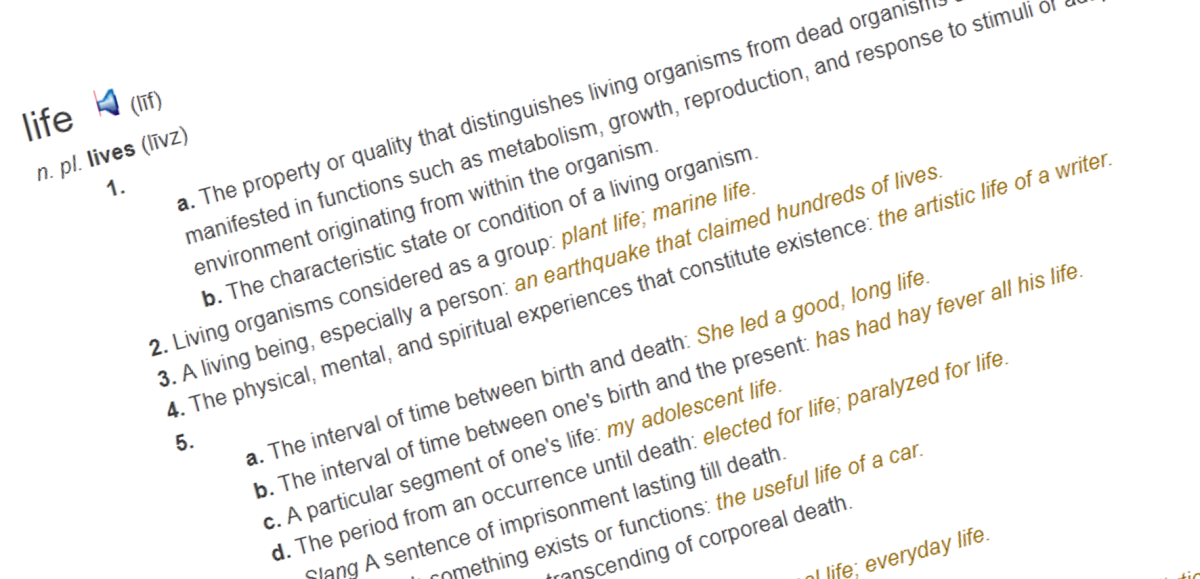
The Dictionary of Life

“Of course, he who has put forth his total strength in fit actions has the richest return of wisdom.”

The American Scholar, Ralph Waldo Emerson

The great thing about Emerson’s persona is that not only he instructed the scholars but he also gave the directions to start from. Emerson makes everyone aware of the types of actions they can take and their consequences. He wants everyone to understand the nature of outcomes from the action we will take to bring our ideas into reality. As actions will be driven by ideas, there will be times when actions following one wrong idea will not yield good and favorable results. Some actions will feel worthless, unidirectional, single faced, niche and they will only reveal their nature after we see their results. So, does that mean that if actions are more important than ideas and if actions are anyways most of the times going to be worthless then why actions should be one important part of a true scholar? After all most of the times, they are not proving the point of their superiority over the ideas. At least ideas give some type of comfort to our mind.

Emerson says that a true scholar’s life is not only about thinking beyond limits and taking actions on it. If thinking and acting on them was the only purpose of life then everyone would have craved for acting on the ideas which is not the reality. Systematic thinking and bringing them into reality through actions is just one dimension of being a true scholar. Before being true scholars, we are human beings, we have lives.

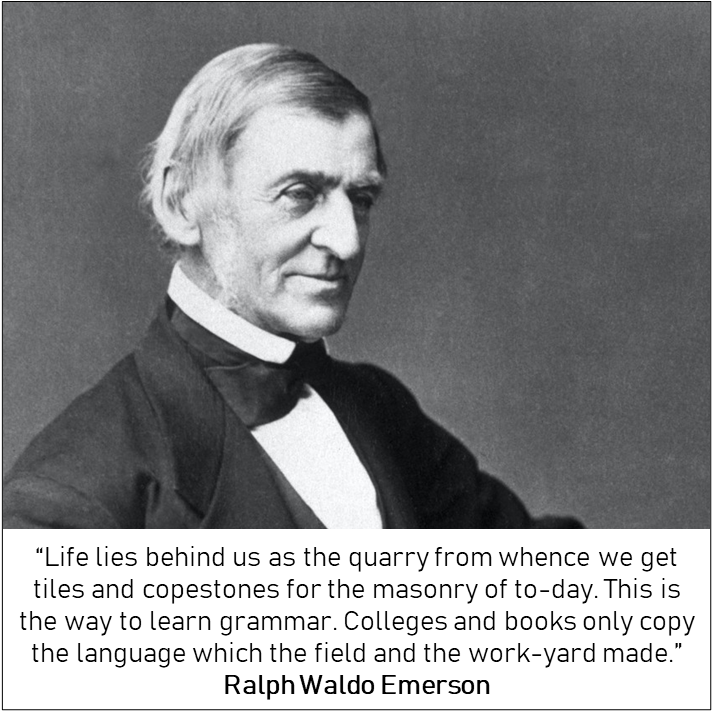
“If it were only for a vocabulary, the scholar would be covetous of action. Life is our dictionary.”

The American Scholar, Ralph Waldo Emerson

Actions, Pasts, Ideas are part of that bigger life. Hence, Emerson focuses ono living the life, which is possible through having different types of experiences, be mindful of each and every experience in your life. Hence the concepts of Actions, Pasts, Ideas are just “vocabulary”, where life is bigger than that, life is a “dictionary”.

In simple words, the things that we are trying to learn and think beyond and bring them into the reality are a just part of bigger reality that is life. So, Emerson wants every true scholar “to be alive” to live through the life they have. Emerson wants everyone to have a life relevant scholastic aptitude, which anyone can have (though it sounds “sophisticated”)

Getting things done for proving worth of ideas is not the final job of a true scholar. Life is bigger than ideas and their execution.

The Great Principle of Undulation in Nature and Influence of Popular Opinions

When Emerson suggests every true scholar to live a live of rich experiences, be aware of the reality around them – he gives everyone the idea of one confusion that will always tempt them to have a bias. Emerson says that the “Polarity” is the law of nature.

In his own words-

“…inspiring and expiring of the breath; in desire and satiety; in the ebb and flow of the sea; in day and night; in heat and cold;”

The American Scholar, Ralph Waldo Emerson

These extremes in every natural phenomenon creates a wave, an “undulation” in nature. Which is one inseparable part of life thereby every human soul. Every idea, every action a scholar takes will have a wavy nature, there will be some part of idea, of actions which will dominate over their opposite one for a time. Emerson says that actions, ideas, knowledge, thinking these are just the resources for a true scholar. Even after losing these resources a true scholar will not lose his character, he will not lose who he is, his identity.

“Thinking is the function. Living is the functionary.”  

The American Scholar, Ralph Waldo Emerson

Emerson establishes this to warn every true scholar and remind their real pursuit in life. Emerson through this wants to communicate that there will be times when a scholar will have temptation to follow a popular opinion, he will feel bad for not getting proper recognition for his/her achievements. Things will happen which will force them to give up on their lively pursuits, to give up on living for some materialistic means. In such moments, a true scholar should never give up on his character.

“Character is higher than intellect.”

The American Scholar, Ralph Waldo Emerson

Emerson actually removed a fine line which used to exist between the uneducated, working class and the studying class or so-called scholastic class – educated class. Emerson clarified that a scholar is not the one who joins one institution, secures a diploma/ degree, attends office, decides actions, creates policies and drives the “less intellectual” life around him. What is important to become a true scholar is “the character” – “the attitude”. Every person can have that; hence Emerson instructs every scholar to have that intellectual humility and not get fooled by the popular opinions of “white collar jobs” of scholars. He indirectly establishes that people who did not come from the system have more power to create a disruption in the system, to create a new and positive change in the system.

“Not out of those on whom systems of education have exhausted their culture comes the helpful giant to destroy the old or to build the new, but out of unhandselled savage nature; out of terrible Druids and Berserkers come at last Alfred and Shakespeare.”

The American Scholar, Ralph Waldo Emerson

This really holds true in today’s times too. There are many proofs from famous startups, fortune companies, literary and art schools that formal education is not the indicator of creative disruption in our society. Revolutionary people were never dependent on the systems to create new ideas and bring about new change. Thus, Emerson’s age-old ideas resonate with the facts of today.

A true scholar according to Emerson is the one who has this intellectual humility; who understands that having and creating great ideas, executing them to reality is just a part of life. A true scholar is not limited to thinking, executing and learning only. A true scholar has the purpose of living a life beyond the system created; a true scholar being an active part of his society and can come from any part of it. This idea itself is very powerful.

There will one last – third part on how Emerson closes his ideas, requests, guidance to the scholars of every generations.

– End of Part 2 –

Read Part 1 Ralph Waldo Emerson’s Ideas of a True Scholar for the Modern World from here.

Read Part 2 Ralph Waldo Emerson’s Ideas of a True Scholar for the Modern World from here.

Read Part 3 Ralph Waldo Emerson’s Ideas of a True Scholar for the Modern World from here.

  1. The American Scholar by Ralph Waldo Emerson