The Essence of Nominalism

Is happiness, love – sadness, hatred just the names we have given certain things? Is that why after achieving something great we fill empty and become clueless about what’s next? Is there something common, universal, essential characteristic shared across things that create reality? Or are we just putting labels on things so we can put them in our brains effectively?
Nominalism says that there is nothing common shared between all the objects existing in reality. Love could be anything for anyone, you cannot pinpoint an object absolute, consistent and repetitive nature across reality and put it in a box and call it love. Same for hatred. Nominalism thus sheds light on how things are more than just their labels and why it is dangerous to chase things if their labels/ tags are the sole motivation for you. There is more to reality of things we are chasing than meets the eye.

Are we just chasing labels, tags in life until we die?
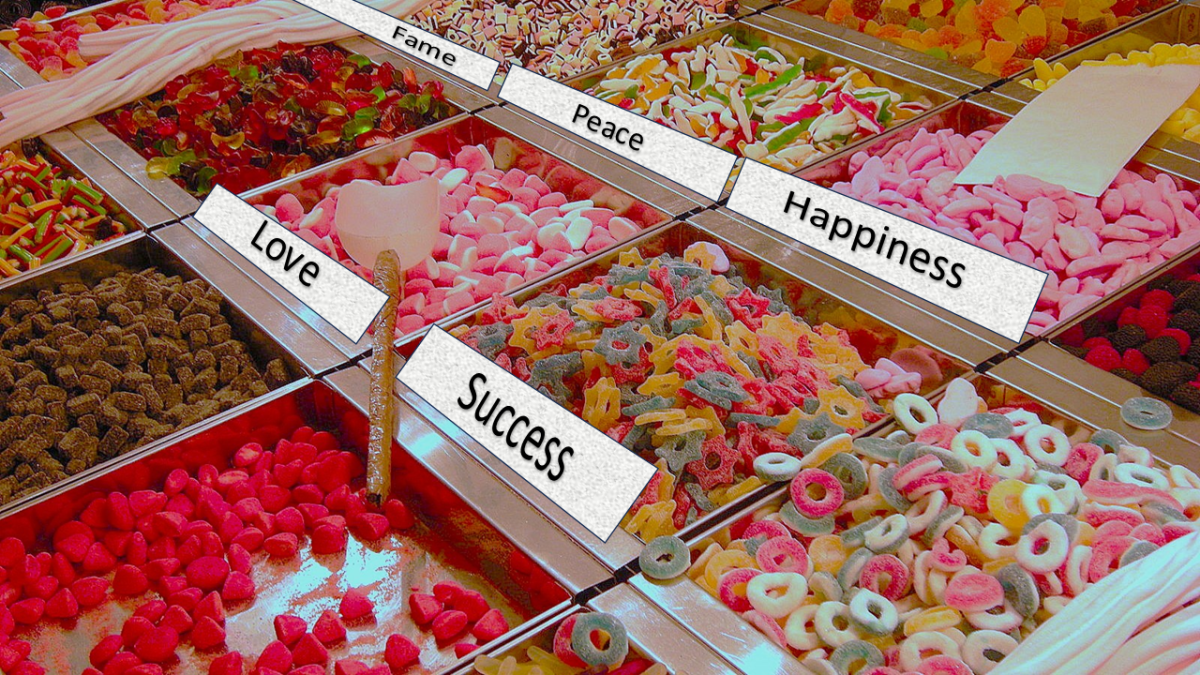
Question- What does Success, Love, Happiness and God mean to you?

Is Reality Same for Everyone?

Do We Share a Common Reality?

Human intelligence is one interesting thing. We can perceive things in better ways, classify them, observe them and use all those understandings to predict the outcome of events in satisfactorily good way, we can create non-existent things out of current given resources which elevate the ways we carry out our living – our lifestyle. The ability to develop various fields of knowledge and understand the reality is the basis of human civilization.

So, we can say that anything which gets distilled down to a specific understanding – an understanding which is consistent throughout our existence can be called as knowledge – knowledge with experience further gets distilled down to wisdom. Even though the knowledge of certain things is not consistent we at least know why it isn’t consistent or we have a well-rounded explanation that ‘this’ is an exception with fair justifications. Knowledge helps us to perceive how the things, ideas around us can be used to build things, the life we want.

The ability to see commonalities and differences between things, objects, ideologies is one important part of how we build our understanding about reality in which we exist. We have notions of right and wrong, black and white, past, present and future, tall and short, thick and thin, good and evil, strong and weak. These attributions help us to identify certain common aspects in things and certain uncommon aspects in the same things.

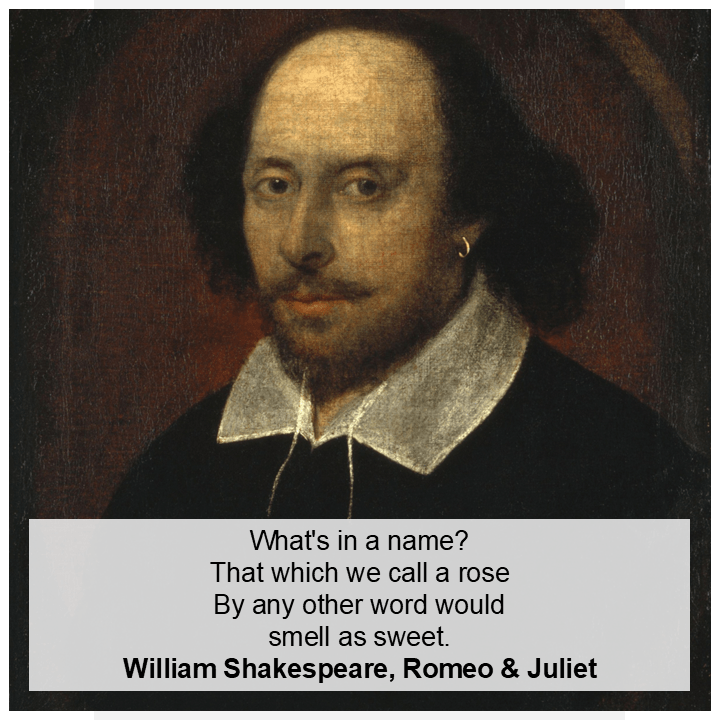
So, when I am saying Rose – you will understand that I am talking about a flower which looks red, has a particular fragrance. Words thereby names are at the core of how we build knowledge of the surrounding and the reality.

There is one more interesting thing happening here –

When I would say Rose – it is a possibility that someone would understand it as a girl he/she knows, someone would imagine it as a color which somewhat is red but richer in shades, someone would imagine the prickly thorns instead of the gentle nature of the flower.

What’s happening here? The moment I am trying to specify something – some object with a word – a name which shows some common attribute that object shares with others, in that same moment I am failing to describe that object, that idea in its complete capacity.

In our example, the word Rose on surface seems to indicate just a flower, but Rose could mean almost anything to anyone. Rose is just a simple object we are talking about; now imagine how would we define the reality we live in? The reality is multifaceted. People have different experiences, meanings, understandings of reality based on their personal experiences. Does that mean that there is nothing common between the reality we live in? Do we live in our own realities?

Does that mean that words assigned to the things are not what the things are? That the name of objects are just names? Everything that is there is one and only individual rendition of its own? If nothing is same then how do we agree on something common and set our lives to that way? How come we agree to certain religion and follow that? How come we agree that certain things are bad and we should avoid those? How come we appreciate what is happiness and try to achieve that in our existence?

I mean what if happiness is just of name something and goodness is name of the other which does not exist in reality and we are just blindly chasing it? (and we don’t even make out of it alive in the end!) What if we are just chasing names and “there exists nothing like it” – is our realization when we actually achieve that?

Is “the reality” really made of something very fundamental and shared qualities? Or are we just carrying our lives in the chaos of dissimilar (but seemingly similar on surface) things? Even though we call ourselves as humans how come some humans create examples out of their lives that they don’t deserve to be called as humans? How come some humans are so great that calling them humans is disrespecting their life?

Is there something really common among everything or are we just labeling things on whim (or intentionally) to solve the confusions of our minds? Are we living in a matrix and reality is totally different place than where we exist? Are hell and heaven more real that the earth we are living in?

Have we been robbed of the real understanding of reality and cursed to live in an illusion called life?

I mean I could have called the Rose an egg right from the beginning and everybody would have been fine with it. It’s just that now the egg is a flower, has red petals, has thorns and has fragrance. (Shakespeare would have also used egg for Juliet’s dialogue and everybody would have been fine with it. As everyone now knows and agrees what an egg is!)

Now you should appreciate how strongly we are conditioned right from the beginning. Calling an egg a Rose feels unnatural but if someone right from the beginning of the beginning would have called it an egg, we would be comfortable with egg in Shakespeare’s dialogue.  

Is there really anything like “Red” color, “Grey” color?

A simple experiment

Look at the picture below:

It’s easy to tell that the cube has one white and one grey colored side.

Now see what happens when I put a blind along the edge of the sides:

There is no manipulation in this image, I have just put a colored box to hide the edges. You can blind the main image with finger and see the same result.

This is popularly called as “Cornsweet Illusion” or “Craik-O’Brien-Cornsweet effect”. This illusion works because our brains try to fill the unavailable information to make sense of the things observed. In this case of the cube example our visual interpretation system tries to determine the edges/ sides of the object by the sudden changes in the illumination of the surfaces.

From this example, you can appreciate how our brain tries to fill in the gaps between the information we are collecting.

Does that mean that there is nothing like what I call grey or white? that there is something totally different for which I am yet to assign a name just to make its identification easy. If that is the case, then are we just naming things in the name of knowledge and don’t have actual hold of the reality? Are we just pretending to be smart just because we can name the things?

Keep in mind we are not simply talking about naming things. If my brain tries to fill the gaps by itself to create a sense of understanding, some part of truth or reality which I carry in my beliefs – are they real or were they some gaps filled by my brain itself?

Following the same train of thought, here is an important question –

Obviously, no one by birth knows what is the “real” nature of reality is? (Otherwise, we would not be discussing all this). You will see that people know reality for how their life experiences turned out to be. They know what reality is, but not all have one singular, absolute concurrence, alignment and unanimous opinion about the nature of reality.
An important idea in philosophy called nominalism tried to question reality in this way (there is a part when the opposite of Nominalism is Realism! I will cover realism in next post). For that we will try to understand what Nominalism tries to solve.

Is there something common characteristic shared across things that create reality? Or are we just putting labels on things so we can differentiate?

Nominalism – There Are Just Names No Essences

William of Ockham is the guy responsible to popularize Nominalism in philosophy although he is not the originator of it. Ockham’s Razor is one very mainstream idea still useful in our pursuits of knowledge. I have covered Ockham’s Razor in separate post.

I think, it is a high possibility that Nominalism and Ockham’s Razor have strong connection not just because they were popularized by the same person but how they align themselves with each other to create a consistent argument.

Ockham’s Razor goes like this –

“Plurality should not be posited without necessity”

In simple words, do not interpret, do not deduce unnecessary things unless they are presented or experienced. (I have somewhat twisted the meaning to align the Ockham’s Razor to align with the train of thoughts and there is hardly anything mistaken here.)

My purpose to rephrase Ockham’s Razor is to connect our brain’s habit to fill unknown gaps with our pursuit of the real nature of reality we live in.

Nominalism thus calls out for the reality which individuals experience for themselves. There is nothing common between the life that we are sharing. Every object existing is an individual, special object in itself. Objects never share something common between them, it may be just our brains filling in the unknown gaps to make sense out of reality and have peace of mind. The labels like Red, Love, Justice, Truth, Loyalty, Happiness are not physical entities, absolute entities which exist in reality. We have created these labels so that we can sort certain thing in certain groups to create a model of reality in our energy optimizing brains.

This is really important point – that things we call real are just labels given by us. A Rose could have been an egg from its creation and nobody would have objected it.

Consequences of Nominalism

Nominalism – in simple words says that there is nothing common shared between all the objects existing in reality. Love could be anything for anyone, you cannot pinpoint an object absolute, consistent and repetitive across reality and put it in a box and call it love. Same for hatred. Same goes for the notion of beauty, fear, justice, truth and what not. Justice is not some type of molecule or an element which can be physically hunted, mined, rigged in reality. It is a label we have created for certain way of things. But, upon full magnification we will see that that certain way of things grouped together are highly individualistic – seeming that they are not same in any way.

Nominalism pointed one interesting observation – the things exist in their individual ways; we are just labeling certain aspects of them so that they can be grouped together or compared against one another.

Do you understand what this leads to? For me it is chaos.

It means that there is no such thing like love, justice, joy, happiness, affection, truth, utopia, passion, enthusiasm, redness, whiteness.

It also means that there is nothing like hatred, unfairness, fear, sadness, fakeness, lie.

These are only labels we are chasing in some scenes and in some scenes running away from or avoiding.

This leads to the conclusion that there is no pivot to the life we are living and the reality in which we exist. This is unsettling – this unsettling feeling leads to existential crisis.

One can here say that Nominalism bridges Phenomenology and Existentialism in better ways in philosophy.

Phenomenology talks about objectively understanding and interpreting reality through subjective experiences. (The one where objective and subjective appear in the same sentence!) It calls for the truth to be one which is realized through personal experiences – phenomenon happening with the individual.

Existentialism talks about the idea that there is no center or pivot to the reality we live in. This is a freedom in such an intense dosage that if we are not creating our own pivot for our own life the sheer possibilities emerging from freedom will overwhelm us concluding that there really isn’t such meaning or sense to life.

Nominalism says that there is no real common thing which can be distilled down between seemingly same things, things were never the same – there is no “essence” which exists across certain seemingly same things. There is no such thing like “universal” which is consistent across the objects in reality. Everything exists individually on its own. One has to experience things for themselves to see their real nature.

It is just your urge to rationalize things so that your brains will save energy. Rationalization is all about making sense of the things, and if everything has its own way of being our minds cannot store each and every aspect of those individual things all the time, thus we have resorted to the pursuit of “essence”, “universality” and hence “labels”.

Conclusion

William of Ockham’s Nominalism from medieval philosophy is reiterated in modern philosophy through Existentialism, Absurdism.

Jean-Paul Sartre – the French Existential philosopher thus talks about how labels are always fooling us. We think our life made to be defined by the achievements of certain labels where upon deeper inspection we see that the labels are mere a creation of our minds, they are how we interpret reality. They are not reality in themselves. Reality was already there even when labels were not there.

This is how Sartre call out Existential philosophy – “Existence precedes essence” and not the reverse “Essence precedes existence”. The later one is just a construct of our mind to create meaning in this meaningless world.

The very freedom granted to us becomes our enemy because we are clueless when we realise that we can do anything. This is where Absurdism peeks in.

Boundaries of Nominalism

There will be different reactions to the explanation of nominalism and that itself will show you how varying types of people exist and their individual renditions of the reality. But interestingly you will find “type” of reactions in people.

One will not immediately agree but everyone on deep inspection will accept this that we always crave for justification for everything that happens with us, it could be in our favor or against us. We crave for justification which will bring peace to our mind, in happiness this peace will amplify happiness and in challenging situations it will give us something to blame.

Once you start appreciating our habit to justify every damn thing you will suddenly see that Nominalism is pretty much good concept in philosophy. Nominalism when says that essences, shared attributes are just labels and nothing real, it warns us that the justification you are trying to give for your situation might just be your construct of mind and not real. Nominalism feels attractive because it feeds attitude of skepticism, which is the first tool of the person in the quest for the absolute truth.

On the other side, nominalism has its innate limitations too. If nominalism is true then it is not there as nominalism itself is our “labeling” to the concept of “not labeling everything together”.

This is where paradoxes begin. If there really was nothing common “essence” among certain grouped things, then it was impossible to group them in first place. So, essence must exist already (this feels even more paradoxical.)

We will search for resolution of these paradoxes in next post on Realism.

Related reading:
A Trade-off Between Simplicity & The Reality

Undone – the hymn of Sisyphus for modern times

There are certain moments in life where everything seems meaningless while we take a look at the final fate of all things and nihilism takes over, especially in the times of great unexpected failure. A crystal-clear philosophy of absurdism can come to rescue in such unsettling moments of existential confusion. When such complicated ideas reveal themselves through a simple, soulful yet philosophical song spanning few minutes, the impact is immense. ODESZA & Yellow House’s song called ‘Undone’ from their collaborative album called ‘the flaws in our design’ is one such song which treasures the ideas from the myth of Sisyphus and the philosophy of existentialism, absurdism given by Albert Camus. Absurdism focuses on giving life our meaning through revolt, passion and freedom.

A simple, soulful song pointing towards the philosophy of Absurdism

“Man stands face to face with the irrational. He feels within him his longing for happiness and for reason. The absurd is born of this confrontation between the human need and the unreasonable silence of the world.”

Albert Camus, The Myth of Sisyphus and Other Essays

Some songs have this magic where you instantly get hooked to them, you cannot put it in words but it makes you feel good. You love the feeling this song creates, but don’t know why. Now it’s in your mind on loop and you brain is completely saturated with it.

Now, there comes a moment when you are busy with something and the same song is playing in background like an ambient noise, like a filler and suddenly you have this epiphany, a revelation about what the song really means. Has this happened with you?

I came across a song in 2023 and thought that I have checked out every corner of this song in my mind, but I was wrong. This song was on loop for almost 10 months (believe me on loop means hardcore omnipresent music) and recently I found something revelatory about this song. It was beyond my superficial interpretation of this song (as this is subjective, maybe I should consider myself a dumb fool to not recognize that important side of the song – someone might have found out that thing, that meaning in their early listening of the same song or maybe I am surely hallucinating in the lands of overthinking! – only the creators know!)

The song I am talking about is from the ODESZA and Yellow House’s EP album “The flaws in our design” called “Undone”. (Written by Clayton Joseph Knight / Harrison Gordon Mills / Emile Van Staden, © Foreign Family Collective Publishing, Gmr Foreign Family Collective)

Flaws in our design by ODESZA and Yellow House

Allow me to take you on a mind trip (what it meant for me actually and what it revealed to me recently)

There’s no time to hide from the sun
There’s no time to come undone
That’s easier said than done
Just pick your poison and run

The song starts with certain urgency – “there is no time”.

The song-writer wants you to face the day and don’t give up. The writer understands that it is difficult to start fresh when every hope is lost, the path you were on, the things you were striving for didn’t come to fruition or didn’t go the ways you wanted. The urgency to exist is far more dominating than what great things you lost. So, writer asks us to start again even though is will be painful. Whatever you will be doing, in the end you are going to die, that finiteness of life brings in the urgency to live, to survive. That is why the song-writer says that even though the poison of existence is painful you must do something stick to something because when the time of departure will come you will fill empty that you didn’t appreciate what existence had to offer. You will call your existence worthless. At least sticking to something will give a meaning to the life – your life – whatever it may be but that will be “your” meaningful life in the end.

I’m struggling to find out where I stand
I keep wrestling with God and with man
Tryna forge a little life in-between
A man can only but dream

The writers are trying to show how the person is going through tough times, this person is trapped in a fight between the natural forces and the people around him/ her.

This is about where do we stand in this grand existence. On a personal level if someone comes to attack me or my loved ones, I consider these lives so precious that I would go beyond limits to save them and yet in the grandiose of all this creation our planet is just a speck of dust. Even if the whole earth is engulfed into some giant star, black hole or is crumbled to dust or vaporized due to a man-made nuclear calamity, nothing in the universe is going to change.

So, how do I justify my worth in this grand existence? It’s somewhat philosophical interpretation of given lines in the song but even on societal level it shows a conflict of the mind. This is a struggle to justify the position of a person in this complicated and chaotic society.

This could also be called as an existential angst; one has to fight with the natural forces of creation and the people around them to create a life they desire. There is always this innate resistance to survive, anything small or large could be responsible for the termination of your existence.     

This resistance to survive and create the life we desire gets converted to the existential angst when all our attempts fail, when we lose hope, these are the difficult times of directionless-ness where we try to question our existence. It’s this confusion, this question that “even when we tried all the possible things why didn’t the come to fruition?”

Forging a little life indicates how small is the success rate when one tries to create their own perfect life. A ‘dream-like’ perfect life.

The time’s come to lay it on the line
When meaning seems so hard to find
It all weighs heavy on the mind
It’s easier to leave it behind

Writers are trying to reiterate the urgency through the finiteness of the life. When the right time comes it reveals everything and when you are facing multiple failures, tremendous hardships it leads to breakdown. This breakdown, this hopelessness puts gasoline in the fire of the existential confusion. It feels like there is no way out. The writers feel the same but they advise to leave this weight behind. This is the weight which is actually holding us back in hard times. Acceptance of the failures is the only way to calm down the mind, learn something new. Sometimes it’s not just about failures, its also about the way we wanted our life to be, even after making many attempts if the things are not turning out the way you want, its better to leave that weight behind and move on.   

There’s no time to hide from the sun
There’s no time to come undone
That’s easier said than done
Just pick your poison and run

Again, the same advice, whatever you will struggle at will eventually make you feel hopeless, directionless but you should stick to something hopeful and move on.

Life can’t be won, can’t be tamed
The point of it all goes unnamed
The lost and the gained weigh the same
When returned to dust or to flame

There is no way to justify life in certain definitive way. It’s the grandeur of life and the infinite possibilities it provides which are more than enough to confuse anyone, especially those who have faced big failures or totally lost hope. There are these moments when you feel that you are not living a better life than your peers are living, when you feel like others’ lives are more happening and interesting than yours – this is the moment when you must appreciate that many people ready to die for the life you currently have.

And in the end, nothing will matter, everything will return to dust – to nothingness. Every transaction you had during your existence will be balanced to null, Nada.

I’m struggling to find out where I stand
I keep wrestling with God and with man
Trynna forge a little life in-between
A man can only but dream

Living is a struggle, living with failures is even worse but that doesn’t stop us to create those little lively moments in difficult times because our time here is finite.  We cannot waste this limited thus precious conscious existence on things which are resisting us from living the lives to the fullest.

The time’s come to lay it on the line
When meaning seems so hard to find
It all weighs heavy on the mind
It’s easier to leave it behind

When you receive the clarity of failure and the reasons behind it, it is always better to leave that weight of guilt, confusion, hopelessness behind to begin a new journey.

There’s no time to hide from the sun
There’s no time to come undone
That’s easier said than done
Just pick your poison and run

Show up, keep your head up, do something and stick to it, you are going to die anyways but make sure that when you die you won’t regret even a single thing, look alive and live your life.

Undone and its (deep) philosophical consequences!

You can call the things mentioned hereon as the garbage generated from my overthinking but bear with me, I have a point. This exactly might be the point of the song-writers while creating this song or this is just my brain connecting some random dots to make sense out of nothingness (that is how trickster our existence and the creation is – again according to my overthinking!)

OK, enough, now to the point!

In single simple line it philosophically goes like this and you can stop reading if you don’t like it!?!!

The recent revelation I had with the song Undone by ODESZA & Yellow House is the philosophy of Absurdism by Albert Camus, so the Myth of Sisyphus comes into picture. This song has uncanny resemblance to the philosophical ideas in absurdism.

Myth of Sisyphus

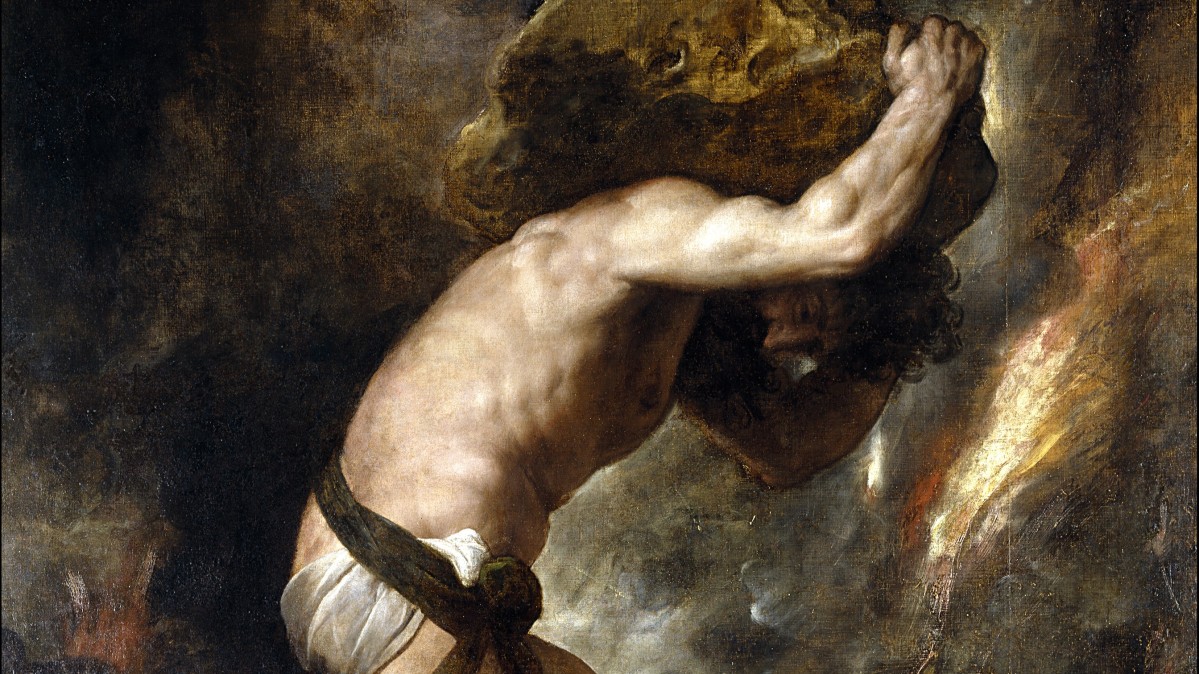
In Greek mythology, Sisyphus was the king of Ephyra who was known to trick death, escape it and even trap it in its own chains. Sisyphus had tricked the Gods many times and gods were running out of the punishments to make a statement. In their one attempt Gods assigned Sisyphus a simple task – to roll a big boulder up the hill. When Sisyphus started rolling the boulder uphill and once it reached the top of the hill the boulder would roll down and again Sisyphus had to roll it uphill. This went on and on and Sisyphus got trapped in this meaningless task. Gods were relieved in the end.

Nihilism and Sisyphus

Albert Camus’s work on the philosophy of the absurd is one importance aspect of how we justify our existence in this seemingly meaningless existence. 

The meaningless task of Sisyphus is an analogous our daily mundane routines – sleep, wake up, go to job, come home, eat, sleep (then wait for weekend!). EAT, SLEEP & REPEAT. But even after this repetition, even after this boring routine when it comes to dying, we are always more scared to die than to live this meaningless, mundane life. I mean in the end it is all about coming from and returning to the dirt, even after that we crave for this conscious but repetitive, painful and “poisonous” existence.  

The lives we live are full of many small and big cycles, these cycles keep on repeating and we keep on following them. Remember the moment when you achieved something really great and in the next immediate moment you felt empty and directionless? Now that this great feat is achieved what lies next? And you become clueless, then you move on to achieving something far bigger and better and the cycle goes till you eventually die. In the end you weren’t even able to take your body with which you realized your conscious existence. What’s the purpose of all this if it is meant to end into dirt again?

Nihilism – nothingness thus rejects all the ideas which justify conscious human existence rather the existence in totality. Nothing really matters because everything starts and ends into the same worthless things. All this knowledge, all this kindness, all those relationships, all those friendships, all that discipline means nothing, there is no sense in following rules, routines, morality doesn’t make any sense, winners or losers – all end in coffins buried underground.

You must understand that these are the exact feelings many of us go through when we face some great challenges, great failures in our lives. The ideas from Nihilism may get associated to such feelings of meaninglessness. One might think that Nihilism is totally negative way for philosophy of existence but that is not the case. Nihilism also talks about non-attachment, non-possession which are the roots of suffering in life as explained in Buddhism. So, it’s not chalk and cheese scenario to be honest. Life may feel meaningless, filled of mundane routines like the task of Sisyphus and in this life, we are struggling to achieve something to realize in the end that we have to leave all that behind – what a cruel joke!

Existentialism, Absurdism and Sisyphus

What Albert Camus presented in his essays of the Myth of Sisyphus was the philosophy of the absurd.

The tendency of Sisyphus to always play tricks with death is exactly who we are. We are always trying to trick death, reject the death in many ways. Sisyphus shown as the king and having all the enjoyments of the life is who we are; everyone of us wants to live life to its fullest. Like Sisyphus, we all are tied to our routines.  

So, the philosophy of absurdism believes that the universe is meaningless and if people will try to find the meaning of the universe, then they will end up in a conflict. Absurdism calls out to the cycles we keep on repeating throughout our existence achieving nothing in the end; what came in, it went out leaving no trace behind.

The key difference between Nihilism and Absurdism is the extent of acknowledgement. Nihilism completely rejects any attribution or meaning to all aspects of life thereby rejecting the worth of life, whereas absurdism is more open ended. Absurdism believes that whatever the creation, the universe is we are not in sync with it to understand it completely. Absurdism thus is humbler and better ready to upgrade its ideology compared to nihilism.

“I don’t know whether this world has a meaning that transcends it. But I know that I cannot know that meaning and that its impossible for me just now to know it”      

Albert Camus, The Myth of Sisyphus and Other Essays

What Camus beautifully did is provide a justification for such “absurd” nature of existence.

This is exactly why the philosophy of absurdism is in sync with the ideas presented in the song Undone.

Absurdism and Undone

Camus in absurdism explains that when people face scenarios of meaninglessness, scenes of existential crisis they reject the very life they possess – thus suicide.

This suicide could be physical or philosophical.

No need to explain physical suicide in detail, the core is that continuous sufferings reduce the perception of the worth of life, what life offers for the sufferings one goes through.

Philosophical suicide is more interesting (!) people kill their own conscience and submit to some ready-made belief system in order to brutally terminate their own existential confusion. (Now you must appreciate what this philosophical suicide is pointing to – the religions spread across he world and the hatred they create is the best example)

Camus says that our urge to live the life (physically and philosophically) is much more overpowering and influential than our whining, crying excuses to reject life. We value our conscious life more than our submission to death, even if it is mundane.

“What is called a reason for living is also an excellent reason for dying.”

Albert Camus, The Myth of Sisyphus and Other Essays

As Camus says, man is condemned to death and the opposite of suicide is to revolt.

Since we cannot evade death, we must entertain death, keep it busy.

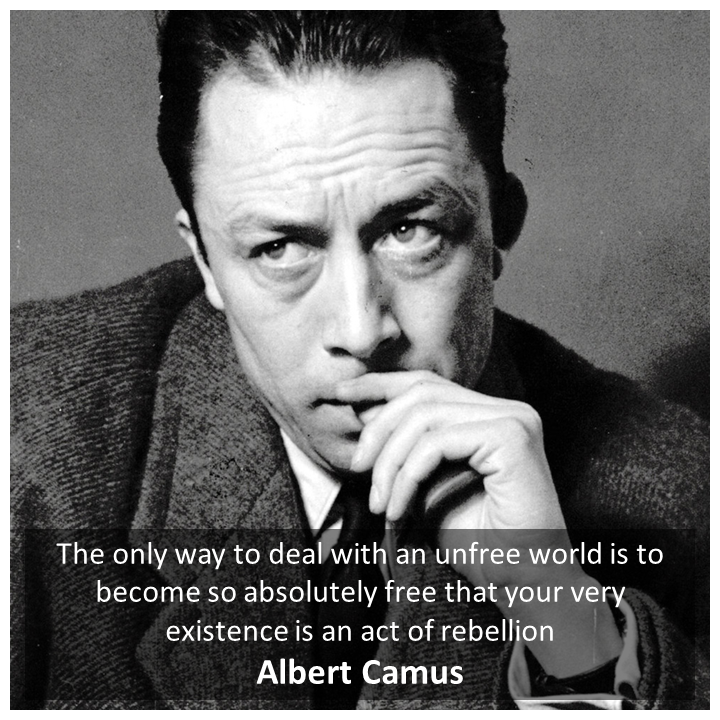
So, Albert Camus gave three possibilities of how one could make sense out of all this absurd life – Revolt, Freedom, and Passion.

– Revolt –

We must not accept any ‘final’ or ‘ultimate’ conclusion or calming justification in our unsettling struggles. Because the moment we get a proper justification to our existential angst, we surrender to that way of life (that is how extreme cases of religion work) and the process of learning and curiosity stops there.

The notion of ‘not hiding from the Sun’ in the song thus signify showing up even when the situations are difficult and unsettling. Sun indicating new day (even though being part of the routine) but with new way to look at it.

‘There is no time to come undone’ creates the urgency. Because, when a person is said to be undone – it means that the person has fallen apart, disintegrated, there is no meaningful attribution, purpose to the life they are living. The urgency to live life in spite of seeming meaningless and in spite of ending into death is a call to follow our instinct of living over suicide (philosophical). The absurdism thus focuses the subjective value of life; even though from outside our routines are mundane, only we know what exactly is happening with our lives and that surely is greatly unique; the way we experience our own life and the way other experience it is very special.

That is exactly why you must not waste your time on whining about the problems, losing hope, giving up on something.

The revolt is appreciating the meaninglessness and is also creating space to grow. Even when in final evaluation when we discover that the life is truly meaningless that should not stop us from giving it our own meaning.

That meaning could be anything, that is why ‘picking “your” poison and run’ becomes extremely powerful in the song and it is scattered throughout the song.

– Passion –

Talking about poison, absurdism talks about Passion.    

Passion calls for living life full of rich and diverse experiences. Again, just because nihilism reveals the meaningless view of life and creation, it should not stop us from appreciating what the life and creation provide us. Just because you know that you will die ultimately that does not stop you from breathing and waking up in the morning hoping that you will live another day.

Passion could be anything, that is why the songwriters figuratively attributed is as a poison. Whatever makes you feel free, liberated is your poison (bear in mind that this is philosophical). Do things that make you feel alive (again philosophically), run, sing, dance, write, fight, curse, play, work but look alive. You will appreciate that every thing you do, every passion you follow, every poison you consume have their own consequences, the moment you face these consequences of your acts – your life will have meaning. That is why this figurative poison in this song is very important.

“Creating is living doubly. The groping, anxious quest of a Proust, his meticulous collecting of flowers, of wallpapers, and of anxieties, signifies nothing else.”

Albert Camus, The Myth of Sisyphus and Other Essays

– Freedom –

Third possibility is the freedom. We are absolutely free to think and behave as we decide. The perspective of life being free is more optimistic take on nihilism. If the creation means nothing that it is exactly what we call it! We can call it whatever we want, that is what freedom is. When you think that you are free, you do whatever you want and at that very instance you will realize that even freedom has constraints.

But, as the creation is infinitely meaningless it is open to up-gradation and rebooting. A truth which holds the capacity to upgrade itself is the real ultimate truth I would say; and in the same sense the freedom which knows its boundaries truly knows the real freedom and hence is the real, pure freedom.

“Thinking is learning all over again how to see, directing one’s consciousness, making of every image a privileged place.”

Albert Camus, The Myth of Sisyphus and Other Essays

(Mathematically Godel’s incompleteness theorem, Spiritually Miyamoto Musashi’s the book of Void talk this exact freedom).

“I know simply that the sky will last longer than I.”

Albert Camus, The Myth of Sisyphus and Other Essays

‘The struggle with Gods and men to create a dreamy life in between’ is the expression where I associate this song with the Myth of Sisyphus – his actions were exactly like some Greek demigod who challenged both humans and Gods.

‘The heavy weight of meaninglessness in the moment of reckoning’ expressed in the song point towards the that nihilistic and hopeless situations in the struggles of our life. Its better to not cling to such nihilistic thought. Passion explained in absurdism thus becomes the savior in such hard times.

‘The wildness of life’ in the song thus shows the ability of our freedom to upgrade itself in the ocean of infinite possibilities.  

“The struggle itself towards the heights is enough to fill a man’s heart. One must imagine Sisyphus happy.”

Albert Camus, The Myth of Sisyphus and Other Essays

Listen to this song again with these thoughts of absurdism in the back of your mind, I am sure you will appreciate the song and its creators more. (‘The flaws in our design’ is a well justified name to this album and each song carries its own philosophy. Also pardon my over-explanation in certain places but you get the point (I hope))

You can listen to the song Undone using following links:

References

  1. ODESZA & Yellow House Team Up For New EP “Flaws in Our Design”
  2. The Myth of Sisyphus and other essays – Albert Camus