A Story of the Fly and the Grieving Men

Katherine Mansfield’s short story called ‘The Fly’ shows how the loss of loved ones, especially young men in World War created a deep feeling of grief and loss among the surviving people. On surface the story may portray the melancholy of the loss of young generation but deep down it is the story of how ‘manly’ men always bypass the stage of crying out loud to express that grief. This grief brewing inside men is carried over to next generations in the form of cruelty and oppression.

Katherine Mansfield’s short story The Fly

Loss of the loved ones

Loss of loved ones is one emotion which is very difficult to articulate, express. It is very personal, subjective. Every person is a world in themselves and when such a person is lost a complete world is lost. Now the memories, moments associated with that person is the only real link which remains. It is this sad emotion created where most of us are clueless as to how to fill this void. People express these complex emotions of loss in many ways. Expression, communication is one important part of how we interact with each other and help, support each other during such difficult times. Even though other person’s sadness due to loss of their beloved is difficult to comprehend we know when to support them by understanding their behavior and expression, the way they communicate this grief, the way they behave.

But what about the people who very skillfully hide such sadness of loss of their beloved ones? If a person who is deeply hurt by the loss of their loved ones is not even crying or showing any signs of misery, anguish, hatred how would people console them, how would you console them? Superficially it looks completely non-human behavior as emotions and human are two inseparable words. People having such deep inexpressible grief have different way of coping mechanism which eats them from inside and may also affect the world and people around them negatively unknowingly.

Katherine Mansfield’s short story called “The Fly” focuses on an age-old father’s strong grieving emotion of loss of his beloved son in World War 1. The story is very symbolic and different readers have different takes on the central idea of the story hence the story has become highly important short story in modern times. People attribute the fly to the story of war, death, loss of young generation and the demonstration of cruelty which lead to the loss of innocent young people pushed in such wars who actually had nothing to do with it directly. What this short story delivers in the end is very poignant.

The Fly – The story

The story shows two old friends discussing general events in their life over a whisky. Mr. Woodifield is a person who has suffered a stroke and is retired – delicate health-wise. The Boss – 5 years older than Mr. Woodifield is a rich person handling a big business. The Boss is bragging about the renovation of his office to his friend Mr. Woodifield. Mr. Woodifield is happy that he got to drink the whisky as his wife and daughters would not have allowed him to do so. The Boss is showing him all new carpet, furniture, electric heating system and decoration. While showing this, the Boss has made sure that Mr. Woodifield’s attention would not linger over the photograph of a boy in the uniform. (Later readers understand that the it is the photograph of the Boss’s son who died in a war six years ago) Feels like even the Boss is purposefully ignoring his late son’s photo.

In the heat of discussions and drinks Mr. Woodifield brings the topic of his daughters’ visit to the World war soldiers’ cemetery in Belgium. He tells the Boss that his son and the Boss’s son both are buried quite closer to each other. Mr. Woodifield expresses a happiness of relief as expressed by his girls that at least the places where these sons are buried are well maintained, full of flowers and have broad path. It is way of saying that they were resting in peace.

The readers are made aware that the Boss had planned and made every effort to handover his big business to his son. He was very proud of how his son was capable to continue his legacy and his son was also appreciated among his business people. But the war snatched his son away and all his dreams shattered.

The moment the Boss hears the information about his son’s burial place he gets disturbed internally, as if he has lost the track of his surroundings. And before coming back to the reality Mr. Woodifield has already left the office. Now the Boss is alone in his cabin, he tries to express his grief which he had dumped deep below but is surprised that he couldn’t shed single tear.

In this moment the Boss sees a fly trying to escape from the pond of ink bottle kept on his table. The fly is trying hard to escape from the slippery bottle but is failing repeatedly. The Boss picked up the struggling fly with a pen and put it in the blotting paper. He sees the fly making efforts to dry itself to fly away and at this exact moment he becomes curious about the fly’s attempt to remain alive. He drops an ink-drop on the fly just to see what the fly does next. The fly doesn’t stop its efforts and tries to dry itself and fly away. As the boss goes to drop the third ink-drop while ordering the fly like a military officer to “Look sharp!” the fly gives up and dies.    

The moment boss throws away this dead fly out of window he feels a deep void in himself but soon overcomes that feeling and orders his assistant to bring more blotting paper like a military general. The old assistant is confused about this extreme change in the behavior of the Boss.

Things War Offers

Katherine Mansfield – the writer of this short story lost her brother in World War 1. This loss of her brother is supposed to be the main inspiration behind her short story ‘The Fly’. The readers will notice that Mr. Woodifield’s stroke can be attributed to the shock due to loss of his son in the war. He is not shown openly verbal about his loss but the internal grief became so dark that it took toll over his physical condition. The highly ambitious Boss looking forward to introduce his son to his business also lost his son. Katherine has incorporated the characters in story very consciously. There are no young characters who are alive in the story except Mr. Woodifield’s daughters. Even the assistant to the Boss – the office messenger – Mr. Macey is portrayed as a grey-haired old person.

Thus, it is a way to show what was left after the World War ended. The youth was lost. Only helpless mothers and daughters, sisters and age-old fathers were left grieving for the loss of their love sons, brothers.  

The war may offer the victory and pride to the nation but it snatches the youth of the nation and the hope for the better future. It also takes away the meaning from the lives of its age-old population.

Readers will notice that Mr. Woodifield describes the grave of the soldiers in Belgian war cemetery having graves lines in “miles”. It shows the scale on which World war wiped out the youth.

The Struggles of The Fly – How Wars Destroy Invaluable Lives

Many readers and analyzers of the story attribute the struggle of the fly to escape from the ink-pot and ink-drop to the struggle of the Boss’s son in the world war. The Boss’s perspective for how his son suffered is representative of all the young soldiers died in the war. War leaders lifted these soldiers from one slippery pit and threw them to another one, while the bombs were continuously bombarded on them until they eventually died on the battlefields. The struggles of the fly to dry itself and escape are the struggle of the young soldiers on the battlefield.  

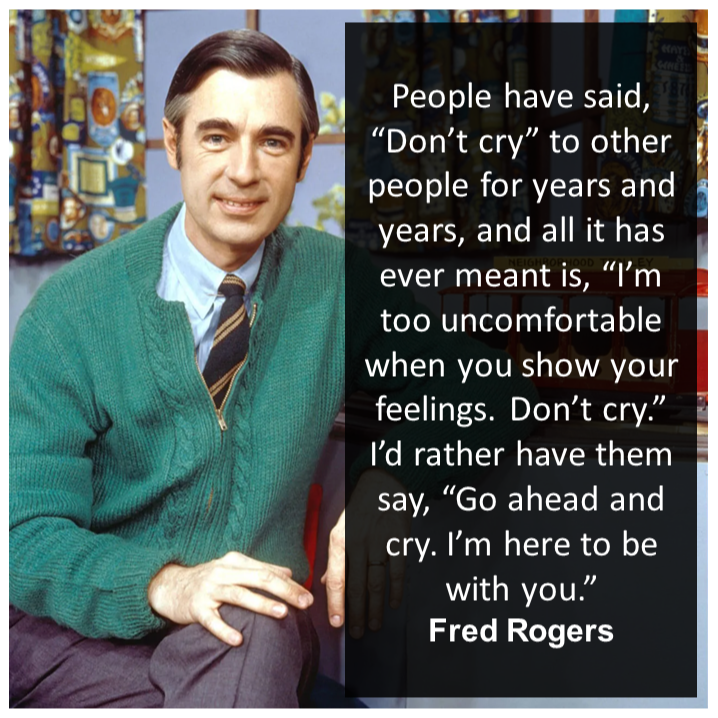
Real Men Don’t Cry – How Men Cope with Melancholy and Deep Feelings of Grief

On a first reading, everyone will understand that Katherine Mansfield tried to convey the concepts of friendship, loss of loved ones, dangers of wars through the short story The Fly.

 Another most important and least noticed dimension of this story is how men handle their emotions of sadness. Trust me the Fly is not just about the dangers of the War. It is also about how men always suppress their sad emotions just to portray their masculinity to the outside world and how these suppressed emotions get transferred onto the next person, object or entity as a completely cruel and oppressive behavior.

If your read the story twice, thrice and notice the gaps in the conversations between Mr. Woodifield and the Boss and the actions, expressions they are portraying in these gaps, then you will start to perceive the inner turmoil these two people carry in themselves for their deep melancholy.

Mr. Woodifield has already suffered a stroke which is the effect of him being unable to share his grief from the loss of his son. As the only remaining man of the family now, he should demonstrate strength to the society and his family. Crying out loud is not the solution, thus his is getting eaten from inside with his old age.

To portray that he has come out the grief of the loss of his son Reggie, Mr. Woodifield explains the visit of his girls to the Belgian War Cemetery like it was just a simple visit to some normal location in foreign. As if there was nothing special about it. Furthermore, to mask his grief he describes this graveyard as full of flowers and spacious. He is trying to tell the Boss that at least in afterlife their sons are in good place and closer to each other, but he is actually trying to console himself unknowingly. It is his mind that he wants to assure that his son is resting in peace.

You will notice the depth of his grief when Mr. Woodifield immediately changes this topic of War cemetery to the topic of high costs for a pot of jam in Belgium where his girls were staying during their visit.

Many men use same technique of instantly changing topic in the fear that the grief will break out in some way which others may take as a weakness. Trust me, men are masters of such drifts in their conversation especially in a man to man or friend to friend-to-friend conversations. Very rarely male friends will share the problems or feelings of grief with each other. They will talk about the whole world but not explicitly about their sadness. I think Katherine succeeded in portraying these minuscule yet significantly impactful but unnoticed behavior of men. A tornado is always building up in such grievous men but they are masters of hiding that too. No wonder people are surprised when they hear a lively and happy man taking his own life, who is later revealed to be very depressed.

The Boss’s handles his grief in totally opposite way. We see him as more powerful and influential than Mr. Woodifield and he thinks the same about himself too. You should notice that the event when he is showing the renovation of his office to Mr. Woodifield is the moment which he had planned for his son actually. The carpet, the furniture and the electric heater were all for his son. He purposefully ignored his dead son’s photograph during conversations. He was trying to hide the reality that his son died and renovating the office was one way to get closer to this illusion that his son lives. The illusion that at any moment his son will return to this renovated office and take over his father’s business. This breaks my heart. In a corner of his heart, the Boss knew that his son will never return but he still renovated the place in a hope of return. No wonder they say that hope is a dangerous thing.

The boss is so used to hiding his feeling and vent it out through crying. You can see this in the moment just after Mr. Woodifield leaves the office, when the Boss tries to cry but is unable to shed a tear.

The use of exclusively accessible whisky for enjoyment with his friend Mr. Woodifield is also a masking mechanism, a distraction cleverly used by the Boss to portray that nothing has affected him. Men will resort to infinitely many distractions than to explicitly express their sadness just to show that they are manly men.

The Brewing of the Inner Dark Storm

As the name of the story is ‘The Fly’ many think that the pivot of the story is how the Fly underwent death as the representation of how young people died in war and how their relatives got badly affected because of that. I have additional input on this point. The pivot of the story is the Boss. The death of the fly is just what he wants to happen with the other people around him as a helpless revenge for the loss of his son. What Katherine showed in the closing encounters between the Boss and the Fly are actually the depictions of how the suppressed and hidden grief, melancholy, depression in men actually gets projected out as a behavior of inhumane cruelty and unjustified- unending anger, anguish. They will never cry and release this grief but would choose cruelty to channel this anguish. That is how every war in history created new generation full of people hating each other. People especially men are really bad about sharing their sadness, feelings of grief and in many such cases they choose violence to channel out these feelings.

The way the Boss orders the fly like a military officer like “Look Sharp” or “Come on” is not addressed to the fly or not even as the reminiscence of how his son was ordered to fight in war while death dropping on him; actually, it is addressed to himself to remain composed while hiding his pain. The death of the fly here is not the representation of how his son died, it is actually how a part of the Boss himself has died – it is the death of the emotional and humane side of the Boss.

When men find it difficult to channel their grief into an emotional outburst, history has examples where we have seen them choosing the side of anger, cruelty and oppression.

Please understand that there are three different destinations where such grievous men end into. The first are already helpless so the grief eat them from inside, the second one and the majority choose the cruelty for expression and the third but very few succeed in expressing such emotions without guilt and receive help from the outside world.  
Melancholy in Men

Sadness is one important aspect of human emotions. In very crude way, sadness is an emotion expressed when things are not working according to one’s expectations. The word simply goes as ‘sad’ but the emotions which it represents are not that simple, crude actually. There are many reasons for a person to be sad and I see two different types of this emotion. When things are not happening up to your expectations, you become sad; you are sad that its not happening for you – I will call it “a selfish sadness”. You are sad because you didn’t win, you are sad because you lost that train and now, you’ll be late to your destination.

The second type is the sadness you have when the things don’t happen for the people you love, when the people you love are sad. You are sad because your people are sad. You want them to be happy. This sadness I would call as “a selfless sadness”.

A selfish sadness starts and ends with you so it is always in your control to get over this sadness. But, for selfless sadness the situation is tricky. It starts from you and it is always connected to the people you love, outside of you. When things are not in your control in such cases this type of sadness is deepest and the darkest one. Exposure to such selfless sadness in addition to the grief from the loss of loved one is a dangerous combination.

Katherine Mansfield, despite being a woman portrayed the details of how ‘manly’ men try to cope with the loss of their loved ones. They either succumb to the dark feeling and give up or they channel this extreme sadness into aggression and oppression of the weaklings, very few men successfully share their feelings and come out of it.

For me the condition of the fly is exactly how the world will be – oppressed and full of hatred if men won’t cry when they are grieving.  
Source for reading:

The Fly by Katherine Mansfield

A Bet Called Life

Anton Chekhov through his short story called ‘the Bet’ establishes important gifts life grants us. The real freedom is to neither let go of life with an escapism/nihilism nor degrade it through materialistic exploitation. The real freedom is the harmony between time, resources, practical curiosity and most importantly people around us. Life has possibilities to offer, it is up to us to live our lives on the spectrum rather than polarizing them to an ideology.

Anton Chekhov’s famous short story called “the Bet”

The good life is a direction, not a destination

Bruce Lee

Quick question! Would you trade 10 years of life for 10 million? There are two important parts of this question before looking for the right answer and only a fool would think that there truly is one good answer to this question.

The first part of this question is – what is the value of time we live through our lifetime? Say, a millionaire who is bedridden in his last moments of life is still unsatisfied with the plans he had for his life. Would he trade his money with extra time?

The second part is – if we live a life with no resources – money to meet the ends then what good is to live such life?

Now if we look out for subjective answers, the diversity in answers would surprise us (and that part is not surprising, because everyone has their own definition of a good life and a bad life based on the experiences they had)

Anton Chekhov – one of the most important short story writers wrote one interesting story called “The Bet” which makes the readers question the real intent of having a life and living through it till death. What kind of life is a good life – a short but resourceful life or a long but painful life?

Synopsis

The Bet is a story of two people – A Banker and a lawyer who in their young age fix a bet to decide who among them is right. The argument of the bet is based on the morality of a death penalty. Banker thinks that instead of making the convicted suffer for a long time through lifetime imprisonment, he should be sentenced to instant- immediate death. Life – long but with suffering is inhumane punishment. Whereas the lawyer thinks that taking life in any way is inhumane as humans do not have any power to restore the life back. Taking life slowly or instantly – both are inhumane but if these two are the only options, then the best punishment is to let the convict live; even though it will be painful but he still lives.

In order to prove validity of their arguments they decide a bet where the banker agrees to pay the lawyer 2 million if the lawyer undergoes solitary confinement for five years. In the excitement of the argument the lawyer agrees to 15 years of solitary confinement for 2 million. If by any means the lawyer escapes this confinement or tries to connect with any human being, he will lose the bet and banker won’t have to pay anything to him. The lawyer would get wine, smoke, books and a musical instrument but no human contact or newspaper or a letter from someone. There was only a small window to receive anything from outer world.

As the confinement proceeds the bankers becomes more and more nervous. He anticipated that the lawyer won’t even last for 2-3 years but the bet truly goes till its completion and in the meantime the baker loses most of his money where the 2 million he pledged is the only amount he has. He now knows that the lawyer – seemingly successful to survive through the bet will now have 2 million while living out of the confinement and the banker himself would be poor. He tries to kill the lawyer on the last day of his confinement where he discovers that the lawyer has actually renounced what he was about to win from the bet, he even distastes the life itself and seeks the ultimate salvation, freedom from life. The lawyer understands that even after reading these many books, these many stories, learning many languages the death in an instant can wipe out everything that can be created.

Next day, the baker finds out that the lawyer escaped the confinement as he had planned in his letter to purposefully lose the bet. The banker is relieved knowing that he still has hold over the 2 million which was his last capital for survival. To not let discussions catch fire he locks the letter of renouncement of the prize from lawyer in a safe.

Life – granted to everyone has majorly two aspects which are continuously deciding the course everyone’s life. One is time and another is resources.

Anton Chekhov can be called as the king of short stories where his philosophy of writing was focused on to present only what is necessary to convey the intent to drive the story further, nothing seems extra in his stories which make them highly effective short stories. All of Chekhov’s stories are based on common scenarios happening with common people, there is always some realism and non-fictional touch to his stories. And hence they always deliver a profound idea about what a life really is, what it means to be a human. You will rarely find a direct message in his stories, the natural reactions of his characters will show you the mirror. Anton Chekhov truly mastered the skill of mirroring the life through is short but highly effective stories. The Bet is one such masterpiece. Let us dive deeper into this story.

The Abundance

The Bet is a story of how one values their own life and other people’s lives. Chekhov smartly shows how abundance dulls, narrows and blinds the vision and opinions one has. The banker and the lawyer in their young age while arguing over the justification to punish someone by death of life-long imprisonment are indicated to be full of adrenaline and excitement. Even though they have not gone through such experiences they have firm opinions on such experiences. The lawyer and banker both have many years of life still left to spare which leads to such an absurd bet. The banker thinks that he has enough wealth just to spare for such a silly bet. Almost all the times, we are ready to stake things we have in abundance for a silly thing which would prove our beliefs to be either right or wrong. Abundance reduces the perception of value for things, time and even life. Lawyer and banker both were young when the bet was established. Great thing about Chekhov to appreciate is how he points out the behaviour and opinions of youth on almost anything. The youth seem to have strong opinions on everything even when they haven’t gone through those experiences or lived with the people closer to such experiences. The so called “hormones” make the youth think themselves as invincible – there is nothing wrong with that as it is what makes young people turn impossible things into possible but being in a simulation where there is no relevance to the reality makes the youth delusional where they take negative and life-altering decisions carelessly. Consider if this bet was set up between two beggars or two old men, its an impossibility. In both cases they are lacking time and resources/ money.

So, the starting set up for bet shows how in early young years abundance can blindfold the person from reality.

Banker wanted the punishment to be instant as it involves no suffering also shows how greatly he values pleasures and happiness in life. A painful life is equivalent to death for him. At the same time for the lawyer morality is more important, that is why he prefers gift of life in any form rather than the instant death.

“To live anyhow is better than not at all”

The Bet

And funnily or ironically, in the end after 15 years you will see the lawyer longing for the true salvation, you will see this in his letter when the bet is about to end where he establishes that whatever knowledge, experiences, money, resources one could have in their lives – the death will render all of those useless – a more nihilistic opinion.

“You may be proud, wise, and fine, but death will wipe you off the face of the earth as though you were no more than mice burrowing under the floor, and your history, your immortal geniuses will burn or freeze together with the earthly globe”

The Bet

The Solitude – Curse or Boon?

It is really interesting how Chekhov describes the lawyer’s voluntary solitary confinement. It’s like mirroring of how we as human beings go on the quest of understanding the surroundings, the nature and the society around us when we are left alone.

As the lawyer was alone and confined to himself only, in early years of imprisonment the lawyer felt lonely and depressed. This shows how we are mostly created by our surroundings. Most of the time we are what our surroundings are. We only start understanding ourselves when we try to define our existence from inside and not outside. This becomes accelerated and intense when one accepts the solitude in the place of loneliness. The journey to solitude for lawyer started with music and romantic, thriller fiction.

It is impressive of Chekhov’s writing to highlight how our mind tries to fill in the gaps when we are alone. When people are on their own with no outward person to person interaction or person to object interaction, they try to fill that gap of loneliness with entertainment, music, poetry, literature, addiction and what not. People who are unable to fill this gap are the truest lonely people, they always will long for company of other people to fill the void.

In second year, the lawyer became more silent and started writing for long hours instead of reading anything. He is angry with what he accepted just to prove his point but is helpless to change the course of the things. This is the stage where Chekhov sneakily establishes that even though entertainment may fill the void of solitude to some extend for a person, it will not stand the test of the time. The solitude makes the person to have thoughts inside them engulf themselves. Writing is one way to blurt out all that is going inside the mind of the person thereby consoling them that whatever was inside them is now physically outside, on paper. One peculiar observation about writers inserted by Chekhov here! When your thoughts try to eat you, devour you from inside, it is good to channel them outside through your creations, that is what is the basic characteristic of the greatest artists the world has ever seen.

Chekhov then describes the sixth year of the lawyer in confinement as the seeker of the knowledge. Again, the credit goes to the genius of Chekhov where he shows that when a person rises above his own materialistic existence, he seeks the understanding of the nature that he emerged from. When the person accepts his solitude then only his search for real truth begins. It’s like this solitude removed all the noise from his existence. The lawyer in solitude studying philosophy, languages and history shows the curiosity to know oneself better. Study of languages show the curiosity to understand and comprehend that which others had already said but your inability to hear restricted you to access that knowledge. Studying philosophy shows the urge to clear the clutter of thoughts going in the head, philosophy to some extent is the re-organization of what we think, how we think and how we decide our actions accordingly. Studying history indicates the ways to understand the reasons behind the present order of things, everything that exists in present has traceability to history which justifies the way things – traditions are perceived, handled in present.

From sixth to tenth year the lawyer studied the languages and mastered them like a commoner. It is very interesting choice from Chekhov to make his character study languages after studying some heavy fields like philosophy, history. It could have been science and technology but no, all the lawyer was interested in were the languages. Please understand that this is one of the most important creative choices made by Anton Chekhov.

When a person finds the truest, purest reservoir of knowledge, his search for anything greater than that ends there (obviously), the next stage for such enlightened person is to understand and find different interpretations of this pure knowledge.

“The geniuses of all ages and of all lands speak different languages but the same flame burns in them all”

The Bet

After completing ten years, the lawyer surprisingly moved to theology and gospels – the study of religion. It is surprising for a scholar who mastered six languages and deeply understood philosophy, history of humanity. Chekhov wants to highlight one important aspect of humans and their obsession with certain goals – destinations in life. When the destination people considered the most important thing of their life are reached, at that exact moment they become meaningless. The human mind becomes clueless after this event, whatever efforts they took to reach their feel worthless as if nothing in life was worth that or was worth that value. That is the moment when the person tries to detach themselves from all these theories, logics and philosophies. This is the moment when a person realises that there is totally different order and the entity which has designed this current order in which he exists. This is the person resorting to spirituality. When a person feels hopeless during continuous sufferings, purposeless even after achieving that important goal he desired for his whole life, spirituality becomes the last stop.

“A little philosophy inclineth man’s mind to atheism: but depth in philosophy bringeth men’s minds about to religion.”

Sir Francis Bacon

In the last two years Chekhov portrays the lawyer in solitary confinement as a the one who is drifting in the ocean of existence, he is on the verge of breakdown, he is sinking thus wherever he will find support he will cling to it. It is some sort of neurosis, especially the neurosis of the genius mind.

It is the true genius of Anton Chekhov where he shows his readers the journey to find the meaning of our existence, solitude intensifies the speed of this journey. And in the end, if one forces himself to understand the meaning of life in an absolute way, then he will definitely end up being the fool – the smartest and greatest fool the world has ever seen! Too much analysis, too much knowledge and too much logic can drain humanity from the person in a very tragic way. Even nihilism will look petty in front of such condition.

“A mind all logic is like a knife all blade. It makes the hand bleed that uses it.”

Rabindranath Tagore

The Time Vs The Resources

Please understand that major events in the Bet are flashbacks of the banker. And Chekhov has written these flashbacks as if the banker is regretting his decision of setting this bet. The banker knows that he has already lost the bet. He lost all his wealth during this time of 15 year and in addition to that peace of his mind just to prove some foolish point to some group of people.

You must appreciate how Chekhov manipulates the effect of time and resources in the bet. Through this manipulation, he shows significance of both time and resource/ money in human life and also the interplay between them. You will see that the lawyer had 15 years to build his upcoming life after successfully completing the bet. He was the victorious who would have had wisdom and wealth – he would have become practically invincible. But too much knowledge and time spent with books made him think about the worthlessness of life, as his mind was always fed with the simulations, experiences from the books he never got the hold of real-life experiences. This created a detachment from reality in his life experiences. Thus, it is not surprising that he considers the gift of life (which he was ready to live anyhow in the early time of the bet) as a worthless one as death can wipe it out in no time.

For banker it is totally different story. He was the one who was so sure about the future abundance of the wealth he would have had that the pledged money was nothing for him in the early years. The lack of knowledge and the abundance created illusion for him. When the bet was about to end, he was consumed by the idea of loss of his dearly 2 million. The banker even makes an attempt to kill the lawyer in secret to win the bet. The character of banker seems shallow right from the beginning of the story but we must not forget that he too is a human being. Before the setup of bet, the banker was of the opinion that a good life must be painless life otherwise the life should not be lived. But as the bet proceeds you will find the banker in the continuous pain and fear for the loss of his money. Even with this pain he prefers living though it. He chooses painful life now.

Let us understand one scenario, what if the banker went on to become wealthier and wealthier as the bet went on to completion. He would not have felt a single regret to let the lawyer win the bet. Rather the character of the banker would have definitely honored the lawyer for his willpower and genius that he had become during his solitary confinement. The “supposedly” wealthy banker would have humbly sponsored the lawyer for the rest of his life. But Chekhov did not let that happen with the banker’s character. This shows how we human beings set our ideals, our philosophy of life, our way of making decisions, our way of thinking and our motivations based on how we feel about ourselves. Our ideals or philosophy of life never take a moral guidance system – it rather follows the pathways of how we experience life around us and how we feel about it. A cold-blooded criminal will never feel regret for killing another human being and at the same time a sage will punish himself for losing his temper on a child who broke his meditation practice. Your calls for right or wrong are heavily influenced by how you feel about yourself, others come later.

So, it is really important to understand how we decide right or wrong. Most of the time these decisions are influenced by how we were feeling in that decision making moment.  

No wonder Chekhov shows mirror to his readers through his short yet highly effective writing.

 The Conclusion

So, we will again come back to the question we asked at the start of this discussion. Can 10 years be traded for the 10 million? If these 10 years were full of pain and suffering, one would surely trade them for the money. If these 10 years were filled with happiness, joy and fulfillment then 10 million would look worthless in front of them. This shows how foolishly we are trying to justify our lives by attaching it to a single defined destination. We are always forgetting the multitudes of spectrum our lives have. We always try to justify our life with a single event – good or bad and forget that this too shall pass. The profoundness of life allows us to define the life in every possible way, that is actually a curse and a boon. That is exactly why living life with the decisions we take is the biggest bet a person can play. Anton Chekhov shows this side of life through a simple bet between a lawyer and a banker.

Life will never be a single conclusion, it will always remain multifaceted, full of possibilities. That is why whatever call we take for the life to become something ahead is going to be new trick every time. When we discuss the quality and quantity of life, we are again ignoring the spectrum of endless possibilities life has.

Salvation either through the pursuit of knowledge or through the pursuit of resources – both are foolish moves to live a fulfilled life. Life will never associate itself to single adjective, single attribute, single absolute ideology, philosophy – otherwise it will become monotonous- mechanical – lifeless. You will see that so called “enlightened” genius lawyer in the end literally becomes mad and despises everything that life can offer – the same lawyer who considered living life in any condition is good than death when the bet was to start.

“To be overly conscious is a sickness, a real, thorough sickness”

Fyodor Dostoevsky

Anton Chekhov was the master of bringing two exactly contrasting ideas through the portrayal of realistic life. That is exactly how real life is – full of paradoxes. That is what makes Chekhov’s stories so special.

“What a fine weather today! Can’t choose whether to drink tea or to hang myself.”

Anton Chekhov

Chekhov establishes these important aspects life granted us like the abundance of time and resources, the knowledge, the possibilities and pathways to self-discovery. The real freedom is neither to let go of life with an escapism/nihilism nor degrade it through materialistic exploitation. The real freedom is the harmony between time, resources, practical curiosity and most importantly people around us. Life has possibilities to offer, let us live our lives on the spectrum rather than polarizing them to an ideology. It is crime to let life take a side on a shore than to let it flow through the vast ocean of possibilities.

(There is a third part of this story which was not known to public for many years. In this newly revealed ending, the banker remained in guilt even when the lawyer had technically renounced the prize money by losing the bet. One day, the lawyer returned to the banker and asked for the money he won. The banker gave the lawyer the prize money in order to bring his mind at peace.)

Source for reading:
The Project Gutenberg eBook of The Bet, and other stories

Time in a Bottle – Making The Finite Life Last Forever

The moment we realize that we are in a possession of something truly valuable is the moment when we start fearing for its loss, even the idea of losing it haunts us. The urgency created by the finiteness of our lives is the reason why we could and should truly appreciate the people and things around us, it is the same urgency which pushes us to dare to live the life we want. Jim Croce’s Time in a Bottle exposes this vulnerability as well as the strength of human beings in his song “Time in a Bottle”.

Remembering one the soulful artists – Jim Croce

Sometimes what poets, writers wish for is weird, quirky. Through this weirdness they are trying to overcome the realistic limitations we have as the human beings. Poets, songwriters are very well known to express their flights of imagination through their writings. They can make a man walk barefoot on the surface of the sun or make an elephant fly in the air making it light as feather or make a wild beast fall in love or make donkey sing like a tenor and list goes on. What makes these imaginations or these wishes special is that the imperfection these wishes’ originator wants to remove from the reality. When the poet makes a person walk barefoot on the sun, he/she wants that person to be able to tolerate and experience that hotness of the sun, when the poet makes the elephants fly, he/she wants them to have the bird’s perspective towards the world and there can be many interpretations depending on the core idea to be conveyed.

Wishes are one integral part of every person’s existence. Facts represent what the reality actually is and the wishes represent how we expect the reality to be. That is why every fact can be a wish but every wish cannot be a reality – a fact. That is where ideas like wishful thinking, false hope originate from. Even though wishes might not be the exact representation of reality – sometimes really far or exactly opposite it, they represent a hidden dimension of how we think and manage our expectations in day-to-day life. In simple words, we always wish everything to happen according to our ways but at the same time, we are also aware that “That’s not how things work in reality!”. And funny enough or given that our stubbornness to have control over the course of our lives, we still keep on wishing things to happen in certain way – our way.  Wishes represent the bridge between how we understand the world and how the world really is (and trust me very few or almost none of us have real understanding of how the world is!) You wish a thing to be like this and exactly that happens, now that reality originated from your wish is your understanding of how the world is. When this wish does not come to fruition, the exact opposite of that wish is how the world is for you.

In simple words, a wish is the most powerful tool of how we want our world to be; practical or impractical, it still exists for us through our wishes. Even when it does not come to fruition, it the only existent and personal thing that brings us calmness, peace in the world full of uncertainties. Having too many unrealistic wishes makes one delusional and having too much realism makes one emotionless, mechanical; so there exists a spectrum of how we manage our expectations.

Now that we have established what wishes mean and what should be their dosage in our daily life. Let us move on to a special wish a man had for his loved ones – especially for his baby and his wife. This guy was Jim Croce, an American folk and rock singer-songwriter. The date 20 September 2023 marks 50 years since we lost one of the most original and soulful artists and human beings. Jim’s “Time in a Bottle” song is the embodiment of the tragedy of his life which also point towards the tragedy of being a human; furthermore, it also shows an optimistic and truly important perspective towards living a limited, fragile but fulfilled life. Jim’s words – Jim’s wishes in this song are simple, just in exactly enough quantity but the ideas and thoughts expressed transcend the borders of the infinity.

If I could save time in a bottle 

The first thing that I'd like to do

Is to save every day 'til eternity passes away

Just to spend them with you

Jim wants to have total control over the time he can have. The moment he will have hold over time of his life he wishes all that time to be with his loved ones. Using as simple object as a bottle to contain such an intangible, uncapturable and extremely powerful object like the time shows how desperately he wishes to have control over the time just to have the company of his loved ones – his wife and his son.

It is only the daring of the songwriter’s imagination to make the concept of time as the ‘one with ends of start and finish’ thereby making it finite and “contain”-able in a bottle even after knowing that it is impossible.

The wish to save every day, to have hold over the time to spend shows how time is the most valuable currency we have as the mortal beings. Jim’s wish to transcend even the eternity furthermore intensifies his wish ‘to spend the life with loved ones’.

They say time is an illusion, but we know how treating time as an illusion or as an expendable item can make our mortal lives suffer even more. Even though we have a grasp on the theory of time travel, we have barely scratched on the surface of how to perceive time and control it. This inseparable and highly influential impact of time on our lives make them fragile and irreplaceable too. Jim knew this; that is exactly why when he says that he wants to contain time and eternity to spend them with his loved ones. He is realistically implying that he does not want to waste even a single moment of his life. It’s a good advice for every one of us too. 

If I could make days last forever

If words could make wishes come true

I'd save every day like a treasure, and then

Again, I would spend them with you

When Jim will get complete hold on eternity, he would still use that time fully with his family. The repetition of the idea expresses the urgency to not even waste the immediate next moment.

There is innate purpose in Jim’s wish to get hold on the things like eternity and time; things which do not have any boundaries or limits, things which cannot be contained into finiteness. The intent is to signify the incomparable value of the finite time we have in everyone’s life. Spending these moments in doing things we love, have passion for, and with our loved ones is the highest value one can extract from such an incomparable asset. This also a simple way to express how intensely and passionately Jim loves and cares for his family.

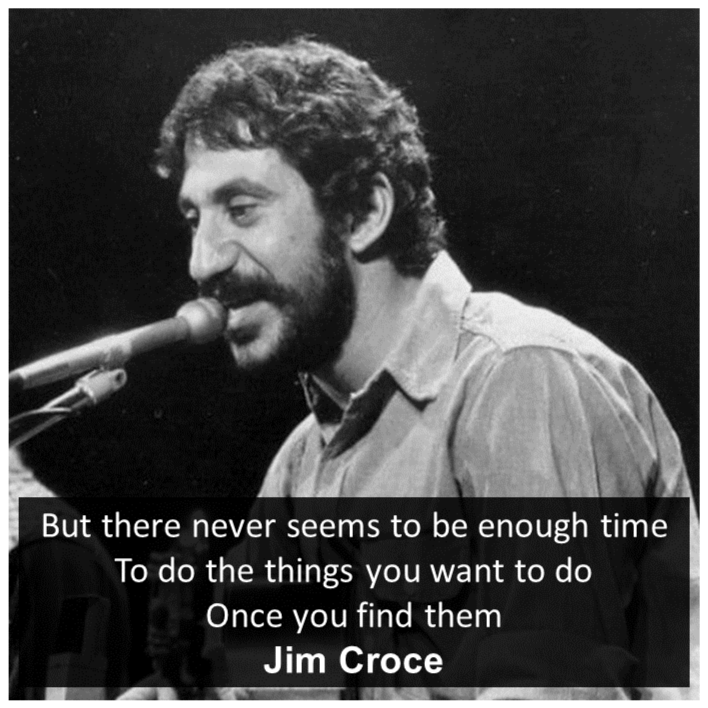
But there never seems to be enough time

To do the things you want to do once you find them

The wishes and imagination expressed by Jim show how immediately he wants to live his life lying ahead. The moment he introduces the word “but” here brings all of us from his imaginary world into the harsh reality of life that we live in. He expresses a common yet unexpressed feeling all of us carry inside every one of us.

We are always trying to find the perfect timing, perfect moment until we realize that the time we have here, is finite. There is no option but to make every moment count. If you look at the words of people who have realized that the time they have on this earth is really limited, you will understand how the value of time for them shoots up exponentially.

The moment we realize that we are in a possession of something truly valuable – the moment when we appreciate what an important thing we own, is the moment when we start fearing for its loss, even the idea of losing it haunts us. The moment we find the true happiness is the exact moment when we start doubting that this happiness will instantly perish and something bad will start happening. This is human nature, there is nothing wrong in it. It also highlights how loss of certain thing actually makes us appreciate the true value of that lost thing.

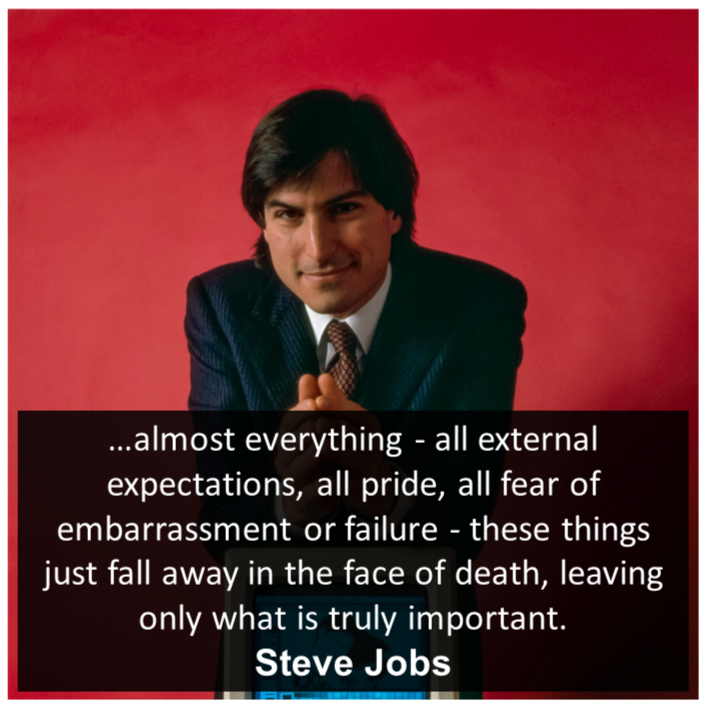
“Remembering that I’ll be dead soon is the most important tool I’ve ever encountered to help me make the big choices in life. Because almost everything — all external expectations, all pride, all fear of embarrassment or failure — these things just fall away in the face of death, leaving only what is truly important. Remembering that you are going to die is the best way I know to avoid the trap of thinking you have something to lose. You are already naked. There is no reason not to follow your heart.”

Steve jobs, Stanford Commencement Address, 2005

A true artist is an expert of bringing out such very common yet unexpressed emotions out to the masses through his /her creations. It creates this common ground where people from different walks of life – different levels of life share their common personal, intimate experiences. Jim beautifully puts down the tragedy of the finiteness of life and the urgency to live it, experience it thoroughly, inside -out. It is really heartbreaking to know that you won’t be there around your loved ones forever. And most importantly, the feeling of loss is more intense, dreadful than actual loss itself but that is what the reality is.

I've looked around enough to know

That you're the one I want to go through time with

Now what Jim says here is about how you can express your intense love, passion with practicality. He assures his loved ones that even though the time he has, the time all of us have is finite, we can still make it worth of our life by being with the people we love, by valuing them. This finiteness of our existence pushes us to appreciate everything, every person we have close to us.

You can see in the early part of the song, Jim expresses naïve, highly romanticized and somewhat foolish thoughts of being eternal forever to express the passionate love, affection towards his love. This early part of the song also indirectly reveals how carelessly we handle some important aspects and important people in our life, in our youth where we literally feel like immortals with infinite energy.

There comes a moment when we have to actually make decisions solely by ourselves which would alter the upcoming course of our very own life and there is no escape from these choices, at that same moment we understand what we hold dear to us, what actually matters, what is noise and what illusions we were following till that moment. Some would say that we become mature and more realistic. The perfect veil of illusions drops down showing the imperfect, crude reality. This is the moment we understand that even though the illusion was pleasing, the reality is where we actually exist and what could be more worthwhile than being with those who are special to us in this good and real time even though it is finite.

If I had a box just for wishes

And dreams that had never come true

The box would be empty

Except for the memory of how they were answered by you

The realization of the value of people, things, and moments in which we interacted with them makes us appreciate their real beauty. The time we must live may not be infinite but even in this limited time the memories we create with our loved ones make us truly immortal. These memories are the linkages which get carried on from one person to another sometimes from one generation to the next one.

When a person is granted with immortality but if he/she has no one to love, to care for or nobody cares for or loves him/her, then what realistic purpose does this eternal life serve? It is exactly equivalent to death.

Our existence is valid and real only when other people recognize it. It is a tough pill to swallow. Many would argue that the life comes from within, you are a whole universe existing inside you, you don’t need others to validate your life – your existence but please understand that these statements are valid only for the people whose value of life lies with the opinions of others. When I am expressing about the validity of our own life upon the recognition of others, it is the value creation and upliftment of the humanity inside of us due to the interactions we get involved into. You are a universe into yourselves but if you are not making other people’s lives better, affecting the objects, people in a constructive way you are an isolated universe which is exactly equivalent to living in your own imaginary world. It will still exist as a sole but that is one selfish way to live. Many undiscovered wonders are revealed when things interact with each other.

It might seem overly philosophical but when faced with the “existential crisis”, “existential angst”, “chaos of the reality and its imperfections” everyone needs an identity, a pivot to stick to make this life worthwhile. This feeling of making our life worthwhile is created only because of the urgency to live. And this urgency to live to its fullest is created due to the finiteness of the life.

Jim expressed this philosophy in his very simple yet powerful song. He appreciates that every purpose of his life found a direction towards completion, every wish he had was fulfilled at the exact moment when he decided to create memories with his loved ones. You must appreciate that most of the times our wishes create an illusive, deceptive reality in our head where everything is perfect, it is only upon exposure of these wishes to reality when the facts are revealed. These facts may not be perfect but they are the only real thing. That why memories are really very important.

Memories have similar nature to the imagination and wishes we have but they are the outcomes of we passing through the time. So, our memories are the next best things we have to the reality in which we live and not our imagination or wishes. Memories are the embodiment of the realistic imagination and wished realized. That is why we can make these memories eternal by creating them with our loved ones and engaging in the doing thing we love.     

But there never seems to be enough time

To do the things you want to do once you find them

I've looked around enough to know

That you're the one I want to go through time with

The needs and wants are less important than the moments we have with our loved ones. It is this irreplaceability of any other materialistic thing with the memories and moments in the company of the loved ones which Jim wants to highlight through his song.

There is one important story attached with the song “Time in a bottle”.  Jim wrote this song when he came to know that he was going to be a father. He was a struggling artist enjoying the artwork he created with the support of his wife. You can say that he was in the bliss of his artistic creations which he loved creating. When he understood the start of his fatherhood, he came to truly know and appreciate the reality of life and the finiteness it has. This made him serious about his art which inspired him to create his world-famous album “You don’t mess around with Jim”. Next time when you will listen to this song with the knowledge of what actually inspired him to write this song, then you will appreciate how deeply he loved his son and his wife. He wanted every moment from thereon to be filled with their memories and that was enough to justify his finite life, finite yet truly invaluable. One can call it poetic, sad, tragic or poignant- Jim died in a plane crash aged 30. It feels like Jim had some foresight about his upcoming life when he wrote “Time in a bottle”. Even with the lifespan of mere 30 years, you will appreciate his life through this song “Time in a Bottle”. His life, thus becomes an example of creating a long-lasting life – finite yet long lasting, eternal and irreplaceable life.   

The urgency created by the finiteness of our lives is the reason why we could and should truly appreciate the people and things around us.    

Who knows, in coming eon or maybe in coming millennium we might actually be able to contain time in a bottle, then Jim’s all wishes might become a reality. Until then let us appreciate what we have as this incomparable precious life.

Bedshaped by Keane – On Yearning, Melancholia and Intimacy

We are really great at understanding our happy, feel-good emotions and we are masters of enjoying such emotions but when it comes to the negative, grievous, melancholic emotions we fail to acknowledge them. Sad moments involving the loss of loved ones are incomparable to anything, anyone in the world. But awareness, acknowledgement, acceptance of such emotions can surely help one to justify meanings to their lives in newer ways.

The song – Bedshaped

Sometimes words fail to pinpoint the emotions one is going through where poetry and music are proven to be the strongest tools. Loss of the loved ones is one such feeling which is purely subjective thus is difficult to generalize. The melancholy from the loss of an intimate person, the feeling of a big void in existence and the irreplaceability of that person are such emotions that are very difficult to trade with other things. A song called “Bedshaped” written by Keane taps into such types of emotions.

“Bedshaped” is a song by English rock band Keane, released as the third single from Hopes and Fears. It became their third consecutive top-10 hit on the UK Singles Chart, after “Somewhere Only We Know” and “Everybody’s Changing”, peaking at number 10. The song also reached the top 20 in Denmark and the Netherlands.

For oversimplification, although not recommended for such a fine piece of art – this song highlights how we are always looking for that emotional pivot in our life and what happens when one loses that pivot. 

The Lyrics

The lyrics is written by James Keith Warnock Sanger / Richard David Hughes / Thomas Oliver Chaplin / Timothy James Rice-Oxley © CTM Publishing, Universal Music Publishing Group

Many's the time I ran with you down
The rainy roads of our old town
Many the lives we lived in each day
And buried altogether

The poet is reminiscing the days he has spent with the person he is missing right now. He wants to remind this person that he misses that they lived those day together to the fullest and in such a way that every new day was a new life, everyday brought something new with it. These memories are not limited to the liveliness of the experiences from each days start only. They are also connected to how those moments disappeared at the end of those days. Whatever the days were, they both were together to witness those moments. This remembrance by the poet shows his longing for that special person – man or woman whoever they were. It is about a vacuum created by the loss of this important person.

Don't laugh at me
Don't look away

The poet is scared that there is no one left who can understand his state of mind. Now that there is no person left who were closer to him, intimate with him, who could care for him – he fears that the world will make fun of his confusion, directionless condition. The poet pleading to not be laughed at, not be ignored indicates that he is aware of the bad condition which he is going through but is helpless as nobody closer to him now exists.

The poet has become so self-judgmental that he has surety of people making fun of him instead of consoling him for the loss. One must understand why the poet has this innate fear and strong surety for the reaction of world for his loss; it is because he knows that the person he lost only and truly knew his personality – rest of the world will draw some conclusions instead of understanding the reasons behind his behavior.

One may call this emotion as the feeling of self-loathing because there is no one left for the person to reflect on the emotions of loss he is going through. The person has started to hate himself.

But there is some hope!

You'll follow me back with the sun in your eyes
And on your own
Bed shaped
In legs of stone
You'll knock on my door and up we'll go
In white light

The poet is so much consumed by the feelings of loss that he expects that this lost person or here we can say his spirit will come back to retrieve our poet to the after-world where they can coexist. “Bedshaped” indicates that this loss has made the poet so sick, immobile that the bed on which he is lying has become an extension of his body. The “legs of stone” indicate the disinterest poet has developed. He does not want to go anywhere. One must understand that this was the same person – the poet who had lived every day as new life with his beloved and now lost person. These are the feelings of depression due to the loss of the loved ones, but the poet hopes that their spirit may come back to rescue him.

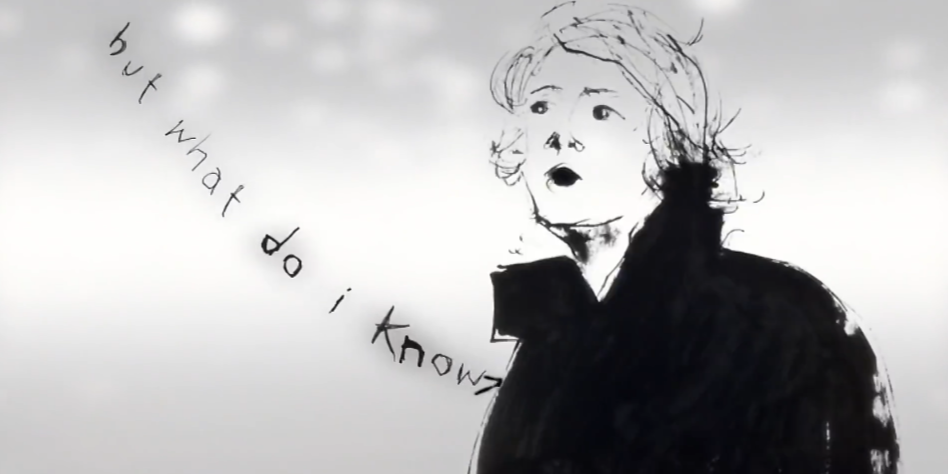
I don't think so
But what do I know
What do I know

The poet expects that the strong bond of love may truly help him to recover from this loss but he is now so lonely that there is this uncertainty that this might not actually happen. The poet now moves on the boundaries of reality and illusions.

I know you think I'm holding you down
And I've fallen by the wayside now
And I don't understand the same things as you
But I do

This explains how the presence of a having loved one, and intimacy with such person can boost the self-esteem, confidence rather the whole personality of that person.

Now that the poet has lost such loved ones, he knows that he may not be the same confident person he was before. This makes him feel that he is not worthy of what that person made him. This feeling of becoming worthless again points to the emotions of self-loathing.

Now you should also understand that the poet is somewhat aware of what is actually going wrong an has this urge to recover from all this grief. He still bears the hope to come out of this alive but there is very fine line between the meaninglessness of his life and mere survival.

The Video

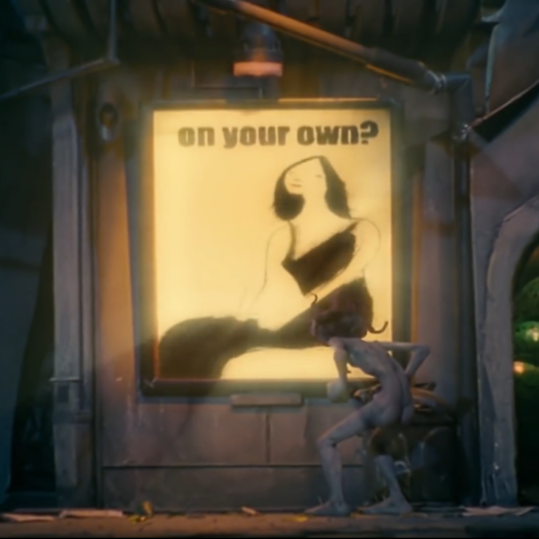
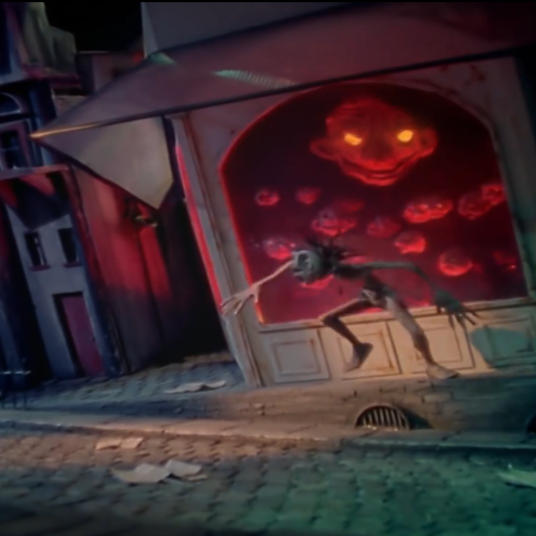
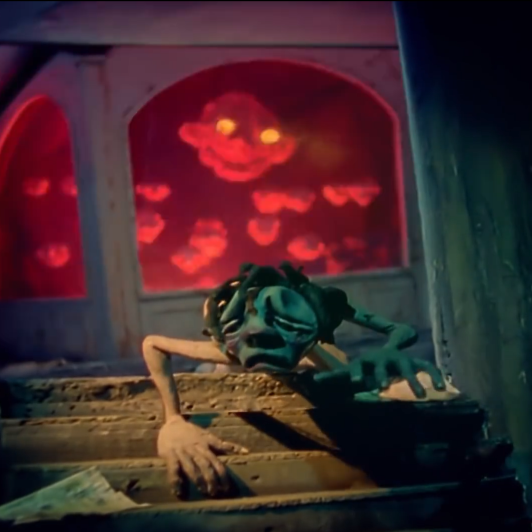
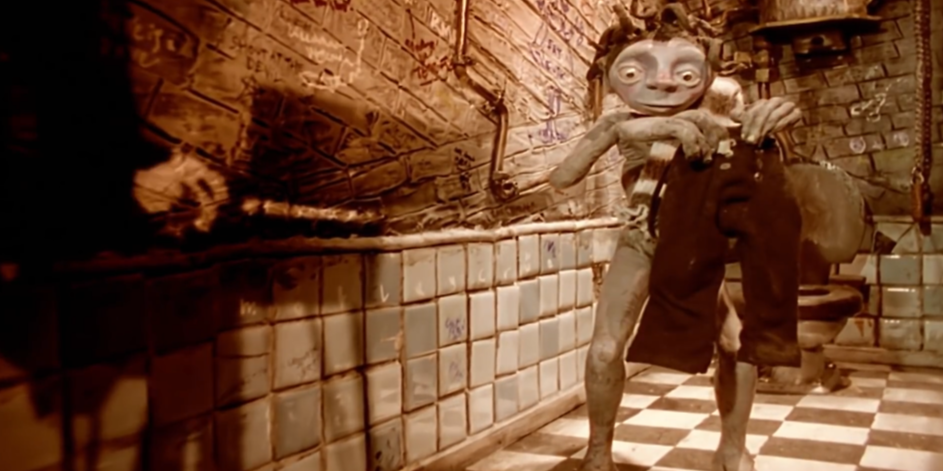
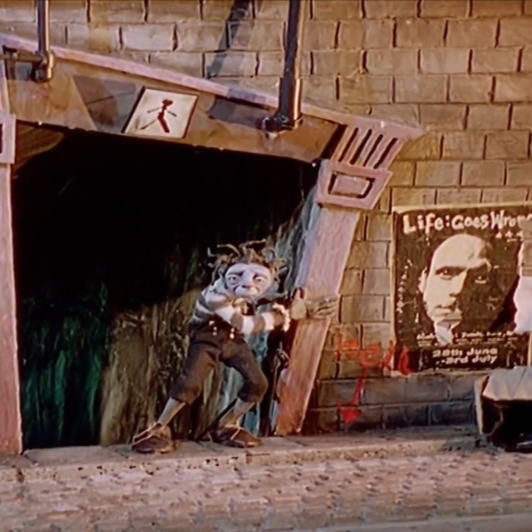
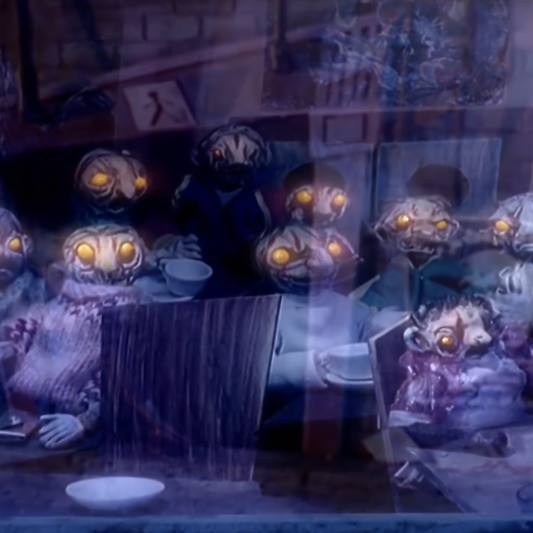
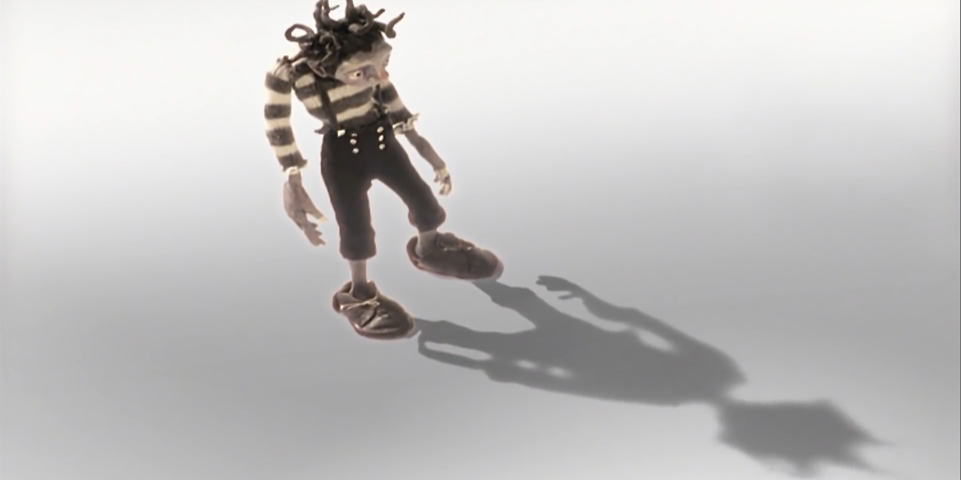
The video is stop motion animation directed by Corin Hardy. Which itself is fine piece of art.

The story conveyed in the video of the song actually deepens the meaning behind the song and amplifies the mixed emotions of grief, loss, self-humiliation, meaninglessness and most importantly the hope for liberation.

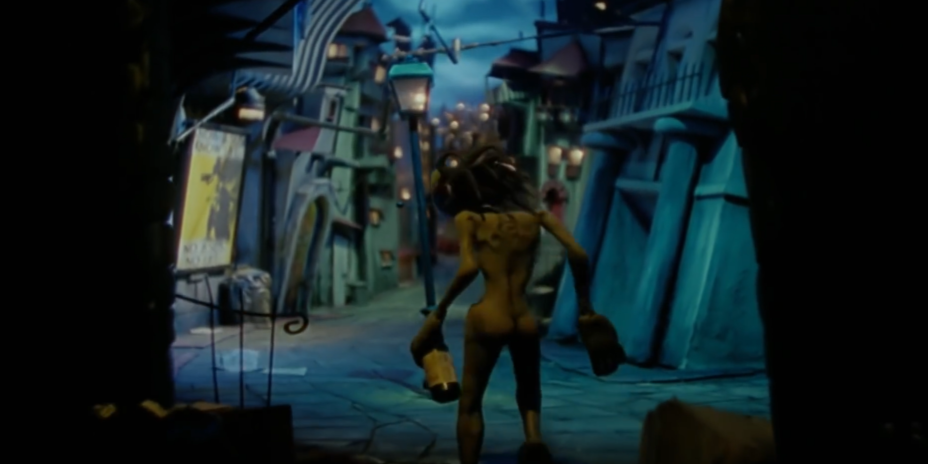
The video shows some short events in the day of a roadside naked drunkard who has lost the sense of his surroundings.

He misses the company of person he loved, the only person who truly understood him. He is miserable to pass this life on his own and alone.   

We can be sure of this meaning because the rest of the world is completely hostile environment for him now. He is running away from people. Hiding himself.

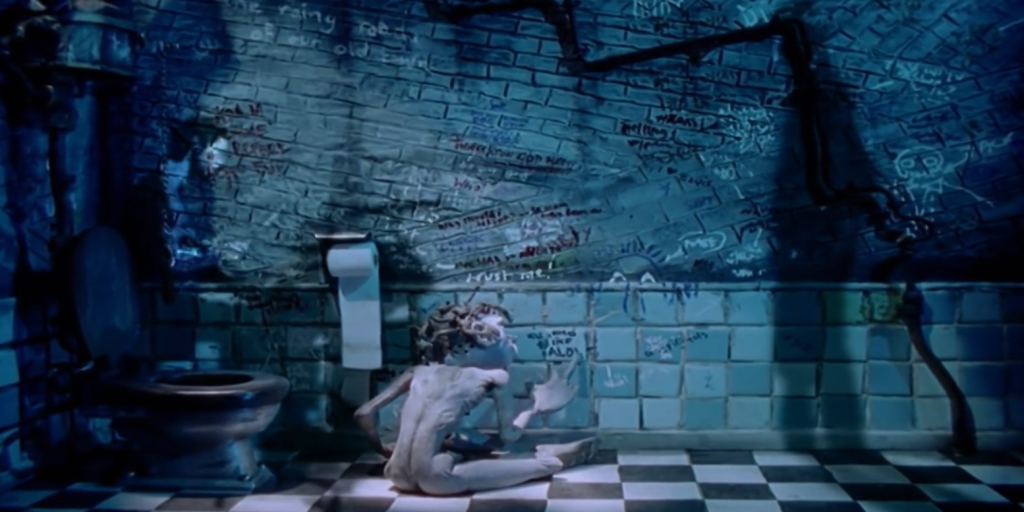
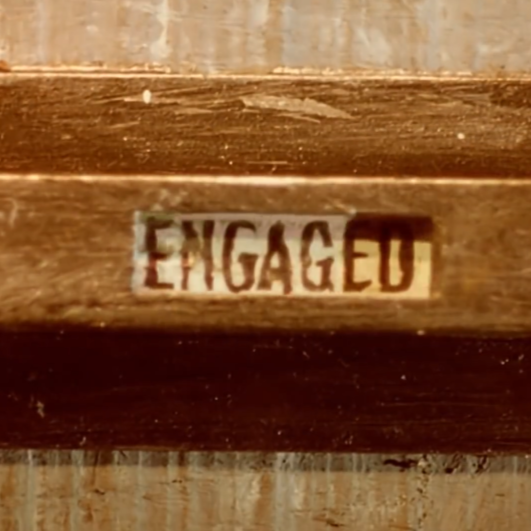
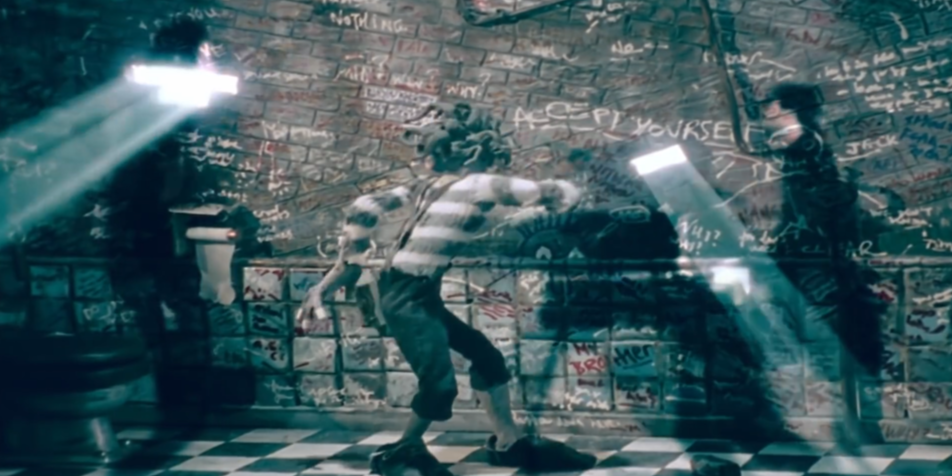
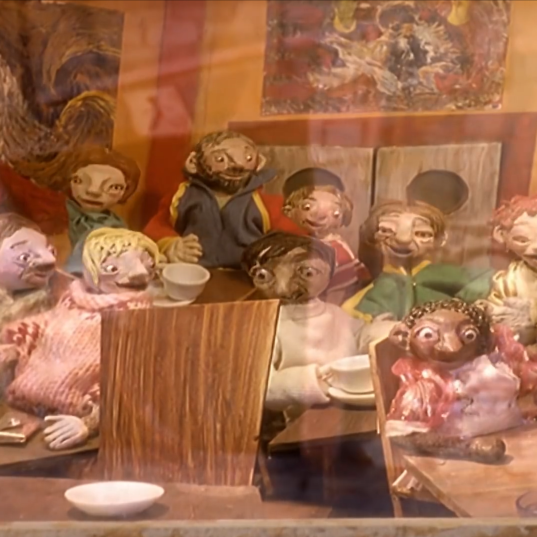
Running away from the people, he grieves in a restroom. The restroom here indicates the privacy he has, the shelter of some comfort with his intimate thoughts and the memories of his loved ones. We metaphorically, are inside his mind where he is trying to understand this loneliness. He wants to recover from this misery and feel liberated. Hope is the only thing that he relies on, hence we see him contemplating his ideas in this restroom.

The thoughts written on the wall indicate the chaos, the confusion that person has in his mind as he has no close person to show the direction, the ways. The isolation in the restroom with his thoughts with his degraded condition indicates the urge to find someone who truly cares for him and the meaninglessness in life created by the loss of the loved ones. 

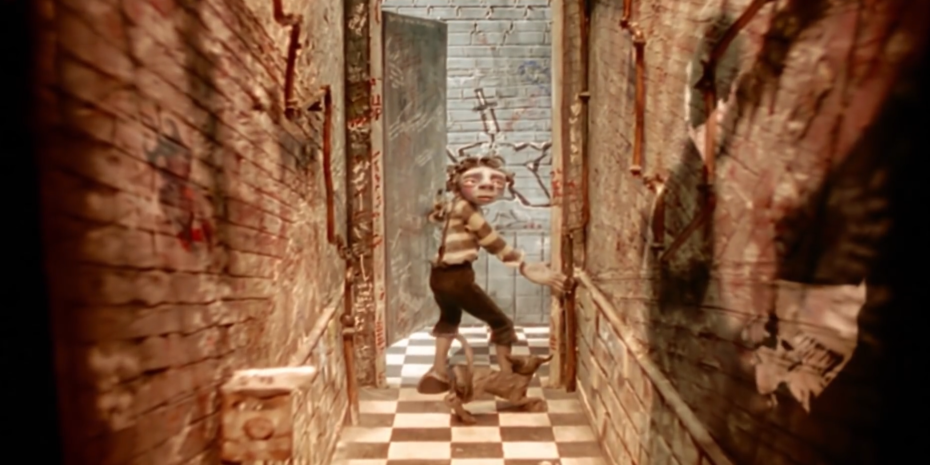
You will notice that a cat brings him clothes from somewhere which somewhat lifts him up and that is also why he gathers the courage to revisit the world and blend in with the people in it. He tries to free his mind by letting go off the thoughts of misery.

Imagine what could have happened if a person would have given him the clothes instead of the cat. If a person would have offered him the clothes, then the chances for his recovery from grief would have been extremely high. Simple support from a non-human being gave him the hope to come out of his grief. Which is powerfully conveyed in the music video.

When this guy wears the clothes and tries to face the world, tries to vacate his mind the stares of unknown people again haunt him thereby pushing him again into his now chaotic and directionless mind.

This shows how sensitive a person is when he is facing the loss of his loved ones. The urge for the longing of the person who can truly understand you is strong in most of the people and there is nothing wrong in it.

Closing remarks

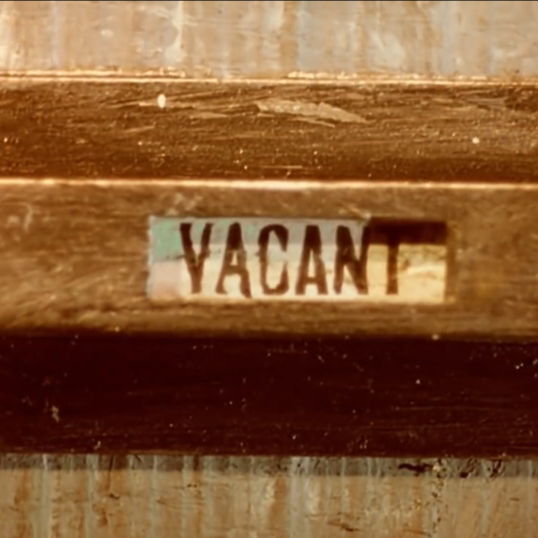
In the end of the music video, you will see the restroom the private room getting shattered and penetrated by ‘the white light’ this person was longing for. He is finally liberated. The song thus leaves at poignant and melancholic note where we are left to find out whether that liberation was his death or him losing all the control over his mind.

I would ask what’s the difference between them anyways? Does that difference really matter?

Longing for intimacy

Human beings are social animals not because they form some groups for mutual benefits so that everyone can survive, grow, prosper and leave something extra for the upcoming generations. A person cannot become aware about his existence without interacting with his surroundings. The crude awareness comes from the interaction with the materialistic things around the person but the core awareness of a person’s existence comes from their interactions with the people around them. That is why I think human beings are called social animals. We always assign our own value, our own worth (physical, financial, psychological, intellectual etc.,) relative to the things and people around us.  

It is also true that absolutely nothing is required to understand the existence of one’s being but that is only possible when one has understood what is means to exist relative to the things in their surroundings. You can say that the person who has achieved the topmost levels of spirituality won’t need anything to define themselves thereby becoming truly liberated, they are free from longing for anything but even these people have to go through the event of understanding their meaning for the existence through the relativity with the surrounding objects and most importantly people.

So, in every sense we as a human being always need some person with whom we can comfortably compare our worth – please understand that this comparison is not for competitiveness. Because when a person is actually seeking the meaning behind their existence – the words like competition, race and superiority have microscopic worth as if they don’t even exist. When the person understands where they actually stand with respect to this person then it justifies the purpose, the meaning of their being. This person becomes their pivot for the life lying ahead.

As the quote goes:
Being deeply loved by someone gives you strength, while loving someone deeply gives you courage.

Lao Tzu

Actually, it is not the power of love, it is the influence of having someone to justify our existence which brings out the best of the person. And who doesn’t want to be their best version? That is why love and its influence are powerful for human beings as social animals.

This is where intimacy comes in picture

Please note that intimacy is not limited to what lies between two people madly in love and neither is it limited to physical one. It can exist between two best friends, between a teacher and his pupil, between a manager and his subordinate, between an old grandpa and a young boy who are not actually related. Some people may call them soulmates and in most cases these relations are far from the blood relations although such intimate relations are possible in blood relations too. Also, understand that the intimacy can also be limited the self only but general examples are uncommon.

In very simple words, intimacy is that place of comfort where the person can be who they are without any judgements, benchmarks, and comparisons (although the basic logic emerges from relative comparison but it is not a competitive comparison. This is like the comparison where one realizes the similarity and differences in constructive ways)

So, when a person loses such intimate person in their lives the whole pivot of life, the center of the meaningfulness of their life gets destroyed which brings this existential crisis, the chaotic void, the unfilled vacuum. This loss of person and the feelings which come after that loss are difficult to express to everyone as intimacy can never be generalized.

In the first place, even before finding their intimate person people are always searching for their ‘go to’ person, they long for such person. Now you must understand how one feels when they lose such person they already have; being alive without their person is already a burden for them.

This might be my overthinking on a good song which just expresses how one feels when they lose their loved ones and how they consider their life completely meaningless in such cases. As the ability of words to express the exact emotions is practically limited and very subjective; whatever I have written may be meaningless to many and meaningful to a few or no one.

I think we are very great at understanding our happy, feel-good emotions and we are masters of enjoying such emotions but when it comes to the negative, grievous, melancholic emotions we fail to acknowledge them many times. I understand that such very intimate and highly personal losses are incomparable to anything, anyone in the world but awareness, acknowledgement of such emotions surely helps the person to justify meanings to their lives in newer ways because life itself represents boundless ocean of opportunities/ possibilities. Who knows someone might be needing exactly the same person you are. That surely will help the both sides. And that truly justifies we – the human beings as social animals (in a way). That is why songs expressing such emotions are very important.  

Suzume no Tojimari (すずめの戸締まり)- The Net Worth of Our Memories

Suzume no Tojimari (すずめの戸締まり) is a story carefully woven with the tales of memories and loss of loved ones, sacrifices, unconditional, selfless love and realistic optimism. Our memories – good and bad carry equal potential to cause either loss or profit.

Storytelling is one of the long lived arts that defines – ‘we as the human beings’ . Right from the cave drawings to writing novels to recent advances in film-making – storytelling will never seize to attract and strongly influence everyone. Storytelling conveys emotions, learnings, experiences on very personal level. Although the stories, anecdotes seem simple but they can carry deep meanings and eternal ideas. Developing such simple yet deep, intricate stories is a skill of the great storyteller. Japanese anime is already known for such distinctive storytelling and have that irreplaceable throne in their name for many years. On superficial observation it will seem like an intervention between some fictional and fantasy-based cartoon characters but deep down it is really emotional and closer to the heart ‘master storytelling’.

One such great movie I had pleasure to watch in theater was ‘Suzume no Tojimari’ directed by Makoto Shinkai (新津 誠). The movie is based on the ‘Tōhoku earthquake and tsunami’ happened in 2011 which was the most powerful earthquake in Japan and the fourth most powerful earthquake in the recorded history of the world. There were 19759 deaths, 6242 injured and 2553 people were missing due to this earthquake. Suzume no Tojimari is the story of a 17-year-old girl called Suzume (鈴芽) who tries to save Japan from a series of earthquakes with Souta (草太) who is an expert and responsible person to avoid such events. We will discuss this movie – so spoilers ahead. And I will suggest to watch the movie first to understand the ideas conveyed hereon.

Makoto Shinkai’s Suzume no Tojimari (すずめの戸締まり)

Many of us are trying to attribute this movie to ‘an animated fantasy adventure movie.’ But as the great stories go, this movie has so many hidden layers and details in the storytelling that it will be shame to categorize this movie only as a fantasy movie. I would say Suzume’s story is everyone of our story even though the events are not exactly the same. I have many points to prove so and that exactly might be the main intent of the storytellers of Suzume. So here it goes…

The Importance of Memories in Our Lives

One question –

What is the closest invention we have to the Time Machine?

I know many of us will have different answers but most of the answers converge to ‘the Camera.’ If one adds more sophistication to the thought then the camera points to ‘the Memories.’ It will be an understatement if we say that memories are one inseparable part of our lives. Rather we are our memories – some of those might be distant, old and unclear but we would never forget how they make us feel about something specific, something so special that it cannot be transferred to others through the experiences of mere physical senses.

You must appreciate that each and every learning, every skill, every habit that you have, everything – every person that you like, love or hate or do not even care about has some story, some event, some life experience attached to them. We are what we think our memories are and please note that not all the memories are crystal clear in our minds. Some are very clear and some are vague. In the end, memories are the most intimate format of emotions that we have. It is almost impossible to transfer them to other person one-to-one, unless the person was the part of the same experience (and even after that the memories won’t be exactly the same for either of the persons)

And the memories are double edged swords. Some of the memories have ability to invoke the darkest and the most depressed emotions which can haunt the person their whole life. At the same time some memories are far more powerful that can empower the person with positivity even when they are going through their toughest times in reality. We all have bad and good memories. How we handle them over the time and how we balance the good and bad memories is what our personality, our decision-making is. Even a single bad memory can turn one’s life upside down and a single good memory can make the same person survive through endless pain and suffering.

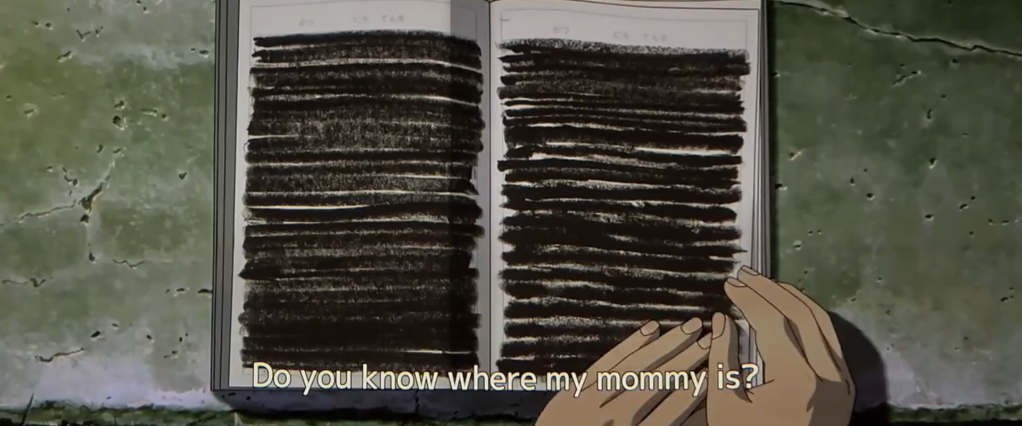
In the case of Suzume, you will realize that her whole personality is driven by the memories and the grieving emotions of loss of her mother when she was only 4-years-old (‘the dark/ black diary days’). Her mind is always subconsciously searching for her mother lost in the earthquake of 2011. (Which is how the movie opens) Suzume’s nursing skills for Souta are not mere accidental choice, it is the memory of her mother being a skilled nurse and a skilled craftsman which inspires her to become the same person.

When Souta is closing the doors for stopping the worm coming out of the gates, he always speaks about remembering the people who lived there. There is great message in such repeating events shown throughout the story. An earthquake causing demonic- destructive worm rises from the gates where some disasters were already happened and many lives were lost. The gates are closed by ‘the Closers’ like Souta who summon the power of the great gods and recall the life experiences of the people who lived there. Suzume gains the same ability when she unknowingly moves the keystone kept to hold the demonic worm on the gates. The demonic worm is actually the representation of the pain, grief and sad feelings all people are carrying in their hearts, when they lost their loved ones in those disasters. Closing the doors on such demonic worms of grief is actually the metaphor to keeping these bad memories, sad emotions at the gates.

One more beautiful idea conveyed in the events of stopping the worm on the gates, is the rainfall after the demon gets contained. When a person gets fully filled with some strong emotions and when the person truly could not hold upon them, when they are overwhelmed, these emotions are immediately translated into tears and cry. Crying relieves this load of overwhelming memories of loss and grief. The story of Suzume and Souta’s attempt to contain the worm translates exactly the same idea in a beautiful way. 

Daijin (ダイジン) – The Symbol of an Unconditional Love   

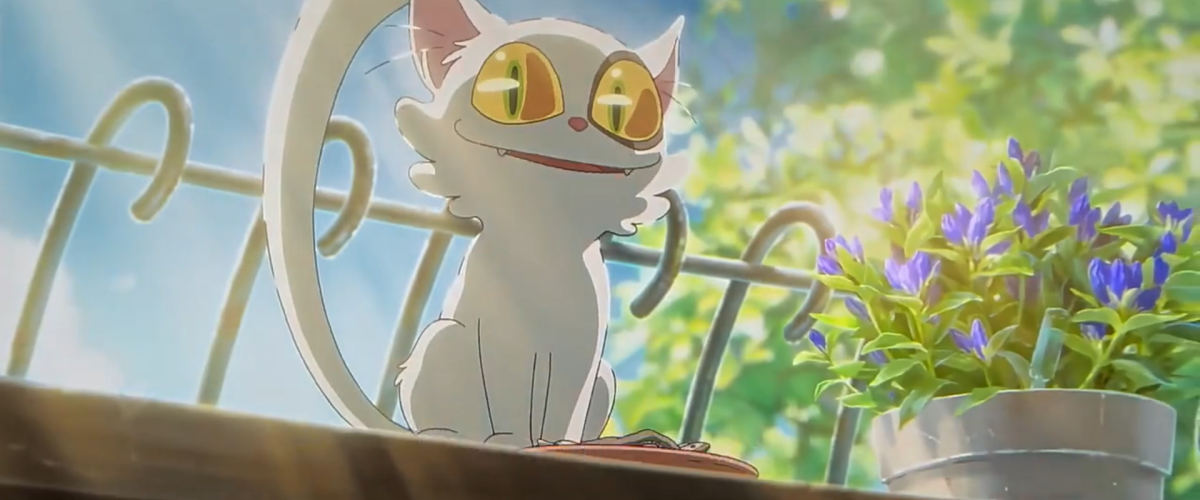
Daijin from Makoto Shinkai’s Suzume no Tojimari

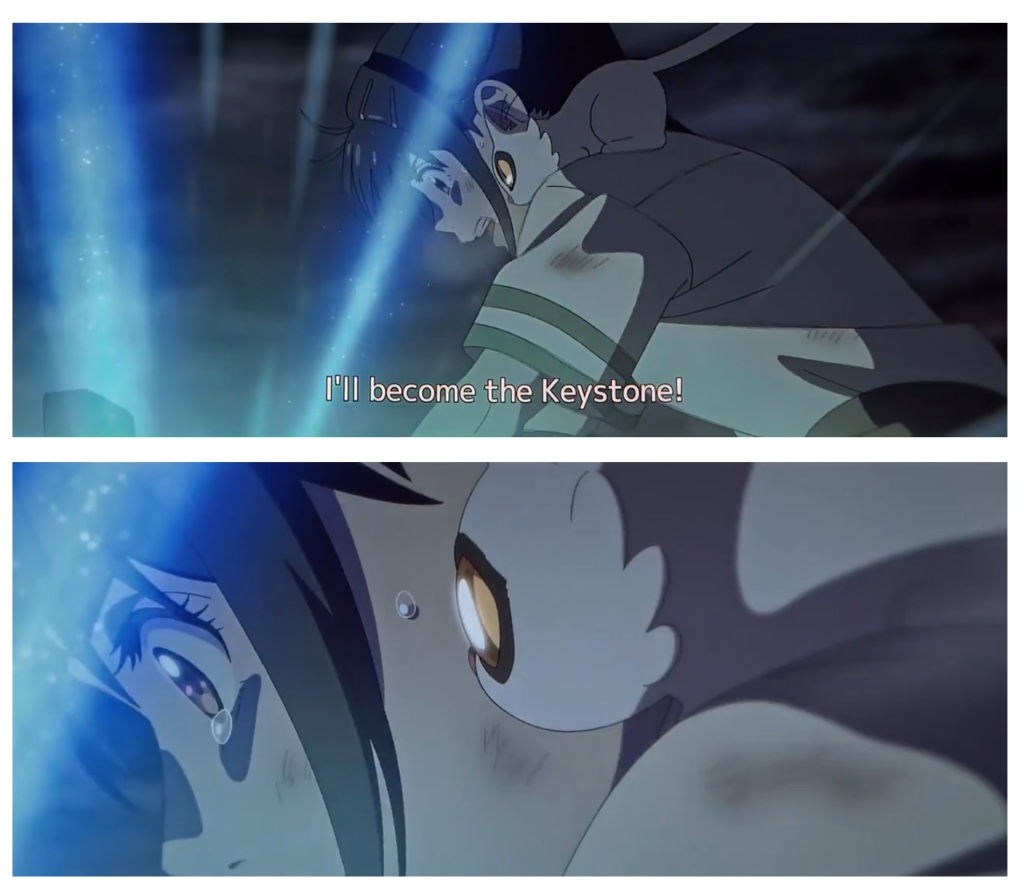
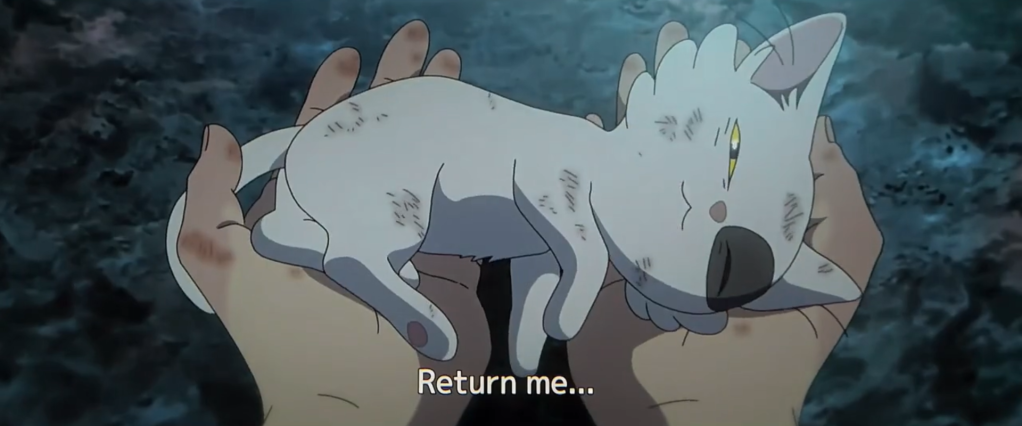
The key point of attraction for whole story is how Daijin – the talking cat carries himself as a pivotal character. Daijin is actually one of the ‘keystones’ – a totem who is holding the worm and prevent the disasters thereby. You will notice that Daijin is an emaciated and thin, malnourished cat at first. When Suzume acknowledges her love for the Cat, he becomes really happy and magically gets healthy instantly. When Daijin understands the events between Suzume and Souta, he feels that Suzume’s love for him will fall short if Souta is always there. Thus, Daijin intentionally transfers his duties to Souta making him the keystone by transferring Souta’s Soul into Suzume’s three-legged kid’s chair. Daijin guides Suzume and Souta to every possible gate to stop the worm from causing the disasters at different locations. Throughout the story Diajin feels like a nuisance demi-god creating troubles for Suzume and Souta. In the end, Suzume realizes that Daijin saved her life many times when she was unconscious and also guided her to bring back Souta to the living world. There is a moment in the movie where Suzume has to lose Souta to stop the earthquake and she thinks that if Daijin would not have cursed Souta to a keystone, she would not have lost Souta. In the grief of Souta’s loss Suzume blames Daijin and disproves her love for Daijin; Daijin instantly loses his health when he realizes that Suzume no longer loves him. Furthermore, when Suzume embarks on the journey to bring back Souta from Ever-After Daijin still accompanies her. He also helps her to find the exact door to bring back Souta.

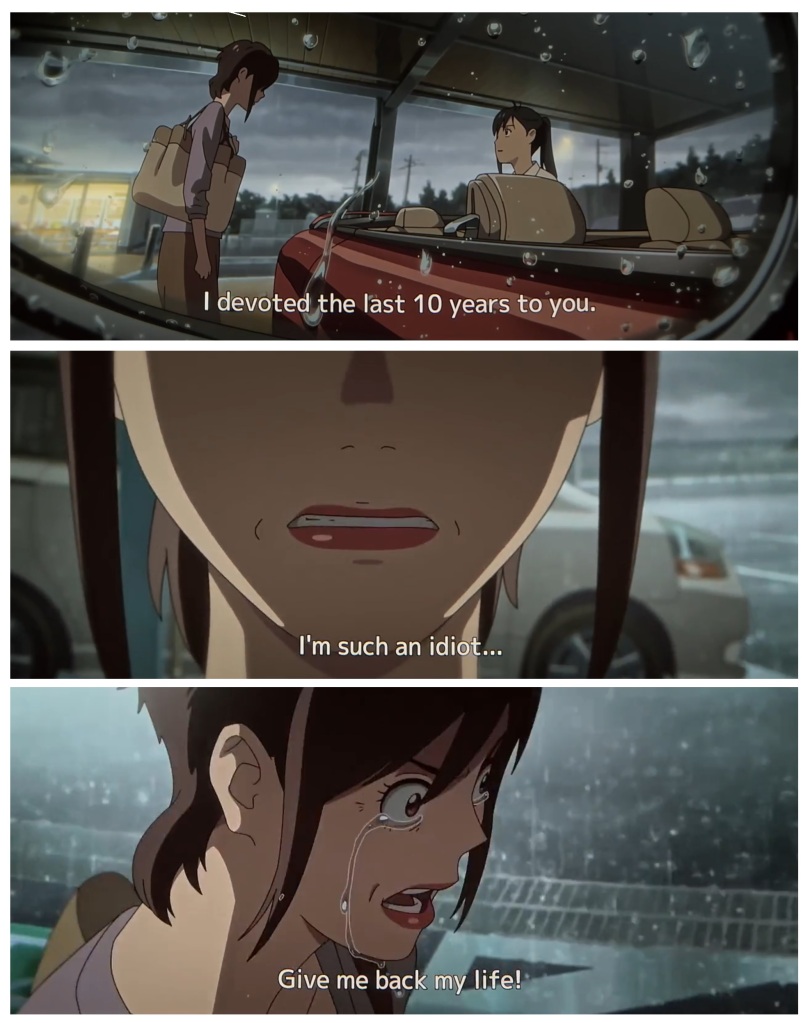
When Daijin realizes that Suzume can sacrifice her own life to bring back Souta to living world, he instantly sacrifices his life so that Suzume will not to sacrifice her life. Even after Suzume’s hate for him, Daijin stands up for her when Suzume’s aunt expresses her regret for spending important years of her youth to take care of Suzume after the loss of her sister in the earthquake.  

The exact moment when Daijin understands that he must sacrifice himself for Suzume
(From Makoto Shinkai’s Suzume no Tojimari)

The whole point to pick out these moments in the story is to highlight how some people in our lives are doing exactly the same for us and we are still unaware of their good deeds for us. Daijin is the symbolic representation of such people who actually exist in our real life. These people are always there to help us, even when they do a favor for us – they don’t care whether we notice them or whether we return the favor, they only care if we are in good condition. All they expect is our appreciation, our love for them. Daijin’s character is an epitome of such people who love us unconditionally. These people are present in every one of our lives; they help us, guide us, lead us to the right doors, love us, prevent us from known/ unknown problems without expecting anything but our love and appreciation in return. Try to find such ‘Daijin’ s in your lives as soon as possible and treasure them for your life forever.   

Materialism and The Intangibility of Memories

Suzume’s story is about the loss of the loved ones and coping with their non-existence. The only way through which we can experiences our lost loved ones is through their memories. Life of a person especially a loved one is profound and invaluable in such a way that it cannot be weighed down to some everyday object. It is also paradoxical that when we lose the contact with such people forever, the objects which these people were associated with become precious for us. People actually have such objects which remind them of certain person they appreciated, loved.

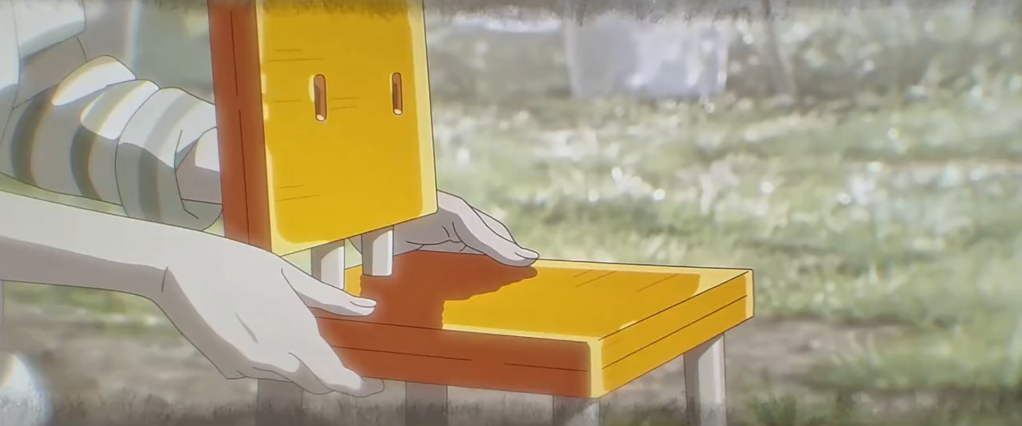
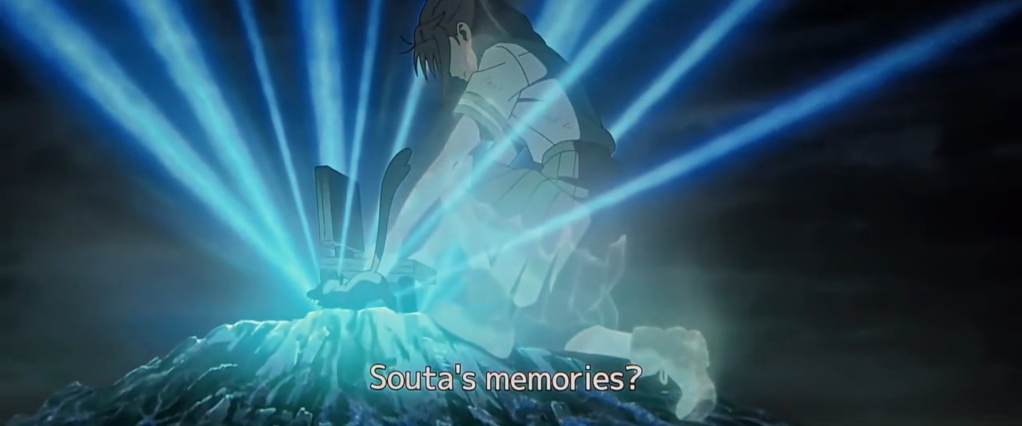
Suzume’s chair crafted by her mother is one such object which she loves with all her life. It is the immediate connection to her mother. The chair has lost one leg during the disaster in her childhood also indicates how she has lost some part of her life as her mother’s loss. The moment Souta’s soul gets transferred to this three-legged chair, in the exact moment Suzume gets attached to him on deeper level unknowingly.

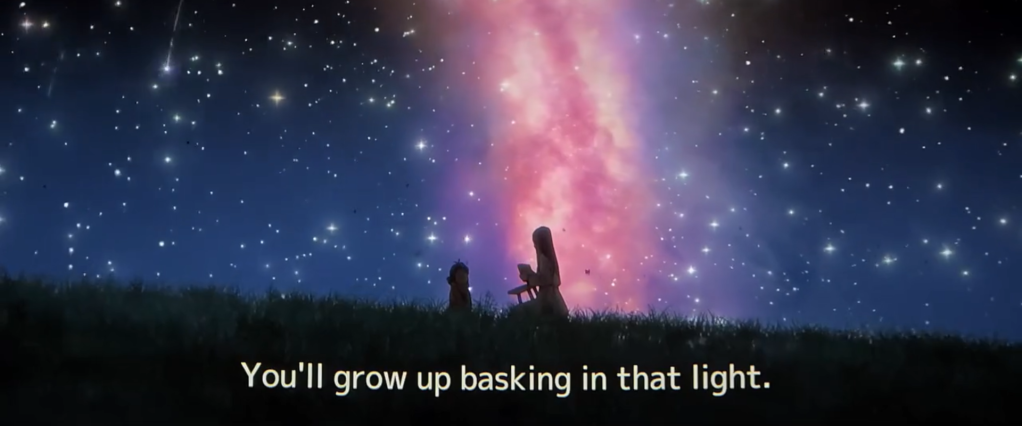
The memory of Suzume’s mother
(From Makoto Shinkai’s Suzume no Tojimari)

It is really the best trick played by the writers to convey our attachment to certain everyday objects. Our memories for our loved ones are strong in such a way that they bear the potential to make a non-living object living through our memories. We all carry such objects which remind us of our loved ones. We cannot express and make others feel how strong emotions we have for such people hence we try to associate these emotions to certain objects. These totems are the physical objects which help us to get over the grieving memories of our loved ones. If these objects were not there, we would have been consumed by the sad memories of loss. These objects somehow mimic the presence of the people we love and/or loved. They might be a piece of trash for others but they are invaluable for us. Suzume’s story captures this in a beautiful way. It shows the softer side of materialism, rather it helps us to realize the worth of simple and everyday objects.

For the exact reason we are not that much attached when Daijin is represented as a keystone in the first act of the movie but we feel really sad when Daijin returns to his keystone form in the conclusion of the movie.

The Realization of Sacrifices

Suffering the loss of loved ones is only half part of the story. This suffering is apparent because it is experience-able through our senses. What cannot be experienced through our senses is the sacrifices our loved ones made for us. It really tragic that people hardly notice what sacrifices are being done to make their lives better every day. In Suzume’s story, her aunt Tamaki sacrifices her youth in order to take care of Suzume upon the death of her sister Tsubame. She remained unmarried and also faced the bad comments from people while she took care of Suzume. The sacrifice she made for the love of her sister made who Suzume really is – a caring and loving girl. Suzume is unaware of this in the start of the story. Suzume’s aunt’s concern for her makes Suzume think of her like a control freak but she forgets that it is genuine care for her and her well-being. There are such people especially people close to us who are fighting different battle for our well-being unknowingly. As they are really close to us and we see them every day their value for us lessens over the time. It is only when we are forced to lose their company then we realize the value of their presence.

The sacrifices Suzume’s aunt made for her
(From Makoto Shinkai’s Suzume no Tojimari)

Suzume realizes this when her aunt vents out all the frustration, she had for her. It also shows how the true relationships even after having some bitterness endure the test of tough times only because of the unconditional love.

Souta realizes that in order to save many lives of the city of Tokyo he will have to sacrifice his life. His life purpose is the major driver here which further evolves into his love for Suzume later. Suzume also realizes the sacrifice she has to do by letting go of Souta for the keystone. She, at first is unaware of the feelings for Souta as he was always accompanying her in every trouble on the journey, but when she is presented with the problem where she has to choose either many innocent lives or Souta then she realizes that how important Souta was for her.

Souta’s Sacrifice for Tokyo’s people
(From Makoto Shinkai’s Suzume no Tojimari)

Daijin in the end sacrifices his life for the love of Suzume knowing that she cannot live without Souta.

Daijin’s sacrifice for Suzume
(From Makoto Shinkai’s Suzume no Tojimari)

When we are saying that Suzume’s story is about the memories of loved ones it is also a story of great sacrifices our loved ones and some unrecognized faces make for all of us.         

Longing for Life and Intimacy

Souta’s character is one more selfless character who knows the ultimate purpose of his life as a ‘Closer.’ He knows that it is a thankless job but still carries proud in it because it has saved many lives. He knows that value of his life is very small compared to the lives he is saving hence he is ready to risk his life in any situation. This somehow tilts his persona to a practical nihilistic side. He knows that losing his life for a greater cause will be demanded sometimes and he should not get too much attached to his existence. That is also why he chooses to sacrifice his life for saving many lives of Tokyo when there is no other option.

When Suzume returns for Souta only then Souta realizes that there is someone out there in real world who longs for his existence. After that he really longs for life, to live a bit more, to experience life with Suzume. It is made very clear in Souta’s dialogues too. Souta knows that death is inevitable, in spite of that he wants to live more with Suzume.

When Souta’s understood the purpose of love and intimacy
(From Makoto Shinkai’s Suzume no Tojimari)

We as a person in the early and lonely phase of our life (especially in adolescence and youth following after that) think that our existence is just a coincidence, we stick to something “mindlessly” created systems in order to survive and call it a life. We follow the system holistically or try to break that system rebelliously just to have fun senselessly. We think that nothing really matters and it is just some trick played by powerful people and some forces beyond our control that drive our life. We become numb, nihilistic in a way towards the life.

But you know what, deep down we know that our existence is only of worth when others are capable of noticing it. We as a human being long for the appreciation of our sole existence. Until and unless we are not contacted by someone who appreciates our existence that longing does not present itself. When a person realizes the value of sharing an intimacy, sharing of the experiences with other person then he wishes for more from the life even when he knows that it is limited. This is one of the best idea Souta’s character arc presents in the story. We are nothing as a sole existence but when we long for attachment, long for intimacy that opens opportunity for us to understand the worth of other’s lives especially the lives of the people we love which make life meaningful. Otherwise, we are all mechanisms of flesh and bones.

When Suzume understood the mutual feelings
(From Makoto Shinkai’s Suzume no Tojimari)

Koi no Yokan (恋の予感) which is also known as ‘the premonition of love’ is one interesting idea in Japanese culture which is handled very smartly by the story writers here. Koi No Yokan is ‘the feeling upon first meeting someone that you will inevitably fall in love with them’. It is completely different from the concept of love at ‘first sight’. We can see same chemistry between Suzume and Souta.

Balancing the Impact of Memories On Our Personality

One has to appreciate that we are what we think we are. What we think we are can originate from inside or outside, which is also subjective. (It is better if that originates from inside) If we look at our past closely, we will find that we are the culmination of mistakes, lessons, learnings, preferences, likes/ dislikes, satisfaction, fulfillment obtained by the events that happened to us. Most of these experiences are stored as the memories and how they made us feel (some of the experiences are borrowed experiences like – reading a soul shaking book, listening to some really great song or other people’s experiences)

Thus, it will not be an overstatement if we say that ‘we are what we think we are’ and ‘what we think we are is defined by which memories we value the most, feed the most memories.’

Here is how that works. Some people have certain dark childhood memories which induce a psychosomatic disorder in them. There are many such disorders which only originate from certain shocks and traumas especially childhood traumas (like stuttering, anxiety, high blood pressure upon seeing some objects, people) Cognitive Behavioral Therapy helps to treat such conditions by changing the behavior and way of thinking towards such events.

The dark memories of childhood
(From Makoto Shinkai’s Suzume no Tojimari)

If you look closely at the story of Suzume and how her story concludes, you will immediately understand that the loss of her mother in her early childhood impacted her personality a lot. She learns nursing because it is what her mother used to do, she beholds that chair crafted by her mother close to her heart, it is the reason why she is always attracted to the doors from where the worm comes out. It is not mere young curiosity that attracts her to the job of closing and locking the doors on the demonic worms, subconsciously she is looking for the clues to meet her mother again in the world beyond those doors. She is still thinking that her mother is out there somewhere or indirectly she is literally and hopelessly hallucinating about meeting her mother. She dares to bring back Souta from the Ever-after not only for the love she develops for him but it is also because she holds the confidence that a person can be brought back from “the Ever-after” to the real world of living as she has met mother there in her childhood. That is the same reason why Souta’s ‘seasoned’ Grandpa also supports her courage to bring back Souta from the Ever-After.

Suzume’s memories of childhood with her mother have made her who she is today, but she is also anchored to the pain and grief from the memories when she lost her mother. Hence, in the conclusion of the story Suzume going back to her hometown and her home and to the exact same door where she thinks she will find her mother is actually the symbolic representation of a person facing the reality of the past traumatic memories. Actually, it is her love for Souta which encourages her to face her childhood trauma, sad memories. Ultimately, Suzume realizes that even though she lost her mother and carries that pain from her loss she was also blessed with the love and care from her aunt; she found many friends on her journey throughout the story and finally she found the purpose and love of her life through Souta.

Appreciating that which is already given to you
(From Makoto Shinkai’s Suzume no Tojimari)

The Conclusion

Again, our memories are one inseparable part of our personality, as if they are the log entries of how our preferences, habits, tendencies, traits, behaviors emerge out of us. If we cling on to our sad and depressing memories, no doubt it will reflect through our personality and same is with good memories. One important thing to understand is that, if one clings on to their happy memories, then they will surely end up into hopeless optimists. The optimism which always tries to mislead them. Such people will try to find happiness even when they are literally in the deep pits of delusions – they lose their connect with the reality.

So, if holding on to bad memories brings out bad and depressed character and holding on to happy memories makes us hopeless optimist then what should one do? The trick lies in balancing the both types and extracting maximum advantage from them. Instead of drowning down into the abyss of grief from bad memories, one should face them, make amends with them, accept them as the past – an inseparable part of their life and extract the learning and wisdom for the betterment of present and the future life.

That is what exactly Suzume does in the conclusion of the story. Meeting her younger version and sharing the wisdom of optimism is exactly the metaphor for Suzume making amends with her grievous past. She was a hopeless optimist where she is always under the impression that she will bring her dead mother back to real world till that moment. She tells her younger self that even though she has lost her loved one right now, there will be many people in her coming life who will love her, maybe love her more. She also understands that she was wrong when she thought that she lost everything with her mother in her childhood. Suzume here appreciates that she has been given everything that matters to her a long time ago through her aunt, her friends, Souta and sacrifice of Daijin and many more. Suzume learns the value of the good memories she got from all these characters. She creates that balance between the bad and good memories. She now becomes a realistic optimist.

Even in the darkest times there is a hope for bright future
(From Makoto Shinkai’s Suzume no Tojimari)

Memories, Realistic Optimism and Suzume

In single sentence (a long one with multiple clauses) the story of Suzume can be summarized as follows:

“Suzume’s story is the story of impact of memories on our life, character however good and bad they may be and the emergence of the person with realistic optimism from his/her depressing past with a new hope.”

Realistic optimist simultaneously hopes for the best and has full grasp of the boundaries of the reality through the anticipation of the worst-case scenarios (however less probable they may). There was and is a huge support for positivity and heightened optimism from past 15-25 years but people are now realizing that extreme optimism or extreme pessimism will drive the everyone mad. Manifestation is also one trend which has started to hold grip on people. Realistic optimism enables you to learn from bad experiences and implement that wisdom for the betterment of the new experiences – good or bad.

Our memories good and bad carry equal potential to cause either loss or profit. Either you can get depressed from bad memories or learn some tough lessons for future life. Similarly, you can get carried away in the pleasures of happy memories thereby also lose the touch of reality. It is how we balance the account of our happy and sad memories which makes us the person we are.

Anyways, words fail me to explain how intricate and soul-touching Suzume’s story has been woven by its creators. Experience it at an intimate level for once in your life!

Mr. Toot by Ylvis – What makes an art and its creator successful?

Even though “the best” art creations in the world are better than the average creations as in they stand out of the rest creations thereby making them highlighted, it is also very difficult to point out or to predict what makes these things stand out. It is some sort of paradox. But that is what also reveals what an art really is. This paradox actually restores the uniqueness of every creation. That is why you can never know whether your creation is going to be popular or crash like hell before revealing it to the society.

What makes a certain piece of art – “the art”?

One simple activity; think of your favorite song. The song that gives satisfaction to your ears. Now think why is this song your favorite song? It is very normal that some people (and most of the people) will get confused when asked for a particular song – they will generally have a set of songs in their favorites list, some people are really particular about the genre, some people prefer the singers, some people prefer certain musical instruments, some people love the song because they loved the movie, the game that song was in, some people like that song because they love the fashion sense of the artist. In nutshell, there is no hard and fast formula to a popular, successful song or any art that we love.

Now ask this to yourself – what would happen if you found out the artist that created your favorite song, your favorite painting, your favorite movie, your favorite series, your favorite book is accused of certain misconduct, misbehavior or some unconventional, antisocial, inhuman behavior? Would you still like that song, that piece of an art, that creation?

The answer to this question is somewhat complicated but you know what they say – “it is the poetry and music which have the power to communicate complicated feeling in simple words and melodies.” I have a song to recommend which was exactly created (maybe) for answering this question on our preferences with any creative ventures and their symbols.         

The song is called Mr. Toot by the famous creator duo called Ylvis (“What does the Fox Say?” fame duo). The song is so underrated and hidden in the abyss of at least 8 years from its creation. One would think that people have forgotten this song and make question why a song of such timelessness has not received the recognition it deserves. The vibe this song gives at first is like a silly ballad one sings to make children happy but it has some of the best and simple lyrics, musical hooks and also an impeccable visual story.

Let’s begin and dissect. It’s a simple story told through a song – 

The song and the lyrics

An musical feast from Ylvis called “Mr. Toot”

Come with me to Istanbul, 
Land of turbans, spice and carpets
This is the tale of Mr. Toot,
Legendary music man
Up on the roof he played the Toot,
No one could resist his rhythm
Slave and Sultan side by side,
Dancing dance of Mr. Toot
What’s that sound? Is it him?
Did you see a shadow moving?
Everybody - Quiet, quiet,
can you hear him? - Mr. Toot!
Play it, Mr. Toot!

So the out storyteller takes us to Istanbul where a Toot player is very famous for his instrument. People adore him for his command on this musical instrument “Toot”. This Mr. toot is such a  skillful and creative person that his music tempts everyone in the area to dance on his music. It is the equalizer in the city because Slaves and Master dance shoulder to shoulder on his music. People encourage him to play his toot.

Ladies kissed him on the belly, 
Children dressed like him in school
He ate caviar and jelly,
Bought a modern swimming pool

Soon Mr. Toot became popular, ladies always appreciated him. He became idol in the area, children admired him. He started enjoying exotic foods and did some “pool parties”.

Yes, Mr. Toot got greedy, 
Wanted even better Toot
Threw the Toot from highest tower,
Bought a fancy MIDI Toot
Then a poster in the city,
Mr. Ibanez tonight Modern show with modern music,
Smoke machine and laser light
Play it, Mr. Toot!

With this popularity, Mr. Toot became more ambitious. He wished for more advanced instrument where he could create new music and please his audience. He made all the publicity in the city with new name, new branding, new visuals of smoke and lasers. People came to listen to this new version of Mr. Toot as Mr. Ibanez but when he started playing with his “Fancy” MIDI Toot, people disliked him. Nobody liked what he evolved into. Turns out people actually loved the old version of Mr. Toot!

That was the end of Mr. Toot, 
He was never to return
Though you can kill the man,
You can never kill the Toot
Play it, Mr. Toot!

This is how the story of Mr. Toot (now greedy Mr. Toot) ends. From visuals of the song, you will see that someone from his admirers – a children in the city again picks the Toot and starts playing, people appreciate him. That is when we realize that it was the toot and not the toot player that people loved. So, play it Mr. Toot (the brand new Mr. Toot) People have assigned new king on the throne of their hearts now – that kid with Toot – the new Mr. Toot!

The background of the song

The sensational Ylvis bros

Ylvis is a duo of Norwegian brothers – Vegard and Bård Ylvisåker. They have very comedic presence in popular culture and are known for one of the weirdest but catchy song called “The Fox (What does the fox say?)” This “The Fox” song has such nonsensical lyrics and equally nonsensical music composition that one would really question their choices for a while but the same person will appreciate the “vibes” it creates. One cannot resist grooving to that song. Mr. Toot song’s musical composition is largely based on a song called Adir Adirim by Israeli music group Balkan Beat Box (BBB) with Victoria Hanna. Adir Adirim in simple words is the praise of the Lord Almighty (Link in references).

The song Mr. Toot adopts only the music from Adir Adirim and builds a story through its independent lyrics. When there is this moment of Mr. Toot experimenting with MIDI toot, the music gives some fantastic melody with improvisation which sounds good but, in the video, you will find that people disliked that improvised melody.

Toot world is derived from an actual musical instrument called Oud – one can call it the Arabic or Persian version of Lute.

the Oud

The hidden meanings

The song Mr. Toot may seem very simple while listening and an “ear candy” due to its catchy music but it is some sort of dark humor.

There could be multiple interpretations to this song and there is a reason to it.

  • First –

It is a story about how an artist suddenly becomes overconfident about his skills and under calculates the role of his/her followers in his overall success. The artist clearly forgets importance of the auxiliary supporters (in this case “the musical instrument toot”) in his journey to become a legend. You will find many real life examples in music industry or any art industry on this.

  • Second –

The other interpretation is about the labors of creating a piece of art. How risky is it? An artist has to always reinvent himself otherwise he/ she will become irrelevant in the time of change. This is extremely sensitive with the artist who are insanely famous. It is always unknown, ambiguous about the response of the public and their “die hard” followers to such reinvention. The artist misjudges what his target audience is expecting from him/her.

  • Third –

The artist clearly forgets his/her creative pursuit which was what his audience liked about him/her and indulges him/herself in distracting pleasures which actually do not contribute to his art in a constructive way

  • Fourth –

People don’t like the things they love to change drastically. The comfort that certain artist provides for certain art is what people actually love about it in totality. When an artist makes sudden creative change, people consider it no different that a betrayal or a personal attack

  • Fifth –

This one is actually the most distant interpretation but it deserves a mention here. When people realize that the artist whose creation they adore is actually a hollow person from inside or some commoner similar to a normal person among them (a person with no real talents) – do they reject that piece of art that he/ she created? That is where “boycott culture” or “cancel culture” comes in picture. We have many examples where artists, actors, creative people, production houses have behaved in a certain way to redefine the morality in the society. So, does that reduce the love we had for their creations? The answer is unsurprisingly unclear!

There is a reason why there are many interpretations to this song and why people will always have mixed opinions about their close to heart but immorally sourced/ created pieces of art. As if these are moral guilty pleasure for many of us.   

Experimental evidences from Sociology

One experiment was done by a Professor of Sociology from Princeton University – Prof. Matthew J. Salganik and his team on what make a popular creation “popular”? what makes a creative piece – “the creative masterpiece”? In this experiment, they created a website for downloading songs (exactly 48 songs from 18 bands) for some set of people (exactly 14,341 people). These songs were unknown to them, nobody had listened to them before. What they did next is that they created independent eight “worlds” in these groups where only specific information was provided to certain world while downloading the song.

The researchers point out in this study that the information from the “independent world” where no information regarding the songs and the bands where given would create a baseline reading about the quality of the song (Also songs are ordered randomly in this independent world). As nobody in this independent world knows – “what the band is?” or “what the song is?” They will have to actually listen to the songs and then rate it as good or bad. As the listeners of this specific independent world have rated the songs without any influence, this creates a good judgement about the quality of the song which is the baseline of the experiment.

Now researchers provided some preconception about the bands and the song for the other worlds. They included top chart lists, most downloaded lists, most popular bands list to other worlds, songs were ordered by downloads count. Then researchers asked the people to choose their favorite song. In some sense they influenced these people with some social opinions already established.

Upon comparing these top-charts from socially influenced worlds with the uninfluenced independent worlds researchers found out that social influence always plays important role in deciding the success of certain song, certain piece of art. In terms of popular arts, cultural markets –  our choices, preferences are always influenced by social influences. We are always driven by such choices of others while deciding the popularity of a creative piece.

Important thing to understand from this study is the randomness and unpredictability in determining the success of the song. When such social influences interfere, it becomes very difficult to find what made that certain song top in the charts. The opinion of every person is influenced by the last one which keeps on building. Researchers also comment here that it is not the inability or incompetence of judges that makes it difficult to find that “WOW!” factor in the popular song, it is the influence of surrounding society which randomizes their preferences.       

From this study one must also understand how important it becomes to create the story, the brand, the image for making anything popular and successful. How word of mouth can create an overnight success. No wonder the business of social media influencing and profession of influencers (aka Social Influenzas !!!) has became pivotal to built popularity.

It is also important to note that how the popular arts of certain era are actually the reflection of the social constructs of those times, which is fascinating on so many levels. Retro era’s, the 70s, the 80s, disco era are some best examples to prove this. Even in the history of art Renaissance Period – one notable revolutionary period reflects how society at that time was.

It also highlights the importance of popular arts as the cultural footprints in the history of humanity.

Philosophical implications of art and its creator

It is also important to understand that there were some popular pieces of art whose artists were famous for some really bad reasons. So, the moral question posed becomes important here – should society reject the popular art of a notorious artist? Can a great art be separated from its bad creator?

Plato in his famous book “the Republic” threw some light on the morality of the art. He argued that art is always influential; that is why it invokes certain feeling in people, it creates an imitation of reality which can be totally different from the reality sometimes. This makes the creation of art misleading to people and can inspire them in negative ways too.

Seneca – a philosopher known for stoicism clearly establishes that it is the out-coming influence this art creates which will decide whether it is good or bad independent of its creator. It is always the end effect, last influence of art (which is unpredictable due to the randomness generated from social influences)

Conclusion

Important thing here is that there are many factors, many ways in which an art can influence people. As it is really difficult to pinpoint the “WOW” factor of the popular art; it is equally difficult to predict what part of an art would trigger the social construct.

In other words, there is no correlation between the person who created the art and the art itself even though it was created from him/her. (I know it is paradoxical.)

It becomes very difficult to predict whether people will accept a song, a painting, a book, a creative piece made by a hardcore criminal with really dark history which could shake humanity to its core. Sometimes the art itself becomes so self-reliant, self-supportive after its creation that people detach its creator from it, sometimes the art is truly worthy of recognition but people “cancel” it due to the character of its creator. (Again, I know it sounds counterintuitive.)   

This is one of the very hard nuts to crack which can be supported by the sociological experiment done by Prof. Salganik.

Even though “the best” art creations in the world are better than the average creations as in they stand out of the rest creations thereby making them highlighted, it is also very difficult to point out or to predict what makes these things stand out. It is some sort of paradox. But that is what also reveals what an art really is. This paradox actually restores the uniqueness of every creation. That is why you can never know whether your creation is going to be popular or crash like hell before revealing it to the society.

These ideas also highlight how unique, recurring and non repetitive it is to create a true and remarkable piece of art. How difficult it is to create a true piece of art due to the inherent ambiguity of perception after its reveal! You can never know what good is going to get presented through your art in front of the world. That is also why a true artist needs to believe in his intents, his delivery and his style. This rediscovery, redefining of a person as an artist on personal level with society as a unit of human history to a new definition, new perception through such “special/ popular/ famous art” maybe is the purpose of the art.

References and further reading –

  1. Mr. Toot by Ylvis – Fandom
  2. Adir Adirim by Balkan Beat Box (feat. Victoria Hanna)
  3. Salganik, M.J., Dodds, P.S. and Watts, D.J., 2006. Experimental study of inequality and unpredictability in an artificial cultural market. science, 311(5762), pp.854-856.
  4. Epstein, Z., Groh, M., Dubey, A. and Pentland, A., 2021. Social influence leads to the formation of diverse local trends. Proceedings of the ACM on Human-Computer Interaction, 5(CSCW2), pp.1-18. Massachusetts Institute of Technology, Media Lab USA
  5. Plato’s The Republic

Hometown by French 79 – The song of evolving patterns penetrating through chaos

Patterns and their awareness are one integral part of our daily activities and are deeply rooted in our personality too. Most of the time their influence goes unnoticed. What could be a better example than a good song to highlight the significance of patterns in our life. This is about a special song which may highlight the significance of creating new patterns in every instance of life that we live. This is about a song which embodies the patterns and evolution in them to create meaningful life out of chaos around us.

Music – magic of patterns

Some songs are such a work of art that you don’t want others to discover that treasure for the feelings it creates within you.

They say music is the last magic left in this world. It transcends the boundaries of language, religion, nationality, wealth, cultures and what not. Music, technically speaking is nothing but a harmonious, a systematic pattern of vibrations leading to the formation of difference in the density of the medium like air when sensed by our ear invokes some emotions. In this whole mechanical definition of music there is a part called “emotions” which actually becomes the bridge between the physical world (that can be sensed using our sense) and our mind (which is just there and cannot be sensed by our physical senses). Thus, it is safe to say that music lies as a bridge in a grey area between physical and non-physical (some call it spiritual) world.

The most important thing about “your” favorite music is that “hook” which recalls specific emotions in your mind. Even though the lyrics is also one important aspect of a good music that does not mean that it is everything. Every one of us can list down their favorite music which doesn’t contain any lyrics. In whole and sole, it is this hook or a specific repeating line in a song which connects you to that song and then you have this urge to explore the whole song thereby that becoming your “favorite song”.

I think our association with music has a deep-rooted link with who we are as living things (It is also present in non-living things but as there is no person alive to tell how it feels after death, we will limit our discussion to living beings only!) The only reason we can deeply associate music with living things especially with humans is due to the response generated to this stimulus. We already know that animals, plants and even insects react to music but the changes it can create through human beings are more intense and significant. (It can be loosely explained by the crowd control music in Trance Concerts, Instagram reels music trends)

Today we will discuss a song which can possibly point out what is “that” thing that we actually love about a music or any song. The music and lyrics both possibly point out to the same thing which we will discuss here.

Hometown by French 79

Hometown by French 79

Hometown by French 79 – The lyrics

Every time the lights are turning blue
Then I tried to close my eyes to see my hometown
I don’t wanna change my life
Flying to the back in time
I feel like a child Wearing his golden crown
I don’t need a purified mind

“Hometown” lyrics by Simon Henner (French 79)

Looks like the songwriter- the poet from hereon has a feeling of unhappiness. Whenever he feels sad, he tries to recall the memories from his hometown. Here, hometown in broader sense are his childhood memories, the feeling of nostalgia, the feeling of familiarity. The happiness he gets from these feeling is due to a sense of familiarity.

The poet doesn’t want be become child again but he loves those memories of his childhood. That is what he expresses in the next lines. The poet here, is aware of the reality he lives in. He just wants to make sense of the chaos around him. There is no such pivot from which he can make sense of the things around him right now. That is why the feeling of sadness have kicked in due to the unfamiliar – hostile conditions. The feeling of a child with a golden crown is the feeling of a king who has control over everything. This exactly depicts how things explode in proportions when we transition from our childhood to adulthood, this explosion of everything seeming “simple” in our childhood brings in extra dimensions which are beyond comprehension. This is the reason why adulthood and every new experience thereafter feels more chaotic and unsettling. Maybe this is also the reason why our childhood memories are so precious to us. The childhood is full of innocent and simple feelings which have this sense of predictability, controllability. Important to understand here is that our poet doesn’t want that purified mind, that innocent child from his childhood. This shows his maturity towards the unsettling feelings due to chaos around him. He wants to use the pivot of familiarity of feelings from his childhood to tackle the unsettlement of his mind at this instance. He is searching for a comfort, a familiarity, a pattern in this chaos.    

The future and the past are really confusing
But I keep my feet on the ground to keep trying
I don’t wanna change my life
Flying to the back in time
I feel like a child Wearing his golden crown
I don’t need a purified mind

“Hometown” lyrics by Simon Henner (French 79)

Our poet can be attributed to an adult or an old age person who is unsure about how to handle sad feelings, the unknown situations, the discomfort they bring. The past experiences are not that helpful to make sense of the new challenge he is facing. If the past would be that helpful then the situation would have been already made sense to him and could have been solved already which is not the case; hence it is already confusing to him. If it is not solved properly then the poet also has a worry for his future because of the more unpredictability, more things going out of hands. In short, he is stuck between indecision leading to not acting on things. The next most important thing the poet is thinking is attitude to keep on trying while remaining on the ground. Our poet wants to make sense out of the unsettling chaos by some practical understanding of reality. In simple words, the poet is thinking of not getting overwhelmed by the indecision – analysis paralysis and taking control on things by realistically acting on things in his life. This is his wish to evolve through this chaos while keeping the child in him alive with the wisdom of an adult. What a thought! This is his urge to evolve in the new chaos presented to him.     

The music and the video

The music is the most influential part of the song “Hometown”. Blessed by the talent and legacy of French Electronic music, the song stands out for the evolving pattern – loop of synth which goes on and on throughout the song. The creator of the song is Simon Henner named here as “French 79” (Simon was born in 1979) creates an addictive hook which goes on evolving as the song progresses. The best and the smart thing about the song is that it really resonates with the idea of breaking out of the comforts of repeating patterns to make sense of the new challenges in life, to create new patterns and evolve ahead.

French 79 – Simon Henner

The video is also very interesting and quite open ended which depicts stories of people from different stages, phases in life who come out of the comforts to evolve. You will see that everyone in this story discovers a pattern in a characteristic way in their lives which inspires them to come out of their current situation, chaos and create new evolved pattern, new sense to the surrounding around them just like the lyrics and the music of the song. You will find every character transitioning from the state of rest, comfort, familiarity to the state of acting on things for actually creating something new and rediscovering themselves to a newer version of themselves.   

Simply put, Hometown is the song of our evolution especially our emotional evolution

The patterns and humans

We as human beings and also animals thereby love patterns. Our favorite songs, the Instagram reels songs, the famous dialogues in the movies, the pop culture references, those callbacks in the web series, TV Series, the childhood nostalgia, our close friend circle, our family, our favorite office colleagues, our favorite memories and what not – all these things are prime examples of how much we are obsessed with the patterns in our lives. An important thing to understand about our love to these hooks, these repetitions, these patterns is the feeling of familiarity, feeling of predictability that settles our mind to an environment of known variables. It is also important to understand that a when a pattern gets continuously registered in our brain our brain automates it to save its energy. (that’s how habits are formed) The situation becomes challenging when something out of these patterns emerges; that is where we feel chaotic about our environment, we have no pivot to make sense of the things. That is our moment of evolution, that is where we would also evolve our preexisting patterns.

[Or maybe this is just a song about how the poet loved his childhood in his hometown and the memories which now console him while tackling his adulthood problems]

Image reference:

  1. Featured image – Penrose Tiling from Wikimedia

The American Scholar – Man as a University

Part-3 Ralph Waldo Emerson’s Ideas of a True Scholar for the Modern World

Ralph Waldo Emerson’s famous speech called “The American Scholar” was delivered in 1837 in front of the American youth. Emerson wanted the youth of that time to understand what it takes to create new knowledge and breakthroughs. The origin and legacy of knowledge, importance of past knowledge through books, importance of bringing and testing ideas into the reality to find the absolute truth, the greatness and vastness of we as a human-beings and the life we live are some important aspects of Emerson’s speech. His sheer vocabulary rather choice of words is more than enough create an impression which will last for thousands of years. Emerson’s ideas in this speech are based on very fundamental ideas of knowledge, biases in human thought processes, loopholes in human psychology which are still relevant with 21st century.
There are Part 1 and Part 2 which have dived deeper into these important parts of The American Scholar.
We will see in this Part 3 what were the closing thoughts and advice, instructions Ralph Waldo Emerson gave in his The American Scholar speech. The closing parts of this speech covered the idea of Man as a University. It is the beauty of Emerson’s thoughts which attributed the vast sources of infinite knowledge to each every person’s life. This not only gave importance to every person as a human being whose soul, mind themselves are the nature but this also brought a sense of responsibility as an original and objective thinker in every person of the nation. The speech truly transcended the eras and generations. The revolution in the field of knowledge by considering Man as a University itself is one of the core idea of Ralph Waldo Emerson’s thoughts in his speech The American Scholar.

Objectivity – The Job of A True Scholar

“The office of the scholar is to cheer, to raise, and to guide men by showing them facts amidst appearances”

The American Scholar, Ralph Waldo Emerson


Emerson has simplified the jobs of a true scholar in the last sections of his speech. The only job of a true scholar is to guide the humanity through his observations. Emerson pointed out that during the process of becoming overly attached to their own vocation, people have forgotten, have lost the awareness and greatness of the nature thereby their own souls. A scholar’s job is to observe the nature, put those observations before the humanity and inspire people to continue this pursuit for the absolute truth.
Emerson has attributed this task as “the highest functions of human nature”. But, this task, this journey has its challenges, it demands some sacrifices. One of them is the influence of popular opinion and the expectation of materialistic benefits. For explaining this Emerson gives example of John Flamsteed and William Herschel who incessantly observed the sky for star cataloguing. Their observations proved important for the discovery of planet Uranus. While observing the goal was not to become famous and get rewards and recognition for the discovery; rather the job they were doing was one of the most boring and mundane tasks of humanity. Flamsteed and Herschel were observing the sky and noting down their observations with only goal of understanding what is happening in the universe where they exist. The times of Herschel were the times of debates on the center of the universe. Popular opinion was that the Earth was the center of the universe (Geocentric Model of Universe); another popular opinion was that the sun was at center of the universe with earth revolving around it (Heliocentric Model of Universe). Today we know that we are not even at the center of our own galaxy milky way and it is near to impossible to ever find the center of the universe! The jobs of Flamsteed and Herschel if would have been influenced by the popular opinions surely, they would have received those accolades, prizes, fame from either of the groups promoting their own versions of truth. Instead of having that influence of opinions/ having those biases, they honestly presented themselves to the task of objectively observing the universe. And these objective observations took humanity to completely new understanding of the universe that even they wouldn’t have thought about. (See P.S. for more)


The point is that that most of the times a true scholar will be heavily influenced by biases, popular opinions, expectation of “immediate fame”, money, company of famous and influential people, hero worship; but he has to move away from these pleasures and only commit himself to this highest function which is to objectively observe and interpret the nature. Sometimes poverty and solitude will be his only companions.


“…He is to find consolation in exercising the highest functions of human nature. He is one who raises himself from private considerations and breathes and lives on public and illustrious thoughts. He is the world’s eye. He is the world’s heart.”

The American Scholar, Ralph Waldo Emerson

There is one episode (S01E09) in Rick and Morty where Rick’s Dad is getting honored by the high class aliens of Pluto to name Pluto as a Planet so that they can continue their self benefiting activities thereby degrading the Pluto. For the good of Science Rick’s Dad comes out of the bias and the false praise, prizes, popularity from high class and renounces Pluto as a Planet.

Justin Roiland and Dan Harmon’s Rick and Morty (S01E09)


Emerson beautifully told what has to be done but he also told how it is possible.

Confidence and Bravery of Self Expression

For understanding the things ahead, one must not forget that Emerson established an observation that our soul is the impression, the reflection of nature around us. The limitations, boundaries of our soul are the limits of the nature around us – our understanding of it. (Emerson already established that “Know Thyself” and “Study Nature” mean nothing but the same- See in Part 1)
Emerson talks about confidence of a scholar in his job, in himself. When a person will truly engross himself in his own objective studies free from all the influences, then only he will discover that absolute knowledge. Emerson attributed all such influences as mere appearance and tells everyone to look underneath them. When a true scholar will approach this job of observation and study of himself with confidence the nature will reveal itself. When this scholar will discover this truth about himself, he will literally find the truth of all for all nature resides in him.


“He then learns that in going down into the secrets of his own mind he has descended into the secrets of all minds. He learns that he who has mastered any law in his private thoughts is master to that extent of all men whose language he speaks, and of all into whose language his own can be translated.”

The American Scholar, Ralph Waldo Emerson


Emerson again highlights that the journey of understanding the universe, the nature is not outwards rather it is inwards. One only has to be confident and honest about his intentions. After conquering this self-doubt, a true scholar will have to dare to present his objective observations to the biased crowd.
The following lines by Emerson are uncountably powerful and very motivational for every person (not only artists) of every generation who has embarked on such journeys in their lives.


“The poet, in utter solitude remembering his spontaneous thoughts and recording them, is found to have recorded that which men in cities vast find true for them also. The orator distrusts at first the fitness of his frank confessions, his want of knowledge of the persons he addresses, until he finds that he is the complement of his hearers; – that they drink his words because he fulfills for them their own nature; the deeper he dives into his privatest, secretest presentiment, to his wonder he finds this is the most acceptable, most public and universally true. The people delight in it; the better part of every man feels—This is my music; this is myself.”

The American Scholar, Ralph Waldo Emerson


Emerson informs that the scholar is not inherently protected like women and children. Once he gathers this bravery to challenge the conventions, the people who were resisting him at first will also accept his ideas, the falsehoods they were carrying as their truths will shed down as his ideas are originated from the pure and absolute knowledge; people will find the connect to his communications from his ideas of his soul thereby ultimately the great nature itself.

Fluidity of thoughts

Even though we are unable to understand the whole picture of nature in single glance that should not stop us from updating that picture. Emerson understood that the knowledge which humanity has gained till date is not complete, there will be always something missing hence it cannot be trusted completely but that also should not restrict us from challenging hat has been established already. Emerson is expecting fluidity of thoughts, ideas here as is the nature.


“Not he is great who can alter matter, but he who can alter my state of mind.”

The American Scholar, Ralph Waldo Emerson


In the momentum of figuring out our individual lives, everyone has intentionally ignored this imperfection of knowledge and has forgotten to challenge the conventions. There is no one to blame for this ignorance but a true scholar’s great job becomes important in this situation.
Emerson has also established his worry for conversion of humanity into a herd, a group of blind followers, blind worshipers. In order to simplify our lives, we have chosen to follow the paths created by our ancestors instead of challenging them to refine the knowledge further. This simplification of life is closely related to the search for money and power for they are the most influential means to ease the lives. Emerson here suggests for the revolution through “the Culture”.


“The main enterprise of the world for splendor, for extent, is the up-building of a man.”

The American Scholar, Ralph Waldo Emerson


Through culture Emerson actually expected the richness of individual lives. The lives where materialistic means lie to the bottom and the search for knowledge, up-gradation of knowledge, philosophical up-gradation of humanity is at the top. Humanity should not limit its limitless mind, soul to some materialistic thing or a person to worship – history has many examples that we have already done that many times.


“The human mind cannot be enshrined in a person who shall set a barrier on any one side to this unbounded, unboundable empire.”

The American Scholar, Ralph Waldo Emerson


Age of Revolution – Inner Development, Relevance of Knowledge and Man as a University

Emerson is expecting amalgamation of all types of ideas in the current age through the scholars. For that he gives references of the different ages in history like early Classical Greek Era known for developing foundations of knowledge, Romantic ages and Philosophical ages. Here he establishes that even though these ages are independent of each other ad existed in different timelines; according to Emerson they are always getting reflected in different phases of every person. All these eras actually exist in every person. Thus, Emerson wants to bring all the streams of knowledge, all the poles/ the extremes of different streams of knowledge in front of each other.
The aim of bringing everything and everything contradicting on a common table is to create relevance of knowledge for humanity. Through this, the knowledge will serve at its highest capacity for the betterment of humanity. Emerson wants to bring all so called “Hi-Fi” knowledge stream to a simple test of “relevance” because if it is not relevant then what purpose can knowledge serve for the people, for the humanity?


“Give me insight into to-day, and you may have the antique and future worlds.”

The American Scholar, Ralph Waldo Emerson


These ideas were revolutionary for the times when the pursuit of knowledge was limited to high class people and not to the people working for the soil.
Emerson closes his speech with one important thought of development from inside. He expects every person to play a part in the development of humanity as a whole. All the ideas presented by Emerson represent decentralization of power and involvement of people from grass-root level; it is the only reason for which every life gets uniqueness and importance. Emerson’s important idea of a man as a society and a society as a man gets concluded in the closing sentences of his speech. Emerson expects every person to contribute to the new revolution of the society by starting the inner journey. Patience is the final virtue which he instructs everyone to have to start this journey.


“The world is nothing, the man is all”

The American Scholar, Ralph Waldo Emerson


One has to understand how all the ideas given by Emerson are still relevant today. The ideas to highlight are confidence in self, search for real freedom, bravery to present and interpret the objective observations against the conventions, remaining free from popular and materialistic influences, fluidity of thoughts, importance of inner development, creating knowledge of relevance, and patience.

-The End-


(P.S. – The observations made by William Herschel were majorly intended for mapping the Universe so that its center can be located. Later on, the objective observations led to discovery of Universe. After a century the observations became important when scientists found an irregularity in the orbit of Uranus around the Sun. This irregularity of meant that either Newton’s Law of Gravitation is wrong or there is one more planet whose mass is affecting the orbit of Uranus. After additional observations, a new planet ‘Neptune’ was discovered by scientists thereby proving the indirect and valuable legacy of knowledge created by Herschel and Flamsteed.)

Read Part 1 Ralph Waldo Emerson’s Ideas of a True Scholar for the Modern World from here.

Read Part 2 Ralph Waldo Emerson’s Ideas of a True Scholar for the Modern World from here.

Read Part 3 Ralph Waldo Emerson’s Ideas of a True Scholar for the Modern World from here.

  1. The American Scholar by Ralph Waldo Emerson

The American Scholar – The Books, The Actions, Intellectual Humility and The Dictionary of Life

Part-2 Ralph Waldo Emerson’s Ideas of a True Scholar for the Modern World

Ralph Waldo Emerson’s essay called “The American Scholar” made an attempt to move people out of their immediate achievements of separation from the English Government and inspired them to create something new, create and value the processes for building strong future generations and deep knowledge of nature. Even though this essay was more relevant for the American generation which was largely dependent on their English legacy, it still remains relevant because of the crispness of truth it holds for every new generation of humanity. The speech/ essay will always transcend the understandings of every generation. See Part 1 to understand how Emerson sets up the ideas of the nature, the knowledge, the purpose of education system and the true scholar in the starting part of his world famous essay.

Now, moving on to Emerson’s advise for a true scholar.

Books – The Mind of the Past and its Blind Worshipers

Emerson wants to establish the ways in which the past wisdom was transferred to the next generation. He refers to it as a distillation process. Over the period of humanity, the crude things in experiences, events lost their unwanted parts and went on to become concise, crisp through books. This process created the truths, the facts. The cruder the event, the experiences the less crisper the truth. Emerson explains the imperfections in this process of truth generation by giving analogy of Vacuum Pump. As no vacuum pump can generate the perfect vacuum, no machine can give out exact amount of work to the exact amount of energy input, the process of creating the truth is also not completely efficient. Thus, it is absolutely impossible to establish the ultimate truth in a single attempt, in single past. The best version of the truth we have today is the truth that has stood the test of time, the truth which has been upgraded over the time. It is very interesting to understand how Emerson thought over the ideas of the books and the evolution of truth through them. He connected a very technical idea of efficiency of any mechanical system to a more abstract idea of the extent of the truth value of knowledge.

Emerson also highlights that the age-old books will not stand the test of today’s truths as there will be may stages of evolution in between which will lose their footprint over time. For example, the idea of the earth being carried on the back of the turtles, the elephants, the snake’s head the earth being flat is lost to the ideas of eclipses, the seasons and the actual images of the earth (even though there are still some admirers to these ideas! And it is also important to understand how people interpreted them)

Thus, Emerson in a sense warns every scholar, every person to not become just an admirer, a follower, a worshiper of the book. Because, the understanding and the experience with which the book was written, the truth was conveyed will not exactly be the same experience, the same understanding for the reader. The inefficiency of the system is the boundary of the reader which can only show him the limited understanding of the truth.

“Hence, instead of Man Thinking, we have the bookworm. Hence the book-learned class, who value books, as such; not as related to nature and the human constitution, but as making a sort of Third Estate with the world and soul. Hence the restorers of readings, the emendators, the bibliomaniacs of all degrees. This is bad; this is worse than it seems.”       

The American Scholar, Ralph Waldo Emerson

Emerson expresses his sorrow for the fate of the books. He calls the people who blind worship the books “the Bibliomaniacs” and “the Emendators” as in the editors of the truths who create their versions of the truth. Emerson expects a true scholar to not become a book worshiper or a past worshiper. Worshiping the past is the death of the evolutionary thinking thereby restricting the flow of generational distillation of true knowledge. Emerson wants a true scholar to lose the idea of a book lover, book worshiper and become a genius. In some way Emerson tries to define a genius. For that he uses the idea of “an active soul”. An active soul is free from the blind influences of the past and thereby the books. It is not following a defined orbit around the truths from the books, rather an active soul itself is capable of creating a system around which others will orbit. The teachings of the schools/colleges, the subjective truths of past from books are questioned by this active soul further called as the genius by Emerson. This Genius is responsible for the creation of the next version of the absolute truth; there is a sense of progression this genius brings. For that he should break out of the past, come out of merely following the books, look forward to the future. Emerson mentions how mere worshiping of Shakespearean pieces killed the future creative progression of English literature. Many creators became over influenced by Shakespeare thereby nothing original happened for 200 years in literature.

Someone might think here that Emerson is undermining the importance of the books, rather he further explains the impact of books in the hard times of any true Genius, any true Scholar. Books serve as the best companion anyone can have in their idle time, they are the kick starters of every genius mind, they are there to initiate the spark in every creative mind but not to drive it.      

“When he can read God directly, the hour is too precious to be wasted in other men’s transcripts of their readings. But when the intervals of darkness come, as come they must,—when the soul seeth not, when the sun is hid and the stars withdraw their shining,—we repair to the lamps which were kindled by their ray, to guide our steps to the East again, where the dawn is.”

The American Scholar, Ralph Waldo Emerson

Emerson gives the examples of some great English poets like Chaucer, Marvell, Dryden. He says that even after passage of many long years the ability of these poets to connect with our minds is really fascinating which is possible only because of the books. This also means that these ideas of poets wee futuristic, visionary enough that they are relevant after hundreds of years. Books are the best option to carry this vision.

Innocence of Knowledge and Awareness of Media

Emerson warns every person of the books they are consuming. He explains this with the analogy of survival of human body. The very innocent nature of human mind and the knowledge both can be conditioned with any thought from the book leading to the fact from the book to become the ultimate truth for the person. Emerson wants everyone to not accept the truth of the books for the truth of life. He wants every true scholar to become a selective reader and follower of the books. Emerson explains that the books display only that part which its creator wanted to show to the readers, this also means that whatever we are reading is just a small part of the authors life not the whole. Thus, when a powerful person, scholar (mentally and physically) encounters books, he holds the power to materialize, personify any and every thought from the books. It is the skill of a true scholar to selectively find the ideas and the versions of the truth, instead of going full on literal and thereby accepting them as truth. In simple words, Emerson expects every reader to get the hold of the ideas and inspirations from the books and not blindly follow them word to word. A genius, a true scholar thus knows what to pick from every book.

In our daily lives today, books are not the only source of information. Emerson’s warnings have become more real in today’s times. We must understand that every information we get from media is not a knowledge hence we must be selective and aware about the content we are consuming. Emerson was not highlighting only the academic noise of knowledge in schools and colleges; he was also highlighting the overall noise of information around us in our daily routine. This noise has become more effective in our generation through social media, portable/digital media, user selective media. Beware of the media you are consuming, try to find the pattern in your content and break out of it. Otherwise, your “curated content” will keep on narrowing your perspective.  

Building on this Emerson shifts his focus to the educational institutes. He clarifies that though books and learnings from the past are inseparable and important part of learning and educational institute have done a great work in executing this part, they have completely exploited this part to worse extents. Educational institutions have also established a business on these tools of knowledge to grow rich in materialistic forms. Hence, Emerson also reminds the policymakers to realize the truth that even single part of the absolute truth, the knowledge is powerful enough break this whole commercialized system of education.

Emerson also predicted the future that if the educational systems keep on commercializing the book following, past following, mugging/ cramming up the books culture, create an assembly line of scholars and professionals, even though these colleges will have fat bank balances, funds, even though they will grow richer and richer, their importance/ quality of the education they provide will go on degrading; these institute will lose their public importance.

And look what is happening with most of the education systems of our generation.        

Action Speaks Louder Than Words (and that is not the end of the story)

“There goes in the world a notion that the scholar should be a recluse, a valetudinarian, —as unfit for any handiwork or public labor as a penknife for an axe. The so-called “practical men” sneer at speculative men, as if, because they speculate or see, they could do nothing.”

The American Scholar, Ralph Waldo Emerson

Emerson never fell short while explaining the importance and power of new ideas, knowledge they create and the legacy they leave behind for future generations. But he made sure that people wont’s god worship the ideas they have. He wants every thinker to execute their ideas, convert them into actions.

“(The action) It is the raw material out of which the intellect molds her splendid products. A strange process too, this by which experience is converted into thought, as a mulberry-leaf is converted into satin. The manufacture goes forward at all hours.”

The American Scholar, Ralph Waldo Emerson

Emerson has identified one common trait that scholars of all generations hold. All scholars, intellectuals are known to be recluse, always in their own mind and there is nothing wrong about it. The ideas sometimes can carry them far away from the reality. Sometimes new and original ideas are so rare and powerful that one has to embark on a solo journey to discover them completely. One has to understand when this pursuit over-influences their mind, it takes a toll over their minds. The separation of our intangible mind from reality eventually has a bad ending. The neuroticism, the inability to communicate such feelings to others, conversion of such thoughts to some extreme explosive actions and consequences thereafter are one part of intellectual society. The mad geniuses, super smart but cunning villains in our pop culture and real-life stories of smart criminals, smugglers, murderers, sociopaths are the exact reflection of such people in today’s society.

Emerson wants every scholar to come out of their overthinking and the comforts of the world of their own ideas. Emerson knew and made others aware that anything is possible in your own world and as it is created by your own ideas, you get attached to it. You will never want it to disappear and will avoid to test them with the reality. This goes on and on and your mind will be full of many new ideas. They will keep on expanding but they will never become real.

Emerson wants every true scholar to test their ideas in reality and break out of the comforts of the world in their own minds.

“Drudgery, calamity, exasperation, want, are instructors in eloquence and wisdom. The true scholar grudges every opportunity of action passed by, as a loss of power.”

The American Scholar, Ralph Waldo Emerson

Emerson gives advice to future scholars in advance that this fascination of their own beautiful ideas, the comforts of the worlds in their minds may seem beautiful but it is addictive and never-ending- it’s like analysis paralysis leading to inaction.

We always fear that our beautiful ideas will cease to exist when tested with reality, it feels like a part of us is died and deep thinkers, over-thinkers can connect with this on different level. But one must also accept that the death of such non-real ideas is one integral part of the process of the discovery of absolute truth. Death of “wishful thinking” is also one important aspect of every true scholar rather every person’s character development. Emerson instructs that this process of testing ideas through real and concrete actions will be boring, more problem creating, anger generating-frustrating but one has to endure through them. One must not lose the opportunity to test their ideas in reality.

“(Action)…It is the raw material out of which the intellect molds her splendid products. A strange process too, this by which experience is converted into thought, as a mulberry-leaf is converted into satin. The manufacture goes forward at all hours.”

The American Scholar, Ralph Waldo Emerson

Emerson gives the example of our childhood events and how they made us who we are today. We are what we did and what happened to us in our childhood. We are not what we used to think in our childhood. (Like how most of us wanted to become a Pilot and Astronaut and look how many of us really want that today).

The ideas not converted to action lose their existence in two ways. Either (and most of the times) they change instantly into new idea, something else due to their fickle nature or they get rotten in a corner of our mind thereby indirectly disfiguring our adult mind. It is very interesting observation by Emerson; he identifies that our behavior, habits, inspirations are rooted in our childhood. Further on and most importantly Emerson points out that it is not our whole childhood that gets carried over in our adult behavior, habits, inspirations; it is the events and our actions, our responses to events in our childhood that shape us in future. Childhood thoughts, ideas converted into actions are actually etched on our personality forever. And only thoughts and ideas limited to our minds are lost forever. Same is happening with us every day, it is just that Emerson makes everyone aware of the importance of converting our ideas into actions by presenting a very intimate and common example.

“The new deed is yet a part of life, -remains for a time immersed in our unconscious life.”

The American Scholar, Ralph Waldo Emerson

Emerson puts one excellent insight in front of everyone. The actions and not ideas become the subconscious part of our life. These actions solely initiate the cascades of event which are always unfolding in our current life events.

“Cradle and infancy, school and playground, the fear of boys, and dogs, and ferules, the love of little maids and berries, and many another fact that once filled the whole sky, are gone already; friend and relative, profession and party, town and country, nation and world, must also soar and sing.”      

The American Scholar, Ralph Waldo Emerson

The Dictionary of Life

“Of course, he who has put forth his total strength in fit actions has the richest return of wisdom.”

The American Scholar, Ralph Waldo Emerson

The great thing about Emerson’s persona is that not only he instructed the scholars but he also gave the directions to start from. Emerson makes everyone aware of the types of actions they can take and their consequences. He wants everyone to understand the nature of outcomes from the action we will take to bring our ideas into reality. As actions will be driven by ideas, there will be times when actions following one wrong idea will not yield good and favorable results. Some actions will feel worthless, unidirectional, single faced, niche and they will only reveal their nature after we see their results. So, does that mean that if actions are more important than ideas and if actions are anyways most of the times going to be worthless then why actions should be one important part of a true scholar? After all most of the times, they are not proving the point of their superiority over the ideas. At least ideas give some type of comfort to our mind.

Emerson says that a true scholar’s life is not only about thinking beyond limits and taking actions on it. If thinking and acting on them was the only purpose of life then everyone would have craved for acting on the ideas which is not the reality. Systematic thinking and bringing them into reality through actions is just one dimension of being a true scholar. Before being true scholars, we are human beings, we have lives.

“If it were only for a vocabulary, the scholar would be covetous of action. Life is our dictionary.”

The American Scholar, Ralph Waldo Emerson

Actions, Pasts, Ideas are part of that bigger life. Hence, Emerson focuses ono living the life, which is possible through having different types of experiences, be mindful of each and every experience in your life. Hence the concepts of Actions, Pasts, Ideas are just “vocabulary”, where life is bigger than that, life is a “dictionary”.

In simple words, the things that we are trying to learn and think beyond and bring them into the reality are a just part of bigger reality that is life. So, Emerson wants every true scholar “to be alive” to live through the life they have. Emerson wants everyone to have a life relevant scholastic aptitude, which anyone can have (though it sounds “sophisticated”)

Getting things done for proving worth of ideas is not the final job of a true scholar. Life is bigger than ideas and their execution.

The Great Principle of Undulation in Nature and Influence of Popular Opinions

When Emerson suggests every true scholar to live a live of rich experiences, be aware of the reality around them – he gives everyone the idea of one confusion that will always tempt them to have a bias. Emerson says that the “Polarity” is the law of nature.

In his own words-

“…inspiring and expiring of the breath; in desire and satiety; in the ebb and flow of the sea; in day and night; in heat and cold;”

The American Scholar, Ralph Waldo Emerson

These extremes in every natural phenomenon creates a wave, an “undulation” in nature. Which is one inseparable part of life thereby every human soul. Every idea, every action a scholar takes will have a wavy nature, there will be some part of idea, of actions which will dominate over their opposite one for a time. Emerson says that actions, ideas, knowledge, thinking these are just the resources for a true scholar. Even after losing these resources a true scholar will not lose his character, he will not lose who he is, his identity.

“Thinking is the function. Living is the functionary.”  

The American Scholar, Ralph Waldo Emerson

Emerson establishes this to warn every true scholar and remind their real pursuit in life. Emerson through this wants to communicate that there will be times when a scholar will have temptation to follow a popular opinion, he will feel bad for not getting proper recognition for his/her achievements. Things will happen which will force them to give up on their lively pursuits, to give up on living for some materialistic means. In such moments, a true scholar should never give up on his character.

“Character is higher than intellect.”

The American Scholar, Ralph Waldo Emerson

Emerson actually removed a fine line which used to exist between the uneducated, working class and the studying class or so-called scholastic class – educated class. Emerson clarified that a scholar is not the one who joins one institution, secures a diploma/ degree, attends office, decides actions, creates policies and drives the “less intellectual” life around him. What is important to become a true scholar is “the character” – “the attitude”. Every person can have that; hence Emerson instructs every scholar to have that intellectual humility and not get fooled by the popular opinions of “white collar jobs” of scholars. He indirectly establishes that people who did not come from the system have more power to create a disruption in the system, to create a new and positive change in the system.

“Not out of those on whom systems of education have exhausted their culture comes the helpful giant to destroy the old or to build the new, but out of unhandselled savage nature; out of terrible Druids and Berserkers come at last Alfred and Shakespeare.”

The American Scholar, Ralph Waldo Emerson

This really holds true in today’s times too. There are many proofs from famous startups, fortune companies, literary and art schools that formal education is not the indicator of creative disruption in our society. Revolutionary people were never dependent on the systems to create new ideas and bring about new change. Thus, Emerson’s age-old ideas resonate with the facts of today.

A true scholar according to Emerson is the one who has this intellectual humility; who understands that having and creating great ideas, executing them to reality is just a part of life. A true scholar is not limited to thinking, executing and learning only. A true scholar has the purpose of living a life beyond the system created; a true scholar being an active part of his society and can come from any part of it. This idea itself is very powerful.

There will one last – third part on how Emerson closes his ideas, requests, guidance to the scholars of every generations.

– End of Part 2 –

Read Part 1 Ralph Waldo Emerson’s Ideas of a True Scholar for the Modern World from here.

Read Part 2 Ralph Waldo Emerson’s Ideas of a True Scholar for the Modern World from here.

Read Part 3 Ralph Waldo Emerson’s Ideas of a True Scholar for the Modern World from here.

  1. The American Scholar by Ralph Waldo Emerson

The American Scholar – The Scholar, the Nature, the Origins and the Legacy of Knowledge

Part-1 Ralph Waldo Emerson’s Ideas of a True Scholar for the Modern World

The success of any society can be easily attributed to the success of its young generation thereby the institutions that develop them. There will be some moments in everyone’s life where we might have questioned the failure of the education systems from where we “passed out”. We realize at these moments how mechanical the systems have become. Even after realizing this fact, we are always on a search for a tag, a dream career, a dream job to which we wish stick forever till death (sadly, in some cases that is the only option). There are many examples where people in their last moments wished that they would have done things differently, explored some new ventures, dared for some things and would have taken that risk but now they don’t have enough time to do so. The idea of a death with no regrets is strong in today’s times; ideas like YOLO (You Only Live Once), FOMO (Fear of Missing Out), FIRE (Financially Independent to Retire Early) are the examples of this ideology, there is nothing wrong in it. It is the result of what recent generations have experienced. Also, this is not new in history. After a horrible black death in Europe people appreciated the value of life and their body which is always reflected through the arts, literature and creative ventures from the renaissance era.  

The thing is that when a large group of people try to follow an ideology on a significantly larger scale, there comes a time of saturation, a plateau of losing momentum which sustains forever and becomes the habit of generation, a trait of that generation. We lose the sense of the processes in order to achieve some short-lived pleasures, short living achievements. And after achieving that thing we lose the sense of our being, although there are many exceptions, there always are. The main feeling of clueless-ness after achieving something is the exact reflection of our one-dimensional pursuits for something, it is the proof that in the pursuit of something valuable to us we lose the importance and intricacies of the process we are going through. Ralph Waldo Emerson’s essay called “The American Scholar” made an attempt to move people out of their immediate achievements of separation from the English Government and inspired them to create something new, create and value the processes for building strong future generations and deep knowledge of nature. Even though this essay was more relevant for the American generation which was largely dependent on their English legacy – the one from which they were newly separated, it still remains relevant because of the crispness of truth it holds for every new generation of humanity. The speech/ essay will always transcend the understandings of every generation.       

Ralph Waldo Emerson- one of the greatest philosophers, essayists, writer once gave a lecture in an American University which still seems relevant even after the passage of almost 185 years. The thoughts are so absolute that they have stood the test of time. The lecture or speech called “The American Scholar” by Ralph Waldo Emerson is one of the important parts of English literature which highly focuses on the necessity and importance of originality of thoughts, their implementations through actions and the legacy/ virtues a person should leave behind for future generations.

The lecture is famously segregated into three parts. Students of literature follow following partitions to understand this essay.

  1. The origin of knowledge, science and the influences on a scholar
  2. The responsibilities/ duties of a scholar
  3. The daring to create the knowledge relevant to the time

Instead of splitting this into conventional parts I will try to touch the core of Emerson’s ideas for its relevance and importance for our generation.

Origins of “the jobs” in society and The Man of Thinking

Emerson in the starting immediately establishes how the youth has become comfortable on the older foundations, infrastructures left behind by their rulers. They are just feasting on the remains of what has been left behind after victory. Emerson uses the words as “Sluggard intellect” as in the intellectuals who have become comfortable with what they have to highlight this fact. He further calls their jobs as “the apprenticeship to the leanings of the other land” to signify how there is no excitement for the breakthroughs throughout this new born nation. Every scholar has assigned themselves a tag of their “jobs” – the scholar word is not limited to the students only. Emerson is calling scholar to everyone performing their skills in a mechanical way – with some donated, left-over resources from their rulers. The message is not restricted to students only, Emerson is actually summoning every working class of people. He wants the youth of the nation to come out of the mundane tasks and the mechanical nature of the work they are doing as a scholar. Emerson wants the youth to come out of this calmness, boring mentality of doing what is assigned to venture into the endless possibilities the nature provides. He explains the unbounded nature of “The Nature”, the origin of society existing in it and the ways to come out of the mundane-ness of the jobs in this society to evolve further. For this, he starts with the origin of society and “the jobs”, “the tags” and dehumanizing, “mechanicalizing” of the field of knowledge.

Emerson puts some light on the purpose of creation of different labors, different fields of knowledge. Emerson explains that in order to function properly a man was divided into many men with certain skills, domain expertise which made the society multifaceted. But, the process of separation was exploited to extreme where it lost its real purpose. The purpose was to handle and comprehend the boundless nature but it was lost to mere sustenance and separation of humanity into materialistic classes.  

“…Man is not a farmer, or a professor, or an engineer, but he is all.”

The American Scholar, Ralph Waldo Emerson

“The fable implies that the individual, to possess himself, must sometimes return from his own labor to embrace all the other laborers. But, unfortunately, this original unit, this fountain of power, has been so distributed to multitudes, has been so minutely subdivided and peddled out, that it is spilled into drops, and cannot be gathered. The state of society is one in which the members have suffered amputation from the trunk and strut about so many walking monsters, -a good finger, a neck, a stomach, an elbow, but never a man.”

The American Scholar, Ralph Waldo Emerson

The division and high focus on labor has divided society into so many parts that it has become difficult to bring them together to unite the society, the humanity. Emerson’s analogy of fountain is so powerful here. Not just American society but the whole world now has separated to such extent of cultures, borders, colors, races, histories, faiths, religions, ideologies, prejudices, resources that it is really difficult to bring them together for a greater common cause. Emerson wants everyone to lose these borders, these tags mentally in order to understand the boundless nature.

Emerson expects every person who is actually a scholar but associated themselves to a tag, a job a profession to strip off of their titles and expand their vision beyond their assigned skill. He wants everyone to transcend their own designated skill.

In today’s world, jobs, titles, posts are killing the people for who they are. No wonder we worry of AI taking over our future jobs. As AI is efficient and fast in doing such “tagged” jobs, the “repetitive” jobs many people who are doing these mundane jobs fear that AI will take over the humanity and before humanity their jobs in future. We forget that the knowledge from which we created these boring jobs is actually boundless. It is our over-simplification of life journeys and our negligence towards the process of living for the sake of the comforts of life that we decided to stick to such mechanical nature of our jobs. He gives very simple example of a farmer – how a man with knowledge of different fields of knowledge like hydrology, geography, meteorology, biology, economics, finance, mechanics, technology got converted to mere a man of profession.

“He sees his bushel and his cart, and nothing beyond, and sinks into the farmer, instead of Man on the farm.”

The American Scholar, Ralph Waldo Emerson

He calls this process as “the Metamorphosis” with similar cases with trader, priest, attorney, mechanic, sailor.

“In this distribution of functions, the scholar is the delegated intellect. In the right state he is Man Thinking. In the degenerate state, when the victim of society, he tends to become a mere thinker, or, still worse, the parrot of other men’s thinking.”

The American Scholar, Ralph Waldo Emerson

Emerson wants for everyone to come out of this oversimplification of our lives. Hence, he establishes the difference between “a thinker” and “a Man thinking”. Before becoming anything possible every scholar must understand that they are a man first, a man from the boundless nature.        

“Is not indeed every man a student, and do not all things exist for the student’s behoof?”

The American Scholar, Ralph Waldo Emerson

You should understand that though at the very start of his speech Emerson addresses the American Scholars by calling them so, it is very wise of him to state every man a student, a scholar at this exact moment. This is where his speech becomes open to every man. Though the address was given to the American students, Emerson wants every man to understand what he is trying to convey through this speech. Here, Emerson’s speech has actually transcended the boundaries of a country and time. Emerson worries that during this powerful time of every person as a scholar, the scholar mostly chooses the wrong side of knowledge that is to stick to some tag, profession and loses the privilege of vast possibilities which might have granted by the same multifaceted knowledge from its source “the Nature”.

The Nature- The idea of classification and the origin of knowledge

The curiosity to understand the nature is the origin of knowledge. Every person wants to assign some value to the things happening around him which are reflected through nature around him.

“There is never a beginning, there is never an end, to the inexplicable continuity of this web of God, but always circular power returning into itself.”

The American Scholar, Ralph Waldo Emerson

“…Nature hastens to render account of herself to the mind.”

The American Scholar, Ralph Waldo Emerson

In order to understand each and every phenomenon, the “young mind” assigned some value to them and then classified them; Joined things into one when seemed similar.  The concept of “individuality” in the early scholar actually segregated knowledge into different parts. The words “Diminishing anomalies” by Emerson explain how a paradox at the end of every branch of knowledge gave rise to completely new field of knowledge.  This development of new field of knowledge helped to connect some really remote fields of knowledge. For example, see the revolution in physics happened after Einstein explained and proved the theory of relativity. Also, most importantly the quantum mechanics and the problems about the nature of our reality which itself is paradoxical in its behavior for us today, when solved will connect many dots, far more and completely different fields of knowledge which seem very distant today.

“…science is nothing but the finding of analogy, identity, in the most remote parts”

The American Scholar, Ralph Waldo Emerson

Emerson highlights the purpose of classifying things in nature was to handle the chaos of the events. Classification created a pivot around the human mind which enabled systematic segregation and relationship development to understand the nature. Use of the term “The law of human mind” actually shows that we have never understood the nature for what it is, we have developed a system of knowledge to organize the chaos where some of the things are making sense to us and the things which don’t make sense is the challenge for today and tomorrow. The challenge is being handed over to the men of science who will try to connect these remote dots.

“He shall see that nature is the opposite of the soul, answering to it part for part. One is seal and one is print. Its beauty is the beauty of his own mind. Its laws are the laws of his own mind.”

The American Scholar, Ralph Waldo Emerson

The analogy of the seal and print is such a beautiful analogy given by Emerson to the nature and the soul. Emerson takes a spiritual point of view to understand the nature. He explains that though the soul and nature are “boundless/ center-less”, the nature becomes limited and bounded to the extent of the bounds of the mind. Emerson says indirectly that certain thing won’t exist in nature until you ask nature for its existence. Thus, if it is created by your mind, if it is present in your mind and you try to establish it by studying yourselves then you will definitely establish the same thing in the nature. If it is not in you then it definitely is not existing in nature. Your limitations of the understanding of yourselves will be the limitations of the nature around you. Hence, if you widen your understanding, become limitless then only you will understand the limitless form of the nature.

Max Planck one of the greatest physicists of all times and who came far later after Emerson had similar opinions about the nature of our reality and the limits of our understanding about it.

“Science cannot solve the ultimate mystery of nature. And that is because, in the last analysis, we ourselves are part of nature and therefore part of the mystery that we are trying to solve.”

Max Planck

Emerson thus fuses the two distant dots called “Know Thyself” and “Study nature” into one based on this spiritual foundation. Reading, listening these sentences and realizing this idea itself is so powerful. This also shows that Emerson himself was a master of connecting different and distant dots in the fields of knowledge. No wonder he was successful in actually defining the origin of human understanding. In this way he recalls the importance and significance of nature on a mind of a scholar.

-End of Part 1 –

There is a Part 2 to understand how Emerson further suggests the “potent” tools, “the weapons” and responsibilities which come with them to really transcend the boundaries of our existence and become a true scholar. We will see that in next post.

Our identity is one inseparable part of our existence. It is the very first pivot that we have in this boundless existence. The name given by our parents/relatives symbolizes the very first dimension of our identity. Then we build upon it as we grow. Many factors like our family, the people around us, their and our financial conditions, their and our emotional states, their and our habits, inspirations and what not directly and indirectly gives us many facets. They become part of our identity. As we grow up in most of the cases our jobs, professions become our identity. Actually, we are conditioned right from our childhood to become doctors, engineers, social workers, bankers, brokers, pilots, writers, dancers, teachers, firefighters and what not. Our job becomes the largest chunk of our life and our identity. These identities which we hold for our lives are mostly rooted in our young times, college days and the immediate days after we leave the educational institutions. No doubt that these are the turning points for most of us. That is why the success of educational systems and institutions is very important in the development of the whole society. And, Emerson tried to question the materialistic identity these systems granted at such turning points to the young scholars of his time. But as history repeats itself same is the case with our recent generations. This is where the absolute ideas, the great wisdom of Ralph waldo Emerson stand the test of time.

There is more to come…

Read Part 1 Ralph Waldo Emerson’s Ideas of a True Scholar for the Modern World from here.

Read Part 2 Ralph Waldo Emerson’s Ideas of a True Scholar for the Modern World from here.

Read Part 3 Ralph Waldo Emerson’s Ideas of a True Scholar for the Modern World from here.

  1. The American Scholar by Ralph Waldo Emerson