A Modern Prayer to Perceive ‘The Silver Linings’

The acceptance of our dark side is the only way to start a new journey to the real happiness, fulfillment. Achieving real fulfillment becomes way easier and manageable once we start acknowledging our dark emotions, feelings of sadness and sorrow. Running away from such “low” lying emotions actually intensifies them in the abyss. Actually, such emotions have great contribution in the refinement of our character. Empire of the Sun’s new song called ‘Happy Like You’ talks about the acceptance of our dark side to make our personality whole for creating a newer and better version of ourselves.

Empire of the Sun’s song “Happy Like You”
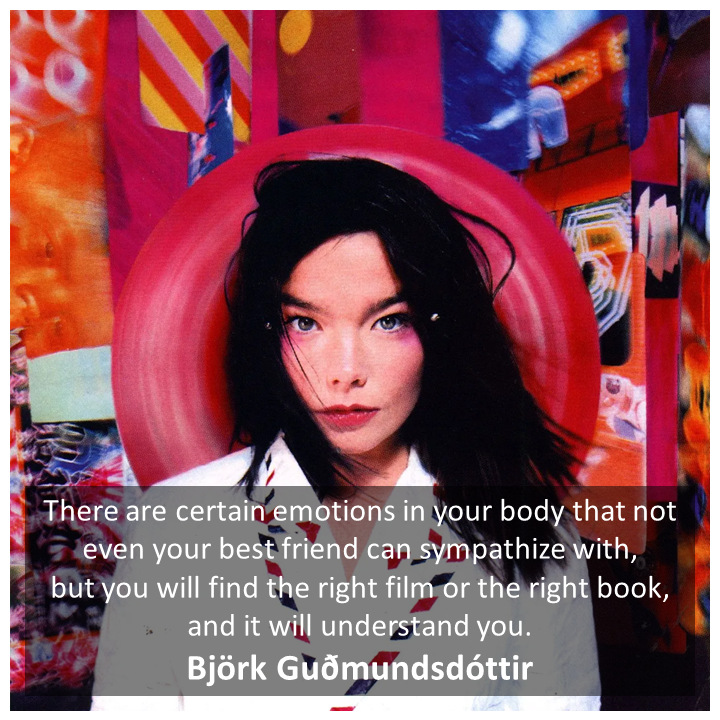
The best piece of art can be attributed to the multiple perceptions, interpretations it creates in the mind of its subjects despite keeping its physical structure constant.

The beauty of a masterpiece is that people have their own opinion about that piece and nobody is wrong. The mere subjectivity and the possibility to invoke personal feeling in the mind of the observer or the enjoy-er of the art is the power every one of us has naturally. Most of the time very few of us unlock that power in a better sense. Music is one such power.

Recently, I came across newly released album named “Ask that God” by an Australian electronic duo called Empire of the Sun. All the songs on this album are banger and are complete redefinition of what the Empire of the Sun stands for. In my personal opinion, it is a crime to compare all the songs to choose the best one, (but you already know why I am writing this). One song that is looping in my head continuously and has occupied a larger portion of my brain for many days is “Happy like you” (this only shows that the song has conjured me thereby maintaining my previous point of not comparing good songs with each other).

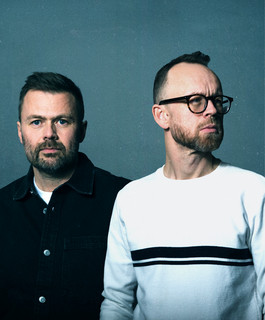
Luke Steele and Nicholas Littlemore of Empire of the Sun

Actually, bringing the poetry into the bastardized territory of prose should be a crime, for it de-beautifies the very reason for it being so wonderful. But, in order for everyone to appreciate the multiple subjective point of views and its connections with the multiple facets of life it is trying to explain, a poetry must undergo its ‘deconstruction’ into prose.

That is the crime I am committing here. If there is any songwriting, poetry, lyrics meaning police anywhere, tell them that I am here waiting for them to tolerate all this prose I have written hereon.  

Jokes aside, I am deep diving into the song and its music video.

The song

The song is written by Luke Steele and Nick Littlemore of Empire of the Sun.

Happy Like You lyrics © Universal Music Publishing Group

You’re revolutionary
You’re like a phantom taking a leap
You’re heart is legendary
Bet you are feeling so high
You have a higher power
Telepathic talk to me
Make me whole again
Whole again whole like I used to be

Happy like you
Happy

The poet is asking the higher power for something that would make him feel complete like he was before. He is praising the power of this higher power so that it can bless him.

The words used by poet like revolutionary, taking leap, legendary heart are used to describe this higher power reflects what he exactly wants from the higher power. He wants to regain a lost part of his personality he was before going through this hardship. He wants the higher power to take the leap to come out of the sorrow, transcend the current state and bring about an “internal” revolution in a way.

Telepathic ability indicates the poet’s trust in the higher power. Poet knows that this higher power is his final resort to all that exists. That is why this power knows everything already and there is nothing required to be expressed formally to get things done.

Ultimately, it is a request to regain that precious part of the poet’s personality, that happiness which defined his whole personality.

Won’t you humanize me
Use all your wisdom
Show me joy in everything
I’ve been clouded by machines
Lost my way deep inside another screen

The rhetorical question posed by the poet is a slight indication of what he lost during his difficult times. He lost the things which made him human. He lost the ability to see the silver linings.

This is the exact spot we must understand that the person lost his personality in depression and mental battles. But why? and how?

Immediate forthcoming lines show what happened. The screens and “machines” indicate the influences of the mechanical world on our daily lives and the added powerful effect of social media which led to a dreadful state of depression.

It’s an irony that when we are ‘liking’ certain things on social media from other people’s lives, a deep-rooted sadness, envy, hatred is getting born out of the one-to-one comparison of lives. Everyone is conscious of these emotions due to social media but the penetration of social media, screens everywhere is so regular and normal that we are subconsciously (now mechanically) ignoring these emotions which take a toll on our minds when we are shocked with something really sorrowful.   

All I wanna be is happy happy happy like you 
All I wanna be is happy happy happy like you

 Once you pass through such horrible emotions of sadness and depression you start appreciating the person you were, how happiness made you the better version of yourself. This happiness made you feel like the greater, higher power itself. That happiness actually made you feel closer to the higher power. The poet urges the higher power to make him who he was before and just in the ways the higher power carries itself.  

You’re revolutionary 
Telepathic talk to me
You are imaginary
Bet you are feeling so high

Wish is a dream that comes true

The most difficult part of coming out of the depression is that it starts in mind of a person with such an intangible, non-physical thought/ idea and then it starts to affect the real events, objects, people around him/ her. So, even though fixing the reality around such person can help to come out of the depression; uprooting the deeply settled feelings of sadness, grief, sorrow has immense impact in the person’s fight against depression.

That is exactly why the wish to become happy shows that the poet whole-heartedly wants feel happy. The ‘wish’ indicates is readiness from inside to be realize happiness from intangibility to reality thereby highlighting the use of the expression “dreams that come true” here.

Time is a song that forms you 
Oh I hope you

The expression of ‘time’ which formed this higher power implies the time which need to given to person to heal when he/ she is in hardships. Give it some time, it will pass too. The poet has understood that over the time even though it will seem difficult but over the time every sadness will fade away. It’s just an ask from poet to the higher power to get the patience, courage for passing through this hard time.    

Won’t you humanize me
Use all your wisdom
Show me joy in everything
I’ve been clouded by machines
Lost my way deep inside another screen

All I wanna be is happy happy happy like you

Ultimately the influence of social media on our lives and the mere algorithmic, mechanical nature of our lifestyle is leading lives of many really happy people to a depressed, sorrowful life. The poet asks the higher power to make such people complete again and happy again just like the supreme power is. It also means that once we become happy and complete, we will become that supreme higher power again.   

From a simple explanatory point of view on any poetry/ songwriting, the song gives an impression of the man’s urge to regain his happiness, his identity when he is in the conundrum of depressive emotions and thoughts. The impact of depression is great because the factors causing it are within our hands (or I may say fingers’) reach – the social media and the screens.

I think the songwriters have taken this excuse of the depression from social media to show what an urge to overcome any depression means for any human being; what it means to redefine the personality and also complete the human being in a bigger picture.  

The video and its symbolism

The phone call –

The video starts with a phone call. The girl receives a call on her landline and then the frame shifts to a guy (Luke Steele – Emperor Steele) in a dark with a red hue and dark hat. This is indication of her having a call with her inner self. The low-lit room shown throughout the video is the metaphor of she having discussion with herself and her inner thoughts and emotions. The phone call is proof of she handling her emotions by herself, it is her own conscience calling her.

Frame from Empire of the Sun’s Happy Like You MV
A low-lit room –

Watching reflection in mirror and hand movements on her own body shows she is interacting with herself. It is like a self-talk one has with themselves while figuring out what needs to be done. The low-lit room shows that dark part of our personality which also need acknowledgement. Even though the song calls for the person to be happy, this low-lit room has bigger significance. It is an indication that the real happiness comes with our acknowledgement of our darker side. Darker not in the sense of negativity but more in the sense of left out emotions which also need proper attention.
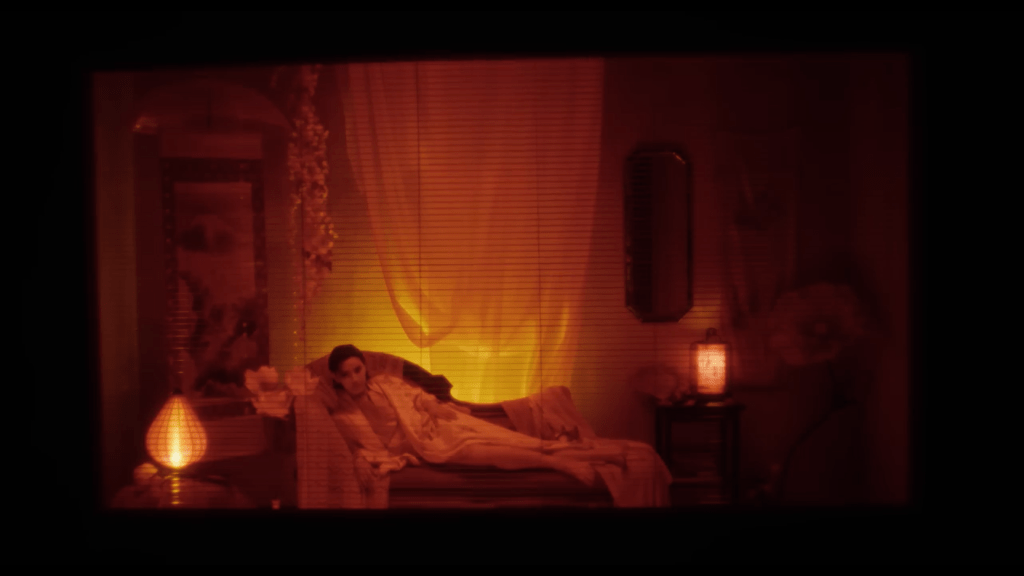
Frame from Empire of the Sun’s Happy Like You MV
The colors –  

Even though the music video looks colorful with some dark theme, the choice of colors used in this video are specific; there are characters, colors to the people shown in the video. Hot, cold, and warm / Red, blue, yellow, greens sometimes – indicate respective emotions and the interaction of the girl with those emotions. It is like she is trying to understand them and accept their presence to find the answers.
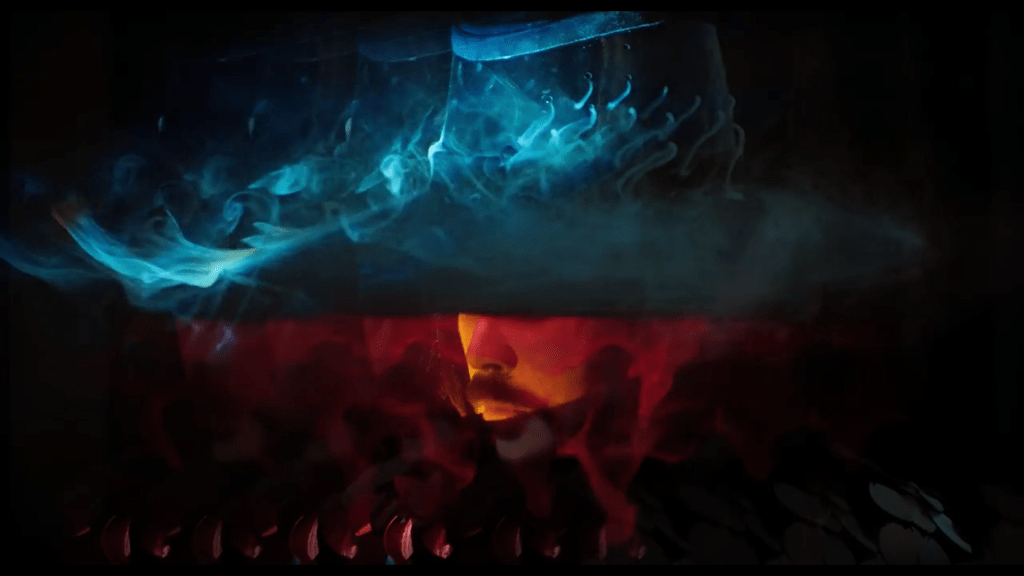
Frame from Empire of the Sun’s Happy Like You MV
The window –

In the early part of the song, you will see the girl peeking through the blinds to see what’s behind the glass. It’s literally her peeking into her dark side of the mind.

There is a glass window with blinds between a person and the girl. The person can see her doing all her activities. What girl sees is only her reflection, this absolutely support the symbolism of her having an internal conversation about the overall depressive state of her mind.
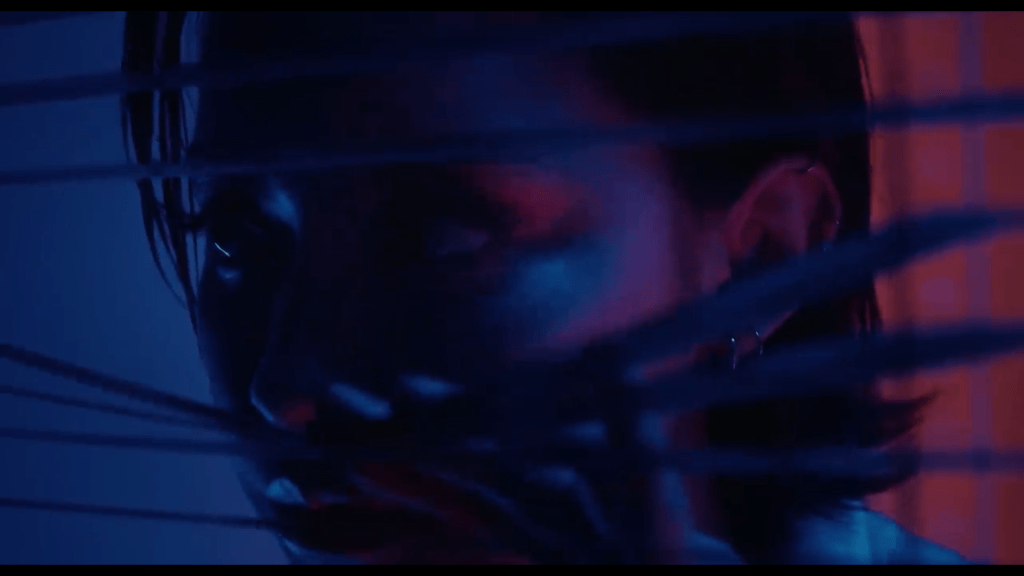
Frame from Empire of the Sun’s Happy Like You MV
The sadness, grief –

You will see one person (Nick Littlemore – Lord Littlemore) with the black tears seemingly away from the window in certain snippets of the video, who appears and goes withing few moments. This is that deep rooted feeling of sadness which the girl is trying to acknowledge. One person closer to the glass window observing the girl’s activity is her conscience and the grief is away from the glass lying in the deep abyss of her mind. I say the guy closer to the window is her conscience because it has symbolically shown with multiple colors and hues showing the variety of emotions one carries in themselves.  
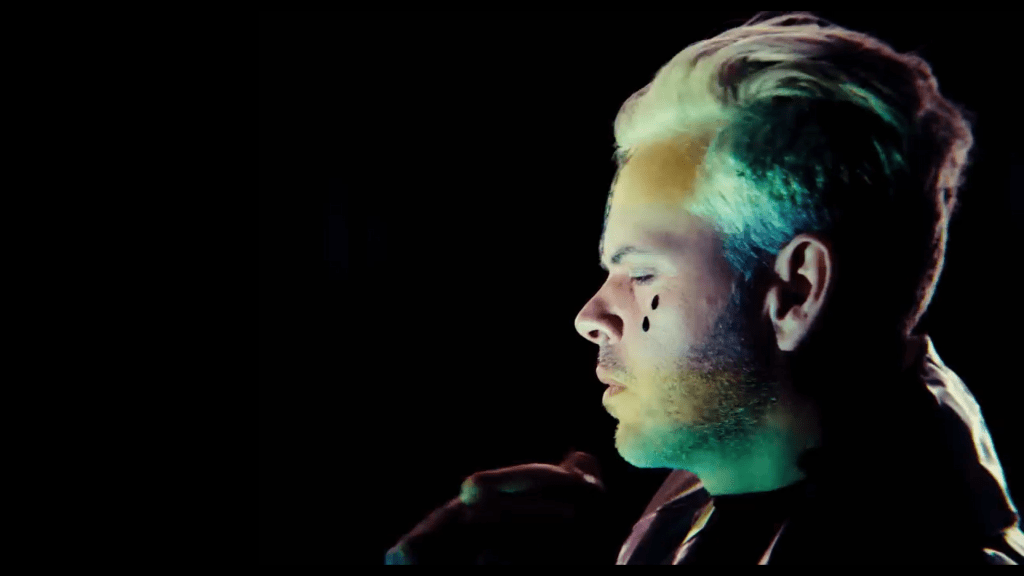
Frame from Empire of the Sun’s Happy Like You MV

The rain in the end symbolizes new beginning, renewal.

Frame from Empire of the Sun’s Happy Like You MV

The creators of Music video deserve special applause

A deep dive into this ‘prayer’

For me this is not a simple song, it’s a prayer and I have a very strong reason to justify my point. A prayer from a literal, grammatical point of view is a request to higher powers which have better control of the reality than us. We surrender to such higher powers to show that we are humbled and are in a need for help through such prayers.

This song may not have that feel of “conventional” prayers, hymns due to its electronic and not so ‘religious-feeling’ notes, melodies but there is no written rule on the ways to compose a prayer anyways.

On first thought it’s weird, how can a prayer in electronic music make sense spiritually?

I say why not! I would say the composition itself dares the modern listener to appreciate the feeling of awareness of our higher self – hidden inside our own selves. It is like tapping into that unconventional, unexplored hidden, darker part of our own conscience.

The song mainly focuses on visiting and acknowledging the darker parts of our mind, especially when we are in deep sorrow. Abandoning such dark emotions thinking that they are not part of your personality actually intensifies them and when you are feeling weak and defeated – these emotions will easily cover your whole personality.

My point to call this song a pious prayer is that it makes the listener, the singer acknowledge their emotions. Good or bad whatever they are, they together make the personality whole. It also makes them to accept their urge to improve themselves in life. Even though we are asking the higher powers to grant us the powers to become our better version it is actually we – ourselves acknowledging our darker side to improve and build upon them for the better and evolved version of our selves.

The most important act to come out of any negative, depressed feeling is the acceptance of the fact that they are an inseparable part of our personality and only this time they have charge over our personality and we can take control from them anytime we want. You can only cure a person who really want to be cured and live ahead. The feeling to come out of such sorrows has to come from inside and it becomes easy once we accept our darker side of emotions, feelings.

So, the best way to handle any challenging emotional state, any darker emotional state is to first acknowledge them. Acceptance of something wrong or abnormal is the first step to effectively work on handling them. It becomes very difficult to accept that we ourselves are the originator of our emotional responses and its totally normal. We just feel that it is difficult to control our emotions because mostly they are triggered by the external stimuli and that is where the real trick happens. You see, the illusion that our emotions are uncontrollable is created by the assumptions that one need to control his/her surroundings to achieve what they want to become happy. That is why when such person fails, they are immediately drowned into the feelings of sadness. This also does not mean that you should always control your emotions and avoid expressing yourselves.

What I am trying to make point about is that the moment we start segregating our emotions as good and bad we end up in an illusion of happiness instead of the real happiness. Instead of avoiding and dumping, controlling your sad, dark emotions deep down, their acceptance as one more normal part of our personality helps us in a better way to achieve the real happiness.

Being sad justifies the moments of happiness and that also does not mean that you must remain sad – suffer more to be happy in bigger ways. You see, all happinesses in the world are same. Actually, they are not even same, they are subjective – to be precise, there is nothing to compare between any type of happiness. But due to the social media and the screens, we are always trying to compare our happiness with other people’s happiness. That is where the origin of the problem lies.

Looking on the other side of the shore same goes with the sadness; no two sadness must be compared. Acknowledgement itself is more than enough.
Working on sadness is like hugging an annoying crying kid; just a tight hug without any intent. The kid will stop crying.

Once we have accepted all our emotions as a natural part of our personality then only can we have the chance to recreate our personality. This requires humbleness and in most cases when people are thrashed with the reality and the sadness, when they are helpless the final resort is the spirituality where the help from almighty is requested. The moment you attribute this power to any object especially human-like object the religion starts taking shape (that would be topic or another discussion!) But without diverting the topic, only when we are humbled then we seek help from others. Prayer allows you to do that without any feeling of shame. That is exactly why I feel this song is a prayer. It allows you to accept your darkness, understand it and asks you to use it to create new happiness.  

I will stick to Kierkegaard on this, we have to understand that when we are praying to the higher powers to handle our lives in a better way, we are actually asking the forces lying inside our own selves which hold the capacity to create the better version of ourselves.

We are capable of creating better times for ourselves on a condition that we acknowledge every part of who we are. It is just our mechanical nature to categorize certain things as good or bad sad and happy which takes charge of our whole personality.  You will appreciate this more once you closely observe the stories behind the creation of all types of the masterpiece humanity has ever seen. All those great things had that unconventional, hidden dark side which triggered the creation of something totally new and radical.

So, in order to become truly happy, one must accept their dark sides that is where the potential to have completely new beginnings lies.

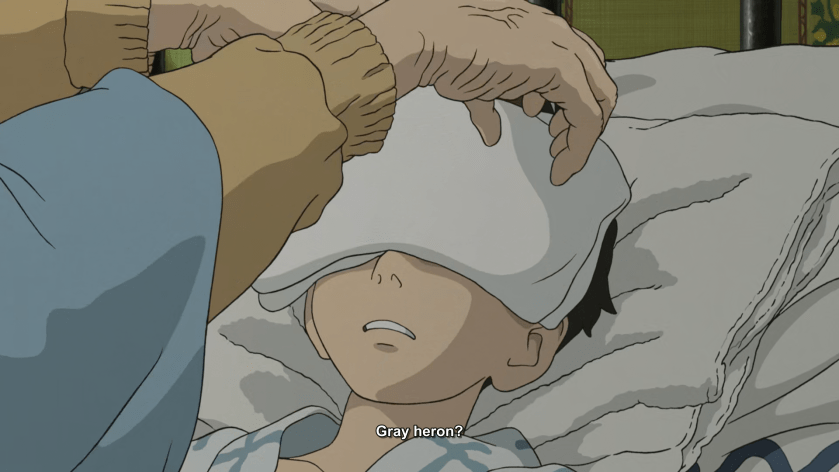
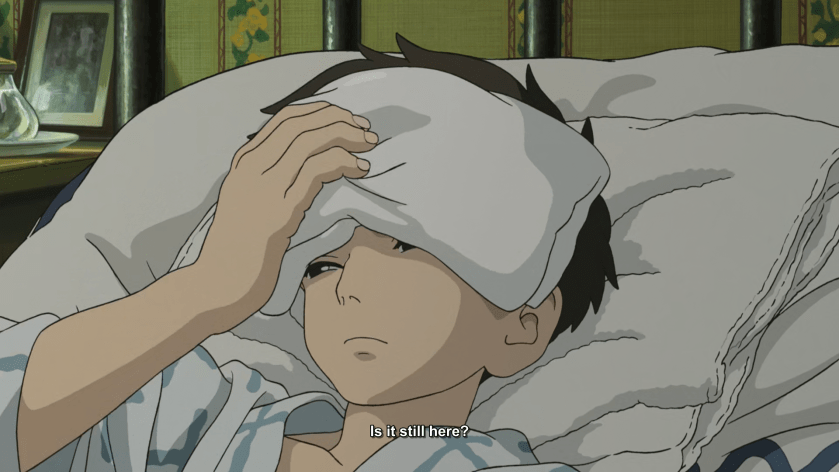
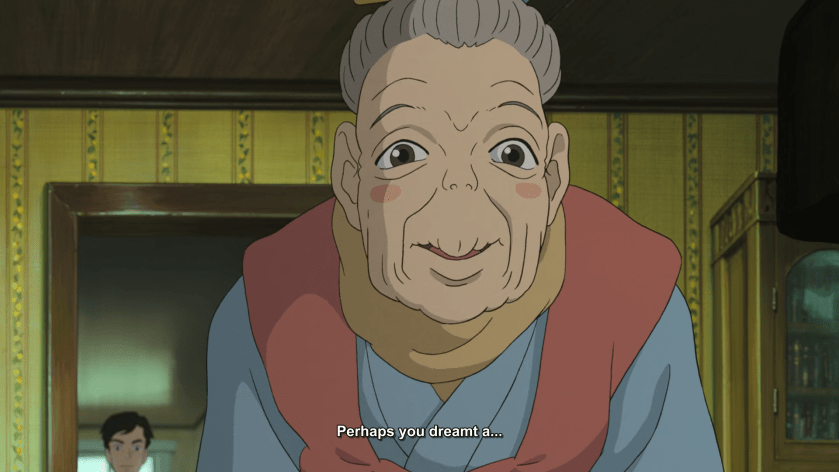
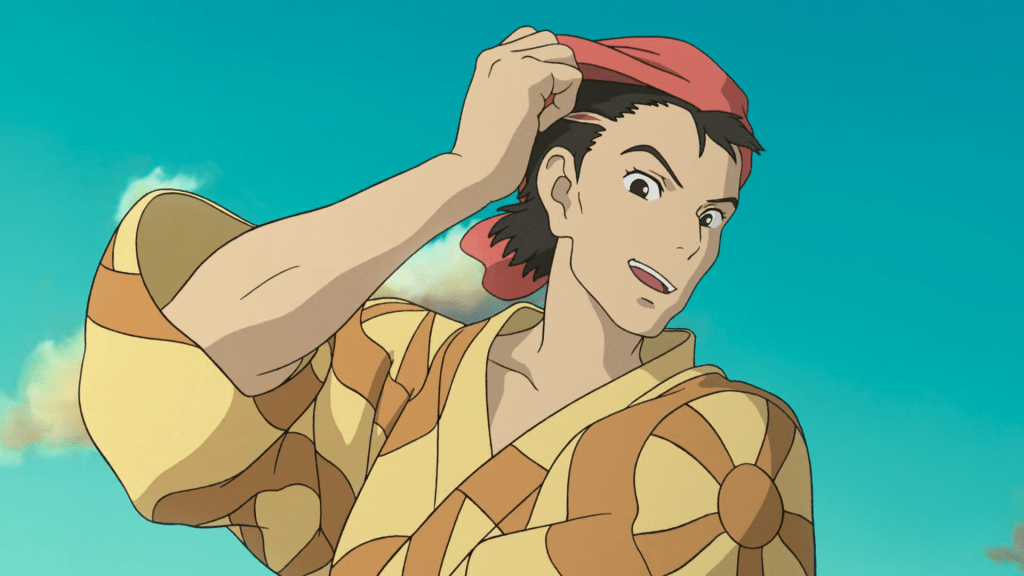
The Boy and the Heron (君たちはどう生きるか) – Bittersweet Reality of the Artistic Legacy

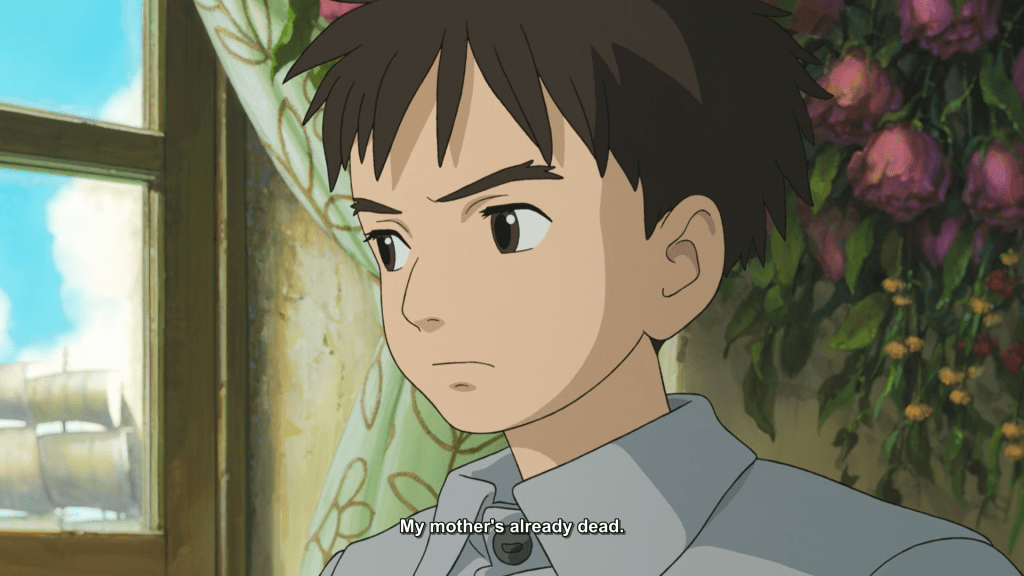
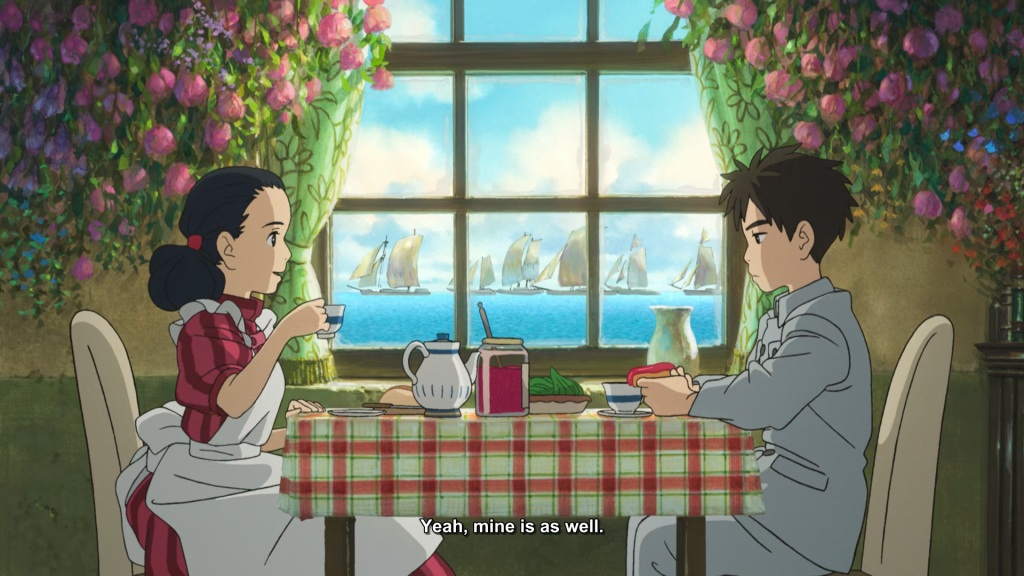
Studio Ghibli’s masterpiece The Boy and the Heron (君たちはどう生きるか, How do you live?) tries to answer one complicated question on artistic legacy. On surface, it is a story of boy coming out of the melancholy of his mother’s death and his new beginnings. Deep down it is a love letter from a creative father on his creative legacy to his son who wants to go on his own journey. It shows how difficult it is to make others appreciate a personal piece of creation, emotion and how to leave a truly influential legacy behind.

A creative father’s love-letter on his legacy to his beloved son

We are always in a pursuit of creation of something to ensure better coming days. Survival is one aspect of it but as the time moved on, we have comfortably brought ourselves to ensure our sustenance. Most of us can live a basic life and rarely worry about what to eat tomorrow. Once such stage is achieved, you will see that our efforts to create and accumulate still have never stopped. Now we are creating and accumulating for even better days than other, once this is achieved, we continue creating and accumulating so that our new generation will see better days. This act of creating a legacy is not just a matter of survival, it is also matter of preserving some part of ourselves even when we won’t physically exist in this world.

It is easy to see what happens to the materialistic legacy like wealth, but it becomes very tricky to handover the moralistic, value based, character-based legacy to the next generation because of the differences in the ways to live and understand the life. The passage of time alters some truths to the new generations thereby changing their mindsets and moral compasses. Even though our animal drives, emotions are exactly the same the motivations behind them change over time.

Now, imagine that you created such precious legacy which is close to you, which defines you, people appreciate it adore it but your next generation is unable to carry it forward. How do you handle such rejections? what is the resolution? Is it good? Is it bad? Is there any way around? As you love your legacy, should you force them to see the value in your legacy? And if you truly love them, should you force them in the first place to carry that legacy?

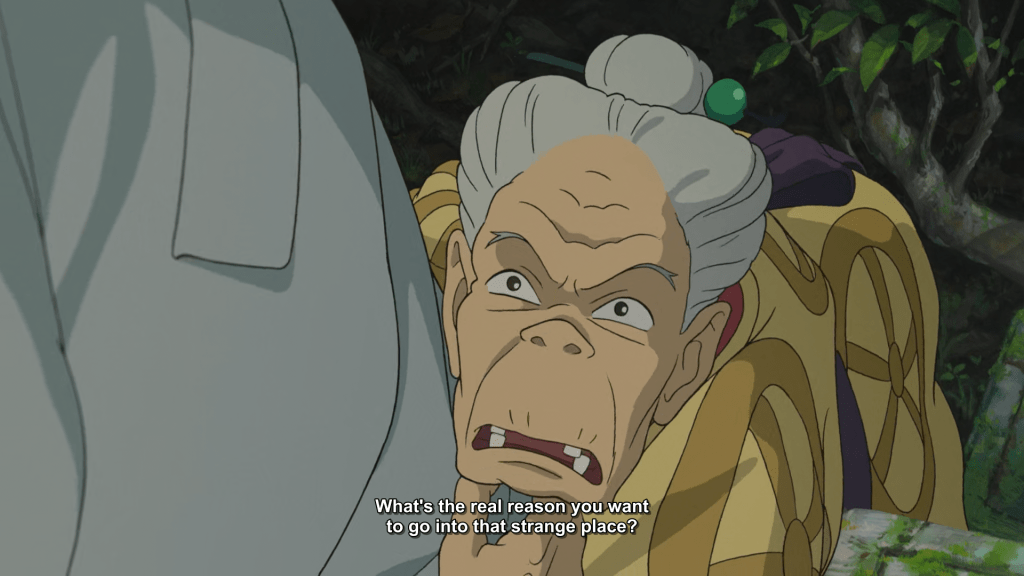
Studio Ghibli’s recent movie The Boy and the Heron (君たちはどう生きるか, How do you live?) is an attempt to answer one such complicated question on artistic legacy. Hayao Miyazaki-san has again given a masterstroke by creating a very personal yet relatable artistic narrative.

I have tried to explain the overall purpose of the narrative in this movie and will try to uncover what was the real core of movie based on the events in the life of Hayao Miyazaki-san.

The story and the meanings behind it

You will find megatons of explanations on the symbolism, personal connection of Hayao Miyazaki-san, his life, his childhood, his parents, and his colleagues from Studio Ghibli in this movie. There are many theories and cross references between the previous Ghibli movies too. I will not go into those details. I will focus on what the narrative stands as a whole.

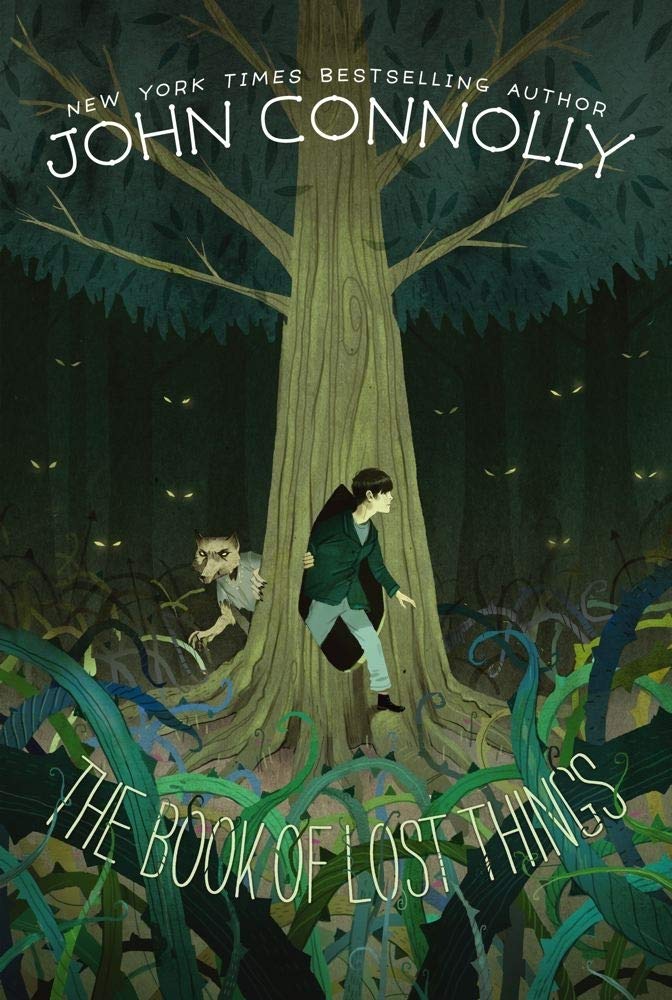
It is obvious that it is a story of a boy who lost his mother and his journey of getting over that melancholia of her loss and acceptance of his new mother. You will also notice in the end credits that the creators have thanked a book called “The book of lost things” by John Conolly. Once you check out what this book is all about, I think you will get new perspective beyond the symbolism and references in the movie. Miyasaki leveraged the narrative of this book to create the structure of his narrative. The book also draws inspiration from Genzaburo Yoshino’s book “How Do You Live?” (君たちはどう生きるか, Kimi-tachi wa Dō Ikiru ka)

Two books which inspired ‘The Boy and The Heron’

This is the story of the all emotions that are invoked when a person loses their loved ones. The first question that comes in mind when such loss happens is “How Do You Live?”

This is how the story is built –

The tower created around the rock is a portal where you can physically access your emotions. Just like in Interstellar how Astronaut Cooper was able to physically access the dimension of time.

Birds are representation of the free flying feelings, emotions we have.

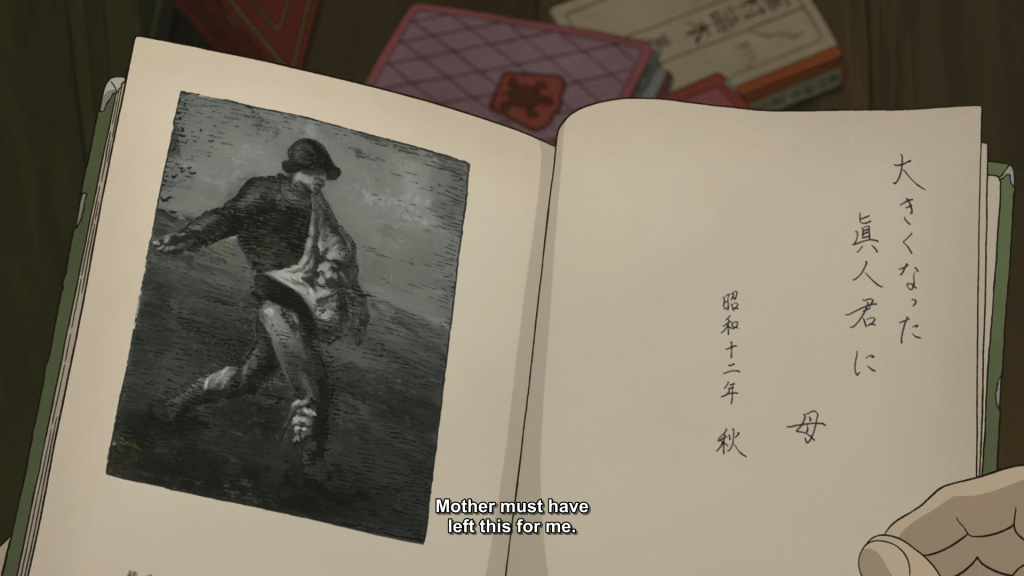
The book that the great granduncle left unread is the same book Mahito’s mother read and then it got handed over to Mahito, which is the book called “How do you live?” The book is about the conversations of a boy who lost his father and the boy’s uncle.

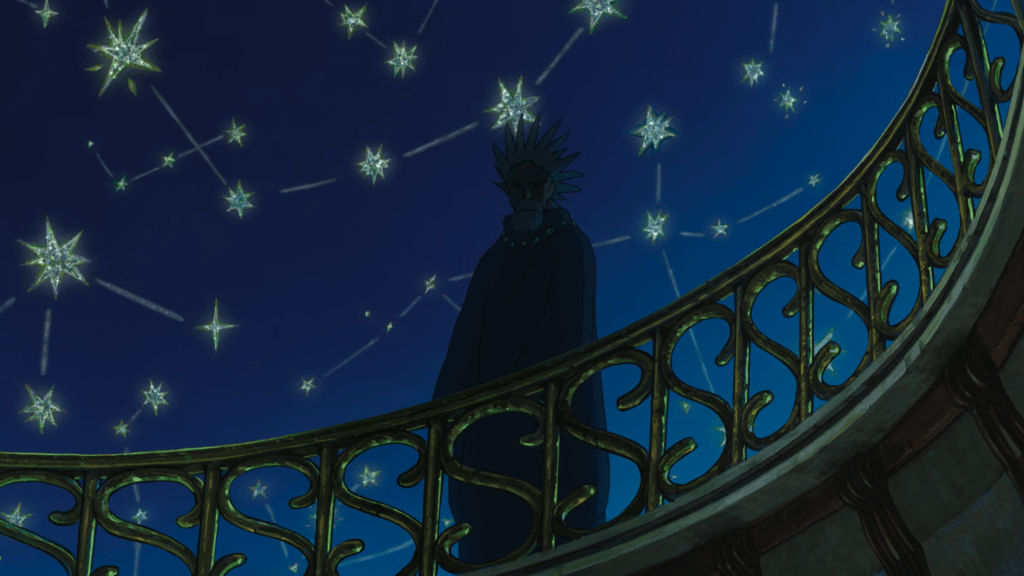
The great granduncle already knew that the rock from space can allow him to create the world of his dreams. That is exactly why he built a tower around it for protection. Upon going through the loss of loved person in his life, he saw himself in the role of the person who will lead and help his descendants to handle their own pain of loss. But as the great grand uncle was always into books and had his own internal dreamy world, he used the powers of the rock from space to create his own world.

The act of leaving the book unread to disappearing into something is pointing towards that intense moment when you have to act on things because the author said exactly what you believe in. You feel this urge to act and create that thing because the author, the person who you don’t even know feels exactly the same. You feel an unexplained deep connection.

So, the rock from space and tower built around it is a portal where things can enter and exit in space, time. The moment when Himi lost her mother, she accessed the portal, confronted her emotions but also met her future son Mahito.

She realized that even though she lost her beloved mother, she will have an opportunity to have her own son who will love her deeply. Even when she will not be there with Mahito, her sister will love him equally. This gives her peace. That is exactly why when grannies are telling the story from Himiko’s childhood to Shoichi (Himiko’s husband and Mahito’s father) they say that she was grinning to ears – happy like anything when she came out of the mysterious tower.

The great grand uncle can call anyone to enter the tower. That is why grannies are scared if Mahito gets taken by the tower in the start of the story.

Kiriko has also accessed the portal in the search for young Himi before, that is why her younger version is available in this dreamy world and knows the ways of this world. Her older version entering into the portal along with Mahito closes the loop of time paradox if you think it through.

Natsuko is called into the portal to make young Himi aware that her future son will have a caretaker and lover when she will not be there for him. This helps young Himi to get over her own loss of mother. It’s that feeling of love you create for your people when you realize how deeply you loved the person you lost. You realize that your people also deserve to get the love that you received from your lost loved ones. That brings the person out of the melancholy of the loss of loved ones.

Natsuko is called into the portal to make up her mind that Mahito is also her son. She is also called into the portal to make Mahito accept that his step mother also deserves the same love that he has for his own mother. The great grand uncle is the orchestrater of all these events.

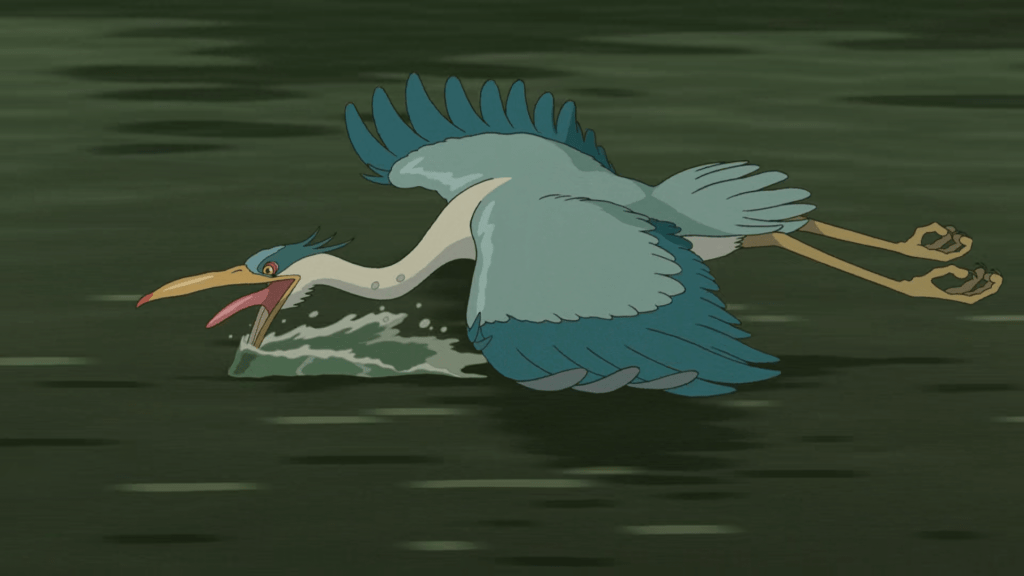
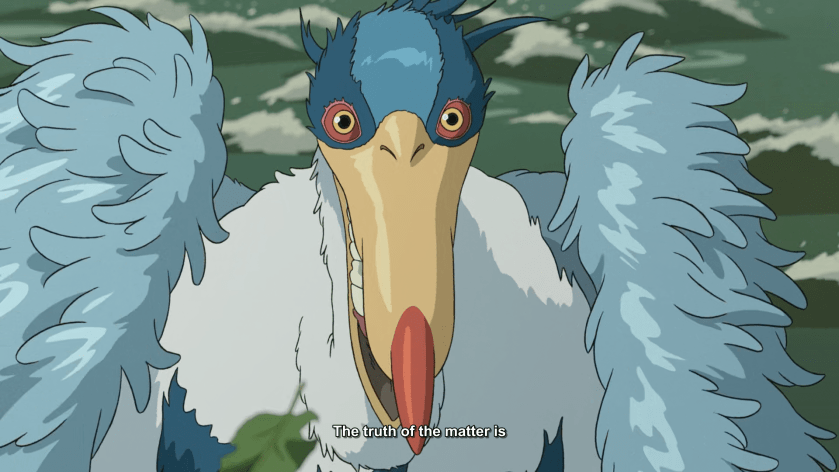
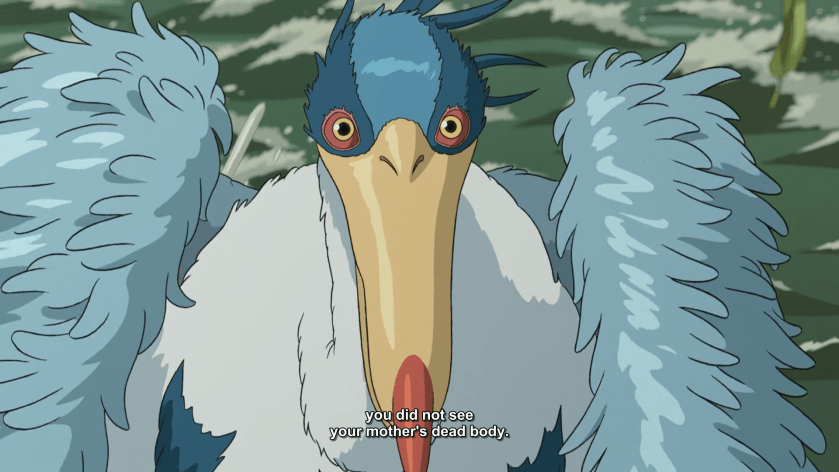
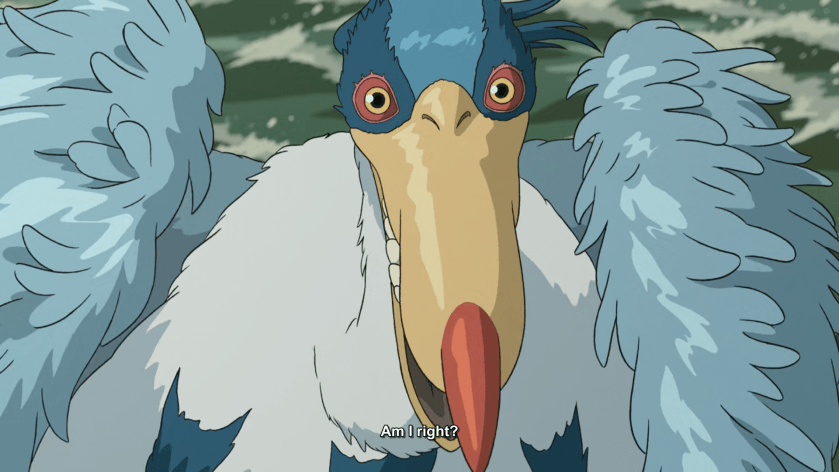
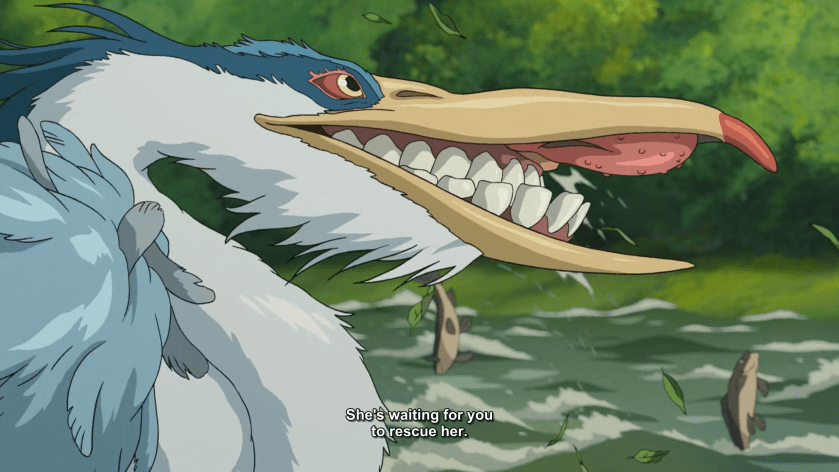
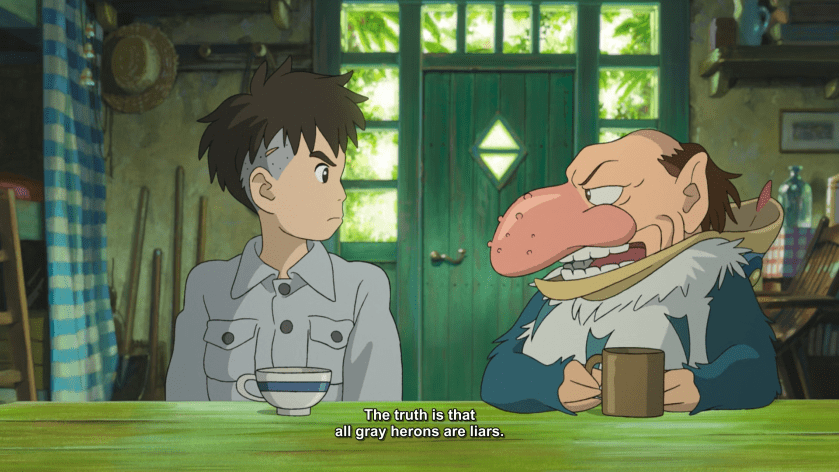
The grey heron is Mahito’s mind personified, his conscience. Heron is always guiding, helping Mahito. Mahito has this feeling that his mother is alive somewhere because he never saw her dead body. Heron attracts, teases Mahito using same understanding. Somewhere in a hidden corner of Mahito’s mind he thinks that there is still a chance to save his mother and bring her back. He is just looking out for an opportunity. Heron teases this opportunity to Mahito.

Heron like every person’s mind is paradoxical in nature. Heron is equivalent of Jiminy Cricket from the story of Pinocchio.

Most of the events between Mahito and the grey heron are Mahito’s dreams until he personally enters the tower where all his emotions can be accessed physically. That is where he is able to get the hold of the Heron, that is where the power of the seventh feather is functional, because Mahito has heightened awareness and access to his emotions.

The illusion of his mother in bed is a reminder to Mahito that she only exists in his dreams not in reality.

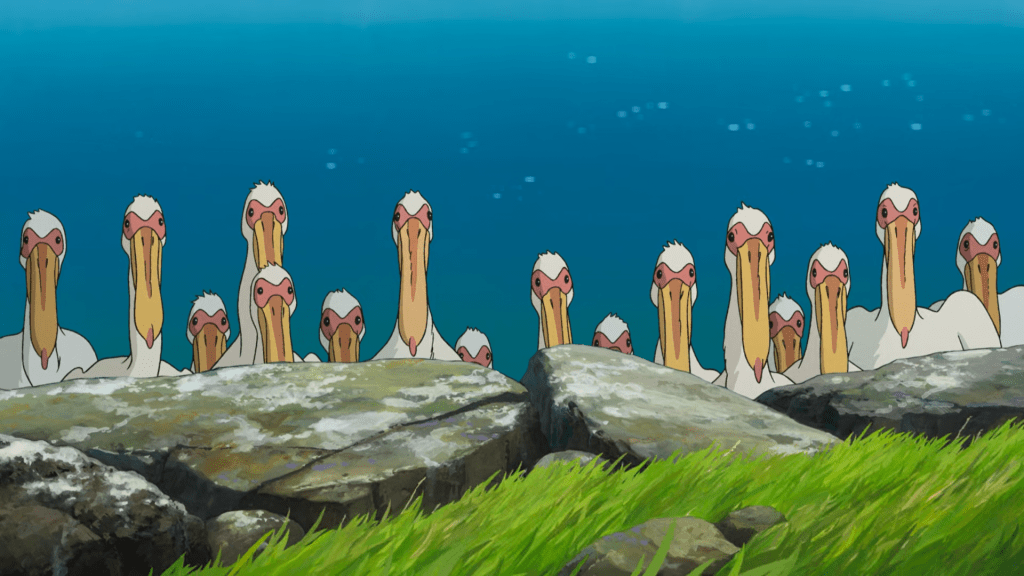
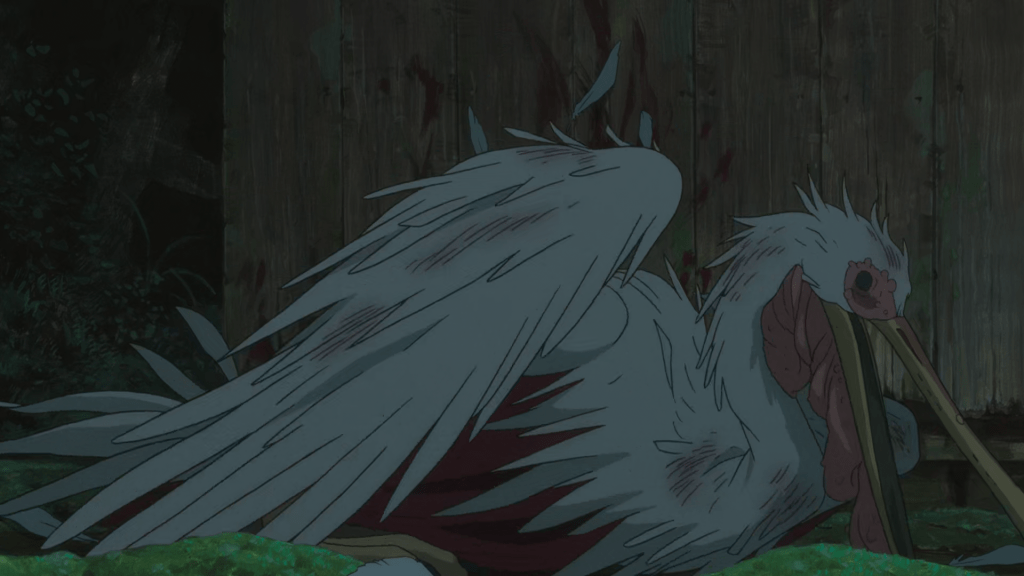
The starving Pelicans are the feeling one gets when they realize that they won’t be loved in the ways and to levels they used to before because of the loss of loved ones. These feeling to be loved, the huger to be loved by that person pushes the person to meet his loved one in afterlife. You will see the pelicans pushing Mahito in graveyard so that he can meet his mother. Pelicans are his feelings from the void of love which are pushing him to die to meet his mother in afterlife.  

Kiriko saves Mahito from his urge to die, maybe she has done same to Himi in past too. The mark left on Kiriko’s head by swamp thrasher is intentional creation to make Mahito comfortable. The fact that they both share some common pain brings comfort to Mahito. The thrasher bird is a symbol of self-reflection, it is like upon getting settled and being calm Mahito realizes that dying is not the solution to meet his mother – Himi.

Warawara and the phantoms are the attempts of great grand uncle to show everyone entering this world that life and death are part of existence. The person must accept and will have to support both, feed both to ensure that the reality remains ‘real’.

The event of giving proper burial to the dead severely injured pelican is Mahito’s acceptance to detach himself from the urge to be loved by his dead mother. This is him making amends with death and urge of being loved.

The moment Mahito accepts the weird and paradoxical nature of heron is the moment when he gets a clear direction to meet Natsuko. He literally repairs his conscience to get the clarity.

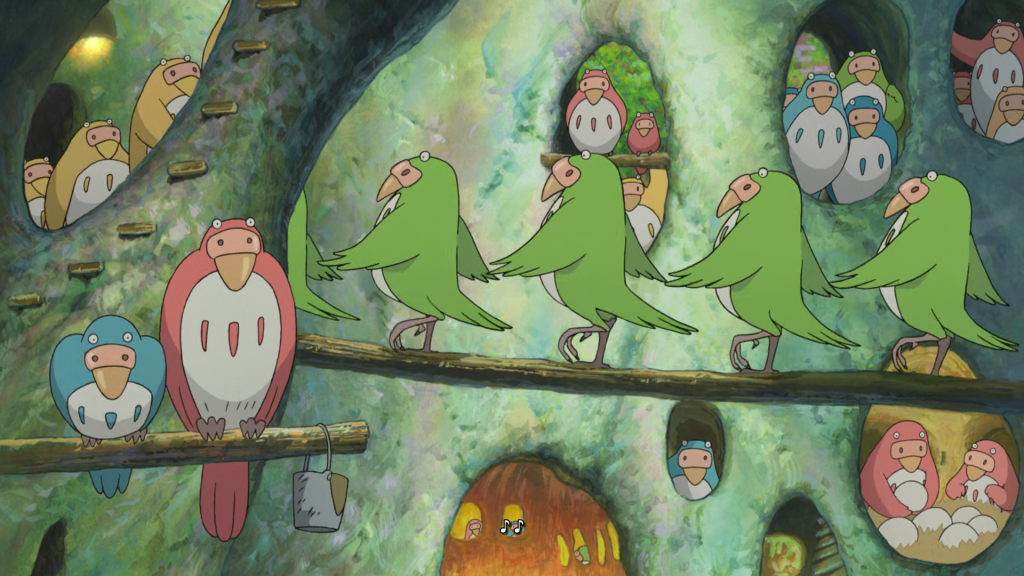
The Parakeets are the defense system of mind. They are the logical emotions, feelings that we use to defend from the sad feelings, they make sure that the system of our mind remains intact. Parakeets are the indicators of love and colors in life, when we are deeply saddened these emotions of love and colors become intense, defensive to save our mind. Here in the extreme case, they have become so strong, disciplined, and militarized that they are ready to consume their own host – Mahito. Parakeets show life, colors, happiness, anti-sad emotions, and the defense mechanism to create good for everything. That is why they have rules, moral values – the indication of what is allowed and what is not for the betterment of the host. They make sure that the person remains sane by choosing what is best for him instead of getting overwhelmed by all other emotions.

Parakeet king is the ultimate personification of such defense mechanism, he just wants to make sure that the world inside the host’s mind remains intact otherwise the host will go mad, this world will collapse.

The important conflict Mahito must resolve is to find his mother. Where the great grand uncle gives him the test. You should appreciate the role of great grand uncle in this whole narrative. The very first time when Mahito is inside the tower with Kiriko, the great grand uncle could have immediately met him and resolved everything in his mind.

But he makes Mahito to go through whole journey because you cannot force any emotion on the person just by telling the truth. His/ her defense mechanism will strongly and willfully reject that truth. Only when that person will go through personal experience, then only he/ she can appreciate the value of truth. Uncle thus gives Mahito this final test of truth once he overcomes the obstacles in his mind.

Mahito is given the taste of truth by showing him that even though he could not save his mother Himi he can now save another mother Natsuko. This is the Natsuko who enters the portal with a feeling if she would ever truly be able to love Mahito while having her own baby. This is conflict resolution for Natsuko too. She develops true love for Mahito when Mahito lets go of his attachment to mother Himi to save Natsuko because he doesn’t want that to happen again. And Natsuko also realizes that it’s her loving sister’s son in the end who deserves the same love like her coming baby deserves.

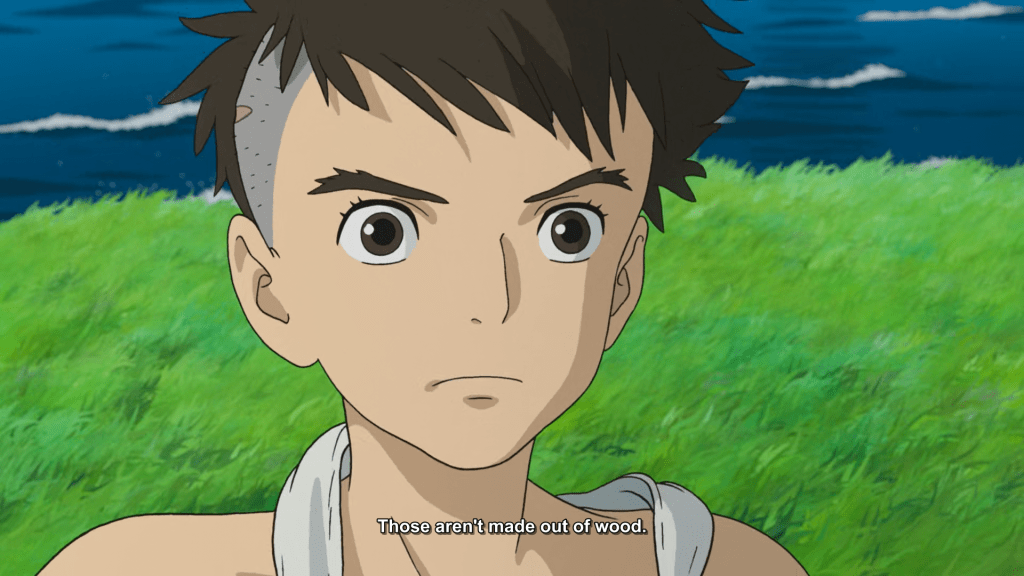
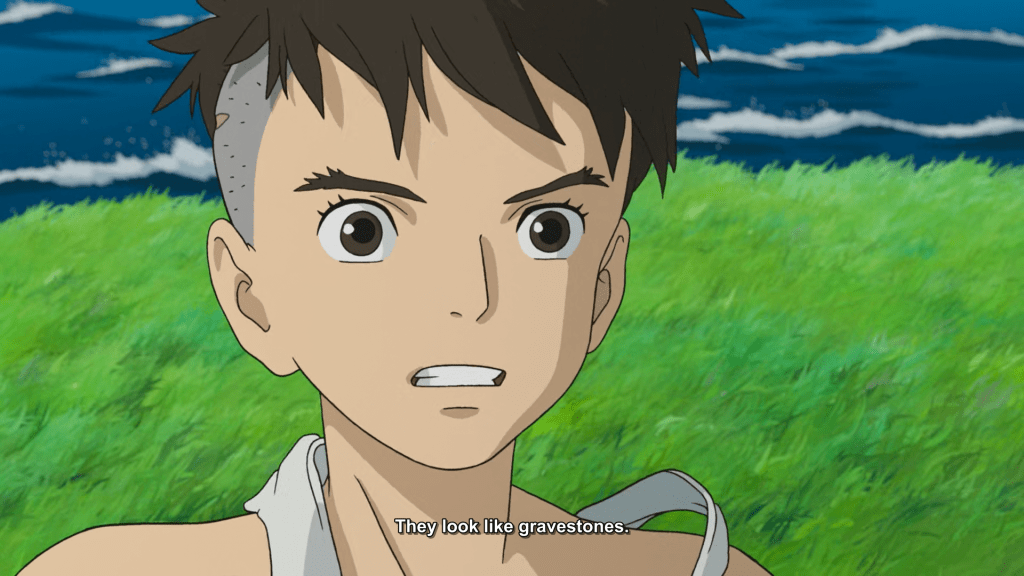
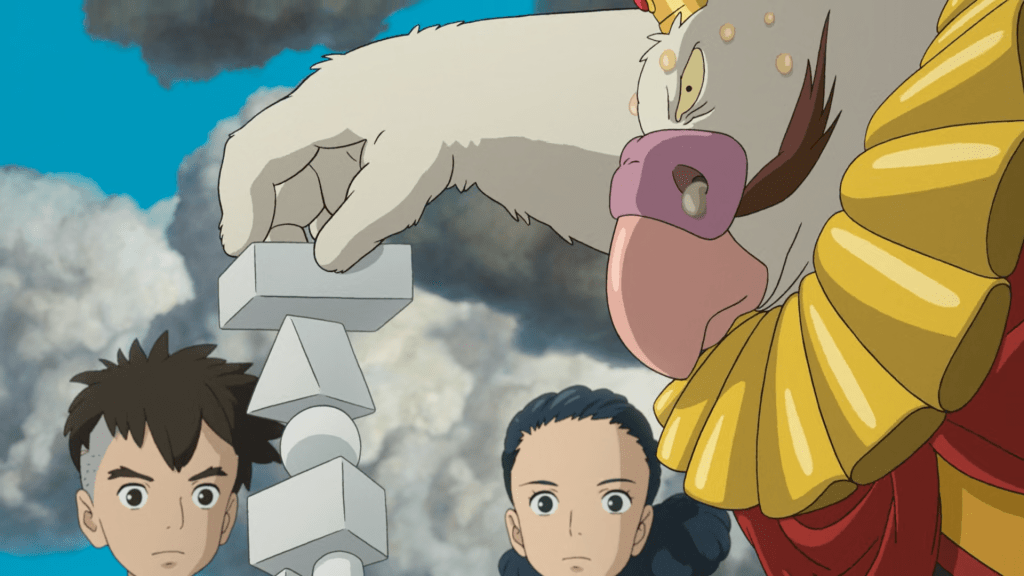
Only upon the resolution of this conflict when Mahito gets the access to the portal to meet the great grand uncle. 13 grave stones are the 13 movies created by Hayao Miyazaki-san. Which arranged in many styles create different world. They create an escape to different reality where people can manifest and physically live their dreams. For uncle these 13 gravestones are the purpose of his life, they define who he is and are his legacy. Great grand uncle asking Mahito to arrange these 13 gravestones is Miyazaki-san’s way to order his son Goro-san to carry his legacy in the exact ways Miyazaki-san intended. Mahito noticing the difference between wooden blocks and the gravestones is an indication that his life interests do not lie there, wood here as a part of tree – the life against the gravestones show that this is not how Mahito would live his life.

As a punishment uncle sends Mahito to parakeets. Parakeets are the structured constructs, rule, laws which ensure that the world has order even though the person may hate them. Goro Miyazaki-san chose the career of an architect because he wanted to do something different from his father. Hayao Miyazaki-san asked Goro-san to create artistic movies exactly in his “Ghibli” style but Goro-san’s artistic creations never matched the Hayao Miyazaki-san’s Ghibli vibes. It’s like his creative powers were restricted due to the parakeet like strict construct, high expectations and extreme criticism of Hayao Miyazaki-san. The great grand uncle had some hope that Mahito will accept what he wants him to appreciate.   

Mahito’s own conscience – the Heron comes to rescue him in the end. Grand uncle asks Himi to leave this world and also tells that Mahito should also leave with her. He is hoping that there is one more chance to convince Mahito to take care of what he had created. When Mahito and Himi meet the great grand uncle to bid goodbye the uncle presents Mahito some stone without malice. It is uncle’s attempt to show Mahito that even though his creations have their challenges, rules, restrictions Mahito still has freedom to do anything with these new stones free from Malice. It’s uncle’s attempt to convince Mahito to not lose the grip on the legacy. It is Hayao Miyazaki-san’s desperate way to reconvince his son Goro-san that he just needs to create for the studio Ghibli by using some new things – new experiments but just keep studio Ghibli alive. He wants Goro-san to create so that the world of Ghibli will bring bounty, peace and beauty into people’s lives. It’s not just a selfish request for continuing the legacy. It is a request to maintain the core of his legacy – Miyazaki-san’s legacy.

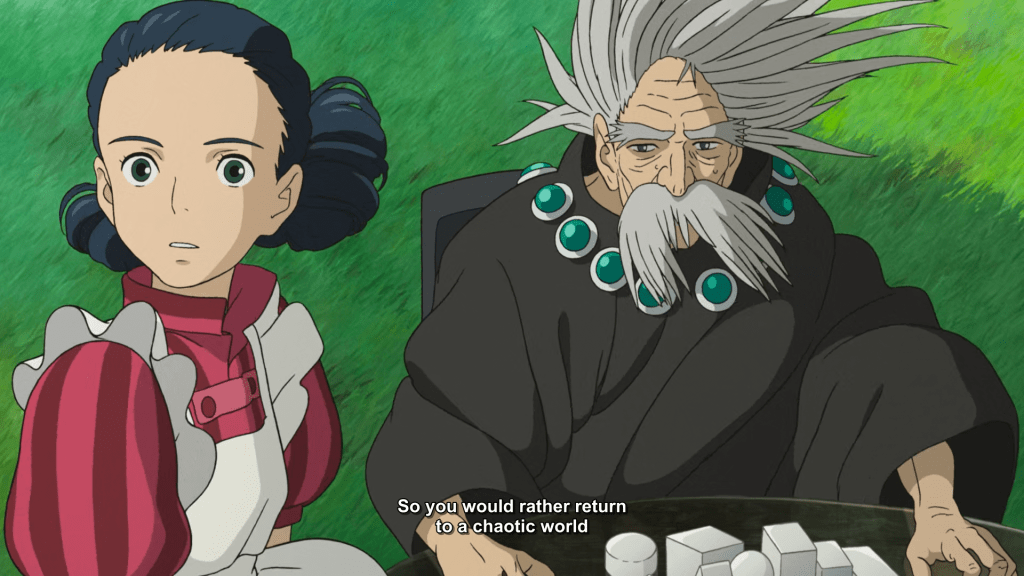
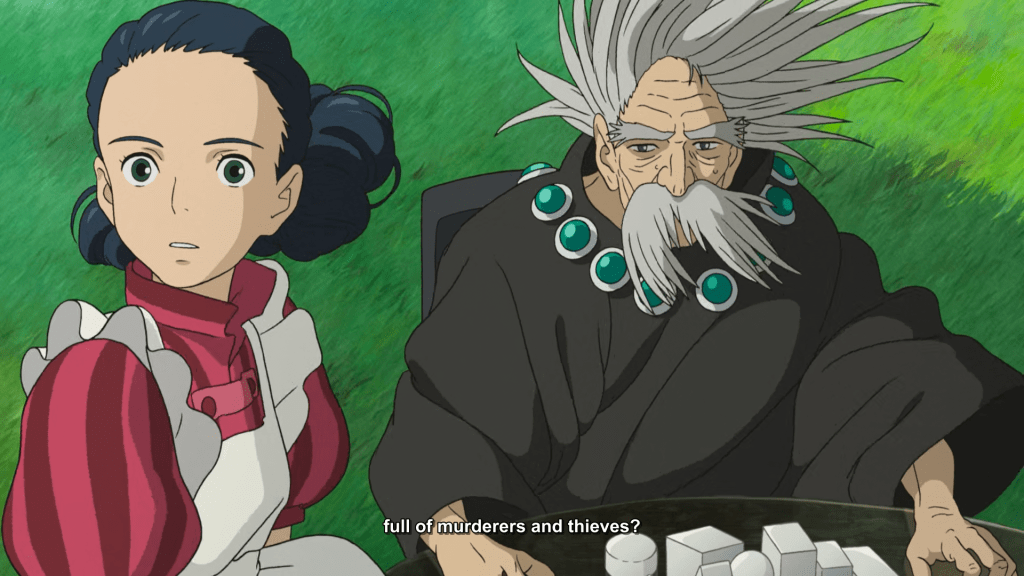
Mahito responds to great grand uncle by saying that he has his own challenges, his own malice, his own limitations which make it difficult to carry this legacy. Mahito wants to return to his own real world even when it has some darkness, bad things. When uncle asks him that Mahito’s reality is a chaotic world full of murderers and thieves Mahito responds by showing that he has good, caring, and loving people along with the heron – his conscience to support him there.

This is also important moment for Himi where she is relieved that even when her son will lose her, Mahito will have enough support system to take care of him. This is one more reason for young Himi to return happy to her reality.

Uncle then ordering Mahito to just stack the stones for last time would be equivalent of the discussion happened between Hayao Miyazaki-san and Goro-san on the creation of one last project for Miyazaki-san’s peace of mind. Maybe Miyazaki-san just like the great grand uncle wanted to play a trick on Mahito – Goro-san to convince him to continue the legacy.

Finally, the Parakeet king trying to arrange the blocks by himself is the futile attempts of the admirer of great grand uncle’s creation to ensure their own survival. But as there is no personal connect between them, the Parakeet king doesn’t know the ‘art’ of arranging the stones. When the attempt fails and the world collapses as the great grand uncle had already expected, he instructs everyone to leave the tower and return to their respective reality.   

You must appreciate that there would have been a proper intimate discussion between Hayao Miyazaki-san and Goro-san on how to take over this legacy and continue the future of studio Ghibli. Rearrangement of 13 blocks shows advice to use the styles and ideas of Hayao Miyazaki-san’s movies to create further new stories.

The resolution of Mahito returning to reality is Hayao Miyazaki-san’s way to show that the path has already been chosen and good thing is that it is more real than anything possible. It could be ugly, full of malice, murderers, death, grief and detachment but is far better than dreamy and perfect world. Looks like Goro-san successfully convinced his father Hayao Miyazaki-san that his father’s reality of Studio Ghibli is not the only reality, only legacy which deserves to exist. Hayao Miyazaki-san also realized that if he truly loves his son, he would let him go on his own path, to create his own art. Just because he is too attached to his creation does not entitle his son to carry it forward, especially as a burden.

It’s poignant to come to this fact but it is what it is. That also doesn’t stop either Hayao or Goro-san to create the world they want. (there is a rumor that Miyazaki-san is working on his next film.)  

The Curse of the Intangible Value of an Artistic Creation

For any true artist, it is the expression through creation which matters him/ her the most. The art they create is exactly who they are, it is a part of who they are. For such artist who has realized that they will have to leave all this creation behind in the end, search for the true successor who can appreciate their creation is crucial.

And the problem with artistic creation is that they are very intimately connected to the person who created them – the artist. It’s like the bond of a mother and child – she has carried that child for 9 months in her belly, it’s a piece of her body and soul. In similar sense, that art held its root in the artist’s mind and the artist kindled it in his mind to finally bring it into the reality. The fundamental problem with emotions is that you have to pass through those feelings to appreciate them in true sense. You can intellectualize other person’s emotions, write about them, create narratives/ stories out of them. You can make philosophies about how and why people have certain emotions, why they feel sad, happy, melancholic. You can also simulate pain to induce the feelings of emotions in a person, you can simulate happiness by triggering certain chemicals and suppressing others. But, you must accept that unless and until you yourself don’t pass through that real-life emotional experience, you will never be able to appreciate and understand how others felt when they had similar feelings. You can be highly empathetic, sympathetic but they too are bound by the limitations of you own mind. You can be a highly intellectual person who has already figured out what action would lead to what emotion, what is good for your mind, what is bad for you, you may create a whole internal defense system to handle the anticipated emotional responses but the experience you will have when you pass through that emotion will be very personal and the art created after the passage through such emotions cannot be attributed to any tangible value.

Now think of handing over such a creative legacy to you descendants. You are confident about this handover to your children because they are your immediate physical extension and if you are lucky then maybe your immediate mental extension too. But, as I already clarified in previous paragraph about the curse of intangibility, the intangible subjectivity of any artistic creation, there is no guaranty that you descendants will resonate with what you believed that art to represent.

It feels cruel to realize this fact but believe me it is the reality. Others, especially the people you call yours are not entitled to appreciate the things exactly to the levels you appreciate. I agree that they should at least not disrespect it but you can never force other people to appreciate ‘your’ valuable things at your exact same level. This journey has to be made solely by themselves which will never be in your control. You may force them, influence them, punish them- abuse them mentally, physically but you cannot force others to generate the same respect, same value for the things you love. It’s purely an internal and voluntary journey.

That is why having people who resonate with how you appreciate certain common objects and common emotions is a blessing. This also does not mean that people who perceive something different for the same objects are bad. There can be cases where they perceive something even better than what you perceive and where they do not even care but that’s not your fault. In order to find clarity in these cases you have to accept that emotions are double edged sword. It will cut both ways. Even when you have anticipated, planned, intellectualized them, you cannot escape your emotional responses. What you can do is to observe them sincerely and let them pass. You are not your selective emotions; you are above them. Emotions are not your creator rather you are the creator of your emotions. The moment you accept this you will see the truth that not everyone, not even your own blood is bound to experience the life around you in the exact ways you want them to. The moment you will appreciate what I am trying to put down in words, I think you will feel liberated. Please understand that this is not just about any artistic creation, it is about everything you call your life – mental, physical, tangible, intangible. To live a life with this intensity could be a blessing (on personal level if this intensity is not anticipated well in advance or not controlled then it is one cruel curse to carry.)

I think this is exactly what Hayao Miyazaki-san was struggling with. But as the movie resolves I think there is still hope for him, for the studio and in the end for all of us rooting for his next movies. It definitely is not a sad ending and even if it is a sad one we know what great things they made us feel about ourselves, how they gave us better perspectives towards life. I think that his true legacy is all his admirer, we people altogether whose lives he changed through his creation. Even though his movies won’t be there, what they have made us feel – that legacy of having a perspective towards life will keep on affecting new generation through us.   

To be honest, for me it’s a love letter of a father to his son who doesn’t want to follow his father’s legacy and wishes to go on his own journey.       

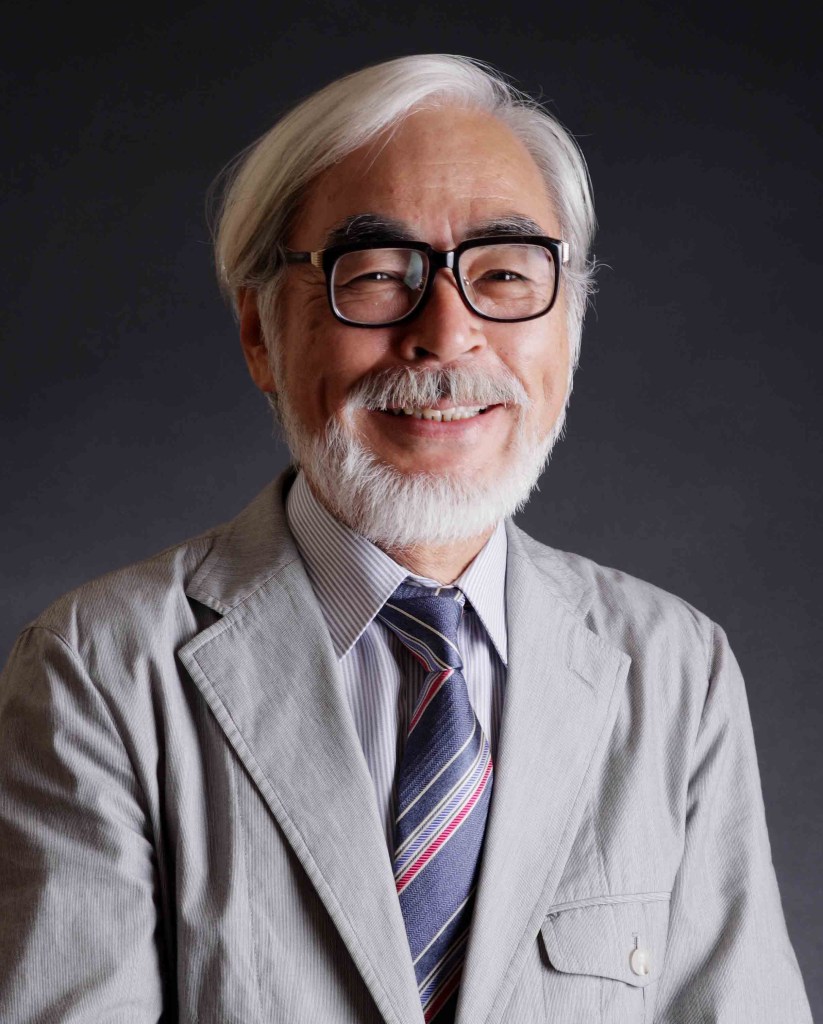
The Father Son – Hayao Miyazaki and Goro Miyazaki

  • All movie scenes from Studio Ghibli – Hayao Miyazaki’s movie The Boy and the Heron

Losing the ‘Grip’ on Escapism

Escapism creates a void in our perception of reality so that new ideas, creative ideas would populate this void for living life with a new perspective, new approach. The healthy escapism is the most important tool, a therapy for many successful creative people our world has ever seen. Once this escapism takes extreme side it may lead to addiction, procrastination and delusion. Freud’s ‘desire to destruction’ and René Girard’s theory of mimetic desire help us to understand escapism in better ways to face the reality head on.

Reality is merely an illusion, albeit a very persistent one

Albert Einstein

It is very interesting when we start questioning how we understand, feel and interpret the reality. The reality in which we live in has infinitely many facets which we experience through equally diverse emotions. We as human beings are hardwired for seeking happiness, happiness creates the environment to nurture, grow and multiply. Bear in mind that only growing and multiplying is not enough to guaranty the survival of our species. Adaptation is one aspect to ensure the sustenance over the course of time. Adaptation means getting exposed to adversities, sadness, imperfections of reality to create the strong enough coping mechanisms. What would happen if are continuously in the phase of seeking pleasure and turning our faces away from the challenges of the reality? How we justify our own death (figurative) by our own hands when we submit ourselves to such dark pleasures, addictions, dark temptations in spite of knowing that they are harming us? There is just one perfect song to point us towards such emotions.  The song is called “Grip” by Seeb and Bastille.

The song was written by Espen Berg, Dan Smith, Thomas Eriksen, Mark Crew, Simen Eriksrud and Joakim Haukaas.

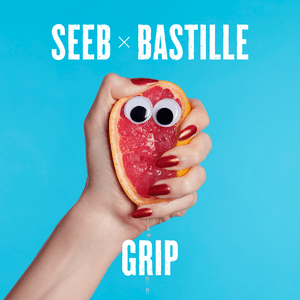
Album art for Grip by Seeb, Bastille

Grip – The Lyrics

As the night time leads into the day
And tomorrow spills across the sky
While the sun's a harsh reminder why
We are feeling barely human

The overall emotions this person is experiencing are the emotions of distaste and hatred towards the things which are inevitable. He knows already that it is going to be day after this night, the sun will rise up and he will have to face the day helplessly. The “harsh reminder” here highlights that the person doesn’t want to face the day, the reality, the responsibility and wants to escape to the night where he was someone better than human – someone invincible.

 ‘Tomorrow spills’ shows that the thing/s which this person was trying to postpone, avoid has finally come. The spilling action shows the unwanted eventuality. The things which the person is trying to avoid are the sufferings and problems which for this person are mocking him for his humanistic limitations.  

This rise of the day is a reminder of his humanly limitations and the sufferings which never end. The person is well aware of the sufferings and hence is cursing the Sun for reminding him about his limitations as a human being. The transition of night into a sunny day is also a metaphor for the veil falling down. The veil of enjoyment which was masking the suffering, imperfections, sorrows, problems of the reality.

I really loved the word play to show how the person hates the day which never comes – ‘tomorrow’. It kind of points towards the ‘procrastination’ to avoid the pain of imperfections and the pain, the suffering accompanying with the life itself.

We don't know what's good for us
'Cause if we did, we might not do it
Who knows where our limits lie?
We won't discover 'til we push it

These lines explain the expression “Ignorance is a bliss” in the most perfect way. The person wants to ignore the things which are good because deep down he knows that they come with hardships. That is exactly why he says that even if he knew what is really good for him, he won’t do it; he knows doing the right is always the most difficult path. It’s like running away from the reality and reject it because it is full of pain, problems, unsettling consequences and imperfect.

The next lines show that the person is not completely delusional and detached from the reality. He knows that being a human being with unlimited capacity in the world of infinite possibilities, he can do anything and succeed at it. He is aware of the fact that he just has to expand his boundary to make impossible things possible. This is the moment when you will appreciate that the person expressing his feelings here is aware of everything that is right and wrong. It’s just that he just wants to be happy and maintain that state by rejecting the painful reality.    

I should just walk away, walk away
But it grips me, it grips me
But I should call it a day
And make my way
Oh, it grips me
'Cause the devil's got my arms
And it pulls me back into the dark
But I should just walk away
Walk away, oh it grips me
Cause the devil's got my arms

The person knows that he should completely let go of the things which are deviating his life from reality but now he has found one pity excuse. The person thinks that it is difficult to lose the hold of joyous, illusive but pleasurable darkness. He is ready to ‘call it a day’ get over with this pleasurable but illusive, dreamy life but somehow his mind has found an excuse of the devil which holds him back. It shows how addictive the dreamy, pleasurable alternate reality which is far from the ‘real’ reality, the life his mind has created which is full of pleasure, happiness and he is whatever he wants to be in this dreamy world. Grip of the Devil is just an excuse for him to tell others that he is not solely responsible to stay in this ‘unreal’ illusive life, this shows his lack of accountability. He is blaming the devil for him not facing the reality and taking charge of the course of his life.   

We got drunk on this unholy wine
To deliver us from our old minds
A promise of a better time
'Til we're feeling barely human

Wine in Christianity is a symbol of abundance, enlightenment, celebration, and blessings of the God. The ‘unholiness’ of the wine shows the overuse of this abundance which points to the addiction. Addiction is the worst use of the means preferred to gain pleasure. That is why the holy wine once intended for enlightenment becomes unholy when exploited and overused unnecessarily. The promise of better time is the reflection of what a person suffering from addiction feels, he tries to repeat the act to extract the pleasure – a short lived one. This short-lived pleasure makes him feel something better than human. Once the effect starts to fade out and the person regain the consciousness of weakness of human nature, he again resorts to this short-lived pleasure to regain the better humanly experience.

These are the exact emotions an addictive person goes through – this could be any addiction.

I would rather forget
And wash my memory clean
Oh, I would rather forget
And wash my memory clean

The person knows what mess he is in and the escape is also difficult. He just wants to remove all the traces of what he really is and surrender to the world of the devil.  (‘Cause the devil’s got his arms). He is helpless and just want to reject the painful reality while remaining into dark but pleasurable devil’s night. It an intentional submission the “dark side” to avert the pain of reality brightened with the Sun.

Escapism – Sadness, pain, procrastination and addiction

Escapism lies as the core theme of this song. We humans are pleasure-seeking animals. Remaining in joyful conditions promotes safety, continuation of the species from the evolutionary point of view. That is why we are hardwired to escape from adverse, life threatening, sadness inducing, fear inducing events. Fortunately, we are rarely exposed to wild animals and life-threatening situations as our primal ancestors did. But this instinct has not left us completely. Any event which simulates sadness, fear, great challenge – our response is somewhat still primitive. But as the technology as progressed so much, our ways to escape the hardships of the real, imperfect life have evolved drastically.

Please understand that escapism is not a bad word. But once it shifts to extreme use, abuse then addiction takes over and the person starts hating reality and submits to dreamy, delusional world created by him or someone else.

Reading, writing, painting, doing some happiness inducing activities/ tasks are simple examples of a “healthy escapism”. Such escapism creates a void in our perception of reality so that new ideas, creative ideas would populate this void for living life with a new perspective, new approach. The healthy escapism is the most important tool, a therapy for many successful creative people our world has ever seen.

Now coming to the other (dark) side of escapism – it’s a highway to addiction and constant search for dopamine hits. Deep down we know how we are all addicted to something. It’s just matter of who is affected by them in worse ways. Social media, their algorithms, the culture of overconsumption, the capitalistic urge to prioritize wants for getting social approval, submission to addiction to escape the problems are the real-life challenges that we are facing today due to the technology.  Technology is meant to provide an exoskeleton, an augmentation to improve our lifestyle but this same exoskeleton is weakening our muscles thereby crippling us. (The crippling of our minds.)

Escapism is not a new phenomenon, rather is has an age-old history only the ways in which we try to escape the reality have changed over the course of the time. Creating an alternate reality was always one way to alleviate the painful effects of reality. But, the tools that we have today are more potent and can immediately lead to the state of addiction.

You will see in the lyrics of the song the that the person is well aware of what wrong choices he is making, that it is not good to submit to the devil and the night but now he is so addicted to this alternate reality that he has started hating the reality and don’t want to experience it.

Such is also the way of procrastination. We try to delay the activities knowing that the had to be done anyways but won’t yield the perfect, beautiful results that you want. Procrastination thus creates an illusion of safety until the threat becomes imminent. Procrastination is also healthy unto certain limits to create a space of new approaches but if your fear of creation, action is preventing yourself to postpone their impact on reality thereby residing yourself into your dreamy world then such alternate reality is useless.

Reality is painful – but that is not the only thing it is!

We escape from reality so that we can come back to fight the reality with better tools and ideas not to completely run away from it because in the end reality will catch up with us with far gruesome, dreadful face and consequences.

We are highly prone to our conscious submission to the alternate reality because it creates a potent illusion of safety and comfort. This is because we think that living a fulfilled life means living a life of happiness, whereas upon close inspection you will appreciate that life has never given itself to either sides of the existence – neither good nor bad. Life keeps oscillating between these two and creation, destruction, growth, adaptation happens in between those waves. Buddhism talks about the roots of suffering in attachment. We humans are highly susceptible to immediate attachment to any living or non-living things (which are the parts of reality). Our attachment to such things then leads to the fear of their loss and thereby loss of familiarity and comfort which projects the ultimate fate of the reality as imperfect, painful and hostile one. Once we let of such attachments, we can have a full control on the escapism in our lives.

Once we start to see happiness as a process instead of a stage, we will truly appreciate the beauty in the prima facie unsettling imperfection of reality – this is the same real life, the reality where we actually exist and can truly contribute to affect our and other lives in better ways. It is not that painful as we have thought in our minds.

Also, even when you have achieved that only goal in your life, that full happiness, in the end you will again be miserable because you are going to be clueless about what comes next, what to do next!

I think confrontation is the opposite of the escapism because of the same reasons. Instead of the escaping from unsettling reality for short time again and again, and it catching up with us in the end, why not face it in first place and be done with it! This requires the attitude of rejecting the ultimate purpose of life attributed to the search for happiness. The reality is neither happy nor sad.   

Sigmund Freud – Beyond Pleasure and Desire to Destruction

Sigmund Freud in his early developments of psychanalysis was the strong proponent of the ideas of human beings as the pleasure-seeking animals. Freud actively promoted his ideas of psychology based on the thought that our actions are always intended to maximize pleasure, procreation, and preservation and avoiding pain. He called this force as “Eros”

Freud’s early ideas hence are always pointing towards that continuous search for pleasure (Lustprinzip). But once the world war started Freud went under immense emotional pressure as his two sons were soldiers in war, he also saw soldiers residing to traumatic war experiences. In coming years, Freud lost his beloved daughter to Spanish flue. Here he felt really miserable, guilty and painful that he is able to survive while his daughter died.   

This is where Freud brought in the idea that humans also have a death drive, destruction (Thanatos) where doing nothing helps to cope up with the intense sadness of the reality. This idea was introduced by Sabina Nikolayevna Spielrein – one of the first female psychoanalysts. Under extreme pressure humans may chose to do nothing as doing anything will end in pain.

So, Freud evolved his idea of human psyche as an interplay between the urge to live and urge to die.

The person in the song submitting to the dark, harrowing addictive pleasures shows this same urge to destruction even though he knows that they are not good. We are ready to submit ourselves to darker illusions because of this same desire to die, to destruct ourselves because sometimes reality feels more brutal than death.

When one is exposed to unknown events in life, the urge to pleasure will seek excitement, adventure and adrenaline, dopamine, knowledge from it while for same life event the urge to destruction will resort to confusion, danger, fear and submission to familiar, warm and comfortable environments.

Freud received huge criticism for these ideas too. Freud also mentioned that this death could also be figurative – as the complete distaste towards everything in life and becoming inanimate – a living dead body.

The idea of clearing memory in the end of the song shows this side of desire to destruction to me.

Important thing to come out of these ideas is to appreciate that life never favored any side – good or bad. Life is always multifaceted. There is always something good in bad and bad in something good. Good and bad always coexist.       

Mimetic Desire – Responsibility and accountability

René Girard a French philosopher of social science pointed towards a very innate pattern in human thinking which is called as “Mimetic Desire” in philosophy of social science. He pointed out that even though we may think that our drives are totally created from inside and we are the sole, absolute creator of such desires (like calling ourselves God, the Creator) these are mere effect of our surrounding, they are not created from something absolute. We are always sorting people, things around us to create a place where we say that “we belong”. This helps us to create and justify our identity. The moment someone creates and points towards something as problematic, unsettling then rest of the people also use it as a “scapegoat” to put the blame of anything bad, wrong happening with them.   

We as human beings and social animals are always looking for something to blame which creates an object to blame for difficulties in our life. This grows faster when it happens in group.

According to the ideas of Mimetic Desire given by René Girard, people make scapegoats when the truth, the reality makes them uncomfortable – the reality they don’t want to acknowledge. They desperately lookout for things, groups, people to put blame and make this illusion their reality where they find comfort. People do this because they somehow want to release their anger, tension.

The creation of devil is the same thought. The person in this song is well aware of the truth of reality but as his desires are to always seek pleasure in any possible ways, he finds a scapegoat of “the grip of the devil” to justify his addiction and bad actions. Religious, political beliefs have many examples of such scapegoats.

Responsibility and accountability are very important aspects when we are talking of such ideas. That is why it is very important to rethink our ideas when we are trying to justify them with something delusional.

Conclusion

The key idea to tackle extreme escapism is to accept the imperfect nature of reality. The reality may be fearsome, difficult and unsettling but it is also hopeful, happy and comfortable. Your actions in reality will bring you closer to good experiences rather than submitting to unreal, delusional short acts of pleasure. It’s not the grip of the devil that is holding you in the night, it is you yourself who contain this devil inside who is holding you back. Let your angel overpower your devil to bring you back into the reality. May you grow with every pain inflicted upon you to make you even stronger than you were before. May the creation provide you the physical and especially mental adaptability to handle and appreciate the reality – the only real place where you truly exist.     

Official video shows the transitory phase of a teenage boy who is trying multiple ways to gain pleasure thereby moving away from the awkwardness of reality to become “cool”. But once the balance of pleasurable acts tips to the wrong side, he submits to the pleasurable but dark and devilish side of his personality. This is where he submits himself to the devil.

The video intricately shows the fragile nature of adolescence and the high impact of the choices made in this phase which could have lifelong effect of the personality.   

There a also one lyrical video for this song where you will see fruit butchering (I don’t know why but the producers have made it look very tempting!)

Also, the credit goes to SeeB for adding their iconic style of falsettos to make the listeners feel the grip of the devil in a fantastic way.

The creators of “Grip” Seeb and Dan Smith from Bastille

The song video

Lyrical “fruity and juicy” video

Listen on spotify

Alienation and Creativity

Creation for capitalism, consumerism and pleasure maligns its true purpose which actually is to create joy and a sense of belonging, comfort and safety. Alienation is the end effect of such capitalist processes where people have isolated their humans side for the rat races and FOMOs. Pure creativity, empathy, connect with nature and self can help use to preserve that human core and come out of the alienation.

How true forms of creativity can help us to reconnect with our human core

“On The Train Ride Home” by The Paper Kites

I long, as does every human being, to be at home wherever I found –

Maya Angelou

Humans – the creative animals

I think creativity is the most important quality granted to human beings. Nature in itself is the ultimate and the best creation which at the same time is also the creator of many things. Animals, non-human beings too have the gift of creativity to certain extent but human beings have outperformed in using this gift of creativity. We are always creating something, we have tools, we have automated processes to create anything we can understand. This creation of things has led us to becoming the most developed species on the planet. Creation can be in any sense – creation of music/ art/ cultures, families/ society, factories/ industries/ conglomerates, institutions/ organizations, cities/ metropolitan, governments, policies, supply chain, and what not! All these creations are intertwined to prove how advanced the human species is. You must also remember that once a process of creations starts generating fruitful outcomes it gets automated to optimize, to improve the efficiency. Most of the times we forget that some creative processes are not meant to be optimized because value of their outcomes is not materialistic. The concept of efficiency and/or optimization is purely materialistic concept. But as we are progressing ahead as the species, most of our creation processes are getting robotized, where materialistic outcomes are more important than the process of creation itself.  

Young generation has crucial role in deciding the future course of our species, especially when we have this great tool of creation – our creativity itself. People of my generation (millennials and Gen-Z to some extent) are the key creators of this time who will decide where our future will lead us. This generation is completely busy in various ventures of creation to justify their own life. But, as I have mentioned before, our creation processes have become so mechanistic, so robotic to gain more, extract more materialistic outcomes that this young generation is getting more and more detached from the real purpose of creation in its true spirit. The consumerism and (crony) capitalism has thrown today’s youth into a forced state of alienation in spite of being living in crowd, densely populated resourceful, glamorous cities. We are lonely in spite of being surrounded by the crowd.

This loss of attachment from the spirit of creation has led to the alienation of the today’s young generation – who many times go through the feelings of isolation, meaninglessness, directionless, confusion – it’s not just a normal existential crisis through which every young generation of their times goes through rather it’s the blurring of the true spirit of living in today’s young generation. Please keep in mind that it is not mistake of this same young generation. The system, society, institutions have evolved in such way that the creative processes are getting designed more for materialistic optimization instead of getting created for the real upliftment of the human civilization. Feels like we are losing touch of the real purpose of our being.

An Australian indie rock band called The Paper Kites released a song called “On the Train Ride Home” which in my opinion tries to touch those feeling of “alienation” which our today’s young generation is going through. Deep down we all know what we really want, we know what our core is but the systems in which we are living today have made our lives more and more mechanical, even though we are in the process of creation that creation no more belongs to us, that detachment, that alienation, that freedom from the vicious capitalistic cycle is what we are yearning for in the end. This is what this song for me is.

The Paper Kites
L–R: David Powys, Sam Bentley, Sam Rasmussen, Christina Lacy, Josh Bentley

I will dissect this song from the point of alienation; for me that is what it is all about.

The lyrics of the song is credited to Samuel Bentley, On the Train Ride Home lyrics copyright: Wonderlick Pty Limited

(It’s a song which needs to be treasured, hidden from others so that no one spoils it and I know I am committing a personal crime by exposing it. But such creations need more exposure and deserve proper appreciation too.)  

Waiting down at the station
I don't remember, think it was late then
Standing, always so quiet
We're like elevators filled up with strangers
No sound, no hallelujah's
Still I was praying on the train ride home

The starting of the lyrics creates an imagery of the person waiting for a train home. The complete separation from the surrounding has made this person to forget vivid details, it shows the mundane-ness, the separation from surrounding to just reach a safe, calming place which is home. The feeling of loneliness in spite of being in the crowd shows how there is no emotional connect between people. Elevator filled with strangers shows that people are closer and more connected, more accessible but they are not closer emotionally. This is exactly today’s situation, social networking and internet brought us so close that we can ‘poke’ our friend living in another hemisphere within few seconds and still we will see people craving for true connections more than ever. No hallelujah’s shows the loss of spirit, loss of soul in people who are part of this – physically close but emotionally isolated crowd.

If I can't get the things I want
Just give me what I need

Here, the person is aware of the difference between wants and needs which shows that his/ her separation from home to go to the crowded place to create a better resourceful life was not the ultimate goal. This is the only way through which this person can live a life. The system based on the cycles of consumption has narrowed down the meaning of living a life to mere survival. One can get as many things by obeying this cycle of consumption but it will not satisfy the hunger – the emotional hunger, that intimate craving of humanity. The distinction and use of wants and needs is a very smart way to show how the person is trapped in the system to survive but deep down they know what actually makes a fulfilled life. That is why person asks for basic fulfilment if not all what they desired.       

Our words fill up the pages
Fill up the days with psalms for the ages
Still those vows that we all speak
We break them like concrete
And just make our words cheap

This part of song shows how words have lost their worth. Words in the sense the sense of commitment, sense of loyalty to keep the promises. The piousness of the daily prayers, the vows are less cared for. This expression shows how insensitive we have become to just gain the materialistic means, to survive.

This is exactly where it struck me that this song is not just about average existential angst every young generation goes through; this song is more about the alienation of a person where system does not value real creativity – which gives our lives meaning. The system now has been maligned with the materialistic efficiency. Consumption has become more important than the end effect it creates. Mention of “wants” and “needs” thus highlight the culture of consumption here.    

I want someone to grow with
Songs I can sing to, and I family to cling to

The song tries to conclude with the ultimate pursuit for living a better life. Why are we all doing the things which we do? Why do we go on job? Why do we work all week, live paycheck to paycheck without any greater purpose – in spite of knowing that we hate this work at its core? Why knowingly, intentionally are we craving for more and more materialistic pleasures?

I think it is because of the recent vile cycle of consumption. I have a reason to justify this. Somewhere we know that the process of creation in which we are involved is not doing justice with our pure humanistic core.

As a human being all we crave for is the mutual growth, sense of fulfillment, love and intimacy for each other in this limited time on the earth. We know that ultimate goal of creation should be this humanistic goal, but the moment the creation loses this human touch we suffer from alienation, a sense of directionless, sense of being confused, a sense of trapped inside an infinite maze. This is the exact moment when the person craves for home, family and intimacy.

The train ride home is that craving for being the real human being who values emotions, commitment, love and happiness of the loved ones.

But If I can't get the things I want
If I can't get the things I want
Just give me what I need

The person understands that in this seemingly flashy, attractive, glamorous but mechanistic, mundane, lonely and unemotional life there is some hope that they at least will be able to preserve their human core. The request for the “need” over “wants” is the cry for that preservation of the human core.

Alienation

What urged me to completely (and maybe blindly) associate the lyrics of this song to alienation is how Socialism defines the concept of alienation. Karl Marx identified how a process of creation thereby value creation could isolate its creator from its creation. This isolation of creation and creator once intensified removes all the human, emotional attributes from the process of creation and here the brutal capitalism starts. The creation is now mere a mechanical, boring routine of materialistic revenue creation where humanity has no value.

Karl Marx on alienation

Karl Marx presented very beautifully the purpose of creation in human life. It is what separates human beings from other animals, non-humans. We are always involved in creative process which have a personal purpose, a meaning. That is why our creations and it’s end results are so intense and are way different than how other non-human creative processes. The moment such processes start demonstrating the separation of creator, the process of creation and the end-product of creation, capitalism/ consumerism start peeking their head out thereby slowly eliminating what made such things processes humanistic. This exactly is alienation, there is no sense of home, comfort or belonging.     

Marx defined four types of alienation in his discussions:

Alienation of an object –

A factory labor stitching the designer clothing does not bear the capacity to own it and enjoy it. Even though the labor holds the skill and knowledge to create that fancy clothing the system is rigged in such way that the emotional connect between creator and creation is lost forever.

Alienation of process –

The process of creation has become so mechanical, so repetitive to improve the efficiency and to increase the output that humans involved in them have also became mechanical, unemotional. Today’s young generation working in mundane jobs, the jobs they hate only for the paycheck and the job without any personal purpose is the example of that alienation. The separation of creator from objects makes the object accessible to anyone but this accessibility is not equally distributed because the input to output ratio is highly skewed. The value that is created in the creation of the object does not reward the creator in any good way thus creator – the labor remains poor. This also make the creator to lose the faith in the process thereby leading to the alienation of the process.

Alienation of species-being –  

The moment this mundane, highly optimized process does not bear any real humanistic purpose, the creator no longer follows the process to reach a better position in life spiritually, intellectually through the process of creation. It’s like the human creator has become a machine giving throughput. A sense of being a better species is lost forever – this is another form of alienation.

Alienation between humans –

Once the creator no longer has a direct connect to its creation, has no faith in the process for better pivot of meaning, has no sense of humanity, the value for another human life is lost. It is not because the creator or this person demeans or belittles others, it is because the creator himself/ herself does not consider their efforts their value of better worth, hence same treatment is given to people in their surroundings.

There is one famous snippet of a speech from Gabor Maté, a Canadian-Hungarian physician who has done work in ADHD, trauma, childhood development.

Gabor talks about broader scope of alienation which somewhat is based on the Marx’s idea of alienation.

Alienated from nature –

We as the human species no longer have that connect with nature which has resulted in its deterioration. You might have seen that there are still some tribes living in the remotest, inaccessible areas round the globe which are completely in tune with the nature and have preserved it. Today’s consumerism has detached our objects of consumption from their consequences on nature thereby destroying it.

We have to somehow re-establish that connect with nature otherwise nature has its way of adjusting things (we are seeing its effects all around the globe). And remember that this re-connection is also linked to we being the human beings. I mean, who doesn’t like lush greenery, pristine rivers and remarkable biodiversity!

One of the first condition of happiness is that the link between man and nature shall not be broken.

Leo Tolstoy
Alienated from work –

The works we are engaged in are rarely driven by a meaning or a higher purpose. Even if it has some meaning it is immediately inked to some materialistic thing, there is nothing wrong in it as far as survival is concerned but at least this awareness should push us to work for the things with higher humanistic, spiritual purpose, that is our real core as the creative beings. The alienation from work has led to depression, anxiety, emotionless feeling, numbness among every one of us. We are replacing this meaninglessness by other material means which involve how we look, what we possess. Such means of damage control are creating more damage to who we are and what we work for which defines us. You will see, the economy we live in highly focuses on associating meaningful experiences to materialistic products.

Alienated from other people –

The moment we lose the hope and connection between our surrounding we are losing some human part in ourselves which dims down our perception of humanity for others. We trust very few people or almost no one, the relationships rarely have that depth, that intimacy. Social structures based on the depth of relationship are dwindling. The mental illnesses are emerging due to the lack of social emotional support system, growing intolerance, apathy on global level are also effects of that.

The start of the song where it mentions people filled in the elevator, disinterested and having been lost their spirit is the same alienation.

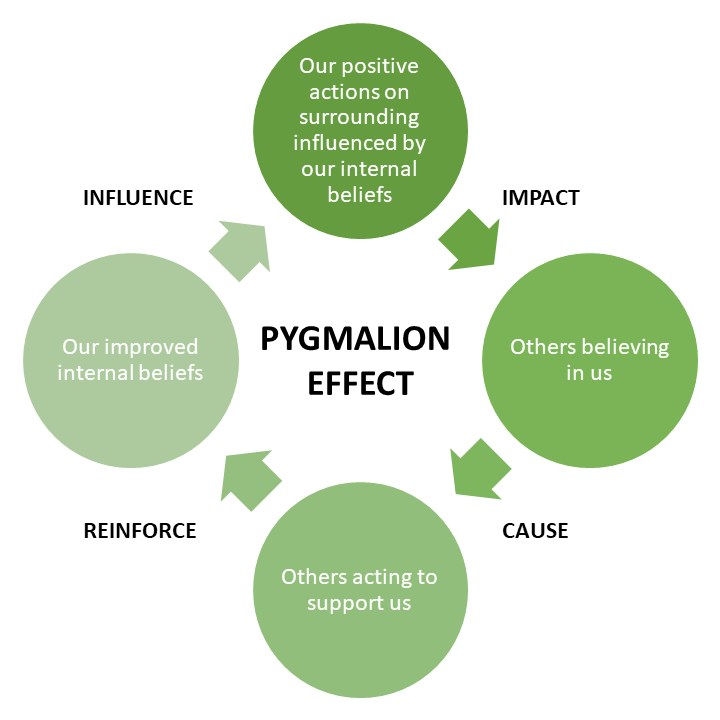
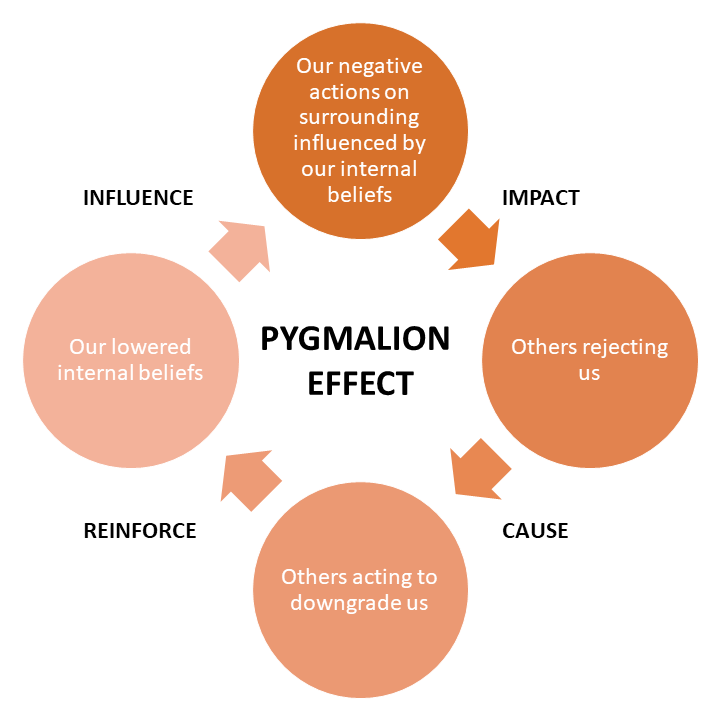
We have to start forgiving people again, create safer environments where we can express ourselves without any prejudice. It is scientifically backed that putting trust in people and treating them with high worth makes them trustworthy and high performer (see Pygmalion effect) In the end, everyone of is craving for someone to rely on and also someone who will make our sacrifices worth of the hardships. Associating positivity of self-worth to being appreciated and being respected for who we are is hardwired in our human circuitry. Our existence gets redefined to higher standards the moment other people (even single person) recognize it. (History has examples where people did impossible for far lesser people who believed in them without expecting anything in return)  

The urge to cling to a family, sing a song to someone, grow with someone mentioned in the song is asking to escape from such form of alienation.

One of the oldest human needs is having someone to wonder where you are when you don’t come home at night

Margaret Mead
Alienated from ourselves-

We have lost the connect our inner self, our curiosities, our inner child in the pursuit of the consumerist ends. The disconnect with the surrounding and numbness to the processes in which we are involved is furthermore deteriorating our inner human core. We rarely listen to our gut feelings, instincts because presence of lots of data, information around us creates a false sense of understanding of the things around us. This is alienation from ourselves, we don’t even trust ourselves – a simple advertisement or targeted influence is enough to make us buy that next thing that we don’t even want.

The part in the song where it talks about making our words cheap is the alienation from self. There is no concept of morality and inner compass in such alienation.

We know deep down what exactly is happening with us and around us but the system rarely creates conditions to come out of that.

How to de-alienate?

The desire to know your soul will end all other desires

Rumi

The core reasons of alienation lie in the loss of empathy, loss of higher meaning/ purpose and loss of responsibility/ commitment (committing to something to change the course of life requires higher sense of responsibility). We are empaths by default as a human being, so it is imperative to preserve this attribute even if the surroundings force the opposite. I know this is difficult when we are responsible for multiple things and people, but you are also responsible for yourselves. It is worthless if you win, achieve something great while losing yourself in the end.

The creative processes whose outcomes are not attached to any material means are thus the purest paths to avoid such alienation in the times of high consumerism and negative effects of capitalism. High consumption is an addictive form of alienation which can be nullified by pure creation. Consumption will give pleasure but creation will give joy.

The prayer to ride home in the song is the hope that we will again meet ourselves in spite of such extreme disconnect. Pure creativity is the answer to such prayers as far as the process elimination of alienation from our life goes.

What separates human beings from rest of the animals is their creative ventures otherwise we are exactly like all other living things. We are the beings who engage in multiple activities of creation which are driven by conscious intent, a reason. This ability to create something has led us to become the technically advanced species on the planet. If we establish the connect with our inner core through meaningful creation, the victory over all forms of alienation is possible.

True creation is all about connecting to every possibility there is.

Such deep concept of alienation expressed in a wholesome and soulful song by The Paper Kites truly deserves more and more appreciation and recognition. Words failed me to express how it made me feel (that is exactly why I didn’t control my words count, where few verses of this song did the same job. No wonder poetry is highly potent than prose!)

The song-

Undone – the hymn of Sisyphus for modern times

There are certain moments in life where everything seems meaningless while we take a look at the final fate of all things and nihilism takes over, especially in the times of great unexpected failure. A crystal-clear philosophy of absurdism can come to rescue in such unsettling moments of existential confusion. When such complicated ideas reveal themselves through a simple, soulful yet philosophical song spanning few minutes, the impact is immense. ODESZA & Yellow House’s song called ‘Undone’ from their collaborative album called ‘the flaws in our design’ is one such song which treasures the ideas from the myth of Sisyphus and the philosophy of existentialism, absurdism given by Albert Camus. Absurdism focuses on giving life our meaning through revolt, passion and freedom.

A simple, soulful song pointing towards the philosophy of Absurdism

“Man stands face to face with the irrational. He feels within him his longing for happiness and for reason. The absurd is born of this confrontation between the human need and the unreasonable silence of the world.”

Albert Camus, The Myth of Sisyphus and Other Essays

Some songs have this magic where you instantly get hooked to them, you cannot put it in words but it makes you feel good. You love the feeling this song creates, but don’t know why. Now it’s in your mind on loop and you brain is completely saturated with it.

Now, there comes a moment when you are busy with something and the same song is playing in background like an ambient noise, like a filler and suddenly you have this epiphany, a revelation about what the song really means. Has this happened with you?

I came across a song in 2023 and thought that I have checked out every corner of this song in my mind, but I was wrong. This song was on loop for almost 10 months (believe me on loop means hardcore omnipresent music) and recently I found something revelatory about this song. It was beyond my superficial interpretation of this song (as this is subjective, maybe I should consider myself a dumb fool to not recognize that important side of the song – someone might have found out that thing, that meaning in their early listening of the same song or maybe I am surely hallucinating in the lands of overthinking! – only the creators know!)

The song I am talking about is from the ODESZA and Yellow House’s EP album “The flaws in our design” called “Undone”. (Written by Clayton Joseph Knight / Harrison Gordon Mills / Emile Van Staden, © Foreign Family Collective Publishing, Gmr Foreign Family Collective)

Flaws in our design by ODESZA and Yellow House

Allow me to take you on a mind trip (what it meant for me actually and what it revealed to me recently)

There’s no time to hide from the sun
There’s no time to come undone
That’s easier said than done
Just pick your poison and run

The song starts with certain urgency – “there is no time”.

The song-writer wants you to face the day and don’t give up. The writer understands that it is difficult to start fresh when every hope is lost, the path you were on, the things you were striving for didn’t come to fruition or didn’t go the ways you wanted. The urgency to exist is far more dominating than what great things you lost. So, writer asks us to start again even though is will be painful. Whatever you will be doing, in the end you are going to die, that finiteness of life brings in the urgency to live, to survive. That is why the song-writer says that even though the poison of existence is painful you must do something stick to something because when the time of departure will come you will fill empty that you didn’t appreciate what existence had to offer. You will call your existence worthless. At least sticking to something will give a meaning to the life – your life – whatever it may be but that will be “your” meaningful life in the end.

I’m struggling to find out where I stand
I keep wrestling with God and with man
Tryna forge a little life in-between
A man can only but dream

The writers are trying to show how the person is going through tough times, this person is trapped in a fight between the natural forces and the people around him/ her.

This is about where do we stand in this grand existence. On a personal level if someone comes to attack me or my loved ones, I consider these lives so precious that I would go beyond limits to save them and yet in the grandiose of all this creation our planet is just a speck of dust. Even if the whole earth is engulfed into some giant star, black hole or is crumbled to dust or vaporized due to a man-made nuclear calamity, nothing in the universe is going to change.

So, how do I justify my worth in this grand existence? It’s somewhat philosophical interpretation of given lines in the song but even on societal level it shows a conflict of the mind. This is a struggle to justify the position of a person in this complicated and chaotic society.

This could also be called as an existential angst; one has to fight with the natural forces of creation and the people around them to create a life they desire. There is always this innate resistance to survive, anything small or large could be responsible for the termination of your existence.     

This resistance to survive and create the life we desire gets converted to the existential angst when all our attempts fail, when we lose hope, these are the difficult times of directionless-ness where we try to question our existence. It’s this confusion, this question that “even when we tried all the possible things why didn’t the come to fruition?”

Forging a little life indicates how small is the success rate when one tries to create their own perfect life. A ‘dream-like’ perfect life.

The time’s come to lay it on the line
When meaning seems so hard to find
It all weighs heavy on the mind
It’s easier to leave it behind

Writers are trying to reiterate the urgency through the finiteness of the life. When the right time comes it reveals everything and when you are facing multiple failures, tremendous hardships it leads to breakdown. This breakdown, this hopelessness puts gasoline in the fire of the existential confusion. It feels like there is no way out. The writers feel the same but they advise to leave this weight behind. This is the weight which is actually holding us back in hard times. Acceptance of the failures is the only way to calm down the mind, learn something new. Sometimes it’s not just about failures, its also about the way we wanted our life to be, even after making many attempts if the things are not turning out the way you want, its better to leave that weight behind and move on.   

There’s no time to hide from the sun
There’s no time to come undone
That’s easier said than done
Just pick your poison and run

Again, the same advice, whatever you will struggle at will eventually make you feel hopeless, directionless but you should stick to something hopeful and move on.

Life can’t be won, can’t be tamed
The point of it all goes unnamed
The lost and the gained weigh the same
When returned to dust or to flame

There is no way to justify life in certain definitive way. It’s the grandeur of life and the infinite possibilities it provides which are more than enough to confuse anyone, especially those who have faced big failures or totally lost hope. There are these moments when you feel that you are not living a better life than your peers are living, when you feel like others’ lives are more happening and interesting than yours – this is the moment when you must appreciate that many people ready to die for the life you currently have.

And in the end, nothing will matter, everything will return to dust – to nothingness. Every transaction you had during your existence will be balanced to null, Nada.

I’m struggling to find out where I stand
I keep wrestling with God and with man
Trynna forge a little life in-between
A man can only but dream

Living is a struggle, living with failures is even worse but that doesn’t stop us to create those little lively moments in difficult times because our time here is finite.  We cannot waste this limited thus precious conscious existence on things which are resisting us from living the lives to the fullest.

The time’s come to lay it on the line
When meaning seems so hard to find
It all weighs heavy on the mind
It’s easier to leave it behind

When you receive the clarity of failure and the reasons behind it, it is always better to leave that weight of guilt, confusion, hopelessness behind to begin a new journey.

There’s no time to hide from the sun
There’s no time to come undone
That’s easier said than done
Just pick your poison and run

Show up, keep your head up, do something and stick to it, you are going to die anyways but make sure that when you die you won’t regret even a single thing, look alive and live your life.

Undone and its (deep) philosophical consequences!

You can call the things mentioned hereon as the garbage generated from my overthinking but bear with me, I have a point. This exactly might be the point of the song-writers while creating this song or this is just my brain connecting some random dots to make sense out of nothingness (that is how trickster our existence and the creation is – again according to my overthinking!)

OK, enough, now to the point!

In single simple line it philosophically goes like this and you can stop reading if you don’t like it!?!!

The recent revelation I had with the song Undone by ODESZA & Yellow House is the philosophy of Absurdism by Albert Camus, so the Myth of Sisyphus comes into picture. This song has uncanny resemblance to the philosophical ideas in absurdism.

Myth of Sisyphus

In Greek mythology, Sisyphus was the king of Ephyra who was known to trick death, escape it and even trap it in its own chains. Sisyphus had tricked the Gods many times and gods were running out of the punishments to make a statement. In their one attempt Gods assigned Sisyphus a simple task – to roll a big boulder up the hill. When Sisyphus started rolling the boulder uphill and once it reached the top of the hill the boulder would roll down and again Sisyphus had to roll it uphill. This went on and on and Sisyphus got trapped in this meaningless task. Gods were relieved in the end.

Nihilism and Sisyphus

Albert Camus’s work on the philosophy of the absurd is one importance aspect of how we justify our existence in this seemingly meaningless existence. 

The meaningless task of Sisyphus is an analogous our daily mundane routines – sleep, wake up, go to job, come home, eat, sleep (then wait for weekend!). EAT, SLEEP & REPEAT. But even after this repetition, even after this boring routine when it comes to dying, we are always more scared to die than to live this meaningless, mundane life. I mean in the end it is all about coming from and returning to the dirt, even after that we crave for this conscious but repetitive, painful and “poisonous” existence.  

The lives we live are full of many small and big cycles, these cycles keep on repeating and we keep on following them. Remember the moment when you achieved something really great and in the next immediate moment you felt empty and directionless? Now that this great feat is achieved what lies next? And you become clueless, then you move on to achieving something far bigger and better and the cycle goes till you eventually die. In the end you weren’t even able to take your body with which you realized your conscious existence. What’s the purpose of all this if it is meant to end into dirt again?

Nihilism – nothingness thus rejects all the ideas which justify conscious human existence rather the existence in totality. Nothing really matters because everything starts and ends into the same worthless things. All this knowledge, all this kindness, all those relationships, all those friendships, all that discipline means nothing, there is no sense in following rules, routines, morality doesn’t make any sense, winners or losers – all end in coffins buried underground.

You must understand that these are the exact feelings many of us go through when we face some great challenges, great failures in our lives. The ideas from Nihilism may get associated to such feelings of meaninglessness. One might think that Nihilism is totally negative way for philosophy of existence but that is not the case. Nihilism also talks about non-attachment, non-possession which are the roots of suffering in life as explained in Buddhism. So, it’s not chalk and cheese scenario to be honest. Life may feel meaningless, filled of mundane routines like the task of Sisyphus and in this life, we are struggling to achieve something to realize in the end that we have to leave all that behind – what a cruel joke!

Existentialism, Absurdism and Sisyphus

What Albert Camus presented in his essays of the Myth of Sisyphus was the philosophy of the absurd.

The tendency of Sisyphus to always play tricks with death is exactly who we are. We are always trying to trick death, reject the death in many ways. Sisyphus shown as the king and having all the enjoyments of the life is who we are; everyone of us wants to live life to its fullest. Like Sisyphus, we all are tied to our routines.  

So, the philosophy of absurdism believes that the universe is meaningless and if people will try to find the meaning of the universe, then they will end up in a conflict. Absurdism calls out to the cycles we keep on repeating throughout our existence achieving nothing in the end; what came in, it went out leaving no trace behind.

The key difference between Nihilism and Absurdism is the extent of acknowledgement. Nihilism completely rejects any attribution or meaning to all aspects of life thereby rejecting the worth of life, whereas absurdism is more open ended. Absurdism believes that whatever the creation, the universe is we are not in sync with it to understand it completely. Absurdism thus is humbler and better ready to upgrade its ideology compared to nihilism.

“I don’t know whether this world has a meaning that transcends it. But I know that I cannot know that meaning and that its impossible for me just now to know it”      

Albert Camus, The Myth of Sisyphus and Other Essays

What Camus beautifully did is provide a justification for such “absurd” nature of existence.

This is exactly why the philosophy of absurdism is in sync with the ideas presented in the song Undone.

Absurdism and Undone

Camus in absurdism explains that when people face scenarios of meaninglessness, scenes of existential crisis they reject the very life they possess – thus suicide.

This suicide could be physical or philosophical.

No need to explain physical suicide in detail, the core is that continuous sufferings reduce the perception of the worth of life, what life offers for the sufferings one goes through.

Philosophical suicide is more interesting (!) people kill their own conscience and submit to some ready-made belief system in order to brutally terminate their own existential confusion. (Now you must appreciate what this philosophical suicide is pointing to – the religions spread across he world and the hatred they create is the best example)

Camus says that our urge to live the life (physically and philosophically) is much more overpowering and influential than our whining, crying excuses to reject life. We value our conscious life more than our submission to death, even if it is mundane.

“What is called a reason for living is also an excellent reason for dying.”

Albert Camus, The Myth of Sisyphus and Other Essays

As Camus says, man is condemned to death and the opposite of suicide is to revolt.

Since we cannot evade death, we must entertain death, keep it busy.

So, Albert Camus gave three possibilities of how one could make sense out of all this absurd life – Revolt, Freedom, and Passion.

– Revolt –

We must not accept any ‘final’ or ‘ultimate’ conclusion or calming justification in our unsettling struggles. Because the moment we get a proper justification to our existential angst, we surrender to that way of life (that is how extreme cases of religion work) and the process of learning and curiosity stops there.

The notion of ‘not hiding from the Sun’ in the song thus signify showing up even when the situations are difficult and unsettling. Sun indicating new day (even though being part of the routine) but with new way to look at it.

‘There is no time to come undone’ creates the urgency. Because, when a person is said to be undone – it means that the person has fallen apart, disintegrated, there is no meaningful attribution, purpose to the life they are living. The urgency to live life in spite of seeming meaningless and in spite of ending into death is a call to follow our instinct of living over suicide (philosophical). The absurdism thus focuses the subjective value of life; even though from outside our routines are mundane, only we know what exactly is happening with our lives and that surely is greatly unique; the way we experience our own life and the way other experience it is very special.

That is exactly why you must not waste your time on whining about the problems, losing hope, giving up on something.

The revolt is appreciating the meaninglessness and is also creating space to grow. Even when in final evaluation when we discover that the life is truly meaningless that should not stop us from giving it our own meaning.

That meaning could be anything, that is why ‘picking “your” poison and run’ becomes extremely powerful in the song and it is scattered throughout the song.

– Passion –

Talking about poison, absurdism talks about Passion.    

Passion calls for living life full of rich and diverse experiences. Again, just because nihilism reveals the meaningless view of life and creation, it should not stop us from appreciating what the life and creation provide us. Just because you know that you will die ultimately that does not stop you from breathing and waking up in the morning hoping that you will live another day.

Passion could be anything, that is why the songwriters figuratively attributed is as a poison. Whatever makes you feel free, liberated is your poison (bear in mind that this is philosophical). Do things that make you feel alive (again philosophically), run, sing, dance, write, fight, curse, play, work but look alive. You will appreciate that every thing you do, every passion you follow, every poison you consume have their own consequences, the moment you face these consequences of your acts – your life will have meaning. That is why this figurative poison in this song is very important.

“Creating is living doubly. The groping, anxious quest of a Proust, his meticulous collecting of flowers, of wallpapers, and of anxieties, signifies nothing else.”

Albert Camus, The Myth of Sisyphus and Other Essays

– Freedom –

Third possibility is the freedom. We are absolutely free to think and behave as we decide. The perspective of life being free is more optimistic take on nihilism. If the creation means nothing that it is exactly what we call it! We can call it whatever we want, that is what freedom is. When you think that you are free, you do whatever you want and at that very instance you will realize that even freedom has constraints.

But, as the creation is infinitely meaningless it is open to up-gradation and rebooting. A truth which holds the capacity to upgrade itself is the real ultimate truth I would say; and in the same sense the freedom which knows its boundaries truly knows the real freedom and hence is the real, pure freedom.

“Thinking is learning all over again how to see, directing one’s consciousness, making of every image a privileged place.”

Albert Camus, The Myth of Sisyphus and Other Essays

(Mathematically Godel’s incompleteness theorem, Spiritually Miyamoto Musashi’s the book of Void talk this exact freedom).

“I know simply that the sky will last longer than I.”

Albert Camus, The Myth of Sisyphus and Other Essays

‘The struggle with Gods and men to create a dreamy life in between’ is the expression where I associate this song with the Myth of Sisyphus – his actions were exactly like some Greek demigod who challenged both humans and Gods.

‘The heavy weight of meaninglessness in the moment of reckoning’ expressed in the song point towards the that nihilistic and hopeless situations in the struggles of our life. Its better to not cling to such nihilistic thought. Passion explained in absurdism thus becomes the savior in such hard times.

‘The wildness of life’ in the song thus shows the ability of our freedom to upgrade itself in the ocean of infinite possibilities.  

“The struggle itself towards the heights is enough to fill a man’s heart. One must imagine Sisyphus happy.”

Albert Camus, The Myth of Sisyphus and Other Essays

Listen to this song again with these thoughts of absurdism in the back of your mind, I am sure you will appreciate the song and its creators more. (‘The flaws in our design’ is a well justified name to this album and each song carries its own philosophy. Also pardon my over-explanation in certain places but you get the point (I hope))

You can listen to the song Undone using following links:

References

  1. ODESZA & Yellow House Team Up For New EP “Flaws in Our Design”
  2. The Myth of Sisyphus and other essays – Albert Camus

Appreciation For the Flow of Life

We, the population of billions round the globe are always trying to create our own version perfect life. What is perfect is purely subjective and thereby has infinite interpretations but there is something very fundamental – common which flows through all of us. It can help us to find the real perfect life. Wim Wender’s masterpiece “Perfect Days” shows how we can appreciate the inherent imperfections that life has and how to appreciate the life and the consciousness to experience it in better ways.

Wim Wender’s Masterpiece – Perfect Days

Seeing life through the lens of practical optimism

What Is a Perfect Life?

The answer is very personal and subjective. Someone (rather most of us) wants to retire with huge corpus, someone wants true love, someone wants their dream job in that dream company, someone wants to travel the whole world, someone wants to follow their passion, someone wants to create something, someone wants the ultimate power/ strength, someone just wants happiness, someone wants knowledge of everything, someone just want their neighbor to turn down that noisy speaker, someone wants to spend time with their loved ones, someone just wants to be left alone, someone wants a fixed routine where there is predictability , someone wants surprises every day, someone just want to lay down in the bed for the whole day, someone wants to eat whatever they want (without gaining weight!), someone wants a healthy body, someone wants to remain young forever. Billions of people and their infinite definitions of perfect life!

In short, even though we have our associations of a perfect life with certain objects, things, qualities, people in life, the common thing about them is that we want them in the way we desire.

So, a perfect life for anyone is a life on their own terms, things would happen in the way they want.

Is your life perfect? I am sure that there are very few people (rather gods, saints, sages, divine people) who would agree that they have perfect life.

Wim Wender’s Perfect Days Movie

From Wim Wenders’ Perfect Days

This Japanese masterpiece led by Kōji Yakusho as Hirayama-san is the perfect depiction of how we try to define our life as a perfect life in our own ways. The personalities, the characters, their choices, and the life they have is designed, intertwined in the narrative in such subtle ways that the whole movie could be discussed as a philosophy of life and the time will fall short. And even after that you would think that it is just a documentation of a normal life of a public toilet cleaner.

Even though the movie is multifaceted like life and can be discussed in greater depths, I will try to touch on the core and simple idea of the perfection in life in the forthcoming discussion.

The discussion will make more sense if you have watched the movie before, this is not a movie synopsis. Even though there will be spoilers ahead, the movie is all about how it made you feel, rather than what you knew about it. (Which is also why movies/ stories are so important, they make us feel that part in us which we never knew we had already)

The discussion will be driven by the major noticeable events in Hirayama-san’s life. 

What We See From Surface? – A Life of Complete Failure

The (Mundane) Routine and the (most) Disgusting Job

Hirayama-san works as a public toilet cleaner in Tokyo. There is nothing else to describe anything exciting about this job! He travels from location to location to clean the toilets where you will see the interaction between Hirayama-san and the people around him in such ‘workplaces’ as belittling, demeaning. It’s a job that no one appreciates. 

When we understand that Hirayama-san lives alone, you will find this routine more boring, mundane; being a toilet cleaner adds another weirdness to it. It’s a low paying, thankless job where you will never get recognized for the job you do.

There comes a moment when his junior, his subordinate – Takashi resigns from his job without giving any notice and Hirayama-san has to cover all his locations that day. It’s a disgusting low paying job with possible non-rewarding overwork.        

Low on Money

Money-wise Hirayama-san looks like a person with below average necessities and below average job to fulfill them. Even though he is not poor, he is not hopelessly broke; it is just a very basic life lived on basic income. But you will see that his life is just on the edge of poverty the day when he pays his junior – Takashi to go on a date with his love interest – Aya-chan. As Hirayama-san pays Takashi all the amount he has and when his car stops in the middle of the road due to low gas, he has to sell his cassette to get some money to reach home. On the same evening he eats the cup noodles as he has no money. He stays in the low lying, cheap house, the only coffee he drinks is the regular vending machine coffee.

Failed Relationships

Hirayama-san is a loner. There is nothing exciting about his life from the relationships point of view. No wife, no children, no one to take care of him if something goes wrong. There is a moment when we realize that his father suffering from dementia is in nursing home and he never pays him a visit. Hirayama-san also doesn’t go well with his sister – Kieko. There is certain disagreement (probably the toilet cleaning job) between him and his sister which is why his niece – Niko is prohibited to meet him.

There comes a moment when Hirayama-san sees his (supposedly) love interest – the owner of the restaurant – Mama hugging some man affectionately. Hirayama-san is not shown openly in love with Mama but the interactions between them show that they have some deep connection, deep affection for each other. Hirayama-san’s heart gets broken when he sees that there is already a man in her life. Heartbroken Hirayama-san buys beer and cigarettes that day to numb that pain.

If you go by the standard definition of a perfect life – Hirayama-san’s life is not perfect. It is not even a good life per say.

What is the Reality? – A Life filled with Richness in Every Experience
The Discipline and The Dedication

You will notice that Hirayama-san is a very diligent and disciplined person who cleans the public toilets in Tokyo. Even though he is a toilet cleaner he has a discipline and routine like an army general. Whatever may happen he always sticks to his routine, even on holidays. His van is equipped with every possible cleaning equipment to make sure that he does his job with perfection. There is same level of dedication for every cleaning job he does. He is never ashamed of the job he is doing.

You will appreciate this more when Takashi asks him that even if the toilet is getting cleaned now it will eventually get dirty. You must note that this is the same discipline why Takashi respects Hirayama-san and considers him dependable (although Takashi himself is reluctant to remain in that job)

From Wim Wenders’ Perfect Days

But, imagine if no one cleans the toilet regularly, how dirty will it get. Same is about life. Pardon my analogy of toilet with life but even though seemingly full of randomness our life needs a routine diligence, a routine discipline to take care of our overall health – mental, physical and/or materialistic. These seemingly small, insignificant routines decide our habits and these habits eventually decide who we are – especially when the times are difficult. Our responses to random, unplanned, unfavorable events in life are completely dependent on the how we react to routines. Our habits are the baselines to decide the reaction to unfavorable events.

You must appreciate that even when there are many sad moments in Hirayama-san’s life he always sticks to his routine. This ‘boring’ routine ensures the mental peace that even though many things in life are going wrong there are certain things which have gone perfectly in the given day.

You know what they say, “If you want to change the world, start by making your bed.”

That is why routine is very important psychologically, it is like a subconscious support system to tell our brain that at least some things are going well.   

The Hobbies

Even when Hirayama-san is continuously busy in his toilet cleaning job, he is always in sync with his surroundings. He has that eye of a professional photographer where he is always trying to capture a perfect moment of light and shadows and reflections around him. His job is not preventing him from pursuing his passion.

What this shows is that one must have access to certain intangible experiences which are present all around us to have a healthy living.

So, an ideal hobby is the activity which is accessible to us in any form to elevate our perspective about the world we live in. If listening to music is your hobby, even when you lose your music player, or you have to lose your cassettes (like when Hirayama-sells his cassette for gas) the music in you cannot be sold, you can still reminisce that tune and hum to it.

Even when you have the cheap, outdated camera you can still appreciate the picturesque beauty of nature and the interplay of things in it with your eyes and creativity.    

Hirayama-san’s cassette collection is not an outdated relic, rather it is shown as a valuable classic item. It is wonderful because our hobbies provide this unfair advantage through their intangible nature to outweigh the tangible, materialistic possession. (it’s like as seemingly nonsensical painting made from paints and canvas worth some hundred bucks becomes invaluable because how it touches that intangible aspect of your life.)

Hobbies thus are a powerful tool to bring real wealth in life – this wealth can also create materialistic advantages if used in proper ways. (Some people turn their passions into a career)

Please note that hobbies are not always meant to bring in some materialistic benefit. In Hirayama-san’s case collecting saplings, watering plants is just for his mental satisfaction, it also shows his caring – nurturing side. Some hobbies, most hobbies are meant to carve out your best version. This best version can take care of everything materialistic and non-materialistic.   

Hobbies also help you to create a deep meaningful relationship with the people from different walks of life. You will see young Aya-chan’s appreciation for Hirayama-san on his taste in music. His niece truly values her uncle for making her aware about photography, reading and music, the restaurant owner Mama appreciates his intelligence for his reading habit.

Hobbies provide an access to the pleasures – priceless pleasures which are difficult to trade with anything that is materialistic in nature. Habits make you passionate about something, anything. We are human beings because we are passionate.

Routines bring in that predictability, certainty and thereby comfort in difficult times whereas hobbies ensure that we are always open to appreciate the beauty in novelty, randomness when our routines become mundane. 

Meaningful Connections – Loneliness vs Solitude

A relationship can be predetermined or could be in our hand. And both are equally important in life.

Even though Hirayama-san does not go well with his sister he knows that their worlds are totally different. It does not become a reason to envy his sister. (His sister is shown having a car with Chauffeur) He also teaches his niece about the closeness of relationships despite having differences very well.

Hirayama-san is depicted as lonely person but there are many relationships which are an integral part of his life. The restaurant owner – Mama who is always appreciating him for his intellectual ways despite knowing that he is a toilet cleaner, his deep connection with his niece who hasn’t met him for many years (he almost finds it difficult to recognize her when they first meet)

You must appreciate that despite being a complete introvert, a lonesome person – Hirayama is very effective in establishing immediate and intimate connections with unknown people. Being an introvert does not mean that the person is shy, it just means that they are highly selective and they mean it when they do or say it. (hence, this is one of the most consistent depiction of introverts in movies.)

You will see Hirayama-san immediately comforting the lost boy in garden (even though the boy’s mom treats him badly indirectly), playing tic-tac-toe with some unknown person, recognizing the homeless person whenever he appears, having good relations with the caretaker of the garden where his has his routine work time lunch, the bookshop lady appreciating him for his taste while selecting the books, he is also able to bring calmness to the cancer diagnosed Tomoyama – the ex-husband of Mama –  the restaurant lady.

This shows that you can remain as a single existent person and still you won’t miss life. You will not miss life because you are at peace with who you are and what you want to do with your life, otherwise this same single existent person is engulfed into loneliness. 

Hints of Stoicism

There are many instances in the character of Hirayama-san where you will find the principles of stoicism. Stoicism appreciates the order of nature and not resisting that order. One must be flexible to appreciate the ebb and the flow of the life which is the core of stoicism. If it is in the nature of the given thing, it will eventually happen, how you respond to such things is the only thing in your control.

Conclusion

As the life is multifaceted so is the interpretation of the movie perfect days, but I will try to highlight certain important takeaways.

A River will eventually end into the vast sea, but that doesn’t stop it from flowing

From Wim Wenders’ Perfect Days

When Hirayama-san is talking to Niko about the difference in his and his sister’s world, he gives Niko a life lesson. This simple message has become the popular highlight of the movies all over.

Next time is next time. Now is now.

But this statement comes from the following discussion where Niko is trying to find her place in the world of her uncle and her mother.

The world is made up of many worlds. Some are connected some are not.

And the analogy of river and the sea/ocean is used to justify this scene.

So, even though our lives, our worlds are sometimes connected and sometimes not they are eventually meant to end into the vastness of the overall one existence thereby losing their own identity. But that should also not bring in the fear for the end of our distinct existence. Because even when the destiny of the river is to meet the ocean in the end that does not stop it from flowing.

That is exactly why Hirayama-san tells Niko that you will eventually find the world where you belong and maybe you will have you own isolated world but that should not remain your concern, your concern should be – “are you living in the current moment?” that is where you belong.  

If you keep on justifying your life based on how and where it started from and how and where it will end you will miss many precious things, unnoticed and underrated things, moments, people in current reality which would have made your life actually beautiful.  

Instead of fearing for the end in the future, let us first appreciate the current moment.

One Suffering is equal to many sufferings and many sufferings combined is one suffering

The discussions that happened between the ex-husband of Mama called Tomoyama and Hirayama-san is the most unnoticed message of the movie I would say. Actually, the movie is filled with so many messages that this is normal.

Tomoyama tells Hirayama that he regrets that the terminal cancer he has will prohibit him to live the life to the fullest. There were so many things Tomoyama wanted to know but won’t be able to know only because of this cancer. He also feels sorry that he left Mama and come to realize her worth only when he is diagnosed with terminal cancer. It’s like only when the life is getting snatched away from us is then we start appreciating life of others especially the people we loved.

The doubt Tomoyama presents to Hirayama hence is very symbolic here.

Tomoyama - Shadows...
Do they get darker when they overlap?
From Wim Wenders’ Perfect Days

I think the gist of whole narrative of the movie lies in this moment, where they both find out that even when the shadows overlap the darkness remains the same!

Do you see what is happening here? It is like ‘even the darkest clouds have silver lining’ – type message that is portrayed here.

The shadows represent the suffering in our life.

You will feel sad when you have a problem in your life, you will be sad on the same level when you are having multiple sufferings/ problems. I have a proof for this.

You cry on one problem as the biggest problem of your life and then you see another person having practically bigger problem than yours which pushes you to think that yours was nothing given to the suffering that person has right now. It is all about how we define abundance, how we define satisfaction where the life itself is infinitely abundant like the light.  Any single shadow of suffering or many shadows of suffering will create same darkness when they overlap but the light of life is far brighter than that.

And where there is light of life there will be shadows of suffering.  

So, this works both ways,

When you have one suffering it will affect only this current moment. If you remain in this moment, you can certainly work over it. 

And when there are many sufferings combined together, they too can affect only this current moment. If you act on the current moment then only can you pass to the next one. It’s one moment at a time. That’s how you live. There will always be many problems, shadows while we live but to live is the highest privilege, the light of our existence.

This is why the movie ends with the term:

KOMOREBI – the shimmering of light and shadows that is created by the leaves swaying in the wind. It only exists once, at that moment.

From Wim Wenders’ Perfect Days

Whatever big problem/suffering, whatever big victory/ happiness/ fulfillment/ satisfaction there is, they both exist only in that moment. You just have to pass through them all the time and appreciate the life granted to you.

This too shall pass.

Nobody can steal from you how you experience life

When we say that many sufferings and one suffering actually impact our lives similarly, we are allowing infinite possibilities, infinite perspectives to take action which are far more positive than these tiny, petty problems.

The problems seem big than the infinite possibilities because we try to limit our lives to remain in our defined ways, our own set standards which we create by comparing ours with the lives of others.

We try to fit the aspects of life on some measuring scales defined by this materialistic society where many beautiful dimensions of life are lost forever.

That is why you must try to create the places, moments, people, habits of your own choices which are not soiled, stained by the comparisons with other lives. Try to connect you moments with something intangible using your hobbies, routines, relationships. You will lose things associated with them but you will never lose how they made you feel. You can share that, amplify that with others but nobody can steal it from you, because you were the originator of that experience.      

Any type of Life and the consciousness of it being granted to us is a privilege

We are always trying to justify our pain as the bigger pain than others and glorify our own best experiences over the experiences of the others but we keep on forgetting that it is the same life flowing through all of us.

A perfect life is a life of appreciation for the privilege of getting a passage through life and its awareness instead of valuing the materialistic privileges like money, fame, career, relationships, lifestyles, possessions.

The life is a spectrum not a side.

We will always have many reasons to cry about our lives over other people’s seemingly better lives but believe me only one reason is enough to justify the grandeur of the life that is granted to you and through you. The so-called imperfections assigned by us to our own life look really petty in front of the infinite possibilities that the same life has to offer.

That is exactly why, appreciation of what good life has offered and the courage to deal with what bad there is in the life is important. Appreciating the imperfections of life is the perfect life. You live it through moments one by one thereby creating your perfect days.   

Cover image from Wim Wenders’ Perfect Days

Dune: Psychology in Science Fiction

Our identity is heavily influenced by the surroundings we live in. A healthy understanding of the gap between ‘labels given to us by our surrounding’ and ‘what we consider ourselves at core’ defines how we perform, how we behave in given situations. Frank Herbert effectively used these ideas of human psyche in his Dune Saga. The antihero story of Paul Atreides indicates psychological ideas of cognitive dissonance, confirmation bias, and Pygmalion effect. It is interesting to understand how our minds are so sensitive at the levels of self and group simultaneously.

How Frank Herbert used human psyche in the creation of Dune’s antihero?

We saw how some fantastic philosophical ideas come alive in the character arc of Paul Atreides. The discussion hereon is the extension of the previous philosophical one, now we will dive deeper into the psychological aspects of Dune Part Two.

There will be heavy spoilers for Dune Part Two hereon!!!

Existentialism in Dune Part Two

As Paul gets more and more involved in the events on Arrakis with Fremen, he finds out what needs to be done, he finds clarity and purpose. He is renouncing the leadership in the early part because he does not know what to do with it. The moment he decides to become the Lisan al-Gaib, the moment he finds the purpose of his being, he gets the clarity.

According to Existentialism, there is no other meaning to the life but the meaning you give it yourself. Existentialism says that man is born free and can chose any actions to live but in the end he/ she will feel like they lived for nothing. They will remove this ‘existential angst’ only when they decide what they want to do with their life. The moment people consider themselves responsible for the events and consequences in their lives, take deliberate actions to achieve them that is the exact the moment where they find the meaning in life. Then everything, every action every decision starts to make sense. You feel like you exist for something.

This existential journey of self-discovery is exactly what we see in Paul’s journey to become the Mahdi. Avenging his father’s life becomes the ultimate goal of Paul in early moments but later on things take different turn. This is existentialism on personal level.

Fremen of Arrakis are the best example of existentialism in masses. The Fremen people are able to sustain in the hostile environment of Arrakis not because that is the only choice. They also have a strong belief, a hope that someone from outer world will save them one day and make their planet the Paradise, the Lisan al-Gaib will come to save them. Although Paul and Jessica know that it is a story properly planned by Bene Gesserit, although there are also Fremen who oppose this prophecy (Chani is one of them) still it gives them all hope, a reason to live for, a reason to survive for. Everyone makes sense of this prophecy in their own ways, their own belief systems.

Do you see what is happening here?

There is one group who is religiously putting their faith in the hope of the messiah for their survival and on the other hand there is a group who dismisses this idea and think that they themselves have to take care of their survival. The messiah will be one of them, not someone sent from the outer world.

We know what happens in the end. But from an objective point of view we see that people create there own perspective for survival. It doesn’t matter who was right and who was wrong in the end. What matters is whether is guaranteed the survival of Fremen. No wonder Jessica considers the artificially planted faith for Lisan al-Gaib among Fremen as an act of giving them a hope.

In either way, some sort of meaning would ensure survival of the Fremen.

The meaning of the life given to us is the meaning we assign to it.

The Prophecy – A Perfect Example of Confirmation Bias

The Prophecy plays key role in deciding the fate of key characters in Dune Part Two. Although we are aware that the prophecy a highly detailed plan to get the hold on Arrakis there are certain moments which fool us in believing that the prophecy might really be true. There is one justification for the correctness and validity for the prophecy. Somehow any powerful member from Bene Gesserit could have unlocked the exact power to see the future like Paul or Lady Jessica this person who could have seen the future and made this prophecy. We get no such signs in the narrative, but the story has enough resources and reasons to make it a valid point.

The event of Paul riding an elder worm, the worm stopping for Paul and Jessica in Dune Part One while crossing the dessert, Chani’s teardrop bringing back Paul alive (although she is manipulated to do that) are such events which confuse us when we try to reject the Prophecy. Either Bene Gesserit were too good to plan the people and resources for making the prophecy a reality or the person who made prophecy also unlocked the powers which Paul unlocked.

It is very interesting when Fremen come in one-to-one contact with Paul and Jessica. They are so influenced by this prophecy that whatever Paul may do, they attribute it to the prophecy. In early part at Sietch Tabr when Stilgar (who is one of the fundamentalists) is having discussion with the Fremen elders, we are given a hint of this strong Confirmatory Bias in Fremen, especially the fundamentalists.

Stilgar – I saw things.
Elder – Stilgar, your faith is playing tricks on you.  

This is an indication to how a blind faith could drive people into looking for signs and making sense from anything that supports that faith.

You must understand that, the existentialism makes life as a meaningless affair – we try to calm our mind/ our senses by assigning a meaning, a perspective to make sense out of the creation. Cognitive Bias lies on the negative extreme of such existentialism. An existence where we are only accepting the events, signs which support out beliefs. This also the transition region where spirituality is converted into pure religion. Stilgar is the perfect example of one such religious follower suffering from Cognitive Bias.

It is also very understandable for the people like Fremen who have nothing hopeful to live and nothing to pivot on, the idea of savior from outer world fuels them to continue the fight for survival.  

There is subtle hint that Paul may not be the only messiah that Arrakis might have seen. The Emperor in his discussion with Princess Irulan mentions Muad’Dib as “some new Fremen Prophet”.

Confirmation Bias is the prejudice where we try to accept the proofs which support our beliefs and reject those which don’t. Fremen people demonstrate such high levels of confirmation bias because Arrakis is the only reality they live in. People living outside the Arrakis like the emperor, Bene Geserit very well know that this is an intentionally planned act. And they very effectively implant such prophecies over the generations. It also shows how difficult it is to reject and go against the conventional beliefs especially the religious ones.

Did you ever have had an encounter with people who tell that this was already written in the older documents, scriptures? When we made certain scientific breakthroughs only then we are seeing them clearly mentioned in older writings, how is it possible? It feels counterintuitive but I would say going by the data instead of the intuition always helps to break such biases.

It feels against our mind because our mind only accepts that which will support the current beliefs. If the current belief gets falsified then our mind will start looking for another belief system which is much more like an existential angst – the existential confusion and the sadness that comes with it. If one meaning is falsified the mind must stick itself to a newer one otherwise life will feel worthless.

Image source: sketchplanations.com by Jono Hey

Cognitive Dissonance and Identity – What Makes Paul to Seek the Ultimate Power?

The confirmation bias is more powerful when it comes to the questions like ‘who you are?’, ‘what is your identity?’

Generally speaking, you are the best person who knows who you are (except your parents and some people close to you). What would happen if you are presented with the data, proofs which indicate that your parents are not your parents, your friends are not really your friends? They are just some paid actors (just like in the movie Truman Show).

Paul is portrayed as the Prince belonging to the House Atreides which is powerful and believes in fairness, justice, and the truth. The ideas associated with House Atreides support constructiveness, upliftment of those who are getting used for others’ benefits. Paul also strongly associates himself with these ideas even when his house is attacked by Harkonnens. He never tries to take advantage of the Fremen beliefs for personal gains. That can also be explained by one of the reasons he has to reject the Fremen Prophecy.

Then what makes Paul to accept this prophecy even when he knows that there are more proofs to reject the prophecy than to accept it?

It is when he knows the truth about his identity. The moment when he drinks water of life.

Upon understanding the ultimate truth, we come to know that Paul’s mother Lady Jessica is the daughter of Baron Vladimir Harkonnen. Paul understands that he is as Harkonnen as his villainous cousin Feyd-Rautha.

This is where his identity of Atreides filled with justice clashes with the cruel and much more powerful identity of Harkonnen. You can see him telling his mother that this is the way they survive – by being a Harkonnen.

When a person goes through such uncomfortable events where his/ her beliefs clash it creates a in harmony. These are the events where the person is confused about what exactly he/ she should believe in. As the early beliefs which were true for him, on which the person lived whole life were inherently false what defines him now?

Paul faces this cognitive dissonance about his identity. He himself is a Harkonnes – the Harkonnes whom he was considering the villains of his life and the lives of the Fremens.

What identity would Paul chose makes him the hero or the antihero in the end.

And Paul chooses the Harkonnen identity which make him the antihero. Please understand that he could have chosen a fair Atreides or Fremen ways to fight for the cause. The circumstances created around Paul supported him to become as ruthless as the Harkonnens. The Emperor and the great houses denying his ascension further fuel his wish to remain ruthless to justify the actions. The moment Paul associates himself with the Harkonnens, he justifies his urge for power as a valid one. Paul forgets his Atreides roots which could have made him the hero of the Dune’s story.

The Pygmalion Effect – Is Paul Really the Messiah?

The difference between a lady and a flower girl is not how she behaves, but how she’s treated.

Pygmalion by George Bernard Shaw

One factor in Paul’s journey to become the leader of the Fremen and ultimately the Emperor can be largely credited to the support system created around him. It is clear that he goes through many hardships and sacrifices to achieve his goal but you cannot deny the inherent public support he receives through Fremen. It only because of the support from the Fremen people you will see Paul build the confidence even though in Dune Part One this was the exact person who tried to deny future leadership in front of his father.

How a person refusing leadership of his own house later accepted the leadership of the most controversial group, that to in very adverse conditions? Leading house Atreides was Paul’s birthright, an easy one. But, leading Fremen in clear opposition of the House Harkonnen, the emperor and the great houses was one very daring act to follow. What gave him all this strength?

The answer is – Pygmalion Effect

In psychology, Pygmalion Effect is the effect where high expectation from a person lead them to perform highly and effectively even in adverse condition.

Pygmalion word comes from the story of a Greek sculptor called Pygmalion who falls in love with his sculpture so much that the statue comes to life.

It’s like worshiping the rock can make it a God which could ultimately is believed to fulfill wishes.

The Bene Geserrit propaganda very smartly takes advantage of this idea. They create such support system around Paul which create one powerful leader in the universe who in his early life was not considering himself worthy.

Pygmalion effect highlights how the environments in which we live, how the people around who put their trust in us can boot our performance. According to Pygmalion effect, if a high performing person can deliver poorly if the environment and people are not supportive, it also is true the opposite way, any low performing person would deliver exceptionally when he is trusted by the people and the environment around him.

Pygmalion effect is also known as Rosenthal Effect in psychology.  Robert Rosenthal and Lenore Jacobson conducted a study on classroom students where they found that the students who are inherently reinforced to be the smarter perform better whereas students who are told that they are worthless already show under-performance.

Pygmalion effect shows us that we internalize or identity based on the surroundings we live in. No wonder they say that when you want to be a great man be in the company of great people. This internalization of or beliefs lay the foundation of our performance. That is exactly why so many Fremens believing in Paul gave him the power to stand against the Harkonnens, the Emperor, the Great Houses – entire Universe.

This is exactly why Pygmalion effect is highly associated with the self-fulfilling prophecies. The declaration of such prophecy irrespective of the knowledge of the future conditions people to create ways for such prophesied person; the person who show some signs aligning with the prophecy gets a boost which ultimately follows the prophesied path as the environment now completely supports that path – that is the path of least resistance leading to the glory.

Supporting environment creates high performers

Paul could have chosen another path to fight just like Chani chooses in the end but the Pygmalion effects kicks in, leading him to become the antihero – a high performing powerful antihero.    

You should appreciate that Pygmalion effect also shows how the opposite and downgrading environment will create a villain. A famous and itching question can be answered using this explanation. If baby Hitler was killed way before, would it have prevented the occurrence of the future world war? The answer is – NO. The conditions were developed in such way that even after killing baby Hitler someone else would have risen among that much hatred who would have led to the end effect, the name would have been different but the acts would be roughly same and inhumane. That is why our environment is an important part of our identity, even if the environment is hostile, what we consider ourselves at the core is equally important.

Nonsupporting environment creates low performers

(You can see that, even in adverse nonsupporting conditions of cognitive dissonance and identity crisis, a person can chose to remain good, can choose one identity over the other. I have discussed such scenarios in pop culture before. Read more about that here.) 

The Prophecy – Does ‘Free Will’ Really Exist in Dune?

The identity which Paul chooses after a cognitive dissonance about his origin and the Pygmalion effect from his environment make his the prophesied Lisan al-Gaib. Now it feels like it truly was the plan all along. This goes against the idea of free will.

Existentialism is based on the idea that as man is born free. It is in his mind, his responsibility to assign the meaning to his/ her own life. The ways and reasons for which Paul consistently rejects the prophecy is because he knows he is not ‘the one’. He knows that he is the son of Leto Atreides and should avenge his father’s death, hence his only purpose was to use the ‘desert power’ to defeat the Harkonnens and the Emperor.

Paul despises everything that is connected to the Prophecy. It is his interest in Fremen people and purpose of completing the vision of his father which drives him into becoming one of the Fremen. You will see Paul rejecting the idea of him being the Messiah in the early discussions with Chani.

The creation of prophecy and instilling the faith into Fremen for Paul indirectly always pushes him into doing what is expected. Paul never makes any decision out of the box. There are chances where he could have created other opportunities but the people around him, his blind followers could never let that happen. Paul is center of attraction for everyone that is why he is always bound to do what they want, otherwise he knows that he will lose that advantage and desert will immediately consume him like any common outsider. The advantage of being the center of attraction of your followers is that your followers will justify your every action; But in the end, you will also be bound to their expectations.

The powers of Bene Gesserit to manipulate people to do what they want, the unfolding of events leading to the war during the Fremen rebellion against the Harkonnen, the necessity to prove injustice with Leto Atreides to the Great Houses ultimately make the realization of prophecy possible.    

That is exactly why Paul gets tied up in the expectations of Fremen, his own self-respect and his own duty as a son. He knows he can avoid this path but chooses that path because that is how he will have ultimate power.

On the other side you will see Chani, she is fighting the same war but can chose her own ways to accomplish that goal. Remaining out of the focus of the religious followers gives her more freedom.

Lady Jessica also falls victim to the prophecy. Stilgar informs her in Sietch Tabr that if she doesn’t become the Reverend Mother she would have to die and Fremen people won’t save Paul. Even when she knows that the prophecy is false, she accepts it as a way to get things done according to her wishes. But again, the pressure from the faithful Fremen followers force her to follow the prophecy. Things doesn’t go right for her in the end. Lady Jessica also faces the cognitive dissonance like Paul about her origin as Harkonnen and chooses the predefined path of being the Reverend Mother.

One must appreciate how Frank Herbert created the story of Dune where the psyche of person drives the narrative. Frank Herbert was heavily influenced by Carl Jung’s archetypes and Dune reflects those archetypes. Dune also gives the psychological justifications behind the blind hero worship through some important character arcs.

It becomes very important to notice our end goals and whether our surroundings, our people are supportive of that. We as humans, are the beings of infinite capabilities, what we consider ourselves internally at core becomes very important in the end. Otherwise, the world is already prepared to overwhelm us with its preconceived notions of living a life.  

References and further reading:

  1. Confirmation bias sketch from Sketchplanations by Jono Hey
  2. Cover Image by Johannes Havn from pexels.com
  3. Dune: Philosophy in Science Fiction
  4. The Pygmalion Effect: Definition & Examples by Ayesha Perera on Simply Psychology.org
  5. The Batman- The superhero who ‘unlearned’ – Journey of a person through cognitive dissonance
  6. Existentialism – Zima Blue and Existentialism
  7. Biases and Delusions – Steering on the borders of rationalism and insanity
  8. Answering the questions on existence of “the existence”
  9. The Existence – Why? How? And What?
  10. Dune’s Ornithopters and Biomimicry

Dune: Philosophy in Science Fiction

The focus of Dune saga is on the ill-effects of hero worship. Frank Herbert warned his readers about the life altering consequences of granting too much power in the hands of a person who refrains to be questioned by his followers. The character arc of Paul Atreides depicts a moral dilemma. It also shows how power and aesthetics play a vital role when one is justifying actions, character and intent.

Dilemma of morality in the character arc of Paul Atreides

Dune Part Two shows how any person would react when thrown into the events where morals and ethics clash. Dune Part Two is about the creation of the antihero and his blind hero worship. It is important because it breaks down and effectively depicts the stages in which even a humble and good-hearted person can degenerate. Surrounding around such person has big role in it.

The focus of Dune saga is on the ill-effects of hero worship. Frank Herbert warned the readers of Dune about the life altering consequences of granting too much power in the hands of a person who refrains to be questioned by his followers. Superficially, Dune feels like a story where Bene Gesserit – a low lying powerful sisterhood planting an extremely powerful but manipulable Messiah to control the galaxy and how this Messiah ruins that plan. Deep down, Dune successfully amalgamates many philosophical, psychological concepts like Existentialism, Hero worship/ herd mentality, confirmation bias, free will and determinism.

Denis Villeneuve’s Dune Part Two has successfully translated the vision of Frank Herbert’s 1965 Sci-Fi which is more relevant than anything in the current times of 21st century. In Dune Part Two you see the transition of a young, humble, calm boy into an aggressive, extremely powerful leader – a leader who is worshiped like the God by his followers. As a fan of Sci-Fi movies, I would say Denis Villeneuve’s Dune movies have made justice with what the source material wanted to convey. (Historically, Dune series is known to be one of the most difficult materials to adapt into visual media)

The discussion hereon is not a movie review rather it is about how some fantastic philosophical, psychological, spiritual, and political ideas are brought together to create a more relevant story which is purely fictional. Despite being a fiction, it successfully depicts some important real-life scenarios and dilemmas we face in our very real lives. This all is credited to Frank Herbert and Denis Villeneuve’s vision.

There will be heavy spoilers for Dune Part Two hereon!!!

After watching Dune Part Two it is obvious that it is all about how an antihero is created. There is a moment in the end when you will lose the sympathy for Paul’s character because of the choices he makes and it is intentional. The movie gives us multiple viewpoints to justify why Paul Atreides becomes who he is. Obviously, his antihero arc creates a deep void in our heart. When I started to understand the narrative from Paul’s perspective, I stumbled upon some of the important ideas we use to justify our actions, decisions.

Boundaries of Right or Wrong – What is Moral? What is Ethical?

Let us understand the stages in which Paul is always rejecting the leadership – the prophecy of Messiah he is offered every time.

Rejection 1 – Paul has not demonstrated any grand act yet. He lacks clarity, vision.

Right from the beginning, Paul knows what it means to become the Lisan al-Gaib – the Messiah. You will see him rejecting the concept of becoming the prophesized leader. In Dune Part One you will see that he asks Leto Atreides, his father – What if he does not want to be the leader, the future of house Atreides? In response, Paul understands from Duke Leto that leadership is not a personal choice and when there will be a moment in which people will choose him as their leader and he will have to answer that call. The fear of leadership in Paul here is created due to very superficial simulation of future possibilities. He hasn’t even landed in Arrakis – the desert Planet. Here, Paul is just a well behaved, properly trained royalty who hasn’t tasted the reality of life yet. He theoretically understands the burden of leadership, the burden of the expectations of the people and that why humbly rejects it – as it is the ‘right’ thing to do. Understand that Paul’s rejection in this instance is because he doesn’t consider himself worthy. It is unethical for him to accept leadership which is granted just from the birthright. Understand that prophecy of Messiah is not apparent here, this is the leadership of his House.

Rejection 2 – The prophecy is just a clever plan. There is clarity on what and how events will happen but no clarity on what will cause them.

When Paul lands with his mother Lady Jessica on Arrakis he looks at the local Fremen people chanting his name as the one who was promised to free them from this exploitation of the foreigners – the Harkonnens for the precious Spice Mélange. Here, Paul understands from his mother that the religious Bene Gesserit sisterhood has planted a very meticulous storyline – a prophecy to ease out their path on Arrakis. The knowledge of ‘the prophecy’ being just a clever plan of Bene Gesserit sisterhood consoles Paul that he will always have the choice to reject the future responsibility of leadership. This rejection of leadership is due to understanding of the underlying truth and how hopeless people are getting fooled. Utilizing such false knowledge for self-benefit makes Paul uncomfortable.

Rejection 3 – Paul has clarity but doesn’t want to take the advantage of the Fremen Faith

After the death of Leto Atreides, Paul escapes to Fremen territory with Lady Jessica. Fremen accept him as he shows his skills in a fair fight. From this moment his goal is to survive with Femen’s to acquire the ‘Desert Power’ as desired by his father Leto Atreides. He still despises the Bene Gesserit Propaganda. He knows he will be fooling the Fremen by following the said prophecy. It is not ethical to utilize others’ faith for the personal benefit. That is why Paul is just trying to learn the ways of Fremen to avenge his father’s unjust murder orchestrated by the Emperor through House Harkonnen.

There is a discussion between Lady Jessica (who is now Reverand Mother) with Paul where she says that the prophecy has given Fremen people something to hope for and to fight for. This is the exact moment when Paul actively and aggressively rejects what she says.

Paul – It’s not prophecy. 
It’s a story that you keep telling.
It’s not their story, it’s yours.
They deserve to be led by one of their own.

His rejection to leadership here is because it is unethical to play with other people’s faith.

Rejection 4 – Paul loves Chani. He knows the moment he accepts ‘the prophecy’ he will lose her.

There is a scene where Chani tells Paul that the Fedaykin worship him now, they count his victories. Chani (who doesn’t believe in the prophecy) warns him that people have already started worshiping him and this will not end well. To counter Chani’s fear Paul positively clarifies that he is not the Messiah and will always be a Fremen warrior – the Fedaykin. Paul mentions several times to Chani that he will love her as long as he breaths. As the prophecy goes, he should reserve his hand for the most strategic alliance which is with the Princess Irulan – the daughter of Emperor. Here, the rejection is due to the love he has for Chani.  

Rejection 5 – Paul knows that while becoming the Mahdi, he will lose his comfortable connect with Fremen. He will have blood of billions on his hands.

Upon the encounter with Gurney Halleck, Paul clarifies certain important things. Gurney is surprised that even after having following of 200 people and millions more, why isn’t Paul taking advantage of the prophecy to avenge the death of his father? Paul tells Gurney that the moment he becomes the Messiah, he no longer be friends with Fremen, because even his Fremen friends will worship him as the God – Lisan al-Gaib. He considers it unethical to utilize the innocent beliefs and trust of the people for him for his personal benefit.

Gurney Halleck – With thousands of these guys you can take control of the entire planet. It’s your father’s dream. What you are afraid of?
Paul – Worship, Gurney. They used to be friends, now they are followers. 

Gurney tells Paul that he holds the ability to avenge his father by accepting the prophecy. Then Paul clarifies that the moment he becomes the Messiah, the galaxy will be thrown into the holy war leading to deaths of billions of people. Paul doesn’t want their blood on his hand.

The rejection of prophecy here is due to fear of losing personal connect with the people who define and respect you. It is also because Paul wants to preserve his character.

At the end of the Dune Part Two, you know what exactly happened!

Are Morality and Ethics Objective?

So, even after having at least 5 concrete reasons to reject the prophecy, why does Paul decide to become the ruthless Messiah, Lisan al-Gaib? What made him lose all the ethical and moral standards he had preserved in him?

Simple and superficial answer to these questions is – the circumstances!

Deep down the answer is totally different. Let us understand what are morals and ethics

Morality is the sense of judging a decision, event or an action being proper or improper. Morality is the sense of what is right and what is wrong.

Ethics are detailed down, systematic small-small actions which show what doing good is. The opposite act of doing a good act will be doing a bad act.  

Morality are the universal standards for right and wrong and ethics are the rules to implement this morality in daily practice.

Question – How is it decided whether certain act is good or bad?

This is where the trick starts.

The base line to decide morality or ethics is always changing. It is like deciding ‘What level of big picture are you talking about?’

Frank Herbert was very intentional while creating such moral ethical dilemma through Dune series. As you are introduced to Paul right from the start of his journey, from a kid to the Messiah, you know why he did what he did. His Great House was betrayed by the Emperor and the Harkonnens. They tried to kill him, his pregnant mother, and his people. The responsibility to handle Arrakis was forced down on his house by the Emperor. He had every reason to kill his enemies. Whatever act Paul did to avenge his father/ his house was right and justified.

Does that mean that “whatever” and “everything” that he did and would do is right?

The death of billions of people he would cause (as seen in his visions) will it be justified?

Many Fremens devoted and died to Paul’s cause, will their deaths be justified?

You will see that the moment you shift from Paul’s personal baseline of morality to the baseline of the ‘good for all’, you will appreciate why the same Paul – the Messiah – Lisan al-Gaib – the Savior is also ‘the destroyer’ for remaining others. Thus, it is important to define that baseline while judging his actions.

Philosophy of Morality

There are two ideas on how to decide this baseline for morality of given things.

Immanuel Kant says the duty assigned to you; your obligation decides the morality – The duty-based definition of morality.

Immanuel Kant

John Stuart Mill says that whatever is good for most of all should be good for one – The utilitarian definition of morality.

John Stuart Mill

Lawrence Kohlberg’s stages of moral development give us a structured view about how the baseline to justify morality of anything works. This single image deserves a detailed explanation but it is self explanatory.

Morality needs understanding of “the big picture”

In Dune’s case, it was Paul’s duty to avenge his father’s unjust death hence he was right. Whereas letting his followers kill billions of people belonging to the houses who were not accepting his ascension as the Emperor was wrong – immoral. He commanded to destroy such opposing Great Houses just to establish respect for him out of fear. The intent was not pure.

For Fremen, the act of destroying everyone opposing their leader is way better and important than living a life of slave. At the same time same Fremen killing billions in the name of their Mahdi is bad.

For Jessica, survival of her children was more important than anything. She had also promised Leto Atreides that she will save her children not as Bene Gesserit but as a mother first. That is why she eases out the path laid for Paul which guarantees his and his sister’s survival. You will understand that Jessica fears becoming the Reverand Mother, she knows that she will have to carry the pain and memories of all those who came before her but upon hearing to the clarification from Stilgar, she realizes that it is the only way to ensure the survival of her children. So, she controlling the Fremen and spreading the prophecy of the Messiah (despite knowing it as just a clever plan) feels moral.

Stilgar strengthening the events from the prophecy in the minds of Fremen ensure betterment of his people. If his actions to spread and strengthen the path for Paul would lead Fremens people to a better life then his actions are well justified. But, the moment he blindly follows every order from Paul to obliterate everyone opposing him his actions become wrong.

When it comes to mere survival of Feyd-Rautha, Baron Harkonnen, Rabban, the Emperor, Princess Irulan, Reverend Mother Mohiam someone would feel that their actions are justified. (But, we already have many other reasons to assign them villainy.)

It’s like checking which one is more wrong – Killing an ant or murdering a person!

The moment you favor the life of the person than an ant, you will feel bad for what kind of animal you are. And the moment you favor life of that ant over the person you will feel bad as a human being.

Taking any life is bad in the end, but what if it’s about survival. Then it goes in the direction which poses question – whose life is more precious?

The Trolley Problem – Which lever will you pull?

Do you see how this streak goes on and on! This will not end until the questioner will be satisfied with comfortable answer!

One must appreciate the genius of Frank Herbert’s writing which created such important intersecting points in his story.

Power and Aesthetics

So, final question – what ultimately is the right or wrong?

The answer is how deeply are we able understand the scenario (and we may never understand every aspect most of the times.)  Actions are always changing with respect to the circumstances, killing a murderer will always be justified and right at the same time killing a Saint is wrong.

This reminds me of Nietzsche’s quote:

Thus, the dilemma grows bigger.

What is right and what is right is highly dependent on your limits, your capabilities, your ability to reverse the things to exactly how they were before. If you don’t hold that capacity, then you immediately lose the power to justify your actions.

Which is exactly why what Paul believes is completely wrong, it shows how Paul character has made transition…

“He who can destroy a thing has the real control of it.”

The power will enable him to destroy any given thing; but can he reverse that destruction if things did not turn out the way he intended? The ability to restore the consequences of your decisions decides whether you hold the power to assign good or bad.

If Paul does not bear the capacity to reverse or at least restore the impact of his decisions, then he is wrong to send his followers in that direction.

I think, this is the warning Frank Herbert gives to the real-life leaders and followers among us. This is exactly where powerful people go wrong and take their blind followers with them.

So, even though his intent was to avenge his father by becoming the Messiah, the path he would choose is wrong.

The path Jessica chose to control the Fremen through prophecy is wrong. The plans Bene Gesserit orchestrated to plant a powerful yet manipulatable person on Arrakis just to have control over Spice are wrong. There are always multiple choices,

(The conclusion of the Paul Atreides’s story and ‘Dune: the God Emperor’ will make us change our current opinions. That we will discuss again when the time is right.)  

Anyways words fail me when such real-life scenarios are flawlessly presented through fiction. There is no need for anyone to teach us what is right or wrong in such stories. The dynamics of the events and the characters show us the mirror. We always have such inner compass inside ourselves, stories like this are the greatest calibrator of such inner compasses.

The power to restore the consequences of our action is the real power, I think. This idea somewhat frees the justification of our actions from the dilemmas of morality.

There is more to discuss about Dune, find out here….

(Movies Scenes from Warner Brother’s Dune: Part Two)

Further reading:

  1. Dune : Psychology in Science Fiction
  2. Existentialism – Zima Blue and Existentialism
  3. Answering the questions on existence of “the existence”
  4. The Existence – Why? How? And What?
  5. Dune’s Ornithopters and Biomimicry

The Model Millionaire – Attributes of True Wealth

Oscar Wilde’s short story “The Model Millionaire” is a story depicting the boomerang of kindness. It also tries to fuse the importance of tangible assets like money and intangible/ non-physical assets like kindness/ love/ art in our lives. It shows how the balance between these separate attributes can create a true rich life.

Oscar Wilde’s short story called “The Model Millionaire”

Fiction is the lie through which we tell the truth.

Albert Camus

Stories we cherish – especially short stories which tickle our brains have huge impact on our personality. The shortness of tightly woven multiple events inherently brings out the simplicity and invite intrigue in readers. All of us have such favorite stories which we would love to remember forever for the lessons they provide, the happiness they create. Most of such stories we love belong to the chapters in our textbooks, school books. There are many short stories which fall into exactly similar category of being a textbook chapters as if they are not that deep enough and simply convey what is to be conveyed. They get the job done within few pages thereby giving readers a worthy payoff.

It is a cakewalk for readers to enjoy such short stories and interpret the message which author/ writer is trying to convey. Sometimes there is nothing to learn or any hidden message to covey through the story, the intent is to invoke certain emotion in readers. It is a joy to appreciate such stories from readers’ perspective.

It is also crucial and highly underrated to understand what was going in the writers’ mind when they penned down such stories, especially for the of case short stories. This happens frequently in terms of short stories due to their simple, short presentation. You read, get entertained and move on to the next one. 

It is very important to understand the simplicity of such stories and so called- “entertaining” word-play. The writers of such stories make every conscious effort to simplify the narrative and convey the meaning. The simplicity is not inherent rather it is intentional and full of efforts – the hidden tediousness. If you are reading an interesting story, it’s not because writer just wrote what came to his mind showcasing his brilliance; it is interesting because writer had created multiple perspectives, personalities – I would say pseudo- readers to establish the narrative and remove the confusion from the story. Writers just wear this mask of the characters from their stories to fearlessly express what they feel about the reality.

Man is least himself when he talks in his own person. Give him a mask, and he will tell you the truth.

Oscar Wilde

We will see one such simple, high school textbook-worthy yet an interesting short story written by Oscar Wilde called “The Model Millionaire”. The story is flawless in such a way that the plot can be explained in 10-15 lines. The real beauty lies in how Oscar Wilde saw the world and expressed it through the characters in this story.

Plot

Hughie Erskin is a young, good looking but incompetent (according to the mainstream social standards) – a kind of below average man. As he has not proven his worth, has no money he is struggling to find the rhythm of life and marry his love of life – Laura Merton. One day he finds his painter friend – Alan Trevor – painting a life size beggar-man. Hughie feels very sad about how the beggar has to go through this sitting session where he won’t get just few shillings whereas the painter would earn in thousands by selling this painting. Feeling pity for the beggar-man Hughie gives him most of the money he has – to take care of the matters. Later, Hughie founds out that this beggar-man was actually an exceedingly rich “Baron”, an important person capable of influencing a continent. Hughie feels ashamed of his deeds because he thinks he has insulted the Baron by handing some petty alms.

In the climax, when Hughie feels the moment of confrontation, he prepares to apologize the Baron for what he did. Turns out that all that money, all that power had not polluted the Baron and rewards Hughie for his good deed by offering enough money to get married with Laura. The millionaire who earlier was a portrait model also proves his humble personality as a “model” millionaire.

Opening – Your love and charm will not fill your belly

“Unless one is really wealthy there is no use in being a charming fellow. Romance is the privilege of the rich, not the profession of the unemployed. The poor should be practical and prosaic. It is better to have a permanent income than to be fascinating.”

Oscar is trying to establish some pragmatic thoughts to intensify how big a failure his character is in real life. He uses this established foundation to create a contrasting climax of the story in the end

Oscar Wilde in first few lines depicts the contrast between the attitude of Hughie and how the world around him is constructed. As if Hughie was never meant to live in this world. In the opening of the story Oscar makes every effort to show Hughie’s futile attempts in making a pragmatic living. In every sense Hughie is a failure. Every venture, business (Stock Exchange, trading Tea and Dry Sherry) he tried ended in failure. The legacy of his ancestors (his father’s cavalry sword and 15 volumes of the History of the Peninsular War) is worthless in those modern times. (Even luck is not on his side!)

“Ultimately, he became nothing, a delightful, ineffectual young man with a perfect profile and no profession”

Oscar Wilde is trying to portray a very practical picture of life. One must understand that things are exactly the same today in 21st century. 

When one has not established themselves at least as an average earning independent man then every new luxury, wish is burden. Love is a luxury for a man who hasn’t established himself in society (at least financially).

“To make matters worse, he was in love”

Hughie’s lover’s (Laura’s) father – Retired Colonel Merton likes Hughie but is not ready to hand over his daughter to Hughie for the same practical reasons – Hughie cannot offer Laura a stable life.

“Come to me boy, my boy, when you have got ten thousand pounds of your own, and we will see about it”

Oscar Wilde is trying to show the brutal nature of reality which is extra brutal for daydreaming people like Hughie. (Please keep in mind that the opening is mere single dimension of Hughie’s character, more things about who he is at the core unfold in the later part of the story)

Post opening – Intangible things like art must surrender to physical/tangible media in order to remain relevant in practical world

Hughie has an artist friend called Alan Trevor who paints for living. Oscar shows us that Alan truly is a gifted artist and he earns well through his painting profession. He befriended Hughie (a real-life failure) because he liked his generous and reckless spirit. Being an artist Alan appreciates a kind-hearted and good-looking people irrespective of their social and practical status.

“The only people a painter should know are the people who are bête and beautiful, people who are an artistic pleasure to look at and an intellectual repose to talk to. Men who are dandies and who are darlings rule the world, at least they should do so.”

Whatever Alan thinks, we all know what the reality is.

Middle – An act of kindness

Hughie meets Alan in a session where he is painting a beggar. Hughie feels sad for the beggar for how life is treating him. He somewhere feels that the beggar is more helpless than himself. At least he is in a better condition than the beggar who is modelling for Alan’s painting. He argues with Alan that he should pay the beggar in percentage as Alan will earn a big chunk of money through selling this painting for thousands. The beggar deserves more. Alan argues that he definitely has to put more efforts to paint the beggar than the beggar by just standing still there.

“…there are moments when Art almost attains to the dignity of manual labor…”

This expression by Alan shows that the art may just invoke intangible, non-real things in a person but the process of creation an art is very difficult as it tries to express things which know no bounds/limits through the physical media which have inherent real-life limitations.

Realizing the correctness of Alan’s opinion and at the same time feeling pity for the beggar Hughie gives whatever money he had to the beggar.

This shows another side of Hughie where he is sensitive, he is not just a naïve person who cannot handle the practicality of brutal real life thereby getting labelled as a failure as per the social norms.     

Climax – Kindness is a boomerang

Hughie through his friend Alan realizes that the beggar to whom he donated the money was actually a crazy rich person called Baron Hausberg. A rich person who holds potential, is powerful enough to change the course of every possible thing in society.  Now Hughie feels ashamed of his act. Even though his intent was pure it may get projected as an act of disrespect to Baron Hausberg.

But turns out that Baron Hausberg is a down to earth personality and he returns Hughie’s act of kindness by offering him 10000 pounds required to marry his love of life.

Closing – Artistic, Emotional and Materialistic wealth all can coexist; it narrows down to what kind of human being you are.

Alan expresses that despite having loads of money, Baron Hausberg understands the difference between “having lots of money/ power” and “being wealthy”. That is why this millionaire who was a model for a portrait was also an ideal millionaire – a rare “model millionaire”.     

Baron Hausberg is not the only “Model Millionaire” in this story

This might be my overthinking or over-analysis of the story but bear with me.

Oscar Wild through his cheeky narration and the expressions from his character tries to create a picture of a pragmatic life we human beings live. One must earn money to live in the society. But that is not the only thing which will define him as a model man as an ideal human being.

Baron Hausberg while having loads of money is rich in morals too. He appreciates Hughie’s act of kindness and returns that kindness with the same spirit. The materialistic wealth does not pollute his mindset. That is what makes him the “model” one. Baron Hausberg is the obvious model millionaire of the story, but you must appreciate that the word “millionaire” frees itself from its association with only money. That is exactly what the wordplay between “millionaire model” and “millionaire model” conveys. Being rich was never only associated with having loads of money and possessions.  

That is why Hughie is also a “model millionaire” thereby “a model rich” person. Hughie’s intent to help the helpless people even in the case of not possessing any basic wealth shows his richness in humanistic values. It is just that our mind is not ready to define Hughie as a rich person because the concept of being rich is mostly bound by the quantification of materialistic possessions. Emotional awareness, intellectual awareness, and proficiency in communicating the intangible things are also another versions of wealth.

Talking about the proficiency in communicating the intangibles – Alan is also another “model millionaire” of the story. He is rich in life. He knows how to identify a high spirited yet worthless (by societal definition) person like Alan and befriends him. He can also capitalize his intangible art through painting venture. He respects the labor he has to endure to translate intangible aspects of life into physical reality. (Imagine the reaction of an average art connoisseur when he/she sees a painting of beggar and finds out that the model was crazy rich person! At least from the description, that painting seems a masterpiece with an interesting backstory.) Even the last wordplay between “model” and “millionaire” portrays the artistic wealth that Alan carries.

Baron Hausberg despite being rich can only appreciate the art and is cannot create it (he can ask an artist to create it). Hughie too appreciates the worth of art but cannot create it. That is why I think Alan becomes the most balanced “model millionaire” of the story.

An “Aesthetic” Proof By Contradiction – Love, Kindness And Art Are As Important As Money.

Oscar Wilde in the writing of this short story’s opening establishes very practical aspects of life and the necessity to have enough materialistic possessions. In the beginning, Oscar makes it clear that intangible things like love, affection or good looks cannot solely help a person to meet the ends in this society. Hughie is a complete failure even though he is good looking and kind-hearted. Hughie has found true love and is ready to commit but that is not enough and practical for his future father-in-law. He knows that until and unless he does not get the hold of sufficient money, he will lose his love. Hughie also has two antiques as a legacy from his father but they are described as useless and non-liquid-able assets.

When we read through the event of Alan’s painting session with the beggar model, it is pretty much confirmed that even a seasoned artist like Alan (a person who is much closer to the art and similar intangible things than average masses) understands how important it is to sell the paintings to sustain his artistic profession. Oscar adds Hughie’s point of view in this scene to show that the sufferings of the beggar which brought him to this condition, his efforts to stand still for the painting despite being weak and old are as important as Alan’s painting skills, that is exactly why Hughie demands percentage share for the beggar model.

Alan is successful because he can translate his intangible skill of painting by selling paintings thereby into real money. It’s not because he is artistic or appreciates art. Hughie can appreciate a good art, knows what goes into the laborious process of its creation but doesn’t hold the skill that Alan has.  

Hughie also receives scolding for his extravagant charity from his love Laura. This also shows that pragmatism mostly prevails over intangible emotions.

And to comment on Baron Hausberg, he is the only person in the story who knows the importance of capital possessions, is capable of compounding them for the influence and power – I mean he is filthy rich and respects money. Otherwise, why would he commission a painting of himself as a beggar? He understands what he would become if he doesn’t have that money. If he truly wanted to mock the poverty and beggars, he would have paid some model for the painting assignment. He would not have wasted his valuable time in this assignment.    

Can you see it now?

Oscar Wilde first puts the mind of readers in the practical aspects of living a life. He establishes that emotions, art, love will not put food in your plate at the end of the day, you must go out and do something practical to earn money.

And then Oscar starts showing you the other side of the same people, same events which are fully in contradiction with what he had established as “practical and tangible”.

You will see Hughie getting rewarded for his emotions, kindness and act of charity. Only a fool who is poor will give all he has to another poor person but that does not happen here. Hughie knows what it means to be poor and helpless. It is Hughie’s empathy which makes him rich – a millionaire at heart. Oscar through Hughie’s character shows his readers that love and kindness are also the attributes of a true rich person. Hughie is wealthy by his character. (Hughie could have turned to some malpractices to get the money but Oscar does not inject this intent into the character of Hughie)

Alan Trevor is a kind of bridge in this story. Oscar Wilde developed Alan’s character in such way that he is a double-edged sword in this proof that there are other important things than only capital possessions. Alan can not only appreciate art but also create it and capitalize it. If we are to rank the millionaires by the balance between the possession of tangibles and intangibles in life, then Alan Trevor is the richest of them all. He also knows to identify and befriend kind people like Hughie. Alan has enough money, a skill in hands and company of good people like Hughie and Baron – the ideal and balanced wealth. (There are no ways in which Alan’s character would have become polluted – that is also why his character is the most balanced character of all- he knows ends of the both sides of the society)

Baron Hausberg intends to see himself as a beggar not because he is mocking the poor people, it is his attitude of attributing importance to things which are not money. Oscar Wilde attributes the wish of ‘a rich man to see himself as a beggar’ in a very conscious and artistic way. Baron wishing to picture himself as a beggar through a piece of art shows how much he values art when he is crazy rich. Again, the choice of modelling himself instead of some paid model is his artistic interest. He knows his reality and the depiction in painting will elevate the artistic value of the piece. Also, Baron doesn’t consider the Alan’s act of charity as an insult to his wealth which shows that monetary wealth has not touched his soul. (Baron Hausberg could have been an arrogant filthy rich old man, but Oscar did not projected him in that way)

It is funny how the story turns out in the end. The Model Millionaire is not just about how a good-hearted but helpless person like Hughie got rewarded for his act of kindness by a filthy rich person like Baron Hausberg. It also shows how different non-physical attributes like kindness, love and art equally contribute the a truly wealthy life.

That is where aestheticism come in picture and Oscar Wilde is hailed as ‘the Father of Aestheticism’.

The dictionary definition of aestheticism goes like this:

“A late 19th-century European arts movement which centered on the doctrine that art exists for the sake of its beauty alone, and that it need serve no political, didactic, or other purpose.”

There is this famous quote by Oscar Wilde

“All art is useless”

Oscar Wilde

I think it is an antiphrasis (the rhetorical device of saying the opposite of what is actually meant in such a way that it is obvious what the true intention is)

It’s not just art but its also about intangible things which the art tries to convey i.e., emotions of all sorts. You will realize that when we remove these art-like non-physical attributes from our lives even when we are materialistically filthy rich, that riches would be worthless. I think that is why he creates these contradictions in his story “The Model Millionaire” to show that the balance of tangible and intangible assets makes the person a truly wealthy person. Oscar Wilde fuses the importance of tangible assets like money and intangible assets like kindness/ love/ art through this story.

Oscar also makes a conscious effort to show this fusion through Alan Trevor’s comment on art and manual labor.

In simple words,

What good is being nice if the man has no money to achieve what he desires?

What good is money if the man is not nice?

An extremely emotional poor and an extremely insensitive rich person both are the wrong ends of the reality.

I mean, if Oscar really meant that art is useless then it is literally useless of him to contribute to the prosaic artistry through his writings. He was just messing with our head to prove the importance of the given thing by showing the effect after its absence. It is indeed one smart trick!    

Lifelong freedom for an hour

The societal construct, the men and even the women in society have created certain conditions where other women receive false freedom. This false freedom facilitates women to deliver benefits to society but somehow the society is not liable to return the favor back to these women. That is exactly where feminism becomes important. Kate Chopin’s short story called “The Story of an Hour” gives us a glimpse into what sacrifice and freedom means for a woman. This short story is summoned to be one of the important and earliest pieces of the feminist literature.

The ideas of feminism from Kate Chopin’s short story “The Story of an Hour”

Inception of feminism

Kate Chopin’s short story called “The Story of an Hour” gives us a glimpse into what sacrifice and freedom means for a woman. This short story is called as one of the most influential and early parts of feminist literature. It shows how women in those times sacrificed their freedom under the influence of the society just to maintain and continue the system as it was. People (still today) say that ‘it is very difficult to gauge what is going on in a woman’s head’ or ‘it is very difficult to know what a woman is thinking’. Kate Chopin’s ‘The Story of an Hour’ gives us a peek into a woman’s mind when she is allowed to think what she wants to think. Physical freedom is one part of freedom but mental freedom is the truest form of the freedom, I would say.  

The story of an hour was first published titled ‘the Dream of an Hour’ in Vogue magazine on 1894 later it was republished as ‘the Story of an Hour’ in 1895. We will see why and how this short story represents feminism in its truest form and possibly in the most misunderstood (compared to the modern interpretations of feminism) ways.

Summary

We come to know that Mrs. Mallard is a heart patient who is about to be informed about the news of the death of her husband in a railroad accident. Her sister Josephine and Mr. Mallard’s close friend share this news with her. Mrs. Mallard is obviously sad hearing the news of the demise of her beloved husband. She then teams with some moments of solitude to handle this sorrow. Where she suddenly realizes that she could be free now as she won’t be under any obligations from society and her husband. She feels her rebirth and onset of new life with absolute freedom approaching towards her. She wants to cherish this realization of freedom in her room alone for some moments but suddenly she notices that some person has arrived on door. Upon the request of her sister, Mrs. Mallard goes to see the person at the door and founds that the person is Mr. Mallard – unharmed and alive. She dies in the shock. Doctors diagnose her death due to the heart attack from extreme joy.

Life of the author – Kate Chopin

Kate Chopin was born on 8 February 1850. When she was just five years old, her father died in a rail accident. Her mother was the second wife of her father. In 1870, she got married and had six children in the period of 1871 to 1879. Her husband died in 1882 from malaria and left a huge debt on her head equivalent to $1.27 million in today’s valuation. She worked her ways out to bring the business back to life which she sold after two years. Her mother died in 1885.

Kate became depressed with sudden loss of her husband followed by her mother. Her friend Dr. Kolbenheyer suggested her to use writing as a therapy, a way to vent out and express her emotions and as a way to sustain income.

The most important novel published in 1899 by Kate called “the Awakening” was very controversial and scandalous to those times due to unacceptable feminine point of views.

As her writings were considered controversial, Kate much more resorted to short story writing. She died on 22nd August 1904 due to stroke.

Realistic fiction

The genre of Kate’s writing is a realistic fiction. Where the setting of the story is intended to feel realistic. The characters have all human limitations, practical interactions and nothing is stretched out of imagination to feel unreal, inorganic or magical. You will see Kate’s own life is reflected in her writings. People say that one can trace out her whole biography through her writings.

Now let us understand the Story of an Hour.

A woman’s whole world – her husband (?…)

Mr. Mallard’s death in railroad accident is drawn from the death of Kate’s father who exactly died in rail accident. She starts the events in this story from the point of view of her mother in a way. Kate was one of five children her father had and she too had six children. In a way, she resonated with her mother who was responsible for taking care of children. That is why she starts the story with the death of the husband in a rail accident to establish the connect between how her mother would have felt when she heard the death about her husband – Kate’s father.

She thus considers her mother as one powerful woman. Please note that after her father’s death Kate spent her days with her widowed mother, widowed grand mother and also widowed great grandmother who never remarried. Her use of the father’s death in rail accident is actually a setup used to link the emotions of her mother in this story.

“She did not hear the story as many women have heard the same, with a paralyzed inability to accept its significance.”

One will only appreciate the depth of this sentence when they are told about the situation of three generational widows Kate grew up with. The ability of Mrs. Mallard to accept the consequences of the death of her husband is thus the reflection of how her maternal side handled the consequences of the death of the man of their house.

A woman feeling helpless after the death of her husband is the most acceptable reaction even today but Kate’s protagonist not reacting in that way was the first shock to the society of those times. It’s not like she went paranoid and numb due to shock from the news of her husband’s death. Kate’s choice of words in this sentence hence is very deliberate.

Please understand that there is no way to indicate that she hated her husband throughout the story.

So, the initial setup and reactions of the protagonist are Kate’s ways to show that a woman’s life was never only limited to her husband. You should also understand that after her own husband’s death, Kate was burdened with huge death incurred from him. Getting out of such death surely might have made her more practical and objective. That is also an important reason which shows how her protagonist reacts to such news in a practical way.  She understands that it’s huge loss but she also knows that her remaining life is standing in front of her.

Painting the scenery of freedom

The elements used in the early setting of the story ensure the successful impact Kate leaves on the minds of the readers. She gives just enough information about the weak heart condition of Mrs. Mallard and surety of sources for Mr. Mallard’s death in the rail accident.

Then the story solely focuses on the protagonist of the story – Mrs. Mallard.

Mrs. Mallard now submits to solitude in her room. Each and every description of events and objects used hereon by Kate are very deliberate to reflect how the mind of Mrs. Mallard is reacting to the realization of the loss of her husband. She is yet to understand the freedom she is about to enjoy but how she come to that realization of freedom is one such “brain-candy” for the readers. They are not given direct explanation on how the protagonist is feeling rather they are made to feel the exact emotions of the protagonist. That is the beauty of Kate’s writing. She creates a portrait of a scene which readers enjoy interpreting.

So, here goes the scene, every sentence in this story hereon is one hidden urge of every normal human being but especially a woman here:

“She would have no one to follow her”

– indicates a person’s longing to leave life on their terms and without the judgments and prejudices of the society.

“- trees (in the open square) that were all aquiver with the new spring life” 

– indicates a new beginning full of hope, a restart to living life without restrictions

“- the delicious breath of rain was in the air”

– indicates that even air was seeming tasty and ready to sow new beginnings. It is that extreme joy which was buried deep down which got the chance to come out which is making even the air “delicious”.

Please understand that this joy is not the effect of the death of her husband and many readers always connect wrongly. It is innocent joy of the upcoming realization of freedom – just realization -the real freedom has not achieved yet. Just its realization is joyous, imagine what would real freedom would do to our protagonist!

“a peddler was crying his wares”

– indicates high importance given to general and normal phenomenon.

What does a street seller do? He screams, calls out the items he sells. There nothing exciting in it.

But when you are full of joy and excitement, even a mundane, normal thing feels like a happy, jolly event.

Mrs. Mallard noticing such normal activity out of all the beautiful things is the indication of what it really means for her to realize freedom. Kate would have dropped the moment of Mrs. Mallard noticing the peddler but she injects the realism in the fantastical, fanciful feeling of freedom for a woman. (Kate would have made unicorns dance on the streets for Mrs. Mallard but that totally destroys the realism and sincerity and thereby seriousness of the emotions of the woman. That is Kate Chopin for you! It is cinematic – feeling-wise but completely real from observational POV)

Mrs. Mallard noticing a distant, faint son with twitter of sparrow shows how she is now receptive to even a small joyous event. You should understand that when a person is sad especially depressed even the happiest thing in the world can’t make them happy easily and reverse is also true. When you are truly happy your brain will notice even the minuscule events of joy around you.

“The clouds piling up in the sky” is used to show the readers that the emotions Mrs. Mallard had seemed like her life itself had become a beautiful scene nature has painted itself.  

The objects and emotions used to express emotions of the protagonist in this scene by Kate Chopin actually show the innocent nature of freedom the woman was longing for. The happiness is not due to the death of her husband. Only a fool will assign this happiness of Mrs. Mallard to a devilish attribute as the protagonist had no hatred towards her husband. Just for a moment the woman has detached herself from the definitions of the society, she got to experience this moment only when the news of Mr. Mallard actually detached her from the obligations of the society.

The readers will clearly appreciate this in the next moments of the story.

Repression and Sacrifice

Kate Chopin very carefully presents the emotions of her protagonist. She has made every attempt to clarify the feelings of freedom Mrs. Mallard are not devilish. She justifies feelings of happiness for the freedom and the feelings of regaining the control over the course her life for a woman in a pretty convincing and real way. The efforts made are sincere and pious.

 “-as a child who has cried itself to sleep continues to sob in its dreams”

It shows that the sorrow has impacted Mrs. Mallard very deeply. She is surrounded by various types of feelings. It is this turmoil of different emotions and you are confused about how to label certain type of emotion you are trying to feel out of it.

What happens next is – I would say – the core of every woman’s multifaceted feeling. The beauty of Kate’s writing here is the ways in which she tries to portray the innocent longing of a woman for her freedom. The readers should think with clear intent with no prejudices to judge the feelings of Mrs. Mallard here.   

“There was something coming to her and she was waiting for it, fearfully. What was it? She did not know; it was too subtle and elusive to name. But she felt it, creeping out of the sky, reaching toward her through the sounds, the scents, the color that filled the air.”

The cautious use of words here is phenomenal! She describes the feeling approaching the protagonist. Its like it was not born from inside, its like the protagonists didn’t intend to “feel” that feeling. The sounds, scents and the colors portrayed in the painting of happiness that Mrs. Mallard was experiencing were just the surface. Something different was hidden behind, buried deep down in that happiness. The sounds, scents and colors were just the mediators of these emotions she intentionally didn’t want to feel. The sentences presented here by Kate to the readers are meant to show the feelings intentionally buried deep by her protagonist.

The protagonist had killed her ambitions wishes so deep that now these feelings were completely strange for her. She had denied these feelings initially just for the sake of the betterment of her family and society. What society considered as wrong, she silently accepted it as wrong even though it may compromise her ambitions and wishes. This is a subtle reference to how a woman suppresses her emotions for the betterment of her loved ones.     

“She was beginning to recognize this thing that was approaching to possess her and she was striving to beat it back with her will – as powerless as her two white slender hands would have been.”

The feeling approaching Mrs. Mallard is explained in a way as if some devil is trying to conjure her. It is very important decision taken by Kate Chopin to indicate that how even the fundamental feeling of freedom for a woman of that time was considered as a sin. She tries to reject the freedom for the betterment of the society, she sacrifices, kills her growth, aspirations and toils for the success of the others on such an extreme devotion so that it becomes her second nature. That is why when she thinks for her well-being, society labels it as a crime. Then she also accepts that reality and remaining powerless she succumbs to this monstrous way of the society.

The third person characterization of the feeling of freedom in the form of devil is intentionally used to show how the society has devalued even the fundamental emotion of freedom for a normal woman to rock bottom.

Today this will not seem like a big deal, but the time when this story was published Kate Chopin made an attempt for women to feel free from the deep rooted traditional patriarchal setup. It makes others understand how women were forced to suppress their wills and wishes, how the societal structures undervalued them and at the same times it makes the women realize that what feeling they are having are in no way bad, there is no way to suppress such feelings of freedom.

“free, free, free!”

Kate points directly to what a woman actually misses when she has lost her true identity. She misses her freedom. Freedom to decide the course of their own lives is the fundamental right of every person. Its not just about women, but Kate’s attempt here is to make others understand how women were more exploited due to the societal setup of that times. As she herself had gone through such experiences she was successful to pen down these feelings to her readers.

“She knew that she would weep again when she saw the kind, tender hands folded in death; the face that had never looked save with love upon her, fixed and grey and dead. But she saw beyond that bitter moment a long procession of years to come that would belong to her absolutely. And she opened and spread her arms out to them in welcome.”

Kate wants readers to understand the purity and innocence of the emotions her protagonist has. It’s not like she longed for freedom because her husband treated her badly or tortured her. Rather Mr. Mallard is shown as a kind and loving husband here. His own wife thinks so; what other proof do you need?

Mrs. Mallard was sad for the loss of her loved husband. But at the same time, it was the societal construct which restricted her from deciding the course of her own life. Death of her husband exposed this flaw in front of everyone. That is exactly why she misses her husband but also understand that this is the how she can be truly free – the pressure from society is released through the death of her husband. It’s not like she despised her husband but his death definitely exposed the cruel construct of the society created to limit the feminine potential.      

It is human nature, we always need a pivot to judge something, understand something. When we are shown a picture as a good, we love to interpret exactly opposite of this picture as the bad one. It is basic flaw in our general thinking to attribute opposites two separate parts, good and bad. In alignment of same thought, if a woman desires to become free general thought goes like this: if she wants freedom then she would not need support of others, she can do things on her own, it is just the society that is suppressing her, she can do all things just like men do. This is the moment where the modern feminism starts losing its core – the tender yet powerful feminine emotions. There are countless examples in modern feminism where women are trying to prove the point by doing exactly what men do. This is the part from where the feminism starts losing its real meaning.

Kate made a successful attempt to define what is the meaning of freedom for a woman. Giving woman her freedom will surely not make her not care for her loved ones – especially the male loved ones. In the end, women are more capable to nurture love and affection. Freedom to do anything in their ways will not steal the femininity from women – that is where their real advantage lies. That is the core of feminism lies I would say. It is not about doing what exactly men do to prove the point. It is about equal exposure of both men and women to everything the nature, the life has to offer. Feminism was never about competition to catch up with the privileged masculine gender. It is about the freedom to decide and preserve one’s identity especially women.       

“There would be no one to live for during those coming years; she would live for herself. There would be no powerful will bending hers in that blind persistence with which men and women believe they have a right to impose a private will upon a fellow-creature.”

“She would love for herself” is not just a simple set of word to describe the value of freedom for a woman. It also shows how many sacrifices women make to let others around them grow. Please note that it’s not only the men who keep on impose their own will to suppress women, there are other women too who try to force their wishes on such women. That is exactly why Kate has both men and women for the down fall of such women. So, it’s not fully about patriarchy only, it is about whole societal construct. There are many good examples where women themselves were responsible for the suppression another woman. Kate consciously, deliberately wrote these sentences along with the concept of “a private will” to show that only men are not to blame. Many people especially highly celebrated feminists miss this point. But there is still hope given that this clarity was already there when the concept of feminism was in its inception which is somewhat comforting for humanity. Kate is not pointing towards certain gender for the downfall of a woman, she is suggesting a reform in the mentality of both men and women thereby whole society.

“And yet she had loved him – sometimes. Often she had not. What did it matter! What could love, the unsolved mystery count for in the face of the possession of self-assertion which she suddenly recognized as the strongest impulse of her being!”

“Free! Body and soul free!” she kept whispering.

This is the most important part of the Kate Chopin’s story. It is the moment when her protagonist understands what she gave up when she loved her husband. She gave up her true identity, her freedom. It’s not like she received something in return for such sacrifice of her identity. That is why the gain of fundamental right to freedom becomes more important to a woman rather every human being. Kate thus also establishes that the real love will not demand the challenge the fundamental nature/ identity of a person, rather it should elevate such aspects. That is why the freedom after her husband’s death becomes heavier than the love she had for him, because she lost her identity in that process. Please understand that it’s not limited to women, men may also go through similar emotions. It is just that women are more exploited in such emotions.
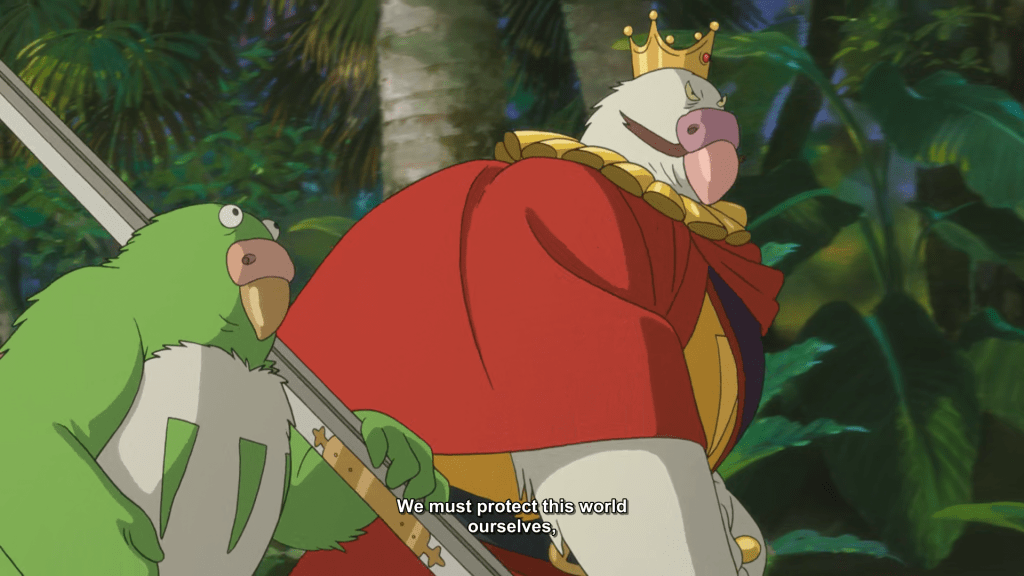
The tragedy

After going through all these feelings of freedom, Kate decided that she will trick her readers into a tragic end for her protagonist Mrs. Louise Mallard. The confidence she built in reader of this story in the early part of the story is revealed to be a misinformation. Mr. Mallard knocks on the door unhurt, showing no sign of going through a deadly accident. In that shock Mrs. Mallard dies from the heart attack (a heart attack due to an uncontrollable joy as the doctors in the story diagnose)

It is the magic of Kate’s story telling which shows what she actually thinks for the women in society especially women of her generation. She has very less hope for the empowerment of women, women like her to be very specific. That is why she has inserted this tragedy in her story. This tragedy is a metaphor for her low hopes for society to change to grant women their fundamental right to freedom. (Luckily that is not the reality today)

The death of Louise is in a way the indication that if society denies the freedom for a woman, then the only way she can have her freedom is by embracing death. Death is better that such societal imprisonment and repression. This is very serious but goes unnoticed many times in this story because there is no way everyone will understand and appreciate the seriousness of this tragedy. One has to either go through or closely observe such instances. For the times of Kate death was the true freedom for women.

Whether Louise died from happiness or not is also the most misinterpreted part of this short story. There is no medical evidence to prove whether a person’s heart attack was a result of extreme joy or sadness. At least there wasn’t any at that time. The doctors in the story might have guessed joy as the reason for heart attack due to the happiness Louise was experiencing when she realized her freedom. The joy was so certain and long lasting for her that she had no time to react to the shock of the news of Mr. Mallard being alive. It shows how feminine emotions, ambitions will always remain misunderstood to the mainstream society. That is the real tragedy of the story.

Feminism – Freedom and respect for everyone in the end     

Man is born free. Freedom and human being are two inseparable concepts. Many great people in history have sacrificed their lives, spent their precious lives to make others free. Freedom both physical and mental is one important aspect of every person’s identity. Freedom enables a person to have their own way of living the life, nobody can force others to live their life in certain way.

So, when we define freedom as the ability of people to do anything they want in the ways they want, we end up in a peculiar dilemma – a paradox. If a person is ‘influenced’ by his surroundings to make a choice in certain ways, will it be called as the true freedom? On surface you will see that the person him/herself is the one making decisions and taking actions in their own ways; So, it seems to represent the freedom. But when you understand that so called ‘free’ person was influenced by his/her surrounding to take certain course of action in a certain way the word ‘freedom’ feels like a misnomer. Even though the person was free to take any action, the action he/she took was under an influence rendering the meaning behind “to take any action” useless.

When such freedom to take actions is unknowingly influencing the subject, it can be called as a false-freedom but when the person knowingly takes the same action even when they know that they are taken due to the influence of the society then it becomes a sacrifice, the person undergoes repression. This is a conscious sacrifice made by the person to maintain the order in the system. A sacrifice made by this person of his/her own freedom. When this sacrifice is fully voluntary decision, it is rarely accounted to be valuable because very few people truly understand what it means to be free. The more indirect the influence the more people feel free.

That is exactly where feminism becomes important. The societal construct, the men and even the women in society created certain conditions where other women receive false freedom. This false freedom facilitates women to deliver benefits to society but somehow the society is not liable to return the favor back to these women. This exactly what is wrong with the conventional societal construct. This renders the sacrifices made by women useless. No wonder why modern feminism sometimes focuses on doing exactly what men do to prove the point. That is why the ideas, emotions presented by Kate Chopin through her short story ‘The Story of an Hour’ are very important.