
Alienation and Creativity

Creation for capitalism, consumerism and pleasure maligns its true purpose which actually is to create joy and a sense of belonging, comfort and safety. Alienation is the end effect of such capitalist processes where people have isolated their humans side for the rat races and FOMOs. Pure creativity, empathy, connect with nature and self can help use to preserve that human core and come out of the alienation.

How true forms of creativity can help us to reconnect with our human core

“On The Train Ride Home” by The Paper Kites

I long, as does every human being, to be at home wherever I found –

Maya Angelou

Humans – the creative animals

I think creativity is the most important quality granted to human beings. Nature in itself is the ultimate and the best creation which at the same time is also the creator of many things. Animals, non-human beings too have the gift of creativity to certain extent but human beings have outperformed in using this gift of creativity. We are always creating something, we have tools, we have automated processes to create anything we can understand. This creation of things has led us to becoming the most developed species on the planet. Creation can be in any sense – creation of music/ art/ cultures, families/ society, factories/ industries/ conglomerates, institutions/ organizations, cities/ metropolitan, governments, policies, supply chain, and what not! All these creations are intertwined to prove how advanced the human species is. You must also remember that once a process of creations starts generating fruitful outcomes it gets automated to optimize, to improve the efficiency. Most of the times we forget that some creative processes are not meant to be optimized because value of their outcomes is not materialistic. The concept of efficiency and/or optimization is purely materialistic concept. But as we are progressing ahead as the species, most of our creation processes are getting robotized, where materialistic outcomes are more important than the process of creation itself.  

Young generation has crucial role in deciding the future course of our species, especially when we have this great tool of creation – our creativity itself. People of my generation (millennials and Gen-Z to some extent) are the key creators of this time who will decide where our future will lead us. This generation is completely busy in various ventures of creation to justify their own life. But, as I have mentioned before, our creation processes have become so mechanistic, so robotic to gain more, extract more materialistic outcomes that this young generation is getting more and more detached from the real purpose of creation in its true spirit. The consumerism and (crony) capitalism has thrown today’s youth into a forced state of alienation in spite of being living in crowd, densely populated resourceful, glamorous cities. We are lonely in spite of being surrounded by the crowd.

This loss of attachment from the spirit of creation has led to the alienation of the today’s young generation – who many times go through the feelings of isolation, meaninglessness, directionless, confusion – it’s not just a normal existential crisis through which every young generation of their times goes through rather it’s the blurring of the true spirit of living in today’s young generation. Please keep in mind that it is not mistake of this same young generation. The system, society, institutions have evolved in such way that the creative processes are getting designed more for materialistic optimization instead of getting created for the real upliftment of the human civilization. Feels like we are losing touch of the real purpose of our being.

An Australian indie rock band called The Paper Kites released a song called “On the Train Ride Home” which in my opinion tries to touch those feeling of “alienation” which our today’s young generation is going through. Deep down we all know what we really want, we know what our core is but the systems in which we are living today have made our lives more and more mechanical, even though we are in the process of creation that creation no more belongs to us, that detachment, that alienation, that freedom from the vicious capitalistic cycle is what we are yearning for in the end. This is what this song for me is.

The Paper Kites
L–R: David Powys, Sam Bentley, Sam Rasmussen, Christina Lacy, Josh Bentley

I will dissect this song from the point of alienation; for me that is what it is all about.

The lyrics of the song is credited to Samuel Bentley, On the Train Ride Home lyrics copyright: Wonderlick Pty Limited

(It’s a song which needs to be treasured, hidden from others so that no one spoils it and I know I am committing a personal crime by exposing it. But such creations need more exposure and deserve proper appreciation too.)  

Waiting down at the station
I don't remember, think it was late then
Standing, always so quiet
We're like elevators filled up with strangers
No sound, no hallelujah's
Still I was praying on the train ride home

The starting of the lyrics creates an imagery of the person waiting for a train home. The complete separation from the surrounding has made this person to forget vivid details, it shows the mundane-ness, the separation from surrounding to just reach a safe, calming place which is home. The feeling of loneliness in spite of being in the crowd shows how there is no emotional connect between people. Elevator filled with strangers shows that people are closer and more connected, more accessible but they are not closer emotionally. This is exactly today’s situation, social networking and internet brought us so close that we can ‘poke’ our friend living in another hemisphere within few seconds and still we will see people craving for true connections more than ever. No hallelujah’s shows the loss of spirit, loss of soul in people who are part of this – physically close but emotionally isolated crowd.

If I can't get the things I want
Just give me what I need

Here, the person is aware of the difference between wants and needs which shows that his/ her separation from home to go to the crowded place to create a better resourceful life was not the ultimate goal. This is the only way through which this person can live a life. The system based on the cycles of consumption has narrowed down the meaning of living a life to mere survival. One can get as many things by obeying this cycle of consumption but it will not satisfy the hunger – the emotional hunger, that intimate craving of humanity. The distinction and use of wants and needs is a very smart way to show how the person is trapped in the system to survive but deep down they know what actually makes a fulfilled life. That is why person asks for basic fulfilment if not all what they desired.       

Our words fill up the pages
Fill up the days with psalms for the ages
Still those vows that we all speak
We break them like concrete
And just make our words cheap

This part of song shows how words have lost their worth. Words in the sense the sense of commitment, sense of loyalty to keep the promises. The piousness of the daily prayers, the vows are less cared for. This expression shows how insensitive we have become to just gain the materialistic means, to survive.

This is exactly where it struck me that this song is not just about average existential angst every young generation goes through; this song is more about the alienation of a person where system does not value real creativity – which gives our lives meaning. The system now has been maligned with the materialistic efficiency. Consumption has become more important than the end effect it creates. Mention of “wants” and “needs” thus highlight the culture of consumption here.    

I want someone to grow with
Songs I can sing to, and I family to cling to

The song tries to conclude with the ultimate pursuit for living a better life. Why are we all doing the things which we do? Why do we go on job? Why do we work all week, live paycheck to paycheck without any greater purpose – in spite of knowing that we hate this work at its core? Why knowingly, intentionally are we craving for more and more materialistic pleasures?

I think it is because of the recent vile cycle of consumption. I have a reason to justify this. Somewhere we know that the process of creation in which we are involved is not doing justice with our pure humanistic core.

As a human being all we crave for is the mutual growth, sense of fulfillment, love and intimacy for each other in this limited time on the earth. We know that ultimate goal of creation should be this humanistic goal, but the moment the creation loses this human touch we suffer from alienation, a sense of directionless, sense of being confused, a sense of trapped inside an infinite maze. This is the exact moment when the person craves for home, family and intimacy.

The train ride home is that craving for being the real human being who values emotions, commitment, love and happiness of the loved ones.

But If I can't get the things I want
If I can't get the things I want
Just give me what I need

The person understands that in this seemingly flashy, attractive, glamorous but mechanistic, mundane, lonely and unemotional life there is some hope that they at least will be able to preserve their human core. The request for the “need” over “wants” is the cry for that preservation of the human core.

Alienation

What urged me to completely (and maybe blindly) associate the lyrics of this song to alienation is how Socialism defines the concept of alienation. Karl Marx identified how a process of creation thereby value creation could isolate its creator from its creation. This isolation of creation and creator once intensified removes all the human, emotional attributes from the process of creation and here the brutal capitalism starts. The creation is now mere a mechanical, boring routine of materialistic revenue creation where humanity has no value.

Karl Marx on alienation

Karl Marx presented very beautifully the purpose of creation in human life. It is what separates human beings from other animals, non-humans. We are always involved in creative process which have a personal purpose, a meaning. That is why our creations and it’s end results are so intense and are way different than how other non-human creative processes. The moment such processes start demonstrating the separation of creator, the process of creation and the end-product of creation, capitalism/ consumerism start peeking their head out thereby slowly eliminating what made such things processes humanistic. This exactly is alienation, there is no sense of home, comfort or belonging.     

Marx defined four types of alienation in his discussions:

Alienation of an object –

A factory labor stitching the designer clothing does not bear the capacity to own it and enjoy it. Even though the labor holds the skill and knowledge to create that fancy clothing the system is rigged in such way that the emotional connect between creator and creation is lost forever.

Alienation of process –

The process of creation has become so mechanical, so repetitive to improve the efficiency and to increase the output that humans involved in them have also became mechanical, unemotional. Today’s young generation working in mundane jobs, the jobs they hate only for the paycheck and the job without any personal purpose is the example of that alienation. The separation of creator from objects makes the object accessible to anyone but this accessibility is not equally distributed because the input to output ratio is highly skewed. The value that is created in the creation of the object does not reward the creator in any good way thus creator – the labor remains poor. This also make the creator to lose the faith in the process thereby leading to the alienation of the process.

Alienation of species-being –  

The moment this mundane, highly optimized process does not bear any real humanistic purpose, the creator no longer follows the process to reach a better position in life spiritually, intellectually through the process of creation. It’s like the human creator has become a machine giving throughput. A sense of being a better species is lost forever – this is another form of alienation.

Alienation between humans –

Once the creator no longer has a direct connect to its creation, has no faith in the process for better pivot of meaning, has no sense of humanity, the value for another human life is lost. It is not because the creator or this person demeans or belittles others, it is because the creator himself/ herself does not consider their efforts their value of better worth, hence same treatment is given to people in their surroundings.

There is one famous snippet of a speech from Gabor Maté, a Canadian-Hungarian physician who has done work in ADHD, trauma, childhood development.

Gabor talks about broader scope of alienation which somewhat is based on the Marx’s idea of alienation.

Alienated from nature –

We as the human species no longer have that connect with nature which has resulted in its deterioration. You might have seen that there are still some tribes living in the remotest, inaccessible areas round the globe which are completely in tune with the nature and have preserved it. Today’s consumerism has detached our objects of consumption from their consequences on nature thereby destroying it.

We have to somehow re-establish that connect with nature otherwise nature has its way of adjusting things (we are seeing its effects all around the globe). And remember that this re-connection is also linked to we being the human beings. I mean, who doesn’t like lush greenery, pristine rivers and remarkable biodiversity!

One of the first condition of happiness is that the link between man and nature shall not be broken.

Leo Tolstoy
Alienated from work –

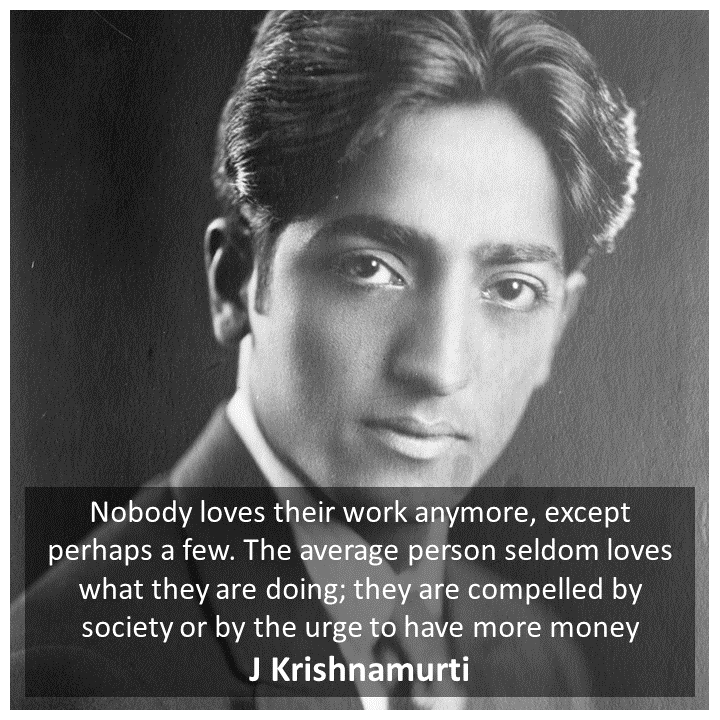
The works we are engaged in are rarely driven by a meaning or a higher purpose. Even if it has some meaning it is immediately inked to some materialistic thing, there is nothing wrong in it as far as survival is concerned but at least this awareness should push us to work for the things with higher humanistic, spiritual purpose, that is our real core as the creative beings. The alienation from work has led to depression, anxiety, emotionless feeling, numbness among every one of us. We are replacing this meaninglessness by other material means which involve how we look, what we possess. Such means of damage control are creating more damage to who we are and what we work for which defines us. You will see, the economy we live in highly focuses on associating meaningful experiences to materialistic products.
Alienated from other people –

The moment we lose the hope and connection between our surrounding we are losing some human part in ourselves which dims down our perception of humanity for others. We trust very few people or almost no one, the relationships rarely have that depth, that intimacy. Social structures based on the depth of relationship are dwindling. The mental illnesses are emerging due to the lack of social emotional support system, growing intolerance, apathy on global level are also effects of that.

The start of the song where it mentions people filled in the elevator, disinterested and having been lost their spirit is the same alienation.

We have to start forgiving people again, create safer environments where we can express ourselves without any prejudice. It is scientifically backed that putting trust in people and treating them with high worth makes them trustworthy and high performer (see Pygmalion effect) In the end, everyone of is craving for someone to rely on and also someone who will make our sacrifices worth of the hardships. Associating positivity of self-worth to being appreciated and being respected for who we are is hardwired in our human circuitry. Our existence gets redefined to higher standards the moment other people (even single person) recognize it. (History has examples where people did impossible for far lesser people who believed in them without expecting anything in return)  

The urge to cling to a family, sing a song to someone, grow with someone mentioned in the song is asking to escape from such form of alienation.

One of the oldest human needs is having someone to wonder where you are when you don’t come home at night

Margaret Mead
Alienated from ourselves-

We have lost the connect our inner self, our curiosities, our inner child in the pursuit of the consumerist ends. The disconnect with the surrounding and numbness to the processes in which we are involved is furthermore deteriorating our inner human core. We rarely listen to our gut feelings, instincts because presence of lots of data, information around us creates a false sense of understanding of the things around us. This is alienation from ourselves, we don’t even trust ourselves – a simple advertisement or targeted influence is enough to make us buy that next thing that we don’t even want.

The part in the song where it talks about making our words cheap is the alienation from self. There is no concept of morality and inner compass in such alienation.

We know deep down what exactly is happening with us and around us but the system rarely creates conditions to come out of that.
How to de-alienate?

The desire to know your soul will end all other desires

Rumi

The core reasons of alienation lie in the loss of empathy, loss of higher meaning/ purpose and loss of responsibility/ commitment (committing to something to change the course of life requires higher sense of responsibility). We are empaths by default as a human being, so it is imperative to preserve this attribute even if the surroundings force the opposite. I know this is difficult when we are responsible for multiple things and people, but you are also responsible for yourselves. It is worthless if you win, achieve something great while losing yourself in the end.

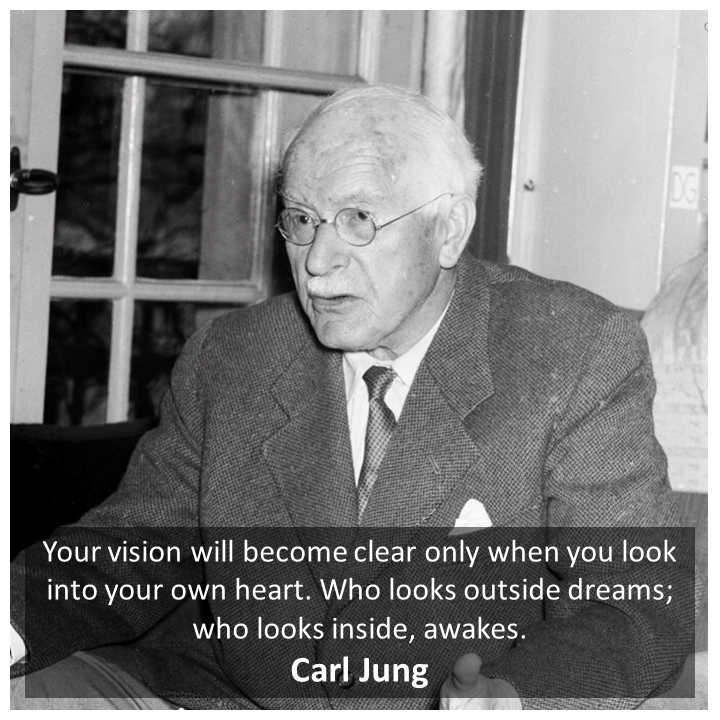
The creative processes whose outcomes are not attached to any material means are thus the purest paths to avoid such alienation in the times of high consumerism and negative effects of capitalism. High consumption is an addictive form of alienation which can be nullified by pure creation. Consumption will give pleasure but creation will give joy.
The prayer to ride home in the song is the hope that we will again meet ourselves in spite of such extreme disconnect. Pure creativity is the answer to such prayers as far as the process elimination of alienation from our life goes.
What separates human beings from rest of the animals is their creative ventures otherwise we are exactly like all other living things. We are the beings who engage in multiple activities of creation which are driven by conscious intent, a reason. This ability to create something has led us to become the technically advanced species on the planet. If we establish the connect with our inner core through meaningful creation, the victory over all forms of alienation is possible.

True creation is all about connecting to every possibility there is.

Such deep concept of alienation expressed in a wholesome and soulful song by The Paper Kites truly deserves more and more appreciation and recognition. Words failed me to express how it made me feel (that is exactly why I didn’t control my words count, where few verses of this song did the same job. No wonder poetry is highly potent than prose!)

The song-
Deconstruction – reading between the lines

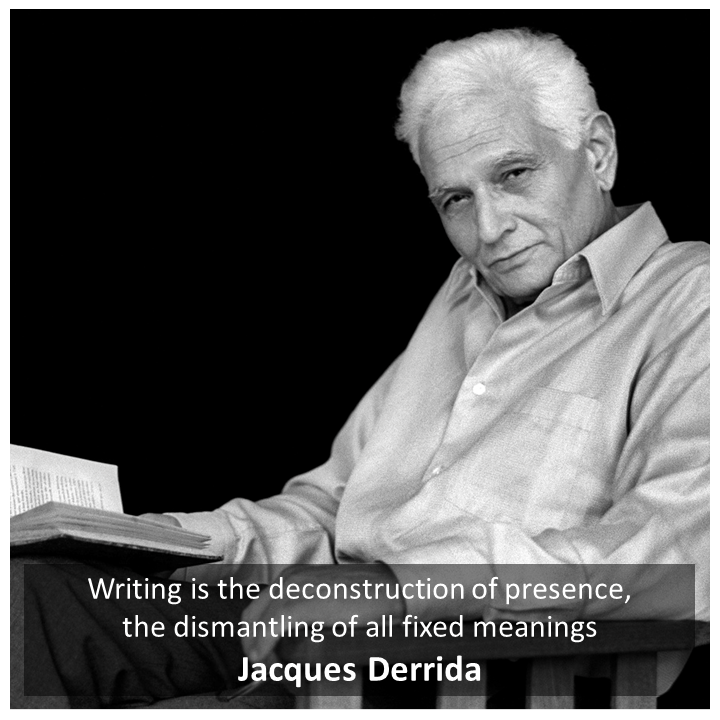
Logic always talks about ones and zeros. But when logical, philosophical arguments end up in a paradox we discover a totally new understanding about reality which is neither one nor zero but a spectrum. Jacques Derrida’s basic urge through deconstruction is the rejection of the duality or presumption, and seeing beyond what is shown using the limitations of language. Deconstruction helps to come out of the duality of any argument by putting relative meaning at the center instead of loyalty towards the signs used to show the meaning.

Jacques Derrida’s philosophy for the better understanding of the reality

Language and its purpose

Questioning is at the core of philosophy. Philosophy’s main pursuit is always to create an understanding about the subject of interest. It provides a way to create a basic and concrete understanding of the subject. It is a way to understand the creation and things that are beyond creation. Philosophy is the process of formalizing any concrete understanding so that a new evolved, more absolute understanding could be built upon that foundation.

The means to create such understandings are languages; it could be any language, of symbols, pictures, sounds, geometries, etc. Language serves as the most important tool to formalize any thought, idea, proof, postulate. So, every component of the language has to mean something to create a bigger meaning; like in speech, every word means something. When I say ‘child’ you will see a human young-ling, when I say ‘apple’ you see a red fruit of that particular shape, and when I am saying apple, you are sure that I am not talking about ‘oranges’, because orange is associated with something different looking ‘fruit’ (some would even think of an iphone when I say apple!). This shows that just like how atoms create molecules thereby the object, in similar sense, words of basic meaning create an expression and thereby some context which shows what we mean when we are saying them together to convey a bigger meaning.

Just like atoms of different elements from the periodic table come together in different permutations and combinations to create variety of compounds and infinite objects rather the whole universe, in the same sense every component of given language carries a value – a meaning which builds a narrative, an expression to create a context, a logical statement; a set of such logical statements together can point to some truth, some fact. If used in smart ways, it can help us to discover the hidden sides of our understanding. That is roughly how science and mathematics work.

But you know what? When we are investigating the boundaries of our understanding, we see that they all end in paradoxes, some self-referential paradoxes. Take for example, Epimenides paradox (the Cretan philosopher Epimenides of Knossos) as follows:

Epimenides, a Cretan says, “All Cretans are liars”.

Now what does this convey? Prima facie it feels like all Cretan people are liars, but then you see that person who is saying this is also a Cretan that makes him a liar, so he too is a liar. But if Epimenides himself is liar then what he said is also a lie, meaning that Cretans are not liars rather they are veracious. If Cretan’s are veracious then what Epimenides says is truth meaning that all Cretan’s are liars and this means Epimenides is also a liar. We end up in a loop, a self-referential paradox.

In the end, the sentence does not make sense, logic, the sentence is meaningless.

What happened here?

We used a language medium to create a meaning which helped to create newer understanding but that new understanding led us to bigger confusion, meaninglessness.

Here, I pose a very important question –

if the context of the sentence is meaningless does that mean that the words from which that sentence is made – words which have their own individual identity, their own absolute meaning a context are also absolutely meaningless?

What if we encounter same situation in the philosophical endeavors? as they are the building blocks our overall understanding of the creation and things beyond creation.

This is where the philosophy of deconstruction given by Jacques Derrida comes into light. I will try to explain deconstruction by building on some ideas. (you will see in the end that nothing “absolute” makes any sense or doesn’t even exist. That is also why deconstruction was rejected by many great philosophers but it has a valid point to prove.)

The flow of thought presented hereon is roughly like building an understanding and then challenging that idea because it does not present the best model of how our reality, our consciousness work.

Logocentrism

Western philosophy is based on the foundations of ‘the reason’. The Greek word logos (λόγος) literally means word, discourse, or reason. So, logocentrism considers language as the expression of reality and hence stands as a mediator between conscious and reality.

It is very important to understand that every type of understanding, knowledge building, sharing, communicating activity is associated with language. You need a medium to give a proper structure to what you are thinking and let others comprehend it. Logocentrism focuses on that.

As we have seen already that use of language in certain way could create meaninglessness, self-referential paradox, does that mean language is failing to create better truths? What exactly is happening? If language and logic is paradoxical then the reality which they are explaining must also be paradoxical but that is not the reality we live in (if it would be paradoxical, then reality would not exist, the paradoxical elements would annihilate each other)

This means that there is something lying beyond the territories of language which we are not able to comprehend and translate which could solve this paradox of language.

(Park this first thought in your mind for some time)

Plato’s definition of reality – Platonism and The theory of forms

Plato called out for “essence” of everything that exists. Essence represents that absolute truth which we try to define using ‘forms’, the forms are ideas which are non-physical, timeless, absolute. The forms create reality but they are beyond our grasp because of our physical limitations.

So, building on the theory of forms Platonism believes that in surety that there is something truly pure and absolute at the bottom – at the root of existence. It supports the existence of abstract objects which are believed to exist in the realm which is different from sensible external world and our internal consciousness.

So, when you try to comprehend the Platonism and logocentrism together, you will appreciate that language and the logic it conveys, the meaning, the context it conveys is the foundation of how we understand the creation, the philosophy itself and the products of philosophy.

Language creates an objective pivot to create absolute ideas whose correlation yields into higher truths. Language creates ‘meaning’, ‘context’, ‘logic’ according to the Platonism.

(Park this second thought)

Semiotics – Language as signs

If language is so important to understand the true reality, it becomes very important to create a structure, rules, grammar to use it effectively. Semiotics deals with these ideas.

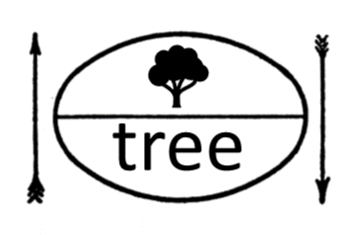
A sign is an important part of any language, one can say that any language is made up of signs. Ferdinand de Saussure, one of the two founders of Semiology established the two components of sign as signified and signifier. As these both words are self-explanatory – signified is the one which is of interest (also known as the ‘plane of content’) and signifier is how we are observing thereby expressing the object of interest (also known as the ‘plane of expression’).

So, in written language when I am saying apple, you know I am talking about the fruit called apple which looks red, tastes tart-sweet, is crispy-crunchy in texture when one takes its bite.

(This is the third thought to be parked)

Aufhebung – the sublation

In the modern western philosophy, which considered the language as the path leading to ultimate truth the idea of sublation created ‘logical’ revolution. The language as a tool to develop logic and this logic then leading to the investigation and discovery of the ultimate truth became really vital. For logic to remain ‘logical’ one needs to define the basic objective sides like right or wrong. A given idea must be right to exist in reality otherwise, it is wrong and is invalid. We build many arguments of right and wrong to lead us to the absolute understanding. Georg Wilhelm Friedrich Hegel is known to develop the idea of sublation. Aufhebung literally means ‘to suspend’, ‘to abolish’.

For example, darkness is the condition when there is no light. If a place is called ‘lit’ it means that there is no darkness. So, this dualism created through sublation gave the greatest philosophical power to language and thereby logocentrism. When something is not good it is called as bad, when there are enough logical arguments like such ‘binary oppositions’, one can reach to the absolute truth as far the logocentrism goes. The process almost becomes objective, self-sufficient, and mechanical, there are no chances of human error when we are handling philosophical treatise; this is the same foundation through which judicial systems created the structure of law.

(the fourth thought to be parked)

Deconstruction

What came first – chicken or the egg? meaning or language?

Just recall the four ideas which we parked before.

Jacques Derrida is the philosopher who developed the ideas of deconstruction who solved the paradox of the logic in the logocentric philosophy.

It is important to accept that wherever a paradox arises there lies an opportunity of the creation of a new branch in our knowledge system. The deconstruction is that new branch which got created here. Derrida rejected the idea of Platonism. His work in deconstruction is highly inspired from the philosophy of phenomenology. Phenomenology is the study of fundamental nature of subjective consciousness and experience.

One would get confused to appreciate the matter of subjectivity in a philosophical discourse but phenomenology presents some valid points when we are questioning the reality and developing its understanding. How can subjectivity guarantee absolute truth?

Life was always there even before chicken and egg and also in both of them

Did you get my point?

The moment we separated egg from chicken and posed them as two distinct objects the famous question about their existence in timeline becomes meaningless. In the same sense, other similar questions have exactly same meaningless fate – what is life and death? what is good and bad? what is right and wrong? what is truth and lie?

Derrida pointed out that the moment we create duality in any argument we are losing some important information which could have showed us the ‘real’ reality. Maybe reality is not just two sides of the coin, maybe absoluteness itself is not ‘absolute’. In the attempt to create purely logical arguments, we lost the possibilities to see the real context behind the existence of these arguments.

Derrida strongly promoted the idea that meaning was always there, language is just a way to convey that meaning. Using language to find out new meaning does not lead to newer meaning because this ‘structured’, ‘logical’ language has already submitted itself to the already established two sides of the result – it will either be ‘right’ and if it is not right it will be ‘wrong’.

(Now bring that first parked thought of logocentrism – idea that language is the expression of the reality)

As the logocentrism goes, language is the mediator between consciousness and reality.     

Now read the lines below:

This is an example taken from internet. Fact is that every average, normal person can read and understand this. Our brain is always on energy optimization mode. It never reads each and every letter to make a meaning out of the given word, it looks at the bunch of symbols to make sense out of it. This is small example to show that meaning is more important than the symbols, signs used to convey that meaning.

If we were to strictly submit to the rules of English vocabulary and grammar, this presented sentence is senseless to all of us. That is why complete loyalty to language instead of meaning is of no use as Derrida says while explaining deconstruction.

(now bring the remaining thoughts parked in your mind)

Meaning is relative

In deconstruction, Derrida talks about how we understand anything, any idea and how logocentrism, structuralism limited our understanding. The example of scrambled words helps to identify the idea of difference – Derrida called it Différence (as in French pronunciation). Whether I call it difference in english or différence in french, you understand what I am talking about because you get the context (that we are comparing something and this is the word to establish the gap between that comparison)

When I say apple how do you know what I am talking about?

You understand that I am talking about a fruit based on the context of my speech. Otherwise, there are definitely some people who would thing of an apple as an iPhone. So, when I say an apple, you think of a class of fruits, compare other fruits with ‘this’ one, this happens really fast and we are unaware of it after some time. This is true because when I am saying apple you are sure that I am not talking about oranges or any other fruits.

When I am saying dog, you know it is dog because it is different from cats, cows, horses. You are sure of the dog ‘animal’ because it is different in some sense than other animals.

Do you see what is happening here?

Our association of given word to any object whether it may be tangible or intangible is not absolute and self-reliant. It is relative. It is built based on how it differs from another objects. This is really important to understand and appreciate when one is trying to understand deconstruction.

The logocentric and linguistic tool that we are tying to use to understand the absolute truth has its limitations of preconception. The logic has already defined its two states of existence. That is why the language based on such logic will be filled with paradoxes and will never yield newer truths.

Derrida posed validity of his idea of deconstruction by showing the limitations of semiotics.

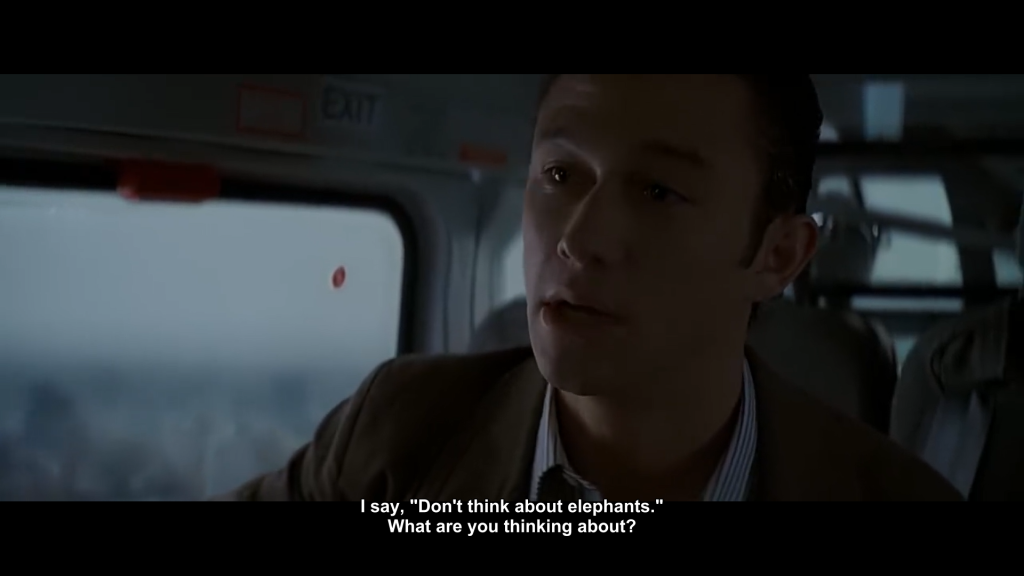
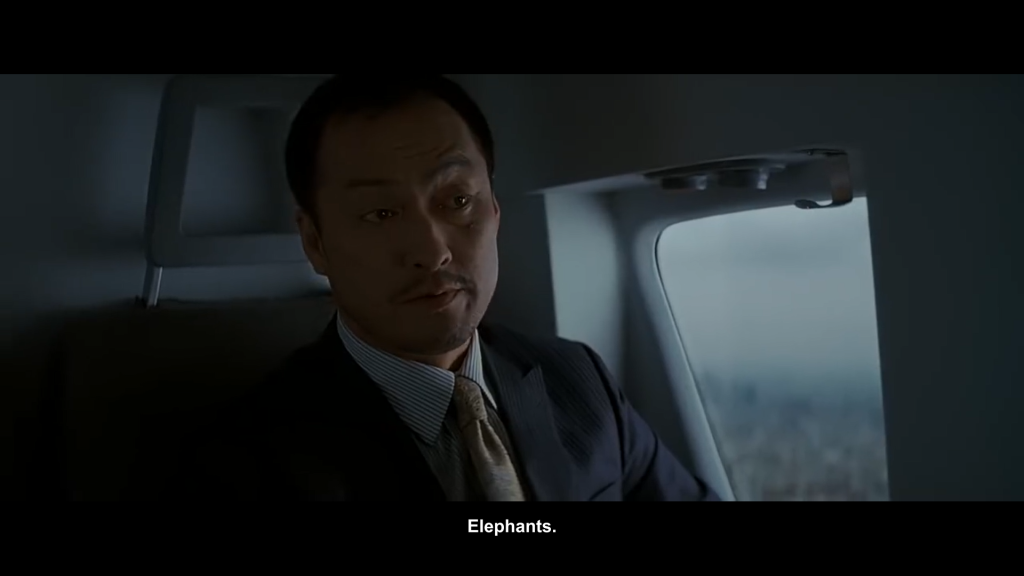
Take speech as the language of philosophy to find the absolute truth. There is a moment in Christopher Nolan’s movie inception.

We always initiate our thinking by creating certain arbitrary point as a pivot to build logic upon it. Here, the person was told to not think about elephants and in order to not think about elephants he had first defined what elephants are – where he paradoxically first thinks about elephants – to not think about them! Did you see what happened here?

Derrida says that even though the ‘sign’ which goes as the fundamental block of language as semiotics show, it is not self-reliant, self-established. For a sign to signify something specific, it has to differ from the other objects on certain attributes, the meaning of that sign will be relative.

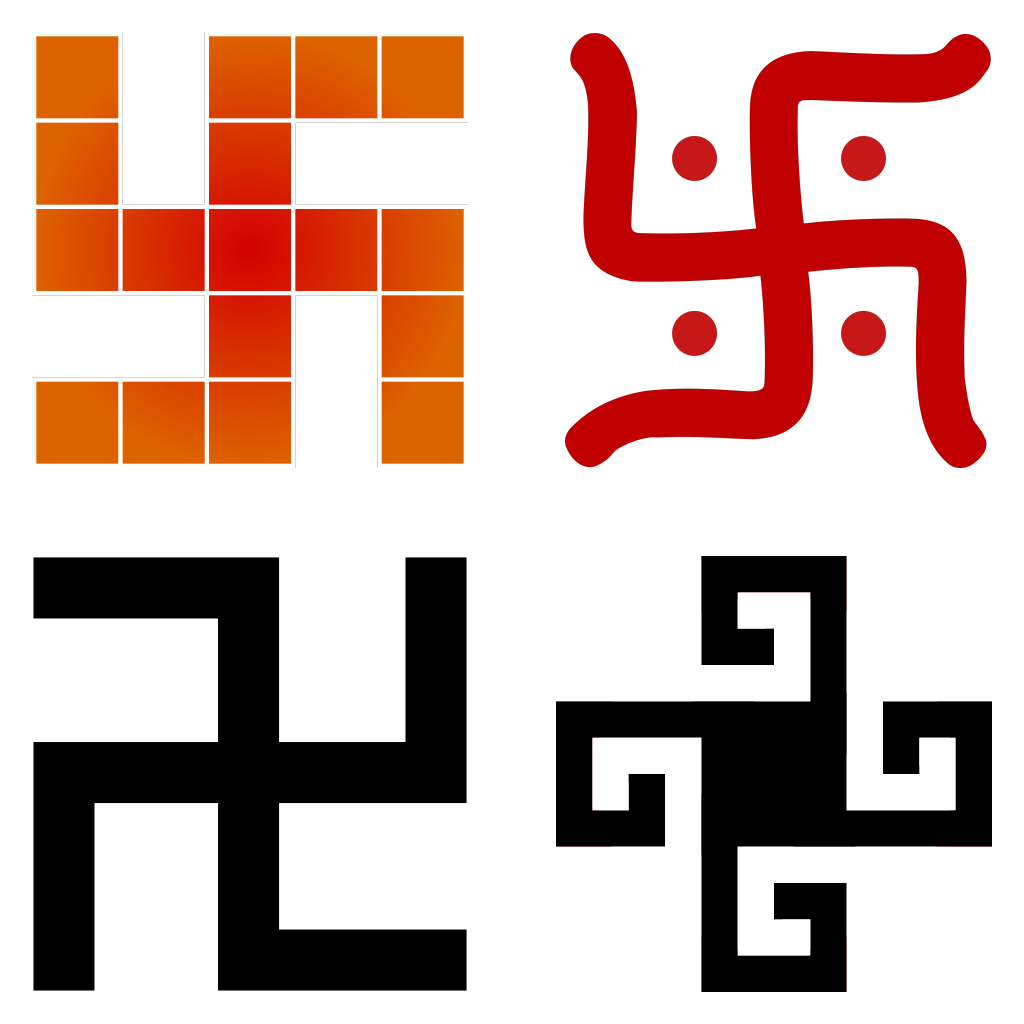
The Swastika used by Nazi is a holy symbol in Hindu culture which signifies well-being. (you definitely are aware of its meaning in western civilizations)

Meaning of signs is always relative, contextual.

It is our complete loyalty to symbols which misleads us, where in reality the symbols are mere media to convey the meaning, context and not the other way around. Meaning created signs, language, language does not create meaning. That is exactly why complete and blind submission to language in the pursuit of truth leads to dead end.

The purpose of language/ signs in deconstruction

(recall the fourth idea of sublation, duality in logic)

Derrida attacked the semiotics by showing its limitations.

Now, we already understand what is signifier and signified. Derrida argued that if there was no difference between signifier and signified there would not be any purpose of existence of the ‘sign’.

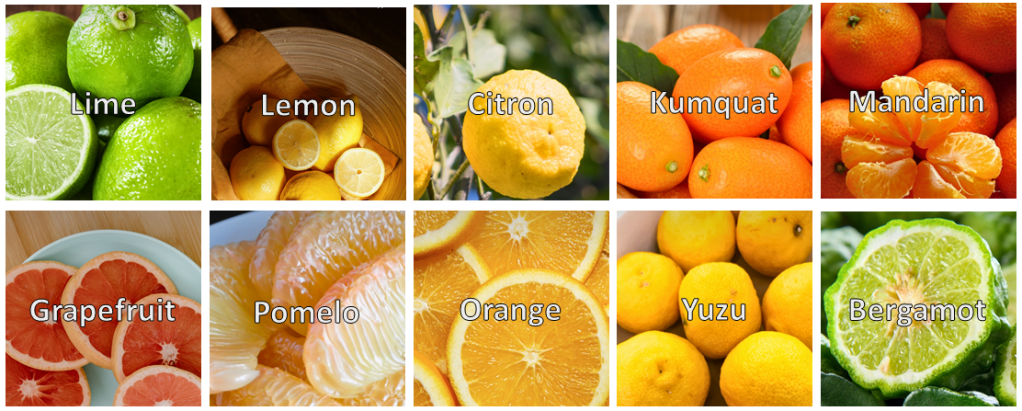
To explain this argument in simple words, if you are not told about the varieties in the citrus fruits, you cannot tell which one is Lemon, which one is Mandarin, which one is Lime, Pomelo, Kumquat, Grapefruit, Bergamot and Citron.    

If you don’t know the difference, everything would be lemon and orange

The relative difference between objects and ideas gives them their meaning. That is exactly why surrendering to strictly assigned meaning would steal the idea of its real nature. The idea would lose its other aspect due to the loss of information during formalization.   

So, deconstruction shows that meaning is relative. When a sign is presented, a language is used to build an idea,  it invites all its attributes and its contradictions. Again, Derrida says that blind surrender to formal attribute would never help in revealing the true nature of reality.

That is exactly why deconstruction also challenges sublation. According to deconstruction, there are never two extremes of any idea, attribute, sign. If we give into the idea of good-bad, black white, right-wrong we are losing the crucial information which lies in the spectrum that exists between these two ends. If we are able to create different levels in between these extremes of sublation we will discover new ideas.

When we talk about darkness, we know what brightness is, the relation between these two extremes helps us to understand each other. It is also true that there is some limitation in our vision which makes it impossible to perceive the constituents of the darkness, darkness is not darkness in itself, it is made up of other spectrums of light like infrared, ultraviolet. (This is just a scientific example but same can be implemented in purely philosophical treatise)

Deconstruction

So, Jacques Derrida’s deconstruction challenges the logical dualism and the purity, absoluteness of language – a powerful tool and foundation of the philosophy.

Derrida attacked logocentrism by showing the flaws in the structuralism, Derrida showed that language is actually fluid while conveying the meaning instead of being completely static.

Derrida proved his point by showing our preferences for the languages. For discussion he took preference of speech over writing.

Speech involves various modulation while expression which is not possible through writing. Even though writing has certain symbols to signify those periodic gaps they cannot replace the advantages of speech.

Now, when an overly complex idea is to be presented, in order to review the train of thoughts again and again, written language is more effective than speech. Wherever you have to ‘technically’ present a thought, written communication is better, when you want to preserve an idea forever written communication is better than speech.

This is where we realize that there is nothing like the best and the worst. Each language has its own characteristics which can be only understood and appreciated once we see the difference between them. The differences between them show that there is no hierarchy among them. There value proposition is relative.

Now the moment I bring in today’s recorded audio-visual medium which is the most popular language of documentation, writing and speech will seem trivial, but they still hold their value in certain aspects.

The meaning of deconstruction as Derrida says is to break down the language to understand what is also does not mean. Our human instinct and training in language pushes us to stick to the predefined notion of the language whereas we forget that our understanding of that very notion emerged from its comparison to other parts. Derrida through deconstruction urged that while looking at something to understand seeing what lies beyond its appearance will give you the real understanding.

Why seeing beyond what is shown is important? Because the understanding with which we are trying to interpret what is shown was never absolute, it was created only because of the difference between what it is and what it is not.

This is where deconstruction starts to confuse everyone. Derrida called this puzzlement “Aporia”.

Why the idea of deconstruction felt wrong? And is it really wrong?

The tool Derrida used to explain the notion called deconstruction itself becomes the weapon to destroy that same idea.

The very first thing to understand deconstruction is to remove the presumption which logical language, logocentrism gives that these are fully defined, singular objects which are being discussed. The moment object of discussion becomes singular, we lose the possibilities to see its other attributes. To deconstruct is to remove the preconception that there is something really absolute that we are trying to discover.

It’s like searching for star emitting only infrared light by using the camera which only works in the visible spectrum of light, because you assumed that there is only visible light and where the light is not there it is only dark. You won’t even be able to appreciate that there are some stars which emit different type of light. You presumption of duality of dark and light prevented that different knowledge of your reality. Only relative understanding of the light waves can help you appreciate that there are some waves which are different from others, which are on a ‘spectrum’.   

Derrida’s ideas were controversial because most of the critical ideas in philosophy, mathematics are built upon clear distinction between objects and their fixated meaning and attribution.

Even for the word deconstruction, people attributed it to rejecting what the language conveys and accepting rather its opposite.

Deconstruction is not just breaking down any idea to expose its flaws. Deconstruction rejects the complete loyalty to the focal point of discussion while inviting the references which created our so called ‘focal point’. Most of the times our trained brain seeks for exact opposite which is where deconstruction gets misinterpreted.

Conclusion

Derrida’s basic urge through deconstruction is the rejection of the duality or presumption, and seeing beyond what is shown through the language. When we are talking about something we interpret what is our ‘subject matter’ because we know the differences between other subjects and ‘this’ subject. When we appreciate such differences the meaning becomes fluid instead of static, the thinking becomes analogue instead of digital ones and zeros. Possibilities open-up instead on being ended in the paradoxes. Whatever we are thinking about and establishing as the singular truth is inherently non-singular because it always needs its other counterparts to justify its position.

Many religious wars were waged because of remaining loyal to the religious languages, script and not understanding what they actually meant, many laws were exploited because the loopholes were discovered based on understanding only what they meant. This keeps on happening.

Deconstruction becomes very important tool to critique the ideas given in any discussion where the final pursuit is meaning and not the formality.

For Derrida’s deconstruction the ‘Aporia’, the puzzlement is not a sign of weakness rather it is the sign of maturity.

Derrida’s deconstruction thus showed that only fancy formalization of philosophy will not help us to understand the reality. We have to get rid of our loyalty to the idea that there is something really singular out there which would define everything in the end. Meaning is not what the language is conveying structurally, it is also what lies beyond that which is not conveyed.  The things which are not conveyed are the line of comparison to define the worth of the things being conveyed.  

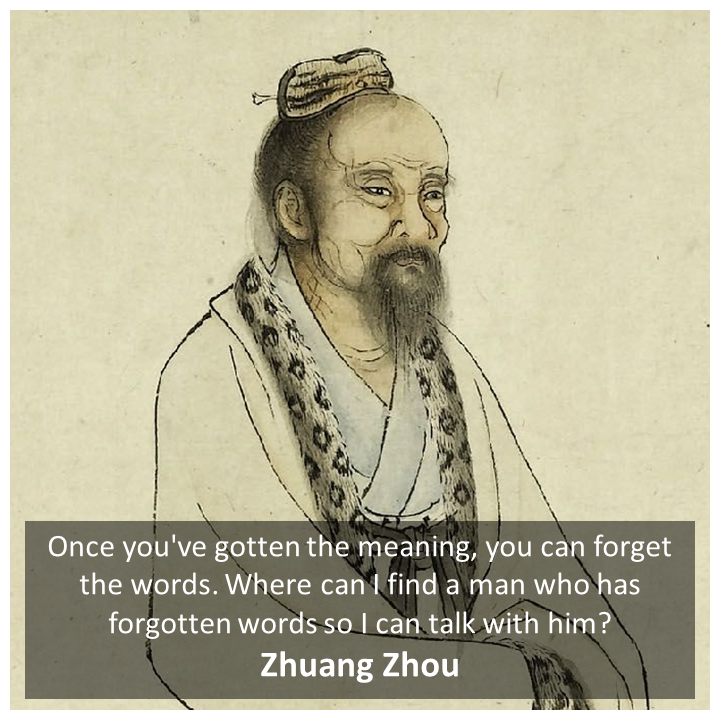
“The fish trap exists because of the fish. Once you’ve gotten the fish you can forget the trap. The rabbit snare exists because of the rabbit. Once you’ve gotten the rabbit, you can forget the snare. Words exist because of meaning. Once you’ve gotten the meaning, you can forget the words. Where can I find a man who has forgotten words so I can talk with him?”

Zhuangzi, Chuang Tsu: Inner Chapters

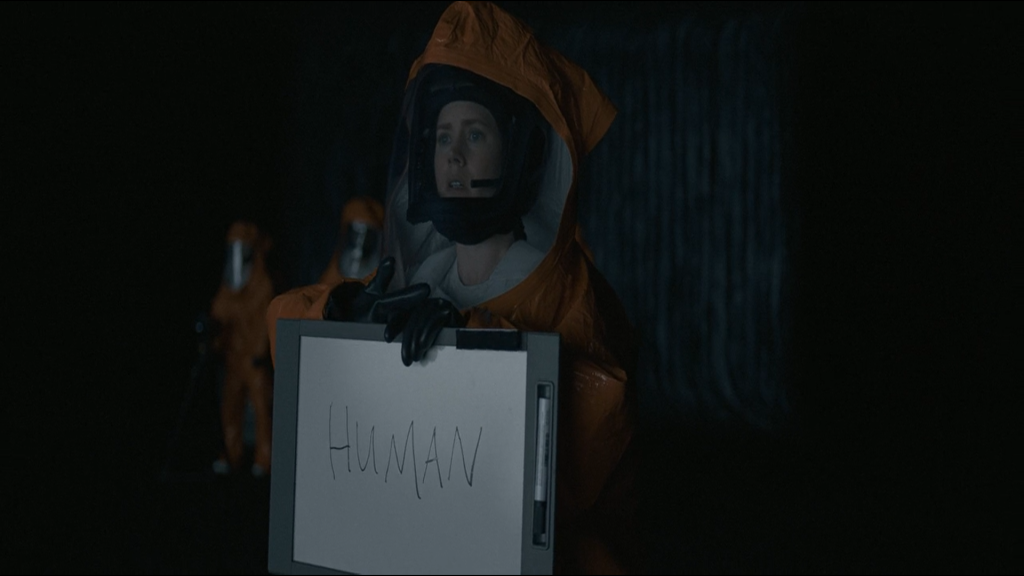
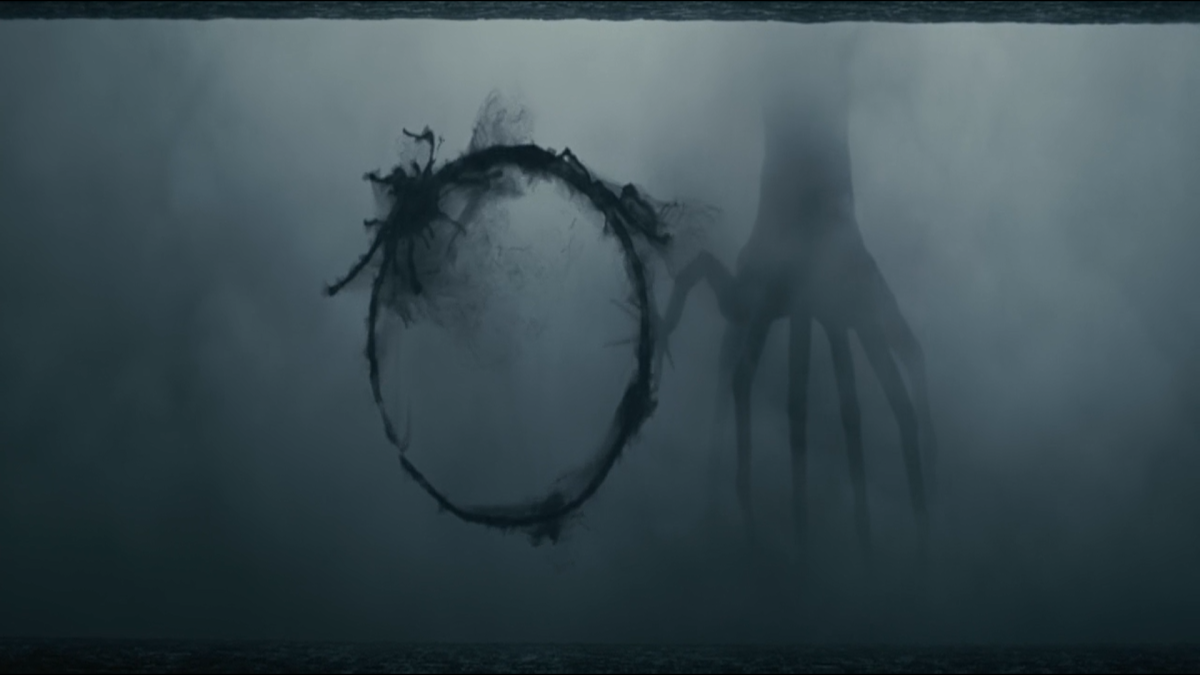
P.S. You will appreciate the ideas of deconstruction more if you watch Denis Villeneuve’s movie Arrival (2016). The movie beautifully shows the gap between language and meaning and also how potent the ideas of deconstruction are!

Undone – the hymn of Sisyphus for modern times

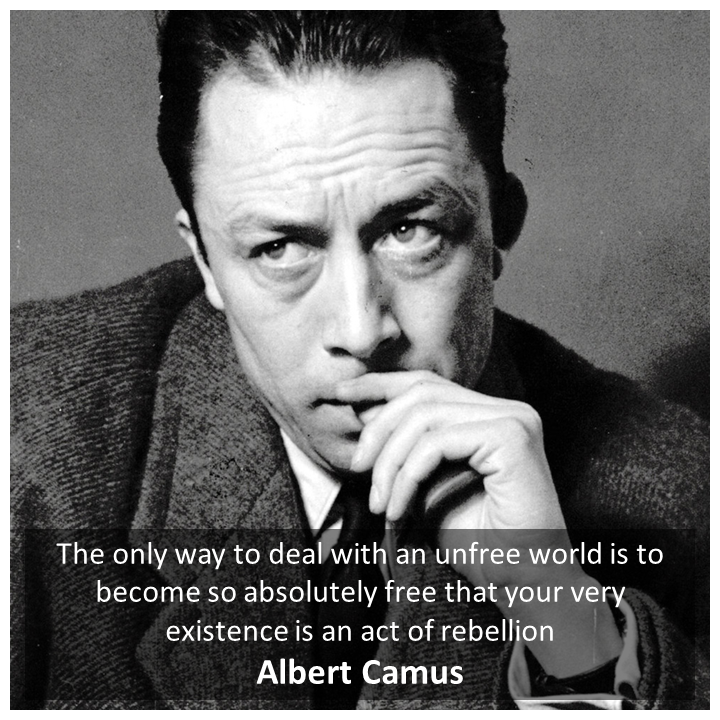
There are certain moments in life where everything seems meaningless while we take a look at the final fate of all things and nihilism takes over, especially in the times of great unexpected failure. A crystal-clear philosophy of absurdism can come to rescue in such unsettling moments of existential confusion. When such complicated ideas reveal themselves through a simple, soulful yet philosophical song spanning few minutes, the impact is immense. ODESZA & Yellow House’s song called ‘Undone’ from their collaborative album called ‘the flaws in our design’ is one such song which treasures the ideas from the myth of Sisyphus and the philosophy of existentialism, absurdism given by Albert Camus. Absurdism focuses on giving life our meaning through revolt, passion and freedom.

A simple, soulful song pointing towards the philosophy of Absurdism

“Man stands face to face with the irrational. He feels within him his longing for happiness and for reason. The absurd is born of this confrontation between the human need and the unreasonable silence of the world.”

Albert Camus, The Myth of Sisyphus and Other Essays

Some songs have this magic where you instantly get hooked to them, you cannot put it in words but it makes you feel good. You love the feeling this song creates, but don’t know why. Now it’s in your mind on loop and you brain is completely saturated with it.

Now, there comes a moment when you are busy with something and the same song is playing in background like an ambient noise, like a filler and suddenly you have this epiphany, a revelation about what the song really means. Has this happened with you?

I came across a song in 2023 and thought that I have checked out every corner of this song in my mind, but I was wrong. This song was on loop for almost 10 months (believe me on loop means hardcore omnipresent music) and recently I found something revelatory about this song. It was beyond my superficial interpretation of this song (as this is subjective, maybe I should consider myself a dumb fool to not recognize that important side of the song – someone might have found out that thing, that meaning in their early listening of the same song or maybe I am surely hallucinating in the lands of overthinking! – only the creators know!)

The song I am talking about is from the ODESZA and Yellow House’s EP album “The flaws in our design” called “Undone”. (Written by Clayton Joseph Knight / Harrison Gordon Mills / Emile Van Staden, © Foreign Family Collective Publishing, Gmr Foreign Family Collective)

Flaws in our design by ODESZA and Yellow House

Allow me to take you on a mind trip (what it meant for me actually and what it revealed to me recently)

There’s no time to hide from the sun
There’s no time to come undone
That’s easier said than done
Just pick your poison and run

The song starts with certain urgency – “there is no time”.

The song-writer wants you to face the day and don’t give up. The writer understands that it is difficult to start fresh when every hope is lost, the path you were on, the things you were striving for didn’t come to fruition or didn’t go the ways you wanted. The urgency to exist is far more dominating than what great things you lost. So, writer asks us to start again even though is will be painful. Whatever you will be doing, in the end you are going to die, that finiteness of life brings in the urgency to live, to survive. That is why the song-writer says that even though the poison of existence is painful you must do something stick to something because when the time of departure will come you will fill empty that you didn’t appreciate what existence had to offer. You will call your existence worthless. At least sticking to something will give a meaning to the life – your life – whatever it may be but that will be “your” meaningful life in the end.

I’m struggling to find out where I stand
I keep wrestling with God and with man
Tryna forge a little life in-between
A man can only but dream

The writers are trying to show how the person is going through tough times, this person is trapped in a fight between the natural forces and the people around him/ her.

This is about where do we stand in this grand existence. On a personal level if someone comes to attack me or my loved ones, I consider these lives so precious that I would go beyond limits to save them and yet in the grandiose of all this creation our planet is just a speck of dust. Even if the whole earth is engulfed into some giant star, black hole or is crumbled to dust or vaporized due to a man-made nuclear calamity, nothing in the universe is going to change.

So, how do I justify my worth in this grand existence? It’s somewhat philosophical interpretation of given lines in the song but even on societal level it shows a conflict of the mind. This is a struggle to justify the position of a person in this complicated and chaotic society.

This could also be called as an existential angst; one has to fight with the natural forces of creation and the people around them to create a life they desire. There is always this innate resistance to survive, anything small or large could be responsible for the termination of your existence.     

This resistance to survive and create the life we desire gets converted to the existential angst when all our attempts fail, when we lose hope, these are the difficult times of directionless-ness where we try to question our existence. It’s this confusion, this question that “even when we tried all the possible things why didn’t the come to fruition?”

Forging a little life indicates how small is the success rate when one tries to create their own perfect life. A ‘dream-like’ perfect life.

The time’s come to lay it on the line
When meaning seems so hard to find
It all weighs heavy on the mind
It’s easier to leave it behind

Writers are trying to reiterate the urgency through the finiteness of the life. When the right time comes it reveals everything and when you are facing multiple failures, tremendous hardships it leads to breakdown. This breakdown, this hopelessness puts gasoline in the fire of the existential confusion. It feels like there is no way out. The writers feel the same but they advise to leave this weight behind. This is the weight which is actually holding us back in hard times. Acceptance of the failures is the only way to calm down the mind, learn something new. Sometimes it’s not just about failures, its also about the way we wanted our life to be, even after making many attempts if the things are not turning out the way you want, its better to leave that weight behind and move on.   

There’s no time to hide from the sun
There’s no time to come undone
That’s easier said than done
Just pick your poison and run

Again, the same advice, whatever you will struggle at will eventually make you feel hopeless, directionless but you should stick to something hopeful and move on.

Life can’t be won, can’t be tamed
The point of it all goes unnamed
The lost and the gained weigh the same
When returned to dust or to flame

There is no way to justify life in certain definitive way. It’s the grandeur of life and the infinite possibilities it provides which are more than enough to confuse anyone, especially those who have faced big failures or totally lost hope. There are these moments when you feel that you are not living a better life than your peers are living, when you feel like others’ lives are more happening and interesting than yours – this is the moment when you must appreciate that many people ready to die for the life you currently have.

And in the end, nothing will matter, everything will return to dust – to nothingness. Every transaction you had during your existence will be balanced to null, Nada.

I’m struggling to find out where I stand
I keep wrestling with God and with man
Trynna forge a little life in-between
A man can only but dream

Living is a struggle, living with failures is even worse but that doesn’t stop us to create those little lively moments in difficult times because our time here is finite.  We cannot waste this limited thus precious conscious existence on things which are resisting us from living the lives to the fullest.

The time’s come to lay it on the line
When meaning seems so hard to find
It all weighs heavy on the mind
It’s easier to leave it behind

When you receive the clarity of failure and the reasons behind it, it is always better to leave that weight of guilt, confusion, hopelessness behind to begin a new journey.

There’s no time to hide from the sun
There’s no time to come undone
That’s easier said than done
Just pick your poison and run

Show up, keep your head up, do something and stick to it, you are going to die anyways but make sure that when you die you won’t regret even a single thing, look alive and live your life.

Undone and its (deep) philosophical consequences!

You can call the things mentioned hereon as the garbage generated from my overthinking but bear with me, I have a point. This exactly might be the point of the song-writers while creating this song or this is just my brain connecting some random dots to make sense out of nothingness (that is how trickster our existence and the creation is – again according to my overthinking!)

OK, enough, now to the point!

In single simple line it philosophically goes like this and you can stop reading if you don’t like it!?!!

The recent revelation I had with the song Undone by ODESZA & Yellow House is the philosophy of Absurdism by Albert Camus, so the Myth of Sisyphus comes into picture. This song has uncanny resemblance to the philosophical ideas in absurdism.

Myth of Sisyphus

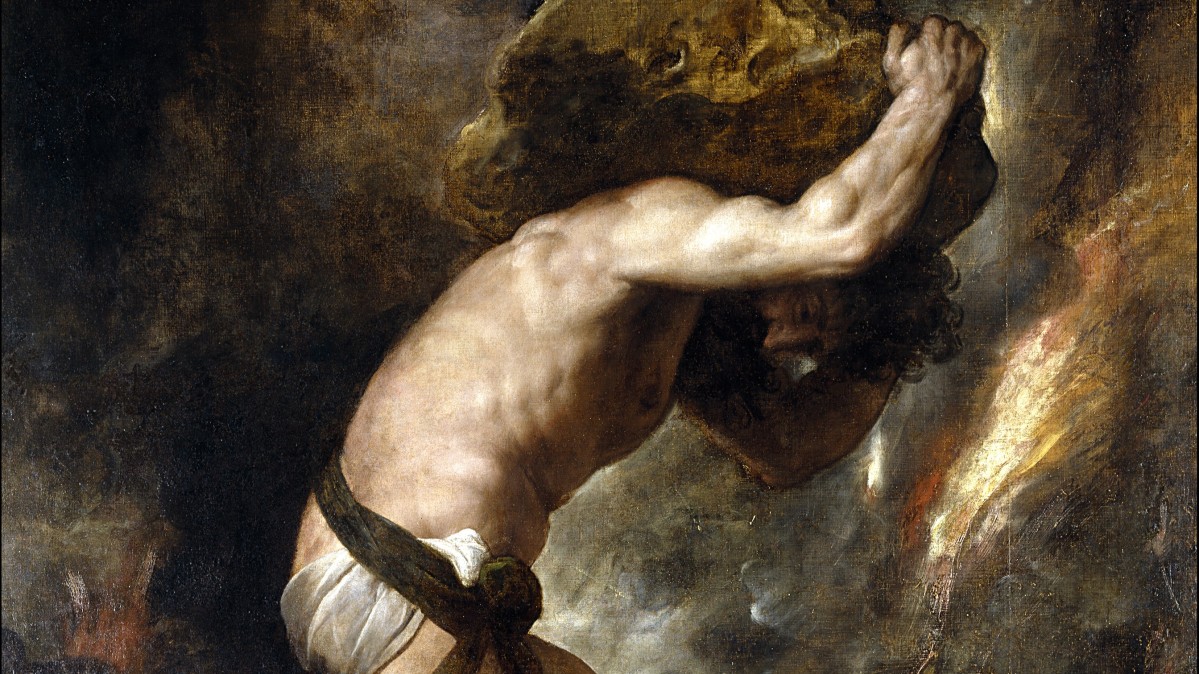
In Greek mythology, Sisyphus was the king of Ephyra who was known to trick death, escape it and even trap it in its own chains. Sisyphus had tricked the Gods many times and gods were running out of the punishments to make a statement. In their one attempt Gods assigned Sisyphus a simple task – to roll a big boulder up the hill. When Sisyphus started rolling the boulder uphill and once it reached the top of the hill the boulder would roll down and again Sisyphus had to roll it uphill. This went on and on and Sisyphus got trapped in this meaningless task. Gods were relieved in the end.

Nihilism and Sisyphus

Albert Camus’s work on the philosophy of the absurd is one importance aspect of how we justify our existence in this seemingly meaningless existence. 

The meaningless task of Sisyphus is an analogous our daily mundane routines – sleep, wake up, go to job, come home, eat, sleep (then wait for weekend!). EAT, SLEEP & REPEAT. But even after this repetition, even after this boring routine when it comes to dying, we are always more scared to die than to live this meaningless, mundane life. I mean in the end it is all about coming from and returning to the dirt, even after that we crave for this conscious but repetitive, painful and “poisonous” existence.  

The lives we live are full of many small and big cycles, these cycles keep on repeating and we keep on following them. Remember the moment when you achieved something really great and in the next immediate moment you felt empty and directionless? Now that this great feat is achieved what lies next? And you become clueless, then you move on to achieving something far bigger and better and the cycle goes till you eventually die. In the end you weren’t even able to take your body with which you realized your conscious existence. What’s the purpose of all this if it is meant to end into dirt again?

Nihilism – nothingness thus rejects all the ideas which justify conscious human existence rather the existence in totality. Nothing really matters because everything starts and ends into the same worthless things. All this knowledge, all this kindness, all those relationships, all those friendships, all that discipline means nothing, there is no sense in following rules, routines, morality doesn’t make any sense, winners or losers – all end in coffins buried underground.

You must understand that these are the exact feelings many of us go through when we face some great challenges, great failures in our lives. The ideas from Nihilism may get associated to such feelings of meaninglessness. One might think that Nihilism is totally negative way for philosophy of existence but that is not the case. Nihilism also talks about non-attachment, non-possession which are the roots of suffering in life as explained in Buddhism. So, it’s not chalk and cheese scenario to be honest. Life may feel meaningless, filled of mundane routines like the task of Sisyphus and in this life, we are struggling to achieve something to realize in the end that we have to leave all that behind – what a cruel joke!

Existentialism, Absurdism and Sisyphus

What Albert Camus presented in his essays of the Myth of Sisyphus was the philosophy of the absurd.

The tendency of Sisyphus to always play tricks with death is exactly who we are. We are always trying to trick death, reject the death in many ways. Sisyphus shown as the king and having all the enjoyments of the life is who we are; everyone of us wants to live life to its fullest. Like Sisyphus, we all are tied to our routines.  

So, the philosophy of absurdism believes that the universe is meaningless and if people will try to find the meaning of the universe, then they will end up in a conflict. Absurdism calls out to the cycles we keep on repeating throughout our existence achieving nothing in the end; what came in, it went out leaving no trace behind.

The key difference between Nihilism and Absurdism is the extent of acknowledgement. Nihilism completely rejects any attribution or meaning to all aspects of life thereby rejecting the worth of life, whereas absurdism is more open ended. Absurdism believes that whatever the creation, the universe is we are not in sync with it to understand it completely. Absurdism thus is humbler and better ready to upgrade its ideology compared to nihilism.

“I don’t know whether this world has a meaning that transcends it. But I know that I cannot know that meaning and that its impossible for me just now to know it”      

Albert Camus, The Myth of Sisyphus and Other Essays

What Camus beautifully did is provide a justification for such “absurd” nature of existence.

This is exactly why the philosophy of absurdism is in sync with the ideas presented in the song Undone.

Absurdism and Undone

Camus in absurdism explains that when people face scenarios of meaninglessness, scenes of existential crisis they reject the very life they possess – thus suicide.

This suicide could be physical or philosophical.

No need to explain physical suicide in detail, the core is that continuous sufferings reduce the perception of the worth of life, what life offers for the sufferings one goes through.

Philosophical suicide is more interesting (!) people kill their own conscience and submit to some ready-made belief system in order to brutally terminate their own existential confusion. (Now you must appreciate what this philosophical suicide is pointing to – the religions spread across he world and the hatred they create is the best example)

Camus says that our urge to live the life (physically and philosophically) is much more overpowering and influential than our whining, crying excuses to reject life. We value our conscious life more than our submission to death, even if it is mundane.

“What is called a reason for living is also an excellent reason for dying.”

Albert Camus, The Myth of Sisyphus and Other Essays

As Camus says, man is condemned to death and the opposite of suicide is to revolt.

Since we cannot evade death, we must entertain death, keep it busy.

So, Albert Camus gave three possibilities of how one could make sense out of all this absurd life – Revolt, Freedom, and Passion.

– Revolt –

We must not accept any ‘final’ or ‘ultimate’ conclusion or calming justification in our unsettling struggles. Because the moment we get a proper justification to our existential angst, we surrender to that way of life (that is how extreme cases of religion work) and the process of learning and curiosity stops there.

The notion of ‘not hiding from the Sun’ in the song thus signify showing up even when the situations are difficult and unsettling. Sun indicating new day (even though being part of the routine) but with new way to look at it.

‘There is no time to come undone’ creates the urgency. Because, when a person is said to be undone – it means that the person has fallen apart, disintegrated, there is no meaningful attribution, purpose to the life they are living. The urgency to live life in spite of seeming meaningless and in spite of ending into death is a call to follow our instinct of living over suicide (philosophical). The absurdism thus focuses the subjective value of life; even though from outside our routines are mundane, only we know what exactly is happening with our lives and that surely is greatly unique; the way we experience our own life and the way other experience it is very special.

That is exactly why you must not waste your time on whining about the problems, losing hope, giving up on something.

The revolt is appreciating the meaninglessness and is also creating space to grow. Even when in final evaluation when we discover that the life is truly meaningless that should not stop us from giving it our own meaning.

That meaning could be anything, that is why ‘picking “your” poison and run’ becomes extremely powerful in the song and it is scattered throughout the song.

– Passion –

Talking about poison, absurdism talks about Passion.    

Passion calls for living life full of rich and diverse experiences. Again, just because nihilism reveals the meaningless view of life and creation, it should not stop us from appreciating what the life and creation provide us. Just because you know that you will die ultimately that does not stop you from breathing and waking up in the morning hoping that you will live another day.

Passion could be anything, that is why the songwriters figuratively attributed is as a poison. Whatever makes you feel free, liberated is your poison (bear in mind that this is philosophical). Do things that make you feel alive (again philosophically), run, sing, dance, write, fight, curse, play, work but look alive. You will appreciate that every thing you do, every passion you follow, every poison you consume have their own consequences, the moment you face these consequences of your acts – your life will have meaning. That is why this figurative poison in this song is very important.

“Creating is living doubly. The groping, anxious quest of a Proust, his meticulous collecting of flowers, of wallpapers, and of anxieties, signifies nothing else.”

Albert Camus, The Myth of Sisyphus and Other Essays

– Freedom –

Third possibility is the freedom. We are absolutely free to think and behave as we decide. The perspective of life being free is more optimistic take on nihilism. If the creation means nothing that it is exactly what we call it! We can call it whatever we want, that is what freedom is. When you think that you are free, you do whatever you want and at that very instance you will realize that even freedom has constraints.

But, as the creation is infinitely meaningless it is open to up-gradation and rebooting. A truth which holds the capacity to upgrade itself is the real ultimate truth I would say; and in the same sense the freedom which knows its boundaries truly knows the real freedom and hence is the real, pure freedom.

“Thinking is learning all over again how to see, directing one’s consciousness, making of every image a privileged place.”

Albert Camus, The Myth of Sisyphus and Other Essays

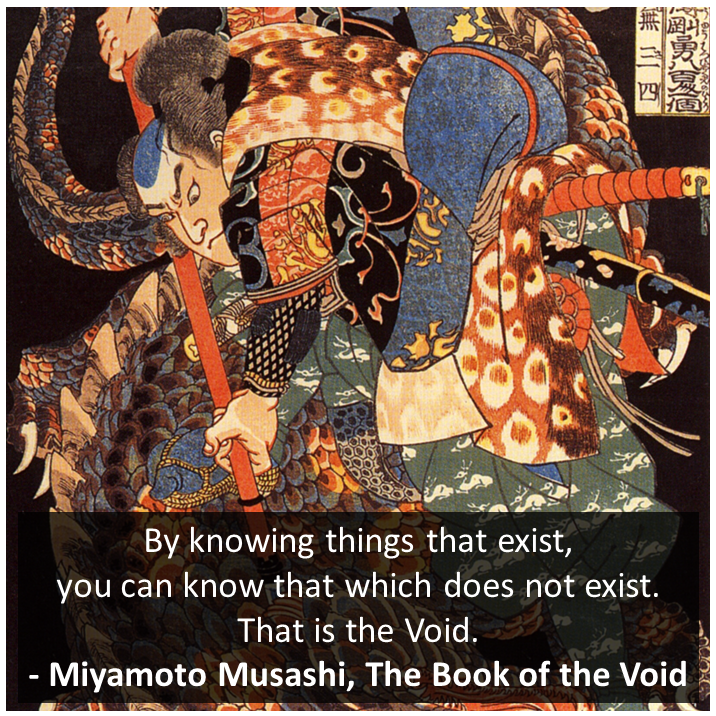
(Mathematically Godel’s incompleteness theorem, Spiritually Miyamoto Musashi’s the book of Void talk this exact freedom).

“I know simply that the sky will last longer than I.”

Albert Camus, The Myth of Sisyphus and Other Essays

‘The struggle with Gods and men to create a dreamy life in between’ is the expression where I associate this song with the Myth of Sisyphus – his actions were exactly like some Greek demigod who challenged both humans and Gods.

‘The heavy weight of meaninglessness in the moment of reckoning’ expressed in the song point towards the that nihilistic and hopeless situations in the struggles of our life. Its better to not cling to such nihilistic thought. Passion explained in absurdism thus becomes the savior in such hard times.

‘The wildness of life’ in the song thus shows the ability of our freedom to upgrade itself in the ocean of infinite possibilities.  

“The struggle itself towards the heights is enough to fill a man’s heart. One must imagine Sisyphus happy.”

Albert Camus, The Myth of Sisyphus and Other Essays

Listen to this song again with these thoughts of absurdism in the back of your mind, I am sure you will appreciate the song and its creators more. (‘The flaws in our design’ is a well justified name to this album and each song carries its own philosophy. Also pardon my over-explanation in certain places but you get the point (I hope))

You can listen to the song Undone using following links:

References

  1. ODESZA & Yellow House Team Up For New EP “Flaws in Our Design”
  2. The Myth of Sisyphus and other essays – Albert Camus

Dune: Philosophy in Science Fiction

The focus of Dune saga is on the ill-effects of hero worship. Frank Herbert warned his readers about the life altering consequences of granting too much power in the hands of a person who refrains to be questioned by his followers. The character arc of Paul Atreides depicts a moral dilemma. It also shows how power and aesthetics play a vital role when one is justifying actions, character and intent.

Dilemma of morality in the character arc of Paul Atreides

Dune Part Two shows how any person would react when thrown into the events where morals and ethics clash. Dune Part Two is about the creation of the antihero and his blind hero worship. It is important because it breaks down and effectively depicts the stages in which even a humble and good-hearted person can degenerate. Surrounding around such person has big role in it.

The focus of Dune saga is on the ill-effects of hero worship. Frank Herbert warned the readers of Dune about the life altering consequences of granting too much power in the hands of a person who refrains to be questioned by his followers. Superficially, Dune feels like a story where Bene Gesserit – a low lying powerful sisterhood planting an extremely powerful but manipulable Messiah to control the galaxy and how this Messiah ruins that plan. Deep down, Dune successfully amalgamates many philosophical, psychological concepts like Existentialism, Hero worship/ herd mentality, confirmation bias, free will and determinism.

Denis Villeneuve’s Dune Part Two has successfully translated the vision of Frank Herbert’s 1965 Sci-Fi which is more relevant than anything in the current times of 21st century. In Dune Part Two you see the transition of a young, humble, calm boy into an aggressive, extremely powerful leader – a leader who is worshiped like the God by his followers. As a fan of Sci-Fi movies, I would say Denis Villeneuve’s Dune movies have made justice with what the source material wanted to convey. (Historically, Dune series is known to be one of the most difficult materials to adapt into visual media)

The discussion hereon is not a movie review rather it is about how some fantastic philosophical, psychological, spiritual, and political ideas are brought together to create a more relevant story which is purely fictional. Despite being a fiction, it successfully depicts some important real-life scenarios and dilemmas we face in our very real lives. This all is credited to Frank Herbert and Denis Villeneuve’s vision.

There will be heavy spoilers for Dune Part Two hereon!!!

After watching Dune Part Two it is obvious that it is all about how an antihero is created. There is a moment in the end when you will lose the sympathy for Paul’s character because of the choices he makes and it is intentional. The movie gives us multiple viewpoints to justify why Paul Atreides becomes who he is. Obviously, his antihero arc creates a deep void in our heart. When I started to understand the narrative from Paul’s perspective, I stumbled upon some of the important ideas we use to justify our actions, decisions.

Boundaries of Right or Wrong – What is Moral? What is Ethical?

Let us understand the stages in which Paul is always rejecting the leadership – the prophecy of Messiah he is offered every time.

Rejection 1 – Paul has not demonstrated any grand act yet. He lacks clarity, vision.

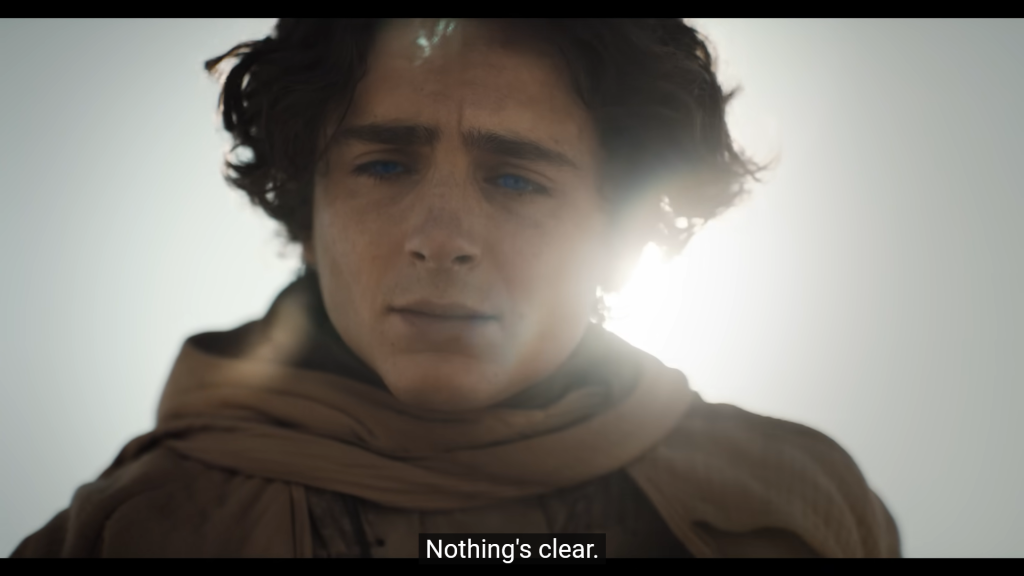
Right from the beginning, Paul knows what it means to become the Lisan al-Gaib – the Messiah. You will see him rejecting the concept of becoming the prophesized leader. In Dune Part One you will see that he asks Leto Atreides, his father – What if he does not want to be the leader, the future of house Atreides? In response, Paul understands from Duke Leto that leadership is not a personal choice and when there will be a moment in which people will choose him as their leader and he will have to answer that call. The fear of leadership in Paul here is created due to very superficial simulation of future possibilities. He hasn’t even landed in Arrakis – the desert Planet. Here, Paul is just a well behaved, properly trained royalty who hasn’t tasted the reality of life yet. He theoretically understands the burden of leadership, the burden of the expectations of the people and that why humbly rejects it – as it is the ‘right’ thing to do. Understand that Paul’s rejection in this instance is because he doesn’t consider himself worthy. It is unethical for him to accept leadership which is granted just from the birthright. Understand that prophecy of Messiah is not apparent here, this is the leadership of his House.

Rejection 2 – The prophecy is just a clever plan. There is clarity on what and how events will happen but no clarity on what will cause them.

When Paul lands with his mother Lady Jessica on Arrakis he looks at the local Fremen people chanting his name as the one who was promised to free them from this exploitation of the foreigners – the Harkonnens for the precious Spice Mélange. Here, Paul understands from his mother that the religious Bene Gesserit sisterhood has planted a very meticulous storyline – a prophecy to ease out their path on Arrakis. The knowledge of ‘the prophecy’ being just a clever plan of Bene Gesserit sisterhood consoles Paul that he will always have the choice to reject the future responsibility of leadership. This rejection of leadership is due to understanding of the underlying truth and how hopeless people are getting fooled. Utilizing such false knowledge for self-benefit makes Paul uncomfortable.

Rejection 3 – Paul has clarity but doesn’t want to take the advantage of the Fremen Faith

After the death of Leto Atreides, Paul escapes to Fremen territory with Lady Jessica. Fremen accept him as he shows his skills in a fair fight. From this moment his goal is to survive with Femen’s to acquire the ‘Desert Power’ as desired by his father Leto Atreides. He still despises the Bene Gesserit Propaganda. He knows he will be fooling the Fremen by following the said prophecy. It is not ethical to utilize others’ faith for the personal benefit. That is why Paul is just trying to learn the ways of Fremen to avenge his father’s unjust murder orchestrated by the Emperor through House Harkonnen.

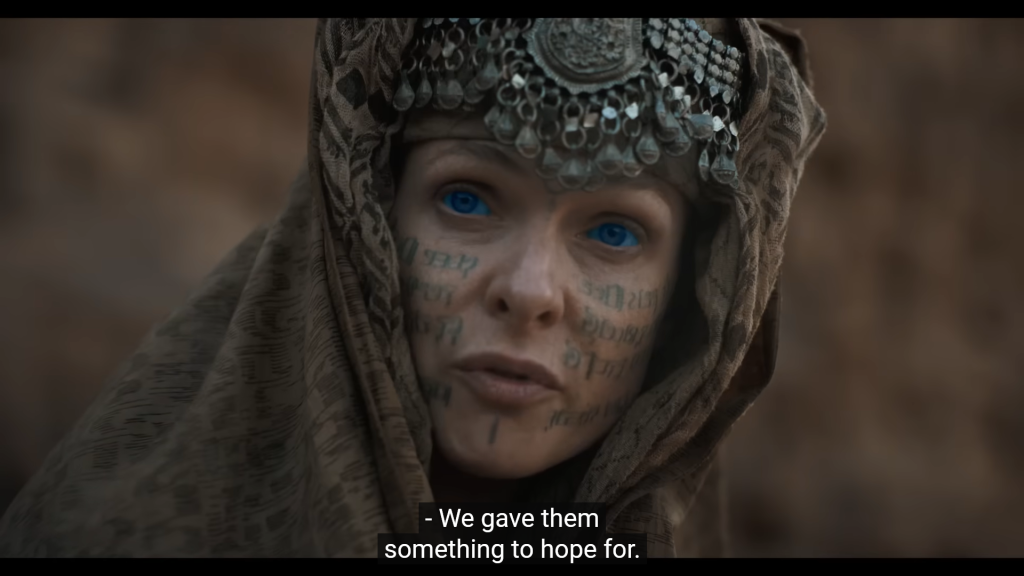
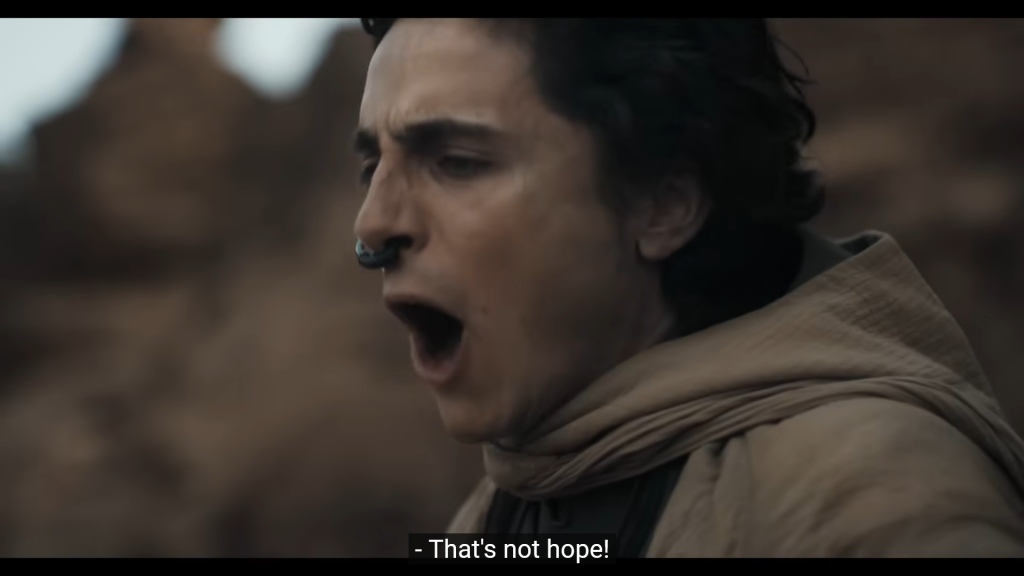
There is a discussion between Lady Jessica (who is now Reverand Mother) with Paul where she says that the prophecy has given Fremen people something to hope for and to fight for. This is the exact moment when Paul actively and aggressively rejects what she says.

Paul – It’s not prophecy. 
It’s a story that you keep telling.
It’s not their story, it’s yours.
They deserve to be led by one of their own.

His rejection to leadership here is because it is unethical to play with other people’s faith.

Rejection 4 – Paul loves Chani. He knows the moment he accepts ‘the prophecy’ he will lose her.

There is a scene where Chani tells Paul that the Fedaykin worship him now, they count his victories. Chani (who doesn’t believe in the prophecy) warns him that people have already started worshiping him and this will not end well. To counter Chani’s fear Paul positively clarifies that he is not the Messiah and will always be a Fremen warrior – the Fedaykin. Paul mentions several times to Chani that he will love her as long as he breaths. As the prophecy goes, he should reserve his hand for the most strategic alliance which is with the Princess Irulan – the daughter of Emperor. Here, the rejection is due to the love he has for Chani.  

Rejection 5 – Paul knows that while becoming the Mahdi, he will lose his comfortable connect with Fremen. He will have blood of billions on his hands.

Upon the encounter with Gurney Halleck, Paul clarifies certain important things. Gurney is surprised that even after having following of 200 people and millions more, why isn’t Paul taking advantage of the prophecy to avenge the death of his father? Paul tells Gurney that the moment he becomes the Messiah, he no longer be friends with Fremen, because even his Fremen friends will worship him as the God – Lisan al-Gaib. He considers it unethical to utilize the innocent beliefs and trust of the people for him for his personal benefit.

Gurney Halleck – With thousands of these guys you can take control of the entire planet. It’s your father’s dream. What you are afraid of?
Paul – Worship, Gurney. They used to be friends, now they are followers. 

Gurney tells Paul that he holds the ability to avenge his father by accepting the prophecy. Then Paul clarifies that the moment he becomes the Messiah, the galaxy will be thrown into the holy war leading to deaths of billions of people. Paul doesn’t want their blood on his hand.

The rejection of prophecy here is due to fear of losing personal connect with the people who define and respect you. It is also because Paul wants to preserve his character.

At the end of the Dune Part Two, you know what exactly happened!

Are Morality and Ethics Objective?

So, even after having at least 5 concrete reasons to reject the prophecy, why does Paul decide to become the ruthless Messiah, Lisan al-Gaib? What made him lose all the ethical and moral standards he had preserved in him?

Simple and superficial answer to these questions is – the circumstances!

Deep down the answer is totally different. Let us understand what are morals and ethics

Morality is the sense of judging a decision, event or an action being proper or improper. Morality is the sense of what is right and what is wrong.

Ethics are detailed down, systematic small-small actions which show what doing good is. The opposite act of doing a good act will be doing a bad act.  

Morality are the universal standards for right and wrong and ethics are the rules to implement this morality in daily practice.

Question – How is it decided whether certain act is good or bad?

This is where the trick starts.

The base line to decide morality or ethics is always changing. It is like deciding ‘What level of big picture are you talking about?’

Frank Herbert was very intentional while creating such moral ethical dilemma through Dune series. As you are introduced to Paul right from the start of his journey, from a kid to the Messiah, you know why he did what he did. His Great House was betrayed by the Emperor and the Harkonnens. They tried to kill him, his pregnant mother, and his people. The responsibility to handle Arrakis was forced down on his house by the Emperor. He had every reason to kill his enemies. Whatever act Paul did to avenge his father/ his house was right and justified.

Does that mean that “whatever” and “everything” that he did and would do is right?

The death of billions of people he would cause (as seen in his visions) will it be justified?

Many Fremens devoted and died to Paul’s cause, will their deaths be justified?

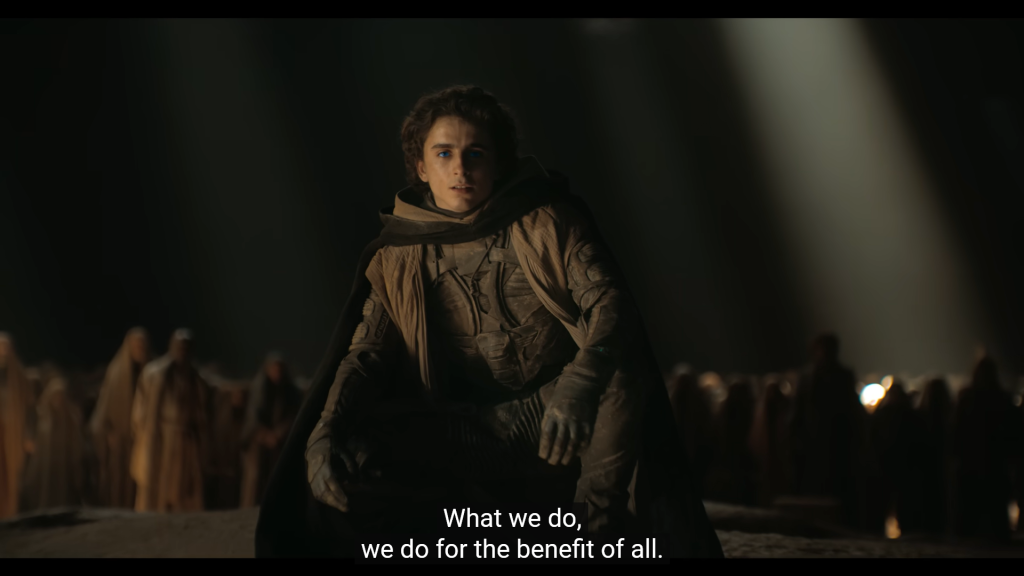
You will see that the moment you shift from Paul’s personal baseline of morality to the baseline of the ‘good for all’, you will appreciate why the same Paul – the Messiah – Lisan al-Gaib – the Savior is also ‘the destroyer’ for remaining others. Thus, it is important to define that baseline while judging his actions.

Philosophy of Morality

There are two ideas on how to decide this baseline for morality of given things.

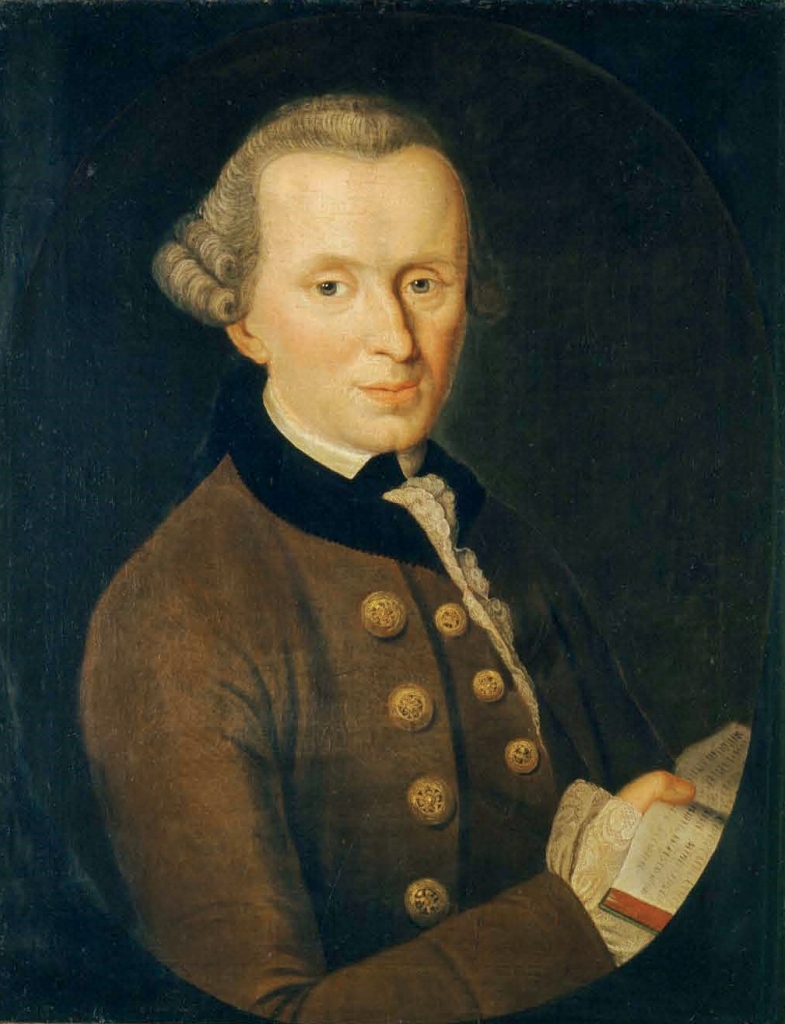
Immanuel Kant says the duty assigned to you; your obligation decides the morality – The duty-based definition of morality.

Immanuel Kant

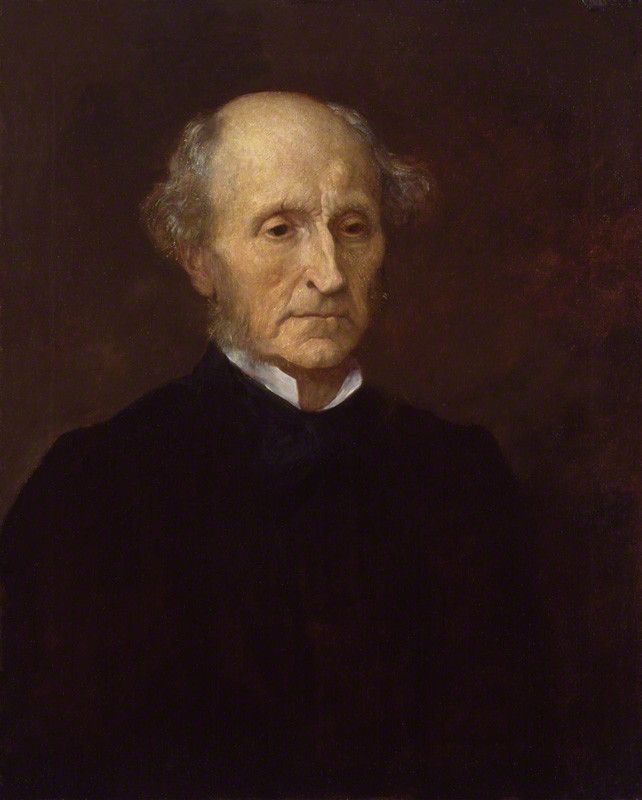
John Stuart Mill says that whatever is good for most of all should be good for one – The utilitarian definition of morality.

John Stuart Mill

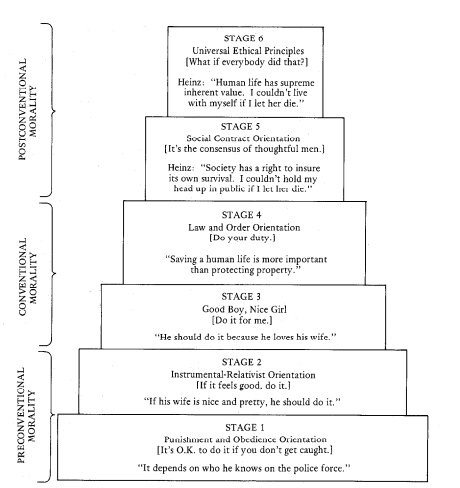
Lawrence Kohlberg’s stages of moral development give us a structured view about how the baseline to justify morality of anything works. This single image deserves a detailed explanation but it is self explanatory.

Morality needs understanding of “the big picture”

In Dune’s case, it was Paul’s duty to avenge his father’s unjust death hence he was right. Whereas letting his followers kill billions of people belonging to the houses who were not accepting his ascension as the Emperor was wrong – immoral. He commanded to destroy such opposing Great Houses just to establish respect for him out of fear. The intent was not pure.

For Fremen, the act of destroying everyone opposing their leader is way better and important than living a life of slave. At the same time same Fremen killing billions in the name of their Mahdi is bad.

For Jessica, survival of her children was more important than anything. She had also promised Leto Atreides that she will save her children not as Bene Gesserit but as a mother first. That is why she eases out the path laid for Paul which guarantees his and his sister’s survival. You will understand that Jessica fears becoming the Reverand Mother, she knows that she will have to carry the pain and memories of all those who came before her but upon hearing to the clarification from Stilgar, she realizes that it is the only way to ensure the survival of her children. So, she controlling the Fremen and spreading the prophecy of the Messiah (despite knowing it as just a clever plan) feels moral.

Stilgar strengthening the events from the prophecy in the minds of Fremen ensure betterment of his people. If his actions to spread and strengthen the path for Paul would lead Fremens people to a better life then his actions are well justified. But, the moment he blindly follows every order from Paul to obliterate everyone opposing him his actions become wrong.

When it comes to mere survival of Feyd-Rautha, Baron Harkonnen, Rabban, the Emperor, Princess Irulan, Reverend Mother Mohiam someone would feel that their actions are justified. (But, we already have many other reasons to assign them villainy.)

It’s like checking which one is more wrong – Killing an ant or murdering a person!

The moment you favor the life of the person than an ant, you will feel bad for what kind of animal you are. And the moment you favor life of that ant over the person you will feel bad as a human being.

Taking any life is bad in the end, but what if it’s about survival. Then it goes in the direction which poses question – whose life is more precious?

The Trolley Problem – Which lever will you pull?

Do you see how this streak goes on and on! This will not end until the questioner will be satisfied with comfortable answer!

One must appreciate the genius of Frank Herbert’s writing which created such important intersecting points in his story.

Power and Aesthetics

So, final question – what ultimately is the right or wrong?

The answer is how deeply are we able understand the scenario (and we may never understand every aspect most of the times.)  Actions are always changing with respect to the circumstances, killing a murderer will always be justified and right at the same time killing a Saint is wrong.

This reminds me of Nietzsche’s quote:

Thus, the dilemma grows bigger.

What is right and what is right is highly dependent on your limits, your capabilities, your ability to reverse the things to exactly how they were before. If you don’t hold that capacity, then you immediately lose the power to justify your actions.

Which is exactly why what Paul believes is completely wrong, it shows how Paul character has made transition…

“He who can destroy a thing has the real control of it.”

The power will enable him to destroy any given thing; but can he reverse that destruction if things did not turn out the way he intended? The ability to restore the consequences of your decisions decides whether you hold the power to assign good or bad.

If Paul does not bear the capacity to reverse or at least restore the impact of his decisions, then he is wrong to send his followers in that direction.

I think, this is the warning Frank Herbert gives to the real-life leaders and followers among us. This is exactly where powerful people go wrong and take their blind followers with them.

So, even though his intent was to avenge his father by becoming the Messiah, the path he would choose is wrong.

The path Jessica chose to control the Fremen through prophecy is wrong. The plans Bene Gesserit orchestrated to plant a powerful yet manipulatable person on Arrakis just to have control over Spice are wrong. There are always multiple choices,

(The conclusion of the Paul Atreides’s story and ‘Dune: the God Emperor’ will make us change our current opinions. That we will discuss again when the time is right.)  

Anyways words fail me when such real-life scenarios are flawlessly presented through fiction. There is no need for anyone to teach us what is right or wrong in such stories. The dynamics of the events and the characters show us the mirror. We always have such inner compass inside ourselves, stories like this are the greatest calibrator of such inner compasses.

The power to restore the consequences of our action is the real power, I think. This idea somewhat frees the justification of our actions from the dilemmas of morality.

There is more to discuss about Dune, find out here….

(Movies Scenes from Warner Brother’s Dune: Part Two)

Further reading:

  1. Dune : Psychology in Science Fiction
  2. Existentialism – Zima Blue and Existentialism
  3. Answering the questions on existence of “the existence”
  4. The Existence – Why? How? And What?
  5. Dune’s Ornithopters and Biomimicry

Questioning Our Consciousness – Solipsism

Solipsism warns about the impossibility to know everything in absolute manner but if appreciated in a proper way it guides us to seek for continuous up-gradation from existing lesser absolute truths to newer and better absolute truths. A pure solipsist would be delusional, neurotic but a practical solipsist would bring about a revolution in his own world thereby in the worlds of the others and even in the whole world altogether!

The problem of other minds – do they exist in reality or the reality just exists in my mind?

Have you ever felt that words are failing to express the joy you have? Do you feel uncomfortable when you are unable to understand the vibe of your environment? Is it just you or is it the surrounding? Do you sometimes feel that everyone is treating you in a certain way and then you realize that actually it was you who was behaving differently? Do you get the feeling that someone is behaving in a way but thinking in a completely different way? Am I unable to get early in the bed because I don’t wish so or the weather is cozy?  As if they are hiding something and you would never know what and how they feel? Could you make others feel your exact experiences in the exactly the same way? If yes, then how? If not, then why is impossible? How come our senses have practical limitations? Are those the limitations of our mind? Is empathy a real thing or is it just the construct of my mind to mirror the people in front of me? Why my experiences are so private?

The questions posed through Solipsism may clarify the origin of these ideas.      

Where solus means “alone” and ipse means “self” in Latin

A philosophical idea that only one’s mind is sure to exist

Origin of Philosophy – Knowledge is power

Everyone of us is born with a tendency to have control over the surrounding. This is closely connected to our survival instincts. Though our survival instincts are mainly primitive what differentiates us from rest of the animals is our reasoning ability. Almost every animal is proven to have emotions, many of them can think logically at least from survival perspective, some of these animals have shown signs of intelligence closer to humans when trained properly. Our reasoning ability is some sort of highly evolved survival instinct. Reasoning introduces understanding, awareness of the surrounding in which we live, this understanding increases the predictability of the future thereby increasing the chances of the survival of the species. So, we can say that the better we understand the system which w are part of the better will be our chances of anticipating the risks of the environment; the better we anticipate the upcoming risks the better we can be prepared for to handle them to procreate further thereby ensuring the survival.

That is why we have many fields of knowledge to understand the establish different aspects of the reality we live in. When there were no boundaries between different fields of knowledge everything would start from simple question (even today single important and specific question can establish a completely independent field of knowledge) We are always one question away from a completely new perspective towards reality. (See Gödel’s Incompleteness theorem if you are interested in this idea)

Philosophy could be attributed to the most primitive, original, and the crudest field of knowledge. Although most part of philosophy is properly structured, it is crude due to the plethora of unanswered questions it has. Once the fundamental questions in any domain of understanding are answered, once the paradoxes lying at the end of an established field of knowledge are solved then a new field gets created and separates from the fundamental philosophy.

(The primitive man survived on whatever nature provided then the humans realized that one can sow the seeds to get certain crop from certain soil in certain season in this much quantity thus came farming – Botany, Geography, Mathematics and many more. When we were unable to understand the Newton’s theory of gravitation to some heavenly bodies (the perihelion of Mercury) then Einstein’s theory of relativity disrupted our existing understanding of the universe. It has literally affected every field of modern knowledge.)

Skepticism – Keep on questioning until you get consistency in understanding

So, in nutshell, the job of philosophy is to ask those questions which would challenge the complete domain of a certain field of knowledge, once you get the proof of this question then it becomes the part of that field of knowledge or a completely independent field of knowledge. They detach from the Philosophy. Philosophy was never meant to provide answers, if certain philosophy is providing proper answers, proper predictability then it is a field of knowledge.  

What happens to the questions which remain unanswered?

What if there are unresolved paradoxes at the end of the a fully established field of knowledge?

I would say the philosophy carries the unanswerable, paradoxical nature – the imperfections in our understanding until they are formally, satisfactorily, and most importantly – coherently answered. That is exactly why philosophy always seems crude, as if it is carrying all the imperfections in our understanding of the reality.       

Skepticism lies at the base of the philosophy. Once you get consistent answers to the questions posed, you keep on questioning that consistency. Everything (and I mean it) will end at a point of paradox or inconsistency. (If one finds exceptions then it is better to upgrade that theory otherwise soon it will get replaced with better theory.) There are ways to deal with such paradoxes/ inconsistencies (See Agrippa’s Trilemma if it interests you.)

Solipsism – Extreme skepticism – Questioning the existence of the question and the questioner!

So now we that we are familiar with the nature of questioning everything to establish consistent answers thereby to create knowledge, it is important to know how we do so. What make us answer these questions in a consistent manner. Our experiences, observations of the surrounding, our interaction with one another and the results of these interactions give us the fundamental model of reality. This model is developed by our minds – bunch of neuron connections physically per say – the collection of the sensorial feedback from the body.

Now the question is, as we go on questioning the reality, the final question is come like this –

If there are still some gaps in my absolute understanding of the reality which are creating this uncertainty somewhere, which is creating paradoxes, inconsistencies; what exactly is absolute? What exactly is the most certain thing in the world? What is the most real thing, real measuring scale with which I could measure and understand my surrounding?

Solipsism says that only the existence of your mind is certain, the existence of other minds will always be uncertain. As the presence of other minds is uncertain, you can be sure of only what you experience as “the reality”. As only you absolutely and fully realize the reality through your mind, the reality is just mere figment of your mind and imagination (when stretched too far!) When you try to transfer your minds realization of the reality to others you will always see that something got lost in translation. If reality is just the construct of my mind, then what exactly is existence?

Why Solipsism stands strong? – Why idea of living in the Matrix fascinates us?

Is the creator playing with my mind to show me a false reality for something different which is beyond my access?

The earliest evidence to ask such question is found in the writing of a Roman skeptic Sextus Empiricus quoting Gorgias (c. 483–375 BC) as follows:

  1. Nothing exists
  2. Even if something exists, nothing can be known about it
  3. Even if something could be known about it, knowledge about it cannot be communicated to others.

Then René Descartes (the one who established Cartesian coordinates) came up with one of the famous quotes/ ideas about the absoluteness of the reality.

Cogito, ergo sum.  

I think, therefore I am.

René Descartes

Simply put, Descartes argued that, the most certain knowledge one can have is through personal experiences because knowledge transferred from others are never perfect also there is no way to measure where the translation was perfect. The existence and experience will always be discrete – separate; it will vary mind to mind, so what is reality for you is the only absolute reality; that is why absolute knowledge is private property. As you can be only certain of your experiences only your mind is the reality, everyone else’s minds don’t exist. (OR should I say others are mindless! Jokes apart!)

George Berkeley – Bishop Berkeley is also one famous philosopher who developed the ideas of immaterial-ism. He is known for the famous analogy of “a falling tree” although his writings never explicitly mentioned such analogy but let us say in a crude way, he pointed towards it. (See, even here we can see the gap that is created during the communication of an idea, a simple analogy someone established before us!)

So, the idea is, if a tree falls in a forest and nobody saw it falling, nobody heard it falling, nobody felt the vibrations of fall how come we be sure that a tree fell down somewhere? Unless and until someone observes the fall through their senses one can never be sure that the really fell. So, if no one noticed it and in the end even you didn’t notice the fall, then the tree never fell down!

Your mind, you consciousness and you had to exist absolutely to observe, experience the fall of the tree. If you weren’t there to see and experience the fall, how could you be so absolutely sure that the tree fell?

Solipsism – Trust no one but yourself!

Now, you would have understood what may be going wrong with Solipsism!

Modern day answers would be like “I would have been presented with a video to prove the fall.” OR “I would have been presented with the person who cut down the tree”

But the counterargument would go like this “What if the video was faked? (by using deepfake!!!)” OR the witness found to be forged – I wouldn’t know if the person is lying with confidence (even polygraphs tests can be fooled, false alibis can be created!!!)

Jokes aside, these are mere representative examples to demonstrate the point. When you start formally questioning the nature of reality by using the most consistent tools that we have in modern science, then this question again peeks out in a bizarre way!!!

According to quantum mechanics, the moment we measure the state of a quantum object, its state changes. So, the measurement of that instance will never refer to the actual state of the quantum object. Meaning that you could never be sure of what actually happened before or at the instance of measurement. You can have a probability but you will never be sure.

Your observation had to exist to define the state of the quantum object, if you weren’t there were infinite state of the quantum object to exist. Your observation assigned it a definite, objective, absolute state. Your observation made it a real “reality” otherwise it was always possibility rather probability of many events. Please note that these are not just the flights of minds by the most compelling specimens of humanity, these are actually mathematically, experimentally proven ideas.

The one liner to understand solipsism is –

Your personal experience is more dependable than common sense!

I understand that how is it even possible to question common sense, common experiences. Solipsism is such a foolish idea rather the most foolish idea one can have! But, bare with me when we try to answer the paradoxes which lie in solipsism. Any person who is having existential crisis has been warned hereon!

Different ideologies in Solipsism

Metaphysical solipsism – the most extreme solipsism – the external world doesn’t exist. My mind creates the reality for me. (A rude adamant philosopher made it clear!)

Quick Joke – Unless I didn’t observe the tree falling, it is still there (and maybe giving fruits if it is a Mango tree!)

Epistemological solipsism – The reality around me is absolute and objective, but we cannot know it directly as it is through our sense and experiences. It is the limitation of my senses which inhibit my understanding of the reality. (This is a humble approach I would say!)

Sensory organs are not the experiences from the reality rather they are just the interpreters of the reality with practical limitations. There is no direct agency to experience what others are experiencing, to know other minds.

Quick Joke – A person drinking tea finds a fly in his tea asks the waiter to replace the tea. Waiter helplessly trying to convince his of not having any fly in that tea gives up and replaces the tea. After few same complaints from same person and replacing many cups, it is discovered that the fly was in the guest’s spectacles!

It’s like I cannot hear certain sound frequencies but certain animals can hear those frequencies. I can see only the light in visible spectrum, but other animals can see in another spectrum. It’s the limitation of my senses which dulls down the objectivity of the reality. You have to be ‘the God’ to understand all the spectrum of the reality! (excuse my introduction of some spiritual power here but we will come back to this again!)

This is the most practical, plausible and calming version of solipsism.

Methodological solipsism – Every logic is fallible, that is why you could never know what the absolute looks like. There is nothing like ‘the God’, if there is something supreme you won’t even understand how supreme it is and why it is so! (I know we are getting spiritual to go away from early religious epistemological solipsism but that is how it works)

It says that even our brain, our mind is the part of external reality. (I am feeling uncomfortable here.)

Quick Joke – A criminal was convicted for murder. He went scot-free because he didn’t do that murder, his had hand – rather the knife did the murder.

Jokes apart, but consider cognitive dissonance. Many things which we learned in our childhood as the absolute concept, as the ultimate truth gets replaced by something life changing and even more true and absolute. So, what is real truth is beyond our understanding.

Paradoxes at the end – Where Solipsism would break down!

The paradoxes of the solipsism are the most fun part which explain why solipsism deserves any explanation.

Here are some doubts,

1

If my mind is the absolute reality I live in, then why can’t I convince myself to survive by just imagining that I have eaten a lot today (while not eating even single crumb!)

I could just survive by thinking of eating the best food I could “think” of.

Everyone knows that this is not the real case. A person with that much will power and fasting will barely survive.

Now, the counterargument for this (and I love this part due to pop-culture reference!) –

What if your brain is kept in a container giving some electrical impulses exactly like in movie The Matrix. The matrix is programmed in such way that not eating will kill you definitely.

Solipsism ends in a matrix, a simulated reality beyond our experiences!

2

If there no such thing like matrix then how come all of us would die if we face the same degree of starvation? How come the experiences (even though not purely translatable to others but still the same based on the objective, consistent observations) we have in such cases match?

Many of the knowledge established as the most absolute, consistent and closer to the reality is developed because all of us had same experience (at least objective experience, ideally fully efficient translatable experience) in every one of our lives.

The answer is that we all share a common consciousness which enable us to experience the same scenario. We all are living a common and shared dream.

Our reality is a shared dream! Our consciousness is a shared dream! We all are connected by something so common and absolute thing. A spiritual person would call it the soul, a scientist would call it the energy.

This is technically known as the Solipsistic idealism – the best answer we have which will not blow our brains and will not give us the existential crisis!

3

The bizarre one comes here –

Even if the matrix is real, you would never be able to get the absolute understanding of it. Existence of external absolute reality is uncertain. You won’t even know if it is called matrix or a chewing gum or something else!   

Pro tip – don’t over-love solipsism

You must understand that the arguments in solipsism are quite good. (It is just my failure of communicating those to you if you are not convinced till this point. I apologize for that.)

If the reality is just created by my mind/ in my mind then there is no way to verify that from external agency.

But, our experiences, emotions (at least some of them) always feel common. René Descartes Descartes posed that the experiences, sensory feed-backs are purely created by our mind but modern science proves that babies are not born with absolute ideas of reality (it is possible that they are exposed to certain sensorial experiences from their mother right from the conception) The absolute experiences they get are from their interaction with the surrounding objects and people. Our personalities, identities are created from mutual interactions. We cannot be ourselves without the people around us and the environments we are exposed to.

Only a completely isolated person would have the polarized inclination towards solipsism.

But again, what if it is just a construct beyond our understanding? There is no way for us to know that.     

Even if there lies a construct beyond our understanding, there are some practical ways to purposefully ignore extreme ideas of solipsism rather leverage the ideas of solipsism.

If you are bound to the existing construct of reality which is practically within the reach of your experiences, your mind then you must abide by the laws of that reality. If you only stick to only the reality of your mind, then your so called “absolute truths” will immediately be challenged by the truth of others. It will be a blood bath but let your older absolute truths die to let the newer ones be born. They won’t be ideally absolute but at least they will be better than the previous one.

Even if the illusion of reality is shared among all of us as a common dream, we would never be able to escape that. Meaning, again play by the laws of the land. Ignore the existential crisis on the absoluteness of reality. At least try to get closer to the reality.

I think this is exactly why even though the pursuit of solipsism may feel worthless in the end but it’s understanding and appreciation gives us a hope to continuously keep on improving our version of the reality – private or shared whatever they may be.

Solipsism warns about the impossibility to know everything in absolute manner but if appreciated in a proper way it guides us to seek for continuous up-gradation from existing lesser absolute truths to newer and better absolute truths.

Learn the rules to break them in a better and glorious way!  

The acceptance of Solipsism (in a positive way) can also create an urge in person to seek for the real freedom. Solipsism in positive way urges the person to take that inner route in order to create the world of their desires through disciplined thinking (in a healthy way and not in a delusional way!) A pure solipsist would be delusional, neurotic but a practical solipsist would bring about a revolution in his own world thereby in the worlds of the others and even in the whole world altogether!

The Trilemma of the Truth and the Skepticism

Skepticism deals with the attitude of questioning our beliefs based on an idea that our perception of reality through our senses and personal experiences may totally different from “the actual reality”. The Münchhausen Trilemma and Agrippa’s Five Tropes from epistemology may guide us on how to suspend a judgement and how assign truth value to every belief in our lives.

Why the philosophical search for the ultimate universal truth is useless?

An Existential Meme Caption and Its Resolution

Since the invention of social media, some images (especially the certain classic meme templates) have stood the test of time. These images keep on circulating and there comes a moment when that image reinvents itself in new format, it brings some new argument with different type of humor. See the following image for example:

“Just because you are right, does not mean, I am wrong. You just haven’t seen life from my side”

Funnily enough, this image always comes with a thoughtful (supposedly) caption as follows:

“Just because you are right, does not mean, I am wrong. You just haven’t seen life from my side”

Given that the argument presented in this caption demonstrates the subjectivity of the everyone’s perspective, it is really futile to discuss what to exactly extract or understand from this caption.

For example, if this was the scenario where knowing the true value would save a person’s life then knowing the truth becomes the necessity and all of us know that this wouldn’t have saved that precious life which was dependent the true answer. There is no definite answer for this argument because it invokes subjectivity in the argument. People use this image and the said caption to express their inability to prove the truth value of their argument, especially their emotions.

Now, in recent time this image resurfaced with a new argument which blew my mind the moment I saw it. The reinvented image looks like this:

“How a mathematician/ an engineer solved the conflict”

You must appreciate wit and sense of humor of the person who modified the argument presented in the original image.

There Is No Final Truth.

This simple evolution of a very common internet template invites a question. What is the real truth? What is the truest truth? What is that one answer that can answer all the questions? If something exists in truth, then how would I verify that it is “the truth”?

At first one might think that these are such foolish questions. Truth can be established by experimentation, demonstration, repeatability/ reproducibility, comparison, consistency, contradiction/ counterexamples.

Take for example,

Q1: how would one calculate the time taken by the ball dropped from certain height on the Earth to reach the ground?

A1: The answer is by using Newton’s kinematic equations.

Q2: How the kinematic equations were developed?

A2: By using Newton’s law of gravitation and the law of motion

Q3: How these laws were developed?

A3: Newton studied the motion of moon and earth, developed some mathematics to explain that behavior. That math remains consistent to explain the scenario of the motion of the ball dropped from certain height.

Now from here the real fun begins,

Q4: If Newton’s law of gravitation and laws of motion are consistent and hence true then why did they fail to explain the different/anomalous motion of the planet Mercury around the Sun?

A4: The truth presented in Newton’s laws of gravitation and motions are a special case of the higher and more inclusive, exhaustive truth of Einstein’s relativity.

Q5: Why Newton’s truth is not the complete/ ultimate truth?

A5: Newton assumed Gravitational as a universal force of attraction, inertia of every object in the universe, concepts of the balanced force.

Q6: Did Newton made mistake in “assuming” certain things for the sake of establishing the proof and its mathematics? Because, Einstein certainly didn’t assume those things and still his theory of relativity can prove the arguments covered by Newton.

A6:  Yes, looks like Newton assumed gravity as a force of attraction where things will get “pulled” towards heavier objects or fall into them. Whereas Einstein established this as wrong and proved that Gravity is actually a “push” created due the curvature in space-time.

Now from hereon, if one remains careful enough then that person can land into the territory of quantum mechanics to prove that Einstein was wrong (in a way). The failure that connect the Theory of relativity and quantum mechanics is why we are still uncertain what is the ultimate truth that will answer all the questions there exist. (Trust me the answer is definitely not “42”!)

So, if we keep on asking the question to each and every truth, will we reach the ultimate truth? Will that be the ultimate knowledge? Will that help us define the absoluteness of the knowledge?

Philosophers have argued (literally and figuratively) for centuries about the acceptability of any truth as “the truth”. Epistemology deals with the theory of knowledge, how a belief and opinion differ from the truth, if given argument is true then how it becomes the truth- what is its validity, justification?

So, when one starts to question things continuously there will be three possible cases explaining how the things will end into. This condition is famously known as Agrippa’s Trilemma or the Münchhausen trilemma in philosophy.

In really simple words, the trilemma says that it is impossible to prove whether certain truth is really true because at the last end of this truth there will always be some unjustified, non-contradictory fact which cannot be proved by using other proofs in existence.

Let see in detail what is this trilemma and the its legacy in epistemology.

The Münchhausen Trilemma

Baron Münchhausen is a fictional character created by German writer Rudolf Erich Raspe in his book “Baron Munchausen’s Narrative of his Marvelous Travels and Campaigns in Russia”. Münchhausen is a person who has done many impossible things like fighting a forty-foot crocodile, and traveling to the Moon. The book is a satire. (Baron Münchhausen is German Don Quixote per say!)

So, there is a story where Baron Münchhausen is drowning in the water while riding on his horse but soon he realizes that he can lift himself from the water just by pulling his hair. Hence, he pulls his hair and comes out of that mire/ quicksand with his horse.

Münchhausen saves himself along with the horse from drowning by pulling himself by his hair!

Do you understand how it worked? How could one pull himself out of an unsupported marshy land without any support? Where did Münchhausen pivot to rest himself? The story is foolish!

So, how did Münchhausen come out of mire without any support? If he was successful in his rescue, he would have definitely used some pivot, some support!

In the similar emotion, any argument to be proven true will need another supporting true argument. This “primary supporting true argument” will also need another “secondary supporting true argument”. You might have understood where we are going with this. If this keeps on progressing further and we keep questioning the complementary true arguments which are supporting the main truth then we will end up in three possible scenarios, which are “the trilemmas” as follows:

If we keep on questioning anything, the proofs will:

  1. Given proof will be followed by other distinct proofs which further will be proved by other more distinct proofs leading to infinite chain of proofs – The regressive argument
  2. A proof will be proved by another proof based on the prejudice that it is consistent in many cases so, as it is consistent then it must be true hence the main proof is true – The circular argument
  3. The proof will be accepted as the truth as there is no proven counterargument or any contradicting observation to falsify it – The dogmatic argument

Resolving the Trilemma

Explaining these trilemmas, we can say that these three trilemmas can be solved by following ways:

  • Infinitism: there will be an infinite chain of justifications for every truth. It will never end.

Remember that child who annoys their parents with a new question to every answer they give. That child indirectly knows infinite reasoning! (somehow!) A “patient” parent can go on answering that child’s each and every question!

  • Coherentism: there will be recurring loop of beliefs based on some other beliefs. These beliefs will prove each other.

You know your friend is telling you the truth because you have always seen him/her telling you the truth. It is consistent with his behavior. As you “believe” that he/ she tells the truth, whatever is told by them would also be true. (But who knows!)

  • Foundationalism: the chain of justifications will end at an argument which is accepted as the truth without any other proof and/or because there is no contraction available to this argument. It becomes accepted as an axiom which lies at the foundation of everything.

The matter was accepted to be made up of smallest invisible particle called atom and based on that many good theories explaining reaction stoichiometry, formation of molecules and thereby compounds was explained. We now know that atom can constitute further divisible particles thereby upgrading the theory further on to cover more generalized cases till quantum systems.

Similarly, Newton’s ideas which we discussed in the start rested on some foundation which proved many truths based on that foundation. It was the failure of that foundation which could not explain the motion of mercury. Einstein’s new foundation embraced wider foundation where Newton’s math becomes a special case. We will keep on upgrading our foundations.

Skepticism, Agrippa and the Suspension of the Judgement

There was a school of Greek philosophers who questioned the very existence of the knowledge. They were “skeptical”, “doubtful” about everything thereby forming the school of Skepticism in philosophy. The reason to question everything available around us was due to the ways through which we understand these things. There is a gap between how we experience things around us through our senses and what these things really are. (What we see in desert looking like a lake is actually a mirage) There will always be some gap between appearance and reality. So, what we are believing to be true does not necessarily requires to remain true. The reality might be totally different. Not only different but reality can be subjective meaning that what a person has experienced from a thing can be totally different from what another person has experienced, and both stand true because of the individuality of their ways of experiencing the reality. Both sides will be true due to distinct and unprovable subjectivity. Bertrand Russel in his book the Problems of Philosophy has clearly discussed this as the limitations of our senses and the nature of reality. these limitations of our senses bring in that subjectivity in our truths hence they are our versions of truths which may be the truths for others. So, the early idea was to question everything to suspend both beliefs, experiences or the versions of the truth.

The problem which is created here is that if people become doubtful about everything around them, then they will end up in questioning their own existence. This question of existence will further lead to infinite chain thereby rendering useless, worthless, and futile venture. That is exactly why Socrates pursued ethics where “Why to live?” is not that much important and where “How to live?” is much more important.

One of the important philosophers called Pyrrho ((360-270 BCE) traveled with the army of Alexander to India where he met some “naked philosophers” (gymnosophists) who explained to him the reality of life. That there is no such thing as true or false, nothing is just or unjust, neither is honorable or dishonorable. No belief or experience is true or false. From these naked philosophers (I think these were the ancient groups of “Naga Sadhus” which exist even in our time today). These learnings focus on not having any judgement thereby rejecting any judgement, suspending any judgement.

This gave rise to the formation of five tropes for suspension of judgement which were developed by Agrippa who came later and expanded the understandings of Pyrrho.

These five tropes go like this:

  1. When the views are conflicting between common people and the philosophers then we must suspend that judgement – unacceptable due to inconsistency – Dissent
  2. When one is justifying a claim then that claim must be appealed by a prior claim which will end in infinite regress, so we must suspend that judgement – Progress ad infinitum
  3. Everything is relative, things appear right or wrong based on the condition in which they were observed and the environments in which they were judged, so we must suspend that judgement – Relation
  4. When a judgment is proved to be true based on an assumption and if that assumption itself is unsupported then we must suspend that judgement – Assumption
  5. When a truth invokes another proof which creates the circularity of justifications then we must suspend that judgement – Circularity

The beauty of the Agrippa’s five tropes is that it brings in the relativity in our process of understanding the truths of our lives. I would say that Agrippa solved the problem of establishing the truth by the process of elimination. In a very smart way, instead of proving something directly to be true, we can work around the facts surrounding given argument. Eliminating the arguments in the proof by implementing these five tropes can at least reduce the size of the problem thereby keeping all the possibilities of proving it to be true always open. The beauty is in the opportunities to upgrade the foundations!

This philosophy of skepticism created the foundation of modern philosophy and thereby modern science and mathematics. Some ideas explained in this trilemma remain consistent with the Kurt Gödel’s Incompleteness Theorem which explains why mathematics rather the reality itself is inconsistent. There will always be something unprovable in given domain of system which will demand to expand that system to a totally new system of knowledge thereby upgrading the existing foundations of our understanding of the nature and the reality and thereby our fields knowledge. That is exactly why Newton’s ideas even though were limited to some special cases are important because Einstein wouldn’t have had the foundation to build upon something. We will always be creating some general understanding of the universe which later will surely become a special case in our understanding. That is also why questioning everything is important in the process of developing fundamental understanding. It is the philosophy of skepticism which empowers us to stay humble and rediscover the reality in which we already exist.

The Book of Five Rings – the Book of the Void

The final book from the Book of Five Rings by Miyamoto Musashi may seem like a last page reading with very few paragraphs but it gives deep insight into the knowledge that is yet to be gained by the person and the knowledge which lies beyond the limits of the humanity. The Book of the Void is the most concise treaty on the extent of our knowing, our ignorance and that knowledge which we would never know due to the mortal limitations. Miyamoto Musashi’s idea of the absolute wisdom through the concept Void transcends the boundaries of human life and time.

Miyamoto Musashi’s philosophy for 21st century

After disseminating his lifelong wisdom in a very systematic way through four books named as the Ground Book, the Water Book, the Fire Book, and the Wind Book representing the philosophies to fight the battles, wars and survive through the challenges of the life, Miyamoto Musashi concludes his learnings in last book – the Book of the Void. On the scale of writing, it is not even a book. The readers will feel like they are reading the last page of the book. This shortness of the last book – the book of Void is very intentional by Miyamoto-san. Again, as his suggestions go – one has to really appreciate what he is trying to communicate – the wisdom that which cannot be expressed, conveyed through words.

 The main purpose of the Book of the Void is to make the readers aware of the things and the wisdom that they can never know. There is one danger in this process especially for those who learn only by themselves (-without a real teacher always in front of them) which Miyamoto-san was very well aware of. He tries to complete this cyclical process of gaining wisdom through self-learning in this Book of the Void.

“What is called the spirit of the void is where there is nothing. It is not included in man’s knowledge.”

First, he clarifies what this is all about. Miyamoto-san first brings out the elephant in the room that there will always be something that you could never know.

“By knowing things that exist, you can know that which does not exist. That is the Void.”

The Void thus represents the wisdom that lies beyond all that can be known by every human being. Now there is one catch in this idea. A normal person who has just started his journey on the path of wisdom will not know everything initially. So, whatever he/she does not know right now is new for him/her. Does this new wisdom which that person was unaware, which discovered during the journey represent the Void? The answer is – No. The Void is not the gap between your current understanding, current knowledge, and the knowledge you are yet to gain or understand. The Void is that which can never be known even when ‘everything that is there to know’ is known completely. And that itself is really humbling. It is about the limits of how we learn, understand the world around us. Miyamoto-san as the great teacher makes every reader aware of what the limitations of our understandings are. He wants everyone to understand that even when you know ‘everything that is there to know’, there still will be something left out because of the limitations of the ways we perceive the reality.    

“People in this world look at things mistakenly, and think that what they do not understand must be the void. This is not the true void. It is bewilderment.”

Here, Miyamoto-san very smartly makes the reader aware of what they call the Void may be and mostly will be the knowledge they are yet to gain. Again, as I explained earlier, the Void is not the gap between what you know and what all there is to be known by you. For every learner, whatever they haven’t experienced before will be new knowledge to them (which literally is the definition of ‘new’!) That will create the illusion of Void for them but the path is way long for the pursuit of true wisdom. We have this tendency of treating every new experience we come across as a very special experience and there is nothing wrong in it, but also creates an illusion of knowing the special wisdom in the person. This instigates the illusion of knowing something extraordinary, of knowing everything in the mind of that person.

Miyamoto-san thus advises the readers to recognize the confusion between the common knowledge and the real Void – the knowledge lying beyond everything that can be known.

In very simple and short words, Miyamoto-san is trying to show the expanse of the true ‘wisdom of life’ to the readers so that they will be humbled by what very small amount they know and they can know throughout their limited lifetime. Miyamoto-san idea of Void is intended to remain on the path of learning throughout the life with the awareness that there will always be something beyond our current understandings of the nature.    

Being aware of the infinite extents of that which can be never known, one creates the curiosity to know everything that is there to know; it also brings in the humility for what very little one knows.

The idea of Void by Miyamoto-san is about intellectual humility and the limitations of how we understand the world around us.

Let us keep the idea of the Void aside for now. The things that we can know, the wisdom that we can have themselves are so vast in their expanse that a single mortal life cannot be sufficient to learn and grasp each and everything that is there to know. This will easily overwhelm a new learner rather everyone on such journey. Miyamoto-san knew this hence he proceeds with the ways to clear this confusion and such overwhelming feelings. 

“To attain the Way of Strategy as a warrior you must study fully other martial arts and not deviate even a little from the Way of the warrior. With you spirit settled, accumulate practice day by day, and hour by hour. Polish the twofold spirit heart and mind, and sharpen the twofold gaze perception and sight. When your spirit is not in the least clouded, when the clouds of bewilderment clear away, there is the true void.”

In simple words, the way to get everything big is to start small and build over it, follow the truest path step by step instead of getting overwhelmed by the length of the journey. Once the person becomes aware of the process, the things built over the time will help him/her to distinguish between the that which is known, that which is yet to be known and that which can never be known.

You will notice in every part of the Book of the Five Rings especially in the Wind book, Miyamoto-san suggests to learn the techniques of the other schools from a broader perspective. Even after being the greatest swordsman of his time, he was completely aware that there will always be something which can improve his existing techniques. There will always be some better ways to do the same thing. This newer, creative, and out of the box thinking is only possible for the person who understands the limitations of his mind, who is truly humble even after gaining all the wisdom in the world. Only the idea of the Void can show a complete scholar the extents of what he/she knows.

Miyamoto-san mentions the spirit of heart and mind which are emotional and intellectual aspects of personality. He further mentions the perception and sight which are the abilities to see beyond what is shown and to see the bigger picture. The journey for the true wisdom is about development of our emotions, intellect, perception, and vision. That is what life actually is! What a thought by Miyamoto-san!  

“Until you realize the true Way, whether in Buddhism or in common sense, you may think that things are correct and in order. However, if we look at the things objectively, from the viewpoint of the laws of the world, we see various doctrines departing from the true Way. Know well this spirit, and with forthrightness as the foundation and the true spirit as the Way. Enact strategy broadly, correctly, and openly.”

Miyamoto Musashi holds the last but the most important (and the secret trick) in the journey for the wisdom of the life. Actually, he already hinted this secret in the early part of the Book of the Five Rings. Miyamoto-san explains that when the person on the journey for the wisdom will reach the ultimate spot (and not the end of the journey- the journey has no end – it continues in the Void) then he/she will realize that the vast expanse of knowledge that they were getting overwhelmed in the early part of their journey are actually created from the main true path of the absolute wisdom. The vast expanse of the knowledge was created due to many deviations from the ultimate path. The absolute wisdom will have that clarity as Miyamoto-san explains. That is the exact reason why he already said

“If you know the way broadly, you will see it in everything”

Once you get the absolute clarity of what you know then you will never feel the need to know each and everything. You are zero and infinity at the same time, you are nothing and everything at the same time. You will try to understand everything based on the absolute wisdom you already have as all the remaining knowledge is just a deviation from that absolute wisdom.

“In the void is virtue and no evil.”

The acceptance of that which can be never known will actually make the person humble. Many will think that the idea of not knowing everything will actually create maniacs due to that unsettling urge to know everything but the exactly opposite will happen. When one accepts that the journey for the wisdom is a never-ending, then the smartest choice is to embark on this journey with minimum possible baggage. The true scholar will get rid off every deviated knowledge from the path of the true wisdom to reduce their load in this journey, they will use their limited but ultimate wisdom in every possible and new way to understand the new knowledge and the knowledge which cannot be known.

You must appreciate how great thought Miyamoto-san put forward many years ago with close to zero resources. That is what is great about the Book of the Five Rings and especially the Book of the Void.

The Book of Void actually speaks about everything through the idea of nothing. This can be put down into some words only by the scholars like Miyamoto Musashi. That also the reason why the Book of Five Rings is not just a guide for war strategy and the ways of the warriors. The Book of Five Rings is more than that, it is about the ways to live a life full of true wisdom. True wisdom holds everything in the idea of the awareness of nothing.  

The Spirit of the Void for the modern world

“Real knowledge is to know the extent of one’s ignorance”

Confucius

The initial realizations of the idea of the Void are presented to make the readers aware of what small they actually know and what vast they are yet to know. When one accepts that there is still more to know and learn many things and even after knowing/learning everything, there will be something which can never be known due to the limitations of human life, at that exact moment the person becomes the container to the ultimate wisdom.

Void and the Incompleteness of the Mathematics

Modern mathematics and the development of completely new mathematical concepts are based on the world-famous Gödel’s incompleteness theorem. In simple worlds, certain truths in a system must be accepted true without a proof (and there are no contradictions to them till now) to prove all the remaining truths of the system. If in such system a new fact arises which cannot be proven by any existing truths and is never contradicted then such non-contradicted and unprovable truth will create bigger system of newer truths. (you can read in detail about this in my older post). The new uncontradicted, unprovable truth in the system lies out side the existing system of truths. It can be only understood by the person who is open to new possibilities outside the existing system.


The Void and The Dunning-Kruger Effect

Miyamoto-san even in his days was aware of this world-famous psychological effect now that we have a proper name for it. Miyamoto Musashi knew how half-knowledge – limited knowledge creates the illusion of knowing everything and can even blind the master of masters personality. He wanted the new learners to remain humble not get overconfident during the start of the long journey and he knew that the one who has traveled enough through this journey will have the humility for what great they have achieved. (see my older post to know more about the Dunning Kruger effect)

“The opposite of knowledge is not ignorance, it is the illusion of knowledge”

Stephen Hawking
The Void and Ralph Waldo Emerson’s Modern Scholar

Miyamoto-san’s idea of the Void also highlights how we are only able to learn what we are able to grasp. This actually creates a biased learning process, which is dominant in those who learn things on their own. Even for people who are masters of their fields and have proper guidance available externally, it is impossible to learn something new and groundbreaking unless they are receptive towards it. Ralph Waldo Emerson in his world-famous speech The American Scholar explained how exactly this learning works. (read in detail about the American scholar in my older post1, post 2, post 3)

The Void and Einstein

Einstein’s idea of relativity was rejected by many scholar scientists in the early stages because they were unable to accept and understand the ideas of higher dimensions in the fabric of the space-time. (That is exactly why Einstein is known as a peerless genius!) So, you can only learn what you are able to perceive and grasp. Miyamoto-san’s philosophy of Void encourages to become open to that which cannot be known which lies beyond our grasp.

The Void and The Quantum Mechanics

While we are on the cusp on the quantum mechanical revolution in modern world, it was Max Planck in quantum mechanics’ early emergence when he quoted about the nature of the reality we live in and our inability to understand such quantum mechanical reality. Upon understanding the mind-boggling nature of the quantum mechanics Max Planck maybe got a peek into the Void – that which can never be known due to our physical limitations. For a swordsman as Miyamoto Musashi, the philosophy of the Void stood the test of the time.

It also shows how absolute wisdom remains consistent throughout the times, branches of knowledge and generations. (find more about how we have realized the existence of Void through one interesting concept in QM in my older post)

Conclusion

Thus, the Book of Void by Miyamoto Musashi is about remaining humble about the extents of the knowledge we have right now, the knowledge that is yet to be known and the knowledge that is beyond the limits of our understanding which is the real Void.

The concept of Void clarifies three main points:

– 1 –

What you know is very small compared to what all there is which can be known.

– 2 –

You can know everything that is there to know and when you will know everything that can be known you will understand that everything that can be known is just the result of the many deviations from the absolute knowledge.

Knowing everything is not about understanding everything individually like a memory bank, rather it is knowing a thing in its entirety and every perspective

This clears one fundamental doubt which everyone has in their own learning journey. We think that if we know many things then we will have knowledge of everything. For the same reason we think that a wise man has many tools in his bag to deal with every problem.

But it is exactly opposite when it comes to the concept of wisdom through Void.

A wise man knows single concept which touches all that is there to know, this single concept brings in the clarity. A true wise man never carries a bag full of different tools to solve different problems, he carries the distilled understanding of how to develop the tools according to the problem.

Thus, once you are able to know everything that is there to know you will find a single thread connecting to all such fields of knowledge. You will never get overwhelmed by the amount of information and expanse of the various fields of the knowledge. That single thread of your wisdom will bring clarity, will bring in virtue in your life, will calm down your mind

– 3 –

When you will succeed in knowing everything then you will truly understand the boundaries of how you understand the universe. This will be the moment when you will accept the existence of the true Void. This acceptance will make you humble and even after knowing everything that is there to know you will embark on the new journey of that which can never be known. That will be your transcendence.

One has to very deeply think and understand and appreciate how Miyamoto Musashi in his very short but important “Book of the Void” distilled the fundamental wisdom of humanity. No wonder this concept of Void is always peeking its head out in different events, different lives, different breakthroughs, and different eras of the humanity. The truest wisdom always remains consistent throughout and it never fears to upgrade itself based on the new learnings. The Book of Void is about what small amount we actually know, what vast ocean that is there to know and what massive expanse lies beyond that ocean as the Void – the world beyond our understandings.   

Links for further reading:

  1. The Book of Five Rings – The Ground Book
  2. The Book of Five Rings – The Water Book
  3. The Book of Five Rings – The Fire Book
  4. The Book of Five Rings – The Wind Book
  5. The Book of Five Rings – The Book of the Void
  6. Understanding the true nature of Mathematics- Gödel’s Incompleteness Theorem
  7. Noticing Our Ignorance
  8. The American Scholar – The Scholar, the Nature, the Origins and the Legacy of Knowledge
  9. The American Scholar – The Books, The Actions, Intellectual Humility and The Dictionary of Life
  10. The American Scholar – Man as a University
  11. Chasing The Hidden Nature of Reality

The Book of Five Rings – The Wind Book

The Wind Book from Miyamoto Musashi’s The Book of Five Rings is about the changing traditions according to the lifestyle. The Wind Book focuses on multi-disciplinary ways of learning things and developing wisdom. Miyamoto-san through the Wind Book explains that there is no single secret way, no single formula, no single attacking style to solve an unconventional problem.

Miyamoto Musashi’s philosophy for 21st century

Ever Changing Nature of The Wind

Our personality is the outcome of the surroundings, the society we live in, the people we interact with. Our family is the immediate society for us and in most cases has larger impact on our conscious and subconscious choices. The influences from our family, our friends, our heroes/ idols/ role models, the villains we hate create certain set of preferences towards everything. And when stuck in some thin situations, our preferences may become our limitations which surely make life difficult. Miyamoto-san knew this very well and hence in his Wind Book from the Book of Five Rings he tries to throw light on these ideas of obsession and liking towards certain ways of living life.

Miyamoto Musashi while discussing his ‘Way of Strategy’, ‘Way of Life’ through the Book of Five Rings makes sure that the person absorbing all his philosophy will not develop that subconscious bias, preference, liking to his philosophy. For Miyamoto-san, any type of favorite-ism, preference, polarization, liking is instant death when we are faced with the ultimate challenges in the battle of life. We have already seen his philosophy through The Ground Book, The Water Book and The Fire Book. The Wind Book is about how to not follow these ideas blindly.

The Wind Book is about the ways to actually solve the problems, especially the unconventional problems. Unconventional problems have this “unconventional” nature only because they do not fit the “traditional” patterns of our understandings and knowledge. The Wind symbolizes the change. Humanity has gone through many generations, eras to reach to the present modern stage. It is important to notice that the traditions we had before are changing according to the challenges presented to them. Even though we hold on to the traditions symbolizing their preferential nature, inherently orthodox nature but at the same time the adaptability of the same traditions to change themselves to the newer lifestyles indicates how nothing is permanent in our lives. (The word tradition itself points to that which is being done, being carried repetitively over the course of time, mostly mindlessly-mechanically) The Wind Book is about making necessary changes in our Ways of Life. The Wind Book thus demands to do that which is necessary instead of doing that which one loves especially in challenging times in life.  It is about being multidisciplinary in the learning process throughout the life.  

It is Miyamoto-san’s way of saying “Modern problems require modern solution.” (Apologies for the oversimplification)

It is difficult to know yourself if you do not know others. To all ways there are side-tracks. If you study a way daily, and your spirit diverges, you may think you are obeying a Way but objectively it is not the true way. If you are following the true way and diverge a little, this will later become a large divergence.”

Miyamoto-san was very well aware that the wisdom he was trying to dispense through the Book of Five Rings is solely dependent on efforts the readers will take to implement in their own real, practical life. You will find sentences pointing to self-study, self-practice, self-realization scattered all over the book, rather in almost every paragraph he tells that “you must appreciate this”, “you must learn this on your level”, “you must understand this”. Miyamoto-san urges readers to explore his shared wisdom on their personal level. When a person starts to test and practice a part of technique on his own level without his master’s direct supervision, then there is high possibility that he will practice the technique he loves the most more and will not practice the technique which he does not like or finds difficult. This favor towards certain techniques limits the ability of the person thereby diverts him from the actual intent of the wisdom shared by his master. Many a times, when the pupil fails certain unconventional challenges even after fully practicing, he blames his master for not teaching him completely and properly. Miyamoto-san thus warns his pupil to not stick to a favorite technique, favorite philosophy. He knows that even a small preference towards a thing can drag the person completely back in the moments of challenge (just like the story of Achilles’ heel)

The story of Achilles heel implies that even a single insignificant weakness can cause downfall of great person in unconventional challenges. It is rooted in the myth of Achilles’ mother dipping him in the River Styx, making his entire body invulnerable except for the part of his foot where she held him—the proverbial Achilles heel.

The Wind Book

The Wind according to Miyamoto-san refers to the traditions- the old, the present day and the family traditions. The Wind book is about picking the best from the ongoing trends and not blindly sticking to certain favorite trends. For the trends, traditions keep on changing continuously like the Wind.

Without knowledge of the Ways of other schools, it is difficult to understand the essence of my Ichi school.”

In simple words, this is Miyamoto-san’s attempt to convince how his philosophy works by using practical and effective technique of comparison. It is his way to point out where other schools go wrong.

That none of these are the true Way I show clearly in the interior of this book – all he vices and virtues and rights and wrongs. My Ichi school, is different. Other schools make accomplishments their means of livelihood, growing flowers and decoratively, coloring articles in order to sell them. This is definitely not the way of strategy.

Wisdom is free from the material gains. And the wisdom of Miyamoto-san is not meant for the material gains rather it lies above all materialistic things. Even in the Ground book Miyamoto Musashi make is very clear that the real way to live a life is not about extending yourselves to some material gains, it is about discovering different possibilities the life offers and remaining open to such experiences. If you already have preferences towards certain ways of life then you won’t be able to experience the infinite possibilities of the life.

Many of us have such early preferences in our lives, especially while transitioning from the campus to professional life. Education system has further amplified such preferences. It is not imperative if one is an engineer then he/she should only follow that profession for life. There are other and many ways to discover life, this also does not mean that one should blindly follow the trend to achieve what others have achieved.    

Other Schools Using Extra-Long Swords

Miyamoto-san now focuses on how certain schools, idea of combat actually has a characteristic style, preferences towards certain move, certain weapon. This preference, this characteristic style actually limits the person in completely unconventional challenges which may lead to death.

I expect there is a case for the school in question liking extra-long sword as a part of its doctrine. But if we compare this to real life it is unreasonable.

Those people who consider themselves the expert of long sword will fall short when they are trapped and cornered in confined spaces – where free movements become restricted. The skills they practiced hard, the skills the bound their whole lives to – here the skill of long sword fighting will be of no use. Blindly following certain technique without an intent to understand it will be fatal in life altering scenarios.

From older times, it has been said: “Great and small go together.” So do not unconditionally dislike extra-long swords. What I dislike is the inclination towards the long sword.

Thus Miyamoto-san again makes his point clear. He has no problem with the people teaching these techniques, he has problem with students blindly sticking to these techniques and these techniques only because these are their favorite techniques. Your enemy won’t always see you your favorite moves and attack accordingly, rather he will attack with that moves which you do not like (obviously that is why he is your enemy in the end). Too much inclination towards certain things, certain ideologies, certain, styles, ways of thinking can narrow our field of perception and create biases.

“In my doctrine, I dislike preconceived narrow spirit.

The idea is to keep you mind open while diligently practicing certain technique, skill. A true teacher always wants his pupil to follow his teachings but also to develop his own personal style, his personal touch.

The Strong Long Sword Spirit in Other Schools

When Miyamoto-san explained how long sword can be problematic in a confined areas he is aware that a blind follower will call long sword a bad choice. That is why make it clear that it was never about the weapon, it is always about the attitude of the warrior, the intent of the warrior which is to kill the enemy. Whatever weapon you carry, whatever technique you use – do it with the intent to execute the job instead of showing off the weapon or technique.

Miyamoto-san explains that when you think of using long sword strongly your cuts will fall short and ineffective also you could not attack with lesser strength as it is already a foolish move. What you are trying to do while attacking with strength is to execute the style and weapon in a style, you want that move to happen in certain stylish way – that actually won’t kill the enemy. This gets even worse when enemy recognizes the style you are trying to demonstrate, thereby predicting your attack. Miyamoto-san calls such techniques of blindly using strength to win the battles a foolish move.

He says:

“The strongest hand wins.” has no meaning.

Even in big battles if your enemy is as strong as you, then using strength will only consume your valuable resources and there will be no favorable outcome. This is time when a warrior must think with the intent of winning instead of focusing of small details of how to execute certain style of attack on an enemy. The warrior must think in an unconventional way when strengths are equal.

The spirit of my school is to win through the wisdom of strategy, paying no attention to trifles.”

Use of the shorter long sword in other schools

Miaymoto-san again practically explains that for big people handling big sword i.e., Tachi will be very easy and for the same reason short sword i.e.; Katana will be least preferred to them. Big people already have such preferences. Some people will think that by using the Katana – Shorter Long Sword they can stab enemy by easily jumping over unguarded enemy.

Tachi – long sword and Katana – short sword

“To aim for the enemy’s unguarded movement is completely defensive and undesirable at close quarters with the enemy.

Miyamoto-san makes it clear that even preference towards Katana s ineffective for those who think that Shorter long sword – Katana is better that the Long sword – Tachi. When a warrior will be surrounded by many enemies, he will have to sweep his Katana multiple times in fight which will be difficult when simultaneously fighting many people. He will get “entangled” with the enemy, meaning that his moves will be predictable to the other enemies around him.

“The sure way to win thus is to chase the enemy around in confusing manner, causing him to jump aside, with your body held strongly and straight. You must chase the enemy around and make him obey your spirit.

So, Miyamoto-san says here that it is not only about executing a sword move or using either Tachi or Katana effectively in the battle. It is about confusing enemy to kill him and kill him only. Your enemy won’t fall for your technique and when he knows your technique it is already useless. You enemy will fall for the spirit of unpredictability you hold which cannot be gauged by certain techniques, styles.  

Other Schools with Many Methods of Using the Long Sword

It is very interesting how Miyamoto-san in his times understood what actually urges a person to like certain move, prefer certain weapon, prefer certain style. It is because the student thinks that this is the formula, the ultimate way to dominate the enemy. He thinks that ‘this’ style he likes will bring something special out of him. He thinks that this template guarantees his victory, because following certain set of style a template calms his mind through the illusion of predictability in chaotic situations. It is only when things don’t happen the way this person expected, then he realizes the illusion of style, illusion of ‘attitude’ he was carrying with him.

That is exactly why Miyamoto Musashi explain that the best style is to follow no style. The best secret is that there is not secret. (Classic Kung Fu Panda moment)

“Attitude – No attitude

“The Secret ingredient is that there is no secret ingredient”

Style brings in predictability which eases the mind of enemy and gives patterns t defeat you. By imbibing free spirit, a warrior becomes unpredictable and lethal. He dominates his enemy simply by confusing the enemy instead of using special technique, special resource or special weapon.

“Attitude is the spirit of awaiting an attack”

Attitudes are meant only when the warrior is practicing, when there is no enemy. Enemy will never wait for your style to get executed properly, rather he expects exactly opposite.

Fixing the Eyes in Other Schools

Miyamoto-san also explains how certain combat techniques teach the warrior to focus on certain parts weapons of the enemy. He knew that if the warrior only focuses on certain areas during the fight, then he eventually narrows down his vision. Narrowing vision immediately cascades into his own confusion if even a single move goes unpredictable.

If you fix the eyes on these places your spirit can become confused and your strategy thwarted.”

In simple words, if one only focuses on certain zones, areas of the enemy he can be easily fooled of confused when enemy discovers his areas of preferences.

In modern times, we have so much raw data, information available everywhere that is has started overwhelming us. It has created those unbreakable reward cycles, short term pleasure cycles which are difficult to break. Very few amongst us are able to actually make sense of the information we are being fed continuously. Thus Miyamoto-san talks here about developing a sense of intuition, insights and understanding about the information around us. He does not want a mechanical fighting machine executing techniques seamlessly, reacting to the attack effectively; he wants a thinking warrior who can end the battle with minimum resources and minimum damage.

When you become accustomed to something, you are not limited to the use of your eyes.”

When you perceive and feel surrounding around you, when you develop an intuition, you never react mechanically rather you react with an intent. When a seasoned musician is playing his instrument, he does not even feel the need to look at the positioning of his fingers, his limbs. He is so in-tune with the music that he can play certain improvisation even without physically looking at the instrument. That is what is the difference between seeing and perceiving.

When a warrior comes out of this mechanistic nature of styles, moves then he truly becomes visionary. He does not need physical eyes to understand the surroundings around him.

Use of the Feet in Other Schools

Miyamoto-san also talks about how a warrior should use his feet in combat. As his teachings go, there is no special way of walking to win any fight.

“In my strategy, the footwork does not change. I always walk as I usually do in the street. You must never lose control of your feet. According to the enemy’s rhythm, move fast or slowly, adjusting your body not too much and not too little.”

In simple words, if enemy notices that you are walking slow then you become predictable; you will again become predictable when enemy notices that you are running fast. So, the idea is to walk normally to demonstrate your calm spirit as if nothing is happening to you. This confuses the enemy who is so eager to understand your rhythm and attack accordingly.

Destroying the predictability in every possible sense is the idea of winning a neck-to-neck competitive game.

Speed in Other Schools

Miyamoto-san also clears one myth in combat that being fast guarantees victory.

“Speed implies that things seem fast or slow, according to whether or not they are in rhythm. Whatever the Way, the master of strategy does not appear fast.

Whenever a warrior thinks that it is the speed that actually killed the enemy, he is wrong. It was the unpredictability, out of rhythm move that killed him. If the enemy would have been as fast as you then that same move would be useless.

Speed in every combat is always relative as Miyamoto-san goes here. He wants the warrior to be full of intent and not speedy or swift. He wants the warrior to make the attack at the right time, with full intent and with full clarity.

“Interior” and “Surface” in other Schools

Miyamoto-san exclusively wrote the Wind Book to discuss the shortcomings of having certain favorite style of fighting. On superficial level and for a normal reader, it will feel like he is trying to brag about how and why only his technique is the best technique in the whole world. But deep down when Miyamoto-san clarifies the shortcomings of the other schools and people of those schools blindly following such teachings then it becomes very clear why there is never such thing like a single formula to victory or a single weapon to defeat them all or a single style to kill an enemy. In a way Miyamoto-san actually identified the concept of Black Swan in his ancient days. There will always be something which you cannot gauge, cannot predict which will completely contradict to what your previous beliefs were before. It will challenge you to change all the previous assumptions, styles, preferences you had.  

A Black Swan Effect is an event that comes as a surprise, has a major effect, and is often inappropriately rationalized after the fact with the benefit of hindsight-previous date to predict.
People used to think that there is no such thing as a Black Swan until they discovered one in Australia.

Hence, he instructs the readers about how to start learning something new. According to Miyamoto-san, the ways of learning are always changing like the wind, there is no style or no single style to achieve anything and everything in our lives. As a lifelong learner, you will start somewhere and build on it without having any prejudices, presumptions and keep your eyes open to everything beneficial in your knowledge building process. The idea is to start with what you like just to penetrate the topic but when you get the hold of it you must not limit it to your preferences, you should widen your perspectives to learn the new and unconventional.

“When I teach my way, I first teach by training in techniques which are easy for the pupil to understand, a doctrine which is easy to understand. I gradually endeavor to explain the deep principle, points, which it is hardly possible to comprehend, according to the pupil’s progress. In any event, because the way to understanding is through experience, I do not speak of “interior” and “gate”.

Richard Feynman was one such person who was known such unconventional critical thinking and problem solving, Pablo Picasso who is known for creating such out of the world and unconventional perspectives through his art. These are some examples of people who truly rediscovered what their domains of expertise were.

I could now continue by giving a specific account of these schools one by one, from the “gate” to the “interior”, but I have intentionally not named the schools or their main points. The reason for this is that different branches of schools give different interpretations of the doctrines. In as much as men’s opinion differ, so there must be differing ideas on the same matter. Thus no one man’s conception is valid for any school.

Miyamoto-san here explains why his teachings do not include the best of all, the first of all technique to fight the battle – one-to-one or in masses. He also makes it clear that why he didn’t even number his teachings, techniques, chapters or the books. He knew that our human mind is so perceptible of the patterns, rankings, preferences in everything that it immediately develops a bias, a preference towards everything. Miyamoto Musashi’s the Wind Book thus is all about understanding the traditions, changing them by challenging the bad aspects for the ultimate gain of true wisdom. This process itself is never ending, hence it is not a job of single person or a single ideology or a single philosophy. It is very important to understand the greatness of Miyamoto-san’s teachings for being open to new ideas, being open to up-gradation/ renewal for that is how you can win over every unconventional challenge.

The true wisdom is innocent yet lethal; It is free from the biases, prejudices and preferences. A true wisdom never holds onto something, it is not mechanical rather it morphs according to the challenge presented. When the true wisdom fails to overcome the challenge presented, then it is also ready to reject its previous identity only to be born into a newer and evolved wisdom. Miyamoto Musashi’s the Wind Book is all about such continuously changing, upgrading spirit of the wisdom of life.

You must simply keep your spirit true to realize the virtue of strategy.

“You keep on learning and learning, and pretty soon you learn something no one has learned before.”

Richard Feynman

Links for further readings:

  1. The Book of Five Rings – The Ground Book
  2. The Book of Five Rings – The Water Book
  3. The Book of Five Rings – The Fire Book
  4. The Book of Five Rings – The Wind Book
  5. The Book of Five Rings – The Book of the Void

The Book of Five Rings – The Fire Book

Miyamoto Musashi’s ‘The Fire Book’ from the Book of Five Rings focuses on detailed one-to-one combat strategies and warfare tactics. But, it is not limited to enemy warfare and combat. The Fire Book dives deep into the true grit, the consistency and the perseverance required to fight and win the greatest battle – the battle of life, the battle of survival.

Miyamoto Musashi’s philosophy for 21st century

Miyamoto-san in his ‘The Fire Book’ amongst the Book of Five Rings explains in detail about combat and war tactics. We already saw how he explained the importance of fundamentals, importance of managing skills and resources in the Ground Book; the importance of habits, behaviors, small steps and fluidity in the Water Book. The Fire Book explained hereafter is about the fierce attitude of living a life full of challenges. Although, initial reading gives the impression of clear fighting instructions but do not get fooled by the limited words/ sentence choices of Miyamoto Musashi. As he has already explained in the previous books, the reader has to see greater ways in the limited knowledge Miyamoto-san has presented in these books.

As the name goes, it is about keeping that fire of fierceness in you alive until you win your fight. On surface, it may seem like a set of clear instructions to adopt and implement combat and war strategies but it is important to understand that this is the wisdom to win the battle of life, battle of survival which the ultimate fight for every person.

By using only their fingertips, they only know the benefit of three of the five inches of the wrist.”

Miyamoto-san make the readers aware that how some people think that they can achieve everything when they know some set of the techniques. He wants readers to appreciate the vast expanse and extents of the true wisdom. He expects everyone to not cling to their favorite techniques only. Miyamoto-san thus highlights the fact that one should strive to understand and imbibe anything and everything that is there to know in order to perfect the art of survival. This is only possible when one has urge to deep dive into the things happening around them. Miyamoto-san in some sense, abhors the superficiality of learning process and knowledge involved in it.

“In my strategy, the training for killing enemies is by way of many contests, fighting for survival, discovering the meaning of life, learning the Way of the sword, judging the strength of attacks and understanding the Way of the “edge and the ridge” of the sword.”

There is no single and only way to your goal. Going into the depths of the techniques gives the real advantage over the enemy and also in your own development. 

“You cannot profit from small techniques particularly when full armor is worn.”

When you are at some disadvantage, only one technique won’t help. You need to have multiple skill set to confirm your victory.

Any man who wants to master the essence of my strategy must research this diligently, training morning and evening. Thus, can he polish his skill, become free from self, and realize extraordinary ability. “

Becoming ‘free from self’ actually refers to overcoming the physical limitations one has as a person, as a human being.

Then one by one Miyamoto dives deep into each and every combat technique and explains wherever required. As already seen in his previous books the Ground Book, the Water Book, Miyamoto-san always instructs readers to study and explore the wisdom presented on their own level and words will fail to explain the intricacies of the wisdom.

  • Depending on the Place

Stand in the sun; that is, take up an attitude with the sun behind you. If the situation does not allow this, you must try to keep the sun on your right side. In buildings, you must stand with the entrance behind you or to your right. Make sure that you rear us unobstructed and that there is free space on your left, your right side being occupied with your side attitude. At night, if the enemy can be seen, keep the fire behind you and the entrance to your right and otherwise take up your attitude as above. You must look down on the enemy, and take up you attitude on slightly higher places.

For what is written here, the idea is to clear the corners while entering any hostile environment. Taking the light source behind gives clear advantage of not getting overwhelmed by the intense light thus immediately giving you an edge over the enemy’s attack. It will be difficult for the enemy to understand your strokes if he is already overwhelmed by the intense light behind you. Furthermore, keeping the dominant side – right side ready for attack with space on the left will help to execute clean cut, clean attack. Keeping entrance to the right will help to counter the surprise attacks. Remaining on the top means always try to have as many as possible updates about the enemy moves. Top location will also help to plan surprise attack on the enemy.

When the fight comes, always endeavor to chase the enemy around you left side. Chase him towards awkward places and try to keep him with his back to awkward places.”

Keeping enemy on the left will help to strike with dominant hand effectively. Miyamoto-san very smartly instructs to get the enemy in awkward corners where his attacks, blows will definitely fail thereby crushing his confidence.   

“In houses chase the enemy into the thresholds, lintels, doors, verandas, pillars and so on, again not letting him see his situation.

  • Three Methods to Forestall the Enemy – 1) Ken No Sen 2) Tai No Sen 3) Tai Tai No Sen

Miyamoto-san very clearly establishes that when you will be in a combat there are only three possibilities. Either you will strike first or your enemy will strike first or you both will strike simultaneously. There is no other possibility. The idea is to forestall – to intentionally slow down and confuse enemy so that he can be dealt with easily. Miyamoto-san focuses on these ideas because one can win quickly by taking the lead. It’s like the first mover’s advantage.

Ken No Sen means to set the enemy up.

  1. When you attack the enemy first, make sure that you have one more intent to strike next- which is called as ‘reserved spirit’ by Miyamoto-san. Your first strike will be powerful but the next reserved strike will overwhelm your enemy, thereby crushing his confidence. 
  2. Or strike continuously to crush the enemy
  3. Or strike with a strong intent for once

The idea is to not let the enemy think of attacking you next, to overwhelm him

Tai No Sen means to wait for the initiative i.e., to let the enemy attack first. 

  1. When enemy attacks first, let him think that you are weak. Let him know that you don’t want to pursue this fight. When he becomes sure of such attitude from you then strike strongly on the moment the enemy relaxes
  2. Or when he attacks at first, counter it with even more strength thereby disturbing his rhythm and crushing his main planned intentions

Tai Tai No Sen means to accompany him and forestall him

  1. When enemy instantly starts attacking don’t stall in thinking the right attack; just attack strongly and then look out for the weak spot to attack
  2. Or if enemy is equivalent to you then let go with the flow. Accompany him to understand his movements, timings – float with him. When the rhythm is set then attack him strongly.

The intention to specially focus on these techniques is because, Miyamoto-san thinks that once you forestall the enemy it instantly crushes his spirit thereby making victory quick and possible.

  • To Hold Down a Pillow

This means not allowing enemy’s head to rise.

Miyamoto-san establishes that it is bad for you if the enemy leads you, controls your moves. In order to win you must always lead on either side. On one side, you will lead your people to correct moves and on the other side you will lead the enemy by promoting his mistakes.   

The important thing in strategy is to suppress the enemy’s useful actions but allow his useless actions.

There is one more beautiful line where Miyamoto-san plays the game of words to convey his message to the students.

The spirit is to check his attack at the syllable “at…,” when he jumps check his jump at the syllable “ju…” and check his cut at “cu…”

Simply meaning that if you see something wrong happening with you, make sure that you do something before it comes to its fruition, its completion. Try to predict things and get ready to respond at the moment they happen in a combat.

  • Crossing at a Ford

Miyamoto-san explicitly wants to give a life lesson here. He used the analogy of the vast sea and one’s journey through it. Even though you have your friends at harbor, even though you are aware of the travel routes, condition of your ship, you should go out to explore the expanses of the sea. The conditions will not be favorable sometimes but you should try to defeat the vastness of the sea to achieve that which nobody has achieved yet.

The vast sea can be easily crossed by crossing area where it narrows the area called “a strait”, “a ford”. “The ford” is the weakest, narrow part of the vast sea.

Similarly, when in combat against a far superior and stronger enemy, don’t focus on his capabilities rather focus on your capabilities and try to cross at his weak point by using your strengths.

If you succeed in crossing at the best place, you may take your ease. To cross at ford means to attack the enemy’s weak point and to put yourself in an advantageous position.

  • To Know the Times

The idea is to understand the mentality, the nature, the habits or the way of thinking of the enemy and his people. When you will understand how the enemy involuntarily behaves, responds, then it becomes very easy for you to gain the advantage of the predictability.

Even in duels Miyamoto-san urges to identify the fighting style of the opponent during the act of forestalling. Once his school of style is known, you can easily take over on his weaknesses. The nature or the habits of the enemy are the involuntary clue that even the enemy himself cannot control and they are the mirrors of his intentions, so the idea is to understand his intentions, find weak spots in them and attack there.

If you are thoroughly conversant with strategy, you will recognize the enemy’s intentions and thus have many opportunities to win.”

  • To Tread Down the Sword

The spirit is to attack quickly while the enemy is still shooting with bows and guns.”

Miyamoto-san very cleverly gives a warfare strategy here. When the opponent first attacks with the bows and arrows or with the guns and cannons, you should not waste your time in drawing the arrows or filling the barrels with gun powder to counterattack. Instead, you should react instantly treading down i.e., use your brute force to avoid your confidence from going down. If you waste your time in drawing the arrows and filing the barrels, most of the damage would already weaken you in the process. Treading down means using the swift reacting forces, you have to not let enemy come up with second attack. If he is unable to come up with second attack then definitely, he will count his first successful attack only as a lucky one and will start doubting himself already. 

You must achieve the spirit of not allowing the enemy to attack the second time this is the spirit of forestalling in every sense once at the enemy you should not aspire just to strike him but to cling after the attack.”

  • To Know “Collapse”

Everything can collapse – houses bodies and enemies collapse when their rhythm becomes deranged.”

The idea is to spot the chaos among the enemy and let that chaos increase further to defeat him without investing many resources and efforts.

Fix your eye on the enemy’s collapse and chase him attacking so that you do not let him recover.”

  • To Become the Enemy

Becoming the enemy is not only about thinking the way enemy thinks. Miyamoto-san wants the students to understand that if you see yourself as something you become that thing. So even if the enemy is practically strong and if you let yourself convince that you cannot defeat him then, surely you won’t be able to defeat him.

So, it is about your mindset to defeat the enemy.   

He who is shut inside is a peasant, he enters to arrest is a hawk.”

It is also one way to say that any type of confidence is good confidence in modern and more relevant sense.

“In large-scale strategy, people are always under the impression that the enemy is strong so tend to become cautious. But if you have good soldiers, and if you understand the principles of strategy, and if you know how to beat the enemy, there is nothing to worry about.”

Becoming the enemy is about considering the whole world against ourselves and then using all that you have to win over the world. It is a strong personal advice from Miyamoto-san.

If you think here is a master of the way who knows the principles of strategy then you will surely lose.”

  • To Release Four Hands

To release 4 hands is used when you and the enemy are contending with the same spirit and the issue cannot be decided abandon the spirit and win through an alternative resource.”

When you realize that the enemy you are fighting is exactly you or equivalent of you then think out of the box. Do things which you won’t do normally. Such abnormal and creative ways of attacks will break the rhythm of your equivalent enemy.

Immediately throw away the spirit and win with the technique the enemy does not expect.”

So, “releasing four hands” is the indication to create some unfair advantage through unconventional practices.

We must defeat the enemy by changing our mind and applying a suitable technique according to his condition.”

  • To Move the Shade

When you cannot see the enemy’s position, indicate that you are about to attack strongly to discover his resources. It is easy then to defeat him with a different method once you see his resources.”

This is one cunning and smart advice by Miyamoto-san. When you are unable to gauge the moves of the enemy or the enemy himself doesn’t want to leave any traces, you should create some fake opportunities of victory for the enemy so that he will expose all his capabilities to you. Once he is lured into such fake victories then you can gauge the strategies and plan a worthy surprise counterattack secretly.

  • To Hold Down a Shadow

When the enemy embarks on an attack, if you make a show of strongly suppressing his technique, he will change his mind. Then altering your spirit, defeat him by forestalling him with a Void spirit.

The idea is to embarrass the enemy if you are going for a strong counterattack. This saves you resources in next attack because the enemy would never come out to counterattack because of the embarrassment.

  • To Pass On

Miyamoto-san makes a very smart observation on some involuntary human habits like sleepiness, yawning. These can be passed on human to human. Even today’s neuroscience agrees that these are the habits which are easy to pass on because of the herd mentality, group behavior of humans.

Miyamoto-san advises as follows:

Make a show of complete calmness and the enemy will be taken by this and will become relaxed when you see that this. Has been passed on you can bring about the enemies defeat by attacking strongly with a Void spirit.

The idea is to pass on your careless, weak attitude on the surface to your enemy and once he is relaxed the bring out you real fierce attacking inner spirit to defeat him.

  • To Cause the Loss of Balance

Without allowing him space for breath to recover from the fluctuation of spirit you must grasp the opportunity to win.”

In simple words, not giving an opportunity to recover the enemy from last attack. The enemy can be made to lose his balance by bringing in danger, creating difficulties and bringing in the surprise. Miyamoto-san speaks here very clearly as an experienced and seasoned teacher.

  • To Frighten

“Fright often occurs, caused by the unexpected.”

Miyamoto-san knows very well about the basic human mentality. We don’t like uncomfortable situations. The enemy’s confidence, spirit can be easily crushed by making him uncomfortable, by scaring him. Scary, unnerving, unsettling and panicky battle cries/ battle drums/ battle horns are one great example of that.

  • To Soak In

When you have come to grips and are striving together with the enemy and you realize that you cannot advance you soak in and become one with the enemy.

It is simply remaining in touch with the enemy to understand his moves. The moment you draw apart from your enemy, you will lose the advantage of the predictability.

  • To Injure the Corners

“It is difficult to move strong things by pushing directly so you should injure the corners.”

When the enemy is big in size and strength, the best way to start is to injure his corners as in his extended and weak parts. Once you bring down his morale then, even the big things will collapse down.

“In large-scale strategy it is beneficial to strike at the corners of the enemy’s force”

In the same sense if the opponent has strong army, start attacks from the most beneficial and weak spots, facing the initial defeats from such “corners” can bring down the spirit of the remaining strong forces.

  • To Throw in Confusion

Victory is certain when the enemy is caught up in a rhythm which confuses his spirit

Creating confusion is all about not letting enemy think that he has understood you. When he will be confused about your intentions, he will be less focused and then it will be easy to take him down. Miyamoto-san smartly establishes this idea for both one on one combat and a large-scale war.

Feint a trust or cut or make the enemy think you are going to close with him and when he is confused you can easily win.

  • The Three Shouts

Earlier Miyamoto-san suggested to scare the enemy with voices. He again highlights how voice can be incorporated into the fights to create rhythm. He divides the shouts in three seemingly obvious but smart by implementations as shouts before, during and after.

“The voice shows energy

The attitude you want to present to the enemy can be easily demonstrated to the enemy simply just by your shouts instead of deploying valuable assets and resources into the battle or fights.

Shouting before the fight creates the rhythm, shouting during the battle in low pitch projects the effectiveness of our attack and the shouting at the end of the war can build instant morale boost and an escalating defeat of the enemy due to downgrading spirit.

  • To Mingle

Mingling is all about sticking and advancing into the enemy forces. If you are continuously stuck with the enemy forces and see that they are defeated at certain position then you attack their remaining sides with same strength thereby making space to advance through them. Once you see crushing at a location you build upon that to advance ahead.

What is meant by mingling if the spirit of advancing and becoming engaged with the enemy and not withdrawing even one step.

  • To Crush

Crushing is all about not giving even single opportunity to the enemy to recover from the last attack. When you sense his ultimate weakness getting exposed then crushing will ensure the last blow to get the victory in the battle.

When we see that enemy has few men or if he has many men but his spirit is weak and disordered, we knock the hat over his eyes crushing him utterly. If we crush lightly, he may recover.”

  • The Mountain-Sea Change

The mountain sea spirit means that it is bad to repeat the same thing several times when fighting the enemy there may be not hell but to do something twice but do not try it a third time.”

Miyamoto-san knows that every person, every fighter has preferences, comfortable, favorite moves. Playing such moves again and again can make the person predictable thereby vulnerable. He thus wants the warrior to demonstrate the spectrum of moves, moves of contradictions to effectively confuse the enemy.    

If the enemy thinks of mountains attack like the sea and if he thinks of a sea attack like the mountains.”

  • To Penetrate the Depths

If his spirit is not extinguished, he may be beaten superficially yet undefeated in spirit deeps inside.

Miyamoto-san very well knows the psychology of revenge and coming back with more preparedness to avenge the last fight. Thus, he wants the warrior to not only physically defeat the enemy but also to defeat them in their minds. 

“Penetrating the depths means penetrating with the long sword penetrating with the body and penetrating with the spirit.”

This shows how Miyamoto-san is serious about the mindset of warrior. He knows that you can easily defeat an enemy physically but if he is not defeated in his mind then surely, he will rise up again with possibly stronger counterattack.

If the enemy remains spirited it is difficult to crush him.

  • To Renew

““To renew” applies when we are fighting with the enemy and entangled spirit arises where there is no possible resolution, we must abandon our efforts, think of the situation in a fresh spirit then win the new rhythm.”

A great teacher with strongest techniques knows that there will be chances when his pupils may stand against each other. There may be chances when exactly same great techniques will be presented in front of each other. The great and smart teacher knows that such tie-making conditions will require new ways, new perspectives of thinking.

In simple words, when one feels stuck in repetition, the best way to solve such problems is to start from something new, unconventional and out of the box ideas.

This also shows how Miyamoto-san was open to accepting the idea that even his fool-proof, seasoned techniques will sometimes be challenged with equally potent different techniques. Thus, he demands creative thinking while solving such issues which is really smart for the times and personality he was.

  • Rat’s Head, Ox’s Neck

This is about leveraging the small details to bigger advantages in warfare. History has many examples where even a seemingly small thing changes the bigger course of the warfare, battles. Miyamoto-san here, similarly expects a warrior, a strategist to think with the ability of Rat to see at small levels and use that detail to strike back with the power of the Ox’s neck. One has to appreciate how Miyaomoto-san has distilled small-small details of everyday observations into his nectar of war strategies. 

Whenever we have become preoccupied with small detail, we must suddenly change into a large spirit, interchanging large with small.

  • The Commander Knows the Troops

Using the wisdom of strategy, think of the enemy as your own troops.

Miyamoto-san explains this idea in very few words, because he wants this idea to be understood only by those people who actually have grasped the thought process behind his Way of Strategy. Miyamoto-san implies here that if you understand the troops of the enemies well, then you can direct those troops in your ways thereby saving your resources. The various ideas explained before in the Fire Book relate to the human tendencies, psyche, group dynamics, group behavior. Using this knowledge if one becomes successful in understanding the mindset of his enemy troops, then is is impossible to defeat him.

  • To Let Go the Hilt

There is the spirit of winning without a sword. There is also the spirit of holding the long sword but not winning.

Hilt means the handle – the grip of the weapon. Here again Miyamoto-san is limiting his words but the message to be conveyed is precise. He implies that having the greatest weapon in your hands does not guarantee absolute victory. You can win the fight without the weapon too. It is all about the mindset. If you have that mindset of the fierceness of the fire in your fights then, it is nearly impossible to defeat you. Don’t become too much attached to your lavish, expensive, sophisticated equipment and tools. Understand that you can be easily defeated in exceptions when you won’t have these tools. So, accept that in order to win – sometimes you may have to let go of your priced possessions. It should be always you deciding the fate of your battles and not the tools, weapons that you use to win those battles. Detachments from such tools will bring out the real fighter within you.

  • The Body of a Rock

The body of rock is implied to the feeling of not getting disturbed by what is happening around you. This mindset will not only defeat one on one enemy but will also build the attitude of fierce fire when the warrior will face thousands of enemies alone. Again, it is all about mindset.

Conclusion

Miyamoto-san in the Fire Book gives almost 27 techniques to win in a one-to-one combat, in a battle or in a long-term, large scale warfare. The consistencies of these techniques and ideas with some real-world examples and practical advises show the true scholar of Miyamoto-san.

Creating breathing space to fight aggressively, rising on the top locations in the battle places, to engulf the enemy even from small advantages, to have the ability to spread swiftly and influence immediately, to have the ability to begin again even from a small spark or embers, to remain unpredictable, to remain attached to the enemy are the tendencies of the fire. These minute behaviors of the fire are closely studied and imbibed into the real life by Miyamoto Musashi, they are the key to the Fire Book.  

You must understand why this section is called the Fire Book. Obviously as the name goes the techniques are built around the behavior of the Fire. The important thing is that everyone would have seen a fire many times in their lives but it is the observant and thoughtful mind of the warrior like Miyamoto-san who extracted the wisdom of Combat and warfare from the Fire. Please bear in mind that these tactics are still relevant in modern warfare and battle strategies.

Of course, men who study in this way thing that they are training the body and spirit, but it is an obstacle to true Way, and its bad influence remains forever. Thus, the true way of strategy is becoming decadent and dying out.

Thus, the Fire Book is about the grit, the perseverance in fighting and winning the greatest battle – the battle of life, the battle of survival.

Links for further reading:

  1. The Book of Five Rings – The Ground Book
  2. The Book of Five Rings – The Water Book
  3. The Book of Five Rings – The Fire Book
  4. The Book of Five Rings – The Wind Book
  5. The Book of Five Rings – The Book of the Void

The Book of Five Rings – The Water Book

Miyamoto Musashi’s Book of Water from the Book of Five Rings is about the ideas of form-ability, fluidity of water. The way we live and control our lives, the decisions we make, the actions we do are solely based on the behaviors and the routines we follow. It is really an understatement to call this book as a Guide for Sword-Fighters.

Miyamoto Musashi’s philosophy for 21st century

Ancient combat strategies for the modern competitions  

After understanding the Ground Book which builds the foundation of the Book of Five Rings by Miyamoto Musashi, we will deep dive into the next book called the Water Book. The general idea is to understand how water behaves, how it tries to bring in consistency throughout, how it tries to level even in disturbances, how a drop to drop creates an oceanic impact, how it flows and remains unobstructed of the challenges. The Water Book is about the the spirit of the warrior, the attitude, the way of looking at things and handling them, making decisions about them.  

“The principle of strategy is to have one thing, to know ten thousand things.

In short, know the ocean from single drop. Miyamoto Musashi wants to highlight the effectiveness of his strategy of Water by showing the consistency in these principles. Once a warrior understands a consistent idea, it becomes very easy for him to implement it everywhere effectively. Thus, by learning this consistent way of water if a warrior defeats his single enemy, he thereby also gains the ability to defeat the thousands of enemies singly. That is how effective these ideas from the Water Book are!

Language does not extend to explaining the Way in detail, but it can be grasped intuitively. Study this book; read a word and then ponder on it. If you interpret the meaning loosely you will mistake the Way.

This is exactly what has been already established in modern philosophy as the Language Theory of Philosophy by Ludwig Wittgenstein. An ancient, age-old warrior already understood this knowledge way ahead of his time. Miyamoto-san knew that a novice self-learner will take every word literally and hence will fail to actually grasp the depths of the wisdom he has shared. He wants readers to inculcate every word in their own lives. These are not ideas just for battling, killing and fighting. These are the ideas to handle any type of situations, people, systems in your everyday lives.    

The principles of strategy are written down here in terms of single combat, but you must think broadly so that you attain an understanding for ten-thousand-a-side battles.

The wisdom is so distilled and ubiquitous that it can be used in any battle, any problem solving.

If you merely read this book, you will not reach the Way of Strategy.

Again, this Book of Water rather the Book of Five Rings is not to be taken literally.

Spirituality – The Way of Life

In strategy your spiritual bearing must not be any different from normal. Both in fighting and in everyday life you should be determined though calm. Meet the situation without tenseness yet not recklessly, your spirit settled yet unbiased. Even when your spirit is calm do not let you spirit slacken. Do not let your spirit be influenced by your body, or your body be influenced by your spirit. Be neither insufficiently spirited nor over spirited. An elevated spirit is weak and a low spirit is weak. Do not let your enemy see your spirit.”

One has to now understand that Miyamoto-san even though explicitly talks about sword fights it is not only about sword fights. He wants readers to understand that the true greatness does not come from following special regime or following some trick or knowing some secrets. Actually, the secret to a great life is that there is no secret!

Miyamoto-san doesn’t want a warrior to force things. He wants everyone to be at their optimum, neither less nor more, neither in excess nor in scarce – just the perfect amount. Once this happens in a person’s daily routine then it becomes part of him, his way of life. Then even an extraordinary situation, a bad event doesn’t affect him. This is what discovering spirituality is!  

With your spirit open and un-constricted, look at things from a high point of view. You must cultivate your wisdom and spirit. Polish your wisdom: learn public justice, distinguish between good and evil, study the Ways of different arts one by one. When you cannot be deceived by men you will have realized the wisdom of strategy.

Miyamoto-san though promotes his “Way of Strategy” in the Book of Five Rings, he wants the readers to expand their vision, their perspectives to different arts too. The idea is that when you become aware of many things, many arts it becomes really difficult to fool you, to trick you. That is also a superpower in a way.    

Stance

Please mind that it is not just about how a warrior should stand in a fight. Stance here also means about your attitude in the situations of hardships and challenges. Here it goes:

  1. Adopt a stance with head erect, neither hanging down, nor looking up, nor twisted – Don’t project yourself as too proud or too peasant and helpless. Be at peace with yourself.
  2. Your forehead and the space between your eyes should not be wrinkled – Control and hide your anger and project it effectively when and where required
  3. Do not roll your eyes nor allow them to blink – Don’t fiddle, observe your surrounding with a calm and focused mind
  4. With your features composed, keep the line of your nose straight with a feeling of slightly flaring your nostrils – Be in the moment. Breath.
  5. Hold the line of the rare of the neck straight: instill your vigor into your hairline, and in the same way from the shoulders down through your entire body – Concentrate all your energy to your torso, your vital organs in order to handle what is to come next
  6. Lower both shoulders and, without the buttocks jutting out, put strength into your legs from the knees to the tips of your toes. Brace your abdomen so that you do not bend at the hips – Don’t tighten your body, don’t be stressed from the fear of your enemy. Loosen up your body to make it pliable to respond enemy attacks effectively.
  7. Wedge your companion sword in your belt against your abdomen, so that your belt s not slack – this is called “wedging in” – Prepare yourself to attack, tighten your core body, your weapons, your tools/ equipment to face any situation

“In all forms of strategy, it is necessary to maintain the combat stance in everyday life and make your everyday stance your combat stance.

Here you must understand that these are not the recommendations to warriors only. Miyamoto-san wants these to be the way of life. One has to really appreciate the depths of his wisdoms through these teaching.

Gaze – Don’t just look, have a vision

In strategy it is important to see distant things as if they were close and to take a distanced view of close things.

While doing all of these stances Miyamoto-san suggests to not get fooled by the appearances only. He recommended these mentioned stances in order to project strong warrior in front of his opponent. But what if the enemy also projects the same stances nevertheless, he is strong in reality? At these moments, Miyamoto-san guides to understand the big picture and the details to decide effective strategies based on the enemy’s behavior.  

Holding the Long Sword

Miyamoto-san beautifully explains the role of each finger on the grip of sword. It can only be experienced on personal level of reader and cannot be expressed in words only. But the overall idea is not just grab the sword with all five fingers rather make it an extension of your body which has its own reflexes.

Fixedness means a dead hand. Pliability is a living hand.

It is again a reminder to not blindly and mechanically follow the rule, tricks, or techniques. Become agile and formless, shapeless like water (..my friend!)

Be water my friend!
Footwork

Whether you move fast or slow, with large or small steps, your feet must always move as in normal walking.

Miyamoto-san here again says that there is nothing like “special technique” to defeat any enemy. When you are not forcing things to be there, you break the patterns, mechanical nature of your moves. Your moves, decisions become natural.   

You should not move on one foot preferentially.

If you have preferences, then it becomes easy to defeat you by attacking on your preferences, your preferences will make you more predictable.

“If you try to wield the long sword quickly you will mistake the Way. To wield the long sword well you must wield it calmly.

Any big responsibility, any big authority, any big decision, any big power should be handled wisely, calmly with a focused mind.

Way of the Long Sword

Miyamoto-san then exactly points out each and every technique to the student. The details with which everything is explained deserves great attention of every reader. The information is clear, concise and just enough.

a. The Five Attitudes

The great thing about a true master is that he is the ultimate simplifier. A true master knows how to teach complicated and intertwined knowledge points in simplified ways without losing the essence of the concept. Miyamoto-san thus incorporates his exact learning into small chunks of wisdom where every word is just enough to grasp the whole concept.

Miyamoto-san at the very beginning makes clear as to where exactly the sword is supposed to be used. The five attitudes he describes seem very simple. The five attitudes are:

  1. The Middle attitude – it is about hitting (and killing) the enemy by striking on torso and vital organs with sword against his face  
  2. The Upper attitude – it is about exactly striking upper blow of sword when enemy attacks and when he escapes this cut Miyamoto-san guides to follow the flow on line and scoop from below
  3. The Lower attitude – it is about hitting the hands of enemy from below, Miyamoto-san also suggests that this is the most encountered stance from enemy
  4. The Left-side attitude – it is about hitting the hands of enemy from below and parrying the same attack to cut from his left side
  5. The Right-side attitude – it is about crossing enemy’s sword attack from below and swinging it further and using upper strike from the right side

These are in simple and no-nonsense words, the five directions in which you can swing a sword to kill your enemy. You really have to understand that the reader of this book especially the pupil learning swordfight are supposed to have that innate natural excitement of learning something special from the great master – his tricks and secrets to become invincible. But the great Sword-master Miyamoto-san delivers his wisdom in the ways of common sense. And believe me it is not sarcasm, rather Miyamoto-san is very serious while discussing the five attitudes here. The whole idea of five attitudes is that, there are mere five vital regions where one has to focus to defeat his enemy. And in those five the Middle Attitude is the most vital. (Logically, the middle region, the torso of human body consists most of the vital organs in human body so it already makes more sense)

“To understand attitude, you must thoroughly understand the middle attitude. The middle attitude is the heart of the attitudes. If we look at strategy on a broad scale, the Middle attitude is the seat of the commander, with the other four attitudes following the commander. You must appreciate this.

The attitudes are not there only to explain the parts of human body, it also represents the whole organization of the enemy’s battalion. All the vital weaponry, the best of the best soldiers, the best diplomats, the best strategists are the middle part of every commander on battle-field. Miyamoto-san suggests to focus on this middle part while defeating enemies in masses. Such hidden and smart instructions are hidden and scattered all over the Book of the Five Rings.     

b. The “Attitude No-attitude” teaching

Miyamoto-san gives five attitudes to fight at first and then instructs to forget about them here.  Please understand that the five attitudes are not just “A Guide to Basic Human Anatomy” for the sword-fighters. There is deeper meaning in Miyamoto-san’s advice.

Whatever attitude you are in, do not be conscious of making the attitude; think only of cutting. Your attitude should be large or small according to the situation.

One can understand it like this – Do not get overwhelmed by the thought of deciding which approach to select to kill the enemy. Actually, if one gets tangled and confused in selecting the right approach, he will immediately loose his life to his opponent as the enemy has already stricken him.

One should only focus on intent to kill the enemy and let the right attitudes come out of those attitudes. Even though five attitudes are defined that does not mean that they are supposed to followed mechanically. This way of mechanistic selection and confusion from it disappears when one does enough practice which is what Miyamoto-san focuses and instructs everywhere.

Fixed formation is bad

Again, Miyamoto-san suggests to be fluid, non-fixated, agile, flowable like water.

c. To Hit the Enemy “In One Timing”

The idea is to not hesitate to act on right opportunity with the full intent of killing the enemy

d. The “Abdomen Timing of Two”

Don’t spare your enemy even when you see him retreating, when you see him relaxing follow him up with a cut

e. No Design, No Conception

Go fully “in” when you see enemy going fully “in”. Use everything you have, don’t follow the structuredness and rigidity of some tricks you learned elsewhere. Again, be fluid in nature, respond accordingly.

f. The Flowing Water Cut

When your strike fails, when you fail (in anything in your real life too) widen your perspective, expand your spirit and this time strike your next blow slowly but decisively, thoughtfully. Miyamoto-san understands that when the enemy sees his strike winning, the true warrior must make a conscious effort to not let his enemy’s morale raise high with this small win. Miyamoto-san call it like “Stagnant water”, when you blow fails, pause-think-come back with full intent of focus.

g. Continuous Cut

When you realize that the enemy- opponent is equivalent to you and it is difficult to defeat (kill) him; then you should attack in such way that it will harm the enemy at multiple locations. Try to hit as many birds as possible in single stone when you are fighting an equal opponent. It is about effectiveness and efficiency of your single stroke.

h. The Fire and Stones

When fight goes one-to-one make sure that it hits different parts of the enemy.

i. The Red Leaves Cut

Force the enemy to lose his sword, his vital and important tools, weapons like a falling and dying red leaf of fall. Disable the enemy by capturing his resources.

j. The Body in Place of the Long Sword

Don’t just be too focused on your weapon, your sword, your tools and resources. Use your body to attack the enemy. If you can focus on getting the control of enemy’s sword, he can think of you similarly. So, with sword use your body too.

k. Cut and Slash

Miyamoto-san here clarifies that cutting is about cutting with full intent of killing but slashing is just touching the enemy, injuring him.

Be decisive about your moves before attacking and be ready to accept the consequences.

Miyamoto-san explicitly clarifies additional thing here:

“Even if you slash strongly, and even if the enemy dies instantly, it is slashing.

I would like to highlight one very important bias that every learner every, student faces in their learning process, especially when they are leaning on their own which is the “Outcome Bias”. Many a times we make some hypothesis on the inner working of the things which we are trying to understand and it eventually happen in the end but in somewhat different ways- in a way we didn’t expect but it happens. Does that mean that we have completely understood everything? The answer is “No”. This is known as the “Outcome Bias” where you decide whether a certain action is right or wrong based on the outcome and the outcome might be just luck. So, it might be a possibility that your hypothesis is wrong.

The outcome bias is dominant in self-learners which Miymoto-san expertly points out here.

l. Chinese Monkey’s Body

Don’t extend yourself partially in enemy’s territory just like Chinese Monkey’s body in Miyamoto-san’s words. If you extend your arms towards the enemy, the enemy will grab you by your arms and pull you in completely.

m. Glue and Lacquer Emulsion Body

When you engage with the enemy make sure that you engage fully. As in do not lose the contact with your enemy when you are really in the fight. Otherwise, you will be unable to anticipate and react to your enemy’s next blows.

n. To Strive for Height

Once engaged with enemy in fight, establish dominance in every possible way, don’t let your enemy’s morale rise up and take the high ground. (That’s exactly what Obi-Wan Kenobi did)

o. To Apply Stickiness

When fully engaged, stick with the enemy; don’t lose touch of him and his sword. Reduce the strength of the strike but keep in touch with his blade, that will help you to gauge his moves immediately.

p. The Body Strike

Find the weakness of the armor and directly attack the body through that weakness.

q. Three Ways to Parry His Attack

When enemy blows attack, target his important areas first for counter attack. First way is to attack on his eyes-his vision; second on his neck, the part which connects the mind and the tools of any organization, any battalion; third on his face, on the image and perception of the organization, the battalion.

r. To Stab at the Face

Stabbing at face means to destroy the senses and the mind of the opponent. Face as in head is eyes, ears, nose, tongue, skin and mind all in single spot which is another vital region of the body. Once you drive the head, the complete body will follow thereby making enemy predictable to attack and kill effectively.

Try to control enemy’s moves by explicitly targeting his most important parts with full intent.

s. To Stab at the Heart

When you are tired, just blow single and focused strike on the vital part of the enemy.

t. To Scold “Tut-TUT!”  

Make sure that your enemy understands that your counterattack was intended to hurt, kill him. Try to bring down his morale. Don’t let him think that he has won.

u. The Smacking Parry

If you develop a rhythm of attacks in your fight, you can still handle the coming blows from enemy and simultaneously hurt him with counterattacks. It’s about developing a sense of timing.

v. There are Many Enemies

When you are alone and surrounded by many, don’t hesitate and wait; attack with the intent to kill many in single strikes. Don’t attack and strike from front or head on; approach and attack from sides.

Whatever you do, you must drive the enemy together, as if tying a line of fishes, and when they are seen to be piled up, cut them down strongly without giving them room to move.

w. The Advantage when Coming to Blows

Go out, practice, and implement your truths, your learnings in reality.

x. One Cut

Become a master in such way that it looks effortless to others. (like Saitama!!!)

While actually reading all these ways to kill the enemy with sword, you will feel like you are actually witnessing these iconic sword strikes in a sword fight or like an intense sword fight in an anime. Miyamoto-san creates a live picture of strokes of sword in his writing while writing all this, which itself is a great experience for readers.

Closing remarks of the Book of Water

In the closing remarks of the Book of Water, Miyamoto-san instructs to make these ideas the way of life. He wants these ideas to become part of your habits. When they will get reflected in your habits the body will react naturally to the challenges as if these techniques are second nature for it. Miyamoto-san expects a flow, a harmony like water in the rhythm, spirit of the readers while handling sword or any situation in their life.

“Step by step walk the thousand-mile road

Miyamoto-san is aware that the novice will get overwhelmed by the details and the number of the teachings from the Book of Water alone. He wants the student, the warrior, the reader to learn one by one, one at a time and imbibe it in their lives.

“Study strategy over the years and achieve the spirit of the warrior. Today is victory over yourself of yesterday; tomorrow is your victory over lesser men.

It is about practicing, relearning and distilling down the wisdom over the period. This is only possible by discipline. Only discipline will bring out the best version of you from your personality of times gone, once you become something different and greater from your previous version nobody can stop you. Discipline is the way.

Even if you kill an enemy, if it is not based on what you have learned – it is not the true Way.

In the end of the Book of Water, Miyamoto-san explains the only way to develop wisdom. Knowledge can be transferred, can be taught from one person to another but wisdom always develops from inside. And as it develops from inside, there is very high possibility that it will be full of biases as these are self-truths. Hence clearing the biases in your learning process by continuously practicing them with reality is the way. One must be always be sure about the hypotheses in their knowledge building process in order to create the real wisdom.

Miyamoto Musashi’s Book of Water from the Book of Five Rings is about the ideas of formability, fluidity of water. The way we live and control our lives, the decisions we make, the actions we do are solely based on the behaviors and the routines we follow. The ideas expressed in the Book of Water are can also be connected to Game theory, Corporate Strategies, Principles of War Strategies and Diplomacy, Human psyche, Competitiveness, Lifestyle, Resources and Manpower Management, Spirituality and nonetheless Philosophy of Life and Knowledge. It is really an understatement to call this book as a Guide for Sword-Fighters.

What is special about water? That it is so omnipresent that it is not that special. It is so formless, shapeless that it takes shape of anything. Water has ability to make impact even when it is in drop and even when it in the form of ocean. The specialty of water is that it is not special, or at least no specialty can be assigned to it. It is water’s fluidity, pliability to the situations which enables it to take their forms which is what makes water so special. That is exactly what Miyamoto-san establishes here for the ways to live life thereby with the battles and fights in it.  

Links for further Reading:

  1. The Book of Five Rings – The Ground Book
  2. The Book of Five Rings – The Water Book
  3. The Book of Five Rings – The Fire Book
  4. The Book of Five Rings – The Wind Book
  5. The Book of Five Rings – The Book of the Void