
Two “long arms” of the law – The Principles of Natural Justice

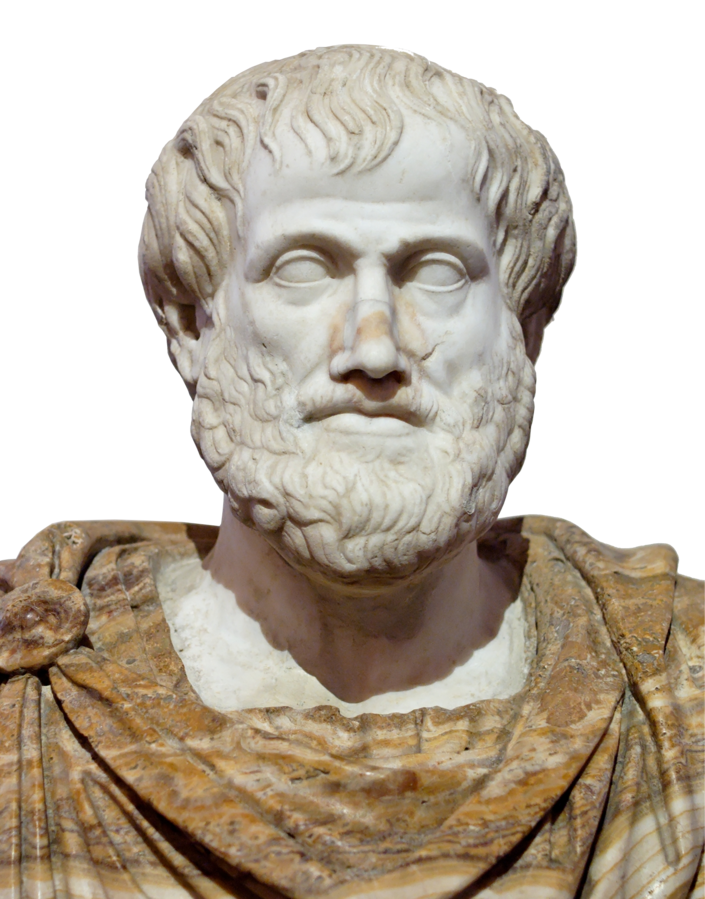
According to Aristotle- the law means “a sort of order, and good law is good order” and “reason unaffected by desire”, and “the mean”. Many of us are unaware of how a law making system established itself, its inner workings and its vast expanse. “The Principles of Natural Justice” may help us to understand some of the workings, importance and purpose of the law and judicial system in Human Civilization.

“You can’t escape from long arms of the law”- is one of the most famous dialogues from the classic detective/ investigative/ crime-based movies. These movie plots have somewhat same structure under them; our villain has tried all the ways to destroy the evidences from the location of crime and the witnesses. Eventually, the smart protagonist who was unable to prove the innocence to the court due to the trickery of antagonist finds a clue, a loophole which leads to the final victory in the court. There are many real-life examples of these cases. Here, the court serves as a middle man or the independent decision maker to decide what is right or wrong. (Even though ‘we’ as an audience know that the hero of the movie is right, the director takes whole movie to prove the thing to the judge!)
A system to decide ‘what is fair and what is not’ as a Judicial system is one of the most important parts of being a stable human civilization. This is what separates us from animals in some ways- we have a system to resolve the conflicts without too much of a blood shed. A strong judicial system is one of the pillars of democracy for the reason.
This means that there are certain laws for deciding what actions have to promoted and what actions are to be penalized. But the law has its limitations too. You cannot go on making law for everything in the world to be correct (and may be that is why you can still put pineapple on the pizza).
Human conflicts are so much diverse in nature that you cannot frame all of them or categorize them in certain sets and furthermore establish a law system to all of them. That is the point maybe beyond the reach of the law. There are many moments in real life where time calls for the clarity of what is wrong and right in situations at your workplace or you might the one who will be responsible for deciding the fate of people you are leading. How will you make the fair decisions there? What if, there is no written law to decide what has been right and what has to be called wrong? How to be fair and just in such situations?
You know what- you can’t escape the long arms of the law!
There is a fantastic concept of Principles of Natural Justice which is used to decide the fairness of any judgement. Actually, the scope of Principles of Natural Justice is highly focused on and intended for the Administrative Laws where there might be instances for which specific laws are not established.
There are two important statements which are stated in the Principles of Natural Justice from Latin maxims-

Nemo judex in causa sua

no-one is judge in his own cause

Audi alteram partem

listen to the other side

Nemo judex in causa sua-
The intention of this maxim is to make the decisions without any prejudices. Being judge in owns case already establishes the polarity of decisions while doing justice. The decision will always be in the favor of party the judge personally prefers which will lead to unfair decision. The unfairness in decision will actually diminish the trust of people in the judiciary system thereby the foundations of a good civilization. Hence, the independence of judge/ decision makers becomes of high importance while performing justice.
The maxim tries to remove one of the biggest flaws of being a human which is the flaw of being biased. The biases are the favored truths, prejudices of people which for them are the bendable truths. The biases will make the decisions subjective hence it will be difficult to create a good example out of any situation. Biases are like tinted goggles which filter certain ideas and makes the decision maker unclear of what the facts really are.
There are many biases found in human behavior which are always creating the illusion of truth until someone comes and proves them wrong for us. The Natural Justice highlights on some of the following biases:
Personal biases- It is the favor made while making decisions which will affect us and our relatives, friendships in a bad way. Thus, there must not be any personal interest or relation between the parties and the judge.
Pecuniary bias- It is the favor of decisions made to achieve financial advantages. The decision-making authority/Judge must not have any financial interest between the parties demanding justice and the judge.
Subject matter bias- A person who has supported a subject or has following for the subject on which the proceeding is going on will not give the hearing for the case. Otherwise again the favor of judgement will occur.
Departmental bias- A bias which is highly observed in administrative cases. As the name indicates the judge must not be of the same departments to which the justice demanding parties belong.
Preconceived notion bias- There must not be any presumptions in the mind of the judge which will affect the unfairness of the case. This bias is the most difficult bias to challenge. We as person are developed for the choice of what is wrong and what is right based on some truths and their comparison with the situations. These are our personal truths which actually develop the tendency to give justice while making decisions and we must accept that some of them may not be actually true.

The cultural differences, the upbringing of a person, the financial and family background of person, the environment around the person, the life altering events in that person’s life, the impact of other peoples’ decisions on the person’s life and so on, there are many factors which make a person- not only person but we all as a human to have our version of truths.
Even Friedrich Nietzsche also quotes the following:

All things are subject to interpretation. Whichever interpretation prevails at a given time is a function of power and not truth.

Friedrich Nietzsche

Meaning that out of all the truths everyone has, some of them feel true only because of the conditions in which they were presented. When we say that “Only victors write the history”- it leaves that space to think whether the victors were good or bad. If they were really bad then we have been presented the dark parts of history with needless glorification which is the real injustice with the truth. Here, the role of science becomes of highest importance which looks for the proofs of the facts.
Anyways, biases are that one integral flaw in our nature as human beings which will always challenge the fairness of decisions we make while solving the conflicts.
The ‘Nemo judex in causa sua’ helps to build the trust in the intentions of person giving the judgements. Otherwise, what is the point of an order which will not be enforced by the people for the well-being of the system created for the people themselves.


Audi alteram partem-

The purpose of this maxim is to gather all the information to make the judgement as fair as possible. It provides the chance for both the parties to put forth their version of truth.
This is also known as ‘the right to notice’. Unless the party is aware of the facts presented in or against their favor one cannot truly defend themselves. This also brings the inherent image of fairness, a just decision-making procedure in the judicial system.
Listening to only one side already violates the first maxim related to bias. It highlights that judge her/himself are favoring to one side only. Hence, listening to the other side creates that common ground for people with different version of their truths in front of the judge.
It not only important for a judicial system to offer justice to the people the act of offering a fair, just decision must also be observed by the people. ‘There must always be someone watching the justice being granted’- is the essence of the second maxim. This also strengthens the belief of people in judicial systems.
Listening to other side is not just about giving opportunity to other side- it is also one way to collect more supporting information for decision making.

Reasoned Decisions
There is also a third part of the Principles of Natural Justice which highlights the importance of reason in the justice offered. Their must be some provable logic/ reasoning to strengthen the justice offered otherwise it will be further challenged and the loop will go on. The people who will be affected by the decision must know why they will be affected. This importance of logic and reason in any hearing must be a speaking order which brings the seriousness and responsibility in the people and eliminates randomness of decisions. Any randomly passed decision will create loophole in the system thereby leading to many bad decisions in future which are sufficient enough to bring the entire system down.


If any ideology proves that the Principle of Natural Justice were not followed during the judicial process, the order becomes void or null. It becomes of no value.
There are some exceptions where the principle of natural justice natural justice will not be followed. This can be decided by the apparent nature and intentions of the actions while giving justice. Some of the events are related to the importance of emergency (exclusion in terms of emergency), maintenance of secrecy (exclusion in terms of confidentiality), tedious nature of addressing everyone when a group of people is representing one side (exclusion in case of impracticality), exclusion in case of routine matters- where the routine evaluations are being made for deciding fairness, exclusion in case of interim decisions – where the final decision has not been given and the suspension order is in effect, exclusion in case of legislative action- where the actions are taken base on the law already established (otherwise the law would be challenging itself which will create paradox) and the cases where no human rights were violated.


In the essence of the Principles of Natural Justice, it is one integral yet independent part of any judicial system in the world. These principles have actually defined the image of we as humanity and the system which runs it.
Actually, the Principles of Natural Justice digs deeper into the nature of subjective thinking of human beings for the mere purpose of survival.
The principles being ancient also highlight the fact that though many years have passed since the existence of human beings, we still think in the same way, we still create our own versions of truths, we still make decisions in the same way our ancestors used to do. Though the path followed is same, the primitive brain used is the same- survival instincts used are the same, it’s the addition of new truths to the previous set of truths in the process which are making humans to adapt to new definitions of being human- what it means to be a human.
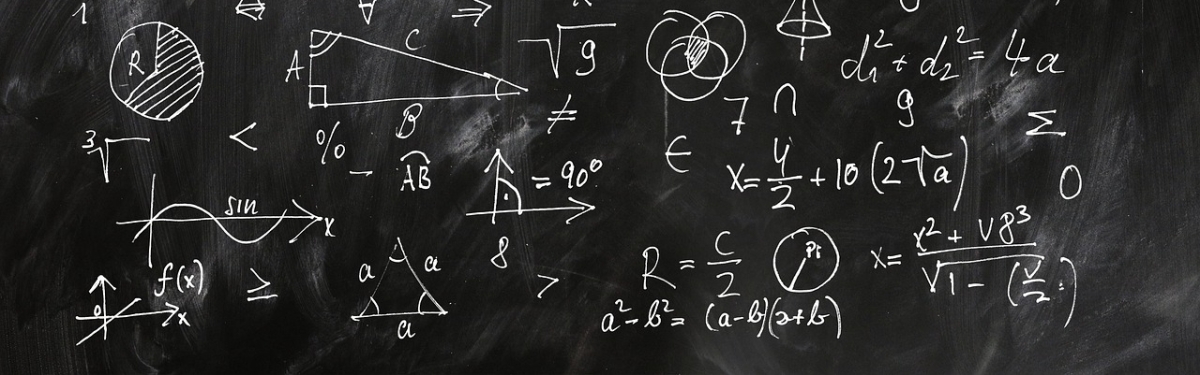
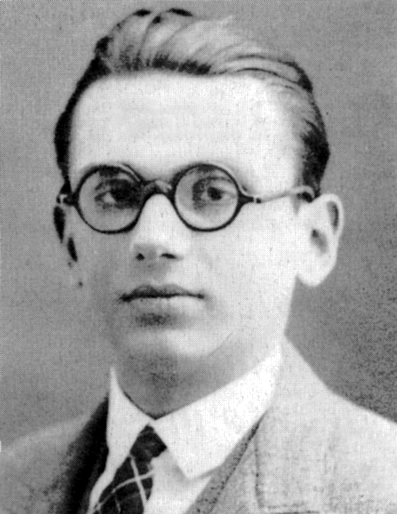
Understanding the true nature of Mathematics- Gödel’s Incompleteness Theorem

Either mathematics is too big for the human mind or the human mind is more than a machine -Kurt Gödel

I remember the times in the school when we were introduced to the proofs of geometric theorems. There was this systematic template that you had to follow to secure full marks for the question. You would write the “Statement of the theorem”. Establish a geometry, define its components called “Drawing”. Then you would write “To prove”. Finally, you would follow the steps, based on the foundations you had in order to develop the final proof- “to prove”. The moment of relief was to rewrite the “to prove” statement again followed by “hence proved”.

Fun part of proving mathematical theorems was that, if one’s proofs were wrong or contained half written answers- he/she would fight for the marks of steps. I remember my friend (that one who used to study for wrong subject on wrong day) who wrote only the statement of theorem followed by “hence proved” or “LHS=RHS” in a (stupid) hope that it will yield at least one mark. Because of these theorems, there were two types of Mathematics teachers- The God mathematics teacher and the Devil mathematics teacher. No need to explain that the God mathematics teacher gave marks for the correct steps irrespective of the final proof. In short, mathematical theorems made us realize that there are some good mathematics teachers too. (a rare species!)

This funny and real experience reveal the true nature of mathematics.

Nature of Mathematics

Mathematics is made up of some systematic and logical steps which will reveal the nature of reality around us. Mathematics is not subjective; it is strong and resourceful to stand for itself. In simple words. Out of all the schools of thoughts mankind has developed, Mathematics is the purest of all. Mathematics never favors a thought just because some king, any political person or any spiritual leader has issued an order to call it true. Any mathematically proven true statement will remain true irrespective of the paths followed to reach it. Hence the reason, mathematics is the reflection of the truth rather the truth itself.       

Mathematics has its own system of truths called “Axioms” and “logic” to decide whether any proposition is true or false. For any “given statement” to be true, there is a systematic approach of questioning the impact of “given statement” on other mathematical system which are already proven to be true. If the already “proven true mathematical systems” still follow their true behavior after involving the “given statement” – the statement is called as true. This is also what can be roughly called as “Consistency”. If given statement is true then it cannot be contradicted.

There is one idea for proving mathematical proofs involving “proof by contradiction”. You assume the proof to be false, then follow the logic and reveal that the outcome does not concur with the what was to be proved hence the assumption that it was false was false; hence whatever was to be proved true is true. Simple example can be given as follows:

Algorithm to decide whether 1+1=2 is True or False

One can simply ask some questions to conclude that 1+1=2 is a true statement. In whatever way one will negate the statement, the person will not reach to consistent and fixed result thereby proving the negation false.

From here on, our actual story starts,

The paradox of self reference in Set theory

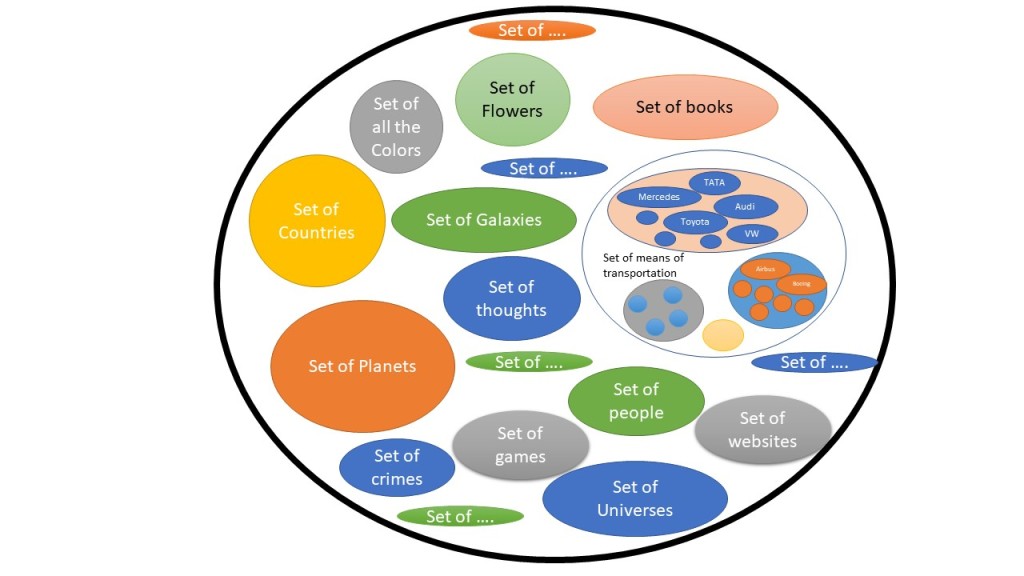
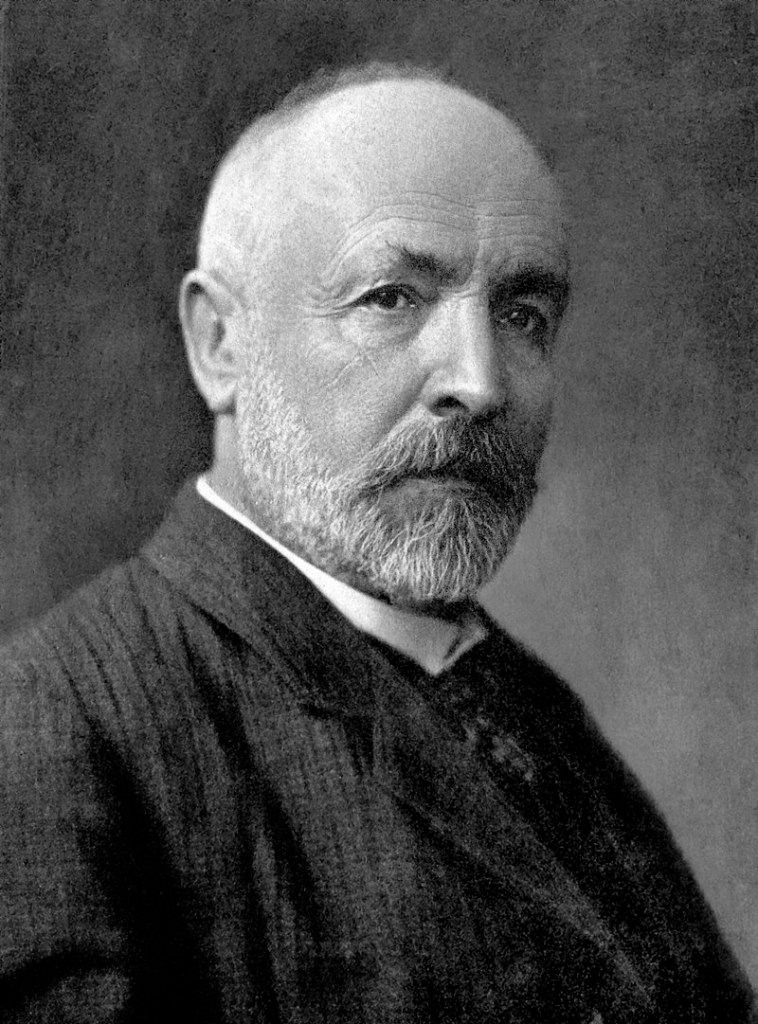
Set theory is one of the most important (simple and complex simultaneously) in mathematics developed by George Cantor. A set can be collection of anything which follows certain rules. Set of cars will include all the cars you can see, set of planets in the solar system will include all the planets (excluding Pluto!).

What about a set of all sets- The set that contains everything?

The set that contains set of all sets

Now the question comes, does the set that contains all sets, contain itself?

Does “the set that contains all the sets” contain itself?

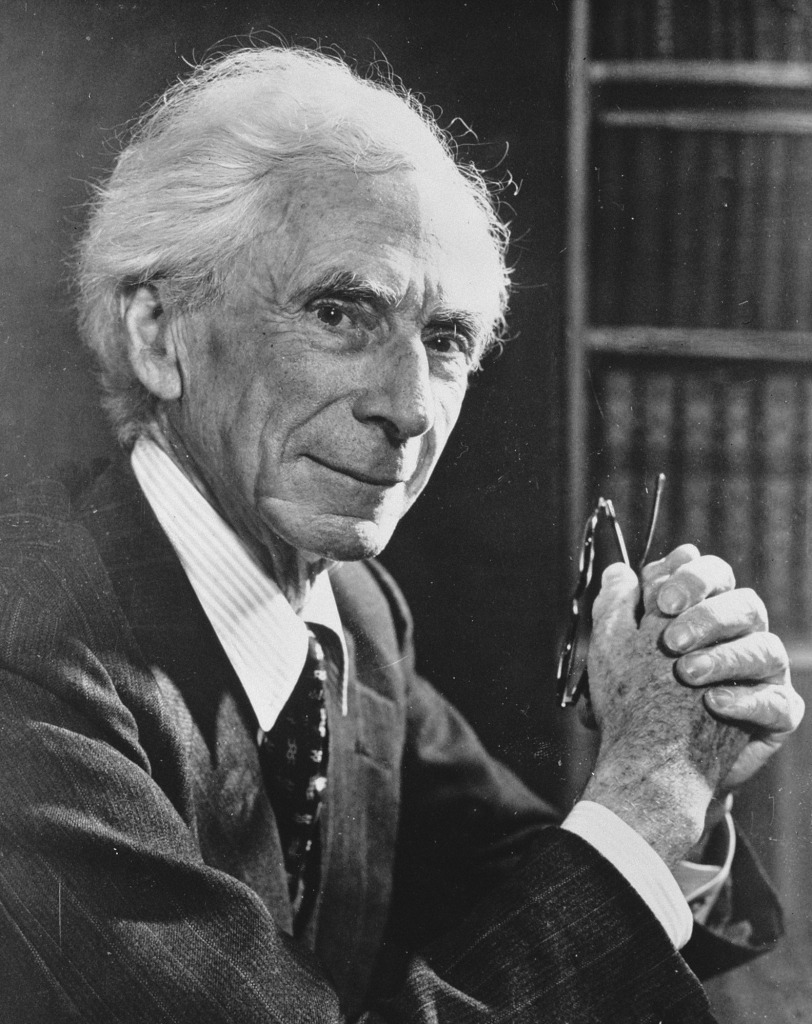
If “the set that contains all the sets” does not contain itself then it leaves itself outside of itself- hence it doesn’t become “the set that contains all sets”- but it is “the set that contains all the sets”. This leads to contradiction, famously called as “Self-contradiction”. This was found out by Bertrand Russel.

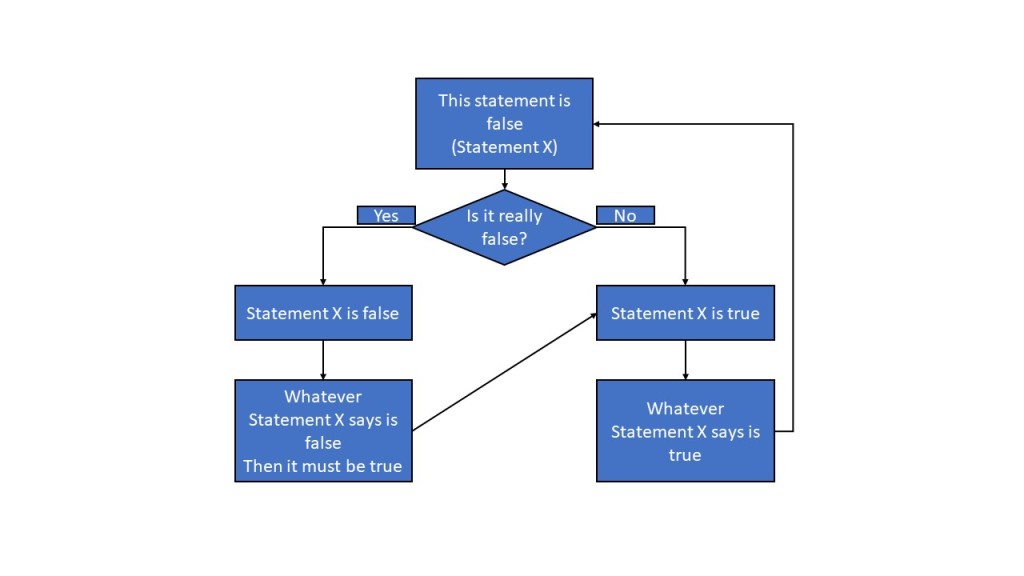
Here is one more example:

The paradox of Self-Reference

Unlike our previous algorithm to prove 1+1=2, here the algorithm doesn’t break out to either true or false. It contradicts itself to be true or false hence gets in continuous loop. This is where, the mathematicians realized the true boundaries of what we can know and what we cannot know.

The Barber’s Paradox is also one funny example paradox of self-reference.

The two cases of self-contradictions explained above are verbal paradoxes, means that their outcome may be subjective based on what every person understands from the meaning of the words; they can be twisted to any person’s meaning or understanding. Mathematical truths are not like that, they are specific and cannot be twisted to make any desirable or subjective outcome.

The Ignorabimus

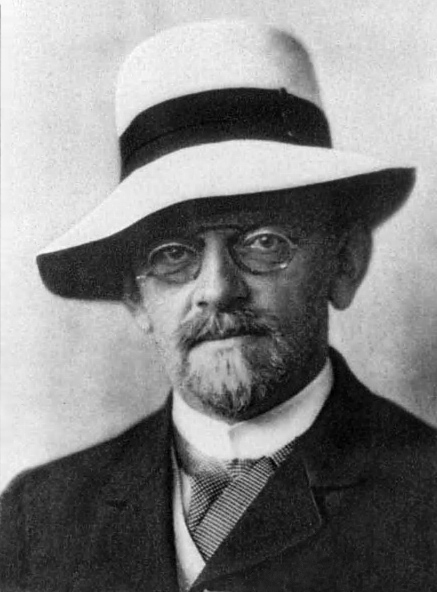
Boasting on the strong foundations and objective nature of Mathematics, many mathematicians called mathematics to be consistent thus they began the quest to prove the consistency of the mathematics. One of them was David Hilbert- one of the most influential mathematicians of all times. According to Hilbert, mathematics was consistent meaning for every mathematical true statement there exists no contradiction. It always follows only one single truth and its falsification of this truth does not exist. He had given a famous lecture to deny an idea called “Ignorabimus” (a latin maxim meaning “we will not know”- a topic for new and later discussion) saying that “We can know everything that is there to know and we will know that all”.  

In reality, that was not the case. A day before this lecture actually happened- a logician called Kurt Gödel had proved that mathematics is not consistent. Means, contradictions can happen in mathematics. This was a shock for all the mathematics community. It’s like the truths in mathematics can be twisted to prove any wrong thing right.

Gödel had devised a method (purely mathematical) to prove that mathematics was not consistent.  

It somewhat aligns with the thought process of Self-referential paradox or the paradox of set theory.

Gödel developed a system, this system is well explained elsewhere (find the link in Further readings section):

Gödel defined a number to each logical operator and number like for “and”, “or”, “not”, “successor” (means any number before the number), “addition”, “subtraction” and so on. Based on the statement, take for 1+1=2 he pulled out a mathematical function to give out a number which represents that statement. Similarly for all the axioms, Gödel pulled out these individual numbers. So, when you want to prove that 2+1=3, you will pull a number for that statement. The number pulled out from the expression 2+1=3 will have provable connection with the statement 1+1=2 thereby proving the statement 2+1=3 to be true.   

Gödel developed the numbers for the axioms and proved that any statements can be proved from the operations on the numerical representatives of the statement to be proved.

For example:

When we enter 1+1=2 in a computer, the computer assigns the number and operator a unique code in 1s and 0s also known as ASCII (American Standard Code for Information Interchange) uses somewhat same idea to solve the addition operations to give output in a number containing 1s and 0s then converting it to the output display of calculator.

The fun starts when Gödel purely mathematically formulated number for a statement which was Self-referential paradox. The statement was like this:

“There is no proof for the statement with Gödel number g”

Meaning, that there exists no proof for the statement which number g indicates in the system out of which it has been created. The statement is unprovable

The Paradox-

There are two cases to be evaluated:

  1. If the above Gödel statement is false means, there is a proof. But according to Gödel statement there is no proof in the system Gödel created, thereby creating a contradiction.
  2. If the above Gödel statement is true means it is not provable from the Gödel system.

Either of the cases evaluated above lead us to conclude that the current system in which the statement was created will not have the proof for some true statements thus making it incomplete.

You will need to jump out of the system to create a new proof to evaluate the truth of the system because given system has insufficient axioms to prove the new statement to be true, hence the new statement itself becomes a new axiom.

The combination of this axiom with the already existing axioms creates a new system.

For example:

Two parallel lines will never intersect each other

This is true when you are in Euclidean Geometry where right angles and plane of paper are of prime importance. Where the plan of paper has no curvature

But when you are able change the curvature of the paper where parallel lines are drawn, you can make them intersect.

The no intersection idea of parallel lines is the basis of Euclidean geometry but their intersection is not provable in the Euclidean geometry itself. You have to create non-Euclidean geometry (Hyperbolic, Elliptical geometry discovered by Lobachevsky and Gauss) in order to prove the point.

This means that the statement that Parallel lines may intersect has to be assumed as true with no proof in Euclidean geometry, once accepted as the truth it developed a new a system called non-Euclidean geometry where the system became more complicated.

This brings us to one final question that- Can we know everything that is there to know in mathematics given that it is the purest form of truth?

And the answer is No.

The Gödel’s incompleteness theorem proves that there always will be some true statements in a system where there will be no proof to prove them true. The acceptance of these statements as true will lead to development of new system.

The challenge for mathematicians is that accepting something to be true without having a proof to call it the truth. If some mathematical statement when tested to be true to every mathematical simulation proves to be true, should we accept it as the unprovable truth?

This highlights the incompleteness of Mathematics.

The Millennium problems and Gödel’s Incompleteness theorem

There are some problems in mathematics famously called as the millennium problems. The problems yet not proved and if proved true will completely revolutionize the mathematics thereby creating a new system of the axioms and their combinations.

The Goldbach conjecture, Riemann Hypothesis, Nature of the roots of the Navier-Stokes Equations are some of them.

The great thing about the Gödel’s Incompleteness theorem is that the idea of numbering the statements led to the development of machine language, programming and developments of early computers.

There is a concept in artificial neural networks called grey box model where you try to predict the outcome of events based on the already fed relations between variables, interactions between them and their outcomes. We actually do not know what is happening inside the grey box models of the neural networks but we know that when fed with enough data the outcomes are true based on real conditions.

The Gödel’s incompleteness also makes us question our biases. If something true is not provable, how would you prove it to be true OR if it’s not provably true is it really true? ( One of the millennium problem possible unprovable known as Fermat’s last theorem is proved after whopping 350 years) This also highlights how difficult it is to develop a purely original mathematical idea, how small amount of time we have as a human to discover the marvels of the nature, universe around us.

The conclusion is that there always will be something that is not complete. There always will be something that we may not know. There always will be something that needs development of new foundations to be true. There always will be something in this universe (and may be multiverse) that still needs to be discovered which will give us new perspective to look at things.

Ignoramus et ignorabimus

we do not know and will not know

Further reading:

  1. How Gödel’s Proof Works– Quanta Magazine
  2. George Cantor– Wikipedia
  3. Bertrand Russel– Wikipedia
  4. David Hilbert– Wikipedia
  5. Kurt Gödel– Wikipedia
  6. Fermat’s Last theorem– Wikipedia
  7. Millennium Problems-Clay Mathematics Institute
  8. The Barber’s Paradox– Wikipedia

Connecting money with sentiments – Behavioral Economics

Behavioral economics established that humans are humans, they have emotions. They make mistakes and misbehave.

Human beings are the epitome of what evolution has done with the earth. Starting from the stone age to the age of AI, we had a long journey of continuous adaptation. The development of various tools like weapons for hunting to the machinery for industrial development to the ginormous simulation engines to simulate space missions are to name the few. The common thing between all these tools is that these tools are made from the resources available around us. From developing the hunting spear from the stone and a stick of a tree to making the computer chips from the silicon from sand and stones, we have mastered the use of resources around us. This became possible only because of the development in our abilities to manage our resources, our techniques of handling the available materials which we can closely connect to economics. Barter system used for trading things, development of metal currency, then paper currency and now the cryptocurrency – the journey is phenomenal. Economics deals with how we manage the resources and we all are clear that these resources have one agreed medium of transaction called currency, money.

Most of the people perceive economics as a boring subject, where you develop some theories and mathematical models to predict money trends. The models may agree with some datasets, may break down at some points implying that the field is full of biases and assumptions which are far away from reality and understanding of common public. There is this joke about economists:

– Why did God create economists?
– In order to make weather forecasters look good.

Though the joke is really good, many great economists have really shaped our perception of money thereby resources and prediction of the interactions on personal, social and global levels. Today we will be discussing one such stream of idea which revolutionized the perception of new economics though the idea was already present deep down in the older and starting ideas of economics and psychology. Before that we will need some foundation to start with.

Classical Economics

Adam Smith also known as father of Economics has this book called “the wealth of nations” responsible for the development of Classical economics. Classical economics has following ideas:

Competitive advantage – success of any industry depends on how efficiently it uses its resources

Free market – defining the prices of goods by negotiation between buyers and sellers in an open platform without any intervention of government and without any monopolies leading to equilibrium between supply and demand thereby establishing fair price

Division of labor– Defining and separation of tasks will lead to specialization thereby leading to the efficient use of resources to optimize people to enhance their skills and economic interdependence.    

Then came the Neoclassical economics in 1900s which brought new school of thought which aligns with “the rational behavior theory” stating that people think rationally while making economic decisions. Hence, they are ready to pay the price of a thing/ resource based on the value it brings to them.

In simple words, the classical economics believes that the price of any product is dependent its cost of production. Whereas, neoclassical economics believes that the price of product is dependent upon the utility to the customers not its cost of production.   

The conventional nature of economics – the problem

For many years the main idea behind the theories in the economics is that the people are rational while making any decision related to money. Every person exposed to a product/service has well defined preferences and unbiased ideas and expectations. These unbiased ideas make people to choose whatever is the best for them.

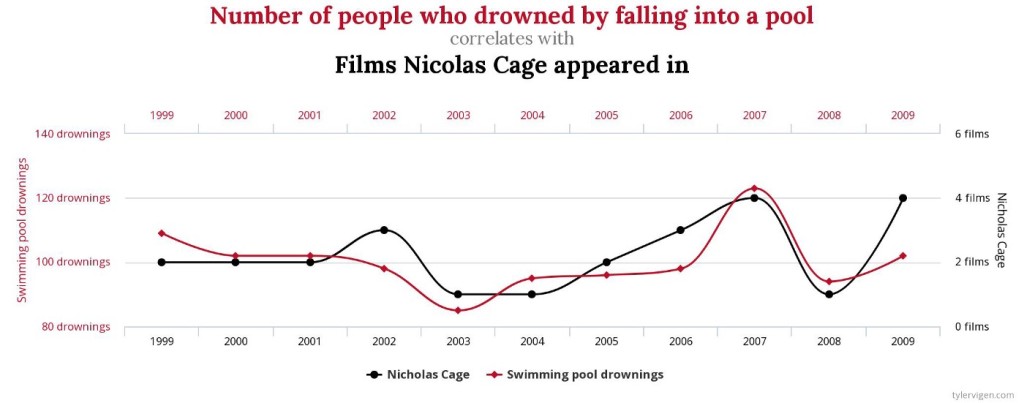
These ideas in the conventional economics lead the economists to formulate and study economics mathematically as inspired from the physicists. Physicists theorized an idea and based on the mathematical principles developed models which can predict the nature and behavior of objects- from a ball to the motion of planets around the sun. Hence, in economics you will find many complicated mathematical equations and wild correlations (a correlation is degree of dependence of two datasets). One funny representation is as follows, somebody found out that the there is strong positive correlation between the pool drowning deaths and movie releases of Nicolas cage. So does that mean that people were so fed up with nick’s movies so that they preferred drowning over his films. Definitely No! I am a fan here.

Here is one more:

There was this funny correlation that the skirt length was related to the stock market movement called ‘the Hemline theory’. A theory saying that stocks prices move in the same direction as the hemlines of women’s dresses. For example, short skirts (1920s and 1960s) indicating bullish and long skirts (1930s and 1940s) indicating bearish markets.(!)

These are some of the reasons why the economists and their models remained part of funny discussions. This was one of the reasons why many economical models were applicable to limited datasets. The problem is not about the flaws in these ideas, the problem is that many big financial, political, life altering decisions were made based on such theories and models.

I mean these models were not completely wrong; nothing is perfect, there is always room for improvement.

Quest for establishing the correlation between human behavior and economic theories-

When economists were in the establishment of mathematical foundations of the subject causing their economics to reflect the equations and theorems, the psychologist directed their studies more towards experimental approach for the development of psychology. Their theories were more of verbal and theme based, that is also the reason why you can find psychology as a set of vocabulary itself.

Psychologists in some sense developed the ideas about how we interact with others and materials, resources around us. What affects out decision making when we interact with each other and things in our surroundings.

Some of the famous Psychologist had already tried to establish the connection between the ‘machine-like’ economic theories which strictly followed some equations and the real emotions, sentiments that make these economic models unfit with the reality. Their ideas helped us to find the reason why money does not strictly follow the strict optimized and high output giving trends. The reason does not lie in the money, it lies in the nature/ sentiments of the people who drive the money, the people who sometimes choose other things over money.

Richard Thaler, Daniel Kahneman, Amos Tversky, George Katona, Herbert A. Simon these are some of the notable names which have strongly influenced the ideas of behavioral economics.

The dawn (rather awakening) of the behavioral economics  

The basic idea of behavioral economics establishes that we humans make mistakes and most of our decisions are emotion and influence driven. People are not always rational. After are we are humans. Humans are flawed (!) hence don’t follow machine-like strategies. People love to mis-behave; they love breaking the rules.

Expected utility and Prospect theory-

According to expected utility theory in conventional economics, people will choose gambles which give highest outputs whatever may be at stakes. It says that, people take money related decisions based on the maximum future value it will bring to them, whatever will be the conditions. It’s like a person buying a lottery ticket.

If a person buys a $1,000 lottery ticket with $10 and the probability of winning is 10% then he thinks that the utility or value it will bring to him will be $1000 x 10/100=$100.

But you know how lotteries work. If the same ticket has winning probability of 0.5% the expected value becomes $1,000 x 0.5/100=$1,000 x 5/1000= $5, which is already less than the money it takes to buy that ticket. Here the expected utility is far less so the person won’t buy the ticket.     

The value of the lottery ticket became high due to the higher winning probabilities as the expected utility of that ticket is $200 over ticket price of $10.

In simple words, expected utility theory says that people take the chances and decide the value based on the its probability. More the probability of winning more it will be favored.

Kahneman and Tversky created ‘Prospect theory‘ which challenges the Expected utility theory. According to prospect theory it is not just about more probability and less probability of winning, it is also about the situation in which decision maker is; this called as a reference point. Other than winning or losing, a new condition is created which we can call as a reference condition. If the same lottery buying person is given the choice of

A. Getting $100 immediately

OR

B. Having 10% chance of winning the same $1000 thereby 90% chance of gaining nothing      

The same person will choose to get $100 immediately and walk off. Here the person did not choose the expected value of $100 rather, the person chose the instant benefit that he got, the person saw less risk in option A although the person may have won $1000 from the lottery, but chose to avoid the risk.

This is also famously known as ‘Loss Aversion’.

In simple words, losing $100 hurts more than winning $100. We as a human always try to avoid higher risks options and make ourselves safer. We always try to make the decisions closer to the reference points created by out experiences, assumptions. We try to “break even”.

Exponential discounting and hyperbolic discounting

According to exponential discounting (in classical economics), the value of any gain declines equally with time period it is delayed.

Here are two cases:

P. Getting $100 today over getting $110 after a week

Q. Getting $100 in 10 weeks or getting $110 in 11 weeks

A rational person will behave like an adult and will chose to wait for 7 days to get $10 more- just like a sincere (!) person. Whatever is the case- either P or Q the wait is same (waiting for 7 days) and gain is same (gain of extra $10) both the Case P and Case Q have same discounting rates, same rate of losing the value. This is exponential discounting

But what would you have done when provided with case P and case Q?

Behavioral studies show that people always go for instant benefit and chose $100 today in case Q whereas they are also ready to wait for one extra week if they are provided with only second case (Q) where the time-frame of gain is expanded. Means, people are selfish! They want this and that too. We always seek immediate rewards, instant gratification. No doubt social media is the living proof of this.  

Social Preferences

The behavioral economics says that people not only just care about what they are getting, they also care about what they are getting compared to others. (That might be the reason, your HR department instructs you not to ask for the salary details of your subordinates, colleagues, seniors!)

Consider a game where one person out of two people is said to divide $100 between them and they both will get those $100 if and only if the second person agrees to whatever share she/he receives otherwise, they both won’t receive anything. The rational choice for the second person is to accept whatever she/he would receive. Whether she/he gets $1 that too is acceptable because she/he had nothing ($0) before. Having something should be better than having nothing.

But in reality, and discovered from real life observations- people always try to reason with overall situations. People compare their gains with the gains of others, thus the above said second person in reality will only agree only if they both break even otherwise, she/he won’t accept the offer knowing that they both won’t get the money. This is really observed in studies and is funny.

Conventional economics considers people as a rational choice making machine. They always know what they are doing. It’s like for every human being is an economic optimization machine what economists call ‘Homo economicus’. Here people always make rational decisions, thus follow specific mathematical models based on a set of variables. Also, there is one idea called Becker conjecture which says that the people in the top management (politicians, leaders, chief directors, executives) always know what they are doing, they are always accurate on the probabilities of the outcomes. They always behave optimally.

In contrast, Behavioral economics established that humans are humans, they have emotions. They make mistakes and misbehave. They are not ‘Homo economicus’ implied as always thriving for optimizations. They are humans – ‘Homo sapiens’ implied as imperfect and prone to mistakes. There is no such human behavior where everything will cause to balance leading to establish equilibrium. There is always evolution when it comes to being human. They learn from their mistakes change themselves, adapt and evolve instead of being stagnant as in equilibrium.

(There are many interesting concepts in Behavioral economics like impact of Game theory, Supposedly Irrelevant Factors (SIFs), Difference between Equilibrium and Evolution, Roots of Behavioral economics in Classical economics, the endowment effect, social utility and those will be the topics for another day!)

References and further reading:

  1. Misbehaving: the making of behavioral economics by John F Chaves (Psychiatry)    
  2. Behavioral Economics: Past, Present and Future by Richard Thaler (American Economic Reveiw)
  3. Behavioral economics: Reunifying psychology and economics by Colin Camerer (Proceedings of the National Academy of Sciences (PNAS))
  4. Behavioral Economics Comes of Age: A Review Essay on “Advances in Behavioral Economics” by Wolfgang Pesendorfer (Journal of Economic Literature)
  5. Adam Smith– Wikipedia
  6. Richard Thaler– Wikipedia
  7. Daniel Kahneman– Wikipedia
  8. Amos Tversky– Wikipedia
  9. George Katona– Wikipedia
  10. Herbert A. Simon– Wikipedia
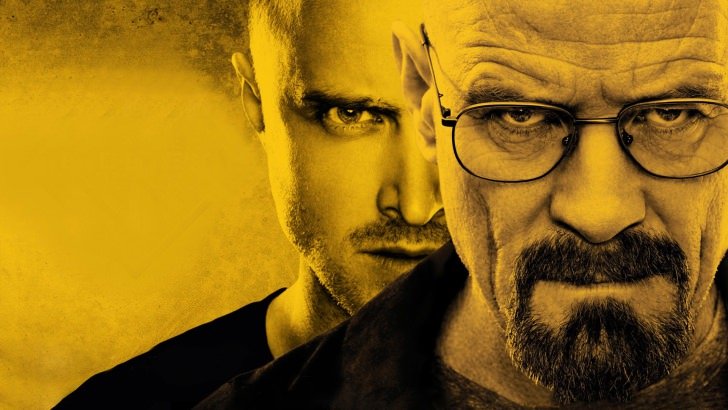
PS: One should really try to compare the concepts discussed here with the characters Walter White (As Classical economics) and Jesse Pinkman (As Behavioral economics) from Breaking Bad. You will get the idea, plus it will be fun!
Walter and Jesse from Breaking Bad

Nostalgia- The romantics of past

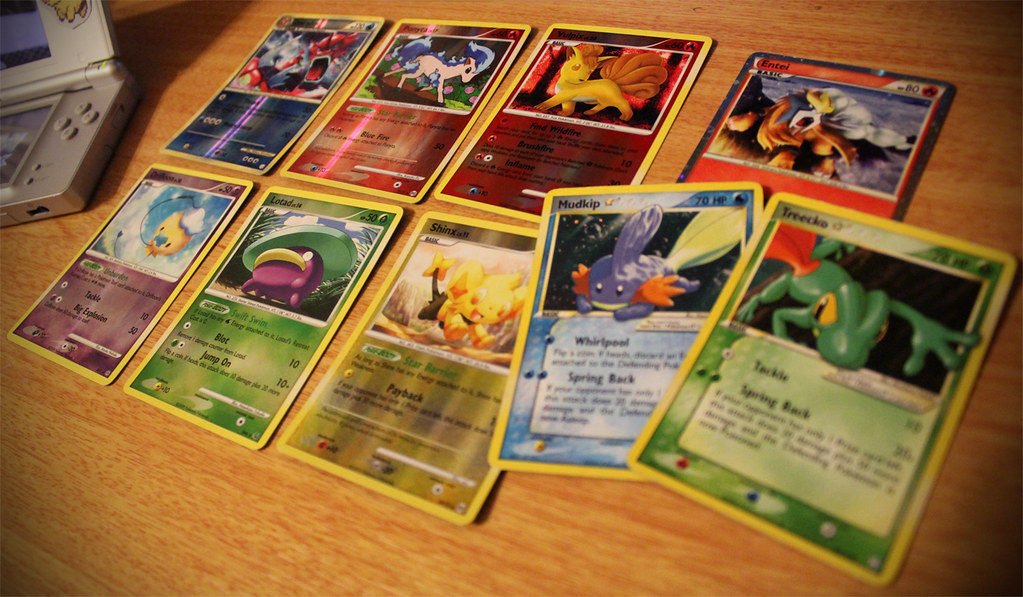
Remember the video game that you used to play in your childhood? The game cassette claimed 999999 in 1 but it was few games just repeated may times and you still enjoyed playing with them. The times were simple, we used to trade the Pokémon cards, WWF trump cards. Speaking of WWF- every boy in the school knew the story of rivalry between the Kane and the Undertaker still being brothers, how many times the Undertaker had reborn. We had that red-blue eraser which could supposedly erase both the pen and pencil writings. Everyone had played that pocket brick game bought from the local fair at least once. Tom and Jerry, Popeye, Looney Tuns, Beyblade- these were some of the favorite cartoons and who could forget the Power Rangers- they were the Avengers of our times. Spiderman was present on every possible school stationary that you could have- starting from the school bags, water bottles to the pencil boxes and textbook stickers. Those were the days! These days bring back all those fun we had, reminding us that even though they cannot be brought back, which is sad but still we are happy that we were able to experience them.

Nostalgia- The ride down the memory lane…

The concept of nostalgia has traces 3000 years back when it was related to a mental disease closer to depression or melancholy. Nostalgia is made up of Greek word νόστος (nóstos), meaning “homecoming”, and ἄλγος (álgos), meaning “pain”. The later stages when the psychology became more experimental the Nostalgia was less of a disease and more of a complex emotion.

The feeling of nostalgia is closely related the reminiscence of memories evoked by the stimulation of our senses. You smelled- tasted something good, listened to that catchy tune and suddenly remembered the days you used to enjoy the same feelings in the past. The memories we remember are the main media-vehicles for the nostalgia. You have this flood of emotion when you suddenly remember ‘the good old days’, ‘the fun you had’, ‘the pranks you pulled on each other’ on the last day of the college graduation.

The pop culture- Memes (90% of the meme empire is built on the nostalgia), Movie reboots (Star Wars, Spider-verse), Spin-offs (Again Star Wars!), Music industry (that catchy song present in every Instagram reel), Social Media, Advertisements are the best example of high intensity of engagement created using the Nostalgia.

Nostalgia is all about the memories you reminisce and recalling the good experiences you had. But it is proven by research that when we are remembering something from the past, we are not actually recalling the exact events which ‘happened then’ rather we are remembering how we felt, the emotions we went through, our reactions to the events. Meaning, one common event may create different feelings of nostalgia in different people because these experiences/ reactions are very personal. Hence, we can say that Nostalgia is relative. Roughly Nostalgia has been classified as Personal and Historical. Personal nostalgia we are all clearly aware of- these are highly connected to your own experiences. Historical nostalgia is one beautiful thing. It is the yearning for the past, times in history that you haven’t actually lived through. These are the times in history you are exposed to through reading, by listening to the stories from the people who lived through it- like your stories from the times of your grandparents, the media you consumed (the 80’s songs, Classic movies, Classic novels). There is a word for this called ‘Anemoia’ meaning nostalgia for a time you’ve never known. This clearly shows that nostalgia is not about the moments happened in your life it is about how you felt through them.

Nostalgia most of the time is observed to be a positive emotion but it can sometimes make you sad too (which was the backstory behind naming the emotion as ‘nostalgia’) Being a highly social emotion nostalgia is a double-edged sword, a boon and a curse. When you are with the group of people who shared common experiences- the nostalgia becomes the glue which will hold the group the together, strengthen the bond between your group. But if you do not share the experiences in a group then the nostalgia brings in the hostility and feeling of alienation. If you sat down with the group of seniors who went to this great adventure tour and you were not with them. When they will discuss the fun they had, you will instantly feel out of the zone and alienated. Because you hadn’t shared the experience with them. Here nostalgia creates a negative influence. These type of negative influence of nostalgia can be easily erased by involving the other- new person into the similar type of experiences, by asking her/him about same emotions they have experienced thereby creating a bridge between their experiences and your experiences, their nostalgia and your nostalgia.

Some nostalgia may wake the feelings of distaste, hatred within you. This is how most of the political campaigns are carried out. Remember the times the inflation, fuel prices were ‘this’ much high, remember the times ‘these’ inhumane acts happened. Most of the nostalgia brings back the feeling of good times this is how popular culture creates revenue. Those movie call backs, the ‘Easter eggs’ which can keep your conversations on and on are here to be mentioned.

Researchers indicate that the current times of social media have intensified the effects of nostalgia. Though the social media, internet has brought the world closer, we are always lacking the physical interactions between the world and the emotions generated by them. These very personal responses/emotions are the foundation, the seed of nostalgia. Hence the reason you can say why people are so much engrossed in the alternate realities, virtual experiences, virtual worlds. That is the reason people want to run away from the real world. Millennials are the best examples of this. So much that we have Thursdays (TBTs) assigned especially for the thing!   

Does that mean we as a human enjoy dwelling in the past? Is Nostalgia a positive feeling or a negative feeling? The answer is both Yes and No.  

We humans love patterns, repetitions. Patterns indicate familiarity, safety, predictability. The predictability gives us the feeling that we have control over things thereby comforting us, giving us the feeling of safety, which was an important aspect of our primitive brain considering the survival aspect. The change invites unpredictability, loss of control over things thereby invoking the restlessness, indecisiveness which consistently eats us. Here the role of Nostalgia becomes important. Because we are constantly changing, the feeling of nostalgia takes us back to our past and makes us realize who we were yesterday, who we are today and who we will become tomorrow. Nostalgia is that calibration our brain performs to somewhat adapt to the change happened and make us ready for the upcoming change. Remember the moment you achieved something and you go through all those hardships and fun you had- you are happy remembering them and you now know what they have made you and the things that will follow after this moment. 

Nostalgia is that bittersweet emotion as researchers call it. It is the amalgamation of our past, present and future. It makes us aware of how far we have traveled and what the future will bring, which in some sense is the part of life where change is the only thing which is constant. Nostalgia is the emotion which easily creates a common ground for bringing people together, strengthening the feeling of trust.

Further reading:

About the thought of ‘Reading for thinking’

Arthur Schopenhauer

A truth that has merely been learnt adheres to us only as an artificial limb, a false tooth, a wax nose does, or at most like a transplanted skin; but a truth won by thinking for ourself is like a natural limb: it alone really belongs to us. This is what determines the difference between a thinker and a mere scholar

Arthur Schopenhauer

New year represents new beginnings, a fresh start. Though recent years were filled with great challenges, we have adjusted ourselves to the new conditions, many things have changed. One of the things that are not changed are ‘the new year resolutions’. New year resolutions are one inseparable part from the new year celebrations. Whether one declares it publicly or keep it to themselves, everybody has thought of doing something new (consistently!) for upcoming year. Developing the habit of reading or reading ‘these’ many books is one of the famous new year resolutions (please note that joining the gym is still ranks the number one).

Being a bookworm, being bookish person (with spectacles for extra effects) has always been an indicator of studious, genius, mastermind, scholar personalities in popular culture. Having read lots of book is status symbol in the scholastic circles for years. But here is one thought – What if you are given all the resources, time, superpowers to read all the books in the world, will you be the wisest person in the world? Everybody knows the answer- the answer is ‘No’.

I came across this essay by the great German philosopher (and the most underrated one) called ‘Arthur Schopenhauer’. The title is ‘On Thinking for Oneself’. The essay is made up of mere 75-100 sentences but it has all the juice that will last forever if you really think over it. And this man has more essays like this.

‘On Thinking for Oneself’

Schopenhauer starts the essay with an example of two libraries- first where it has lots of books and you have read them all and second one has far lesser number of books, you have read them and have thought thoroughly over them. The second case will be of far more value- Schopenhauer says. The answer lies in the process of rearrangement of your experiences, their alignment with the truths/beliefs you have established, questioning your current beliefs, changing them if they are proven wrong after reading. That is how you not just gain the knowledge but this is how you acquire authority-mastery over it.

In simple words, reading a book is just feeding your brain with some words and collecting such sets of word again and again to call yourself a scholar. This is more of an artificial approach of gaining knowledge and will not last forever. Like, do you even remember what you read for that exam in the school where you scored the highest marks? In Schopenhauer’s words ‘It is like forcing a spring under continuous pressure so that it loses its elasticity’. I think this is what’s wrong with the current education system. Development of a train of thought for everything you read, is more organic. One can force people to read as much as possible but one cannot force anyone to think about them or anything forcefully. The thinking needs to be originated from inside only and once it starts flowing it will go on building itself. This is possible only when one has innate ‘Will’ to understand/ question what she/he has read. The act of reading must start with a purpose born from inside. Read whatever you wish not what others recommend.

Schopenhauer explains this ‘plain’ reading with the analogy of mouth and digestion/assimilation necessary for functioning of body. According to him reading is like chewing the food, splitting it into the pieces. But the real transfer of the nutrients from the food to the organs is only possible through the digestion and assimilation which is of far more importance. Thinking is like digestion and assimilation. People value mouth and eating more for remaining healthy, we consider reading in the same way; Staying healthy is also about digestion and metabolism.

Schopenhauer wants to focus on the importance of thinking over the things rather than just registering them, recalling them whenever demanded. He writes-

“Reading is merely a surrogate for thinking for yourself; It means letting someone else direct your thoughts”

Means it is very important to understand the intentions, background of the writer. When you are reading any book, your boat of imagination, thought is sailing by the winds of writer’s intentions. These intentions can be subjective, personal hence are of immense value to the writer but same might not be the case for the reader. There are many examples human history can provide, where people have stuck to the sayings, declarations, predictions from the books without even questioning, debating over them, accepting them as the ultimate truths and later they lead to disasters.

So, does that mean that you should stop reading?    

Schopenhauer has explanation for this too.

“You should read only when your own thought dry up, which will of course happen frequently enough even to the best heads; But to banish your own thoughts so as to take up a book is a sin against the Holy Ghost; it is like deserting untrammelled nature to look at herbarium or engravings of landscapes”

Books are very important when your thoughts are stuck in a place, when you are completely directionless. Even starting with wrong directions which the case most of the times can at least make you aware of where you are (provided that you are thinking on your own).

The roots of this all ‘thought process’ lies deep down into the Schopenhauer’s philosophy of Will. Schopenhauer’s famous book called ‘The World as Will and Representation’ elaborates this idea in far more detail (this deserves one separate discussion).  

It is not just about reading lots of books. It is about developing the habit of thinking over what you have read; it may be a small paragraph or even a quote. Questioning, debating, challenging and erasing the old beliefs thereby establishing newer ones and most importantly aligning them with your ‘personal’ experiences is what is of the highest value- that what being the smartest species on the earth means. I think this is what ‘critical thinking’ is and the gift of being a human.

In simple words, a ‘book smart’ person is the one who has gained the knowledge just by agreeing to the writings of the books, it may be in his/her imagination. On the other hand, a ‘street smart’ person is the person who has gained the knowledge by dealing with the things in real life, real experiences, by developing muscle memory. You will be a lethal combination of ‘book smart’ and ‘street smart’ if you could really connect your real-life experiences and the thoughts developed after questioning the readings from the books. But for all this, you really have to start think on your own without any external influence. Because, it is always easy to make people think based on the external influences. That is what advertisements do, one commercial and ‘poof’ you have already bought that unnecessary thing.

How can we start to really think over anything we have read? How can we make reading more effective? How can we extract value from reading a paragraph or mere sentence?

Actually, we already question many things, readings in daily activities- but these questions are not pronounced to the noticeable scale and get faded with the time. So, whenever you come across some readings and that makes you think over them, try to write it down and revisit it someday, you will get a new perspective to that thought. Maybe you will think for yourself and that will be the most natural, organic way of thinking- nobody has forced you to do it. So, I would say read once and small but think over it twice and big, maybe think again later (Overthinkers know that better :D) Whenever you are reading anything, just keep this small thought in the back of your mind. I know you have read all this to the last line, it will be great if you have thought over this for yourself too.

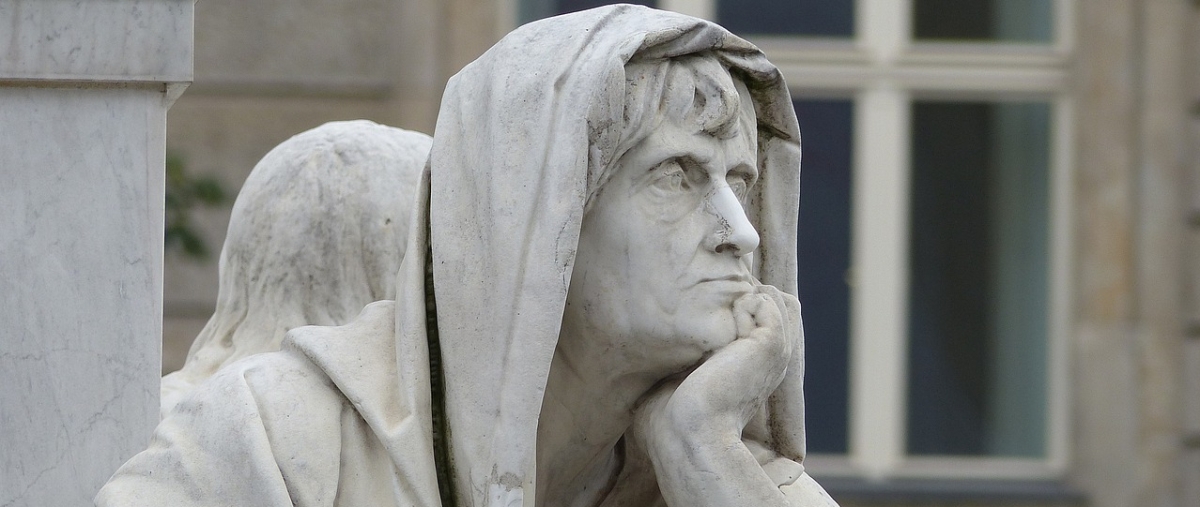
Image of Arthur Schopenhauer by Johann Schäfer

Further reading:

  1. On thinking for Oneself by Arthur Schopenhauer
  2. Arthur Schopenhauer– Wikipedia
  3. Arthur Schopenhauer– Stanford Encyclopedia of Philosophy

Metamorphosis- Anatomy of mental illness

Franz Kafka

Metamorphosis is about ‘Valuing a person for who they are’. The goal is not to understand him/her, the goal is to accept them for who they are. Metamorphosis shows what will go wrong when we lessen the value of everyone as an individual person for their motivations, drives, ambitions, expectations in any structure. It can be social, financial or personal. As a reader you will hate Gregor’s Family. This will also happen with every system where people are not valued.

Franz Kafka’s Metamorphosis is one of the 20th centuries greatest literary masterpieces. Originally written in German as ‘Die Verwandlung’, the novella has been the centre of discussion for many critics. Ever since I discovered Metamorphosis, there was this feeling inside me to bring this into words.

The story of Metamorphosis goes like this-

Gregor Samsa- a traveling cloth salesman finds himself woken up to be transformed into monstrous vermin (generally depicted as a cockroach). He is already late for his routine job which he hates by heart but cannot quit as he is bound to the employer by his father’s debt. He is the only source of income to the family. The absence of Gregor at job makes the Chief clerk from Office to have a check Gregor’s home. To convince his serious physical condition to the Chief clerk, Gregor comes out of his room with all his insect like avatar and irregular and scary vocals. This scares the clerk, and he leaves. The serious condition of Gregor scares his family especially his mother who is always helpless in front of his father. Gregor’s father- with whom he has no personal attachments, feelings already lash out on him to forcefully get him in his room thereby injuring him during the whole scene.

Gregor’s sister Grete whom he adores helps him in the start by feeding him, clearing his room of furniture to make him crawl freely. Due to the condition of Gregor, family has no income. Now Gregor accepts his condition and adjusts himself to this repulsive yet his ‘own’ identity. He crawls on the walls, floor; loves eating rotten food, doesn’t care about hygiene. One incident leads Gregor’s father to angrily shoot apples at him causing serious injuries to his sensitive parts. Suffering to injuries, Gregor loses his appetite, his family neglects him as he is of no use. The family decides to rent a room in their house to three people who are unaware of Gregor’s presence. One incidence leads to the exposure of Gregor’s presence to the tenants causing them to leave the room and not paying for the accommodation due to serious unhealthy living conditions. This upsets family especially his beloved sister who now considers him as a burden, she asks her parents to get rid of ‘it’ (Gregor is no more ‘a being’ for her). Upon realization of no worth to the family and no self-worth, Gregor dies of starvation. The dead body discovered by their house maid gives the family relief (!) and the family disposes off the dead body.

Now the family thinks of moving to a small house for saving money and getting Grete a husband.

Metamorphosis is the best example of written surrealism. The way Kafka develops the picture of a repulsive vermin (insect) through his writing is such an experience. Some think that it is the best representation feeling of alienation, powerlessness, public humiliation, the feeling being ashamed of ourselves, the strong influence of patriarchy. Most of the people strongly believe that the story is spitting image of the influence of Kafka’s father over his entire life and his life decisions. Kafka never liked the way his father treated him, this is consistently proven to be true over his important life events and his writings. Most of the Kafka’s written works were unfinished.

I think Metamorphosis is personification of Depression. Metamorphosis is a guidebook on how to not treat a person with depression, mental illness rather how to not treat every person.

The morphism of a human into a worthless repulsive insect clearly shows the feeling of separation, alienation from society. It represents the feeling of hopelessness- ‘self-disgust’ the person feels. Man is a social animal and the people around him are directly and indirectly are influencing his development- physically, mentally and spiritually. The person having self-disgust has lost all the hope for his development. Gregor finds himself in the same condition. This is the time when he really needs extra care and support. But Gregor’s family is beyond helping him, his sister helps him in the start thus comforting him for some time and accepting himself. But he still accepts himself as an insect, not a person which shows that there is no way he will be coming back.

Gregor’s insect like unhealthy eating habits, crawling on the floor, walls, lethargy, slowed body movements, change in speech show some of the highlighting features of a person with mental disorder.

The story has many moments where Gregor’s is consistently physically abused and injured which stay with him forever. The later scenes of his family especially his sister being despised of him depict the feelings of worthlessness, emptiness, self-blame a person with mental disorder goes through. This was the moment when Gregor was only needed to be accepted by his family for who he was. He doesn’t expect to be understood. Being rejected by that last person whom we have always rooted for is the worst feeling in the world.

Finally, Gregor loses hope and leaves the life by starvation. The reaction and decisions made by his family later show no attachment to him thus making the death of Gregor more pronounced and evident (which is wrong on so may levels!) The end of story cares more about nobody caring about him.

I will again highlight that Metamorphosis is a guidebook for every person on how to not treat a person going through mental conditions. They may be expressive about it to you, or they may not give even single hint of this condition which becomes a challenge. It’s not like every sad looking person going through it. History has some of the great examples where person who always used to look happy were victim of it.

The main takeaway from Metamorphosis is ‘Valuing a person for who they are’. The goal is not to understand him/her, the goal is to accept them for who they are. Metamorphosis shows what will go wrong when we lessen the value of everyone as an individual person for their motivations, drives, ambitions, expectations in any structure. It can be social, financial or personal. As a reader you will hate Gregor’s Family. This will also happen with every system where people are not valued.

Any system where people are kept first will always thrive and sustain till the end, because it is always about you and people around you.

On personal level it is more about treating people on same levels, being there when they are feeling low, caring for them, accepting them.

Metamorphosis- A must read for everyone.

Franz Kafka Monument in Prague- “Description of a Struggle”

Image Credits: Franz Kafka Monument in Prague by Myrabella

Everything at once

The anthem of innocence and ambition

Songs and long roads is the match made in heaven. This pair is like boat with a sail to reach to destinations of new experiences, discoveries and revelations. There is a reason why some very deep meaning songs from movies are shot while our protagonist(s) are traveling. I experienced such moment once while traveling by bus. The bus was obediently tracing the road lines. I had this playlist going between the ears to just to fill the void of mindlessness. The volume was on high, and the forceful background noise of the air whirling through the window wanted to become the part of song’s composition. Suddenly, I stumbled upon a song, and this song hit me in a different way. Though I had ‘heard’ the song many times, this time- I ‘listened’ to the song. It was like the song talked back to me; I understood the true meaning this song, that was a moment of revelation for me.

If you truly are a song listener (I mean who isn’t ?!), there are these moments in life where we actually, truly understand the lyrics and the real meaning behind the song- the real intention for the creation of the song. This is about a song called ‘Everything at once’ written and sung by Lenka. It is available on YouTube and was featured in Windows 8 commercials. Here goes the lyrics (generic lyrics copy/paste incoming, just for the sake of building a foundation for explanation) –

As sly as a fox, as strong as an ox
As fast as a hare, as brave as a bear
As free as a bird, as neat as a word
As quiet as a mouse, as big as a house

All I wanna be is everything once

As mean as a wolf, as sharp as a tooth
As deep as a bite, as dark as the night
As sweet as a song, as right as a wrong
As long as a road, as ugly as a toad

As pretty as a picture hanging from a fixture
Strong like a family, strong as I wanna be
Bright as day, as light as play
As hard as nails, as grand as a whale

All I wanna be is everything at once

As warm as the sun, as silly as fun
As cool as a tree, as scary as the sea
As hot as fire, cold as ice
Sweet as sugar and everything nice

As old as time, as straight as a line
As royal as a queen, as buzzed as a bee
As stealth as a tiger, smooth as a glider
Pure as a melody, pure as I wanna be

All I wanna be Is everything at once

-Written by Kripac Lenka Eden

At first, it seems like our songwriter has donned the costume of a child who just wants to become everything she fancies. She wants to be like fox, ox, hare, bear, bird, and a whole zoo simultaneously! The house and mouse seem like meant to be used as a rhyme to maintain the auditory meter of the verse. As the imagination allows, the songwriter wants to be everything. Starting from living things like mean wolf, ugly toad to the non-living and literally lifeless things like- picture hanging on the fixture, straight line, glider.

I think there is more to this song than just a simple sentence structure and rhymes. Every quality our songwriter wants to possess in the song is linked to the best example the nature, our surrounding can provide. What is anything else slyer than a fox could ever be? Sheer strength of an ox – a bull, fastness of a rabbit, the wildness, daring of a bear to face every opponent present in front with confidence- who could be a better representative than them?

In first two verse, we can see that the starting two lines reflect a negative, dark and gory expectations of the songwriter. These darker intentions suddenly follow the light-hearted and more positive aspirations she wants to follow. As in slyness, strength, swiftness, braveness, meanness, sharpness, depth of a bite, darkness- they indicate the hunger for power authority, control and maybe destructive, dominating intentions; but followed by these mentions things like – real freedom that only a bird can experience, structuredness of the word, quietness, acceptability, the ability to accommodate every necessity like a house, melody of a song- further clarify the intentions of the songwriter. It’s not just about good and bad, she wants to go beyond what is good and bad. That is the reason she feels no shame to become as ugly as Toad, become long and boring like a road.

Pretty picture hanging on fixture is a metaphor for the combination of that urge to demonstrate the unconventionality, beauty, masterpiece-ness through picture which just sits or hangs on the fixture which has no greater design intention- I mean fixture has only one purpose- it is there to hang/support the picture. This example is an important bridge between most of the routine, repeating, boring things and most of the extraordinary, unconventional, out of the box things in the life.

What an example of family to standardize the strength! The true relations are stronger than steel and mightier than gods. She doesn’t want any limitations to this strength. A day is fundamental definition of bright otherwise that would have been called night (!?) The lightness of play shows joy and spirit of playful moments in our life.

She brings mere small nail to show how hard she wants to become. Tiny yet hard, which never breaks to any impact or pressure. From this tininess she moves to the grandness of whale. I think this needs no further explanation.

Till we reach the last verse, it feels like the boundaries between positive and negative, good and bad are getting blurred. The irrelevant use of sun and fun, tree and sea, may seem some verbal adjustments done to complete the rhyme, but it indicates that, the songwriter doesn’t want to think what makes sense according to normal standards- she is just expressing whatever she desires, whatever she feels.

Warmth of the Sun shows parental, serious and caring nature she wants to have, and silliness will bring more flavor, joy a new dimension to this warmth. She wants to possess the openness, the role of provider from the tree.

The use of sea for the scary nature truly highlights the innocence and truthfulness of a child. What is a child afraid of? A child is generally afraid of darkness, harshness, roughness. What is an adult afraid of? An adult, a grown up is afraid of uncertainties, indecisiveness, tensions, indefiniteness, unpredictability. The sea stands as the great and unique example for fear of the unknown. People say that we have explored stars, galaxies in deep space but most depths of our oceans, seas are still unexplored, unknown. We as a human are not comfortable with everything that we are unfamiliar, unknown of. The songwriter or our child bears no shame in admitting that. Accepting what we fear has already created an opportunity to face them, I think that is the power of innocence, because innocence always brings a best friend with it and that best friend’s name is ‘The Truth’.

The use of ‘Oldness of time’ to me seems like a home-run. All the things dead and alive, beautiful and ugly, good and bad, young and old- all of them are witnessed by the Time. This has also given the time ‘that’ wisdom. Our songwriter wants that gift of wisdom through oldness; and here she also questions beginning of the time indirectly. She is literally questioning the fundamentals of life. That is clearer in straight-ness of line because what could be straighter than a line! (:D) Sugar is the basic definition of sweetness and niceness. She desires to experience the extremities which are called upon through ‘Fire and Ice’. It’s like axioms are getting established in this verse!

Queen’s royalty indicates the sophistication and controlled behavior to ensure higher value delivery from the people surrounding her, but ‘buzz’ness of bee shows that she wants to be just more than sophisticated- she wants to remain excited for everything too. Stealth and smoothness show the subtlety, refined nature she wants to have in life.

For the final argument, she makes a universal and all-inclusive statement that she wants to be as pure as possible. Her ambition for purity brings down all the boundaries and blends the differences/extremities and common denominator of the qualities she has expressed. She doesn’t want to separate each feeling, justify each feeling to an animal or thing- she wants to create her own point of view, her own standard. Authenticity is the one thing the songwriter desires to have from all the things she wants to become.

That is what children are. They are innocent- guileless- no tricks involved. If a child is angry, he/she will never hide that feeling (you will find it on their nose- no GPS needed!). Their laughter is contagious enough to melt a rock. Their questions are clear and fundamental. I think these things gets lost while we are growing up. We as a child had these all feelings, ambitions but with time, company of people, incidences- some of them got amplified and some got dumped down. Today we are identified by what became amplified and stayed with us. The songwriter wants to bring back that everything which makes us a human. We are a mixture of feelings, experiences and learnings.
This song is a calling for that child in you.

Or maybe this not that great song, it’s just a child blabbering out what she learned today in kindergarten. Maybe it is just my overthinking. But it still proves the point. I play this song in my mind as if some kid is singing it with that characteristic childish lisp!

An adult scientist is a kid who never grew up

Neil deGrasse Tyson

Dune’s Ornithopters and Biomimicry

I recently watched Denis Villeneuve’s Dune in theater. The movie is a visual masterpiece. I would say it is a dark chocolate for eyes rather than eye candy. The character development is more visual and not just a general exposition. The most fascinating things in the dune universe are the equipment, machinery, tools which do not involve a computer intelligence to control or maneuver. Impressive thing is that the technology shown in the universe of dune, looks futuristic but people, their culture, beliefs, politics, religion remains frozen in the time. It seems the harshness and difficulty of living has made the advanced technology shed its attractive- rather ‘showpiece’ aspects and only the utilitarian aspects of technology are maintained forever. Here, the technology is truly representing as a tool of people.

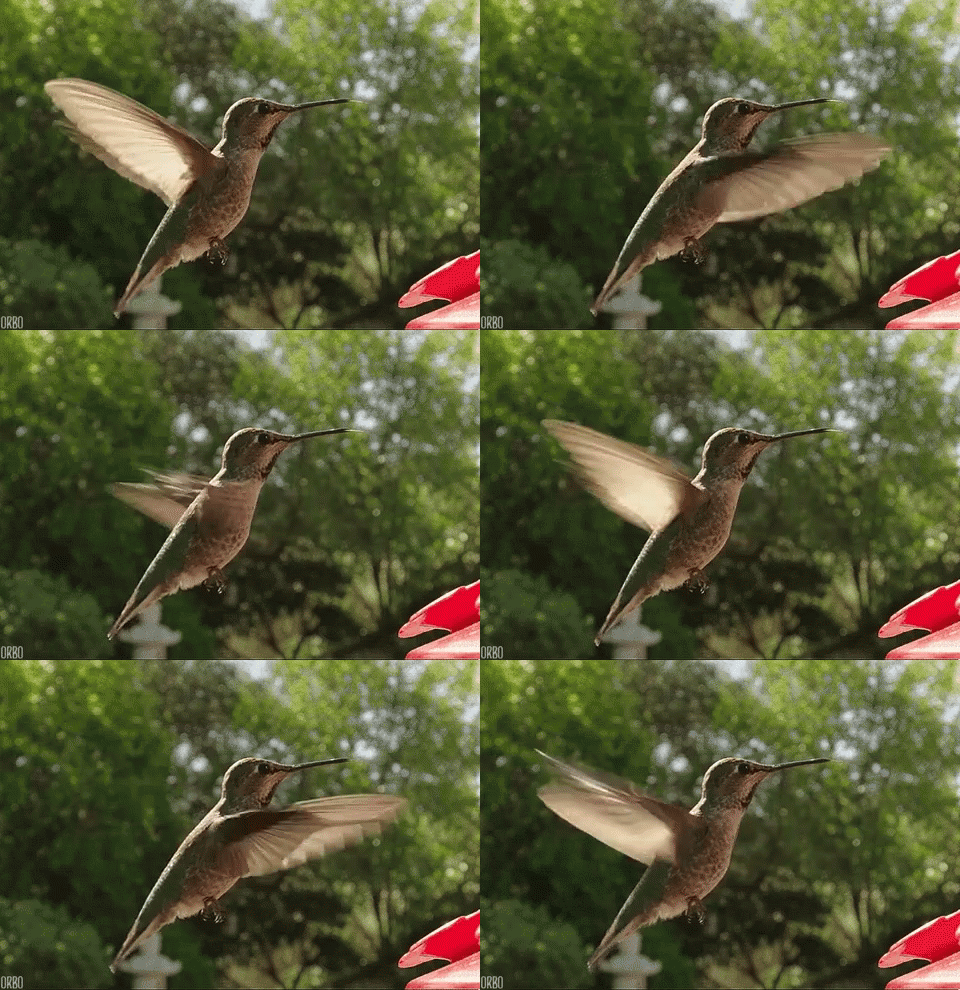
One of the things from ‘the Duniverse’ that intrigued me is ‘the Ornithopters’. When I saw them taking flight, the only thing that came into my mind was ‘Hummingbird’. Ornithopters are the helicopters equivalents on Arrakis- the desert planet. The ornithopters on Arrakis are six or eight winged flying pods which look like dragonflies, in fact Denis Villeneuve intended their design in that way. They fly by flapping their wings like hummingbird and have far better maneuvering abilities that a normal helicopter. They can glide way better due to their aerodynamic dragonfly-like shape. Here, the technology draws inspiration from the nature. Hummingbirds are the birds which can fly backwards, side-ways and downwards; they can do somersaults and are better in long term hovering compared to other birds.

Ornithopters in Denis Villeneuve’s Dune

There are many examples in real life especially in technology, where inspiration is drawn from the nature. Inspirations from nature are taken to solve the design problems and is known as Biomimicry or Biomimetics. The word is self-explanatory- ‘Bio’ means nature and ‘mimicry’ means imitation, enactment, copying.

Popular example of biomimicry is the design of bullet train. The engineers were facing problem of sonic booms when the train entered through a tunnel with high speed. The engineers solved the problem by designing the front end of the train similar to the Kingfisher’s beak. The inspiration was drawn from a picture of kingfisher diving into the pond for fishing. When a kingfisher dives for fish, there is no splashing on the water surface. The picture is captured just at the moment when beak of the bird enters the surface of water. In order to execute a successful fish hunt, the entry through the water must remain swift; For proper target there should not be splashing of water because undisturbed water surface will have more clarity. Same phenomena, functionality was implemented in the design of the bullet train.

‘The Shinkansen’- Bullet train

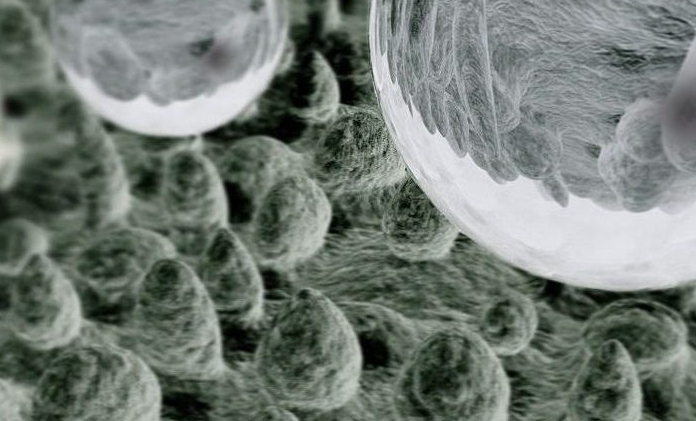
Lotus effect is also one good example of bio-mimicry. We all know the water repellent properties of lotus leaves, lily leaves. Two German botanists namely Wilhelm Barthlott and Christoph Neinhuis were studying highly magnified plant leaves. At high magnification of 1-20 nano-meters magnification, even a speck of dust can ruin the image. The botanists realized that there was no special need of sample cleaning for the lotus leaves samples. Upon detailed studies they found out that, there were two features contributing to the cleanliness of the leaves. One was the layer of wax, which is obvious for everyone. The second and the most unexpected feature was the presence of micro bumps on the surface. These small bumps trap air which creates higher contact angle between water and leaf surface. The water drop literally becomes spherical on these bumps as the air trapped between the bumps is pushing the water film inwards and surface tension is helping more and more to the formation of curvature.       

Lotus Effect

This effect was replicated using negative- positive molding processes for the preparation of Self-cleaning surfaces. It is like molding a wax statue but the here the technique is precise to microscopic scale. Self cleaning paints are getting introduced in the market recently.

Main thing to understand is that, not everything we derive from the nature could be called as biomimicry. Biomimicry is more about functionality of the design. Giving wings to a machine to fly won’t be called as a biomimicry, it will be called as a ‘Bio-inspired design’. A Bio-inspired design is more inclusive term which covers Biomimicry (functions like nature), Bio-morphism (as in more similar in looks with nature) and Bio-utilization (uses nature as an agency). In the case of the ornithopters, it is the higher pivot providing design of the wings. The hummingbirds have these wings with highest pivot angle between wings and shoulders which enables them to maneuver exceptionally.

Hummingbird have wings with high pivot angle

There is one organization focusing on the Biomimicry. The ‘Biomimicry Institute’ is a non-profit organization striving for bringing people together to solve the problems using biomimicry. Nature itself is running the largest laboratory for billions of years and we can look for solutions to our problem by just asking one simple question- ‘How would nature solve this?’ Janine Benyus– Cofounder of Biomimicry Institute popularized biomimicry. Her TED talk is available on the institute’s website- biomimicry.org. You should visit the website to explore more.

Biomimicry has made us realize that nature is the largest library that humans can ever have. Its conservation is not just important for the sustenance, but it can highly contribute to the technological advancements of humanity. Whenever we are losing a species, we are losing an immense source of knowledge which was result of millions-billions years of nature’s research. The thought itself can bring us closer to nature- natural resources and its conservation. Biomimicry will create more pro-nature solutions to the problems. Sometimes modern problems require bio-mimicked solutions! (Yes, I did that ;D)

For further explorations just google these:

  • biomimicry.org
  • How a steppe eagle’s wingtip solved Airbus A380 Wake Turbulence problem – Richard Hammond’s Engineering Connections- Airbus A380 documentary by National Geographic
  • Gecko’s feet and surface adhesion
  • Lotus effect and self-cleaning paints
  • Invention of Velcro

Further reading:

  1. Dune : Philosophy in Science Fiction
  2. Dune : Psychology in Science Fiction

Language and Empathy

Remember the last time you pulled a prank on someone and imagine explaining it to your friends. You go on building the events and so the excitement level goes up and up. For the last sentence, all the purpose of events is resolved into a comic relief. You will notice the expressions of people listening to your story keep changing as the event unfolds. They are building the picture of the event in their mind as you are delivering the sentences.

 There are some moments in life when you do not have words to explain how you feel. Like first underwater diving experience, that joy and feeling of achievement of climbing up to one of the difficult summits, the thrill of skydiving. You could explain them to others, but still feel that the one must experience it to know it, understand it.

 The thought underlying below the ideas explained above state three important things-

  1. The connection between what you said and what happened
  2. What the listener understood by listening to your story, his interpretation
  3. The explanation of the experiences that cannot be explained(!?)

The answer to these mysteries lies in the theory of language and how we handle it.

Ludwig Wittgenstein

Ludwig Wittgenstein, known as one of the most influential philosopher of 20th century has done some work on what is famously known as ‘the picture theory of language’. According to Wittgenstein, the language and the world we live in has a structure. In simple words,the world is made up of objects which are related by names; language is made up of names. These names combine in a structure to form elementary propositions. The elementary propositions combine to form states of affairs. States of the affairs are the closest or equal to a fact.

Means we use different sets of words and propositions to establish relationship between them. This creates a base fact, and the combination of these base facts create picture of what could have happened in the event. For example, when somebody says we had fun last night at birthday party! – this makes us to picture birthday boy blowing the candles, a cake cutting event, everybody singing the song, eating and drinking, making jokes, playing fun games. We are picturing many objects and their different interactions to create an event which was fun. We created pictures of a cake being cut by a knife, colorful candles being blown, the tune of birthday song being sung to create the whole meaning.

There is one catch in the above explanation-

Not everyone will see same cake in their minds- some will see vanilla cake, some will see black forest, some will see lemon cake. Some people will have simple single-color candles, some will have colorful candles, some will cut the cake by plastic knife, some will cut the cake by a metal knife. The birthday songs may be in different language if your friend circle is multicultural (!) (Though the tune might remain the same!) This applies to every thing you say while communicating.

People can have very different pictures attached to the words and expressions. It is the superposition of the multiple propositions which creates a fact. The more precise, specific, and detailed your word choice will be the more will be the similarity between what you experienced, what you explained and what the person in front of you visualized.

Wittgenstein’s Picture theory of language was inspired by a Paris Traffic Accident case where the whole scene was enacted using objects to indicate how things happened. According to Wittgenstein, the reality is made up of various events or states of affairs which may or may not be true. The propositions are made up of elementary propositions (which are born from names, objects) and logical operators like ‘and’, ‘or’. The truth of events depends on the truth of the elementary propositions ultimately responsible for the formation of propositions thereby events.

The Picture theory of language helps us to understand the meaning of empathy in a deeper sense. The dictionary meaning of empathy is ‘the ability to understand and share the feelings of another’. In simple words- ‘the ability to put yourself into the shoes of other person’. The experiences of every person are very personal (!) this makes the association of many feelings and the objects unique in everyone’s mind. Ask fear to the Batman and he will see Bats, ask fear to the Superman and he will see Kryptonite. We have different pictures associated to every word and feeling. The things are simple when we are explaining an object, but it is not easy when we are explaining our feelings.

Hence, the empathy demands more focus on the listening abilities and trying to understand what others are saying instead of having prejudices and conclusions in advance. The more and more we create comfortable spaces for others to say- the clearer the picture we can build of how they really feel. The clearer the picture, the clearer and more personal will be our understanding. This will make us able to help people in a greater way, this will make the relationships more personal and more trust building.

” What can be said at all can be said clearly; and whereof one cannot speak thereof one must remain silent”

Ludwig Wittgenstein, Tractatus Logico-Philosophicus

Hello ! Welcome to my Blog

Write what should not be forgotten

Isabel Allende

I am Rohit Mahale. A very long procrastination and overthinking has brought me here, at this stage- in front of you people.

Being a master over thinker, tearing down the ideas, events, symbols is my favorite job. The articulation of these thoughts was the only task (and the important one!) which was yet to be completed. Now, here I am !

Right from the discovery of Fire, Wheel to Industrial revolution to the Age of AI we humans have evolved into multiple stages. There is no doubt to claim that humans are the greatest species on the earth. Though we have great technologies, innovations, cultures, heritages, ideologies to brag about, people have seen far darker sides, extremes of the said things too. Sometimes, for me it becomes very difficult to tell why people behave so.

I am on the quest of understanding various facets of humanity which makes us the people we are, why people behave the way they do. (Trying to create one reason why aliens should not destroy humanity 😀 Jokes apart)

It is like writing a high-school essay ‘Science – Curse or Boon?’. But, In this case the discussion will not be only limited to Science- it can cover anything and the length will not be only limited to essay (Because, now it is clear that I am doing this on Blog!)

There is one more reason and completely selfish one to go through this process. I feel that our ideas and the moments when we truly understand and appreciate them are very very volatile! I don’t want to regret on a thought which was so wonderful but was not realized in reality through any media – here I am preferring the written one. I think structuring our thoughts, ideas through writing is an effective way to keep the curiosity alive.

I get really happy and feel satisfied when I truly understand something, especially intuitively; but the moment I try to to put it on paper is the exact moment when I feel challenged. I have to think in a structured way to communicate that understanding effectively. That is how volatile I think our thoughts, emotions are. I want to preserve those emotions, those understandings (also I rarely remember things effectively). Writing serves me better to keep the curiosity in me alive.

Our existence is so much significant on personal level and at the same time it is just an insignificant speck of dust in the whole universe (let’s not go to the multiverse theory after that…) This always brings the questions in my mind that ‘Are we really of some value ?’, ‘What is the purpose of all of this?’, ‘What motivates people?’, ‘Why life is full of so many contradictions and still demands to exist?’ and you know the answer is never the same .

Through this blog we will be seeing people, science, technology, philosophy, nature, many small-big things and their impact. I will discuss about lives of the great people, the stories behind greatest inventions, discoveries, various streams in ideologies and philosophies.

This blog is intended to add one more dimension to your thoughts. I hope it will be achieved to some extent. We will see, how far this goes 🙂