The Cost of An Apology

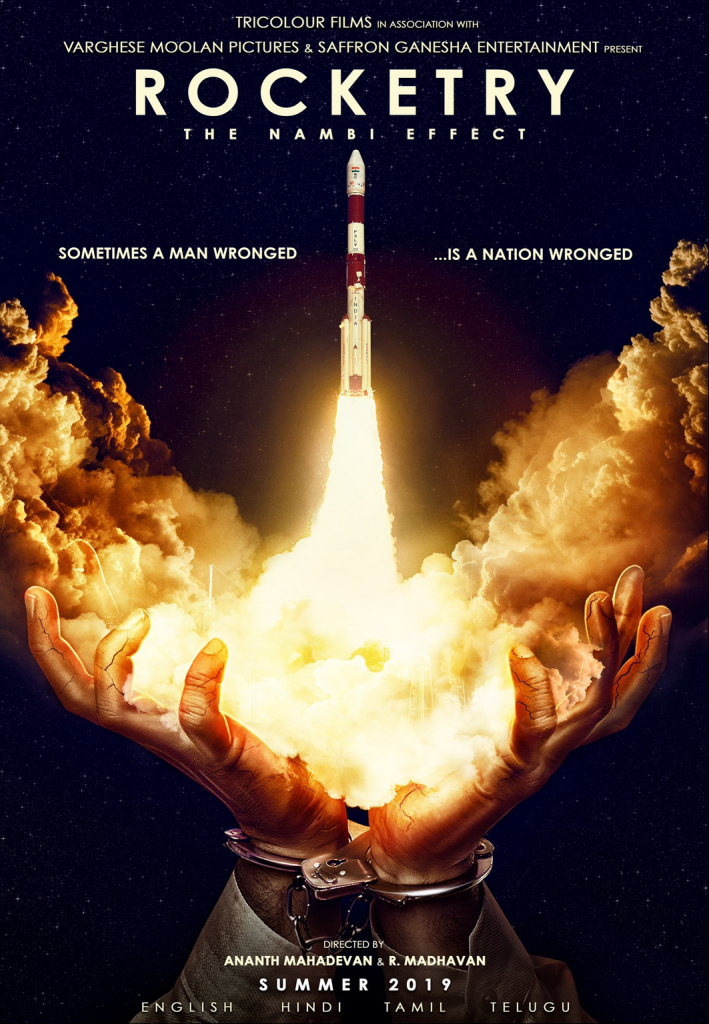
Rocketry- The Nambi Effect by R. Madhavan

I recently watched a movie by R Madhavan called ‘Rocketry- The Nambi Effect’. The movie is about the ambitions and the hardships of an Indian Aerospace Engineer to put his nation in the front-seat of rocket competition and the struggles faced by him due the false accusation of espionage and defamation caused after that. The movie has made a successful attempt to develop the feeling of proud for Nambi Narayanan in the first half and the feeling of real sorrow in the second half in the heart of every Indian. I think, this magic of creating a roller coaster of emotions, the magic of touching people’s heart is what movies and storytelling is all about. One can see R Madhavan’s sincere efforts, his dedication and the respect for the character in every frame of the movie.

Padma Bhushan S. Nambi Narayanan

The first half of the movie tells us about the scholastic levels of Mr. Nambi Narayanan, the smart decisions, the boldness of his character which developed the foundations of the ISRO in an aggressive and cost-effective ways. Right from the idea of visionary thinking of Cryogenic rocket engines, to the pointing out an error in the famous author’s books, to completing time-consuming full fledged research work in mere 10 month, to getting hands on French technology, solving the flaws in it, to getting the technology from Russians knowing the high levels of risks associated with it are the highlighted events which show the greatness of Nambi Narayanan’s love for the nation and his genius.

The second half is about the false charges put on Nambi Narayanan on selling secrets to other country for personal gains. Then the mental and physical torture he and his family went through will break your heart. One can only imagine what could have happened in reality with the person and his family. The second half is about the attitude of Mr. Nambi Narayanan’s persistence, the attitude of not giving up, the belief in truth and his unending love for the nation.

The conclusion of the movie is an apology to Nambi Narayanan which is such a smart and humble execution by R Madhavan for which he deserves very special recognition. We are really sorry for failing such ‘heroes of the nation and the society’.

While watching the scene of the interrogation of Nambi, there is this moment where the government officer asks Nambi that why nobody of his acquaintances from ISRO came to visit him when everybody is now aware of the accusations against him. They would have definitely tried to meet him if he was really innocent. Here, Nambi explains one common behavior of scientists- such behavior can be expected from majority of people but not scientists. Majority of people would have had thought of visiting their loved ones or their colleagues when jailed but scientists are somewhat eccentric when it comes to such “social-ideas”. This thing is effectively depicted in mere few seconds of the movie, which struck me.

One important thing that hit me during watching the movie ‘Rocketry’ was that history has similar examples of hardships faced by the flag bearers of science, knowledge and truth. Some notable examples are the Socrates, Alan Turing, Galileo Galilei, Rhazes and even Albert Einstein.

Socrates

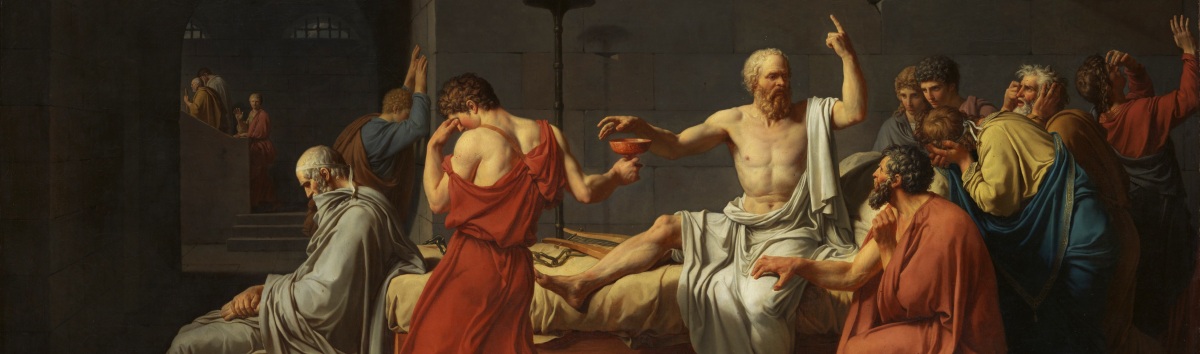
One of the greatest philosophers the history has ever known, the founder of western philosophy was also victim of a trial which finally led to a death penalty for him. The trial of Socrates was one of the notable events in the ancient Greek history. The charges laid on Socrates were: corrupting the youth, worshiping false Gods and not worshiping the state religion.  Socrates tries to defend himself but was unsuccessful. This was the time when the Athens was strongly under the influence of Sparta which was trying to take down the ancient Greece and taking down the greatest mind in Greece was pivotal move.

Anyways, despite having the chance to flee from Athens, Socrates accepted the death by consuming a poisonous liquid called “Hemlock”, knowing that what was done against him was wrong. Many people think that there were two different intentions – one political and one religious, which caused to this irreparable loss to Greek society then. The only hopeful thing is that his learnings lived forever through his disciples Plato and Xenophon. The ideas of Socrates corrupted (please mind the sarcasm!) great philosophers Søren Kierkegaard, Friedrich Nietzsche and today’s youth till date. The famous painting called The Death of Socrates by Jacques-Louis David in 1787 tries to display the emotions at the final moments of Socrates which is a world-famous art.
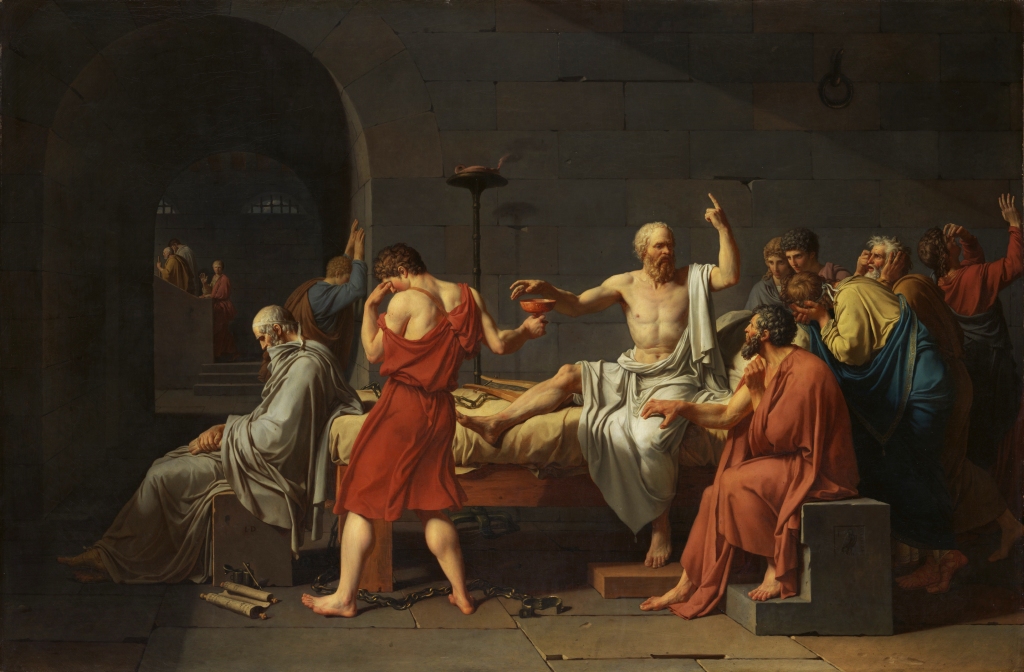
The Death of Socrates by Jacques-Louis David

Galileo Galilei

The famous astronomer, engineer, physicist who invented the refracting telescopes which are practically in use still today, the ideas of projectile motion, the motions of pendulums, the inventor of an ancestor to the thermometer called thermoscope was also victim of the wrong charges from Catholic Church.
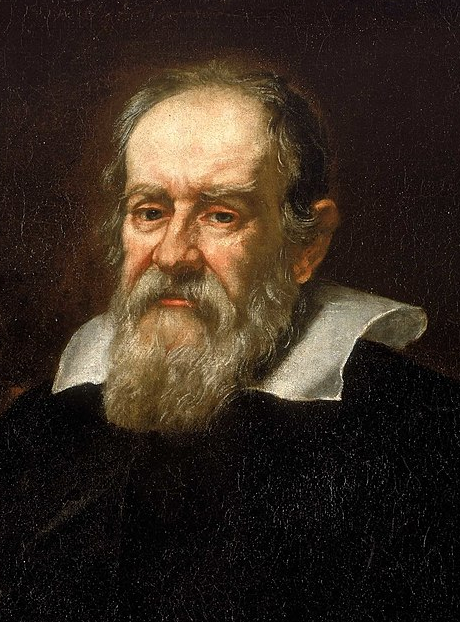
Galileo Galilei

The sad thing about Galileo was he was accused for believing in the right idea which was against the ideas of the church of his time. The idea of “Heliocentrism”- the idea of Sun being the in the center and not the Earth disturbed the Catholic Church at that time. The ideas of Galileo were backed up by his telescope observations of cosmological bodies like The moon, Jupiter and its moons, Venus, Milky Way and The Sun.

Galileo remained under house arrest for the rest of his life for going against the wrong beliefs. His ground-breaking book called “The Dialogue Concerning the Two Chief World Systems” was banned, the publication, future writing was banned. Galileo had to take back his idea and remain in imprisonment for the rest of his life due to the pressure of the catholic church of those times.

On a bittersweet note, after the life of Galileo, the Vatican apologized Galileo for the wrong they had done. On 31st October, 1992 Pope John Paul (II) formally apologized for the case of Galileo and it took 359 years for an apology to such a scholar.

Alan Turing

One of the greatest mathematicians, the father of theoretical computer science and artificial intelligence also had a painful story which should not remain unmentioned here. The Enigma machine – a sophisticated message scrambler- ciphering device’s code was successfully broke by Alan Turing which gave Britain the competitive edge in the second world war. Though his contributions remained unknown to the world during his lifetime due to the “Official Secrets Act”, the works of Alan Turing is influencing our modern lives in almost every possible way.
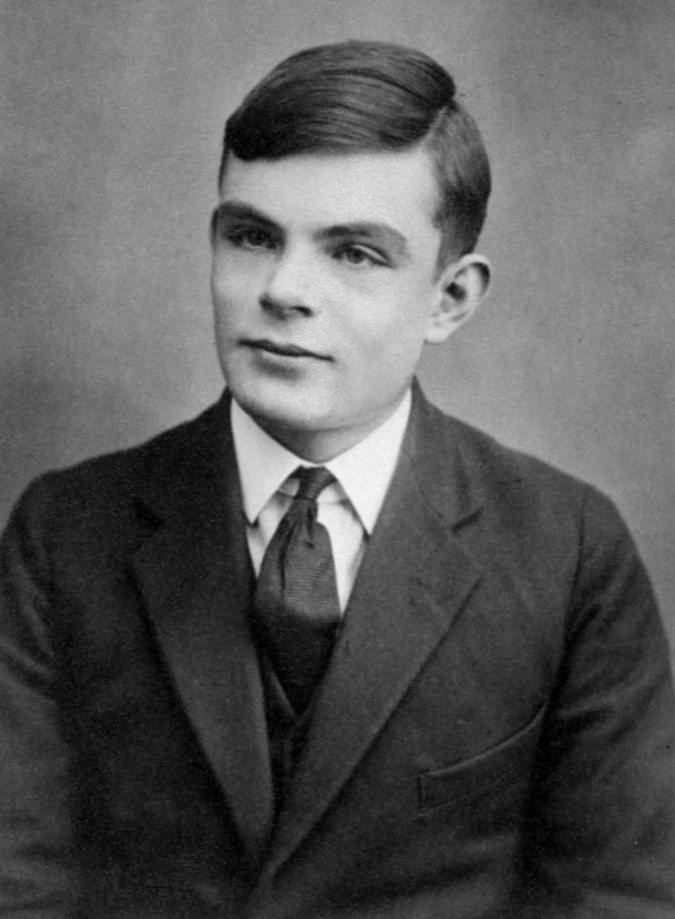
Alan Turing

Alan Turing was prosecuted for being a homosexual which was illegal during those times and has to undergo a hormone treatment to lower his sexual desires which is also known as “Chemical Castration”. This treatment had great impact on Alan Turing. Alan Turing died by cyanide poisoning at the age of 42.

61 years after the prosecution of the homosexual act on Alan Turing, Queen Elizabeth II gave posthumous pardon to Alan Turing in 2013. It took 61 years for an apology to Alan Turing. This too has bittersweet ending like Galileo.

Rhazes

One lesser-known event and a person from history is the person called Abū Bakr al-Rāzī also known as “Rhazes”. Al-Rāzī from Baghdad, Persia is considered as one of the world’s first great medical experts; he is known for the very first diagnosis of Smallpox and Measles where he identified the epidemic nature of the diseases. He is also known for the introduction of psychology and psychotherapy in medical sciences.

Al-Rāzī introduced the ideas of Hippocrates- known as the father of Medicine to the Arab world which led to his arrest on the orders of local Priest. His ‘western’ teachings, his books were abandoned under the claims of heresy. One day, the torturers hit his head with his own manuscript which eventually led to permanent blindness. He couldn’t continue his practice due to blindness and died in poverty.     

Today, al-Rāzī is considered as the greatest and the most original of all Muslim physicians by famous historians. He is recognized as the father of pediatrics. Iran celebrates 27 August as ‘Pharmacy Day’ – ‘Razi Day’ in the honor of al-Rāzī as his birthday.

Conclusion

In the movie ‘Rocketry- The Nambi Effect’ the director gives us the idea of the moment when the Nambi Narayanan is officially declared as innocent by the Supreme Court of India. One can see the immediate behavioral changes in people around him. At this moment, Nambi Narayanan tells his wife about how he will be dedicating his whole life only to his family especially her, which is chilling enough to highlight the dedication he had for his nation which had taken his priorities on nation over family. This is the moment when audiences also realize that scientists though eccentric, different in a way are still humans and have families, are father, are husband, are friend to someone.    

One cannot compensate for the amount of mental and physical loss such scholars go through when they are charged with such bottomless accusations. This needs specific awareness amongst us as a conscious crowd. It becomes our responsibility as a society to treat the great minds, special minds with the respect and dignity they deserve.

Humans are flawed, people make mistakes. Mistakes can be corrected too. At this point it is also important to weigh out the mistakes, all mistakes cannot be weighed equal in such extremely sensitive cases because there is no turning back once cascade of events starts happening. This requires simple habit of stopping for a moment, responding to the rumors, events rather than reacting to them.

One important thing to highlight is that, “It is only sheer luck of Indians to be able to apologize, to get a chance to say sorry to such a great personality called Nambi Narayanan who sacrificed so much for the nation, personally and professionally”. His belief in the greater good for the nation’s development even after such mistreatment is the proof of his humble, honest and great character. We have R Madhavan to thank for giving every Indian this opportunity. The granter of opportunity to correct the mistake in some way also becomes important in this sense. The movie really proves its point as “Sometimes a man wronged is a nation wronged.” Indians rather every society should be thoughtful about such ill-treatments to their scholars and consider themselves lucky enough to have this chance within time (which is not comparable to the loss happened to them) to apologize such great minds.

I think, an apology is not an event or a moment which separates and erases the ill-happenings from the conditions today and hereon; an apology is an attitude, a process which should get reflected in the behavior of a person, a society for the present and the coming future.

The best apology is changed behavior

anonymous

Mandelbrot Set- The bottomless wonders of fractal geometry

To understand the Universe, you must understand the language in which it’s written, the language of Mathematics

– Galileo Galilei

In our school days whenever a math problem would start creating “the problem” in our minds making us scratch our head, there was this common expression showing the worthlessness of learning all this math if we cannot implement it in real life. One would say – “Where do I use these sines, cosines, tangents while doing my groceries?” or “What is the use of solving this calculus problem if I see no use of it? – I never needed calculus to do my routine works?” And these questions have one important thing that detaches most of us from the mathematics and the rigor it demands.

That thing is the great difference between of regularity, consistency, idealistic nature of the mathematical laws, formulae, theorems and the irregularity, inconsistency, chaos, non-ideal nature of the things around us, the reality we live in. We have reduced this difference by using tolerance, probability, acceptable limits of accuracy, modelling.

Still mathematics always seems to be out of reach and only the intellectual venture for almost all of us. The reason is (again) the feeling of incoherence between math and the real world. Today, I will dive into one such idea and the person behind it named Benoit Mandelbrot who bridged this gap in a big way, revealing the secret mathematical ways in which the real-life objects and the nature works.  

What we learnt in Schools – The Euclidean geometry

Point, lines, triangle, square, circles, parallelograms – these are the shapes that we have always crunched our fingers in our school day. The are based on the Euclid’s geometry where the shapes are largely regular sizes. Hence, the mathematics is very structure and there are logical, structured ways, theorems, formulae to work with these figures, hence we can say that there are always some ways available to figure out the unknown information.

But you rarely see perfect geometric objects in real life. Real life objects are not perfectly shaped the way we learn them in an ideal nature hence we are expected to have the tolerances in our calculations. Now, here are some questions – “Can you describe the size of the cloud floating in the sky in a mathematical way?”, “How would one describe the branching of a tree in a mathematical equation?”, “How would one describe the path traversed by the lightning strike in the sky?” (Again, what good is math if I couldn’t implement it into the real world?)      

Hidden Dimensions

We all have awareness of 3 dimensions, it is the way we experience the real world. We also know that there is fourth dimension in nature but out senses are limited to 3 dimensions. There was a problem that few were working on called the ‘Space Filling Curves’.

How would one draw a line so that it will touch every on the plane?

Giuseppe Peano was the first person to discover a curve which would cover every point on the plane with a small repeating unit pattern- curve. This basic unit on repetition and angle of rotation would cover all the plane.

After that, many others like David Hilbert, Henri Lebesgue, Wacław Franciszek Sierpiński demonstrated different types of space filling curves where you can see a simple repeating unit when iterated enough times can fill the complete area in a given plane.

Peano’s Space Filling Curve ( from basic unit to repeating units)
Hilbert’s Space Filling Curve (from basic unit to repeating units)

Theoretically, a curve or a line has single dimension further clarifying, it has no thickness. Then, how can we explain the idea of curves which when iterated enough in a set direction yield a higher dimensional geometry. This is where the fun really began.

How can a single curve of 1 Dimension (zero thickness) can create 2 D object?

We know how addition of one dimension enhances the geometric description of every object. Thus, we are aware of 1D, 2D and 3D objects. From a line to square to cube that is how it works. But, as we have seen in the last idea of space filling curve, how would we fit the idea of 1D curve of zero thickness curve filling the 2D plane? How would one describe the events happening between 1D world and 2D world?

Hausdorff dimension

From the premise of above problem, where we were stuck was our understanding of the nature of the dimensions- we were considering the dimensions to be a whole number. What is happening between ‘space filling curve and the space they are occupying’ is between 1D and 2D – indicates that there are some dimensions which lie between each whole number dimension. This led to the non-whole numerical concept of dimension. This means that the dimensions could be fractions.    

This created whole new world of dimensions which can be described as hidden dimensions between two whole number dimensions. For example, when we look at a tennis ball, it is spherical in shape but when we zoom significantly enough, we find that the boundaries of this ball are not perfectly continuous rather the boundaries of the ball are made up of small polymeric fur-like hair. Even when we would zoom into the perfectly round rubber ball its roughness is revealed at significant observation level.

Cantor Set – Smaller Hidden Infinities

Henry John Stephen Smith, an Irish mathematician described idea of splitting a line into three parts, then removing the middle part. Then, after one has removed the middle portion, he will split the remaining tow parts into three and again remove the middle part from it. This will be iterated until the sum of the line remained will be zero. The final remaining parts coordinates are the part of the Cantor set.

One can easily find out that even after we keep on splitting the line into three equal portions and deleting the middle portion, there is no way we will stop on this. Every new part generated will be split into the same style it was split earlier indicating iterative process. The iterations will go on to infinity thus for every new iteration some new coordinates will be added indication that the Cantor set has infinite elements but the length of the line will eventually become zero as we are infinitely removing 1/3rd part from the set continuously. Sounds weird already!

Generation of Cantor Set

What I explained above are mathematical ideas purely generated from the human mind, thought experiments and their logical explanations. These ideas remained ideas because nobody could find a way to find their implementation in real life world. There was no coherence of these mind-boggling ideas to the real-life objects around us.     

Benoit Mandelbrot and The Rise of Fractal Geometry

There were many events in the life of Benoit Mandelbrot which converged to the development of Fractal Geometry. The world ‘fractal’ which has now become common in pop culture and sci-fi was actually coined by Benoit Mandelbrot himself.

Mandelbrot was interested in a problem related to the length of the coast of Britain. He found this idea in a research paper by an English mathematician, meteorologist Lewis Fry Richardson. According to Richardson if we were to measure the length of the total coast line of Briton the results will very based on the basic scale used for the measurement. As we go on taking practically smaller and smaller scale the length of the coastline will approach closer and closer to the realest of real length of coastline.

Smaller the scale used for measurement longer will be the length of the coast

There is one tipping point to this idea that when one goes on further decreasing the length of the scale used for the measurement of the coastline, the final value will go on increasing- this is also known as the coastline paradox.

Mandelbrot found a good connection between the idea of fractional dimensions and the coastline paradox. He developed the idea of roughness of the objects. He devised this theory of roughness into a computer program.

Mandelbrot while working in IBM developed a computer program and a makeshift computer graphics generator to check whether his equation fits to the empirical equation given by Richardson. Which lead to the confirmation of the theory of roughness and the fractal geometry created by Mandelbrot.

The Mandelbrot Set

To understand the formation of Mandelbrot set one needs to understand the idea of iteration, convergence/divergence and the complex numbers. An iteration is repeated step which is connected to the output from the previous step. Iterations are wildly used in approximations.

Convergence in iteration is the condition where the output will reach to a fixed value after some continuous iterations. Further iterations will not change the output. The output becomes iteration independent.

Divergence in iteration is the condition where the output continuously goes on changing as the iterations go on increasing and there is no iteration independent output.  

Iteration

Complex numbers are these numbers which are developed to solve the square root of negative numbers which were identified during the quest to find the roots of cubic equations. For, solving such problems where one needs to find the square roots of negative numbers, imaginary number called ‘i’ was created.

Though it is called as imaginary number, it is as real as the real numbers and has real life significance and applications. Every complex number is made up of imaginary and real part. The real part is represented on X-axis and imaginary part is represented on the Y-axis.

Mandelbrot set is the set of complex numbers ‘c’ for which the function given below, does not diverge to infinity, the sequence remains bounded to a fixed value.

For example,

For  z=0 and c=1,

and so on…

As we see from the outputs of the iterations the sequence is diverging, meaning it will not settle on a constant output. The sequence grows as the iterations go on, hence  does not belong to Mandelbrot set.

Similarly,

For z=0 and c=(-1)

and so on…

Here, we can clearly see that the output from the iterations is stable and just after few iterations it only fluctuates between values of 0 and -1. This means that the iteration output remains bounded to 0 and -1. Hence, c=(-1)  belongs to Mandelbrot Set.

This algorithmic work of iterations and checking for each possible complex number can be fed to a computer program. The graphical representation can be shown as follows.

The output image itself is mesmerizing. If you could point out that looks like created out of itself. The significant shapes are seen repeated everywhere you can observe. But what are real life applications of this outputs?

Mandelbrot Set in real life

The real fun begins when we identify the number of iterations it too for every number in Mandelbrot set. For example, if we assign a color spectrum from low contrast to high contrast and associate the increase in contrast to increased iteration to converge, we get following image.

Here, you can see the contrast bands around the Mandelbrot set.

Further if we get a complete color spectrum and correspond the number of iterations to the spectrum what we get is phenomenal. The colors and the pattern you will find in the Mandelbrot set are the patterns that are found in nature. There are many YouTube videos dedicated to zooming into specific regions of Mandelbrot set. In every area you will find different shapes and sizes, yet you will discover that they are made up of same basic shapes and that is the beauty of fractal geometry.

The equation given by Mandelbrot is also simply indicated as follows:

This simple equation has yielded son many and infinite number of patterns that when you see the Mandelbrot set zooms you can confirm that nature thinks in the ways of mathematics.

Famous Sections of Mandelbrot Set

The mesmerizing patterns from the Mandelbrot set zoom:

The development of computers and image processing created an explosion in the world of Mandelbrot set. Few lines of code with such a simple equation can yield such a variety of patterns and these patterns are spitting image of the shapes that are available in nature. Only single video of Mandelbrot set zoom is sufficient to believe the coherent nature of nature and the mathematics behind it.

Mandelbrot’s ideas and his fractal geometry are popularly used in the many fields. The nature of branching of veins, branches in lungs, branches in liver, kidneys have been computer modeled and simulated using Mandelbrot’s Fractal geometry. This helps the doctors to identify the critical branches to be controlled and operated during the procedure. The pattern created by the lightening strike can be modeled mathematically by using the fractal geometry. The global satellite imaging has been largely improved by the use of measure of roughness and fractal geometry. Event the random motion of the atoms- Brownian Motion can be explained by using fractal geometry. The irregular but more natural, organic and realistic images are created using the fractal geometry. Even the string theory which believes in the requirement of 11 dimensions is trying to find the answers possibly in fractal dimensions.

The Buddhabrot

On further expansion of the visualizations of the iteration sin the Mandelbrot set, one interested rendering emerges out which is famously known as Buddhabrot. Because, the image looks similar to the Buddha sitting in his meditative state and the particular curls of meditative Buddha’s hair.

When we track the number of iterations it takes for the given complex number to diverge to infinity and also include that spectrum of iterations, it yields the Buddhabrot.

The Buddhabrot

The most important thing about Benoit Mandelbrot’s contribution to the mathematics is the genius of his mind which bridged the gap of completely abstract and so called ‘pure mathematics’ to the irregular, organic, physical and rough nature of the mathematics of real-world objects.

The extent to which Albert Einstein disrupted the world of Physics with his equation  is the same extent of disruption created by Benoit Mandelbrot to the world of mathematics through fractal geometry.  

(P.S. – Interestingly both the equations are of square nature, actually the complete energy-mass equivalence equation of Einstein contains additive term to the square, represented as:

here, p is the momentum of object under consideration)

So, nature does think in the language of the mathematics.

Bottomless wonders spring from simple rules…

Repeated without end

– Benoit Mandelbrot

“And believe me, if I were again beginning my studies, I should follow the advice of Plato and start with the mathematical sciences, which proceed very cautiously and admit nothing as established until it has been rigorously demonstrated.”

– Galileo Galilei

“If-” A Stoic Poetry by Rudyard Kipling

Rudyard Kipling is famously known for the creation of ‘The Jungle Book’. He is the youngest British Nobel Laureate (at the age of 41) till date.

Rudyard Kipling

Today we will be deep diving into Rudyard Kipling’s all time famous and many people’s favorite poem ‘If-‘. This poem written in 1895 was published in his famous historical fantasy book called ‘Rewards and Fairies’ in 1910.

This poem is all about a set of recommendations from poet to the reader (or his son) to become a person of greater values, virtues in order to handle every situation in life irrespective of its outcomes. The only motivation to act on something must be our intent of welfare of ourselves and the society around us as a human being and only thing we can control is our perception of things is the core idea of this poem.

If you can keep your head when all about you   
Are losing theirs and blaming it on you;
If you can trust yourself when all men doubt you,
But make allowance for their doubting too:

 This is about believing in ourselves and freeing ourselves from self-doubt. It is also about remaining content when everyone is against you. It focused on not losing sanity when everything around you seems to have lost the meaning, when everyone behaves like they have lost their minds, when chaos has surrounded you. This is the time which will demand you to remain confident of your intentions.

If you can wait and not be tired by waiting,
Or being lied about, don’t deal in lies,
Or being hated, don’t give way to hating,
And yet don’t look too good, nor talk too wise;

This is more about remaining calm, balanced and unaffected. There might be several times where the results won’t be immediate, one should deal it with patience. It is about the moving away from instant gratification and not doing things for immediate pleasures. Especially, in the times of Social-media instant gratification has become a very innate thing in the human behavior.

When you will be lied to or when you will be hated, a person’s behavior must not favor the idea of ‘tit for tat’ or ‘an eye for an eye’ indicating reactive behavior, retaliating behavior. Rather not dealing in lies, abiding to the truth even when lied to and not hating even when hated are the virtues poet wishes to have in the reader. The balanced behavior of humility in smart person and simplicity in good looking person will make him a desirable person. Otherwise, who values a smart but arrogant person anyways!

If you can dream—and not make dreams your master;   
If you can think—and not make thoughts your aim,
If you can meet with Triumph and Disaster
And treat those two impostors just the same:

This is about the what you do with your life and how you do it. It is about finding the purpose of your being in the life and envisioning yourself to fulfill that purpose. You should not be consumed by the dreams solely- thereby causing in-actions; the poet expects the reader to have actions for achieving these dreams and visions. Winning and losing are called imposters here because of the nature of our perception about them; one is desirable and the another one is not. The mere possibility of loss leads to inaction causes us to go deeper into the negative feeling of not achieving anything. The poet wants reader to not care about the consequences which are not in the hands of doer rather do the immediate things to get the consequences (whatever they may) which are always in the hands of doer.

The best way to come out of indecision is to act on things which are in our immediate control.

If you can bear to hear the truth you’ve spoken
Twisted by knaves to make a trap for fools,
Or watch the things you gave your life to, broken,
And stoop and build ’em up with worn-out tools;

This is about remaining committed and honest to your words, keeping your promises. This will demand a person to face the truth, make others aware of the truth when they are being fooled by some dishonest people and this requires courage. It is about remaining committed to the purpose even when things will fall down and you will feel that the virtues you are living with have worn-out and are of no value as they didn’t yield immediate favorable effects. This is some sort of test that you should go through to reach your ultimate pure desires.

If you can make one heap of all your winnings
And risk it on one turn of pitch-and-toss,
And lose, and start again at your beginnings
And never breathe a word about your loss;
If you can force your heart and nerve and sinew
To serve your turn long after they are gone,
And so hold on when there is nothing in you
Except the Will which says to them: ‘Hold on!’

Here, our poet wants the reader to have a really great goal in life whose purpose must be to leave an example or a legacy for others to follow as a light house. The greatness of this purpose will make him to sacrifice any great achievement, great possession for the greatness of purpose is the only thing that will not perish. All the great possessions or the biggest of big losses are valueless in front of a great purpose or a great legacy.  These can be the sacrifices in the great journey.

The loss of hard earned possessions, achievements may force a person to lose his interest in the journey; but the person’s resilience and the will to hold on to the greater purpose will define what is inside him, what he is made of !  

If you can talk with crowds and keep your virtue,   
Or walk with Kings—nor lose the common touch,
If neither foes nor loving friends can hurt you,
If all men count with you, but none too much:

The poet talks here about doing what you are saying, being aware of the reality and being humble and dependable yet remain unaffected by too much expectations of people around you- friends or enemies. It is about not getting flattered by the good opinions from the people loving you and not getting despised of the bad opinions of your haters or enemies. It is about being free from the opinions, projections of the people around you.

If you can fill the unforgiving minute
With sixty seconds’ worth of distance run,

Unforgiving nature of time indicates interaction of time with we as a humans. Time waits for no one. It is the most neutral entity in our life which is not affected by anything rather everything is under the influences of the time. The poet wants reader to fill a minute with sixty second means being aware of every moment we are going through and doing justice with it, investing it in doing good things.

Yours is the Earth and everything that’s in it,   
And—which is more—you’ll be a Man, my son!

Yep, after all of these conditions, all these ifs- one can achieve and enjoy everything that makes his/her life complete.

Stoicism in ‘If-‘

The poem is considered as one of the best depictions of the principles of Stoicism, the ‘Stoic’ philosophy. According to stoicism, a stoic person is one who remains unaffected by the things happening around him/her (It also does not mean that remaining dumb or numb) The Wikipedia definition is “someone who is indifferent to pain, pleasure, grief, or joy”.

Stoicism is based on the idea that all of the things happening around us are made up of cause and effect. Sometimes, we know the cause behind anything but it is practically impossible to know cause behind everything and after knowing that cause – change its effect to our desired results. There will always be something which will not be in our control. This idea of having rational structure of universe made up of cause and effect is called as ‘Logos’ in Stoicism.

The stoicism tries to establish that we cannot always know or remain aware of the logic behind everything happening with us and around us. ‘We’ – a person not being aware of ‘the cause’ of happening this ‘thing’ will not prevent the ‘thing’ from happening. It means that some things will always remain out of our control and our expectations. Hence the best you can do is to establish the control on things which are in immediate influence of you.

Hence,

Rather than expecting the world to be ‘ideal’ to anyone’s expectations – the stoic accepts the world ‘as it is’. In order to grow through this world, a stoic controls that thing which is in his/her immediate control. The poem ‘If-‘ by Rudyard Kipling does the excellent job of describing the virtues if a Stoic and what can be done and controlled to achieve greatness.

There are two pillars of Stoicism: Four cardinal Virtues and the dichotomy of control.

Pillar I- Four cardinal Virtues

Wisdom– the idea good and bad

Temperance– no overdoing and under doing things, doing the optimum, doing what is necessary

Justice– the awareness of what is right for given situation of a person or a society

Courage– the knowledge of justice and to standing for it

Pillar II-The dichotomy of control

This is the most important and the most famous idea in the stoicism. The dichotomy simply separates the things which are in our control and things which are not in our control.
The best way to deal with the things which are not in our control is to accept them as they are and the best thing to deal with the things that are in our control is to act on them immediately so as to eventually shape the reality we expect.

The best thing about the stoicism is that it was developed by people representing different levels of society. “Zeno of Cyprus” known as a father of Stoicism was a wealthy merchant in Athens who turned to the development of stoicism when he had lost all his possession in a shipwreck. With nothing in hand, he turned to a book shop and got influenced by the ideas of Socrates. Epictetus, the person who was a slave also contributed to the stoicism in a great way. Actually, the meaning of Greek word Epictetus (ἐπίκτητος) is “gained” or “acquired”. The real name of this slave is not known to anyone and there are no known writings by Epictetus available. All his knowledge was transcribed by his pupil Arrian and published as “Disclosures” and “Enchiridion

"Men are disturbed not by the things which happen, 
but by the opinions about the things."
- Epictetus, Enchiridion

The same idea Rudyard expresses in the poem when he asks reader to remain sane and confident when peoples are doubting him/her.

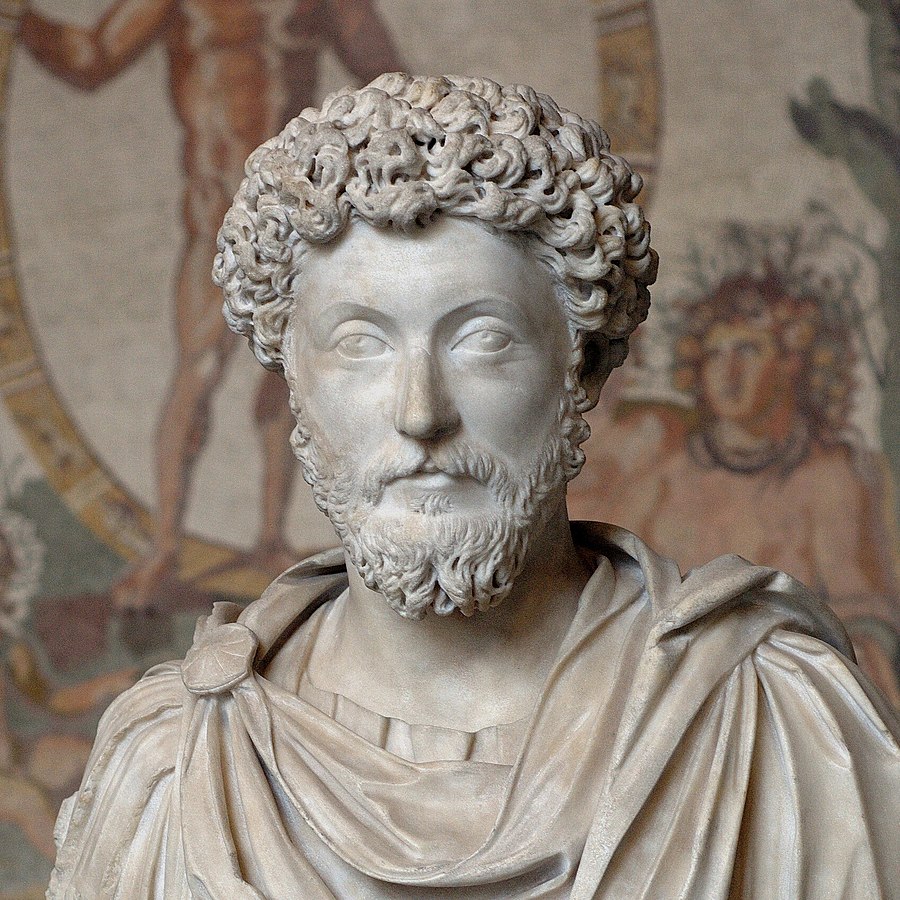
Marcus Aurelius who was a Roman Emperor and one of the greatest philosophers was also a stoic. Marcus Aurelius and emperor was influenced by the ideas of Epictetus- a slave. He wrote all his ideas in his famous book called Meditations. Nelson Mandela’s colleagues smuggled this book while he was in jail. This same book influenced Mandela to move away from the idea of revenge and think for the betterment of the society while he was in jail.
“It is not death that a man should fear, but he should fear never beginning to live.” 
- Marcus Aurelius, Meditations

Rudyard indicates the same philosophy about just getting consumed by the thoughts of the consequences and not acting on achieving something. Fear of failures is the real death, understanding that there is no such thing as success or failure will immediately lead to action which is in person’s hand.

“If someone is able to show me that what I think or do is not right, I will happily change, for I seek the truth, by which no one was ever truly harmed. It is the person who continues in his self-deception and ignorance who is harmed.” 
- Marcus Aurelius, Meditations

Rudyard Kipling discusses the same idea of remaining honest to your words, keeping you r promises for it is the only way to differentiate the right and wrong. If you understand that you were right- you will embrace it and if you understand and accept that you were wrong you will learn from it because seeking truth has never truly harmed anyone.  

Seneca, one of the famous and important contributors to stoicism was dramatist and satirist.

“We suffer more often in imagination than in reality” 
-Seneca

Kipling has also recommended to come out of indecision by doing the things in our immediate control.

In a whole way, when one understands the real meaning behind the poem, the expectations of poet and the philosophy of Stoicism, this gives a great moments of understanding rather enlightenment about the way of life.

‘If-‘ by Rudyard Kipling possibly one of the most important poem in the history of humanity.

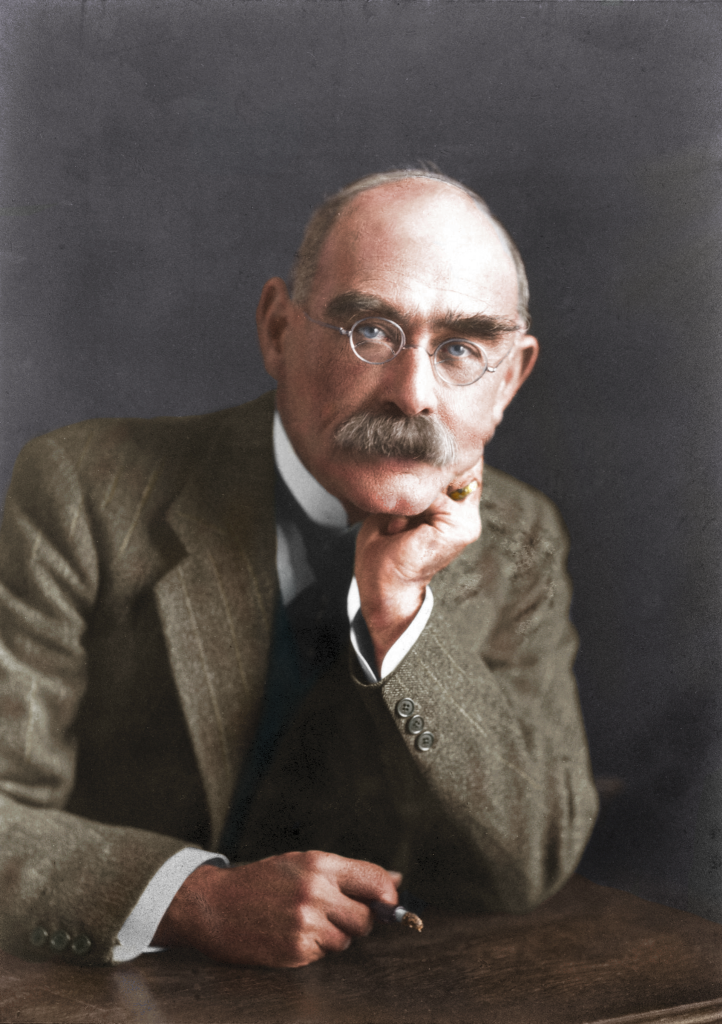
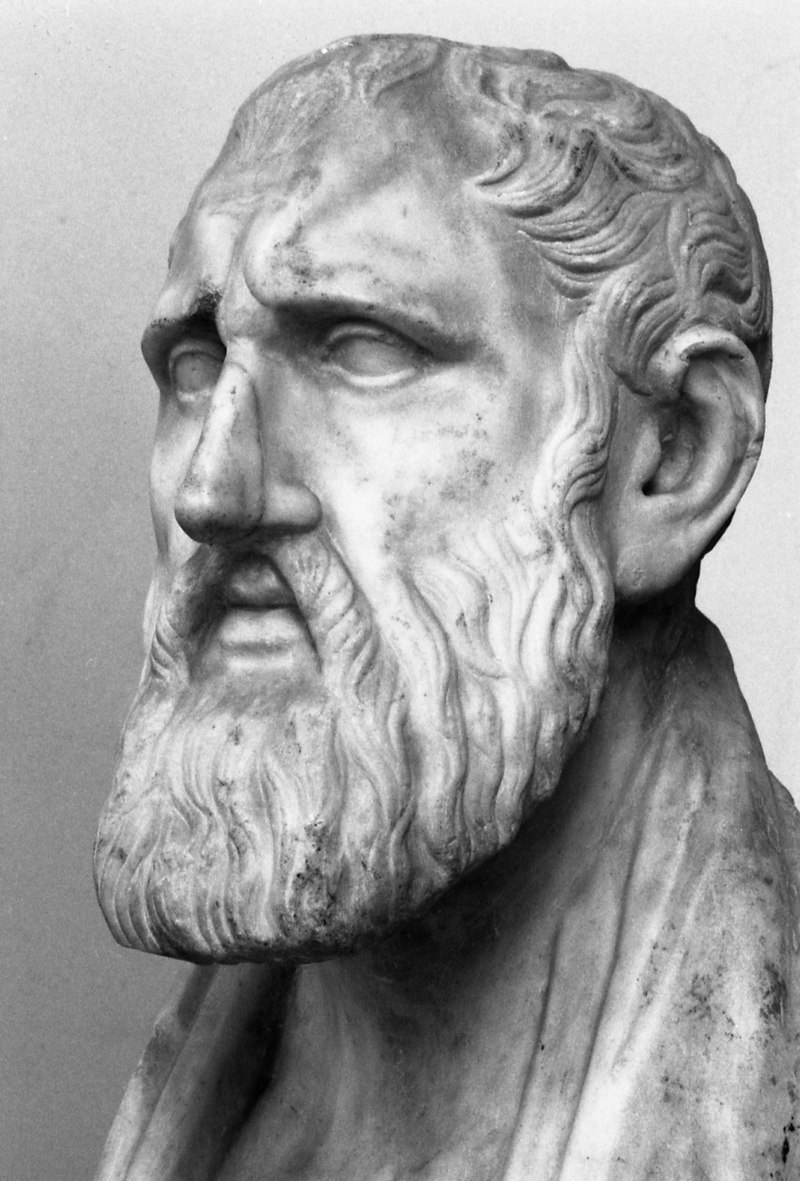
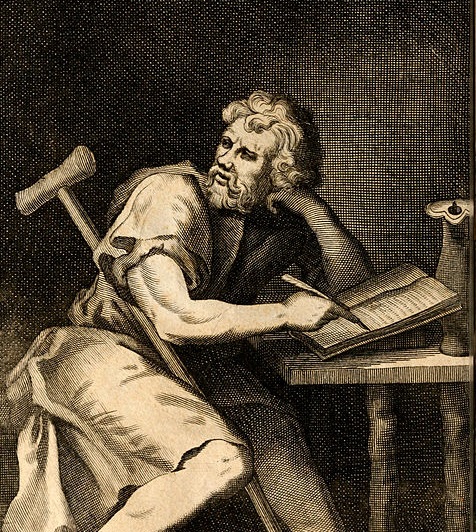
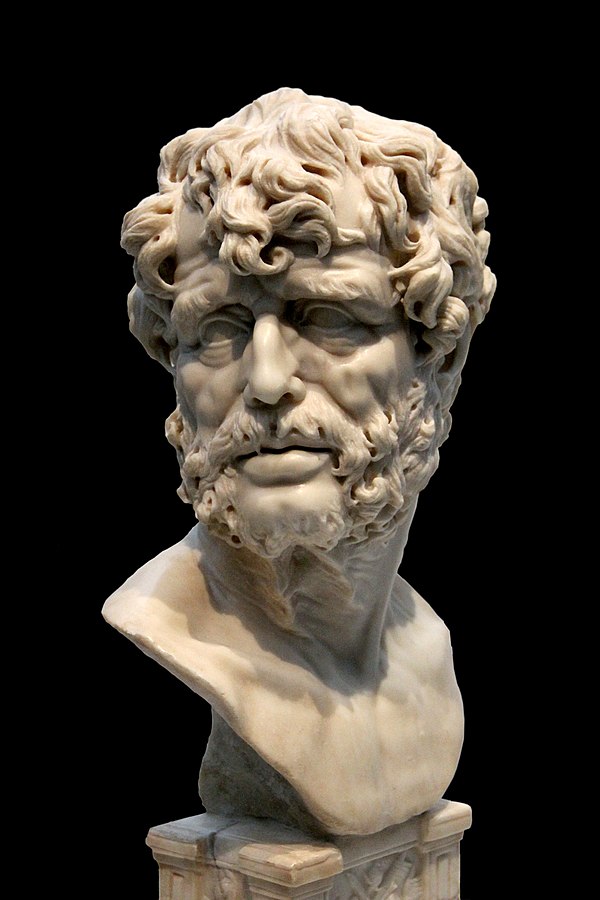
Zeno, Epictetus, Seneca and Marcus Aurelius - The four important Stoics 

Image references:

  1. Zeno of Cyprus, Epictetus, Seneca, Marcus Aurelius

Zima Blue and Existentialism

The whole premise of the story Zima Blue is greatly aligned with finding the purpose of life, finding the meaning of life which are greatly the interests of the Existentialism. Almost all of the great personalities in the human history are the people who did one thing in a great way as they found their purpose, their meaning of life in that one thing. The purpose they found in that thing made them to endure anything in their life and this might the way in which we can find our meaning, our purpose in this chaos.

Love, Death and Robots is undoubtedly the most valuable gems of Netflix. This is an anthology series which consists of short animated stories and is intended as “animation series for adults”. Netflix proves its purpose of existence by supporting creation of series like Love, Death and Robots because such freedom of expression has yielded some unforgettable creations in the history of storytelling. There are many great and thought-provoking ideas expressed in Love, Death and Robots which will surely tingle your mind, one of them is called as Zima Blue and my #1 favorite. I will be discussing Zima Blue in detail so spoilers ahead.

The story of Zima Blue

Zima Blue is a story of an artist on the quest of creating the ultimate masterpiece of his life. He has invited a reporter – Claire to explain what his next demonstration will be. Through the narration of reporter, we understand that Zima was an ordinary portrait artist who in the search of greater meaning moved from portrait painting to large murals. The murals were filled with some great depictions of the universe and as the murals went on developing, they gradually had a geometric center piece of blue shaded shape which went on getting bigger and bigger with each iteration and finally occupied the whole canvas of the art. This blue was later identified as Zima blue by the people. Further on, the Zima Blue crossed the bounds of canvas to cover the whole sky; after that the Zima Blue creation became so big that it cast its blue shadow on the planet. The whole “planet painted blue” became Zima’s biggest creation which influenced even the people who were not interested in the art.

In order find the real meaning of life and to create such extraordinary masterpieces Claire tells us that Zima went through extreme physical transformations as in “cybernetic transformations”. Zima modified his eyes to see in any known spectrum, he got the polymeric skin to physically experience any worst environment in the universe, now he no longer needed oxygen to breath. Now that people were eager to see Zima’s next creation, he had invited Claire as a medium to the people for explaining what Zima did and the backstory of his ultimate masterpiece.

For the final reveal, Zima Jumps into a swimming pool and gradually disintegrates every part of his body finally revealing to the audience that he was nothing but just a ceramic tile cleaning robot designed by a lady. And audience are in awe. What they were thinking as a human responsible for creation of such thought-provoking arts pieces was actually a self-aware robot evolved from a “ceramic tile-cleaning robot for a swimming pool”.

Origin of Zima as a tile cleaning robot (From Zima Blue – Love, Death and Robots/ Netflix)

Before demonstrating this ultimate masterpiece, Zima explains his life journey to Claire. Zima was actually a robot created for simple tile cleaning job in a swimming pool by a smart robot loving lady. After being unsatisfied by its performance, the lady upgraded this robot with the color vision and a brain to define the cleaning strategies for the swimming pool. After the death of lady and being handed over to different owners and thereby its up-gradation, the robot became self-aware and more human-like so that it became impossible for even him to differentiate between him as a robot or human. His evolution in his awareness finally directed him in the search of the meaning of life thereby leading to the creation of such masterpieces.

The “Zima blue” what people had famously identified as his characteristic shade was the first color the robot had sensed which was simply the name given to that shade of ceramic tile in the swimming pool by its manufacturer. When we are looking at the disintegration of Zima into its most fundamental and primitive robotic form, we hear his final words:

“I will immerse myself. And as I do, I will slowly shut down my higher brain functions… unmaking myself… leaving just enough to appreciate my surroundings… to extract some simple pleasure from the execution of a task well done. My search for truth is finished at last. I am going home.”

The unfolding of Zima Blue story explained above is important as a personal experience for everyone. Somethings in Zima Blue cannot be experienced in the words. It is what makes the Zima Blue and its writer Alastair Reynolds so great.

Zima Blue points out the most important fact of any conscious being and that is- they are aware of their experiences. Even though nature has some of the physically strongest, fierce creatures already available, we humans are the most powerful beings in the world only because of our consciousness. We humans have relatively the largest footprint of our activities on the world only because we have become aware of what we do and experience and act accordingly.

But what Zima Blue story shows us is that, once the machines or any non-human entity will gain the consciousness, self-awareness, the awareness of the experiences it is having- it will eventually have the urge to search for the reason behind the actions it is doing.

Many people call it as “finding the purpose of life?” as in finding “why we are doing anything?”. We can also categorize similar questions as follows in the same group:

 “Is there any greater outcome from what we are doing right now?”

“Why am I doing this?”

“Am I going to get out of this?” or “When will this end?” (Especially, when the outcomes are not in our favor)

The very nature of we as a human being is that, we are never satisfied with what we have and hence are in constant search for what will bring more pleasure into our life. This search for pleasure has no end hence we remain unsatisfied every time.

Existentialism and Absurdism

The above discussion can be perfectly fitted into the idea of Existentialism. What Zima Blue does excellently is to close the gap between humans and robots through building a bridge of consciousness of existence. Anything that is aware of what it can do, feel and experience is going to think rather question about the ultimate purpose, meaning and value of the acts it is performing.

This question to find the meaning initially generates the confusion, anxiety, restlessness leading to conclude that maybe life is meaningless- that it has no meaning also known as “the existential angst”. There is one interesting concept in existentialism called “Absurdism” highlighting that the life is meaningless and it will get the meaning by the way we define what is the meaning of our life. It’s like saying that “we will be fulfilled with our existence only when we find or define what fulfills us and act on it?” (This may sound confusing as the definition of absurdism is made of paradox itself)

Absurdism says that life is “unfair” anyways (bad things may happen with good people too, rather there is no such thing as good happening or bad happening- whatever will happen will happen) and you just have to find what unfairness you are going to handle throughout your life which can be found out by what you really want to achieve in your life. This goal of achieving something will give you the purpose to go through that unfairness in your life.

There is also one interesting concept in Existentialism called “Authenticity” and a concept called “Existence precedes essence” which somewhat go hand in hand. In existentialism, authenticity is the extent to which a person’s actions align with his ideas, values then whatever may be his surroundings – adverse or supportive. The acts performed by the man define him thereby giving him the essence (defining his nature, explaining why he is so). “How he exists gives the meaning to his existence, how he acts defines who he is” can be the loose explanation of “Existence precedes essence”.

Existence precedes essence

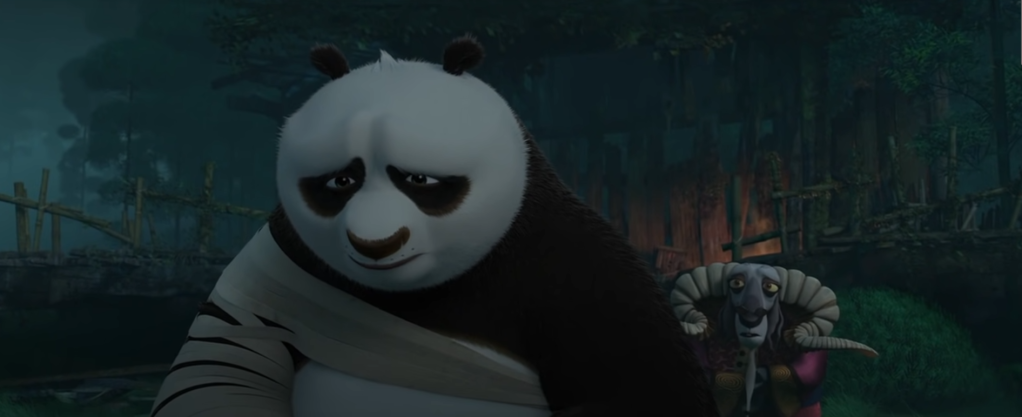
There is a moment in Kung Fu Panda 2 where Po is defeated by Lord Shen and is completely in confusion, fear and anxiety that it was Lord Shen who killed Po’s parents thus he is more powerful than anyone in the world. Po as a Panda cannot defeat Lord Shen as Lord Shen has wiped entire population of Pandas ruthlessly in history. He, at this moment is far away from getting the inner peace.

And in contrast it is the same moment when Po finds inner peace as he learns that it is not the labels assigned to him already that define him so that he can’t defeat Lord Shen rather it is the course of actions he is going to take ahead which will define him. The essence of his being is in the actions he is going to take ahead indicating his ways of existence. He defines himself as fulfilled when he is in the present moment.

The moment Panda finds inner peace- Kung Fu Panda 2

“Your story may not have such a happy beginning, but that doesn’t make you who you are. It is the rest of your story. Who you chose to be!”

Soothsayer to Kung Fu Panda

This moment in Kung Fu Panda really gives meaning to the statement “Existence precedes essence” which is the core of existentialism.

In the infinitely infinite expanse of the universe where there are so many things to be done one may get overwhelmed and find themselves useless hence, leading to that restlessness of not achieving something. But, once you find that one thing to live for, once you find that one thing to achieve however small, absurd, funny or useless it may seem to others- you can fulfill your purpose in the life. Probably, this thing will not be that much great for others but your actions to achieve that thing will give it greatness it deserves.

Hence, you will finally find the Zima dismantling into the only thing it was at its start- a simple blue ceramic tile cleaning robot in a swimming pool.        

“I will immerse myself. And as I do, I will slowly shut down my higher brain functions… unmaking myself… leaving just enough to appreciate my surroundings… to extract some simple pleasure from the execution of a task well done. My search for truth is finished at last. I am going home.”

Zima in Zima Blue from Love, Death and Robots (Netflix)

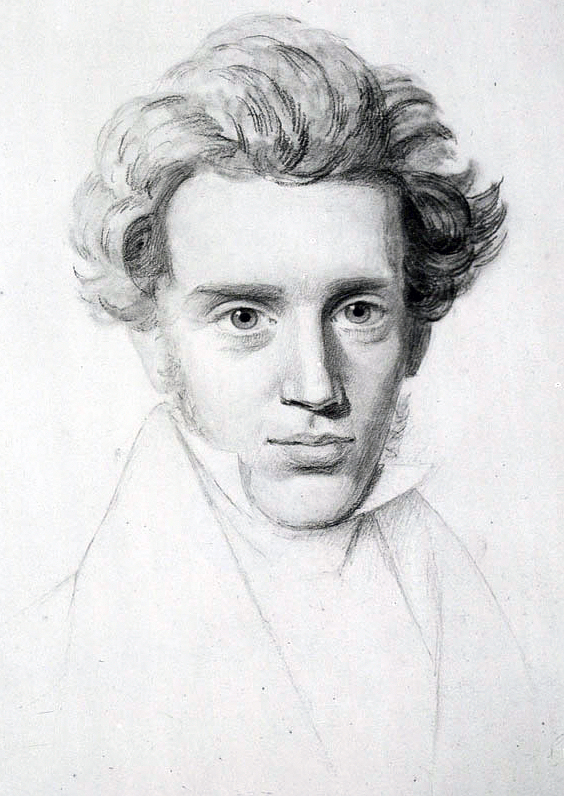
Søren Kierkegaard a Danish theologian, philosopher, poet, social critic, and religious author is considered as the first existentialist philosopher, has following beautiful quote which also aligns with why Zima decides to go to its original form while entering into his ultimate moments of his life.

“Life can only be understood backwards; but it must be lived forwards.”

Søren Kierkegaard

There is a good TED talk by Shaolin Kung Fu Master Shi Heng Yi, who despite of having many great academic and personal achievements chose the way of life of a Shaolin Monk. This talk mostly focuses on how to achieve the purpose of your life and highlights the uniqueness of everyone’s purpose in the expanse of universe.   

“All of our lifetimes all of our lives are too unique to copy the path from someone else. To bring meaning to your life, to bring value into your life, you need to learn and master yourself and don’t let the hindrances stop you.”

Master Shi Heng Yi

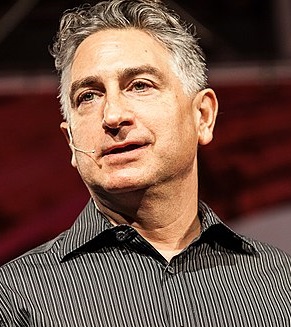
Another good TED talk to explore is “How to know your life purpose in 5 minutes?” by Adam Leipzig. In short it is asking yourself these five questions:

 5 Question to Ask Yourself:

  1. Who are you?
  2. What do you love to do?
  3. Who do you do it for?
  4. What do those people want or need?
  5. How do they change as a result?

He says a good thing in his talk:

“If you make other people happy, life teaches us we will be taken care of, too.”

Adam Leipzig

The whole premise of the story Zima Blue is greatly aligned with finding the purpose of life, finding the meaning of life which are greatly the interests of the Existentialism. Existentialism also explains why many great people in the history of the humanity are not associated with greatness as an executioner of bunch of great things; Rather almost all of the great personalities in the human history are the people who did one thing in a great way as they found their purpose, their meaning of life in that one thing. The purpose they found in that thing made them to endure anything in their life and this might the way in which we can find our meaning, our purpose in this chaos.

Zima as and in his ultimate masterpiece – (From Zima Blue – Love, Death and Robots/ Netflix)

Further links and references:

  1. Pictures of Zima Blue from Love Death + Robots episode (season 1, episode 14)
  2. Søren Kierkegaard – Image credit –La Biblioteca Real de Dinamarca
  3. Master Shi Heng Yi – 5 hindrances to self-mastery | Shi Heng YI | TEDxVitosha
  4. Adam Leipzig – Image credit – Julia de Boer
  5. How to know your life purpose in 5 minutes | Adam Leipzig | TEDxMalibu
  6. Existentialism- Wikipedia
  7. Love Death + Robots by Netflix

Food for thought only at $1

“Men imagine that thought can be kept secret, but it cannot; it rapidly crystallizes into habit, and habit solidifies into circumstance.

“A man cannot directly choose his circumstances, but he can choose his thoughts, and so indirectly, yet surely shape his circumstances.

– James Allen, As A Man Thinketh

The best thing about books is the value they provide compared to their cost. Books are the materialistic vessels which contain streams of the incomparable, unbound and unfathomable ocean of knowledge. I will discuss one such small- yet very impactful book by James Allen called “As A Man Thinketh”

The book is the epitome of common saying “good things come in small packages”. This book is mere collection of seven essay-like chapters which emphasizes on the importance of our thoughts /thinking and their impact on our life, circumstances, success/ failure, body. This small self-help book is the perfect distillate of the ideas in philosophy related to our thoughts – our thinking. Nobody should miss this book.

The author James Allen intended this book to remain concise, compact. James Allen was a British philosopher, poet and is called the pioneer of self-help movement. Buddha and his teachings – one of the influences on James Allen seem to reflect themselves in this book. He also calls this book “little volume (the result of meditation and experience)”. The book is also said to inspire one of the bestsellers called ‘The Secret’ which focuses on the Law of attraction.

Let us dive into the seven short yet insightful ideas explained in the book ‘As A Man Thinketh’.     

1. Thought and character

Act is the blossom of thought, and joy and suffering are its fruit.

James develops this idea from the logic of Cause and Effect. Anything we do will have a favorable or unfavorable outcome which decides whether it will make us happy or sad. If sweet or sour fruits are the effect then their cause is the action taken.

But what is the cause to the effect of taking an action?

James expresses ‘the thought’ as the cause for actions. We are what we think. Our every minuscule, insignificant seeming yet impactful thoughts and their collection make us who we are which thereby enables us to act in a specific way. Some may consider this as a behavior, the attitude of a person. James wants to make readers aware of the control they can have on their life by having control on their thoughts, thereby the actions they will take and the outcomes of these actions  

Man is always the master even in his weaker and most abandoned state; but in is weakness and degradation he is the foolish master who misgoverns his “household”

2. Effect of thought on circumstances

The soul attracts that which it secretly harbours; that which it loves, and also that which it fears; it reaches the height of its cherished aspirations; it falls to the level of its unchastened desires, – and circumstances are the means by which the soul receives its own.

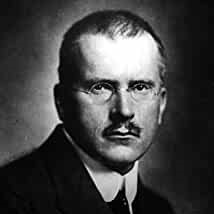
Here, in the second part James expands the idea of cause and effect of our thoughts causing our “attitude” which causes our actions in a specific way giving us “our character”. This idea is also somewhat similar with the thought expressed by Carl Jung- Swiss psychiatrist and psychoanalyst as follows:

“You are what you do, not what you say you’ll do.”

– Carl Jung

This reinforces that the thoughts are responsible for every action we take. No matter how spontaneous they may seem but they are the outcomes of our deep, hidden thoughts and they may remain unconscious for us. That is why James says “soul attracts that which it secretly harbours”. These conscious, unconscious thoughts inspire actions in a specific manner and the outcomes are revealed as the mannerisms of the actions taken. Hence, our thoughts give birth to the circumstances around us.    

Justice

The idea of reaping what we sow is central here. James calls it ‘the exact justice’. Rather than circumstances shaping the person, James highlights that the person is the cause of his circumstances which are linked to his/her attitude which is ultimately linked to the thoughts.

Ignorance

James expands the idea of circumstances to the desires, wishes of every person. In almost every case a person has the solution for the problem right in front of her/him, but they chose to ignore because it will cost them to change themselves and the anxiety associated with changing themselves.

If one eliminates this ignorance of the obvious yet anxious seeming change/ improvement, then she/he will become free. This means that one has to sacrifice her/his current attitude, current thought to improve personally thereby to improve the circumstances.  

Good and Evil

James clears the idea of being good or being bad. In simple words, they are considered as a superficial tag or quick judgemental opinion of every person.

There are many examples in everyone of our lives when we feel that the dishonest man got the success and honest man failed greatly.  

According to James’s idea of “Exact Justice”, the person having complete and absolute knowledge would have gone beyond good and bad, success and failure. She/he would consider them as a part of their evolution, part of their ongoing experiences.  

Blessedness and Wretchedness

James discusses here the idea of suffering which seems to be influenced highly by the teachings of Buddha. Desires are the root of suffering. James calls the suffering as the effect of wrong thought. When one loses the harmony with her/his thoughts then only she/he suffers.

Blessedness hence is originated from the right thought, however materialistically poor a person may be and wretchedness is originated from the wrong thought, however materialistically a rich may be. Right thoughts meaning the harmony of a person with his doings and ultimately the thoughts responsible for them.  

Introspection

Again, based on the law of justice of the universe, James establishes that, once a man accepts that his thoughts are responsible for the conditions around him, he starts tuning his thought in a way to change the conditions, people and their behavior towards him. This is possible only by the power of Self analysis and introspection, James says.

This seems like the core inspiring idea behind the development of the book called “The Secret” which calls for the Law of attraction.

Good and bad Habits

The collection of continuous thoughts in certain way creates a channel of certain continuous actions thereby creation of routines leading to the formation of habits. Our thoughts even may seem untouchable, non-physical but they manifest themselves into our actions in a specific way thereby swiftly developing our habits. These then create the circumstance of certain outcome.

James calls it as the “crystallization” of thoughts into habits and further “solidification” of these habits into the circumstances.

3. Effect of thought on Health and The Body

The body is delicate and plastic instrument, which responds readily to the thoughts by which it is impressed, and habits of thoughts will produce their own effects, good or bad, upon it.

James considers the body as a servant of the mind. In simple words, the body is the materialistic extension of our untouchable, non-physical thoughts. Hence, thoughts drive the body and the health. That is why a healthy mind will always crave for healthy food, healthy and hygienic habits. The neat and healthy living is the effect of the neat and healthy thinking.

With those who have lived righteously, age is calm, peaceful, and softly mellowed, like the setting sun.

In one sentence – “Age is just a number”. It is all in the thought of ours which determines how young we are.

4. Thought and Purpose

Even if he (a man) fails again and again to accomplish his purpose (as he necessarily must until weakness is overcome), the strength of character will be the measure of his true success, and this will form a new starting point for future power and triumph

James wants to establish the concept of failures as a part of life and their contribution in the ultimate success. Overcoming the failures is only possible when a person has found the purpose. This purpose then makes him to accept the failure, strengthen himself to face the failure again and to finally become strong to overcome it.

In simple way- when a person accepts the fact that, in order to become successful, one will go through multiple failures, the first step towards success is taken. In the process of overcoming these failures he will become strong; he will gain the strength to ultimately achieve the true success.

Purpose will guide the person through the failures.  

5. The Thought-Factor in achievement

Intellectual achievements are the result of thought consecrated to the search for knowledge, or for the beautiful and true in life and nature.

Here, James follows the idea of strengthening oneself to overcome the failures. This will need sacrifice. The sacrifice intended here is of the selfishness. Because selfishness indicates attachment, attachment induces desires and failure to get these desires makes the person to lose the said harmony of thoughts and actions. The true achievement James establishes here is the freedom – what some may call as “Mukti” as mentioned in Hinduism. This needs upliftment of thoughts which is only possible by letting go of materialistic desires and acceptance of true knowledge, true purpose.

6. Visions and Ideals

Dreams are the seedlings of realities

James Allen calls the dreamers as the saviors of the world. The idea is that visions are one structured way of inspiring thoughts which go on accumulating to cause an action in a constructive way thereby manifesting a good habit. This good habit will be responsible for the harmonious circumstances which is the ultimate purpose of the life. James clarifies that the idle wish is not the Vision.

In all human affairs there are efforts, and there are results, and the strength of the effort is the measure of the result. Chance is not.

James denies the existence of chance, luck through the idea. It is therefore is established here that there are only thoughts conscious or unconscious they may be which are ultimately responsible for who we are and what is happening with us and how we accept and react to it.

Gifts, powers, material, intellectual, and spiritual possessions are the fruits of effort; They are thoughts completed, objects accomplished, visions realized.

This idea again focuses on actions thereby the thoughts responsible for these actions which are the key parts of human evolution in physical and non-physical ways. The vision brings thoughts into the reality of action, drives it or gives it a purpose.  

7. Serenity

Yes, humanity surges with uncontrolled passion, is tumultuous with ungoverned grief, is blown about by anxiety and doubt only the wise man, only he whose thoughts are controlled and purified, makes the winds and the storms of the soul obey him.

Serenity in the end is intended to calm ourselves our of all the thoughts we have. This demands to establish control on our thoughts thereby controlling the actions and circumstances.

These are the seven core ideas of James Allen’s intellectual and philosophical masterpiece. ‘As A Man Thinketh’ itself builds a bridge between eastern and western philosophies in an effective way. The ideas also bring religious thought processes from Christianity, Buddhism and Hinduism. The book being so small yet expressing such vast and exhaustive ideas definitely highlights the power of few pages bearing, single dollar costing book with such a strong thoughts and ideas. Definitely a must read.

How to fail? – Ankur Warikoo’s Failure résumé

“I’ve missed more than 9,000 shots in my career. I’ve lost almost 300 games. Twenty-six times, I’ve been trusted to take the game winning shot and missed. I’ve failed over and over and over again in my life. And that is why I succeed.”

– Michael Jordan

Recently, I came across a book called ‘Do Epic Shit’ by Ankur Warikoo. I actually bought the book for my younger brother so that he will get exposed to the ideas that Ankur shares with the youth through his online content. The book is a collection of all the online contents that Ankur has created and is organized in order to be consumed through a book and it does the job well. I love Ankur’s idea of playing a ‘book cricket’ with this one. That resonates and connects with the today’s youth on a personal and in a nostalgic way. The book covers 6 major aspects that are obviously Ankur’s key points of discussion in every content namely- Success and Failure, Habits, Awareness, Entrepreneurship, Money and Relationships. All these ideas are communicated with the reader in small bits and chunks of ideas with some good quote-worthy sentences. Overall, the book is designed to be not too complicated yet covers the most complicated subjects our young generation faces. Trust me, sometimes for the most confused and most energetic young people even though the things are too much apparent but it takes one experienced opinion to enforce that learning in this age of complete confusion.   

Dedicated to all the failures and the roadblocks I faced in life. We rarely wish for them, but upon reflection I realize they are the reason I am here today.

– Ankur Warikoo, DO EPIC SHIT

I will be discussing my most favorite part of this book. The part is ‘My failure résumé’. This part contains all the ways Ankur has failed in his life.

The résumé opens with dream of every Indian science student and apparently his/her parents called “getting in to an IIT”. Ankur’s father crying and the expectations of eradicating his financial ‘miseries’ through IIT for his son is an uncanny depiction of every middle-class parent. Ankur not asking his father the reason for his crying is nerve chilling enough to explain the complexity of emotions and the feeling of dreams crushing into nothingness as experienced by almost every typical Indian parent.

The urge to join IIT in masters even shows that there is that feeling, that guilt, that worthlessness of not getting into an IIT which becomes tied with the youth. They just want to calm this part of themselves by at least getting Masters from IIT where too Ankur failed. Being unable to answer in front of the great maestro Dr. H C Verma is the level of failure nobody could empathize with.

Event after getting somehow into PhD abroad, dropping out of it is a huge NO-NO. The first thing the whole world will be ready and equipped with is all the ways to call you a failure and bring you down. Ankur went through it.

Later on, Ankur shows his epic failures in his Consultancy jobs, Entrepreneurial ventures. The failures are on the level of management where your decisions will be affecting people, their lives, organization’s assets and most importantly investors. Ankur highlights the levels where he failed namely – delegation, leading from distance, getting the results from others, seeking feedback. Ankur also focuses on his “irrational optimism” while discussing these failures.

The next mistakes, failures are closely related to the mistakes in personal finance and personal relationships. They discuss about how his lifestyle suffered due to his larger expenses compared to his savings. The short but clear enough events of his sister’s wedding and his son’s birthday gift are more than enough to clarify the conditions he was in. Failure to connect with his son, parents, failing to not keep up with the expectations of the investors and colleagues are the worst scenarios everybody wishes not to have faced in their life. Ankur went through them too.

I believe, ‘we’ as a part of society are always going through all sorts of transactions. These transactions are personal, emotional, physical, intellectual, financial. In order to have ourselves a value, we never want to portray ourselves as an overall failure. After all, who going to buy you in these transactions then if you are not that valuable enough ! This value is associated with your success.

Everybody wants to project the good of themselves, the better part of themselves in order to maintain themselves in the everyone’s top priority list. That’s how rude and I would say- ‘practical’ the world is. After all, it is the survival of the fittest. The social media and the way we try to project ourselves and compare our lives with the feeds of others is the exact example of this. Hence, “one failure and you are down forever” is the projection of the world and it is imposed on you right from the moment you become aware of how the world works, when you are young and most of the time your parents’ opinions are a part of it.

Ankur’s résumé of failures invoked one idea in my mind that everybody is always going through her/his own battles and they face these failures too. But what prevents us from learning from them or clinging negatively to them is our acceptance of these failures. Nobody wants to ‘embody’ rather accept how they failed because that is sufficient enough to erase all your ‘transactional value’. We as human being have evolved to be attracted to negative things faster because they will compromise our survival right from the primitive times. In today’s age, these negative things are no longer vicious predators or hunters and the physical scars and physical pain they gave; they are the comparisons, mockery, taunting of the surrounding world which give mental scars and mental pain. It is the same reason, I believe Ankur calls these failures the scars which he wants us to be aware of.

 Ankur’s résumé of failures carries the core idea that the more you accept the failures, embody them, bring them into the real world the more you will learn from them. It is like having closure with your failed dreams, aspirations and again gearing up for new and better journey, better goals.

Even though Ankur calls himself lucky, if you go through the list of his failures- he has failed great and in an epic way (meaning he was in literally epic shit!) which made him successful in a great way.

I believe that ‘this’ Failure résumé will remove the stigma of failures from the minds youth and making them more open to try and fail at more and newer things. It is very important for people and especially our younger generation to understand that the failure is the way of life and success rarely comes out of it which needs efforts, internal motivation, skills, consistency and what not. It is important to highlight how successful people failed before they became successful. It is also important to control the glorification of failures too. Otherwise, the main purpose – which is to learn from the failures will be deviated (Glorification of failures is also a thing which should not be promoted)

In single sentence and to be more specific- I want ‘Ankur Warikoo’s Failure résumé’ to be included in the textbooks of every young student in India.

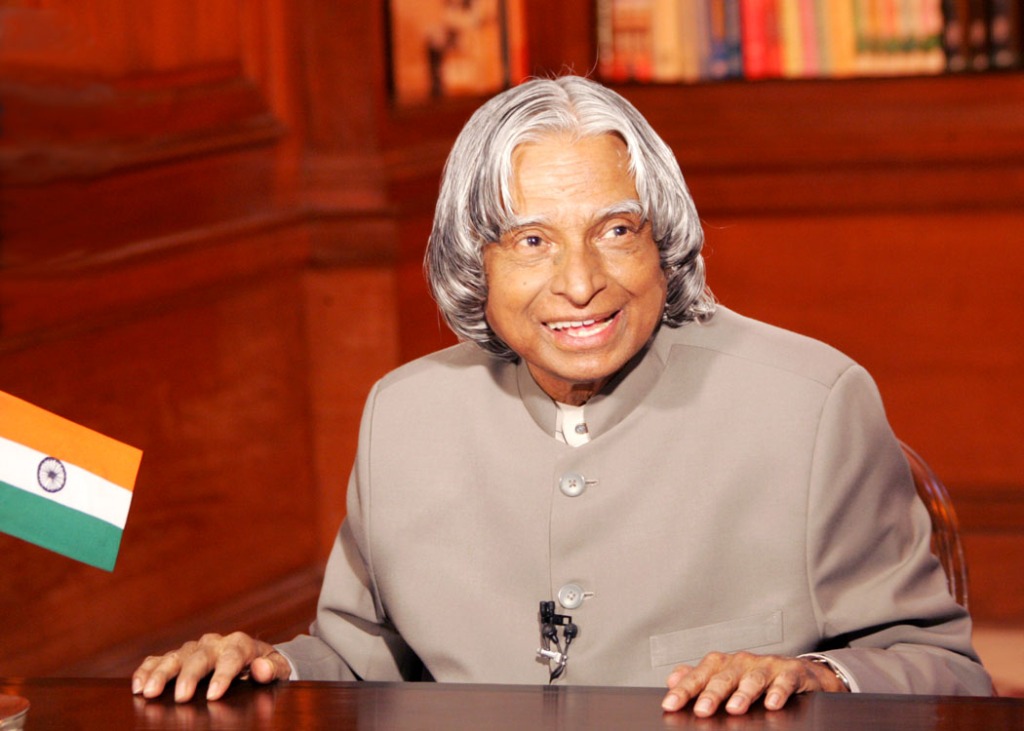
Don’t read success stories, you will only get a message. Read failure stories, you will get some ideas to get success.

– Dr. APJ Abdul Kalam

Featured Image Credit- Nicolas Nova -www.flickr.com

KGF and Plato’s ‘The Republic’

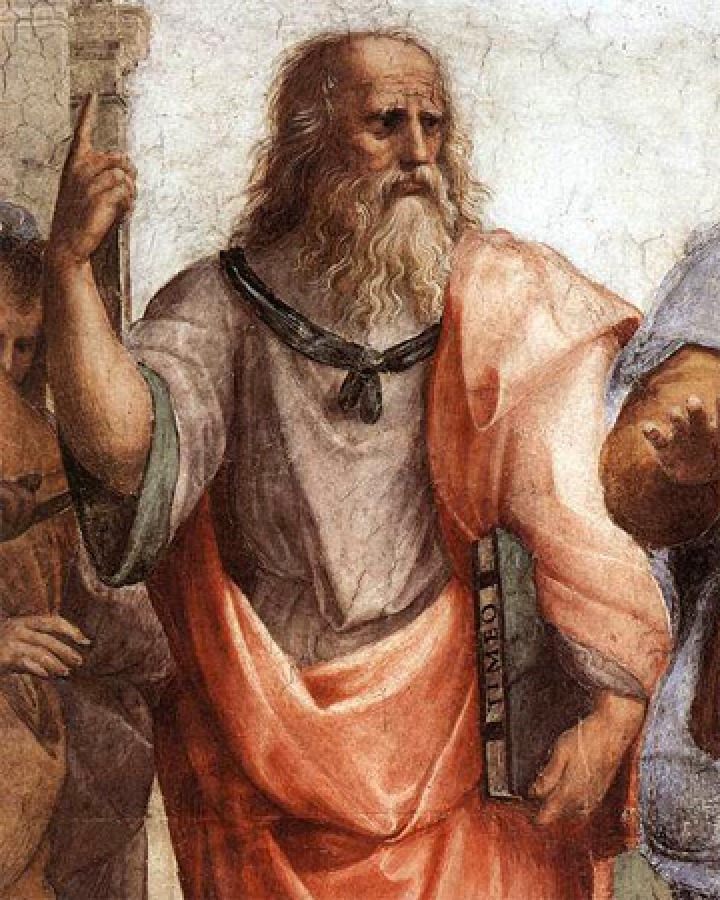
“There is in every one of us, even those who seem to be most moderate, a type of desire that is terrible, wild, and lawless.” – Plato, The Republic

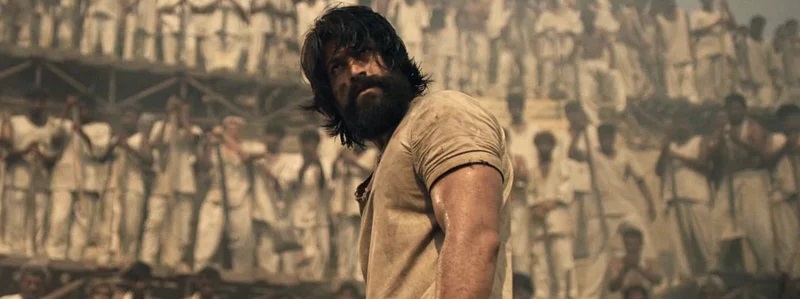
KGF Chapter 2 was one of the most anticipated movies by Indian audience. The movie is filled with some great moments, a good performance from the whole cast especially the superstar Yash and most importantly the story line and characters have created significant impact.

Obviously, the wow factor of the movie is the character development of Rocky. From being an orphan to being kid doing boot polish to a gang leader to killing the most vicious person on record to becoming world’s richest man and most powerful man thereby the whole journey is mesmerizing.

I had only one fear about the story development while watching the Chapter Two which can be expressed as follows:

The whole ambition of becoming world’s richest man was a personal ambition of Rocky. His only goal was first of all very personal, it did not specifically involve doing good for the people. In the later stages, while planning on to kill Garuda, Rocky is exposed to the unfitting environment of gold mines and the unjust, cruel system forced on the oppressed people. Rocky works under the hood to reach to Garuda killing him in an absolutely dramatic environment and in front of the same crowd which was very scared, terrified by mere presence of Garuda.

Given that Rocky was more of a criminal and somewhat similar to Garuda in terms of terror, cruelty. I had a fear for the story that what if Rocky just replaces Garuda and becomes the same tyrant as Garuda was. Even though he frees the crowd from the terror of Garuda, his intentions are also not pure already as he wishes the same thing as Garuda and all that he wanted was the Gold of KGF and power that comes with it. It is just that KGF gets another Tyrant with some more emotions and personal attachment.

And the story actually developed to this stage, Rocky’s father like figure Khasim makes his thought clear to Rocky that the way in which he is enforcing to dig more gold makes him more of a same person as Garuda was.

But the story writers have done their job perfectly here. Actually, there is more similarity in the character of Garuda and Rocky than there are differences. Garuda is as ambitious as Rocky is, both are physically and mentally strong, both have intimidating presence, both create strong influence on the surrounding people, both want to become the richest and the most powerful people in the whole world.

What differentiates Rocky is that his ambitions are more attached to his mother and the suffering she went through. Hence, when people ask Rocky the reason behind so much greed, he points his finger to the tomb of his mother. Whatever decisions he is taking no matter how cruel and unjust they may seem they are justifiable just because he wants to fulfill his mother’s wish.   

My fear was that Rocky becomes as tyrant as the previous tyrants of KGF were nonetheless he becomes the same person as his predecessors were.

The whole ensemble and development thereby degradation of ‘our antihero’ into a tyrant reminds me about the regime explained by Plato in his book called Republic. The ideologies of Plato’s five types/regimes of Government. These regimes are namely Aristocracy, Timocracy, Oligarchy, Democracy and Tyranny. According to Plato starting from the Aristocracy, the government degenerates into worse condition finally collapsing into tyranny. The whole story line and characters shown in the movie KGF can very effectively explain these five regimes of government.

Regime 1 – Aristocracy and early years of discovery of KGF

Aristocracy literally means ‘Ruled by the best’. Here, Plato expects the best as in the best in wisdom, education and ethics. Today the meaning of aristocracy is somewhat different and misleading. In aristocracy, wisdom and intellect are valued more hence power is in the hands of those who have the merits also called as meritocracy.

The biggest disadvantage of Aristocracy is ‘Nepotism’. Plato categorizes aristocracy as the government where people are ruled by few educated, just and moral people. But Plato never specified how many people are to be called ‘those’ few. Hence over the time meritocracy’s meaning went on obscuring. This leads to single person Aristocracy also known as ‘Monarchy’. Monarchy leads to hereditary rule which empowers Nepotism. Today’s aristocracy in the world is mostly hereditary. Which is far away from Plato’s intended Aristocracy.    

We see the same Nepotism based aristocracy.

The early leader ‘Suryavardhan’ as explained in KGF Chapter 1 is smart and has sufficient wisdom and is clever, cunning to control a group of powerful people who are serving him and the people of KGF mines. Then he realizes that his time in this world is short, which creates a wave. When it comes to choosing a successor, he chooses his son Garuda over his brother Adheera. Even if he had chosen Adheera, the power would have stayed within family thus maintaining nepotism influenced monarchy.

Regime 2 – Timocracy – Vanaram, Adheera and their army

Timocracy is the degeneration of aristocracy. When the Aristocratic rulers no more remain ethical, justice loving they only care for the power and the influence it brings on the surrounding. The power corrupts them, that is why they always want to establish control on the masses and resources which drive their lives. Plato categorizes oligarchy as government where people are ruled by single person.

In timocracy, the rulers are more power hungry, less philosophical and focus more on development of military to maintain the grip. Weapons are prioritized over books, basic necessities.

Though Suryavardhan has his own army to control the people of KGF which is led by Vanaram, it is the army of Adheera which stands out throughout the narration. Adheera is more ‘timocratic’. He wants to create the influence through army and cares less about people.

Regime 3 – Oligarchy – Shetty, Inayat Khalil, Leaders of KGF and their gold racket

Oligarchy is all about materialism, the greed and the pleasure that comes with it. It is degeneration of Timocracy. Leaders have the sense of power and the supply of resources that can be controlled through this power. In oligarchy leaders focus more on becoming more and more rich, more and more resourceful. Their lifestyles are lavish, high profile. More focus on the becoming rich caused to pass the rules and regulation that give al the power to riches. Here, the valley between rich and poor is deeper. The military is weak due to more focus on enjoyments and ignorance of leaders. Money gives more merits in oligarchy.

Almost every character is greedy for gold in KGF. Shetty is a good example as an oligarch but his ambitions are far smaller. Though he wants to have control over Bombay he never misses to enjoy the pleasures of this power and this has already corrupted him. He has no rule, character, foundation to drive the tasks (mostly bad tasks). Leaders of KGF also restrict the resources to people of KGF showing greater sign of oligarchy.

Oligarchy brings about that unhappiness in the crowd, causing them to revolt against the leaders.    

Regime 4 – Democracy – People of KGF, Rocky and Ramika Sen

In Democracy, it is the rule of leaders chosen by the people who are fed up with the inequality in the society and concentrated power in the hands of leaders. Democracy is the aftereffect of revolt of masses – ‘the mob’ against Oligarchy. In democracy, people do whatever they want. That is why Plato hated democracy. His master, the great philosopher Socrates was the victim of it – Socrates’s death sentence was decided by the masses who were never understood and accepted his teachings. Plato thought that when the mob is given the power to control the government the minorities are pressed down. Wrong activities are justified hen supported by mob. The mob generally does not have that wisdom and can be driven to any direction if properly influenced which is also possible for a sole leader but the influenced mob is more powerful. There is no control and systematic structure, hierarchy to handle issues of the masses.

Today’s democracy is far more evolved from the democracy of Plato. This democracy is liberal democracy somewhat hybrid democracy where there is a proper constitution, strong and independent judicial system, protection of minorities, hierarchy to prioritize the concerns of people and solving them.

We see two different faces of democracy in KGF  

One is the democracy in the KGF after the killing of Garuda. People choose Rocky as their leader and are ready to die for him. This democracy is somewhat closer to the democracy explained by Plato in ‘The Republic’. The mob revolts and chooses a face for them. Now the only question is for the chosen face that whether he will fulfill the expectations of his people.

Second democracy is the democracy of India as in Liberal Democracy. Ramika Sen is the face of this democracy along with the constitution, parliament, judiciary, investigation wing. They portray the hierarchy within the democracy to solve the problems like Rocky for the nation. The twist of the story is that Ramika Sen is portrayed as a dictator in a democratic government which makes the fight between Rocky and Ramika interesting.

Ramika’s democracy is more of a totalitarian governance meaning she wants and does hold all the power to uproot Rocky. She wants control over everything.

Rocky’s democracy is more of a new born democracy where there are more chances of dissolving it into the chaos or maybe leading to tyranny if the people’s face loses his conscience. Same happens in the end; Rocky loses his mind over the death of his loved one and crosses the boundary.

Rocky also forces people of KGF to dig more and more gold. At a point in the story, we are given a moment to differentiate the tyrannical nature between Garuda and Rocky. But the forcefulness of Rocky is justified with the promise he made to his mother.

Regime 5 – Tyranny – Almost every ruler of KGF and Rocky to some extent

When democracy gives more power into the hand of a person and if this person has the only personal motivation, only expects personal well being then the democracy degenerates into tyranny. Tyranny is outcome of ideal democracy. When there is no hierarchy paranoia develops among the people and the chosen person amongst the people becomes tyrant. A tyrant does whatever he pleases leading to murder and terror. Tyranny is rule of only one and there is no rule or justification for any decision. The only justification is getting benefited on personal level only. Using the power for personal gains only.

Tyranny is the heart of the story of KGF. The race to own the gold mines always tries to replace one new ruling face. This position and the resistance to sustain this position, this ownership makes every person a tyrant, even Rocky is not exception to it. The only justification for Rocky’s tyranny is again his backstory with his mother.      

KGF sole as a movie is a great entertainer and at the same time is a good refresher course on Plato’s Five regimes of government explained in his book ‘The Republic’. You see all these distinct characteristics and the downfall of each system into finally tyranny which highlights the good and bad aspects of each type of governance.

Happiness, Inequality and Gini Coefficient

Almost half of the population of the world lives in rural regions and mostly in a state of poverty. Such inequalities in human development have been one of the primary reasons for unrest and, in some parts of the world, even violence.

– Dr. A P J Abdul Kalam

Recently, World Happiness Report for the year of 2022 was released and it was very shocking for many Indians that out of 146 countries surveyed, India stood at the position of 136 in terms of the happiest countries in the world. The countries like Myanmar, Sri Lanka, Pakistan, Yemen have still secured better ranks in terms of the happiness index despite having completely opposite socioeconomic imagery in the world. This was the moment when I understood the importance of the key performance parameters of any country.

India didn’t perform well on the list of happiest countries (actually 11th from bottom). When a child secures lower marks in the class then he/she tries to find the bad things that the class topper shows to explain and convince his/her mind and especially parents. In the same naïve sense, I looked towards the neighboring relatively upper ranking countries which have performed better than India. They are far behind India in terms of economy, social environment, quality of life, per capita income, population of youth. Then I realized the parameters on which this was being ranked. The key factors to decide the happiness were GDP per capita, social support, healthy life expectancy, freedom to make life choices, generosity and perception of corruption.

The overall purpose of such socioeconomic surveys and the gap between conclusions drawn from them and the reality people perceive are always good topics for debates, discussions. The World Happiness Report itself is a good example for this. We will see one such simple concept which might give you some insight into the such indicators in the economics.

One of the key factors in deciding the happiness of the nations was the income inequality in the respective countries. Many times, the income inequality has also been linked to the social stability by some psychologist. Jordan Peterson- for example discusses that it is not the countries with less income where the crime rates, riots thereby social instability is high, rather the social instability is high where countries have larger gap between the incomes of poorest of poor and richest of rich. This income inequality and not ‘per capita income’ is strongly linked to the social stability thereby roughly speaking ‘the happiness of people’.

Gini coefficient has explored his domain in a very simple yet effective way, there are some advantages and some disadvantages to it, but it is an interesting concept to understand. When any news articles say that the valley between  rich and poor is increasing, they are actually pointing towards the increasing Gini coefficient. You can find the Gini Coefficient for almost all countries on the website of OECD (Organisation for Economic Co-operation and Development).

But, first let us understand Gini Coefficient and Lorenz Curve.

Lorenz Curve

Lorenz curve (Figure 1) is used to graphically represent the distribution of the income within the population. First of all, each member of population is arranged in to the increasing order of income, cumulative income and cumulative member count is considered for the Lorenz curve. The X-axis indicates the cumulative population and Y-axis indicates the cumulative income; it can be taken as percentage also. Lorenz cure will now indicate the fraction of income earned for the respective fraction of population.

Figure 1. Lorenz Curve

What comes after establishing Lorenz Curve is interesting. When we take sum of all the income of nation and divide it by the population earning it, we get average income. But soon it was found that average income is not sufficient enough to compare the economic well-being of any nation.

Let us take an example:

Here we have considered five countries with population of 25 people! (bear with the example for the sake of understanding)

You can see that the average population of each country is 25. By looking at average income of each group one might say that the economic condition of each country is same – that is 4 unit per person, but that might not be the real case. One has to look closely at the data points in each country where importance of Lorenz Curve and Gini Coefficient gets highlighted.

If you compare the incomes in each groups there is specific pattern in the incomes of people. Here, Gini coefficient helps in a better way.

Figure 2. Countries with same average income may not have same income inequality

We need to plot Lorenz curve for each group and segregate the area A and area B as shown in figure 3.

The Gini Coefficient (GC) is defined as follows using Lorenz Curve, here A and B both are areas highlighted in the figure 3:

Figure 3. Area A and Area B from Lorenz Curve for Gini Coefficient calculation

The value of Gini coefficient always lies between 0 to 1. Higher the Gini Coefficient higher is the income inequality.  

The lorenz curve and Gini coefficient for our example of Group A, B, C, D, E, F is as given in figure 4.

Figure 4. Lorenz curve and Gini coefficient from data in figure 2

GC=0, Perfect income equality

Now, if one looks at Group A- the income of each member is 4 units thus the Gini coefficient here is 0 indicating the ideal condition of equal income- perfect equality. In reality perfect inequality is not possible as income/wealth is not evenly and exactly distributed all over the nation.

GC=1, Complete income inequality

If one looks at Group F- the average income of the group is still 4 units but the complete income of the group is concentrated to only one person of the group which is the ideal inequality, here the Gini Coefficient is 1 indicating complete income inequality.

These are the ideal condition to compare with the real conditions.  

Now let us look at the Groups B, C, D, E. Here, the average income in each group is same as 4 units, but if you start plotting them in the form of Lorenz curve, you will notice the difference in the income distribution throughout each group. The income distribution in each group is not same even though the average income is the same.

If we find the Gini Coefficient for each group, the values are given as GCB=0.16, GCC=0.42, GCD=0.53, GCE=0.82.

In short, the Gini Coefficient gives much more important information than per capita income.  

Poor Countries have Gini Coefficient values scattered all over the range on as low as 0.25 to as high as 0.71. Generally, it is observed from the historical data that the countries with Gini coefficient higher than 0.40 indicate highly socioeconomic instability.

The main advantage of Gini coefficient is that it highlights how much wealth is owned by the fraction of people for a given country.

It is also interesting to notice that the country with rising GDP and rising Gini Coefficient indicate increasing poverty in the country.

Gini coefficient does not consider the size of the economy because all the income and all the population are compressed to the scale of 100% thus any two economies can be easily compared on some common parameters using respective Gini Coefficients.  

The main power of Gini Coefficient is that just a simple number can give you the idea of overall income distribution in the country.

There are some ‘lost in the calculation’ details in Gini Coefficient that one needs to understand before commenting on any nation’s economy just by looking at its Gini Coefficient.

It is observed that the countries with relatively larger population and cultural diversity will yield higher Gini Coefficient than its each individual state and relatively smaller coparing countries.

Gini coefficient does not consider the dependence of basic necessities with the income. Some countries have systems like food stamps or food ration which may not be counted as monetary incomes, thus it becomes important to understand the culture and lifestyle, availability of basic facilities while comparing countries based on Gini Coefficients.

The Gini Coefficient will yield different values for the same country if base data varies as income of individual or income of household. As we know, all of the population of the country is not earning population; there are some children, young adults, elders, even young men and women who are not earning population. Hence, it becomes more practical to consider the Gini Coefficient based on the household income and considering the weightage of each family member behind that income. This will give more practical Gini Coefficients. There are three famous ways to calculate Gini based on this idea called as Per Household Member Scale, Modified OECD (Organization for Economic Co-operation and Development) Scale and Square Root Scale.

Per household scale distributes the income of the family equally irrespective of their earning potential and age. Modified OECD Scale distributes the income in the family members as per their earning potential and age- the main earning person will have more weightage that the children dependent on him/her in this scale. Square root scale simply divides the income of family into the square root of family members count. These all scale will yield different Gini Coefficients and are used to derive specific meanings for the economy.

During many studies it is also found that the Gini Coefficients of given group are less sensitive to top 10% and bottom 10% population. Gini coefficients are more sensitive to the middle fraction of populations and wealth associated to it.

Though Gini coefficient has its limitations, but it is still the most simple and effective way to visualize and compare the income/ wealth inequality of any nation.

Economists have attempted to eliminate these limitations by incorporating various other indicators or techniques like Atkins Index, Coefficient of variation, Decile Ratios, Generalized Entropy Index, Kakwani progressivity index, Robin Hood index, Sen poverty measure, proportion of the total income earned.

Featured Image credit- billy cedeno – pixabay.com

Further readings:

  1. OECD Income inequality database
  2. Income inequality measures– Fernando G De Maio 
  3. A simple method for measuring inequality– Nature – Thitithep Sitthiyot & Kanyarat Holasut
  4. World Happiness Report 2022

The Batman- The superhero who ‘unlearned’

Journey of a person through cognitive dissonance

The Batman by Matt Reeves is one of the most important and influential movies. It is important not because some profit expecting comic book franchise is trying to reboot their most valuable asset in order to establish the character so as to drive the future narratives of the stories which will be getting introduced in the near future but it stands important because of the fact that it shows mirror to us as a human dealing with the nature of truths we are taught. The Batman by Matt Reeves is not a superhero movie, rather it tells the story of a person who discovers that all of his life decisions which made him who he is today were based on the lies and his journey out of these lies. It is the story of the batman ‘unlearning’ the facts he accepted throughout his life about his parents.

There will be some spoilers hereon in the discussion, WARNING! Watch the movie and get back again or never mind.

We all know the origin story of the Batman, the murder of his parents by a goon for few amount of money influenced his life decisions creating a strong hatred for the injustice and idea of punishing criminals with violence for their deeds. That is why he considers punishing the criminals and goons in the Gotham as a way to avenge the murder of his parents. Hence the reason the Batman of Matt Reeves always introduces himself as ‘Vengeance’ in the movie. Vengeance is the foundation of the Batman in this movie based on the fact that his parents were the innocents who fell victim to the disorder and crimes of the city. This is the truth of the Batman as a character. You will see the Batman and others (mostly Cat woman) calling him as vengeance throughout the movie.

The movie builds upon a series of murders done by the Riddler and sending one by one love letters to the Batman in each investigation to reveal various political, personal lies which were told to the people of Gotham city to maintain the power concentrated in the hands of bunch of people. These people used the power for personal gains only, thereby creating chaos and distress in the Gotham city. One-by-one murder of high-profile persons from the Gotham city administration and judiciary system finally reveal that the parents of Bruce Wayne- the Batman and especially his father was also one of the persons who was responsible for the downfall of the Gotham city.

The moment when the Bruce Wayne knows the truth that his father – Thomas Wayne was also one of the high-profile people who created the foundations of scams, frauds, unreliable charities, unreliable city renewal projects and fake drug raids in order to win the people of Gotham, the whole idea of him avenging the death of his parents, being ‘Batman’ seems useless to him. The truth reveal becomes an attack on his identity when he knows that his father- whom he used to consider the noblest of all- his role model was also trying to hide the truth about mental illness of his mother to maintain his political image during elections and his attempt to prefer illegal acts to control that ‘information’ completely shatters the idea of what made him the Batman.

There are two types of truths that the movie really focuses on- the white lies and the black lies. The white lies are meant to be harmless to the listeners like the parents telling a child not to misbehave otherwise the boogieman will come and get them. The black lies are the lies which are meant for the benefit of the person telling them. The company leaders telling investors misleading profit and false business models to get people invested more in their companies and thereby bubbling the company portfolio are the examples of black lies (read more about the Fyre Festival, the Theranos case).

The lies like the greatest drug raid GCPD carried out in Gotham city to eradicate the drug abuse in order to publicize the mayor-elect, the Gotham renewal fund which was meant to uplift the social infrastructure was actually a money laundering scheme- were the black lies for the story. Thomas Wayne having a clean family background was the black lie for the people of Gotham city.  

But there comes a moment in the movie when Alfred confronts the Batman- Bruce Wayne for the reality of his parents that some lies are essential for the well-being of the person and the society. It was a sincere and innocent attempt of Thomas Wayne to hide the truth of Martha for the well-being of families and his love for her which created this ‘white lie’. The white lies with which Bruce Wayne grew up with, brought the best out of him – making him to fight for the ‘Justice of the people’.  

As a human being we are what we believe in. Our personalities are built by the facts that our surroundings impose on us. It becomes really difficult to accept the that whatever was told to us our whole life was a lie. Humans do not accept these truths and try to find the ways to move away from such truths. People also try to find the groups of other people who support the similar ideas so as to run away from the truth. Our brains cannot handle such type of clashes because these lies (truths of us) are the foundations of our being. Psychologists call this as a ‘cognitive dissonance’. It refers to the mental conflict that occurs when a person’s behaviors and beliefs do not align. It may also happen when a person holds two beliefs that contradict each other. This is what suffering is. Our mind tries to avoid such sufferings and existential crises. Colin Stokes- a famous TED Speaker and writer in ‘the New Yorker Magazine’ discusses this in a very effective way in a TED talk.  

But you know what, one cannot run away from the truth. The truth always finds its way. Jordan Peterson in his lecture has said the following about the nature of a lie-

“Problem with lying is (it’s) like hydra, it has one of the consequences that you expect you can get away with it but it has 3 or 4 others that you don’t expect so it grows some complexity then you have tackle lie on each of those ‘complexity-o-crops’ and then they grow three more complexities and soon this little lie turns into a great Ball of lies, and at some point, it becomes painfully evident to everyone.” -Jordan Peterson

Peterson also quotes Mark Twain about the advantages of telling the truth-

If you tell the truth, you don’t have to remember anything.

This is what roughly lies between the truth and the lie.

Now, let us have one reality check.

According to the scientific studies, a person lies twice a day on an average. The lies are innate part of our personal and social interactions. If a man doesn’t tell lies to his wife about that dress being beautiful on her or her hairdo looking stunning, how could he stay alive otherwise! – Jokes apart. There is one scientific study available in ‘arXiv’ maintained by Cornell Tech which implies that white lies can truly build the society, ‘glue’ it together while the black lies fragment- break the society. Same thing is seen in the Batman movie. The black lie actually leads to the chaos in the Gotham and increases the people’s following to the Riddler.

We humans have actually mastered the art of lying for the mere being of survival. If such small harmless lies are such inseparable part of our life, then how could one handle the real lies which have made him/her the way they are! How could they change the course of this ‘fundamental’ and ‘learned/ believed throughout my entire life’ thought process?

One lie leading to other one to ‘cover up’ creates a series of misinformation and chaos which has different impact on different people causing them to make different choices. This is the reason we can see that the same lies affect the decisions made by Batman and the Riddler. As Riddler tries to convince Batman that they both can enjoy ‘the reveal’ of truths as one group and purge the whole Gotham city off of all the criminals, he is also willing to accept the harm being done to the innocents as revealing the truth is more important for Riddler but Batman has different ideology.

This is the moment which sets differences between Riddler and Batman. Though having almost same backgrounds and same intentions, same fight to eradicate injustice- Batman doesn’t accept Riddler’s offer knowing that he is also part-victim of these lies.

There is this moment in the third act of the movie when one of the Riddler’s followers when asked about his identity calls himself as ‘Vengeance’. It is in the same fashion the Batman introduces himself. This is the moment when the Batman realizes the consequences of the white lie and how you cannot convince everyone for the white lie (it is a lie after all). He understands in this very moment that act of avenging his parents by punishing the criminals of Gotham is not only spreading the fear for him thereby the fear for ‘Justice being served or their moment of reckoning’ but it is also creating some bad examples for the people who are aware of only the black lies. They are not made aware of all the white lies and in some sense, even when someone tries to tell them the intentions of white lies, they won’t be in a position to understand it. This is the nature of lies. Black or white- a lie is a lie.

Then, what makes the Batman and Riddler or his followers differ?

I think that it is the process of unlearning and thereby accepting the truth.

Unlearning can simply mean discarding the false information which was till date responsible for the foundation of who you were and rediscovering the same things with new perspective, rediscovering what that lie was hiding. The batman unlearns ‘the truth about his parents’ told to him from his childhood. He understands that however bad/ugly it may seem, it cannot change what he is today. That is why our Batman in the third act accepts that the ‘Vengeance cannot change the past’, it will not change the fact about his parents, it won’t even bring them back. Hence the reason our Batman in the end of this movie expects himself to become a ray of hope for people (and not vengeance)

Batman clears off his mind of what is right and what is wrong. He makes the notion to save the people of Gotham as a primary goal rather than displaying himself as vengeance and punishing the criminals. He brings himself out of the shadows, it is greatly and symbolically highlighted in the moment when he sacrifices himself to save people from live electric cables and when he lights up the torch to bring the people out of the floods.  

This process of unlearning of the Batman, the journey of Batman accepting the ugly truth of his past, his journey inwards in ‘this’ Matt Reeves adaptation makes the story so special. It is the reason why even though many villains share similar intentions, pasts, personal acts with the batman they cannot become the Batman.     

We all have similar type of moments in our life – when the truths we were built upon, when the people we follow, the people we admire, the ideologies we accept as the ultimate truths prove out to be false, wrong. I think these are the perfect moments, perfect opportunities to redefine ourselves, to again question the nature of who we are and the purpose of our being and the influence, the example we are creating in the world. This is the chance to unlearn the same things around us. It is this suffering, the inner battle which we have to endure to learn the real truth. David Brooks, a famous Columnist says these sentences in his TED talk to highlight our dealings with the suffering of realization of the lies that made us- “Suffering’s great power is that it is the great interruption of life. It reminds you that you’re not the person you thought you were.”

This, I think is the power of storytelling for the Batman Movie. Even though he is a superhero, there is that connect between the Batman and we as a human beings which creates an emotional common ground for everyone to connect with each other.

References:

  1. Jordan Peterson – Side Effects of Telling Lies
  2. What to do when you learn that everything is a lie: Colin Stokes at TEDxBeaconStreet
  3. The lies our culture tells us about what matters – and a better way to live: David Brooks
  4. Simulations Reveal How White Lies Glue Society Together and Black Lies Create Diversity – MIT Tech Review
  5. Cognitive Dissonance – Dune : Psychology in Science Fiction

Battle Symphony- The anthem of emotional support

Battle symphony serves as the best personal encouragement song for all of us fighting their own battles. It also highlights the importance of emotional support to people around us who need it the most and are unable to express themselves at such critical moments.

Linkin Park is one of the most loved music bands in the world. I will take this opportunity to highlight the importance of one of their songs called ‘Battle Symphony”. This is the song that deserves a personal and global attention. I will dive directly into the song:

I got a long way to go
And a long memory
I've been searching for an answer
Always just out of reach
Blood on the floor
Sirens repeat
I've been searching for the courage
To face my enemies
When they turn down the lights
I hear my battle symphony
All the world in front of me
If my armor breaks
I'll fuse it back together
Battle symphony
Please just don't give up on me
And my eyes are wide awake
For my battle symphony
They say that I don't belong
Say that I should retreat
That I'm marching to the rhythm
Of a lonesome defeat
But the sound of your voice
Puts the pain in reverse
No surrender, no illusions
And for better or worse
If I fall, get knocked down
Pick myself up off the ground
If I fall, get knocked down
Pick myself up off the ground
Songwriters: Bradford Philip Delson / Chester Bennington / David Farrell / Jonathan Ian Green / Joseph Hahn / Mike Shinoda / Robert G. Bourdon 
Battle Symphony lyrics Copyrights to Universal Music Publishing Group  

Here, our songwriter (writer hereon) is accepting the truth that whatever quest he has embarked upon, it is all about journey not the destination. ‘A long way to go’ signifies that our writer has accepted that the journey from here on will be full of challenges and hardships. He has his memory as a companion with him. ‘Long memory’ is called to highlight the experience, learnings he has gathered in this long journey. These experiences/ learnings have actually made him to accept the beauty of journey, process irrespective of the destination.

The ‘answer always JUST out of reach’ shows that the writer is closer to his moment of perfection, moment of achievement to finally satisfy him but that perfection always remains unachievable. ‘Blood on the floor’ and ‘repeating sirens’ show the severity of hardships, the severity of challenges, the extents of conflicts our writer is going through. The bloodshed mentioned here shows how the conflicts- inner or outer they may be, are going to turn out. Sirens are meant as a warning sign that are showing that this is a ‘NO GO’ zone, that our writer is attempting a thing that is not meant to be in his favor but still he has accepted to be in it.

‘Search for courage to face my enemies’- is such a powerful statement. It shows how our writer even at his worst is ready to deal with the situation. He is not demanding for this situation to end on its own, rather he wants the courage to face the situation by himself. The search for courage shows that he is really scared of the situation but he is not going to turn around now. He is beyond that ‘point of no return’. The enemies that our writer is mentioning here are the demons that he has created for himself, his inner conflicts. The quest for perfection explained already in the lines before and the inner demons mentioned here show that there is a huge difference between the worlds our writer had imagined and the reality he is going through. This drastic difference between reality and imagination has created those demons for our writer. These demons of conflicts are what blanking his senses, are making him indecisive/helpless, are making him to lose his potential, to under-perform. That is why he is saying that his enemies have turned down the lights, turning down the light shows that our writer has become directionless, he is unaware of his surroundings hence unable to decide what to do next, how to defend himself.

The battle symphony is the only thing which is like that ‘sixth sense’ for our writer to sustain through this long way. The literal meaning of symphony is the ‘a usually long musical composition for a full orchestra’. How could a battle have symphony? We have already heard about ‘battle cry’, ‘battle call’ or ‘war call’. Then why is our writer is calling it a battle symphony?  The use of symphony is very important for this song, the purpose of calling it a symphony and not a war call or battle cry is revealed in the next line as ‘all the world in front of me’. The writer calls all the world as his enemy because it is not matching the standards he has set in his mind. It is only the harmony- as in ‘symphony’ of his relationship with that one special person closer to him which is keeping him alive through this battle. That special person is the only thing that is empowering him to fight against the whole world.

Here, there can be different interpretations:

One can be that our writer is fighting his inner demons, his own mental condition- illness. The support of his loved ones is the only thing which is responsible for his survival in this battle with his inner conflicts.

Another interpretation can be that our writer has taken a decision against the regular customs of the world which made the whole world his enemy. It is only the support from his loved ones which is empowering him to endure through the hardships.

Even on multiple failures our writer is ready to accept the outcome, learn from them and get ready for next fight, hence fusing the armor comes next. He is just expecting for his loved ones to count on him, to believe in him to endure this fight. This fight is not just about winning and losing, it is about survival hence it has already been considered as a journey and not a destination. He is ensuring his loved ones, his support system that even if he may seem defeated but his eyes are wide awake. Here, eyes closed indicate death, acceptance of defeat in the battle. Our writer keeping his eyes wide awake shows that whatever will the outcome he will stand strong and keep on fighting through the battle.

The advice of people to retreat, that opinion of not belonging to the place are the metaphors of self-doubt, fear our writer is experiencing. This too has two interpretations- it may be the inner doubts or the real people mocking on his face. But, the march to the rhythm of lonesome defeat really shows the spirit and confidence with which our writer has accepted the outcomes of this battle. ‘Win or lose’- whatever the outcome will be, the decision to fight through it will remain the same.

The writer considers ‘the sound of voice’ of his loved ones which may be a person or people who truly believe in him as cure for his pain. The ‘sound of voice’ is actually implied as an encouragement by his loved ones which is reducing his pain, calming him down.

There is no turning back for our writer from here on in his battle with the world and with his inner conflicts. Only thing he demands is the support, the trust from his loved ones.

The song battle symphony is important in many ways. First of all, its main intention is to communicate the feelings that people are going through inner conflicts/experiences, but it is also helpful in other way around.  Every one of us is fighting his/her own battle in many ways – on different fronts; some people are strong enough to open up themselves to the others and some people choose to keep things to themselves. The second category of people are the ones this song highlights on. These are the people who are highly doubtful about themselves, they are highly aware of their surrounding and how people may make fun of them, how people will make them feel embarrassed. These types of people are highly susceptible to inner conflicts. These are the people who need good listeners, these are the people who need that unexpected support. Sometimes, they may not express it in words but if you find someone going through such hardships, please ensure that they are made aware that there is always somebody for helping them. One problem in this situation is that the people gong through such challenges are very hard to notice.  

I will share one anecdote from George Bernard Shaw with you:

A Native American elder once described his own inner struggles in this manner: Inside of me there are two dogs. One of the dogs is mean and evil. The other dog is good. The mean dog fights the good dog all the time. When asked which dog wins, he reflected for a moment and replied, the one I feed the most.

-George Bernard Shaw

Whenever you find yourself or any of person in your surrounding having such conflicts, remember that every conflict whether it may be inner conflict with a conflict with others, it becomes easy when correct support, encouragement is provided. It my not solve the conflict for the person but it will definitely give him/her the courage to endure through that battle. This is applicable not only to a person but to the nations, groups, ethnicity, races, casts, cultures. It is just about what cause, what option you are supporting. That will decide the outcome. Being the only known self-aware species in the universe, it becomes a responsibility of us as humans to understand the real problems lying underneath, and resolving them to win-win situations. That will really indicate the proposition of calling ourselves ‘self-aware’. The one who becomes self-aware also becomes aware of how others experience the things- creating that bridge between him/her and others.  

Battle Symphony by Linkin Park