Can we extend our experiences beyond the limitations of our senses?
A picture is worth thousand words, they say. You try to explain something to your friends and they get confused then you show them the photo/ video of the same thing and the need to explain things disappears. Visual media is literally ruling over all other types of media. This also highlights our dominant way of consuming information, any information. Hence, we can definitely say that vision is the most important of all the senses we use to interact with our surroundings. Important thing to understand is that we can perceive only certain range of light obviously known as the visible spectrum. What if we could extend this sense of vision?
Extending human vision
There are already good attempts for us to see in ultraviolet and infrared region which lie on the both sides of visible spectrum. Special optical filters and thermal sensors can create visuals in ultraviolet and infrared which normal human vision cannot see. In a way, we have achieved UV, IR vision which can increase our understanding about surrounding. This story goes good for people with normal vision. But how does a blind person can understand this highly visual world? Many of us would have experienced and will agree that the lack of a sense for a long time elevates the other senses in such differently-abled persons which helps them to perceive same object with different attributes of senses. We will see one such interesting story of a person who is not completely blind but the way in which he solved the problems in his vision have created a totally different understanding about our ideas on vision and our senses.
Neil Harbisson – the cyborg with antenna
Neil Harbisson has a condition called ‘Achromatopsia’ also known as ‘Total Color Blindness’ where he cannot perceive the color of objects. The whole world is like black and white television for him. There are some types of spectacles available in market for partially color-blind people which effectively help them to distinguish different colors but there is no such solution for people with total color blindness. Neil solved this problem in a different way.
Neil Harbisson World’s First Cyborg
The problem of perception of different colors of objects was solved by converting the light into the sound. This simply means that certain sound frequency is assigned to certain color. When a digital camera scans such color, it will create auditory feedback which can be heard by the ears of the person. Now it becomes a learning for the color-blind person to differentiate between different sounds to understand the respective color. With the help of Adam Montadon, a computer scientist, Neil developed an antenna which is physically connected to his head – the rear part of skull – occipital bone. This antenna was further upgraded by Peter Kese and Matias Lizana. The early model of this eyeborg developed for Neil was like a headset with camera and later on it evolved to an antenna, reduced computer weight to computer integrated to a chip. Now, Neil has one tentacle-like antenna over his head.
The “eyeborg” and its feedback
Not only the design and evolution of eyeborg is fascinating but the feedback it provides is very interesting. As we know already that the different frequencies of color are converted to different sound frequencies. Whenever the camera in the antenna is pointed to any object, it gives sound feedback to Neil which enables him to distinguish and experience the color in a different way.
In the early version of eyeborg the sound was fed to Neil through the headphones to his ears. This blocked the ambient sounds for Neil making him unaware of the surroundings. It was like he sacrificed the ambient sound to understand the colors of surrounding objects. The smart update Neil did was to integrate the auditory feedback of eyeborg directly through his skull bones. This eliminated the over the ear feedback of eyeborg thereby freeing his ears for ambient sound. Now Neil hears ambient sound through his ears and the sound for color feedback is heard through bone conduction! Everyone can understand the difference between bone conducted sound and the ambient sound actually. When you hear your voice through a recording you always hate it (maybe this doesn’t happen with good singers!) because it sounds so weird and creepy. This happens because you have always heard your voice through bone conduction and others hear your voice as an ambient sound.
This doesn’t stop here. Neil was unable to understand the saturation in the color in the early versions so he assigned loudness of the frequency to the saturation of the color. The antenna containing camera serves as a Bluetooth/ Internet connection so that he can receive and transfer data to other devices.
Hearing music from a painting
Neuroplasticity of our brain has allowed Neil to understand the world in a different manner. The sonochromatic scale developed to understand the colors through the sound has elevated Neil’s understanding about colors to next level. First obvious thing is that his brain perceives the surrounding colors in terms of different sounds; this allows his brain to associate certain sound to certain objects. For normal humans when we say bus, we generally picture a red bus, when one says an airplane, we generally picture a white airplane, when someone says an ocean, we generally picture a blue ocean. Interestingly, Neil’s brain has developed itself to associate the objects to certain sounds which creates different synaptic feedback in his mind. His perception for general objects is totally different than all the people who can experience color.
We should understand how deeply colors are rooted into our fundamental understanding of nature. And when this understanding is changed to feedback of different sense which is a sound in Neil’s case the experiences are totally different and otherworldly. Even his dreams are filled of sounds for different colors, this is how deeply the ‘hybrid sense’ has been developed in Neil.
NASA released some images from James Webb Space Telescope where they assigned certain sounds to certain colors and tones to stars in the image. When tracked in a pattern you can experience the image in terms of sound which is on crude way of understanding the image through sound (crude way as in it is nowhere closer to the actual sound of the location, it is just conversion of image data to sound date with one to one replacement)
Sound from an image Source:JWST, NASA
The colors from a song
Turns out, that the reverse of feedback from the eyeborg is equally interesting. The process of association of sound to a color has gifted Neil to understand the sounds in different way. Though the initial purpose was to comprehend the color through different sensorial feedback, it has given Neil a different type of intellect. Now, when he listens to a song, sound or music he can picture some series of colors. In simple words, he can create a visual and colorful output of an audio array. Though we visualize the sounds or music through complicated waveform, they were never associated to colors to the scale that Neil has experienced before. According to Neil’s experiences now he has a color scheme for certain music pieces, world famous speeches, musical symphonies.
Neil’s Eyeborg and Synesthesia
Actually, there is one human condition which is much closer to the experiences of Neil. There is one condition where a person associates the feedback of a sense to a totally different sensorial experience. The feedback from a sense stimulates some different type of experience. For example, for people with a synesthesia, they may associate certain color to certain number, some people associate the sound to certain color. This stimulation of totally different cognitive pathway by the experience of a cognitive pathway is called as synesthesia. Synesthesia is a natural and rare condition. Neil has artificially developed this condition in him to heighten his awareness of the colors. There are different types of synesthesia based on the association of cognitive stimuli.
In Grapheme–color synesthesia person associated a color for a letter as in A will stimulate the color red in his mind, in Spatial sequence synesthesia people associate events to certain stimuli so that they have exact memory of events as in with exact date and time, in Auditory–tactile synesthesia people experience touch or sensation in certain body parts when they hear certain sounds, in Ordinal linguistic personification synesthesia the person associates some objects, sequences like number sequences, calendar months to certain people or genders, in Misophonia synesthesia the person invokes certain emotions like anger, happiness, fear when certain sounds are heard, in Mirror-touch synesthesia the person are said to have heightened empathy so heightened that they experience the touches to the person in front of them as if someone has touched them actually, in Lexical–gustatory synesthesia the person experiences certain taste upon hearing certain words.
Chromesthesia is the synesthesia which deserves separate explanation for our discussion. In Chromesthesia, the person assigns a color to the sound they hear. Which exactly what is happening in the case of Neil but artificially. According to art historians the famous artist Vincent Van Gogh has Chromesthesia which made his paintings so vibrant. According to one such comment Vincent tried to learn Piano but left it midway because the notes of piano invoked different colors in his mind thereby overwhelming him.
Van Gogh’s The Starry Night
Jack Coulter – one of the artists of our generation has Chromesthesia. He is known for his abstract art pieces which reflect the way he interprets the sounds and music. In simple words, he paints the songs. Jack’s paintings of are such an experience. You can find his paintings on some famous songs on his official Instagram page which includes ‘Love of My Life’ by Harry Styles, ‘The Best Day’ by Taylor Swift, ‘Running Up That Hill’ by Kate Bush, ‘Don’t Tell Me’ by Avril Lavigne, ‘Take me Home Country Roads’ by John Denver, ‘As It Was’ by Harry Styles. He even has created an art piece for the world famous ‘Cornfield Chase’ soundtrack from Christopher Nolan’s Interstellar.
Jack Coulter’s ‘Mr. Bad Guy’ painting based on Freddie Mercury’s song of same name
A mix-tape of senses and the hidden reality – philosophical implications
This crisscross of our senses and the stimulus actually questions the nature of our reality. If we question the nature of evolution by question like why can only eyes see color and why can only ears hear the sound which are very fundamental philosophical questions (so fundamental that the person who poses them may be called a mental person), then we will understand that it is the nature of light to impart the color to the object, it is the nature of sound to impart the vibration of the object which developed such organs in a way.
But if we dig deeper and question the limitations of our perception of sound and light then we will realize that what we perceive or feel through our senses is just a sample or small piece of all the experiences presented by the reality. For simple example, though sound (mechanical) and light (electromagnetic) are all but vibrations, the extent of their experience or the ranges in which they exist or the things they are made up of cause them to collapse into two distinct sensorial experiences.
And when we are trying to resolve such questions about the senses, the conditions like Synesthesia or the cyborg movement created by people like Neil try to modify our understanding of the reality that we live in. If these people can interpret the colors into sounds and sounds into colors, are our senses limiting us from a different type of awareness? Are we missing some extra information from reality due the limitation of our senses? In simple words, even though there are many colors around us we cannot see in dark but most of the animals have awareness of infra-red spectrum or night vision which gives them extra information of the same surrounding where we all coexist. Bees, butterflies, insects can detect ultraviolet light to understand the pollen part of the flowers which we cannot see by or normal vision. This questions the reality and our experiences from it
For a no person with complete awareness of his/her senses, the cognitive stimulus and feedback is almost hardwired. This stimulus and feedback are what create reality for us. We cannot experience even a common thing without experiencing the interactions of our senses with the surrounding. And when we realize that there are other ways to experience the same reality by connecting it to totally different sense and stimulus, this opens a new chapter in our understanding of the nature. It’s like being aware of the ultrasonic sounds as same as owls experience it. This opens a totally different universe for all of us – the hidden one which was already there. Maybe this is the sixth sense many people talk about. Actually, our lives and the experiences that we have, are always being dictated by the five senses that we experience.
Bertrand Russel had made some attempts to crack such question in his world-famous book called ‘The Problems of Philosophy’. In the very first chapter called “Appearance and Reality” of this book Russel concludes that this can be a question which may remain unsolved forever. He uses a concept called ‘sense-data’ as in the information which we immediately know from our senses as in smell, color, sound. Russel clarifies based on a structured thought process that what we perceive as a reality is mere the what it appears to us based on the senses we experience (also known as sense-data). If our sense-data gets limited our understanding of reality will be limited. As the reality we experienced through our limited senses will be a reality for us, it will not be the complete reality as in “the reality” – “the ultimate/absolute reality”. (I know this gets confusing from hereon) And if the reality through our senses is not complete reality that how could we transcend to the realization of “the ultimate/absolute reality” by extending our senses? Or is it a completely different pathway? Russel leaves that idea to the power, need and importance of philosophy.
There is definitely much more information that we are missing only because of the limitation of our senses. So, the reality is not we experience through our senses only, it is more than that which maybe is impossible for us to grasp for now. Maybe in near or distant future we will be able to understand reality in different way like Neil, Jack and many people like them.
P.S. – Most of the artists have mastered this transcendence of senses in their own ways, which is what makes art so special for humanity. Maybe it is the only way we have right now to extend our senses.
References:
“A picture is worth a thousand words” – image by ElizabethHudy from flickr
Almost everyone is aware of the impact created by Rishabh Shetty’s blockbuster “Kantara”. The movie is an epitome of the huge power that cinema holds. Not only content/ story-line but the whole ensemble Kantara carries is a lifetime dream of every true movie maker. The movie stands out on cast, characters, cinematography, music, action, emotions, the balance between fact and fiction and what not. Not only as a great entertainer but also as a conveyor of the cultural heritage we Indians hold – Kantara shines out. The movie can truly become the flag bearer of both the Indian Movie Industry and the Indian heritage/ Indian culture. This will not be a movie review or the explanation of the story or the connections Kantara carries to the real life events or traditions. . We will try to find the hidden layer Kantara carries which is common in our very human nature.
The following content will be more relevant to those who have watched Kantara already and may be spoiling to those who haven’t.
Movie Poster of Rishab Shetty’s “Kantara” (2022)
Kantara- the mystical forest and the folklore
As the literal meaning goes, the story is created in the forest in order to carry the suspense and create a curiosity in the minds of the characters of the story and the audience. And this mystical nature of the forest is effectively used in Kantara to show what faith is actually made up of. Faith, I would say here is used to understand the limits of our own existence and respectful fear of the unknown. There is a moment when the faith of people is questioned through questioning the existence of Panjurli – The Demigod, which is answered through the sudden disappearance of the person/ performer who carries the demigod through him.
The thing about folklores is that they lose some obvious and vital details as they are passed from one generation onto the next generation. When repeated enough most of the details are lost but the core of the folklore remains the same. This loss of details and the loss of information in the story actually makes it a great folklore. This also creates the feeling of irrelevance with the current generations which leads to doubts of what could have actually happened.
Faith becomes the ultimate tool to convey the unknown nature of the unknown- the one which cannot be interpreted or understood with the current understandings we carry. Faith is responsible for the livelihood of the villagers in Kantara and the same faith (in a reverse and negative way) is also responsible for the sad endings in the family of the landlords.
The evolution of real story of the first meet of the King and the Panjurli to the folklore creates faith in villagers but at the same time creates arrogance in the generations of the landlords.
The revisions of the same story – History repeats itself
To understand the complete world of Kantara we need to have some pivot in the story. The four Panjurli – holy demigods are the best pivot to explain the transition of folklore through each generation. If the story of Kantara is understood through each generation of the persons carrying the holy presence of Panjurli, you will find that the story is actually repeating itself.
The real meaning from “Kantara” reveals itself when understood from four cycles
At first, the story is folklore hence one should accept that many details are lost in the handing over from generations. The idea folklore actually conveys is the urge of the king to spread his presence by claiming as large as possible part of land and have an authority over it. This pursuit is never ending as there is no end to greed of land which is the main reason for the insomnia the King suffers from. The pursuit of greed actually makes him to lose his peace of mind. The meet with the villagers and the Panjurli is the treaty of King with nature to settle down the turbulence in his mind. (Otherwise, which king would like to portray himself as the defeated one in his own folklore) The resistance for acquisition of villagers from the forest and the unrest due this resistance to the king are the real part which gets lost from the folklore during its evolution. The very first demigod of the story solves this problem and carries the symbol of the eternal promise between the protector and the consumers of the land.
The next demigod carrier is Shiva’s father where again due to the inherent nature of landlord’s son (who will be the next protector of the land) questions the treaty, the promise by questioning the presence of the demigod. The cycle of establishing explicit ownership is again repeated here, but ends in bad way. The King at first is smart and humble enough to accept his defeat against the very nature which created him but the modern son of landlord misses the point by taking the folklore literally. Hence, the reason Shiva’s father had to prove the presence of God in a mystical way. (If one thinks deeply enough and for those who still don’t want to accept the explanation of mystical disappearance there is one way to explain what could have actually happened. Shiva’s father sacrificed his life to the unknown and cruel animals of the forest in order to prove the presence of the unknown. The landlord’s son anyway could have died of natural death but the events of disappearance of Shiva’s father would never allow or put enough further to question the villager’s faith. Which also proves the point and does not create any contradiction.)
The next demigod carrier is Guruva where there is already one landlord called Devendra Suttooru. Devendra is also as smart as the ancestral King but is cunning enough to fool the innocent and forgiving holy demigod. In addition to this, the Forest officer Murali also thinks that he can establish control over the forest by using the government power. The beautiful thing to understand that the situation depicted this time is very complicated hence Shiva’s influence also adds indirect presence of the demigod in the story. Where the demigods share their characteristics in two different persons. Guruva officially represents the innocent and honest side of the demigod thereby resisting the authority of landlord Devendra in a soft manner and on the other hand Shiva already carries the honest, innocent but strong and dominating side of demigod Panjurli and sometimes like Guliga. (One must understand that Guliga only presents himself when the landlord’s intentions and acts become clear)
So, two cycles of the repeating story we are watching simultaneously in the movie in detail. Where in the end, people with the desire to control the nature either lose their lives or lose their intention of authority and develop the respect for the creator.
The point of highlighting the four repeating cycles in the Kantara is that even though each generation in every cycle has enough knowledge of what is right and wrong, even though they have knowledge of what has happened before, most of them try to challenge/ overthrow the past learnings in spite of knowing their consequences. I think, this is human nature. Even though we have done progress from the caves to the mars and solar system through hundred maybe thousands of the generations, some of the fundamental personal, societal problems are always repeating in every generation. Which is why such problems though are already solved remain unsolved for each generation.
History is never antiquated, because humanity is always fundamentally the same.
Walter Rauschenbusch
Illusion of authority, possession and ownership
All four cycles of repeating the histories confirm one consistent human trait that is the authority or ownership of something. At first, the king expects to own as many lands as possible thereby landing in misery. Then the modern son of landlord thinks that whatever land there is his own by ancestry and he should enjoy the perks of it. This also has a bad ending. The next generation one is more evolved and actually addresses two aspects of authority. One is the ownership of the possession of materialistic goods and the another one the possession of power to do anything and control everything.
You will see that the landlord Devendra Suttooru has greed for his “so called” ancestral land but is cunning enough to figure out different and unconventional ways to acquire it. But this ultimately ends in him exploiting the limits of the patience and innocent nature of the demigods. He fails to realize real power of the respect, authority, guardianship villagers thereby the demigods had granted him.
The interesting and mostly unnoticed one is the lust of Murali for the power of authority he would hold over the forest. You need to understand that Murali is Deputy Range Forest Officer. The main Range Forest Officer is not there to control the government matters. Now, Murali has full chance to use and implement his power and enjoy the perks of it. That is why he is seen beating the villagers who present him their hunt in order to project who has the real power here. The arrogance or strict nature he carries with his staff and villagers is not only because he is a top officer, it is also because he wants to present is power dominance. You will see that when Murali visits Devendra Suttooru, he keeps all the gifts offered and also establishes that he as a government representative will not shake hands with devendra. Murali objecting the traditions of the Bhoota Kola further highlights that the power of authority government has given him enables him to control everything according to his desires. The initial intentions of Murali and Devendra are nothing but the same- the intentions of authority and intentions of possession.
The power of government authority that Murali carries Rishab Shetty’s “Kantara” (2022)
The exploiters in each of the cycles – The King, The Modern landlord, Devendra Suttooru and Murali forgot that the things they are trying to claim actually don’t belong to them. These things don’t even belong to the villagers of the forest. They belong to the nature who is just allowing them to use them for their existence. The faith of the King and changes in Murali in the final stages makes us aware of breaking their illusion.
The King carried the lands and he was not at peace with himself, Murali even after having government authority faced death and hardships, modern landlord/ Devendra Suttooru having lordship and respect of the villagers faced bad consequences. They thought that the things which were handed to them as a duty belonged to them and exploited them for their own benefit which has no limits and exactly this degraded them. It is only with the villagers you will find that the use of minimal means and resources actually represents the respect for the one who offers everything. This is seen as a reality in their lifestyles and symbolically shown in the Bhoota Kola.
There is also one more interesting illusion of ownership which is Shiva’s ownership on himself.
Acceptance of the truth- the liberation
The ownership of Shiva is multifaceted and hence deserves special explanation. You have to understand that the nonchalant nature, the careless attitude of Shiva is not because of not having a father figure. Rather his mother is depicted more capable of filling that gap. The real reason of Shiva’s careless attitude is because of the life he will enjoy having. The sudden disappearance of his father into the mystical forest and not being able to find his body has deep impact on the initial character of Shiva. Shiva thinks that once he accepts himself as a demigod carrier for Bhoota Kola, there are huge chances of him losing himself from the body thereby distancing from the pleasures of living a life. Shiva fears that just like his father he will disappear into nothing without enjoying the life to wildly extents. Shiva completely wants to own his body, his life and hence also exploits this ownership. That is the exact reason you will find Shiva doing unholy activities like forbidden boar hunting, trees cutting. Shiva thinks that he will easily run away from the holy responsibility by doing such activities.
Shiva’s degrading activities ensure that he will never become the holy carrier. Rishab Shetty’s “Kantara” (2022)
If you observe the character of our protagonist Shiva carefully, you will realize that even before accepting himself as a carrier of Panjurli and Guliga, he demonstrates all of their characteristics. He is the only person whom villagers will approach when they are questioned about their existence in the forest and the use of the resources available in it. You must understand that his cousin Guruva (who is the carrier of the holy demigods by then) should be the one whom villagers should actually approach but that is not happening in the story. Someone would say that Shiva carries the blood of his father who was the previous Panjurli and hence people believe in him but that is not the case. People already believe in Shiva because he is the only one who has demonstrated all the characteristics of the protector and has the guts to confront the unknown amongst all in the village.
If you remove the Shiva from the initial parts of the Kantara, you will realize that it was very easy for the landlord to fool the villagers to acquire the forest lands, it was really easy for forest officer Murali to use the power of government to bring forest under his control in his absence. Only the presence of Shiva makes the intentions of landlord and the forest officer to last longer in the test of time. Shiva was already the Holy Panjurli for his generation even though Guruva was carrying the godly presence and even before people and he himself realized this.
When Shiva finally bears his father’s torch and understands the ultimate vision of the creator Rishab Shetty’s “Kantara” (2022)
It is at the end of the story Shiva has to accept the possession (rather directly gets possessed) of Guliga thereby understanding the ultimate fact that not even his body is owned by him. His body belongs to nature, the unknown and the greatest one who remains at the end of every cycle, at the end of everything. Shiva as a Panjurli at the end of the story is not because last Panjurli – his cousin Guruva is dead; no one is there to carry the tradition further. It is only because Shiva accepts the truth that the body in which he exists is owned by nature and not him.
The true value of a human being can be found in the degree to which he has attained liberation from the self.
Albert Einstein
That is why you will find Shiva uniting with his father in the final pursuit of real freedom – liberation at the end of the story. The real freedom for Shiva becomes renouncing his body, his materialistic way of existing. This is the real takeaway of the story. Every main character in Kantara is behind owning things whereas the reality is that nothing belongs to anyone. They are just allowed by nature to use the things and the authority for their own existence. Renouncing the illusion of owning everything, renouncing the feeling of being entitled for everything and accepting the nature of reality thereby existing humbly, sustainably, harmoniously with and within it is the real liberation. This is what Kantara represents- the humbling nature of reality, the nature and the extents of what we can know- what we can never know.
“Possession of material riches, without inner peace, is like dying of thirst while bathing in a lake. If material poverty is to be avoided, spiritual poverty is to be abhorred! It is spiritual poverty, not material lack, that lies at the core of all human suffering.”
Bell’s Inequality and The Completeness of Quantum Mechanics
“The Nobel Prize in Physics for 2022 to Alain Aspect, John F. Clauser, Anton Zeilinger is important in the sense of how we understand the nature. The works of these three Nobel Laureates have confirmed that the fundamental things which make up the whole Universe follow the rules which are not consistent with the reality we experience”
“If you think you understand quantum mechanics, you don’t understand quantum mechanics.”
Richard Feynman
Ever since that damn apple fell off frw3om the tree on Newton’s head the world of science has exploded and expanded faster than maybe the Universe in which we are continuously questioning the nature of our existence, the nature of reality. Although if one really tries to understand how Newton worked out his ideas on the laws of motion, law of gravity, the calculus, they will know that it surely wasn’t the apple that did all the trick. (Given that “apples” have already contributed to change the course of the humanity in different ways)
Classical Mechanics
Sir Isaac Newton The discovery of Gravity was not a coincidence
What made Newton’s work great is the predictability, structured-ness of the theories he developed. Newton described gravity as the force of attraction between each and every object in the universe. Higher the masses, closer the objects stronger will be the gravity. These theories make predictions which can be tested and then checked to be right or wrong. And for a long time, they were true. Then there came a time – the time. The time of Albert Einstein, where some people say that he proved Newton wrong. I will say Einstein found more generalized form for Newton’s theory of gravity. The ideas of Newton’s theory of gravity are a chunk of the bigger picture of Einstein’s theory of relativity. The theory of relativity considers the gravity not a force but rather curvature of the fabric of space-time. The mass of the object causes the space-time to curve around it hence causing the nearby objects to fall towards it. It’s like a trampoline where a heavy object is curving the elastic sheet around it wherein if other smaller objects are brought in this elastic sheet, they will be eventually pushed into the heavier objects. Newton thought of gravity as an attraction- a pull, whereas Einstein’s gravity pushes. Like Newton, the Einstein’s theory of general relativity makes predictions which can be tested by doing experiments and are proved to be right. Newton’s gravity could not predict the motion of planet Mercury around the Sun due to its limitations. Einstein’s theory of relativity predicted it accurately. Thereby proving it’s superiority.
Albert Einstein Gravity is the bending of the fabric of Space-Time
The most important thing about Einstein’s theory of relativity is that it created the awareness of the fourth dimension and made it accessible to humanity in some indirect ways. Although, multiple dimensions are possible in abstract mathematics, but they were never accessible to humanity before the establishment of the theory of relativity. Einstein’s theory of relativity is still standing strong and predicting some of the wonders only universe can manifest.
But you know what, Einstein’s theory of relativity is not the generalized theory of our understanding of the universe. Einstein’s theory of relativity though fits for heavenly bodies, even to the grain of sand but it cannot explain the behavior of the subatomic particles making the atoms of the same grain of the sand. There are still some missing pieces in our understanding of the universe. Meaning that Einstein’s theory of relativity is applicable some special case of the reality we exist.
Rise of Quantum Mechanics and the EPR Paper
Einstein’s attempt to formulate the theory of everything sets the Quantum mechanics in motion. The basic idea is that Newton’s and Einstein’s approaches were top-down approaches to understand the nature whereas the approaches of quantum mechanics are bottom up where the discussion starts from the subatomic particles and the fields responsible for the generation of the fundamental forces (Electromagnetic force, Strong force, Weak force) in nature. One must understand that gravity is still not explained by quantum mechanics. Which is what in a way was the point of concern for Einstein. The theory of relativity breaks at subatomic levels.
This is the part where the EPR paradox comes in picture.
In order to understand the comments in the EPR Paper, one needs to understand some basic ideas in quantum mechanics.
The model of an atom has evolved greatly over time which also showcases how we improved our understanding of the universe.
John Dalton thought that matter on many divisions will end up in its smallest indivisible part called atom. Which established different elements will have their own characteristic atoms. This idea helped to establish the weight of an atom of each element. Combination of elements would give weight of the molecule made from that specific combination of atoms. With this idea one can exactly tell the molecular weight of product formed by the chemical reaction of two reactants.
J J Thomson in his experiments on Cathode Ray tube (exactly similar technology used in our old heavy box TVs) found out that if a high voltage is applied between two metal electrodes in a vacuum there is formation of a ray which gets attracted to the positively charged terminal thereby showing the negatively charged particles in this ray “The Cathode Ray”. Stronger the magnetic field stronger the cathode ray will deflect. And based on the relationship between the strength of magnetic field and the extent of deflection ray, Thomson found out that the weight of the particles in the Cathode Ray is very small compared to the weight the atoms. In this way the Dalton’s atomic model was revised to Plum Pudding. Where the electrons are scattered throughout the positively charged environment (Literally like the plum pieces randomly scattered in the pudding)
On further experimentation, Rutherford found out that there is vastly bigger space between the positively charged nucleus and the negatively charged electrons. This was a sort of weird plum pudding. The atom’s plum pudding has all the dough at center which positively charged and is the heaviest part of the atom. The plum pieces i.e., electrons are actually floating around this nucleus which are negatively charged. This devised the planetary model of an atom.
From here on now the real fun begins,
If the electrons are floating around the nucleus, how do they always remain in contact with their own nucleus. What makes them remain “attached” to their nucleus? If they are remaining attached to their own nucleus and are floating around it, after some time the tired light weight negative electron should get attracted towards the strong and dense positive nucleus, thereby becoming unstable. And this doesn’t happen in reality, otherwise nothing would exist from such atom as it will not hold itself longer. Technically, an accelerated electrically charged particle emits electromagnetic energy thereby losing its energy – getting “tired” and eventually falling into the nucleus.
The Quantum Leap
Niels Bohr further sophisticated the model of Rutherford by assigning circular highways to the electrons around the nucleus. Each highway/freeway (autobahn!) has its speed limit which here in atomic model is the energy level. The difference between energy level of each highway is “quantized”. Meaning that there is no middle lane between each highway, no lane cutting/ lane crossing and no overtaking. The energy gap between each highway i.e., “orbit” is fixed. The change in highway is only possible when the electron gains or losses this fixed “quantized energy”. This jump of electron from on orbit to other coined the term the “Quantum Leap”.
Bohr’s idea was usable for simple atoms like hydrogen but it could not explain the behavior of heavier atoms and hence there was still something missing in the model of atom.
The Wave Particle Duality
Erwin Schrödinger formulated that the electrons don’t actually have discrete highways around the nucleus. Electrons are the particles that behave like a wave around the nucleus. This idea was inspired from the Louis de Broglie’s hypothesis that the subatomic particles like electron actually are the waves around the nucleus. Meaning that you cannot pinpoint the electron around the nucleus. The electron will be anywhere in the space around the nucleus, but it follows certain schedule/ timetable which is the famous Schrödinger Wave Equation.
The schedule of electron is always tightly packed. Electron is not that person who confirms his arrival to a party by immediately saying Yes or No. An electron is that friend in your group who will always has his plans and will ditch you at the last moment. To meet such type of an “electronic friend” i.e., the electron itself you have to study its behavior, its routine which is its waveform. The waveform will give you an idea where your electron hangs out the most. Such hangout places where you have largest chance of finding your electron are the “clouds of high probability” called the orbitals.
This is where the real problems start to happen. You thought you knew everything about your dear “electronic friend”. The whole foundations of quantum mechanics are based on wave particle duality of subatomic particles.
Spin of an electron
Spin of an electron is actually term used to signify the angular momentum of an electron. Please note that spin of electron does establish that an electron is exactly a ball or a top which is spinning around the nucleus. Rather, spin only represents that there is some measurable angular momentum for an electron.
Quantum measurements are never “Gentle”
The first and most important idea in quantum mechanics is that on subatomic levels the measurements disturb the state they are trying to measure.
The Heisenberg’s Uncertainty principle tells that if you go for the measurement of the spin of an electron the interaction between your measuring equipment and the electron will change its location. Same thing will happen when you go for the measurement of the position of an electron. The interaction between the equipment measuring the position will change the angular momentum of the electron.
Means, the effects we are trying to measure at such subatomic levels are so interaction sensitive that mere the interaction of measurement will disturb the state of the subatomic particle. Thus, you can either measure the momentum of an electron or position of an electron at a time.
The famous American physicist Leonard Susskind’s own words say,
“You can learn nothing about a quantum system without changing something else”
The quantum measurements are so interaction sensitive that they will change the state of the subatomic particle by merely interacting with the measuring equipment.
It’s like the measuring rotations of a ball in the air where you are physically flying with the ball with tachometer in hand in contact with the ball’s surface. The frictional interaction between tachometer and ball will either change the position or the rotation. Hence, you will only know about either the spin of ball or the position of the ball correctly at once. (I agree that it is one exhausting way to perform such measurements, but it serves the purpose here!)
Interaction during quantum measurements will change the state of the quantum particles
Einstein’s problem with the probabilistic nature of quantum mechanics
The wave nature of electron, the so called “fault” to measure the exact conditions of the subatomic particles all at once, the probabilistic nature of the quantum mechanics puzzled Einstein. Please note that the ideas discussed in quantum mechanics are not just some wild thoughts, these are legitimate mathematical proofs which are conceptually established in place. Einstein despised the idea of entanglement, which was not consistent with the reality he had already developed.
The entanglement- the bizarre child of an innocent mother
One bizarre concept born from an innocent concept is entanglement. As far as nature’s fundamental laws go- for creation of anything, something has to be invested in first place. This is called “conservation”. Law of conservation of energy says that the net energy of a system remains same, remains conserved always, it will change its forms but will always remain same in total. Conservation of mass says that one mass can change to other mass with totally different properties but the net mass of the system will always remain the same. Law of conservation of momentum says that if two objects of different momentum come in contact – collide, the total momentum before collision will be equal to the total momentum after collision.
In the same sense, angular momentum is also conserved in the natural phenomena.
So, now consider that two particles are generated from a particle with certain spin. In order to conserve the angular momentum of the system, the two particles will have exactly opposite spin of each other. This nullifying spin with the spin of the object they are created from will give the net constant spin to the system, thereby conserving the angular momentum of the system.
For any system the momentum is conserved
This type of connection between the new two particles from a system is called as the entanglement in quantum mechanics. (This may be, is the exact cinematic love that transcends all the barriers, all the dimensions in your favorite SCI-FI movies and fantasy movies!)
God does not play dice
In quantum mechanics, when one tries to measure the state of a subatomic particle, the act of measurement gives a state of that particle, but this act of measurement for getting the information about that particle also fixes the state of another particle entangled with it.
Meaning that if you separate the two entangled particles at a distance and measure the spin of one particle then spin of another particle gets fixed at the moment of measurement. The question is that, how does the other particle get the information of the first particle being measured and its state? Einstein called this idea as “spooky action at a distance”.
The EPR Paper
Einstein was so sure that there is something lacking in the theory of quantum mechanics that he published his idea about the incompleteness of quantum mechanics today famously known as the EPR Paper. Albert Einstein with Boris Podolsky and Nathan Rosen published the paper to explain why theory of quantum mechanics was still incomplete.
The abstract of this paper itself is intriguing:
“The EPR Paper”
Einstein debates that the reality is bound with all variables perfectly known. Hence, for a theory to be complete and to perfectly explain the reality there has to be one variable for each behavior. Hence, according to Einstein, as the quantum theory is completely based on wave function thereby becoming probabilistic (because wave function only gives the probability of measuring the information of the electron and does not pinpoint it) it is not giving the certain, definite, sure answers to the questions thrown at it. In simple words, if you ask a quantum physicist to pinpoint the electron around a nucleus, she/he won’t pinpoint the electron, instead they will tell that in this area there are high chances that you will find electron. As if, the quantum physicists have not studied the system completely, there is some unknown behavior that they haven’t identified yet which will complete the whole theory. Knowing this unknown variable will remove the tolerances in the theory, will remove the probabilistic nature of the theory.
Hence, Einstein puts the argument in two pieces:
First one attacks the lack of awareness of the all the variables in the quantum theory
The second one attacks on the reality, reality implying that the condition of having a definite state.
In short, either we don’t know completely about what is happening in quantum world or the quantum world does not have a real state.
Where the determinism and theory of relativity breaks
You have to understand the implications of the ideas put forth by Einstein and his colleagues in this paper. Einstein debated that the entangled particles when getting entangled secretly decide the state they are going to be. Hence, when one measures the information of the entangled particles, they seem to have been decided already. As if they have conspired about their states and our quantum theory is lacking to explain this conspiracy. The idea of fixing this state already established the concept of determinism. That every behavior in nature is already decided, it is only our lack of knowledge about nature which actually surprised us about the outcomes we experienced. If we have complete model of nature’s behavior we will not be surprised by the outcome, rather we will predict the outcome in advance. This was the heart of Einstein’s debate.
One more reason for Einstein’s debate on incompleteness of quantum mechanics was his own theory of relativity. According to Einstein’s theory of relativity, nothing in the universe can travel faster than the speed of light. The clever trick quantum mechanics holds it that even after being separated at larger distance where the light will take significant time to travel from one particle to its entangled counterpart the information of the first particle being measured is instantaneously transferred to the another entangled one. If this is happening instantaneously, then the information of one particle being measured has to travel faster than light to the another entangled one. This was also one point of concern for Einstein.
The concept of locality becomes important here. According to the principle of locality, only the immediate surrounding can affect the state of an object thereby limiting the speed information lesser than the speed of light. But, in quantum mechanics the information transfer is instantaneous irrespective of the distance, meaning that the state of one object even after not being in immediate surrounding is affecting the state of its entangled counterpart. (Park this idea of “locality” for one interesting concept called Quantum Cryptography). This meant that quantum effects if are true then they are non-local. Which established the concept of “non-locality” – challenging and exposing the limits of Einstein’s theory of Relativity. That is why Einstein always argued about the incompleteness of Quantum Mechanics. There were some practical explanations to believe so.
The understanding of Einstein about the incompleteness of quantum mechanics was not just a random philosophical pursuit or some complicated thinking done in the air which was incomprehensible for comparatively dumb people of the times. His idea of reality was influenced by the famous mathematician of his time called Jon von Neumann who was obsessed with structuredness of the fundamental theories. Rather he was the one who defined the standards of a good fundamental theory.
Einstein was unsettled with the idea of the probabilistic nature of the quantum mechanics.
This is the only reason which got Einstein into formulating “The Theory of Everything”. A theory which will combine the gravity from his theory of relativity to the theory of generation of fundamental forces of nature from quantum mechanics (if proven right in his time). Even in his last moments of his life, Einstein was working on “The Theory of Everything”. Today String theory and Loop Quantum Gravity are two strongest contenders for theory of everything. Humanity’s most brilliant minds are working on these theories. The problem is that these theories are completely abstract, conceptual to date and still in incubation mode to design a measurable experiment to check and validate the predictions.
The Nobel Prize in Physics for year 2022 is actually awarded to the contributions made for the real- life experimentation done to prove the completeness of the Quantum Mechanics and its implementation in real world.
The Nobel Pursuit- Bell’s Inequality
The EPR paper went in hibernation for years but, this actually became a reality in near future. The paper attracted the attention of one of the physicists at CERN called John Stewart Bell. Bell formulated a mathematical argument to explain the idea of hidden local variable in system. If this mathematical argument is proved to be right then this would also prove that Einstein was right all the time.
The Bell’s Paper where he established the inequality due to hidden variable
The beauty of Bell’s inequality is that that it gathers the intangible ideas and inspirations from EPR paper and probabilistic nature of quantum mechanics, wave function into a one definite, measurable and quantifiable equation. The equation given by Bell was testable in real world so that some concrete conclusions could be drawn about the completeness of quantum mechanics.
Bell developed a mathematical expression which was based on the assumption that the quantum mechanics has to be “Locally Real”. Where, Local means that the phenomena in quantum mechanics are not faster than the speed of light as explained and proven by theory of relativity; Real means that quantum mechanics is actually deterministic meaning that every measurement done in quantum mechanical system will give an exact answer, a definite value, a surety, it is only our lack of understanding of some hidden variables which cause the quantum mechanics to not be real.
Once the hidden variable/s in the quantum mechanics are identified, then theory will become consistent with the Classical Mechanics.
Smart thing about Bell’s equation is that it used the ideas of probability to show that quantum mechanics is not probabilistic.
Here is simplification of the idea explained by Bell:
We will set up an experiment where we will measure the spin of two entangled particles. You have to understand that in quantum mechanics the act of measurement itself changes the state of the quantum particle. So, when you are measuring the spin of a particle in say Z-direction, after measurement it spin value will no longer be the same as the measured value.
Now what we will do is that we will measure Z-direction component of the spin of one particle in Lab 1 and X-directional component of the spin of the another one which is entangled with the previous particle in Lab 2. Please note that the distance can be as large as possible on the condition that both labs receive undisturbed, un-interacted entangled quantum particles. The measurements will be exactly simultaneous.
So, the possible measurements we will get from the experiments where we only measure two variables are as follows:
The set of measurements when there are only two variables will be:
Here, M1, M2, M3, M4 are the measurements taken. Thus, for set of all measurements:
Now, the real game begins. According to EPR paper, if there are additional hidden variable/s in the model of quantum mechanics which we are not considering, the number of possible outcomes from the same experiment will increase. Say, if there is one hidden variable which we had not considered before while devising the Quantum theory called Q1, and now we are measuring this additional variable in the experiment then the number of possible states of entangled particles increase as follows:
When a new hidden variable is present in the system and if we measure that additional measurement as Q the number of possible combinations of measurement will increase. See below:
The set of measurements will be:
So, what will be the probability, the chance of getting Z directional spin positive and X-directional spin positive? i.e., What will be P (Z+, X+)?
Now, if there is one hidden variable and we are measuring that hidden variable then for the person who measures Z and Q the value of P (Z+,Q+) will be:
Similarly, for the person measuring X with hidden variable Q the value of P (X+,Q+) will be:
Now pay attention,
If we combine these three equations to establish the relation between them, the equation will be as follows:
Which is the Bell’s Inequality.
And is true, if we put the exact values,
In simple words, more variables driving the system, more will be the combinations of the measurements and thereby more complex the equation need to be to completely explain the system.
If there is hidden variable in the system, the number of possible combinations of measurements will be more than the system with lesser variables considered in the study. Which in turn will affect the balance of the possibilities of the events.
Now understand where does the quantum mechanics starts playing its tricks.
When we start to put the one-to-one values in this equation, we will realize what probabilistic nature can do. Due to the probabilistic nature of the quantum system, the measurements will not have a discrete value which lies on a straight line, rather it follows a sine wave, and if we substitute the values of the measurements from the sine wave function the inequality actually breaks.
The wave function in quantum mechanics actually tell what value it will have for measurement at certain angle. Which is indicated by the blue line in the graph below. The wave function only tells that what will the possibility that the spin will be +1 or the possibility that the spin will be – 1. The red line indicates that the measurements will be discrete (either up spin (+1) or down spin (-1)).
Wave function does not give discrete values
For our example, if one makes a measurement of so-called hidden variable between Z- component and X-component i.e., along Q axis lying between 45 degrees from both Z and X axes the outcome will break the equality as follows:
The values for the Bell’s Inequality for quantum mechanical measurements is given by using the sine wave given in the graph above:
Hence, from the Wave Function in Quantum Mechanics:
Hence, for Bell’s Theorem in Quantum Mechanical System the inequality breaks as follows:
Which is not possible, indicating that Bell’s inequality does not hold true for quantum mechanics. Proving mathematically that there is no hidden variable in Quantum Mechanics. Quantum measurements are not discrete and give definite values, rather the measurements can take any value until we are measuring them, we can only give the probability of how the measurement will be.
This was a shock for those who considered reality as a very sophisticated and definite. The wave function of quantum mechanics does not follow the Bell’s Inequality. There was a strong need for devising an experiment to check and confirm what actually is true. But you must appreciate the power of mathematics and the intellectual level of human mind which can give such deep insight about the nature of reality.
John Stewart Bell You can see that he has written the outcomes by classical way as 2 and by quantum way as 2 multiplied by square root of 2
The CHSH inequality
The first person with Nobel Prize in Physics of 2022 called Jon Clauser devised an actual experiment to check the Bell’s Theorem and to confirm whether there is any hidden variable in quantum mechanics. Jon Clauser, Michael Horne, Abner Shimony, and Richard Holt created the experiment and the CHSH inequality for the experiment from the Bell’s inequality.
The setup for experiment is as follows:
Two experimenter Alice and Bob (two important people in quantum cryptography. We will discuss about them in upcoming part) will receive a quantum particle simultaneously. The particles are entangled. Meaning that if Alice measures the Z-directional spin of her particle the spin will change in that direction so Bob again measuring the Z-directional spin of his particle which is entangled with Alice’s particle will give new and changed spin value in Z-direction thereby making the measurement meaningless.
Bell’s Test
So, what Bob will do is that he will measure the X – directional spin of his particle exactly when Alice measures the Z-directional spin of her particle. As the two particles are entangled with each other, we will know two states of the entangled quantum particles simultaneously (which seems like some type of cheating but is a pure possibility). The CHSH inequality for the system becomes as follows:
For any number of measurements, when spin of Alice’s particle in Z-direction indicates +1 then the Bob’s entangled one will have spin -1 in X-direction and vice versa. So, according the spin measurements, the maximum possible outcome of the equation is 2. When the experiment is repeated multiple times to converge to a fixed value, we get the statistical average of the measurements (remember that the wave function is probabilistic in nature, hence only statistical average of the measurements will yield a definite value for the equation)
Thus, for hidden variable in quantum mechanics,
Where the angular brackets indicate the statistical average of the measurements known as Dirac’s bracket notation.
But, from actual experiments done by John Clauser the CHSH inequality breaks. And the result is:
This proved that quantum mechanics does not follow the local realism as conventional classical mechanics do. Quantum mechanics does not have any hidden variable which are causing its probabilistic nature. Rather the reality is probabilistic instead of deterministic, predefined.
In the experiment done by John Clauser and his colleagues, they measured the polarization of entangled photons in two directions.
There was one loophole in the experiment of John Clauser. The angles of polarizers were preset or fixed before the entangled particles were sent out to observers from the source. This adds additional determinism in the experiment thereby making “Locally Real” to some extent, therefore the observations were to some extent discrete. I simple words, the experiment done by John Clauser and his colleagues proved a special case of for inconsistency of Bell’s inequality in Quantum Mechanics.
What Alain Prospect the second Nobel Laureate for Physics in 2022 did, that he closed this “loophole of locality”. Alain Prospect and his colleagues devised an experiment where it was possible to switch the detector settings after the entangled particles are released from the source. In simple words, Alain Aspect’s experiment increased the randomness of the combinations and the removed deterministic, predefined nature of measurement.
Quantum Teleportation and Quantum Cryptography
So, now know that the quantum entanglement is real phenomena and not only mathematics but the experiments also follow the principles, it demands the value addition to the society. The third Nobel Laureate for Physics in 2022 – Anton Zeilinger used these principles for transfer of encrypted information.
It is now established that if one particle’s state is measured in a setup at that exact moment the state of the particle entangled with it gets fixed irrespective of the distance. It shows that the information of the first particle being measured is transferred with the speed faster than the speed of the light.
But there is one more catch,
If we have to check the state of the second entangled particle to understand how the first particle behaved, we need to understand in what orientation of the equipment the first particle was measured. This information of the orientation of the equipment cannot be shared to the other end beyond the speed of light. But there is still use of this information. If only the people at both the ends measuring the entangled particles know the settings, orientation of measuring equipment, then only they can understand what the states of particle are.
If the entangled particles interact with some other particles or are intercepted by some enemy, there states will no longer remain the same. The information of the orientation of the equipment will show that.
Hence, the orientation of the equipment for measuring the state of entangled particles becomes a secret key for two observers- one of them is sender and another one is the receiver.
And this is exactly called as Quantum Cryptography. Quantum Teleportation refers to the transfer of information irrespective of the distances as the entanglement is instantaneous.
This implementation of quantum teleportation was done Anton Zeilinger and his colleagues using photons.
Alice will decide the equipment orientation while measuring the state
Bob will use the information of Alice’s equipment orientation for decryption
The one where someone tried to intercept
The name Alice and Bob- The “Power-couple of Quantum Cryptography” first appeared in a paper. The Alice and Bob characters were invented by Ron Rivest, Adi Shamir, and Leonard Adleman in their 1978 paper “A Method for Obtaining Digital Signatures and Public-key Cryptosystems”. Instead of using some boring name Machine A and Machine B they used Alice and Bob. (Some say that the secret message is Valentine’s Day Poem). The names became popular in no time and for any experiment in quantum mechanics you need to involve Alice and Bob. (Given that the love they have for each other!)
Philosophical implications of Bell’s inequality
The breaking of Bell’s Inequality shows that the quantum mechanical system has no hidden variables. Please note that the quantum mechanical systems are the most fundamental systems to date for the whole humanity’s understanding of the universe. This implies that even though the fundamental nature our reality is consistently changing, there are ways to completely understand. One can know the complete system without understanding it’s hidden variables.
The breaking of this inequality both theoretically and experimentally proves that the reality is not definite, predefined. This shows that nature is not deterministic. The idea that reality is mere superposition of infinite possibilities and the one of them becomes apparent only when you interact with them measure is really enlightening. The approach of your measuring equipment, the way you approach the things in nature is like the perspective you hold. The things will define their states their nature according to your perspective is such a humbling idea and learning from all these efforts of humanities greatest minds.
The EPR Paper – Can Quantum-Mechanical Description of Physical Reality Be Considered Complete? A. Einstein, B. Podolsky, and N. Rosen Phys. Rev. 47, 777 – Published 15 May 1935
Many a times google searches are the final resort to end debates or any conflicts. Such common debates among our friends/ relatives/ acquaintances mainly require third party confirmation because both sides are adamant on their opinions. You will notice that even when a practical and reasonable argument is placed in front of the person, he/she will not accept that argument and stick to their opinions. Have you wondered why does that happen? The internet, media, “Whats App / Facebook universities” have developed enough “facts” on everything by consistent bombarding of the information and curated, person specific, behavior specific content that everybody has opinion about everything. Most of the times, peoples consider themselves expert of the field while presenting such opinions.
One more question, is their certain group of people who are susceptible to such level of stupidity due to ignorance? The answer is No.
Turns out that everyone – literally everyone of us is prone to such stupidity, lack of knowledge and ignorance.
We are what make up of our decisions. Such confident ignorance creates more chaos in the information and knowledge we have thereby may affect our decision-making process. And this ill-information, ignorance and our confidence for it reveals its devilish nature when the decisions are very crucial, life altering. No wonder someone has already said that “Half-knowledge is dangerous!”
Dunning-Kruger Effect explained in Psychology has some interesting findings on the relation between our competence and confidence about our knowledge. We will see how it may help us in understanding the nature of how we understand what we know and what we don’t know.
The Dunning-Kruger Effect
Psychologists David Dunning and Justin Kruger identified a cognitive bias in people across various fields. They asked people to evaluate their expertise in certain fields and asked them to rate themselves accordingly. One of the highlighted and most famous result can be shown as below:
There are two immediate things that we can understand from this graph:
Those belonging to low competency group perceive their knowledge greater that their actual knowledge. They consider that they know more even but in actual they know less of it. Seems like they are overconfident about what they know.
The area where the graphs cross each other is even more interesting. Those belonging to high competency group under-calculate their competency. Even though they have more competency, more knowledge than others in reality, they still think that they don’t know enough. They are not confident about what they know.
This result reminds me of the quote by Bertrand Russel.
The whole problem with the world is that fools and fanatics are always so certain of themselves, and wiser people so full of doubts.
– Bertrand Russel
The Double Burden of Ignorance
Dunning-Kruger Effect is more associated with the overconfidence that less competent people carry. The effect associated with the lack of confidence in more confident/ expert people is associated with the effect called “The Imposter Syndrome”. People with imposter syndrome consider that they are this fake person acting like they are genius/ expert and the “fake”-ness may get exposed sometimes even though they are genius in reality. They think that what they have achieved, known is not enough.
So, one can say that the Dunning-Kruger Effect is the opposite of the imposter Syndrome.
In single sentence the Dunning-Kruger Effect can be summarized as below:
“The ignorant people are ignorant of their ignorance.”
This is also known as “the double burden of ignorance”. Dunning and Kruger explained their interesting idea about our awareness about our own knowledge in this way- The less competent people – the ignorant people carry double curse. The first one is that they actually don’t know enough about something. The second one is that this lack of knowledge makes them think that they have known everything that there is to know. The lack of knowledge blinds them from knowing beyond what they know, thereby shunting their search for knowledge.
“Ignorance often refuses rather can’t recognize itself”
David Dunning
This is sometimes known as “The Illusion of Superiority”. Such, confident but incompetent people are always susceptible to two immediate regrets while making decisions.
They make mistakes based on the less information/ less knowledge they have and reach poor decisions.
This lack of information further prevents them from acknowledging and further correcting these mistakes. And the cycle further feeds itself.
The Roots of Dunning- Kruger Effect
The first cause is apparent in the double burden of ignorance indicating that lack of knowledge/ expertise bounds the definition of what the real knowledge/ expertise is.
The second one is hidden in our confidence about anything. While living in the social construct, it is mostly true that the confidence has huge impact on our decision making. People believe more in confident opinions rather that their truth value. Confidence brings certainty thereby predictability which calms our minds from the chaos of the decisions and their consequences. People always like certainty and confidence gives you that.
No wonder people say that:
“Bad confidence and Good Confidence both are same- The Confidence”
Thus, incompetent people are always confident about what they know about things and also believe that there is nothing more to know which brings the comfort to their mind.
One more reason is hidden in our upbringing and the environment around us. Student reading same books for the exam perform differently. It is because of the ways in which they construct the ideas provided by the book in their mind and this is dependent on how we think, what are our basic ideas about everything. Our thinking, our basic ideas are directly affected by our environment, upbringing, culture, parenting, companions which are totally random in every sense.
In addition to this, we tend to take mental shortcuts while knowing, understanding anything, thereby cementing the ideas of knowing everything immediately. Simple example is the digital display. Even though the display has minute pixels of three colors only- we collectively perceive it as a whole object, whole picture of something totally different. Our brain always tries to fill the gaps in what we see and what we know. This is not just for incompetent people rather this is true for every single human being.
If we do not question what we know about something and carelessly build our understanding around it then, such knowledge can be easily defeated. Which is highly possible in people with dunning-Kruger effect.
Metacognition and acknowledging our ignorance
So, if our ignorance blinds our awareness of the ignorance itself, then how can we overcome this?
One part of the answer is hidden in “Metacognition”. Metacognition is the awareness of one’s ‘ways thinking’ and ‘knowledge building’ by finding the patterns during such thinking.
There is one interesting concept called Johari Window which can be simply put in the following picture:
There are four parts of yourself:
One that is known to yourself and others – everyone including you are aware of it
One that is only known to you and not others – only you know about it
One that is known to others but not to you – others can see that in you but not you
One that is neither known by you nor by the others – the real unknown
This concept was developed by psychologists Joseph Luft and Harrington Ingham (Jo from Joseph and Hari from Harrington) in 1955. The Johari Window is used to explain how we interact with each other and have relationship with each other.
The Johari Window focuses on improving the relationships by expanding the “Open Area” or “Arena” using feedback from surrounding. Johari Window is mostly referred to explain our social interactions and relationship building but it can show some directions for escaping out of the Dunning-Kruger Effect.
In similarity to our personality or its awareness, there are four types of knowledge:
Known knowns: knowledge that you can know
Known unknowns: Knowledge that you know exists and is beyond your reach/ understanding
Unknown knowns: Knowledge that you have already but you are not aware of it
Unknown unknowns: That which is not known and cannot be known
The Intellectual Humility
The second part lies in “Intellectual Humility”.
The “Known knowns” type of knowledge is already established and uniform throughout the people.
The “Known unknowns” type of knowledge cannot be known completely which needs one to accept the bounds of his/her own understandings and the uncertainty of the knowledge that comes with it. It’s like making peace with what you cannot know and keep on improving it. The known unknowns can be understood by feedback and remaining open to ideas. Understanding what the experts of that field know. The “real intellectual humility”.
The “Unknown knowns” type of knowledge is revealed when you interact with others and thereby understand what others understand. It’s just you have it already but when you see others doing it you realize that you can do it too.
The “Unknown unknowns” type of knowledge is more susceptible to Dunning-Kruger Effect. Where the double burden of ignorance is highlighted. The intellectual humility is the only way to get out of it.
In short, there can be four important ways to overcome Dunning-Kruger Effect thereby our ignorance. Humility, Feedback, Criticism and Curiosity are these four ways. Humility will help to know more there is to know and understand limits of your knowledge. It will also give the perspective for others’ opinion and the reason behind it. Feedback thereby positive comparison from/with others will help to know what you lack and focus on to build upon it. Criticism will help you to catch up with experts (given that they are free from Dunning-Kruger Effect!) and Curiosity for everything will help you to develop new perspectives while keeping your feet on the grounds.
“The more I know, the more I realize I know nothing.”
Socrates
(Note-The famous graph used to explain the Dunning-Kruger Effect are not even present in the original publications by D Dunning and J Kruger!)
Human relationships are more of multiple complex interactions. The interactions with living or non-living bodies create some actions and these actions have some favorable or unfavorable outcomes. The word “relationship” here is not used just as in parents, siblings, in-laws or acquaintances but as a connection to everything around us, mostly living things. The awareness of our actions and their consequences- that visualization of cascade is one of the major parts of our knowledge building, relationship development, behavior management, personality development.
As a sane creature (most of the time) we try to calculate the consequences of our actions, have a thought about it and then decide our strategy while acting on something. This is what some people call the motivation or habit or trait of that person, that character. Important thing to understand is that every action always has multiple outcomes which brings the complexity in the expected outcomes of the scenarios. Different people have different motivations/ habits/ traits so they react and decide in different way adding further complexity to the scenario.
Take a simple example:
Many a times when you are trying to call your friend this happens. You call him, his phone rings but he doesn’t pick up. Then he notices the missed call and tries to call you while you are already calling him. The call remains engaged from both sides. Then you both wait for exactly the same time oping that the one on other side will call.
This goes for some time, and after some trial and error your call gets connected.
What should be an optimal strategy for such simple scenarios?
There is a rigorous field of mathematics and economics (not limited to these only and rather a wide field) which can deal with such problems and far more complex problems in our day-to-day interactions.
“Game theory is the study of mathematical models of strategic interactions among rational agents.”
Simply put, game theory can give answers to have the best strategy for the interactions which can be business interactions, economical interactions, national interactions, war strategies or competitor strategies. The idea of Game theory was developed by famous mathematician Jon von Neumann and economist Osker Morgenstern. Let us dive in deeper.
Basic Definitions in Game Theory
Game– A game is any situation in which players (the participants- the agents) make strategic decisions—i.e., decisions that take into account each other’s actions and responses.
Agents– The participants, the players of the game.
Rational Agents– This is the most important idea in Game theory where the rationality of agent is the idea of welfare of the agent. The agent will always try to achieve its own welfare. In economics this is known as maximizing the utility.
A rational agent always tries to maximize its utility.
Strategy– Rule or plan of action for playing the game.
Payoff/ Outcome– The value of utility, extent of welfare from certain strategy. It is numerical, quantified measure of the benefit from a strategy.
Optimal Strategy– A strategy which maximizes the utility of an agent.
Please note that the clear definition of utility, rational agent, optimal strategy defines the boundaries of the problems in Game theory thereby making it mold-able into the mathematical models (although mathematical models can consider the factors beyond boundaries but it will make the problem unnecessarily complicated). Mathematical models as in the mathematical equations which can be solved using general techniques to get the maximized outcome for the agents.
Please note that the word “Game” in game theory can be any situation which requires strategic decision making involving more than one agent. The game can be simple like Stone-Paper-Scissors, Tic-Tac-Toe or a Chess game to more complex game like launching a new smart phone in the market or taking over a company or setting up a war with a nation or even winning the general elections of the country.
The Prisoner’s Dilemma
The Prisoner’s Dilemma is the most common and famous example to understand the basics of Game Theory. Consider a scenario:
Two persons are arrested by Police under the crime of armed robbery. The Police know that they have committed this robbery together but they don’t have enough proof to justify that. They can only charge the persons under the theft of the car used for robbery due to lack of evidences. Police think that if both persons confess the armed robbery, then they can easily jail them under the proper charges of armed robbery. So, they lock each of them in separate cell and ask them to either confess or deny the crime.
The police inspector tells each one of them separately in their cell the following:
If only one of you confesses the crime and the other doesn’t, then the one who confesses will be freed but the another one refusing will be sentenced for 10 years. If you both confess, you’ll each get 5 years. If neither of you confess, then you’ll each get two years for the car theft.
Now, if we see the overall scenario, the best thing for both the prisoners is to deny the crime and set themselves free at first, but if you think properly of all the consequences and the information available to both the prisoners, that is not the best strategy.
The common information of three possible cases given to both the prisoners by the policeman is known as Information Set in Game theory.
So, the outcomes of such scenario can be arranged in a table to form a matrix which is also known as the Normal Form in game theory.
If we assign a number to each the payoff of each strategy,
0 for the worst case- 10 years of jail
2 for 5 years of jail
3 for 2 years of jail
4 for becoming free, no jail
then the normal form can be given as follows:
Decision Matrix
It becomes very easy to see as an agent of this game- the prisoner will try to maximize his utility by refusing the crime thereby setting him free. But the catch here is that he doesn’t know what another prisoner has done- whether he confessed or refused the crime.
Now, we need to understand that the final outcome is not dependent on only one prisoner decision. Hence, the decision making of second prisoner will affect the decision making of first prisoner. Let us see from the perspective of Prisoner 1:
Refusing should be the best idea, but if Prisoner 1 refuses and the Prisoner 2 confesses then it will lead to 10 years of imprisonment (zero utility) for Player 1 more risky operation as he is not sure about Prisoner 2’s decision.
If Prisoner 1 confesses the crime, then there are two possibilities:
Prisoner 2 also confesses thereby both will get 5 years of sentence (utility of two)
Prisoner 2 denies thereby prisoner 1 getting freed and Prisoner 2 gets sentenced for 10 years (utility of 4 for prisoner 1 and zero for prisoner 2)
So, confessing becomes the best strategy for both the prisoners when they are in an isolated cell.
Which is why the optimal strategy for both the prisoners of this game is to confess. In any possible decision by another prisoner, it will give the best possible outcome.
The one thing important to notice here is that they both could have refused simultaneously. Because, if they both refuse it would have maximized the utility of both (2 years of jail for both, utility of 3 for both). The thing is that the risk associated with refusing is more than the risk associated with confessing. Thus, even if the utility is highest in some cases the interaction of other players forces a player to choose optimal strategy which will yield the best irrespective of other players decisions.
The Nash Equilibrium
Mathematician John Nash took the Game theory developed by Neumann and Morgenstern and provided mathematical background for finding the strategy where the solution will be optimal irrespective of the decision made by the other players. For that we need to understand the two types of games – Cooperative and non-cooperative games
If the prisoners in above examples are supposed to have a word with each other before presenting their opinion to the police they surely would have understood that refusing will benefit them both, which when exploited is a collusion – a foul play, here in the prisoner’s game it is exploited.
But as we know in reality, even if they are given a meet to discuss before presenting their opinion there is still that risk of changing the statement at the last minute (!) thereby making the game a non-cooperative game. Nash Equilibrium exists in such non-cooperative games.
A cooperative game represents the game where players agree to work towards a common goal. It’s like splitting your restaurant bill with your friends. Here the main focus remains on the contribution from each player, like Coalition of Countries to reduce carbon footprint, to stop Global Warming. Shapley value is used in cooperative games instead of Nash Equilibrium. Shapley value distributes the payoff based on the contribution a player makes in the game.
Shapley value simply decides the fairness of payoff for each player in cooperative game whereas Nash equilibrium decides the best decision to maximize the payoff in a non-cooperative game.
“In non-cooperative games there exists an equilibrium at which no side has any rational incentive to change the chosen strategy even after running through all the choices available to the opponent”
In short, Nash Equilibrium is like a law which needs no punishment to enforce to the rational people, because the people understand that breaking that law will not benefit them.
It is like following a traffic signal properly. If all will rush at the crossing all will be late in their journey maybe possible deaths due to accidents. Following the time-based signal will give opportunity to everyone, thereby zeroing the risk of accidents and saving the travel time. (And still some people break the signal, hence the word “rational agent” is of highest importance in Game theory!)
John Nash – a mathematician received Nobel Prize in economics for his work of Nash Equilibrium. The development of mathematical tools further for game theory revolutionized the economics. The movie on his life called “A Beautiful Mind” depicts his original thought process in a beautiful way.
“I can observe the game theory is applied very much in economics. Generally, it would be wise to get into the mathematics as much as seems reasonable because the economists who use more mathematics are somehow more respected than those who use less. That’s the trend.”
– John Forbes Nash Jr.
Assumptions of Game Theory
All players are utility maximizing rational agents that have full information about the games, rules and the outcomes/ payoffs. (So that the mathematical models will fit)
Players are not allowed to communicate – no coalition in a bad way – no collusion- no foul play (hence the reason Governments also establish anti-collusion, antitrust laws, anti-monopoly laws in real world)
Possible outcomes are known in advance and cannot be changed (Deterministic models, hence the reason many equity traders try to find some trends in the equity indices based on certain assumptions)
The number of players can be infinite but most of the games will contextualize in terms of two players only (thereby simplifying the model).
Strategies of Game theory
Pure and mixed strategies:
PURE- Players follow same strategy in the game- All the companies may increase the product prices of their products to increase the profit. (Actually, it not that simple)
MIXED- Different players follow different strategy in the game. (One company will try to sell less but expensive units, the another one will try to market the best-in-class after-sales services)
Dominant and dominated strategies:
A dominant strategy leads to the best of all alternative payoffs
a dominated strategy leads to the worst of all alternative payoffs
Say, there are two companies A and B both have two products – consumer and professional. The market has 80 % of consumers and 20 % of professionals. What can A and B do.
Company A and B both will enter both the consumer and professional market hence each will get 50% of the share from total market (half of consumer i.e., 40% consumer and half of professional i.e., 10% of professional market to each company), thereby maximizing the utility which is Dominant Strategy
Company A and B both will enter only professional market (which is already 20% of whole market- smaller market share) so both will get only 10% each of the total market thereby getting the least amount of market share which is Dominated strategy
Only company A can enter in consumer market and company B can enter professional market thus one will get complete consumer market and the another will get complete professional market. Reverse is also possible here.
The example i) here is called as Strictly Dominant Strategy, example ii) is called as Strictly Dominated strategy.
Maximin strategy – A strategy which will maximize the profit, the utility in the game
Minimax strategy- A strategy which will minimize the loss in the game
Game Theory for Life- The Concept of Finite and Infinite Game
The applications of Game theory are uncountable in real world. The complexity of real-life problems projects an impression as if Game theory has just started developing like a new born baby. The problems Game theory can solve and the promises it provides can add great value to humanity.
In order to understand the depths of the contributions of the Game Theory, we must understand the idea of Finite and Infinite Game.
The finite game has known players, fixed rules, has an end point where there is one winner and there in one loser- a zero sum game. Like the game of chess, the game has two players, all the rules are fixed and cannot be changed by some external influence, either one of the kings gets the checkmate or the match becomes draw- no win or no lose- the game ends.
The infinite game is an eternal game- it goes on. The resources are infinite, the rules keep on changing, the players come and go. The infinite game is similar to what our life is. If one knows how to win an infinite game, then he/she can also win a life.
Simon Sinek has a beautiful book called “The Infinite Game” where he has explained how to win at an infinite game and thereby possibly at life. The insight from the idea of an infinite game is that the main goal of the game is to keep it playing. As the resources are infinite, players are infinite, rules are changeable- there is no endpoint for such game which will justify the worth of the winner. There is no winner.
Most of the games in economics, finance may seem finite games for once but deep down, when explored further are the infinite games, our life is the best example of it. Simon Sinek has given many lectures, talks about the mindset for infinite game which are beautiful. They are beautiful because they reflect the philosophical nature of Game theory and its synergy to human decision making which is not rational all the times. Simon Sinek highlights on five headers while discussing the infinite games.
Just cause- A Specific vision for the future which is yet to exist. It is powerful enough to motivate people, make sacrifice for it.
Trusting teams- Creating room for improvements, improvements will lead to evolution, development. This will truly lift the human spirit. It is about the creation of psychologically safe environment where people can demonstrate who they are and improve over it to last longer in the game.
Worthy rival- As the game is infinite- won’t end, the rival should always inspire one to elevate the game thereby strengthening both the sides. If the rival is not strong- worthy the game will end to some part but still new player will enter and perpetuate the game, thus the sustenance demands worthy rival.
Existential Flexibility- Disruption for more effective development leading to evolution
Courage to lead- Given the uncertainty of the outcome, a risk-taking attitude for the unknown but good future dependent upon the just cause is important to live through the infinite game.
Such ideas given for the infinite game can help build better organizations, better teams, better institutions.
“An infinite mindset embraces abundance whereas a finite mindset operates with a scarcity mentality. In the Infinite Game we accept that “being the best” is a fool’s errand and that multiple players can do well at the same time.”
– Simon Sinek, The Infinite Game
The Game theory itself represents an institution which has proved to become useful in not only economics but also in philosophy of humanity.
(We can deduce the optimal strategy for the engaging phone call game using Game theory. The optimal strategy is to do what both sides were doing before initiating the call. Thus, the one who tried calling first should continue calling whereas the one receiving the call should wait for the call rather than calling back! Please assume the rationality of your friend, willingness of your friend to accept the call, strong signal strength for the game!)
“After silence, that which comes nearest to expressing the inexpressible is music.”
– Aldous Huxley
Everyone carries their own treasure while being alive. Interestingly, this treasure is not filled with things, materialistic objects (and far from gold, diamonds, platinum) rather this treasure contains the feelings which you think are totally exclusive. These are the feelings and experiences which you think that they belong only to you. You don’t want anybody or everybody to discover it. These emotions are mostly attached to some ideas, moments, anecdotes, stories, especially songs. Every one of us has their own favorite song which they don’t want others to discover. I have seen in some cases we feel betrayed when we come to know that the same song is liked by someone you adore, someone who is your friend. Such is the possession we have with some intangible things and the emotions attached to it. The only thing to understand is that same things can invoke similar feeling in many people and it is only a matter of time when you or others become aware about them.
Today, we will be diving into one such song which is so underappreciated as if it seems like everyone had already planned to hide it away from the world only because of the selfish love for the feelings it creates in their minds. Maybe someone will be discovering it the first time. This is my interpretation of the song, maybe somebody will have different opinion.
So here we go!
IF I LEFT THE WORLD- The Song
Song Credits:
Song by GRYFFIN FEATURING MARINA & MODEL CHILD
Songwriters: Thomas Andrew Searle Barnes / Benjamin Alexander Kohn / Peter Kelleher / Marina Lambrini Diamandis / Danny Parker / Daniel Griffith / A. Govere
See a million faces Sliding down below Awful lot of strangers Only one I’m lookin’ for It’s lonely in this cabin God, I wanna know Are you with somebody else Who’d never let you go?
The visual we get here is that someone is searching for a person from above (possibly heaven!). The strangers seem to be awful to him indicating the urgency of finding his exact person (supposedly the woman he loves which becomes clear in upcoming lines of the song, but the interpretation can be used for the opposite gender too). The search going down below and questioning to the God indicates that the lover has physically died and left the world, has left his love behind alone in the world. The only thing he now desires for her is to have someone near her to endure or forget the pain of his loss. To get over it. Someone who will be with her forever.
The Haunting Loneliness
See, man is a social animal. Our personality is the outcome of how we handle the people around us and how they handle us; this influence upon us is both direct and indirect. That is the same reason for which we have parent/s, guardian/s, relative/s, friend/s, lover/s, partner/s, acquaintance/s. Human babies themselves are very weak when they are born compared to other animals in nature. A new born baby cannot survive by itself if left alone.
We come alone and go alone- but the time we spend while we are alive, we seek someone to be with us and that I think is the irony of life. The “loneliness in the cabin” projects the same emotion.
In short, loneliness is the last worst emotion most of we want in life. (Though the tolerance with loneliness is varying in varying persons, some exceptions compensate their loneliness with other things, emotions instead of persons- like hobbies, meditation etc. and even a diversion)
The Selfless Love
Three emotions are expressed in this starting part of the song which are:
the feeling of loss and death
the feeling of loneliness
the endlessness and eternal nature of love
The urge of our lover to have a new companion with his love to go through her remaining life shows the eternal nature of love he has for her. Even death cannot separate the feelings, love and care he has for her. (Quick doubt- what happens to our feelings when we die?) He knows that she will miss him, it will make her feel lonesome and hence wishes that she will have someone to move ahead in life.
Even though our lover is completely detached from the living world (being dead), the invisible string of his love for her wants to make sure that she will have proper companion to endure the pain of his loss.
The Flights of Poetry and Love
I want another life in A brand new galaxy where There ain’t no sense of time and There ain’t no gravity
As obvious as the lines say, our lover wants to have a new life with his love in a world where there are no limitations, boundaries.
Love is the only emotion which can invoke such desire of starting the life with all new living conditions. Poetry becomes the tool of this love to convey such strong emotions!
The concept of “brand new galaxy” (not even new country or new world!) highlights the strong feeling of meting again, starting over again. (Everybody knows how difficult it is to create even a single new cell, single new molecule from scratch but we will allow the poetic freedom especially added concession in terms of love in this case!!!) Anyways, jokes aside.
The world where time is not present shows that the feeling is desired to be eternal, the desire for the lack of gravity, weightlessness shows that the lover want to be free from all obligations, “weight” of expectations, responsibilities just to love her. I think the ideas of new galaxy with timelessness, weightlessness (no gravity) is what communicates the universal nature of love. These lines clearly show that love is beyond the forces that bind our existence in the universe. The lover has this feeling that the practical, non-ideal, restricted, logical nature of reality will always overshadow the ideal, infinite nature of his love. Hence, our lover wishes for such reality only to meet his lover again, only to love her which are highlighted by the feelings of eternity and weightlessness.
The Regret
If I left the world Would anybody miss me while I Look down on this city thinkin’ Should have loved you more? And maybe you’d be with me, darling If I hadn’t gone and left the world
Our lover is worried about who will remember him after his death. He further expresses his failure to love her more. This is the only regret that he is having hence contemplates what could have been the situation if he was alive. The care for her loneliness and melancholy induced due to his helplessness against the reality to love her is highlighted here. Our lover imagining the future possibilities if he had been with his love shows his deep sense of loss. The sadness of not being able to love her is stronger than the sadness of his own death.
Even though life and death are not controllable by humans, our lover considers that this is his failure to leave his love alone when dying.
The longing for escape
Been a lot of places And none of them were home Always told myself that I’d be Better off alone Float up from my body Been longing for the moon Look her in the eye and tell her I’ma see you soon
Imagine that some immaterial form (like floating soul) of our lover is regretting and feeling bad where his love comes to console him and expresses what she is feeling after his loss. The voice of a lady make that clear while listening.
After he left, she has tried to make amends with the reality and tried to adjust with the absence of her love. But, the irreplaceable nature of his company has convinced her to go solo. This expression highlights the importance of his existence in her life. The vacuum created by his death makes her to leave the reality, her mortal form in a hope that she will meet him in the afterlife. Important to note here is that she does not want to die like a helpless person who embraces death due to loneliness rather she expects her soul to console her body that they will meet again. (Indirectly, she won’t harms herself for his loss projecting her sanity and maturity)
The idea of soul leaving the body in the search for her lover and promising to return again is such a strong emotion which was possible only through sheer poetry! The healthy mentality, the healthy nature of the love between our lovers is what is conveyed in these lines.
This also highlights that this love was not about physicality or him being physically with her rather it was about the feelings and the emotions with him, hence the reason she is ready to remain alone and with longing for the moon- the symbol of love, his love.
I want another life in A brand new galaxy where There ain’t no sense of time and There ain’t no gravity
If I left the world Would anybody miss me while I Look down on this city thinkin’ Should have loved you more? And maybe you’d be with me, darling If I hadn’t gone and left the world
The Silver Lining of Reciprocity
She also desires to start new life in brand new galaxy which resonates with her lover.
This is her consoling him on a level so that our lover will not feel guilty of leaving his love alone in the world as if he didn’t care for her. The same expectations expressed by her in the ending lines of the song show that as if she is telling him that even I would have felt similar if I had died and had left you alone behind in the world.
We feel sorry for the loss of her loved one in the song which summons the flood of melancholy (and the music adds more to it) but there is this feeling of great relief when we understand that she too reciprocates and consoles our lover for his unnecessary guilt, which is what makes us realize that their love has actually crossed the boundaries of reality, materialism from the world.
We leave the song on the note of understanding that sharing of similar feelings, the reciprocity of emotions has tied their love beyond the limits of reality.
The most important aspect of this song is the musical composition by Gryffin, the melancholy of Marina’s voice and Model Child’s voice with her makes the song full of honest and pure emotions.
This is the song about the nature of love we expect while being in the world with that special one whose absence will literally bring the feeling of loneliness and longing. But the song also points out that the love we always long for is not that materialistic, physical in reality. It is only the influence of reality which makes us to believe that the love needs some media to experience. The song further proceeds to question the immaterial nature of love and its interaction with material world and the escapement required for love from the materialistic aspects of life.
(And even though the song has a male and a female voice generally highlighting two lovers of same age group; The song can convey same emotions for other love relationships too.)
Bonus: Thanks to the existence of Gryffin in our generation, there is also an Orchestral Version of the Song, (This is like real roller coaster of emotions)
Internet has literally exploded the branches of knowledge and made it accessible to any class, caste, creed, race, gender. We already owe to such technological revolutions for making knowledge truly accessible to everyone who desires to gain it. We all know the accessibility of knowledge was not open to such extents before. History has examples where certain class/group of people were restricted from not studying certain or all fields of knowledge. Starting from the early times in the popular history of knowledge, women were not supposed to study, take interests in the philosophical, technological ventures. You will find very few examples of female philosophers, scientists from the pages of history. Only in the recent century the liberalization of knowledge, awareness and realization of people thereby the social policies and advancements in technology have made knowledge accessible to all, especially women.
Today, I will be discussing about one such woman who is still not famous in mainstream and defied all the odds in her times to not only acquire but to contribute in our understanding of nature especially in the field of Mathematics.
Sophie Germain
This is about one of the greatest female mathematicians, physicists in the history of mankind called Sophie Germain. (Pronounced as jer-maw as in French)
The thing with mathematics is about the undefeated beasts it still holds. Given that most of us are already dreaded about the uncertainty of understanding/ failure/ lack of interest mathematics brings with it, any one unsolved problem till date in mathematics is enough to give an existential crisis to some of the greatest minds. Some of them are listed in Millennium problems and please note that the number of unsolved problems in mathematics in not finite and can haunt you forever. (Hence, Ignorance is bliss.)
One such problem haunted generations and generations of mathematicians and was supposed to haunt forever. It was the proof to the Fermat’s Last Theorem. The problem remained unsolved for centuries and whole efforts of mathematics were spent to prove it. Many greatest mathematicians, sharpest minds thought that it was unsolvable and left it as an unfruitful and wasted venture.
Finally, the problem was solved in 1995 by British mathematician Andrew Wiles. How he did that will be story for another time.
The important thing for this discussion is about the woman who took the first intellectual leap to crack “the easiest to understand but the most difficult to crack problem” in the history of humanity and mathematics. The times when she did this, mathematics was not the field for women. Women were not expected to study mathematics. I those times, woman were only expected to be “informed” (not study) about mathematics – rather scratch the surface of mathematics only to have an interesting conversation with men in parties, functions, meets.
The problem
Fermat’s Last Theorem states that for equation,
There exists no whole number solution for n>2.
The easiest and famous equation sitting in the neighborhood of this equation is the Pythagoras’s Equation for the hypotenuse of right-angled triangle, where x, y are the sides of right angle and z Is the hypotenuse of the triangle.
The problem is that this equation cannot be solved to whole number values of x, y and z if the value of n is larger than 2. The challenge is to prove that this is true. One can keep on substituting many values of x, y and z in order to check the output of values. If they are not getting the whole number solution then they can prove that the idea is true.
But mathematics does not work in that way. Even if you have computers to crunch the numbers, they cannot do it for eternity to infinity of numbers. Mathematics demands the rigor and logical proofs (not the experimental ones as in science) to prove any idea. If it is not proven logically and if there is no anomaly found for the idea then it is categorized as a conjecture.
In the old times, mathematicians actually hand-calculated the numbers to check whether Fermat’s last theorem holds true or not but could not find the real proof for the problem. The attempts done were for single values of n as in substituting values of n as 3, 4, 5 and so on.
The tricky part was that, it is itself difficult to prove the Fermat’s Last theorem for single value of n.
For n=3, one would still have to consider the infinite combinations of x, y, z to prove by mere number crunching. Even if every single human being solves the problem for each value of ‘n’ individually (which is impossible in itself), still it cannot be proven for all cases.
So, what every mathematician was doing was trying to prove the problem for specific case of certain value of ‘n’ in this equation. Meaning that everyone was solving the problem for the special case and it was difficult the generalize the solution, the proof.
The leap of generalization in Fermat’s Last Theorem
It was Sophie Germain, a woman mathematician amongst all men mathematician who made first successful attempt to generalize the proof of Fermat’s Last Theorem. The idea is based on certain prime numbers which are grouped as Germain Primes.
The strategy to prove Fermat’s Last Theorem was to prove the theorem for all prime number values of ‘n’. Prime numbers are building blocks of the all numbers in number theory. The are like smallest indivisible parts in numbers which cannot be divided into smaller numbers except themselves and one. It is already established and proved in mathematics that there are infinite numbers of prime numbers. It is very impractical to solve the Fermat’s Last theorem even from prime numbers one by one as they too are infinite.
What Sophie Germain did is to find a trend in the prime numbers and prove the theorem for such prime numbers. It is said that she got this idea from her factorization formula which is now known as “Sophie Germain factorization Identity”.
Here, you can notice that the last two steps tell us that this represents the number as its factors. If this single number (sum of 4th powers of two numbers) already has two whole number factors, then it cannot be prime as per the definition of prime numbers. The same idea can be used to check whether certain sums of numbers are prime numbers are not.
The insight from this identity is that, it can be used to check the 4th power of equation in Fermat’s Last theorem if some adjustments are made. This same idea is reflected in the Sophie Germain’s attempt to prove the Fermat’s Last Theorem for a set of prime numbers.
Sophie Germain attempted the proof for some prime numbers today known as Sophie Germain primes.
A number ‘p’ is called as Germain prime if n=2p+1 also gives a prime number.
For, prime number p=2, new number n=2(2)+1=5 which is prime hence p=2 is Sophie Germain Prime.
For prime number p=3, n=2(3)+1=7 which is again prime hence p=3 is Sophie Germain Prime
But,
For prime number p=7 gives n=2(7)+1=15 which is not prime number hence 7 is not a Sophie Germain Prime.
So, if we adjust the Fermat’s Last Theorem equation to Germain Primes, we can develop some interesting insights.
Using the understandings from the Sophie Germain Identity and comparing them with the result above we can understand that as in Sophie Germain identity 4 as a coefficient and power of b, some solution exists.
Meaning that in order to have a solvable whole number solution to Fermat’s Last Theorem, either x, y or z needs to be multiple of the power to which they are raised i.e., ‘n’. And as this identity proves the composite (non-prime) nature of numbers from its outcome in most cases, there is possibility that the solutions will not be whole numbers and hence Fermat’ last Theorem Equation cannot have whole number solutions for n>2.
The most important aspect of this approach was that the idea does not discuss Fermat’s Last Theorem for certain value of n. It generalizes the equation for many numbers which was never done by any mathematician before.
Even more important than that was such progressive breakthrough in mathematics was established by a woman who was not expected to even study it. The times when Sophie established this breakthrough in mathematics, we must understand that women were discouraged from studying mathematics and it was assumed that math was “beyond their mental capacity”.
The Life of Sophie Germain
Marie-Sophie Germain was born in France in 1776 (almost 140 years after establishment of Fermat’s Last Theorem) in a house of a wealthy silk merchant. When she was 13, the French Revolution took the course of things and due to such sensitive environment, she was restricted to stay inside the house. The books in her father’s library became her friends where she was intrigued by the story of the death of Archimedes. (Archimedes was killed by a roman soldier only because he was so engrossed in his thoughts on a geometric figure that he could not answer the soldier’s question).
“How can a subject create such interest in a person that he couldn’t even think about his death!” was the curiosity which brought Sophie closer to mathematics. Though her times and parents would not allow her to study mathematics, she continued her journey alone to explore and learn mathematics. (Her parents tried removing warm clothing and candles from her room so that she will give up on studying mathematics but she continued her studies further).
As mathematics was not destined for women in her times, Sophie enrolled herself in the name of a man called as Monsieur Antoine-Auguste Le Blanc in École Polytechnique. She need not to attend the courses in person as the education was also available in the form of lecture notes. She audited the courses from the lecture notes hiding behind the name of a man Monsieur Le Blanc and completed her education.
Her intellect impressed one of the famous mathematicians and the instructor in École Polytechnique- Joseph-Louis Lagrange. The answer sheets, problem solving skills piqued interest of Lagrange to meet Monsieur Le Blanc in person where he found out that the problem solver is not a man but a woman called Sophie Germain. Good thing for mathematics, Lagrange became her mentor.
Carl Friedrich Gauss, the (as in “THE”) greatest mathematician of all times had also tried cracking the Fermat’ s Last theorem but left the pursuit as a hopeless one. Sophie Germain tried to explain her approach to solve the Fermat’s Last Theorem to Gauss through her letters as Monsieur Le Blanc. The approach of Sophie Germain again activated Gauss’s interest in Fermat’s Theorem and also he too was shocked upon her reveal as a woman.
“when a woman, because of her sex, our customs and prejudices, encounters infinitely more obstacles than men in familiarizing herself with [number theory’s] knotty problems, yet overcomes these fetters and penetrates that which is most hidden, she doubtless has the noblest courage, extraordinary talent, and superior genius.”
Carl Friedrich Gauss on Sophie Germain
Gauss and Sophie never met in person. Gauss actually made attempts at universities to grant her an honorary degree.
Sophie Germain and The Eiffel Tower
After Fermat’s Last theorem, Sophie tried herself in the development of theory of elasticity in a contest by Paris Academy of Sciences to develop a mathematical theory of vibration and elasticity. She was contested by the Simeon Poisson (known for Poisson’s Ratio). Later on, published works of Poisson’s on elasticity contained some works of Sophie Germain where she was not acknowledged.
In her third attempt to win the contest, after eliminating the errors and consulting with Poisson she published her theory and won the prize. She still was not able to attend the sessions of academy as the only women allowed were the wives of the members of the academy. After seven long years of membership, already having proven herself, Sophie attended the academy sessions because her friend and then secretary of the academy Joseph Fourier made the tickets available to her.
She had tried to republish her studies in elasticity separately after correction of errors to prove her worth against the works of Poisson. The academy still considered her work as trivial and they didn’t want her to entertain her further and rejected it. After the recommendation of famous mathematician and engineer Augustin-Louis Cauchy (known for Cauchy’s Integral Theorem), she published her work.
The same work on elasticity contributed to the development of an engineering marvel “Eiffel Tower” in Paris. She was not acknowledged even here.
The contribution of Sophie Germain to number theory was only revealed only because of a mathematician Adrien-Marie Legendre where he acknowledged her approach to prove Fermat’s Last Theorem.
Sophie Germain died of breast cancer aged 55 (June, 1831). She was the first woman who was not wife of a member to attend the French Academy of Sciences. She received her honorary degree posthumously from University of Göttingen in 1837 (6 years after her death)
The French Academy of Sciences started Sophie Germain Prize in 2003 in her name to honor her contribution to French Mathematicians.
We live in a competitive and fast-moving world where everything’s success depends on the outcomes and their value delivery. Take any example, if any movie release fails to entertain the major audiences, consider it flopped; if any project is not delivering the expected profits to the company consider it stopped; if any equipment is not working properly for the performance it promised, consider it a market failure; if any start-up is not built upon the actual market requirements, consider it a flop business; an employee fails to reach his targets, consider no promotion or even a pink slip. Whenever you are working on achieving anything and if your actions and thought process behind them are not directing you to the Goal, people will suggest you to change your strategy. In nutshell, everything you do, every thought you have is expected to have a fruitful outcome, value creation, profit, gain, benefit thereby there must be some utility. We now call these things, these thoughts “practical”. General thought process always suggests to have the practical way of life in order to succeed in a way.
I am of the same opinion, that doing certain things, acts, thinking (actually overthinking) about everything you stumble upon is expected to deliver some “practical” benefit in my life. If you studied enough and can’t get the job of specific salary then what good is your education? There must always be some definite value delivery from our actions otherwise we are just wasting time and getting nothing.
The situation worsens when you implement the same logic to the ways you think about anything and everything you stumble upon. It is like day dreaming as you are only thinking about some random things, are engrossed completely in the world of your own and there is no real-life benefit from it. Then, it becomes imperative to “Get Real” in life, sort your things and be practical and use your common sense.
Now, here comes a short story-
In a fight, the flight attendant finds an elder person going through severe chest pain, she immediately asks for the expert help.
Flight Attendant- Attention all, we have an emergency. Is there any Doctor onboard?
(One person raises his hands)
The person- Yes, I am a doctor.
Flight Attendant- We need medical help.
The person- But, I am a doctor of Philosophy.
Flight Attendant- He is going to die
The person- Aren’t we all anyways?
One can only imagine the awkwardness and impractical response of philosopher to the situation in the flight.
I used to think that the philosophy and it’s ideas yet interesting and intriguing cannot handle the reality of life and solve practical problems.
And, (as usual) I was wrong.
Here it goes…
The question is-
Will thinking about every possible thing you are exposed to (and even about the things you may never get exposed to) and asking “unnecessary questions” about it add value to our life? Will thinking about things irrelevant to your job is going to increase your performance at your workplace? Is thinking about any random thing is going to put food on your table?
In short, what is the worth of the philosophical ideas, questions if they are not going to solve our practical problems? What is the practicality of philosophy?
This was the question I was stuck at; even though philosophical ideas have always intrigued me.
Then I found my answer in Bertrand Russel’s book called “The Problems of Philosophy” with the last essay called “the Value of Philosophy”. The ideas explained by Bertrand Russel in this writings answer the very basic question about the utility of philosophy.
Ends of life
Russel explains the idea of ends of life by distinguishing between the nature of Physical Sciences and the philosophy. The idea is that all the physical sciences that we as a human have established have contributed to the society in some ways. The developments in physics led to inventions of uncountable things like lasers, semiconductors, telescopes, machines and what not hence landing mankind into the modern world. The developments in virology, bio-technology, modern medicines helped us to come out of the global pandemic. The developments in geography helped us to explore the globe, share our trades, cultures, profits, save us from natural calamities. The psychology helped in maintaining the mental well-being, the social well being of the society there by controlling the sanity in the people. The economics helped to efficiently utilize and manage our resources in order strive as a species on a space floating rock. These physical sciences have mastered various ends of life and are continuously contributing ahead
What about philosophy? If we are going to discuss how certain philosophy has solved the world hunger or how a philosophy has cured the incurable diseases in history or how a philosophy has saved people from famine or how a philosophy landed us on another celestial body, then the answer is surely no. There are no practical ends of life which philosophy helps us to achieve.
Uncertainty of philosophy
Bertrand Russel has very beautifully established the difference between the nature of Physical Sciences and philosophy. The Physical Sciences have postulates, theories, formulae, a definite structure which builds the all knowledge they represent. There is a systematic path to be followed in order to answer the posed question. If you ask a physicist why the sky is blue? he will approach the problem from the branch of optics then thereby refraction and scattering and the spectrum of light. If you ask how the eclipses occur? to an astronomer, he will take you through solar system, to planets, their satellites and their rotations, orbits. It can go on and on.
In short, in all the physical sciences the truths established are definitive. There are definite answers to the questions posed. Such is not the case with philosophy. If you pose a philosophical question as in “What is the purpose of life?” every philosopher will have his own versions and there is no surety of definite answer. If you ask questions like, why was the world created? Why was the universe created? Are we really body with a soul or a soul with a body?
See the pattern we can observe from the philosophical questions is that the truths they are giving are not certain. On contrary, the truths revealed in physical sciences are definite, their truth value is certain based on the truths they are derived from due to structured-ness. Bertrand Russel establishes that all the physical sciences are originated from philosophy. When the definitive-ness, certainties of truth extraction system, knowledge building system of these philosophies became strong, they separated from the philosophy and get independence.
Thus, the only thing certain in philosophy is that there are no certain answers to the questions posed. If the answers are getting definitive, certain then a new physical science gets established thereby separating from philosophy. Philosophy of mind became psychology; philosophy of heavenly bodies became astronomy.
What I found interesting in this idea of “genesis of physical sciences from philosophy” is that though upon certainty of truth/ knowledge physical sciences become free from philosophy, the next unanswered questions in physical sciences immediately start to redirect themselves to philosophy again until the certainty of answers are obtained thereby proving the presence of philosophical inheritance. Our quest for understanding “the nature of reality” in the world of modern physics is one such strong example.
Richard Feynman in one of his famous lectures discussed about questioning the nature of reality as we understand:
“it’s a very strong tendency of people to say against some idea, if someone comes up with an idea, and says let’s suppose the world is this way.
And you say to him, well, what would you get for the answer for such and such a problem? And he says, I haven’t developed it far enough. And you say, well, we have already developed it much further. We can get the answers very accurately. So, it is a problem, as to whether or not to worry about philosophies behind ideas.”
Richard Feynman
Meaning is it not always compulsory to have structured-ness and definitive nature to any idea. There may be always some indefinitve-ness to the answers in philosophy.
Truth of the answers to the questions of philosophy
Now that it is clear that the answers to the questions in the philosophy are not definite, not certain; it is also important to understand that the answers don’t lose their value due to their indefinite or uncertain nature. Rather they bring us closer to the unrealizable, un-experienceable truth.
According to Russel, the confinement of knowledge is the major point which poses the question on “the practicality” of philosophy in our life.
I think what Russel is trying to say here is that as soon as the nature of the truth of knowledge starts following a pattern/ a trend, it gets confined in the structured-ness of certainty thereby getting its independence, self-reliance. The philosophy hence will always remain as a field (even the word “field” is so confined) rather expanse of uncertainty where there will always be some room for speculation.
In order to ask for value of philosophy, one has to confine it to some ideas and then compare these ideas to other ideas. But the game philosophy plays here is that the you lose the identity of philosophy once you confine it to some set of ideas in knowledge/ physical sciences. Thus, remains incomparable.
Funny thing is that the solution of such problem will start with – What is comparison? How to measure the worth of anything? (Which themselves are good philosophical questions!)
Philosophic Contemplation: the idea of Self and not-Self
Russel suggests that the value of philosophy will be only realized when the ends of the life are not limited to ‘Self’. I think what Russel is trying to convey is that the realization of something greater above ourselves itself is humbling. Understanding that the knowledge will still exist irrespective of our existence is one important part of we becoming free from our own identity.
When there will be search for knowledge for Self, the answers gained will be confined, they will always reflect the nature of the self or the seeker.
But, once one understands that the knowledge, philosophy is above himself i.e., once a person starts seeking questions to the answers not for the betterment of himself only but for the knowledge itself then the knowledge reveals itself. This knowledge will not be definitive, certain. This knowledge will not have concepts of good or bad, pure or impure, left or right, profit or loss, worthy or unworthy. It will be only the knowledge itself where truth is still uncertain, indefinite an innocent. Russel calls the philosophy as the union of Self with not-Self. That is in order to understand something greater than ourselves, we have to lose the idea of ourselves, our being.
The curse on humanity
The question of finding the worth of philosophy itself has its own limitations. The concept of being worthy brings in the ideas of comparison, tradable value, what one gets in return, replacement value, a sense of transaction, gap due to absence, appreciation due to presence. This transactional, tradable, replacement value itself is a very small part of materialistic ideology of our human life.
See, our existence, thereby we being alive is dependent on so many materialistic things/ resources which are inherently important for our existence. You will not find a beggar asking for the explanation of the ideas in stoicism or nihilism. Most of the times he will only think about the ways to get the next meal. (Although, a beggar can also question about nature of him being a beggar
instead of a king if he wants)
In short, what I am trying to establish here is that for us as a human being, we need materialistic objects and our interactions with them through our senses to become aware of our consciousness. To become sure that the materialistic world and the sensations from them are not the only bounds of the life that we live in. The curse to human life here, I would say is that the first step in awareness of “knowledge greater than Self” starts with the awareness of our materialistic nature. Our first dose of true knowledge is only possible from the establishment of truths from the material world and our interactions with them. The material worlds being born from higher level of “uncertain things” reveal these uncertainties, thereby making us question their fundamental nature. This leads us to understand that there are things greater that what we are experiencing but there is no surety of completely true, certain answer.
Lifting the curse
I have a thought that, there is also benediction for this curse, rather anti-curse which is “the Curiosity”. Curiosity itself is the definition of philosophy. The whole purpose of philosophy is not to find the definitive answers, truths to the questions rather it is asking the questions and keep asking the questions.
Satisfaction of the curiosity is I think the boundary of the truths. The extent of satisfaction of the curiosity will be dependent upon how real or practical you want to get (What is the extent of real and practical also needs definition thereby). Here, there is no place for value, worthiness rather it is about satisfying the purpose and truly implementing philosophy to solve some real problems.
Bruce Lee has one famous quote on the same front:
“…here is the natural instincts and here is control. You are to combine the two in harmony. If you have one to the extreme, you will be very unscientific. If you are another to the extreme, you become, all of a sudden ‘a mechanical man’- no longer a human being. So, it is a successful combination of both, so therefore it’s not pure naturalness, or unnaturalness. The ideal is unnatural naturalness or natural unnaturalness.”
Bruce Lee
It is about the union of Self and not-Self to find the knowledge as Russel explains. You need not to infuse your boundaries, your prejudices to the questions of philosophy while on the quest of knowledge. You have to again lose your identity to find the real knowledge.
Again, Bruce Lee’s philosophy about being water reflects similar ideas about the nature of true knowledge from philosophy.
“Empty your mind, be formless, shapeless, like water. Now you put water in cup, it becomes the cup. You put water in bottle, it becomes the bottle. You put it in a teapot, it becomes the teapot. Now water can flow, or it can crash. Be water my friend”
Bruce Lee
Be water my friend!
– Bruce Lee
This also explains the innocent nature of knowledge. It takes shape of anything that it is in.
(That is the exact reason why we were forced to write the essay in our school on “Science: Curse or Boon”! OK, Jokes apart)
Having answers to the questions ends the quest thereby giving the boundary to the idea; asking the questions creates the possibilities. And creation of possibilities however uncertain they may be is the purpose thereby the worth of philosophy.
So, philosophy is not about finding definitive answers, it is about keeping on asking questions.
“I would rather have questions that can’t be answered than answers that can’t be questioned.”
– Richard Feynman
“Through the greatness of the universe which philosophy contemplates, the mind is also rendered great, and becomes capable of the union with the universe which constitutes its highest good”
– Bertrand Russel, The value of Philosophy from “The Problems of Philosophy”
“Each time I write a book, every time I face that yellow pad, the challenge is so great. I have written eleven books, but each time I think, ‘Uh oh, they’re going to find out now. I’ve run a game on everybody and they’re going to find me out.”
– Maya Angelou
I remember our school time fun moment which used to happen during the declaration of test results. The response to the results declaration was hilariously different and characteristic for the party of boys and party of girls.
You will find that person (mostly in girls but boys are not exception to this too) who has got 90% (well above average but not as good as topper of the class) would be in a serious pressure and sad about his/her marks, on the other hand there is one person (definitely a boy here) who has secured just passing marks and is in cloud nine, seventh heaven and has already planned how he is going to celebrate this; To further add to this joy, he now knows that his best friend has passed ( by teacher’s and God’s grace!!!) with the grace marks. Now there is no space to contain such victorious joy. (One more funny thing which spices up this event is that the boy is confident and aware that his selectively written answers were sufficient enough for him to pass and girl/boy were shocked for not getting enough marks for such thorough answers!!) Man, those days were fun!
The sad thing was that those who had performed well enough were not considering themselves successful enough.
There are some moments in our lives as we grow up where people know that we are master of the art but we still think that this is only because of sheer luck, chance an anybody can easily replace you. It is just a matter of time.
Although you know that you are master of your art but still you think that there are somethings which can go wrong. These are the exact moments when you also think that if this is done right, it will be only because of the other external factors but not your competences or your hold on the art. You feel like at any moment someone will easily replace you and expose you as a fraudulent person who just pretended to have mastery over that art.
Albert Einstein, one of the smartest peoples the world has ever seen had following opinion about himself:
“The exaggerated esteem in which my lifework is held makes me very ill at ease. I feel compelled to think of myself as an involuntary swindler”
– Albert Einstein
The reality is that the lifework of Albert Einstein is so valuable and beyond the general comprehension of normal human brain. Even today, many years after his absence we are learning new things from his already established ideas.
Will you call this the humility of a scholar because of the achievement the ultimate knowledge?
Maybe Yes or maybe No.
There similar examples of great people who just consider themselves lucky to excel in their careers and consider themselves fraud. They are sure that sometimes this whole game will be exposed to the public and people will see that these people were just pretending to be successful. And master of their art. There is also one ideology called “Fake it, until you make it!” (Although further discussion on this will deviate from this topic)
Agatha Christie- the best-selling author of detective novels, the novels which outsold even the bible and Shakespearean writings had following opinion about her penmanship:
“I don’t know whether other authors feel it, but I think quite a lot do- that I’m pretending to be something that I’m not, because even nowadays, I do not quite feel as though I am an author.”
– Agatha Christie
Will you still call this the humility of true knowledge, wisdom?
There is one interesting concept in psychology called the Imposter Syndrome which deals with such feelings. Imposter Syndrome loosely refers to a person’s feeling of not being worthy, undeserving of the accolades from the people.
Imposter Syndrome can be defined as a collection of feelings of inadequacy that persists despite evident success. Meaning even if there are many objective proofs, indicators for the success. Mastery of the person the person still thinks that it is not because of him/her ad discredits himself/herself. This person thinks that he/she she is just an impersonator, actor or some fraud acting of having the success or the skills. People with Imposter syndrome finds it difficult to accept their achievements, digesting people’s praise is difficult for them and always in a fear that maybe they will be exposed in a really bad way.
The Imposter syndrome was first identified by Dr. Pauline Rose Clance and Dr. Suzanne Imes in their study on successful women. Maybe that is why in many believe that Imposter syndrome is observed more in successful women which is wrong. Later on, after exhaustive studies on different groups, it is found that Imposter syndrome can be found everywhere and is somewhat strong in underrepresented groups.
There are two important things to understand about imposter syndrome:
1) Highly skilled, highly knowledgeable people think that the others already know what they know so there is nothing special about what they know hence anyone can replace them easily. They are “that special” in the way others perceive them.
2) It is not just observed in high achieving and successful people only; Every one of us doubts themselves in their minds.
Everyone of us thinks that we are always on people’s radar or some spotlight where we are the focal point of everyone’s attention.
It is actually due to the difference between what we know about ourselves by our thoughts, our ideas, our fantasies, our fetishes, our guilty pleasures and what people know about ourselves by looking at us, seeing us doing things.
There is Japanese Proverb saying that:
“You have three faces. The first face, you show to the world. The second face, you show to your close friends, and your family. The third face, you never show anyone.”
Nobody wants to portray themselves as failures, nobody wants to expose those awkward failures in front of everyone and hence they try to safeguard their “Dark Secrets”. Hence, consider themselves fraud. We are the only one who know how exactly dark and gory our character is, hence we under-calculate ourselves.
But, to put in simple words- “Nobody cares what you are doing”. The funny thing is that everyone else is also thinking themselves at the focal point of people around themselves. Everyone is in spotlight, under radar of their own worlds. The moment you realize that how deeply everyone is sunk in their own life that they don’t even care about or have time to look into other people’s lives is the moment when you understand that it happens with everyone.
Types of Imposter Syndrome
There are five different types of Imposter Syndrome
The Perfectionists – These are the people who are always aiming for perfection, setting excessively high goals thereby not achieving them and under-calculating themselves. They think that they could have done it better. This can be eliminated by accepting that it is not about perfection but about the process. Mistakes, imperfections are part of life and cannot be eliminated at once by “perfect” way, “perfect” technique, “perfect” timing.
The Expert– The expert type think that they will never know everything there is to know hence underestimate what they already know. This can be eliminated by realizing that there is always something new to learn, new perspective to develop in the learning, mastering.
The Natural Genius– This type of peoples feel exposed/ fraud if they think that they are taking longer time than normal to achieve something. They think that it in innate in them do easily complete this task, hence are ashamed of their incompetence. This can be eliminated by being the part of the ongoing process, understanding that not everything can be mastered in a day, realizing the importance of the journey, the process.
The Super wo/man– This type of super persons think that if you have not worked hard to achieve something then you don’t deserve it. (These are the people who will work extra office hours for that validation of promotion! Anyways jokes apart)
The Soloist– These are the ones who feel ashamed to ask for help while achieving something. They feel like, requirement of that external assistance has reduced their worthiness of that achievement.
The causes for the development of imposter syndrome can be found in the type of family upbringing, exposure or shift to completely new work, performance environments, personalities showing low self-esteems, perfectionism, neuroticism, social anxiety.
Eliminating the Imposter in you
The best way to deal with the imposter syndrome is knowing the fact that you are not the center of attention. When one understands that there is no such “spotlight” or radar over us to calculate our fraudulence, then one can become free from the judgements and metering of the achievement thereby accepting the process, the journey.
The other important part is to objectively check your abilities and their contribution to your achievements. The objective comparison will really give you the amount of your influence, your competence in that achievement.
Talk to others, open up, share what you feel. This will surprisingly show that the things you considered as awkward are happened with others too and realizing this will show you how common such things, such beliefs, such feelings are around us. Mistakes, imperfections are part of the process and happen all the time and are more common among people, everyone.
Last but not the least, know that everyone has their unique perspective about the same things which makes them to believe that the thing is special. What perspective helped you to easily understand the thing might be difficult for the other person because of lack of that perspective and its opposite is also true. Understand the perspectives of your peers, people around you and constructively have a feed-back in the process which will give you the awareness that you not the only one who thinks the way you think.
After all we are all the same but unique in a way.
(Also in later stages of life, nobody (including you) cares about how many marks you secured in tests, :D)
“It’s not what you are that holds you back, it’s what you think you are not.”
Many people who have had a near-death experience tell that their whole life flashed before their eyes. Although, it is difficult to try out and experience the reality of it, experience shared by such people is interesting and indicates what it means to be a conscious human being rather a living thing.
Many of us would have also seen drastic behavioral changes in people after they have gone through a difficult disease or after they have gone through an accident but by mere luck their life was saved. Such life altering events have influenced their thought process and their understanding of life in such a way that all their acts, their discussions, their decisions reflect the strong influence of death.
This is not just about the exposure real life-taking moments; Sometimes, these near-death experiences are symbolic. Everyone of us have such moments in our life where we reject who we were and what we represented earlier to accept what is about to happen in order continue our journey forward, to survive. Such events are very common in everyone’s life and are very uncomfortable in every sense, that is why we never discuss such things very often.
“Sir Gawain and the Green Knight” is a one such piece of Chivalric Romance from the 14th century which is closely bound to the legends of the King Arthur. The story of the Green Knight is one of the most important parts of English literature.
This discussion is based on a movie called “The Green Knight” by David Lowery starring Dev Patel as Sir Gawain who is the nephew of King Arthur. There will be heavy spoilers in the further expansion of ideas so, Warning! Those who have watched the movie can simply skip the synopsis.
The Green Knight
Poster of movie The Green Knight by A24
In this story, Sir Gawain (who is yet to become a knight) is the son of King Arthur’s Step Sister who performs enchantments and magic. On the morning of Christmas, Gawain is with his lover called Essel in a brothel instead of visiting the Church for which he receives scolding from his mother. Gawain’s mother asks to leave without her to the Christmas celebration at the King Arthur’s Round Table. Where, King Arthur, asks Gawain out of all the knights present in the tower to have a sit by his side. After having a discussion with King Arthur and his wife Guinevere, Gawain realizes that, out of all the Knights present for the celebration, he is the only one who has nothing to talk about his honorable deeds, brave acts to support his “Knighthood”. He realizes that though people expect him to be a knight by the birth-right, he has not done anything to prove and validate this knighthood. The queen tells Gawain that, he is yet to receive the opportunity to prove his worthiness, which settles the storm in Gawain’s mind. And at this moment the Green Knight appears in the celebration. The green knight looks exactly like ‘the Groot’ from Marvel movies. The appearance of the Green Knight is caused due to the magic of Gawain’s enchantress mother. The Green Knight appears near the round table with his horse and an axe to play a game. The game’s rules are simple- One able man from the Kings knights will get an opportunity to strike a blow to the Green Knight and if it hurts the Green Knight, he will be the owner of the axe of the Green Knight and in a sense the fame, glory followed with it. But, his poses one condition to this game- that after hurting the Green knight and owning his axe, the game will only be considered as completed when the same person will visit him in the Green Chapel after exactly one year and one day. The Green Knight will return the same strike to the person and then they will part on a friendly note.
Everyone in the celebration is scared by mere presence of the Green Knight and hence is scared to represent the King against the Green Knights proposal. This is the moment where Sir Gawain (with all the adrenaline) realizes that demonstration of courage for the opportunity offered may prove his worthiness and he accepts the challenge of the Green Knight. King Arthur offers his Excalibur to blow the strike against the Green Knight. Without any defense, the Green Knight offers his neck to Sir Gawain and seemingly confused but in the rush of proving himself, Sir Gawain separates the Green Knight’s head from his rest of the body and people cheer for him.
In few moments, the decapitated body lifts the separated head to remind everyone that this is only the half part of the game and the game will be finished when the Green Knight will return the same blow to the same person in exactly one year and one day in Green Chapel.
– A gentle reminder – (Scene from David Lowery’s ‘The Green Knight’ by A24)
This is the dreadful moment when Sir Gawain realizes the foolishness that has brought upon the death in front of him. And swiftly, the year passes – the stories of the Green Knight have made him famous all over, thus reinforcing people’s belief in his chivalry and honor.
But deep down, Sir Gawain knows that it is only the death and its fear that he has received after performing this act on the Green Knight. But, as an aspiring Knight and heir to the throne, he thinks that honor calls upon him. Facing the Green Knight is the only option for proving the nobleness and greatness of his character. With heavy heart and knowing that the return blow by the Green Knight will be more than sufficient to end his life, Sir Gawain leaves for the Green Chapel with the same axe to complete the challenge. On this journey his mother has given him a magic girdle –a sash, a magic belt which will protect him from any harm as long as he wears it.
On the journey ahead Gawain meets a boy in a battlefield who gives him direction to the Green Chapel and asks for return of the favor. Gawain simply thanks him and after forcing for the payment he pays the boy a coin. The same boy with his friends loots Gawain stealing all his belongings with the axe. They tie Gawain all over leaving him to rot to death. Sir Gawain- helpless at first realizes that in order to survive he must break himself free and tries to free himself with the sword left behind. By the night, with a strong feeling of homesickness, he visits an abandoned house where he finds a bed to rest. A ghost of a young woman called Winifred awakens him which demands her head to be retrieved from the lake nearby. Gawain asks Winifred what’s in it for him to help her. Winifred refuses to provide anything in return but anyways Sir Gawain reunites her head with her body. He receives his lost axe in return reminding him that he cannot return home because his fate is waiting for him.
-Gawain to retrieve Winifred’s head- (Scene from David Lowery’s ‘The Green Knight’ by A24)
In this journey, Gawain makes friendship with a fox who is constantly following him. During a storm, Gawain lands in a Castle where a he is welcomed by a Lord, where he loses the fox. The Lord treats Gawain well and comforts him that he is very close in his journey and the Green Chapel is mere a day close from his castle so he can rest for few days. The lord’s lady has uncanny resemblance to Essel- the love of Gawain and the lord’s mother is always seen blindfolded yet aware of the surrounding around her as if she can still see Gawain. This creates some uncomfortable situations for Gawain. The lord’s lady makes seductive advances on Gawain and on the other hand the lord proposes that he will return whatever best he will receive from the hunt to Gawain and Gawain will return him whatever the best he has received in from the castle in that day. The lord’s lady offers the girdle similar to the girdle Gawain lost during the thievery at the battlefield in the return of his kisses. Feared to the the loss of his life, Gawain gives the kisses to the lady for the Girdle in exchange and flees from the castle as soon as possible. When crossed by the lord and asked for the return of the boar from his hunt, Gawain hides the Girdle and only gives the kisses in return to the lord which he had received form the lady. The lord also frees the same accompanying fox found during the hunt to Gawain, thus Gawain and the fox are reunited for the final journey.
The fox starts speaking to Gawain asking him to return from this journey and nobody will know of it and he still has the chance to live more years because it is only the death that he is approaching towards, in the coming moments.
Gawain refuses the fox’s offer to leave from the challenge and to prolong his life saying that it will not be honorable and great. And hence, approaches the Green Chapel with all the mixed feelings of courage and fear of the death. He sees the Green Knight in hibernation and waits for him to awaken. On the exact next day as planned – the Green Knight wakes up and asks Gawain that is it the same day to complete the challenge. Helplessly and knowing that this will be the final day of his life, Gawain offers the axe to the Green Knight and his neck to return the same blow he struck to complete the challenge- the game.
At first stroke Gawain flinches, and he is reminded by the Green Knight that when Gawain was about to blow the strike the Green Knight didn’t flinch.
At second strike Gawain again flinches and asks that is this everything that is in life? And the knight says this is all there is.
Upon accepting that this truly is his final moment, Gawain gathers all the courage, escapes from the third strike and leaves the Green Chapel knowing that he has not completed the challenge. But, he is aware that whatever has happened is only between him and the Green Knight, nobody can challenge or question the greatness of the Sir Gawain plus he gets to live by missing the challenge, fooling the death itself. After his return, Sir Gawain becomes the King Gawain- the successor of King Arthur and the greatness of the title. He becomes father of son from Essel but rejects Essel because of her identity with the brothel. He marries a lady of a noble house and becomes a father to a girl. Then in a battle loses his son. After this huge loss, he also loses the respect people gave him. In this downfall, when the enemy attackers are finally on the verge of acquiring the castle, King Gawain realizes that this will be his last moment. During all these events after the escape from the Green Chapel we as an audience understand that the Gawain sustained the third strike because of the Girdle given by his mother. Sir Gawain and King Gawain thereafter never let go of the girdle understanding that it was only the girdle which kept him alive. Even in the intimate moments with woman he never removed the girdle as his life was bound to it. At the final moments of the attack, at the castle, King Gawain realizes that he has accomplished and experienced everything that there is to do and experience in life. Satisfied with his achievement and the life experiences gained after the event at the Green Chapel, King Gawain removes the girdle and his head falls down which was held till date from the strike of the Green Knight only because of the girdle.
Then there is complete moment shift in the movie where we see the face of young Gawain still in the Green Chapel waiting for the third strike from the axe of the Green Knight. Until this moment, we as an audience understand that we were seeing the whole life of Sir Gawain flashing before his eyes which is such a strong feeling that it cannot be expressed in words.
This is the near-death moment – where Gawain realizes that whatever you do whatever you try to run from –the death will be the only destination and accepting it in a fearless way is the only option and pathway to the so called ‘greatness’ that he was seeking from this challenge anyway.
He accepts the consequence of the event and with the revelation of life and death, with the clarity,with the fearlessness in mind, Sir Gawain removes the Girdle from his body and asks the Green Knight to blow the return strike to complete the challenge. The Green Knight holds his axe down and relieves Sir Gawain with his head for the bravery, thereby completing the challenge.
The synopsis is mere an attempt to cover the important moments of the story and the movie. David Lowery deserves great recognition, hats off for the details he has scattered all over in the movie and the justice he has done to the great story of Sir Gawain and the Green Knight.
Now, with the key takeaways from the movie,
Sir Gawain’s test of Knighthood
Popularly, the story of the Green Knight represents the five virtues of a knight. The movie highlights this when the Gawain prepares for the journey to the Green Chapel. Here, the queen prays for the strength in five fingers, sharpness of five senses, inspiration from the five joys of the blessed Virgin Mary, enthusiasm from five wounds of her son Jesus.
The qualities a knight should possess are the five virtues namely Generosity, Chastity, Friendship, Courtesy and Piety. The Green Knight’s story is actually a story of Sir Gawain failing at all these virtues before he accepts his final fate.
Generosity- Gawain doesn’t recognize the help provided by the boy in battlefield for the directions provided by him and upon only force does he give him a coin to complete the transaction of help. For Gawain at this moment, the direction has no value because he thinks that he would have found the way to Green Chapel anyways, thereby undermining the help provided by the boy from battlefield.
Courtesy- After all the looting acts of the boy from battlefield and his mates, Gawain somehow escapes himself to an abandoned house and sleeps there. Winifred, the woman’s ghost and the occupier of the house asks Gawain to retrieve her head for which without showing any courtesy Gawain asks something in return thereby failing the second time.
Friendship- After leaving the lord’s castle without acknowledging the support and gifts from the lord, Gawain rejects the suggestion of his companion fox to either end this journey here and return to his people safely without revealing what actually happened or facing the Green Knight with all the courage without the protective girdle; For it will be the only right way to do it. Gawain rejects the suggestion of his friend and scares him away thereby ending the friendship.
Chastity- The acceptance of the seductive advancements from the castle’s lady only to get the life protecting girdle shows the failure of Gawain at chastity.
Piety- Piety can roughly be called as religiousness, one’s spirituality. As from the start of the story it is clear that instead of going to the church on the Christmas day, he spends the day in brothel. All of the decisions are made to please himself neither God or the King or his people. Hence, he fails at this too.
These are the five virtues of the honorable Knight which are highlighted in the Arthurian legends and the religious mentions too.
So, in nutshell even if Gawain had failed miserably at all five virtues, the girdle would have given him the opportunity to live his life to the fullest. But, upon having this near-death experience and understanding how worthless his life- even after all the achievements- will be as there is no honor in it, Gawain presents himself to death. Honor was the only thing he was seeking from this challenge. The decision of dying with an honorable life rather than living a false and self-centered life is the decision that shapes the character of Gawain in the last moments in Green Chapel making him the true Knight, the true heir to the King Arthur. It is his understanding and acceptance of the death as the final destination which makes him brave, which gives him all the knowledge that was required to understand the life in those few moments.
I think this is a story of a boy becoming a man:
The good thing about the story of Sir Gawain and the Green Knight is that it tells the qualities an honorable person should possess to live a fulfilled life whatever it’s span maybe. The great thing about movie The Green Knight is that it opens the story for further interpretations which connects a Late 14th century to the 21st Century. The early part of the story, represents a fickle, lightheaded, royal blood carrying boy called Gawain who is unaware of the real callings of the life and responsibilities in order to achieve the greatness. Gawain irresponsibly spends his time in brothels knowing that the knighthood will be given to him anyways by blood. It is only upon the realization by the influence of the King and the queen that he becomes aware of the fact that real greatness demands great deeds. And in order to do some great, he decides to accept the challenge of the Green knight on a whim or without a thought.
After easily blowing the strike and decapitating the Green Knight, Gawain thinks that now he has done enough to prove his worth to the other knights and the King. It is only when he gets the weight of responsibilities and the consequences of this action when the decapitated head reminds him of the returning the same strike. Poor boy Gawain passes the whole year with a dread to face his death. Gawain still thinks that honor and greatness is only about doing some extraordinary things and getting famous on the stories of these acts. As the year comes to an end, deep down-he also knows that he must face the fate of his actions. Hence the reason when the King Arthur reminds him to go to Green Chapel, Gawain tells him “I fear I am not meant for the greatness”. This moment shows the cravings for fame, greatness but rejection of responsibilities coming with it for a young boy like Gawain.
Helplessly, when Gawain embarks on the journey to the Green Chapel- he is equipped with all the tools and weapons to ensure the successful journey. Even after that, he is robbed by some people. These events reflect the exposure of a fickle boy to the real world where all the hereditary, materialistic provisions prove of less value and only his grit and his spirit of survival can help him to stand strong in such attacks. The breaking of the shield of Gawain by the boy from the battlefield indicates that even the protection given by your guardians will not hold longer when you are exposed to the acts of the real world during the journey of greatness.
-Welcome to the real world, it sucks and you are gonna love it- (Scene from David Lowery’s ‘The Green Knight’ by A24)
Here, Gawain sees the options in front of him- either he can die to a green moss-covered skeleton or he can escape from this anyhow. Gawain successfully escapes with the help of the sword. This gives some hope to the development of the character.
The events with the Winifred indicate the challenges in the journey of greatness. Here, Gawain is a lazy and whining boy where he asks for help from the ghost which is already in dire need of help. But, upon hearing about his resemblance to the knight who decapitated Winifred, Gawain understands what he can become if he is not on the right path. Helping the Winifred adds one more credit in the journey of his greatness. Helping her, Gawain receives the axe again reminding him of the path he should chose. Still our boy is under the fear of what comes next, the uncertainty and survival through it.
The fox in his journey represent the inner conscience Gawain speaks to when he is traveling alone. There is no one to interact and socialize at this moment hence only himself with whom Gawain interacts which is shown as a fox. This is his inner voice and also his primitive safety seeking mindset which tries to avert him from risks during the journey of greatness. After the eating the hallucinating mushroom, our boy Gawain also seeks short cuts from the giants in his journey, showing the immaturity he still holds to ease his journey.
– a shortcut on “the shoulders of giants”- (Scene from David Lowery’s ‘The Green Knight’ by A24)
The fox howling to the giants for not offering their shoulder is indication of our boy Gawain mocking the great giants but continuing the journey without anyone’s help again gives us the hope for the character development of Gawain.
The events at the castle and its lord, his lady and his mother are the representative of the important life decisions Gawain will make when he will achieve the greatness. They represent the life after completing the Green Knight’s challenge. Here, the truthfulness, transparency in the relations whether they are between Gawain and the lord or the between Gawain and the lady are important. If you see properly, there is a bond created between the lord of the castle and Gawain and similar bond between lady and Gawain. This bond represents the comfort we enjoy with our relationships. This comfort of relationship causes him to rest more at the moment when he is so close to his goal. This represents the loss of focus of our boy Gawain in his journey of greatness. The intermixing of emotions, no control on the emotions, the comfort deviates the mind and body of Gawain from the goal. Strong attachment, entanglement with the relations which are merely dependent on give and take transactions blurs the vision of Gawain. You will see the lord asking for something in return for his hunt, the lady asking for something in return for the girdle all the time when Gawain is in their castle.
You will also see the context of whole movie in their one common discussion with Gawain. The Green according to the lady symbolizes the life as in a green tree, green earth and the also as a death as in the green moss which covers all the dead bodies and non-living cobbles all around.
-The “this is what the movie is all about” moment- (Scene from David Lowery’s ‘The Green Knight’ by A24)
After parting away from all the emotional attachments, hence leaving the castle as early as possible Gawain again meets with his fox friend indicating the loss of his inner self, his conscience during this relaxing period where fox was not with him.
When Gawain reaches the river for the final step of the journey the fox tells him to either stop here or go ahead without the girdle. This is the conflict going in his Gawain’s mind which is shown through the dialogue between Gawain and the fox. The fox being sly animal represented here as Gawain’s conscience- his inner-self, shows how our mind tricks us to remain in comfort zones only to make our lives simple and easy thereby taking us away from the greatness.
– you can still chose- (Scene from David Lowery’s ‘The Green Knight’ by A24)
Anyways, the good thing about the story is Gawain seeking for greatness and his deep-down hidden honesty which helps him to continue the journey. But, most of the courage he has for the further journey is resided in the protective girdle in which he has blind faith. The girdle is the representative of all the misconceptions, ‘our’- versions of truth, the truth etched on our minds by our surrounding that we think will protect us from all the bad that is in the world. The girdle that Gawain blindly holds on for his life are the metaphors of the boundaries of un-upgradable beliefs, preconceptions we keep in order to maintain our version of facts. Hence, at the final moment of realization of worthlessness of the girdle, Gawain puts his beliefs, his preconceptions aside and accepts death as the only truth which is the death.
When Gawain reaches the Green Chapel, he sees the Green Knight in hibernation- sleeping and unaware of the surrounding. Even though Gawain knows that his death- the Green Knight is sleeping, he is not going to survive this event. There will be any time that the Green Knight will wake up and kill him. This is a perfect metaphor of how we are always running away from death, how we console ourselves about the things we are going to do when death is not around and when we are living. The un-acceptance of the presence of death to live life and then helplessly accepting its presence and slightly (not fully) embracing it in the final moments shows how pity and how limited we as a human beings are in our final moments.
– the death awaits- (Scene from David Lowery’s ‘The Green Knight’ by A24)
Sir Gawain’s transformational journey and the philosophy of the meaning of life
Next important moments in this story define why we as a human can lead our lives to greatness despite of having surrounded by the limitations of life and death.
The first flinch of the Gawain on the green Knights strike is the moment of self-reflection with what could Gawain had done better in order to not land here. There is still that young whining boy present there. The dialogue between the Green Knight and Gawain are very impactful here:
1st Strike
The Green Knight– You have had a year to find the courage
Gawain– One year or a hundred it wouldn’t make a difference. Give me a moment.
This shows the realization of procrastination, loss of valuable time for Gawain in his supposedly last moments. Now he is trying to steal some moments to gather that courage!
2nd Strike
The Green Knight – Are you ready? (Twice)
Gawain– Yes
(If one remembers the start of the movie, Gawain is asked by a woman in brothel on the Christmas day that “Isn’t he a Knight already?”to which Gawain answers that “He is not ready yet”. This looks funny at this moment)
The Green Knight – The I shall get to hacking.
Gawain– Wait, wait. Is this really all there is?
The Green Knight– What else ought there be?
This is the moment when Gawain accepts that he cannot escape the death also the worthlessness of the life, the nihilism.
The 3rd Strike
It is the moment before the third strike where Gawain’s whole life, his future life flashes before his eyes where he dies in that life leading to the realization that whatever journeys of life he will embark upon the final destination is always going to be the death. The honor gained, the greatness of life will be dependent on the how he has lived it and accepted the death rather than running away from it. The third strike is symbolically the death of the boy called Gawain and the birth of a Man- Sir Gawain and the true heir to King Arthur.
The famous quote from Confucius really resonates with the conclusion of the story:
“We have two lives, and the second begins when we realize we only have one.”
Confucius
(Scene from David Lowery’s ‘The Green Knight’ by A24)
Sir Gawain’s transformational journey and the psychology of the Man-Child
A trend discovered by a Swiss psychologist called Marie- Lois von Franz, showed that many adults in spite of achieved physically adult state were not psychologically matured. These were called as “Puer Aeturnus” (Latin for “eternal child”). Surprisingly this trend was found in mid-20th century. The whole idea behind “Puer Aeturnus” is that due to the complete confinement, extra care and easy, comfortable provisions by their parents, the young men in their peak years like 20s and 30s are struggling to lead their own life independently. Many are victims of virtual world, video games, internet living life in passive and supposedly in a safe way. And this is linked to many psychological, sexual, academic, professional, financial, social disorders. The solution to this problem is simple in a way which requires separation of this adult-child from his comfort providers.
Sigmund Freud has said somewhat similar thing:
“No one could be a man unless his father has died”
– Sigmund Freud
The idea is to get out of the influence of someone who is responsible for the way of our life and its consequence. The death of father figure for a boy is the moment when there is no greater figure, experienced person thereby ‘efforts saving’ person for his further life. This is time when the boy realizes that he has to make the decisions for himself and become responsible for their consequences.
“Yes, but that death (Father’s death) could occur symbolically”
– Carl Jung
Carl Jung expanded the idea of the death of father figure in an interesting way. According to Jung, even the realization of a person to the fact that his father rather his parents, guardians thereby someone guiding him to make his path easier will not be with him forever. There will be times when he has to take his decisions and own the consequences.
Jordan Peterson has given one excellent explanation on becoming independent from parents using the examples of the story of Pinocchio, Peter Pan and Harry Potter.
I believe that the transformational journey of Sir Gawain also resonates with his separation from the comforts of his life. Here, King Arthur- his uncle and the supposedly greatest father of their time (because no other father had the courage and strength to pull the Excalibur in those times) is the father figure and the Sir Gawain’s mother are his parents. Seeing the fickle behavior of Sir Gawain, I think that King Arthur and Sir Gawain’s mother plan this game for his transformation from Man-Child, because this will be the person who would be carrying King Arthur’s legacy, who will become the leader and father of all the people.
The same thing of losing that adult-child is also reflected in the popular culture of our modern days as seen in Game of Thrones. There is one exact episode where all such relevant things happen. It is the Episode 5 of Season 5 of Game of Thrones called “Kill the Boy”.
-Death of a father figure, a friend, a counselor- (Scene from HBO’s Game of Throne)
In this episode, we see that Ser Barristan Selmy dies due to the attacks of “Sons of Harpy”. He was the father figure for Daenerys. Upon realising that there is not wiser and experienced person to counsel her, Daenerys takes the charge and responsibility of her decisions thereby establishing her command over Meereen. Here, the events show the death of parent-like figure which transforms Daenerys to kill that adult-child in her and take the charge of her decisions and the responsibilities that come with it.
And in the same episode, we see that Jon Snow has brought the Wildlings under same roof where the Night’s Watch lives. Jon is now thinking about making alliance of the Night’s Watch with the Wildlings who consider each other their greatest enemies. Jon thinks that, he could not make this decision on his own and seeks someone’s experience to make the decision right. Hence, he approaches Maester Aemon for the advice where Maester Aemon clearly tells Jon Snow to own the consequence of his decisions.
Maester Aemon exactly tells Jon Snow the following:
“You will find little joy in your command. But, with luck you will find the strength to do what needs to be done.
Kill the boy, Jon Snow. Winter is almost upon us.
Kill the boy and let the Man be born”.
– “Kill the boy, Jon Snow”- (Scene from HBO’s Game of Thrones)
This scene exactly resonates with the death of the man-child similar to the story of the Green Knight, which seems absolutely magical. The indirect influence of such values, the permeation of such strong ideas, their eternal and imperishable nature precisely points to what makes us a true human beings and is mesmerizing on so many levels.
OR
Maybe, the story of the Green Knight is in a way that story told to the adolescents to teach them to take the charge of their lives
OR
Maybe, it was just a fun game played on Christmas for the entertainment to make the day more memorable (and to shake Sir Gawain to his core for the year as the longest running prank!).
Jokes aside, but the symbolism and the depth of the characters and their intentions and the lessons that we learn from the story, the relevance of such an old story even with the times of today makes the story of the Green Knight so special for us. That’s all there is, that can be penned down for such a piece from ancient literature.
(Scene from David Lowery’s ‘The Green Knight’ by A24)
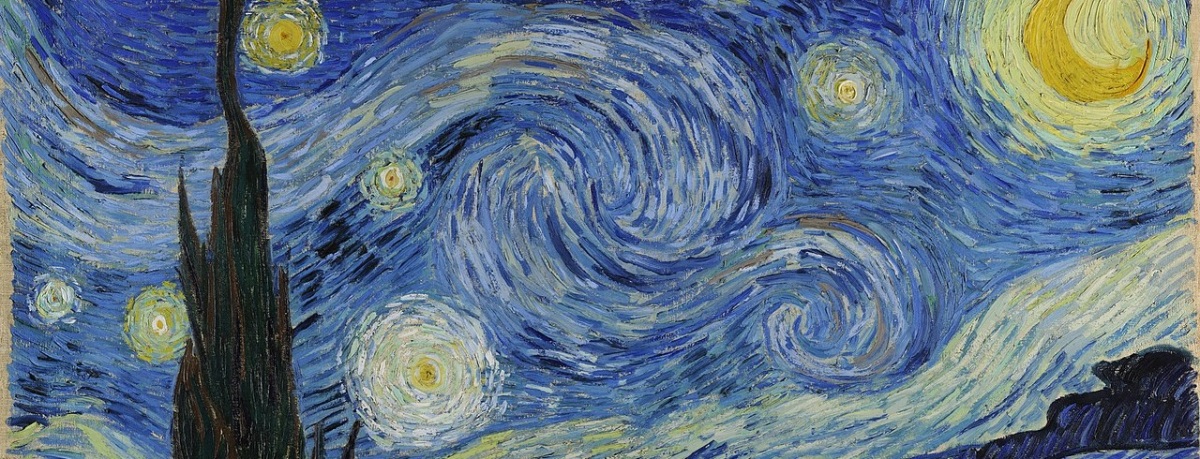


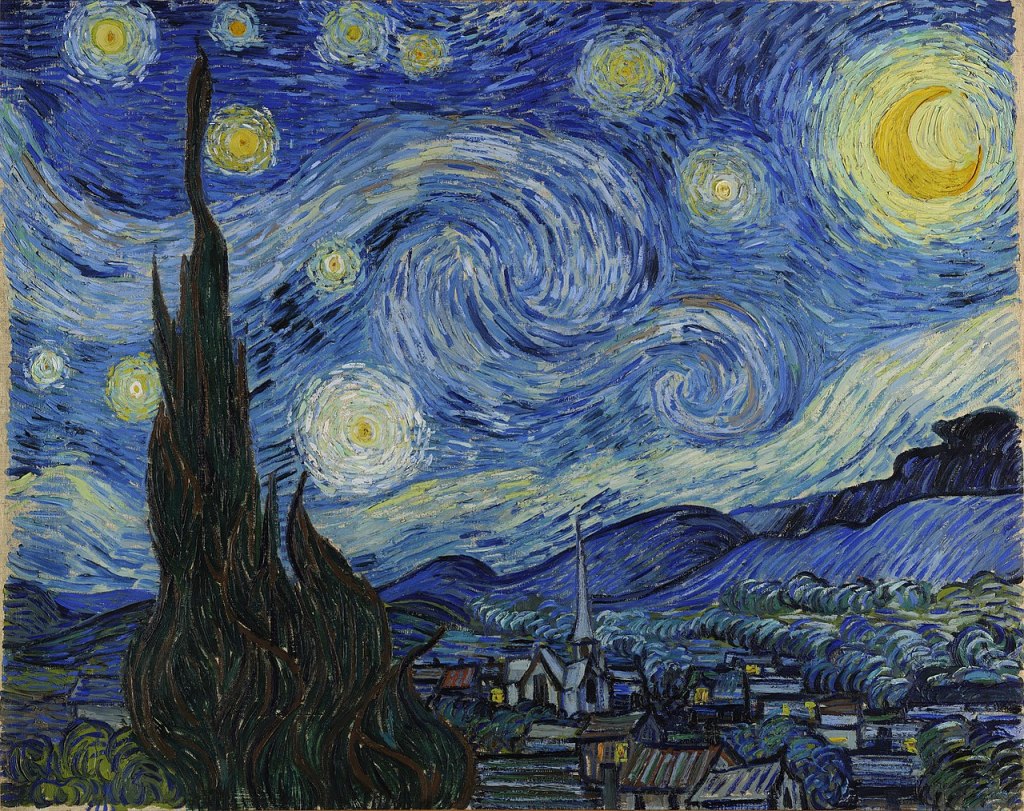

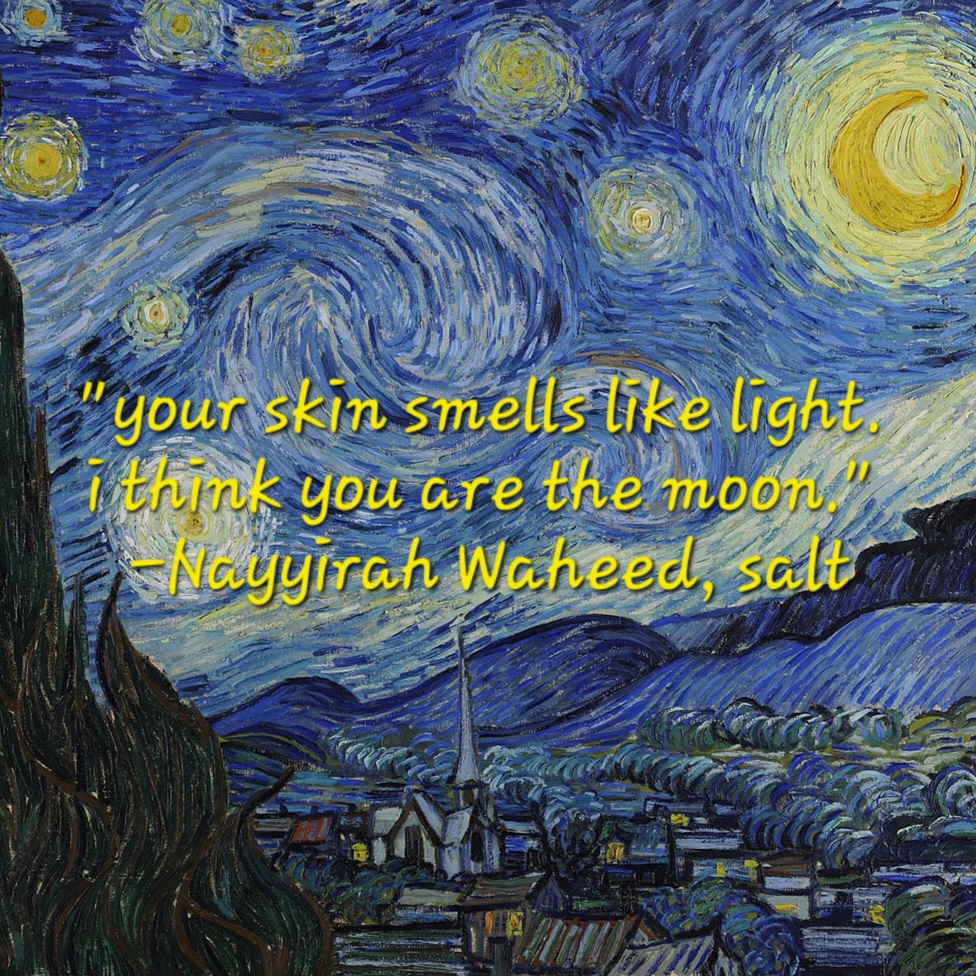
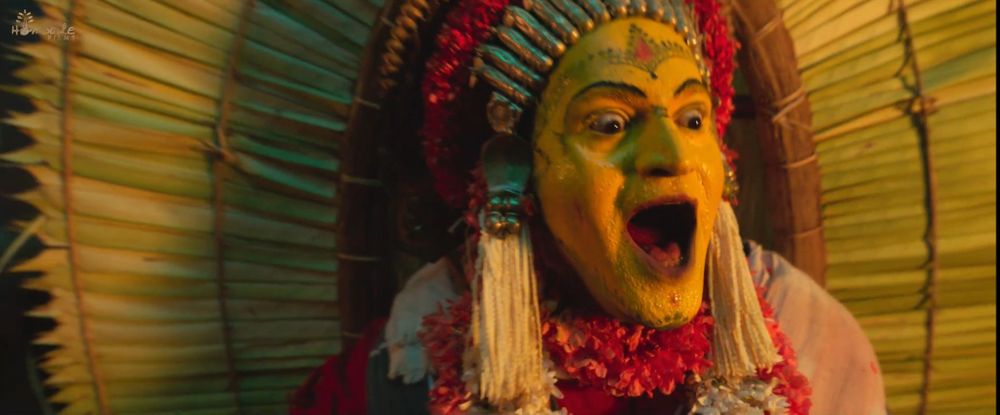
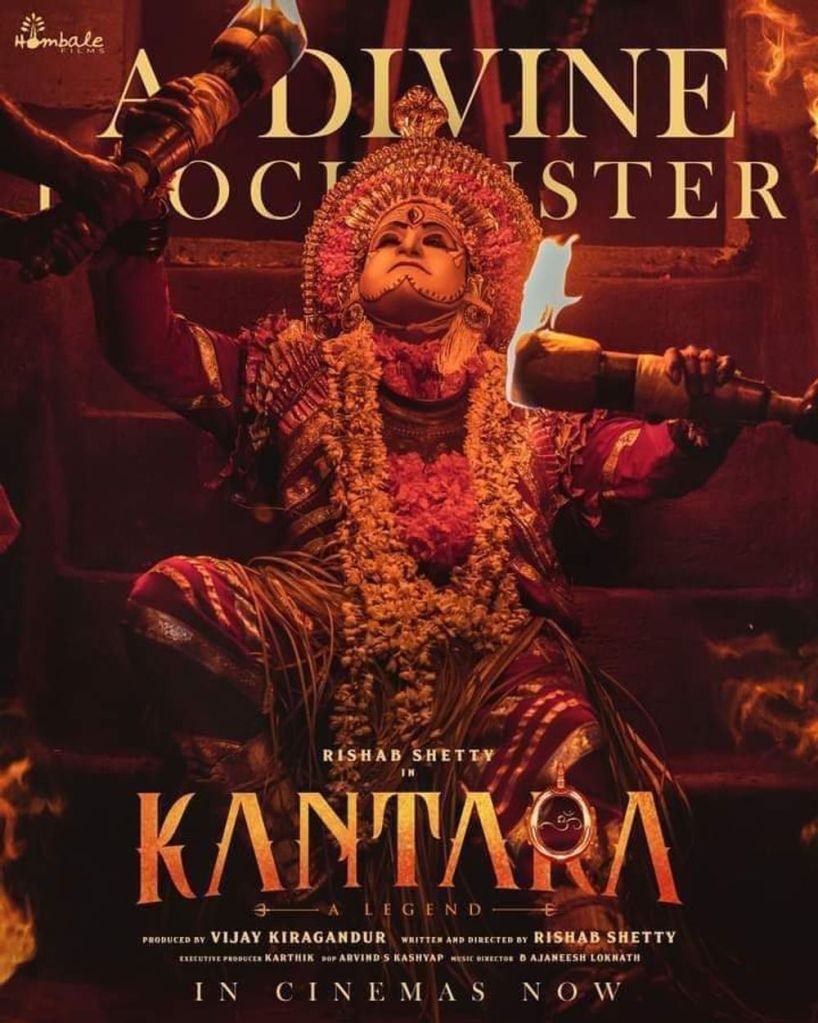
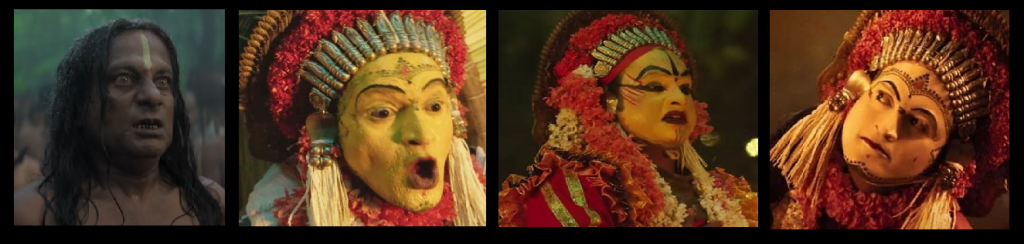

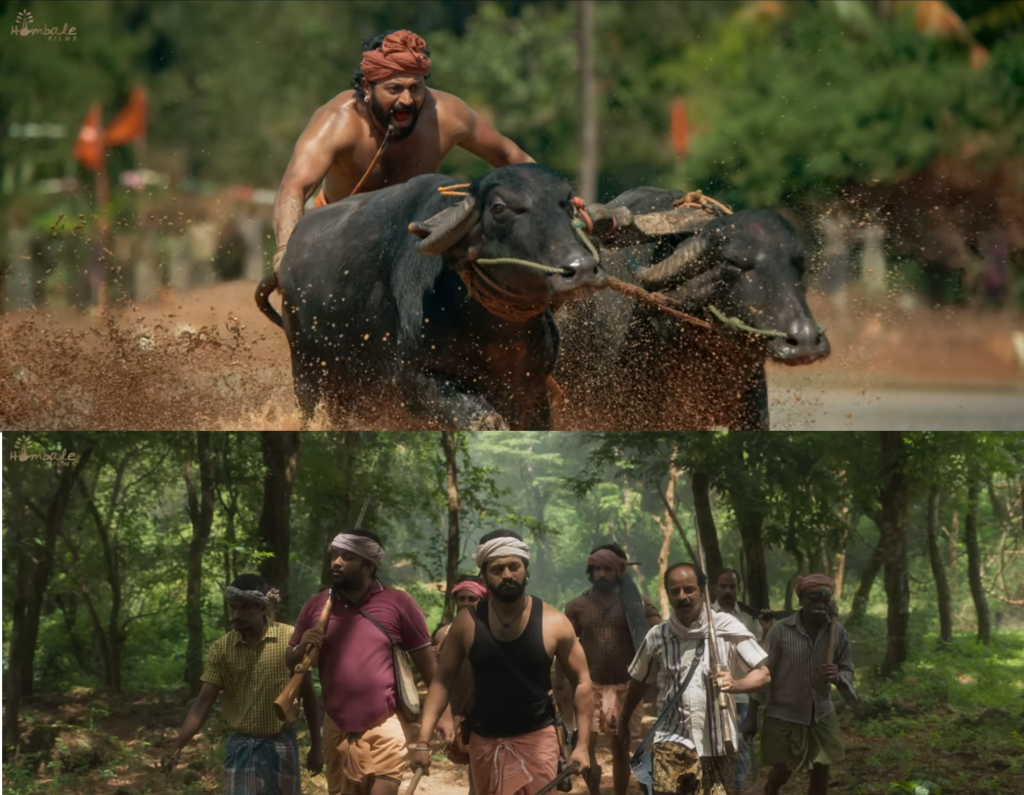


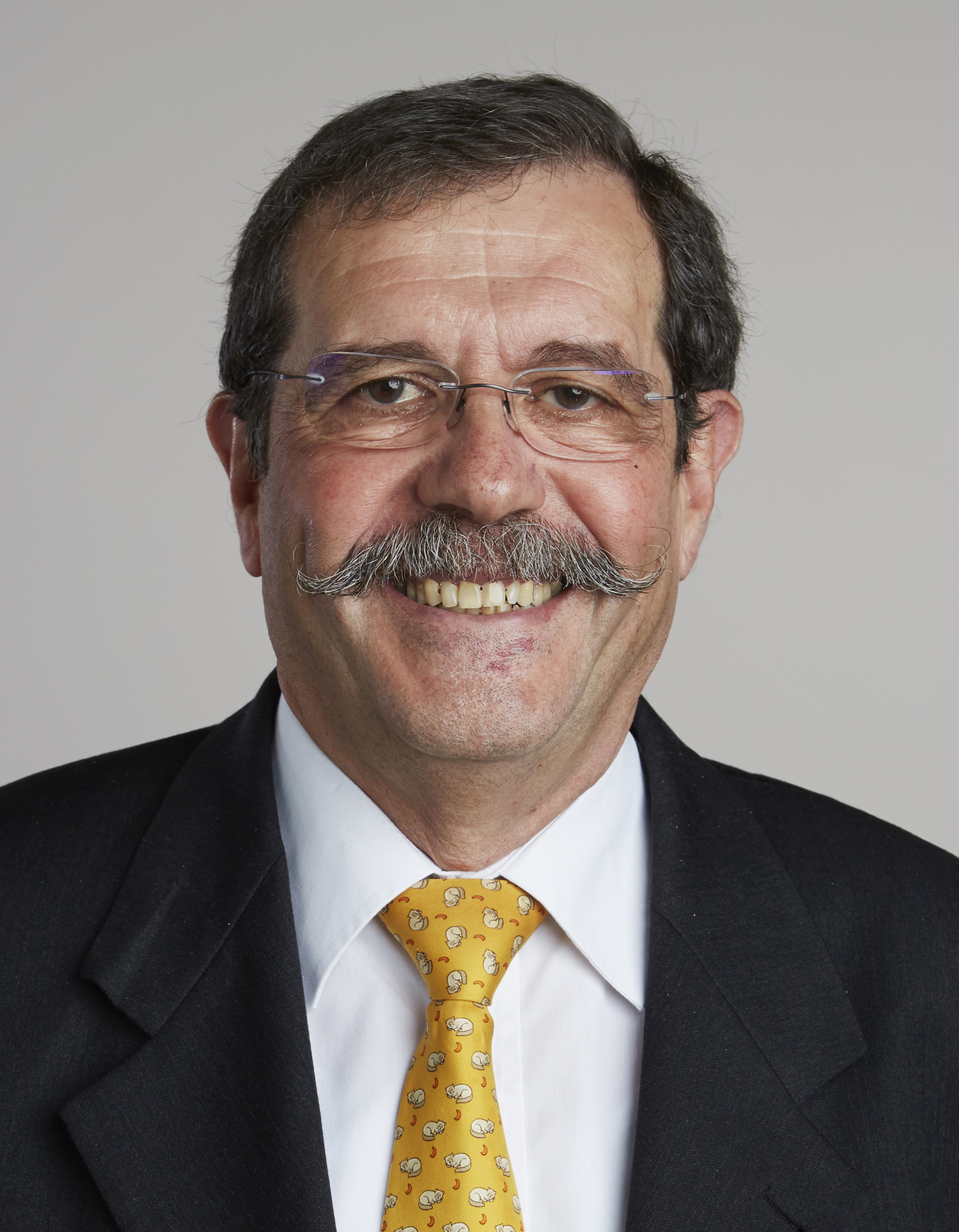
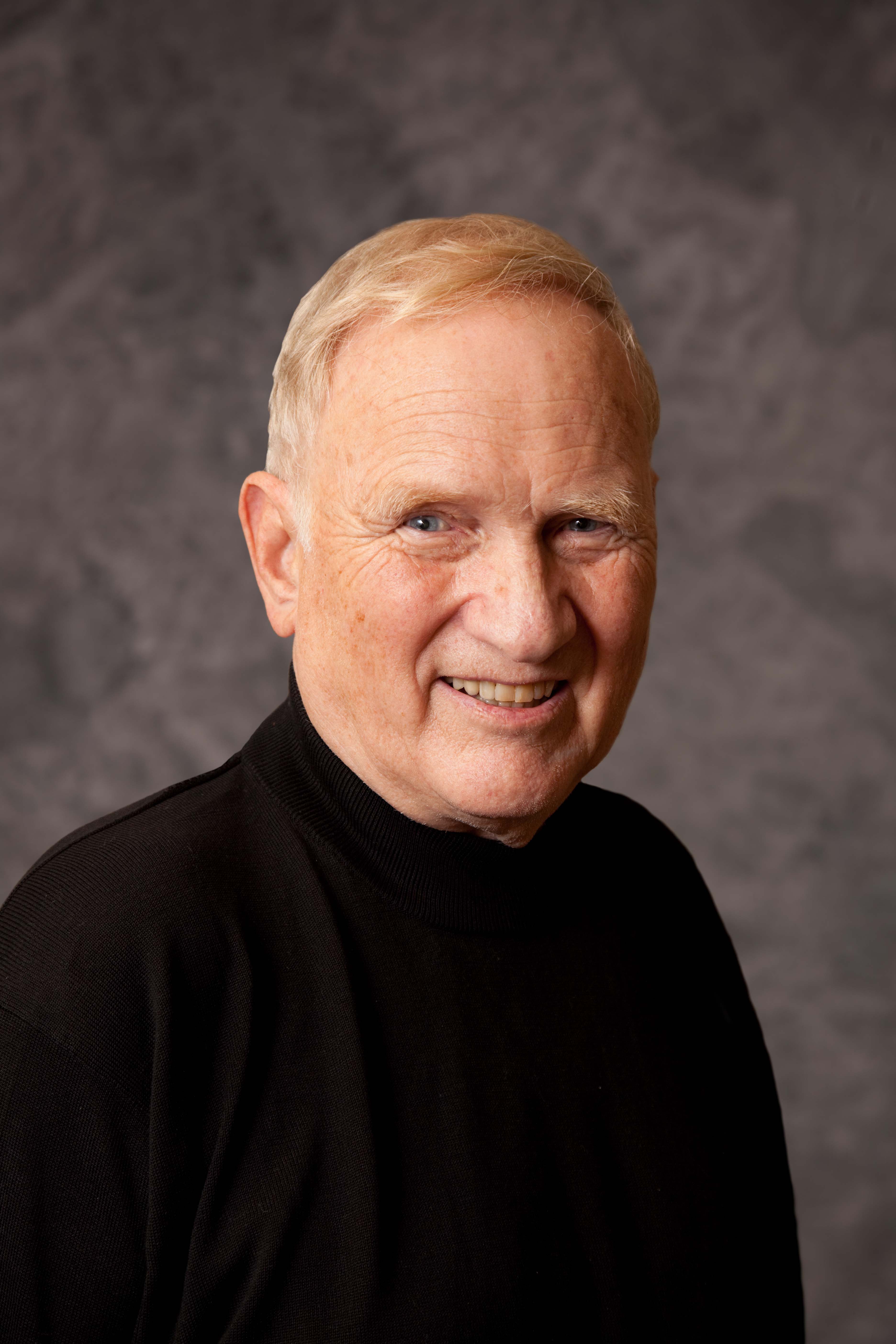
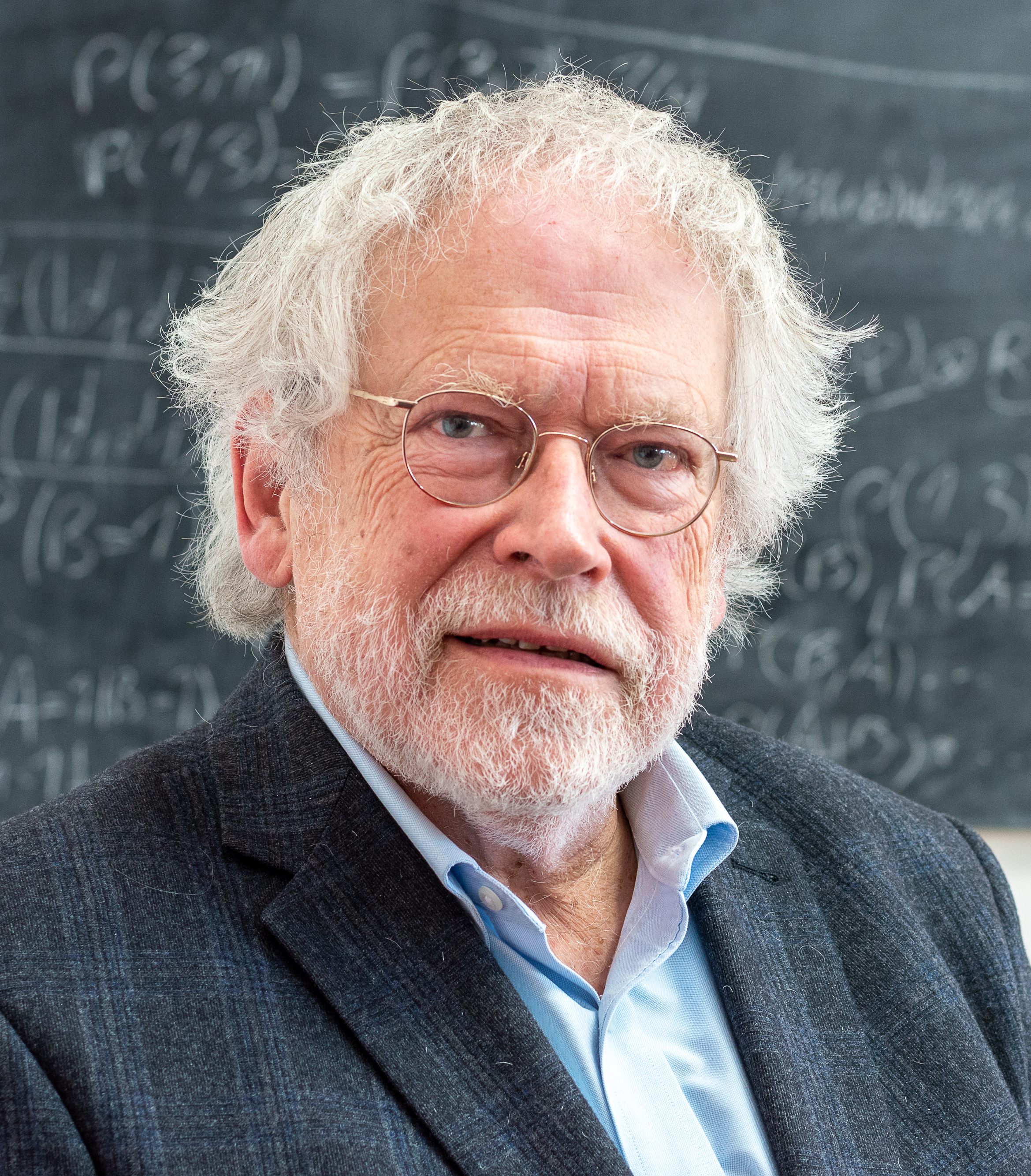
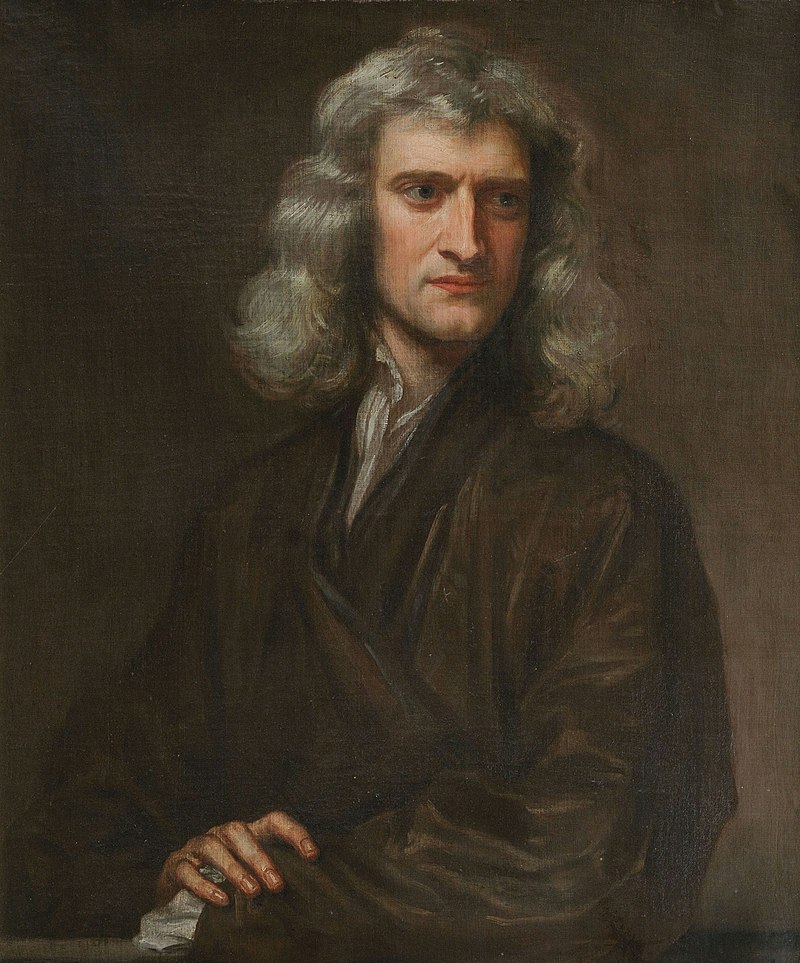

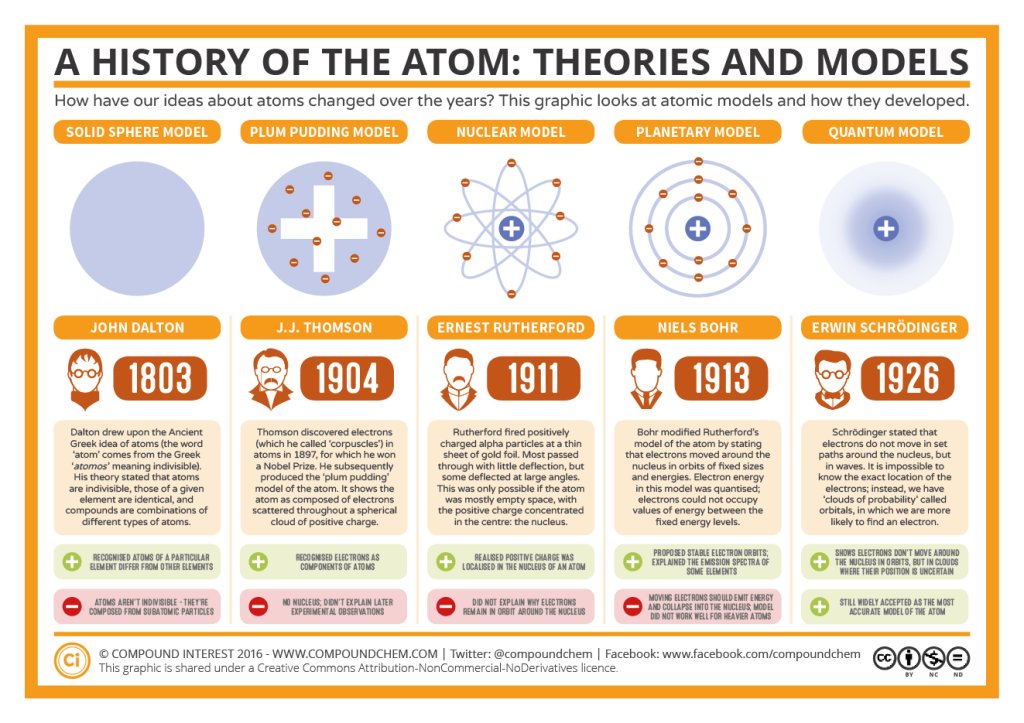

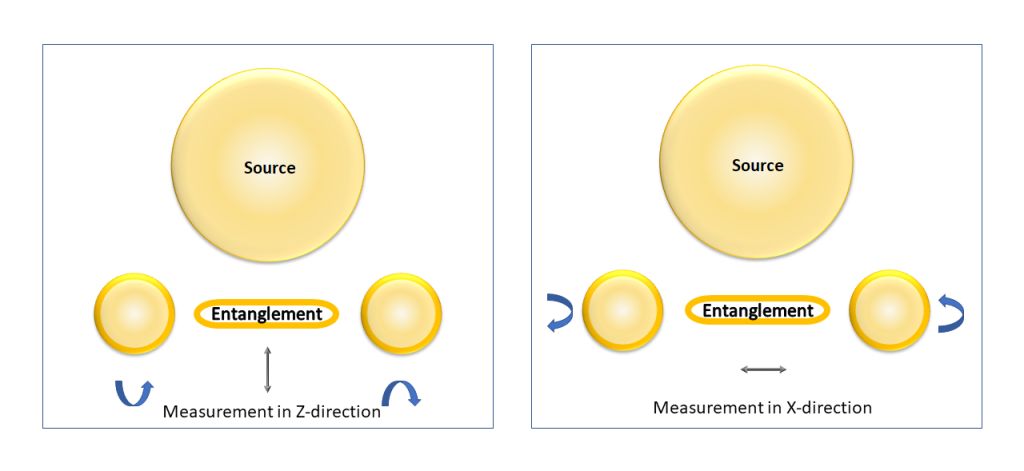
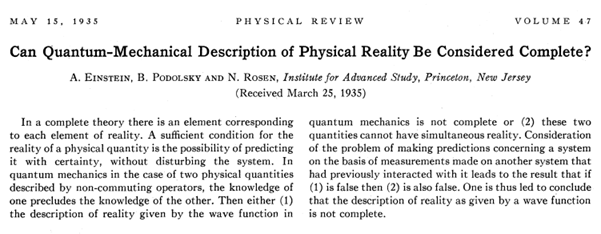
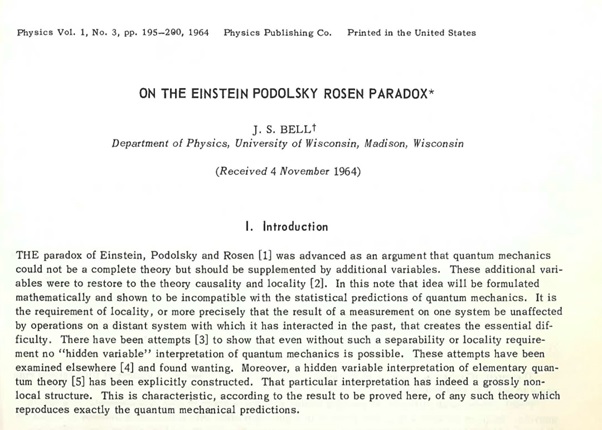
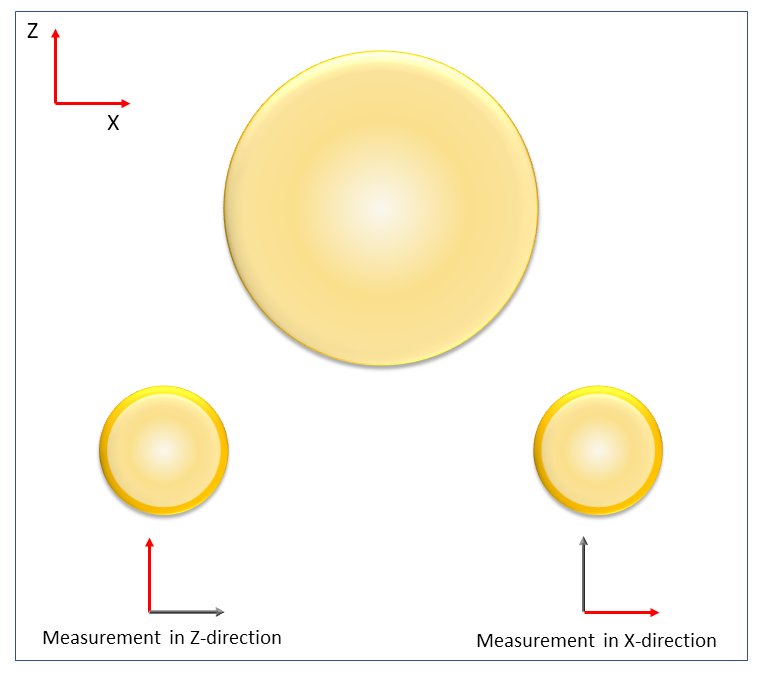
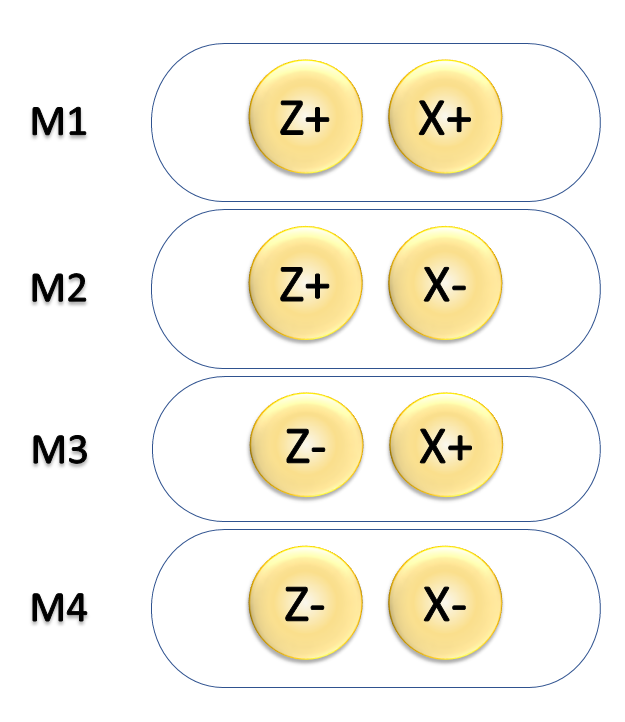


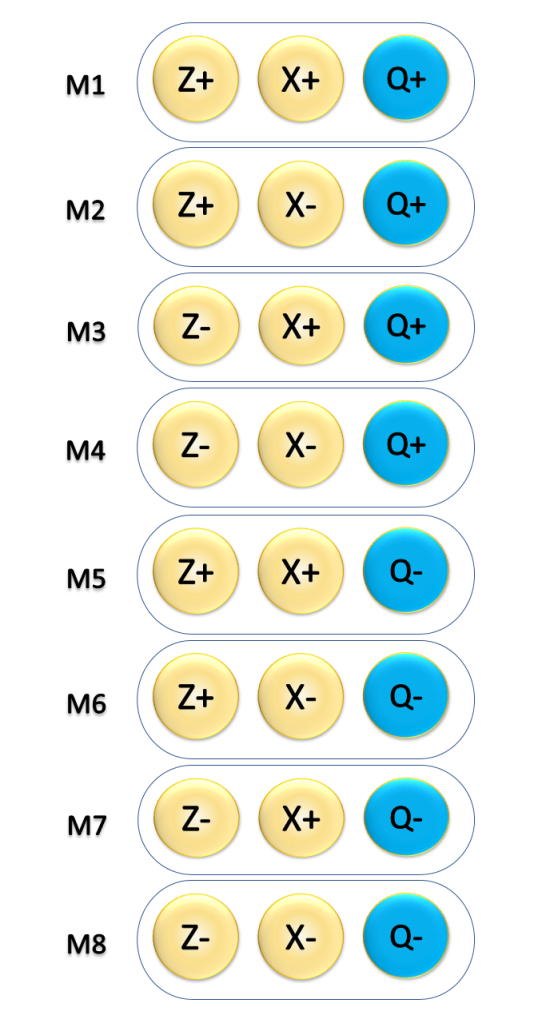

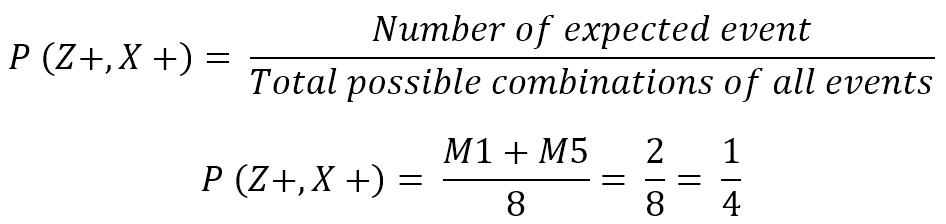



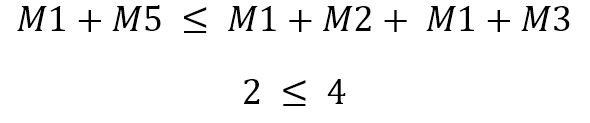
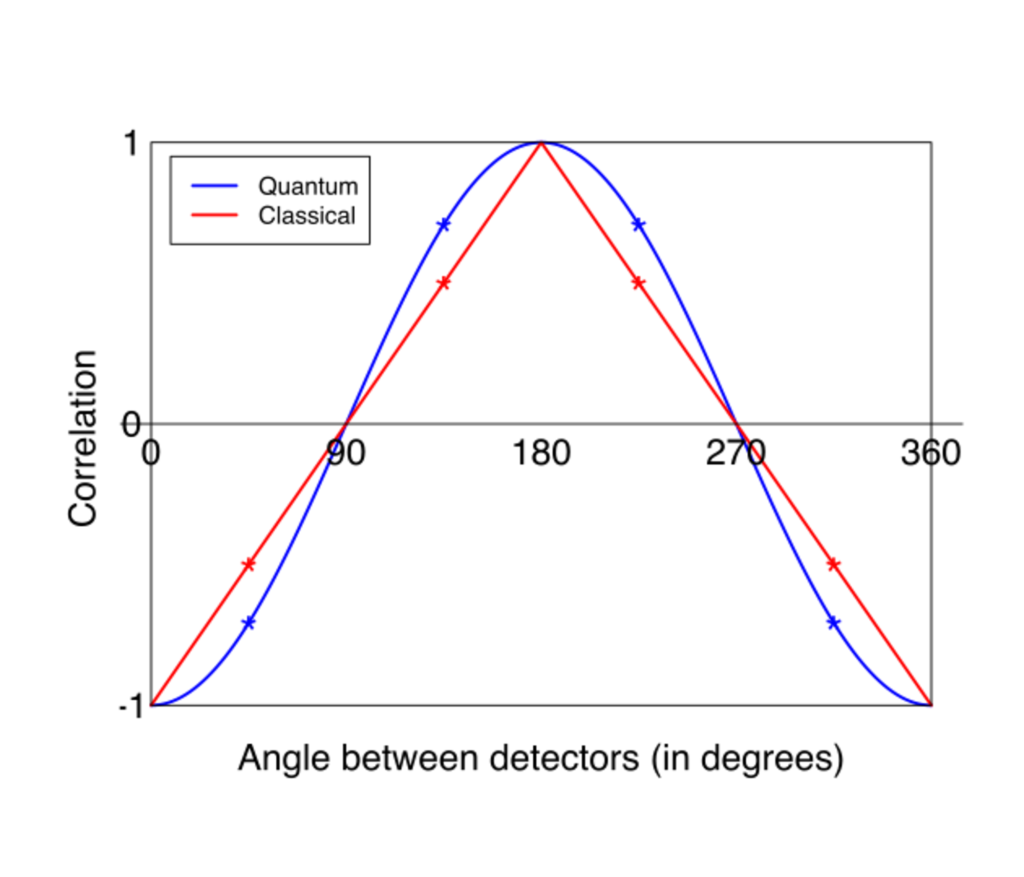
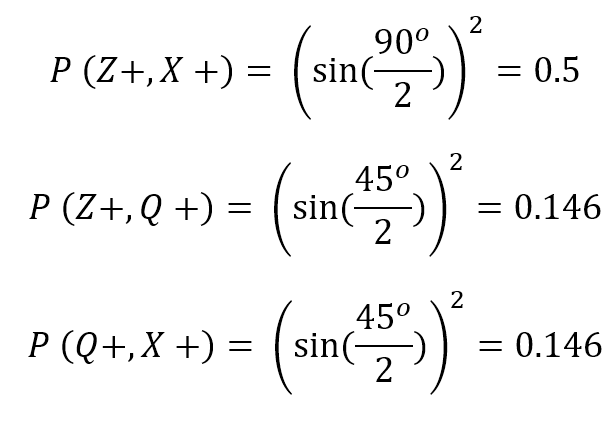
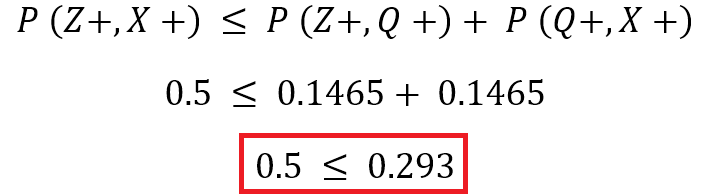
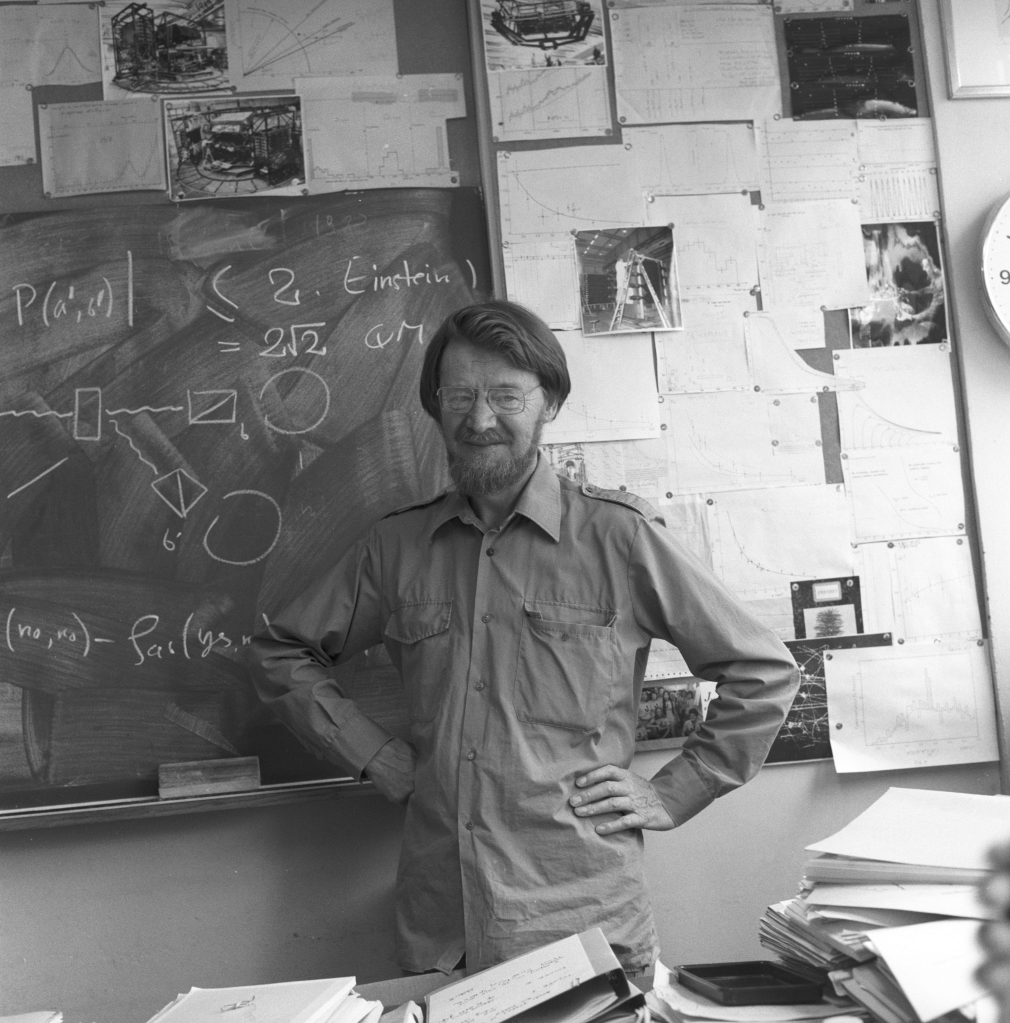



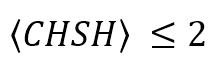

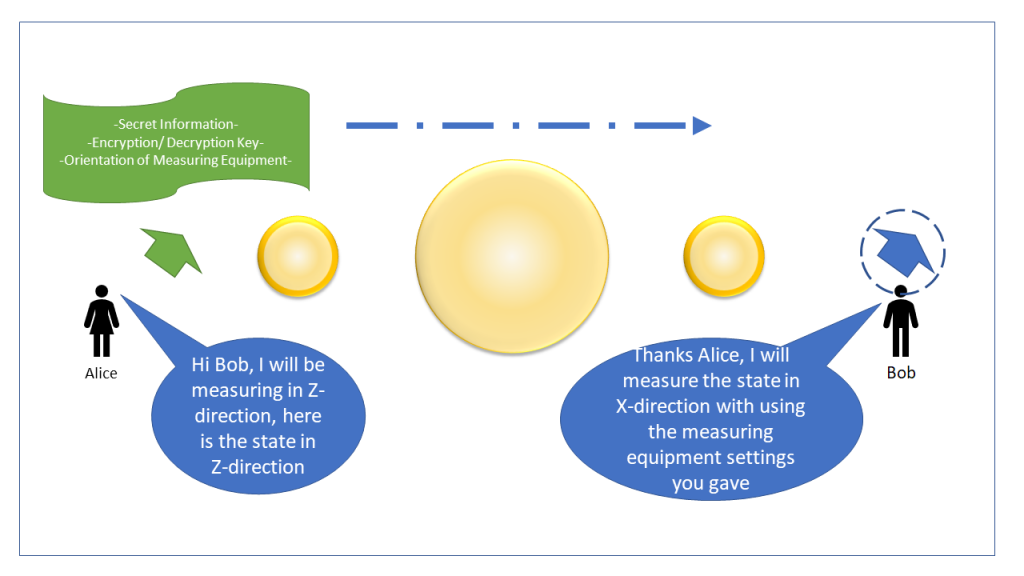
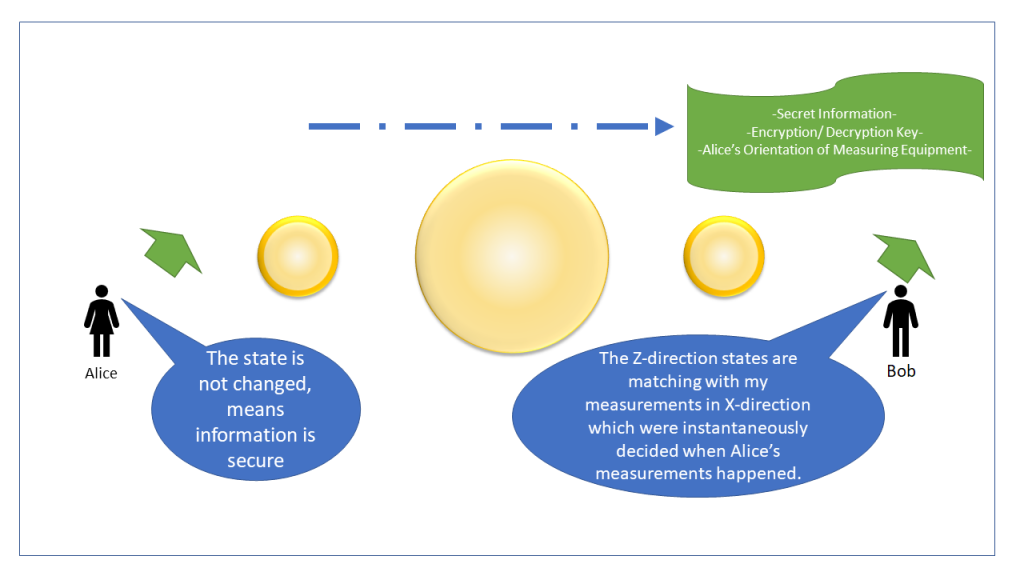
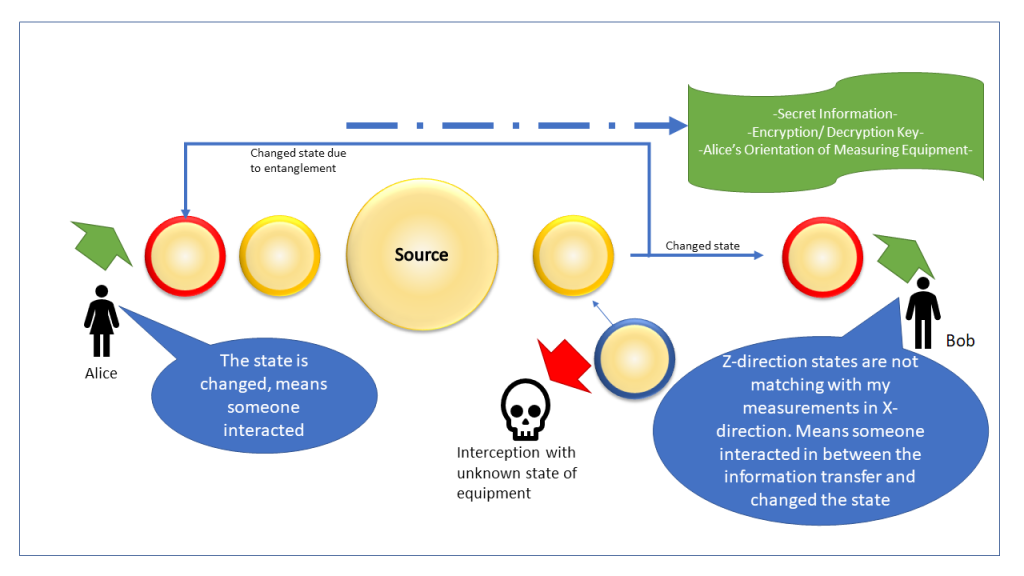


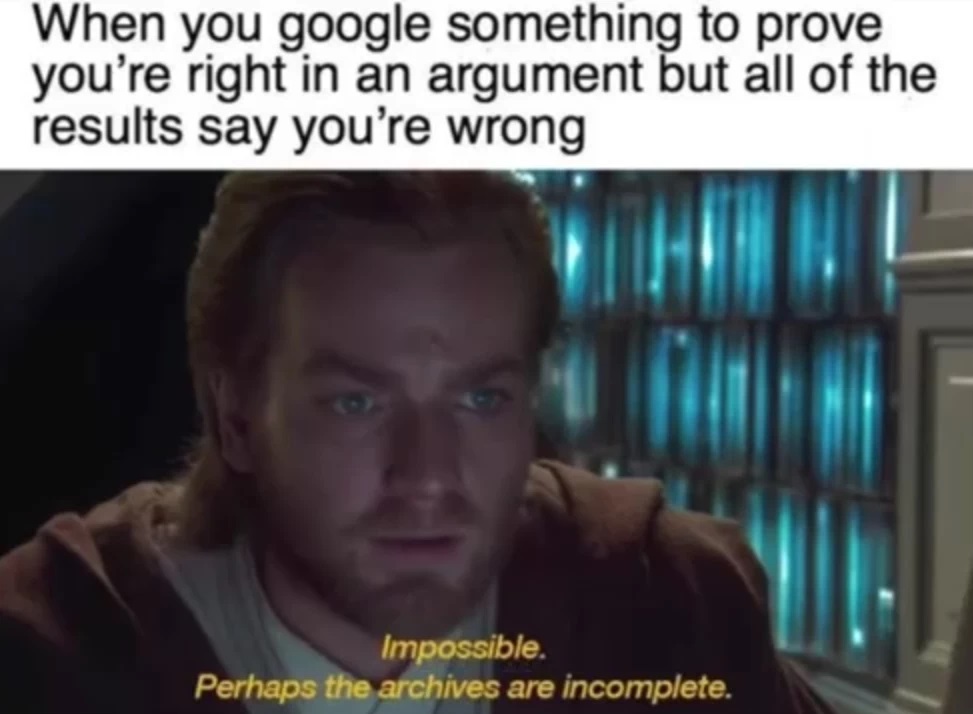

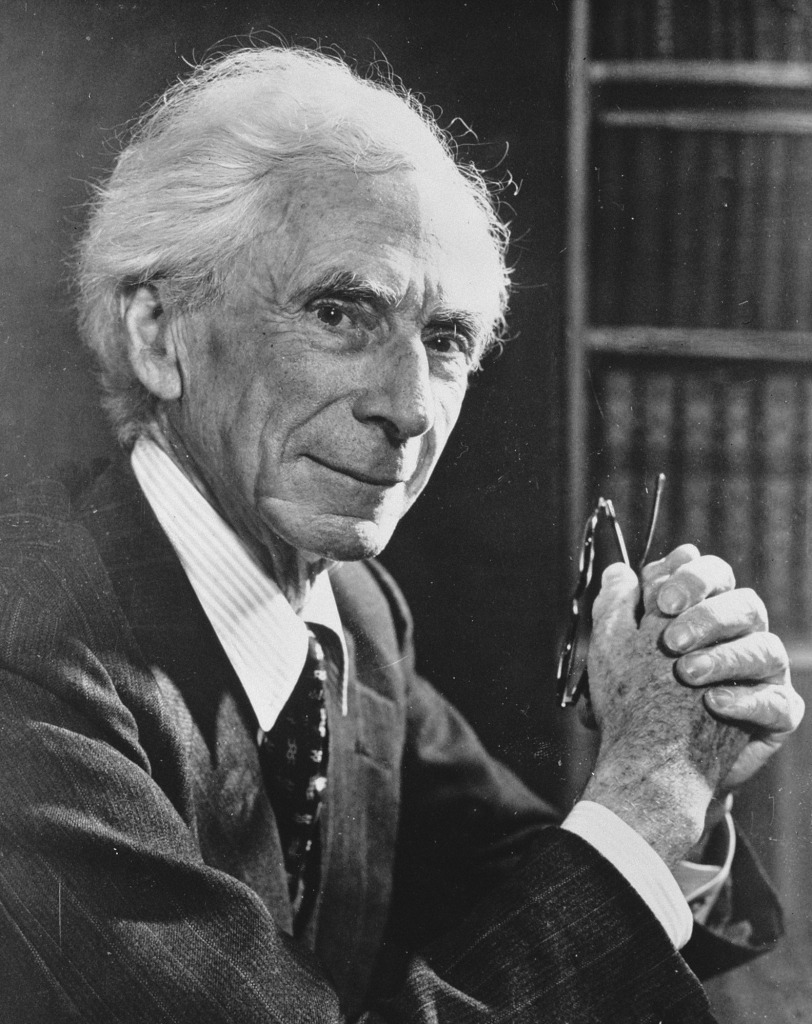
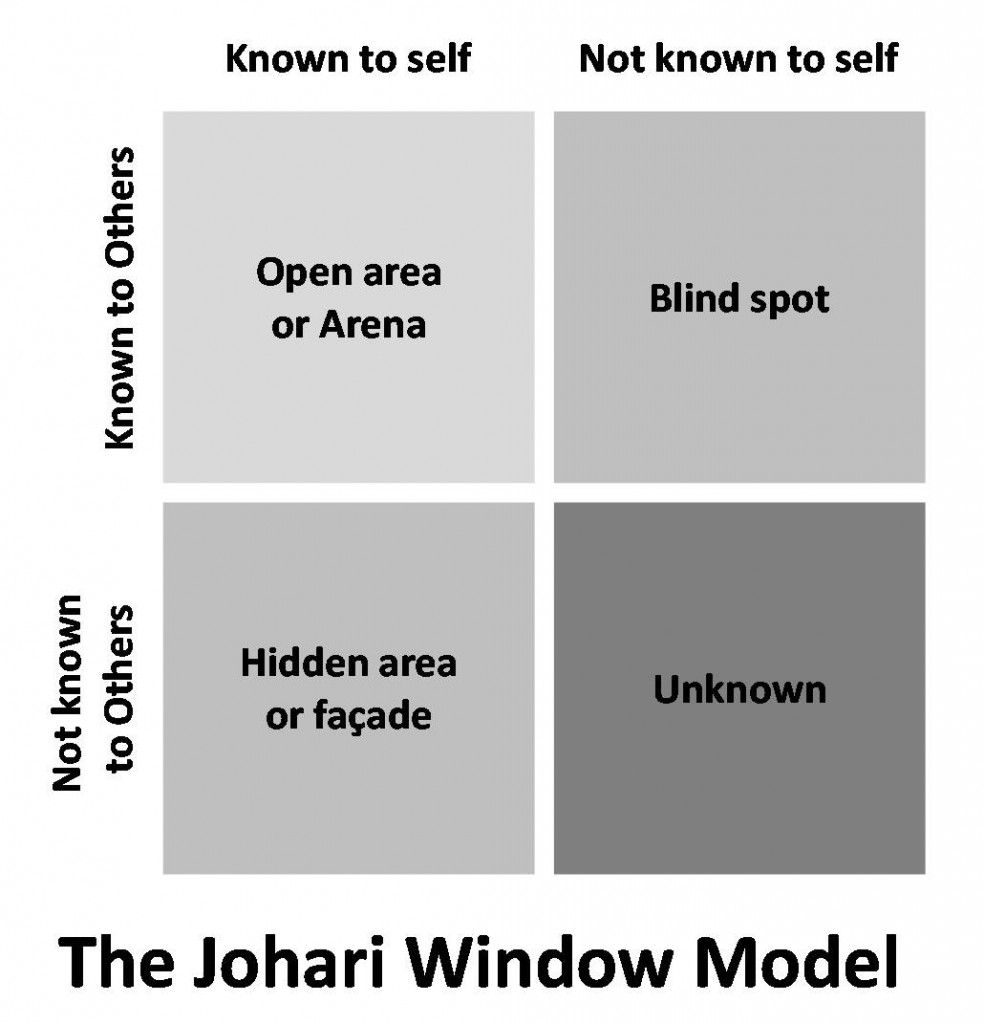
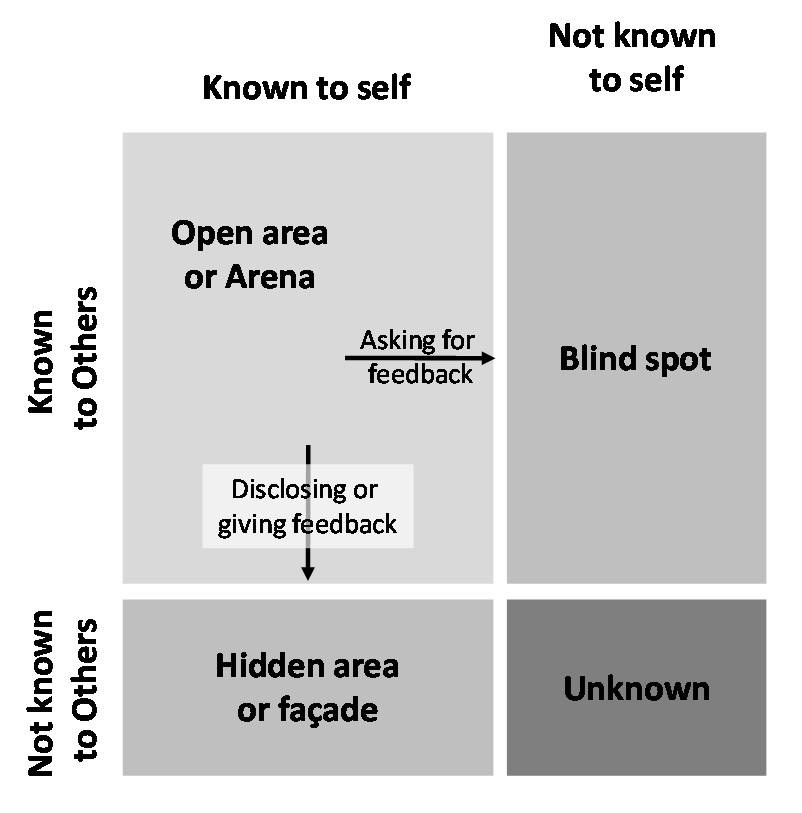
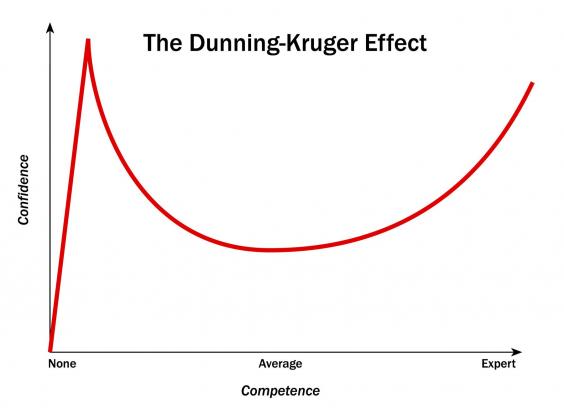

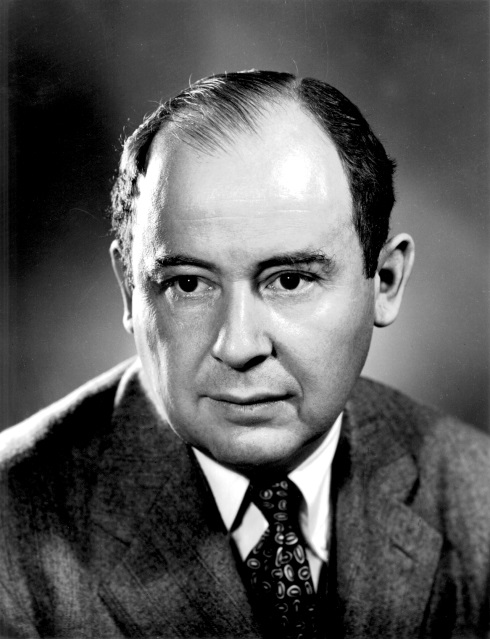
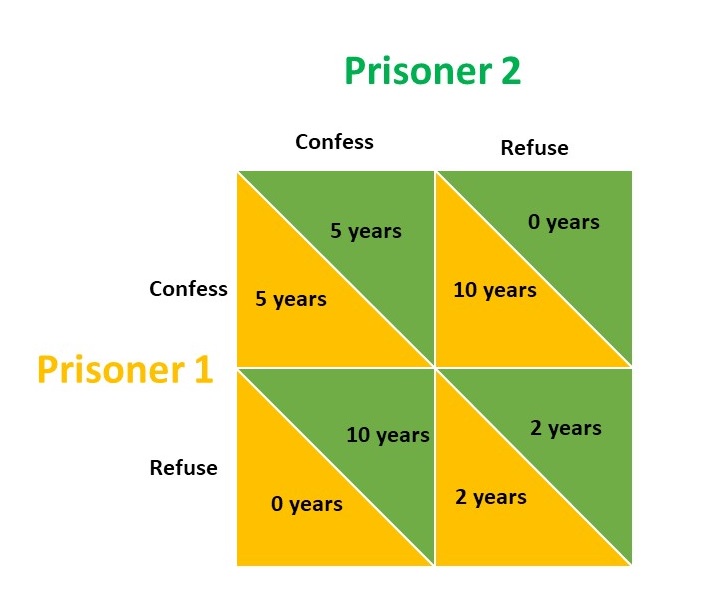
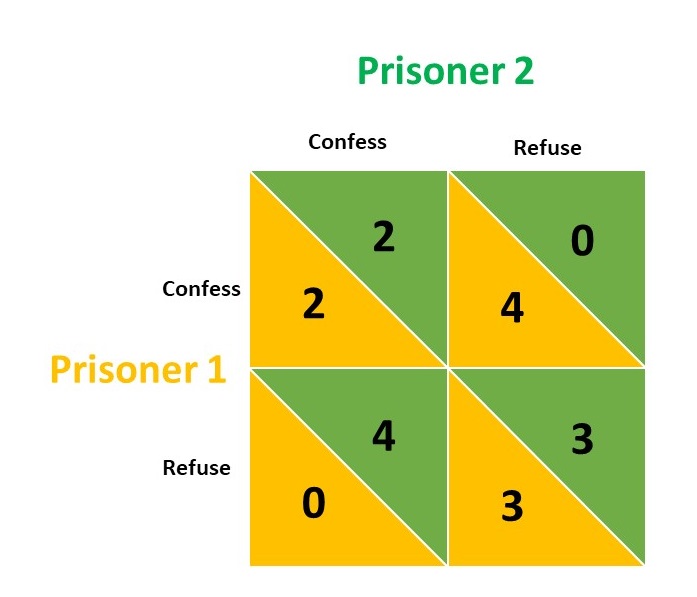
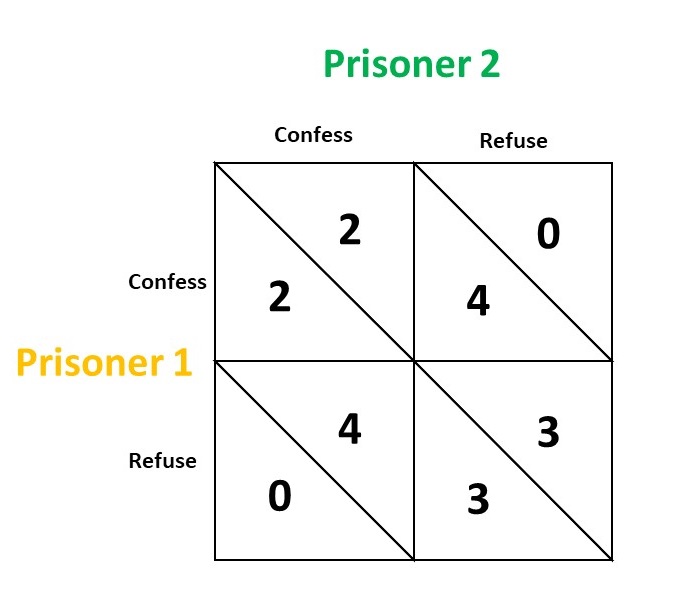
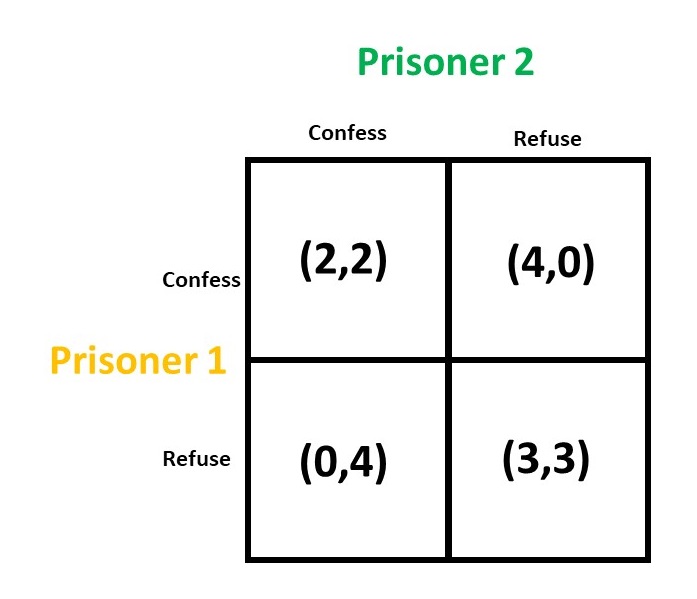
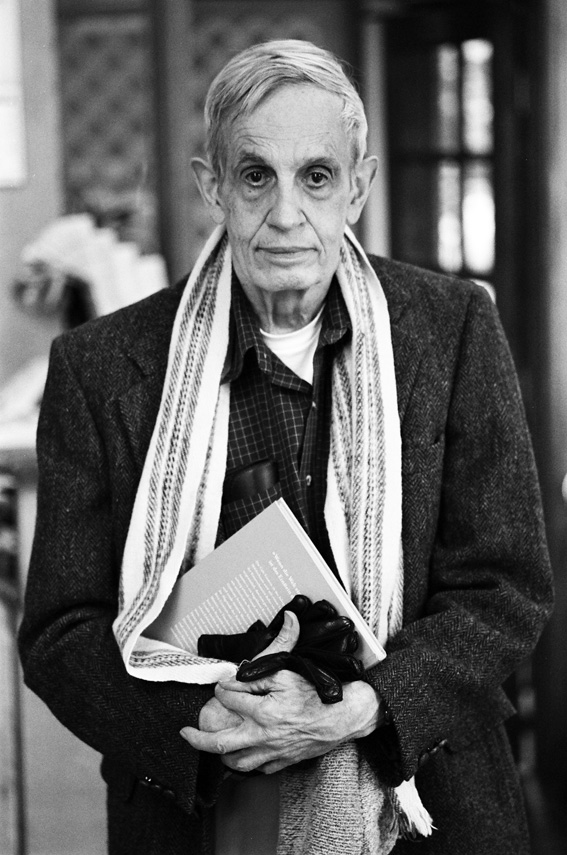




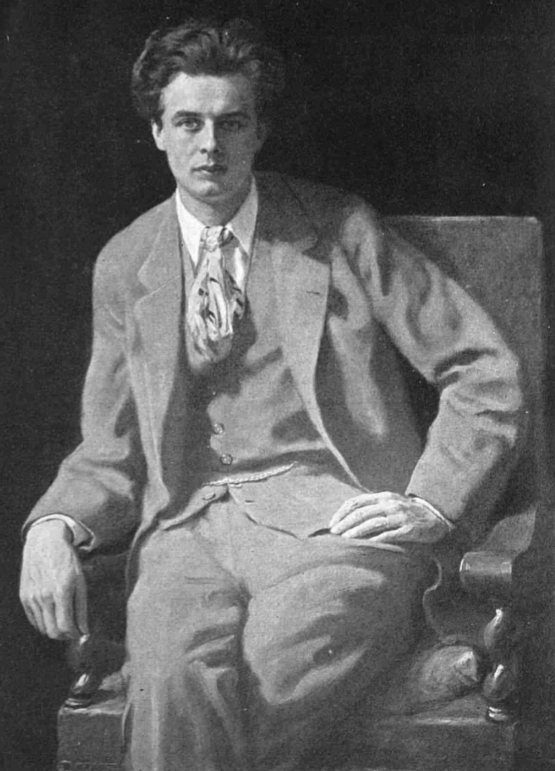



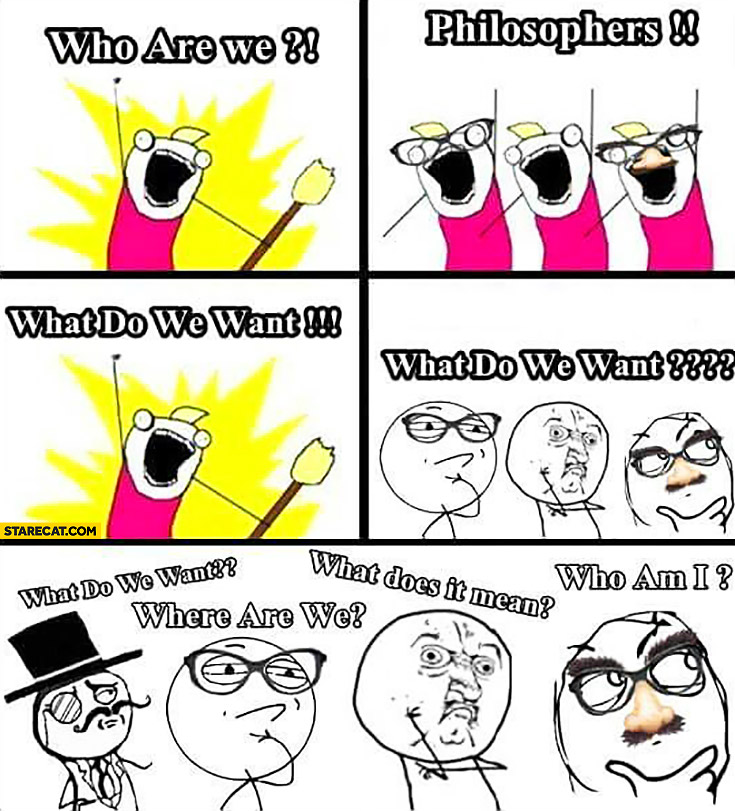

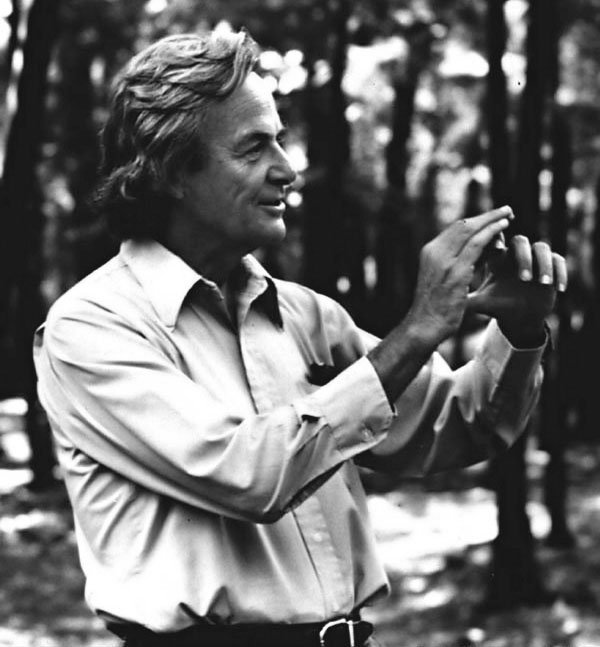
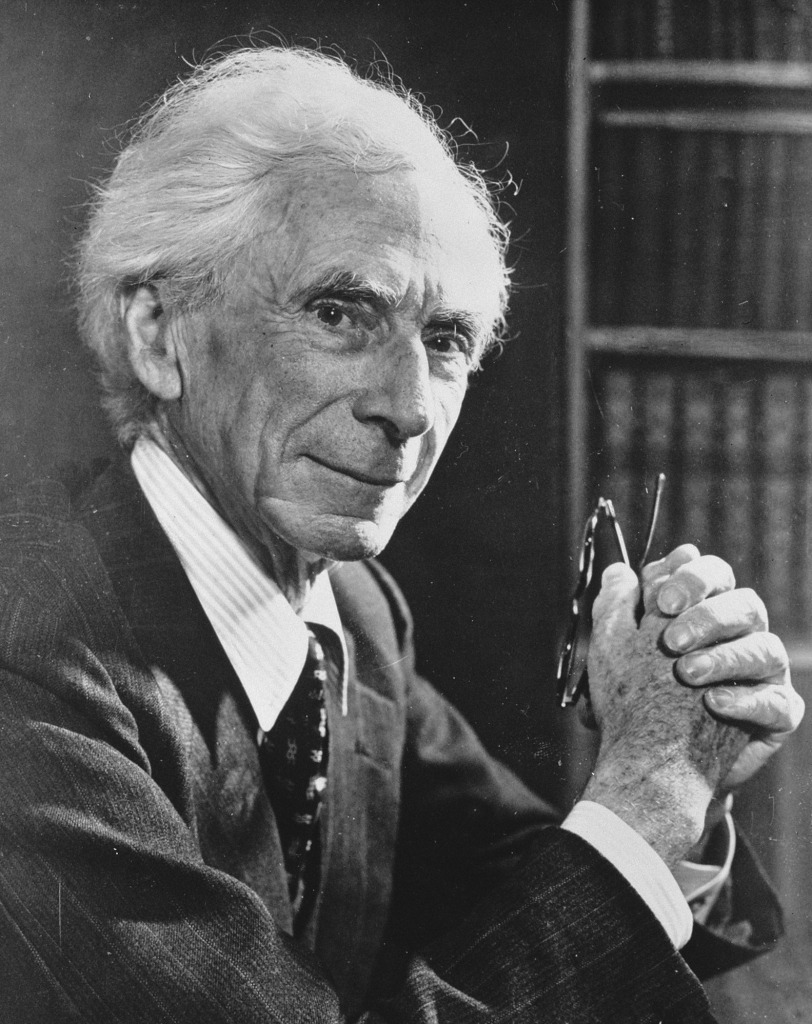




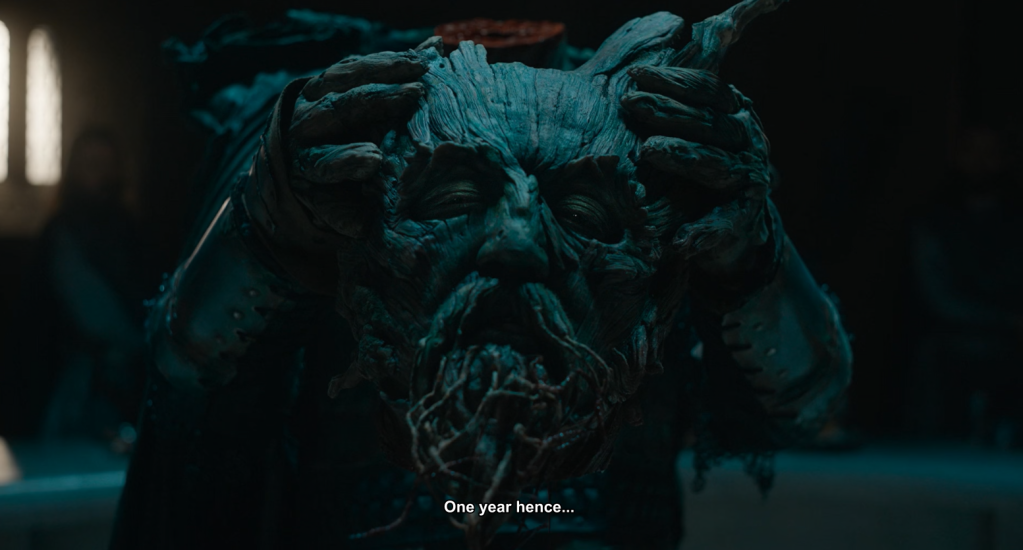
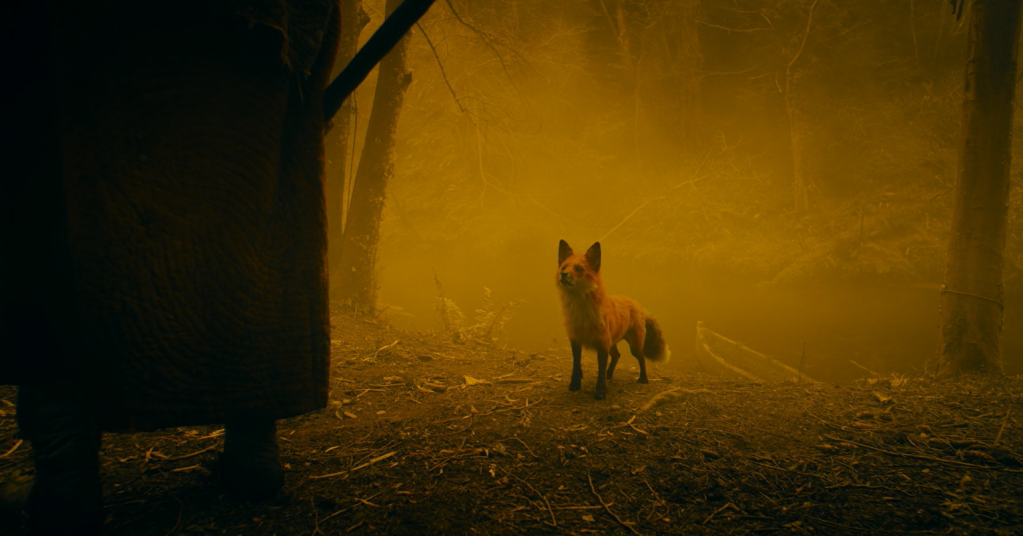
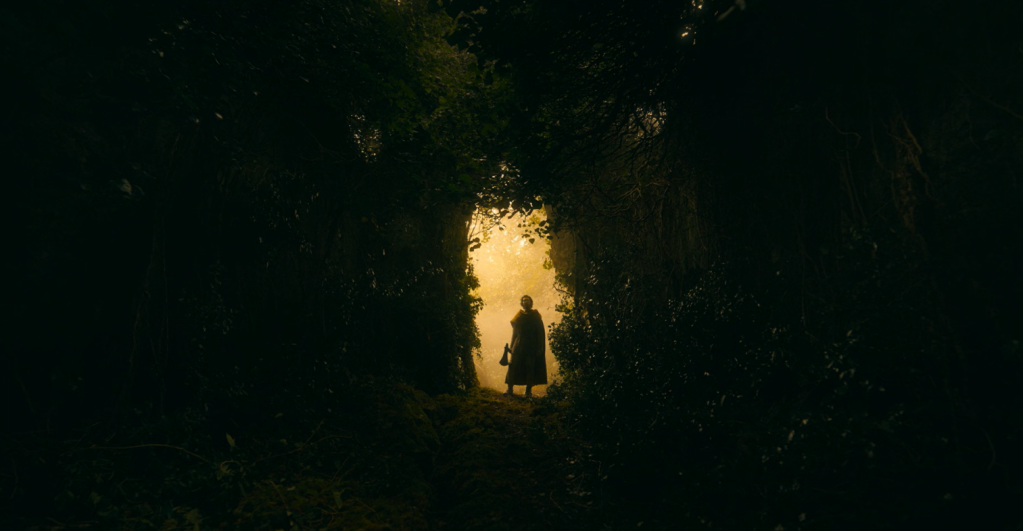
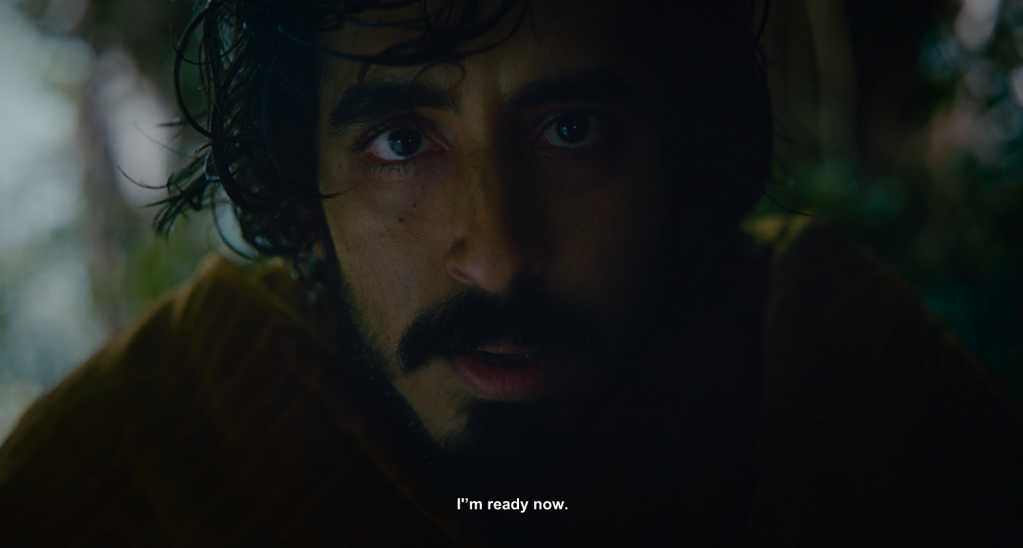

 Parts Per Billion